

SIST EN 10020:2000
(Main)Definition and classification of grades of steel
General Information
- Abstract
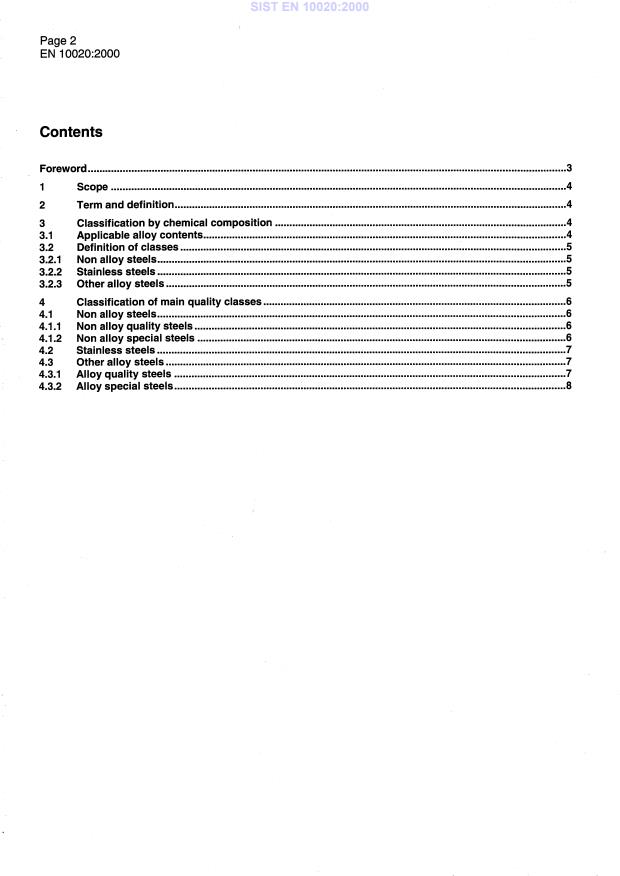
This European Standard defines the term "steel" (see clause 2) and classifies steel grades into: - non alloy, stainless steel and other alloy steels by chemical composition (see clause 3); - main quality classes (see clause 4) defined by main property or application characteristics for non alloy, stainless and other alloy steels.
- Status
- Published
- Publication Date
- 31-Oct-2000
- Technical Committee
- IFEK - Ferrous metals
- Current Stage
- 6060 - National Implementation/Publication (Adopted Project)
- Start Date
- 01-Nov-2000
- Due Date
- 01-Nov-2000
- Completion Date
- 01-Nov-2000


Overview
SIST EN 10020:2000 - Definition and Classification of Grades of Steel is a European Standard that provides a clear framework for the definition and systematic classification of steel types. Developed by the Slovenski inštitut za standardizacijo (SIST), this standard ensures harmonization across industries by setting uniform criteria for identifying and categorizing steel grades based on chemical composition and quality classes. Adhering to this standard is essential for manufacturers, suppliers, and engineers who require consistent terminology and specifications for steel products in various applications.
Key Topics
- Definition of Steel: The standard provides a precise definition of what constitutes "steel," ensuring clarity across industries and documentation.
- Chemical Composition Classification:
- Non-alloy Steels: Steels without intentional alloying elements other than carbon.
- Stainless Steels: Steels characterized primarily by their corrosion resistance due to specific chemical compositions.
- Other Alloy Steels: Steels containing significant amounts of alloying elements beyond carbon and iron.
- Quality Classes:
- Steel grades are further distinguished by major property or application characteristics into main quality classes, aiding in selection for specific uses.
- Systematic Steel Classification:
- Helps users quickly identify and compare steel types according to up-to-date European standards.
Applications
SIST EN 10020:2000 is widely applied across various sectors that require reliable steel identification and classification:
- Manufacturing and Fabrication: Producers use this standard to specify steel grades precisely, ensuring material compatibility and performance.
- Construction and Engineering: Engineers and architects rely on standardized steel classifications when designing structures and specifying materials for safety and regulatory compliance.
- Procurement and Supply Chain: Procurement professionals use the uniform categorization to source appropriate steel materials from global suppliers with confidence.
- Quality Control and Certification: Quality assurance teams reference this standard to verify steel grade compliance and facilitate product certification processes.
- Technical Documentation and Communication: The clear definitions and classification criteria aid in drafting technical documentation, material datasheets, and international contracts by eliminating ambiguity.
Adoption of this steel classification standard enhances cross-border trade, supports regulatory alignment, and facilitates the integration of new technologies and products into the European and global steel markets.
Related Standards
Organizations and professionals using SIST EN 10020:2000 may also reference these related standards to ensure comprehensive coverage of steel terminology, testing, and properties:
- EN 10021 - General technical delivery requirements for steel products
- EN 10027 - Designation systems for steels
- EN ISO 4948 - Steel classification by chemical composition and mechanical properties
- EN 10088 - Stainless steels - List of standard grades and chemical compositions
By following SIST EN 10020:2000, stakeholders benefit from increased accuracy in steel classification, improved communication, and enhanced compatibility within the metallurgical and engineering sectors. This standard is an essential resource for anyone involved in steel selection, specification, and certification.
Relations
- Effective Date
- 01-Nov-2001
- Effective Date
- 01-Nov-2001
- Effective Date
- 28-Jan-2026
- Effective Date
- 28-Jan-2026
- Effective Date
- 28-Jan-2026
- Effective Date
- 28-Jan-2026
- Effective Date
- 28-Jan-2026
- Effective Date
- 28-Jan-2026
- Effective Date
- 28-Jan-2026
- Effective Date
- 28-Jan-2026
- Effective Date
- 28-Jan-2026
- Effective Date
- 28-Jan-2026
- Effective Date
- 28-Jan-2026
- Effective Date
- 28-Jan-2026
- Effective Date
- 28-Jan-2026
Get Certified
Connect with accredited certification bodies for this standard

Element Materials Technology
Materials testing and product certification.

Inštitut za kovinske materiale in tehnologije
Institute of Metals and Technology. Materials testing, metallurgical analysis, NDT.
Sponsored listings
Frequently Asked Questions
SIST EN 10020:2000 is a standard published by the Slovenian Institute for Standardization (SIST). Its full title is "Definition and classification of grades of steel". This standard covers: This European Standard defines the term "steel" (see clause 2) and classifies steel grades into: - non alloy, stainless steel and other alloy steels by chemical composition (see clause 3); - main quality classes (see clause 4) defined by main property or application characteristics for non alloy, stainless and other alloy steels.
This European Standard defines the term "steel" (see clause 2) and classifies steel grades into: - non alloy, stainless steel and other alloy steels by chemical composition (see clause 3); - main quality classes (see clause 4) defined by main property or application characteristics for non alloy, stainless and other alloy steels.
SIST EN 10020:2000 is classified under the following ICS (International Classification for Standards) categories: 01.040.77 - Metallurgy (Vocabularies); 77.080.20 - Steels. The ICS classification helps identify the subject area and facilitates finding related standards.
SIST EN 10020:2000 has the following relationships with other standards: It is inter standard links to SIST EN 10020:1995, SIST EN 10020:1995/AC1:1996, SIST EN 10379:2025, SIST EN 10363:2016, SIST EN 10305-1:2010, SIST EN 10025-4:2004, SIST EN 10216-2:2003+A2:2007, SIST EN 10083-1:2006, SIST EN 10225-2:2019, SIST EN 10027-1:2016, SIST EN 10253-1:2000, SIST EN 10263-5:2018, SIST EN 10312:2003, SIST EN 845-3:2013, SIST EN 10085:2002. Understanding these relationships helps ensure you are using the most current and applicable version of the standard.
SIST EN 10020:2000 is associated with the following European legislation: EU Directives/Regulations: 305/2011, 89/106/EEC; Standardization Mandates: M/116, M/120, M/BC/CEN/86/1. When a standard is cited in the Official Journal of the European Union, products manufactured in conformity with it benefit from a presumption of conformity with the essential requirements of the corresponding EU directive or regulation.
SIST EN 10020:2000 is available in PDF format for immediate download after purchase. The document can be added to your cart and obtained through the secure checkout process. Digital delivery ensures instant access to the complete standard document.
Standards Content (Sample)
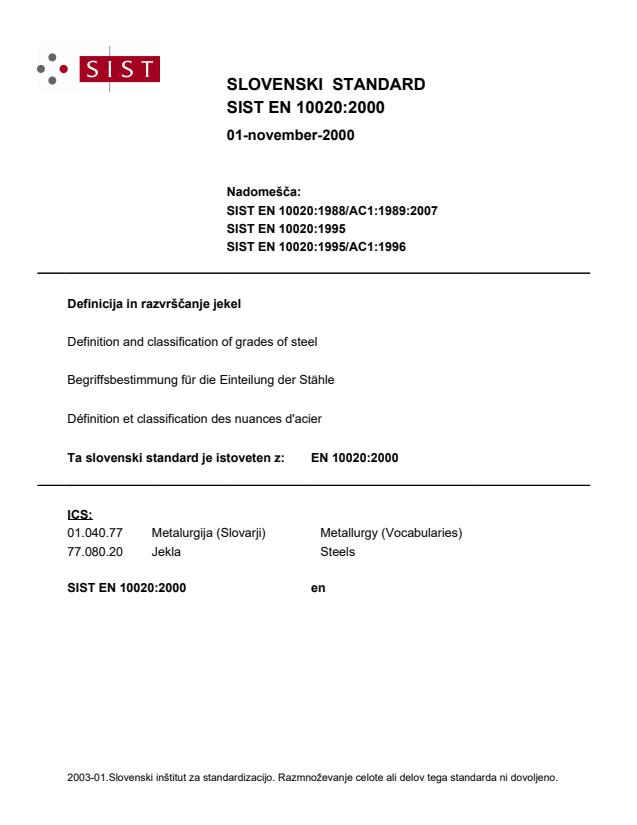
2003-01.Slovenski inštitut za standardizacijo. Razmnoževanje celote ali delov tega standarda ni dovoljeno.Begriffsbestimmung für die Einteilung der StähleDéfinition et classification des nuances d'acierDefinition and classification of grades of steel77.080.20JeklaSteels01.040.77Metalurgija (Slovarji)Metallurgy (Vocabularies)ICS:Ta slovenski standard je istoveten z:
...