

ASTM F3245-19
(Guide)Standard Guide for Aircraft Electronics Technician Personnel Certification
General Information
- Abstract
SIGNIFICANCE AND USE
4.1 The guide is intended to be used to assess competencies of qualified individuals who wish to become certified as an Aircraft Electronics Technician through a certification program.
4.2 The guide is intended to be used in concert with a certification provider’s structure and materials for management, exam delivery, and candidate preparation.
SCOPE
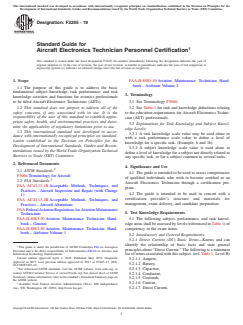
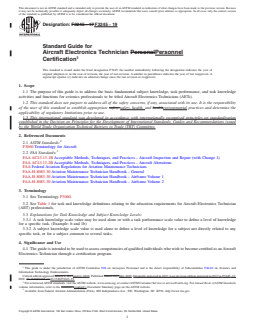
1.1 The purpose of this guide is to address the basic fundamental subject knowledge, task performance, and task knowledge activities and functions for avionics professionals to be titled Aircraft Electronics Technicians (AETs).
1.2 This standard does not purport to address all of the safety concerns, if any, associated with its use. It is the responsibility of the user of this standard to establish appropriate safety, health, and environmental practices and determine the applicability of regulatory limitations prior to use.
1.3 This international standard was developed in accordance with internationally recognized principles on standardization established in the Decision on Principles for the Development of International Standards, Guides and Recommendations issued by the World Trade Organization Technical Barriers to Trade (TBT) Committee.
- Status
- Published
- Publication Date
- 31-Mar-2019
- Technical Committee
- F46 - Aerospace Personnel
- Drafting Committee
- F46.02 - Avionics and Information Technology Endorsements
Overview
ASTM F3245-19: Standard Guide for Aircraft Electronics Technician Personnel Certification is an international standard developed by ASTM to guide the certification of Aircraft Electronics Technicians (AETs) and avionics professionals. This standard establishes the fundamental subject knowledge, task performance, and practical skills required for qualification and certification through recognized certification programs. It serves as a reference for certification bodies, training providers, and aspiring AETs, ensuring a consistent, industry-accepted basis for assessing technician competencies in the aviation electronics field.
Key Topics
The guide outlines essential areas of knowledge and skills, as well as assessment criteria, including:
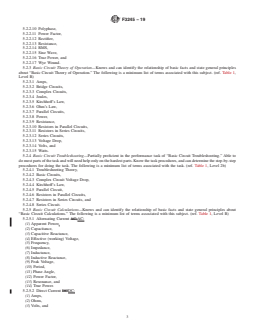
- Fundamental Knowledge: Covers direct current (DC), alternating current (AC), basic circuit theory, and digital logic functions.
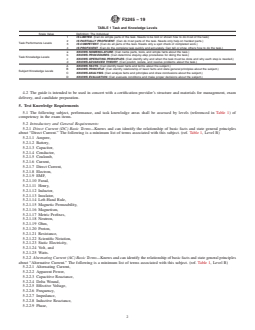
- Task Performance: Provides scales for competency, from limited to proficient, supporting practical task assessments.
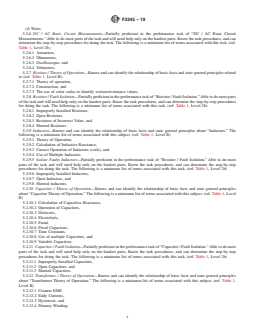
- Component Operations & Troubleshooting: Theory and application of resistors, inductors, capacitors, transformers, rectifiers, filters, oscillators, multivibrators, logic gates, and power circuits.
- Maintenance Practices: Highlights key safety, hazard, and foreign object damage (FOD) prevention practices necessary for aviation environments.
- Technical Publications: Emphasizes skills in interpreting manuals, schematics, diagrams, and aircraft installation data.
- Use of Tools and Equipment: Outlines requirements for tool knowledge, correct usage, calibration, and troubleshooting utilizing standard aviation tools and electronic test equipment.
- Aircraft Wiring and Structures: Instructs on aircraft wiring types, maintenance procedures, continuity checks, corrosion control, and basic airframe principles.
- Safety and Regulatory Compliance: Stresses occupational safety, hazardous materials handling, and adherence to regulatory limitations.
Applications
ASTM F3245-19 provides broad practical value for various stakeholders in the aviation sector:
- Certification Program Development: Serves as a blueprint for structuring certification programs for aircraft electronics technicians (AETs) and related personnel.
- Candidate Assessment: Ensures a uniform approach in evaluating technician knowledge and task proficiency, contributing to higher safety and quality in aviation maintenance.
- Training Curriculum Design: Informs course providers on the minimum core competencies, ensuring comprehensive and relevant educational content for avionics professionals.
- Workforce Qualification: Enables employers to benchmark technician qualifications and validate technical skills against industry-accepted standards.
- Compliance & Safety Management: Guides aviation organizations in meeting regulatory and safety expectations regarding technician competency, hazardous materials handling, FOD prevention, and the use of technical publications.
- Professional Development: Provides individual technicians with a roadmap to certification, professional growth, and compliance with recognized international practices in avionics.
Related Standards
Several referenced documents and standards complement ASTM F3245-19, supporting best practices in aircraft electronics technician certification:
- ASTM F3060: Terminology for Aircraft.
- FAA AC43.13-1B & AC43.13-2B: Acceptable methods, techniques, and practices for aircraft inspection, repair, and alterations.
- FAA Federal Aviation Regulations: Rules for aviation maintenance technician operations.
- FAA-H-8083-30 Series: Aviation Maintenance Technician Handbook (General & Airframe Volumes).
- NCATT Standards: National Center for Aerospace & Transportation Technologies for additional guidance on avionics certification.
Keywords: ASTM F3245-19, aircraft electronics technician, AET, avionics technician, technician certification, avionics standard, aircraft maintenance, aviation safety, personnel qualification, NCATT.
By following ASTM F3245-19, aviation organizations and professionals can ensure robust certification processes, enhanced technician competencies, and elevated standards for safety and maintenance in the field of aircraft electronics.
Relations
- Effective Date
- 01-Apr-2019
- Effective Date
- 01-Jan-2020
- Effective Date
- 01-Nov-2016
- Effective Date
- 01-Apr-2016
- Effective Date
- 15-Sep-2015
- Effective Date
- 01-May-2015
- Effective Date
- 01-Mar-2015
- Effective Date
- 01-Dec-2014
- Effective Date
- 01-Apr-2019
- Effective Date
- 01-Apr-2019
- Effective Date
- 01-Apr-2019
- Referred By
ASTM F3425-20 - Standard Guide for Aircraft Electronics Installation Technician Certification - Effective Date
- 01-Apr-2019
- Referred By
ASTM F3450-20 - Standard Guide for Flight Hazard and Surveillance Systems Personnel Certification - Effective Date
- 01-Apr-2019
- Effective Date
- 01-Apr-2019
Get Certified
Connect with accredited certification bodies for this standard

BSI Group
BSI (British Standards Institution) is the business standards company that helps organizations make excellence a habit.

Bureau Veritas
Bureau Veritas is a world leader in laboratory testing, inspection and certification services.

DNV
DNV is an independent assurance and risk management provider.
Sponsored listings
Frequently Asked Questions
ASTM F3245-19 is a guide published by ASTM International. Its full title is "Standard Guide for Aircraft Electronics Technician Personnel Certification". This standard covers: SIGNIFICANCE AND USE 4.1 The guide is intended to be used to assess competencies of qualified individuals who wish to become certified as an Aircraft Electronics Technician through a certification program. 4.2 The guide is intended to be used in concert with a certification provider’s structure and materials for management, exam delivery, and candidate preparation. SCOPE 1.1 The purpose of this guide is to address the basic fundamental subject knowledge, task performance, and task knowledge activities and functions for avionics professionals to be titled Aircraft Electronics Technicians (AETs). 1.2 This standard does not purport to address all of the safety concerns, if any, associated with its use. It is the responsibility of the user of this standard to establish appropriate safety, health, and environmental practices and determine the applicability of regulatory limitations prior to use. 1.3 This international standard was developed in accordance with internationally recognized principles on standardization established in the Decision on Principles for the Development of International Standards, Guides and Recommendations issued by the World Trade Organization Technical Barriers to Trade (TBT) Committee.
SIGNIFICANCE AND USE 4.1 The guide is intended to be used to assess competencies of qualified individuals who wish to become certified as an Aircraft Electronics Technician through a certification program. 4.2 The guide is intended to be used in concert with a certification provider’s structure and materials for management, exam delivery, and candidate preparation. SCOPE 1.1 The purpose of this guide is to address the basic fundamental subject knowledge, task performance, and task knowledge activities and functions for avionics professionals to be titled Aircraft Electronics Technicians (AETs). 1.2 This standard does not purport to address all of the safety concerns, if any, associated with its use. It is the responsibility of the user of this standard to establish appropriate safety, health, and environmental practices and determine the applicability of regulatory limitations prior to use. 1.3 This international standard was developed in accordance with internationally recognized principles on standardization established in the Decision on Principles for the Development of International Standards, Guides and Recommendations issued by the World Trade Organization Technical Barriers to Trade (TBT) Committee.
ASTM F3245-19 is classified under the following ICS (International Classification for Standards) categories: 03.120.20 - Product and company certification. Conformity assessment; 03.220.50 - Air transport; 49.020 - Aircraft and space vehicles in general. The ICS classification helps identify the subject area and facilitates finding related standards.
ASTM F3245-19 has the following relationships with other standards: It is inter standard links to ASTM F3245-17, ASTM F3060-20, ASTM F3060-16a, ASTM F3060-16, ASTM F3060-15b, ASTM F3060-15a, ASTM F3060-15, ASTM F3060-14, ASTM F3362-18, ASTM F3526-21, ASTM F3376-19, ASTM F3425-20, ASTM F3450-20, ASTM F3639-23. Understanding these relationships helps ensure you are using the most current and applicable version of the standard.
ASTM F3245-19 is available in PDF format for immediate download after purchase. The document can be added to your cart and obtained through the secure checkout process. Digital delivery ensures instant access to the complete standard document.
Standards Content (Sample)
This international standard was developed in accordance with internationally recognized principles on standardization established in the Decision on Principles for the
Development of International Standards, Guides and Recommendations issued by the World Trade Organization Technical Barriers to Trade (TBT) Committee.
Designation:F3245 −19
Standard Guide for
Aircraft Electronics Technician Personnel Certification
This standard is issued under the fixed designation F3245; the number immediately following the designation indicates the year of
original adoption or, in the case of revision, the year of last revision. A number in parentheses indicates the year of last reapproval. A
superscript epsilon (´) indicates an editorial change since the last revision or reapproval.
1. Scope FAA-H-8083-30 Aviation Maintenance Technician Hand-
book – Airframe Volume 2
1.1 The purpose of this guide is to address the basic
fundamental subject knowledge, task performance, and task
3. Terminology
knowledge activities and functions for avionics professionals
to be titled Aircraft Electronics Technicians (AETs). 3.1 See Terminology F3060.
1.2 This standard does not purport to address all of the
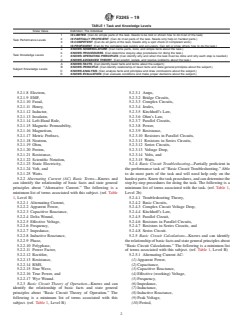
3.2 See Table 1 for task and knowledge definitions relating
safety concerns, if any, associated with its use. It is the to the education requirements for Aircraft Electronics Techni-
responsibility of the user of this standard to establish appro-
cian (AET) professionals.
priate safety, health, and environmental practices and deter-
3.3 Explanations for Task Knowledge and Subject Knowl-
mine the applicability of regulatory limitations prior to use.
edge Levels:
1.3 This international standard was developed in accor-
3.3.1 A task knowledge scale value may be used alone or
dance with internationally recognized principles on standard-
with a task performance scale value to define a level of
ization established in the Decision on Principles for the
knowledge for a specific task. (Example: b and 1b)
Development of International Standards, Guides and Recom-
3.3.2 A subject knowledge scale value is used alone to
mendations issued by the World Trade Organization Technical
define a level of knowledge for a subject not directly related to
Barriers to Trade (TBT) Committee.
any specific task, or for a subject common to several tasks.
2. Referenced Documents
4. Significance and Use
2.1 ASTM Standards:
4.1 The guide is intended to be used to assess competencies
F3060 Terminology for Aircraft
of qualified individuals who wish to become certified as an
2.2 FAA Standards:
Aircraft Electronics Technician through a certification pro-
FAA AC43.13-1B Acceptable Methods, Techniques, and
gram.
Practices – Aircraft Inspection and Repair (with Change
4.2 The guide is intended to be used in concert with a
1)
certification provider’s structure and materials for
FAA AC43.13-2B Acceptable Methods, Techniques, and
management, exam delivery, and candidate preparation.
Practices – Aircraft Alterations
FAA FederalAviation Regulations forAviation Maintenance
5. Test Knowledge Requirements
Technicians
FAA-H-8083-30 Aviation Maintenance Technician Hand-
5.1 The following subject, performance, and task knowl-
book – General
edgeareasshallbeassessedbylevels(referencedinTable1)of
FAA-H-8083-30 Aviation Maintenance Technician Hand-
competency in the exam items.
book – Airframe Volume 1
5.2 Introductory and General Requirements:
5.2.1 Direct Current (DC) Basic Terms—Knows and can
identify the relationship of basic facts and state general
This guide is under the jurisdiction of ASTM Committee F46 on Aerospace
principles about “Direct Current.”The following is a minimum
Personnel and is the direct responsibility of Subcommittee F46.02 on Avionics and
Information Technology Endorsements.
listoftermsassociatedwiththissubject.(ref.Table1,LevelB)
Current edition approved April 1, 2019. Published May 2019. Originally
5.2.1.1 Ampere,
approved in 2017. Last previous edition approved in 2017 as F3245–17. DOI:
5.2.1.2 Battery,
10.1520/F3245–19.
5.2.1.3 Capacitor,
For referenced ASTM standards, visit the ASTM website, www.astm.org, or
contact ASTM Customer Service at service@astm.org. For Annual Book of ASTM
5.2.1.4 Conductor,
Standards volume information, refer to the standard’s Document Summary page on
5.2.1.5 Coulomb,
the ASTM website.
5.2.1.6 Current,
Available from Federal Aviation Administration (FAA), 800 Independence
Ave., SW, Washington, DC 20591, http://www.faa.gov. 5.2.1.7 Direct Current,
Copyright © ASTM International, 100 Barr Harbor Drive, PO Box C700, West Conshohocken, PA 19428-2959. United States
F3245−19
TABLE 1 Task and Knowledge Levels
Scale Value Definition: The Individual
1 ISLIMITED. (Can do simple parts of the task. Needs to be told or shown how to do most of the task)
2 ISPARTIALLYPROFICIENT. (Can do most parts of the task. Needs only help on hardest parts.)
Task Performance Levels
3 ISCOMPETENT. (Can do all parts of the task. Needs only a spot check of completed work.)
4 ISPROFICIENT. (Can do the complete task quickly and accurately. Can tell or show others how to do the task.)
a KNOWSNOMENCLATURE. (Can name parts, tools, and simple facts about the task.)
b KNOWSPROCEDURES. (Can determine step-by-step procedures for doing the task.)
Task Knowledge Levels
c KNOWSOPERATINGPRINCIPLES. (Can identify why and when the task must be done and why each step is needed.)
d KNOWSADVANCEDTHEORY. (Can predict, isolate, and resolve problems about the task.)
A KNOWSFACTS. (Can identify basic facts and terms about the subject.)
B KNOWSPRINCIPLE. (Can identify relationship of basic facts and state general principles about the subject.)
Subject Knowledge Levels
C KNOWSANALYSIS. (Can analyze facts and principles and draw conclusions about the subject.)
D KNOWSEVALUATION. (Can evaluate conditions and make proper decisions about the subject.)
5.2.1.8 Electron, 5.2.3.1 Amps,
5.2.1.9 EMF, 5.2.3.2 Bridge Circuits,
5.2.1.10 Farad, 5.2.3.3 Complex Circuits,
5.2.1.11 Henry, 5.2.3.4 Joules,
5.2.1.12 Inductor, 5.2.3.5 Kirchhoff’s Law,
5.2.1.13 Insulator, 5.2.3.6 Ohm’s Law,
5.2.1.14 Left-Hand Rule, 5.2.3.7 Parallel Circuits,
5.2.3.8 Power,
5.2.1.15 Magnetic Permeability,
5.2.1.16 Magnetism, 5.2.3.9 Resistance,
5.2.1.17 Metric Prefixes, 5.2.3.10 Resistors in Parallel Circuits,
5.2.1.18 Neutron, 5.2.3.11 Resistors in Series Circuits,
5.2.1.19 Ohm, 5.2.3.12 Series Circuits,
5.2.1.20 Proton, 5.2.3.13 Voltage Drop,
5.2.1.21 Resistance, 5.2.3.14 Volts, and
5.2.1.22 Scientific Notation, 5.2.3.15 Watts.
5.2.1.23 Static Electricity, 5.2.4 Basic Circuit Troubleshooting—Partially proficient in
5.2.1.24 Volt, and the performance task of “Basic Circuit Troubleshooting.”Able
5.2.1.25 Watts. to do most parts of the task and will need help only on the
5.2.2 Alternating Current (AC) Basic Terms—Knows and hardest parts. Know the task procedures, and can determine the
can identify the relationship of basic facts and state general step-by-step procedures for doing the task. The following is a
principles about “Alternative Current.” The following is a minimum list of terms associated with the task. (ref. Table 1,
minimum list of terms associated with this subject. (ref. Table Level 2b)
1, Level B) 5.2.4.1 Troubleshooting Theory,
5.2.2.1 Alternating Current, 5.2.4.2 Basic Circuits,
5.2.2.2 Apparent Power, 5.2.4.3 Complex Circuit Voltage Drop,
5.2.2.3 Capacitive Reactance, 5.2.4.4 Kirchhoff’s Law,
5.2.2.4 Delta Wound, 5.2.4.5 Parallel Circuit,
5.2.2.5 Effective Voltage, 5.2.4.6 Resistors in Parallel Circuits,
5.2.2.6 Frequency, 5.2.4.7 Resistors in Series Circuits, and
5.2.2.7 Impedance, 5.2.4.8 Series Circuit.
5.2.2.8 Inductive Reactance, 5.2.5 Basic Circuit Calculations—Knows and can identify
5.2.2.9 Phase, therelationshipofbasicfactsandstategeneralprinciplesabout
5.2.2.10 Polyphase, “Basic Circuit Calculations.” The following is a minimum list
5.2.2.11 Power Factor, of terms associated with this subject. (ref. Table 1, Level B)
5.2.2.12 Rectifier, 5.2.5.1 Alternating Current AC:
5.2.2.13 Resistance, (1) Apparent Power,
5.2.2.14 RMS, (2) Capacitance,
5.2.2.15 Sine Wave, (3) Capacitive Reactance,
5.2.2.16 True Power, and (4) Effective (working) Voltage,
5.2.2.17 Wye Wound. (5) Frequency,
5.2.3 Basic Circuit Theory of Operation—Knows and can (6) Impedance,
identify the relationship of basic facts and state general (7) Inductance,
principles about “Basic Circuit Theory of Operation.” The (8) Inductive Reactance,
following is a minimum list of terms associated with this (9) Peak Voltage,
subject. (ref. Table 1, Level B) (10) Period,
F3245−19
(11) Phase Angle, principles about “Capacitor Theory of Operation.” The follow-
(12) Power Factor, ingisaminimumlistoftermsassociatedwiththissubject.(ref.
(13) Resonance, and Table 1, Level B)
(14) True Power. 5.2.10.1 Calculation of Capacitive Reactance,
5.2.5.2 Direct Current DC: 5.2.10.2 Operation of Capacitors,
(1) Amps, 5.2.10.3 Dielectric,
(2) Ohms,
5.2.10.4 Electrolytic,
(3) Volts, and
5.2.10.5 Farad,
(4) Watts.
5.2.10.6 Fixed Capacitors,
5.2.6 DC / AC Basic Circuit Measurements—Partially pro-
5.2.10.7 Time Constants,
ficient in the performance task of “DC / AC Basic Circuit
5.2.10.8 Use of multiple Capacitors, and
Measurements.”Abletodomostpartsofthetaskandwillneed
5.2.10.9 Variable Capacitors.
help only on the hardest parts. Know the task procedures, and
5.2.11 Capacitor / Fault Isolation—Partially proficient in
can determine the step-by-step procedures for doing the task.
the performance task of “Capacitor / Fault Isolation.” Able to
The following is a minimum list of terms associated with this
do most parts of the task and will need help only on the hardest
task. (ref. Table 1, Level 2b)
parts. Know the task procedures, and can determine the
5.2.6.1 Ammeters,
step-by-step procedures for doing the task. The following is a
5.2.6.2 Ohmmeters,
minimum list of terms associated with this task. (ref. Table 1,
5.2.6.3 Oscilloscopes, and Level 2b)
5.2.6.4 Voltmeters. 5.2.11.1 Improperly Installed Capacitors,
5.2.7 Resistor / Theory of Operation—Knows and can
5.2.11.2 Open Capacitors, and
identify the relationship of basic facts and state general 5.2.11.3 Shorted Capacitors.
principles related to (ref. Table 1, Level B):
5.2.12 Transformer / Theory of Operation—Knows and can
5.2.7.1 Theory of operation,
identify the relationship of basic facts and state general
5.2.7.2 Construction, and principles about “Transformer Theory of Operation.” The
5.2.7.3 The use of color codes to identify resistor/resistance following is a minimum list of terms associated with this
values. subject. (ref. Table 1, Level B)
5.2.8 Resistor / Fault Isolation—Partially proficient in the 5.2.12.1 Counter EMF,
performance task of “Resistor / Fault Isolation.” Able to do 5.2.12.2 Eddy Currents,
most parts of the task and will need help only on the hardest 5.2.12.3 Hysteresis, and
parts. Know the task procedures, and can determine the 5.2.12.4 Primary Winding.
step-by-step procedures for doing the task. The following is a
5.2.13 Transformer / Fault Isolation—Partially proficient in
minimum list of terms associated with this task. (ref. Table 1, the performance task of “Transformer / Fault Isolation.” Able
Level 2b)
to do most parts of the task and will need help only on the
5.2.8.1 Improperly Installed Resistors, hardest parts. Know the task procedures, and can determine the
5.2.8.2 Open Resistors, step-by-step procedures for doing the task. The following is a
minimum list of terms associated with this task. (ref. Table 1,
5.2.8.3 Resistors of Incorrect Value, and
Level 2b)
5.2.8.4 Shorted Resistors.
5.2.13.1 Improperly Installed Transformers,
5.2.9 Inductors—Knows and can identify the relationship of
5.2.13.2 Open or Shorted Primary Coil,
basic facts and state general principles about “Inductors.” The
following is a minimum list of terms associated with this 5.2.13.3 Primary and Secondary Resistance Testing, and
subject. (ref. Table 1, Level B) 5.2.13.4 Secondary Coil.
5.2.9.1 Theory of Operation, 5.2.14 Analog Circuits, Devices, and Switches—Knows and
can identify the relationship of basic facts and state general
5.2.9.2 Calculation of Inductive Reactance,
principles about “Analog Circuits, Devices, and Switches.”
5.2.9.3 Correct Operation of Inductors (coils), and
The following is a minimum list of terms associated with this
5.2.9.4 Use of Multiple Inductors.
subject. (ref. Table 1, Level B)
5.2.9.5 Isolate Faulty Inductors—Partially proficient in the
5.2.14.1 Derating Factor,
performance task of “Resistor / Fault Isolation.” Able to do
5.2.14.2 DPDT,
most parts of the task and will need help only on the hardest
5.2.14.3 DPST,
parts. Know the task procedures, and can determine the
step-by-step procedures for doing the task. The following is a 5.2.14.4 Micro Switch,
5.2.14.5 Normally Closed (contacts),
minimum list of terms associated with this task. (ref. Table 1,
Level 2b) 5.2.14.6 Normally Open (contacts),
5.2.9.6 Improperly Installed Inductors, 5.2.14.7 Proximity Switches,
5.2.9.7 Open Inductors, and 5.2.14.8 Push Button Switches,
5.2.9.8 Shorted inductors. 5.2.14.9 Relays,
5.2.14.10 Rocker,
5.2.10 Capacitor / Theory of Operation—Knows and can
identify the relationship of basic facts and state general 5.2.14.11 Rotary,
F3245−19
5.2.14.12 Solenoids, (5) Mono-stable Multivibrator, and
5.2.14.13 SPDT, (6) Oscillator.
5.2.14.14 Switches, and 5.2.19 Limiter Circuits—Knows and can identify the rela-
5.2.14.15 Toggle.
tionship of basic facts and state general principles about
5.2.15 Power Supply Circuit / Rectifiers—Knows and can “Limiter Circuits.” The following is a minimum list of terms
identify the relationship of
...
This document is not an ASTM standard and is intended only to provide the user of an ASTM standard an indication of what changes have been made to the previous version. Because
it may not be technically possible to adequately depict all changes accurately, ASTM recommends that users consult prior editions as appropriate. In all cases only the current version
of the standard as published by ASTM is to be considered the official document.
Designation: F3245 − 17 F3245 − 19
Standard Guide for
Aircraft Electronics Technician PersonalPersonnel
Certification
This standard is issued under the fixed designation F3245; the number immediately following the designation indicates the year of
original adoption or, in the case of revision, the year of last revision. A number in parentheses indicates the year of last reapproval. A
superscript epsilon (´) indicates an editorial change since the last revision or reapproval.
1. Scope
1.1 The purpose of this guide is to address the basic fundamental subject knowledge, task performance, and task knowledge
activities and functions for avionics professionals to be titled Aircraft Electronics Technicians (AETs).
1.2 This standard does not purport to address all of the safety concerns, if any, associated with its use. It is the responsibility
of the user of this standard to establish appropriate safety safety, health, and healthenvironmental practices and determine the
applicability of regulatory limitations prior to use.
1.3 This international standard was developed in accordance with internationally recognized principles on standardization
established in the Decision on Principles for the Development of International Standards, Guides and Recommendations issued
by the World Trade Organization Technical Barriers to Trade (TBT) Committee.
2. Referenced Documents
2.1 ASTM Standards:
F3060 Terminology for Aircraft
2.2 FAA Standards:
FAA AC43.13-1B Acceptable Methods, Techniques, and Practices – Aircraft Inspection and Repair (with Change 1)
FAA AC43.13-2B Acceptable Methods, Techniques, and Practices – Aircraft Alterations
FAA Federal Aviation Regulations for Aviation Maintenance Technicians
FAA-H-8083-30 Aviation Maintenance Technician Handbook – General
FAA-H-8083-30 Aviation Maintenance Technician Handbook – Airframe Volume 1
FAA-H-8083-30 Aviation Maintenance Technician Handbook – Airframe Volume 2
3. Terminology
3.1 See Terminology F3060.
3.2 See Table 1 for task and knowledge definitions relating to the education requirements for Aircraft Electronics Technician
(AET) professionals.
3.3 Explanations for Task Knowledge and Subject Knowledge Levels:
3.3.1 A task knowledge scale value may be used alone or with a task performance scale value to define a level of knowledge
for a specific task. (Example: b and 1b)
3.3.2 A subject knowledge scale value is used alone to define a level of knowledge for a subject not directly related to any
specific task, or for a subject common to several tasks.
4. Significance and Use
4.1 The guide is intended to be used to assess competencies of qualified individuals who wish to become certified as an Aircraft
Electronics Technician through a certification program.
This guide is under the jurisdiction of ASTM Committee F46 on Aerospace Personnel and is the direct responsibility of Subcommittee F46.02 on Avionics and
Information Technology Endorsements.
Current edition approved March 1, 2017April 1, 2019. Published March 2017May 2019. Originally approved in 2017. Last previous edition approved in 2017 as F3245–17.
DOI: 10.1520/F3245-17.10.1520/F3245–19.
For referenced ASTM standards, visit the ASTM website, www.astm.org, or contact ASTM Customer Service at service@astm.org. For Annual Book of ASTM Standards
volume information, refer to the standard’sstandard’s Document Summary page on the ASTM website.
Available from Federal Aviation Administration (FAA), 800 Independence Ave., SW, Washington, DC 20591, http://www.faa.gov.
Copyright © ASTM International, 100 Barr Harbor Drive, PO Box C700, West Conshohocken, PA 19428-2959. United States
F3245 − 19
TABLE 1 Task and Knowledge Levels
Scale Value Definition: The Individual
1 IS LIMITED. (Can do simple parts of the task. Needs to be told or shown how to do most of the task)
2 IS PARTIALLY PROFICIENT. (Can do most parts of the task. Needs only help on hardest parts.)
Task Performance Levels
3 IS COMPETENT. (Can do all parts of the task. Needs only a spot check of completed work.)
4 IS PROFICIENT. (Can do the complete task quickly and accurately. Can tell or show others how to do the task.)
a KNOWS NOMENCLATURE. (Can name parts, tools, and simple facts about the task.)
b KNOWS PROCEDURES. (Can determine step-by-step procedures for doing the task.)
Task Knowledge Levels
c KNOWS OPERATING PRINCIPLES. (Can identify why and when the task must be done and why each step is needed.)
d KNOWS ADVANCED THEORY. (Can predict, isolate, and resolve problems about the task.)
A KNOWS FACTS. (Can identify basic facts and terms about the subject.)
B KNOWS PRINCIPLE. (Can identify relationship of basic facts and state general principles about the subject.)
Subject Knowledge Levels
C KNOWS ANALYSIS. (Can analyze facts and principles and draw conclusions about the subject.)
D KNOWS EVALUATION. (Can evaluate conditions and make proper decisions about the subject.)
4.2 The guide is intended to be used in concert with a certification provider’s structure and materials for management, exam
delivery, and candidate preparation.
5. Test Knowledge Requirements
5.1 The following subject, performance, and task knowledge areas shall be assessed by levels (referenced in Table 1) of
competency in the exam items.
5.2 Introductory and General Requirements:
5.2.1 Direct Current (DC) Basic Terms—Knows and can identify the relationship of basic facts and state general principles
about “Direct Current.” The following is a minimum list of terms associated with this subject. (ref. Table 1, Level B)
5.2.1.1 Ampere,
5.2.1.2 Battery,
5.2.1.3 Capacitor,
5.2.1.4 Conductor,
5.2.1.5 Coulomb,
5.2.1.6 Current,
5.2.1.7 Direct Current,
5.2.1.8 Electron,
5.2.1.9 EMF,
5.2.1.10 Farad,
5.2.1.11 Henry,
5.2.1.12 Inductor,
5.2.1.13 Insulator,
5.2.1.14 Left-Hand Rule,
5.2.1.15 Magnetic Permeability,
5.2.1.16 Magnetism,
5.2.1.17 Metric Prefixes,
5.2.1.18 Neutron,
5.2.1.19 Ohm,
5.2.1.20 Proton,
5.2.1.21 Resistance,
5.2.1.22 Scientific Notation,
5.2.1.23 Static Electricity,
5.2.1.24 Volt, and
5.2.1.25 Watts.
5.2.2 Alternating Current (AC) Basic Terms—Knows and can identify the relationship of basic facts and state general principles
about “Alternative Current.” The following is a minimum list of terms associated with this subject. (ref. Table 1, Level B)
5.2.2.1 Alternating Current,
5.2.2.2 Apparent Power,
5.2.2.3 Capacitive Reactance,
5.2.2.4 Delta Wound,
5.2.2.5 Effective Voltage,
5.2.2.6 Frequency,
5.2.2.7 Impedance,
5.2.2.8 Inductive Reactance,
5.2.2.9 Phase,
F3245 − 19
5.2.2.10 Polyphase,
5.2.2.11 Power Factor,
5.2.2.12 Rectifier,
5.2.2.13 Resistance,
5.2.2.14 RMS,
5.2.2.15 Sine Wave,
5.2.2.16 True Power, and
5.2.2.17 Wye Wound.
5.2.3 Basic Circuit Theory of Operation—Knows and can identify the relationship of basic facts and state general principles
about “Basic Circuit Theory of Operation.” The following is a minimum list of terms associated with this subject. (ref. Table 1,
Level B)
5.2.3.1 Amps,
5.2.3.2 Bridge Circuits,
5.2.3.3 Complex Circuits,
5.2.3.4 Joules,
5.2.3.5 Kirchhoff’s Law,
5.2.3.6 Ohm’s Law,
5.2.3.7 Parallel Circuits,
5.2.3.8 Power,
5.2.3.9 Resistance,
5.2.3.10 Resistors in Parallel Circuits,
5.2.3.11 Resistors in Series Circuits,
5.2.3.12 Series Circuits,
5.2.3.13 Voltage Drop,
5.2.3.14 Volts, and
5.2.3.15 Watts.
5.2.4 Basic Circuit Troubleshooting—Partially proficient in the performance task of “Basic Circuit Troubleshooting.” Able to
do most parts of the task and will need help only on the hardest parts. Know the task procedures, and can determine the step-by-step
procedures for doing the task. The following is a minimum list of terms associated with the task. (ref. Table 1, Level 2b)
5.2.4.1 Troubleshooting Theory,
5.2.4.2 Basic Circuits,
5.2.4.3 Complex Circuit Voltage Drop,
5.2.4.4 Kirchhoff’s Law,
5.2.4.5 Parallel Circuit,
5.2.4.6 Resistors in Parallel Circuits,
5.2.4.7 Resistors in Series Circuits, and
5.2.4.8 Series Circuit.
5.2.5 Basic Circuit Calculations—Knows and can identify the relationship of basic facts and state general principles about
“Basic Circuit Calculations.” The following is a minimum list of terms associated with this subject. (ref. Table 1, Level B)
5.2.5.1 Alternating Current AC,AC:
(1) Apparent Power,
(2) Capacitance,
(3) Capacitive Reactance,
(4) Effective (working) Voltage,
(5) Frequency,
(6) Impedance,
(7) Inductance,
(8) Inductive Reactance,
(9) Peak Voltage,
(10) Period,
(11) Phase Angle,
(12) Power Factor,
(13) Resonance, and
(14) True Power.
5.2.5.2 Direct Current DCDC:
(1) Amps,
(2) Ohms,
(3) Volts, and
F3245 − 19
(4) Watts.
5.2.6 DC / AC Basic Circuit Measurements—Partially proficient in the performance task of “DC / AC Basic Circuit
Measurements.” Able to do most parts of the task and will need help only on the hardest parts. Know the task procedures, and can
determine the step-by-step procedures for doing the task. The following is a minimum list of terms associated with this task. (ref.
Table 1, Level 2b)
5.2.6.1 Ammeters,
5.2.6.2 Ohmmeters,
5.2.6.3 Oscilloscopes, and
5.2.6.4 Voltmeters.
5.2.7 Resistor / Theory of Operation—Knows and can identify the relationship of basic facts and state general principles related
to (ref. Table 1, Level B):
5.2.7.1 Theory of operation,
5.2.7.2 Construction, and
5.2.7.3 The use of color codes to identify resistor/resistance values.
5.2.8 Resistor / Fault Isolation—Partially proficient in the performance task of “Resistor / Fault Isolation.” Able to do most parts
of the task and will need help only on the hardest parts. Know the task procedures, and can determine the step-by-step procedures
for doing the task. The following is a minimum list of terms associated with this task. (ref. Table 1, Level 2b)
5.2.8.1 Improperly Installed Resistors,
5.2.8.2 Open Resistors,
5.2.8.3 Resistors of Incorrect Value, and
5.2.8.4 Shorted Resistors.
5.2.9 Inductors—Knows and can identify the relationship of basic facts and state general principles about “Inductors.” The
following is a minimum list of terms associated with this subject. (ref. Table 1, Level B)
5.2.9.1 Theory of Operation,
5.2.9.2 Calculation of Inductive Reactance,
5.2.9.3 Correct Operation of Inductors (coils), and
5.2.9.4 Use of Multiple Inductors.
5.2.9.5 Isolate Faulty Inductors—Partially proficient in the performance task of “Resistor / Fault Isolation.” Able to do most
parts of the task and will need help only on the hardest parts. Know the task procedures, and can determine the step-by-step
procedures for doing the task. The following is a minimum list of terms associated with this task. (ref. Table 1, Level 2b)
5.2.9.6 Improperly Installed Inductors,
5.2.9.7 Open Inductors, and
5.2.9.8 Shorted inductors.
5.2.10 Capacitor / Theory of Operation—Knows and can identify the relationship of basic facts and state general principles
about “Capacitor Theory of Operation.” The following is a minimum list of terms associated with this subject. (ref. Table 1, Level
B)
5.2.10.1 Calculation of Capacitive Reactance,
5.2.10.2 Operation of Capacitors,
5.2.10.3 Dielectric,
5.2.10.4 Electrolytic,
5.2.10.5 Farad,
5.2.10.6 Fixed Capacitors,
5.2.10.7 Time Constants,
5.2.10.8 Use of multiple Capacitors, and
5.2.10.9 Variable Capacitors.
5.2.11 Capacitor / Fault Isolation—Partially proficient in the performance task of “Capacitor / Fault Isolation.” Able to do most
parts of the task and will need help only on the hardest parts. Know the task procedures, and can determine the step-by-step
procedures for doing the task. The following is a minimum list of terms associated with this task. (ref. Table 1, Level 2b)
5.2.11.1 Improperly Installed Capacitors,
5.2.11.2 Open Capacitors, and
5.2.11.3 Shorted Capacitors.
5.2.12 Transformer / Theory of Operation—Knows and can identify the relationship of basic facts and state general principles
about “Transformer Theory of Operation.” The following is a minimum list of terms associated with this subject. (ref. Table 1,
Level B)
5.2.12.1 Counter EMF,
5.2.12.2 Eddy Currents,
5.2.12.3 Hysteresis, and
5.2.12.4 Primary Winding.
F3245 − 19
5.2.13 Transformer / Fault Isolation—Partially proficient in the performance task of “Transformer / Fault Isolation.” Able to do
most parts of the task and will need help only on the hardest parts. Know the task procedures, and can determine the step-by-step
procedures for doing the task. The following is a minimum list of terms associated with this task. (ref. Table 1, Level 2b)
5.2.13.1 Improperly Installed Transformers,
5.2.13.2 Open or Shorted Primary Coil,
5.2.13.3 Primary and Secondary Resistance Testing, and
5.2.13.4 Secondary Coil.
5.2.14 Analog Circuits, Devices, and Switches—Knows and can identify the relationship of basic facts and state general
principles about “Analog Circuits, Devices, and Switches.” The following is a minimum list of terms associated with this subject.
(ref. Table 1, Level B)
5.2.14.1 Derating Factor,
5.2.14.2 DPDT,
5.2.14.3 DPST,
5.2.14.4 Micro Switch,
5.2.14.5 Normally Closed (contacts),
5.2.14.6 Normally Open (contacts),
5.2.14.7 Proximity Switches,
5.2.14.8 Push Button Switches,
5.2.14.9 Relays,
5.2.14.10 Rocker,
5.2.14.11 Rotary,
5.2.14.12 Solenoids,
5.2.14.13 SPDT,
5.2.14.14 Switches, and
5.2.14.15 Toggle.
5.2.15 Power Supply Circuit / Rectifiers—Knows and can identify the relationship of basic facts and state general principles
about “Power Supply Circuit / Rectifiers.” The following is a minimum list of terms associated with this subject. (ref. Table 1,
Level
...