

ASTM F3425-20
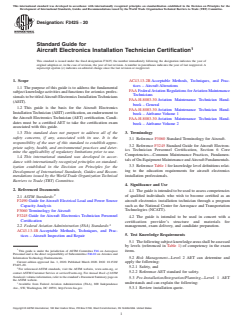
(Guide)Standard Guide for Aircraft Electronics Installation Technician Certification
General Information
- Abstract
SIGNIFICANCE AND USE
4.1 The guide is intended to be used to assess competencies of qualified individuals who wish to become certified as an aircraft electronics installation technician through a program such as the National Center for Aerospace and Transportation Technologies (NCATT).
4.2 The guide is intended to be used in concert with a certification provider’s structure and materials for management, exam delivery, and candidate preparation.
SCOPE
1.1 The purpose of this guide is to address the fundamental subject knowledge activities and functions for avionics professionals to be titled Aircraft Electronics Installation Technicians (AEIT).
1.2 This guide is the basis for the Aircraft Electronics Installation Technician (AEIT) certification, an endorsement to the Aircraft Electronics Technician (AET) certification. Candidates must be a certified AET to take the certification exam associated with this guide.
1.3 This standard does not purport to address all of the safety concerns, if any, associated with its use. It is the responsibility of the user of this standard to establish appropriate safety, health, and environmental practices and determine the applicability of regulatory limitations prior to use.
1.4 This international standard was developed in accordance with internationally recognized principles on standardization established in the Decision on Principles for the Development of International Standards, Guides and Recommendations issued by the World Trade Organization Technical Barriers to Trade (TBT) Committee.
- Status
- Published
- Publication Date
- 31-Dec-2019
- Technical Committee
- F46 - Aerospace Personnel
- Drafting Committee
- F46.02 - Avionics and Information Technology Endorsements
Overview
ASTM F3425-20: Standard Guide for Aircraft Electronics Installation Technician Certification provides a comprehensive framework for assessing the competencies of individuals seeking certification as Aircraft Electronics Installation Technicians (AEIT). Developed by ASTM International, this standard is designed to work in tandem with established certification programs, such as those offered by the National Center for Aerospace and Transportation Technologies (NCATT), ensuring that candidates possess the necessary subject knowledge, skills, and practical capabilities required to perform avionics installation work safely and effectively.
The guide serves as a critical resource for both candidates and certification providers by outlining the required body of knowledge, setting competency levels, and referencing relevant industry practices and regulatory requirements. It is an endorsement to the Aircraft Electronics Technician (AET) certification, meaning candidates must first obtain the AET before seeking AEIT certification.
Key Topics
This standard addresses a broad range of essential areas for aircraft electronics installation technicians:
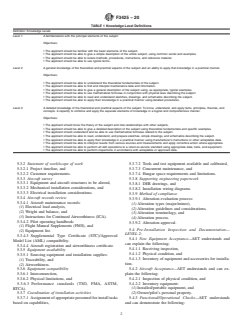
- Competency Assessment: Guidance on evaluating theoretical knowledge and practical skills at three levels: basic familiarity, general applicability, and detailed proficiency.
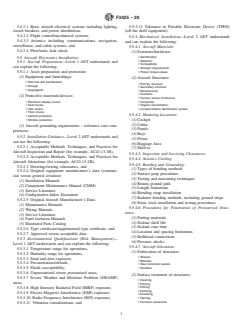
- Pre-Installation and Planning: Knowledge of reviewing installation requirements, project timeline development, customer requirements, aircraft survey, and review of aircraft maintenance records.
- Environmental and Risk Management: Understanding operational environments and associated risk factors such as temperature, humidity, electromagnetic interference (EMI), radio frequency interference (RFI), vibration, and equipment compatibility.
- Installation Techniques: Knowledge of accepted methods and best practices for inspection, repair, alterations, and use of documentation such as installation manuals and wiring diagrams.
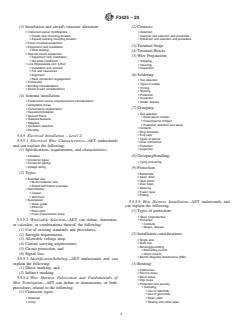
- Mechanical and Electrical Installation: Expertise in wire and cable selection, labeling, wire harness fabrication, connector types, crimping, soldering, bonding, grounding, and mounting.
- Testing and Inspection: Performing pre- and post-installation inspections, continuity checks, system operation tests, power and ground checks, and addressing configuration and calibration.
- Documentation Requirements: Proper logbook entries, alteration approvals, instructions for continued airworthiness, and placarding.
Applications
This standard has significant value for various stakeholders in aviation and aerospace:
- Aviation Maintenance Organizations: Provides a structured approach for qualifying and certifying personnel responsible for installing avionics equipment, supporting regulatory compliance and safety management.
- Training Providers and Certification Bodies: Offers a reference framework for developing curricula, delivering exams, and preparing candidates pursuing AEIT endorsement.
- Avionics Professionals: Guides individuals pursuing career advancement in aircraft electronics installation, ensuring their knowledge and skills align with industry and regulatory standards.
- Regulatory and Safety Inspectors: Assists in verifying that technicians have been adequately trained and assessed following recognized industry guidelines, enhancing overall airworthiness and reliability of aircraft systems.
Related Standards
The ASTM F3425-20 standard references and aligns with several key industry documents, ensuring compatibility with broad aviation regulations and best practices, including:
- ASTM F2490: Guide for Aircraft Electrical Load and Power Source Capacity Analysis
- ASTM F3060: Standard Terminology for Aircraft
- ASTM F3245: Guide for Aircraft Electronics Technician Personnel Certification
- FAA AC43.13-1B & AC43.13-2B: Acceptable Methods, Techniques, and Practices for Aircraft Inspection, Repair, and Alterations
- FAA-H-8083-30: Aviation Maintenance Technician Handbooks-General and Airframe Volumes
Practical Value
Implementing ASTM F3425-20 helps standardize the qualification of aircraft electronics installation technicians, promotes consistent safety, and ensures the proper functioning of avionics systems. Adherence to this guide supports regulatory compliance, enhances technical competence, and fosters confidence in the aerospace maintenance workforce-ultimately contributing to safer and more reliable aircraft operations.
Relations
- Effective Date
- 01-Jan-2020
- Effective Date
- 01-Apr-2019
- Effective Date
- 01-Mar-2017
- Effective Date
- 01-Nov-2016
- Effective Date
- 01-Apr-2016
- Effective Date
- 15-Sep-2015
- Effective Date
- 01-May-2015
- Effective Date
- 01-Mar-2015
- Effective Date
- 01-Dec-2014
- Refers
ASTM F2490-05(2013) - Standard Guide for Aircraft Electrical Load and Power Source Capacity Analysis - Effective Date
- 01-Jul-2013
- Refers
ASTM F2490-05 - Standard Guide for Aircraft Electrical Load and Power Source Capacity Analysis - Effective Date
- 01-Oct-2005
- Refers
ASTM F2490-05e1 - Standard Guide for Aircraft Electrical Load and Power Source Capacity Analysis - Effective Date
- 01-Oct-2005
Get Certified
Connect with accredited certification bodies for this standard

BUREAU VERITAS Certification Germany
Bureau Veritas certification in Germany.

Element Materials Technology
Materials testing and product certification.

AQMS Ltd.
AQMS provides ISO certification to SMEs across the UK.
Sponsored listings
Frequently Asked Questions
ASTM F3425-20 is a guide published by ASTM International. Its full title is "Standard Guide for Aircraft Electronics Installation Technician Certification". This standard covers: SIGNIFICANCE AND USE 4.1 The guide is intended to be used to assess competencies of qualified individuals who wish to become certified as an aircraft electronics installation technician through a program such as the National Center for Aerospace and Transportation Technologies (NCATT). 4.2 The guide is intended to be used in concert with a certification provider’s structure and materials for management, exam delivery, and candidate preparation. SCOPE 1.1 The purpose of this guide is to address the fundamental subject knowledge activities and functions for avionics professionals to be titled Aircraft Electronics Installation Technicians (AEIT). 1.2 This guide is the basis for the Aircraft Electronics Installation Technician (AEIT) certification, an endorsement to the Aircraft Electronics Technician (AET) certification. Candidates must be a certified AET to take the certification exam associated with this guide. 1.3 This standard does not purport to address all of the safety concerns, if any, associated with its use. It is the responsibility of the user of this standard to establish appropriate safety, health, and environmental practices and determine the applicability of regulatory limitations prior to use. 1.4 This international standard was developed in accordance with internationally recognized principles on standardization established in the Decision on Principles for the Development of International Standards, Guides and Recommendations issued by the World Trade Organization Technical Barriers to Trade (TBT) Committee.
SIGNIFICANCE AND USE 4.1 The guide is intended to be used to assess competencies of qualified individuals who wish to become certified as an aircraft electronics installation technician through a program such as the National Center for Aerospace and Transportation Technologies (NCATT). 4.2 The guide is intended to be used in concert with a certification provider’s structure and materials for management, exam delivery, and candidate preparation. SCOPE 1.1 The purpose of this guide is to address the fundamental subject knowledge activities and functions for avionics professionals to be titled Aircraft Electronics Installation Technicians (AEIT). 1.2 This guide is the basis for the Aircraft Electronics Installation Technician (AEIT) certification, an endorsement to the Aircraft Electronics Technician (AET) certification. Candidates must be a certified AET to take the certification exam associated with this guide. 1.3 This standard does not purport to address all of the safety concerns, if any, associated with its use. It is the responsibility of the user of this standard to establish appropriate safety, health, and environmental practices and determine the applicability of regulatory limitations prior to use. 1.4 This international standard was developed in accordance with internationally recognized principles on standardization established in the Decision on Principles for the Development of International Standards, Guides and Recommendations issued by the World Trade Organization Technical Barriers to Trade (TBT) Committee.
ASTM F3425-20 is classified under the following ICS (International Classification for Standards) categories: 49.060 - Aerospace electric equipment and systems. The ICS classification helps identify the subject area and facilitates finding related standards.
ASTM F3425-20 has the following relationships with other standards: It is inter standard links to ASTM F3060-20, ASTM F3245-19, ASTM F3245-17, ASTM F3060-16a, ASTM F3060-16, ASTM F3060-15b, ASTM F3060-15a, ASTM F3060-15, ASTM F3060-14, ASTM F2490-05(2013), ASTM F2490-05, ASTM F2490-05e1. Understanding these relationships helps ensure you are using the most current and applicable version of the standard.
ASTM F3425-20 is available in PDF format for immediate download after purchase. The document can be added to your cart and obtained through the secure checkout process. Digital delivery ensures instant access to the complete standard document.
Standards Content (Sample)
This international standard was developed in accordance with internationally recognized principles on standardization established in the Decision on Principles for the
Development of International Standards, Guides and Recommendations issued by the World Trade Organization Technical Barriers to Trade (TBT) Committee.
Designation:F3425 −20
Standard Guide for
Aircraft Electronics Installation Technician Certification
This standard is issued under the fixed designation F3425; the number immediately following the designation indicates the year of
original adoption or, in the case of revision, the year of last revision. A number in parentheses indicates the year of last reapproval. A
superscript epsilon (´) indicates an editorial change since the last revision or reapproval.
1. Scope AC43.13-2B Acceptable Methods, Techniques, and Prac-
tices – Aircraft Alterations
1.1 The purpose of this guide is to address the fundamental
FAA FederalAviation Regulations forAviation Maintenance
subject knowledge activities and functions for avionics profes-
Technicians
sionals to be titledAircraft Electronics Installation Technicians
FAA-H-8083-30 Aviation Maintenance Technician Hand-
(AEIT).
book – General
1.2 This guide is the basis for the Aircraft Electronics
FAA-H-8083-30 Aviation Maintenance Technician Hand-
Installation Technician (AEIT) certification, an endorsement to
book – Airframe Volume 1
theAircraft Electronics Technician (AET) certification. Candi-
FAA-H-8083-30 Aviation Maintenance Technician Hand-
dates must be a certified AET to take the certification exam
book – Airframe Volume 2
associated with this guide.
3. Terminology
1.3 This standard does not purport to address all of the
safety concerns, if any, associated with its use. It is the
3.1 Reference F3060 Standard Terminology for Aircraft.
responsibility of the user of this standard to establish appro-
3.2 Reference F3245 Standard Guide for Aircraft Electron-
priate safety, health, and environmental practices and deter-
ics Technician Personnel Certification, Section 6 Core
mine the applicability of regulatory limitations prior to use.
Competencies—Common Maintenance Practices, Fundamen-
1.4 This international standard was developed in accor-
tals of On-Equipment Maintenance andAircraft Fundamentals.
dance with internationally recognized principles on standard-
3.3 Reference Table 1 for knowledge level definitions relat-
ization established in the Decision on Principles for the
ing to the education requirements for aircraft electronics
Development of International Standards, Guides and Recom-
installation professionals.
mendations issued by the World Trade Organization Technical
Barriers to Trade (TBT) Committee.
4. Significance and Use
2. Referenced Documents
4.1 The guide is intended to be used to assess competencies
of qualified individuals who wish to become certified as an
2.1 ASTM Standards:
aircraft electronics installation technician through a program
F2490 Guide for Aircraft Electrical Load and Power Source
such as the National Center for Aerospace and Transportation
Capacity Analysis
Technologies (NCATT).
F3060 Terminology for Aircraft
F3245 Guide for Aircraft Electronics Technician Personnel
4.2 The guide is intended to be used in concert with a
Certification
certification provider’s structure and materials for
2.2 Federal Aviation Administration (FAA) Standards: management, exam delivery, and candidate preparation.
AC43.13-1B Acceptable Methods, Techniques, and Prac-
5. Test Knowledge Requirements
tices – Aircraft Inspection and Repair
5.1 Thefollowingsubjectknowledgeareasshallbeassessed
by levels (referenced in Table 1) of competency in the exam
This guide is under the jurisdiction of ASTM Committee F46 on Aerospace
items.
Personnel and is the direct responsibility of Subcommittee F46.02 on Avionics and
5.2 Risk Management—Level 2 AET can determine and
Information Technology Endorsements.
Current edition approved Jan. 1, 2020. Published March 2020. DOI: 10.1520/
apply the following:
F3425–20.
5.2.1 Safety, and
For referenced ASTM standards, visit the ASTM website, www.astm.org, or
5.2.2 Reference AET standard for safety.
contact ASTM Customer Service at service@astm.org. For Annual Book of ASTM
Standards volume information, refer to the standard’s Document Summary page on
5.3 Pre-Installation/Integration/Planning—Level 1 AET
the ASTM website.
understands and can explain the following:
Available from Federal Aviation Administration (FAA), 800 Independence
Ave., SW, Washington, DC 20591, http://www.faa.gov. 5.3.1 Review installation quote.
Copyright © ASTM International, 100 Barr Harbor Drive, PO Box C700, West Conshohocken, PA 19428-2959. United States
F3425−20
TABLE 1 Knowledge Level Definitions
Definition: Knowledge Levels
Level 1 A familiarization with the principal elements of the subject
Objectives:
• The applicant should be familiar with the basic elements of the subject.
• The applicant should be able to give a simple description of the whole subject, using common words and examples.
• The applicant should be able to locate methods, procedures, instructions, and reference material.
• The applicant should be able to use typical terms.
Level 2 A general knowledge of the theoretical and practical aspects of the subject and an ability to apply that knowledge in a practical manner.
Objectives:
• The applicant should be able to understand the theoretical fundamentals of the subject.
• The applicant should be able to find and interpret maintenance data and information.
• The applicant should be able to give a general description of the subject using, as appropriate, typical examples.
• The applicant should be able to use mathematical formulae in conjunction with physical laws describing the subject.
• The applicant should be able to read and understand sketches, drawings, and schematics describing the subject.
• The applicant should be able to apply their knowledge in a practical manner using detailed procedures.
Level 3 A detailed knowledge of the theoretical and practical aspects of the subject. To know, understand, and apply facts, principles, theories, and
concepts. A capacity to combine and apply the separate elements of knowledge in a logical and comprehensive manner.
Objectives:
• The applicant should know the theory of the subject and inter-relationships with other subjects.
• The applicant should be able to give a detailed description of the subject using theoretical fundamentals and specific examples.
• The applicant should understand and be able to use mathematical formulae related to the subject.
• The applicant should be able to read, understand, and prepare sketches, simple drawings, and schematics describing the subject.
• The applicant should be able to apply their knowledge in a practical manner using manufacturer’s instructions or other acceptable data.
• The applicant should be able to interpret results from various sources and measurements and apply corrective action where appropriate.
• The applicant should be able to perform all skill operations to a return-to-service standard using appropriate data, tools, and equipment.
• The applicant should be able to perform inspections in accordance with acceptable or approved data.
5.3.2 Statement of work/scope of work 5.3.7.2 Tools and test equipment available and calibrated,
5.3.2.1 Project timeline, and 5.3.7.3 Concurrent maintenance, and
5.3.2.2 Customer requirements.
5.3.7.4 Hangar space requirements and limitations.
5.3.3 Aircraft survey
5.3.8 Supporting engineering paperwork
5.3.3.1 Equipment and aircraft structures to be altered,
5.3.8.1 DER drawings, and
5.3.3.2 Mechanical installation considerations, and
5.3.8.2 Installation wiring diagrams.
5.3.3.3 Electrical installation considerations.
5.3.9 Method of compliance
5.3.4 Aircraft records review
5.3.9.1 Alteration evaluation process:
5.3.4.1 Aircraft maintenance records:
(1) Alteration types (major/minor),
(1) Electrical load analysis,
(2) Alteration guidelines and considerations,
(2) Weight and balance, and
(3) Alteration terminology, and
(3) Instructions for Continued Airworthiness (ICA).
(4) Alteration process.
5.3.4.2 Pilot operating handbook:
5.3.9.2 Alteration approval.
(1) Flight Manual Supplements (FMS), and
5.4 Pre-Installation Inspection and Documentation—
(2) Equipment list.
LEVEL 2:
5.3.4.3 Supplemental Type Certificate (STC)/Approved
5.4.1 New Equipment Acceptance—AET understands and
Model List (AML) compatibility.
can explain the following:
5.3.4.4 Aircraft registration and airworthiness certificate.
5.4.1.1 Receiving inspection,
5.3.5 Equipment availability
5.4.1.2 Physical condition, and
5.3.5.1 Sourcing equipment and installation supplies:
5.4.1.3 Inventory of equipment and accessories for installa-
(1) Traceability, and
tion.
(2) Airworthiness.
5.4.2 Aircraft Acceptance—AET understands and can ex-
5.3.6 Equipment compatibility
plain the following:
5.3.6.1 Interconnection,
5.4.2.1 Inspection of physical condition, and
5.3.6.2 Physical limitations, and
5.3.6.3 Performance standards (TSO, PMA, ASTM, 5.4.2.2 Inventory equipment:
(1) Installed/portable equipment, and
RTCA).
5.3.7 Coordination of installation activities (2) Owner/pilot’s personal property.
5.3.7.1 Assignmentofappropriatepersonnelforinstalltasks 5.4.3 Functional/Operational Checks—AET understands
based on capabilities, and can demonstrate the following:
F3425−20
5.4.3.1 Basic aircraft electrical systems including lighting, 5.5.3.12 Tolerance to Portable Electronic Device (TPED)
circuit breakers, and power distribution, (off the shelf equipment).
5.4.3.2 Flight control/mechanical systems,
5.5.4 Mechanical Installation—Level 2 AET understands
5.4.3.3 Avionics including communications, navigation,
...