

ASTM F3316/F3316M-19
(Specification)Standard Specification for Electrical Systems for Aircraft with Electric or Hybrid-Electric Propulsion
General Information
- Abstract
ABSTRACT
This specification applies to the electrical systems, electrical equipment, and electrical power distribution aspects of airworthiness and design for aircraft with electric or hybrid-electric propulsion. Developed through open consensus of international experts in general aviation, this material focused on Normal Category Airplanes. The content may be more broadly applicable; it is the responsibility of the applicant to substantiate broader applicability as a specific means of compliance.
This specification establishes the Aircraft Type Code (ATC) compliance matrix based on certification level, number of engines, type of engine(s), stall speed, cruise speed, meteorological conditions, altitude, and maneuvers. An ATC is defined by taking into account both the technical considerations regarding the design of the aircraft and the airworthiness level established based upon risk-based criteria. Requirements for electrical systems for electric propulsion cover power source capacity and distribution, electrical systems and equipment, circuit protective devices, master switch arrangement, switches, electrical cables and equipment, electrical system fire protection, electronic equipment, and storage battery design and installation.
SCOPE
1.1 This specification covers the electrical systems, electrical equipment, and electrical power distribution aspects of airworthiness and design for aircraft with Electric or Hybrid-Electric Propulsion. This specification was written with the focus on electric propulsion systems with conventional system layout, characteristics, and operation. This specification does not address all of the requirements that may be necessary for possible hybrid-electric configurations where an EPU and a combustion engine are used in combination to provide propulsion. The use of this specification combined with the applicable portions of Specification F3231/F3231M may be necessary for hybrid-electric configurations. This material was developed through open consensus of international experts in general aviation. This material was created by focusing on Normal Category Aeroplanes. The content may be more broadly applicable; it is the responsibility of the applicant to substantiate broader applicability as a specific means of compliance.
1.2 An applicant intending to propose this information as a means of compliance for design approval shall seek guidance from their respective oversight authority (for example, published guidance from applicable CAAs) concerning the acceptable use and application thereof. For information on which oversight authorities have accepted this standard (in whole or in part) as a Means of Compliance to their regulatory requirements (Hereinafter referred to as “the Rules”), refer to ASTM F44 webpage (www.ASTM.org/COMMITTEE/F44.htm).
1.3 Units—This standard may present information in either SI units, English Engineering units, or both. The values stated in each system are not necessarily exact equivalents; therefore, to ensure conformance with the standard, each system shall be used independently of the other, and values from the two systems shall not be combined.
1.4 This standard does not purport to address all of the safety concerns, if any, associated with its use. It is the responsibility of the user of this standard to establish appropriate safety, health, and environmental practices and determine the applicability of regulatory limitations prior to use.
1.5 This international standard was developed in accordance with internationally recognized principles on standardization established in the Decision on Principles for the Development of International Standards, Guides and Recommendations issued by the World Trade Organization Technical Barriers to Trade (TBT) Committee.
- Status
- Published
- Publication Date
- 31-Oct-2019
- Technical Committee
- F44 - General Aviation Aircraft
- Drafting Committee
- F44.50 - Systems and Equipment
Buy Documents
ASTM F3316/F3316M-19 - Standard Specification for Electrical Systems for Aircraft with Electric or Hybrid-Electric Propulsion
REDLINE ASTM F3316/F3316M-19 - Standard Specification for Electrical Systems for Aircraft with Electric or Hybrid-Electric Propulsion
Overview
ASTM F3316/F3316M-19, titled "Standard Specification for Electrical Systems for Aircraft with Electric or Hybrid-Electric Propulsion," establishes requirements for the airworthiness, design, and safety of electrical systems in aircraft utilizing electric or hybrid-electric propulsion technologies. Developed by ASTM International through an open consensus of international aviation experts, it primarily addresses general aviation, with a focus on normal category aeroplanes. The standard is intended to provide clear compliance criteria for aircraft manufacturers, designers, and engineers working on the next generation of electric or hybrid propulsion systems.
Key Topics
The scope and structure of ASTM F3316/F3316M-19 cover critical aspects of aircraft electrical systems, including:
- Electrical Power Distribution
Guidelines for sourcing, distributing, and managing electrical energy throughout the aircraft, including redundancy requirements and system reliability. - Power Source Capacity
Criteria to ensure power sources and distribution systems can support essential and non-essential loads under a variety of operational scenarios, including failure conditions. - Electrical Equipment Integration
Specifications for the installation, protection, and clear identification of electrical equipment and wiring to enhance reliability and safety. - Circuit Protective Devices
Requirements for the installation of devices to prevent circuit overloads and electrical faults, especially in critical circuits. - Master Switch Arrangement and Switch Design
Mandates on the arrangement and construction of master switches for rapid and safe electrical power shutdown, while guarding against unintentional disengagement. - Fire Protection Measures
Provisions for fire resistance across electrical components, including wiring insulation testing and segregation from flammable fluids. - Storage Battery Design and Installation
Specifications for battery safety, including thermal management, prevention of toxic gas accumulation, and protection against hazardous failures. - Applicability Matrix (ATC Compliance Matrix)
Framework for compliance based on certification level, engine type and number, flight characteristics, and environmental conditions.
Applications
ASTM F3316/F3316M-19 is a valuable resource for:
- Aircraft Manufacturers
Ensure compliance and certification of new electric or hybrid-electric aircraft models. - System Designers and Integrators
Reference for integrating safe and reliable electrical systems in general aviation aircraft. - Regulatory Authorities and Certification Bodies
Assessment of compliance with national and international airworthiness requirements. - Modification and Retrofit Projects
Provides guidance for converting existing aircraft to electric or hybrid propulsion through detailed requirements for electrical equipment and wiring upgrades. - Engineering Consultants
Framework for advising clients on electrical system safety, redundancy, fault tolerance, and compliance strategies.
While the standard directly targets normal category aeroplanes, applicants may substantiate broader applicability as a means of compliance for other categories or configurations, subject to oversight authority guidance.
Related Standards
ASTM F3316/F3316M-19 aligns and cross-references several pivotal standards to provide a comprehensive approach to aircraft electrical systems:
- ASTM F2490: Guide for Aircraft Electrical Load and Power Source Capacity Analysis
- ASTM F2639: Practice for Design, Alteration, and Certification of Aircraft Electrical Wiring Systems
- ASTM F3060: Terminology for Aircraft
- ASTM F3061/F3061M: Specification for Systems and Equipment in Small Aircraft
- ASTM F3066/F3066M: Specification for Aircraft Powerplant Installation Hazard Mitigation
- ASTM F3231/F3231M: Specification for Electrical Systems for Aircraft with Combustion Engine Electrical Power Generation (essential for hybrid-electric configurations)
- ASTM F3235: Specification for Aircraft Storage Batteries
- ASTM F3239: Specification for Aircraft Electric Propulsion Systems
- DOT/FAA/AR-00/12: Aircraft Materials Fire Test Handbook (referenced for fire protection and wire insulation testing)
Practical Value
By establishing robust criteria for the design, installation, safety, and verification of electrical systems in electric and hybrid-electric aircraft, ASTM F3316/F3316M-19 advances airworthiness, operational safety, and reliability. It offers a clear path to certification and technology adoption, facilitating innovation while ensuring regulatory compliance. This standard is an essential tool for organizations at the forefront of sustainable aviation development, supporting the growing market for electric propulsion in general aviation.
Relations
- Effective Date
- 01-Nov-2019
- Effective Date
- 01-Oct-2023
- Effective Date
- 01-Jan-2020
- Effective Date
- 01-Nov-2019
- Effective Date
- 01-Jun-2019
- Effective Date
- 01-Oct-2018
- Effective Date
- 01-Sep-2018
- Refers
ASTM F3066/F3066M-17 - Standard Specification for Aircraft Powerplant Installation Hazard Mitigation - Effective Date
- 01-Dec-2017
- Effective Date
- 15-Feb-2017
- Effective Date
- 15-Feb-2017
- Effective Date
- 15-Feb-2017
- Effective Date
- 15-Feb-2017
- Effective Date
- 01-Dec-2016
- Effective Date
- 01-Nov-2016
- Effective Date
- 01-Aug-2016
Buy Documents
ASTM F3316/F3316M-19 - Standard Specification for Electrical Systems for Aircraft with Electric or Hybrid-Electric Propulsion
REDLINE ASTM F3316/F3316M-19 - Standard Specification for Electrical Systems for Aircraft with Electric or Hybrid-Electric Propulsion
Get Certified
Connect with accredited certification bodies for this standard

BUREAU VERITAS Certification Germany
Bureau Veritas certification in Germany.

Element Materials Technology
Materials testing and product certification.

AQMS Ltd.
AQMS provides ISO certification to SMEs across the UK.
Sponsored listings
Frequently Asked Questions
ASTM F3316/F3316M-19 is a technical specification published by ASTM International. Its full title is "Standard Specification for Electrical Systems for Aircraft with Electric or Hybrid-Electric Propulsion". This standard covers: ABSTRACT This specification applies to the electrical systems, electrical equipment, and electrical power distribution aspects of airworthiness and design for aircraft with electric or hybrid-electric propulsion. Developed through open consensus of international experts in general aviation, this material focused on Normal Category Airplanes. The content may be more broadly applicable; it is the responsibility of the applicant to substantiate broader applicability as a specific means of compliance. This specification establishes the Aircraft Type Code (ATC) compliance matrix based on certification level, number of engines, type of engine(s), stall speed, cruise speed, meteorological conditions, altitude, and maneuvers. An ATC is defined by taking into account both the technical considerations regarding the design of the aircraft and the airworthiness level established based upon risk-based criteria. Requirements for electrical systems for electric propulsion cover power source capacity and distribution, electrical systems and equipment, circuit protective devices, master switch arrangement, switches, electrical cables and equipment, electrical system fire protection, electronic equipment, and storage battery design and installation. SCOPE 1.1 This specification covers the electrical systems, electrical equipment, and electrical power distribution aspects of airworthiness and design for aircraft with Electric or Hybrid-Electric Propulsion. This specification was written with the focus on electric propulsion systems with conventional system layout, characteristics, and operation. This specification does not address all of the requirements that may be necessary for possible hybrid-electric configurations where an EPU and a combustion engine are used in combination to provide propulsion. The use of this specification combined with the applicable portions of Specification F3231/F3231M may be necessary for hybrid-electric configurations. This material was developed through open consensus of international experts in general aviation. This material was created by focusing on Normal Category Aeroplanes. The content may be more broadly applicable; it is the responsibility of the applicant to substantiate broader applicability as a specific means of compliance. 1.2 An applicant intending to propose this information as a means of compliance for design approval shall seek guidance from their respective oversight authority (for example, published guidance from applicable CAAs) concerning the acceptable use and application thereof. For information on which oversight authorities have accepted this standard (in whole or in part) as a Means of Compliance to their regulatory requirements (Hereinafter referred to as “the Rules”), refer to ASTM F44 webpage (www.ASTM.org/COMMITTEE/F44.htm). 1.3 Units—This standard may present information in either SI units, English Engineering units, or both. The values stated in each system are not necessarily exact equivalents; therefore, to ensure conformance with the standard, each system shall be used independently of the other, and values from the two systems shall not be combined. 1.4 This standard does not purport to address all of the safety concerns, if any, associated with its use. It is the responsibility of the user of this standard to establish appropriate safety, health, and environmental practices and determine the applicability of regulatory limitations prior to use. 1.5 This international standard was developed in accordance with internationally recognized principles on standardization established in the Decision on Principles for the Development of International Standards, Guides and Recommendations issued by the World Trade Organization Technical Barriers to Trade (TBT) Committee.
ABSTRACT This specification applies to the electrical systems, electrical equipment, and electrical power distribution aspects of airworthiness and design for aircraft with electric or hybrid-electric propulsion. Developed through open consensus of international experts in general aviation, this material focused on Normal Category Airplanes. The content may be more broadly applicable; it is the responsibility of the applicant to substantiate broader applicability as a specific means of compliance. This specification establishes the Aircraft Type Code (ATC) compliance matrix based on certification level, number of engines, type of engine(s), stall speed, cruise speed, meteorological conditions, altitude, and maneuvers. An ATC is defined by taking into account both the technical considerations regarding the design of the aircraft and the airworthiness level established based upon risk-based criteria. Requirements for electrical systems for electric propulsion cover power source capacity and distribution, electrical systems and equipment, circuit protective devices, master switch arrangement, switches, electrical cables and equipment, electrical system fire protection, electronic equipment, and storage battery design and installation. SCOPE 1.1 This specification covers the electrical systems, electrical equipment, and electrical power distribution aspects of airworthiness and design for aircraft with Electric or Hybrid-Electric Propulsion. This specification was written with the focus on electric propulsion systems with conventional system layout, characteristics, and operation. This specification does not address all of the requirements that may be necessary for possible hybrid-electric configurations where an EPU and a combustion engine are used in combination to provide propulsion. The use of this specification combined with the applicable portions of Specification F3231/F3231M may be necessary for hybrid-electric configurations. This material was developed through open consensus of international experts in general aviation. This material was created by focusing on Normal Category Aeroplanes. The content may be more broadly applicable; it is the responsibility of the applicant to substantiate broader applicability as a specific means of compliance. 1.2 An applicant intending to propose this information as a means of compliance for design approval shall seek guidance from their respective oversight authority (for example, published guidance from applicable CAAs) concerning the acceptable use and application thereof. For information on which oversight authorities have accepted this standard (in whole or in part) as a Means of Compliance to their regulatory requirements (Hereinafter referred to as “the Rules”), refer to ASTM F44 webpage (www.ASTM.org/COMMITTEE/F44.htm). 1.3 Units—This standard may present information in either SI units, English Engineering units, or both. The values stated in each system are not necessarily exact equivalents; therefore, to ensure conformance with the standard, each system shall be used independently of the other, and values from the two systems shall not be combined. 1.4 This standard does not purport to address all of the safety concerns, if any, associated with its use. It is the responsibility of the user of this standard to establish appropriate safety, health, and environmental practices and determine the applicability of regulatory limitations prior to use. 1.5 This international standard was developed in accordance with internationally recognized principles on standardization established in the Decision on Principles for the Development of International Standards, Guides and Recommendations issued by the World Trade Organization Technical Barriers to Trade (TBT) Committee.
ASTM F3316/F3316M-19 is classified under the following ICS (International Classification for Standards) categories: 49.050 - Aerospace engines and propulsion systems; 49.060 - Aerospace electric equipment and systems. The ICS classification helps identify the subject area and facilitates finding related standards.
ASTM F3316/F3316M-19 has the following relationships with other standards: It is inter standard links to ASTM F3316/F3316M-18, ASTM F3061/F3061M-23b, ASTM F3060-20, ASTM F3061/F3061M-19a, ASTM F3061/F3061M-19, ASTM F2639-18, ASTM F3239-18, ASTM F3066/F3066M-17, ASTM F3235-17, ASTM F3061/F3061M-17, ASTM F3235-17e1, ASTM F3231/F3231M-17, ASTM F3061/F3061M-16b, ASTM F3060-16a, ASTM F3061/F3061M-16a. Understanding these relationships helps ensure you are using the most current and applicable version of the standard.
ASTM F3316/F3316M-19 is available in PDF format for immediate download after purchase. The document can be added to your cart and obtained through the secure checkout process. Digital delivery ensures instant access to the complete standard document.
Standards Content (Sample)
This international standard was developed in accordance with internationally recognized principles on standardization established in the Decision on Principles for the
Development of International Standards, Guides and Recommendations issued by the World Trade Organization Technical Barriers to Trade (TBT) Committee.
Designation:F3316/F3316M −19
Standard Specification for
Electrical Systems for Aircraft with Electric or Hybrid-
Electric Propulsion
ThisstandardisissuedunderthefixeddesignationF3316/F3316M;thenumberimmediatelyfollowingthedesignationindicatestheyear
of original adoption or, in the case of revision, the year of last revision.Anumber in parentheses indicates the year of last reapproval.
A superscript epsilon (´) indicates an editorial change since the last revision or reapproval.
1. Scope 1.4 This standard does not purport to address all of the
safety concerns, if any, associated with its use. It is the
1.1 This specification covers the electrical systems, electri-
responsibility of the user of this standard to establish appro-
cal equipment, and electrical power distribution aspects of
priate safety, health, and environmental practices and deter-
airworthiness and design for aircraft with Electric or Hybrid-
mine the applicability of regulatory limitations prior to use.
Electric Propulsion. This specification was written with the
1.5 This international standard was developed in accor-
focus on electric propulsion systems with conventional system
dance with internationally recognized principles on standard-
layout, characteristics, and operation. This specification does
ization established in the Decision on Principles for the
not address all of the requirements that may be necessary for
Development of International Standards, Guides and Recom-
possible hybrid-electric configurations where an EPU and a
mendations issued by the World Trade Organization Technical
combustion engine are used in combination to provide propul-
Barriers to Trade (TBT) Committee.
sion.Theuseofthisspecificationcombinedwiththeapplicable
portions of Specification F3231/F3231M may be necessary for
2. Referenced Documents
hybrid-electric configurations. This material was developed 2
2.1 ASTM Standards:
through open consensus of international experts in general
F2490–05Standard Guide forAircraft Electrical Load and
aviation. This material was created by focusing on Normal
Power Source Capacity Analysis
Category Aeroplanes. The content may be more broadly
F2639Practice for Design, Alteration, and Certification of
applicable; it is the responsibility of the applicant to substan-
Aircraft Electrical Wiring Systems
tiate broader applicability as a specific means of compliance.
F3060Terminology for Aircraft
1.2 An applicant intending to propose this information as a
F3061/F3061MSpecification for Systems and Equipment in
means of compliance for design approval shall seek guidance Small Aircraft
from their respective oversight authority (for example, pub- F3066/F3066MSpecification forAircraft Powerplant Instal-
lishedguidancefromapplicableCAAs)concerningtheaccept- lation Hazard Mitigation
able use and application thereof. For information on which F3231/F3231MSpecification for Electrical Systems forAir-
oversight authorities have accepted this standard (in whole or craft with Combustion Engine Electrical Power Genera-
in part) as a Means of Compliance to their regulatory require- tion
ments (Hereinafter referred to as “the Rules”), refer toASTM F3235Specification for Aircraft Storage Batteries
F44 webpage (www.ASTM.org/COMMITTEE/F44.htm). F3239SpecificationforAircraftElectricPropulsionSystems
F3338Specification for Design of Electric Propulsion Units
1.3 Units—This standard may present information in either
for General Aviation Aircraft
SI units, English Engineering units, or both. The values stated
2.2 FAA Standard:
in each system are not necessarily exact equivalents; therefore,
DOT/FAA/AR-00/12Aircraft Materials Fire Test Handbook
to ensure conformance with the standard, each system shall be
used independently of the other, and values from the two
3. Terminology
systems shall not be combined.
3.1 Terminology specific to this specification is provided
below. For general terminology, refer to Terminology F3060.
1 2
ThisspecificationisunderthejurisdictionofASTMCommitteeF44onGeneral For referenced ASTM standards, visit the ASTM website, www.astm.org, or
Aviation Aircraft and is the direct responsibility of Subcommittee F44.50 on contact ASTM Customer Service at service@astm.org. For Annual Book of ASTM
Systems and Equipment. Standards volume information, refer to the standard’s Document Summary page on
Current edition approved Nov. 1, 2019. Published December. Originally ap- the ASTM website.
provedin2018.Lastpreviouseditionapprovedin2019asF3316/F3316M–19.DOI: Available from Federal Aviation Administration (FAA), 800 Independence
10.1520/F3316_F3316M–19. Ave., SW, Washington, DC 20591, http://www.faa.gov.
Copyright © ASTM International, 100 Barr Harbor Drive, PO Box C700, West Conshohocken, PA 19428-2959. United States
F3316/F3316M−19
3.2 Definitions of Terms Specific to This Standard: be assumed to be reduced under a monitoring procedure
3.2.1 aircraft type code, n—anAircraftType Code (ATC) is consistent with safety in the kinds of operation authorized.
defined by considering both the technical considerations re-
4.1.1.1 The power sources and the electrical distribution
garding the design of the aircraft and the airworthiness level system, when functioning normally, shall be able to support all
established based upon risk-based criteria; the method of
connected loads.
defining an ATC applicable to this specification is defined in
4.1.1.2 The power sources and the electrical distribution
Specification F3061/F3061M.
system shall be able to support all essential loads after the
failure of any one ESS or primary electrical power source.An
3.2.2 continued safe flight and landing, n—continued safe
EPU designed to be connected to only one ESS is excluded
flight and landing as applicable to this specification is defined
from this requirement.
in Specification F3061/F3061M.
4.1.1.3 The power sources and the electrical distribution
3.2.3 Battery Management System (BMS)—a battery man-
system shall be able to support all essential loads for which an
agement system is any electronic system that manages a
alternate source of power is required, after any failure or
rechargeable battery (cell or battery pack), such as by protect-
malfunctioninanyoneESS,anyonepowersupplysystem,any
ing the battery from operating outside its Safe OperatingArea,
one distribution system, or any other utilization system. An
monitoring its state, calculating secondary data, reporting that
EPU designed to be connected to only one ESS is excluded
data,controllingitsenvironment,authenticatingitorbalancing
from this requirement.
it, or both.
4.1.2 The power source and the electrical distribution sys-
3.2.4 Electric Propulsion Unit (EPU)—a minimum EPU is
tem used to satisfy the probable duration requirement of 4.1.1
comprised of the electric motor, associated electronic
is required to provide electrical power to those loads that are
controllers, disconnects, wiring, and sensors.
essential to continued safe flight and landing including non-
3.2.4.1 Discussion—See Specification F3338 for additional
continuous essential loads with enough capacity to meet the
information.
requirementsofeither4.1.2.1,4.1.2.2,or4.1.2.3asappropriate
3.2.5 Energy Storage System (ESS)—a source (component
per Table 1.
or system) that stores and provides energy that can be drawn
4.1.2.1 The time needed to complete the function required,
upon for propulsion.
for continued safe flight and landing.
3.2.5.1 Discussion—See Specification F3239 for additional
4.1.2.2 Atime period of at least 30 minutes which includes
information.
the time to recognize the loss of primary power and to take
3.3 Abbreviations: appropriate load shedding action.
3.3.1 BMS—Battery Management System 4.1.2.3 Atime period of at least 60 minutes which includes
the time to recognize the loss of primary power and to take
3.3.2 EPS—Electric Propulsion System
appropriate load shedding action.
3.3.3 EPU—Electric Propulsion Unit
4.1.3 The electrical capacity duration requirement of 4.1.2
3.3.4 ESS—Energy Storage System
shall be demonstrated by test or analysis including all loads
essential for continued safe flight and landing.
4. Electrical Systems for Electric Propulsion
NOTE 1—Table 1 provides correlation between various Aircraft Type
4.2 Electrical Systems and Equipment:
Codes and the individual requirements contained within this section; refer
4.2.1 Electric power sources, their transmission cables, and
to 3.2.1. For each subsection, an indicator can be found under each ATC
their associated control and protective devices, shall be able to
character field; three indicators are used:
An empty cell()inall applicable ATC character field columns furnishtherequiredpoweratthepropervoltageandfrequency,
indicates that an aircraft shall meet the requirements of that subsection.
if applicable to each load circuit essential for safe operation
A white circle (○) in multiple columns indicates that the requirements
and maintained within the limits for which the equipment is
of that subsection are not applicable to an aircraft only if all such ATC
designed during any probable operating conditions.
character fields are applicable.
4.2.2 Compliance with 4.2.1 shall be shown by an electrical
A mark-out (×) in any of the applicable ATC character field columns
indicates that the requirements of that subsection are not applicable to an
loadanalysisorbyelectricalmeasurementsthataccountforthe
aircraft if that ATC character field is applicable.
electrical loads applied to the electrical system in probable
Example—AnaircraftwithanATCof1SRLLDLNisbeingconsidered.
combinations and for probable durations.
Since all applicable columns are empty for 4.2.1, that subsection is
applicable to the aircraft. Since both the “L” stall speed column and the
NOTE 2—Guide F2490 provides information and methodology for an
“D” meteorological column for 4.1.1.2 contain white circles, then that
electrical load analysis.
subsection is not applicable; however, for an aircraft with an ATC of
1SRMLDLN, 4.1.1.2 would be applicable since the “M” stall speed 4.2.3 Each electrical system, when installed, shall be free
column does not contain a white circle.
from hazards in itself, in its method of operation, and in its
effects on other parts of the aeroplane.
4.1 Power Source Capacity and Distribution:
4.2.4 Each electrical system, when installed, shall be pro-
4.1.1 Each installation whose functioning is required for
tected from fuel, oil, water, other detrimental substances, and
type certification or under operating rules and that requires a
mechanical damage.
power supply is an “essential load” on the power supply. The
powersourcesandthesystemshallbeabletosupplythepower 4.2.5 Each electrical system, when installed, shall be de-
loads specified in 4.1.1.1 – 4.1.1.3 in probable operating signed so that the risk of electrical shock to crew, passengers,
combinationsandforprobabledurations.Thepowerloadsmay and ground personnel is reduced to a minimum.
F3316/F3316M−19
TABLE 1 ATC Compliance Matrix, Section 4
Number of Type of Meteorological
Certification Level Stall Speed Cruise Speed Altitude Maneuvers
Section Engines Engine(s) Conditions
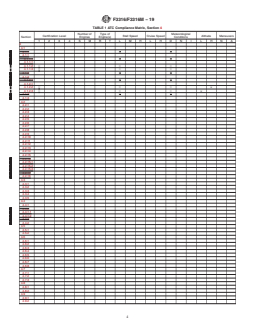
123 4 S M R T L M H L H D N I L H N A
4.1
4.1.1
4.1.1.1
4.1.1.2CC C
4.1.1.3CC C
4.1.2
4.1.2.1
4.1.2.2CC C ×
4.1.2.3CC C ×
4.1.3
4.2
4.2.1
4.2.2
4.2.3
4.2.4
4.2.5
4.2.6
4.2.7
4.2.8
4.2.9
4.2.10
4.2.11
4.2.12
4.2.13
4.2.14
4.2.15
4.2.15.1
4.2.15.2
4.2.15.3
4.2.16
4.3
4.3.1
4.3.2
4.3.3
4.3.4
4.3.5
4.4
4.4.1
4.4.1.1
4.4.1.2
4.4.2
4.5
4.5.1
4.5.2
4.6
4.6.1
4.6.2
4.6.3
4.6.4
4.6.5
4.6.6
4.6.7
4.6.8
4.7
4.7.1
4.7.2
4.7.3
4.8
4.8.1
4.8.2
4.9
4.9.1
4.9.2
4.9.3
4.9.4
4.9.5
4.9.6
4.9.7
4.9.8
4.9.9
F3316/F3316M−19
4.2.6 Electric power sources shall function properly when 4.3.1 Circuit protective devices shall be installed in all
connected in combination or independently. electrical circuits other than circuits in which no hazard is
presented by their omission.
4.2.7 Nofailureormalfunctionofanyelectricpowersource
may impair the ability of any remaining source to supply load 4.3.2 A protective device for a circuit essential to flight
circuits essential for safe operation. safety may not be used to protect any other circuit.
4.2.8 Each electrical system shall be designed so that 4.3.3 Each resettable circuit protective device (“trip free”
essential load circuits can be supplied in the event of reason- device in which the tripping mechanism cannot be overridden
ably probable faults or open circuits including faults in heavy
by the operating control) shall be designed so that a manual
current carrying cables. operation is required to restore service after tripping.
4.2.9 Ameansshallbeaccessibleinflighttotheappropriate 4.3.4 Each resettable circuit protective device (“trip free”
flight crewmembers for the individual and rapid disconnection
device in which the tripping mechanism cannot be overridden
of the electrical power sources from the distribution system by the operating control) shall be designed so that if an
whichincludesthedistributionbusses,theirassociatedfeeders,
overload or circuit fault exists, the device will open the circuit
each control device, and each protective device. regardless of the position of the operating control.
4.2.10 If any particular system or item of equipment re- 4.3.5 If the ability to reset a circuit protective device is
quires two independent sources of electrical power, their requiredforcontinuedsafeflightandlanding,ameansshallbe
electrical energy supply shall be ensured by means such as provided so that it can be readily reset in flight.
duplicate electrical equipment, throw over switching, or by the
4.4 Master Switch Arrangement:
use of multichannel or loop circuits separately routed.
4.4.1 Thereshallbeamasterswitchorequivalentfunctional
4.2.11 There shall be a means to give immediate warning to
arrangement to allow ready disconnection of each electric
theappropriateflightcrewmembersofafailureofanyprimary
power source from power distribution systems, except as
electrical power source.
provided in 4.4.2.
4.2.12 Each electrical power source shall have a means to
4.4.1.1 If separate switches are incorporated into the master
prevent damage to the electrical system, or to equipment
switch arrangement required by 4.4.1, a means shall be
supplied by the electrical system that could result if the power
provided for the switch arrangement to be rapidly operated by
source provided electrical power outside the qualified limits
the appropriate flight crew member.
that would damage the electrical system or equipment.
4.4.1.2 The master switch or equivalent functional arrange-
4.2.13 A means shall exist to indicate to appropriate flight
ment shall be protected against inadvertent operation.
crewmemberstheelectricpowersystemquantitiesessentialfor
4.4.2 Load circuits may be connected so that they remain
safe operation.
energized when the master switch is open if the circuits are
4.2.14 Ifprovisionsaremadeforconnectingexternalpower
isolated, or physically shielded, to prevent their igniting
to the aeroplane, a means shall be provided to ensure that no
flammable fluids or vapors that might be liberated by the
external power supply having an over voltage, an under
leakage or rupture of any flammable fluid system, and the
voltage, a reverse polarity, or a reverse phase sequence, can
circuits are required for continued operation of a combustion
...
This document is not an ASTM standard and is intended only to provide the user of an ASTM standard an indication of what changes have been made to the previous version. Because
it may not be technically possible to adequately depict all changes accurately, ASTM recommends that users consult prior editions as appropriate. In all cases only the current version
of the standard as published by ASTM is to be considered the official document.
Designation: F3316/F3316M − 18 F3316/F3316M − 19
Standard Specification for
Electrical Systems for Aircraft with Electric or Hybrid-
Electric Propulsion
This standard is issued under the fixed designation F3316/F3316M; the number immediately following the designation indicates the year
of original adoption or, in the case of revision, the year of last revision. A number in parentheses indicates the year of last reapproval.
A superscript epsilon (´) indicates an editorial change since the last revision or reapproval.
1. Scope
1.1 This specification covers the electrical systems, electrical equipment, and electrical power distribution aspects of
airworthiness and design for aircraft with Electric or Hybrid-Electric Propulsion. This specification was written with the focus on
electric propulsion systems with conventional system layout, characteristics, and operation. This specification does not address all
of the requirements that may be necessary for possible hybrid-electric configurations where an EPU and a combustion engine are
used in combination to provide propulsion. The use of this specification combined with the applicable portions of Specification
F3231/F3231M may be necessary for hybrid-electric configurations. This material was developed through open consensus of
international experts in general aviation. This material was created by focusing on Normal Category Airplanes.Aeroplanes. The
content may be more broadly applicable; it is the responsibility of the applicant to substantiate broader applicability as a specific
means of compliance.
1.2 An applicant intending to propose this information as a means of compliance for design approval mustshall seek guidance
from their respective oversight authority (for example, published guidance from applicable CAAs) concerning the acceptable use
and application thereof. For information on which oversight authorities have accepted this standard (in whole or in part) as a Means
of Compliance to their regulatory requirements (Hereinafter referred to as “the Rules”), refer to ASTM F44 webpage
(www.ASTM.org/COMMITTEE/F44.htm).
1.3 Units—This standard may present information in either SI units, English Engineering units, or both; theboth. The values
stated in each system mayare not be exact equivalents. Each necessarily exact equivalents; therefore, to ensure conformance with
the standard, each system shall be used independently of the other; combiningother, and values from the two systems may result
in nonconformance with the standard.shall not be combined.
1.4 This standard does not purport to address all of the safety concerns, if any, associated with its use. It is the responsibility
of the user of this standard to establish appropriate safety, health, and environmental practices and determine the applicability of
regulatory limitations prior to use.
1.5 This international standard was developed in accordance with internationally recognized principles on standardization
established in the Decision on Principles for the Development of International Standards, Guides and Recommendations issued
by the World Trade Organization Technical Barriers to Trade (TBT) Committee.
2. Referenced Documents
2.1 ASTM Standards:
F2490 – 05 Standard Guide for Aircraft Electrical Load and Power Source Capacity Analysis
F2639 Practice for Design, Alteration, and Certification of Aircraft Electrical Wiring Systems
F3060 Terminology for Aircraft
F3061/F3061M Specification for Systems and Equipment in Small Aircraft
F3066/F3066M Specification for Aircraft Powerplant Installation Hazard Mitigation
F3231/F3231M Specification for Electrical Systems for Aircraft with Combustion Engine Electrical Power Generation
F3235 Specification for Aircraft Storage Batteries
F3239 Specification for Aircraft Electric Propulsion Systems
This specification is under the jurisdiction of ASTM Committee F44 on General Aviation Aircraft and is the direct responsibility of Subcommittee F44.50 on Systems
and Equipment.
Current edition approved May 15, 2018Nov. 1, 2019. Published June 2018December. Originally approved in 2018. Last previous edition approved in 2019 as
F3316/F3316M–19. DOI: 10.1520/F3316_F3316M-18.10.1520/F3316_F3316M–19.
For referenced ASTM standards, visit the ASTM website, www.astm.org, or contact ASTM Customer Service at service@astm.org. For Annual Book of ASTM Standards
volume information, refer to the standard’sstandard’s Document Summary page on the ASTM website.
Copyright © ASTM International, 100 Barr Harbor Drive, PO Box C700, West Conshohocken, PA 19428-2959. United States
F3316/F3316M − 19
F3338 Specification for Design of Electric Propulsion Units for General Aviation Aircraft
2.2 FAA Standard:
DOT/FAA/AR-00/12 Aircraft Materials Fire Test Handbook
3. Terminology
3.1 Terminology specific to this specification is provided below. For general terminology, refer to Terminology F3060.
Available from Federal Aviation Administration (FAA), 800 Independence Ave., SW, Washington, DC 20591, http://www.faa.gov.
F3316/F3316M − 19
3.2 Definitions of Terms Specific to This Standard:
3.2.1 aircraft type code, n—an Aircraft Type Code (ATC) is defined by considering both the technical considerations regarding
the design of the aircraft and the airworthiness level established based upon risk-based criteria; the method of defining an ATC
applicable to this specification is defined in Specification F3061/F3061M.
3.2.2 continued safe flight and landing, n—continued safe flight and landing as applicable to this specification is defined in
Specification F3061/F3061M.
3.2.3 Battery Management System (BMS)—a battery management system is any electronic system that manages a rechargeable
battery (cell or battery pack), such as by protecting the battery from operating outside its Safe Operating Area, monitoring its state,
calculating secondary data, reporting that data, controlling its environment, authenticating it or balancing it, or both.
3.2.4 Electric Propulsion System (EPS)—installation that includes at least one EPU and hardware required to produce
propulsive thrust. Multiple EPUs may be in different arrangements such as serial or parallel or a combination of the two.
3.2.4 Electric Propulsion Unit (EPU)—the EPU shall as a minimum consist EPU is comprised of the electric motor, associated
controllers disconnects and wiring, motor generator, and monitoring gauges and meters.electronic controllers, disconnects, wiring,
and sensors.
3.2.4.1 Discussion—
See Specification F3338 for additional information.
3.2.5 Energy Storage System (ESS)—any manner that stores some form of a source (component or system) that stores and
provides energy that can be drawn upon at a later time to provide energy for propulsion. Typical energy storage devices include
but are not limited to: batteries, fuel cells, or capacitors.for propulsion.
3.2.5.1 Discussion—
See Specification F3239 for additional information.
3.3 Abbreviations:
3.3.1 BMS—Battery Management System
3.3.2 EPS—Electric Propulsion System
3.3.3 EPU—Electric Propulsion Unit
3.3.4 ESS—Energy Storage System
4. Electrical Systems for Electric Propulsion
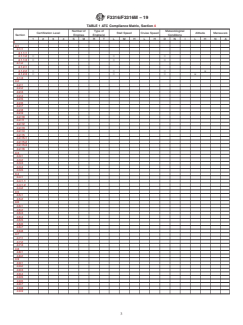
NOTE 1—Table 1 provides correlation between various Aircraft Type Codes and the individual requirements contained within this section; refer to 3.2.1.
For each subsection, an indicator can be found under each ATC character field; three indicators are used:
An empty cell ( ) in all applicable ATC character field columns indicates that an aircraft mustshall meet the requirements of that subsection.
A white circle (○) in multiple columns indicates that the requirements of that subsection are not applicable to an aircraft only if all such ATC character
fields are applicable.
A mark-out (×) in any of the applicable ATC character field columns indicates that the requirements of that subsection are not applicable to an aircraft
if that ATC character field is applicable.
Example—An aircraft with an ATC of 1SRLLDLN is being considered. Since all applicable columns are empty for 4.2.1, that subsection is applicable
to the aircraft. Since both the “L” stall speed column and the “D” meteorological column for 4.1.14.1.1.2 contain white circles, then that subsection is
not applicable; however, for an aircraft with an ATC of 1SRMLDLN, 4.1.14.1.1.2 would be applicable since the “M” stall speed column does not contain
a white circle.
4.1 Power Source Capacity and Distribution:
4.1.1 Each installation whose functioning is required for type certification or under operating rules and that requires a power
supply is an “essential load” on the power supply. The power sources and the system mustshall be able to supply the power loads
specified in 4.1.1.1 – 4.1.1.3 in probable operating combinations and for probable durations. The power loads may be assumed to
be reduced under a monitoring procedure consistent with safety in the kinds of operation authorized.
4.1.1.1 The power sources and the electrical distribution system, when functioning normally, mustshall be able to support all
connected loads.
4.1.1.2 The power sources and the electrical distribution system mustshall be able to support all essential loads after the failure
of any one ESS or primary electrical power source. An EPU designed to be connected to only one ESS is excluded from this
requirement.
4.1.1.3 The power sources and the electrical distribution system mustshall be able to support all essential loads for which an
alternate source of power is required, after any failure or malfunction in any one ESS, any one power supply system, any one
distribution system, or any other utilization system. An EPU designed to be connected to only one ESS is excluded from this
requirement.
F3316/F3316M − 19
TABLE 1 ATC Compliance Matrix, Section 4
Number of Type of Meteorological
Certification Level Stall Speed Cruise Speed Altitude Maneuvers
Section Engines Engine(s) Conditions
1 2 3 4 S M R T L M H L H D N I L H N A
4.1
4.1.1 C C
4.1.1
4.1.1.1 C C
4.1.1.1
4.1.1.2 C C C
4.1.1.3 C C C
4.1.2 C C
4.1.2
4.1.2.1 C C
4.1.2.1
4.1.2.2 C C C ×
4.1.2.3 C C C ×
4.1.3 C C
4.1.3
4.2
4.2.1
4.2.2
4.2.3
4.2.4
4.2.5
4.2.6
4.2.7
4.2.8
4.2.9
4.2.10
4.2.11
4.2.12
4.2.13
4.2.14
4.2.15
4.2.16
4.2.15.1
4.2.15.2
4.2.15.3
4.2.17
4.2.16
4.3
4.3.1
4.3.2
4.3.3
4.3.4
4.3.5
4.4
4.4.1
4.4.2
4.4.1.1
4.4.1.2
4.4.3
4.4.2
4.5
4.5.1
4.5.2
4.6
4.6.1
4.6.2
4.6.3
4.6.4
4.6.5
4.6.6
4.6.7
4.6.8
4.7
4.7.1
4.7.2
4.7.3
4.8
4.8.1
4.8.2
4.9
4.9.1
4.9.2
F3316/F3316M − 19
4.9.3
4.9.4
4.9.5
4.9.6
4.9.7
4.9.8
4.9.9
4.1.2 The power source and the electrical distribution system used to satisfy the probable duration requirement of 4.1.1 is
required to provide electrical power to those loads that are essential to continued safe flight and landing including non-continuous
essential loads with enough capacity to meet the requirements of either 4.1.2.1, 4.1.2.2, or 4.1.2.3 as appropriate per Table 1.
4.1.2.1 The time needed to complete the function required, for continued safe flight and landing.
4.1.2.2 A time period of at least 30 minutes which includes the time to recognize the loss of primary power and to take
appropriate load shedding action.
4.1.2.3 A time period of at least 60 minutes which includes the time to recognize the loss of primary power and to take
appropriate load shedding action.
4.1.3 The electrical capacity duration requirement of 4.1.2 shall be demonstrated by test or analysis including all loads essential
tofor continued safe flight.flight and landing.
4.2 Electrical Systems and Equipment:
4.2.1 Electric power sources, their transmission cables, and their associated control and protective devices, mustshall be able
to furnish the required power at the proper voltage and frequency, if applicable to each load circuit essential for safe operation and
maintained within the limits for which the equipment is designed during any probable operating conditions.
4.2.2 Compliance with 4.2.1 mustshall be shown by an electrical load analysis or by electrical measurements that account for
the electrical loads applied to the electrical system in probable combinations and for probable durations.
NOTE 2—Guide F2490 provides information and methodology for an electrical load analysis.
4.2.3 Each electrical system, when installed, mustshall be free from hazards in itself, in its method of operation, and in its effects
on other parts of the aeroplane.
4.2.4 Each electrical system, when installed, mustshall be protected from fuel, oil, water, other detrimental substances, and
mechanical damage.
4.2.5 Each electrical system, when installed, mustshall be designed so that the risk of electrical shock to crew, passengers, and
ground personnel is reduced to a minimum.
4.2.6 Electric power sources mustshall function properly when connected in combination or independently.
4.2.7 No failure or malfunction of any electric power source may impair the ability of any remaining source to supply load
circuits essential for safe operation.
4.2.8 Each electrical system mustshall be designed so that essential load circuits can be supplied in the event of reasonably
probable faults or open circuits including faults in heavy current carrying cables.
4.2.9 A means mustshall be accessible in flight to the appropriate flight crewmembers for the individual and rapid disconnection
of the electrical power sources from the distribution system which includes the distribution busses, their associated feeders, each
control device, and each protective device.
4.2.10 If any particular system or item of equipment requires two independent sources of electrical power, their electrical energy
supply mustshall be ensured by means such as duplicate electrical equipment, throw over switching, or by the use of multichannel
or loop circuits separately routed.
4.2.11 There mustshall be a means to give immediate warning to the appropriate flight crew members of a failure of any primary
electrical power source.
4.2.12 Each electrical power source mustshall have a means to prevent damage to the electrical system, or to equipment supplied
by the electrical system that could result if the power source provided electrical power outside the qualified limits that would
damage the electrical system or equipment.
4.2.13 A means mustshall exist to indicate to appropriate flight crewmembers the electric power system quantities essential for
safe operation.
4.2.14 If provisions are made for connecting external power to the aeroplane, a means mustshall be provided to ensure that no
external power supply having an over voltage, an under voltage, a reverse polarity, or a reverse phase sequence, can supply power
to the aeroplane electrical system.
F3316/F3316M − 19
4.2.15 If provisions are made for connecting external power to the aeroplane, the external power connection must be located
so that its use will minimize the hazard to the aeroplane and ground personnel.
4.2.15 If provisions are made for connecting external power to the aeroplane to charge the aeroplane battery, a means must be
provided to automatically disconnect the external power in the event of aaeroplane, the external power connection shall meet the
requirements of 4.2.15.1 malfunctionthrough 4.2.15.3of the aeroplane battery or battery management system.
4.2.15.1 The external power connection shall be located so that its use will minimize the hazard to the aeroplane.
4.2.15.2 The external power connection shall be located so that its use will minimize the hazard to ground personnel.
4.2.15.3 If the external power connection is utilized to charge the aeroplane battery, a means shall be provided to automatically
disconnect the external power in the event of a malfunction of the aeroplane battery or battery management system.
4.2.16 If equipped with a combustion engine that is part of the Hybrid-Electric Propulsion System, electrical equipment
mustshall be so designed and installed such that in the event of a fire in the combustion engine compartment, during which the
surface of the firewall adjacent to the fire is heated to 1095°C [2000°F]1095 °C [2000 °F] for five minutes or to a lesser temperature
substantiated by the applicant, the equipment essential to continued safe operation and located behind the firewall on the opposite
side of the firewall from the combustion engine compartment will function satisfactorily and will not create an additional fire
...