

ASTM D4553-18
(Test Method)Standard Test Method for Determining In Situ Creep Characteristics of Rock
General Information
- Abstract
SIGNIFICANCE AND USE
5.1 Results of this test method are used to predict time-dependent deformation characteristics of a rock mass resulting from loading. It is a test that may be required depending on rock type or anticipated loads, or both.
5.2 This test method may be useful in structural design analysis where loading is applied over an extensive period.
5.3 This test method is normally performed at ambient temperature in the field, but equipment can be modified or substituted for operations at other temperatures.
5.4 Results of this test method may be useful in verifying laboratory creep data and structural mathematical modeling analyses.
5.5 Creep characteristics are determined under a nonuniform state of stress within the rock mass underneath the plate.
5.6 If during a field investigation, time-dependent characteristics are detected, then an in situ creep test shall be performed.
Note 1: The quality of the result produced by this standard is dependent on the competence of the personnel performing it, and the suitability of the equipment and facilities used. Agencies that meet the criteria of Practice D3740 are generally considered capable of competent and objective testing/sampling/inspection/etc. Users of this standard are cautioned that compliance with Practice D3740 does not in itself assure reliable results. Reliable results depend on many factors; Practice D3740 provides a means of evaluating some of those factors.
SCOPE
1.1 This test method covers the preparation, equipment, test procedure, and data documentation for determining in situ creep characteristics of a rock mass using a rigid plate loading method.
1.2 This test method is designed to be conducted in an adit or small underground chamber; however, with suitable modifications, this test could be conducted at the surface.
1.3 The test is usually conducted parallel or perpendicular to the anticipated axis of thrust, as dictated by the design load or other orientations, based upon the application.
1.4 Flexible plate apparatus can be used if the anticipated creep displacement is within the tolerance of the travel of the flat jacks.
1.5 Units—The values stated in inch-pound units are to be regarded as standard. The values given in parentheses are mathematical conversions to SI units that are provided for information only and are not considered standard. Reporting of test results in units other than inch-pound shall not be regarded as nonconformance with this standard.
1.5.1 The gravitational system of inch-pound units is used when dealing with inch-pound units. In the system, the pound (lbf) represents a unit of force (weight), while the units for mass is slugs. The slug unit is not given, unless dynamic (F = ma) calculations are involved.
1.6 All observed and calculated values shall conform to the guidelines for significant digits and rounding established in Practice D6026, unless superseded by this test method.
1.6.1 For purposes of comparing a measured or calculated value(s) with specified limits, the measured or calculated value(s) shall be rounded to the nearest decimal of significant digits in the specified limit.
1.6.2 The procedures used to specify how data are collected/recorded and calculated in the standard are regarded as the industry standard. In addition, they are representative of the significant digits that generally should be retained. The procedures used do not consider material variation, purpose for obtaining the data, special purpose studies, or any considerations for the user’s objectives; and it is common practice to increase or reduce significant digits of reported data to be commensurate with these considerations. It is beyond the scope of these test methods to consider significant digits used in analysis methods for engineering data.
1.7 This standard does not purport to address all of the safety concerns, if any, associated with its use. It is the responsibility of the user of t...
- Status
- Published
- Publication Date
- 30-Jun-2018
- Technical Committee
- D18 - Soil and Rock
- Drafting Committee
- D18.12 - Rock Mechanics
Overview
ASTM D4553-18: Standard Test Method for Determining In Situ Creep Characteristics of Rock provides a field-based methodology for evaluating the time-dependent deformation (creep) of rock masses under load. The results help engineers and geotechnical professionals assess how a given rock mass behaves over time when subjected to prolonged stress. This is particularly critical for projects involving tunnels, underground chambers, slopes, and foundations constructed in rock, where long-term loading conditions may induce slow movement or settlement. The test is typically conducted in adits or small underground chambers but can be adapted for use at the ground surface.
Key Topics
- Purpose and Significance: Allows prediction of time-dependent deformation in rock masses, critical for the structural analysis and design of underground or surface infrastructure.
- Test Approach: Utilizes a rigid (or flexible) plate loading method to measure creep by applying sustained loads to prepared rock surfaces and documenting displacement over time.
- Versatility: While the standard test is conducted at ambient temperature in field conditions, equipment and procedures can be modified for other environments.
- Data Verification: Results can be used to corroborate laboratory creep data and validate structural modeling analyses.
- Testing Orientation: Tests are performed parallel or perpendicular to the predicted axis of load, according to design requirements and site geology.
- Reporting Requirements: The standard specifies rigorous documentation, including geologic description, data logging, calibration, and compliance with significant-digit guidelines.
Applications
- Geotechnical Engineering: Supports risk assessment and stability analysis for tunnels, shafts, slopes, and other rock-based constructions likely to experience time-dependent settlement or deformation.
- Structural Design: Provides critical data for the safe design of structures where prolonged load is expected, such as subway tunnels, mines, underground storage facilities, and dam abutments.
- Construction Planning: Informs construction methodologies and ground support systems by identifying areas susceptible to creep.
- Model Calibration: Enhances the reliability of computational models by providing real-world data for model validation and adjustment.
- Regulatory Compliance: Helps demonstrate conformity with industry standards and best practices for field creep testing, supporting project approval and risk management.
Related Standards
- ASTM D653 - Terminology Relating to Soil, Rock, and Contained Fluids
- ASTM D3740 - Practice for Minimum Requirements for Agencies Engaged in Testing and/or Inspection of Soil and Rock as Used in Engineering Design and Construction
- ASTM D4394 - Test Method for Determining In Situ Modulus of Deformation of Rock Mass Using Rigid Plate Loading Method
- ASTM D4403 - Practice for Extensometers Used in Rock
- ASTM D6026 - Practice for Using Significant Digits in Geotechnical Data
Practical Value
This standard delivers clear procedures for field personnel and engineers to quantify and document in situ creep, which is vital for ensuring safety, performance, and longevity in civil and mining projects. Adhering to ASTM D4553-18 provides:
- Greater confidence in long-term deformation predictions
- Improved safety margins for underground and surface structures
- Traceable and defensible test results for compliance and quality assurance
- Data to inform design adjustments or remediation strategies where needed
By following this national and internationally recognized method for in situ creep testing, project teams can make informed, data-driven decisions and reduce uncertainties associated with rock mass time-dependent behaviors.
Relations
- Effective Date
- 01-Jul-2018
- Effective Date
- 01-Nov-2023
- Effective Date
- 01-Jan-2020
- Effective Date
- 01-Oct-2019
- Effective Date
- 01-Jul-2017
- Effective Date
- 01-Aug-2014
- Effective Date
- 15-Aug-2012
- Effective Date
- 01-May-2012
- Effective Date
- 01-Mar-2012
- Effective Date
- 01-Sep-2011
- Effective Date
- 01-Sep-2011
- Effective Date
- 01-Mar-2010
- Effective Date
- 01-Jan-2009
- Effective Date
- 01-Dec-2008
- Effective Date
- 01-Nov-2008
Get Certified
Connect with accredited certification bodies for this standard

Zavod za gradbeništvo Slovenije (ZAG) - Inšpekcija
ZAG inspection body for construction products, structures, and materials.
Sponsored listings
Frequently Asked Questions
ASTM D4553-18 is a standard published by ASTM International. Its full title is "Standard Test Method for Determining In Situ Creep Characteristics of Rock". This standard covers: SIGNIFICANCE AND USE 5.1 Results of this test method are used to predict time-dependent deformation characteristics of a rock mass resulting from loading. It is a test that may be required depending on rock type or anticipated loads, or both. 5.2 This test method may be useful in structural design analysis where loading is applied over an extensive period. 5.3 This test method is normally performed at ambient temperature in the field, but equipment can be modified or substituted for operations at other temperatures. 5.4 Results of this test method may be useful in verifying laboratory creep data and structural mathematical modeling analyses. 5.5 Creep characteristics are determined under a nonuniform state of stress within the rock mass underneath the plate. 5.6 If during a field investigation, time-dependent characteristics are detected, then an in situ creep test shall be performed. Note 1: The quality of the result produced by this standard is dependent on the competence of the personnel performing it, and the suitability of the equipment and facilities used. Agencies that meet the criteria of Practice D3740 are generally considered capable of competent and objective testing/sampling/inspection/etc. Users of this standard are cautioned that compliance with Practice D3740 does not in itself assure reliable results. Reliable results depend on many factors; Practice D3740 provides a means of evaluating some of those factors. SCOPE 1.1 This test method covers the preparation, equipment, test procedure, and data documentation for determining in situ creep characteristics of a rock mass using a rigid plate loading method. 1.2 This test method is designed to be conducted in an adit or small underground chamber; however, with suitable modifications, this test could be conducted at the surface. 1.3 The test is usually conducted parallel or perpendicular to the anticipated axis of thrust, as dictated by the design load or other orientations, based upon the application. 1.4 Flexible plate apparatus can be used if the anticipated creep displacement is within the tolerance of the travel of the flat jacks. 1.5 Units—The values stated in inch-pound units are to be regarded as standard. The values given in parentheses are mathematical conversions to SI units that are provided for information only and are not considered standard. Reporting of test results in units other than inch-pound shall not be regarded as nonconformance with this standard. 1.5.1 The gravitational system of inch-pound units is used when dealing with inch-pound units. In the system, the pound (lbf) represents a unit of force (weight), while the units for mass is slugs. The slug unit is not given, unless dynamic (F = ma) calculations are involved. 1.6 All observed and calculated values shall conform to the guidelines for significant digits and rounding established in Practice D6026, unless superseded by this test method. 1.6.1 For purposes of comparing a measured or calculated value(s) with specified limits, the measured or calculated value(s) shall be rounded to the nearest decimal of significant digits in the specified limit. 1.6.2 The procedures used to specify how data are collected/recorded and calculated in the standard are regarded as the industry standard. In addition, they are representative of the significant digits that generally should be retained. The procedures used do not consider material variation, purpose for obtaining the data, special purpose studies, or any considerations for the user’s objectives; and it is common practice to increase or reduce significant digits of reported data to be commensurate with these considerations. It is beyond the scope of these test methods to consider significant digits used in analysis methods for engineering data. 1.7 This standard does not purport to address all of the safety concerns, if any, associated with its use. It is the responsibility of the user of t...
SIGNIFICANCE AND USE 5.1 Results of this test method are used to predict time-dependent deformation characteristics of a rock mass resulting from loading. It is a test that may be required depending on rock type or anticipated loads, or both. 5.2 This test method may be useful in structural design analysis where loading is applied over an extensive period. 5.3 This test method is normally performed at ambient temperature in the field, but equipment can be modified or substituted for operations at other temperatures. 5.4 Results of this test method may be useful in verifying laboratory creep data and structural mathematical modeling analyses. 5.5 Creep characteristics are determined under a nonuniform state of stress within the rock mass underneath the plate. 5.6 If during a field investigation, time-dependent characteristics are detected, then an in situ creep test shall be performed. Note 1: The quality of the result produced by this standard is dependent on the competence of the personnel performing it, and the suitability of the equipment and facilities used. Agencies that meet the criteria of Practice D3740 are generally considered capable of competent and objective testing/sampling/inspection/etc. Users of this standard are cautioned that compliance with Practice D3740 does not in itself assure reliable results. Reliable results depend on many factors; Practice D3740 provides a means of evaluating some of those factors. SCOPE 1.1 This test method covers the preparation, equipment, test procedure, and data documentation for determining in situ creep characteristics of a rock mass using a rigid plate loading method. 1.2 This test method is designed to be conducted in an adit or small underground chamber; however, with suitable modifications, this test could be conducted at the surface. 1.3 The test is usually conducted parallel or perpendicular to the anticipated axis of thrust, as dictated by the design load or other orientations, based upon the application. 1.4 Flexible plate apparatus can be used if the anticipated creep displacement is within the tolerance of the travel of the flat jacks. 1.5 Units—The values stated in inch-pound units are to be regarded as standard. The values given in parentheses are mathematical conversions to SI units that are provided for information only and are not considered standard. Reporting of test results in units other than inch-pound shall not be regarded as nonconformance with this standard. 1.5.1 The gravitational system of inch-pound units is used when dealing with inch-pound units. In the system, the pound (lbf) represents a unit of force (weight), while the units for mass is slugs. The slug unit is not given, unless dynamic (F = ma) calculations are involved. 1.6 All observed and calculated values shall conform to the guidelines for significant digits and rounding established in Practice D6026, unless superseded by this test method. 1.6.1 For purposes of comparing a measured or calculated value(s) with specified limits, the measured or calculated value(s) shall be rounded to the nearest decimal of significant digits in the specified limit. 1.6.2 The procedures used to specify how data are collected/recorded and calculated in the standard are regarded as the industry standard. In addition, they are representative of the significant digits that generally should be retained. The procedures used do not consider material variation, purpose for obtaining the data, special purpose studies, or any considerations for the user’s objectives; and it is common practice to increase or reduce significant digits of reported data to be commensurate with these considerations. It is beyond the scope of these test methods to consider significant digits used in analysis methods for engineering data. 1.7 This standard does not purport to address all of the safety concerns, if any, associated with its use. It is the responsibility of the user of t...
ASTM D4553-18 is classified under the following ICS (International Classification for Standards) categories: 07.040 - Astronomy. Geodesy. Geography; 93.020 - Earthworks. Excavations. Foundation construction. Underground works. The ICS classification helps identify the subject area and facilitates finding related standards.
ASTM D4553-18 has the following relationships with other standards: It is inter standard links to ASTM D4553-08, ASTM D3740-23, ASTM D4403-20, ASTM D3740-19, ASTM D4394-17, ASTM D653-14, ASTM D4403-12, ASTM D3740-12a, ASTM D3740-12, ASTM D3740-11, ASTM D653-11, ASTM D3740-10, ASTM D653-09, ASTM D653-08a, ASTM D653-08. Understanding these relationships helps ensure you are using the most current and applicable version of the standard.
ASTM D4553-18 is available in PDF format for immediate download after purchase. The document can be added to your cart and obtained through the secure checkout process. Digital delivery ensures instant access to the complete standard document.
Standards Content (Sample)
This international standard was developed in accordance with internationally recognized principles on standardization established in the Decision on Principles for the
Development of International Standards, Guides and Recommendations issued by the World Trade Organization Technical Barriers to Trade (TBT) Committee.
Designation: D4553 − 18
Standard Test Method for
Determining In Situ Creep Characteristics of Rock
This standard is issued under the fixed designation D4553; the number immediately following the designation indicates the year of
original adoption or, in the case of revision, the year of last revision.Anumber in parentheses indicates the year of last reapproval.A
superscript epsilon (´) indicates an editorial change since the last revision or reapproval.
1. Scope* dures used do not consider material variation, purpose for
obtaining the data, special purpose studies, or any consider-
1.1 This test method covers the preparation, equipment, test
ations for the user’s objectives; and it is common practice to
procedure, and data documentation for determining in situ
increase or reduce significant digits of reported data to be
creep characteristics of a rock mass using a rigid plate loading
commensuratewiththeseconsiderations.Itisbeyondthescope
method.
of these test methods to consider significant digits used in
1.2 This test method is designed to be conducted in an adit
analysis methods for engineering data.
or small underground chamber; however, with suitable
1.7 This standard does not purport to address all of the
modifications, this test could be conducted at the surface.
safety concerns, if any, associated with its use. It is the
1.3 Thetestisusuallyconductedparallelorperpendicularto
responsibility of the user of this standard to establish appro-
the anticipated axis of thrust, as dictated by the design load or
priate safety, health, and environmental practices and deter-
other orientations, based upon the application.
mine the applicability of regulatory limitations prior to use.
For specific precaution statements, see Section 8.
1.4 Flexible plate apparatus can be used if the anticipated
1.8 This international standard was developed in accor-
creep displacement is within the tolerance of the travel of the
dance with internationally recognized principles on standard-
flat jacks.
ization established in the Decision on Principles for the
1.5 Units—The values stated in inch-pound units are to be
Development of International Standards, Guides and Recom-
regarded as standard. The values given in parentheses are
mendations issued by the World Trade Organization Technical
mathematical conversions to SI units that are provided for
Barriers to Trade (TBT) Committee.
informationonlyandarenotconsideredstandard.Reportingof
testresultsinunitsotherthaninch-poundshallnotberegarded
2. Referenced Documents
as nonconformance with this standard.
2.1 ASTM Standards:
1.5.1 The gravitational system of inch-pound units is used
D653Terminology Relating to Soil, Rock, and Contained
when dealing with inch-pound units. In the system, the pound
Fluids
(lbf) represents a unit of force (weight), while the units for
D3740Practice for Minimum Requirements for Agencies
mass is slugs. The slug unit is not given, unless dynamic (F =
Engaged in Testing and/or Inspection of Soil and Rock as
ma) calculations are involved.
Used in Engineering Design and Construction
1.6 All observed and calculated values shall conform to the
D4394Test Method for Determining In Situ Modulus of
guidelines for significant digits and rounding established in
Deformation of Rock Mass Using Rigid Plate Loading
Practice D6026, unless superseded by this test method.
Method
1.6.1 For purposes of comparing a measured or calculated
D4403Practice for Extensometers Used in Rock
value(s) with specified limits, the measured or calculated
D4879Guide for Geotechnical Mapping of Large Under-
value(s) shall be rounded to the nearest decimal of significant
ground Openings in Rock (Withdrawn 2017)
digits in the specified limit.
D6026Practice for Using Significant Digits in Geotechnical
1.6.2 Theproceduresusedtospecifyhowdataarecollected/
Data
recorded and calculated in the standard are regarded as the
3. Terminology
industry standard. In addition, they are representative of the
significant digits that generally should be retained. The proce-
3.1 Definitions:
For referenced ASTM standards, visit the ASTM website, www.astm.org, or
ThistestmethodisunderthejurisdictionofASTMCommitteeD18onSoiland contact ASTM Customer Service at service@astm.org. For Annual Book of ASTM
Rock and is the direct responsibility of Subcommittee D18.12 on Rock Mechanics. Standards volume information, refer to the standard’s Document Summary page on
Current edition approved July 1, 2018. Published August 2018. Originally the ASTM website.
approved in 1985. Last previous edition approved in 2008 as D4553–08, which The last approved version of this historical standard is referenced on
was withdrawn January 2017 and reinstated July 2018. DOI: 10.1520/D4553-18. www.astm.org.
*A Summary of Changes section appears at the end of this standard
Copyright © ASTM International, 100 Barr Harbor Drive, PO Box C700, West Conshohocken, PA 19428-2959. United States
D4553 − 18
3.1.1 Fordefinitionsofcommontechnicaltermsusedinthis rigid as feasible, the rock face is smoothed, and a thin,
standard, refer to Terminology D653. high-modulus material is used for the pad, the error in the
measured displacements will be minimal.
3.2 Definitions of Terms Specific to This Standard:
3.2.1 creep—a time-dependent displacement of a plate
6.2 The rock under the loaded area is generally not
pushed into the surface of the rock by a constant normal load.
homogeneous, as assumed in theory. The rock will respond to
It is not directly related with laboratory creep data because of
theloadaccordingtoitslocaldeformationalcharacteristicsand
the nonuniformity of stress within the rock mass underneath
orientation of discontinuities. The use of the average plate
the plate.
displacement will mitigate this problem. If this creep test is
performedimmediatelyafteraplateloadingtest—TestMethod
3.2.2 displacement—movementoftherigidplate,groutpad,
D4394, for instance, the results of the creep test will be
or rock in response to and in the same direction as the applied
different than if it had been performed on virgin rock.
load.
3.2.3 load—total force acting on the rock face.
7. Apparatus
3.2.4 rigid plate—platewithadeflectionoflessthan0.0005
7.1 Surface Preparation Equipment—Test site preparation
in. (0.0127 mm) from the center to the edge of the plate when
equipment shall include an assortment of excavation tools,
maximum load is applied.
such as drills and chipping hammers. Blasting shall not be
4. Summary of Test Method allowed during a preparation of the test site.
4.1 Areas on two opposing faces of a test adit underground
7.2 Instrumentation:
chamber are flattened and smoothed.
7.2.1 Displacement Measuring Equipment—For displace-
ment measurements, dial gauges or linear variable differential
4.2 A grout pad and rigid metal plate are installed against
transformers (LVDTs) are generally used. An accuracy of at
eachfaceandahydraulicloadingsystemisplacedbetweenthe
least 60.0001 in. (0.0025 mm), including the error of the
rigid plates.
readout equipment, and a sensitivity of at least 0.00005 in.
4.3 The two faces are rapidly loaded to the desired creep
(0.0013 mm) is recommended. Errors in excess of 0.0004 in.
load,withoutshock,theloadmaintained,andthedisplacement
(0.01mm)caninvalidatetestresultswhenthemodulusofrock
of the plate measured as a function of time.
6 4
mass exceeds 5×10 psi (3.5×10 MPa).
7.2.2 Load Cell—A load cell is recommended to measure
5. Significance and Use
the load on the bearing plate. An accuracy of 61000 lbf (4.4
5.1 Results of this test method are used to predict time-
kN) or 65 % of maximum test load, including errors intro-
dependent deformation characteristics of a rock mass resulting
duced by the readout system, and a sensitivity of at least 500
from loading. It is a test that may be required depending on
lbf (2.2 kN) are recommended. Long-term stability of the
rock type or anticipated loads, or both.
instrumentation system shall be verified throughout the test.
5.2 This test method may be useful in structural design
7.3 Loading Equipment:
analysis where loading is applied over an extensive period.
7.3.1 Hydraulic Ram or Flat Jacks—This equipment, ca-
5.3 This test method is normally performed at ambient
pable of applying and maintaining desired pressures to within
temperature in the field, but equipment can be modified or
63 %, is usually used to apply the load.Aspherical bearing of
substituted for operations at other temperatures.
suitable capacity shall be coupled to one of the bearing plates.
5.4 Results of this test method may be useful in verifying
If a hydraulic ram is used, the load shall be corrected to
laboratory creep data and structural mathematical modeling accountfortheeffectsoframfriction.Ifflatjacksareused,the
analyses.
jacksshallnotbeexpandedbeyondathicknessequalto3%of
the diameter of a metal jack and care shall be taken that the
5.5 Creep characteristics are determined under a nonuni-
jacks do not operate at the upper end of their range.
form state of stress within the rock mass underneath the plate.
7.3.2 The loading equipment includes a device for applying
5.6 If during a field investigation, time-dependent charac-
the load and the reaction members, usually thick-walled
teristics are detected, then an in situ creep test shall be
aluminum or steel pipes, to transmit the load.
performed.
7.3.3 Load Maintaining Equipment—Equipment such as a
NOTE 1—The quality of the result produced by this standard is
servo-control system or air over hydraulic oil is required.
dependent on the competence of the personnel performing it, and the
suitability of the equipment and facilities used. Agencies that meet the
7.3.4 Bearing Pads—Thebearingpadsshallhaveamodulus
6 4
criteria of Practice D3740 are generally considered capable of competent
of elasticity of around 4×10 psi (3×10 MPa) and shall be
and objective testing/sampling/inspection/etc. Users of this standard are
capable of conforming to the rock surface and bearing plate.
cautioned that compliance with Practice D3740 does not in itself assure
High early strength grout or molten sulfur bearing pads are
reliable results. Reliable results depend on many factors; Practice D3740
provides a means of evaluating some of those factors. recommended.
7.3.5 Bearing Plates—The bearing plates shall approximate
6. Interferences
a rigid die as closely as practical.Abearing plate that has been
6.1 Acompletely inflexible plate used to load the rock face foundsatisfactoryisshowninFig.1.Althoughtheexactdesign
is difficult to construct. However, if the plate is constructed as and materials may differ, the stiffness of the bearing plate shall
D4553 − 18
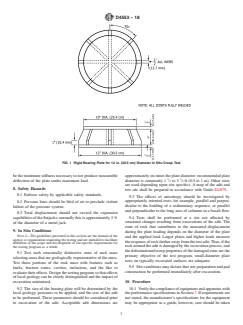
FIG. 1 Rigid Bearing Plate for 12 in. (30.5 cm) Diameter In Situ Creep Test
be the minimum stiffness necessary to not produce measurable approximatelysixtimestheplatediameter;recommendedplate
1 1
deflection of the plate under maximum load. diameter is commonly 1 ⁄2 to 3 ⁄4 ft (0.5 to 1 m). Other sizes
are used depending upon site specifics. A map of the adit and
8. Safety Hazards
test site shall be prepared in accordance with Guide D4879.
8.1 Enforce safety by applicable safety standards.
9.3 The effects of anisotropy should be investigated by
appropriately oriented tests; for example, parallel and perpen-
8.2 Pressure lines should be bled of air to preclude violent
dicular to the bedding of a sedimentary sequence, or parallel
failure of the pressure system.
and perpendicular to the long axes of columns in a basalt flow.
8.3 Total displacement should not exceed the expansion
9.4 Tests shall be performed at a site not affected by
capabilitiesoftheflatjacks;normallythisisapproximately3%
of the diameter of a metal jack. structural changes resulting from excavations of the adit. The
zone of rock that contributes to the measured displacement
9. In Situ Conditions
during the plate loading depends on the diameter of the plate
NOTE 2—The guidelines presented in this section are the domain of the
and the applied load. Larger plates and higher loads measure
agencyororganizationrequestingthetestingandareintendedtofacilitate
theresponseofrockfurtherawayfromthetestadit.Thus,ifthe
definition of the scope and development of site-specific requirements for
rockaroundtheaditisdamagedbytheexcavationprocess,and
the testing program as a whole.
thedeformational/creeppropertiesofthedamagedzonearethe
9.1 Test each structurally distinctive zone of rock mass
primary objective of the test program, small-diameter plate
selectingareasthataregeologicallyrepresentativeofthemass.
tests on typically excavated surfaces are adequate.
Test those portions of the rock mass with features such as
9.5 Siteconditionsmaydictatethatsitepreparationandpad
faults, fracture zones, cavities, inclusions, and the like to
construction be performed immediately after excavation.
evaluatetheireffects.Designthetestingprogramsothateffects
oflocalgeologycanbeclearlydistinguishedandtheimpactof
excavation minimized. 10. Procedure
9.2 The size of the bearing plate will be determined by the 10.1 Verifythecomplianceofequipmentandapparatuswith
local geology, pressures to be applied, and the size of the adit theperformancespecificationsinSection7.Ifrequirementsare
to be performed. These parameters should be considered prior not stated, the manufacturer’s specifications for the equipment
to excavation of the adit. Acceptable adit dimensions are may be appropriate as a guide, however, care should be taken
D4553 − 18
for sufficient performance. Performance verification is gener- very small charges is advised to remove the unwanted/residual
ally done by calibrating the equipment and measurement materials. In weaker materials, coarse grinding or cutting
system. Accomplish calibration and documentation in accor- devices may be used.
dance with the quality assurance procedures in Annex A1.
10.4.2 Size—The prepared rock surface shall extend at least
one-half the diameter of the bearing plate beyond the edge of
10.2 Ensure that the test results are defensible and traceable
the plate.
by following at least the minimum guidelines for personnel
10.4.3 Rock Quality—To the extent practicable, prepare the
qualifications, calibrations, test setup, test procedure, equip-
bearing surface in sound rock. Remove loose and broken rock
ment performance and verification, and vetting of test data are
from the excavation. Deeper breaks may be detected by a dull
followed in Annex A1.
hollow sound when the rock surface is struck with a hammer;
10.3 Conduct the test across a “diameter” or chord of the
remove such material.
adit with the two test surfaces nearly parallel and in planes
10.4.
...