

EN 14119:2003
(Main)Testing of textiles - Evaluation of the action of microfungi
- Abstract
This standard specifies a method for determining long term resistance of textiles to attack by microorganisms/mixed cultures.
- Status
- Published
- Publication Date
- 16-Sep-2003
- Withdrawal Date
- 30-Mar-2004
- Technical Committee
- CEN/TC 248 - Textiles and textile products
- Current Stage
- 9093 - Decision to confirm - Review Enquiry
- Start Date
- 24-Oct-2024
- Completion Date
- 07-Oct-2026



Overview
EN 14119:2003 (CEN) - "Testing of textiles - Evaluation of the action of microfungi" - specifies laboratory methods to determine the long‑term resistance of textile products to attack by microfungi (mould). The standard defines empirical test procedures, exposure conditions and evaluation criteria for assessing fungal growth, biodeterioration and the antimycotic effect of textile finishes. It applies to all textile products, including cellulosic and man‑made fibre textiles.
Key topics and technical requirements
- Test methods: Four principal methods are described:
- Method A1 - fungal growth on an incomplete agar medium (no carbon source) to force fungi to use the textile as nutrient;
- Method A2 - moist chamber exposure with inoculated spores to simulate near‑practice conditions;
- Method B1 - fungal growth on a complete agar medium (with carbon source) for evaluating both growth and antimycotic effect;
- Method B2 - antimycotic activity by laying specimens on inoculated complete medium to detect inhibition zones.
- Test organisms: Standard test strains include Aspergillus niger, Chaetomium globosum, Gliocladium virens, Paecilomyces variotii and Penicillium pinophilum. Strains should be sourced from recognized culture collections and declared in reports.
- Exposure conditions: Incubation typically at about 29 ± 1 °C and high humidity (e.g., >95% r.h. where provided by agar). Test durations range from weeks (e.g., 2–4 weeks) depending on method.
- Specimen preparation and cleaning: Cleaning with 70:30 ethanol–water, drying (e.g., 45 °C), and use of sterile handling are specified. Sample sizing and numbers (e.g., 6 specimens for tensile testing) are detailed for reproducibility.
- Assessments: Visual growth rating, measurement of tensile strength loss (to quantify biodeterioration), and measurement of inhibition zones (to quantify antimycotic effect).
- Equipment & media: Requirements include incubators, autoclave, Petri dishes, complete/incomplete agar recipes (mineral salts, glucose, agar), and microbiological safety measures.
- Safety: Tests involve potentially hazardous microorganisms - only trained personnel should perform testing and appropriate biosafety and decontamination practices must be followed.
Applications and users
- Who uses EN 14119:2003: textile manufacturers, finish formulators, antimicrobial treatment developers, testing laboratories, product compliance and quality control teams, and R&D groups assessing fungal resistance or durability of textile finishes.
- Practical uses:
- Evaluate resistance of fabrics (especially cellulose-containing materials) to mould growth and biodegradation.
- Compare and validate antimycotic finishes and functional treatments in vitro.
- Support product claims, durability testing and material selection for humid or biologically active environments (e.g., outdoor textiles, filtration, technical textiles).
Related standards
- ISO 846:1997 ("Plastics - Evaluation of the action of microorganisms") - referenced as a basis for part of the approach.
- IEC 68‑2‑10:1988 (Test J, mould growth) - related environmental testing guidance.
- EN ISO 13934‑1 - tensile testing method used for strength assessments.
Keywords: EN 14119:2003, testing textiles, microfungi, fungal resistance, antimycotic effect, agar medium, tensile strength, CEN, textile testing.
Relations
- Effective Date
- 28-Jan-2026
- Effective Date
- 22-Dec-2008
Get Certified
Connect with accredited certification bodies for this standard

Control Union Certifications
Global certification for agriculture and sustainability.

Hohenstein Institut
Textile testing and certification.

Bureau Veritas Bangladesh
Bureau Veritas certification services in Bangladesh.
Sponsored listings
Frequently Asked Questions
EN 14119:2003 is a standard published by the European Committee for Standardization (CEN). Its full title is "Testing of textiles - Evaluation of the action of microfungi". This standard covers: This standard specifies a method for determining long term resistance of textiles to attack by microorganisms/mixed cultures.
This standard specifies a method for determining long term resistance of textiles to attack by microorganisms/mixed cultures.
EN 14119:2003 is classified under the following ICS (International Classification for Standards) categories: 07.100.99 - Other standards related to microbiology; 59.080.30 - Textile fabrics. The ICS classification helps identify the subject area and facilitates finding related standards.
EN 14119:2003 has the following relationships with other standards: It is inter standard links to EN ISO 13934-1:2013; is excused to EN ISO 11721-1:2001. Understanding these relationships helps ensure you are using the most current and applicable version of the standard.
EN 14119:2003 is available in PDF format for immediate download after purchase. The document can be added to your cart and obtained through the secure checkout process. Digital delivery ensures instant access to the complete standard document.
Standards Content (Sample)
2003-01.Slovenski inštitut za standardizacijo. Razmnoževanje celote ali delov tega standarda ni dovoljeno.Preskušanje tekstilij - Ocenjevanje delovanja mikroglivPrüfung von Textilien - Bestimmung der Einwirkung mikroskopischer Pilze (Mikrofungi)Essais sur les textiles - Evaluation de l'action des champignons microscopiquesTesting of textiles - Evaluation of the action of microfungi59.080.30TkanineTextile fabrics07.100.99Drugi standardi v zvezi z mikrobiologijoOther standards related to microbiologyICS:Ta slovenski standard je istoveten z:EN 14119:2003SIST EN 14119:2003en01-december-2003SIST EN 14119:2003SLOVENSKI
STANDARD
EUROPEAN STANDARDNORME EUROPÉENNEEUROPÄISCHE NORMEN 14119September 2003ICS 07.100.99; 59.080.30English versionTesting of textiles - Evaluation of the action of microfungiEssais sur les textiles - Evaluation de l'action deschampignons microscopiquesPrüfung von Textilien - Bestimmung der Einwirkungmikroskopischer Pilze (Mikrofungi)This European Standard was approved by CEN on 1 August 2003.CEN members are bound to comply with the CEN/CENELEC Internal Regulations which stipulate the conditions for giving this EuropeanStandard the status of a national standard without any alteration. Up-to-date lists and bibliographical references concerning such nationalstandards may be obtained on application to the Management Centre or to any CEN member.This European Standard exists in three official versions (English, French, German). A version in any other language made by translationunder the responsibility of a CEN member into its own language and notified to the Management Centre has the same status as the officialversions.CEN members are the national standards bodies of Austria, Belgium, Czech Republic, Denmark, Finland, France, Germany, Greece,Hungary, Iceland, Ireland, Italy, Luxembourg, Malta, Netherlands, Norway, Portugal, Slovakia, Spain, Sweden, Switzerland and UnitedKingdom.EUROPEAN COMMITTEE FOR STANDARDIZATIONCOMITÉ EUROPÉEN DE NORMALISATIONEUROPÄISCHES KOMITEE FÜR NORMUNGManagement Centre: rue de Stassart, 36
B-1050 Brussels© 2003 CENAll rights of exploitation in any form and by any means reservedworldwide for CEN national Members.Ref. No. EN 14119:2003 ESIST EN 14119:2003
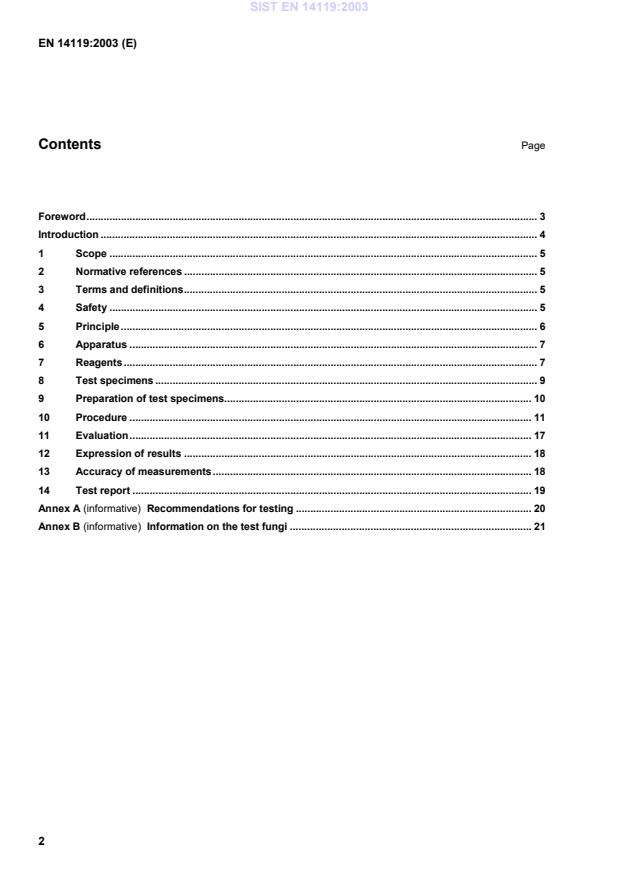
Recommendations for testing.20Annex B (informative)
Information on the test fungi.21SIST EN 14119:2003
0,5 g¾ FeSO4 × 7H2O 0,01 g¾ H2O1 000 mlSIST EN 14119:2003
Add to 1 l of the stock mineral salts solution (7.5.1) 0,1 g ofa non-toxic wetting agent, such asN-methyltauride or polyglycol ether.Sterilize in an autoclave at 121 °C for15 min to 20 min.7.5.3Mineral salts solution with glucose. Add to the mineral salts solution (7.5.1) glucose to obtain aconcentration of (30 ± 1) g/l. Sterilize in an autoclave at 115 °C for 30 min.NOTEIn autoclaves with integrated cooling procedure it is possible to sterilize sugar containing media at 121 °C for15 min.7.5.4 Incomplete agar medium. Add to the mineral salts solution (7.5.1) agar to obtain a concentration of20 g/l. Dissolve the agar by boiling the solutions whilst stirring.Sterilize in an autoclave at 121 °C for 15 to 20 min.7.5.5Complete agar medium. Use the incomplete agar medium (7.5.4) and add glucose to obtain aconcentration of (20 ± 1) g/l.Sterilize in an autoclave at 115 °C for 30 min.Adjust the pH to between 6,0 and 6,5 at 20 °C after sterilisation with a 0,01 mol/l NaOH solution.NOTEIn autoclaves with integrated cooling procedure it is possible to sterilize sugar-containing media at 121 °C for15 min.8
Test specimens8.1 DimensionsThe shape and dimensions of the specimens will depend on tests to be carried out, see the followingprocedures.8.2 Numbers of specimensAt least 4 test specimens shall be taken from the same batch for visual examination.At least 6 test specimens shall be taken from the same batch for the determination of tensile strength.8.3 Batches of specimensFor each sample, each stage of ageing and each test method two batches of specimens should be prepared:¾ batch 0: control specimens, stored under standard temperature and moisture conditions;¾ batch I: specimens used for the biotest.SIST EN 14119:2003
Summary of test proceduresTest proceduresMethodA1A2B1B2Reference10.210.310.410.5medium usedincomplete agarmediumnonecomplete agar mediuminoculummixed sporesuspensionsprayed over testspecimen and agarmediummixed sporesuspensionsprayed on testspecimenmixed sporesuspensionsprayed over testspecimen and agarmediumAspergillus niger resp.Chaetomium globosumspore suspensionincorporated in theagar mediumincubation time2 and 4 weeks2 weeksincubationtemperature29 °Chumidity> 95% r.h.provided by the agarmediumcontrolled humiditywithin the moistchamberprovided by the agar mediumassessmenta) growthb) tensile strengtha) growthb) growth inhibitionc) tensile strengtha) growthb) growth inhibition10.2 Procedure A 1:
Fungus resistance10.2.1 Filling the Petri dishesAfter sterilization pour the incomplete agar medium (5.5) into the sterile Petri dishes to give a depth of 5 mm.Leave to cool and solidify.10.2.2 Dimensions and number of specimensCut specimens of 2.5 cm x 8 cm (length in warp direction for woven textiles or in the direction of cellulosicyarns) and then make test specimens of exactly 20 mm width.SIST EN 14119:2003
...