

ASTM F2005-21
(Terminology)Standard Terminology for Nickel-Titanium Shape Memory Alloys
General Information
- Abstract
SCOPE
1.1 This terminology is a compilation of definitions of terms used in ASTM documents relating to nickel-titanium shape memory alloys used for medical devices. This terminology includes only those terms for which ASTM either has standards or which are used in ASTM standards for nickel-titanium shape memory alloys. It is not intended to be an all-inclusive list of terms related to shape memory alloys.
1.2 Definitions that are similar to those published by another standards body are identified with abbreviations of the name of that organization; for example, ICTAC is the International Confederation for Thermal Analysis and Calorimetry.
1.3 This international standard was developed in accordance with internationally recognized principles on standardization established in the Decision on Principles for the Development of International Standards, Guides and Recommendations issued by the World Trade Organization Technical Barriers to Trade (TBT) Committee.
- Status
- Published
- Publication Date
- 28-Feb-2021
- Technical Committee
- F04 - Medical and Surgical Materials and Devices
- Drafting Committee
- F04.12 - Metallurgical Materials


Overview
ASTM F2005-21: Standard Terminology for Nickel-Titanium Shape Memory Alloys is an internationally recognized standard developed by ASTM International. This standard provides a comprehensive compilation of agreed-upon definitions for terms used in ASTM standards related to nickel-titanium (Ni-Ti) shape memory alloys, specifically in the context of medical devices. The aim is to ensure consistent and precise communication across technical documents, manufacturing processes, and regulatory submissions by standardizing the terminology used for these high-performance materials.
Shape memory alloys, such as Nitinol (a nickel-titanium alloy), possess unique properties like superelasticity and the ability to return to a pre-set shape upon heating. These features make them indispensable in various medical device applications, from minimally invasive surgical instruments to implantable devices like stents.
Key Topics
The ASTM F2005-21 standard terminology covers key concepts and definitions essential for understanding and working with nickel-titanium shape memory alloys in medical engineering, including:
Alloy Phases
- Austenite: The high-temperature parent phase that transforms into martensite or R-phase upon cooling.
- Martensite: The low-temperature phase responsible for shape memory effects.
- R-phase: An intermediate phase that can appear between austenite and martensite under certain conditions.
Transformation Temperatures
- Austenite start, finish, and peak temperatures (A_s, A_f, A_p)
- Martensite start, finish, and peak temperatures (M_s, M_f, M_p)
- R-phase start, finish, and peak temperatures (R_s, R_f, R_p)
Material Treatments
- Anneal: Heat treatment for removing the effects of prior working.
- Age, Shape-set, Temper: Various heat treatments to achieve target mechanical and physical properties in Ni-Ti alloys.
Mechanical Performance
- Superelasticity (Pseudoelasticity): Nonlinear, recoverable deformation above the austenite finish temperature.
- Linear elasticity, Upper/Lower plateau strength: Stress-strain characteristics relevant for medical device design.
Testing Methods
- Definitions for test methods such as Bend and Free Recovery (BFR) and Differential Scanning Calorimetry (DSC), which are vital for characterizing transformation temperatures and mechanical behavior.
Applications
Standardized terminology, as defined in ASTM F2005-21, is crucial for several practical reasons in the medical device industry:
Device Design & Manufacturing
- Ensures accurate specification of material properties, leading to safer and more reliable products such as stents, guidewires, orthodontic devices, and surgical instruments.
Quality Control & Regulatory Compliance
- Facilitates consistent material certification, testing, and reporting required by regulatory bodies worldwide.
Research & Development
- Enables effective communication of technical details across multidisciplinary teams working on innovative medical technologies involving nickel-titanium alloys.
Supply Chain Integration
- Allows for clear requirements and acceptance criteria when sourcing materials and components from domestic and international suppliers.
Related Standards
ASTM F2005-21 references several related ASTM standards which provide complementary guidance and test methods for nickel-titanium alloys:
- E7 - Terminology Relating to Metallography
- E473 - Terminology Relating to Thermal Analysis and Rheology
- E3098 - Test Method for Mechanical Uniaxial Pre-strain and Thermal Free Recovery of Shape Memory Alloys
- F2004 - Test Method for Transformation Temperature of Nickel-Titanium Alloys by Thermal Analysis
- F2082 - Test Method for Determination of Transformation Temperature of Nickel-Titanium Shape Memory Alloys by Bend and Free Recovery
- F2516 - Test Method for Tension Testing of Nickel-Titanium Superelastic Materials
Keywords
Nickel-titanium shape memory alloys, Nitinol terminology, ASTM standards, medical device materials, superelasticity, austenite, martensite, transformation temperature, medical innovation compliance, shape-setting, alloy testing methods.
For further details and the complete text, consult the official ASTM F2005-21 standard available from ASTM International.
Relations
- Effective Date
- 01-Oct-2023
- Effective Date
- 01-Nov-2017
- Effective Date
- 01-Oct-2017
- Effective Date
- 01-Dec-2016
- Effective Date
- 01-Jun-2015
- Effective Date
- 01-May-2015
- Effective Date
- 01-Nov-2014
- Refers
ASTM F2516-14 - Standard Test Method for Tension Testing of Nickel-Titanium Superelastic Materials - Effective Date
- 01-Oct-2014
- Effective Date
- 15-Aug-2014
- Effective Date
- 15-Jun-2011
- Effective Date
- 01-Apr-2011
- Effective Date
- 01-Jun-2010
- Effective Date
- 01-Mar-2010
- Effective Date
- 01-Oct-2009
- Effective Date
- 01-Aug-2009
Get Certified
Connect with accredited certification bodies for this standard

Element Materials Technology
Materials testing and product certification.

Inštitut za kovinske materiale in tehnologije
Institute of Metals and Technology. Materials testing, metallurgical analysis, NDT.
Sponsored listings
Frequently Asked Questions
ASTM F2005-21 is a standard published by ASTM International. Its full title is "Standard Terminology for Nickel-Titanium Shape Memory Alloys". This standard covers: SCOPE 1.1 This terminology is a compilation of definitions of terms used in ASTM documents relating to nickel-titanium shape memory alloys used for medical devices. This terminology includes only those terms for which ASTM either has standards or which are used in ASTM standards for nickel-titanium shape memory alloys. It is not intended to be an all-inclusive list of terms related to shape memory alloys. 1.2 Definitions that are similar to those published by another standards body are identified with abbreviations of the name of that organization; for example, ICTAC is the International Confederation for Thermal Analysis and Calorimetry. 1.3 This international standard was developed in accordance with internationally recognized principles on standardization established in the Decision on Principles for the Development of International Standards, Guides and Recommendations issued by the World Trade Organization Technical Barriers to Trade (TBT) Committee.
SCOPE 1.1 This terminology is a compilation of definitions of terms used in ASTM documents relating to nickel-titanium shape memory alloys used for medical devices. This terminology includes only those terms for which ASTM either has standards or which are used in ASTM standards for nickel-titanium shape memory alloys. It is not intended to be an all-inclusive list of terms related to shape memory alloys. 1.2 Definitions that are similar to those published by another standards body are identified with abbreviations of the name of that organization; for example, ICTAC is the International Confederation for Thermal Analysis and Calorimetry. 1.3 This international standard was developed in accordance with internationally recognized principles on standardization established in the Decision on Principles for the Development of International Standards, Guides and Recommendations issued by the World Trade Organization Technical Barriers to Trade (TBT) Committee.
ASTM F2005-21 is classified under the following ICS (International Classification for Standards) categories: 77.120.40 - Nickel, chromium and their alloys; 77.120.50 - Titanium and titanium alloys. The ICS classification helps identify the subject area and facilitates finding related standards.
ASTM F2005-21 has the following relationships with other standards: It is inter standard links to ASTM E473-23b, ASTM E3098-17, ASTM F2004-17, ASTM F2004-16, ASTM E7-15, ASTM F2082-15, ASTM E7-14, ASTM F2516-14, ASTM E473-14, ASTM E473-11a, ASTM E473-11, ASTM F2004-05(2010), ASTM E473-10, ASTM E7-03(2009), ASTM E473-09. Understanding these relationships helps ensure you are using the most current and applicable version of the standard.
ASTM F2005-21 is available in PDF format for immediate download after purchase. The document can be added to your cart and obtained through the secure checkout process. Digital delivery ensures instant access to the complete standard document.
Standards Content (Sample)
This international standard was developed in accordance with internationally recognized principles on standardization established in the Decision on Principles for the
Development of International Standards, Guides and Recommendations issued by the World Trade Organization Technical Barriers to Trade (TBT) Committee.
Designation: F2005 − 21
Standard Terminology for
Nickel-Titanium Shape Memory Alloys
This standard is issued under the fixed designation F2005; the number immediately following the designation indicates the year of
original adoption or, in the case of revision, the year of last revision. A number in parentheses indicates the year of last reapproval. A
superscript epsilon (´) indicates an editorial change since the last revision or reapproval.
1. Scope 3. Terminology
1.1 This terminology is a compilation of definitions of terms
active austenite finish temperature, n—term used to denote
used in ASTM documents relating to nickel-titanium shape
the austenite finish temperature of an aged, shape-set or
memory alloys used for medical devices. This terminology
tempered wire, tube, or component as determined by (1)a
includesonlythosetermsforwhichASTMeitherhasstandards
bend and free recovery (BFR) method pursuant to Test
orwhichareusedinASTMstandardsfornickel-titaniumshape
Method F2082,(2) by a uniform prestrain and free recovery
memory alloys. It is not intended to be an all-inclusive list of
(UPFR) method pursuant to Test Method E3098,or(3)
terms related to shape memory alloys.
another method as agreed upon between purchaser and
supplier rather than by calorimetry (DSC) pursuant to Test
1.2 Definitionsthataresimilartothosepublishedbyanother
standards body are identified with abbreviations of the name of Method F2004.
that organization; for example, ICTAC is the International
age, v—to heat treat at a low to intermediate temperature,
Confederation for Thermal Analysis and Calorimetry.
typically in the range of 300 °C to 575 °C, usually for an
1.3 This international standard was developed in accor-
extended period of time, to form precipitates and/or adjust
dance with internationally recognized principles on standard-
transformation temperatures and thermoelastic properties.
ization established in the Decision on Principles for the
Development of International Standards, Guides and Recom- alloy phase, n—in a shape memory alloy, the crystal structure
mendations issued by the World Trade Organization Technical stable at a particular temperature and stress.
Barriers to Trade (TBT) Committee.
anneal, v—to heat treat at a temperature above the recrystal-
lization temperature, typically in the range of 700 °C to
2. Referenced Documents
950 °C, in order to essentially remove the effects of hot
2.1 ASTM Standards:
and/or cold working and dissolve precipitates.
E7 Terminology Relating to Metallography
E473 Terminology Relating to Thermal Analysis and Rhe-
austenite,n—the high temperature parent phase in Ni-Ti shape
ology
memory alloys with a B2 crystal structure. This phase
E3098 Test Method for Mechanical Uniaxial Pre-strain and
transforms to R-phase or martensite on cooling.
Thermal Free Recovery of Shape Memory Alloys
austenite finish temperature (A ), n—the temperature at
f
F2004 Test Method for Transformation Temperature of
which the martensite to austenite transformation is com-
Nickel-Titanium Alloys by Thermal Analysis
pleted on heating in a single-stage transformation (Fig. 1)or
F2082 Test Method for Determination of Transformation
the temperature at which the R-phase to austenite transfor-
Temperature of Nickel-Titanium Shape Memory Alloys
mation is completed on heating in a two-stage transforma-
by Bend and Free Recovery
tion (Fig. 2).
F2516 Test Method for Tension Testing of Nickel-Titanium
Superelastic Materials
austenite peak temperature (A ), n—the temperature of the
p
endothermic peak position on the differential scanning
calorimeter (DSC) curve upon heating for the martensite to
ThisterminologyisunderthejurisdictionofASTMCommittee F04onMedical
austenite transformation in a single-stage transformation
and Surgical Materials and Devices and is the direct responsibility of Subcommittee
(Fig. 1) or the temperature of the endothermic peak position
F04.12 on Metallurgical Materials.
Current edition approved March 1, 2021. Published March 2021. Originally
on the DSC curve upon heating for the R-phase to austenite
approved in 2000. Last previous edition approved in 2015 as F2005 – 05 (2015).
transformation in a two-stage transformation (Fig. 2).
DOI: 10.1520/F2005-21.
For referenced ASTM standards, visit the ASTM website, www.astm.org, or
austenite start temperature (A ),n—the temperature at which
s
contact ASTM Customer Service at service@astm.org. For Annual Book of ASTM
the martensite to austenite transformation begins on heating
Standards volume information, refer to the standard’s Document Summary page on
the ASTM website. in a single-stage transformation (Fig. 1) or the temperature at
Copyright © ASTM International, 100 Barr Harbor Drive, PO Box C700, West Conshohocken, PA 19428-2959. United States
F2005 − 21
covered in Test Method F2004.
(E473) (ICTAC (International Confederation for Ther-
mal Analysis and Calorimetry), 1993)
free recovery, n—unconstrained motion of a shape memory
alloy upon heating and transformation to austenite after
deformation below the austenite phase.
linear elasticity, n—linear recoverable deformation behavior.
DISCUSSION—No significant phase transformation event occurs while
straining the material and the tensile load-extension or stress-strain plot
is linear upon loading and unloading.
lower plateau strength (LPS), n—the stress at 2.5 % strain
during tensile unloading of the sample, after loading to 6 %
strain. See Test Method F2516.
martensite, n—the lowest temperature phase in Ni-Ti shape
memory alloys with a B19' (B19 prime) monoclinic crystal
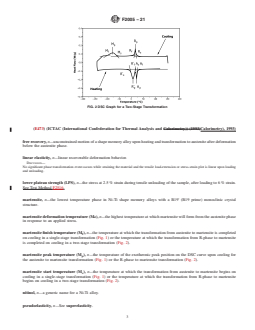
FIG. 1 DSC Graph for a Single-Stage Transformation
structure.
martensite deformation temperature (M ), n—the highest
d
temperature at which martensite will form from the austenite
phase in response to an applied stress.
martensite finish temperature (M ), n—the temperature at
f
which the transformation from austenite to martensite is
completed on cooling in a single-stage transformation (Fig.
1) or the temperature at which the transformation from
R-phase to martensite is completed on cooling in a two-stage
transformation (Fig. 2).
martensite peak temperature (M ),n—thetemperatureofthe
p
e
...
This document is not an ASTM standard and is intended only to provide the user of an ASTM standard an indication of what changes have been made to the previous version. Because
it may not be technically possible to adequately depict all changes accurately, ASTM recommends that users consult prior editions as appropriate. In all cases only the current version
of the standard as published by ASTM is to be considered the official document.
Designation: F2005 − 05 (Reapproved 2015) F2005 − 21
Standard Terminology for
Nickel-Titanium Shape Memory Alloys
This standard is issued under the fixed designation F2005; the number immediately following the designation indicates the year of
original adoption or, in the case of revision, the year of last revision. A number in parentheses indicates the year of last reapproval. A
superscript epsilon (´) indicates an editorial change since the last revision or reapproval.
1. Scope
1.1 This terminology is a compilation of definitions of terms used in ASTM documents relating to nickel-titanium shape memory
alloys used for medical devices. This terminology includes only those terms for which ASTM either has standards or which are
used in ASTM standards for nickel-titanium shape memory alloys. It is not intended to be an all-inclusive list of terms related to
shape memory alloys.
1.2 Definitions that are similar to those published by another standards body are identified with abbreviations of the name of that
organization; for example, ICTAC is the International Confederation for Thermal Analysis and Calorimetry.
1.3 This international standard was developed in accordance with internationally recognized principles on standardization
established in the Decision on Principles for the Development of International Standards, Guides and Recommendations issued
by the World Trade Organization Technical Barriers to Trade (TBT) Committee.
2. Referenced Documents
2.1 ASTM Standards:
E7 Terminology Relating to Metallography
E473 Terminology Relating to Thermal Analysis and Rheology
E3098 Test Method for Mechanical Uniaxial Pre-strain and Thermal Free Recovery of Shape Memory Alloys
F2004 Test Method for Transformation Temperature of Nickel-Titanium Alloys by Thermal Analysis
F2082 Test Method for Determination of Transformation Temperature of Nickel-Titanium Shape Memory Alloys by Bend and
Free Recovery
F2516 Test Method for Tension Testing of Nickel-Titanium Superelastic Materials
3. Terminology
active austenite finish temperature, n—term used to denote the austenite finish temperature of a finished an aged, shape-set
or tempered wire, tube, or component as determined by (1) a bend and free recovery method (BFR) method pursuant to Test
Method F2082, (2) by a uniform prestrain and free recovery (UPFR) method pursuant to Test Method E3098, or (3) another
method as agreed upon between purchaser and supplier rather than by DSC.calorimetry (DSC) pursuant to Test Method F2004.
age, v—to heat treat at a low to intermediate temperature, typically in the range of 300 °C to 575 °C, usually for an extended
period of time, to form precipitates and/or adjust transformation temperatures and thermoelastic properties.
This terminology is under the jurisdiction of ASTM Committee F04 on Medical and Surgical Materials and Devices and is the direct responsibility of Subcommittee
F04.12 on Metallurgical Materials.
Current edition approved March 1, 2015March 1, 2021. Published May 2015March 2021. Originally approved in 2000. Last previous edition approved in 20102015 as
F2005 – 05 (2010).(2015). DOI: 10.1520/F2005-05R15.10.1520/F2005-21.
For referenced ASTM standards, visit the ASTM website, www.astm.org, or contact ASTM Customer Service at service@astm.org. For Annual Book of ASTM Standards
volume information, refer to the standard’s Document Summary page on the ASTM website.
Copyright © ASTM International, 100 Barr Harbor Drive, PO Box C700, West Conshohocken, PA 19428-2959. United States
F2005 − 21
alloy phase, n—in a shape memory alloy, the crystal structure stable at a particular temperature and stress.
anneal, v—to heat treat in order to remove the effect of cold-working.at a temperature above the recrystallization temperature,
typically in the range of 700 °C to 950 °C, in order to essentially remove the effects of hot and/or cold working and dissolve
precipitates.
austenite, n—the high temperature parent phase in Ni-Ti shape memory alloys with a B2 crystal structure. This phase transforms
to R-phase or martensite on cooling.
austenite finish temperature (A ), n—the temperature at which the martensite to austenite transformation is completed on
f
heating in a single-stage transformation (Fig. 1) or the temperature at which the R-phase to austenite transformation is completed
on heating in a two-stage transformation (Fig. 2).
austenite peak temperature (A ) , ), n—the temperature of the endothermic peak position on the differential scanning
p
calorimeter (DSC) curve upon heating for the martensite to austenite transformation in a single-stage transformation (Fig. 1) or
the temperature of the endothermic peak position on the DSC curve upon heating for the R-phase to austenite transformation
in a two-stage transformation (Fig. 2).
austenite start temperature (A ) , ), n—the temperature at which the martensite to austenite transformation begins on heating
s
in a single-stage transformation (Fig. 1) or the temperature at which the R-phase to austenite transformation begins on heating
in a two-stage transformation (Fig. 2).
bend and free recovery (BFR), n—a test method for determining austenite transformation temperatures on heating.
DISCUSSION—
The test involves cooling a wire or tube specimen below the M temperature, deforming the specimen in a controlled fashion, then heating through
f
the austenite transformation. By measuring the shape memory response of the specimen A and A , temperatures can be determined. This test method
s f
is covered in Test Method F2082.
differential scanning calorimeter (DSC), n—a device that is capable of heating a test specimen and a reference at a controlled
rate and of automatically measuring the difference in heat flow between the specimen and the reference both to the required
sensitivity and precision.
differential scanning calorimetry (DSC), n—a technique in which the difference in heat flow into or out of a substance and
an inert reference is measured as a function of temperature while the substance and the reference material are subjected to a
controlled temperature program. This test method, as it applies to Ni-Ti shape memory alloys, is covered in Test Method F2004.
FIG. 1 DSC Graph for a Single-Stage Transformation
F2005 − 2
...