

ASTM E3267-21
(Guide)Standard Guide for Building Information Models and Archiving for Digital Imaging and Communication in Nondestructive Evaluation (DICONDE)
General Information
- Abstract
SIGNIFICANCE AND USE
5.1 5.1 This guide is intended to assist and provide recommendations for an end-user of NDE imaging systems by providing an introduction to the basic principles of DICONDE for the control and maintenance of electronic NDE data. This guide is not intended to control the acceptability of the materials or components examined.
5.2 Recommended End-users:
5.2.1 Personnel responsible for the creation, display, transfer, or storage of digital nondestructive evaluation results will use this guide.
5.2.2 Personnel responsible for the purchase and implementation of NDT systems conforming to the DICONDE standard will use this guide.
SCOPE
1.1 The display, transfer, and storage of digital nondestructive evaluation data in a common, open format is necessary for the effective interpretation and preservation of evaluation results. ASTM International has developed common open standards for Digital Imaging and Communication in Nondestructive Evaluation (DICONDE) based on the ubiquitous healthcare industry standard Digital Imaging and Communication in Medicine (DICOM). This guide provides an overview of DICONDE data archiving considerations and building information models for the efficient storing and locating of such data.
1.2 This guide provides an overview of how to manage ASTM DICONDE data from standard practices found in 2.2 for the display, transfer, and storage of digital nondestructive test data.
1.3 This guide provides an overview of how to utilize the DICOM standard found in 2.4 for the display, transfer, and storage of digital nondestructive test data for test methods not explicitly addressed by a DICONDE standard practice but having an equivalent medical imaging modality.
1.4 This guide provides recommendations for the storage of nondestructive digital test data not addressed in 1.2 or 1.3.
1.5 Units—Although this guide contains no values that require units, it does describe methods to store and communicate data that do require units to be properly interpreted. The SI units required by this guide are to be regarded as standard. No other units of measurement are included in this guide.
1.6 This standard does not purport to address all of the safety concerns, if any, associated with its use. It is the responsibility of the user of this standard to establish appropriate safety, health, and environmental practices and determine the applicability of regulatory limitations prior to use.
1.7 This international standard was developed in accordance with internationally recognized principles on standardization established in the Decision on Principles for the Development of International Standards, Guides and Recommendations issued by the World Trade Organization Technical Barriers to Trade (TBT) Committee.
- Status
- Published
- Publication Date
- 14-Mar-2021
- Technical Committee
- E07 - Nondestructive Testing
Overview
ASTM E3267-21 is the Standard Guide for Building Information Models and Archiving for Digital Imaging and Communication in Nondestructive Evaluation (DICONDE). Developed by ASTM International, this guide provides foundational recommendations for the display, transfer, and storage of digital nondestructive evaluation (NDE) data using DICONDE-an adaptation of the established DICOM standard from the healthcare sector. The standard assists organizations in implementing effective electronic data management practices for NDE results, ensuring that digital data is controlled, preserved, and accessible throughout its lifecycle.
Key Topics
Data Lifecycle Management
- Guidance on preserving NDE data for the necessary duration, aligned with the operational life of components, regulatory requirements, and organizational needs.
- Outlines the considerations for data retention, reassignment of responsibility, and criteria-driven archival or disposal.
Information Modeling
- Describes methodologies for defining and organizing NDE metadata using DICONDE tags.
- Recommends creating information models tailored to inspection methods and business practices, facilitating efficient storage and recall of critical data attributes.
Roles and Responsibilities
- Highlights the importance of clearly defining roles for NDE personnel, IT staff, archive managers, and equipment vendors.
- Stresses collaboration between technical and IT teams to maintain system functionality and data security.
Archival Systems Selection
- Presents criteria to guide the selection of archival solutions (DICONDE-compliant, indexed/non-indexed, vendor agnostic/proprietary).
- Explains benefits and trade-offs of various storage media, including WORM media, online archives, and media changers, with recommendations for long-term data preservation.
Applications
ASTM E3267-21 serves a diverse user base in sectors where digital NDE imaging and data integrity are essential, such as:
Industrial Quality Assurance
- Ensures that critical inspection data for components like welds, castings, and manufactured parts are archived in standardized formats for regulatory compliance and quality audits.
Asset Lifecycle Management
- Facilitates traceability and historical analysis of NDE results throughout the operational lifespan of physical assets, aiding in predictive maintenance and failure analysis.
Digital Transformation Projects
- Provides guidance for migrating from paper or proprietary digital formats to open, interoperable DICONDE systems, reducing dependency on single vendors and future-proofing data accessibility.
Data Integrity and Retrieval
- Supports the development of information models and metadata tagging schemes, enabling efficient search, retrieval, and analysis of stored NDT inspection data.
Related Standards
ASTM E3267-21 is part of a broader suite of standards supporting digital NDE and DICONDE practices:
- ASTM E2339: Practice for Digital Imaging and Communication in Nondestructive Evaluation (DICONDE)
- ASTM E3147: Practice for Evaluating DICONDE Interoperability of Nondestructive Testing and Inspection Systems
- ASTM E3169: Guide for Digital Imaging and Communication in Nondestructive Evaluation (DICONDE)
- ASTM E1453: Guide for Storage of Magnetic Tape Media
- DICOM Standard (NEMA PS3/ISO 12052): The foundational digital imaging standard from the healthcare industry, adapted for NDE.
Practical Value
Implementing ASTM E3267-21 enables organizations to:
- Standardize NDE data formats for longevity and interoperability
- Maintain compliance with international digital archiving practices
- Support efficient data retrieval and regulatory reporting
- Mitigate risks associated with vendor lock-in or obsolete technologies
- Enhance data security, integrity, and business continuity in nondestructive evaluation processes
By following the guide’s recommendations, stakeholders ensure that vital NDE imaging and communication data are available, interpretable, and valuable over the long term, supporting critical decision-making in quality control, asset management, and compliance.
Relations
- Effective Date
- 01-Feb-2024
- Effective Date
- 01-Feb-2024
- Effective Date
- 01-Dec-2019
- Effective Date
- 01-Mar-2019
- Effective Date
- 15-Jun-2018
- Effective Date
- 01-Feb-2018
- Effective Date
- 01-Jan-2018
- Effective Date
- 15-Jun-2017
- Effective Date
- 01-Feb-2017
- Effective Date
- 01-Aug-2016
- Effective Date
- 01-Feb-2016
- Effective Date
- 01-Dec-2015
- Effective Date
- 01-Sep-2015
- Effective Date
- 15-Nov-2014
- Effective Date
- 01-Jun-2014
Get Certified
Connect with accredited certification bodies for this standard

BSI Group
BSI (British Standards Institution) is the business standards company that helps organizations make excellence a habit.

NYCE
Mexican standards and certification body.
Sponsored listings
Frequently Asked Questions
ASTM E3267-21 is a guide published by ASTM International. Its full title is "Standard Guide for Building Information Models and Archiving for Digital Imaging and Communication in Nondestructive Evaluation (DICONDE)". This standard covers: SIGNIFICANCE AND USE 5.1 5.1 This guide is intended to assist and provide recommendations for an end-user of NDE imaging systems by providing an introduction to the basic principles of DICONDE for the control and maintenance of electronic NDE data. This guide is not intended to control the acceptability of the materials or components examined. 5.2 Recommended End-users: 5.2.1 Personnel responsible for the creation, display, transfer, or storage of digital nondestructive evaluation results will use this guide. 5.2.2 Personnel responsible for the purchase and implementation of NDT systems conforming to the DICONDE standard will use this guide. SCOPE 1.1 The display, transfer, and storage of digital nondestructive evaluation data in a common, open format is necessary for the effective interpretation and preservation of evaluation results. ASTM International has developed common open standards for Digital Imaging and Communication in Nondestructive Evaluation (DICONDE) based on the ubiquitous healthcare industry standard Digital Imaging and Communication in Medicine (DICOM). This guide provides an overview of DICONDE data archiving considerations and building information models for the efficient storing and locating of such data. 1.2 This guide provides an overview of how to manage ASTM DICONDE data from standard practices found in 2.2 for the display, transfer, and storage of digital nondestructive test data. 1.3 This guide provides an overview of how to utilize the DICOM standard found in 2.4 for the display, transfer, and storage of digital nondestructive test data for test methods not explicitly addressed by a DICONDE standard practice but having an equivalent medical imaging modality. 1.4 This guide provides recommendations for the storage of nondestructive digital test data not addressed in 1.2 or 1.3. 1.5 Units—Although this guide contains no values that require units, it does describe methods to store and communicate data that do require units to be properly interpreted. The SI units required by this guide are to be regarded as standard. No other units of measurement are included in this guide. 1.6 This standard does not purport to address all of the safety concerns, if any, associated with its use. It is the responsibility of the user of this standard to establish appropriate safety, health, and environmental practices and determine the applicability of regulatory limitations prior to use. 1.7 This international standard was developed in accordance with internationally recognized principles on standardization established in the Decision on Principles for the Development of International Standards, Guides and Recommendations issued by the World Trade Organization Technical Barriers to Trade (TBT) Committee.
SIGNIFICANCE AND USE 5.1 5.1 This guide is intended to assist and provide recommendations for an end-user of NDE imaging systems by providing an introduction to the basic principles of DICONDE for the control and maintenance of electronic NDE data. This guide is not intended to control the acceptability of the materials or components examined. 5.2 Recommended End-users: 5.2.1 Personnel responsible for the creation, display, transfer, or storage of digital nondestructive evaluation results will use this guide. 5.2.2 Personnel responsible for the purchase and implementation of NDT systems conforming to the DICONDE standard will use this guide. SCOPE 1.1 The display, transfer, and storage of digital nondestructive evaluation data in a common, open format is necessary for the effective interpretation and preservation of evaluation results. ASTM International has developed common open standards for Digital Imaging and Communication in Nondestructive Evaluation (DICONDE) based on the ubiquitous healthcare industry standard Digital Imaging and Communication in Medicine (DICOM). This guide provides an overview of DICONDE data archiving considerations and building information models for the efficient storing and locating of such data. 1.2 This guide provides an overview of how to manage ASTM DICONDE data from standard practices found in 2.2 for the display, transfer, and storage of digital nondestructive test data. 1.3 This guide provides an overview of how to utilize the DICOM standard found in 2.4 for the display, transfer, and storage of digital nondestructive test data for test methods not explicitly addressed by a DICONDE standard practice but having an equivalent medical imaging modality. 1.4 This guide provides recommendations for the storage of nondestructive digital test data not addressed in 1.2 or 1.3. 1.5 Units—Although this guide contains no values that require units, it does describe methods to store and communicate data that do require units to be properly interpreted. The SI units required by this guide are to be regarded as standard. No other units of measurement are included in this guide. 1.6 This standard does not purport to address all of the safety concerns, if any, associated with its use. It is the responsibility of the user of this standard to establish appropriate safety, health, and environmental practices and determine the applicability of regulatory limitations prior to use. 1.7 This international standard was developed in accordance with internationally recognized principles on standardization established in the Decision on Principles for the Development of International Standards, Guides and Recommendations issued by the World Trade Organization Technical Barriers to Trade (TBT) Committee.
ASTM E3267-21 is classified under the following ICS (International Classification for Standards) categories: 35.240.67 - IT applications in building and construction industry. The ICS classification helps identify the subject area and facilitates finding related standards.
ASTM E3267-21 has the following relationships with other standards: It is inter standard links to ASTM E2767-24, ASTM E1316-24, ASTM E1316-19b, ASTM E1316-19, ASTM E3169-18, ASTM E3147-18, ASTM E1316-18, ASTM E1316-17a, ASTM E1316-17, ASTM E1316-16a, ASTM E1316-16, ASTM E1316-15a, ASTM E1316-15, ASTM E2663-14, ASTM E1316-14. Understanding these relationships helps ensure you are using the most current and applicable version of the standard.
ASTM E3267-21 is available in PDF format for immediate download after purchase. The document can be added to your cart and obtained through the secure checkout process. Digital delivery ensures instant access to the complete standard document.
Standards Content (Sample)
This international standard was developed in accordance with internationally recognized principles on standardization established in the Decision on Principles for the
Development of International Standards, Guides and Recommendations issued by the World Trade Organization Technical Barriers to Trade (TBT) Committee.
Designation: E3267 − 21
Standard Guide for
Building Information Models and Archiving for Digital
Imaging and Communication in Nondestructive Evaluation
(DICONDE)
This standard is issued under the fixed designation E3267; the number immediately following the designation indicates the year of
original adoption or, in the case of revision, the year of last revision. A number in parentheses indicates the year of last reapproval. A
superscript epsilon (´) indicates an editorial change since the last revision or reapproval.
1. Scope 1.7 This international standard was developed in accor-
dance with internationally recognized principles on standard-
1.1 The display, transfer, and storage of digital nondestruc-
ization established in the Decision on Principles for the
tive evaluation data in a common, open format is necessary for
Development of International Standards, Guides and Recom-
the effective interpretation and preservation of evaluation
mendations issued by the World Trade Organization Technical
results. ASTM International has developed common open
Barriers to Trade (TBT) Committee.
standards for Digital Imaging and Communication in Nonde-
structive Evaluation (DICONDE) based on the ubiquitous
2. Referenced Documents
healthcare industry standard Digital Imaging and Communica-
2.1 ASTM Standards:
tion in Medicine (DICOM). This guide provides an overview
E1316 Terminology for Nondestructive Examinations
of DICONDE data archiving considerations and building
E1453 Guide for Storage of Magnetic Tape Media that
information models for the efficient storing and locating of
Contains Analog or Digital Radioscopic Data
such data.
2.2 ASTM DICONDE Test Method Standards:
1.2 This guide provides an overview of how to manage
E2339 Practice for Digital Imaging and Communication in
ASTM DICONDE data from standard practices found in 2.2
Nondestructive Evaluation (DICONDE)
for the display, transfer, and storage of digital nondestructive
E2663 Practice for Digital Imaging and Communication in
test data.
Nondestructive Evaluation (DICONDE) for Ultrasonic
1.3 This guide provides an overview of how to utilize the Test Methods
DICOM standard found in 2.4 for the display, transfer, and
E2767 Practice for Digital Imaging and Communication in
storage of digital nondestructive test data for test methods not
Nondestructive Evaluation (DICONDE) for X-ray Com-
explicitly addressed by a DICONDE standard practice but
puted Tomography (CT) Test Methods
having an equivalent medical imaging modality.
E3169 Guide for Digital Imaging and Communication in
Nondestructive Evaluation (DICONDE)
1.4 This guide provides recommendations for the storage of
2.3 ASTM DICONDE Interoperability Standard:
nondestructive digital test data not addressed in 1.2 or 1.3.
E3147 PracticeforEvaluatingDICONDEInteroperabilityof
1.5 Units—Although this guide contains no values that
Nondestructive Testing and Inspection Systems
require units, it does describe methods to store and communi-
2.4 DICOM Standard:
catedatathatdorequireunitstobeproperlyinterpreted.TheSI
DICOM NEMA PS3 / ISO 12052 Digital Imaging and
units required by this guide are to be regarded as standard. No
Communications in Medicine (DICOM) Standard, Na-
other units of measurement are included in this guide.
tional Electrical ManufacturersAssociation, Rosslyn, VA,
1.6 This standard does not purport to address all of the
USA (available free at http://www.dicomstandard.org/)
safety concerns, if any, associated with its use. It is the
2.5 ISO Standards:
responsibility of the user of this standard to establish appro-
ISO 8824 Information Technology — Abstract Syntax No-
priate safety, health, and environmental practices and deter-
tation One (ASN.1): Specification of Basic Notation
mine the applicability of regulatory limitations prior to use.
For referenced ASTM standards, visit the ASTM website, www.astm.org, or
contact ASTM Customer Service at service@astm.org. For Annual Book of ASTM
This guide is under the jurisdiction of ASTM Committee E07 on Nondestruc- Standards volume information, refer to the standard’s Document Summary page on
tive Testing and is the direct responsibility of Subcommittee E07.11 on Digital the ASTM website.
Imaging and Communication in Nondestructive Evaluation (DICONDE). Available from International Organization for Standardization (ISO), ISO
Current edition approved March 15, 2021. Published May 2021. DOI: 10.1520/ Central Secretariat, Chemin de Blandonnet 8, CP 401, 1214 Vernier, Geneva,
E3267-21. Switzerland, https://www.iso.org.
Copyright © ASTM International, 100 Barr Harbor Drive, PO Box C700, West Conshohocken, PA 19428-2959. United States
E3267 − 21
ISO 9834-1 Information Technology — Procedures for the development and manages licensing and certification of media
Operation of Object Identifier Registration Authorities: and mechanism manufacturers.
General Procedures and Top Arcs of the International
3.2.6 mean time between failures (MTBF), n—the predicted
Object Identifier Tree — Part 1
elapsed arithmetic mean (average) time between inherent
ISO 10995 Information Technology — Digitally Recorded
failures of a mechanical or electronic system, during normal
Media for Information Interchange and Storage — Test
system operation
Method for the Estimation of the Archival Lifetime of
3.2.7 metadata, n—information that describes or provides
Optical Media
additional information about other data.
ISO 16963 Information Technology — Digitally Recorded
3.2.8 offline media, n—any media not directly addressable
Media for Information Interchange and Storage — Test
Method for the Estimation of Lifetime of Optical Disks by a computer system on-demand and requiring some form of
import process.
for Long-term Data Storage
ISO 18938 Imaging Materials — Optical Discs — CareAnd
3.2.9 online media, n—any media directly addressable by a
Handling For Extended Storage
computer system on-demand via a dedicated channel without
2.6 NIST Documents:
requiring any external interaction.
NIST Special Publication 500-252 Care and Handling of
3.2.10 query, v—the activity of requesting a DICONDE
CDs and DVDs — A Guide for Librarians and Archivists
software to determine all objects known to it that match the
NIST and Library of Congress NIST/Library of Congress
criteria requested; query is also commonly referred to as
(LC) Optical Disc Longevity Study
Search.
2.7 CCI Document:
3.2.11 redundant array of independent disks (RAID), n—a
Canada Conservation Institute CCI Notes 19/1 Longevity of
storagemethodologyinwhichmultiplephysicaldiskdrivesare
Recordable CDs and DVDs
combined into one or more logical drives for the purposes of
2.8 MAM-A Inc. Documents:
data redundancy, performance improvement, or both.
MAM Archive Grade Gold Media Longevity
3.2.12 write once, read many (WORM), n—media that can
Specifications for MAM-A CD-R Media
be written to only once and has either physical or logical
Product Specifications: DVD-R 16X Gold/Silver
properties to prevent the overwriting or removal of data.
2.9 Additional aggregate sources are included in Appendix
X3.
4. Summary of Guide
3. Terminology
4.1 DICONDE provides rich methods for managing the
3.1 Definitions: display, transfer, and storage of a wide variety of digital test
3.1.1 Nondestructive evaluation terms used in this practice data. As a framework, it provides all the tools necessary to
can be found in Terminology E1316. handle the data in commonly accepted terms, but it does not
3.1.2 DICONDE terms used in this practice can be found in and should not define a specific methodology for the long-term
Practices E2339 and E3147. preservation of the test data. The individual cases vary from
user to user and on a case-by-case basis.This guide is intended
3.2 Definitions of Terms Specific to This Standard:
to provide the end-user a practical overview of the different
3.2.1 archive, n—a collection of records that has been
methodologies and techniques of digital test data archival. The
selectedforpermanentorlong-termpreservationongroundsof
topics that are covered in this guide are:
some value.
4.1.1 Data Lifecycle Considerations—How to deal with
3.2.2 character, n—a unit of information generally corre-
data archival over time.
sponding to a letter, glyph, numerical digit, punctuation mark,
4.1.2 Personnel Considerations—The people involved with
symbol, control mark, or whitespace.
archive management.
3.2.3 decimal string, n—a computer memory storage object
4.1.3 Identification Usage—How to use DICONDE tags to
(variable type) that contains a value of a decimal number or a
identify data for storage and later recall (building an informa-
number in exponential scientific notation.
tion model).
3.2.4 integer string, n—a computer memory storage object
4.1.4 Storage Selection—Selecting the appropriate type of
(variable type) that contains a value of a whole number only.
storage methodology.
3.2.5 linear tape-open (LTO), n—a magnetic tape data
5. Significance and Use
storage technology developed as an open standards alternative
to the proprietary magnetic tape; the LTO Consortium directs
5.1 5.1 This guide is intended to assist and provide recom-
mendations for an end-user of NDE imaging systems by
providing an introduction to the basic principles of DICONDE
Available from National Institute of Standards and Technology (NIST), 100
for the control and maintenance of electronic NDE data. This
Bureau Dr., Stop 1070, Gaithersburg, MD 20899-1070, http://www.nist.gov.
guide is not intended to control the acceptability of the
Available from Canada Conservation Institute (CCI), 1030 Innes Road, Ottawa
ON, K1A 0M5, Canada, www.canada.ca.
materials or components examined.
Available from MAM-A Inc., 10045 Federal Drive, Colorado Springs, CO
80908-4509, www.mam-a.com. 5.2 Recommended End-users:
E3267 − 21
5.2.1 Personnel responsible for the creation, display, should be tracked and maintained during the life of the data to
transfer, or storage of digital nondestructive evaluation results ensure the appropriate access is maintained and that data
will use this guide. doesn’t become orphaned. The specific rules for each end-user
5.2.2 Personnel responsible for the purchase and implemen- may vary, but there are certain criteria that should be consid-
tation of NDT systems conforming to the DICONDE standard ered:
will use this guide. (1) Data owner parties
(2) Data classification level(s)
6. Procedure (3) Responsible parties to change classification level
(4) Reassignment date and proposed new responsible par-
6.1 Before implementation of a digital NDE solution of any
ties
type, the personnel responsible for the management of the
solution need to have considered and made decisions around 6.3 Data Management Personnel/Roles:
four fundamentals: data lifecycle management, identification
6.3.1 Technology plays a critical role in the management of
of the data, personnel responsible for the data, and storage
data, but it isn’t all just up to the computers: people are
technology for the data.
important parts of the process. Just as the Level III is
responsible for reviewing inspection data and providing a
6.2 Data Lifecycle Management:
result, there are other individuals who help to make a success-
6.2.1 The "Data Lifecycle" is the most important element of
ful digital NDT workflow. For example, it is typically neither
managing any data, whether for NDT or any other discipline.
efficient nor best practice to make the Level III responsible for
Rarely is data created that needs to survive forever. Data
management of the related IT equipment, just as IT personnel
generated in NDE processes are almost always tied to a
often do not have experience in interpreting NDT results.
physicalobject,beitapipeweldunderinspectionoracastpart
Having the right people from various disciplines is essential to
being verified before use. Those physical objects have an
maintain a proper digital inspection workflow. Additionally,
operational lifespan, either individually or collectively in a
each role should also be accounted for within an organization’s
system, and their related inspection data should be no different.
ISO processes regarding NDT operations.
6.2.2 There are several reasons to maintain such historic
6.3.2 NDT Equipment Vendor—One role that, while not a
inspection data. A few examples include:
direct member of the organization, should not be overlooked is
(1) The data is directly useful for root-cause analysis in
that of the support personnel from the equipment vendor.
case of unexpected part/repair failures or Quality Management
Vendor personnel, working on behalf of their company, can
System (QMS) audit.
provide specialized knowledge of the product, tips and hints
(2) The data can provide visual or algorithmic trends on
for getting the most from the equipment, and a deep under-
wear and fatigue (providing statistically significant data for
standing of features. They are also able to provide their users
future failure predictions or service cycles).
with specifics on the level of DICONDE conformity provided
(3) Quality control comparison across a part from multiple
by their solutions, specifically with regard to the version of the
manufacture facilities or over a period of manufacture time to
standard implemented by version, the technologies (modali-
compare processes, materials, or technique changes.
ties) supported, and support services for process planning and
(4) Verifying part specification conformance.
troubleshooting.
6.2.3 Inspectiondatatypicallyneedstobepreservedatmost
6.3.3 Information Technology (IT)—The IT team is respon-
for the lifetime of the component family, but it can also be
sible for the standard off-the-shelf computer hardware, operat-
shortened to the life of the particular part inspected or even to
ing systems, and security management. These tasks are part of
a specific timeframe. For instance, once a part is no longer
the normal duties of IT personnel, and these systems are
manufactured or no longer in service, maintaining this data
generally no different. What is of critical importance is that
generally loses value, and data can quickly turn from an asset
there are often special requirements or certain security exemp-
into an expense. Keeping track of what data should remain
tions that may be necessary for the NDT software and
archived and what can be dispensed with is another task of the
hardware to function and that IT staff must take these excep-
archivalprocess.Thespecificrulesforeachend-usermayvary,
tions into considerations. An open dialog between IT and the
but there are certain criteria that should be considered and
NDT product support team is of critical importance, especially
maintained for the best results:
starting early on in the adoption process.
(1) What is the lifespan of the data or the revalidation
6.3.4 Digital Archive Manager—The archive manager is the
period?
key operator for the archive system and has several duties
(2) Are there other non-time based criteria for retention/
critical to maintaining the NDT data. The first duty of the
disposal?
manager is to ensure proper storage of NDT data by creating
(3) Who are the responsible parties to review the data for
and maintaining metadata mappings, a process detailed in 6.4,
revalidation or to be removed before final disposal?
(4) Does the information require multiple authorizations and verifying data integrity within the archive. The second
duty is overseeing data management, as outlined in 6.2,
before disposal?
including defining data ownership assignments, transferring
6.2.4 The lifecycle of data is not limited only to the
thoseassignmentsasnecessary,andmanagingdatadisposition.
disposal, but also to the management of disclosures and
assignments. After some criteria, data may need to be trans- 6.3.5 Quality/Operations Manager—The quality/operations
ferred from one responsible party to another. This process manager’s responsibilities include ensuring that the content
E3267 − 21
inside the DICONDE file is coherent and in line with the 6.4.2.1 When creating an information model, it can be
business context, user needs, and assurance quality procedures useful to list all available information from DICONDE and
for their external regulation’s compliance obligations or their
then select the important or user-required data elements from
internal quality controls. For instance, it could help character-
the list. Fig. 2 shows an example of building a full information
ize the set of DICONDE tags and their purpose for its
model. First, the relevant IOD is selected, for this example, the
company, always making sure they are also in conformance
CTImagedefinition.ForIODsthatderivefromDICOMIODs,
with the DICONDE standards. For example, some field might
DICONDE information modules that override DICOM mod-
be optional in accordance to the DICONDE standard but
ules are found in Practice E2339. In this example, Component
defined as mandatory in its field of expertise. In this regard, the
Module overrides Patient Module and NDE Equipment Mod-
quality/operation manager is often a deeply knowledgeable
ule overrides Equipment Module. Special information modules
person in their field of expertise. The quality/operations man-
specific to the DICONDE modality are specified in the
agershouldprovideguidanceandsupportthevarioususagesof
respective DICONDE modality standard, in this case, Practice
DICONDE inside a company knowing the impact of technical
E2767 DICONDE for X-Ray CT. Therefore, the NDE CT
constraints, the possible legal liabilities, and key benefits for
Image Module is listed here, which overrides the CT Image
the users.
Module from DICOM.All information modules from DICOM
6.4 Identification of the Data:
that are not explicitly overridden in DICONDE are also
6.4.1 When NDE inspections are undertaken, each method
available for the information model. For example, the Image
uses a procedure in order to generate a result. It is useful to
Pixel Module is listed here, and the others from DICOM
record the variables used in the procedure both for a frame of
should be represented as well. It should be noted that some
reference when an interpretation is conducted and for process
attributes are repeated in these predefined information models.
improvement.
This is normal for this abstract visualization of the DICONDE
6.4.2 An information model is a methodology or design for
object, but the object itself does not contain these duplicates in
organizing, communicating, and storing the relevant informa-
practice. A filled-in example is included in Appendix X1.
tion about the inspection and component under inspection.The
6.4.3 One of the unique concepts used in DICONDE is the
model describes the organization of the inspection’s metadata
concept of the study/series/instance hierarchy. The structure is
in DICONDE-defined data structures, called information ob-
intended to allow the grouping of test data that is related. The
ject definitions (IODs). The IODs that are intrinsic to NDE are
defined in the DICONDE standard pertaining to the particular studyisanalogoustoafilmjacketsuchaspapers,photographs,
inspection modality and those that are more general inherit radiographs, etc., each representing its own series that is then
from the DICONDE Practice E2339 and the DICOM NEMA
stored together in one study, bringing all the test data and
PS3.3. See Fig. 1 as an illustration of how a DICONDE data supportive documentation together in one container. The iden-
structure is defined into the IOD. All data, including the
tifying tags (metadata) also have distinct levels for which they
metadata and the image data, are stored as attributes in a
apply, describing the entire collection of the data, a subset of
DICONDE tag. To organize similar attributes, they are ab-
the data, or the data object (for example, a radiographic image)
stractly included together in information modules. Several
itself. To assist in understanding, Fig. 3 provides a visual
information modules come together to form the IOD. Once
representation of the DICONDE hierarchical structure. Note
defined, a DICONDE object can be generated from the
that instance is used generically here and can represent a
framework of the IOD. Typically, each modality type has an
radiographic image, an ultrasonic waveform screen, or another
IODspecified.ExamplesaretheX-RayCTImage(seePractice
data file.
E2767) and the Ultrasound US Image (see Practice E2663).
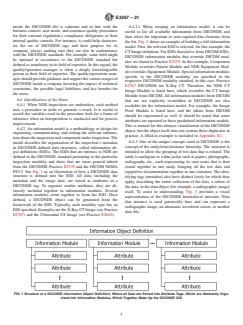
FIG. 1 Structure of a DICONDE Information Object Definition, Where all Data are Stored into Attribute Tags, Which are Abstractly Orga-
nized into Information Modules, Which Together Make Up the DICONDE IOD
E3267 − 21
FIG. 2 Example of a Full Information Model From the Three Sources: Practice E2339, DICONDE Modality-Specific Practice E2767, and
DICOM NEMA PS3
FIG. 3 DICONDE Hierarchical Identifier Structure
6.4.4 Before digital test data is captured, the criteria neces- UID (0008,0018). While end-users do not typically interact
sary to organize the test data must be defined. As with any with these tags, it is important to understand their purpose.The
filing or organization system, certain pieces of information are DICOM standard defines UID tags as needing to be globally
more important in locating and sorting. Organization methods unique and non-overlapping for their level in the hierarchy, as
are not universal as they are situationally unique. The Practice no two studies, series, or instances should ever have the same
E2339 DICONDE standard, along with its modality-specific value. Hence only instances belonging to the same series
extensions, provide an information framework through the should share a Series Instance UID and only series belonging
concept of "tags" for the storage of many different kinds of to the same study should share a Study Instance UID. To this
discrete information (metadata), with each tag having a desig- end, the UID is made of two parts with one being a manufac-
nated purpose. Each DICONDE object (which may be realized turer’s prefix, which is an ISO registered assignment (under
as a DICONDE file) is a mini-database that requires a certain ISO 8824 as defined by ISO 9834-1 ), followed by a manu-
set of tags to be defined, but can contain as much or as little facturer generated random suffix. Manufacturers are required
additional data as desired. The required tags are a subset to implement a method for guaranteeing a globally unique
specified by DICONDE as type 1 (required identifiers), mean- suffix within the range of their assignment. This suffix is
ing that those tags must be defined in every DICONDE object typically generated using a combination of a computer
for the absolute minimal identification of the test data con- identifier, system serial number, timestamp, datestamp, and
tained. These include: Modality, Study Date, Study Time, some incremented counter, but the pattern and method is
Component Name, and Component ID. Note that while the vendor-defined. It is important to note that because time is a
standard requires that Component Name and Component ID common factor in many UID uniqueness algorithms, the time
are present, it does not require that these tags contain any
value. There are additional less obvious tags stored which are
ISO 9834-1 provides complete specifications on how to register for an
unique identifiers (UID) for every object generated. These
organizational identifier. Common ISO member bodies provide registration services
unique identifier tags include Study Instance UID (0020,
(for example, IBN in Belgium, ANSI in the United States, AFNOR in France, BSI
000D), Series Instance UID (0020,000E), and SOP Instance in Great Britain, DIN in Germany, and COSIRA in Canada).
E3267 − 21
and date on any DICONDE object generating equipment (3) Some vendors offer the ability to permit the search of
should be set properly to prevent duplicate identifiers being other tags in addition to those defined by the standard.This can
generated.
be confirmed through a review of the product’s DICONDE
conformance statement, which every vendor is required to
6.4.5 Metadata tags defined during capture and processing
publish per Practice E3147.
do not need to be limited to the absolute minimal required
identifiers, and it is generally recommended to not rely only on (4) When defining the tags to use for search capabilities,
consider all the available tags that can be used with each
the minimum identifiers. Other tags, not specifically for the
purpose of identifying the test data, are available to store system of the solution that is being evaluated and sort the list.
additional attributes, which describe the test data and may be Start the list with Component Name and Component ID and
useful to record for future reference. Examples of such data follow with all the searchable tags available. If systems are
from the radiographic modalities, can include, but are not being evaluated from multiple vendors, it is important to
limited to: kV, mA, source isotope, distance from source to
recognize that the tags to be used must be chosen from those
detector, etc. common on all systems being evaluated, which may limit the
number of searchable tags.
6.4.6 Creating an Information Model for Test Data:
(5) Next to each of the tags on the list, place the identifier
6.4.6.1 Collect the internal operational identifiers used to
code (the (xxxx,xxxx) group/element pairing), field type (see
associate components under inspection and their reports. Make
VR), and maximum number of characters supported by that
certain to document the maximum length such an identifier
field. Reference Practice E2339 and the respective modality
could be by number of characters.
method DICONDE standard to determine the identifier code,
(1) Consider the information recorded on the technique
unit (if any), and value representation (VR). Cross-reference
sheets and inspection reports. Look for letter/number combi-
theVRvaluewiththeDICONDEvaluerepresentationstablein
nations that indicate the component under inspection. These
Appendix X2 to determine the allowable characters and
may contain part numbers, customer numbers, drawing
maximum length of input. All tags not explicitly defined in
numbers, line numbers, work order numbers, section numbers,
or facility codes. DICONDEinheritfromDICOM;therefore,itispossibletouse
(2) Locate any existing film, paper, video, photographic, or tags outlined in the DICOM standard and the respective
digital file organization methods currently utilized. Letter/ modality method defined there. Value representation (VR) is
numbercombinationsusedincatalogingandsortingofexisting representedinthestandardasatwo-lettercode.Seeacomplete
testdatacanbebroughtforwardas-isorcanprovideabasisfor list of all the VR types in Part 5, subsection 6.2 of the DICOM
creation of a new identifier. standard.
(3) Consider any lead markers, screen captures, or other (a) With the list of tags on one side and the list of
identifying letter/number combinations visually added in the
identifying letter/number combinations on the other, draw
test data. connections between the two lists, linking one identifying
letter/numbercombinationwithonetag.Ensurethatthechosen
6.4.6.2 Once collected, split the identifiers into two catego-
identifier will not violate the type or maximum number of
ries: inspection identifying and technique detail. While all tags
characters allowed for that tag. Component Name and Com-
are stored within a DICONDE object, Inspection identifying
identifiers are those useful for identifying the specific part or ponentIDshouldbeusedfirstforthemostimportantidentifiers
since they are universally searchable. An example mapping
inspection and will be the subset of tags used by an indexed
archive for locating the inspection (searching). Be aware that information model table is shown in Fig. 4. Note that Fig. 4 is
an example of a mapping that ensures maximum compatibility
not all vendors support indexing all tags. Technique detail
identifiers are those useful for describing the inspection with DICONDE standards, but is simplistic for illustrative
purposes and is not an ideal mapping to be used as a template.
protocols, such as kV and mA for X-Ray sources, which may
be useful later for interpretation, post-processing, etc. (6) All of the identifiers matched with DICONDE tags
serve as the mapping table to indicate what identifiers will be
6.4.6.3 Sort the different inspection identifier letter/number
entered into which DICONDE fields making up the informa-
combinations found and rank them in order of specificity to the
tion model.
test data, how useful they are within the context of business
(7) Some manufacturers allow their software labels to be
operations, the likelihood of requesting test data or inspection
changed to use the identifier’s name instead of the DICONDE
reports, and how descriptive of the test data they are.
field name to simplify usability. This reduces user error during
6.4.6.4 Mapping the Identifiers to DICONDE Tags:
the capture and handling of DICONDE data. It is nevertheless
(1) Component Name and Component ID user specified
important to keep the mapping table for future reference, as
tags should always be used for maximum compatibility.As for
changes to DICONDE products may require reconfiguration,
anyuser-specifiedoruser-enteredvalues,itistheresponsibility
or when exchanging data with a third-party, references to the
of the vendor’s software to guarantee the data entered is
mapping table will be necessary.
DICONDE conformant, such as validation of allowable
characters, length of input, and unit. 6.4.6.5 For all other modality-detailed metadata that is
desired to be stored, but not necessarily directly searched for in
(2) For a system that provides a DICONDE Study Root
query (C-FIND) capability, some user-specified tags are re- an archive, the information model can be extended using the
quired to be searchable. These tags are the Component Name, DICONDE Practice E2339, the respective modality method
Component ID, Study ID, and Accession Number. DICONDEstandard,andtherespectivemodalitymethodinthe
E3267 − 21
FIG. 4 Example DICONDE Tag to Identifying Information Mapping
DICOM standard. Data in DICONDE is organized in IODs. (4) Is there necessity or consequences for prior data (in-
The base IODs are defined in Practice E2339, and the spection intervals, revisions, etc.)?
modality-specific IODs are defined in the modality method (5) What are the repercussions of not having or losing the
DICONDE standards. The DICONDE standards define only data?
the IODs from DICOM that are specific to NDE. For all other
6.5.2 At the highest level, there are three important differ-
allowed IODs, the user is referred to the DICOM standard. For
entiators across all archive systems:
data that is desired to be saved but cannot be mapped to a
(1) DICONDE or non-DICONDE
modality-specific IOD, DICONDE allows the use of private
(2) Indexed or non-indexed
tags, which can be user-defined. See the DICONDE Guide
(3) Vendor proprietary or vendor agnostic
E3169 for more information on using private tags.
6.5.2.1 Archives that are DICONDE compliant or DI-
6.4.6.6 As a recommendation and as best practice, the
CONDE aware have the ability to process DICONDE files and
creation of blank IOD tables from the three locations (Practice
henceunderstandhowtoparsethetagstructure.Thesesystems
E2339, the DICONDE modality-specific specification, and the
generally have some or all of the following characteristics:
DICOM standard) can be documented in spreadsheets for the
(1) Storage of DICONDE data objects (for example,
relevant IOD by the user designing the information model.
metadata, imagery, test results, presentation states, structured
This facilitates the generation of the information model design
reports).
by displaying in one location all the metadata that can be saved
(2) Incorporation of specialized SOP class objects that
in a DICONDE-compliant fashion.
represent strictly nondestructive testing modalities such as
...