

ISO/TS 5112
(Main)Road vehicles — Guidelines for auditing cybersecurity engineering
- Abstract
In addition to the guidelines in ISO 19011, this document provides guidelines to organizations that contribute to the achievement of road vehicle cybersecurity throughout the supply chain on: — managing an audit programme for a cybersecurity management system (CSMS); — conducting organizational CSMS audits; — competencies of CSMS auditors; and — providing evidence during CSMS audits. Elements of the CSMS are based on the processes described in ISO/SAE 21434. This document is applicable to those needing to understand or conduct internal or external audits of a CSMS or to manage a CSMS audit programme. This document does not provide guidelines on cybersecurity assessments.
- Status
- Not Published
- Technical Committee
- ISO/TC 22/SC 32 - Electrical and electronic components and general system aspects
- Drafting Committee
- ISO/TC 22/SC 32/WG 11 - Cybersecurity
- Current Stage
- 6000 - International Standard under publication - 60 Publication
- Start Date
- 24-Oct-2026
Buy Documents

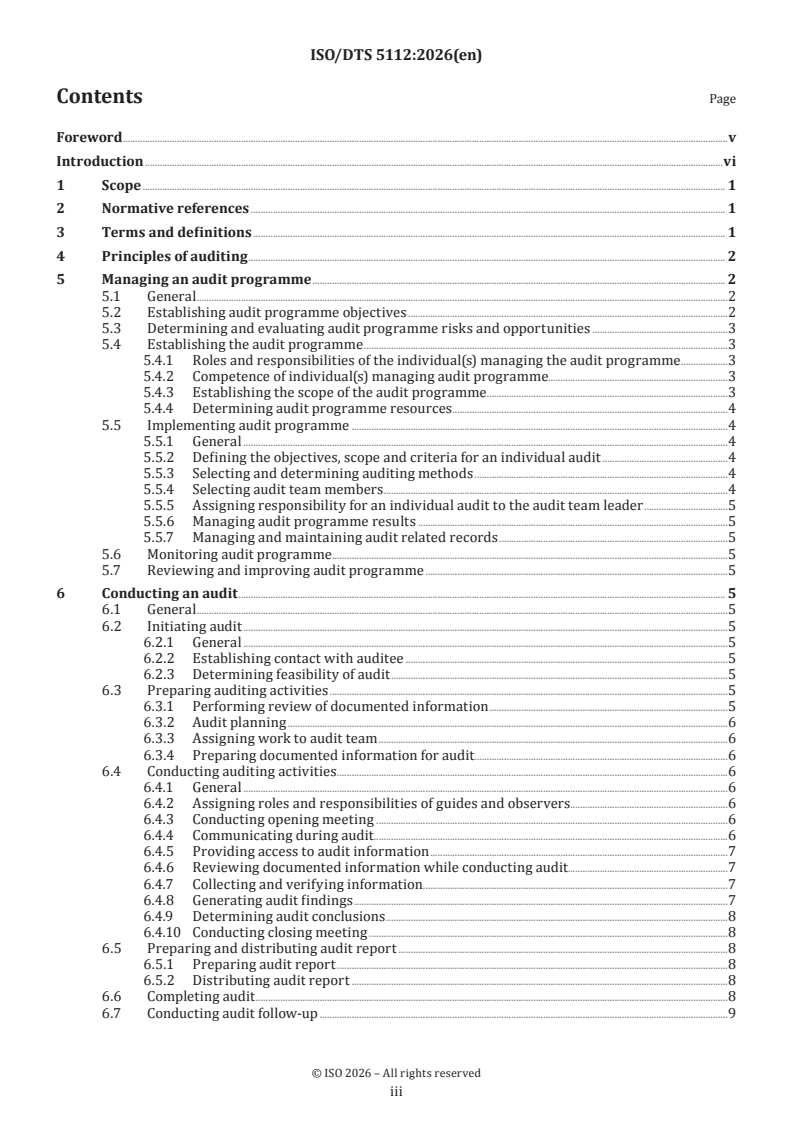
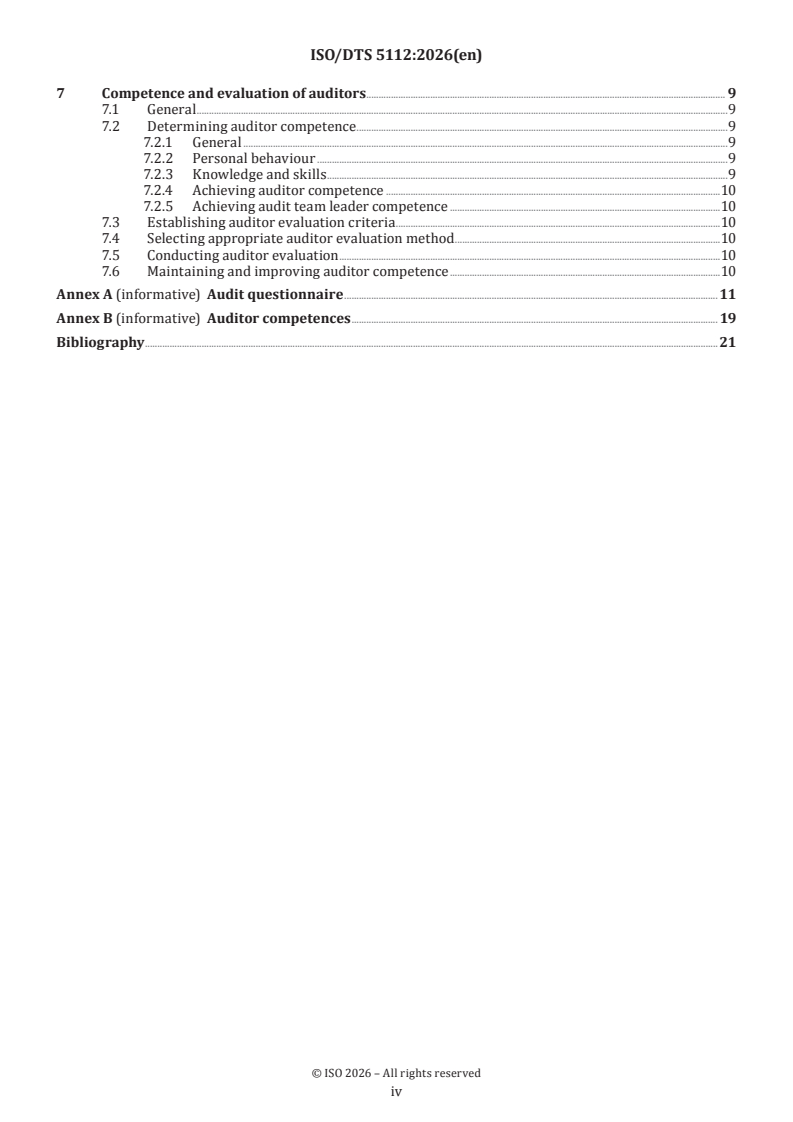
ISO/DTS 5112 - Road vehicles — Guidelines for auditing cybersecurity engineering
REDLINE ISO/DTS 5112 - Road vehicles — Guidelines for auditing cybersecurity engineering
ISO/TS 5112 is an ISO Technical Specification on road vehicle cybersecurity auditing. It gives guidelines for organizations in the automotive supply chain on managing a cybersecurity management system (CSMS) audit programme, conducting organizational CSMS audits, defining auditor competence, and handling audit evidence.
It is written for organizations that need to understand, perform, or manage internal, second-party, or third-party audits of a CSMS. The document extends ISO 19011 to the automotive domain and uses ISO/SAE 21434 as the basis for the CSMS processes being audited.
What does ISO/TS 5112 specify?
ISO/TS 5112 specifies how to plan and carry out audits of organizational cybersecurity engineering activities for road vehicles. It focuses on CSMS auditing across the supply chain and leaves cybersecurity assessments out of scope.
The document is organized into:
- Scope
- Normative references
- Terms and definitions
- Principles of auditing
- Managing an audit programme
- Conducting an audit
- Competence and evaluation of auditors
- Two informative annexes and a bibliography
| Annex | What it covers |
|---|---|
| Annex A | Example audit questionnaire aligned with ISO/SAE 21434 objectives |
| Annex B | Auditor competences for CSMS auditing |
In practice, this structure matters because the main clauses tell an organization how to run the audit programme and perform the audit, while the annexes provide the example questions and competence topics that support implementation.
What are the key requirements of ISO/TS 5112?
ISO/TS 5112 builds on the general auditing approach in ISO 19011 and adds automotive cybersecurity-specific guidance. The most important points are the scope of the audit programme, the handling of evidence, the grading of findings, and the competence expected of audit teams.
Use ISO 19011 principles as the base. Clause 4 says the principles of auditing in ISO 19011 apply, and the document narrows the focus to organizational cybersecurity audits rather than product-level topics. In practice, the audit should examine how the organization runs its CSMS, not perform a cybersecurity assessment of an item or component.
Set audit programme objectives around ISO/SAE 21434 and supply-chain risk. Clause 5.2 says programme objectives can be based on achievement of ISO/SAE 21434 objectives, specific cybersecurity risks, the organization’s role in the supply chain, and whether methods used in CSMS processes are being evaluated. This helps the audit programme match the organization’s actual cybersecurity responsibilities.
Match the audit programme to the organization and its dependencies. Clause 5.4.2 describes competence for the person managing the programme, including knowledge of the cybersecurity standards used by the auditee, relevant automotive processes, and how to map organization-specific processes to audit criteria. Clause 5.4.3 says programme scope can depend on company size, the supply chain, and the need to protect cybersecurity-related information. That means the programme manager must understand both technical content and the business context.
Define each audit with clear scope, criteria, and interfaces. Clause 5.5.2 says an individual audit should cover the CSMS processes used during the cybersecurity lifecycle phases in scope, and may cover the whole organization or clearly separated units. It also requires attention to interfaces, dependencies, shared functions, and distributed cybersecurity activities. In practice, the audit plan needs to show where work crosses organizational boundaries.
Control information access and communication during the audit. Clauses 6.2.2, 6.4.3, 6.4.4, 6.4.5, 6.6, and 6.7 address confidentiality, access to evidence, ad-hoc communication, and treatment of sensitive information. The audit team and auditee should agree what can be disclosed, how confidential material is handled, and how unavailable evidence affects confidence in the findings. This is important when suppliers, partners, or internal teams hold sensitive engineering information.
Use evidence from documents, process observation, and the engineering environment. Clause 6.4.7 identifies these as information sources during the audit. Clause 6.3.2 says planning should use a questionnaire, with Annex A as the example. In practice, the auditor should verify how processes work, not rely only on policy statements.
Grade findings by conformity and derive a clear overall conclusion. Clause 6.4.8 uses Table 1 to grade findings as conformity, minor nonconformity, or major nonconformity. Clause 6.4.9 uses Table 2 to conclude pass, conditional pass, or fail, and requires corrective actions when the result is conditional pass or fail. This gives organizations a consistent way to interpret audit results and decide on follow-up.
Ensure auditors are competent for automotive cybersecurity. Clause 7 requires competence in automotive technologies, road-vehicle cybersecurity processes and risk management, CSMSs, and ISO/SAE 21434. Annex B expands this to related subjects such as vulnerability management, cybersecurity monitoring, production, operation and maintenance, incident response, and other cybersecurity and automotive topics. That means an auditor needs both auditing skill and relevant domain knowledge.
What terms does ISO/TS 5112 define?
ISO/TS 5112 defines four key terms in Clause 3.
- Audit - An examination of a process to judge the extent to which its objectives are achieved. The document uses the ISO/SAE 21434 meaning to stay compatible with that standard.
- Cybersecurity management system (CSMS) - A risk-based set of organizational processes, responsibilities, and governance used to manage road vehicle cybersecurity risk and protect against threats.
- Risk / cybersecurity risk - The effect of uncertainty on road vehicle cybersecurity, expressed in terms of attack feasibility and impact.
- Supply chain - A linked set of organizations that act as customer, supplier, or both through successive sourcing relationships; the definition includes organizations involved in vehicle design, manufacturing, and service delivery.
Who uses ISO/TS 5112?
ISO/TS 5112 is for organizations anywhere in the automotive supply chain that need to audit or be audited on cybersecurity engineering. That includes OEMs, tier 1 suppliers, tier 2 suppliers, component manufacturers, and service providers involved in cybersecurity-related activities.
It is also relevant to internal audit teams, second-party auditors, third-party certification bodies, auditor trainers, and personnel certification organizations. In practice, these users apply it to plan CSMS audits, prepare evidence, assess auditor competence, and review how cybersecurity responsibilities are managed across organizations.
What changed in ISO/TS 5112 from the previous edition?
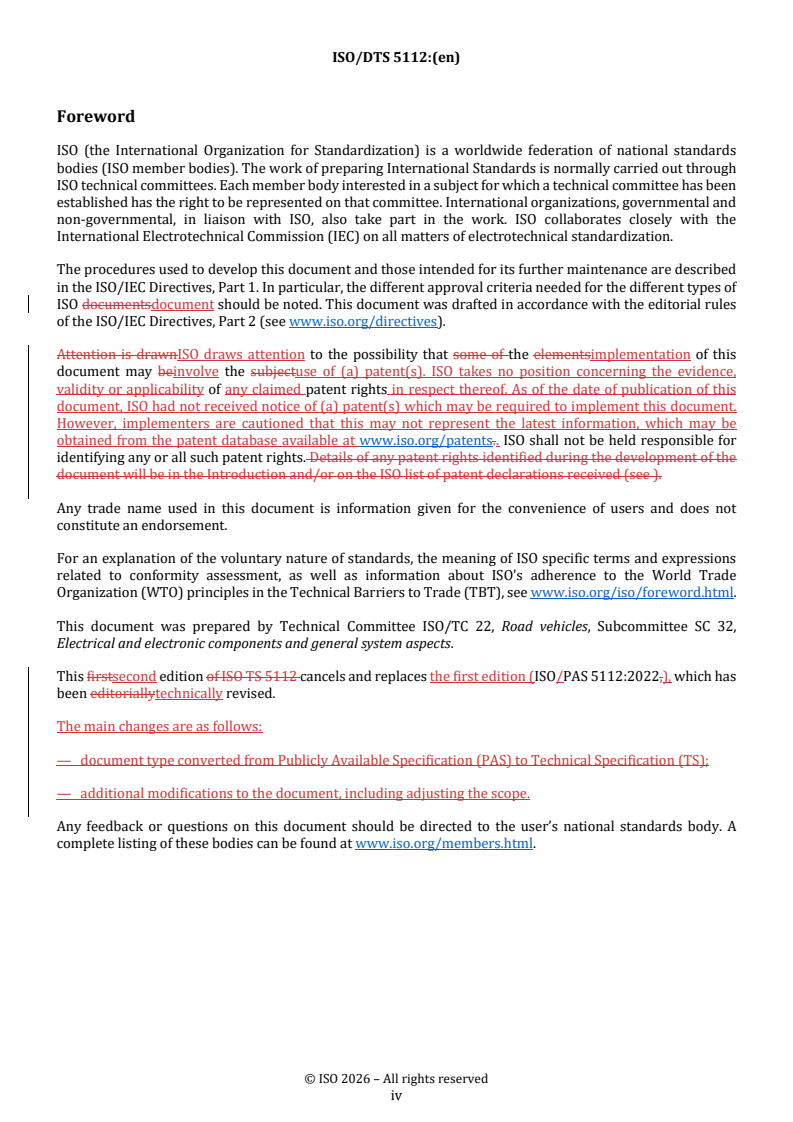
ISO/TS 5112 replaces ISO/PAS 5112:2022. The foreword states that the document type was converted from a Publicly Available Specification (PAS) to a Technical Specification (TS), and that additional modifications were made, including an adjusted scope.
Which standards are used with ISO/TS 5112?
ISO/TS 5112 names these references and related standards in the document:
- ISO 19011:2026 - the base standard for auditing management systems; its principles, programme management, audit conduct, and auditor competence guidance are applied throughout.
- ISO/SAE 21434:2021 - the cybersecurity engineering standard that supplies the CSMS processes, objectives, and work products used as audit criteria and evidence.
- ISO 19011:2018 - also cited in the clause text alongside ISO 19011:2026, reinforcing the auditing framework used by the document.
- ISO/IEC 27036-1:2021 - used in the definition of supply chain.
- UN E/ECE/TRANS/505/Rev.3/Add.154 - used as the source for the CSMS definition.
- ISO 9001, ISO 26262, ISO/IEC 27000, IATF 16949, and Automotive SPICE - cited in Annex B and the bibliography as related knowledge areas and context for auditor competence.
What does the ISO/TS 5112 document contain?
ISO/TS 5112 contains the audit framework, the programme and audit process guidance, and the competence guidance for people who audit CSMSs. Clause 5 covers audit programme objectives, risks, scope, resources, results, records, monitoring, and improvement. Clause 6 covers audit initiation, planning, conducting activities, reporting, completion, and follow-up.
The document also includes two informative annexes. Annex A gives an example questionnaire aligned to ISO/SAE 21434 objectives and supported by example work products, while Annex B maps the knowledge and skills expected of CSMS auditors to automotive cybersecurity activities.
Several tables are central to use of the document. Table 1 grades findings by conformity and nonconformity, Table 2 turns findings into the overall audit conclusion, and Table B.1 links auditor knowledge and skills to specific cybersecurity activities. In practice, these tables support audit planning, evidence review, and consistent reporting.
Relations
- Effective Date
- 16-Aug-2025
Buy Documents
ISO/DTS 5112 - Road vehicles — Guidelines for auditing cybersecurity engineering
REDLINE ISO/DTS 5112 - Road vehicles — Guidelines for auditing cybersecurity engineering
Get Certified
Connect with accredited certification bodies for this standard

TÜV Rheinland
TÜV Rheinland is a leading international provider of technical services.

TÜV SÜD
TÜV SÜD is a trusted partner of choice for safety, security and sustainability solutions.

BSI Group
BSI (British Standards Institution) is the business standards company that helps organizations make excellence a habit.
Sponsored listings
Frequently Asked Questions
ISO/TS 5112 is a draft published by the International Organization for Standardization (ISO). Its full title is "Road vehicles — Guidelines for auditing cybersecurity engineering". This standard covers: In addition to the guidelines in ISO 19011, this document provides guidelines to organizations that contribute to the achievement of road vehicle cybersecurity throughout the supply chain on: — managing an audit programme for a cybersecurity management system (CSMS); — conducting organizational CSMS audits; — competencies of CSMS auditors; and — providing evidence during CSMS audits. Elements of the CSMS are based on the processes described in ISO/SAE 21434. This document is applicable to those needing to understand or conduct internal or external audits of a CSMS or to manage a CSMS audit programme. This document does not provide guidelines on cybersecurity assessments.
In addition to the guidelines in ISO 19011, this document provides guidelines to organizations that contribute to the achievement of road vehicle cybersecurity throughout the supply chain on: — managing an audit programme for a cybersecurity management system (CSMS); — conducting organizational CSMS audits; — competencies of CSMS auditors; and — providing evidence during CSMS audits. Elements of the CSMS are based on the processes described in ISO/SAE 21434. This document is applicable to those needing to understand or conduct internal or external audits of a CSMS or to manage a CSMS audit programme. This document does not provide guidelines on cybersecurity assessments.
ISO/TS 5112 is classified under the following ICS (International Classification for Standards) categories: 03.120.20 - Product and company certification. Conformity assessment; 43.040.15 - Car informatics. On board computer systems. The ICS classification helps identify the subject area and facilitates finding related standards.
ISO/TS 5112 has the following relationships with other standards: It is inter standard links to ISO/PAS 5112:2022. Understanding these relationships helps ensure you are using the most current and applicable version of the standard.
ISO/TS 5112 is available in PDF format for immediate download after purchase. The document can be added to your cart and obtained through the secure checkout process. Digital delivery ensures instant access to the complete standard document.
Standards Content (Sample)
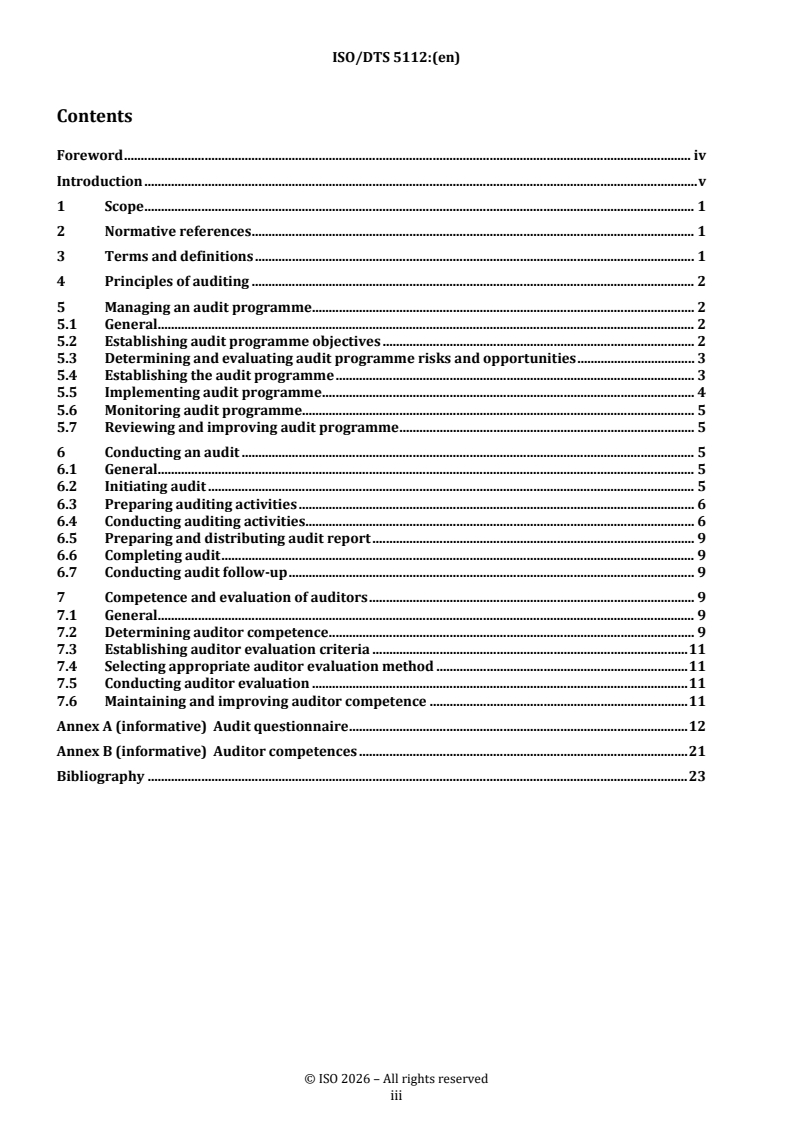
Contents
- Introduction
- 1 Scope
- 2 Normative references
- 3 Terms and definitions
- 3.1 audit
- 3.2 cybersecurity management system
- 3.3 risk
- 3.4 supply chain
- 4 Principles of auditing
- 5 Managing an audit programme
- 5.1 General
- 5.2 Establishing audit programme objectives
- 5.3 Determining and evaluating audit programme risks and opportunities
- 5.4 Establishing the audit programme
- 5.5 Implementing audit programme
- 5.6 Monitoring audit programme
- 5.7 Reviewing and improving audit programme
- 6 Conducting an audit
- 6.1 General
- 6.2 Initiating audit
- 6.3 Preparing auditing activities
- 6.4 Conducting auditing activities
- 6.5 Preparing and distributing audit report
- 6.6 Completing audit
- 6.7 Conducting audit follow-up
- 7 Competence and evaluation of auditors
- 7.1 General
- 7.2 Determining auditor competence
- 7.3 Establishing auditor evaluation criteria
- 7.4 Selecting appropriate auditor evaluation method
- 7.5 Conducting auditor evaluation
- 7.6 Maintaining and improving auditor competence
- Annex A
- Annex B
- Bibliography
Introduction
This document is related to ISO/SAE 21434 and extends ISO 19011 to the automotive domain. This document is intended for organizations involved in automotive cybersecurity engineering in any part of the automotive supply chain and for organizations needing to conduct audits. This document can be used for audits of varying scope.
This document is adapted to fit the scope of an automotive cybersecurity engineering audit programme. Cybersecurity audits in this document are aimed at cybersecurity activities at the organizational level. While results from past projects can be used as evidence for implemented and applied processes, the project and product levels are not in the focus of this document.
This document provides guidelines on the management of an audit programme, on the planning and conducting of management system audits, as well as on the competence and evaluation of an audit team. An audit can be conducted against a range of audit criteria. This document gives a set of audit criteria based on ISO/SAE 21434 objectives. In addition, Annex A contains an example questionnaire that can be adapted. This document can be used for internal audits (first party), for audits conducted by organizations on their external parties (second party) and for external audits conducted by third parties (e.g. for the purpose of certification). This document can also be useful to organizations involved in auditor training or personnel certification.
FINAL DRAFT Technical Specification ISO/DTS 5112:2026(en) Road vehicles — Guidelines for auditing cybersecurity engineering
1 Scope
This document provides guidelines to organizations that contribute to the achievement of road vehicle cybersecurity throughout the supply chain on:
- managing an audit programme for a cybersecurity management system (CSMS);
- conducting organizational CSMS audits;
- competencies of CSMS auditors; and
- providing evidence during CSMS audits.
This document is in addition to the guidelines in ISO 19011. Elements of the CSMS are based on the processes described in ISO/SAE 21434. This document is applicable to those needing to understand or conduct internal or external audits of a CSMS or to manage a CSMS audit programme. This document does not provide guidelines on cybersecurity assessments.
2 Normative references
The following documents are referred to in the text in such a way that some or all of their content constitutes requirements of this document. For dated references, only the edition cited applies. For undated references, the latest edition of the referenced document (including any amendments) applies. ISO 19011:2026, Guidelines for auditing management systems ISO/SAE 21434, Road vehicles — Cybersecurity engineering
3 Terms and definitions
For the purposes of this document, the terms and definitions given in ISO 19011, ISO/SAE 21434 and the following apply.
ISO and IEC maintain terminology databases for use in standardization at the following addresses:
- ISO Online browsing platform: available at https:// www .iso .org/ obp
- IEC Electropedia: available at https:// www .electropedia .org/
3.1 audit
examination of a process to determine the extent to which the process objectives are achieved Note 1 to entry: “Audit” is defined in ISO 19011 and ISO/SAE 21434. The definition of ISO/SAE 21434 is used in this document to support compatibility between this document and ISO/SAE 21434. [SOURCE: ISO/SAE 21434:2021, 3.1.6, modified — Note 1 to entry has been added.]
ISO/DTS 5112:2026(en)
3.2 cybersecurity management system
CSMS systematic risk-based approach defining organisational processes, responsibilities and governance to manage risk (3.3) associated with threats to road vehicles and protect them from threats [9] [SOURCE: UN E/ECE/TRANS/505/Rev.3/Add.154 , 2.3, modified — added “road” to clarify application domain, replaced “treat” with “manage”, removed “cyber”, replaced “cyber attacks” with “threats”.]
3.3 risk
cybersecurity risk effect of uncertainty on road vehicle cybersecurity expressed in terms of attack feasibility and impact Note 1 to entry: ISO 19011 uses a broader definition of the term risk. [SOURCE: ISO/SAE 21434:2021, 3.1.29, modified — Note 1 to entry has been added.]
3.4 supply chain
set of organizations with a linked set of resources and processes, each of which acts as a customer, supplier, or both to form successive supplier relationships established upon placement of a purchase order, agreement, or other formal sourcing agreement.
Note 1 to entry: A supply chain includes organizations involved in the manufacturing, design and development of vehicles, or service providers involved in the operation, management, and delivery of services. Note 2 to entry: The supply chain view is relative to the position of the customer. [SOURCE: ISO/IEC 27036-1:2021, 3.10, modified — “acquirer” replaced by “customer" and Note 1 to entry has been modified.]
4 Principles of auditing
The principles of auditing of ISO 19011:2026, Clause 4 apply. In addition, the following guidance applies. The guidelines given in this document are aimed at what ISO/SAE 21434 defines as an organizational cybersecurity audit. Product level topics are not in the scope of this document. Regarding products, a cybersecurity assessment based on ISO/SAE 21434 is used to judge the cybersecurity of the item or component.
5 Managing an audit programme
5.1 General
The guidelines of ISO 19011:2026, 5.1 apply.
5.2 Establishing audit programme objectives
The guidelines of ISO 19011:2026, 5.2 apply. In addition, the following guidance applies. The audit programme objectives can be based on consideration of the following:
a) demonstration of the achievement of the objectives of ISO/SAE 21434; b) specific cybersecurity risks associated with the auditee's products; c) specifics related to the organization’s role in the automotive supply chain; and EXAMPLE 1 An organization’s role can be original equipment manufacturer (OEM), tier 1 supplier, tier 2 supplier, component manufacturer.
ISO/DTS 5112:2026(en) NOTE Organizations in the supply chain include organizations which develop components out of context, e.g. before the placement of a purchase order, agreement, or other formal sourcing agreement. d) clarification of whether the audit includes an evaluation of methods applied in the CSMS processes. EXAMPLE 2 Specific audit programme objectives can include:
- verification of conformity of the CSMS with relevant legal and contractual requirements;
- obtaining and maintaining confidence in the auditee’s CSMS to identify, analyse and evaluate the cybersecurity risk and to take corresponding necessary action; and
- evaluating the effectiveness of the CSMS to address cybersecurity risks.
5.3 Determining and evaluating audit programme risks and opportunities
The guidelines of ISO 19011:2026, 5.3 apply.
5.4 Establishing the audit programme
5.4.1 Roles and responsibilities of the individual(s) managing the audit programme
The guidelines of ISO 19011:2026, 5.4.1 apply.
5.4.2 Competence of individual(s) managing audit programme
The guidelines of ISO 19011:2026, 5.4.2 apply. In addition, the following guidance applies. The individual(s) managing the CSMS audit programme should have the following competences:
a) knowledge of the standards regarding cybersecurity that are used by the auditee to establish and maintain the CSMS; b) knowledge of the general processes used by the automotive industry that are relevant for the phase of the cybersecurity lifecycle which is evaluated within the specific scope of the audit (e.g. processes for software development in the automotive domain); c) ability to map the organization-specific processes, guidelines and rules with the audit criteria; and d) if a combined audit is conducted, the ability to coordinate with other management system audit programmes.
[8] EXAMPLE A combined audit with IATF 16949 .
NOTE Considered competence can also include experience in audit or assessment of automotive processes based [8] [10] on automotive standards or guidelines, e.g. IATF 16949, ISO 9001, the ISO 26262 series, and ASPICE .
5.4.3 Establishing the scope of the audit programme
The guidelines of ISO 19011:2026, 5.4.3 apply. In addition, the following guidance applies. The scope of an audit programme can vary and can be impacted by the following factors:
a) size of the auditee and extent to which the auditee is involved in cybersecurity processes; b) the cybersecurity-related supply chain and determination of which entities in the supply chain are in scope; and c) importance of preserving cybersecurity property of information within the scope of the cybersecurity processes.
ISO/DTS 5112:2026(en)
5.4.4 Determining audit programme resources
The guidelines of ISO 19011:2026, 5.4.4 apply.
5.5 Implementing audit programme
5.5.1 General
The guidelines of ISO 19011:2026, 5.5.1 apply.
5.5.2 Defining the objectives, scope and criteria for an individual audit
The guidelines of ISO 19011:2026, 5.5.2 apply. In addition, the following guidance applies. The audit scope should include the CSMS processes used by the auditee during the phases of the cybersecurity lifecycle that are within the specific scope of the audit.
EXAMPLE 1 A tier 2 supplier might not be audited for all phases of the cybersecurity lifecycle. The audit criteria should be defined following 6.4.8 and 6.4.9. The audit scope may include the whole organization or one or more clearly delineated organizational units. NOTE 1 Clearly delineated organizational units are those that have separate organizational structures and processes.
If the CSMS process depends on interactions with other organizational processes, the interfaces and dependencies should be identified.
NOTE 2 Interfaces can include how work products are exchanged. Shared functions outside the organization may be included in the scope of the audit with clearly defined interfaces. If an organization depends on another organization to achieve the objectives of CSMS processes, the contributing organization should be identified. The extent to which the organization manages the dependencies on external organizations to realize its CSMS should be determined. Distributed cybersecurity activities, defined in a cybersecurity interface agreement, may be included in the scope of the audit.
EXAMPLE 2 Cybersecurity monitoring and cybersecurity incident response. The audit objectives can include the confirmation of the suitability of the implemented processes and applied methods and criteria to achieve the objectives of ISO/SAE 21434. The auditee may perform an internal audit to identify and resolve shortcomings in the CSMS before an external audit is conducted. If an external audit is planned as part of the audit programme, the scope and objectives of both internal and external audits should be aligned. A subsequent follow-up audit to address identified minor non-conformities of a conditionally-passed audit may focus solely on the identified deficiencies noted.
5.5.3 Selecting and determining auditing methods
The guidelines of ISO 19011:2026, 5.5.3 apply.
5.5.4 Selecting audit team members
The guidelines of ISO 19011:2026, 5.5.4 apply.
ISO/DTS 5112:2026(en)
5.5.5 Assigning responsibility for an individual audit to the audit team leader
The guidelines of ISO 19011:2026, 5.5.5 apply.
5.5.6 Managing audit programme results
The guidelines of ISO 19011:2026, 5.5.6 apply.
5.5.7 Managing and maintaining audit related records
The guidelines of ISO 19011:2026, 5.5.7 apply.
5.6 Monitoring audit programme
The guidelines of ISO 19011:2026, 5.6 apply.
5.7 Reviewing and improving audit programme
The guidelines of ISO 19011:2026, 5.7 apply.
6 Conducting an audit
6.1 General
The guidelines of ISO 19011:2026, 6.1 apply.
6.2 Initiating audit
6.2.1 General
The guidelines of ISO 19011:2026, 6.2.1 apply.
6.2.2 Establishing contact with auditee
The guidelines of ISO 19011:2026, 6.2.2 apply. In addition, the following guidance applies. Auditor and auditee should mutually agree on information that is not to be disclosed. Information can be classified as confidential and sensitive. Access to such information can be limited to selected audit team members.
EXAMPLE Documents can only be viewed in an area controlled by the auditee. Transfer and processing of the documents outside this environment is prohibited.
6.2.3 Determining feasibility of audit
The guidelines of ISO 19011:2026, 6.2.3 apply.
6.3 Preparing auditing activities
6.3.1 Performing review of documented information
The guidelines of ISO 19011:2026, 6.3.1 apply.
ISO/DTS 5112:2026(en)
6.3.2 Audit planning
6.3.2.1 Risk-based approach to planning
The guidelines of ISO 19011:2026, 6.3.2.1 apply.
6.3.2.2 Audit planning details
The guidelines of ISO 19011:2026, 6.3.2.2 apply. In addition, the following guidance applies. The audit should be planned to address the corresponding objectives of ISO/SAE 21434 by means of a questionnaire.
NOTE See Annex A for an example questionnaire.
6.3.3 Assigning work to audit team
The guidelines of ISO 19011:2026, 6.3.3 apply.
6.3.4 Preparing documented information for audit
The guidelines of ISO 19011:2026, 6.3.4 apply.
6.4 Conducting auditing activities
6.4.1 General
The guidelines of ISO 19011:2026, 6.4.1 apply.
6.4.2 Assigning roles and responsibilities of guides and observers
The guidelines of ISO 19011:2026, 6.4.2 apply.
6.4.3 Conducting opening meeting
The guidelines of ISO 19011:2026, 6.4.3 apply. In addition, the following guidance applies. The audit team and the auditee should agree on:
a) information and/or material types and dissemination of the information to the audit team, location of the information and/or materials, other evidences; b) the procedure to add audit team members on an ad-hoc basis; c) auditing processes and methods of auditing the supply-chain partners (outsourced partners); d) the method of communication on an ad-hoc basis; and e) availability and access to required information.
6.4.4 Communicating during audit
The guidelines of ISO 19011:2026, 6.4.4 apply. In addition, the following guidance applies. The audit team and auditee should communicate regarding:
a) deviation from audit approaches or methods; b) deviation from expectations with respect to the objectives of the audit program; c) deviation from the point of contact availability;
ISO/DTS 5112:2026(en) d) deviation from declared communication procedure; e) absence of evidence or documentation due to the confidentiality and/or sensitivity of the evidence or documentation during the audit; f) deviation from declared organizational cybersecurity processes; and g) cybersecurity risks encountered during the audit.
6.4.5 Providing access to audit information
The guidelines of ISO 19011:2026, 6.4.5 apply. In addition, the following guidance applies. Relevant third party, partner, supplier, and stakeholder information should be provided, if such information can be shared.
Request for access to confidential information should be justified including an explanation of the need regarding scope and depth of the requested information.
...
Contents
- Introduction
- 1 Scope
- 2 Normative references
- 3 Terms and definitions
- 4 Principles of auditing
- 5 Managing an audit programme
- 5.1 General
- 5.2 Establishing audit programme objectives
- 5.3 Determining and evaluating audit programme risks and opportunities
- 5.4 Establishing the audit programme
- 5.5 Implementing audit programme
- 5.6 Monitoring audit programme
- 5.7 Reviewing and improving audit programme
- 6 Conducting an audit
- 6.1 General
- 6.2 Initiating audit
- 6.3 Preparing auditauditing activities
- 6.4 Conducting auditauditing activities
- 6.5 Preparing and distributing audit report
- 6.6 Completing audit
- 6.7 Conducting audit follow-up
- 7 Competence and evaluation of auditors
- 7.1 General
- 7.2 Determining auditor competence
- 7.3 Establishing auditor evaluation criteria
- 7.4 Selecting appropriate auditor evaluation method
- 7.5 Conducting auditor evaluation
- 7.6 Maintaining and improving auditor competence
- Annex A
- Annex B
- Bibliography
Introduction
This document is related to ISO/SAE 21434 Road vehicles — Cybersecurity engineering and extends ISO 19011 Guidelines for auditing management systems to the automotive domain. This document is intended for organizations involved in automotive cybersecurity engineering in any part of the automotive supply chain and for organizations needing to conduct audits. This document can be used for audits of varying scope.
This document is adapted to fit the scope of an automotive cybersecurity engineering audit programme. Cybersecurity audits in this document are aimed at cybersecurity activities at the organizational level. While results from past projects can be used as evidence for implemented and applied processes, the project and product levels are not in the focus of this document.
This document provides guidelines on the management of an audit programme, on the planning and conducting of management system audits, as well as on the competence and evaluation of an audit team. An audit can be conducted against a range of audit criteria. This document gives a set of audit criteria based on ISO/SAE 21434 objectives. In addition, Annex AAnnex A contains an example questionnaire that can be adapted.
This document can be used for internal audits (first party), for audits conducted by organizations on their external parties (second party) and for external audits conducted by third parties (e.g. for the purpose of certification). This document can also be useful to organizations involved in auditor training or personnel certification.
ISO/DTS 5112:(en) Road vehicles – — Guidelines for auditing cybersecurity engineering
1 Scope
In addition to the guidelines in ISO 19011, thisThis document provides guidelines to organizations that contribute to the achievement of road vehicle cybersecurity throughout the supply chain on:
- — managing an audit programme for a cybersecurity management system (CSMS);
- — conducting organizational CSMS audits;
- — competencies of CSMS auditors; and
- — providing evidence during CSMS audits.
This document is in addition to the guidelines in ISO 19011. Elements of the CSMS are based on the processes described in ISO/SAE 21434. This document is applicable to those needing to understand or conduct internal or external audits of a CSMS or to manage a CSMS audit programme. This document does not provide guidelines on cybersecurity assessments.
2 Normative references
The following documents are referred to in the text in such a way that some or all of their content constitutes requirements of this document. For dated references, only the edition cited applies. For undated references, the latest edition of the referenced document (including any amendments) applies. ISO 19011:2026, Guidelines for auditing management systems ISO/SAE 21434:2021, Road vehicles — Cybersecurity engineering ISO 19011:2018, Guidelines for auditing management systems
3 Terms and definitions
For the purposes of this document, the terms and definitions given in ISO 19011, ISO/SAE 21434, ISO 19011 and the following apply.
ISO and IEC maintain terminology databases for use in standardization at the following addresses:
- — ISO Online browsing platform: available at https://www.iso.org/obp
- — IEC Electropedia: available at https://www.electropedia.org/ 3.1 3.1 audit examination of a process to determine the extent to which the process objectives are achieved Note 1 to entry: “Audit” is defined in ISO 19011 and ISO/SAE 21434. The definition of ISO/SAE 21434 is used in this document to support compatibility between this document and ISO/SAE 21434. [SOURCE: ISO/SAE 21434:2021, 3.1.6, modified — Note 1 to entry has been added.]
ISO/DTS 5112:(en) 3.2 3.2 cybersecurity management system CSMS systematic risk-based approach defining organisational processes, responsibilities and governance to manage risk (3.3(3.3)) associated with threats to road vehicles and protect them from threats [9] [SOURCE: UN E/ECE/TRANS/505/Rev.3/Add.154 Reference [9],, 2.3, modified — added “road” to clarify application domain, replaced “treat” with “manage”, removed “cyber”, replaced “cyber attacks” with “threats”.] 3.3 3.3 risk cybersecurity risk effect of uncertainty on road vehicle cybersecurity expressed in terms of attack feasibility and impact Note 1 to entry: ISO 19011 uses a broader definition of the term risk. [SOURCE: ISO/SAE 21434:2021, 3.1.29, modified — Note 1 to entry has been added.] 3.4 3.4 supply chain set of organizations with a linked set of resources and processes, each of which acts as a customer, supplier, or both to form successive supplier relationships established upon placement of a purchase order, agreement, or other formal sourcing agreement.
Note 1 to entry: A supply chain includes organizations involved in the manufacturing, design and development of vehicles, or service providers involved in the operation, management, and delivery of services. Note 2 to entry: The supply chain view is relative to the position of the customer. [SOURCE: ISO/IEC 27036-1:2021, 3.10, modified — “acquirer” replaced by “customer" and Note 1 to entry has been modified.]
4 Principles of auditing
The principles of auditing of ISO 19011:20182026, Clause 4 apply. In addition, the following guidance applies. The guidelines given in this document are aimed at what ISO/SAE 21434 defines as an organizational cybersecurity audit. Product level topics are not in the scope of this document. Regarding products, a cybersecurity assessment based on ISO/SAE 21434 is used to judge the cybersecurity of the item or component.
5 Managing an audit programme
5.1 General
The guidelines of ISO 19011:20182026, 5.1 apply.
5.2 Establishing audit programme objectives
The guidelines of ISO 19011:20182026, 5.2 apply. In addition, the following guidance applies. The audit programme objectives can be based on consideration of the following:
a) a) demonstration of the achievement of the objectives of ISO/SAE 21434; b) b) specific cybersecurity risks associated with the auditee's products;
ISO/DTS 5112:(en) c) c) specifics related to the organization’s role in the automotive supply chain; and EXAMPLE 1 An organization’s role can be original equipment manufacturer (OEM), tier 1 supplier, tier 2 supplier, component manufacturer.
NOTE Organizations in the supply chain include organizations which develop components out of context, e.g. before the placement of a purchase order, agreement, or other formal sourcing agreement. d) d) clarification of whether the audit includes an evaluation of methods applied in the CSMS processes.
EXAMPLE 2 Specific audit programme objectives can include:
- — verification of conformity of the CSMS with relevant legal and contractual requirements;
- — obtaining and maintaining confidence in the auditee’s CSMS to identify, analyse and evaluate the cybersecurity risk and to take corresponding necessary action; and
- — evaluating the effectiveness of the CSMS to address cybersecurity risks.
5.3 Determining and evaluating audit programme risks and opportunities
The guidelines of ISO 19011:20182026, 5.3 apply.
5.4 Establishing the audit programme
5.4.1 Roles and responsibilities of the individual(s) managing the audit programme
The guidelines of ISO 19011:20182026, 5.4.1 apply.
5.4.2 Competence of individual(s) managing audit programme
The guidelines of ISO 19011:20182026, 5.4.2 apply. In addition, the following guidance applies. The individual(s) managing the CSMS audit programme should have the following competences:
a) a) knowledge of the standards regarding cybersecurity that are used by the auditee to establish and maintain the CSMS; nowledge of the general processes used by the automotive industry that are relevant for the b) b) k phase of the cybersecurity lifecycle which is evaluated within the specific scope of the audit (e.g. processes for software development in the automotive domain); c) c) ability to map the organization-specific processes, guidelines and rules with the audit criteria; and d) d) if a combined audit is conducted, the ability to coordinate with other management system audit programmes.
[8][8] EXAMPLE A combined audit with IATF 16949 ..
NOTE Considered competence can also include experience in audit or assessment of automotive processes based on [8] [8] [2] [5] [10][10] automotive standards or guidelines, e.g. IATF 16949 , , ISO 9001 ,, the ISO 26262 series ,, and ASPICE ..
5.4.3 Establishing extentthe scope of the audit programme
The guidelines of ISO 19011:20182026, 5.4.3 apply. In addition, the following guidance applies.
ISO/DTS 5112:(en) The extentscope of an audit programme can vary and can be impacted by the following factors:
a) a) size of the auditee and extent to which the auditee is involved in cybersecurity processes; b) b) the cybersecurity-related supply chain and determination of which entities in the supply chain are in scope; and c) c) importance of preserving cybersecurity property of information within the scope of the cybersecurity processes.
5.4.4 Determining audit programme resources
The guidelines of ISO 19011:20182026, 5.4.4 apply.
5.5 Implementing audit programme
5.5.1 General
The guidelines of ISO 19011:20182026, 5.5.1 apply.
5.5.2 Defining the objectives, scope and criteria for an individual audit
The guidelines of ISO 19011:20182026, 5.5.2 apply. In addition, the following guidance applies. The audit scope should include the CSMS processes used by the auditee during the phases of the cybersecurity lifecycle that are within the specific scope of the audit.
EXAMPLE 1 A tier 2 supplier might not be audited for all phases of the cybersecurity lifecycle. The audit criteria should be defined following 6.4.86.4.8 and 6.4.96.4.9.. The audit scope may include the whole organization or one or more clearly delineated organizational units. NOTE 1 Clearly delineated organizational units are those that have separate organizational structures and processes. If the CSMS process depends on interactions with other organizational processes, the interfaces and dependencies should be identified.
NOTE 2 Interfaces can include how work products are exchanged. Shared functions outside the organization may be included in the scope of the audit with clearly defined interfaces. If an organization depends on another organization to achieve the objectives of CSMS processes, the contributing organization should be identified. The extent to which the organization manages the dependencies on external organizations to realize its CSMS should be determined. Distributed cybersecurity activities, defined in a cybersecurity interface agreement, may be included in the scope of the audit.
EXAMPLE 2 Cybersecurity monitoring and cybersecurity incident response. The audit objectives can include the confirmation of the suitability of the implemented processes and applied methods and criteria to achieve the objectives of ISO/SAE 21434. The auditee may perform an internal audit to identify and resolve shortcomings in the CSMS before an external audit is conducted. If an external audit is planned as part of the audit programme, the scope and objectives of both internal and external audits should be aligned.
ISO/DTS 5112:(en) A subsequent follow-up audit to address identified minor non-conformities of a conditionally-passed audit may focus solely on the identified deficiencies noted.
5.5.3 Selecting and determining auditauditing methods
The guidelines of ISO 19011:20182026, 5.5.3 apply.
5.5.4 Selecting audit team members
The guidelines of ISO 19011:20182026, 5.5.4 apply.
5.5.5 Assigning responsibility for an individual audit to the audit team leader
The guidelines of ISO 19011:20182026, 5.5.5 apply.
5.5.6 Managing audit programme results
The guidelines of ISO 19011:20182026, 5.5.6 apply.
5.5.7 Managing and maintaining audit programmerelated records
The guidelines of ISO 19011:20182026, 5.5.7 apply.
5.6 Monitoring audit programme
The guidelines of ISO 19011:20182026, 5.6 apply.
5.7 Reviewing and improving audit programme
The guidelines of ISO 19011:20182026, 5.7 apply.
6 Conducting an audit
6.1 General
The guidelines of ISO 19011:20182026, 6.1 apply.
6.2 Initiating audit
6.2.1 General
The guidelines of ISO 19011:20182026, 6.2.1 apply.
6.2.2 Establishing contact with auditee
The guidelines of ISO 19011:20182026, 6.2.2 apply. In addition, the following guidance applies. Auditor and auditee should mutually agree on information that is not to be disclosed. Information can be classified as confidential and sensitive. Access to such information can be limited to selected audit team members.
EXAMPLE Documents can only be viewed in an area controlled by the auditee. Transfer and processing of the documents outside this environment is prohibited.
ISO/DTS 5112:(en)
6.2.3 Determining feasibility of audit
The guidelines of ISO 19011:20182026, 6.2.3 apply.
6.3 Preparing auditauditing activities
6.3.1 Performing review of documented information
The guidelines of ISO 19011:20182026, 6.3.1 apply.
6.3.2 Audit planning
6.3.2.1 Risk-based approach to planning
The guidelines of ISO 19011:20182026, 6.3.2.1 apply.
6.3.2.2 Audit planning details
The guidelines of ISO 19011:20182026, 6.3.2.2 apply. In addition, the following guidance applies. The audit should be planned to address the corresponding objectives of ISO/SAE 21434 by means of a questionnaire.
NOTE See Annex AAnnex A for an example questionnaire.
6.3.3 Assigning work to audit team
The guidelines of ISO 19011:20182026, 6.3.3 apply.
6.3.4 Preparing documented information for audit
The guidelines of ISO 19011:20182026, 6.3.4 apply.
6.4 Conducting auditauditing activities
6.4.1 General
The guidelines of ISO 19011:20182026, 6.4.1 apply.
6.4.2 Assigning roles and responsibilities of guides and observers
The guidelines of ISO 19011:20182026, 6.4.2 apply.
6.4.3 Conducting opening meeting
The guidelines of ISO 19011:20182026, 6.4.3 apply. In addition, the following guidance applies. The audit team and the auditee should agree on:
a) a) information and/or material types and dissemination of the information to the audit team, location of the information and/or materials, other evidences; b) b) the procedure to add audit team members on an ad-hoc basis; c) c) auditing processes and methods of auditing the supply-chain partners (outsourced partners); d) d) the method of communication on an ad-hoc basis; and
ISO/DTS 5112:(en) e) e) availability and access to required information.
6.4.4 Communicating during audit
The guidelines of ISO 19011:20182026, 6.4.4 apply. In addition, the following guidance applies. The audit team and auditee should communicate regarding:
a) a) deviation from audit approaches or methods; b) b) deviation from expectations with respect to the objectives of the audit program; c) c) deviation from the point of contact availability; d) d) deviation from declared communication procedure; e) e) absence of evidence or documentation due to the confidentiality and/or sensitivity of the evidence or documentation during the audit; f) f) deviation from declared organizational cybersecurity processes; and g) g) cybersecurity risks encountered during the audit.
6.4.5 AuditProviding access to audit information availability and access
The guidelines of ISO 19011:20182026, 6.4.5 apply. In addition, the following guidance applies. Relevant third party, partner, supplier, and stakeholder information should be provided, if such information can be shared.
Request for access to confidential information should be justified including an explanation of the need regarding scope and depth of the requested information.
...