


EN 437:2003
(Main)Test gases - Test pressures - Appliance categories
Test gases - Test pressures - Appliance categories
This standard specifies the test gases, test pressures and categories of appliances relative to the use of combustible gases of the first, second and third families. It serves as a reference document in the specific standards for appliances that fall within the scope of the Council Directive 60/396/EEC on the approximation of the laws of Member States concerning gas appliances, adopted on the 29th June 1990. The standard makes recommendations for the use of the gases and pressures to be applied for the tests. The full procedure will be given in the corresponding appliance standards.
Prüfgase - Prüfdrücke - Gerätekategorien
Gaz d'essais - Pressions d'essais - Catégories d'appareils
Preskusni plini – Preskusni tlaki – Kategorije naprav
General Information
- Status
- Withdrawn
- Publication Date
- 20-May-2003
- Withdrawal Date
- 17-Mar-2009
- Technical Committee
- CEN/TC 238 - Test gases, test pressures and categories of appliances
- Drafting Committee
- CEN/TC 238/WG 1 - EN 437
- Current Stage
- 9960 - Withdrawal effective - Withdrawal
- Start Date
- 18-Mar-2009
- Completion Date
- 18-Mar-2009
- Directive
- 89/106/EEC - Construction products
Relations
- Effective Date
- 22-Dec-2008
- Effective Date
- 22-Dec-2008
- Effective Date
- 22-Dec-2008
- Effective Date
- 20-Jan-2009
- Effective Date
- 09-Feb-2026
- Effective Date
- 09-Feb-2026
- Effective Date
- 09-Feb-2026
- Effective Date
- 28-Jan-2026
- Effective Date
- 28-Jan-2026
- Effective Date
- 28-Jan-2026
- Effective Date
- 28-Jan-2026
- Effective Date
- 28-Jan-2026
- Effective Date
- 28-Jan-2026
- Effective Date
- 28-Jan-2026
- Referred By
EN 419-1:2009 - Non-domestic gas-fired overhead luminous radiant heaters - Part 1: Safety - Effective Date
- 28-Jan-2026
EN 437:2004 (EN)
EN 437:2005 de
Get Certified
Connect with accredited certification bodies for this standard

DNV
DNV is an independent assurance and risk management provider.

Lloyd's Register
Lloyd's Register is a global professional services organisation specialising in engineering and technology.
DNV Energy Systems
Energy and renewable energy certification.
Sponsored listings
Frequently Asked Questions
EN 437:2003 is a standard + national annex and/or foreword published by the European Committee for Standardization (CEN). Its full title is "Test gases - Test pressures - Appliance categories". This standard covers: This standard specifies the test gases, test pressures and categories of appliances relative to the use of combustible gases of the first, second and third families. It serves as a reference document in the specific standards for appliances that fall within the scope of the Council Directive 60/396/EEC on the approximation of the laws of Member States concerning gas appliances, adopted on the 29th June 1990. The standard makes recommendations for the use of the gases and pressures to be applied for the tests. The full procedure will be given in the corresponding appliance standards.
This standard specifies the test gases, test pressures and categories of appliances relative to the use of combustible gases of the first, second and third families. It serves as a reference document in the specific standards for appliances that fall within the scope of the Council Directive 60/396/EEC on the approximation of the laws of Member States concerning gas appliances, adopted on the 29th June 1990. The standard makes recommendations for the use of the gases and pressures to be applied for the tests. The full procedure will be given in the corresponding appliance standards.
EN 437:2003 is classified under the following ICS (International Classification for Standards) categories: 27.060.20 - Gas fuel burners; 91.140.40 - Gas supply systems. The ICS classification helps identify the subject area and facilitates finding related standards.
EN 437:2003 has the following relationships with other standards: It is inter standard links to EN 437:1993, EN 437:1993/A1:1997, EN 437:1993/A2:1999, EN 437:2003+A1:2009, EN 50194-1:2009, EN 50194-2:2019, EN 50194-2:2006/A1:2016, EN 14829:2007, EN 15069:2008, EN 13785:2005+A1:2008, EN 203-1:2005+A1:2008, EN 777-2:2009, EN 14800:2007, EN 14543:2005+A1:2007, EN 419-1:2009. Understanding these relationships helps ensure you are using the most current and applicable version of the standard.
EN 437:2003 is associated with the following European legislation: EU Directives/Regulations: 2009/142/EC, 305/2011, 89/106/EEC, 90/396/EEC; Standardization Mandates: M/131, M/BC/CEN/89/6. When a standard is cited in the Official Journal of the European Union, products manufactured in conformity with it benefit from a presumption of conformity with the essential requirements of the corresponding EU directive or regulation.
EN 437:2003 is available in PDF format for immediate download after purchase. The document can be added to your cart and obtained through the secure checkout process. Digital delivery ensures instant access to the complete standard document.
Standards Content (Sample)
SLOVENSKI SIST EN 437
STANDARD
januar 2004
Preskusni plini – Preskusni tlaki – Kategorije aparatov
(istoveten EN 437:2003)
Test gases - Test pressures - Appliance categories
Gaz d'essais - Pressions d'essais - Catégories d'appareils
Prüfgase - Prüfdrücke - Gerätekategorien
Referenčna številka
ICS 27.060.20; 91.140.40 SIST EN 437:2004 ((sl),en;fr;de)
Nadaljevanje na straneh od II do IV in od 1 do 39 (en)
1 do 40 (fr)
1 do 41 (de)
© 2004-01. Slovenski standard je izdal in založil Slovenski inštitut za standardizacijo. Razmnoževanje celote ali delov ni dovoljeno.
SIST EN 437 : 2004
NACIONALNI UVOD
Standard SIST EN 437:2004 ((sl)en;fr;de), Preskusni plini – Preskusni tlaki – Kategorije aparatov, ima
status slovenskega standarda in je z metodo ponatisa z nacionalnim dodatkom privzet evropski
standard EN 437:2003.
Ta slovenski nacionalni standard zamenjuje slovenski nacionalni standard SIST EN 437:1997 in
dopolnili SIST EN 437:1997/A1:1997 in SIST EN 437:1997/A2:2001.
NACIONALNI PREDGOVOR
Evropski standard EN 437:2003 je pripravil tehnični odbor Evropskega komiteja za standardizacijo
CEN/TC 238 Preskusni plini, Preskusni tlaki, Kategorije aparatov.
Pripravo tega standarda sta Evropska komisija in Evropsko združenje za prosto trgovino poverila
CEN. Ta evropski standard ustreza bistvenim zahtevam Direktive Sveta 90/396/EGS o plinskih
napravah, navedenim v točki 2.2.
Dodatek A je normativen, dodatki B, C in D so informativni.
Slovenski standard SIST EN 437:2004 je dne 5. decembra 2003 po pooblastilu Strokovnega sveta za
splošno področje sprejel tehnični odbor SIST/TC PLN Plinske naprave za dom.
NACIONALNI DODATEK
Nacionalni dodatek, ki predstavlja dopolnitev dodatka B Nacionalne razmere s parametri, ki veljajo v
Sloveniji, je za Slovenijo normativen, za ostale države pa informativen.
B.1 Splošno
Skladno s SIST EN ISO 3166-1:2003, Kode za predstavljanje imen držav in njihovih podrejenih enot –
1. del: Kode držav, velja za Slovenijo naslednja koda:
SI
B.2 Kategorije
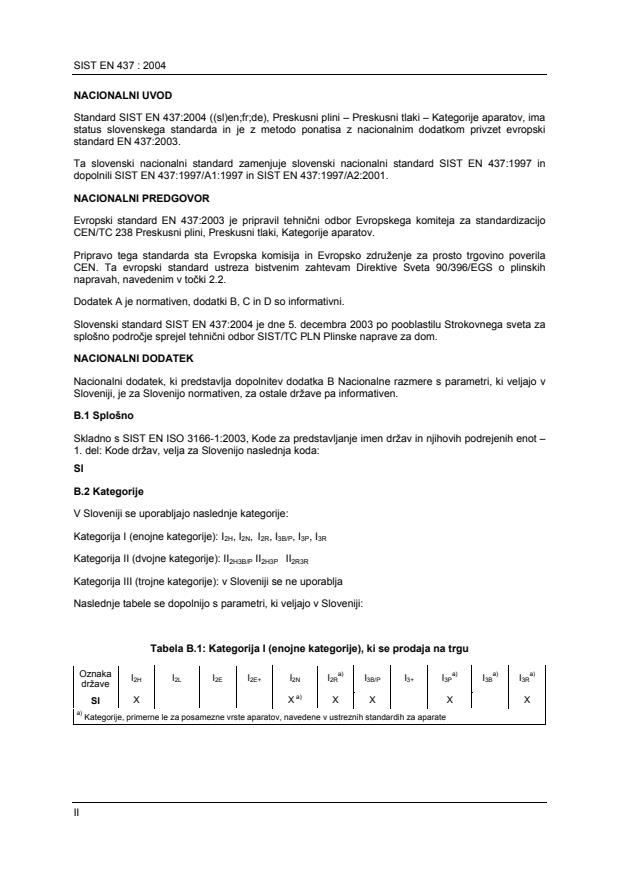
V Sloveniji se uporabljajo naslednje kategorije:
Kategorija I (enojne kategorije): I , I , I , I , I , I
2H 2N 2R 3B/P 3P 3R
Kategorija II (dvojne kategorije): II II II
2H3B/P 2H3P 2R3R
Kategorija III (trojne kategorije): v Sloveniji se ne uporablja
Naslednje tabele se dopolnijo s parametri, ki veljajo v Sloveniji:
Tabela B.1: Kategorija I (enojne kategorije), ki se prodaja na trgu
Oznaka a) a) a) a)
I I I I I I I I I I I
2H 2L 2E 2E+ 2N 2R 3B/P 3+ 3P 3B 3R
države
a)
SI X X X X X X
a)
Kategorije, primerne le za posamezne vrste aparatov, navedene v ustreznih standardih za aparate
II
SIST EN 437 : 2004
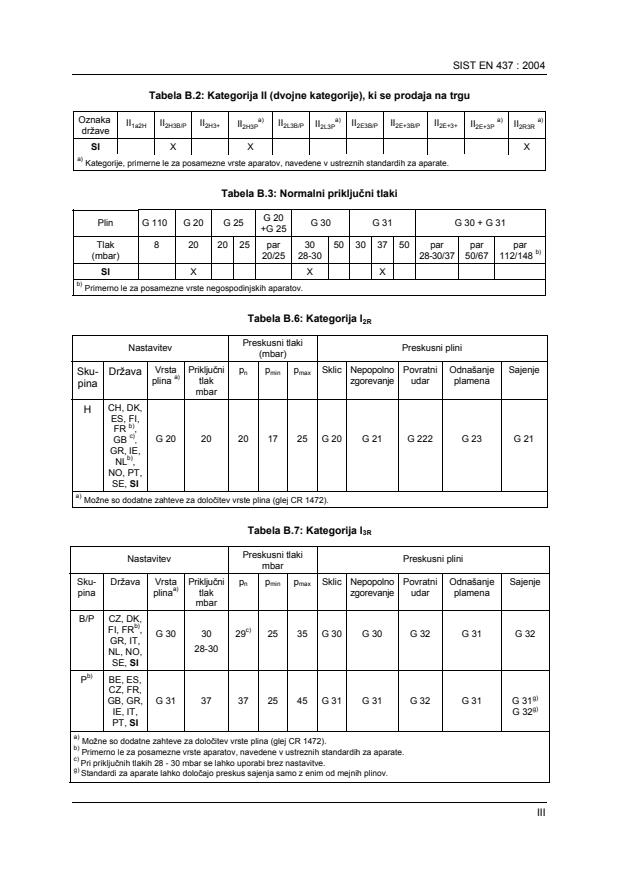
Tabela B.2: Kategorija II (dvojne kategorije), ki se prodaja na trgu
Oznaka a) a) a) a)
II II II II II II II
II II II II
1a2H 2H3B/P 2H3+ 2L3B/P 2E3B/P 2E+3B/P 2E+3+
2H3P 2L3P 2E+3P 2R3R
države
SI X X X
a)
Kategorije, primerne le za posamezne vrste aparatov, navedene v ustreznih standardih za aparate.
Tabela B.3: Normalni priključni tlaki
G 20
Plin G 110 G 20 G 25 G 30 G 31 G 30 + G 31
+G 25
Tlak 8 20 20 25 par 30 50 30 37 50 par par par
b)
(mbar) 20/25 28-30 28-30/37 50/67 112/148
SI X X X
b)
Primerno le za posamezne vrste negospodinjskih aparatov.
Tabela B.6: Kategorija I
2R
Preskusni tlaki
Nastavitev Preskusni plini
(mbar)
Vrsta Priključni p p p Sklic Nepopolno Povratni Odnašanje Sajenje
n min max
Sku- Država
a)
plina tlak zgorevanje udar plamena
pina
mbar
CH, DK,
H
ES, FI,
b)
FR ,
c)
G 20 20 20 17 25 G 20 G 21 G 222 G 23 G 21
GB ,
GR, IE,
b)
NL ,
NO, PT,
SE, SI
a)
Možne so dodatne zahteve za določitev vrste plina (glej CR 1472).
Tabela B.7: Kategorija I
3R
Preskusni tlaki
Nastavitev Preskusni plini
mbar
Sku- Država Vrsta Priključni p p p Sklic Nepopolno Povratni Odnašanje Sajenje
n min max
a)
pina plina tlak zgorevanje udar plamena
mbar
B/P CZ, DK,
b)
FI, FR , c)
G 30 30 29 25 35 G 30 G 30 G 32 G 31 G 32
GR, IT,
28-30
NL, NO,
SE, SI
b)
P BE, ES,
CZ, FR,
g)
GB, GR, G 31 37 37 25 45 G 31 G 31 G 32 G 31 G 31
g)
IE, IT, G 32
PT, SI
a)
Možne so dodatne zahteve za določitev vrste plina (glej CR 1472).
b)
Primerno le za posamezne vrste aparatov, navedene v ustreznih standardih za aparate.
c)
Pri priključnih tlakih 28 - 30 mbar se lahko uporabi brez nastavitve.
g)
Standardi za aparate lahko določajo preskus sajenja samo z enim od mejnih plinov.
III
SIST EN 437 : 2004
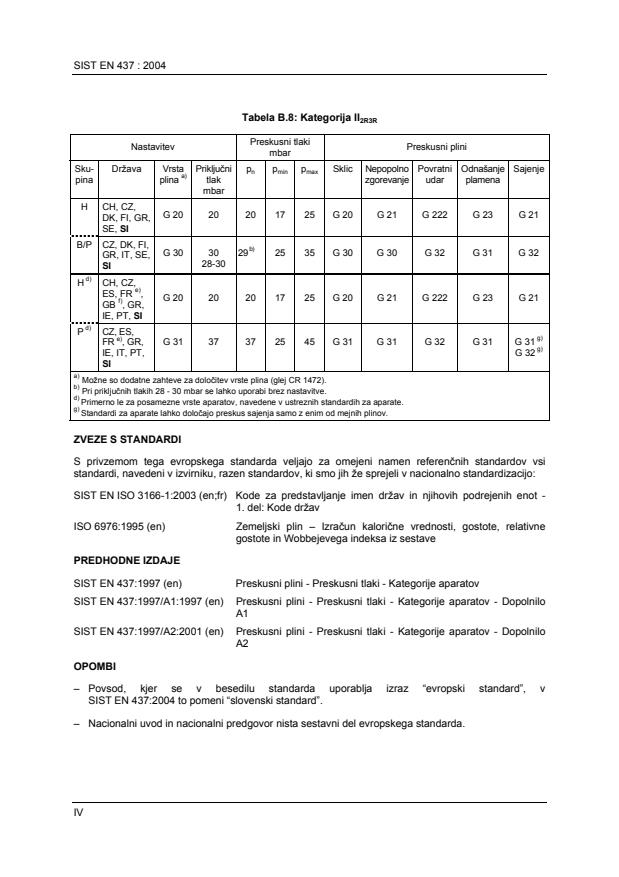
Tabela B.8: Kategorija II
2R3R
Preskusni tlaki
Nastavitev Preskusni plini
mbar
Sku- Država Vrsta Priključni p p p Sklic Nepopolno Povratni Odnašanje Sajenje
n min max
a)
pina plina tlak zgorevanje udar plamena
mbar
H CH, CZ,
G 20 20 20 17 25 G 20 G 21 G 222 G 23 G 21
DK, FI, GR,
SE, SI
B/P CZ, DK, FI,
b)
G 30 30 29 25 35 G 30 G 30 G 32 G 31 G 32
GR, IT, SE,
28-30
SI
d)
H CH, CZ,
e)
ES, FR ,
G 20 20 20 17 25 G 20 G 21 G 222 G 23 G 21
f)
GB , GR,
IE, PT, SI
d)
P CZ, ES,
g)
e)
FR , GR, G 31 37 37 25 45 G 31 G 31 G 32 G 31 G 31
g)
IE, IT, PT, G 32
SI
a)
Možne so dodatne zahteve za določitev vrste plina (glej CR 1472).
b)
Pri priključnih tlakih 28 - 30 mbar se lahko uporabi brez nastavitve.
d)
Primerno le za posamezne vrste aparatov, navedene v ustreznih standardih za aparate.
g)
Standardi za aparate lahko določajo preskus sajenja samo z enim od mejnih plinov.
ZVEZE S STANDARDI
S privzemom tega evropskega standarda veljajo za omejeni namen referenčnih standardov vsi
standardi, navedeni v izvirniku, razen standardov, ki smo jih že sprejeli v nacionalno standardizacijo:
SIST EN ISO 3166-1:2003 (en;fr) Kode za predstavljanje imen držav in njihovih podrejenih enot -
1. del: Kode držav
ISO 6976:1995 (en) Zemeljski plin – Izračun kalorične vrednosti, gostote, relativne
gostote in Wobbejevega indeksa iz sestave
PREDHODNE IZDAJE
SIST EN 437:1997 (en) Preskusni plini - Preskusni tlaki - Kategorije aparatov
SIST EN 437:1997/A1:1997 (en) Preskusni plini - Preskusni tlaki - Kategorije aparatov - Dopolnilo
A1
SIST EN 437:1997/A2:2001 (en) Preskusni plini - Preskusni tlaki - Kategorije aparatov - Dopolnilo
A2
OPOMBI
– Povsod, kjer se v besedilu standarda uporablja izraz “evropski standard”, v
SIST EN 437:2004 to pomeni “slovenski standard”.
– Nacionalni uvod in nacionalni predgovor nista sestavni del evropskega standarda.
IV
EUROPEAN STANDARD
EN 437
NORME EUROPÉENNE
EUROPÄISCHE NORM
May 2003
ICS 27.060.20; 91.140.40 Supersedes EN 437:1993
English version
Test gases - Test pressures - Appliance categories
Gaz d'essais - Pressions d'essais - Catégories d'appareils Prüfgase - Prüfdrücke - Gerätekategorien
This European Standard was approved by CEN on 3 December 2002.
CEN members are bound to comply with the CEN/CENELEC Internal Regulations which stipulate the conditions for giving this European
Standard the status of a national standard without any alteration. Up-to-date lists and bibliographical references concerning such national
standards may be obtained on application to the Management Centre or to any CEN member.
This European Standard exists in three official versions (English, French, German). A version in any other language made by translation
under the responsibility of a CEN member into its own language and notified to the Management Centre has the same status as the official
versions.
CEN members are the national standards bodies of Austria, Belgium, Czech Republic, Denmark, Finland, France, Germany, Greece,
Hungary, Iceland, Ireland, Italy, Luxembourg, Malta, Netherlands, Norway, Portugal, Slovakia, Spain, Sweden, Switzerland and United
Kingdom.
EUROPEAN COMMITTEE FOR STANDARDIZATION
COMITÉ EUROPÉEN DE NORMALISATION
EUROPÄISCHES KOMITEE FÜR NORMUNG
Management Centre: rue de Stassart, 36 B-1050 Brussels
© 2003 CEN All rights of exploitation in any form and by any means reserved Ref. No. EN 437:2003 E
worldwide for CEN national Members.
Contents Page
Foreword .3
1 Scope.4
2 Normative references.4
3 Terms and definitions .4
4 Gases.7
4.1 Classification.7
4.2 Test gases.7
5 Test pressures.10
6 Classification of appliances.12
6.1 Appliance categories.12
6.1.1 General.12
6.1.2 Category I .12
6.1.3 Category II.13
6.1.4 Category III.14
6.2 Operations permitted for a change of gas or pressure, adjustment and regulating devices .15
7 Choice of test gases and test pressures.15
8 Marking .16
Annex A (normative) Conditions for preparation of the test gases.17
Annex B (informative) National situations.18
B.1 General.18
B.2 Categories listed in the body of the standard marketed in the different countries.18
B.3 Appliance supply pressures corresponding to the categories given in B.2.21
B.4 Special categories marketed nationally or locally .21
B.5 Test gases and test pressures corresponding to the special categories given in B.4.26
B.6 Special conditions.29
Annex C (informative) Guidelines for extension to other categories .35
Annex D (informative) National situation of countries whose national bodies are CEN affiliate
members.36
D.1 General.36
D.2 Categories listed in the body of the standard and marketed in the different countries.36
D.3 Supply pressures of the appliances.36
D.4 Special categories marketed nationally or locally .37
D.5 Gases and test pressures corresponding to the special categories given in D.4.39
Foreword
This document EN 437:2003 has been prepared by Technical Committee CEN/TC 238 “Test gases, test pressures
and categories of appliances”, the secretariat of which is held by AFNOR.
This European Standard shall be given the status of a national standard, either by publication of an identical text or
by endorsement, at the latest by November 2003, and conflicting national standards shall be withdrawn at the latest
by November 2003.
This document replaces EN 437:1993.
This document has been prepared under a mandate given to CEN by the European Commission and the European
Free Trade Association, and supports the requirements of 2.2 of the "Gas Appliances" Directive (90/396/EEC).
Annex A is normative. Annexes B, C and D are informative.
EN 437 is intended to provide all the CEN Technical Committees preparing standards on gas appliances with
definitions for test gases, test pressures and categories of appliances for use by these committees within the limits
of the scope defined in clause 1.
nd
Similarly, it is emphasized that distributors of 2 family gases using pressure couples should restrict themselves to
their use in the normal manner but may, in exceptional circumstances and for short periods, use gases of the
lowest Wobbe index at the lowest pressure, under conditions in which the safety of the appliance has to be ensured.
The standard seeks to clarify the present situation with respect to test gases, test pressures and appliance
categories
The concern for clarity has led to the elucidation of numerous categories and national situations or conditions. The
complexity of the standard is likely to increase as new members join the Union.
This revised standard incorporates the two previously published amendments and includes new appliance
categories, the reason for which does not lie essentially with new gas resources but with new technical
developments for appliances.
This revised standard can still be considered an important stage in the harmonization of test gases, test pressures
and appliance categories and the quality of information on gas usage in Europe.
This standard does not give any information relating to Malta which was not a CEN member at the time of the CEN
enquiry
On the other hand, the standard applies to Hungary, a country whose national body is an affiliate member of CEN.
According to the CEN/CENELEC Internal Regulations, the national standards organizations of the following
countries are bound to implement this European Standard: Austria, Belgium, Czech Republic, Denmark, Finland,
France, Germany, Greece, Hungary, Iceland, Ireland, Italy, Luxembourg, Malta, Netherlands, Norway, Portugal,
Slovakia, Spain, Sweden, Switzerland and the United Kingdom.
1 Scope
This standard specifies the test gases, test pressures and categories of appliances relative to the use of
combustible gases of the first, second and third families. It serves as a reference document in the specific
standards for appliances that fall within the scope of the Council Directive on the approximation of the laws of
Member States concerning gas appliances (90/396/EC).
The standard makes recommendations for the use of the gases and pressures to be applied for the tests. The full
procedure will be given in the corresponding appliance standards.
NOTE The test gases and the test pressures specified in this standard are in principle intended to be used with all the
appliances in order to establish conformity with the corresponding standards.
However, the use of some test gases and test pressures may not be appropriate in the following cases:
appliances with nominal heat input greater than 300 kW;
appliances constructed on site;
appliances in which the final design is influenced by the user;
appliances constructed for use with high supply pressures (notably direct use of the saturated vapour pressure).
In these cases, the specific appliance standards may specify other test conditions in order to establish compliance with their
requirements.
2 Normative references
This standard incorporates by dated or undated reference, provisions from other publications. These normative
references are cited at the appropriate places in the text and the publications are listed hereafter. For dated
references, subsequent amendments to or revisions of any of these publications apply to this standard only when
incorporated in it by amendment or revision. For undated references the latest edition of the publication referred to
applies (including amendments).
EN ISO 3166-1:1997, Codes for the representation of names of countries and subdivisions – Part 1: Country codes.
ISO 6976:1995, Natural gas – Calculation of calorific value, density, relative density and Wobbe index from
composition.
3 Terms and definitions
For the purposes of this standard, the following terms and definitions apply:
3.1
gas appliance
appliance burning combustible gases
NOTE For the purposes of this standard the term "gas" means "combustible gas", i.e. any fuel that is in the gaseous state
at a temperature of 15 °C, and under a pressure of 1 bar.
3.2
test gases
gases intended for the verification of the operational characteristics of appliances using combustible gases. They
consist of reference gases and limit gases
3.3
reference gases
test gases with which appliances operate under nominal conditions when they are supplied at the corresponding
normal pressure
3.4
limit gases
test gases representative of the extreme variations in the characteristics of the gases for which appliances have
been designed
3.5
test pressures
gas pressures used to verify the operational characteristics of appliances using combustible gases. They consist of
normal and limit pressures
NOTE The gas pressures used are expressed in millibars (mbar) 1 mbar = 10 Pa
3.6
normal pressure
p
n
pressure under which the appliances operate in nominal conditions when they are supplied with the corresponding
reference gas
3.7
limit pressures
maximum pressure: p ; minimum pressure: p
max min
pressures representative of the extreme variations in the appliance supply conditions
3.8
pressure couple
combination of two distinct gas distribution pressures applied by reason of the significant difference existing
between the Wobbe indices within a single family or group in which
the higher pressure corresponds only to gases of low Wobbe index ;
the lower pressure corresponds to gases of high Wobbe index.
3.9
reference conditions
these correspond to 15 °C, 1 013, 25 mbar, unless otherwise specified
3.10
relative density
d
ratio of the masses of equal volumes of dry gas and dry air under the same conditions of temperature and
pressure: 15 °C or 0 °C and 1 013, 25 mbar
3.11
calorific value
quantity of heat produced by the complete combustion, at a constant pressure equal to 1 013,25 mbar, of a unit
volume or mass of gas, the constituents of the combustible mixture being taken at reference conditions and the
products of combustion being brought back to the same conditions
A distinction is made between:
the gross calorific value H : the water produced by combustion is assumed to be condensed;
s
the net calorific value H: the water produced by combustion is assumed to be in the vapour state
i
NOTE The calorific value is expressed:
either in megajoules per cubic metre (MJ/m ) of dry gas under the reference conditions;
or in megajoules per kilogram (MJ/kg) of dry gas.
3.12
Wobbe index
gross Wobbe index W ; net Wobbe index W
s i
ratio of the calorific value of a gas per unit volume and the square root of its relative density under the same
reference conditions. The Wobbe index is said to be gross or net according to whether the calorific value used is
the gross or net calorific value
NOTE The Wobbe indices are expressed -
either in megajoules per cubic metre (MJ/m ) of dry gas under the reference conditions
or in megajoules per kilogram (MJ/kg) of dry gas.
3.13
heat input
Q
quantity of energy used in unit time corresponding to the volumetric or mass flow rates, the calorific value used
being either the net or gross calorific value
NOTE The heat input is expressed in kilowatts (kW)
3.14
nominal heat input
Q
n
value of the heat input declared by the manufacturer
3.15
mass flow rate
M
mass of gas consumed by the appliance in unit time during continuous operation
NOTE The mass flow rate is expressed in kilograms per hour (kg/h) or grams per hour (g/h)
3.16
volume flow rate
V
volume of gas consumed by the appliance in unit time during continuous operation
NOTE The volume flow rate is expressed in cubic metres per hour (m /h), litres per minute (l/min), cubic decimetres per
3 3
/h) or cubic decimetres per second (dm /s).
hour (dm
3.17
gas family
group of combustible gases with similar burning behaviour linked together by a range of Wobbe indices (see
Table 1)
3.18
gas group
specified range of Wobbe index within that of the family concerned (see Table 1); this range is determined on the
general principle that appliances utilising this gas group would operate safely when burning all gases within this
range without adjustments.
NOTE Adjustment of the appliance may be permitted in accordance with the special national or local conditions that apply
in some countries (see B.4). For gases corresponding to national or local conditions, see Tables B.5 and D.5
3.19
appliance category
means of identifying the gas families and/or gas groups that a gas appliance is designed to utilize safely and to the
desired performance level (see individual appliance standards).
NOTE General appliance categories are described in 6.1. Special appliance categories marketed nationally or locally are
described in B.4 and annex D.
4 Gases
4.1 Classification
Gases are classified into three families, each family may be divided into groups, (themselves being divided into
ranges, see annex B), as a function of the Wobbe index, according to the values given in Table 1.
Table 1 – Summary of gas families and groups as a function of the Wobbe indices
Gas families and groups Gross Wobbe index at 15 °C and 1 013,25 mbar
MJ/m
minimum maximum
First family
22,4 24,8
Group a
Second family 39,1 54,7
45,7 54,7
Group H
39,1 44,8
Group L
40,9 54,7
Group E
Third family 72,9 87,3
72,9 87,3
Group B/P
72,9 76,8
Group P
81,8 87,3
Group B
4.2 Test gases
The composition and principal characteristics of the different test gases corresponding to the gas families or groups
are given in Tables 2 and 3.
In particular cases specified in the individual appliance standards, gas G 24, whose characteristics are given in
Table 3, may be used but only at the normal test pressure.
The calorific values of the third family gases, expressed in megajoules per cubic metre in Table 2, may also be
expressed in megajoules per kilogram of dry gas, as shown in Table 4.
The values in Tables 2, 3 and 4, measured and expressed at 15 °C, are derived from ISO 6976:1995.
The conditions for the preparation of the test gases are given in annex A.
a
Table 2 – Characteristics of the test gases
gas dry at 15 °C and 1 013,25 mbar
Gas family Test gases Designation Composition by W H W H
i i s s
and group e
volume
% 3 3 3 3 d
MJ/m MJ/m MJ/m MJ/m
b
Gases of the first family
Group a Reference gas G 110
CH = 26
Incomplete combustion flame lift 21,76 13,95 24,75 15,87 0,411
= 50
H
and sooting limit gases
N = 24
Light back limit gas G 112
CH = 17
19,48 11,81 22,36 13,56 0,367
H = 59
N = 24
b
Gases of the second family
Group H Reference gas G 20 45,67 34,02 50,72 37,78 0,555
CH = 100
Incomplete combustion and G 21 49,60 41,01 54,76 45,28 0,684
CH = 87
sooting limit gas
C H = 13
3 8
Light back limit gas G 222 42,87 28,53 47,87 31,86 0,443
CH = 77
H = 23
Flame lift limit gas G 23 41,11 31,46 45,66 34,95 0,586
CH = 92,5
N = 7,5
Group L Reference gas and light back G 25 37,38 29,25 41,52 32,49 0,612
CH = 86
limit gas
N = 14
Incomplete combustion and G 26
CH = 80
sooting limit gas
C H = 7 40,52 33,36 44,83 36,91 0,678
3 8
N = 13
Flame lift limit gas G 27 35,17 27,89 39,06 30,98 0,629
CH = 82
N = 18
Group E Reference gas G 20 45,67 34,02 50,72 37,78 0,555
CH = 100
G 21 49,60 41,01 54,76 45,28 0,684
CH = 87
Incomplete combustion and C H = 13
3 8
sooting limit gas
Light back limit gas G 222 42,87 28,53 47,87 31,86 0,443
= 77
CH
H = 23
Flame lift limit gas G 231 36,82 28,91 40,90 32,11 0,617
CH = 85
H = 15
(continued)
Table 2 (concluded)
Gas family Test gases Designation Composition by W H W H
i i s s
e
and group
volume
% 3 3 3 3 d
MJ/m MJ/m MJ/m MJ/m
c
Gases of the third family
Third family Reference gas n-C H = 50 80,58 116,09 87,33 125,81 2,075
4 10
and
Groups B/ P Incomplete combustion and G 30 i- C H = 50
4 10
sooting limit gas
Flame lift limit gas G 31 C H = 100 70,69 88,00 76,84 95,65 1,550
3 8
and B Light back limit gas G 32 C H = 100 68,14 82,78 72,86 88,52 1,476
3 6
Group P Reference gas, incomplete G 31 C H = 100 70,69 88,00 76,84 95,65 1,550
3 8
d
combustion sooting and flame
lift limit gas
Light back and sooting limit gas G 32 C H = 100 68,14 82,78 72,86 88,52 1,476
3 6
d
a
For gases used nationally or locally, see B.5.
b
For other groups, see B.5.
c
See also Table 4.
d
The appliance standards may only specify one sooting limit gas.
e
See also annex A
Table 3 — Characteristics of limit gas G 24 dry gas, at 15 °C and 1 013,25 mbar
W H W H
i i s s
Gas family Test gases Designation Composition by
volume
% 3 3 3 3 d
MJ/m MJ/m MJ/m MJ/m
nd
2 family Overheating limit G 24 47,01 35,70 52,09 39,55 0,577
CH = 68
gas
Groups H and E
C H = 12
3 8
H = 20
Table 4 – Calorific values of the test gases of the third family
Calorific values in megajoules per kilogram
Test gas designation
H H
i s
G 30 45,65 49,47
G 31 46,34 50,37
G 32 45,77 48,94
NOTE The characteristics of the reference gases of the second family at 0 °C and 1 013,25 mbar (dry gas) are given in
Table 5.
Table 5 – Characteristics of the reference gases of the second family at 0 °C and 1 013,25 mbar
Wi Hi Ws Hs
Gas group Test gas Designation
Composition
by volume
3 3 3 3
% d
MJ/m MJ/m MJ/m MJ/m
Group H Reference gas G 20 48,20 35,90 53,61 39,94 0,555
CH = 100
Group L Reference gas, G 25 39,45 30,87 43,88 34,34 0,613
CH = 86
light back limit
gas
N = 14
Group E Reference gas G 20 48,20 35,90 53,61 39,94 0,555
CH = 100
5 Test pressures
The values of the test pressures, i.e. the static pressure to be applied at the gas inlet connection to the appliance
whilst in operation, are given in Tables 6 and 7.
NOTE For Tables 6 and 7, the test conditions will be specified in the individual appliance standards.
However:
for the combustion test in still air with G 21 the appliance is first adjusted on G 20 to give an increase of 5 % in the nominal
heat input where a gas pressure governor exists, and an increase of 7,5 % in the absence of a governor. Gas G 21 is then
substituted for G 20 without altering this adjustment;
tests for ignition and crosslighting should be carried out at an inlet pressure of 0,7 times the normal pressure (p ) using the
n
reference gas(es) for the first and second families.
a
Table 6 – Test pressures where no pressure couple exists
Pressures in millibars
Test gas P p p
Appliance categories
n min max
having as index
st
1 family 1a G 110 8 6 15
G 112
nd
2 family G 20, G 21, 20 17 25
2H G 222, G 23
nd
2 family G 25, G 26, 25 20 30
2L G 27
nd
2 family G 20, G 21, 20 17 25
2E G 222, G 231
G 20, G 21, 20 17 30
nd
2 family G 222, G 231,
G 25, G 26,
a
G 27
d
2N G 25, G 26, 25 20 30
G 27
b
G 30, G 31, 25 35
rd
3 family G 32
3B/P G 30, G 31, 50 42,5 57,5
G 32
rd
3 family G 31, G 32 37 25 45
3P G 31, G 32 50 42,5 57,5
rd
3 family G 30, G 31, 29 20 35
c
G 32
3B
a For test pressures corresponding to gases distributed nationally or locally, refer to Table B.5.
b
Appliances of this category may be used, without adjustment, at the specified supply pressures of 28 mbar to 30 mbar.
c
The tests with G 31 and G 32 are carried out at the normal pressure only (p = 29 mbar), these test gases being more
n
severe than any gas distributed. This condition covers the normal variations in the gas supply.
d
See definition in 6.1.2.2.
Table 7 – Test pressures where a pressure couple exists
Pressures in millibars
Appliance categories Test gas p P p
n min max
having as index
nd
2 family: G 20, G 21, 20 17 25
G 222
a b
2E+ G 231 30
(25) 17
rd
c
3 family: 3+ G 30 20 35
(28-30/37 couple) G 31, G 32 37 25 45
rd
3 family: 3+ G 30 50 42,5 57,5
(50/67 couple) G 31, G 32 67 50 80
rd
3 family: 3+ G 30 112 60 140
(112/148 couple) G 31, G32 148 100 180
a
This pressure corresponds to the use of low Wobbe index gas but in principle no test is carried out at this pressure.
b
See B.6.
c
Appliances of this category may be used without adjustment at the specified supply pressures of 28 mbar to 30 mbar.
6 Classification of appliances
6.1 Appliance categories
6.1.1 General
Appliances are classified into categories defined according to the gases and the pressures for which they are
designed.
The definition of the categories follows from 6.1.2, 6.1.3 and 6.1.4.
In each country, taking account of the local gas distribution conditions (gas composition and supply pressures),
only some of the categories defined in 6.1.2, 6.1.3 and 6.1.4 are marketed. In addition, some of these categories
are used only for certain types of appliance as specified in the individual standards.
The conditions concerning the marketing of these appliance categories in each country and the corresponding
supply pressures are given in Tables B.1, B.2 and B.3 (see also B.4 for the categories marketed locally and
nationally, corresponding to the gases and specific supply pressures given in Table B.5; B.6 gives the particular
conditions specific to certain countries).
NOTE See also annex C: Guidelines for extension to other categories.
6.1.2 Category I
Appliances of category I are designed exclusively for the use of gases of a single family or of a single group.
6.1.2.1 Appliances designed for use on first family gases only
Category I : appliances using only gases of group a of the first family at the prescribed supply pressure (this
1a
category is not used).
6.1.2.2 Appliances designed for use on second family gases only
Category I : appliance using only gases of group H of the second family at the prescribed supply pressure.
2H
Category I : appliances using only gases of group L of the second family at the prescribed supply pressure.
2L
Category I : appliances using only gases of group E of the second family at the prescribed supply pressure.
2E
Category I : appliances using only gases of group E of the second family, and operating with a pressure couple
2E+
without adjustment on the appliance. The appliance gas pressure regulating device, if it exists, is not operative at
pressures in between the two normal pressures of the pressure couple.
Category I : appliances using only second family gases at the prescribed supply pressure and that automatically
2N
adapt to all gases of the second family.
: appliances having a pressure governor using all the gases of the second family and/or gases linked
Category I
2R
to the second family which can be adjusted manually in order to utilize the various gases of a group of the second
family under the local condition of distribution (see Table B.6).
rd
6.1.2.3 Appliances designed for use on 3 family gases only
Category I : appliances capable of using the third family gases (propane and butane) at the prescribed supply
3B/P
pressure.
Category I : appliances capable of using gases of the third family (propane and butane) and operating with a
3+
pressure couple without adjustment of the appliance. However, for certain types of appliance specified in the
particular standards, adjustment of the primary combustion air may be permitted when changing from propane to
butane and vice versa. No gas pressure regulating device is permitted on the appliance.
Category I : appliances using only gases of group P of the third family (propane) at the prescribed supply pressure.
3P
Category I : appliances using only gases of group B of the third family (butane) at the prescribed supply pressure.
3B
Category I appliances having a pressure governor using all the gases of the third family which can be adjusted
3R:
manually in order to utilize the various gases of a group of the third family under the local condition of distribution
(see Table B.7).
6.1.3 Category II
Appliances of category II are designed for use on gases of two families.
6.1.3.1 Appliances designed for use on gases of the first and second families
: appliances capable of using gases of group a of the first family and gases of group H of the second
Category II
1a2H
family. The first family gases are used under the same conditions as for category I The second family gases are
.
1a
used under the same conditions as for category I .
2H
6.1.3.2 Appliances designed for use on gases of the second and third families
Category II : appliances capable of using gases of group H of the second family and gases of the third family.
2H3B/P
The second family gases are used under the same conditions as for category I . The third family gases are used
2H
under the same conditions as for category I
.
3B/P
Category II : appliances capable of using gases of group H of the second family and gases of the third family.
2H3+
The second family gases are used under the same conditions as for category I .The third family gases are used
2H
under the same conditions as for category I
.
3+
Category II : appliances capable of using gases of group H of the second family and gases of group P of the
2H3P
third family. The second family gases are used under the same conditions as for category I . The third family
2H
.
gases are used under the same conditions as for category I
3P
Category II : appliances capable of using gases of group L of the second family and gases of the third family.
2L3B/P
The second family gases are used under the same conditions as for category I . The third family gases are used
2L
under the same conditions as for category I .
3B/P
Category II : appliances capable of using the gases of group L of the second family and gases of Group P of the
2L3P
third family. The second family gases are under the same conditions as for category I The third family gases are
.
2L
used under the same conditions as for category I .
3P
Category II : appliances capable of using gases of group E of the second family and gases of the third family.
2E3B/P
The second family gases are used under the same conditions as for category I . The third family gases are used
2E
under the same conditions as for category I .
3B/P
Category II : appliances capable of using gases of group E of the second family and gases of the third family.
2E+3B/P
The second family gases are used under the same conditions as for category I . The third family gases are used
2E+
under the same conditions as for category I .
3B/P
Category II : appliances capable of using gases of Group E of the second family and gases of the third family.
2E+3+
The second family gases are used under the same conditions as for category I . The third family gases are used
2E+
under the same conditions as for category I .
3+
Category II : appliances capable of using gases of group E of the second family and gases of group P the third
2E+3P
family. The second family gases are used under the same conditions as for category I The third family gases
.
2E+
are used under the same conditions as for category I .
3P
Category II : appliances having a pressure governor using all the gases of the second family and/or gases linked
2R3R
to the second family and all the gases of the third family which can be adjusted manually in order to utilize the
various gases of a group of the second family under the local conditions of distribution. The second family gases
The third family gases are used under the same conditions
are used under the same conditions as for category I
.
2R
as for category I (see Tables B.6 to B.8)
3R
6.1.4 Category III
Appliances of category III are designed for use on gases of three families.
This category is not in general use.
The categories III accepted in specific countries are given in annex B (see B.4).
6.2 Operations permitted for a change of gas or pressure, adjustment and regulating devices
The individual appliance standards will specify
the operations permitted for a change of gas or of pressure ;
NOTE As far as possible the permitted conversion operations should be limited so as to ensure that the conversion may be
effected without difficulty.
the conditions applicable to adjustment and regulation devices.
7 Choice of test gases and test pressures
According to the appliance category.
the tests are carried out with the gases given in Table 8;
the test pressures are chosen from Tables 6 and 7, as appropriate, as a function of the test gas and in
accordance with the requirements given in the individual appliance standards.
a b
Table 8 – Test gases corresponding to the appliance categories
Category Reference gas Incomplete Light back limit Lift limit gas Sooting limit gas
combustion limit gas
gas
G 20 G 21 G 222 G 23 G 21
I
2H
I G 25 G 26 G 25 G 27 G 26
2L
G 20 G 21 G 222 G 231 G 21
I ,I
2E 2E+
I c d d d d d
2N
G 20 G 21 G 222 G 231 G 21
c d d d d d
G 25 G 26 G 25 G 27 G 26
G 30 G 30 G 32 G 31 G 30
I ,I
3B/P 3+
G 31 G 31 G 32 G 31 G 31,G 32
I
3P
G 30 G 30 G 32 G 31 G 30
I
3B
G 110,G 20 G 21 G 112 G 23 G 21
II
1a2H
G 20,G 30 G 21 G 222, G 23, G 31 G 30
II
2H3B/P,
G 32
II
2H3+
G 20, G 31 G 21 G 222, G 23, G 31 G 31, G 32
II
2H3P
G 32
G 25, G 30 G 26 G 32 G 27, G 31 G 30
II
2L3B/P
G 25, G 31 G 26 G 32 G 27, G 31 G 31, G 32
II
2L3P
G 20, G 30 G 21 G 222, G 231, G 31 G 30
II
2E3B/P,
G 32
II
2E+3B/P
II
2E+3+
G 20, G 31 G 21 G 222, G 231, G 31 G 31, G 32
II
2E+3P
G 32
a
For the test gases corresponding to the categories marketed nationally or locally, see Table B.4.
b Tests with the limit gases are carried out with the injector and adjustment corresponding to the reference gas of the group
to which limit gas used for the test belongs.
c
The heat inputs shall be equivalent and within the tolerances specified in the appliance standards
d
Since the adjustment of the burner changes automatically when the appliance is supplied with different test gases, it may
be necessary to examine all phenomena (e.g. incomplete combustion, sooting, light back, flame lift) with all the test gases
8 Marking
The marking of a category comprises:
in Roman numerals, the number of utilizable gas families;
in an Arabic numeral suffix, the number assigned to the gas family considered, i.e. 1 for the first family, 2 for
the second and 3 for the third;
in the suffix following that numeral, the capital letter or letters designating the utilizable gas group or groups,
respectively.
The suffix to the Roman numeral denotes all the families with all the gas groups usable by the appliance, with or
without making adjustments and/or adaptations appropriate to each group.
In cases where the appliance is capable of using gases belonging to one of the groups E or B/P that completely or
partially encompass more restricted groups, the breadth of which is expressed by a Wobbe number range, the
supply pressure may be set according to the pressure couple principle. This supply condition for the gas group
considered is symbolised by the "+" sign following the letter E or the digit 3 for group B/P; in the latter case, the
symbol for the group itself is replaced by the digit 3, which denotes the third family.
Annex A
(normative)
Conditions for preparation of the test gases
The composition of the gases used for the tests shall be as close as possible to that in Tables 2 and 3. For the
preparation of these gases, the following rules shall be observed:
the Wobbe index of the gas used shall be within ± 2 % of the value indicated in the table for the corresponding
test gas (this tolerance includes the error due to measuring instruments) ;
the constituents used for the preparation of the mixtures shall have at least the following purity:
99 %
nitrogen N
hydrogen H 99 %
methane CH 95 %
propene C H 95 %
with a total content of hydrogen, carbon monoxide and oxygen
3 6
below 1 % and a total content of nitrogen and carbon dioxide
below 2 %
propane C H 95 %
3 8
1)
C H 95 %
butane
4 10
However, these conditions are not mandatory for each of the components if the final mixture has a composition
identical to that of a mixture which would have been made from components satisfying the preceding conditions.
Therefore, in order to make up a mixture, it is possible to start with a gas already containing, in suitable proportions,
several components of the final mixture.
nd
However, for gases of the 2 family:
for the tests carried out with reference gases G 20 or G 25, a gas belonging respectively to either group H or
group L or group E, may be used even if its composition does not satisfy the above conditions, provided that
after the addition of either propane or nitrogen as appropriate, the final mixture has a Wobbe index within
± 2 % of the value given in the table for the corresponding reference gas;
for preparation of the limit gases another gas may be used as the base gas instead of methane
for limit gases G 21, G 222, G 23 and G 24, a natural gas of group H may be used;
for limit gases G 27 and G 231, a natural gas of group H , L or E may be used;
for the limit gas G 26, a natural gas of group L may be used.
In all cases the final mixture obtained by adding propane or nitrogen shall have a Wobbe index within ± 2 % of
the value given in Table 2 or Table 3 for the corresponding limit gas and the hydrogen content of the final
mixture shall be as given in Table 2 or Table 3.
1)
A mixture of iso/n butane is permitted. Appliance standards may be more precise on the co
...
SIST EN 437
SLOVENSKI
STANDARD
julij 2005
Preskusni plini – Preskusni tlaki – Kategorije aparatov
(istoveten z EN 437:2003)
Test gases - Test pressures - Appliance categories
Gaz d'essais - Pressions d'essais - Catégories d'appareils
Prüfgase - Prüfdrücke - Gerätekategorien
Referenčna oznaka
ICS 27.060.20; 91.140.40 SIST EN 437:2005 ((sl)en; fr; de)
Nadaljevanje na straneh II do IV in od 1 do 39 (en)
ali 1 do 40 (fr)
ali 1 do 41 (de)
© 2005-07. Slovenski inštitut za standardizacijo. Razmnoževanje celote ali delov tega standarda ni dovoljeno.
SIST EN 437 : 2005
NACIONALNI UVOD
Standard SIST EN 437:2005 ((sl)en;fr;de), Preskusni plini – Preskusni tlaki – Kategorije aparatov, ima
status slovenskega standarda in je z metodo ponatisa z nacionalnim dodatkom privzet evropski
standard EN 437:2003.
Ta slovenski nacionalni standard zamenjuje slovenski nacionalni standard SIST EN 437:2004, ki je
zamenjal SIST EN 437:1997 in dopolnili SIST EN 437:1997/A1:1997 in SIST EN 437:1997/A2:2001.
NACIONALNI PREDGOVOR
Evropski standard EN 437:2003 je pripravil tehnični odbor Evropskega komiteja za standardizacijo
CEN/TC 238 Preskusni plini, Preskusni tlaki, Kategorije aparatov.
Pripravo tega standarda sta Evropska komisija in Evropsko združenje za prosto trgovino poverila
CEN. Ta evropski standard ustreza bistvenim zahtevam Direktive Sveta 90/396/EGS o plinskih
napravah, navedenim v točki 2.2.
Dodatek A je normativen, dodatki B, C in D so informativni.
Slovenski standard SIST EN 437:2005 je dne 25. maja 2005 po pooblastilu Strokovnega sveta za
splošno področje sprejel tehnični odbor SIST/TC PLN Plinske naprave za dom.
NACIONALNI DODATEK
Nacionalni dodatek, ki predstavlja dopolnitev dodatka B Nacionalne razmere s parametri, ki veljajo v
Sloveniji, je za Slovenijo normativen, za ostale države pa informativen.
B.1 Splošno
Skladno s SIST EN ISO 3166-1:2003, Kode za predstavljanje imen držav in njihovih podrejenih enot –
1. del: Kode držav, velja za Slovenijo naslednja koda: SI
B.2 Kategorije
V Sloveniji se uporabljajo naslednje kategorije:
Kategorija I (enojne kategorije): I , I , I , I , I , I , I
2H 2N 2R 3B/P 3P 3R 3+
Kategorija II (dvojne kategorije): II , II II , II
2H3B/P 2H3P, 2R3R 2H3+
Kategorija III (trojne kategorije): v Sloveniji se ne uporablja
Naslednje tabele se dopolnijo s parametri, ki veljajo v Sloveniji:
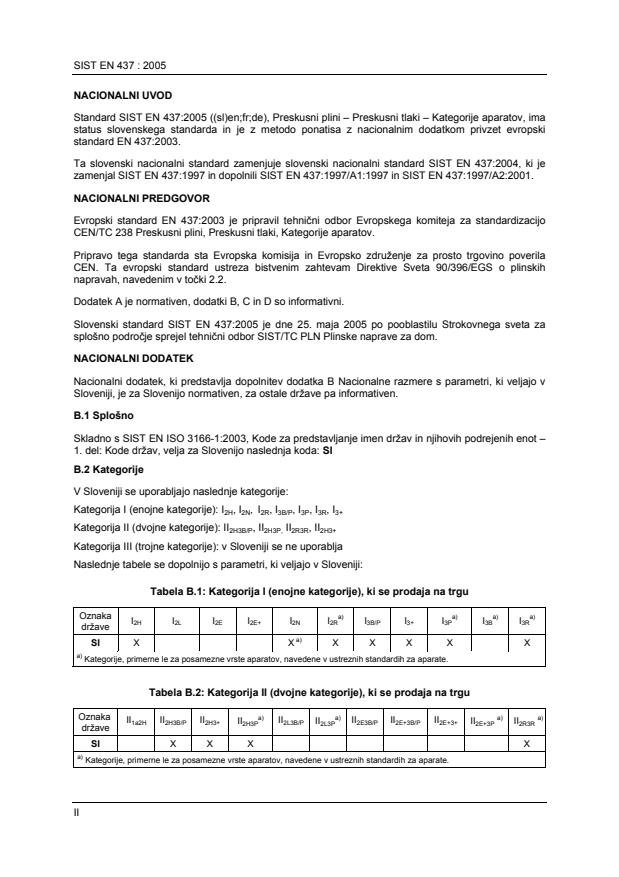
Tabela B.1: Kategorija I (enojne kategorije), ki se prodaja na trgu
Oznaka a) a) a) a)
I I I I I I I I I I I
2H 2L 2E 2E+ 2N 2R 3B/P 3+ 3P 3B 3R
države
a)
SI X X X X X X X
a)
Kategorije, primerne le za posamezne vrste aparatov, navedene v ustreznih standardih za aparate.
Tabela B.2: Kategorija II (dvojne kategorije), ki se prodaja na trgu
Oznaka a) a) a) a)
II II II II II II II
1a2H 2H3B/P 2H3+ II 2L3B/P II 2E3B/P 2E+3B/P 2E+3+ II II
2H3P 2L3P 2E+3P 2R3R
države
SI X X X X
a)
Kategorije, primerne le za posamezne vrste aparatov, navedene v ustreznih standardih za aparate.
II
SIST EN 437 : 2005
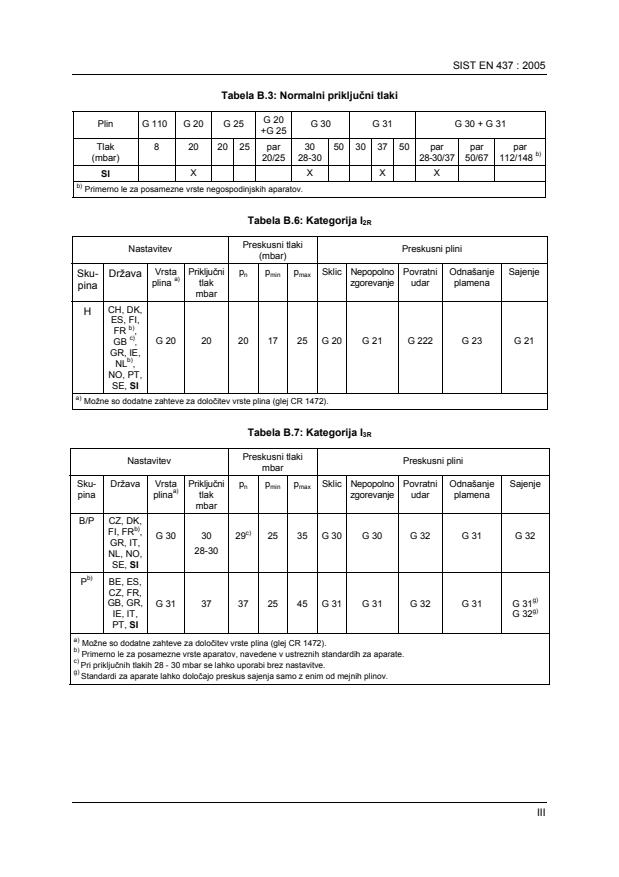
Tabela B.3: Normalni priključni tlaki
G 20
Plin G 110 G 20 G 25 G 30 G 31 G 30 + G 31
+G 25
Tlak 8 20 20 25 par 30 50 30 37 50 par par par
b)
(mbar) 20/25 28-30 28-30/37 50/67 112/148
SI X X X X
b)
Primerno le za posamezne vrste negospodinjskih aparatov.
Tabela B.6: Kategorija I
2R
Preskusni tlaki
Nastavitev Preskusni plini
(mbar)
Vrsta Priključni p p p Sklic Nepopolno Povratni Odnašanje Sajenje
Sku- Država n min max
a)
plina tlak zgorevanje udar plamena
pina
mbar
CH, DK,
H
ES, FI,
b)
FR ,
c)
G 20 20 20 17 25 G 20 G 21 G 222 G 23 G 21
GB ,
GR, IE,
b)
NL ,
NO, PT,
SE, SI
a)
Možne so dodatne zahteve za določitev vrste plina (glej CR 1472).
Tabela B.7: Kategorija I
3R
Preskusni tlaki
Nastavitev Preskusni plini
mbar
Sku- Država Vrsta Priključni p p p Sklic Nepopolno Povratni Odnašanje Sajenje
n min max
a)
pina plina tlak zgorevanje udar plamena
mbar
B/P CZ, DK,
b)
FI, FR , c)
G 30 30 29 25 35 G 30 G 30 G 32 G 31 G 32
GR, IT,
28-30
NL, NO,
SE, SI
b)
P BE, ES,
CZ, FR,
g)
GB, GR, G 31 37 37 25 45 G 31 G 31 G 32 G 31 G 31
g)
IE, IT, G 32
PT, SI
a)
Možne so dodatne zahteve za določitev vrste plina (glej CR 1472).
b)
Primerno le za posamezne vrste aparatov, navedene v ustreznih standardih za aparate.
c)
Pri priključnih tlakih 28 - 30 mbar se lahko uporabi brez nastavitve.
g)
Standardi za aparate lahko določajo preskus sajenja samo z enim od mejnih plinov.
III
SIST EN 437 : 2005
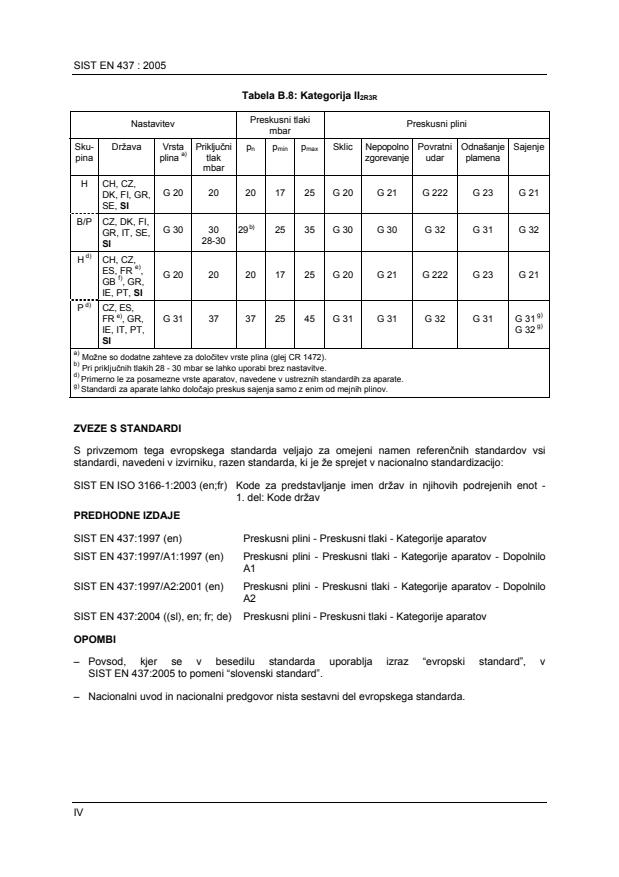
Tabela B.8: Kategorija II
2R3R
Preskusni tlaki
Nastavitev Preskusni plini
mbar
Sku- Država Vrsta Priključni p p p Sklic Nepopolno Povratni Odnašanje Sajenje
n min max
a)
pina plina tlak zgorevanje udar plamena
mbar
H CH, CZ,
G 20 20 20 17 25 G 20 G 21 G 222 G 23 G 21
DK, FI, GR,
SE, SI
B/P CZ, DK, FI,
b)
G 30 30 29 25 35 G 30 G 30 G 32 G 31 G 32
GR, IT, SE,
28-30
SI
d)
H CH, CZ,
e)
ES, FR ,
G 20 20 20 17 25 G 20 G 21 G 222 G 23 G 21
f)
GB , GR,
IE, PT, SI
d)
P CZ, ES,
e) g)
FR , GR, G 31 37 37 25 45 G 31 G 31 G 32 G 31 G 31
g)
IE, IT, PT, G 32
SI
a)
Možne so dodatne zahteve za določitev vrste plina (glej CR 1472).
b)
Pri priključnih tlakih 28 - 30 mbar se lahko uporabi brez nastavitve.
d)
Primerno le za posamezne vrste aparatov, navedene v ustreznih standardih za aparate.
g)
Standardi za aparate lahko določajo preskus sajenja samo z enim od mejnih plinov.
ZVEZE S STANDARDI
S privzemom tega evropskega standarda veljajo za omejeni namen referenčnih standardov vsi
standardi, navedeni v izvirniku, razen standarda, ki je že sprejet v nacionalno standardizacijo:
SIST EN ISO 3166-1:2003 (en;fr) Kode za predstavljanje imen držav in njihovih podrejenih enot -
1. del: Kode držav
PREDHODNE IZDAJE
SIST EN 437:1997 (en) Preskusni plini - Preskusni tlaki - Kategorije aparatov
SIST EN 437:1997/A1:1997 (en) Preskusni plini - Preskusni tlaki - Kategorije aparatov - Dopolnilo
A1
SIST EN 437:1997/A2:2001 (en) Preskusni plini - Preskusni tlaki - Kategorije aparatov - Dopolnilo
A2
SIST EN 437:2004 ((sl), en; fr; de) Preskusni plini - Preskusni tlaki - Kategorije aparatov
OPOMBI
– Povsod, kjer se v besedilu standarda uporablja izraz “evropski standard”, v
– Nacionalni uvod in nacionalni predgovor nista sestavni del evropskega standarda.
IV
EUROPÄISCHE NORM
EN 437
EUROPEAN STANDARD
NORME EUROPÉENNE
Mai 2003
ICS 27.060.20; 91.140.40 Ersatz für EN 437:1993
Deutsche Fassung
Prüfgase - Prüfdrücke - Gerätekategorien
Test gases - Test pressures - Appliance categories Gaz d'essais - Pressions d'essais - Catégories d'appareils
Diese Europäische Norm wurde vom CEN am 3.Dezember 2002 angenommen.
Die CEN-Mitglieder sind gehalten, die CEN/CENELEC-Geschäftsordnung zu erfüllen, in der die Bedingungen festgelegt sind, unter denen
dieser Europäischen Norm ohne jede Änderung der Status einer nationalen Norm zu geben ist. Auf dem letzen Stand befindliche Listen
dieser nationalen Normen mit ihren bibliographischen Angaben sind beim Management-Zentrum oder bei jedem CEN-Mitglied auf Anfrage
erhältlich.
Diese Europäische Norm besteht in drei offiziellen Fassungen (Deutsch, Englisch, Französisch). Eine Fassung in einer anderen Sprache,
die von einem CEN-Mitglied in eigener Verantwortung durch Übersetzung in seine Landessprache gemacht und dem Management-
Zentrum mitgeteilt worden ist, hat den gleichen Status wie die offiziellen Fassungen.
CEN-Mitglieder sind die nationalen Normungsinstitute von Belgien, Dänemark, Deutschland, Finnland, Frankreich, Griechenland, Irland,
Island, Italien, Luxemburg, Malta, Niederlande, Norwegen, Österreich, Portugal, Schweden, Schweiz, der Slowakei, Spanien, der
Tschechischen Republik, Ungarn und dem Vereinigten Königreich.
EUROPÄISCHES KOMITEE FÜR NORMUNG
EUROPEAN COMMITTEE FOR STANDARDIZATION
COMITÉ EUROPÉEN DE NORMALISATION
Management-Zentrum: rue de Stassart, 36 B-1050 Brüssel
© 2003 CEN Alle Rechte der Verwertung, gleich in welcher Form und in welchem Ref. Nr. EN 437:2003 D
Verfahren, sind weltweit den nationalen Mitgliedern von CEN
vorbehalten.
Inhalt Seite
Vorwort. 3
1 Anwendungsbereich. 4
2 Normative Verweisungen . 4
3 Begriffe. 4
4 Gase. 7
4.1 Einteilung. 7
4.2 Prüfgase. 8
5 Prüfdrücke . 11
6 Einteilung der Geräte. 13
6.1 Gerätekategorien. 13
6.1.1 Allgemeines . 13
6.1.2 Kategorie I. 13
6.1.3 Kategorie II. 14
6.1.4 Kategorie III. 16
6.2 Zulässige Maßnahmen bei Wechsel der Gasqualität oder der Gasdrücke, der Voreinstell- und
Regeleinrichtungen. 16
7 Wahl der Prüfgase und Prüfdrücke. 16
8 Kennzeichnung. 17
Anhang A (normativ) Bedingungen für die Herstellung der Prüfgase. 19
Anhang B (informativ) Nationale Situationen . 20
B.1 Allgemeines . 20
B.2 Verwendung der im Hauptteil der Norm aufgelisteten Kategorien in den verschiedenen
Ländern . 20
B.3 Anschlussdrücke der Geräte, entsprechend den in B.1 angegebenen Kategorien. 22
B.4 National oder regional verwendete Kategorien . 23
B.5 Prüfgase und Prüfdrücke entsprechend den in B.4 angegebenen Sonderkategorien. 29
B.6 Sonderbedingungen . 31
Anhang C (informativ) Leitfaden für die Ausdehnung auf andere Kategorien. 37
Anhang D (informativ) Nationale Situation der Länder, deren nationale Organisationen angegliederte
Mitglieder des CEN sind . 38
D.1 Allgemeines . 38
D.2 Im Hauptteil der Norm angeführte und in den verschiedenen Ländern verwendete Kategorien . 38
D.3 Anschlussdrücke der Geräte . 38
D.4 National bzw. regional verwendete Sonderkategorien. 39
D.5 Prüfgase und Prüfdrücke entsprechend den in D.4 angegebenen Kategorien. 41
Vorwort
Dieses Dokument EN 437:2003 wurde vom Technischen Komitee CEN/TC 238 “Prüfgase, Prüfdrücke und
Gerätekategorien” erarbeitet, dessen Sekretariat vom AFNOR gehalten wird.
Diese Europäische Norm muss den Status einer nationalen Norm erhalten, entweder durch Veröffentlichung eines
identischen Textes oder durch Anerkennung bis November 2003, und etwaige entgegenstehende nationale
Normen müssen bis Novemver 2003 zurückgezogen werden.
Dieses Dokument ersetzt EN 437:1993.
Dieses Europäische Norm wurde unter einem Mandat erarbeitet, das die Europäische Kommission und die
Europäische Freihandelszone dem CEN erteilt haben, und unterstützt Artikel 2.2 der EU- Gasgeräterichtlinie
(90/396/EWG).
Anhang A ist normativ, Anhänge B, C und D sind informativ.
Zweck der Norm EN 437 ist es, allen Technischen Komitees des CEN, die Gasgerätenormen erarbeiten,
Definitionen von Prüfgasen, Prüfdrücken und Gerätekategorien zur Verfügung zu stellen. Diese Definitionen sollten
von den vorgenannten Komitees innerhalb des in Abschnitt 1 festgelegten Anwendungsbereiches verwendet
werden.
Es ist ebenfalls notwendig, darauf hinzuweisen, dass die Gasversorgungsunternehmen, die Gase der zweiten
Familie unter Verwendung von Druckpaaren verteilen, für Gase mit dem niedrigsten Wobbeindex, in der Regel
nicht den niedrigsten Druck verwenden. Solch eine Situation kann jedoch ausnahmsweise für eine kurze Dauer
entstehen, wobei die Sicherheit der Geräte weiterhin sichergestellt sein muss.
Es wird in der Norm Wert darauf gelegt, die gegenwärtige Lage hinsichtlich der Prüfgase, Prüfdrücke und
Gerätekategorien verständlicher darzulegen.
Dieses erklärte Ziel der Verständlichkeit hat zur Darlegung einer Anzahl von Kategorien und nationalen Situationen
oder Bedingungen geführt, die umso vielfältiger vorkommen als neue Mitglieder sich der Union anschließen.
Die überarbeitete Norm schließt beide bereits veröffentlichten Änderungen sowie neue Gerätekategorien ein. Der
Grund hierfür liegt mehr in neuen technischen Entwicklungen von Geräten als in neuen Gasquellen.
Die vorliegende Norm kann weiterhin als eine wesentliche Stufe auf dem Weg zur Harmonisierung der Prüfgase,
Prüfdrücke und Gerätekategorien sowie zur Information über die verwendeten Gase in Europa angesehen werden.
Diese Norm macht keine spezifischen Angaben über Malta, das zur Zeit der CEN Umfrage kein Mitglied von CEN
war.
Diese Norm andererseits gilt für Ungarn, ein Land, dessen Normungskomitee assoziiertes Mitglied von CEN ist.
Entsprechend der CEN/CENELEC-Geschäftsordnung sind die nationalen Normungsinstitute der folgenden Länder
gehalten, diese Europäische Norm zu übernehmen : Belgien, Dänemark, Deutschland, Finnland, Frankreich,
Griechenland, Irland, Island, Italien, Luxemburg, Malta, die Niederlande, Norwegen, Österreich, Portugal,
Schweden, die Schweiz, die Slovakei, Spanien, die Tschechische Republik und das Vereinigte Königreich.
1 Anwendungsbereich
Diese Norm legt die Prüfgase, Prüfdrücke und Gerätekategorien für die Verwendung von Brenngasen der ersten,
zweiten und dritten Familie fest. Sie gilt als übergeordnetes Dokument für die speziellen Gerätenormen, die unter
den Geltungsbereich der Richtlinie des Rates (90/396/EWG) zur Angleichung der Rechtsvorschriften der
Mitgliedstaaten für Gasverbrauchseinrichtungen fallen.
Die Norm enthält Empfehlungen zur Verwendung von Gasen und Drücken bei der Durchführung der Prüfungen.
Das vollständige Verfahren wird in den entsprechenden Gerätenormen angegeben werden.
ANMERKUNG Die Prüfgase und Prüfdrücke, die in dieser Norm festgelegt werden, sind im Prinzip für sämtliche Geräte
bestimmt, um die Konformität mit den Anforderungen der entsprechenden Normen sicherzustellen.
Die Verwendung der Prüfgase und Prüfdrücke kann jedoch in folgenden Fällen nicht geeignet sein:
Geräte mit einer Nennwärmebelastung über 300 kW;
Geräte, die vor Ort erstellt werden;
Geräte, deren Endausführung durch den Benutzer beeinflusst wird;
Geräte, die für einen Betrieb bei hohen Versorgungsdrücken ausgelegt sind (insbesondere die direkte
Verwendung des gesättigten Dampfdruckes).
In diesen Fällen können die einzelnen Gerätenormen weitere Prüfbedingungen festlegen, um die Konformität mit
den Anforderungen der entsprechenden Normen sicherzustellen.
2 Normative Verweisungen
Diese Europäische Norm enthält durch datierte oder undatierte Verweisungen Festlegungen aus anderen
Publikationen. Diese normativen Verweisungen sind an den jeweiligen Stellen im Text zitiert, und die Publikationen
sind nachstehend aufgeführt. Bei datierten Verweisungen gehören spätere Änderungen oder Überarbeitungen
dieser Publikationen nur zu dieser Europäischen Norm, falls sie durch Änderung oder Überarbeitung eingearbeitet
sind. Bei undatierten Verweisungen gilt die letzte Ausgabe der in Bezug genommenen Publikation (einschließlich
Änderungen).
EN ISO 3166-1:1997, Codes für die Namen von Ländern und deren Untereinheiten – Teil 1: Ländernamen.
ISO 6976:1995, Natural gas – Calculation of calorific value, density, relative density and Wobbe index from
composition (Revision of ISO 6976:1983).
3 Begriffe
Für die Anwendung dieser Norm gelten die folgenden Begriffe:
3.1
Gasgerät
Gerät, das mit gasförmigen Brennstoffen betrieben wird
ANMERKUNG Das Wort „Gas“ bedeutet in der vorliegenden Norm „gasförmige Brennstoffe“, d. h. jeder in
gasförmigem Zustand befindliche Brennstoff bei einer Temperatur von 15 °C und einem absoluten Druck von 1 bar.
3.2
Prüfgas
Gas, das zur Überprüfung der Funktionssicherheit der Geräte, die mit gasförmigen Brennstoffen betrieben werden,
verwendet wird. Prüfgase umfassen Normprüfgase und Grenzgase
3.3
Normprüfgas
Gas, mit dem die Geräte Nennbedingungen erreichen, wenn sie mit dem entsprechenden Nenndruck betrieben
werden
3.4
Grenzgas
Gas, das repräsentativ ist für die extremen Qualitätsschwankungen der Gase, für die die Geräte ausgelegt sind
3.5
Prüfdruck
Druck, der zur Überprüfung der Funktionssicherheit der Geräte, die mit gasförmigen Brennstoffen betrieben
werden, verwendet wird. Prüfdrücke umfassen die Nenndrücke und die Grenzdrücke
ANMERKUNG Prüfdrücke in Millibar (mbar): 1 mbar = 10 Pa.
3.6
Nenndruck
p
n
Druck, bei dem die Geräte Nennbedingungen erreichen, wenn sie mit dem entsprechenden Normprüfgas betrieben
werden
3.7
Grenzdruck
Symbol: Höchstdruck: p ; Mindestdruck: p
max min.
Druck, der repräsentativ ist für die extremen Schwankungen der Anschlussdrücke
3.8
Druckpaare
eine Einheit von zwei unterschiedlichen Verteilungsdrücken des Gases, das verwendet wird, wenn größere
Unterschiede im Wobbeindex innerhalb einer Familie oder Gruppe bestehen:
- der höchste Druck entspricht dem Gas mit niedrigem Wobbeindex;
- der kleinste Druck entspricht dem Gas mit hohem Wobbeindex.
3.9
Bezugsbedingungen
15 °C, 1 013,25 mbar, wenn nicht anders angegeben
3.10
relative Dichte
d
Verhältnis der Masse gleicher Volumina von Gas und trockener Luft, bezogen auf gleiche Druck- und
Temperaturbedingungen: 15 °C, 1 013,25 mbar
3.11
Wärmewert
die Wärmemenge, die bei der vollständigen Verbrennung einer Volumen- oder Masseeinheit von Gas bei
konstantem Druck von 1 013,25 mbar erzeugt wird, wobei die Bestandteile des Brenngas-Gemisches unter den
Bezugsbedingungen eingesetzt werden und die Verbrennungsprodukte auf dieselben Bedingungen gebracht
werden
Es werden zwei verschiedene Wärmewerte unterschieden:
- Brennwert H , das bei der Verbrennung entstehende Wasser wird als kondensiert angenommen
s
- Heizwert H , das bei der Verbrennung entstehende Wasser wird als in dampfförmigem Zustand verbleibend
i
angenommen
ANMERKUNG Wärmewert in:
- entweder Megajoule je Kubikmeter (MJ/m );
- oder Megajoule je Kilogramm (MJ/kg) trockenen Gases.
3.12
Wobbeindex
oberer Wobbeindex: W ; unterer Wobbeindex: W
s i
Verhältnis des Wärmewertes des Gases je Volumeneinheit zur Quadratwurzel seiner relativen Dichte. Der
Wobbeindex wird als oberer oder unterer bezeichnet, je nachdem, ob der Brennwert oder der Heizwert verwendet
wird
Wobbeindex in:
- entweder Megajoule je Kubikmeter (MJ/m );
- oder Megajoule je Kilogramm (MJ/kg) trockenen Gases.
3.13
Wärmebelastung
Q
die dem Gerät je Zeiteinheit zugeführte Wärmemenge entsprechend dem Volumen- und Massenstrom, wobei für
den Wärmeinhalt der Heizwert oder der Brennwert eingesetzt wird
ANMERKUNG Wärmebelastung in Kilowatt (kW).
3.14
Nennwärmebelastung
Q
n
Wert für die Wärmebelastung, die vom Hersteller angegeben wird
3.15
Massenstrom
M
die Masse, die dem Gerät im Betrieb je Zeiteinheit an Gas zugeführt wird
ANMERKUNG Kilogramm je Stunde (kg/h) oder in Gramm je Stunde (g/h).
3.16
Volumenstrom
V
das Gasvolumen, das dem Gerät im Beharrungszustand je Zeiteinheit zugeführt wird
ANMERKUNG Volumenstrom in Kubikmeter je Stunde (m /h) und ggf. Liter je Minute (l/min), Kubikdezimeter je
Stunde (dm /h) oder Kubikdezimeter je Sekunde (dm /s).
3.17
Gasfamilie
Gruppe von gasförmigen Brennstoffen mit einem gleichwertigen Brennverhalten und durch einen Wobbeindex-
Bereich miteinander verbunden (siehe Tabelle 1)
3.18 Gasgruppe
Unterteilung einer Gasfamilie, deren definierter Wobbeindex-Bereich sich innerhalb einer der relevanten Gasfamilie
befindet (siehe Tabelle 1) und so ausgewählt wird, dass die Geräte bei der Verbrennung aller Gase einer
Gasgruppe ohne Einstellung sicher betrieben werden
ANMERKUNG Die Einstellung eines Gerätes kann unter Berücksichtigung spezieller nationaler oder örtlicher
Bedingungen, wie in einigen Ländern (siehe B.4) festgelegt, zugelassen werden. Für Gase entsprechend den
nationalen oder örtlichen Bedingungen siehe auch Tabellen B.5 und D.5.
3.19 Gerätekategorie
Mittel zur Bestimmung von Gasfamilien und, wenn nötig Gasgruppen, womit ein Gasgerät sicher und mit der
gewünschten Leistung (siehe einzelne Gerätenormen) betrieben wird
ANMERKUNG Allgemeine Gerätekategorien sind in 6.1 angegeben. Spezielle Gerätekategorien, die national oder regional
vermarktet werden, sind in B.4 und Anhang D angegeben.
4 Gase
4.1 Einteilung
Die Gase werden in drei Familien eingeteilt, wobei jede Familie in Gruppen (selbst in Bereiche unterteilt, siehe B)
nach dem Wobbeindex entsprechend den in Tabelle 1 angegebenen Werten unterteilt werden kann.
Tabelle 1 — Zusammenfassung der Gasfamilien und Gasgruppen nach den Wobbeindizes
Gasfamilien und Gruppen Oberer Wobbeindex bei 15 °C und 1 013,25 mbar
MJ/m
min. max.
1. Familie 22,4 24,8
Gruppe a
2. Familie 39,1 54,7
Gruppe H 45,7 54,7
Gruppe L 39,1 44,8
Gruppe E 40,9 54,7
3. Familie 72,9 87,3
Gruppe B/P 72,9 87,3
Gruppe P 72,9 76,8
Gruppe B 81,8 87,3
4.2 Prüfgase
Die Zusammensetzungen und die wichtigsten Kennwerte der den verschiedenen Gasfamilien oder Gasgruppen
zugeordneten Prüfgase sind in den Tabellen 2 und 3 angegeben.
In besonderen Fällen, die in den einzelnen Gerätenormen festgelegt sind, kann G 24, dessen Kennwerte in
Tabelle 3 angegeben sind, verwendet werden, aber ausschließlich bei Nenndruck.
Die Wärmewerte der Prüfgase der dritten Familie, in Megajoule je Kubikmeter nach Tabelle 2, können auch in
Megajoule je Kilogramm nach Tabelle 4 ausgedrückt werden.
Die Werte – gemessen und ausgedrückt bei 15 °C – in den Tabellen 2, 3 und 4 ergeben sich aus der Anwendung
nach ISO 6976:1995.
Die Kennwerte der Prüfgase der zweiten Familie bei 0 °C und 1 013,25 mbar (trockenes Gas) sind in Tabelle 5
angegeben.
Die Bedingungen zur Herstellung der Prüfgase sind in Anhang A festgelegt.
a
Tabelle 2 — Kennwerte der Prüfgase
Trockenes Gas bei 15 °C und 1 013,25 mbar
Gasfamilien Prüfgase Kurzzeichen Zusammen - W H W H d
i i s s
und Gruppen setzung
Volumenanteil
e 3 3 3 3
% MJ/m MJ/m MJ/m MJ/m
b
Gase der ersten Familie
CH = 26
Gruppe a Normprüfgas G 110 21,76 13,95 24,75 15,87 0,411
Grenzgas für unvollständige Verbrennung, H = 50
Auftreten gelber Spitzen und Abheben der
Flammen N = 24
Grenzgas für Rückschlagen der Flammen G 112 CH = 17 19,48 11,81 22,36 13,56 0,367
H = 59
N = 24
b
Gase der zweiten Familie
CH = 100
Gruppe H Normprüfgas G 20 45,67 34,02 50,72 37,78 0,555
CH = 87
Grenzgas für unvollständige Verbrennung, G 21 49,60 41,01 54,76 45,28 0,684
Auftreten gelber Spitzen
C H = 13
3 8
Grenzgas für Rückschlagen der Flammen G 222 CH = 77 42,87 28,53 47,87 31,86 0,443
H = 23
CH = 92,5
Grenzgas für Abheben der Flammen G 23 41,11 31,46 45,66 34,95 0,586
N = 7,5
Gruppe L Normprüfgas, Grenzgas für Rückschlagen G 25 CH = 86 37,38 29,25 41,52 32,49 0,612
der Flammen
N = 14
Grenzgas für unvollständige Verbrennung, G 26 CH = 80 40,52 33,36 44,83 36,91 0,678
Auftreten gelber Spitzen
C H = 7
3 8
N = 13
Grenzgas für Abheben der Flammen G 27 CH = 82 35,17 27,89 39,06 30,98 0,629
N = 18
Gruppe E Normprüfgas G 20 CH = 100 45,67 34,02 50,72 37,78 0,555
CH = 87
Grenzgas für unvollständige Verbrennung, G 21 49,60 41,01 54,76 45,28 0,684
Auftreten gelber Spitzen
C H = 13
3 8
Tabelle 2 — (fortgesetzt)
W H W H
Gasfamilien und Prüfgase Kurzzeichen Zusammen- d
i i s s
Gruppen setzung
Volumenanteil
e 3 3 3 3
% MJ/m MJ/m MJ/m MJ/m
Grenzgas für Rückschlagen der G 222 CH = 77 42,87 28,53 47,87 31,86 0,443
Flammen
H = 23
CH = 85
Grenzgas für Abheben der Flammen G 231 36,82 28,91 40,90 32,11 0,617
H = 15
c
Gase der dritten Familie
Familie 3 Normprüfgas G 30 n-C H = 50 80,58 116,09 87,33 125,81 2,075
4 10
und Grenzgas für unvollständige
i- C H = 50
4 10
Verbrennung, Auftreten gelber Spitzen
Gruppen B/ P
Grenzgas für Abheben der Flammen G 31 C H = 100 70,69 88,00 76,84 95,65 1,550
3 8
C H = 100
und B Grenzgas für Rückschlagen der G 32 68,14 82,78 72,86 88,52 1,476
3 6
Flammen
Gruppe P Normprüfgas G 31 C H = 100 70,69 88,00 76,84 95,65 1,550
3 8
Grenzgas für unvollständige
d
Verbrennung, Auftreten gelber Spitzen
und Abheben der Flammen
C H = 100
Grenzgas für Rückschlagen der G 32 68,14 82,78 72,86 88,52 1,476
3 6
und Auftreten gelber
Flammen
d
Spitzen
a
Für regional verteilte Gase wird auf B.4 verwiesen.
b
Siehe B.4 für die anderen Gruppen.
c
Siehe auch Tabelle 4.
d
Die Gerätenormen können nur ein einziges Grenzgas für das Auftreten gelber Spitzen vorschreiben.
e
Siehe auch Anhang A.
Tabelle 3 — Kennwerte des Grenzgases G 24
Trockenes Gas bei 15 °C und 1 013,25 mbar
Gasfamilien und Prüfgase Kurzzeichen Zusammen- W H W H d
i i s s
Gruppen setzung
Volumenanteil
3 3 3 3
%
MJ/m MJ/m MJ/m MJ/m
2. Familie Grenzgas für Überhitzung G 24 CH = 68 47,01 35,70 52,09 39,55 0,577
Gruppen H und E C H = 12
3 8
H = 20
Tabelle 4 — Wärmewerte für Prüfgase der dritten Gasfamilie
Werte in Megajoule je Kilogramm
Kurzzeichen der Prüfgase H Hs
i
G 30 45,65 49,47
G 31 46,34 50,37
G 32 45,77 48,94
ANMERKUNG Für die Normprüfgase der zweiten Familie sind die Kennwerte bei 0 °C, 1 013,25 mbar, trockenes Gas in der
Tabelle 5 angegeben.
Tabelle 5 — Kennwerte der Normprüfgase der zweiten Familie bei 0 °C und 1 013,25 mbar
Gruppen Prüfgase Kurzzeichen Zusammen- W H W H d
i i s s
setzung
Volumenanteil
% 3 3 3 3
MJ/m MJ/m MJ/m MJ/m
CH = 100
Gruppe H Normprüfgas G 20 48,20 35,90 53,61 39,94 0,555
Gruppe L Normprüfgas und Grenzgas für G 25 CH = 86 39,45 30,87 43,88 34,34 0,612
Rückschlagen der Flammen
N = 14
CH = 100
Gruppe E Normprüfgas G 20 48,20 35,90 53,61 39,94 0,555
5 Prüfdrücke
Die Werte der Prüfdrücke, d. h. die statischen Drücke, die am Anschluss des in Betrieb gesetzten Gerätes
aufzubringen sind, sind in den Tabellen 6 und 7 angegeben.
ANMERKUNG Für die Tabellen 6 und 7 sind die Prüfbedingungen in den einzelnen Normen festgelegt, jedoch:
bei Prüfung der Verbrennungsgüte mit G 21 bei Windstille wird das Gerät zuerst mit G 20 auf eine um 5 % erhöhte
Nennwärmebelastung, wenn ein Gasdruckregler vorhanden ist, anderenfalls mit einer um 7,5 % erhöhten
Nennwärmebelastung eingestellt. Dann wird G 20 durch G 21 ohne Veränderung der vorgenannten Einstellung ersetzt;
eine Zünd- und Durchzündungsprüfung wird bei einem Anschlussdruck, vom 0,7fachen des Nenndruckes (p ) mit dem
n
(oder den) Normprüfgas(en) für die erste und zweite Familie durchgeführt.
a
Tabelle 6 — Prüfdrücke , wenn keine Druckpaare verwendet werden
Drücke in Millibar
Gerätekategorien mit folgendem Prüfgase
p p p
n min
max
(tiefzustellendem) Index
1. Familie 1a G 110 8 6 15
G 112
2. Familie G 20, G 21, 20 17 25
2H G 222, G 23
2. Familie G 25, G 26, 25 20 30
2L G 27
2. Familie G 20, G 21, 20 17 25
2E G 222, G 231
G 20, G 21, 20 17 30
2. amilie G 222, G 231
d
2N G 25, G 26, 25 20 30
a
G 27
b
G 30, G 31, 25 35
3. Familie G 32
3B/P G 30, G 31, 50 42,5 57,5
G 32
3. Familie G 31, G 32 37 25 45
3P G 31, G 32 50 42,5 57,5
3. Familie G 30, G 31, 29 20 35
c
G 32
3B
a
Für regional verteilte Gase wird auf B.4 verwiesen.
b
Die Geräte dieser Kategorie können ohne Einstellung bei den angegebenen Versorgungsdrücken von 28 mbar bis 30 mbar
verwendet werden.
c
Die Prüfungen mit G 31 und G 32 werden beim Nenndruck (p = 29 mbar) durchgeführt, da diese Prüfgase schärfere
n
Betriebsbedingungen als jedes verteilte Gas darstellen. Diese Bedingung deckt die normalen Gasversorgungsschwankungen.
d
Siehe Definition 6.1.2.2.
Tabelle 7 — Prüfdrücke, wenn Druckpaare verwendet werden
Drücke in Millibar
Gerätekategorien mit folgendem Prüfgase
p p p
n
min max
(tiefzustellendem) Index
Gase der zweiten Familie: G 20, G 21, 20 17 25
2E+
G 222
a b
G 231 30
(25) 17
c
Gase der dritten Familie: 3+ (Druckpaar G 30 20 35
28-30/37)
G 31, G 32 37 25 45
Gase der dritten Familie: 3+ (Druckpaar G 30 50 42,5 57,5
50/67)
G 31, G 32 67 50 80
Gase der dritten Familie: 3+ (Druckpaar G 30 112 60 140
112/148)
G 31, G 32 148 100 180
a
Dieser Druck entspricht der Verwendung der Gase mit einem niedrigen Wobbeindex, prinzipiell wird aber keine Prüfung bei
diesem Druck durchgeführt.
b Siehe B.6.
c
Die Geräte dieser Kategorie können ohne Einstellung bei Versorgungsdruckpaaren von 28 mbar bis 30 mbar verwendet werden.
6 Einteilung der Geräte
6.1 Gerätekategorien
6.1.1 Allgemeines
Die Geräte werden nach den Gasen und Drücken, für die sie ausgelegt sind, in Kategorien eingeteilt. Die Definition
der Kategorien ergibt sich aus 6.1.2, 6.1.3 und 6.1.4.
Um den örtlichen Gasverteilungsbedingungen (Gaszusammensetzung und Anschlussdrücke) Rechnung zu tragen,
können in jedem Land nur einige der in 6.1.2, 6.1.3 und 6.1.4 definierten Kategorien eingesetzt werden, wobei ein
Teil dieser Kategorien nur für bestimmte, in den speziellen Gerätenormen festgelegte Geräteausführungen
geeignet sind.
In den Tabellen B.1 und B.2 sind die Situationen jedes Landes für die Verwendung der Gerätekategorien und für
die entsprechenden Anschlussdrücke angegeben (siehe auch B.4 für die regional und national verwendeten
Kategorien, entsprechend den spezifischen Verteilungsgasen und Anschlussdrücken in B.5; B.6 enthält
Sonderbedingungen, die einem Land eigen sind).
ANMERKUNG Siehe auch Anhang C: Leitfaden für die Ausdehnung auf andere Kategorien.
6.1.2 Kategorie I
Die Geräte der Kategorie I sind ausschließlich für die Verwendung von Gasen einer einzigen Gasfamilie oder einer
einzigen Gasgruppe ausgelegt.
6.1.2.1 Geräte, die nur für die erste Gasfamilie geeignet sind
Kategorie I : Geräte, die nur für die Gase der Gruppe a der ersten Familie geeignet sind (beim festgelegten
1a
Anschlussdruck) (diese Kategorie wird nicht verwendet).
6.1.2.2 Geräte, die nur für die zweite Gasfamilie geeignet sind
Kategorie I : Geräte, die nur für Gase der Gruppe H der zweiten Familie geeignet sind (beim festgelegten
2H
Anschlussdruck).
Kategorie I : Geräte, die ausschließlich für Gase der Gruppe L der zweiten Familie geeignet sind (beim
2L
festgelegten Anschlussdruck).
Kategorie I : Geräte, die ausschließlich für die Verwendung von Gasen der Gruppe E der zweiten Gasfamilie
2E
geeignet sind (beim festgelegten Anschlussdruck).
Kategorie I : Geräte, die ausschließlich für Gase der Gruppe E der zweiten Gasfamilie geeignet sind und mit
2E+
einem Druckpaar betrieben werden (ohne Eingriff ins Gerät).
Ein gegebenenfalls vorhandener Gasdruckregler darf innerhalb des Bereiches zwischen den
beiden Nenndrücken des Druckpaares nicht in Funktion sein.
Kategorie I : Geräte, die ausschließlich für Gase der zweiten Familie beim festgelegten Anschlussdruck
2N
geeignet sind. Sie passen sich automatisch allen Gasen der zweiten Familie an.
Kategorie I : Geräte, die für alle Gase der zweiten Familie und/oder für Gase, die der zweiten Familie
2R
zugeordnet sind, geeignet sind. Sie sind mit einem Druckregler ausgerüstet, der manuell
eingestellt werden kann, um mit den verschiedenen Gasen einer Gruppe der zweiten Familie
unter den örtlichen Versorgungsbedingungen betrieben zu werden (siehe B.5.1).
6.1.2.3 Geräte, die nur für die dritte Gasfamilie geeignet sind
Kategorie I : Geräte, die für Gase der dritten Familie (Propan und Butan) geeignet sind (beim festgelegten
3 B/P
Anschlussdruck).
Kategorie I : Geräte, die für Gase der dritten Familie (Propan und Butan) geeignet sind und mit einem
3+
Druckpaar betrieben werden können (ohne Eingriff in das Gerät).
Ein Gasdruckregler ist für das Gerät nicht zugelassen. Für bestimmte Gerätearten, die in den
Gerätenormen aufgeführt sind, ist jedoch eine Einstellung der Primärluft zur Umstellung von
Butan auf Propan und umgekehrt zugelassen.
Kategorie I : Geräte, die nur für Gase der dritten Gasfamilie der Gruppe P (Propan) geeignet sind (beim
3P
festgelegten Anschlussdruck).
Kategorie I : Geräte, die nur für Gase der dritten Gasfamilie der Gruppe B (Butan) geeignet sind (beim
3B
festgelegten Anschlussdruck).
Kategorie I : Geräte, die für alle Gase der dritten Familie geeignet sind. Sie sind mit einem Druckregler
3R
ausgerüstet, der manuell eingestellt werden kann, um mit den verschiedenen Gasen einer
Gruppe der dritten Familie unter den örtlichen Versorgungsbedingungen betrieben zu werden
(siehe B.5.2).
6.1.3 Kategorie II
Die Geräte der Kategorie II sind für die Verwendung von Gasen aus zwei Familien ausgelegt.
6.1.3.1 Geräte, die für die Verwendung von Gasen der ersten und der zweiten Gasfamilie geeignet sind
Kategorie II1 : Geräte, die für Gase der Gruppe a der ersten Gasfamilie und für Gase der Gruppe H der
a2H
zweiten Gasfamilie geeignet sind. Die Verwendung von Gasen der ersten Gasfamilie erfolgt
unter denselben Bedingungen wie für die Kategorie I .
1a
Die Verwendung von Gasen der zweiten Gasfamilie erfolgt unter denselben Bedingungen wie
für die Kategorie I .
2H
6.1.3.2 Geräte, die für die Verwendung von Gasen der zweiten und der dritten Gasfamilie geeignet sind
Kategorie II :Geräte, die für Gase der Gruppe H der zweiten Gasfamilie und für Gase der dritten Gasfamilie
2H3 B/P
geeignet sind. Die Verwendung der zweiten Familie erfolgt unter denselben Bedingungen wie
für die Kategorie I . Die Verwendung der Gase der dritten Familie erfolgt unter denselben
2H
Bedingungen wie für die Kategorie I .
3 B/P
Kategorie II : Geräte, die für Gase der Gruppe H der zweiten Familie und für Gase der dritten Familie
2H3+
geeignet sind. Die Verwendung der Gase der zweiten Familie erfolgt unter denselben
Bedingungen wie für die Kategorie I . Die Verwendung der Gase der dritten Familie erfolgt
2H
unter denselben Bedingungen wie für die Kategorie I .
3+
Kategorie II : Geräte, die für Gase der Gruppe H der zweiten Familie und für Gase der Gruppe P der dritten
2H3P
Familie geeignet sind. Die Verwendung der Gase der zweiten Familie erfolgt unter denselben
Bedingungen wie für die Kategorie I . Die Verwendung der Gase der dritten Familie erfolgt
2H
unter den gleichen Bedingungen wie für die Kategorie I .
3P
Kategorie II :Geräte, die für Gase der Gruppe L der zweiten Familie und für Gase der dritten Familie
2L3 B/P
geeignet sind. Die Verwendung der Gase der zweiten Familie erfolgt unter denselben
Bedingungen wie für die Kategorie I . Die Verwendung der Gase der dritten Familie erfolgt
2L
unter denselben Bedingungen wie für die Kategorie I .
3 B/P
Kategorie II : Geräte, die für Gase der Gruppe L der zweiten Familie und für Gase der Gruppe P der dritten
2L3P
Familie geeignet sind. Die Verwendung der Gase der zweiten Familie erfolgt unter denselben
Bedingungen wie für die Kategorie I . Die Verwendung der Gase der dritten Familie erfolgt
2L
unter denselben Bedingungen wie für die Kategorie I .
3P
Kategorie II :Geräte, die für Gase der Gruppe E der zweiten Familie und für Gase der dritten Familie
2E3 B/P
geeignet sind. Die Verwendung der Gase der zweiten Familie erfolgt unter denselben
Bedingungen wie für die Kategorie I . Die Verwendung der Gase der dritten Familie erfolgt
2E
unter denselben Bedingungen wie für die Kategorie I .
3 B/P
Kategorie II :Geräte, die für Gase der Gruppe E der zweiten Familie und für Gase der dritten Familie
2E+3 B/P
geeignet sind. Die Verwendung der Gase der zweiten Familie erfolgt unter denselben
Bedingungen wie für die Kategorie I . Die Verwendung der Gase der dritten Familie erfolgt
2E+
unter denselben Bedingungen wie für die Kategorie I .
3 B/P
Kategorie II : Geräte, die für Gase der Gruppe E der zweiten Familie und für Gase der dritten Familie
2E+3+
geeignet sind. Die Verwendung der Gase der zweiten Familie erfolgt unter denselben
Bedingungen wie für die Kategorie I . Die Verwendung der Gase der dritten Familie erfolgt
2E+
unter denselben Bedingungen wie für die Kategorie I .
3+
Kategorie II : Geräte, die für Gase der Gruppe E der zweiten Familie und für Gase der Gruppe P der dritten
2E+3P
Familie geeignet sind. Die Verwendung der Gase der zweiten Familie erfolgt unter denselben
Bedingungen wie für die Kategorie I . Die Verwendung der Gase der dritten Familie erfolgt
2E+
unter denselben Bedingungen wie für die Kategorie I .
3P
Kategorie I : Geräte, die für alle Gase der zweiten Familie und/oder für Gase, die der zweiten Familie zugeordnet sind,
2R3R
sowie alle Gase der dritten Familie geeignet sind. Sie sind mit einem Druckregler ausgerüstet, der manuell
eingestellt werden kann, um mit den verschiedenen Gasen einer Gruppe der zweiten und dritten Familie
unter den örtlichen Versorgungsbedingungen betrieben zu werden. Die Verwendung der Gase der zweiten
Familie erfolgt unter denselben Bedingungen wie für die Kategorie I . Die Verwendung der Gase der
2R
dritten Familie erfolgt unter denselben Bedingungen wie für die Kategorie I
3R (siehe B.4.1 und B.4.2).
6.1.4 Kategorie III
Die Geräte der Kategorie III sind für die Verwendung von Gasen aus drei Familien ausgelegt. Diese Kategorie
findet keine allgemeine Verwendung.
Die in einigen Ländern zugelassenen Kategorien III sind im Anhang B (siehe B.3) angegeben.
6.2 Zulässige Maßnahmen bei Wechsel der Gasqualität oder der Gasdrücke, der Voreinstell- und
Regeleinrichtungen
Die speziellen Gerätenormen legen fest:
die zulässigen Maßnahmen bei Wechsel der Gasqualität oder der Gasdrücke;
ANMERKUNG Die Umstellmaßnahmen sollen möglichst so begrenzt sein, dass die Umstellung einfach durchführbar ist.
die Festlegungen für die Voreinstell- und Regeleinrichtungen.
7 Wahl der Prüfgase und Prüfdrücke
Je nach den Gerätekategorien.
Die Prüfungen werden unter Berücksichtigung der in Tabelle 8 festgelegten Prüfgase durchgeführt;
die Prüfdrücke sind unter Berücksichtigung der Prüfgase und nach den Angaben der speziellen Gerätenormen
aus den Tabellen 6 oder 7 zu wählen.
a b
Tabelle 8 — Prüfgase für die Gerätekategorien
Kategorien Normprüfgas Grenzgas für Grenzgas für Grenzgas für Grenzgas für
unvollständige Rückschlagen Abheben der Auftreten gelber
Verbrennung der Flammen Flammen Spitzen
I G 20 G 21 G 222 G 23 G 21
2H
I G 25 G 26 G 25 G 27 G 26
2L
I ,I G 20 G 21 G 222 G 231 G 21
2E 2E+
c d d d d d
I
G 20 G 21 G 222 G 231 G 21
2N
c d d d d d
G 25 G 26 G 25 G 27 G 26
I ,I G 30 G 30 G 32 G 31 G 30
3B/P 3+
I G 31 G 31 G 32 G 31 G 31,G 32
3P
I G 30 G 30 G 32 G 31 G 30
3B
II G 110,G 20 G 21 G 112 G 23 G 21
1a2H
II G 20,G 30 G 21 G 222, G 23, G 31 G 30
2H3B/P
II G 32
2H3+
II G 20, G 31 G 21 G 222, G 23, G 31 G 31, G 32
2H3P
G 32
II G 25, G 30 G 26 G 32 G 27, G 31 G 30
2L3B/P
II G 25, G 31 G 26 G 32 G 27, G 31 G 31, G 32
2L3P
II G 20, G 30 G 21 G 222, G 231, G 31 G 30
2E3B/P
II G 32
2E+3B/P
II
2E+3+
II G 20, G 31 G 21 G 222, G 231, G 31 G 31, G 32
2E+3P
G 32
a
Für die Prüfgase entsprechend den national oder regional verwendeten Kategorien wird auf B.4 verwiesen.
b
Die Prüfungen mit den Grenzgasen werden mit derjenigen Düse und derjenigen Einstellung durchgeführt, die dem
Normprüfgas entsprechen, in dessen Gruppe das für die Prüfung verwendete Grenzgas gehört.
c
Die Wärmebelastung soll dem gleichen Wert entsprechen und sich innerhalb der in den Gerätenormen festgelegten
Toleranzen befinden.
d
Da die Einstellung sich automatisch anpasst, wenn das Gerät mit verschiedenen Prüfgasen betrieben wird, könnte eine
Prüfung aller Situationen (z. B. Grenzgas für unvollständige Verbrennung, Auftreten gelber Spitzen, Rückschlagen der
Flammen) mit allen Prüfgasen notwendig sein.
8 Kennzeichnung
Die Kennzeichnung der Kategorien beinhaltet:
römische Zahlen für die Anzahl der verwendbaren Gasfamilien;
den als Index angehängten Teil in arabischen Zahlen, der die der Gasfamilie zugewiesene Kennzahl darstellt,
z. B. 1 für die erste Familie, 2 für die Zweite und 3 für die Dritte;
den dieser Zahl nachgehängten Teil in Buchstaben zur Bezeichnung der jeweils verwendbaren Gasgruppen
oder Gruppen.
Der an die römische Zahl angehängte Teil bezeichnet alle Familien mit allen Gasgruppen, mit denen ein Gerät mit
oder ohne Einstellungen und/oder mit für jede Gruppe geeigneten Anpassungen betrieben werden kann.
Falls das Gerät für Gase einer der Gruppen E oder B/P, die vollständig oder zum Teil kleinere, durch ihren
Wobbeindexbereich abgegrenzte Gruppen einschließen, geeignet sind, kann der Anschlussdruck entsprechend
einem Druckpaar eingestellt werden. Diese Versorgungsbedingung für die betroffene Gasgruppe wird mit „+“
symbolisiert, gleich nach dem Buchstaben E oder der Zahl 3 für die Gruppe B/P; für Letzteres wird das Symbol für
die Gruppe durch die die
...
Questions, Comments and Discussion
Ask us and Technical Secretary will try to provide an answer. You can facilitate discussion about the standard in here.
Loading comments...