

ASTM E2515-11(2017)
(Test Method)Standard Test Method for Determination of Particulate Matter Emissions Collected by a Dilution Tunnel
General Information
- Abstract
SCOPE
1.1 This test method is applicable for the determination of particulate matter emissions from solid-fuel-burning appliances including woodstoves, pellet-burning appliances, factory-built fireplaces, masonry fireplaces, masonry heaters, indoor furnaces, and indoor and outdoor hydronic heaters within a laboratory environment.
1.2 Analytes will be a particulate matter (PM) with no CAS number assigned. For data quality objectives, see Appendix X1.
1.3 The values stated in SI units are to be regarded as standard. The values given in parentheses are mathematical conversions to inch-pound units that are provided for information only and are not considered standard.
1.4 This test method does not purport to address all of the safety concerns, if any, associated with its use. It is the responsibility of the user of this standard to establish appropriate safety, health, and environmental practices and determine the applicability of regulatory limitations prior to use.
1.5 This international standard was developed in accordance with internationally recognized principles on standardization established in the Decision on Principles for the Development of International Standards, Guides and Recommendations issued by the World Trade Organization Technical Barriers to Trade (TBT) Committee.
- Status
- Published
- Publication Date
- 31-Aug-2017
- Technical Committee
- E06 - Performance of Buildings
- Drafting Committee
- E06.54 - Solid Fuel Burning Appliances
Overview
ASTM E2515-11(2017), Standard Test Method for Determination of Particulate Matter Emissions Collected by a Dilution Tunnel, establishes an internationally recognized procedure for quantifying particulate matter (PM) emissions from solid-fuel-burning appliances in a laboratory setting. Developed by ASTM International, this standard is crucial for evaluating emissions from devices such as woodstoves, pellet-burning appliances, fireplaces, masonry heaters, indoor furnaces, and hydronic heaters. By providing a comprehensive and consistent test methodology, the standard helps manufacturers, researchers, and regulatory agencies accurately assess the environmental impact of various solid-fuel-burning appliances.
Key Topics
- Dilution Tunnel Sampling: Outlines the use of a dilution tunnel to collect flue gas emissions, combining flue exhaust with ambient air to enable effective sampling.
- Particulate Matter Measurement: Details gravimetric analysis procedures utilizing dual-filter sampling trains to determine particulate concentrations.
- Equipment and Calibration: Specifies requirements for sample collection systems, filters, metering devices, and calibration methods to ensure accuracy and repeatability.
- Quality Control: Emphasizes duplicate sampling, data validation, and blank control samples for robust results.
- Laboratory Practices: Stresses temperature control, sample handling protocols, and safety precautions during all phases of testing.
- International Principles: Aligns with WTO Technical Barriers to Trade (TBT) principles to support global applicability.
Applications
AstM E2515-11(2017) is widely used across several domains for:
- Product Certification: Supports regulatory compliance for manufacturers of solid-fuel-burning appliances by providing verifiable measurements of PM emissions.
- Environmental Research: Assists academic and governmental researchers in developing accurate emissions inventories and studying air quality impacts.
- Product Development: Enables appliance manufacturers to assess and improve the emissions performance of new designs, supporting innovation in clean combustion technology.
- Regulatory Compliance: Provides standardization for laboratory testing procedures required by environmental agencies and regulatory authorities.
- Performance Comparison: Facilitates comparative studies among different appliance types and solid fuels under controlled laboratory conditions.
Related Standards
ASTM E2515-11(2017) references and complements several related test methods and standards, including:
- ASTM E2558: Test method for determining particulate matter emissions from fires in wood-burning fireplaces.
- ASTM E2618: Method for measuring particulate emissions and heating efficiency of solid-fuel-fired hydronic heating appliances.
- ASTM E2779: Method for determining particulate matter emissions from pellet heaters.
- ASTM E2780: Method for determining particulate emissions from wood heaters.
- ASTM E2817: Test method for test fueling masonry heaters.
- ASTM D2986: Practice for evaluation of air assay media.
- NIST Monograph 175: Standard limits of error for calibration and measurement accuracy.
- AISI 316 Stainless Steel: Material specification for probe construction.
Practical Value
Implementing ASTM E2515-11(2017) ensures:
- Consistent, repeatable results in PM emission testing through standardized methods.
- Reliable data for regulatory submissions and product certifications.
- Enhanced environmental protection by supporting the development and deployment of cleaner-burning appliances.
- Global market acceptance by adhering to internationally recognized testing protocols.
- Support for innovation in appliance design and engineering by providing robust benchmarks for emissions performance.
- Compliance assurance by aligning with regulatory frameworks and environmental standards in key markets.
Conclusion
ASTM E2515-11(2017) is a critical standard for the accurate laboratory determination of particulate matter emissions from solid-fuel-burning appliances. Its robust methodology supports product certification, regulatory compliance, and advancement in cleaner appliance technology, contributing to improved air quality and public health.
Relations
- Effective Date
- 01-Sep-2017
- Effective Date
- 01-Sep-2013
- Effective Date
- 01-Apr-2011
- Refers
ASTM E2780-10 - Standard Test Method for Determining Particulate Matter Emissions from Wood Heaters - Effective Date
- 01-Oct-2010
- Effective Date
- 01-Oct-2010
- Effective Date
- 01-Nov-2009
- Effective Date
- 15-Feb-2009
- Effective Date
- 01-Jul-2008
- Effective Date
- 01-Apr-2008
- Effective Date
- 01-Apr-2007
- Effective Date
- 01-Apr-2007
- Effective Date
- 10-Sep-1999
- Effective Date
- 01-Sep-2017
- Effective Date
- 01-Sep-2017
- Effective Date
- 01-Sep-2017
Get Certified
Connect with accredited certification bodies for this standard

CIS Institut d.o.o.
Personal Protective Equipment (PPE) certification body. Notified Body NB-2890 for EU Regulation 2016/425 PPE.

Kiwa BDA Testing
Building and construction product certification.
Kmetijski inštitut Slovenije
Agricultural Institute of Slovenia. Soil testing, plant health, agricultural product analysis.
Sponsored listings
Frequently Asked Questions
ASTM E2515-11(2017) is a standard published by ASTM International. Its full title is "Standard Test Method for Determination of Particulate Matter Emissions Collected by a Dilution Tunnel". This standard covers: SCOPE 1.1 This test method is applicable for the determination of particulate matter emissions from solid-fuel-burning appliances including woodstoves, pellet-burning appliances, factory-built fireplaces, masonry fireplaces, masonry heaters, indoor furnaces, and indoor and outdoor hydronic heaters within a laboratory environment. 1.2 Analytes will be a particulate matter (PM) with no CAS number assigned. For data quality objectives, see Appendix X1. 1.3 The values stated in SI units are to be regarded as standard. The values given in parentheses are mathematical conversions to inch-pound units that are provided for information only and are not considered standard. 1.4 This test method does not purport to address all of the safety concerns, if any, associated with its use. It is the responsibility of the user of this standard to establish appropriate safety, health, and environmental practices and determine the applicability of regulatory limitations prior to use. 1.5 This international standard was developed in accordance with internationally recognized principles on standardization established in the Decision on Principles for the Development of International Standards, Guides and Recommendations issued by the World Trade Organization Technical Barriers to Trade (TBT) Committee.
SCOPE 1.1 This test method is applicable for the determination of particulate matter emissions from solid-fuel-burning appliances including woodstoves, pellet-burning appliances, factory-built fireplaces, masonry fireplaces, masonry heaters, indoor furnaces, and indoor and outdoor hydronic heaters within a laboratory environment. 1.2 Analytes will be a particulate matter (PM) with no CAS number assigned. For data quality objectives, see Appendix X1. 1.3 The values stated in SI units are to be regarded as standard. The values given in parentheses are mathematical conversions to inch-pound units that are provided for information only and are not considered standard. 1.4 This test method does not purport to address all of the safety concerns, if any, associated with its use. It is the responsibility of the user of this standard to establish appropriate safety, health, and environmental practices and determine the applicability of regulatory limitations prior to use. 1.5 This international standard was developed in accordance with internationally recognized principles on standardization established in the Decision on Principles for the Development of International Standards, Guides and Recommendations issued by the World Trade Organization Technical Barriers to Trade (TBT) Committee.
ASTM E2515-11(2017) is classified under the following ICS (International Classification for Standards) categories: 13.040.40 - Stationary source emissions. The ICS classification helps identify the subject area and facilitates finding related standards.
ASTM E2515-11(2017) has the following relationships with other standards: It is inter standard links to ASTM E2515-11, ASTM E2618-13, ASTM E2817-11, ASTM E2780-10, ASTM E2779-10, ASTM E2558-09, ASTM E2618-09, ASTM E2618-08, ASTM E2558-08, ASTM E2558-07, ASTM E2558-07e1, ASTM D2986-95a(1999), ASTM E2817-11(2018), ASTM E2780-10(2017), ASTM E2558-13(2021). Understanding these relationships helps ensure you are using the most current and applicable version of the standard.
ASTM E2515-11(2017) is available in PDF format for immediate download after purchase. The document can be added to your cart and obtained through the secure checkout process. Digital delivery ensures instant access to the complete standard document.
Standards Content (Sample)
This international standard was developed in accordance with internationally recognized principles on standardization established in the Decision on Principles for the
Development of International Standards, Guides and Recommendations issued by the World Trade Organization Technical Barriers to Trade (TBT) Committee.
Designation: E2515 − 11 (Reapproved 2017)
Standard Test Method for
Determination of Particulate Matter Emissions Collected by
a Dilution Tunnel
This standard is issued under the fixed designation E2515; the number immediately following the designation indicates the year of
original adoption or, in the case of revision, the year of last revision. A number in parentheses indicates the year of last reapproval. A
superscript epsilon (´) indicates an editorial change since the last revision or reapproval.
1. Scope D2986 Practice for Evaluation of Air Assay Media by the
Monodisperse DOP (Dioctyl Phthalate) Smoke Test
1.1 This test method is applicable for the determination of
(Withdrawn 2004)
particulate matter emissions from solid-fuel-burning appli-
E2558 Test Method for Determining Particulate Matter
ances including woodstoves, pellet-burning appliances,
Emissions from Fires in Wood-Burning Fireplaces
factory-built fireplaces, masonry fireplaces, masonry heaters,
E2618 Test Method for Measurement of Particulate Emis-
indoor furnaces, and indoor and outdoor hydronic heaters
sionsandHeatingEfficiencyofSolidFuel-FiredHydronic
within a laboratory environment.
Heating Appliances
1.2 Analytes will be a particulate matter (PM) with no CAS
E2779 Test Method for Determining Particulate Matter
number assigned. For data quality objectives, see Appendix
Emissions from Pellet Heaters
X1.
E2780 Test Method for Determining Particulate Matter
Emissions from Wood Heaters
1.3 The values stated in SI units are to be regarded as
standard. The values given in parentheses are mathematical E2817 Test Method for Test Fueling Masonry Heaters
conversions to inch-pound units that are provided for informa-
2.2 AISI Document:
tion only and are not considered standard.
AISI 316 Stainless Steel
2.3 NIST Document:
1.4 This test method does not purport to address all of the
safety concerns, if any, associated with its use. It is the NIST Monograph 175 Standard Limits of Error
responsibility of the user of this standard to establish appro-
3. Terminology
priate safety, health, and environmental practices and deter-
mine the applicability of regulatory limitations prior to use.
3.1 Definitions of Terms Specific to This Standard:
1.5 This international standard was developed in accor-
3.1.1 laboratory environment—the area or room that is used
dance with internationally recognized principles on standard-
for the storage, weighing, assembly, disassembly, and desicca-
ization established in the Decision on Principles for the
tion of filters and related equipment (sample recovery and
Development of International Standards, Guides and Recom-
analysis).
mendations issued by the World Trade Organization Technical
3.1.2 particulate matter (PM)—all gas-borne matter result-
Barriers to Trade (TBT) Committee.
ing from combustion of solid fuel, as specified in the appliance
operation test method, that is collected and retained by the
2. Referenced Documents
specified filter and probe system under the conditions of the
2.1 ASTM Standards:
test.
3.1.3 test facility—the area in which the tested appliance is
This test method is under the jurisdiction of ASTM Committee E06 on
installed, operated, and sampled for emissions.
Performance of Buildings and is the direct responsibility of Subcommittee E06.54
on Solid Fuel Burning Appliances.
Current edition approved Sept. 1, 2017. Published September 2017. Originally
approved in 2007. Last previous edition approved in 2011 as E2515 – 11. DOI: The last approved version of this historical standard is referenced on
10.1520/E2515-11R17. www.astm.org.
2 4
For referenced ASTM standards, visit the ASTM website, www.astm.org, or Available from American Iron and Steel Institute (AISI), 25 Massachusetts
contact ASTM Customer Service at service@astm.org. For Annual Book of ASTM Ave., NW, Suite 800, Washington, DC 20001, http://www.steel.org.
Standards volume information, refer to the standard’s Document Summary page on Available from National Institute of Standards and Technology (NIST), 100
the ASTM website. Bureau Dr., Stop 1070, Gaithersburg, MD 20899-1070, http://www.nist.gov.
Copyright © ASTM International, 100 Barr Harbor Drive, PO Box C700, West Conshohocken, PA 19428-2959. United States
E2515 − 11 (2017)
4. Summary of Test Method 5. Safety
4.1 The total flue-gas exhaust from a solid fuel burning 5.1 Disclaimer—This test method may involve hazardous
appliance is collected along with ambient dilution air with a materials,operations,andequipment.Thistestmethodmaynot
collection hood. Duplicate sampling trains are used to extract address all of the safety problems associated with its use. It is
gas samples from the dilution tunnel for determination of the responsibility of the user of this test method to establish
particulate matter concentrations. Each sample train has two appropriate safety and health practices and to determine the
glass fiber filters in series. The samples are withdrawn at a applicability of regulatory limitations prior to performing this
consistently proportional rate from sampling points located at test method.
the centroid of a sampling tunnel. During sampling, the filters
6. Equipment and Supplies
are maintained at a temperature less than 32 °C (90 °F). The
mass of the sampled particulate matter is determined gravi-
6.1 Sample Collection—The following equipment is re-
metrically after the removal of uncombined water. The total
quired for sample collection:
particulate matter mass collected on the filters and in the probe
6.1.1 Particulate Sampling Train—Two separate, complete
and front filter housing are multiplied by the ratio of the particulate sampling trains (also referred to as “sampling
dilution tunnel flow to sample flow to determine the total
trains”) are required for each test run. The filter face velocity
particulate emissions during a test.
shall not exceed 150 mm/sec (30 ft/min) during the test run.
The dry gas meter shall be calibrated for the same flow rate
4.2 The sampling system for this test method consists of
range as encountered during the test runs. The sampling train
duplicatedual-filterdrysamplingtrains.Bothoftheparticulate
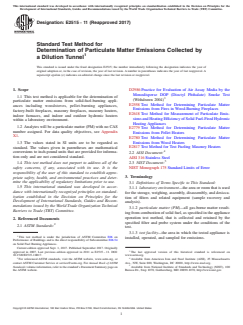
configuration is shown in Fig. 1 and consists of the following
sampling trains are operated simultaneously at a sample flow
components.
rate not to exceed 0.007 m /min (0.25 cfm⁄min). The total
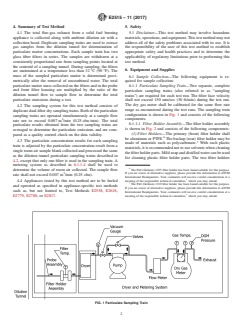
6.1.1.1 Filter Holder Assembly—The filter holder assembly
particulate results obtained from the two sampling trains are
is shown in Fig. 2 and consists of the following components:
averaged to determine the particulate emissions and are com-
(1) Filter Holders—The primary (front) filter holder shall
pared as a quality control check on the data validity.
be aluminum or PTFE. The backup (rear) filter holder may be
4.3 The particulate concentration results for each sampling 7
made of materials such as polycarbonate. With such plastic
train is adjusted by the particulate concentration result from a
materials, it is recommended not to use solvents when cleaning
single room air sample blank collected and processed the same
thefilterholderparts.Mildsoapanddistilledwatercanbeused
as the dilution tunnel particulate sampling trains described in
for cleaning plastic filter holder parts. The two filter holders
4.2, except that only one filter is used in the sampling train. A
metering system as described in 6.1.1.4 shall be used to
The Pall (Gelman) 1235 filter holder has been found suitable for this purpose.
determine the volume of room air collected. The sample flow
If you are aware of alternative suppliers, please provide this information to ASTM
rate shall not exceed 0.007 m /min (0.25 cfm).
International Headquarters. Your comments will receive careful consideration at a
meeting of the responsible technical committee, which you may attend.
4.4 Appliances tested by this test method are to be fueled
The Pall (Gelman) 1119 filter holder has been found suitable for this purpose.
and operated as specified in appliance-specific test methods
If you are aware of alternative suppliers, please provide this information to ASTM
such as, but not limited to, Test Methods E2558, E2618,
International Headquarters. Your comments will receive careful consideration at a
E2779, E2780,or E2817. meeting of the responsible technical committee, which you may attend.
FIG. 1 Particulate Sampling Train
E2515 − 11 (2017)
FIG. 2 Filter Holder Assembly
shallbeplacedinserieswiththebackupfilterholderlocated25 capable of measuring the total volume sampled to within 6
to 100 mm (1 to 4 in.) downstream from the primary filter 2 % of the measured value, and related equipment, as shown in
holder. The filter holders shall be capable of holding a filter Fig. 1.
with 47 mm diameter. The holder design shall provide a
6.1.2 Barometer—Mercury, aneroid, or other barometer ca-
positive seal against leakage from the outside or around the
pable of measuring atmospheric pressure with an accuracy of
filters. The use of a porous glass or ceramic frit to support the
62.5 mm Hg (0.1 in.). Must meet calibration requirements
first (front) filter is not allowed. Any type of filter support is
specified in 8.3.
allowed for the second (rear) filter.
NOTE 1—The barometric pressure reading may be obtained from a
(2) Probe Assemblies—Probe assemblies shall consist of
nearby National Weather Service station. In this case, the station value
the following components assembled to provide a leak-tight
(which is the absolute barometric pressure) shall be requested and an
seal:
adjustment for elevation differences between the weather station and
(a) Front half of front filter holder as specified in sampling point shall be made at a rate of minus 2.5 mm Hg (0.1 in.) per
30 m (100 ft) elevation increase or plus 2.5 mm Hg (0.1 in) per 30 m (100
6.1.1.1(1).
ft) elevation decrease.
(b) Probe—The probe shall be constructed from seamless
stainless steel (that is, AISI 316 or grade more corrosion 6.1.3 Dilution Tunnel Gas Temperature Measurement—A
resistant) 6.35 mm ( ⁄4 in.) outside diameter (O.D.) and 0.30 to temperature sensor capable of measuring with an accuracy of
0.45 m (12 to 18 in.) in length, with a wall thickness such that 2.2 °C (4.0 °F) or 0.75 % of the reading, which ever is greater
the total weight of the probe and front filter housing can be and meeting the calibration requirements specified in 8.2.
weighed to an accuracy of 0.1 mg.
6.1.4 Pitot Tube—A standard Pitot tube designed according
(3) Filters in accordance with 7.1.1.
to the criteria given in 6.1.4.1 shall be used to measure flow in
(4) Filter Gaskets.
the dilution tunnel. Pitot tubes will have an assumed Pitot
6.1.1.2 Filter Temperature Monitoring System—A tempera-
coefficient of 0.99 and be designed according to these specifi-
ture sensor capable of measuring with an accuracy of 2.2 °C
cations:
(4.0 °F) or 0.75 % of the reading, which ever is greater and
6.1.4.1 Standard Pitot design (see Appendix X2 for an
meeting the calibration requirements specified in 8.2. The
example);
sensor shall be installed at the exit side of the front filter holder
6.1.4.2 Hemispherical, ellipsoidal, or conical tip;
so that the sensing tip of the temperature sensor is in direct
6.1.4.3 A minimum of six diameters straight run (based
contact with the sample gas as shown in Fig. 2.
upon D, the external diameter of the tube) between the tip and
6.1.1.3 Dryer—Anysystemcapableofremovingwaterfrom
the static pressure holes;
the sample gas to less than 1.5 % moisture (volume percent)
6.1.4.4 Aminimum of eight diameters straight run between
prior to the metering system. The system shall include a
the static pressure holes and the centerline of the external tube,
temperature sensor for demonstrating that sample gas tempera-
following the 90° bend;
ture exiting the dryer is less than 27 °C (80 °F). See Fig. 1 for
6.1.4.5 Static pressure holes of equal size (approximately
location of the dryer.
0.1 D), equally spaced in a piezometer ring configuration; and
6.1.1.4 Metering System—The metering system shall in-
6.1.4.6 90° bend, with curved or mitered junction.
clude a vacuum gauge, leak-free pump, temperature sensors
capable of measuring with an accuracy of 2.2 °C (4.0 °F) or 6.1.5 Differential Pressure Gauge—An inclined manometer
0.75 % of the reading, which ever is greater and meeting the or equivalent shall be readable to the nearest 0.127 mm (0.005
calibration requirements specified in 8.2, gas metering system in.) water for ∆p values greater than 2.54 mm (0.10 in.) water,
E2515 − 11 (2017)
and to the nearest 0.025 mm (0.001 in.) water for ∆p values each other in the dilution tunnel sampling section. These
less than 2.54 mm (0.10 in.) water. velocity traverse points shall be of sufficient size to allow entry
6.1.6 Dilution Tunnel—The dilution tunnel apparatus is ofthestandardPitottubebutshallnotexceed12.7mm(0.5in.)
shown in Fig. 3 and Fig. 4 and consists of the following diameter. Two particulate sample extraction ports shall be
components: located at least four tunnel diameters downstream of the
6.1.6.1 Hood—Constructed of steel. Hood shall be large velocity traverse ports and at least two tunnel diameters
enough to capture all of the flue-gas flow exiting the top of the upstream from the next downstream flow disturbance. These
appliance chimney. The dilution tunnel hood shall be conical sample extraction ports shall be of sufficient size to allow entry
with a minimum diameter at the entrance of at least four times ofthesamplingprobes.Thetotallengthofductfromthecenter
the tunnel diameter. The height of the conical section shall be of the outlet of the hood to the sampling ports shall not exceed
at least three tunnel diameters. A skirt can be used around the 9.1 m (30 ft). (See Fig. 3.)
inlet to the conical section to insure capture of the flue-gas
6.1.6.4 Blower—Squirrel cage or other type of fan capable
exhaust as shown in 9.2.4 as long as the requirements of 9.2.3
of gathering and moving all flue-gases and entrained dilution
are met.The outlet of the conical section shall be sized to mate
air from the dilution tunnel extraction hood to the dilution
with the mixing section of the dilution tunnel. (See Fig. 3 and
tunnel exhaust having sufficient flow to maintain dilution rate
Fig. 4.)
specifications in Section 9. (See 9.2.)
6.1.6.2 90° Elbows—Steel 90° elbows should be used for
6.1.7 Test Facility Temperature Monitor—A thermocouple
connecting mixing section, the sampling section, and the
capable of measuring with an accuracy of 2.2 °C (4.0 °F) or
optional damper assembly. There shall be at least two 90°
0.75 % of the reading, which ever is greater, located centrally
elbows upstream of the sampling section. (See Fig. 3 and Fig.
in a vertically oriented 150 mm (6 in.) long, 50 mm (2 in.)
4.) The last elbow before the sampling section begins shall be
diameter pipe shield that is open at both ends. Must meet the
of the same diameter as the sampling section straight ducting.
calibration requirements specified in 8.2.
6.1.6.3 Straight Duct—Straight sections of steel ducting
6.1.8 Anemometer—Device capable of detecting air veloci-
shallbeusedtoconstructboththemixingsectionandsampling
ties less than 0.10 m/sec (20 ft/min) and used for measuring air
section of the dilution tunnel apparatus. The mixing section is
velocities in the test facility near the test appliance.
considered to be the ducting that is upstream of the last elbow
6.2 Sample Analysis—The following items are required for
before the sampling section begins. The mixing section and
sample analysis:
sampling section may be different diameters, but the sampling
section shall have a consistent diameter over the its full length. 6.2.1 Desiccator—Any airtight cabinet or other container
(See Fig. 4.) Two velocity traverse ports shall be located at containing desiccant to remove moisture from the probes, front
least eight tunnel diameters downstream of the last flow filter housings, filters, and filter gaskets prior to and after
disturbance(forexample,a90°elbow)andpositionedat90°to testing;
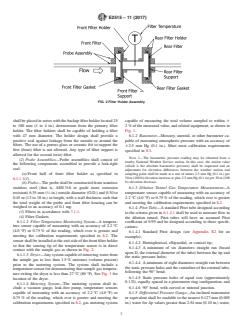
FIG. 3 Steel-Constructed Dilution Tunnel Apparatus
E2515 − 11 (2017)
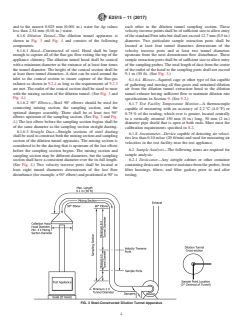
FIG. 4 Mixing Section and Sampling Section with Different Diameters
6.2.2 Analytical Balance—With a resolution 0.1 mg or 8.1.1 Sampling system volume metering equipment shall be
better. Must meet the calibration requirements specified in 8.4; calibrated before initial use and at least semi-annually there-
6.2.3 Hygrometer or Sling Psychrometer—To measure the after. Calibration shall be traceable to NIST and demonstrate a
relative humidity of the laboratory environment with a resolu- maximum uncertainty of 61.0 % of measured volume at the
tion of 2 % RH or better; and operating conditions (flow rate and total volume) used in the
6.2.4 Temperature Sensor—To measure the temperature of test.
the laboratory environment with an accuracy of 2.2 °C (4.0 °F)
8.2 Temperature Sensors—Temperature measuring equip-
or0.75 %ofthereading,whicheverisgreater.andmeetingthe
ment shall be calibrated before initial use and at least semian-
calibration requirements specified in 8.2.
nually thereafter. Calibrations shall be in compliance with
NIST Monograph 175.
7. Reagents and Standards
8.3 Barometer—Calibrate against a mercury barometer be-
7.1 Sample Collection—Thefollowingreagentsarerequired
fore the first certification test and at least semi-annually,
for sample collection:
thereafter. If a mercury barometer is used, no calibration is
7.1.1 Filters—Glass fiber filters with a diameter of 47 mm
necessary. Follow the manufacturer’s instructions for opera-
without organic binder, exhibiting at least 99.95 % efficiency
tion. Barometers shall have an uncertainty of 61.27 mm
(<0.05 % penetration) on 0.3-micron dioctyl phthalate smoke
(0.05 in.) of mercury or better.
particles in accordance with Practice D2986. Manufacturer’s
quality control test data are sufficient for validation of effi-
8.4 Analytical Balance—Perform a multipoint NIST trace-
ciency.
able calibration (at least five points spanning the operational
range) of the analytical balance before the first test and
7.2 Sample Analysis—One reagent is required for the
semiannually, thereafter. Before each test, audit the balance by
sample analysis:
weighing at least one calibration weight that corresponds to 50
7.2.1 Desiccant—Desiccant shall be capable of drying air to
to 150 % of the weight of one filter. If the scale cannot
a moisture content of 0.005 g/L or less. Calcium sulfate
reproduce the value of the calibration weight to within 0.1 mg,
(CaSO ) and molecular sieve desiccants are suitable.
conduct the multipoint calibration before use.
7.3 ProbeAssemblyCleaning—Acetoneisusedtocleanand
remove moisture from the probe assembly before pretest
9. Procedures
desiccation and to remove particulate material that has accu-
mulated on the outside of the probe during the test run prior to 9.1 Dilution Tunnel Assembly and Cleaning—A schematic
of a dilution tunnel is shown in Fig. 3. The dilution tunnel
post-test desiccation.
requirements and other features are described in 6.1.6. As-
8. Calibration and Standardization
semble the dilution tunnel, sealing joints, and seams to prevent
NOTE 2—Maintain a laboratory record of all calibrations.
air leakage. Clean the dilution tunnel with an appropriately
8.1 Volume Metering System: sized wire chimney brush before each test run.
9.2 Dilution Tunnel:
GelmanA/E 61631 andWhatman 1841-047 fllters have been found acceptable
9.2.1 Size—The dilution tunnel diameter shall be sized such
for this purpose. If you are aware of alternative suppliers, please provide this
that the flow velocity as measured as shown in 9.3 and as
information to ASTM International Headquarters. Your comments will receive
establishedin9.2.2shallresultinaminimumof4.1m/sec(800
careful consideration at a meeting of the responsible technical committee, which
you may attend. ft/min) when the velocity pressure is measured to an accuracy
E2515 − 11 (2017)
of 60.025 mm (0.001 in.) water or a minimum of 7.6 m/sec any gap between the velocity traverse port in the dilution
(1500 ft/min) when the velocity pressure is measured to an tunnel and the Pitot tube and seal the unused velocity traverse
accuracy of 60.127 mm (0.005 in.) water. port to prevent any air leakage into the dilution tunnel. Adjust
the damper or similar device on the blower inlet until the
9.2.2 Flow Rate—The dilution tunnel flow rate shall be
velocity indicated by the Pitot tube indicates that a dilution
selected to provide sufficient flow to collect and fully entrain
tunnel flow rate within the allowable range as shown in 9.2 has
all flue products during the test and provide sufficient velocity
been achieved. Continue to read the velocity head (D ) and
for accurate flow measurement. For closed combustion appli- p
temperature until the velocity has remained constant (less than
ances tunnel flow rates in the range of 0.07 to 0.24 scm/sec
5 % change) for 1 min. Once a constant velocity is obtained at
(150to500SCFM)havebeenfoundtobeacceptable.Foropen
the center of the dilution tunnel, perform a velocity traverse as
combustion appliances, such as fireplaces, tunnel flow rates in
specified in 9.3.2. Seal any gap between the velocity traverse
the range of 0.24 to 0.71 scm/sec (500 to 1500 SCFM) have
portinthedilutiontunnelandthePitottubeandsealtheunused
been found to be acceptable. The maximum tunnel flow rate
velocity traverse port to prevent any air leakage into the
shall not exceed five times the minimum flow rate determined
dilution tunnel.
as shown in 9.2.4.
9.3.1.1 Ensure that the proper differential pressure gauge is
NOTE 3—Optimum accuracy is achieved when the dilution tunnel flow
being used for the range of∆p values encountered (see Section
rate is set so that the ratio of sample flow to tunnel flow is maximized.
6.1.5).Ifitisnecessarytochangetoamoresensitivegauge,do
9.2.3 Induced Draft Determination—Prepare the test appli-
so, and re-measure the ∆p and temperature readings at each
ance in accordance with appropriate test method. Locate the traverse point. Conduct a post-test leak-check (mandatory), as
dilution tunnel collection hood over the appliance chimney
described in 9.6.5, to validate the traverse. Measure the∆p and
exhaust. Operate the dilution tunnel blower at the flow rate to tunnel temperature at each traverse point and record the
be used during the test run. Measure the static pressure
readings.
imposed on the appliance by the dilution tunnel (that is, the
9.3.1.2 Calculate the total gas flow rate using calculations
difference in static pressure measured with and without the
contained in Section 11, using the velocity traverse points in
dilution tunnel operating) at a location no greater than 0.3 m
accordance with 9.3.2, excluding the center readings. Verify
(1 ft) above the flue connector.Adjust the distance between the
that the flow rate is equal to the target flow; if not, readjust the
top of the test appliance chimney and the dilution tunnel hood
damper, and repeat the velocity traverse.
so that the dilution tunnel induced static pressure is less than
9.3.2 Velocity Traverse Measurements—Measure and record
1.25 Pa (0.005 in. water). Have no fire in the appliance, open
the velocity head and temperature at the traverse points
and close any doors, and open fully the flue damper if
specified as follows:
applicable during this check and adjustment.
9.3.2.1 Fordilutiontunneldiametersequaltoorgreaterthan
9.2.4 Smoke Capture—Prior to any test run, burn the appli- 0.3 m (12 in.) locate the traverse points on two perpendicular
anceatahighburnrateusingakindlingfuelloadandspecified
diameters according to the table in and the example shown in
test load, operate the dilution tunnel, and visually monitor the Fig. 5. For dilution tunnel diameters less than 0.3 m (12 in.)
appliance chimney exhaust. Determine the minimum dilution
locate the traverse points on two perpendicular diameters
tunnel flow rate needed to insure that 100 % of the chimney according to the table and example shown in Fig. 6.
effluent is collected by the dilution tunnel collection hood. If
9.3.2.2 For dilution tunnel diameters equal to or less than
theappliancehasdoors,operatetheappliancewiththedoorsin
0.61 m (24 in.), no traverse points shall be located within
all positions specified in the appliance owner’s manual. It may
1.3 cm (0.50 in.) of the tunnel walls.
benecessarytoartificiallyinjectsmoke(usingsmokepelletsor
9.4 Pretest Preparation—The sampling equipment should
smoke generator) into the area around dilution tunnel collec-
be maintained according to good laboratory practices and
tion hood to provide a better visual check that no exhaust gases
manufacturer’s instructions where applicable.
are escaping. If less than 100 % of the chimney effluent is
9.4.1 Check filters visually against light for irregularities,
collected, adjust the distance between the test appliance chim-
flaws, or pinhole leaks. Label the filters on the back side near
ney outlet and the dilution tunnel hood or increase the dilution
the edge using numbering machine ink.
tunnel flow rate just to the point where no visible effluent is
9.4.2 Rinse the probe assemblies with acetone to clean and
escaping, or both. With the Pitot tube located at the center of
remove moisture before desiccating.
the dilution tunnel, record this dilution tunnel velocity head
9.4.3 Marktheprobeassembliesinsuchawaythateachcan
(D ), temperature and static pressure.
p
be identified during use.
9.3 Velocity Measurements—Prior to ignition, conduct a
9.4.4 Desiccate the filters, filter gaskets, and the probe
velocity traverse in the dilution tunnel to determine the Pitot
assemblies at 20 6 5.6 °C (68 6 10 °F) and ambient pressure
Factor (F ). The Pitot tube shall be placed at the center of the
for at least 24 h. Weigh each component at intervals of not less
p
tunnel during the test run.
than 6 h until a constant weight is achieved. Record results to
9.3.1 Velocity Traverse—Measure the diameter of the dilu- thenearest0.1mg.Duringeachweighing,theperiodforwhich
tion tunnel at the velocity traverse port location through both the components are exposed to the laboratory environment
ports. Calculate the dilution tunnel area using the average of shall be less than 2 min. The filter gaskets can be weighed in
the two diameters. Place the standard Pitot tube at the center of sets to be used in each filter holder and kept in an identified
the dilution tunnel in either of the velocity traverse ports. Seal container at all times except during sampling and weighing.
E2515 − 11 (2017)
FIG. 5 Dilution Tunnel Diameter Equal To or Greater Than 0.3 m (12 in.) Traverse Point Table
FIG. 6 Dilution Tunnel Diameter Less Than 0.3 m (12 in.) Traverse Point Table
The filter holder assembly after the front filter need not be sure that each filter is properly centered and that the identified
desiccated or weighed.
filter gasket is properly placed so as to prevent the sample gas
stream from circumventing the filter. Mark the probes by a
NOTE 4—For the purposes of this section, the term constant weight
method that will not affect the tare weight to denote the proper
means a difference of no more than 0.2 mg between two consecutive
weighings, with not less than6hof desiccation time between weighings. distance for insertion into the tunnel. Set up the filter holder
assembliesasshowninFig.2andthesamplingtrainsasshown
9.5 Preparation of the Filter Holder Assemblies—During
in Fig. 1.
preparation and assembly of the filter holder assemblies, keep
all openings where contamination can occur covered until just 9.5.2 Assemble the Room Air Blank Filter Holder
Assembly—Using tweezers or clean disposable surgical gloves,
prior to assembly or until sampling is about to begin.
9.5.1 Assemble the Filter Holder Assemblies—Using twee- place one labeled and weighed filter in the single filter holder.
zers or clean disposable surgical gloves, place one labeled and Besurethatthefilterisproperlycenteredandthattheidentified
weighed filter in each of the front and back filter holders. Be filter gasket is properly placed so as to prevent the sample gas
E2515 − 11 (2017)
NOTE5—Alowervacuummaybeused,providedthatitisnotexceeded
stream from circumventing the filter. Set up the room air blank
during the test. Start the pump with the bypass valve fully open and the
filter holder assembly as shown in Fig. 7 and the dryer and
coarse adjust valve completely closed. Partially open the coarse adjust
metering system as shown in Fig. 1. The inlet to the room air
valve, and slowly close the bypass valve until the desired vacuum is
blank filter holder assembly shall be located in the same space
reached. If the desired vacuum is exceeded, either leak-check at this
within the test facility as the test appliance and shall be within
higher vacuum, or end the leak check and start over.
3.1 m (10 ft) of the dilution tunnel hood entrance.
NOTE 6—If the leakage rate is above acceptable limit, find and repair
the leakage source and leak test again. Repeat until the leakage rate is
9.6 Leak-Check Procedures:
acceptable. When the leak check is completed, first slowly remove the
9.6.1 Leak-Check of Metering System Shown in Fig.
plug from the inlet to the probe, and immediately turn off the vacuum
1—That portion of the sampling train from the pump to the dry
pump.
gasmeteroutlet(ororificemeter,ifused)shallbeleak-checked
9.6.4.2 Pitot Tube Lines:
prior to initial use and at least semi-annually thereafter.
(1) A pretest leak-check of Pitot lines using the following
Leakage after the pump will result in less volume being
procedure is recommended: (a) blow through the Pitot impact
recorded than is actually sampled. The following procedure is
opening until at least 7.6 cm (3.0 in.) water velocity head
suggested (see Fig. 1): Close the main valve before the pump.
registers on the manometer; then, close off the impact opening.
Attach a rubber tube to the dry gas meter outlet piping,
The pressure shall remain st
...