

ASTM D3685/D3685M-13(2021)
(Test Method)Standard Test Methods for Sampling and Determination of Particulate Matter in Stack Gases
General Information
- Abstract
SIGNIFICANCE AND USE
5.1 The measurement of particulate matter and collected residue emission rates is an important test widely used in the practice of air pollution control. Particulate matter measurements after control devices are necessary to determine total emission rates to the atmosphere.
5.1.1 These measurements, when approved by federal and state agencies, are often required for the purpose of determining compliance with regulations and statutes.
5.1.2 The measurements made before and after control devices are often necessary as a means of demonstrating conformance with contractual performance specifications.
5.2 The collected residue obtained with these test methods is also important in characterizing stack emissions. However, the utility of these data is limited unless a chemical analysis of the collected residue is performed.
SCOPE
1.1 These test methods describe procedures to determine the mass emission rates of particulate matter and collected residue in gaseous streams by in-stack test methods (Test Method A) or out-of-stack test methods (Test Method B).
1.2 These test methods are suitable for measuring particulate matter and collected residue concentrations.
1.3 These test methods include a description of equipment and procedures to be used for obtaining samples from effluent ducts and stacks, a description of equipment and procedures for laboratory analysis, and a description of procedures for calculating results.
1.4 These test methods are applicable for sampling particulate matter and collected residue in wet (Test Method A or B) or dry (Test Method A) streams before and after particulate matter control equipment, and for determination of control device particulate matter collection efficiency.
1.5 These test methods are also applicable for determining compliance with regulations and statutes limiting particulate matter existing in stack gases when approved by federal or state agencies.
1.6 The particulate matter and collected residue samples collected by these test methods may be used for subsequent size and chemical analysis.
1.7 These test methods describe the instrumentation, equipment, and operational procedures, including site selection, necessary for sampling and determination of particulate mass emissions. These test methods also include procedures for collection and gravimetric determination of residues collected in an impinger-condenser train. The sampling and analysis of particulate matter may be performed independently or simultaneously with the determination of collected residue.
1.8 These test methods provide for the use of optional filter designs and filter material as necessary to accommodate the wide range of particulate matter loadings to which the test methods are applicable.
1.9 Stack temperatures limitation for Test Method A is approximately 400°C (752°F) and for Test Method B is 815°C (1500°F).
1.10 A known limitation of these test methods concerns the use of collected residue data. Since some collected residues can be formed in the sample train by chemical reaction in addition to condensation, these data should not be used without prior characterization (see 4.4.1).
1.10.1 A second limitation concerns the use of the test methods for sampling gas streams containing fluoride, or ammonia or calcium compounds in the presence of sulfur dioxide and other reactive species having the potential to react within the sample train.
1.10.2 A suspected but unverified limitation of these test methods concerns the possible vaporization and loss of collected particulate organic matter during a sampling run.
1.11 The values stated in either SI units or inch-pound units are to be regarded separately as standard within the text. The inch-pound units are shown in parentheses. The values stated in each system are not exact equivalents; therefore each system shall be used independently of the other. Combining values from the two systems may result in ...
- Status
- Published
- Publication Date
- 31-Aug-2021
- Technical Committee
- D22 - Air Quality
- Drafting Committee
- D22.03 - Ambient Atmospheres and Source Emissions
Overview
ASTM D3685/D3685M-13(2021), published by ASTM International, establishes standardized test methods for the sampling and determination of particulate matter in stack gases. These test methods are crucial for air pollution control practices, especially for industries and facilities that operate emissions control equipment and are subject to environmental regulations. By providing procedures for accurately sampling and quantifying particulate matter and collected residues in gaseous emissions, the standard helps stakeholders demonstrate regulatory compliance and monitor the efficiency of emission control systems.
Key Topics
- Particulate Matter Sampling: Details in-stack (Test Method A) and out-of-stack (Test Method B) techniques for capturing particulate matter from stack gases.
- Collected Residue Determination: Procedures to quantify residue caught within sample trains, important for further chemical analysis and characterization of emissions.
- Application Before and After Control Devices: Enables effective measurement both upstream and downstream of control equipment to evaluate and optimize performance.
- Instrumentation and Equipment: Specifies requirements for sampling trains, probes, filters, meters, impingers, and related laboratory and field devices.
- Gravimetric and Volumetric Analysis: Outlines methods for sample collection, gravimetric determination, and calculation of emission rates.
- Limitations and Interferences: Discusses recognized limitations related to specific gas-stream compositions and the formation of artifacts during sampling.
Applications
- Regulatory Compliance Monitoring: Essential for industries subject to federal or state air quality regulations, as measurements using these test methods can be accepted by regulatory authorities to confirm that emission limits for particulate matter are met.
- Control Device Efficiency Testing: Enables facilities to demonstrate the effectiveness of particulate control devices, such as filters, scrubbers, or electrostatic precipitators, by comparing particulate loadings before and after treatment.
- Contractual Performance Verification: Supports contract requirements by providing objective measurements that equipment suppliers or operators may need to fulfill when delivering or operating emission control systems.
- Stack Emission Characterization: Facilitates detailed analysis of particulate and residue samples, allowing for further chemical and size distribution studies important for source apportionment and impact assessment.
- Process Optimization: Regular monitoring according to ASTM D3685/D3685M can help industry professionals optimize operational practices and maintenance schedules by tracking emission trends over time.
Related Standards
- ASTM D1356: Terminology Relating to Sampling and Analysis of Atmospheres
- ASTM D3154: Test Method for Average Velocity in a Duct (Pitot Tube Method)
- ASTM D3631: Test Methods for Measuring Surface Atmospheric Pressure
- ASTM D2986: Practice for Evaluation of Air Assay Media (withdrawn but referenced for historical background)
- ASTM D1193: Specification for Reagent Water
These referenced ASTM standards provide definitions, supporting test methods, and specifications for materials needed to fully implement D3685/D3685M requirements.
Keywords: ASTM D3685, stack gas sampling, particulate matter determination, collected residue, emission measurement, air pollution control, stack gas analysis, regulatory compliance, particulate emission rates, gravimetric analysis, emission control devices, air quality standards.
Relations
- Effective Date
- 01-Sep-2020
- Effective Date
- 15-Mar-2020
- Effective Date
- 01-Apr-2017
- Effective Date
- 01-Mar-2017
- Effective Date
- 01-Sep-2016
- Effective Date
- 15-Oct-2015
- Effective Date
- 01-Jul-2015
- Effective Date
- 01-Dec-2014
- Effective Date
- 01-May-2014
- Effective Date
- 15-Jan-2014
- Effective Date
- 01-May-2013
- Effective Date
- 01-Oct-2011
- Effective Date
- 01-May-2011
- Effective Date
- 01-Nov-2010
- Effective Date
- 01-Apr-2010
Get Certified
Connect with accredited certification bodies for this standard

CIS Institut d.o.o.
Personal Protective Equipment (PPE) certification body. Notified Body NB-2890 for EU Regulation 2016/425 PPE.

Kiwa BDA Testing
Building and construction product certification.
Kmetijski inštitut Slovenije
Agricultural Institute of Slovenia. Soil testing, plant health, agricultural product analysis.
Sponsored listings
Frequently Asked Questions
ASTM D3685/D3685M-13(2021) is a standard published by ASTM International. Its full title is "Standard Test Methods for Sampling and Determination of Particulate Matter in Stack Gases". This standard covers: SIGNIFICANCE AND USE 5.1 The measurement of particulate matter and collected residue emission rates is an important test widely used in the practice of air pollution control. Particulate matter measurements after control devices are necessary to determine total emission rates to the atmosphere. 5.1.1 These measurements, when approved by federal and state agencies, are often required for the purpose of determining compliance with regulations and statutes. 5.1.2 The measurements made before and after control devices are often necessary as a means of demonstrating conformance with contractual performance specifications. 5.2 The collected residue obtained with these test methods is also important in characterizing stack emissions. However, the utility of these data is limited unless a chemical analysis of the collected residue is performed. SCOPE 1.1 These test methods describe procedures to determine the mass emission rates of particulate matter and collected residue in gaseous streams by in-stack test methods (Test Method A) or out-of-stack test methods (Test Method B). 1.2 These test methods are suitable for measuring particulate matter and collected residue concentrations. 1.3 These test methods include a description of equipment and procedures to be used for obtaining samples from effluent ducts and stacks, a description of equipment and procedures for laboratory analysis, and a description of procedures for calculating results. 1.4 These test methods are applicable for sampling particulate matter and collected residue in wet (Test Method A or B) or dry (Test Method A) streams before and after particulate matter control equipment, and for determination of control device particulate matter collection efficiency. 1.5 These test methods are also applicable for determining compliance with regulations and statutes limiting particulate matter existing in stack gases when approved by federal or state agencies. 1.6 The particulate matter and collected residue samples collected by these test methods may be used for subsequent size and chemical analysis. 1.7 These test methods describe the instrumentation, equipment, and operational procedures, including site selection, necessary for sampling and determination of particulate mass emissions. These test methods also include procedures for collection and gravimetric determination of residues collected in an impinger-condenser train. The sampling and analysis of particulate matter may be performed independently or simultaneously with the determination of collected residue. 1.8 These test methods provide for the use of optional filter designs and filter material as necessary to accommodate the wide range of particulate matter loadings to which the test methods are applicable. 1.9 Stack temperatures limitation for Test Method A is approximately 400°C (752°F) and for Test Method B is 815°C (1500°F). 1.10 A known limitation of these test methods concerns the use of collected residue data. Since some collected residues can be formed in the sample train by chemical reaction in addition to condensation, these data should not be used without prior characterization (see 4.4.1). 1.10.1 A second limitation concerns the use of the test methods for sampling gas streams containing fluoride, or ammonia or calcium compounds in the presence of sulfur dioxide and other reactive species having the potential to react within the sample train. 1.10.2 A suspected but unverified limitation of these test methods concerns the possible vaporization and loss of collected particulate organic matter during a sampling run. 1.11 The values stated in either SI units or inch-pound units are to be regarded separately as standard within the text. The inch-pound units are shown in parentheses. The values stated in each system are not exact equivalents; therefore each system shall be used independently of the other. Combining values from the two systems may result in ...
SIGNIFICANCE AND USE 5.1 The measurement of particulate matter and collected residue emission rates is an important test widely used in the practice of air pollution control. Particulate matter measurements after control devices are necessary to determine total emission rates to the atmosphere. 5.1.1 These measurements, when approved by federal and state agencies, are often required for the purpose of determining compliance with regulations and statutes. 5.1.2 The measurements made before and after control devices are often necessary as a means of demonstrating conformance with contractual performance specifications. 5.2 The collected residue obtained with these test methods is also important in characterizing stack emissions. However, the utility of these data is limited unless a chemical analysis of the collected residue is performed. SCOPE 1.1 These test methods describe procedures to determine the mass emission rates of particulate matter and collected residue in gaseous streams by in-stack test methods (Test Method A) or out-of-stack test methods (Test Method B). 1.2 These test methods are suitable for measuring particulate matter and collected residue concentrations. 1.3 These test methods include a description of equipment and procedures to be used for obtaining samples from effluent ducts and stacks, a description of equipment and procedures for laboratory analysis, and a description of procedures for calculating results. 1.4 These test methods are applicable for sampling particulate matter and collected residue in wet (Test Method A or B) or dry (Test Method A) streams before and after particulate matter control equipment, and for determination of control device particulate matter collection efficiency. 1.5 These test methods are also applicable for determining compliance with regulations and statutes limiting particulate matter existing in stack gases when approved by federal or state agencies. 1.6 The particulate matter and collected residue samples collected by these test methods may be used for subsequent size and chemical analysis. 1.7 These test methods describe the instrumentation, equipment, and operational procedures, including site selection, necessary for sampling and determination of particulate mass emissions. These test methods also include procedures for collection and gravimetric determination of residues collected in an impinger-condenser train. The sampling and analysis of particulate matter may be performed independently or simultaneously with the determination of collected residue. 1.8 These test methods provide for the use of optional filter designs and filter material as necessary to accommodate the wide range of particulate matter loadings to which the test methods are applicable. 1.9 Stack temperatures limitation for Test Method A is approximately 400°C (752°F) and for Test Method B is 815°C (1500°F). 1.10 A known limitation of these test methods concerns the use of collected residue data. Since some collected residues can be formed in the sample train by chemical reaction in addition to condensation, these data should not be used without prior characterization (see 4.4.1). 1.10.1 A second limitation concerns the use of the test methods for sampling gas streams containing fluoride, or ammonia or calcium compounds in the presence of sulfur dioxide and other reactive species having the potential to react within the sample train. 1.10.2 A suspected but unverified limitation of these test methods concerns the possible vaporization and loss of collected particulate organic matter during a sampling run. 1.11 The values stated in either SI units or inch-pound units are to be regarded separately as standard within the text. The inch-pound units are shown in parentheses. The values stated in each system are not exact equivalents; therefore each system shall be used independently of the other. Combining values from the two systems may result in ...
ASTM D3685/D3685M-13(2021) is classified under the following ICS (International Classification for Standards) categories: 13.040.40 - Stationary source emissions. The ICS classification helps identify the subject area and facilitates finding related standards.
ASTM D3685/D3685M-13(2021) has the following relationships with other standards: It is inter standard links to ASTM D1356-20a, ASTM D1356-20, ASTM D1071-17, ASTM D3631-99(2017), ASTM D3796-09(2016), ASTM D1356-15a, ASTM D1356-15, ASTM D1356-14b, ASTM D1356-14a, ASTM D1356-14, ASTM E1-13, ASTM D3631-99(2011), ASTM E2251-11, ASTM E2251-10, ASTM D1356-05(2010). Understanding these relationships helps ensure you are using the most current and applicable version of the standard.
ASTM D3685/D3685M-13(2021) is available in PDF format for immediate download after purchase. The document can be added to your cart and obtained through the secure checkout process. Digital delivery ensures instant access to the complete standard document.
Standards Content (Sample)
This international standard was developed in accordance with internationally recognized principles on standardization established in the Decision on Principles for the
Development of International Standards, Guides and Recommendations issued by the World Trade Organization Technical Barriers to Trade (TBT) Committee.
Designation: D3685/D3685M − 13 (Reapproved 2021)
Standard Test Methods for
Sampling and Determination of Particulate Matter in Stack
Gases
This standard is issued under the fixed designation D3685/D3685M; the number immediately following the designation indicates the
year of original adoption or, in the case of revision, the year of last revision. A number in parentheses indicates the year of last
reapproval. A superscript epsilon (´) indicates an editorial change since the last revision or reapproval.
1. Scope analysis of particulate matter may be performed independently
or simultaneously with the determination of collected residue.
1.1 Thesetestmethodsdescribeprocedurestodeterminethe
mass emission rates of particulate matter and collected residue
1.8 These test methods provide for the use of optional filter
ingaseousstreamsbyin-stacktestmethods(TestMethodA)or
designs and filter material as necessary to accommodate the
out-of-stack test methods (Test Method B).
wide range of particulate matter loadings to which the test
methods are applicable.
1.2 These test methods are suitable for measuring particu-
late matter and collected residue concentrations.
1.9 Stack temperatures limitation for Test Method A is
approximately 400°C (752°F) and for Test Method B is 815°C
1.3 These test methods include a description of equipment
(1500°F).
and procedures to be used for obtaining samples from effluent
ductsandstacks,adescriptionofequipmentandproceduresfor
1.10 Aknown limitation of these test methods concerns the
laboratory analysis, and a description of procedures for calcu-
useofcollectedresiduedata.Sincesomecollectedresiduescan
lating results.
be formed in the sample train by chemical reaction in addition
1.4 These test methods are applicable for sampling particu- to condensation, these data should not be used without prior
late matter and collected residue in wet (Test Method A or B)
characterization (see 4.4.1).
or dry (Test Method A) streams before and after particulate
1.10.1 A second limitation concerns the use of the test
matter control equipment, and for determination of control
methods for sampling gas streams containing fluoride, or
device particulate matter collection efficiency.
ammonia or calcium compounds in the presence of sulfur
dioxide and other reactive species having the potential to react
1.5 These test methods are also applicable for determining
within the sample train.
compliance with regulations and statutes limiting particulate
matter existing in stack gases when approved by federal or 1.10.2 A suspected but unverified limitation of these test
state agencies. methods concerns the possible vaporization and loss of col-
lected particulate organic matter during a sampling run.
1.6 The particulate matter and collected residue samples
collected by these test methods may be used for subsequent
1.11 The values stated in either SI units or inch-pound units
size and chemical analysis.
are to be regarded separately as standard within the text. The
inch-pound units are shown in parentheses. The values stated
1.7 These test methods describe the instrumentation,
ineachsystemarenotexactequivalents;thereforeeachsystem
equipment, and operational procedures, including site
shall be used independently of the other. Combining values
selection,necessaryforsamplinganddeterminationofparticu-
from the two systems may result in nonconformance to this
late mass emissions. These test methods also include proce-
standard.
dures for collection and gravimetric determination of residues
collected in an impinger-condenser train. The sampling and
1.12 This standard does not purport to address all of the
safety concerns, if any, associated with its use. It is the
responsibility of the user of this standard to establish appro-
1 priate safety, health, and environmental practices and deter-
This test method is under the jurisdiction of ASTM Committee D22 on Air
mine the applicability of regulatory limitations prior to use.
Quality and is the direct responsibility of Subcommittee D22.03 on Ambient
Atmospheres and Source Emissions.
1.13 This international standard was developed in accor-
Current edition approved Sept. 1, 2021. Published October 2021. Originally
dance with internationally recognized principles on standard-
approved in 1978. Last previous edition approved in 2013 as D3685/D3685M–13.
DOI: 10.1520/D3685_D3685M-13R21. ization established in the Decision on Principles for the
Copyright © ASTM International, 100 Barr Harbor Drive, PO Box C700, West Conshohocken, PA 19428-2959. United States
D3685/D3685M − 13 (2021)
Development of International Standards, Guides and Recom-
C = concentration of collected residue in stack gas,
pm
3 3
mendations issued by the World Trade Organization Technical
dry basis, standard conditions, mg/m (gr/dsft ).
Barriers to Trade (TBT) Committee.
C = concentration of collected residue in stack gas, at
pm
act
3 3
actual conditions, mg/m (gr/aft ).
2. Referenced Documents
E = emission rate for particulate matter, kg/h (lb/h).
P.M.
E = emission rate for collected residue, kg/h (lb/h).
2.1 ASTM Standards:
pm
I = percent of isokinetic sampling.
D1071Test Methods for Volumetric Measurement of Gas-
M = dry molecular weight of stack gas, g/g-mol (lb/
eous Fuel Samples d
lb-mole).
D1193Specification for Reagent Water
M = molecular weight of water, 18.0 g/g-mol (18.0
H O
D1356Terminology Relating to Sampling and Analysis of
lb/lb-mole).
Atmospheres
M = molecular weight of stack gas, wet basis, g/g-mol
s
D2986Practice for Evaluation of Air Assay Media by the
(lb/lb-mole).
Monodisperse DOP (Dioctyl Phthalate) Smoke Test
P = barometric pressure at the sampling site, kPa (in.
bar
(Withdrawn 2004)
Hg).
D3154Test Method for Average Velocity in a Duct (Pitot
P.M. = total amount of particulate matter collected, mg.
Tube Method)
pm = total amount of collected residue, mg.
D3631Test Methods for Measuring Surface Atmospheric
P = absolute stack gas pressure, kPa (in. Hg).
s
Pressure
P = static stack gas pressure, kPa (in. Hg).
stat
D3796Practice for Calibration of Type S Pitot Tubes
P = absolute pressure at standard conditions, 101.3
std
D4536Test Method for High-Volume Sampling for Solid
kPa (29.9 in. Hg).
Particulate Matter and Determination of Particulate Emis-
Q = stackgasvolumetricflowrate,drybasis,standard
stp-d
3 3
sions (Withdrawn 2000)
conditions, m /h (dsft /h).
−3 3
E1Specification for ASTM Liquid-in-Glass Thermometers
R = ideal gas constant=8.32×10 (kPa·m )/(K·g −
E2251Specification for Liquid-in-Glass ASTM Thermom-
mol) for the SI system, and 21.8 (in. Hg·ft )/
eters with Low-Hazard Precision Liquids
(°R·lb−mole) for the U.S. customary system.
T = average temperature of the gas in the dry gas
d
3. Terminology
meter,obtainedfromtheaverageoftheinitialand
3.1 Definitions—For definitions of terms used in these test
the final temperatures, K (°R) (see 10.2.2.6 and
methods, refer to Terminology D1356.
10.2.2.9).
3.2 Definitions of Terms Specific to This Standard: T = absolute average dry gas meter temperature, K
m
3.2.1 collected residue, n—for the purpose of these test (°R).
methods, solid or liquid matter collected in the impingers ( T ) = absolute average stack gas temperature, K (°R).
s avg
T = absolute temperature at standard conditions, 298
employed in these test methods and remaining after solvent
std
K (25°C) (537°R).
removal.
T = temperature of the gas in the wet test meter, K
w
3.2.2 particulate matter, n—for the purpose of these test
(°R) (see 10.2.2.6 and 10.2.2.9).
methods, all gas-borne matter (solid or liquid) collected in the
V = gas volume passing through the dry gas meter, K
d
front half of the sample train (probe, nozzle, and front half of
(°R) (see 10.2.2.6 and 10.2.2.9).
filter).
V = total volume of liquid collected in impingers and
lc
3.3 Symbols:
desiccant, mL.
V = volume of gas sample through the dry gas meter,
m
2 2
A = internal cross-sectional area of stack, m (ft ). 3 3
meter conditions, m (dft ).
2 2
A = cross-sectional area of nozzle, m (ft ).
n
V = volume of gas sample through the dry gas meter,
m
act
B = proportion by volume of water vapor in the gas 3 3
wo
corrected to actual gas conditions, m (or aft ).
stream, dimensionless.
V = volume of gas sample through the dry gas meter,
m
std
C = dry gas meter correction factor, dimensionless. 3 3
m
corrected to dry standard conditions, m (dft ).
C = pitot tube coefficient, dimensionless.
p
(V ) = average stack gas velocity, m/s (ft/s).
s avg
C' = concentration of particulate matter in stack gas,
P.M.
V = volume of water vapor in the gas sample, cor-
m
std
on the dry basis, standard conditions, mg/m 3 3
rected to actual conditions, m (dsft ).
(gr/dsft )
V = gas volume passing through the wet test meter,
w
C' = concentrationofparticulatematterinstackgas,at 3 3
P.M.
act
m (aft ) (see 10.2.2.6 and 10.2.2.9).
3 3
actual gas conditions, mg/m (gr/aft ).
V = volume of water vapor in the gas sample, cor-
w
std
3 3
rected to dry standard conditions, m (dsft ).
Y = dry gas meter calibration factor.
For referenced ASTM standards, visit the ASTM website, www.astm.org, or
Y = ratio of accuracy of wet test meter to dry gas
i
contact ASTM Customer Service at service@astm.org. For Annual Book of ASTM
meter (see 10.2.2.6 and 10.2.2.9).
Standards volume information, refer to the standard’s Document Summary page on
the ASTM website. θ = total sampling or calibration run time, min.
The last approved version of this historical standard is referenced on
ρ = density of water, 997 kg/m , at 298 K.
H O
www.astm.org.
D3685/D3685M − 13 (2021)
5.1.2 The measurements made before and after control
∆H = average pressure drop across the orifice meter,
devices are often necessary as a means of demonstrating
kPa (in. H O).
conformance with contractual performance specifications.
∆H@ = average orifice pressure differential that develops
3 3
0.021 m (0.75 ft ) of air at standard conditions
5.2 The collected residue obtained with these test methods
for all six calibration runs, kPa (in. H O) (see
2 is also important in characterizing stack emissions. However,
10.2.2.9).
the utility of these data is limited unless a chemical analysis of
∆H@ = orifice pressure differential at each flow rate that
i
the collected residue is performed.
3 3
gives 0.021 m (0.75 ft ) of air at standard
conditions for each calibration run, kPa (in. H O)
2 6. Interferences
(see 10.2.2.9).
6.1 Gaseous species present in-stack gases that are capable
∆P = average stack gas velocity head, kPa (in. H O).
avg 2
of reacting to form particulate matter within the sample train
NOTE 1—To convert ∆H and ∆P from inches of water to inches of
avg
can result in positive interference.
mercury, divide by 13.6, the specific gravity of mercury. To convert from
inches of water to kilopascals, multiply by 0.248. 6.1.1 Examples include the potential reaction of sulfur
dioxide(SO )toaninsolublesulfatecompoundinthemoisture
4. Summary of Test Method
portion of the system (such as with limestone in flue gas
following a wet flue gas desulfurization system (FGDS) to
4.1 Test MethodA(in-stack) involves a sampling train with
a primary and a backup filter located in-stack. (Use of the form calcium sulfate (CaSO ) or the reaction with ammonia
gas (NH ) to form ammonium sulfate (NH SO ) and the
backup filter is optional.) The sample is withdrawn from the
3 4 4
potential reaction of hydrogen fluoride (HF) with glass com-
stack isokinetically through the filter system followed by a
ponents in the sample train with resultant collection of silicon
series of impingers or condensers set in an ice bath, which act
tetrafluoride (SiF ) in the impingers.
as a moisture trap and collect the collected residue. A dry gas
meter is used to measure the sample gas volume.
6.2 Volatile matter existing in solid or liquid form in the
4.1.1 The primary filter may be a thimble type filter or a
stack gas may vaporize after collection on the sample train
glassfiberfilter.Noback-upisrequiredwhentheprimaryfilter
filtration material due to continued exposure to the hot sample
is of the latter type.
stream during the sampling period. Such occurrence would
4.2 Test Method B (out-of-stack) involves a sampling train result in a negative interference.
with a filter located out-of-stack heated above the moisture-
7. Apparatus
acid dew point in order to prevent filter saturation. Sample is
withdrawn from the stack isokinetically through the filter
7.1 Sampling Train—For schematic drawings of the major
systemfollowedbymoisturecondensorssetinanicebath.The
sampling train components refer to Figs. 1 and 2 for Test
moisture condensors provide the collection mechanism for
Method A and Fig. 3 for Test Method B.
collected residue.
7.1.1 The materials of construction of in-stack and certain
4.2.1 The sample gas volume is measured with a dry gas
out-of-stack components (such as the nozzle, probe, unions,
meter.
filter holder, gaskets, and other seals) shall be constructed of
materials which will withstand corrosive or otherwise reactive
4.3 Particulate matter mass and collected residue mass are
compounds or properties of the stack or gas stream, or both.
determined gravimetrically. Particulate matter (12.10.1 and
Recommended materials for a normal range of stack and
collected residue (12.10.2) are calculated separately as mass
sample conditions include PFTE fluoro hydrocarbons (up to
per volume sampled at standard conditions, dry, and on the
175°C (350°F), 316 stainless steel (up to 800°C (1500°F), and
actual gas basis.
some resistant silicone materials (up to 150°C (300°F). Ex-
4.4 The gravimetric analysis procedure is nondestructive
treme temperature conditions may require the use of materials
and thus both the particulate matter and the collected residue
such as quartz or nickel-chromium alloy, or a water-cooled
catches are available for further physical and chemical char-
probe may be used.
acterization.
7.2 ElementsoftheSamplingTrain—Thesamplingtrainfor
4.4.1 Although procedures are not included in these test
collecting particulate matter and collected residue from a gas
methods, it is recommended that the collected residues be
stream flowing through a stack consists of the interconnected
subjected to chemical analysis or otherwise characterized prior
elements described in 7.3 – 7.10.
to use of the mass results.
7.3 Nozzles—The first part of the sampling equipment to
5. Significance and Use
encounterthedustormoisture-ladengasstream,orboth,isthe
5.1 The measurement of particulate matter and collected nozzle. In order to extract a representative sample of gas and
residue emission rates is an important test widely used in the particulate matter, the nozzle used for sampling shall be within
practice of air pollution control. Particulate matter measure- a narrow range of inside diameters.
ments after control devices are necessary to determine total 7.3.1 The probe nozzle is provided with a sharp, tapered
emission rates to the atmosphere. leadingedgeandisconstructedofeitherseamless316stainless
5.1.1 These measurements, when approved by federal and steel tubing or glass, formed in a button-hook or elbow
state agencies, are often required for the purpose of determin- configuration. The tapered angle is <30° with the taper on the
ing compliance with regulations and statutes. outside to establish a constant inside diameter (ID).
D3685/D3685M − 13 (2021)
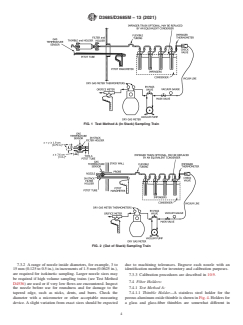
FIG. 1 Test Method A (In Stack) Sampling Train
FIG. 2 (Out of Stack) Sampling Train
7.3.2 A range of nozzle inside diameters, for example, 3 to due to machining tolerances. Engrave each nozzle with an
15mm(0.125to0.5in.),inincrementsof1.5mm(0.0625in.), identification number for inventory and calibration purposes.
are required for isokinetic sampling. Larger nozzle sizes may
7.3.3 Calibration procedures are described in 10.9.
be required if high volume sampling trains (see Test Method
7.4 Filter Holders:
D4536) are used or if very low flows are encountered. Inspect
7.4.1 Test Method A:
the nozzle before use for roundness and for damage to the
tapered edge, such as nicks, dents, and burrs. Check the 7.4.1.1 Thimble Holder—A stainless steel holder for the
diameter with a micrometer or other acceptable measuring porousaluminumoxidethimbleisshowninFig.4.Holdersfor
device.Aslight variation from exact sizes should be expected a glass and glass-fiber thimbles are somewhat different in
D3685/D3685M − 13 (2021)
FIG. 3 Test Method A (In Stack Optional) Sampling Train
design and method of retention. The overall diameter has been (4)Remove the filter holder from the oven and cool for 30
kept to a minimum to facilitate insertion of the entire holder min. Again run the leak check.
through a relatively small (75-mm (3-in.)) sampling port. The (5)Elevate the temperature of the oven to the maximum
holder provides a method for clamping the thimble firmly in temperature expected during the test. Place the filter holder in
position with its lip pressed against a soft gasket. The gasket the oven, and heat it for 30 min. Repeat the leak test.
sealing together the cap and housing of the holder is made of (6)Removethefilterholderandallowittocoolfor30min.
a compressible material that will provide an adequate seal at Run the final leak check. If the filter holder passes these leak
the desired temperature, such as stainless steel or TFE- check procedures then it is properly designed to remain leak
fluorocarbon ferrules. Such holders and the thimbles can free when properly maintained.
withstandtemperaturesapproaching550°C(1000°F).Ifporous (7) If the filter holder passes the leak checks at the lower
aluminum oxide thimbles are used, take care to avoid any temperatures, but not the maximum temperature, replace the
spalling or crushing of the thimble lip in assembling and filter holder.
disassembling the thimble in its holder, as the tare mass is (8) Ifthefilterholderfailstopasstheleakcheckprocedure
critical to the determination of the test results. at 100°C, reject the holder unless sampling is to be performed
7.4.1.2 Alternate Filter Holder/Backup Filter Holder—An only at ambient temperature.
in-stackfilterholderconstructedofborosilicateorquartzglass,
7.4.2 Test Method B Filter Holder—Refer to 7.4.1 for Test
or stainless steel is shown in Figs. 5 and 6. Use a silicone
Method A details.
rubber, TFE-fluorocarbon, or stainless steel gasket. The holder
7.4.2.1 Filter Heating System, capable of maintaining the
shall be durable, easy to load, and leak free in normal
filter holder at 120 6 15°C (248 6 25°F) during sampling.
applications.Itispositionedimmediatelyfollowingthenozzle,
Other temperatures may be specified for a particular applica-
with the filter placed toward the flow. Perform the following
tion.
leak check prior to use, to ensure that each filter holder is
7.4.2.2 FilterThermometer—Monitoringdeviceformeasur-
properly assembled.
ingtemperatureofthefilterholdertowithin3°C(5.5°F)during
(1)Assemblethesampleprobe,filterholder,andfilterwith
sampling.
the exception that a steel plug is used in place of the nozzle to
7.4.2.3 Before sampling, check the heating system and the
provide a leak-less seal.
temperature monitoring device. It is important that the heating
(2)Perform the standard leak check at 50 kPa (380 mm
element be easily replaceable in case of a malfunction during
Hg) vacuum at ambient temperature. A leakage rate of 570
sampling.
mL/min (0.02 ft /min) is allowed; however, under these
7.5 Probes:
laboratory conditions the entire train shall be leak-less.
(3)Placethefilterholderinanoven(aTestMethodBfilter 7.5.1 Probe Extension (Test Method A)—Any rigid probe
heater compartment can be used) at about 100°C (212°F) for extension may be used. Its diameter shall be sufficient to
about 30 min. Perform the leak check with the filter holder in provide adequate stiffness for support at the greatest distance
the oven. The filter holder shall again remain leak-less. within the stack. Check the probe extension visually for cracks
D3685/D3685M − 13 (2021)
Note—Code Part Identification/Function
Complete assembly, including porous aluminum oxide thimble:
A Nozzles (3 to 15 mm ID, in 1.5 mm increments, 1 each)
B Fittings (adapts nozzle to holder)
C Gaskets
D Guide ring
E Holder
F Porous aluminum oxide
G Clamp
H Cap
I Adapter (holds holder to probe extension)
FIG. 4 Thimble Holder
or breaks, and for leaks on a sampling train (Fig. 2). This 7.5.2 Test Method B—The sampling probe shall be con-
includes a proper leak-free connection from filter holder to structed of borosilicate or quartz glass tubing with an outside
probe. The probe extension shall be constructed of stainless
diameter(OD)ofapproximately16mm(0.625in.),encasedin
steel when non-corrosive gases are present during testing. Use a stainless steel sheath with an outside diameter of 25 mm (1.0
a heated glass-lined probe when corrosive or condensible
in.). Whenever practical, every effort should be made to use
material is present in the stack. Otherwise the condensed or borosilicateorquartzglassliners;alternatively,metalseamless
corrodedmaterialsintheprobeextensionmaydrainorbeback
liners of 316 stainless steel, nickel-chromium alloy, nickel-
flushed into the filter and contaminate the sample. Use a iron-chromium alloy (UNS N08825) (see DS 56I ), or other
nonreactive material to prevent contamination of the sample if
corrosion-resistant metals may be used. A heating system is
condensibles are to be retained. Use probe extendors of
required that will maintain an exit gas temperature of 120 6
nickel-iron-chromium alloy (UNS N08825) (see DS 56I ), or
14°C (250 6 25°F) during sampling. Other temperatures may
equivalent at temperatures greater than 600°F (315°C). (Re-
be specified for a particular application. Use either borosilicate
cord probe material selection in the field data sheet.)
or quartz glass liners for stack temperatures up to about 480°C
(900°F), but use quartz glass liners from 480 to 900°C (900 to
1650°F). Either type of liner may be used at higher tempera-
tures for short time periods. However, do not exceed the
Metals and Alloys in the Unified Numbering System, available from ASTM
Headquarters. absolute upper limits, that is, the softening temperatures of
D3685/D3685M − 13 (2021)
FIG. 5 Exploded Diagram for Flat, Round Filters
820°C (1500°F) and 1500°C (2750°F) for borosilicate and
quartz respectively. Visually check new probes for breaks or
cracks, and for leaks on a sampling train. This includes a
proper nozzle-to-probe connection with a fluoroelastomer
O-ring or TFE-fluorocarbon ferrules. Check the probe heating
system as follows:
7.5.2.1 Connecttheprobewithanozzleattachedtotheinlet
of the vacuum pump (7.10.3).
FIG. 6 Typical Holder for Flat, Round Filters
7.5.2.2 Electrically connect and turn on the probe heater for
2 or 3 min. The probe should become warm to the touch. thanglass,orusingaflexiblevacuumhosetoconnectthefilter
7.5.2.3 Activate the pump and adjust the needle valve until holder to the condenser) may be used.
a flow rate of approximately 20 L/min (0.75 ft /min) is 7.6.3 The fourth impinger outlet connection shall allow for
achieved. insertion of a thermometer (7.6.5). Alternatively, any system
7.5.2.4 Besuretheproberemainswarmtothetouchandthe that cools the gas stream and allows measurement of the
heater is capable of maintaining the exit air temperature at a
condensed water and the water vapor leaving the condenser,
minimum of 100°C (212°F). Otherwise, reject or repair the each to within 1 mL or 1 g, may be used.
probe.
7.6.4 TestthestandardGreenburg-Smithimpingerbyfilling
the inner tube with water. If the water does not drain through
7.6 Condenser—Four impingers connected in series and
theorificein6to8sorless,replacetheimpingertiporenlarge
immersedinanicebath,withleak-freeground-glassfittingsor
ittopreventanexcessivepressuredropinthesamplingsystem.
any similar noncontaminating fittings.
Check each impinger visually for damage, including breaks,
7.6.1 The first, third, and fourth impingers shall be the
cracks, or manufacturing flaws such as poorly shaped connec-
Greenburg-Smithdesignmodifiedbyreplacingtheinsertswith
tions.
a glass tube that has an unconstricted 13-mm (0.5-in.) inside
7.6.5 Impinger Thermometer—Monitoring device for mea-
diameterandthatextendstowithin13mmoftheflaskbottom.
suring temperature of gas exiting the fourth impinger (7.6)
7.6.1.1 If no analysis of the collected residue is to be
within 61°C (2°F) of true value in the range from 0 to 25°C
performed on the impinger catch, use of glass impingers is not
(32 to 77°F).
required, as long as the gas moisture content is determined by
alternate means. See Test Method D3154. 7.7 Gas Temperature Sensor—For measuring gas tempera-
7.6.2 ThesecondimpingershallbeaGreenburg-Smithwith ture to within 61°C (2°F). Permanently attach the temperature
the standard tip and plate. Modifications (for example, using sensortoeithertheprobe(7.5)orthepitottube(7.9).(SeeFigs.
flexible connections between impingers, using materials other 1-3.)
D3685/D3685M − 13 (2021)
7.8 Vacuum Lines—Locate all components of the sampling range from 0 to 101 kPa. Check it against a water U-Tube
system as close together as possible and with direct intercon- manometer upon receipt, and yearly thereafter.
nection between successive components in the system. When
7.11 Nomograph, to determine the isokinetic sampling rate
direct inter-connection is not possible, all vacuum (gas sam- 5
in accordance with APTD-0576 (1). Its function may be
pling) lines shall be of smooth bore, inert material capable of
appliedwithahand-heldprogrammablecalculatorasdescribed
withstandinginternalandexternaltemperaturesatthesampling
in 9.2.1.3.
location and a vacuum of 65 kPa (500 mm Hg) without
7.12 Thermometers—Thermometers conforming to Specifi-
collapse or leakage.
cation E1, for calibration of sample train thermometers/
7.9 Pitot Tube—The pitot tube, Type S design, meeting the
thermocouples, as follows:
requirements of Test Method D3154 shall be used. Attach the
Thermometer Section
pitot tube to the probe as shown in Fig. 3. Visually inspect the
3C or F 10.6
pitot tube for both vertical and horizontal tip alignments. If the
S59C or F 10.5 and 11.4.6
tubeispurchasedasanintegralpartofaprobeassembly,check
S63C or F 10.4
the dimensional clearances using forms referenced in 14.1.
113C or F 10.3
Repair or return any pitot tube which does not meet specifica-
ASTM thermometers, S59C and S63C as identified in
tions.
SpecificationE2251maybesubstitutedforthermomenters59C
and 63C directly. In addition, precision digital thermometers
7.10 Metering System, consisting of two vacuum gauges, a
based on resistance temperature detectors (RTDs), thermistors,
vacuum pump, a dry gas meter with 2% accuracy at the
orthermocouples,ororganicliquid-in-glassthermometerswith
required sampling rate, thermometers capable of measuring
equivalent or better accuracy and precision in the appropriate
63°C (5.5°F) of true value in the range from 0 to 90°C (32 to
temperature range may be used.
194°F),pressuregauge,checkvalves,andrelatedequipmentas
shown in Figs. 1-3. Other metering systems capable of main- 7.13 Barometer—An aneroid or other barometer capable of
taining sampling rates within 10% of isokinetic and determin- measuring atmospheric pressure to within 6300 Pa (25 mm
ing sample volumes to within 2% may be used. Upon receipt Hg) shall be used. Calibrate the barometer as described inTest
or after construction of the equipment, perform both positive
Methods D3631.
and negative pressure leak checks before beginning the system 7.13.1 Alternatively, the absolute barometric pressure may
calibration procedure, as described in 10.2.1. Any leakage
beobtainedfromanearbyweatherservicestationandadjusted
requires repair or replacement of the malfunctioning item. for elevation difference between the station and the sampling
Components include the following:
point. Either subtract 10 Pa/m from the station value for an
elevation increase or add the same for an elevation decrease.
7.10.1 Differential Pressure Gauge—Two inclined manom-
Replace the barometer if it cannot be adjusted to agree within
etersortheequivalentasspecifiedinTestMethodD3154.One
300 Pa of the reference barometric pressure.
(also called the pitot manometer) is utilized to monitor the
3 3
stack velocity pressure, and the other (also called the orifice
7.14 Wet Test Meter, with a capacity of 3.5 m /h (120 ft /h)
meter) to measure the orifice pressure differential. Initially,
or 30 L for each revolution (1 ft /rev) with an accuracy of
checkthegaugesagainstagauge-oilmanometerataminimum
61.0%, shall be used to calibrate the dry test meter.
of three points: 5, 125, and 250 Pa (0.025 in., 0.5 in., and 1.0
7.15 Orsat Gas Analyzer—Stack gas analyzer as described
in. H O). The gauges shall read within 5% of the gauge-oil
by Test Method D3154 shall be used.
manometerateachtestpoint.Repairorrejectanygaugewhich
7.16 U-Tube Manometer—A water manometer or pressure
does not meet these requirements.
sensor capable of measuring gas pressure to within 0.33 kPa
7.10.2 Dry Gas Meter—A volume meter is required for
(2.5 mm Hg or 0.001 in. H O).
measuring the total sample flow for each test.Acalibrated dry
gas test meter (2% accuracy at a flow rate of 20 L/min (0.75
7.17 Sample Recovery Apparatus:
ft /min)) is the most satisfactory totalizing volume meter
7.17.1 Probe Liner and Nozzle Brushes—Nylon bristle
available for source test work. Calibrate the meter in the
brush with a stainless steel wire handle as long as the probe,
laboratory prior to use with a positive displacement liquid
and a separate, smaller, and very flexible brush for the nozzle
meter and determine a meter correction factor (C ) as neces-
may be used.
m
sary.
7.17.2 Wash Bottles—Two 500-mL wash bottles for probe
and glassware rinsing. Glass bottles are preferred, but polyeth-
7.10.2.1 Dry Gas Meter Thermometer—Two monitoring
ylene is acceptable; however, if polyethylene is used, do not
devices for measuring temperature to within 3°C (5.5°F) in the
store the acetone in polyethylene wash bottles for longer than
range from 0 to 90°C (32 to 194°F) of the gas entering and
exiting from the dry gas meter (7.10.2). a month.
7.17.3 Sample Storage Containers—500- or 1000-mL
7.10.3 Vacuum Pump—An airtight leak-free vacuum pump
chemically resistant, borosilicate glass bottles for storage of
with coarse and fine flow controls, capable of maintaining a
acetone rinses, with leak-proof screw caps with leak-proof,
flow rate of 20 L/min (0.75 ft /min) for a pump inlet vacuum
of 50 kPa (15 in. Hg), is used to draw the gas sample.
7.10.4 Vacuum Gauge, for measuring pressure at the
Theboldfacenumbersinparenthesesrefertothelistofreferencesattheendof
vacuum pump inlet, capable of measuring 63 kPa over the this standard.
D3685/D3685M − 13 (2021)
rubber-backed TFE-fluorocarbon cap liners. Wide-mouthed 8.5 Calcium Sulfate, Anhydrous (CaSO ), indicating type,
bottles are easiest to use, but narrow-mouth bottles are less for use in desiccator (7.17.8).
prone to leakage. As an alternative to glass, polyethylene
8.6 Crushed Ice.
bottlesmaybeused,ifthestoragetimeisshort.Inspectthecap
8.7 Silica Gel (SiO ), indicating-type, 6 to 16-mesh, for use
seals and the bottle cap seating surfaces for chips, cuts, cracks, 2
in the fourth impinger in the condenser (7.6). Dry at 175°C
and manufacturing deformities that would permit leakage.
(350°F) for at least 2 h prior to use.
7.17.4 Petri Dishes, glass or polyethylene, for storage and
for transportation of the filter and collected sample.
8.8 Gloves, insulated, heat-resistant.
7.17.5 Graduated Cylinder or Triple Beam Balance, or
8.9 Graphite Compound, high-temperature type, for testing
Both, to measure the water condensed in the impingers during
above 260°C (500°F).
sampling. The graduated cylinder may be used to measure
8.10 Packing Material—A suitable temperature-resistant
water initially placed in the first and second impingers. In
material for sealing the port during sampling.
eithercase,therequiredaccuracyis1mLor1g;therefore,use
a cylinder with subdivisions of ≤2 mL. Use a triple beam
8.11 Stopcock Grease—An acetone-insoluble, heat-stable,
balance capable of weighing to the nearest 1.0 g.
silicone grease for the sealing of ground-glass connections.
7.17.6 Plastic Storage Containers—Several airtight plastic
This is not necessary if screw-on connectors with TFE-
containers for storage of silica gel.
fluorocarbon sleeves are used.
7.17.7 Funnel and Rubber Policeman, to transfer the used
8.12 TFE-Fluorocarbon Tape, 6.25 mm ( ⁄4 in.) wide.
silica gel from the impinger to a storage container unless silica
8.13 Toluene.
gel is weighed in the field after the test.
7.17.8 Desiccator, used to dry filters before weighing. Use
8.14 Boiling Chips, used to prevent water heated to boiling
anhydrous CaSO (8.5) as the desiccant.
from “bumping.”
7.17.9 Laboratory Drying Oven, capable of heating filters
8.15 Filter Material:
and thimbles to 102°C (215°F).
8.15.1 Test Method A—The primary filter is generally an
7.17.10 Laboratory Muffle Furnace, capable of heating
porous aluminum oxide glass, or glass-fiber thimble for heavy
thimbles to 550°C (1000°F).
dust loading with sampling stacks without control equipment
7.17.11 Steam Bath.
or on the inlet side of the control equipment, with a secondary
7.18 Analytical Equipment:
filter for back-up (8.15.2). Procedures for filter preparation are
7.18.1 Glassware—Borosilicate glass dishes to facilitate
given in 11.1.1 and 11.1.2.
filter weighing. Use a 250-mL glass beaker for evaporation of
8.15.2 Back-Up or Alternate Test Methods A and B—Use
the acetone rinse.
glass-fiber filters without organic binders. The filters shall
7.18.2 Balance, analytical grade, capable of weighing the
exhibit at least 99.95% collection efficiency of a 0.3-µm
filter and the sample beaker to within 60.1 mg.
dioctyl phthalate smoke particle, in accordance with Practice
D2986. Manufacturer’s quality control test data are sufficient
8. Reagents and Materials
for validation of efficiency.
8.15.2.1 Check the filters for irregularities, flaws, or pin-
8.1 Purity of Reagents—Reagent grade chemicals shall be
holes by holding them up against a light source.
usedinalltests.Allreagentsshallconformtothespecifications
of the committee on Analytical Reagents of the American
9. Sampling
Chemical Society, where such specifications are available.
9.1 Select a sampling site in accordance with the criteria of
8.2 PurityofWater—Unlessotherwisespecified,watershall
Test Method D3154.
be Type III reagent water conforming to Specification D1193.
9.2 StackParameters—Checkthesamplingsiteforcyclonic
NOTE 2—Type IV reagent water is required in 11.1.2.
or nonparallel flow as described in Test Method D3154.
8.3 Determine reagent blanks on the acetone, toluene, and
Determine the stack pressure (using the U-tube manometer
reagent water (see 11.7.5 and 11.8.3).
(7.16)), temperature (using the gas temperature sensor (7.7)),
8.4 Acetone—Reagent ACS grade acetone with ≤0.001%
and the range of velocity heads encountered, in accordance
residueinglassbottles.Acetonesuppliedinmetalcontainersis
with Test Method D3154.
unacceptable due to the prevalently high residue levels. Reject
9.2.1 Determine the moisture content as described in Test
the acetone if blank residue mass (see 8.3) is >0.001% of the
Method D3154 for the purpose of establishing the isokinetic
total acetone mass.
samplingrate.Iftheparticularsourcehasbeentestedbeforeor
if a good estimate of the moisture is available, this data is
sufficient.
9.2.1.1 If the stack is saturated with moisture or has water
ACS Reagent Chemicals, Specifications and Procedures for Reagents and
Standard-Grade Reference Materials, American Chemical Society, Washington,
droplets,determinethemoisturecontentbythepartialpressure
DC. For suggestions on the testing of reagents not listed by theAmerican Chemical
method described in Test Method D3154.
Society, see Analar Standards for Laboratory Chemicals, BDH Ltd., Poole, Dorset,
9.2.1.2 Determinethedrymolecularweightofthestackgas,
U.K., and the United States Pharmacopeia and National Formulary, U.S. Pharma-
copeial Convention, Inc. (USPC), Rockville, MD. asdescribedinTestMethodD3154.Usingthestackparameters
D3685/D3685M − 13 (2021)
obtained by these preliminary measurements, prepare a nomo- before it is used in the field. Recheck the calibration after the
graph (see 7.11) as outlined in APTD-0576 (1). initial acceptance and after each field test series. This recheck
9.2.1.3 Alternately,thecalculationmaybeperformedbythe isdesignedtoprovidethetesterwithamethodthatcanbeused
nomograph (see 7.11) using a calculator, as described in 9.2.2. moreoftenandwithlessefforttoensurethatthecalibrationhas
9.2.2 Select a nozzle size based on the range of velocity not changed. When a quick check shows that the calibration
heads, so that it will not be necessary to change the size to factor has changed, perform a complete laboratory procedure
maintain isokinetic sampling rates during a run. Install the to obtain the new calibration factor.After recalibration, multi-
selected nozzle using a fluoroelastomer O-ring. ply the metered sample volume by either the initial or the
9.2.3 Mark the probe with heat-resistant tape or crayon to recalibrated calibration factor—that is, the one that yields the
denote the proper distance into the stack or duct for each lower gas volume for each test run. Conduct a leak test before
sampling point. initial calibration of the metering system, to determine if the
9.2.4 Select a total sampling time greater than or equal to meter system is leak free. Perform both positive (pressure) and
the minimum total sampling time to ensure the following: negative (vacuum) leak checks.
9.2.4.1 The sampling time per point is ≥2 min. 10.2.1 Pressure Leak-Check—Following is a pressure leak-
9.2.4.2 The sample volume corrected to standard conditions check procedure that will check the metering system from the
exceeds the required minimum total gas sample volume, based quick disconnect inlet to the orifice outlet and will check the
on an approximate average sampling rate. orifice meter:
9.2.5 Sample at each point for either a whole number of
10.2.1.1 Disconnect the orifice meter line from the down-
minutes or odd half minutes to avoid timekeeping errors. streamorificepressuretap(theoneclosesttotheexhaustofthe
9.2.6 In some circumstances (for example, batch cycles), it orifice), and plug this tap.
may be necessary to sample for shorter times at the traverse 10.2.1.2 Ventthenegativesideoftheinclinedmanometerto
points and to obtain smaller gas sample volumes.
the atmosphere. If the inclined manometer is equipped with a
three-way valve, this step can be performed by merely turning
9.3 DeterminetheatmosphericpressureasdescribedinTest
the three-way valve that is on the negative side of the
Methods D3631, using the calibrated barometer (7.13).
orifice-inclined manometer to the vent position.
10.2.1.3 Placeaone-holerubberstopperwithatubethrough
10. Calibration and Set-Up
its hole in the exit of the orifice, and connect a piece of rubber
or plastic tubing to the tube.
METERING SYSTEM
10.2.1.4 Open the positive side of the orifice meter to the
10.1 Wet Test Meter(see 7.14)—Wet test meters are origi-
“reading” position; if the meter is equipped with a three-way
nally calibrated by the manufacturer with an accuracy of
valve, this will be the line position.
+0.5%. Obtain a calibration certificate upon purchase.
10.2.1.5 Plug the inlet to the vacuum pump (7.10.3). If a
10.1.1 Verify the calibration of the wet test meter initially
quick disconnect with a leak-free check valve is used on the
upon receipt and yearly thereafter by one of the following
control module, the inlet will not have to be plugged.
methods:
10.2.1.6 Open the main valve and the bypass valve.
10.1.1.1 Certification from the manufacturer that the wet
10.2.1.7 Blow into the tubing connected to the end of the
test meter is within +1% of the certified value at the wet test
orifice meter until a pressure of 15 to 25 kPa (5 to 7.5 in. H O)
meterdischarge,sothatonlyaleakcheckofthesystemisthen
has built up in the system.
required.
10.2.1.8 Plug or crimp the tubing to maintain this pressure.
10.1.1.2 Calibration in accordance with Test Methods
10.2.1.9 Observe the pressure reading for a 1-min period.
D1071, provided that the wet test meter is displaced at least
No noticeable movement in the manometer fluid level should
one complete revolution.
occur. If the metering system has a leak, a bubbling-type
10.1.1.3 Calibrationagainstasmallerwetgastestmeterthat
leak-check solution may aid in locating the leak(s).
has been previously calibrated against a primary air or liquid
10.2.1.10 After the metering system is determined to be
displacement method.
leak-free by the positive leak-check procedure, check the
10.1.1.4 Calibration against a dry gas meter that has been
vacuum system up to and including the pump by plugging the
previously calibrated against a primary air or liquid displace-
air inlet to the metering system. If a quick disconnect with a
ment method.
leak-free stopper system is presently on the metering system,
10.1.2 Check the calibration of the wet test meter annually.
the inlet will not have to be plugged.
The calibration check can be made by the same method as that
10.2.1.11 Activate the pump, develop a vacuum within 10
of the original calibration; however, the comparison method
kPa (75 mm Hg) of absolute zero, and observe the dry gas
neednotberecalibratedifthecalibrationcheckiswithin+1%
meter (7.10.2). If the leakage exceeds 150 mL/min (0.005
of the certified value. If this agreement is not obtained,
ft /min), seek and remove or minimize the leak(s) until the
recalibrate the comparison method or wet test meter against a
above specifications are satisfied.
primary air or liquid displacement method.
NOTE 3—For metering systems having diaphragm pumps, the normal
10.2 Calibration of Metering System—Initially calibrate the
leak-check procedure described in this section will not detect leakages
metering system (7.10)—consisting of the vacuum pump
within the pump. For these cases, perform the following leak-check
(7.10.3),vacuumgauge(7.10.4),valves,orificemeter(7.10.1),
procedure: make a 10-min calibration run at 570 mL/min (0.02 ft /min);
and dry gas meter (7.10.2)—by stringent laboratory methods at the end of the run, take the difference between the measured wet test
D3685/D3685M − 13 (2021)
meter and the dry gas meter volumes; divide the difference by 10 to
10.2.2.10 Calculate the average∆H@ for the six runs using
determine the leak rate. If the leak rate exceeds 570 mL/min (0.02
(Eq 6):
ft /min), seek and remove the leak.
∆H@ 1∆H@ 1∆H@ 1∆H@ 1∆H@ 1∆H@
1 2 3 4 5 6
10.2.2 Initial Calibration—Calibrate the dry gas meter
∆H@ 5 (6)
(7.10.2) simultaneously with the orifice meter (7.10.1) when
first purchased and at any time the post-test check yields a Y
Record the average.
value (dry gas meter correction value) outside the range of the
10.2.2.11 Adjusttheorificemeterorrejectitif∆H@ varies
i
calibration factor Y 6 0.05 Y, using a calibrated wet test meter
by more than 60.5 kPa (0.025 in. H O) over the range from 8
(7.14) (properly sized, with 61% accuracy) as follows:
to80Pa(0.06to0.6in.H O).Otherwise,theaverage∆H@ is
2 i
10.2.2.1 Leakcheckthemeteringsystem.Eliminateleaks,if
acceptable. Use the calculated value for subsequent test runs.
present, before proceeding:
10.2.3 Post-Test Calibration Check—After each field test
10.2.2.2 Assemble the apparatus with the wet test meter
series, conduct a calibration check of the metering system,
(7.14)replacingtheprobeandimpingers,withtheoutletofthe
except for the following variations:
wet test meter connected to a needle valve that is connected to
10.2.3.1 Three calibration runs at a single intermediate
the inlet side of the metering system.
orifice meter setting may be used with the vacuum set at the
10.2.2.3 Activatethevacuumpump(7.10.3)for15minwith
maximum value reached during the test series. The single
the orifice meter (7.10.1) differential (∆H) set at 1.7 kPa (0.5
intermediat
...