

ASTM D6784-24
(Test Method)Standard Test Method for Elemental, Oxidized, Particle-Bound and Total Mercury in Flue Gas Generated from Coal-Fired Stationary Sources (Ontario Hydro Method)
General Information
- Abstract
SIGNIFICANCE AND USE
5.1 The measurement of particle-bound, oxidized, elemental, and total mercury in stationary-source flue gases provides data that can be used for emissions assessments and reporting, the certification of continuous mercury monitoring systems, regulatory compliance determinations and research programs associated with dispersion modelling, deposition evaluation, human health and environmental impact assessments. Particle-bound, oxidized, and elemental mercury measurements before and after control devices may be necessary for optimizing and evaluating the mercury removal efficiency of emission control technologies.
5.2 This test method was developed initially for the measurement of mercury in coal-fired power plants and has been extensively validated for that application. Since the introduction of this method, it has been extensively used on other combustion sources such as cement kilns and waste incinerators. With additional procedures given in this standard, it is also applicable to sources having a flue gas composition with high levels of hydrochloric acid, and low levels of sulfur dioxide (Section 16).
SCOPE
1.1 This test method applies to the determination of elemental, oxidized, particle-bound, and total mercury emissions from stationary combustion sources.
1.2 This test method is applicable to elemental, oxidized, particle-bound, and total mercury concentrations ranging from approximately 0.5 μg/Nm3 to 100 μg/Nm3.
1.3 This test method describes equipment and procedures for obtaining samples from effluent ducts and stacks, equipment and procedures for laboratory analysis, and procedures for calculating results.
1.4 This test method is applicable to sampling elemental, oxidized, and particle-bound mercury in flue gases of coal-fired stationary sources. It may not be suitable at all measurement locations, particularly those with high particulate loadings, as explained in Section 16.
1.5 Method applicability is limited to flue gas stream temperatures within the thermal stability range of the sampling probe and filter components.
1.6 The values stated in SI units are to be regarded as the standard. The values in parentheses are for information only.
1.7 This standard requires users to be familiar with EPA stack-gas sampling procedures as stated in EPA Methods 1–4, Method 5, and Method 17.
1.8 The method requires a high level of experience and quality control both in the field testing and analytical procedures to obtain high quality data.
1.9 Warning—Mercury has been designated by many regulatory agencies as a hazardous substance that can cause serious medical issues. Mercury, or its vapor, has been demonstrated to be hazardous to health and corrosive to materials. Use caution when handling mercury and mercury-containing products. See the applicable product Safety Data Sheet (SDS) for additional information. The potential exists that selling mercury or mercury-containing products, or both, is prohibited by local or national law. Users must determine legality of sales in their location.
1.10 This standard does not purport to address all of the safety concerns, if any, associated with its use. It is the responsibility of the user of this standard to establish appropriate safety, health, and environmental practices and determine the applicability of regulatory limitations prior to use.
1.11 This international standard was developed in accordance with internationally recognized principles on standardization established in the Decision on Principles for the Development of International Standards, Guides and Recommendations issued by the World Trade Organization Technical Barriers to Trade (TBT) Committee.
- Status
- Published
- Publication Date
- 29-Feb-2024
- Technical Committee
- D22 - Air Quality
- Drafting Committee
- D22.03 - Ambient Atmospheres and Source Emissions
Buy Documents
ASTM D6784-24 - Standard Test Method for Elemental, Oxidized, Particle-Bound and Total Mercury in Flue Gas Generated from Coal-Fired Stationary Sources (Ontario Hydro Method)
REDLINE ASTM D6784-24 - Standard Test Method for Elemental, Oxidized, Particle-Bound and Total Mercury in Flue Gas Generated from Coal-Fired Stationary Sources (Ontario Hydro Method)
Overview
ASTM D6784-24, known as the Ontario Hydro Method, is an internationally recognized standard published by ASTM International for measuring mercury emissions in flue gases from stationary combustion sources. This comprehensive test method provides procedures to determine the concentration of elemental, oxidized, particle-bound, and total mercury in emissions primarily from coal-fired power plants, but it is also applicable to other sources such as cement kilns and waste incinerators.
Measuring mercury in its various forms is essential for accurate emissions reporting, regulatory compliance, emissions control certification, and environmental impact assessments. Given mercury’s status as a hazardous substance with significant environmental and health risks, high precision and strict quality control in sampling and analysis are required.
Key Topics
- Mercury Speciation: The method distinguishes between elemental mercury (Hg⁰), oxidized mercury (Hg²⁺), and particle-bound mercury to yield a total mercury profile in stack emissions.
- Applicability: Designed for stationary combustion sources emitting mercury in concentrations from 0.5 μg/Nm³ to 100 μg/Nm³. It is especially validated for coal-fired sources but adaptable for flue gas with high hydrochloric acid or low sulfur dioxide content.
- Sampling and Analysis: The standard outlines isokinetic sampling using specialized glassware and impinger trains, sample digestion, and laboratory analysis via cold vapor atomic absorption (CVAAS) or fluorescence spectrometry (CVAFS).
- Quality and Safety: Strict adherence to EPA sampling methods (such as Methods 1–4, 5, and 17) and ASTM practices for calibration, chain-of-custody, and quality assurance is necessary. Due to the toxicity and volatility of mercury, robust health, safety, and environmental protocols are mandatory.
- Limitations: Suitability may be affected in locations with high particulate loadings or flue gas temperatures outside equipment stability ranges.
Applications
ASTM D6784-24 is widely used in the following areas:
- Regulatory Compliance: For facilities subject to mercury emissions limits, this method supports accurate reporting for environmental permitting and meets protocols required by environmental agencies.
- Certification of Monitoring Systems: Provides reference measurements for certifying and validating continuous mercury monitoring systems (CEMS).
- Optimization of Emission Controls: Enables performance assessment before and after emission control devices, facilitating improvements in mercury removal technologies.
- Environmental and Health Assessments: Supplies speciation data essential for dispersion modeling, deposition studies, and evaluation of health risks related to mercury exposure.
- Research and Development: Used in scientific studies to characterize mercury emissions from various stationary combustion processes, aiding in policy development and technology evaluation.
Related Standards
When implementing ASTM D6784-24, the following related standards and references are commonly used to ensure reliable and accurate results:
ASTM Standards:
- D1193: Specification for Reagent Water
- D1356: Terminology Relating to Sampling and Analysis of Atmospheres
- D3154: Test Method for Average Velocity in a Duct (Pitot Tube Method)
- D3685/D3685M: Sampling/Determination of Particulate Matter in Stack Gases
- D7036: Practice for Competence of Air Emission Testing Bodies
- D4840: Guide for Sample Chain-of-Custody Procedures
- E2251: Specification for Liquid-in-Glass ASTM Thermometers
EPA Methods:
- Method 1: Sample and Velocity Traverses for Stationary Sources
- Method 2, 3, 4, and 5: Determination of flow parameters and particulate emissions
- Method 17: In-Stack Filtration Method
- SW 846 7470A: Mercury in Liquid Waste - Manual Cold Vapor Technique
International Guidelines:
- Developed in accordance with WTO TBT Committee principles for international standards.
Summary
ASTM D6784-24 is the industry-standard methodology for measuring and speciating mercury emissions from coal-fired and other stationary combustion sources. By using this test method, organizations can ensure compliance, improve environmental controls, and contribute to effective mercury risk management. Proper implementation of this standard supports both regulatory goals and public health objectives in controlling mercury pollution from stationary sources.
Relations
- Effective Date
- 01-Mar-2024
Buy Documents
ASTM D6784-24 - Standard Test Method for Elemental, Oxidized, Particle-Bound and Total Mercury in Flue Gas Generated from Coal-Fired Stationary Sources (Ontario Hydro Method)
REDLINE ASTM D6784-24 - Standard Test Method for Elemental, Oxidized, Particle-Bound and Total Mercury in Flue Gas Generated from Coal-Fired Stationary Sources (Ontario Hydro Method)
Get Certified
Connect with accredited certification bodies for this standard

CIS Institut d.o.o.
Personal Protective Equipment (PPE) certification body. Notified Body NB-2890 for EU Regulation 2016/425 PPE.

Kiwa BDA Testing
Building and construction product certification.
Kmetijski inštitut Slovenije
Agricultural Institute of Slovenia. Soil testing, plant health, agricultural product analysis.
Sponsored listings
Frequently Asked Questions
ASTM D6784-24 is a standard published by ASTM International. Its full title is "Standard Test Method for Elemental, Oxidized, Particle-Bound and Total Mercury in Flue Gas Generated from Coal-Fired Stationary Sources (Ontario Hydro Method)". This standard covers: SIGNIFICANCE AND USE 5.1 The measurement of particle-bound, oxidized, elemental, and total mercury in stationary-source flue gases provides data that can be used for emissions assessments and reporting, the certification of continuous mercury monitoring systems, regulatory compliance determinations and research programs associated with dispersion modelling, deposition evaluation, human health and environmental impact assessments. Particle-bound, oxidized, and elemental mercury measurements before and after control devices may be necessary for optimizing and evaluating the mercury removal efficiency of emission control technologies. 5.2 This test method was developed initially for the measurement of mercury in coal-fired power plants and has been extensively validated for that application. Since the introduction of this method, it has been extensively used on other combustion sources such as cement kilns and waste incinerators. With additional procedures given in this standard, it is also applicable to sources having a flue gas composition with high levels of hydrochloric acid, and low levels of sulfur dioxide (Section 16). SCOPE 1.1 This test method applies to the determination of elemental, oxidized, particle-bound, and total mercury emissions from stationary combustion sources. 1.2 This test method is applicable to elemental, oxidized, particle-bound, and total mercury concentrations ranging from approximately 0.5 μg/Nm3 to 100 μg/Nm3. 1.3 This test method describes equipment and procedures for obtaining samples from effluent ducts and stacks, equipment and procedures for laboratory analysis, and procedures for calculating results. 1.4 This test method is applicable to sampling elemental, oxidized, and particle-bound mercury in flue gases of coal-fired stationary sources. It may not be suitable at all measurement locations, particularly those with high particulate loadings, as explained in Section 16. 1.5 Method applicability is limited to flue gas stream temperatures within the thermal stability range of the sampling probe and filter components. 1.6 The values stated in SI units are to be regarded as the standard. The values in parentheses are for information only. 1.7 This standard requires users to be familiar with EPA stack-gas sampling procedures as stated in EPA Methods 1–4, Method 5, and Method 17. 1.8 The method requires a high level of experience and quality control both in the field testing and analytical procedures to obtain high quality data. 1.9 Warning—Mercury has been designated by many regulatory agencies as a hazardous substance that can cause serious medical issues. Mercury, or its vapor, has been demonstrated to be hazardous to health and corrosive to materials. Use caution when handling mercury and mercury-containing products. See the applicable product Safety Data Sheet (SDS) for additional information. The potential exists that selling mercury or mercury-containing products, or both, is prohibited by local or national law. Users must determine legality of sales in their location. 1.10 This standard does not purport to address all of the safety concerns, if any, associated with its use. It is the responsibility of the user of this standard to establish appropriate safety, health, and environmental practices and determine the applicability of regulatory limitations prior to use. 1.11 This international standard was developed in accordance with internationally recognized principles on standardization established in the Decision on Principles for the Development of International Standards, Guides and Recommendations issued by the World Trade Organization Technical Barriers to Trade (TBT) Committee.
SIGNIFICANCE AND USE 5.1 The measurement of particle-bound, oxidized, elemental, and total mercury in stationary-source flue gases provides data that can be used for emissions assessments and reporting, the certification of continuous mercury monitoring systems, regulatory compliance determinations and research programs associated with dispersion modelling, deposition evaluation, human health and environmental impact assessments. Particle-bound, oxidized, and elemental mercury measurements before and after control devices may be necessary for optimizing and evaluating the mercury removal efficiency of emission control technologies. 5.2 This test method was developed initially for the measurement of mercury in coal-fired power plants and has been extensively validated for that application. Since the introduction of this method, it has been extensively used on other combustion sources such as cement kilns and waste incinerators. With additional procedures given in this standard, it is also applicable to sources having a flue gas composition with high levels of hydrochloric acid, and low levels of sulfur dioxide (Section 16). SCOPE 1.1 This test method applies to the determination of elemental, oxidized, particle-bound, and total mercury emissions from stationary combustion sources. 1.2 This test method is applicable to elemental, oxidized, particle-bound, and total mercury concentrations ranging from approximately 0.5 μg/Nm3 to 100 μg/Nm3. 1.3 This test method describes equipment and procedures for obtaining samples from effluent ducts and stacks, equipment and procedures for laboratory analysis, and procedures for calculating results. 1.4 This test method is applicable to sampling elemental, oxidized, and particle-bound mercury in flue gases of coal-fired stationary sources. It may not be suitable at all measurement locations, particularly those with high particulate loadings, as explained in Section 16. 1.5 Method applicability is limited to flue gas stream temperatures within the thermal stability range of the sampling probe and filter components. 1.6 The values stated in SI units are to be regarded as the standard. The values in parentheses are for information only. 1.7 This standard requires users to be familiar with EPA stack-gas sampling procedures as stated in EPA Methods 1–4, Method 5, and Method 17. 1.8 The method requires a high level of experience and quality control both in the field testing and analytical procedures to obtain high quality data. 1.9 Warning—Mercury has been designated by many regulatory agencies as a hazardous substance that can cause serious medical issues. Mercury, or its vapor, has been demonstrated to be hazardous to health and corrosive to materials. Use caution when handling mercury and mercury-containing products. See the applicable product Safety Data Sheet (SDS) for additional information. The potential exists that selling mercury or mercury-containing products, or both, is prohibited by local or national law. Users must determine legality of sales in their location. 1.10 This standard does not purport to address all of the safety concerns, if any, associated with its use. It is the responsibility of the user of this standard to establish appropriate safety, health, and environmental practices and determine the applicability of regulatory limitations prior to use. 1.11 This international standard was developed in accordance with internationally recognized principles on standardization established in the Decision on Principles for the Development of International Standards, Guides and Recommendations issued by the World Trade Organization Technical Barriers to Trade (TBT) Committee.
ASTM D6784-24 is classified under the following ICS (International Classification for Standards) categories: 13.040.40 - Stationary source emissions. The ICS classification helps identify the subject area and facilitates finding related standards.
ASTM D6784-24 has the following relationships with other standards: It is inter standard links to ASTM D6784-16. Understanding these relationships helps ensure you are using the most current and applicable version of the standard.
ASTM D6784-24 is available in PDF format for immediate download after purchase. The document can be added to your cart and obtained through the secure checkout process. Digital delivery ensures instant access to the complete standard document.
Standards Content (Sample)
This international standard was developed in accordance with internationally recognized principles on standardization established in the Decision on Principles for the
Development of International Standards, Guides and Recommendations issued by the World Trade Organization Technical Barriers to Trade (TBT) Committee.
Designation: D6784 − 24
Standard Test Method for
Elemental, Oxidized, Particle-Bound and Total Mercury in
Flue Gas Generated from Coal-Fired Stationary Sources
(Ontario Hydro Method)
This standard is issued under the fixed designation D6784; the number immediately following the designation indicates the year of
original adoption or, in the case of revision, the year of last revision. A number in parentheses indicates the year of last reapproval. A
superscript epsilon (´) indicates an editorial change since the last revision or reapproval.
1. Scope serious medical issues. Mercury, or its vapor, has been
demonstrated to be hazardous to health and corrosive to
1.1 This test method applies to the determination of
materials. Use caution when handling mercury and mercury-
elemental, oxidized, particle-bound, and total mercury emis-
containing products. See the applicable product Safety Data
sions from stationary combustion sources.
Sheet (SDS) for additional information. The potential exists
1.2 This test method is applicable to elemental, oxidized,
that selling mercury or mercury-containing products, or both,
particle-bound, and total mercury concentrations ranging from
is prohibited by local or national law. Users must determine
3 3
approximately 0.5 μg ⁄Nm to 100 μg ⁄Nm .
legality of sales in their location.
1.3 This test method describes equipment and procedures 1.10 This standard does not purport to address all of the
safety concerns, if any, associated with its use. It is the
for obtaining samples from effluent ducts and stacks, equip-
ment and procedures for laboratory analysis, and procedures responsibility of the user of this standard to establish appro-
priate safety, health, and environmental practices and deter-
for calculating results.
mine the applicability of regulatory limitations prior to use.
1.4 This test method is applicable to sampling elemental,
1.11 This international standard was developed in accor-
oxidized, and particle-bound mercury in flue gases of coal-fired
dance with internationally recognized principles on standard-
stationary sources. It may not be suitable at all measurement
ization established in the Decision on Principles for the
locations, particularly those with high particulate loadings, as
Development of International Standards, Guides and Recom-
explained in Section 16.
mendations issued by the World Trade Organization Technical
1.5 Method applicability is limited to flue gas stream
Barriers to Trade (TBT) Committee.
temperatures within the thermal stability range of the sampling
probe and filter components.
2. Referenced Documents
1.6 The values stated in SI units are to be regarded as the
2.1 ASTM Standards:
standard. The values in parentheses are for information only.
D1193 Specification for Reagent Water
D1356 Terminology Relating to Sampling and Analysis of
1.7 This standard requires users to be familiar with EPA
Atmospheres
stack-gas sampling procedures as stated in EPA Methods 1–4,
D3154 Test Method for Average Velocity in a Duct (Pitot
Method 5, and Method 17.
Tube Method)
1.8 The method requires a high level of experience and
D3685/D3685M Test Methods for Sampling and Determina-
quality control both in the field testing and analytical proce-
tion of Particulate Matter in Stack Gases
dures to obtain high quality data.
D3796 Practice for Calibration of Type S Pitot Tubes
1.9 Warning—Mercury has been designated by many regu-
D4840 Guide for Sample Chain-of-Custody Procedures
latory agencies as a hazardous substance that can cause
D7036 Practice for Competence of Air Emission Testing
Bodies
This test method is under the jurisdiction of ASTM Committee D22 on Air
Quality and is the direct responsibility of Subcommittee D22.03 on Ambient
Atmospheres and Source Emissions. For referenced ASTM standards, visit the ASTM website, www.astm.org, or
Current edition approved March 1, 2024. Published April 2024. Originally contact ASTM Customer Service at service@astm.org. For Annual Book of ASTM
approved in 2002. Last previous edition approved in 2016 as D6784 – 16. DOI: Standards volume information, refer to the standard’s Document Summary page on
10.1520/D6784-24. the ASTM website.
Copyright © ASTM International, 100 Barr Harbor Drive, PO Box C700, West Conshohocken, PA 19428-2959. United States
D6784 − 24
E2251 Specification for Liquid-in-Glass ASTM Thermom- 3.2.8 sample train, n—complete setup including nozzle,
eters with Low-Hazard Precision Liquids probe, probe liner, filter, filter holder, impingers, and connec-
tors.
2.2 Other Standards:
EPA Method 1 Sample and Velocity Traverses for Stationary
3.2.9 total mercury, n—all mercury (solid-bound, liquid, or
Sources gaseous) however generated or entrained in the flue gas stream
EPA Method 2 Determination of Stack Gas Velocity and
(that is, summation of elemental, oxidized, and particle-bound
Volumetric Flow Rate (Type S Pitot Tube) mercury).
EPA Method 3 Gas Analysis for the Determination of Dry
3.3 Symbols:
Molecular Weight 2 2
3.3.1 A—cross-sectional area of stack, m (ft )
EPA Method 4 Determination of Moisture Content in Stack
3.3.2 B —water vapor in the gas stream, proportion by
ws
Gases
volume
EPA Method 5 Determination of Particulate Emissions from
3.3.3 ΔH—average pressure differential across the orifice
Stationary Sources
meter, kPa (in. H O)
EPA Method 12 Determination of Inorganic Lead Emissions
from Stationary Sources
3.3.4 Hg —concentration of mercury in sample filter ash,
ash
EPA Method 17 Determination of Particulate Emissions
μg/g
from Stationary Sources (In-Stack Filtration Method)
tp
3.3.5 Hg —concentration of particle-bound mercury, μg/
EPA Method 29 Determination of Metals Emissions from
Nm
Stationary Sources
0 3
3.3.6 Hg —concentration of elemental mercury, μg/Nm
EPA Method 101A Determination of Particle-Bound and
2+ 3
Gaseous Mercury Emissions from Sewage Sludge Incin- 3.3.7 Hg —concentration of oxidized mercury, μg/Nm
erators
3.3.8 IR—instrument reading from mercury analyzer, μg/L
EPA Method 301 Field Validation of Pollutant Measurement
3.3.9 L —leakage rate observed during the post-test leak
p
Methods from Various Waste Media
check, m /min (cfm)
EPA SW 846 7470A Mercury in Liquid Waste—Manual
3.3.10 L —maximum acceptable leakage rate
Cold Vapor Technique
a
EPA Water and Waste 600/4-79-020 Methods for Chemical
3.3.11 M —molecular weight of stack gas, wet basis g/g-
s
Analysis of Water and Wastes
mole (lb/lb-mole)
3.3.12 M —molecular weight of water, 18.0 g/g-mole (18.0
w
3. Terminology
lb/lb-mole)
3.1 Definitions other than those given below in 3.2 and 3.3
3.3.13 N—normal conditions, defined as 0 °C and 101.3 kPa
are listed in Terminology D1356.
(in the U.S. standard conditions 32 °F and 1 atmosphere)
3.2 Definitions of Terms Specific to This Standard:
3.3.14 P —barometric pressure at the sampling site, kPa
bar
3.2.1 elemental mercury, n—mercury in its zero-oxidation
(in. Hg)
state, Hg .
3.3.15 P —absolute stack gas pressure, kPa (in. Hg)
s
3.2.2 elemental mercury catch, n—mercury collected in the
3.3.16 P —standard absolute pressure, 101.3 kPa (29.92
std
acidified hydrogen peroxide (HNO –H O ) and potassium
3 2 2
in. Hg)
permanganate (H SO –KMnO ) impinger solutions employed
2 4 4
in this test method; this is gaseous Hg . 3.3.17 R—ideal gas constant, 0.008314 kPa-m /K-g-mole
(21.85 in. Hg-ft /°R-lb-mole)
3.2.3 front half of the sampling train, n—all mercury col-
lected on and upstream of the sample filter. 3.3.18 T —absolute average dry gas meter temperature, K
m
(°R)
3.2.4 impinger train, n—setup including only the impingers
and connectors. 3.3.19 T —absolute stack temperature, K (°R)
s
3.3.20 T —standard absolute temperature, 293 K
3.2.5 oxidized mercury, n—mercury in its mercurous or
std
2+ 2+
mercuric oxidation states: Hg and Hg , respectively.
3.3.21 V —total digested volume, mL
D
3.2.6 oxidized mercury catch, n—mercury collected in the
3.3.22 V —volume of gas sample as measured by dry gas
m
aqueous potassium chloride (KCl) impinger solutions em-
meter, m (dscf)
2+
ployed in this test method; this is gaseous Hg .
3.3.23 V —volume of gas sample measured by the dry
m(std)
3.2.7 particle-bound mercury catch, n—mercury associated
gas meter in Nm (dscf)
with the particulate matter collected in the front half of the
3.3.24 V —volume of water vapor in the gas sample in
w(std)
sampling train.
m (scf)
3.3.25 W —total mass of ash on sample filter, g
ash
EPA Methods 1 – 29 available from the U.S. Environmental Protection
3.3.26 W —total weight of liquid collected in impingers
lc
Agency’s Emission Measurement Technical Information Center or Code of Federal
and silica gel, g (lb)
Regulations (40 CFR Part 60, Appendix A), Method 101A in 40 CFR Part 61,
Appendix B, Method 301 in 40 CFR 63 Appendix A40 CFR Part 61, Appendix B. 3.3.27 Y—dry gas meter calibration factor
D6784 − 24
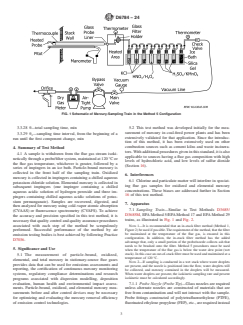
FIG. 1 Schematic of Mercury-Sampling Train in the Method 5 Configuration
3.3.28 θ—total sampling time, min 5.2 This test method was developed initially for the mea-
surement of mercury in coal-fired power plants and has been
3.3.29 θ —sampling time interval, from the beginning of a
extensively validated for that application. Since the introduc-
run until the first component change, min
tion of this method, it has been extensively used on other
combustion sources such as cement kilns and waste incinera-
4. Summary of Test Method
tors. With additional procedures given in this standard, it is also
4.1 A sample is withdrawn from the flue gas stream isoki-
applicable to sources having a flue gas composition with high
netically through a probe/filter system, maintained at 120 °C or
levels of hydrochloric acid, and low levels of sulfur dioxide
the flue gas temperature, whichever is greater, followed by a
(Section 16).
series of impingers in an ice bath. Particle-bound mercury is
collected in the front half of the sampling train. Oxidized
6. Interferences
mercury is collected in impingers containing a chilled aqueous
6.1 Chlorine and particulate matter will interfere in speciat-
potassium chloride solution. Elemental mercury is collected in
ing flue gas samples for oxidized and elemental mercury
subsequent impingers (one impinger containing a chilled
concentrations. These biases are addressed further in Section
aqueous acidic solution of hydrogen peroxide and three im-
16 of this test method.
pingers containing chilled aqueous acidic solutions of potas-
sium permanganate). Samples are recovered, digested, and
7. Apparatus
then analyzed for mercury using cold-vapor atomic absorption
7.1 Sampling Train—Similar to Test Methods D3685/
(CVAAS) or fluorescence spectrometry (CVAFS). To achieve
D3685M, EPA Method 5/EPA Method 17 and EPA Method 29
the accuracy and precision specified in this test method, it is
trains, as illustrated in Fig. 1 and Fig. 2.
necessary that quality control and quality assurance procedures
associated with each step of the method be scrupulously
NOTE 1—It is recommended that an in-stack filter method (Method 1,
performed. Successful performance of the method by air Figure 2) be used if possible. The requirement of the method, that the filter
be maintained at the temperature of the flue gas, is ensured in this
emission testing bodies is best achieved by following Practice
configuration. In addition, the in-stack filter method has the added
D7036.
advantage that, only a small portion of the probe/nozzle collects ash that
needs to be brushed onto the filter. Method 5 procedures must be used
5. Significance and Use
when the temperature of the flue gas is below the water dew point (wet
stack). In this case an out-of-stack filter must be used and maintained at a
5.1 The measurement of particle-bound, oxidized,
temperature of 120 °C.
elemental, and total mercury in stationary-source flue gases
NOTE 2—If sampling is conducted in a wet stack where water droplets
provides data that can be used for emissions assessments and
are present, and the nozzle is positioned into the flow, water droplets will
reporting, the certification of continuous mercury monitoring
be collected, and mercury contained in the droplets will be measured.
When water droplets are present, the isokinetic sampling rate and percent
systems, regulatory compliance determinations and research
isokinetic must be calculated accordingly.
programs associated with dispersion modelling, deposition
evaluation, human health and environmental impact assess- 7.1.1 Probe Nozzle (Probe Tip)—Glass nozzles are required
ments. Particle-bound, oxidized, and elemental mercury mea- unless alternate nozzles are constructed of materials that are
surements before and after control devices may be necessary free from contamination and will not interact with the sample.
for optimizing and evaluating the mercury removal efficiency Probe fittings constructed of polytetrafluoroethylene (PTFE),
of emission control technologies. fluorinated ethylene propylene (FEP), etc., are required instead
D6784 − 24
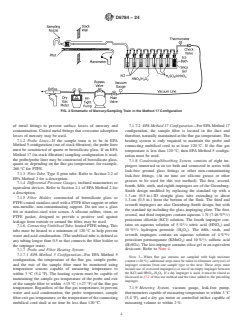
FIG. 2 Schematic of Mercury-Sampling Train in the Method 17 Configuration
of metal fittings to prevent surface losses of mercury and 7.1.7.2 EPA Method 17 Configuration—For EPA Method 17
contamination. Coated metal fittings that overcome adsorption configuration, the sample filter is located in the duct and
losses of mercury may be used.
therefore, naturally maintained at the flue gas temperature. The
7.1.2 Probe Liner—If the sample train is to be in EPA
heating system is only required to maintain the probe and
Method 5 configuration (out-of-stack filtration), the probe liner
connecting umbilical cord to at least 120 °C. If the flue gas
must be constructed of quartz or borosilicate glass. If an EPA
temperature is less than 120 °C, then EPA Method 5 configu-
Method 17 (in-stack filtration) sampling configuration is used,
ration must be used.
the probe/probe liner may be constructed of borosilicate glass,
7.1.8 Condensing/Absorbing System, consists of eight im-
quartz or, depending on the flue gas temperature, for example,
pingers immersed in an ice bath and connected in series with
260 °C for PTFE.
leak-free ground glass fittings or other non-contaminating
7.1.3 Pitot Tube, Type S pitot tube. Refer to Section 2.2 of
leak-free fittings. (At no time are silicone grease or other
EPA Method 2 for a description.
greases to be used for this test method). The first, second,
7.1.4 Differential Pressure Gauges, inclined manometers or
fourth, fifth, sixth, and eighth impingers are of the Greenburg-
equivalent devices. Refer to Section 2.1 of EPA Method 2 for
Smith design modified by replacing the standard tip with a
a description.
1.3 cm (0.5 in.)-ID straight glass tube extending to about
7.1.5 Filter Holder, constructed of borosilicate glass or
1.3 cm (0.5 in.) from the bottom of the flask. The third and
PTFE-coated stainless-steel with a PTFE filter support or other
seventh impingers are also Greenburg-Smith design, but with
non-metallic, non-contaminating support. Do not use a glass
the standard tip including the glass impinging plate. The first,
frit or stainless-steel wire screen. A silicone rubber, viton, or
W
second, and third impingers contain aqueous 1 N (7.46 % ⁄V)
PTFE gasket, designed to provide a positive seal against
potassium chloride (KCl) solution. The fourth impinger con-
leakage from outside or around the filter, may be used.
V
tains an aqueous solution of 5 % ⁄V nitric acid (HNO ) and
7.1.6 Connecting Umbilical Tube, heated PTFE tubing. This
V
10 % ⁄V hydrogen peroxide (H O ). The fifth, sixth, and
2 2
tube must be heated to a minimum of 120 °C to help prevent
W
seventh impingers contain an aqueous solution of 4 % ⁄V
water and acid condensation. (The umbilical tube is defined as
V
potassium permanganate (KMnO ) and 10 % ⁄V sulfuric acid
any tubing longer than 0.5 m that connects the filter holder to
(H SO ). The last impinger contains silica gel or an equivalent
the impinger train). 2 4
desiccant. Refer to Note 4.
7.1.7 Probe and Filter Heating System:
7.1.7.1 EPA Method 5 Configuration—For EPA Method 5
NOTE 3—When flue gas streams are sampled with high moisture
configuration, the temperature of the flue gas, sample probe,
content (>20 %), additional steps must be taken to eliminate carryover of
and the exit of the sample filter must be monitored using
impinger contents from one sample type to the next. These steps must
include use of oversized impinger(s) or use of an empty impinger between
temperature sensors capable of measuring temperature to
the KCl and HNO –H O . If a dry impinger is used, it must be rinsed as
within 3 °C (5.4 °F). The heating system must be capable of 3 2 2
discussed in 13.2 of this test method and the rinse added to the preceding
maintaining the sample gas temperature of the probe and exit
impinger.
of the sample filter to within 615 °C (627 °F) of the flue gas
7.1.9 Metering System, vacuum gauge, leak-free pump,
temperature. Regardless of the flue gas temperature, to prevent
water and acid condensation, the probe temperature, sample thermometers capable of measuring temperature to within 3 °C
(5.4 °F), and a dry gas meter or controlled orifice capable of
filter exit gas temperature, or the temperature of the connecting
umbilical cord shall at no time be less than 120 °C. measuring volume to within 2 %.
D6784 − 24
7.1.10 Barometer, capable of measuring atmospheric pres- 7.3.2 Pipetters—All analysis should be performed with
sure to within 0.33 kPa (0.1 in. Hg). In many cases, the pipetters having accuracy within 60.5 % of the true value, and
barometric reading may be obtained from a nearby National precision ≤0.5 %. A repeater pipetter is recommended to
Weather Service station, in which case, the station value reduce the time required for sample preparation and analysis.
(which is the absolute barometric pressure) shall be requested. Air displacement pipetters are not recommended.
An adjustment for elevation differences between the weather 7.3.3 Transfer pipets, low-density polyethylene disposable
station and sampling point shall be applied at a rate of negative transfer pipets.
0.33 kPa (0.1 in. Hg) per 30 m (100 ft) elevation increase or 7.3.4 Balance, analytical grade, capable of weighing to
vice versa for elevation decrease. within 0.1 μg.
7.1.11 Thermometers, Precision digital thermometers based
7.4 Ancillary equipment, depending upon the application,
on resistance temperature detectors (RTDs), thermistors,
other flue gas parameters may need to be obtained to convert
thermocouples, or organic liquid-in-glass thermometers (such
the mercury measurements into appropriate units. This equip-
as Thermometer S18C in Practice E2251) meeting the require-
ment may include sampling equipment and O or CO analyz-
2 2
ments of specific applications in this test method may be used.
ers.
7.1.12 Gas Density Determination Equipment, temperature
7.5 Spare Parts—Enough sampling equipment must be
sensor and pressure gauge, as described in Section 2.3 and 2.4
brought to the site so that common spare parts are available.
of EPA Method 2. The temperature sensor shall, preferably, be
Arrangements should be made so that, if necessary, parts can
permanently attached to the pitot tube or sampling probe in a
also be shipped next day to the site.
fixed configuration, such that the sensor tip extends beyond the
leading edge of the probe sheath and does not touch any metal.
8. Reagents and Materials
Alternative temperature sensor configurations are described in
8.1 Purity of Reagents—Reagent-grade chemicals shall be
Section 2.1.10 of EPA Method 5. If necessary, a gas analyzer
used in all tests. Unless otherwise indicated, it is intended that
can be used to determine dry molecular weight of the gas (refer
all reagents conform to the specifications of the Committee on
to EPA Method 3).
Analytical Reagents of the American Chemical Society, where
7.2 Digestion Apparatus: 4
such specifications are available. Other grades may be used,
7.2.1 Dry Block Heater or Hot Water Bath, a heater capable
provided it is first ascertained that the reagent is of sufficiently
of maintaining a temperature of 95 °C is required for digestion
high purity to permit its use without lessening the accuracy of
of samples, similar to that described in EPA SW 846 Method
the determination.
7470A.
8.2 Purity of Water—Unless otherwise indicated, references
7.2.2 Ice Bath.
to water shall be understood to mean reagent water as defined
7.2.3 Digestion Flasks—Use 50 mL to 70 mL glass tubes or
by Type II in Specification D1193.
flasks with screw caps that will fit a dry block heater. For a
water bath, 300 mL biological oxygen demand glass bottles for 8.3 Reagents:
SW 846 Method 7470A are to be used. In addition, borosilicate 8.3.1 Boric Acid (H BO ), purified reagent grade.
3 3
glass test tubes, 35 mL to 50 mL volume, with rack are needed. 8.3.2 Hydrochloric Acid (HCl), trace metal-grade concen-
7.2.4 Microwave or Convection Oven and PTFE Digestion trated hydrochloric acid, with a specific gravity of 1.18.
Vessels, 120 mL, or equivalent digestion vessels with caps 8.3.3 Hydrofluoric Acid (HF), concentrated hydrofluoric
equipped with pressure relief valves for the dissolution of ash, acid, 48 % to 50 %.
V
along with a capping station or the equivalent to seal the 8.3.4 Hydrogen Peroxide (H O ), 30 % ⁄V hydrogen perox-
2 2
digestion vessel caps. Use a vented microwave or convection ide.
oven for heating. In addition, polymethylpentene (PMP) or 8.3.5 Hydroxylamine Sulfate ((NH OH) · H SO ), solid.
2 2 2 4
equivalent volumetric flasks are recommended for the digested 8.3.6 Hydroxylamine Hydrochloride (NH OH) · HCl),
2 2
ash solutions. 10 % solution.
8.3.7 Sodium Chloride (NaCl), solid.
7.3 Analytical Equipment:
8.3.8 Mercury Standard Solution, a certified (1000 μg/mL)
7.3.1 Mercury Analyzer, dedicated mercury analyzer or
mercury standard.
equivalent apparatus for the analysis of mercury via CVAAS.
8.3.9 Nitric Acid (HNO ), trace metal-grade concentrated
Alternatively, CVAFS may be used. CVAAS is a method based
V
nitric acid with a specific gravity of 1.42. 20 % ⁄V nitric acid.
on the absorption of radiation at 253.7 nm by mercury vapor.
8.3.10 Potassium Chloride (KCl), solid.
CVAFS is a technique based on the absorption and re-emission
8.3.11 Potassium Dichromate (K Cr O ), solid.
2 2 7
of radiation at 253.7 nm by mercury vapor. The mercury is
8.3.12 Potassium Perchlorate (KClO ), solid.
reduced to the elemental state and sparged from solution in a
8.3.13 Potassium Permanganate (KMnO ), solid.
closed system. The mercury vapor passes through a cell
positioned in the light path of an atomic absorption or
fluorescence spectrometer. Absorbance or fluorescence is mea-
ACS Reagent Chemicals, Specifications and Procedures for Reagents and
Standard-Grade Reference Materials, American Chemical Society, Washington,
sured as a function of mercury concentration. A soda-lime trap
DC. For suggestions on the testing of reagents not listed by the American Chemical
and a magnesium perchlorate trap must be used to precondition
Society, see Analar Standards for Laboratory Chemicals, BDH Ltd., Poole, Dorset,
the gas before it enters the absorption cell. Alternatively, a
U.K., and the United States Pharmacopeia and National Formulary, U.S. Pharma-
hydroscopic membrane to precondition the gas can be used. copeial Convention, Inc. (USPC), Rockville, MD.
D6784 − 24
V
8.3.14 Potassium Persulfate (K S O ), solid. 10 % ⁄V H SO . Dissolve, with stirring, 40 g of KMnO into
2 2 8 2 4 4
V V
8.3.15 Soda Lime (Ca(OH) , NaOH, KOH), solid. 10 % ⁄V H SO , and add 10 % ⁄V H SO , with stirring, to
2 2 4 2 4
8.3.16 Sodium Thiosulfate (Na S O · 5H O) (for high make 1 L. To prevent autocatalytic decomposition of the
2 2 3 2
chloride applications). permanganate solution, filter the solution through filter paper.
8.3.17 Stannous Chloride (SnCl · 2H O), solid. (Warning—See 9.1.1.) H SO –KMnO absorbing solution
2 2 2 4 4
8.3.18 Sulfuric Acid (H SO ), trace metal-grade concen- must be made daily.
2 4
trated sulfuric acid, with a specific gravity of 1.84.
8.5.4 Potassium Permanganate Rinse Solution
W
8.3.19 Tin (Sn) Mossy.
(5 % ⁄V)—Mix 5 g KMnO into water, dilute to 100 mL, and
stir vigorously.
8.4 Materials:
8.4.1 Indicating Silica Gel, with a size of 6-16 mesh.
8.6 Rinse Solutions for Sample Train:
8.4.2 Crushed or Cubed Ice.
8.6.1 0.1 N HNO Solution—A certified reagent grade 0.1 N
8.4.3 Sample Filters, quartz fiber filters, without organic
HNO solution can be purchased directly or can be made by
binders, exhibiting at least 99.95 % efficiency (<0.05 % pen-
slowly adding 12.5 mL of concentrated HNO to a 2000 mL
etration) for 0.3 μm dioctyl phthalate smoke particles and
volumetric flask containing approximately 500 mL of water,
containing less than 0.2 μg/m of mercury. Test data provided
then diluting with water to volume.
by filter manufacturers and suppliers stating filter efficiency
V
8.6.2 10 % ⁄V HNO Solution—Mix carefully, with stirring,
and mercury content are acceptable. Filter material must be
100 mL of concentrated HNO into approximately 800 mL of
5 3
unreactive to sulfur dioxide (SO ) or sulfur trioxide (SO ).
2 3
water. When mixing, be sure to follow standard acid to water
8.4.4 Filter Papers, for filtration of digested samples. The
addition procedures and safety precautions associated with
filter paper must have a particle retention of >20 μm and
strong acids. Then add water, with stirring, to make 1 L.
filtration speed of >12 s.
W
8.6.3 10 % ⁄V Hydroxylamine Solution—Add 100 g hydrox-
8.4.5 Nitrogen Gas (N ), carrier gas of at least 99.998 %
ylamine sulfate and 100 g sodium chloride to a 1000 mL
purity. Alternatively, argon gas may be used.
volumetric flask containing approximately 500 mL of water.
8.4.6 Soda Lime, indicating 4 mesh to 8 mesh absorbent for
After the hydroxylamine sulfate and sodium chloride has been
trapping carbon dioxide.
dissolved, dilute with water to volume. As an alternative a
8.4.7 Sample Containers, glass or PTFE with PTFE-lined
10 % hydroxylamine hydrochloride solution can be used in all
lids.
cases as a replacement for the hydroxylamine sulfate/sodium
NOTE 4—It is recommended that glass amber bottles be used to prevent
chloride solution.
possible deterioration by ultraviolet (UV) light.
8.7 Sample Digestion Reagents:
8.5 Sampling Reagents:
W
8.7.1 Boric Acid Solution (4 % ⁄V)—Dissolve 4 g H BO in
3 3
8.5.1 KCl Absorbing Solution 1 N (1 mol/L)—Dissolve
water and dilute to 100 mL.
74.56 g of KCl in 500 mL of reagent water in a 1000 mL
8.7.2 Aqua Regia (HCl:HNO 3:1)—Add 3 parts concen-
volumetric flask, swirl to mix, and dilute to volume with water.
trated HCl to 1 part concentrated HNO . Note that this should
Mix well. A new batch of solution must be made prior to each
be made up in advance and allowed to form a dark orange
field test.
color. This mixture should be loosely capped, as pressure will
NOTE 5—For applications with high chlorine concentrations: KCl
build as gases form.
W
absorbing solution spiked with sodium thiosulfate (1 mol ⁄l KCl, 0.5 % ⁄V
8.7.3 Potassium Permanganate Solution
Na S O · 5H O) – 5 g Na S O · 5H O is dissolved in 1 L of 1 N KCl
2 2 3 2 2 2 3 2
W
(5 % ⁄V)—Mix 5 g KMnO into water, dilute to 100 mL, and
solution. This solution is used to charge each impinger (100 mL per 4
stir vigorously.
impinger). This solution should be made daily.
W
V 8.7.4 Potassium Persulfate Solution (5 % ⁄V)—Dissolve
8.5.2 HNO –H O Absorbing Solution (5 % ⁄V HNO ,
3 2 2 3
V 5 g K S O in water and dilute to 100 mL.
2 2 8
10 % ⁄V H O )—Add slowly, with stirring, 50 mL of concen-
2 2
trated HNO to a 1000 mL volumetric flask containing ap-
8.8 Analytical Reagents:
proximately 500 mL of water, and then add carefully, with
V
8.8.1 Hydrochloric Acid Solution (10 % ⁄V)—Add 100 mL
V
stirring, 333 mL of 30 % ⁄V H O . Dilute to volume with water.
2 2
concentrated HCl to water and dilute to 1 L. Be sure to follow
Mix well. A new batch of solution must be made prior to each
all safety precautions for using strong acids.
field test.
W
8.8.2 Stannous Chloride Solution (10 % ⁄V)—Dissolve
W
8.5.3 H SO –KMnO Absorbing Solution (4 % ⁄V KMnO ,
2 4 4 4 V V
100 g in 10 % ⁄V HCl, and dilute with 10 % ⁄V HCl to 1 L.
V
10 % ⁄V H SO )—Mix carefully, with stirring, 100 mL of
2 4
Difficulty in dissolving the stannous chloride can be overcome
concentrated H SO into approximately 800 mL of water.
2 4
by dissolving in a more concentrated HCl solution (such as
When mixing, be sure to follow standard acid to water addition
V
100 mL of 50 % ⁄V HCl) and diluting to 1 L with water. Note
procedures and safety precautions associated with strong acids.
that care must be taken when adding water to a strong acid
Then add water, with stirring, to make 1 L. This solution is
solution. Add a lump of mossy tin (~0.5 g) to this solution.
8.9 Mercury Standards:
Felix, L.G.; Clinard, G.I.; Lacey, G.E.; McCain, J.D. “Inertial Cascade
8.9.1 10 μg/mL Hg Stock Solution—Dilute 1 mL of
Impactor Substrate Media for Flue Gas Sampling,” U.S. Environmental Protection
V
1000 μg ⁄mL Hg standard solution to 100 mL with 10 % ⁄V
Agency, Research Triangle Park, NC 27711, Publication No. EPA-600/7-77-060;
June 1977, p. 83. HCl.
D6784 − 24
8.9.2 100 μg/L Hg Stock Solution—Dilute 1 mL of damage. Suitable safety equipment (gloves, goggles, etc.)
V
10 μg ⁄mL Hg stock solution to 100 mL with 10 % ⁄V HCl. This should be used when working with standards and samples
solution and the Working Hg Standards described below may containing mercury, or where exposure to mercury vapors is a
change concentration with time. As a minimum, stock solutions concern.
should be prepared weekly, and stored in glass or PTFE bottles.
9.1.5 Acetone is hazardous in case of skin contact (irritant,
8.9.3 Working Hg Standards—Prepare all working standards
of eye contact (irritant), of ingestion, and of inhalation.
by digesting along with the samples. Prepare digested stan- Acetone is highly flammable in the presence of open flames or
dards of 0.25 μg ⁄L, 0.5 μg ⁄L, 1.0 μg ⁄L, 2.5 μg ⁄L, 5.0 μg ⁄L,
sparks.
7.5 μg ⁄L, and 10.0 μg ⁄L as described in 13.4.1.1.
9.2 Precaution:
8.9.4 Quality Control Standard (QC)—A quality control
9.2.1 The determination of microquantities of mercury re-
standard is prepared from a separate Hg standard solution. The
quires meticulous attention to detail. Good precision is gener-
QC standard should be prepared at a concentration of approxi-
ally unattainable without a high level of experience with
mately one-half the calibration range. It is recommended to
stack-sampling procedures. Precision and accuracy may be
prepare a QC standard at a concentration of 5.0 μg/L in the
improved by knowledge of, and close adherence to, the
same manner as the 5.0 μg/L standard described in 8.9.3.
suggestions that follow.
8.10 Glassware Cleaning Reagents—Prior to any fieldwork,
9.2.1.1 All glassware used in the method must be cleaned
all glassware must be cleaned in accordance with the guide-
thoroughly prior to field use, as described in 8.10 of this test
lines outlined in EPA Method 29, Section 8.1.1 if the stated
method.
precision of this test method is to be met. This procedure
9.2.1.2 Use the same reagents and solutions in the same
requires that the sampling train glassware first be rinsed with
quantities for a group of determinations and the corresponding
hot tap water and then washed in hot soapy water. Then, rinse
solution blank. When a new reagent is prepared or a new stock
the glassware three times with tap water, followed by three
of filters is used, a new blank must be taken and analyzed.
additional rises with distilled water. Soak all glassware in a
V
10 % ⁄V nitric acid solution for a minimum of 4 h. Rinse three
10. Sampling
times with distilled water and rinse a final time with acetone.
10.1 Preparation for Test:
Allow the glassware to air dry and cover all glassware
10.1.1 Quality Assurance Plan—Develop a quality assur-
openings where contamination can occur until the sampling
ance plan (QAP) prior to conducting the tests. The basic
train is assembled for sampling.
elements of the QAP are sections that describe: (1) purpose of
NOTE 6—There are two ways to ensure clean glassware. The first is to
the project, (2) test methodologies, (3) project organization, (4)
bring enough glassware into the field to construct all needed sampling
description of test logistics and schedule, (5) data quality
trains. The second, is to clean the glassware in the field. This requires a
objectives, (6) quality control procedures, and (7) documenta-
large enough space to soak the glassware. In addition, depending on the
scope of the sampling program, an extra person may be required on site.
tion procedures. Note, a section on performance or data quality
assessments, or both, may be required in some applications.
9. Hazards
Each section comprises the following:
10.1.1.1 Purpose of the Project—Discusses why the test is
9.1 Warning:
being conducted and whether total or speciated mercury is to
9.1.1 Pressure may build up in the solution storage bottle
be determined.
because of a potential reaction between potassium permangan-
10.1.1.2 Project Organization—Provides the personnel
ate and acid. Therefore, these bottles should not be fully filled
structure and identify team members and qualifications of the
and should be vented to relieve excess pressure and prevent
team leader with respect to Practice D7036. Identifies the
explosion. Venting must be in a manner that is safe and will not
analytical laboratory that will analyze the samples. Identifies
allow contamination of the solution.
the Quality Assurance Directors of both the test team and
9.1.2 Hazards to personnel exist in the operation of the
laboratory and their respective responsibilities in the test
cold-vapor atomic absorption spectrophotometer. Refer to the
program.
manufacturer’s instruction manual before operating the instru-
10.1.1.3 Test Logistics—Details the test schedule, sampling
ment.
locations, equipment to be used, role of sampling and plant
9.1.3 Sample digestion with hot concentrated acids creates a
personnel during sampling. Addresses communication mecha-
safety problem. Observe appropriate laboratory procedures for
nisms within the team and with the plant. A site visit prior to
working with concentrated acids. Hydrofluoric acid used in the
the testing is recommended.
sample digestion procedures is highly corrosive and is very
toxic by inhalation or contact with the skin. Avoid exposure by 10.1.1.4 Quality Objective—States the quality objectives for
equipment calibration, test parameters, and precision and bias
contact with the skin or eyes, or by inhalation of HF vapor. It
is essential to use suitable personal protective equipment, of the results.
including impermeable gloves and eye protection when work- 10.1.1.5 Quality Control Procedures—Describes quality
ing with HF. Use a fume hood when working with concentrated
control procedures used for (1) equipment calibration, (2)
HF and when carry out open-vessel dissolution with HF. glassware cleaning and handling, (3) chain-of-custody describ-
9.1.4 Mercury standards at high concentrations (1000 μg/ ing sample management from the point of collection to analysis
mL) are toxic and can cause skin irritation and serious eye and final data reduction (see Guide D4840), (4) isokinetic
D6784 − 24
sampling, (5) field spikes, (6) sample blanks, and (7) laboratory were used for the velocity traverse as stated in 10.1.2 of this
analysis (including spikes, blanks, replicates, and calibration test method. Each traverse point must be sampled for a
procedures). minimum of 5 min.
10.1.1.6 Documentation Procedures—Includes the format
11. Preparation of Apparatus
of the test report, data sheet custody and integrity, and backup
for electronic files.
11.1 Pre-test Preparation:
10.1.1.7 Assessments—Assessments include but are not lim-
11.1.1 Weigh several 200 g to 300 g portions of silica gel in
ited to review of data to verify it meets its intended use as well
airtight containers to the nearest 0.5 g. Record the total weight
as analysis of audit samples and performance tests.
of the silica gel plus container on each container. Alternatively,
10.1.2 Preliminary Stack Measurements—Select the sam- the silica gel can be weighed directly in the impinger imme-
pling site, and determine the number of sampling points, stack diately prior to the train being assembled.
pressure, temperature, moisture, dry molecular weight, and 11.1.2 Desiccate the sample filters at 20 °C 6 5.6 °C (68 °F
range of velocity head in accordance with procedures of Test
6 10 °F) and ambient pressure for 24 h to 36 h, weigh at
Method D3154 or EPA Methods 1 through 4. intervals of at least 6 h to a constant weight (that is, <0.5 μg
change from previous weighing), and record results to the
NOTE 7—Prior to testing, it is good practice to remove mercury
nearest 0.1 μg. Alternatively, the filters may be oven-dried at
containing devices from both staging areas and testing areas (that is,
105 °C (220 °F) for 2 h to 3 h, desiccated for 2 h, and weighed.
mercury manometers, broken fluorescent lamps, mercury thermometers).
11.1.3 Clean all sampling train glassware as described in
10.1.3 Select the correct nozzle diameter to maintain isoki-
8.10 before each series of tests at a single source. Until the
netic sampling rates based on the range of velocity heads
sampling train is assembled for sampling, cover all glassware
determined in 10.1.2, and to provide adequate sample volume,
openings where contamination can occur.
without depleting the KMnO .
11.2 Preparation of Sampling Train:
NOTE 8—Too high of a flow rate will cause the KMnO to be depleted
11.2.1 Assemble the sampling train as shown in Fig. 1.
as it reacts with SO in the final set of impingers; as the KMnO is
2 4
11.2.2 Place 100 mL of the KCl solution (see 8.5.1) in each
depleted, it will turn brown then clear and will lose its ability to retain
of the first, second, and third impingers, as indicated in Fig. 1.
mercury.
NOTE 11—For applications with high chlorine concentrations, place 100
10.1.4 Ensure that the proper differential pressure gauge is
mL of the sodium thiosulfate-spiked KCl solution (see section 8.5.1) in
selected for the range of velocity heads (refer to EPA Method
each of the first, second, and third impingers, as indicated in Fig. 1.
2, Section 2.2).
11.2.3 Place 100 mL of the HNO –H O solution (see 8.5.2)
3 2 2
10.1.5 If the flue gas is stratified with respect to particulate
in the fourth impinger, as indicated in Fig. 1.
concentrations, gas concentrations, or both, the stack cross-
11.2.4 Place 100 mL of the H SO –KMnO absorbing
2 4 4
section is traversed, as specified by EPA Method 1. If the flue
solution (see 8.5.3) in each of the fifth, sixth, and seventh
gas is not stratified, sample at a fixed, representative location
impingers, as indicated in Fig. 1.
where the flue gas is well-mixed. It is recommended that an
11.2.5 Transfer approximately 200 g to 300 g of silica gel
EPA Method 17 configuration be used; however, if an EPA
from its container to the last impinger, as indicated in Fig. 1.
Method 5 setup is to be used, then select a suitable probe length
11.2.6 Prior to final train assembly, weigh and record the
such that when the stack cross-section is traversed, all traverse
weight of each impinger. This information is required to
points can be sampled. Consider sampling from opposite sides
calculate the moisture content of the sampled flue gas.
of the stack to minimize probe length when a large duct or
11.2.7 To ensure leak-free sampling train connections and to
stack is sampled.
prevent possible sample contamination problems, use PTFE
NOTE 9—Traversing may not be necessary, depending on the objectives
tape, PTFE-coated O-rings, or other non-contaminating mate-
of the test. In coal-fired power plants, gas-phase mercury has been found
rial.
to constitute on the order of 95 % of the total mercury. Errors introduced
11.2.8 Place a weighed filter in the filter holder using
by not traversing may be either positive or negative depending upon the
pattern and degree of stratification. Considering low-levels of particulate tweezers or clean disposable surgical gloves.
adsorbed mercury, bias introduced by sampling at a single point may be
11.2.9 Install the selected nozzle using a non-contaminating
negligible. For low dust applications where the flue gas is well-mixed and
rubber-type O-ring or equivalent when stack temperatures are
a sampling location representative of the stack flow can be found, single
less than 260 °C (500 °F) and an alternative gasket material
point sampling may be adequate for obtaining representative samples.
when temperatures are higher. Other connecting systems, such
NOTE 10—Traversing the stack may affect the performance, accuracy,
and precision of the method if not done carefully. When traversing, the as PTFE ferrules or ground glass joints, may also be used on
apparatus should be moved in a manner to avoid leaks or breakage of the
the probe and nozzle.
glassware.
11.2.10 Mark the probe with heat-resistant tape or by some
other method to denote the proper distance into the stack or
10.1.6 Sampling Time and Volume—The total sampling time
duct for each sampling point.
for this test method should be at least 2 h but not more than
11.2.11 Place crushed or cubed ice around the impingers.
3 h. Use a nozzle size that will guarantee an isokinetic gas
sample volume between 1.0 dry cubic metres corrected to 11.2.12 Leak-Check Procedures—Follow the leak-check
3 3
standard conditions (Nm ) and 2.5 Nm . If traverse sampling is procedures given in Section 4.1.4.1 (Pre-test Leak Check),
done (when required), use the same points for sampling that Section 4.1.4.2 (Leak Checks During the Sample Run), and
D6784 − 24
Section 4.1.4.3 (Post-test Leak Checks) of EPA Method 5 or 615 °C of the flue gas temperature at the sampling location.
17. When 50 kPa vacuum is applied, the leak rate must Alternatively, for reasons discussed in paragraph 16.2.3, the
<0.01 cfm. filter and probe may be operated at 120 °C. However, regard-
less of the sample configuration, the sample filter, probe, or
NOTE 12—If O-ring seal glassware is used, the leak rate should be
connecting umbilical cord temperature must not at any time be
<0.01 cfm.
lower than 120 °C.
NOTE 13—If the flue gas temperature at the sampling location is greater
than 260 °C (above the temperature where PTFE or rubber-type seals can
13.1.2 Record the data, as indicated in Fig. 3, at least once
be used), the post-test leak check is determined beginning at the front end
at each sample point but not less than once every 5 min.
of the probe (does not include nozzle or sample filter holder for EPA
13.1.3 Record the dry gas meter reading at the beginning of
Method 17).
a sampling run, the beginning and end of each sampling time
11.3 Preparation of the Field Blank—A field blank is
increment, before and after each leak check, and when sam-
performed by assembling a sample train, transporting it to the
pling is halted.
sampling location during the sampling period, and recovering
13.1.4 Level and zero the manometer. Periodically check
it as a regular sample. These data are used to ensure that there
the manometer level and zero, because it may drift during the
is no contamination due to sampling activities. See 13.4.3.2.
test period.
Conduct at least one field blank for each day of testing.
13.1.5 Clean the port holes prior to the sampling run.
11.4 Preparation of Field Spike—A field spike is similar to
13.1.6 Remove the nozzle cap. Verify that the filter and
the field blank, with the addition of a predetermined amount of
probe heating systems are up to temperature and that the pitot
mercury added to each of the three types of impinger solutions.
tube and probe are properly positioned.
Perform the field spike by assembling a sample train, trans-
NOTE 15—For an EPA Method 5 configuration, prior to starting the gas
porting it to the sampling location during the sampling period,
flow through the system, the sample filter exit gas temperature may not be
adding the spiked solutions and recovering it as a regular
at the hot box temperature. However, if the system is set up correctly, once
sample. These solutions are then
...
This document is not an ASTM standard and is intended only to provide the user of an ASTM standard an indication of what changes have been made to the previous version. Because
it may not be technically possible to adequately depict all changes accurately, ASTM recommends that users consult prior editions as appropriate. In all cases only the current version
of the standard as published by ASTM is to be considered the official document.
Designation: D6784 − 16 D6784 − 24
Standard Test Method for
Elemental, Oxidized, Particle-Bound and Total Mercury in
Flue Gas Generated from Coal-Fired Stationary Sources
(Ontario Hydro Method)
This standard is issued under the fixed designation D6784; the number immediately following the designation indicates the year of
original adoption or, in the case of revision, the year of last revision. A number in parentheses indicates the year of last reapproval. A
superscript epsilon (´) indicates an editorial change since the last revision or reapproval.
1. Scope
1.1 This test method applies to the determination of elemental, oxidized, particle-bound, and total mercury emissions from
coal-fired stationary combustion sources.
1.2 This test method is applicable to elemental, oxidized, particle-bound, and total mercury concentrations ranging from
3 3
approximately 0.50.5 μg ⁄Nm to 100 100 μg μg/Nm⁄Nm .
1.3 This test method describes equipment and procedures for obtaining samples from effluent ducts and stacks, equipment and
procedures for laboratory analysis, and procedures for calculating results.
1.4 This test method is applicable forto sampling elemental, oxidized, and particle-bound mercury in flue gases of coal-fired
stationary sources. It may not be suitable at all measurement locations, particularly those with high particulate loadings, as
explained in Section 16.
1.5 Method applicability is limited to flue gas stream temperatures within the thermal stability range of the sampling probe and
filter components.
1.6 The values stated in SI units are to be regarded as the standard. The values in parentheses are for information only.
1.7 This standard requires users to be familiar with EPA stack-gas sampling procedures as stated in EPA Methods 1–4, Method
5, and Method 17.
1.8 The method requires a high level of experience and quality control both in the field testing and analytical procedures in order
to obtain high quality data.
1.9 Warning—Mercury has been designated by many regulatory agencies as a hazardous substance that can cause serious
medical issues. Mercury, or its vapor, has been demonstrated to be hazardous to health and corrosive to materials. Use caution
when handling mercury and mercury-containing products. See the applicable product Safety Data Sheet (SDS) for additional
information. The potential exists that selling mercury or mercury-containing products, or both, is prohibited by local or national
law. Users must determine legality of sales in their location.
This test method is under the jurisdiction of ASTM Committee D22 on Air Quality and is the direct responsibility of Subcommittee D22.03 on Ambient Atmospheres
and Source Emissions.
Current edition approved March 1, 2016March 1, 2024. Published June 2016April 2024. Originally approved in 2002. Last previous edition approved in 20082016 as
D6784 – 02 (2008).D6784 – 16. DOI: 10.1520/D6784-16.10.1520/D6784-24.
Copyright © ASTM International, 100 Barr Harbor Drive, PO Box C700, West Conshohocken, PA 19428-2959. United States
D6784 − 24
1.10 This standard does not purport to address all of the safety concerns, if any, associated with its use. It is the responsibility
of the user of this standard to establish appropriate safety, health, and environmental practices and determine the applicability of
regulatory limitations prior to use.
1.11 This international standard was developed in accordance with internationally recognized principles on standardization
established in the Decision on Principles for the Development of International Standards, Guides and Recommendations issued
by the World Trade Organization Technical Barriers to Trade (TBT) Committee.
2. Referenced Documents
2.1 ASTM Standards:
D1193 Specification for Reagent Water
D1356 Terminology Relating to Sampling and Analysis of Atmospheres
D3154 Test Method for Average Velocity in a Duct (Pitot Tube Method)
D3685/D3685M Test Methods for Sampling and Determination of Particulate Matter in Stack Gases
D3796 Practice for Calibration of Type S Pitot Tubes
D4840 Guide for Sample Chain-of-Custody Procedures
D7036 Practice for Competence of Air Emission Testing Bodies
E2251 Specification for Liquid-in-Glass ASTM Thermometers with Low-Hazard Precision Liquids
2.2 Other Standards:
EPA Method 1 Sample and Velocity Traverses for Stationary Sources
EPA Method 2 Determination of Stack Gas Velocity and Volumetric Flow Rate (Type S Pitot Tube)
EPA Method 3 Gas Analysis for the Determination of Dry Molecular Weight
EPA Method 4 Determination of Moisture Content in Stack Gases
EPA Method 5 Determination of Particulate Emissions from Stationary Sources
EPA Method 12 Determination of Inorganic Lead Emissions from Stationary Sources
EPA Method 17 Determination of Particulate Emissions from Stationary Sources (In-Stack Filtration Method)
EPA Method 29 Determination of Metals Emissions from Stationary Sources
EPA Method 101A Determination of Particle-Bound and Gaseous Mercury Emissions from Sewage Sludge Incinerators
EPA Method 301 Field Validation of Pollutant Measurement Methods from Various Waste Media
EPA SW 846 7470A Mercury in Liquid Waste—Manual Cold Vapor Technique
EPA Water and Waste 600/4-79-020 Methods for Chemical Analysis of Water and Wastes
3. Terminology
3.1 Definitions other than those given below in 3.2 and 3.3 are listed in Terminology D1356.
3.2 Definitions of Terms Specific to This Standard:
3.2.1 elemental mercury—mercury, n—mercury in its zero oxidation zero-oxidation state, Hg .
3.2.2 elemental mercury catch—catch, n—mercury collected in the acidified hydrogen peroxide (HNO –H O ) and potassium
3 2 2
permanganate (H SO –KMnO ) impinger solutions employed in this test method. Thismethod; this is gaseous Hg .
2 4 4
3.2.3 front half of the sampling train—train, n—all mercury collected on and upstream of the sample filter.
3.2.4 impinger train—train, n—setup including only the impingers and connectors.
3.2.5 method detection limit—the minimum concentration of an analyte, when processed through the complete method, produces
a signal with a 99 % probability that is different from the blank, based on a standard deviation of greater than seven replicate
measurements (see Terminology D1356).
2+ 2+
3.2.5 oxidized mercury—mercury, n—mercury in its mercurous or mercuric oxidation states: Hg and Hg , respectively.
For referenced ASTM standards, visit the ASTM website, www.astm.org, or contact ASTM Customer Service at service@astm.org. For Annual Book of ASTM Standards
volume information, refer to the standard’s Document Summary page on the ASTM website.
EPA Methods 1 – 29 available from the U.S. Environmental Protection Agency’s Emission Measurement Technical Information Center or Code of Federal Regulations
(40 CFR Part 60, Appendix A), Method 101A in 40 CFR Part 61, Appendix B, Method 301 in 40 CFR 63 Appendix A40 CFR Part 61, Appendix B.
D6784 − 24
3.2.6 oxidized mercury catch—catch, n—mercury collected in the aqueous potassium chloride (KCl) impinger solutionsolutions
2+
employed in this test method. Thismethod; this is gaseous Hg .
3.2.7 particle-bound mercury catch—catch, n—mercury associated with the particulate matter collected in the front half of the
sampling train.
3.2.8 sample train—train, n—complete setup including nozzle, probe, probe liner, filter, filter holder, impingers, and connectors.
3.2.9 total mercury—mercury, n—all mercury (solid-bound, liquid, or gaseous) however generated or entrained in the flue gas
stream (that is, summation of elemental, oxidized, and particle-bound mercury).
3.3 Symbols:
2 2
A = cross-sectional area of stack, m (ft )
B = water vapor in the gas stream, proportion by volume
ws
ΔH = average pressure differential across the orifice meter, kPa (in. H O)
Hg = concentration of mercury in sample filter ash, μg/g
ash
tp 3
Hg = concentration of particle-bound mercury, μg/Nm
0 3
Hg = concentration of elemental mercury, μg/Nm
2+ 3
Hg = concentration of oxidized mercury, μg/Nm
IR = instrument reading from mercury analyzer, μg/L
L = leakage rate observed during the post test leak check, m /min (cfm)
p
L = maximum acceptable leakage rate
a
M = molecular weight of stack gas, wet basis g/g-mole (lb/Lb-mole)
s
M = molecular weight of water, 18.0 g/g-mole (18.0 lb/Lb-mole)
w
N = Normal conditions, defined as 0°C and 101.3 kPa, (In the U.S. standard conditions 32°F and 1 atmosphere)
P = barometric pressure at the sampling site, kPa (in. Hg)
bar
P = absolute stack gas pressure, kPa (in. Hg)
s
P = standard absolute pressure, 101.3 kPa (29.92 in. Hg)
std
3 3
R = ideal gas constant, 0.008314 kPa-m /K-g-mole (21.85 in. Hg-ft /°R-lb-mole)
T = absolute average dry gas meter temperature, K (°R)
m
T = absolute stack temperature, K (°R)
s
T = standard absolute temperature, 293 K (528°R)
std
V = total digested volume, mL
D
V = volume of gas sample as measured by dry gas meter, m (dscf)
m
V = volume of gas sample measured by the dry gas meter, corrected to standard conditions, Nm (dscf)
m(std)
V = volume of water vapor in the gas sample, corrected to standard conditions, m (scf)
w(std)
W = total mass of ash on sample filter, g
ash
W = total weight of liquid collected in impingers and silica gel, g (lb)
lc
Y = dry gas meter calibration factor
θ = total sampling time, min
θ = sampling time interval, from the beginning of a run until the first component change, min
3.3 Symbols:
2 2
3.3.1 A—cross-sectional area of stack, m (ft )
3.3.2 B —water vapor in the gas stream, proportion by volume
ws
3.3.3 ΔH—average pressure differential across the orifice meter, kPa (in. H O)
3.3.4 Hg —concentration of mercury in sample filter ash, μg/g
ash
tp 3
3.3.5 Hg —concentration of particle-bound mercury, μg/Nm
0 3
3.3.6 Hg —concentration of elemental mercury, μg/Nm
D6784 − 24
2+ 3
3.3.7 Hg —concentration of oxidized mercury, μg/Nm
3.3.8 IR—instrument reading from mercury analyzer, μg/L
3.3.9 L —leakage rate observed during the post-test leak check, m /min (cfm)
p
3.3.10 L —maximum acceptable leakage rate
a
3.3.11 M —molecular weight of stack gas, wet basis g/g-mole (lb/lb-mole)
s
3.3.12 M —molecular weight of water, 18.0 g/g-mole (18.0 lb/lb-mole)
w
3.3.13 N—normal conditions, defined as 0 °C and 101.3 kPa (in the U.S. standard conditions 32 °F and 1 atmosphere)
3.3.14 P —barometric pressure at the sampling site, kPa (in. Hg)
bar
3.3.15 P —absolute stack gas pressure, kPa (in. Hg)
s
3.3.16 P —standard absolute pressure, 101.3 kPa (29.92 in. Hg)
std
3 3
3.3.17 R—ideal gas constant, 0.008314 kPa-m /K-g-mole (21.85 in. Hg-ft /°R-lb-mole)
3.3.18 T —absolute average dry gas meter temperature, K (°R)
m
3.3.19 T —absolute stack temperature, K (°R)
s
3.3.20 T —standard absolute temperature, 293 K
std
3.3.21 V —total digested volume, mL
D
3.3.22 V —volume of gas sample as measured by dry gas meter, m (dscf)
m
3.3.23 V —volume of gas sample measured by the dry gas meter in Nm (dscf)
m(std)
3.3.24 V —volume of water vapor in the gas sample in m (scf)
w(std)
3.3.25 W —total mass of ash on sample filter, g
ash
3.3.26 W —total weight of liquid collected in impingers and silica gel, g (lb)
lc
3.3.27 Y—dry gas meter calibration factor
3.3.28 θ—total sampling time, min
3.3.29 θ —sampling time interval, from the beginning of a run until the first component change, min
4. Summary of Test Method
4.1 A sample is withdrawn from the flue gas stream isokinetically through a probe/filter system, maintained at 120°C120 °C or
the flue gas temperature, whichever is greater, followed by a series of impingers in an ice bath. Particle-bound mercury is collected
in the front half of the sampling train. Oxidized mercury is collected in impingers containing a chilled aqueous potassium chloride
D6784 − 24
FIG. 1 Schematic of Mercury-Sampling Train in the Method 5 Configuration
solution. Elemental mercury is collected in subsequent impingers (one impinger containing a chilled aqueous acidic solution of
hydrogen peroxide and three impingers containing chilled aqueous acidic solutions of potassium permanganate). Samples are
recovered, digested, and then analyzed for mercury using cold-vapor atomic absorption (CVAAS) or fluorescence spectroscopy-
spectrometry (CVAFS). To achieve the accuracy and precision specified in this test method, it is necessary that quality control and
quality assurance procedures associated with each step of the method be scrupulously performed. Successful performance of the
method by air emission testing bodies is best achieved by following the Practice D7036.
5. Significance and Use
5.1 The measurement of particle-bound, oxidized, elemental, and total mercury in stationary-source flue gases provides data that
can be used for emissions assessments and reporting, the certification of continuous mercury monitoring systems, regulatory
compliance determinations and research programs associated with dispersion modeling,modelling, deposition evaluation, human
health and environmental impact assessments. Particle-bound, oxidized, and elemental mercury measurements before and after
control devices may be necessary for optimizing and evaluating the mercury removal efficiency of emission control technologies.
5.2 This test method was developed initially for the measurement of mercury in coal-fired power plants and has been extensively
validated for that application. Since the introduction of this method, it has been extensively used on other combustion sources such
as cement kilns and waste incinerators. With additional procedures given in this standard, it is also applicable to sources having
a flue gas composition with high levels of hydrochloric acid, and low levels of sulfur dioxide.dioxide (Section 16).
6. Interferences
6.1 Chlorine and particulate matter will interfere in speciating flue gas samples for oxidized and elemental mercury concentrations.
These biases are addressed further in Section 16 of this test method.
7. Apparatus
7.1 Sampling Train—Similar to Test Methods D3685/D3685M, EPA Method 5/EPA Method 17 and EPA Method 29 trains, as
illustrated in Fig. 1 and Fig. 2.
NOTE 1—It is recommended that an in-stack filter method (Method 1, Figure 2) be used if possible. The requirement of the method, that the filter be
maintained at the temperature of the flue gas, is ensured in this configuration. In addition, the instackin-stack filter method has the added advantage that,
only a small portion of the probe/nozzle collects ash that needs to be brushed onto the filter. Method 5 procedures must be used when the temperature
of the flue gas is below the water dew point (wet stack)stack). In this case an out-of-stack filter must be used and maintained at a temperature of
120ºC.120 °C.
NOTE 2—If sampling is conducted in a wet stack where water droplets are present, and the nozzle is positioned into the flow, water droplets will be
collected, and mercury contained in the droplets will be measured. When water droplets are present, the isokinetic sampling rate and percent isokinetic
must be calculated accordingly.
D6784 − 24
FIG. 2 Schematic of Mercury-Sampling Train in the Method 17 Configuration
7.1.1 Probe Nozzle (Probe Tip)—Glass nozzles are required unless alternate nozzles are constructed of materials that are free from
contamination and will not interact with the sample. Probe fittings constructed of polytetrafluoroethylene (PTFE), polypropylene,
fluorinated ethylene propylene (FEP), etc., are required instead of metal fittings to prevent contamination.surface losses of mercury
and contamination. Coated metal fittings that overcome adsorption losses of mercury may be used.
7.1.2 Probe Liner—If the sample train is to be in EPA Method 5 configuration (out-of-stack filtration), the probe liner must be
constructed of quartz or borosilicate glass. If an EPA Method 17 (in-stack filtration) sampling configuration is used, the probe/probe
liner may be constructed of borosilicate glass, quartz or, depending on the flue gas temperature, for example, 260 °C for PTFE.
7.1.3 Pitot Tube, Type S pitot tube. Refer to Section 2.2 of EPA Method 2 for a description.
7.1.4 Differential Pressure Gages,Gauges, inclined manometers or equivalent devices. Refer to Section 2.1 of EPA Method 2 for
a description.
7.1.5 Filter Holder, constructed of borosilicate glass or PTFE-coated stainless steel stainless-steel with a PTFE filter support or
other nonmetallic,non-metallic, non-contaminating support. Do not use a glass frit or stainless steel stainless-steel wire screen. A
silicone rubber rubber, viton, or PTFE gasket, designed to provide a positive seal against leakage from outside or around the filter,
may be used.
7.1.6 Connecting Umbilical Tube, heated PTFE tubing. This tube must be heated to a minimum of 120°C120 °C to help prevent
water and acid condensation. (The umbilical tube is defined as any tubing longer than 0.5 m that connects the filter holder to the
impinger train).
7.1.7 Probe and Filter Heating System:
7.1.7.1 EPA Method 5 Configuration—For EPA Method 5 configuration, the temperature of the flue gas, sample probe, and the exit
of the sample filter must be monitored using temperature sensors capable of measuring temperature to within 3°C (5.4°F).3 °C
(5.4 °F). The heating system must be capable of maintaining the sample gas temperature of the probe and exit of the sample filter
to within 615°C (627°F)615 °C (627 °F) of the flue gas temperature. Regardless of the flue gas temperature, to prevent water
and acid condensation, the probe temperature, sample filter exit gas temperature, or the temperature of the connecting umbilical
cord shall at no time be less than 120°C.120 °C.
7.1.7.2 EPA Method 17 Configuration—For EPA Method 17 configuration, the sample filter is located in the duct and,and
therefore, naturally maintained at the flue gas temperature. The heating system is only required to maintain the probe and
connecting umbilical cord to at least 120°C.120 °C. If the flue gas temperature is less than 120°C,120 °C, then EPA Method 5
configuration must be used.
D6784 − 24
7.1.8 Condensing/Absorbing System, consists of eight impingers immersed in an ice bath and connected in series with leak-free
ground glass fittings or other non-contaminating leak-free fittings. (At no time is siliconare silicone grease or other greases to be
used for this test method). The first, second, fourth, fifth, sixth, and eighth impingers are of the Greenburg-Smith design modified
by replacing the standard tip with a 1.3-cm (0.5-in.)-ID1.3 cm (0.5 in.)-ID straight glass tube extending to about 1.3 cm 1.3 cm
(0.5 in.) from the bottom of the flask. The third and seventh impingers are also Greenburg-Smith design, but with the standard tip
W
including the glass impinging plate. The first, second, and third impingers contain aqueous 1 N (7.46 % ⁄V) potassium chloride
V V
(KCl) solution. The fourth impinger contains an aqueous solution of 5 % ⁄V nitric acid (HNO ) and 10 % ⁄V hydrogen peroxide
W
(H O ). The fifth, sixth, and seventh impingers contain an aqueous solution of 4 % ⁄V potassium permanganate (KMnO ) and
2 2 4
V
10 % ⁄V sulfuric acid (H SO ). The last impinger contains silica gel or an equivalent desiccant. Refer to Note 4.
2 4
NOTE 3—When flue gas streams are sampled with high moisture content (>20 %), additional steps must be taken to eliminate carryover of impinger
contents from one sample type to the next. These steps must include use of oversized impinger(s) or use of an empty impinger between the KCl and
HNO –H O . If a dry impinger is used, it must be rinsed as discussed in 13.2 of this test method and the rinse added to the preceding impinger.
3 2 2
7.1.9 Metering System, vacuum gage,gauge, leak-free pump, thermometers capable of measuring temperature to within 3°C
(5.4°F),3 °C (5.4 °F), and a dry gas meter or controlled orifice capable of measuring volume to within 2 %.
7.1.10 Barometer, capable of measuring atmospheric pressure to within 0.33 kPa (0.1 in. Hg). In many cases, the barometric
reading may be obtained from a nearby National Weather Service station, in which case, the station value (which is the absolute
barometric pressure) shall be requested. An adjustment for elevation differences between the weather station and sampling point
shall be applied at a rate of negative 0.33 kPa (0.1 in. Hg) per 30 m (100 ft) elevation increase or vice versa for elevation decrease.
7.1.11 Thermometers, Precision digital thermometers based on resistance temperature detectors (RTDs), thermistors,
thermocouples, or organic liquid-in-glass thermometers (such as Thermometer S18C in Practice E2251) meeting the requirements
of specific applications in this test method may be used.
7.1.12 Gas Density Determination Equipment, temperature sensor and pressure gage,gauge, as described in Section 2.3 and 2.4
of EPA Method 2. The temperature sensor shall, preferably, be permanently attached to the pitot tube or sampling probe in a fixed
configuration, such that the sensor tip extends beyond the leading edge of the probe sheath and does not touch any metal.
Alternative temperature sensor configurations are described in Section 2.1.10 of EPA Method 5. If necessary, a gas analyzer can
be used to determine dry moleculemolecular weight of the gas (refer to EPA Method 3).
7.2 Digestion Apparatus:
7.2.1 Dry Block Heater or Hot Water Bath, a heater capable of maintaining a temperature of 95°C95 °C is required for digestion
of samples, similar to that described in EPA SW 846 Method 7470A.
7.2.2 Ice Bath.
7.2.3 Digestion Flasks—Use 50- to 70-mL50 mL to 70 mL glass tubes or flasks with screw caps that will fit a dry block heater.
For a water bath, 300-mL300 mL biological oxygen demand glass bottles for SW 846 Method 7470A are to be used. In addition,
borosilicate glass test tubes, 35- to 50-mL35 mL to 50 mL volume, with rack are needed.
7.2.4 Microwave or Convection Oven and PTFE Digestion Vessels, 120 mL, or equivalent digestion vessels with caps equipped
with pressure relief valves for the dissolution of ash, along with a capping station or the equivalent to seal the digestion vessel caps.
Use a vented microwave or convection oven for heating. In addition, polymethylpentene (PMP) or equivalent volumetric flasks
are recommended for the digested ash solutions.
7.3 Analytical Equipment:
7.3.1 Mercury Analyzer, dedicated mercury analyzer or equivalent apparatus for the analysis of mercury via CVAAS. Alternatively,
CVAFS may be used. CVAAS is a method based on the absorption of radiation at 253.7 nm by mercury vapor. CVAFS is a
technique based on the absorption and re-emission of radiation at 253.7 nm by mercury vapor. The mercury is reduced to the
elemental state and aeratedsparged from solution in a closed system. The mercury vapor passes through a cell positioned in the
light path of an atomic absorption spectrometer. Absorbency or fluorescence spectrometer. Absorbance or fluorescence is measured
D6784 − 24
as a function of mercury concentration. A soda-lime trap and a magnesium perchlorate trap must be used to precondition the gas
before it enters the absorption cell. Alternatively, a hydroscopic membrane to precondition the gas can be used.
7.3.2 Pipetters—All analysis should be performed with pipetters having accuracy to be within 60.5 % of the true value, and
precision ≤0.5 %. A repeater pipetter is recommended to reduce the time required for sample preparation and analysis. Air
displacement pipetters are not recommended.
7.3.3 Transfer pipets, low-density polyethylene disposable transfer pipets.
7.3.4 Balance, analytical grade, capable of weighing the filter and sample beakers to within 0.1 g.to within 0.1 μg.
7.4 Ancillary equipment, depending upon the application, other flue gas parameters may need to be obtained to convert the
mercury measurements into appropriate units. This equipment may include sampling equipment and O or CO analyzers.
2 2
7.5 Spare Parts—Enough sampling equipment must be brought to the site so that common spare parts are available. Arrangements
should be made so that, if necessary, parts can also be shipped next-day next day to the site.
8. Reagents and Materials
8.1 Purity of Reagents—Reagent-grade chemicals shall be used in all tests. Unless otherwise indicated, it is intended that all
reagents conform to the specifications of the Committee on Analytical Reagents of the American Chemical Society, where such
specifications are available. Other grades may be used, provided it is first ascertained that the reagent is of sufficiently high purity
to permit its use without lessening the accuracy of the determination.
8.2 Purity of Water—Unless otherwise indicated, references to water shall be understood to mean reagent water as defined by Type
II in Specification D1193.
8.3 Reagents:
8.3.1 Boric Acid (H BO ), purified reagent grade.
3 3
8.3.2 Hydrochloric Acid (HCl), trace metal-grade concentrated hydrochloric acid, with a specific gravity of 1.18.
8.3.3 Hydrofluoric Acid (HF), concentrated hydrofluoric acid, 4848 % to 50 %.
V
8.3.4 Hydrogen Peroxide (H O ), 30 % ⁄V hydrogen peroxide.
2 2
8.3.5 Hydroxylamine Sulfate ((NH OH) · H SO ), solid.
2 2 2 4
8.3.6 Hydroxylamine Hydrochloride (NH OH) · HCl), 10 % solution.
2 2
8.3.7 Sodium Chloride (NaCl), solid.
8.3.8 Mercury Standard Solution, a certified (1000 μg/mL) mercury standard.
V
8.3.9 Nitric Acid (HNO ), trace metal-grade concentrated nitric acid with a specific gravity of 1.42. 20 % ⁄V nitric acid.
8.3.10 Potassium Chloride (KCl), solid.
8.3.11 Potassium Dichromate (K Cr O ), solid.
2 2 7
8.3.12 Potassium Perchlorate (KClO ), solid.
“Reagent Chemicals, American Chemical Society Specifications,” Am. ACS Reagent Chemicals, Specifications and Procedures for Reagents and Standard-Grade
Reference Materials, American Chemical Soc.,Society, Washington, DC. For suggestions on the testing of reagents not listed by the American Chemical Society, see “Reagent
Chemicals and Standards,” byAnalar Standards for Laboratory Chemicals, Joseph Rosin, D. Van Nostrand Co., Inc.,BDH Ltd., Poole, Dorset, U.K., and the New York, NY,
and the “UnitedUnited States Pharmacopeia and National Formulary, States Pharmacopeia.”U.S. Pharmacopeial Convention, Inc. (USPC), Rockville, MD.
D6784 − 24
8.3.13 Potassium Permanganate (KMnO ), solid.
8.3.14 Potassium Persulfate (K S O ), solid.
2 2 8
8.3.15 Soda Lime (Ca(OH) , NaOH, KOH), solid.
8.3.16 Sodium Thiosulfate (Na S O · 5H O) (for high chloride applications).
2 2 3 2
8.3.17 Stannous Chloride (SnCl · 2H O), solid.
2 2
8.3.18 Sulfuric Acid (H SO ), trace metal-grade concentrated sulfuric acid, with a specific gravity of 1.84.
2 4
8.3.19 Tin (Sn) Mossy.
8.4 Materials:
8.4.1 Indicating Silica Gel, with a size of 6-16 mesh.
8.4.2 Crushed or Cubed Ice.
8.4.3 Sample Filters, quartz fiber filters, without organic binders, exhibiting at least 99.95 % efficiency (<0.05 % penetration) for
0.3-μm0.3 μm dioctyl phthalate smoke particles and containing less than 0.2 μg/m of mercury. Test data provided by filter
manufacturers and suppliers stating filter efficiency and mercury content are acceptable. Filter material must be unreactive to sulfur
dioxide (SO ) or sulfur trioxide (SO ).
2 3
8.4.4 Filter Papers, for filtration of digested samples. The filter paper must have a particle retention of >20 μm and filtration speed
of >12 s.
8.4.5 Nitrogen Gas (N ), carrier gas of at least 99.998 % purity. Alternatively, argon gas may be used.
8.4.6 Soda Lime, indicating 4- to 8-mesh4 mesh to 8 mesh absorbent for trapping carbon dioxide.
8.4.7 Sample Containers, glass or PTFE with PTFE-lined lids.
NOTE 4—It is recommended that glass amber bottles be used to prevent possible deterioration by ultraviolet (UV) light.
8.5 Sampling Reagents:
8.5.1 KCl Absorbing Solution 1 N (1 mol/L)—Dissolve 74.56 g of KCl in 500 mL of reagent water in a 1000-mL1000 mL
volumetric flask, swirl to mix, and dilute to volume with water. Mix well. A new batch of solution must be made prior to each field
test.
NOTE 5—For applications with High Chloride Applications: KCl Absorbing Solution spiked with Sodium Thiosulfate (1mol/lhigh chlorine concentrations:
W
KCl absorbing solution spiked with sodium thiosulfate (1 mol ⁄l KCl, 0.5 % ⁄V Na S O · 5H O) – 5 g Na S O · 5H O is dissolved in 1 litreL of 1 N
2 2 3 2 2 2 3 2
KCl solution. This solution is used to charge each impinger (100 mlmL per impinger). This solution should be made daily.
V V
8.5.2 HNO –H O Absorbing Solution (5 % ⁄V HNO , 10 % ⁄V H O )—Add slowly, with stirring, 50 mL of concentrated HNO
3 2 2 3 2 2 3
to a 1000-mL1000 mL volumetric flask containing approximately 500 mL of water, and then add carefully, with stirring, 333 mL
V
of 30 % ⁄V H O . Dilute to volume with water. Mix well. A new batch of solution must be made prior to each field test.
2 2
W V
8.5.3 H SO –KMnO Absorbing Solution (4 % ⁄V KMnO , 10 % ⁄V H SO )—Mix carefully, with stirring, 100 mL of concentrated
2 4 4 4 2 4
H SO into approximately 800 mL of water. When mixing, be sure to follow standard acid to water addition procedures and safety
2 4
V
precautions associated with strong acids. Then add water, with stirring, to make 1 L. This solution is 10 % ⁄V H SO . Dissolve,
2 4
Felix, L.G.; Clinard, G.I.; Lacey, G.E.; McCain, J.D. “Inertial Cascade Impactor Substrate Media for Flue Gas Sampling,” U.S. Environmental Protection Agency,
Research Triangle Park, NC 27711, Publication No. EPA-600/7-77-060; June 1977, p. 83.
D6784 − 24
V V
with stirring, 40 g of KMnO into 10 % ⁄V H SO , and add 10 % ⁄V H SO , with stirring, to make 1 L. To prevent autocatalytic
4 2 4 2 34
decomposition of the permanganate solution, filter the solution through filter paper. (Warning—See 9.1.1.) H SO –KMnO
2 4 4
absorbing solution must be made daily.
8.5.4 Saturated Potassium Permanganate Rinse Solution
W
(5 % ⁄V)—Mix 5 g KMnO into water, dilute to 100 mL, and stir vigorously.
8.6 Rinse Solutions for Sample Train:
8.6.1 0.1 N HNO Solution—A certified reagent grade 0.1 N HNO solution can be purchased directly or can be made by slowly
3 3
adding 12.5 mL of concentrated HNO to a 2000-mL2000 mL volumetric flask containing approximately 500 mL of water, then
diluting with water to volume.
V
8.6.2 10 % ⁄V HNO Solution—Mix carefully, with stirring, 100 mL of concentrated HNO into approximately 800 mL of water.
3 3
When mixing, be sure to follow standard acid to water addition procedures and safety precautions associated with strong acids.
Then add water, with stirring, to make 1 L.
W
8.6.3 10 % ⁄V Hydroxylamine Solution—Add 100 g hydroxylamine sulfate and 100 g sodium chloride to a 1000-mL1000 mL
volumetric flask containing approximately 500 mL of water. After the hydroxylamine sulfate and sodium chloride has been
dissolved, dilute with water to volume. As an alternative a 10 % hydroxylamine hydrochloride solution can be used in all cases
as a replacement for the hydroxylamine sulfate/sodium chloride solution.
8.7 Sample Digestion Reagents:
W
8.7.1 Boric Acid Solution (4 % ⁄V)—Dissolve 4 g H BO in water,water and dilute to 100 mL.
3 3
8.7.2 Aqua Regia (HCl:HNO 3:1)—Add 3 parts concentrated HCl to 1 part concentrated HNO . Note that this should be made
3 3
up in advance and allowed to form a dark orange color. This mixture should be loosely capped, as pressure will build as gases form.
8.7.3 Saturated Potassium Permanganate Solution
W
(5 % ⁄V)—Mix 5 g KMnO into water, dilute to 100 mL, and stir vigorously.
W
8.7.4 Potassium Persulfate Solution (5 % ⁄V)—Dissolve
5 g K S O in water,water and dilute to 100 mL.
2 2 8
W
8.7.5 Potassium Dichromate Solution (5 % ⁄V)—Dissolve
5 g K Cr O in water, and dilute to 100 mL.
2 2 7
8.8 Analytical Reagents:
V
8.8.1 Hydrochloric Acid Solution (10 % ⁄V)—Add 100 mL concentrated HCl to water,water and dilute to 1 L. Be sure to follow
all safety precautions for using strong acids.
W
8.8.2 Stannous Chloride Solution (10 % ⁄V)—Dissolve
V V
100 g 100 g in 10 % ⁄V HCl, and dilute with 10 % ⁄V HCl to 1 L. Difficulty in dissolving the stannous chloride can be overcome
V
by dissolving in a more concentrated HCl solution (such as 100 mL 100 mL of 50 % ⁄V HCl) and diluting to 1 L with water. Note
that care must be taken when adding water to a strong acid solution. Add a lump of mossy tin (~0.5 g) to this solution.
8.9 Mercury Standards:
V
8.9.1 10 μg/Lμg/mL Hg Stock Solution—Dilute 1 mL of 10001000 μg μg/L ⁄mL Hg standard solution to 100 mL with 10 % ⁄V HCl.
V
8.9.2 100 μg/L Hg Stock Solution—Dilute 1 mL of 1010 μg μg/L ⁄mL Hg stock solution to 100 mL with 10 % ⁄V HCl. This solution
and the Working Hg Standards described below may change concentration with time. As a minimum, stock solutions should be
prepared weekly, and stored in glass or PTFE bottles.
D6784 − 24
8.9.3 Working Hg Standards—Prepare all working standards by digesting along with the samples. Prepare digested standards of
0.25,0.25 μg 0.5,⁄L, 0.5 μg 1.0,⁄L, 1.0 μg 2.5,⁄L, 2.5 μg 5.0,⁄L, 5.0 μg 7.5,⁄L, 7.5 μg ⁄L, and 10.010.0 μg μg/L ⁄L as described in
13.4.1.1.
8.9.4 Quality Control Standard (QC)—A quality control standard is prepared from a separate Hg standard solution. The QC
standard should be prepared at a concentration of approximately one-half the calibration range. It is recommended to prepare a QC
standard at a concentration of 5.0 μg/L in the same manner as the 5.0 μg/L standard described in 8.9.3.
8.10 Glassware Cleaning Reagents—Prior to any fieldwork, all glassware must be cleaned in accordance with the guidelines
outlined in EPA Method 29, Section 8.1.1 if the stated precision of this test method is to be met. This procedure requires that the
sampling train glassware first be rinsed with hot tap water and then washed in hot soapy water. Then, rinse the glassware three
V
times with tap water, followed by three additional rises with distilled water. Soak all glassware in a 20 %10 % ⁄V nitric acid
solution for a minimum of 4 hours.h. Rinse three times with distilled water,water and rinse a final time with acetone. Allow the
glassware to air dry and cover all glassware openings where contamination can occur until the sampling train is assembled for
sampling.
NOTE 6—There are two ways to ensure clean glassware. The first is to bring enough glassware into the field to construct all needed sampling trains. The
second, is to clean the glassware in the field. This requires a large enough space to soak the glassware. In addition, depending on the scope of the sampling
program, an extra person may be required on site.
9. Hazards
9.1 Warning:
9.1.1 Pressure may build up in the solution storage bottle because of a potential reaction between potassium permanganate and
acid. Therefore, these bottles should not be fully filled and should be vented to relieve excess pressure and prevent explosion.
Venting must be in a manner that is safe and will not allow contamination of the solution.
9.1.2 Hazards to personnel exist in the operation of the cold-vapor atomic absorption spectrophotometer. Refer to the
manufacturer’s instruction manual before operating the instrument.
9.1.3 Sample digestion with hot concentrated acids creates a safety problem. Observe appropriate laboratory procedures for
working with concentrated acids. Hydrofluoric acid used in the sample digestion procedures is highly corrosive and is very toxic
by inhalation or contact with the skin. Avoid exposure by contact with the skin or eyes, or by inhalation of HF vapor. It is essential
to use suitable personal protective equipment, including impermeable gloves and eye protection when working with HF. Use a
fume hood when working with concentrated HF and when carry out open-vessel dissolution with HF.
9.1.4 Mercury standards at high concentrations (1000 μg/mL) are toxic and can cause skin irritation, serious eye damage and may
damage fertility of an unborn child. irritation and serious eye damage. Suitable safety equipment (gloves, goggles, etc.) should be
used when working with standards and samples containing mercury, or where exposure to mercury vapors is a concern.
9.1.5 Acetone is hazardous in case of skin contact (irritant, of eye contact (irritant), of ingestion, and of inhalation. Acetone is
highly flammable in the presence of open flames or sparks.
9.2 Precaution:
9.2.1 The determination of microquantities of mercury species requires meticulous attention to detail. Good precision is generally
unattainable without a high level of experience with stack-sampling procedures. Precision and accuracy may be improved by
knowledge of, and close adherence to, the suggestions that follow.
9.2.1.1 All glassware used in the method must be cleaned thoroughly prior to use in the field, field use, as described in 8.10 of
this test method.
9.2.1.2 Use the same reagents and solutions in the same quantities for a group of determinations and the corresponding solution
blank. When a new reagent is prepared or a new stock of filters is used, a new blank must be taken and analyzed.
D6784 − 24
10. Sampling
10.1 Preparation for Test:
10.1.1 Quality Assurance Plan—Develop a quality assurance plan (QAP) prior to conducting the tests. The basic elements of the
QAP are sections that describe: (1) Purposepurpose of the project, (2) Testtest methodologies, (3) Projectproject organization, (4)
Descriptiondescription of test logistics and schedule, (5) Quality data quality objectives, (6) Qualityquality control procedures, and
(7) Documentation procedures. documentation procedures. Note, a section on performance or data quality assessments, or both,
may be required in some applications. Each section comprises the following:
10.1.1.1 Purpose of the Project—Discusses why the test is being conducted and whether total or speciated mercury is to be
determined.
10.1.1.2 Project Organization—Provides the personnel structure and identify team members and qualifications of the team leader
with respect to Practice D7036. Identifies the analytical laboratory that will analyze the samples. Identifies the Quality Assurance
Directors of both the test team and laboratory and their respective responsibilities in the test program.
10.1.1.3 Test Logistics—Details the test schedule , schedule, sampling locations, equipment to be used, role of sampling and plant
personnel during sampling. Addresses communication mechanisms within the team and with the plant. A site visit prior to the
testing is recommended.
10.1.1.4 Quality Objective—States the quality objectives for equipment calibration, test parameters, and precision and bias of the
results.
10.1.1.5 Quality Control Procedures—Describes quality control procedures used for (1) equipment calibration, (2) glassware
cleaning and handling, (3) Chain-of-custodychain-of-custody describing sample management from the point of collection to
analysis and final data reduction (see Guide D4840), (4) isokinetic sampling, (5) field spikes, (6) sample blanks, and (7) laboratory
analysis (including spikes, blanks, replicates, and calibration procedures).
10.1.1.6 Documentation Procedures—Includes the format of the test report, data sheet custody and integrity, and backup for
electronic files.
10.1.1.7 Assessments—Assessments include but are not limited to review of data to verify it meets its intended use as well as
analysis of audit samples and performance tests.
10.1.2 Preliminary Stack Measurements—Select the sampling site, and determine the number of sampling points, stack pressure,
temperature, moisture, dry molecular weight, and range of velocity head in accordance with procedures of Test Method D3154 or
EPA Methods 1 through 4.
NOTE 7—Prior to testing, it is good practice to remove mercury containing devices from both staging areas and testing areas (that is, mercury manometers,
broken fluorescent lamps, mercury thermometers).
10.1.3 Select the correct nozzle diameter to maintain isokinetic sampling rates based on the range of velocity heads determined
in 10.1.2, and to provide adequate sample volume, without depleting the KMnO .
NOTE 8—Too high of a flow rate will cause the KMnO to be depleted as it reacts with SO in the final set of impingers; as the KMnO is depleted, it
4 2 4
will turn brown then clear and will lose its ability to retain mercury.
10.1.4 Ensure that the proper differential pressure gagegauge is selected for the range of velocity heads (refer to EPA Method 2,
Section 2.2).
10.1.5 If the flue gas is stratified with respect to particulate concentrations, gas concentrations, or both, the stack crosssectioncross-
section is traversed, as specified by EPA Method 1. If the flue gas is not stratified, amplesample at a fixed, representative location
where the flue gas is well-mixed. It is recommended that an EPA Method 17 configuration be used; however, if an EPA Method
5 setup is to be used, then select a suitable probe length such that when the stack cross-section is traversed, all traverse points can
be sampled. Consider sampling from opposite sides of the stack to minimize probe length when a large duct or stack is sampled.
D6784 − 24
NOTE 9—Traversing may not be necessary, depending on the objectives of the test. In coal-fired power plants, gas-phase mercury has been found to
constitute on the order of 95%95 % of the total mercury. Errors introduced by not traversing may be either positive or negative depending upon the pattern
and degree of stratification. Considering low-levels of particulate adsorbed mercury, bias introduced by sampling at a single point may be negligible. For
low dust applications where the flue gas is well-mixed and a sampling location representative of the stack flow can be found, single point sampling may
be adequate for obtaining representative samples.
NOTE 10—Traversing the stack may affect the performance performance, accuracy, and precision of the method if not done carefully. When traversing,
the apparatus should be moved in a manner to avoid leaks or breakage of the glassware.
10.1.6 Sampling Time and Volume—The total sampling time for this test method should be at least 22 h but not more than
3 h. Use a nozzle size that will guarantee an isokinetic gas sample volume between 1.0 dry cubic metres corrected to standard
3 3
conditions (Nm ) and 2.5 Nm . If traverse sampling is done (when required), use the same points for sampling that were used for
the velocity traverse as stated in 10.1.2 of this test method. Each traverse point must be sampled for a minimum of 5 min.
11. Preparation of Apparatus
11.1 PretestPre-test Preparation:
11.1.1 Weigh several 200- to 300-g200 g to 300 g portions of silica gel in airtight containers to the nearest 0.5 g. Record the total
weight of the silica gel plus container on each container. Alternatively, the silica gel can be weighed directly in the impinger
immediately prior to the train being assembled.
11.1.2 Desiccate the sample filters at 20° 6 5.6°C (68° 6 10°F)20 °C 6 5.6 °C (68 °F 6 10 °F) and ambient pressure for 2424 h
to 36 h, weigh at intervals of at least 6 h to a constant weight (that is, <0.5-μg<0.5 μg change from previous weighing), and record
results to the nearest 0.1 μg. Alternatively, the filters may be oven-dried at 105°C (220°F) for 2105 °C (220 °F) for 2 h to 3 h,
desiccated for 2 h, and weighed.
11.1.3 Clean all sampling train glassware as described in 8.10 before each series of tests at a single source. Until the sampling
train is assembled for sampling, cover all glassware openings where contamination can occur.
11.2 Preparation of Sampling Train:
11.2.1 Assemble the sampling train as shown in Fig. 1.
11.2.2 Place 100 mL of the KCl solution (see 8.5.1 of this test method) ) in each of the first, second, and third impingers, as
indicated in Fig. 1.
NOTE 11—For Applications with High Chloride Concentrations:applications with high chlorine concentrations, Place 100 mlplace 100 mL of the sodium
thiosulfate-spiked KCl solution (see section 8.5.1) in each of the first, second, and third impingers, as indicated in Fig. 1.
11.2.3 Place 100 mL of the HNO –H O solution (see
...