

ISO 3791:1976
(Main)Office machines and data processing equipment — Keyboard layouts for numeric applications
General Information
- Abstract
Includes the basic arrangement of figures and symboles on keyboards intended for applications in which the data is mostly numeric. Reference: ISO 1092.
- Status
- Published
- Publication Date
- 31-Jul-1976
- Technical Committee
- ISO/IEC JTC 1 - Information technology
- Drafting Committee
- ISO/IEC JTC 1 - Information technology
- Current Stage
- 9093 - International Standard confirmed
- Start Date
- 29-Jul-2008
- Completion Date
- 29-Aug-2026
Buy Documents
ISO 3791:1976 - Office machines and data processing equipment -- Keyboard layouts for numeric applications
ISO 3791:1976 - Office machines and data processing equipment — Keyboard layouts for numeric applications/1/1976
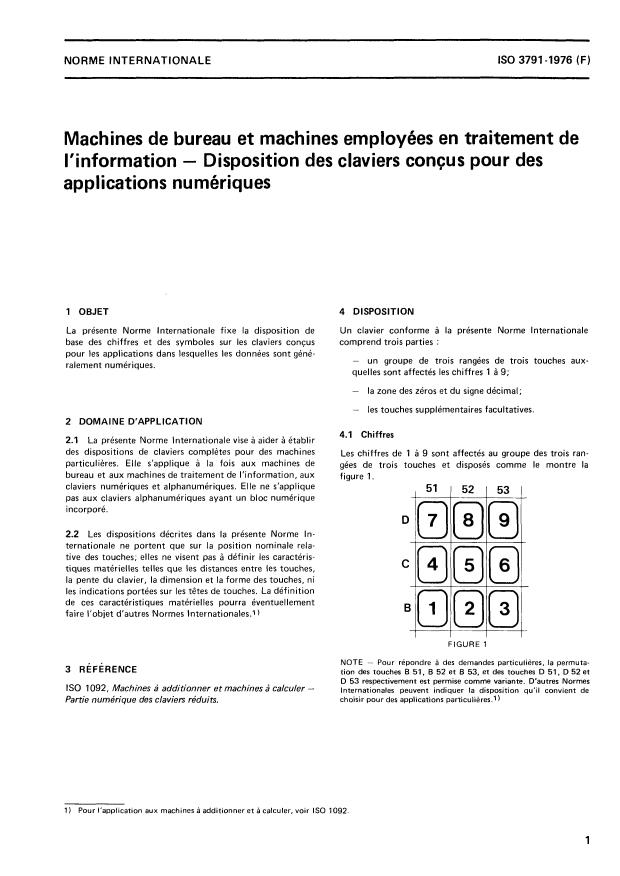
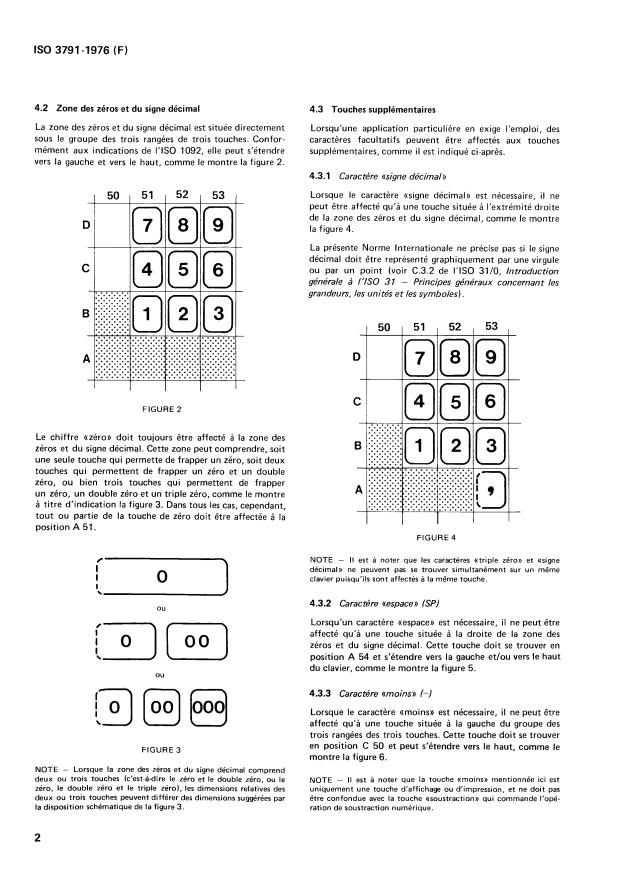
ISO 3791:1976 - Machines de bureau et machines employées en traitement de l'information -- Disposition des claviers conçus pour des applications numériques


ISO 3791:1976 - Machines de bureau et machines employées en traitement de l'information -- Disposition des claviers conçus pour des applications numériques
ISO 3791:1976 - Machines de bureau et machines employées en traitement de l'information — Disposition des claviers conçus pour des applications numériques/1/1976
ISO 3791:1976 - Machines de bureau et machines employées en traitement de l'information — Disposition des claviers conçus pour des applications numériques/1/1976
Overview
ISO 3791:1976 is an international standard published by the International Organization for Standardization (ISO) that defines the keyboard layouts for numeric applications on office machines and data processing equipment. This standard focuses on the basic arrangement of figures and symbols on numeric keypads used primarily in devices where the main input data is numeric, such as calculators, adding machines, and other specialized office equipment.
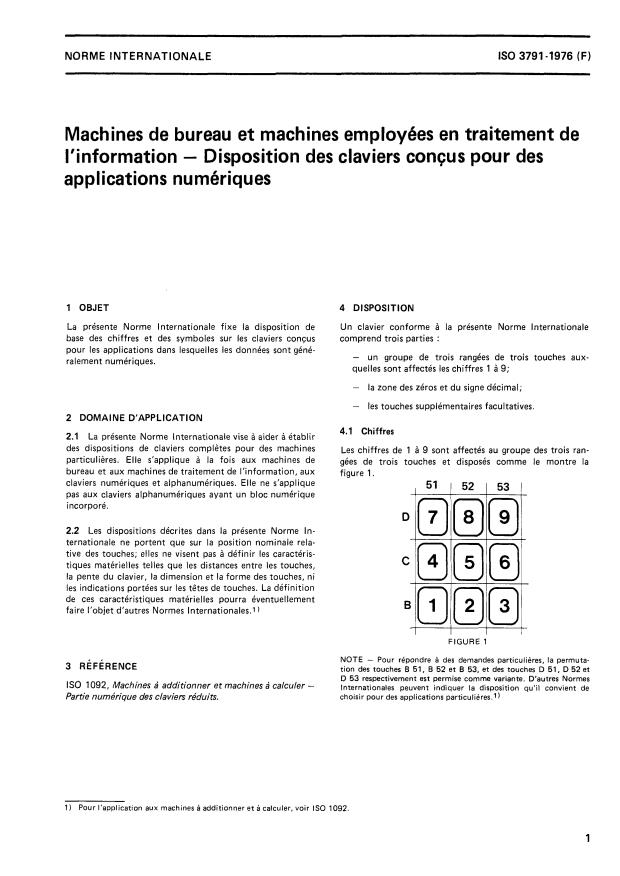
The standard aims to streamline the design of numeric keyboards by specifying the nominal relative positions of numeric keys (1-9), zero(s), decimal signs, and optional function keys. It does not prescribe the physical characteristics of keys, such as size or spacing, allowing manufacturers flexibility while maintaining usability and consistency for numeric input tasks.
Key Topics
Numeric Key Placement:
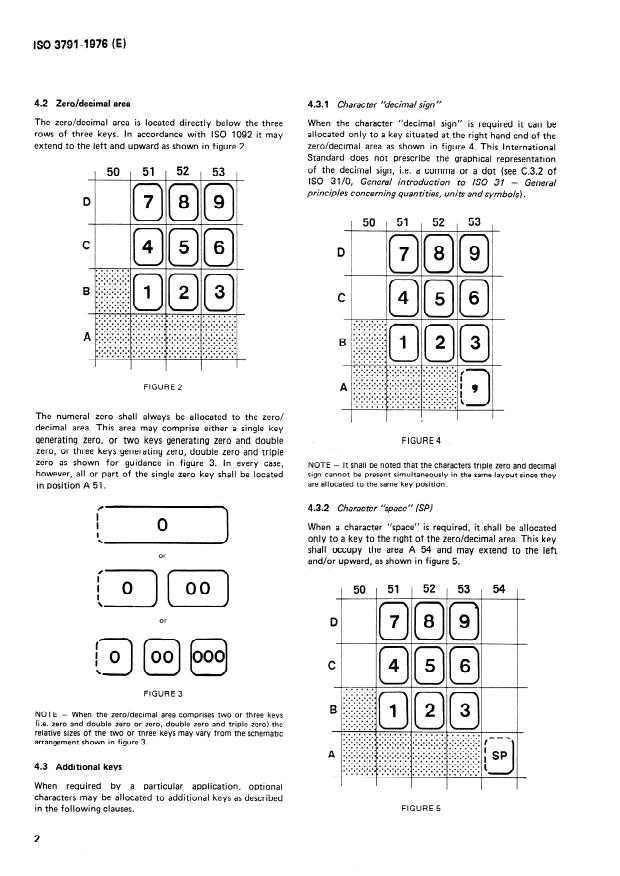
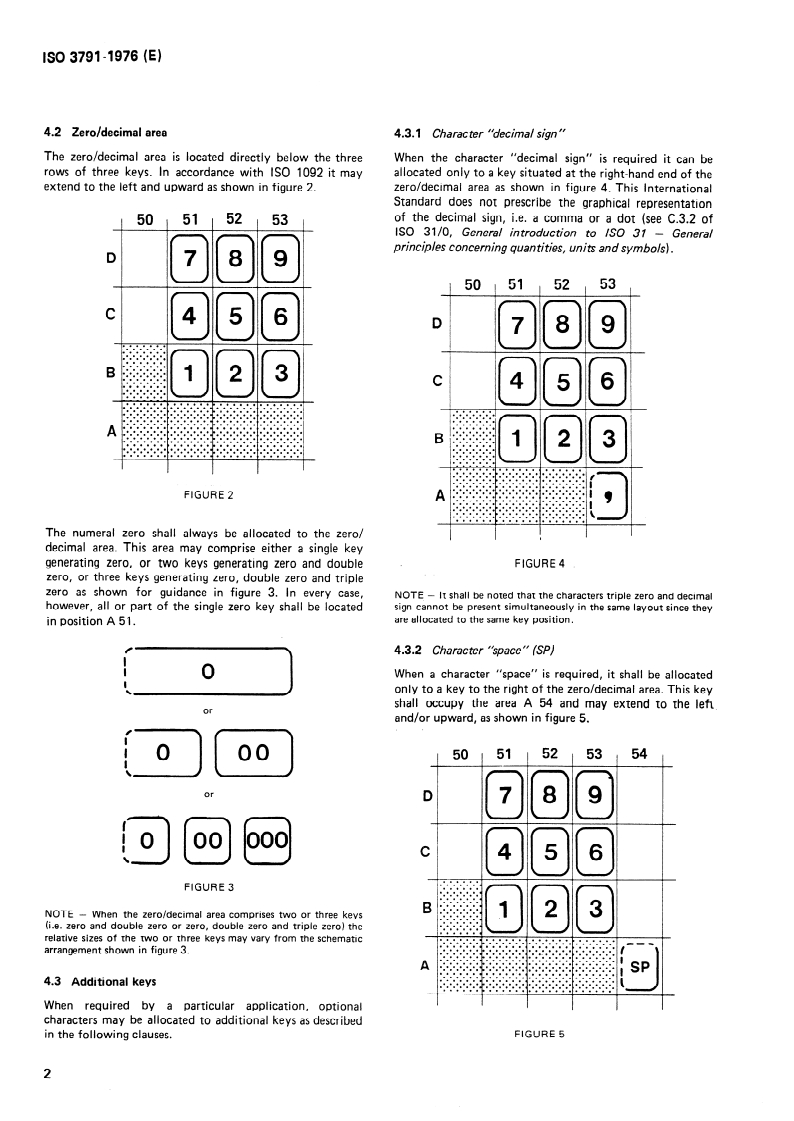
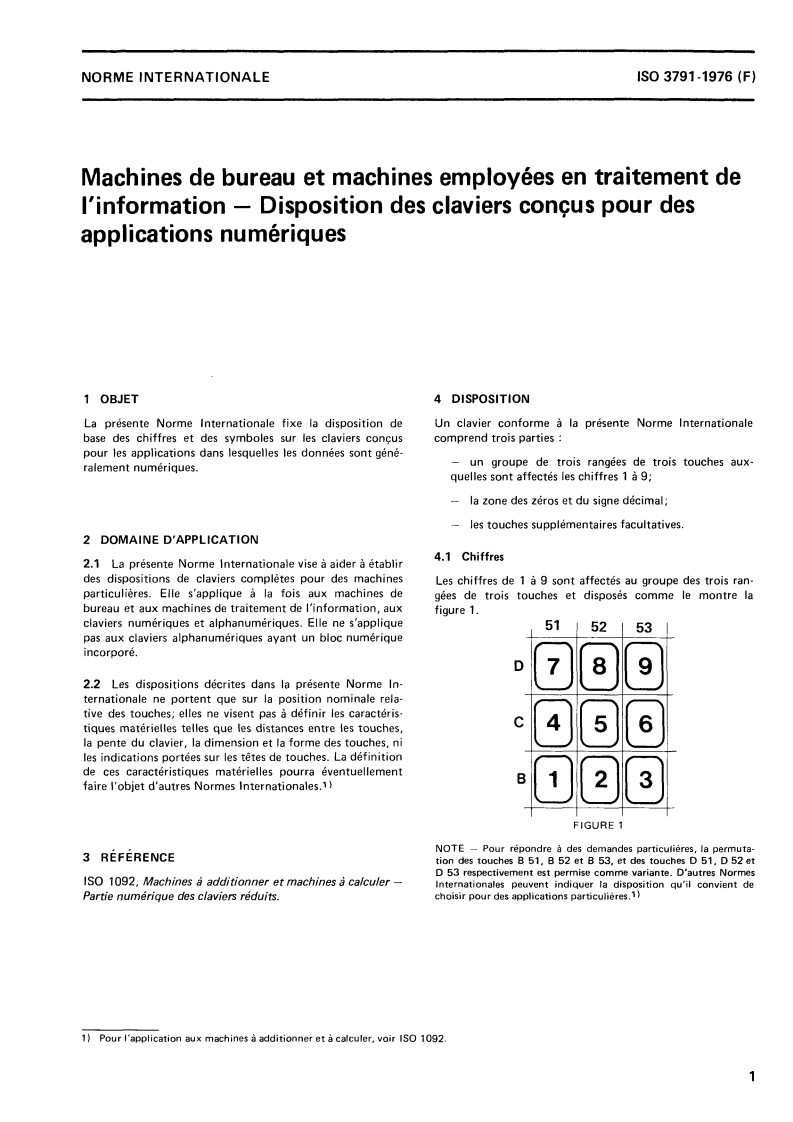
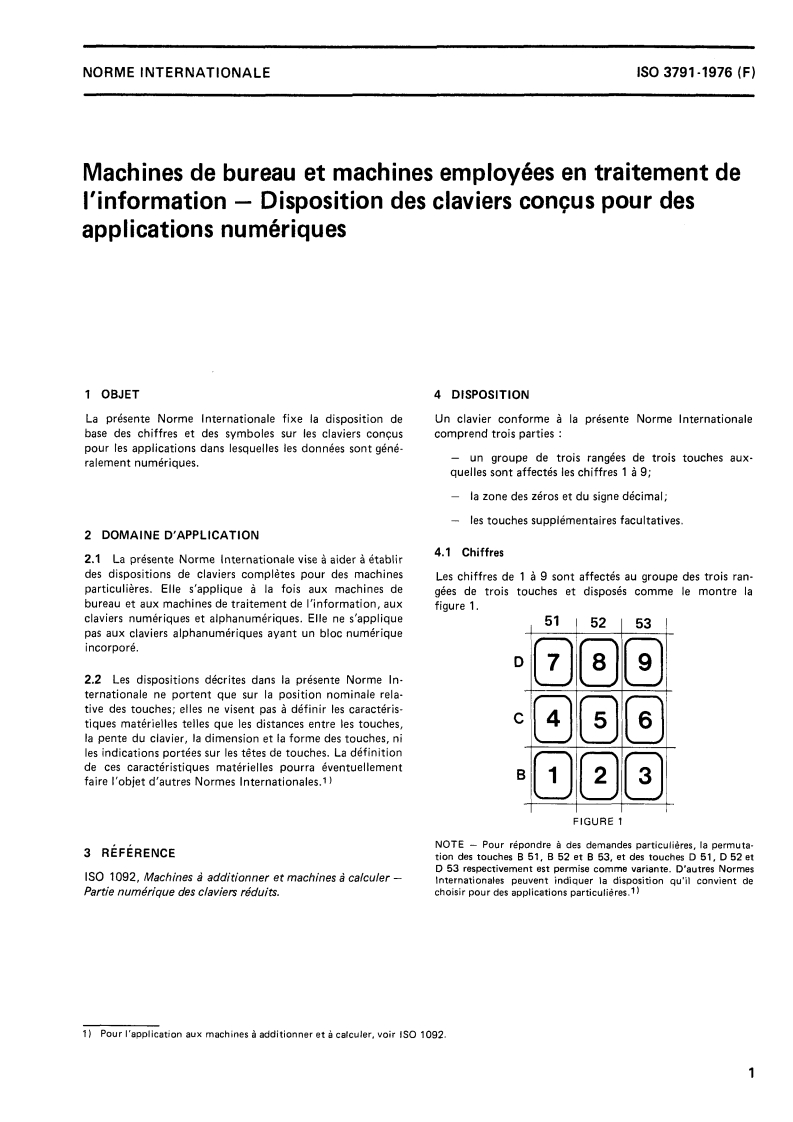
ISO 3791 divides numeric keypad layouts into sections, ensuring keys 1 to 9 are arranged in a three-row by three-column grid for intuitive numeric entry.Zero and Decimal Zones:
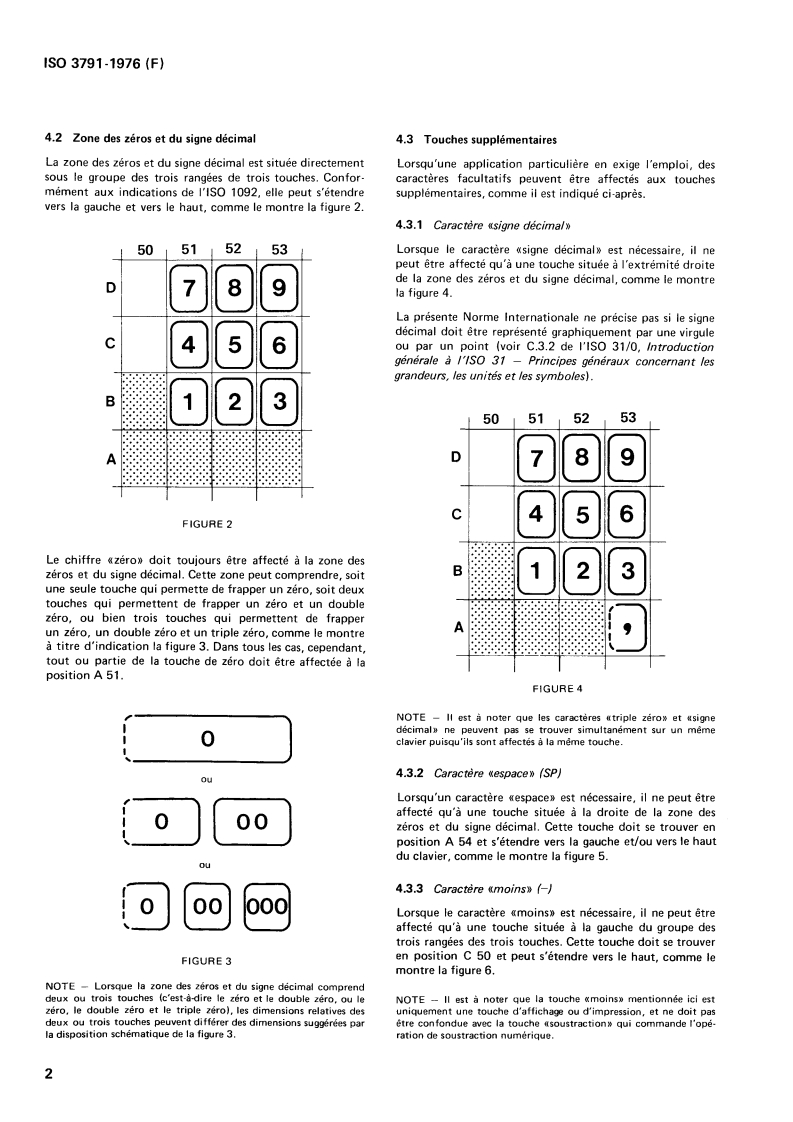
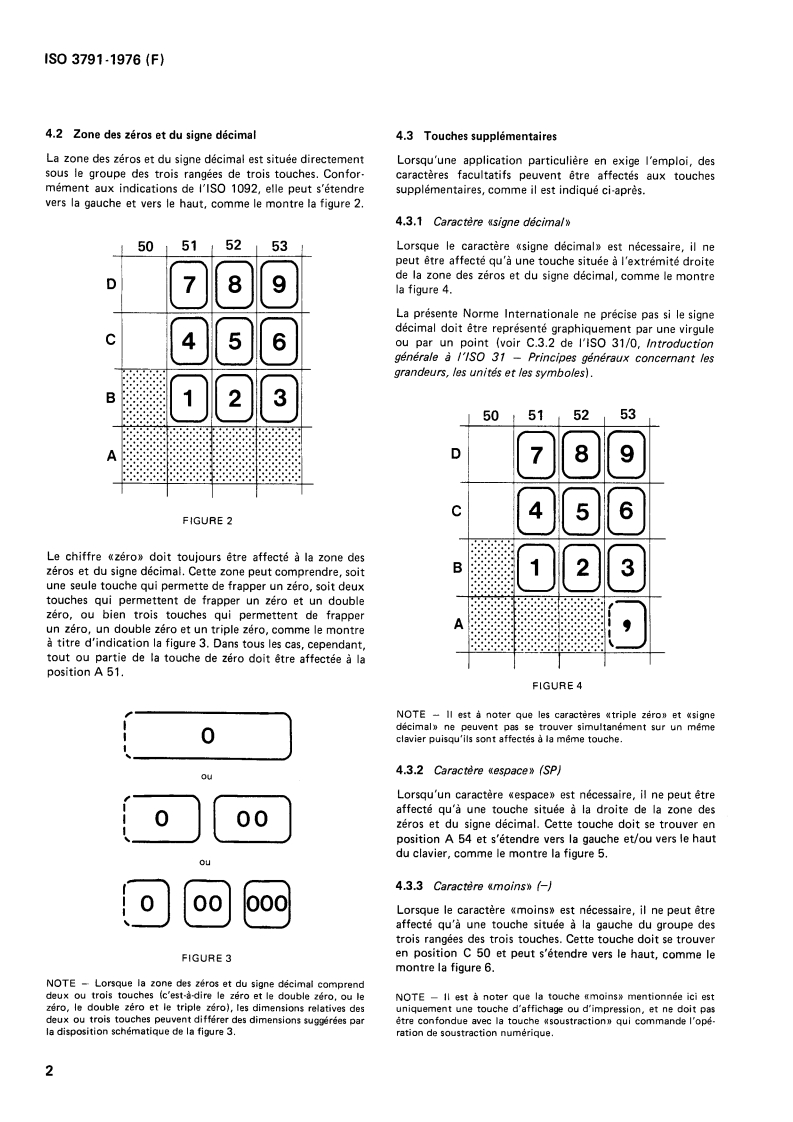
The standard specifies the area directly beneath the 1-9 grid reserved for one or more zero keys and the decimal separator key. Variations include single zero or multiple zeros (double, triple zeros) for faster typing of larger numeric values.Optional Keys:
Additional keys such as the space (SP) key or a minus sign (-) key are accommodated with specific positions to support various numeric entry applications.- The decimal point key is placed at the rightmost position of the zero/decimal zone.
- The space key, if included, is located immediately to the right of the zero/decimal zone.
- The minus key is positioned to the left of the numeric grid.
Flexibility for Variants:
While the core layout is fixed, the standard permits swapping certain keys (e.g., rows or columns) to cater to different ergonomic or application-specific needs.Reference to ISO 1092:
ISO 3791 coordinates with ISO 1092, which deals with keyboards for adding machines and calculators, ensuring harmonized numeric keypad layouts across different machine types.
Applications
ISO 3791:1976 is vital for the design and manufacturing of:
Office Machines:
Devices such as adding machines, calculators, and billing counters where fast, accurate numeric entry is essential.Data Processing Equipment:
Dedicated numeric keypads in computer terminals, point-of-sale (POS) systems, and industrial control panels requiring efficient numeric data input.Financial and Accounting Tools:
Equipment used in banking, retail accounting, and inventory management that benefits from standardized numeric keyboards to reduce user errors and increase speed.Custom Numeric Keyboards:
Machines with specialized functions that use numeric keypad configurations customized around this standard for consistency and interoperability.
Related Standards
ISO 1092 - Numeric Keyboards for Adding Machines and Calculators:
Provides detailed layouts for numeric keypads specific to adding and calculating devices, complementing the general arrangements of ISO 3791.ISO 31 - Quantities and Units:
Addresses the graphical representation of numeric symbols, such as decimal signs (comma or point), providing guidance referenced by ISO 3791.Other ISO Technical Committees on Office Equipment and Data Processing:
These committees develop standards that may define the physical characteristics (key spacing, size) or functional overlays for numeric keypads that conform to ISO 3791 layout principles.
Keywords: ISO 3791, numeric keyboard layout, numeric keypad, office machines, data processing equipment, numeric applications, keyboard standard, ISO 1092, decimal key, zero key, numeric input, keypad design, calculator keyboard.
Buy Documents
ISO 3791:1976 - Office machines and data processing equipment -- Keyboard layouts for numeric applications
ISO 3791:1976 - Office machines and data processing equipment — Keyboard layouts for numeric applications/1/1976
ISO 3791:1976 - Machines de bureau et machines employées en traitement de l'information -- Disposition des claviers conçus pour des applications numériques
ISO 3791:1976 - Machines de bureau et machines employées en traitement de l'information -- Disposition des claviers conçus pour des applications numériques
ISO 3791:1976 - Machines de bureau et machines employées en traitement de l'information — Disposition des claviers conçus pour des applications numériques/1/1976
ISO 3791:1976 - Machines de bureau et machines employées en traitement de l'information — Disposition des claviers conçus pour des applications numériques/1/1976
Get Certified
Connect with accredited certification bodies for this standard

BSI Group
BSI (British Standards Institution) is the business standards company that helps organizations make excellence a habit.

NYCE
Mexican standards and certification body.
Sponsored listings
Frequently Asked Questions
ISO 3791:1976 is a standard published by the International Organization for Standardization (ISO). Its full title is "Office machines and data processing equipment — Keyboard layouts for numeric applications". This standard covers: Includes the basic arrangement of figures and symboles on keyboards intended for applications in which the data is mostly numeric. Reference: ISO 1092.
Includes the basic arrangement of figures and symboles on keyboards intended for applications in which the data is mostly numeric. Reference: ISO 1092.
ISO 3791:1976 is classified under the following ICS (International Classification for Standards) categories: 35.180 - IT Terminal and other peripheral equipment; 35.260 - Office machines. The ICS classification helps identify the subject area and facilitates finding related standards.
ISO 3791:1976 is available in PDF format for immediate download after purchase. The document can be added to your cart and obtained through the secure checkout process. Digital delivery ensures instant access to the complete standard document.
Standards Content (Sample)
INTERNATIONAL STANDARD
INTERNATIONAL ORGANIZATION FOR STANDARDIZATION l MEJi(flYHAPOaHAII OPTAHM3AUMR no CTAHLIAPTM3ALIMM .ORGANISATION INTERNATIONALE DE NORMALISATION
Office machines and data processing equipment - Keyboard
layouts for numeric applications
Machines de bureau et machines emplo y6es en traitement de Yin formation - Disposition des claviers
concus pour des appfica tions numkigues
First edition - 1976-08-01
LLJ
-
UDC 651.2 : 681.32-51
Ref. No. ISO 3791-1976 (E)
CD
Descriptors : Office machines, data processing equipment, auxiliary equipment (computers), keyboards, numeric Character Sets, Position
(location).
Price based on 3 pages
ISO (the international Organization for Standardization) is a worldwide federation
of national Standards institutes (ISO Member Bodies). The work of developing
International Standards is carried out through ISO Technical Committees. Every
Member Body interested in a subject for which a Technical Committee has been set
up has the right to be represented on that Committee. International organizations,
governmental and non-governmental, in liaison with ISO, also take part in the work.
Draft international Standards adopted by the Technical Committees are circulated
to the Member Bodies for approval before their acceptance as international
Standards by the ISO Council .
International Standard ISO 3799 was drawn up by Technical Committee
lSO/TC 95, Office machines, and was circulated to the Member Bodies in
May 1975.
It has been approved by the Member Bodies of the following countries :
Austraiia I taly Turkey
Czechoslovakia Japan United Kingdom
France Romania U.S.A. -
Germany Sweden U.S.S. R.
Iran Switzerland Yugoslavia
No Member Body expressed disapproval of the document.
G International Organkation for Standardkation, 1976 @
Printed in Switzerland
INTERNATIONAL STANDARD ISO 3791-1976 (E)
Office machines and data processing equipment - Keyboard
layouts for numeric applications
-
1 SCOPE an array of three rows of three keys, to which the
numerals 1 to 9 are allocated;
This international Standard specifies the basic layout of
-
numerals and Symbols on keyboards intended to be used in zero/decimal area,
applications where the data are generally numeric.
-
additional optional keys.
2 FIELD OF APPLICATION
4.1 Numerais
2.1 This international Standard is intended for use in
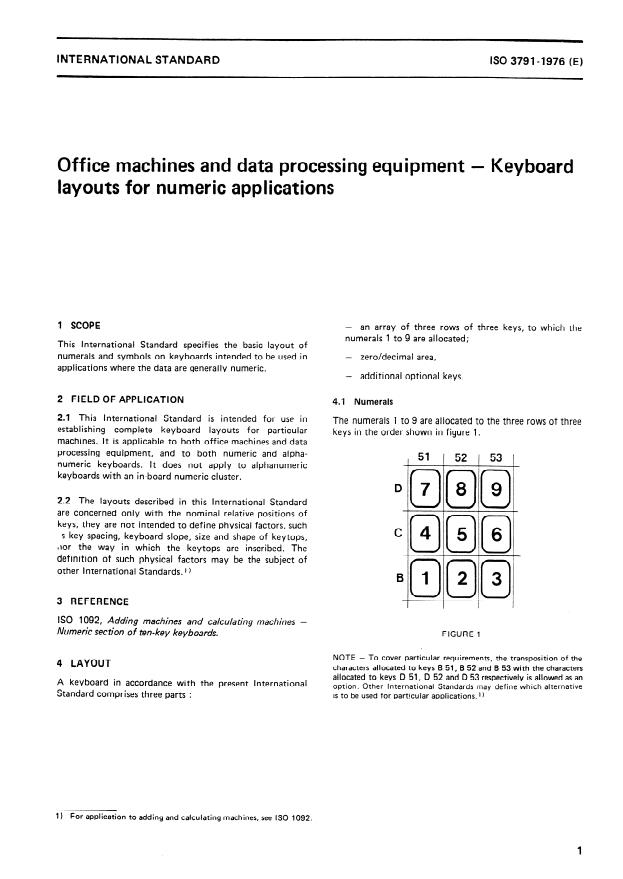
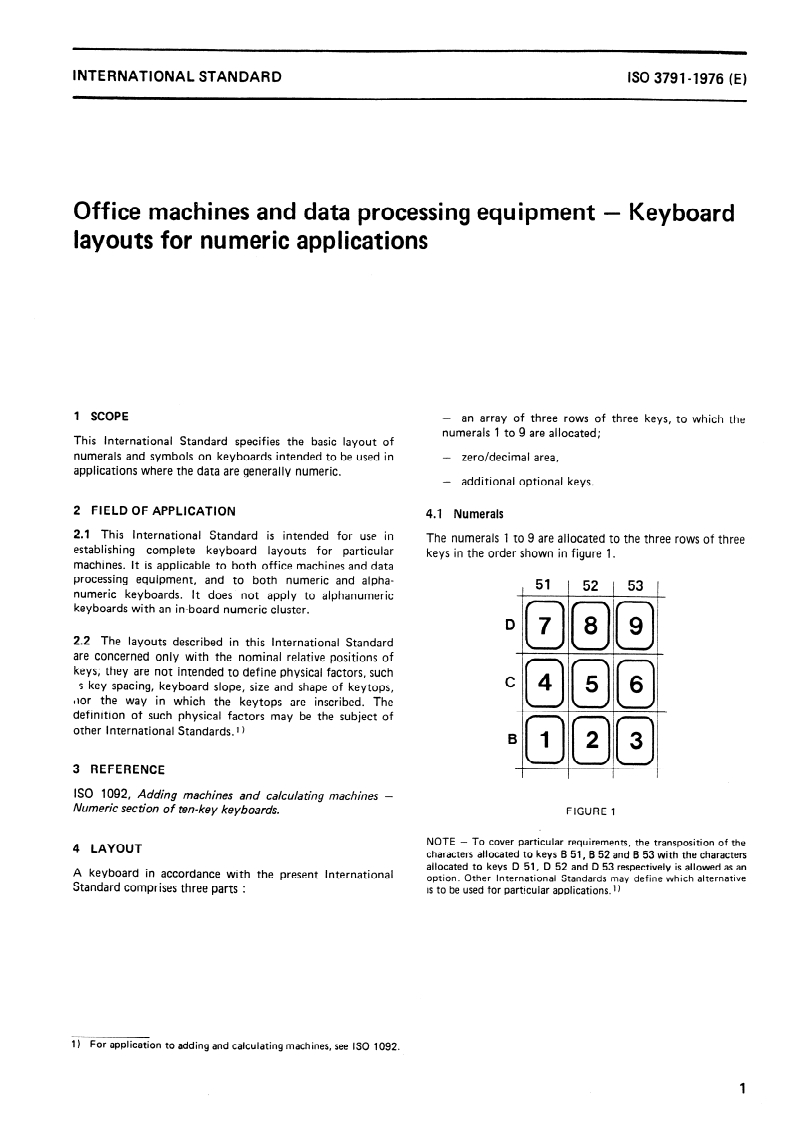
The numerals 1 to 9 are allocated to the three rows of three
establishing complete keyboard layouts for particular
keys in the Order shown in figure 1.
machines. it is applicable to both Office machines and data
processing equipment, and to both numeric and alpha-
51 52
53 I
numeric keyboards. it does not apply to alphanumeric
keyboards with an in-board numeric cluster.
D
7 8 9
2.2 The layouts described in this international Standard
0 0
are concerned only with the nominal relative positions of
keys; they are not intended to define physical factors, such
C
s key spacing, keyboard slope, size and shape of keytops, 5 6
ilor the way in which the keytops are inscribed. The
0 0
definition of such physical factors may be the subject of
other international Standards.1 )
B
3 REFERENCE
ISO 1092, Adding machines and calculating machines -
FIGURE 1
Numeric section o f ten-ke y ke yboards.
NOTE - To cover particular requirements, the transposition of the
4 LAYOUT
characters allocated to keys B 51, B 52 and B 53 with the characters
allocated to keys D 51, D 52 and D 53 respectively is allowed as an
A keyboard in accordance with the present international
Option. Other International Standards may define which alternative
Standard comprises three Parts : is to be used for parttcular applications.1)
1) For application to adding and calculating machines, see ISO 1092.
---------
...
INTERNATIONAL STANDARD
INTERNATIONAL ORGANIZATION FOR STANDARDIZATION l MEJi(flYHAPOaHAII OPTAHM3AUMR no CTAHLIAPTM3ALIMM .ORGANISATION INTERNATIONALE DE NORMALISATION
Office machines and data processing equipment - Keyboard
layouts for numeric applications
Machines de bureau et machines emplo y6es en traitement de Yin formation - Disposition des claviers
concus pour des appfica tions numkigues
First edition - 1976-08-01
LLJ
-
UDC 651.2 : 681.32-51
Ref. No. ISO 3791-1976 (E)
CD
Descriptors : Office machines, data processing equipment, auxiliary equipment (computers), keyboards, numeric Character Sets, Position
(location).
Price based on 3 pages
ISO (the international Organization for Standardization) is a worldwide federation
of national Standards institutes (ISO Member Bodies). The work of developing
International Standards is carried out through ISO Technical Committees. Every
Member Body interested in a subject for which a Technical Committee has been set
up has the right to be represented on that Committee. International organizations,
governmental and non-governmental, in liaison with ISO, also take part in the work.
Draft international Standards adopted by the Technical Committees are circulated
to the Member Bodies for approval before their acceptance as international
Standards by the ISO Council .
International Standard ISO 3799 was drawn up by Technical Committee
lSO/TC 95, Office machines, and was circulated to the Member Bodies in
May 1975.
It has been approved by the Member Bodies of the following countries :
Austraiia I taly Turkey
Czechoslovakia Japan United Kingdom
France Romania U.S.A. -
Germany Sweden U.S.S. R.
Iran Switzerland Yugoslavia
No Member Body expressed disapproval of the document.
G International Organkation for Standardkation, 1976 @
Printed in Switzerland
INTERNATIONAL STANDARD ISO 3791-1976 (E)
Office machines and data processing equipment - Keyboard
layouts for numeric applications
-
1 SCOPE an array of three rows of three keys, to which the
numerals 1 to 9 are allocated;
This international Standard specifies the basic layout of
-
numerals and Symbols on keyboards intended to be used in zero/decimal area,
applications where the data are generally numeric.
-
additional optional keys.
2 FIELD OF APPLICATION
4.1 Numerais
2.1 This international Standard is intended for use in
The numerals 1 to 9 are allocated to the three rows of three
establishing complete keyboard layouts for particular
keys in the Order shown in figure 1.
machines. it is applicable to both Office machines and data
processing equipment, and to both numeric and alpha-
51 52
53 I
numeric keyboards. it does not apply to alphanumeric
keyboards with an in-board numeric cluster.
D
7 8 9
2.2 The layouts described in this international Standard
0 0
are concerned only with the nominal relative positions of
keys; they are not intended to define physical factors, such
C
s key spacing, keyboard slope, size and shape of keytops, 5 6
ilor the way in which the keytops are inscribed. The
0 0
definition of such physical factors may be the subject of
other international Standards.1 )
B
3 REFERENCE
ISO 1092, Adding machines and calculating machines -
FIGURE 1
Numeric section o f ten-ke y ke yboards.
NOTE - To cover particular requirements, the transposition of the
4 LAYOUT
characters allocated to keys B 51, B 52 and B 53 with the characters
allocated to keys D 51, D 52 and D 53 respectively is allowed as an
A keyboard in accordance with the present international
Option. Other International Standards may define which alternative
Standard comprises three Parts : is to be used for parttcular applications.1)
1) For application to adding and calculating machines, see ISO 1092.
---------
...
-\
NORME INTERNATIONALE @ 3791
'*E&
INTERNATIONAL ORGANIZATION FOR STANDARDIZATION .MtX,lYHAPO,IHAR OPIAHll34LIMR no CTAHLlAPTM3AUMM .ORGANISATION INTERNATIONALE DE NORMALISATION
Machines de bureau et machines employées en traitement de
l'information - Disposition des claviers concus pour des
ap p I i ca t ions nu mér i qu es
Office machines and data processing equipment - Keyboard layouts for numeric applications
Première édition - 1976-08-01
-
LL
-
Réf. no : IS0 3791-1976 (F)
CDU 651.2 : 681.32-51
(D
I-
C
Descripteurs : machine de bureau, materiel de traitement de l'information, materiel auxiliaire d'ordinateur, clavier, jeu de caractères numé-
-
e riques, position.
M
O
5!?
Prix basé sur 3 pages
AVANT-PROPOS
L‘ISO (Organisation Internationale de Normalisation) est une federation mondiale
d‘organismes nationaux de normalisation (Comites Membres ISO). L’élaboration
des Normes Internationales est confiée aux Comites Techniques ISO. Chaque
Comité Membre intéressé par une Qtude a le droit de faire partie du Comité Tech-
nique correspondant. Les organisations internationales, gouvernementales et non
gouvernementales, en liaison avec I‘ISO, participent également aux travaux.
Les Projets de Normes Internationales adoptés par les Comités Techniques sont
soumis aux Comités Membres pour approbation, avant leur acceptation comme
Normes Internationales par le Conseil de I’ISO.
La Norme Internationale IS0 3791 a éte établie par le Comité Technique
ISO/TC 95, Machines de bureau, et soumise aux Comités Membres en mai 1975.
Elle a été approuvée par les Comités Membres des pays suivants :
Al lemagne Japon Tchécoslovaquie
Australie Roumanie Turquie
France Royaume-Uni U.R.S.S.
I ran Suède
U.S.A.
Italie Suisse
Yougoslavie
Aucun Comité Membre n’a désapprouvé le document.
O Organisation Internationale de Normalisation, 1976 O
Imprimé en Suisse
~ ~ ~~ ~~ ~~ ~
IS0 3791 -1976 (F)
NORME INTERNATIONALE
Machines de bureau et machines employées en traitement de
l'information - Disposition des claviers concus pour des
applications numériques
1 OBJET 4 DISPOSITION
Un clavier conforme à la présente Norme Internationale
La présente Norme Internationale fixe la disposition de
:
base des chiffres et des symboles sur les claviers concus comprend trois parties
pour les applications dans lesquelles les données sont géné-
- un groupe de trois rangées de trois touches aux-
ralement numériques.
quelles sont affectés les chiffres 1 à 9;
- la zone des zéros et du signe décimal;
- les touches supplémentaires facultatives.
2 DOMAINE D'APPLICATION
4.1 Chiffres
2.1 La présente Norme Internationale vise à aiderà établir
des dispositions de claviers complètes pour des machines
Les chiffres de 1 à 9 sont affectés au groupe des trois ran-
particulières. Elle s'applique à la fois aux machines de
gées de trois touches et disposés comme le montre la
bureau et aux machines de traitement de l'information, aux
figure 1.
claviers numériques et alphanumériques. Elle ne s'applique
, 51 I 52 I 53 1
pas aux claviers alphanumériques ayant un bloc numérique
incorporé.
2.2 Les dispositions décrites dans la présente Norme In-
ternationale ne portent que sur la position nominale rela-
tive des touches; elles ne visent pas à définir les caractéris-
tiques matérielles telles que les distances entre les touches,
la pente du clavier, la dimension et la forme des touches, ni
c@QQ
les indications portées sur les têtes de touches. La définition
ces caractéristiques matérielles pourra éventuellement
de
faire l'objet d'autres Normes Internationales.1)
FIGURE 1
NOTE - Pour répondre à des demandes particulières, la permuta-
3 RÉFÉRENCE
tion des touches B 51, B 52 et B 53, et des touches D 51, D 52 et
D 53 respectivement est permise comme variante. D'autres Normes
IS0 1092, Machines à additionner et machines à calculer -
Internationales peuvent indiquer la disposition qu'il convient de
Partie numérique des claviers réduits. choisir pour des applications particulières.')
1) Pour l'application aux machin
...
NORME INTERNATIONALE @ 3791
INTERNATIONAL ORGANIZATION FOR STANDARDIZATION *MtXJVHAPO!lHAR OPrAHM34UMI no CTAHLlAPTM3AUMM .ORGANISATION INTERNATIONALE DE NORMALISATION
Machines de bureau et machines employées en traitement de
l'information - Disposition des claviers concus pour des
a p p I i ca t ion s nu mér i q u es
Office machines and data processing equipment - Keyboard layouts for numeric applications
Première hdition - 1976-08-01
LL
-
Réf. no : IS0 3791 -1976 (F)
CDU 651.2 : 681.32-51
(D
r-
z
Descripteurs : machine de bureau, matériel de traitement de l'information, matériel auxiliaire d'ordinateur, clavier, jeu de caractères numé-
F
e riques, position.
M
O
v)
Prix basé sur 3 pages
AVANT-PROPOS
L‘ISO (Organisation Internationale de Normalisation) est une fédération mondiale
d’organismes nationaux de normalisation (Comités Membres ISO). L’élaboration
des Normes Internationales est confiée aux Comités Techniques ISO. Chaque
Comité Membre intéressé par une étude a le droit de faire partie du Comité Tech-
nique correspondant. Les organisations internationales, gouvernementales et non
gouvernementales, en liaison avec I’ISO, participent également aux travaux.
Les Projets de Normes Internationales adoptés par les Comités Techniques sont
soumis aux Comités Membres pour approbation, avant leur acceptation comme
Normes internationales par le Conseil de I’ISO.
La Norme Internationale IS0 3791 a été établie par le Comité Technique
ISO/TC 95, Machines de bureau, et soumise aux Comités Membres en mai 1975.
Elle a été approuvée par les Comités Membres des pays suivants :
Al lemagne Japon Tchécoslovaquie
Australie Roumanie Turquie
France
Royaume-Uni U.R.S.S.
Iran
Suède U.S.A.
I tal ie Suisse Yougoslavie
Aucun Comité Membre n’a désapprouvé le document.
O Organisation Internationale de Normalisation, 1976
Imprimé en Suisse
~ ~~ ~ ~~~~~ ~
NORME INTERNATIONALE IS0 3791 -1976 (F)
Machines de bureau et machines employées en traitement de
- Disposition des claviers concus pour des
l'information
a p p I i ca t ions nu mér iq u es
1 OBJET
4 DISPOSITION
La présente Norme Internationale fixe la disposition de
Un clavier conforme à la présente Norme Internationale
base des chiffres et des symboles sur les claviers conçus comprend trois parties :
pour les applications dans lesquelles les données sont géné-
- un groupe de trois rangées de trois touches aux-
ralement numériques.
quelles sont affectés les chiffres 1 à 9;
- la zone des zéros et du signe décimal;
- les touches supplémentaires facultatives.
2 DOMAINE D'APPLICATION
4.1 Chiffres
2.1 La présente Norme Internationale vise à aider à établir
des dispositions de claviers complètes pour des machines
Les chiffres de 1 à 9 sont affectés au groupe des trois ran-
particulières. Elle s'applique à la fois aux machines de
gées de trois touches et disposés comme le montre la
bureau et aux machines de traitement de l'information, aux
figure 1.
claviers numériques et alphanumériques. Elle ne s'applique
l 51 I 52 I 53 I
pas aux claviers alphanumériques ayant un bloc numérique
incorporé.
2.2 Les dispositions décrites dans la présente Norme In-
ternationale ne portent que sur la position nominale rela-
tive des touches; elles ne visent pas à définir les caractéris-
tiques matérielles telles que les distances entre les touches,
la pente du clavier, la dimension et la forme des touches, ni
les indications portées sur les têtes de touches. La définition
de ces caractéristiques matérielles pourra éventuellement
faire l'objet d'autres Normes Internationales.? )
FIGURE 1
NOTE - Pour répondre à des demandes particulières, la permuta-
3 RÉFÉRENCE
tion des touches B 51, B 52 et B 53, et des touches D 51, D 52 et
D 53 respectivement est permise comme variante. D'autres Normes
IS0 1092, Machines a additionner et machines ri calculer -
Internationales peuvent indiquer la disposition qu'il convient de
Partie numérique des claviers réduits. choisir pour des applications particulieres.1)
~ ~~
1) Pour l'application aux machines à additionner et à calculer, voir I
...
-\
NORME INTERNATIONALE @ 3791
'*E&
INTERNATIONAL ORGANIZATION FOR STANDARDIZATION .MtX,lYHAPO,IHAR OPIAHll34LIMR no CTAHLlAPTM3AUMM .ORGANISATION INTERNATIONALE DE NORMALISATION
Machines de bureau et machines employées en traitement de
l'information - Disposition des claviers concus pour des
ap p I i ca t ions nu mér i qu es
Office machines and data processing equipment - Keyboard layouts for numeric applications
Première édition - 1976-08-01
-
LL
-
Réf. no : IS0 3791-1976 (F)
CDU 651.2 : 681.32-51
(D
I-
C
Descripteurs : machine de bureau, materiel de traitement de l'information, materiel auxiliaire d'ordinateur, clavier, jeu de caractères numé-
-
e riques, position.
M
O
5!?
Prix basé sur 3 pages
AVANT-PROPOS
L‘ISO (Organisation Internationale de Normalisation) est une federation mondiale
d‘organismes nationaux de normalisation (Comites Membres ISO). L’élaboration
des Normes Internationales est confiée aux Comites Techniques ISO. Chaque
Comité Membre intéressé par une Qtude a le droit de faire partie du Comité Tech-
nique correspondant. Les organisations internationales, gouvernementales et non
gouvernementales, en liaison avec I‘ISO, participent également aux travaux.
Les Projets de Normes Internationales adoptés par les Comités Techniques sont
soumis aux Comités Membres pour approbation, avant leur acceptation comme
Normes Internationales par le Conseil de I’ISO.
La Norme Internationale IS0 3791 a éte établie par le Comité Technique
ISO/TC 95, Machines de bureau, et soumise aux Comités Membres en mai 1975.
Elle a été approuvée par les Comités Membres des pays suivants :
Al lemagne Japon Tchécoslovaquie
Australie Roumanie Turquie
France Royaume-Uni U.R.S.S.
I ran Suède
U.S.A.
Italie Suisse
Yougoslavie
Aucun Comité Membre n’a désapprouvé le document.
O Organisation Internationale de Normalisation, 1976 O
Imprimé en Suisse
~ ~ ~~ ~~ ~~ ~
IS0 3791 -1976 (F)
NORME INTERNATIONALE
Machines de bureau et machines employées en traitement de
l'information - Disposition des claviers concus pour des
applications numériques
1 OBJET 4 DISPOSITION
Un clavier conforme à la présente Norme Internationale
La présente Norme Internationale fixe la disposition de
:
base des chiffres et des symboles sur les claviers concus comprend trois parties
pour les applications dans lesquelles les données sont géné-
- un groupe de trois rangées de trois touches aux-
ralement numériques.
quelles sont affectés les chiffres 1 à 9;
- la zone des zéros et du signe décimal;
- les touches supplémentaires facultatives.
2 DOMAINE D'APPLICATION
4.1 Chiffres
2.1 La présente Norme Internationale vise à aiderà établir
des dispositions de claviers complètes pour des machines
Les chiffres de 1 à 9 sont affectés au groupe des trois ran-
particulières. Elle s'applique à la fois aux machines de
gées de trois touches et disposés comme le montre la
bureau et aux machines de traitement de l'information, aux
figure 1.
claviers numériques et alphanumériques. Elle ne s'applique
, 51 I 52 I 53 1
pas aux claviers alphanumériques ayant un bloc numérique
incorporé.
2.2 Les dispositions décrites dans la présente Norme In-
ternationale ne portent que sur la position nominale rela-
tive des touches; elles ne visent pas à définir les caractéris-
tiques matérielles telles que les distances entre les touches,
la pente du clavier, la dimension et la forme des touches, ni
c@QQ
les indications portées sur les têtes de touches. La définition
ces caractéristiques matérielles pourra éventuellement
de
faire l'objet d'autres Normes Internationales.1)
FIGURE 1
NOTE - Pour répondre à des demandes particulières, la permuta-
3 RÉFÉRENCE
tion des touches B 51, B 52 et B 53, et des touches D 51, D 52 et
D 53 respectivement est permise comme variante. D'autres Normes
IS0 1092, Machines à additionner et machines à calculer -
Internationales peuvent indiquer la disposition qu'il convient de
Partie numérique des claviers réduits. choisir pour des applications particulières.')
1) Pour l'application aux machin
...
NORME INTERNATIONALE @ 3791
INTERNATIONAL ORGANIZATION FOR STANDARDIZATION *MtXJVHAPO!lHAR OPrAHM34UMI no CTAHLlAPTM3AUMM .ORGANISATION INTERNATIONALE DE NORMALISATION
Machines de bureau et machines employées en traitement de
l'information - Disposition des claviers concus pour des
a p p I i ca t ion s nu mér i q u es
Office machines and data processing equipment - Keyboard layouts for numeric applications
Première hdition - 1976-08-01
LL
-
Réf. no : IS0 3791 -1976 (F)
CDU 651.2 : 681.32-51
(D
r-
z
Descripteurs : machine de bureau, matériel de traitement de l'information, matériel auxiliaire d'ordinateur, clavier, jeu de caractères numé-
F
e riques, position.
M
O
v)
Prix basé sur 3 pages
AVANT-PROPOS
L‘ISO (Organisation Internationale de Normalisation) est une fédération mondiale
d’organismes nationaux de normalisation (Comités Membres ISO). L’élaboration
des Normes Internationales est confiée aux Comités Techniques ISO. Chaque
Comité Membre intéressé par une étude a le droit de faire partie du Comité Tech-
nique correspondant. Les organisations internationales, gouvernementales et non
gouvernementales, en liaison avec I’ISO, participent également aux travaux.
Les Projets de Normes Internationales adoptés par les Comités Techniques sont
soumis aux Comités Membres pour approbation, avant leur acceptation comme
Normes internationales par le Conseil de I’ISO.
La Norme Internationale IS0 3791 a été établie par le Comité Technique
ISO/TC 95, Machines de bureau, et soumise aux Comités Membres en mai 1975.
Elle a été approuvée par les Comités Membres des pays suivants :
Al lemagne Japon Tchécoslovaquie
Australie Roumanie Turquie
France
Royaume-Uni U.R.S.S.
Iran
Suède U.S.A.
I tal ie Suisse Yougoslavie
Aucun Comité Membre n’a désapprouvé le document.
O Organisation Internationale de Normalisation, 1976
Imprimé en Suisse
~ ~~ ~ ~~~~~ ~
NORME INTERNATIONALE IS0 3791 -1976 (F)
Machines de bureau et machines employées en traitement de
- Disposition des claviers concus pour des
l'information
a p p I i ca t ions nu mér iq u es
1 OBJET
4 DISPOSITION
La présente Norme Internationale fixe la disposition de
Un clavier conforme à la présente Norme Internationale
base des chiffres et des symboles sur les claviers conçus comprend trois parties :
pour les applications dans lesquelles les données sont géné-
- un groupe de trois rangées de trois touches aux-
ralement numériques.
quelles sont affectés les chiffres 1 à 9;
- la zone des zéros et du signe décimal;
- les touches supplémentaires facultatives.
2 DOMAINE D'APPLICATION
4.1 Chiffres
2.1 La présente Norme Internationale vise à aider à établir
des dispositions de claviers complètes pour des machines
Les chiffres de 1 à 9 sont affectés au groupe des trois ran-
particulières. Elle s'applique à la fois aux machines de
gées de trois touches et disposés comme le montre la
bureau et aux machines de traitement de l'information, aux
figure 1.
claviers numériques et alphanumériques. Elle ne s'applique
l 51 I 52 I 53 I
pas aux claviers alphanumériques ayant un bloc numérique
incorporé.
2.2 Les dispositions décrites dans la présente Norme In-
ternationale ne portent que sur la position nominale rela-
tive des touches; elles ne visent pas à définir les caractéris-
tiques matérielles telles que les distances entre les touches,
la pente du clavier, la dimension et la forme des touches, ni
les indications portées sur les têtes de touches. La définition
de ces caractéristiques matérielles pourra éventuellement
faire l'objet d'autres Normes Internationales.? )
FIGURE 1
NOTE - Pour répondre à des demandes particulières, la permuta-
3 RÉFÉRENCE
tion des touches B 51, B 52 et B 53, et des touches D 51, D 52 et
D 53 respectivement est permise comme variante. D'autres Normes
IS0 1092, Machines a additionner et machines ri calculer -
Internationales peuvent indiquer la disposition qu'il convient de
Partie numérique des claviers réduits. choisir pour des applications particulieres.1)
~ ~~
1) Pour l'application aux machines à additionner et à calculer, voir I
...