

ASTM D8408/D8408M-21
(Guide)Standard Guide for Development of Long-Term Monitoring Plans for Vapor Mitigation Systems
General Information
- Abstract
SIGNIFICANCE AND USE
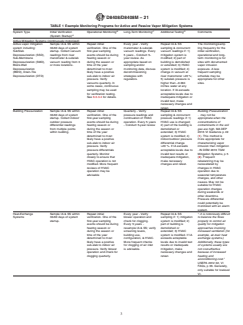
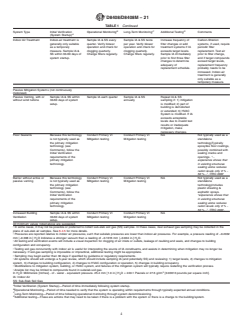
5.1 There are two primary types of vapor mitigation systems: Active and Passive (Table 1). Active vapor mitigation systems include: Sub-Slab Depressurization (SSD), Sub-Membrane Depressurization (SMD), Sub-Membrane Pressurization, Block-Wall Depressurization, Drain-tile Depressurization, Building Pressurization, Heat-Exchange Systems, and Indoor Air Treatment. Passive vapor mitigation systems include: Passive Venting, Floor Sealants, Vapor Barriers, and Increased Ventilation. Vapor mitigation systems may also consist of a combination of active and passive technologies.
5.2 Development and implementation of a LTM Plan is important for ensuring the long-term protectiveness of the mitigation systems.
5.3 The approach presented in this guide is a practical and streamlined process for establishing long-term monitoring requirements, monitoring time frames, and factors needed to determine when the use of a vapor mitigation system is no longer needed.
5.4 This guide is intended to be used by environmental professionals including: consultants, building managers, local or regional governing or regulatory agencies, that are installing vapor mitigation systems, conducting monitoring of the vapor barriers, or developing LTM Plans for vapor mitigation systems. Vapor mitigation system installation and LTM activities should only be carried out by environmental professionals who are trained in the proper application of vapor mitigation systems and experienced in the monitoring described in this guide, as applicable.
Note 1: The quality of the result produced by this standard is dependent on the competence of the personnel performing it, and the suitability of the equipment and facilities used. Agencies that meet the criteria of Practice D3740 are generally considered capable of competent and objective testing/sampling/inspection/etc. Users of this standard are cautioned that compliance with Practice D3740 does not in itself assure reliable results. Reliable results depend...
SCOPE
1.1 This guide presents factors to consider when developing Long-Term Monitoring (LTM) Plans for monitoring the performance of both active and passive vapor mitigation systems in buildings. This guide will also assist in developing appropriate performance standards to make sure that vapor mitigation systems remain protective of human health. Active and passive vapor mitigation systems have been used for a number of years on contaminated properties where residual volatile contaminants remain in the ground. This guide discusses a variety of vapor mitigations systems; however, its focus is on the development of long-term monitoring plans for vapor mitigation systems that are designed to remain in place for multiple years.
1.2 A LTM Plan provides clear performance goals for a vapor mitigation system which help to reduce potential confusion and ineffective project management. The LTM Plan also defines performance monitoring time frames to efficiently test the vapor mitigation systems’ effectiveness without unnecessary and costly over-testing. This will also promote consistent monitoring. Vapor mitigation systems are often installed without adequate consideration of the long-term monitoring requirements necessary to make sure that they remain protective of human health for as long as the system remains in place. This guidance addresses the requirements of the LTM Plan to monitor a vapor mitigation system’s continued effectiveness. Installation verification that the vapor mitigation system was installed correctly is typically addressed in the Remedial Design stage of a contaminated Property Management and is not covered in this document.
1.3 LTM Plan limitations, constraints and potential sources of error are discussed in this standard. This guide does not endorse a mitigation system vendor or testing of vapor mitigation systems. However, this guide does provide a reference for the common procedures for testing vapor miti...
- Status
- Published
- Publication Date
- 14-Sep-2021
- Technical Committee
- D18 - Soil and Rock
- Drafting Committee
- D18.21 - Groundwater and Vadose Zone Investigations
Overview
ASTM D8408/D8408M-21: Standard Guide for Development of Long-Term Monitoring Plans for Vapor Mitigation Systems provides comprehensive guidance for developing, implementing, and maintaining long-term monitoring (LTM) plans for both active and passive vapor mitigation systems. Developed by ASTM, this standard supports environmental professionals in ensuring ongoing protection of human health from vapor intrusion hazards in buildings constructed over properties with residual volatile contaminants. This guide is essential for consultants, building managers, and regulatory agencies involved in vapor mitigation system installation, monitoring, and plan development.
Key Topics
Types of Vapor Mitigation Systems:
- Active Systems: Sub-Slab Depressurization (SSD), Sub-Membrane Depressurization (SMD), Block-Wall Depressurization, Drain-tile Depressurization, Building Pressurization, Heat-Exchange, Indoor Air Treatment.
- Passive Systems: Passive Venting, Floor Sealants, Vapor Barriers, Increased Ventilation.
- Hybrid Solutions: Combinations of active and passive technologies tailored for specific site needs.
Purpose of Long-Term Monitoring (LTM) Plans:
- Ensure continuous effectiveness and protectiveness of mitigation systems.
- Define monitoring requirements, performance goals, and conditions for system decommissioning.
- Reduce confusion and improve project management by clearly outlining roles, responsibilities, and reporting structures.
Essential LTM Plan Components:
- System overview and description, including contaminants of concern and performance objectives.
- Construction documentation (photos, as-built drawings, locations of system components).
- Operation and maintenance procedures.
- Inspection and reporting schedules.
- Notification and corrective action procedures.
- QA/QC protocols, monitoring frequency, and action levels for contaminants.
- Decommissioning triggers and recommissioning protocols.
- Organizational chart of responsible parties and points of contact for emergencies.
Monitoring Approaches and Sample Types:
- Indoor air and ambient air sampling.
- Sub-slab soil gas sampling for system performance tracking.
- Differential pressure monitoring (sub-slab to indoor air) for active systems.
- Exhaust gas measurements in system risers.
- Continuous, periodic, or event-based monitoring schedules based on project and regulatory needs.
Applications
- Building Protection: Ensures ongoing protection of building occupants from vapor intrusion by continuously monitoring system performance and adapting to changes in site conditions.
- Regulatory Compliance: Supports compliance with local, regional, and national regulations for contaminated property management, including performance verification and reporting.
- Project Documentation: Provides a clear framework for documenting system design, operation, and maintenance, aiding in audits, system upgrades, or handovers between stakeholders.
- System Optimization: Enables data-driven decisions regarding the need for system adjustments, maintenance, or decommissioning based on real-world monitoring results.
- Risk Management: Helps identify and mitigate sources of error or system failure, thus reducing liability and maintaining health and safety standards.
Related Standards
- ASTM D653: Terminology Relating to Soil, Rock, and Contained Fluids – essential for understanding technical terms in this context.
- ASTM D3740: Practice for Minimum Requirements for Agencies Engaged in Testing and/or Inspection of Soil and Rock – provides guidance on the competence of professionals conducting testing and monitoring.
- ASTM D6026: Practice for Using Significant Digits and Data Records in Geotechnical Data – relevant for data recording and reporting precision.
- ASTM E1745: Specification for Plastic Water Vapor Retarders Used in Contact with Soil or Granular Fill under Concrete Slabs – applicable for passive vapor barriers installations.
By following the ASTM D8408/D8408M-21 Standard Guide, environmental professionals can implement effective long-term monitoring plans for vapor mitigation systems. This ensures the safety and health of building occupants, optimizes system performance, and provides a foundation for regulatory compliance and risk management in properties affected by vapor intrusion. For enhanced outcomes, LTM plans should always be developed and executed by qualified personnel, tailored to specific project needs, and regularly reviewed to incorporate technology or regulatory developments.
Relations
- Effective Date
- 01-Nov-2023
- Effective Date
- 01-Oct-2019
- Effective Date
- 01-Aug-2014
- Effective Date
- 01-May-2012
- Effective Date
- 01-Mar-2012
- Effective Date
- 01-Oct-2011
- Effective Date
- 01-Sep-2011
- Effective Date
- 01-Sep-2011
- Effective Date
- 01-Mar-2010
- Effective Date
- 15-Feb-2009
- Effective Date
- 01-Jan-2009
- Effective Date
- 01-Dec-2008
- Effective Date
- 01-Nov-2008
- Effective Date
- 01-Mar-2008
- Effective Date
- 15-Dec-2007
Get Certified
Connect with accredited certification bodies for this standard

DNV
DNV is an independent assurance and risk management provider.

Lloyd's Register
Lloyd's Register is a global professional services organisation specialising in engineering and technology.
DNV Energy Systems
Energy and renewable energy certification.
Sponsored listings
Frequently Asked Questions
ASTM D8408/D8408M-21 is a guide published by ASTM International. Its full title is "Standard Guide for Development of Long-Term Monitoring Plans for Vapor Mitigation Systems". This standard covers: SIGNIFICANCE AND USE 5.1 There are two primary types of vapor mitigation systems: Active and Passive (Table 1). Active vapor mitigation systems include: Sub-Slab Depressurization (SSD), Sub-Membrane Depressurization (SMD), Sub-Membrane Pressurization, Block-Wall Depressurization, Drain-tile Depressurization, Building Pressurization, Heat-Exchange Systems, and Indoor Air Treatment. Passive vapor mitigation systems include: Passive Venting, Floor Sealants, Vapor Barriers, and Increased Ventilation. Vapor mitigation systems may also consist of a combination of active and passive technologies. 5.2 Development and implementation of a LTM Plan is important for ensuring the long-term protectiveness of the mitigation systems. 5.3 The approach presented in this guide is a practical and streamlined process for establishing long-term monitoring requirements, monitoring time frames, and factors needed to determine when the use of a vapor mitigation system is no longer needed. 5.4 This guide is intended to be used by environmental professionals including: consultants, building managers, local or regional governing or regulatory agencies, that are installing vapor mitigation systems, conducting monitoring of the vapor barriers, or developing LTM Plans for vapor mitigation systems. Vapor mitigation system installation and LTM activities should only be carried out by environmental professionals who are trained in the proper application of vapor mitigation systems and experienced in the monitoring described in this guide, as applicable. Note 1: The quality of the result produced by this standard is dependent on the competence of the personnel performing it, and the suitability of the equipment and facilities used. Agencies that meet the criteria of Practice D3740 are generally considered capable of competent and objective testing/sampling/inspection/etc. Users of this standard are cautioned that compliance with Practice D3740 does not in itself assure reliable results. Reliable results depend... SCOPE 1.1 This guide presents factors to consider when developing Long-Term Monitoring (LTM) Plans for monitoring the performance of both active and passive vapor mitigation systems in buildings. This guide will also assist in developing appropriate performance standards to make sure that vapor mitigation systems remain protective of human health. Active and passive vapor mitigation systems have been used for a number of years on contaminated properties where residual volatile contaminants remain in the ground. This guide discusses a variety of vapor mitigations systems; however, its focus is on the development of long-term monitoring plans for vapor mitigation systems that are designed to remain in place for multiple years. 1.2 A LTM Plan provides clear performance goals for a vapor mitigation system which help to reduce potential confusion and ineffective project management. The LTM Plan also defines performance monitoring time frames to efficiently test the vapor mitigation systems’ effectiveness without unnecessary and costly over-testing. This will also promote consistent monitoring. Vapor mitigation systems are often installed without adequate consideration of the long-term monitoring requirements necessary to make sure that they remain protective of human health for as long as the system remains in place. This guidance addresses the requirements of the LTM Plan to monitor a vapor mitigation system’s continued effectiveness. Installation verification that the vapor mitigation system was installed correctly is typically addressed in the Remedial Design stage of a contaminated Property Management and is not covered in this document. 1.3 LTM Plan limitations, constraints and potential sources of error are discussed in this standard. This guide does not endorse a mitigation system vendor or testing of vapor mitigation systems. However, this guide does provide a reference for the common procedures for testing vapor miti...
SIGNIFICANCE AND USE 5.1 There are two primary types of vapor mitigation systems: Active and Passive (Table 1). Active vapor mitigation systems include: Sub-Slab Depressurization (SSD), Sub-Membrane Depressurization (SMD), Sub-Membrane Pressurization, Block-Wall Depressurization, Drain-tile Depressurization, Building Pressurization, Heat-Exchange Systems, and Indoor Air Treatment. Passive vapor mitigation systems include: Passive Venting, Floor Sealants, Vapor Barriers, and Increased Ventilation. Vapor mitigation systems may also consist of a combination of active and passive technologies. 5.2 Development and implementation of a LTM Plan is important for ensuring the long-term protectiveness of the mitigation systems. 5.3 The approach presented in this guide is a practical and streamlined process for establishing long-term monitoring requirements, monitoring time frames, and factors needed to determine when the use of a vapor mitigation system is no longer needed. 5.4 This guide is intended to be used by environmental professionals including: consultants, building managers, local or regional governing or regulatory agencies, that are installing vapor mitigation systems, conducting monitoring of the vapor barriers, or developing LTM Plans for vapor mitigation systems. Vapor mitigation system installation and LTM activities should only be carried out by environmental professionals who are trained in the proper application of vapor mitigation systems and experienced in the monitoring described in this guide, as applicable. Note 1: The quality of the result produced by this standard is dependent on the competence of the personnel performing it, and the suitability of the equipment and facilities used. Agencies that meet the criteria of Practice D3740 are generally considered capable of competent and objective testing/sampling/inspection/etc. Users of this standard are cautioned that compliance with Practice D3740 does not in itself assure reliable results. Reliable results depend... SCOPE 1.1 This guide presents factors to consider when developing Long-Term Monitoring (LTM) Plans for monitoring the performance of both active and passive vapor mitigation systems in buildings. This guide will also assist in developing appropriate performance standards to make sure that vapor mitigation systems remain protective of human health. Active and passive vapor mitigation systems have been used for a number of years on contaminated properties where residual volatile contaminants remain in the ground. This guide discusses a variety of vapor mitigations systems; however, its focus is on the development of long-term monitoring plans for vapor mitigation systems that are designed to remain in place for multiple years. 1.2 A LTM Plan provides clear performance goals for a vapor mitigation system which help to reduce potential confusion and ineffective project management. The LTM Plan also defines performance monitoring time frames to efficiently test the vapor mitigation systems’ effectiveness without unnecessary and costly over-testing. This will also promote consistent monitoring. Vapor mitigation systems are often installed without adequate consideration of the long-term monitoring requirements necessary to make sure that they remain protective of human health for as long as the system remains in place. This guidance addresses the requirements of the LTM Plan to monitor a vapor mitigation system’s continued effectiveness. Installation verification that the vapor mitigation system was installed correctly is typically addressed in the Remedial Design stage of a contaminated Property Management and is not covered in this document. 1.3 LTM Plan limitations, constraints and potential sources of error are discussed in this standard. This guide does not endorse a mitigation system vendor or testing of vapor mitigation systems. However, this guide does provide a reference for the common procedures for testing vapor miti...
ASTM D8408/D8408M-21 is classified under the following ICS (International Classification for Standards) categories: 27.040 - Gas and steam turbines. Steam engines. The ICS classification helps identify the subject area and facilitates finding related standards.
ASTM D8408/D8408M-21 has the following relationships with other standards: It is inter standard links to ASTM D3740-23, ASTM D3740-19, ASTM D653-14, ASTM D3740-12a, ASTM D3740-12, ASTM E1745-11, ASTM D653-11, ASTM D3740-11, ASTM D3740-10, ASTM E1745-09, ASTM D653-09, ASTM D653-08a, ASTM D653-08, ASTM D3740-08, ASTM D653-07f. Understanding these relationships helps ensure you are using the most current and applicable version of the standard.
ASTM D8408/D8408M-21 is available in PDF format for immediate download after purchase. The document can be added to your cart and obtained through the secure checkout process. Digital delivery ensures instant access to the complete standard document.
Standards Content (Sample)
This international standard was developed in accordance with internationally recognized principles on standardization established in the Decision on Principles for the
Development of International Standards, Guides and Recommendations issued by the World Trade Organization Technical Barriers to Trade (TBT) Committee.
Designation: D8408/D8408M − 21
Standard Guide for
Development of Long-Term Monitoring Plans for Vapor
Mitigation Systems
This standard is issued under the fixed designation D8408/D8408M; the number immediately following the designation indicates the
year of original adoption or, in the case of revision, the year of last revision. A number in parentheses indicates the year of last
reapproval. A superscript epsilon (´) indicates an editorial change since the last revision or reapproval.
1. Scope for the common procedures for testing vapor mitigation sys-
tems and related terms, as appropriate.
1.1 This guide presents factors to consider when developing
Long-Term Monitoring (LTM) Plans for monitoring the per-
1.4 Units—The values stated in either International System
formance of both active and passive vapor mitigation systems
(SI) units or English units are to be regarded separately as
in buildings. This guide will also assist in developing appro-
standard. The values stated in each system may not be exact
priate performance standards to make sure that vapor mitiga-
equivalents;therefore,eachsystemshallbeusedindependently
tion systems remain protective of human health. Active and
of the other. Combining values from the two systems may
passive vapor mitigation systems have been used for a number
result in nonconformance with the standard. Reporting of test
of years on contaminated properties where residual volatile
results in units other than SI shall not be regarded as noncon-
contaminants remain in the ground. This guide discusses a
formance with this standard. The values given in parentheses
variety of vapor mitigations systems; however, its focus is on
are provided for informational purposes only and are not
the development of long-term monitoring plans for vapor
considered standard.
mitigation systems that are designed to remain in place for
1.5 All observed and calculated values shall conform to the
multiple years.
guidelines for significant digits and rounding established in
1.2 A LTM Plan provides clear performance goals for a
Practice D6026. For purposes of comparing a measured or
vapor mitigation system which help to reduce potential confu-
calculated value(s) with specified limits, the measured or
sion and ineffective project management. The LTM Plan also
calculated value(s) shall be rounded to the nearest decimal of
defines performance monitoring time frames to efficiently test
significant digits in the specified limit.
the vapor mitigation systems’ effectiveness without unneces-
sary and costly over-testing. This will also promote consistent
1.6 This guide offers an organized collection of information
monitoring. Vapor mitigation systems are often installed with-
oraseriesofoptionsanddoesnotrecommendaspecificcourse
out adequate consideration of the long-term monitoring re-
of action. This document cannot replace education or experi-
quirements necessary to make sure that they remain protective
ence and should be used in conjunction with professional
of human health for as long as the system remains in place.
judgment. Not all aspects of this guide may be applicable in all
This guidance addresses the requirements of the LTM Plan to
circumstances. This ASTM standard is not intended to repre-
monitor a vapor mitigation system’s continued effectiveness.
sent or replace the standard of care by which the adequacy of
Installation verification that the vapor mitigation system was
a given professional service must be judged, nor should this
installed correctly is typically addressed in the Remedial
document be applied with consideration of a project’s many
Design stage of a contaminated Property Management and is
unique aspects. The word “Standard” in the title of this
not covered in this document.
document means only that the document has been approved
through the ASTM consensus process.
1.3 LTM Plan limitations, constraints and potential sources
of error are discussed in this standard. This guide does not
1.7 This standard does not purport to address all of the
endorse a mitigation system vendor or testing of vapor miti-
safety concerns, if any, associated with its use. It is the
gation systems. However, this guide does provide a reference
responsibility of the user of this standard to establish appro-
priate safety, health, and environmental practices and deter-
mine the applicability of regulatory limitations prior to use.
This guide is under the jurisdiction ofASTM Committee D18 on Soil and Rock
and is the direct responsibility of Subcommittee D18.21 on Groundwater and
1.8 This international standard was developed in accor-
Vadose Zone Investigations.
dance with internationally recognized principles on standard-
Current edition approved Sept. 15, 2021. Published October 2021. DOI:
10.1520/D8408_D8408M–21 ization established in the Decision on Principles for the
Copyright © ASTM International, 100 Barr Harbor Drive, PO Box C700, West Conshohocken, PA 19428-2959. United States
D8408/D8408M − 21
Development of International Standards, Guides and Recom- relies on naturally induced pressure differentials to cause the
mendations issued by the World Trade Organization Technical movement of air beyond the building envelop, or on barriers
Barriers to Trade (TBT) Committee. that prevent the advective or diffusive transport of chemical
vapors into the indoor air space.
2. Referenced Documents
3.2.8 sub-membrane, n—as used in soil gas monitoring/
2.1 ASTM Standards:
sampling, refers to the area under a concrete slab having an
D653 Terminology Relating to Soil, Rock, and Contained
associated vapor barrier (membrane).
Fluids
3.2.9 sub-slab sample, n—as used in soil gas monitoring/
D3740 Practice for Minimum Requirements for Agencies
sampling, a soil-gas sample collected from beneath a building
Engaged in Testing and/or Inspection of Soil and Rock as
slab with or without an associated vapor barrier.
Used in Engineering Design and Construction
D6026 Practice for Using Significant Digits and Data Re-
4. Summary of Guide
cords in Geotechnical Data
4.1 Development of an LTM Plan for a vapor mitigation
E1745 Specification for Plastic Water Vapor Retarders Used
system is a process which needs to be based on project-specific
in Contact with Soil or Granular Fill under Concrete Slabs
details. This guide, however, presents a generalized process,
3. Terminology
which can be used as a template for LTM Plan development.
3.1 Definitions:
5. Significance and Use
3.1.1 For definitions of common technical terms used in this
standard, refer to Terminology D653.
5.1 There are two primary types of vapor mitigation sys-
tems: Active and Passive (Table 1). Active vapor mitigation
3.2 Definitions of Terms Specific to This Standard:
systems include: Sub-Slab Depressurization (SSD), Sub-
3.2.1 active vapor mitigation system, n—as used in soil gas
Membrane Depressurization (SMD), Sub-Membrane
monitoring/sampling, uses an electrically-powered fan or other
Pressurization, Block-Wall Depressurization, Drain-tile
device to induce a pressure differential which in turn causes air
Depressurization, Building Pressurization, Heat-Exchange
and/or vapors to move beyond the building envelope or to pass
Systems, and Indoor Air Treatment. Passive vapor mitigation
through a filtration system. (See Table 1 for details.)
systems include: Passive Venting, Floor Sealants, Vapor
3.2.2 floor sealant, n—as used in soil gas monitoring/
Barriers, and Increased Ventilation. Vapor mitigation systems
sampling, material, typically liquid, that is spread on the floor
may also consist of a combination of active and passive
that upon curing, inhibits or prevents the migration of vapors
technologies.
into the building.
5.2 Development and implementation of a LTM Plan is
3.2.3 heat-exchange system, n—as used in soil gas
important for ensuring the long-term protectiveness of the
monitoring/sampling, an air handling system, which can act as
mitigation systems.
anactivevapormitigationsystem,thatreliesonanelectrically-
powered fan to pass an incoming air stream through a heat 5.3 The approach presented in this guide is a practical and
exchanger to transfer heat to or from an outgoing air stream. streamlined process for establishing long-term monitoring
requirements, monitoring time frames, and factors needed to
3.2.4 indoor air treatment, v—as used in soil gas
determine when the use of a vapor mitigation system is no
monitoring/sampling, process by which indoor air is passed
longer needed.
through activated carbon of other absorbent to trap or treat
chemical vapors to make it safe for human occupancy.
5.4 This guide is intended to be used by environmental
professionals including: consultants, building managers, local
3.2.5 heating, ventilation and air conditioning (HVAC),
or regional governing or regulatory agencies, that are installing
n—active mechanical systems within a building used to control
vapor mitigation systems, conducting monitoring of the vapor
heating, ventilation, and cooling of the indoor air space.
barriers, or developing LTM Plans for vapor mitigation sys-
3.2.5.1 Discussion—These systems can change the pressure
tems. Vapor mitigation system installation and LTM activities
regime of the indoor space. As such, changes in their configu-
should only be carried out by environmental professionals who
ration and/or operation can have a profound effect on vapor
are trained in the proper application of vapor mitigation
mitigation systems.
systems and experienced in the monitoring described in this
3.2.6 long-term monitoring plan (LTM Plan), n—as used in
guide, as applicable.
soil gas monitoring/sampling, a written plan that establishes
NOTE 1—The quality of the result produced by this standard is
the procedures, processes, and benchmarks necessary to moni-
dependent on the competence of the personnel performing it, and the
tor and document the effectiveness of a vapor mitigation
suitability of the equipment and facilities used. Agencies that meet the
system designed to remain in place for multiple years so that it criteria of Practice D3740 are generally considered capable of competent
and objective testing/sampling/inspection/etc. Users of this standard are
remains protective of human health.
cautioned that compliance with Practice D3740 does not in itself assure
3.2.7 passive vapor mitigation system, n—as used in soil
reliable results. Reliable results depend on many factors; Practice D3740
gas monitoring/sampling, a passive vapor mitigation system provides a means of evaluating some of those factors.
D8408/D8408M − 21
TABLE 1 Example Monitoring Programs for Active and Passive Vapor Mitigation Systems
B C D
System Type Initial Verification Operational Monitoring Long-Term Monitoring Additional Testing Comments
A
(System Startup)
Active Mitigation Systems (continuously motorized)
Active vapor mitigation Sample IA & SS within Repeat initial Every year - Verify Repeat IA & SS The monitoring/samp
system including: 30-60 days of system verification. One of the manometer & subslab sampling & concurrent ling frequency for the
SubSlab startup. Collect vacuum first-year sampling vacuum readings. Every vacuum readings if: 1) initial verification,
Depressurization (SSD), readings from riser events should be during 5 years - Conduct 5- mitigation system is operational and long-
Sub-Membrane manometer & subslab heating season or year review. As modified; 2) part of term monitoring is for
Depressurization (SMD), vacuum reading from 3 during the season or appropriate based on building is demolished sites with documented
Block-Wall or more locations. time of the year sampling and/or or extended; 3) HVAC vapor intrusion
Depressurization determined to most monitoring data, discuss system is modified; 4) exposure. A less
(BWD), Drain-Tile likely have a positive decommissioning change in vacuum at frequent sampling
Depressurization (DTD) sub-slab to indoor air strategies with riser manometer >20 %; schedule may be
pressure. Verify regulators. 5) subslab pressure is appropriate for other
vacuums quarterly. In higher than –0.004 sites.
some cases, continuous inches water at any
sampling may be used location. If IA exceeds
for verification testing. acceptable levels due to
See 6.3.3.4 for details. inadequate mitigation or
invalid test, make
necessary changes and
retest.
Building Pressurization Sample IA & SS within Repeat initial Quarterly - Verify Repeat IA & SS Building Pressurization
30-60 days of system verification. One of the pressure readings and sampling & concurrent { may not be
startup. Collect indoor/ first-year sampling continuation of HVAC pressure readings if: 1) appropriate when the
outdoor pressure events should be during operation. Every 5 years HVAC use is changed; concentrations of
differential readings heating season or - Conduct 5-year review 2) part of the building is contaminants in the soil
from multiple points during the season or demolished or gas are high. MA DEP
within building. time of the year extended; 3) HVAC 2016 VI Guidance p 49
determined to most system is modified; 4) (1). This method is
likely have a positive indoor/outdoor pressure more appropriate for
sub-slab to indoor air differential change characterizing vapor
pressure. Verify >20 %. If IA exceeds intrusion than mitigation
pressure differentials acceptable levels due to {IN DEM 2016 TGM
quarterly. Monitor invalid test results or Mitigation Systems, p 5
closely to ensure that inadequate mitigation, (2). Frequent
HVAC operation is not make necessary rebalancing may be
modified. More frequent changes and retest. necessitated by
reviews of HVAC changes in HVAC
operation may be operation due to
advisable seasonal temperature
changes, and other
causes. May not be
suitable for HVAC
operation changes
during weekends or
other downtime.
Pressure differential
could potentially be
monitored with an alarm
system.
Heat-Exchange Sample IA & SS within Repeat initial Every year - Verify Repeat IA & SS “{it is notoriously difficult
Systems 30-60 days of system verification. One of the blower operation and sampling if: 1) mitigation to balance the flows
startup. first-year sampling check for clogging. system is modified; 2) properly to control air
events should be during Every 5 years - part of building is quality for mitigation
heating season or resample IA & SS; verify demolished or approaches involving
during the season or screening levels, extended; 3) HVAC increased ventilation (for
time of the year building use, system is modified. If IA example, air-toair heat
determined to most configuration, & HVAC. exceeds acceptable exchange systems.)
likely have a positive More frequent checks levels due to invalid test Additionally, these types
sub-slab to indoor air for clogging of air inlet results or inadequate of systems usually are
pressure. Verify blower is advisable. mitigation, make not cost-effective
operation and check for necessary changes and because of increased
clogging quarterly. retest. heating and
airconditioning cost.”
USEPA 2012 02, VI
FAQs, p 36. Generally,
only suitable for lowlevel
VI.
D8408/D8408M − 21
TABLE 1 Continued
B C D
System Type Initial Verification Operational Monitoring Long-Term Monitoring Additional Testing Comments
A
(System Startup)
Indoor Air Treatment Indoor-air treatment is Sample IA & SS every Sample IA & SS twice Increase frequency of Carbon-filtration
generally only suitable quarter. Verify blower per year. Verify blower filter changes or add systems, if used, require
as a temporary operation and check for operation and check for treatment systems if IA periodic filter
measure. Sample IA & clogging quarterly. clogging quarterly. exceeds target levels. replacement. Test air
SS within 30-60 days of Change filters regularly. Change filters regularly. Sample IA immediately prior to filter change,
system startup. prior to first three filter and if target compounds
changes to determine exceed target levels,
adequacy of replacement frequency
replacement schedule. probably needs to be
increased. Indoor-air
treatment is generally
only suitable as a
temporary measure.
Passive Mitigation Systems (not continuously
motorized)
Passive Venting, with or Sample IA & SS within Sample IA each quarter Sample IA & SS Repeat IA & SS
without wind turbine 30-60 days of system annually sampling if: 1) mitigation
setup. is modified; 2) part of
building is demolished
or extended; 3) HVAC
System is modified. If IA
exceeds acceptable
levels due to invalid test
results or inadequate
mitigation, make
necessary changes.
Floor Sealants Because this technology Conduct Primary VI Conduct Primary VI NA Not typically used as a
is not typically used as Mitigation testing Mitigation testing standalone
the primary mitigation technologyTypically
technology (see epoxylike floor coatings,
Comments), follow the possibly combined with
Initial Verification sealing cracks and
requirements of the openings. “.
primary mitigation experience shows that
technology. in existing structures
sealing alone reduces
radon levels only 0 % -
50 %.”, ITRC 2007
Barrier without active or Because this technology Conduct Primary VI Conduct Primary VI NA Not typically used as a
passive venting is not typically used as Mitigation testing Mitigation testing standalone
the primary mitigation technologyIncludes
technology (see plastic sheeting &
Comments), follow the asphaltic sprays.
Initial Verification “experience shows that
requirements of the in existing structures
primary mitigation sealing alone reduces
technology. radon levels only 0 % -
50 %.”, ITRC 2007.
Increased Building Sample IA & SS within Conduct Primary VI Conduct Primary VI NA
Ventilation 30-60 days of system Mitigation testing Mitigation testing
setup.
All minimum values noted above are suggested.
Ë In some cases, it may not be possible or preferred to collect sub-slab soil gas (SS) samples. In these cases, riser exhaust gas sampling may be collected in the
place of sub-slab air samples. See 6.4.5 for more details.
Ë Pressures are reported relative to indoor air pressures, such that subslab pressures are lower than indoor-air pressures. For example, a pressure reading of –0.2032
mm [–0.008 in.] H O indicates a stronger vacuum than a reading of –0.1016 mm [–0.004 in.] H O.
2 2
Ë All testing and verification events will include a visual inspection for clogging of air inlets or outlets, leakage of caulking and seals, and changes to building
configuration and occupancy.
Ë Testing soil gas concurrently with indoor air is useful for interpreting the source of IA constituents, and assists in determining when mitigation may no longer be
necessary. If soil-gas sampling is impossible or impractical, additional testing might be appropriate.
Ë Sampling may begin earlier than 30 days if specified by guidance or regulatory requirements.
Ë All systems should will undergo a 5-year review, which should include sampling IA (and potentially SS) and reviewing: 1) target levels, 2) changes to mitigation
system, 3) changes to building configuration, 4) changes to HVAC configuration or operation, 5) changes in building occupancy.
Ë Modifications to mitigation system, building, or HVAC system, and failures of the mitigation system will typically require restarting the verification process.
Ë Analyte list may be limited to compounds found in subslab soil gas.
In H O: Millimeters [Inches] - of - water - equivalent pressure. 25.4 mm [1.0 in.] H O = 249.1 Pascals or 27.6 g/cm [0.03613 pounds per square inch].
2 2
IA: Indoor Air
SS: Sub-Slab Soil Gas
A
Initial Verification (System Startup)—Period of time immediately following system startup.
B
Operational Monitoring—Period of time needed to verify that the system is operating within requirements through typically expected annual conditions.
C
Long-Term Monitoring—Period of time following operational monitoring through system decommissioning.
D
Additional testing—These are actions that may need to be taken if there is a problem with the system or there is a change to the building/system.
D8408/D8408M − 21
6. Long-Term Monitoring Plan Components 6.2.6 Decommissioning goals/triggers—See Annex A1 for
details.
6.1 Overview of Long-Term Monitoring Plans—It is a Best
6.2.7 Recommissioning procedures and reporting require-
Management Practice for the owner or operator of an active or
ments
passive vapor mitigation system to develop a Long-Term
6.2.8 Decommissioning procedures
Monitoring Plan (aka Operation and Maintenance Plan or LTM
6.2.9 Notification and point of contact (Organizational
Plan) prior to or immediately following installation. The LTM
Chart):
Plan provides detailed information on how the system was
6.2.9.1 Organization chart should identify the individual/
constructed, and how to monitor and maintain the system to
organization responsible for various parts of the vapor mitiga-
protect human health as long as it is needed. The LTM Plan
tion system.
should also include an organization chart documenting who is
6.2.9.2 Includewhotocontactintheeventofanemergency,
responsible for which aspects of the mitigation system. Other
for example, when an alarm sounds.
local or regional governing or regulatory agencies may have
6.2.10 Manufacturers Recommended Repair Procedures:
additional information.
6.2.10.1 Vapor Barrier Repair—See Annex A1 for details.
6.2 Sections of the LTM Plan—Sections of the LTM Plan
6.3 General LTM Plan Information—Long-term vapor miti-
should include at a minimum, the following items in the form
gation systems requiring a LTM Plan are typically either
of text, drawings, cut sheets, photographs, and inspection
passive or active. Passive vapor mitigation systems may
logs:
consist of a floor sealant, and/or piping and risers and may or
6.2.1 System Overview—A general description of the con-
may not include a vapor barrier material, or a filtration system.
taminants of concern (COCs) to be mitigated, the mitigation
An active vapor mitigation system may include many of the
system, its location, and a discussion of potential changes that
same components as a passive system but with an electrically
may be made to convert a passive vapor mitigation system to
powered fan to create a pressure differential to discharge soil
an active vapor mitigation system. The description should
gas to the exterior, increase building pressure, or pass air
discuss or depict:
through a filtration system. Certain manufacturers will provide
6.2.1.1 Problems that require mitigation, including the regu-
warranties on the installation and product life expectancy,
latory reason or agreements requiring the mitigation, as appli-
which should be included in the LTM Plan.
cable
6.3.1 The LTM Plan should include photos and as-built
6.2.1.2 The physical address of the system
drawings of the vapor mitigation system and documentation
6.2.1.3 Commissioning date
that the system meets, or is functioning within the design
6.2.1.4 Basic description of the systems components and
parameters and regulatory specifications (for example, that
their intended function
sub-slab depressurization monitoring points have sufficient
6.2.1.5 A general description of the performance goals
vacuum). The as-built drawings should be updated whenever
6.2.1.6 An indication of the expected
...