

ASTM C1718-10(2019)
(Test Method)Standard Test Method for Nondestructive Assay of Radioactive Material by Tomographic Gamma Scanning
General Information
- Abstract
SIGNIFICANCE AND USE
5.1 The TGS provides a nondestructive means of mapping the attenuation characteristics and the distribution of the radionuclide content of items on a voxel by voxel basis. Typically in a TGS analysis a vertical layer (or segment) of an item will be divided into a number of voxels. By comparison, a segmented gamma scanner (SGS) can determine matrix attenuation and radionuclide concentrations only on a segment by segment basis.
5.2 It has been successfully used to quantify 238Pu, 239Pu, and 235U. SNM loadings from 0.5 g to 200 g of 239Pu (5, 6), from 1 g to 25 g of 235U (7), and from 0.1 to 1 g of 238Pu have been successfully measured. The TGS technique has also been applied to assaying radioactive waste generated by nuclear power plants (NPP). Radioactive waste from NPP is dominated by activation products (for example, 54Mn, 58Co, 60Co, 110mAg) and fission products (for example, 137Cs, 134Cs). The radionuclide activities measured in NPP waste is in the range from 3.7E+04 Bq to 1.0E+07 Bq. Some results of TGS application to non-SNM radionuclides can be found in the literature (8).
5.3 The TGS technique is well suited for assaying items that have heterogeneous matrices and that contain a non-uniform radionuclide distribution.
5.4 Since the analysis results are obtained on a voxel by voxel basis, the TGS technique can in many situations yield more accurate results when compared to other gamma ray techniques such as SGS.
5.5 In determining the radionuclide distribution inside an item, the TGS analysis explicitly takes into account the cross talk between various vertical layers of the item.
5.6 The TGS analysis technique uses a material basis set method that does not require the user to select a mass attenuation curve apriori, provided the transmission source has at least 2 gamma lines that span the energy range of interest.
5.7 A commercially available TGS system consists of building blocks that can easily be configured to operate the system in the ...
SCOPE
1.1 This test method describes the nondestructive assay (NDA) of gamma ray emitting radionuclides inside containers using tomographic gamma scanning (TGS). High resolution gamma ray spectroscopy is used to detect and quantify the radionuclides of interest. The attenuation of an external gamma ray transmission source is used to correct the measurement of the emission gamma rays from radionuclides to arrive at a quantitative determination of the radionuclides present in the item.
1.2 The TGS technique covered by the test method may be used to assay scrap or waste material in cans or drums in the 1 to 500 litre volume range. Other items may be assayed as well.
1.3 The test method will cover two implementations of the TGS procedure: (1) Isotope Specific Calibration that uses standards of known radionuclide masses (or activities) to determine system response in a mass (or activity) versus corrected count rate calibration, that applies to only those specific radionuclides for which it is calibrated, and (2) Response Curve Calibration that uses gamma ray standards to determine system response as a function of gamma ray energy and thereby establishes calibration for all gamma emitting radionuclides of interest.
1.4 This test method will also include a technique to extend the range of calibration above and below the extremes of the measured calibration data.
1.5 The assay technique covered by the test method is applicable to a wide range of item sizes, and for a wide range of matrix attenuation. The matrix attenuation is a function of the matrix composition, photon energy, and the matrix density. The matrix types that can be assayed range from light combustibles to cemented sludge or concrete. It is particularly well suited for items that have heterogeneous matrix material and non-uniform radioisotope distributions. Measured transmission values should be available to permit valid attenuation corrections, but are not n...
- Status
- Published
- Publication Date
- 31-Jan-2019
- Technical Committee
- C26 - Nuclear Fuel Cycle
- Drafting Committee
- C26.10 - Non Destructive Assay
Overview
ASTM C1718-10(2019) establishes a standard test method for the nondestructive assay (NDA) of gamma ray emitting radionuclides using tomographic gamma scanning (TGS). Produced by ASTM International, this standard outlines procedures for accurately detecting and quantifying radioactive materials within containers, such as drums or cans, without the need for opening or altering the material. The method uses high-resolution gamma spectroscopy combined with tomographic techniques to generate detailed three-dimensional maps of both the distribution of radionuclide content and the attenuation properties of the matrix inside a container.
TGS technology is especially valuable in nuclear facility operations, radioactive waste management, and nuclear safeguards, offering improved accuracy for items with heterogeneous matrices and non-uniform radioisotope distributions when compared to traditional segmented gamma scanning (SGS).
Key Topics
- Voxel-by-voxel mapping: TGS divides objects into small volume elements (voxels) to measure and correct for matrix attenuation and radionuclide concentration, leading to precise localization and quantification.
- Calibration methods: The standard covers two primary calibration approaches:
- Isotope Specific Calibration using known radionuclide standards to directly relate count rate to mass or activity.
- Response Curve Calibration using energy-response curves to enable calibration for all gamma-emitting radionuclides of interest.
- Matrix attenuation correction: Utilizes external gamma ray transmission sources to correct emission measurements, allowing for accurate results across a range of matrix types and densities.
- Non-uniform distributions: Particularly effective with irregular or heterogeneous material configurations, often encountered in nuclear waste.
- Energy range: Designed for items in the 1-500 liter range and adapted for matrices from combustibles to concrete or cemented sludge.
- Nondestructive and safe: Enables assay of radioactive material without compromising container integrity or increasing radiation exposure risk to personnel.
Applications
Tomographic Gamma Scanning, as defined by ASTM C1718-10(2019), is widely leveraged in:
- Nuclear Power Plants: Assaying radioactive waste for activation products (e.g., Mn-54, Co-58, Co-60, Ag-110m) and fission products (e.g., Cs-137, Cs-134).
- Material Control and Accountability (MC&A): Ensuring compliance in the measurement of special nuclear materials such as Pu-238, Pu-239, and U-235.
- Radioactive Waste Management: Noninvasive segregation, characterization, and quantification of mixed or heterogeneous waste streams, facilitating proper storage, processing, or disposal.
- Regulatory Compliance: Supporting safe handling and certification required for storage and transportation of radioactive materials in accordance with national and international regulations.
- Research and Safeguards: Used for validation purposes, calibration development, and uncertainty reduction in advanced nuclear material measurement programs.
- Facilities with Heterogeneous Waste: Essential for situations where the distribution of radioactive materials is non-uniform or not well known, offering finer granularity of measurement.
Related Standards
For comprehensive implementation and integration with facility processes, practitioners often reference the following related standards and guidance documents:
- ASTM C1030: Test Method for Determination of Plutonium Isotopic Composition by Gamma-Ray Spectrometry
- ASTM C1128: Guide for Preparation of Working Reference Materials for Use in Analysis of Nuclear Fuel Cycle Materials
- ASTM C1156: Guide for Establishing Calibration for a Measurement Method Used to Analyze Nuclear Fuel Cycle Materials
- ASTM C1490: Guide for the Selection, Training and Qualification of Nondestructive Assay (NDA) Personnel
- ASTM C1673: Terminology of Nondestructive Assay Methods
- ANSI N15.37: Guide to the Automation of Nondestructive Assay Systems for Nuclear Materials Control
- NRC Guide 5.9: Guidelines for Germanium Spectroscopy Systems for Measurement of Special Nuclear Material
- NRC Guide 5.53: Qualification, Calibration, and Error Estimation Methods for Nondestructive Assay
These standards work in concert to ensure that tomographic gamma scanning is performed with accuracy, reproducibility, and safety, supporting effective nuclear material control and waste management.
Keywords: ASTM C1718, tomographic gamma scanning, TGS, nondestructive assay, radioactive waste assay, gamma spectroscopy, nuclear material, matrix attenuation correction, isotope specific calibration, response curve calibration, radioactive material mapping, nuclear power plant waste assay.
Relations
- Effective Date
- 01-Feb-2019
- Effective Date
- 01-Sep-2018
- Effective Date
- 01-Apr-2018
- Effective Date
- 01-Apr-2018
- Effective Date
- 01-Feb-2015
- Effective Date
- 01-Jun-2011
- Effective Date
- 01-Nov-2010
- Effective Date
- 01-Nov-2010
- Effective Date
- 01-Oct-2010
- Effective Date
- 01-Jun-2010
- Effective Date
- 01-Jun-2008
- Effective Date
- 01-Jun-2007
- Effective Date
- 01-Jun-2007
- Effective Date
- 01-Feb-2004
- Effective Date
- 10-Jul-2003
Get Certified
Connect with accredited certification bodies for this standard

DNV
DNV is an independent assurance and risk management provider.

Lloyd's Register
Lloyd's Register is a global professional services organisation specialising in engineering and technology.
DNV Energy Systems
Energy and renewable energy certification.
Sponsored listings
Frequently Asked Questions
ASTM C1718-10(2019) is a standard published by ASTM International. Its full title is "Standard Test Method for Nondestructive Assay of Radioactive Material by Tomographic Gamma Scanning". This standard covers: SIGNIFICANCE AND USE 5.1 The TGS provides a nondestructive means of mapping the attenuation characteristics and the distribution of the radionuclide content of items on a voxel by voxel basis. Typically in a TGS analysis a vertical layer (or segment) of an item will be divided into a number of voxels. By comparison, a segmented gamma scanner (SGS) can determine matrix attenuation and radionuclide concentrations only on a segment by segment basis. 5.2 It has been successfully used to quantify 238Pu, 239Pu, and 235U. SNM loadings from 0.5 g to 200 g of 239Pu (5, 6), from 1 g to 25 g of 235U (7), and from 0.1 to 1 g of 238Pu have been successfully measured. The TGS technique has also been applied to assaying radioactive waste generated by nuclear power plants (NPP). Radioactive waste from NPP is dominated by activation products (for example, 54Mn, 58Co, 60Co, 110mAg) and fission products (for example, 137Cs, 134Cs). The radionuclide activities measured in NPP waste is in the range from 3.7E+04 Bq to 1.0E+07 Bq. Some results of TGS application to non-SNM radionuclides can be found in the literature (8). 5.3 The TGS technique is well suited for assaying items that have heterogeneous matrices and that contain a non-uniform radionuclide distribution. 5.4 Since the analysis results are obtained on a voxel by voxel basis, the TGS technique can in many situations yield more accurate results when compared to other gamma ray techniques such as SGS. 5.5 In determining the radionuclide distribution inside an item, the TGS analysis explicitly takes into account the cross talk between various vertical layers of the item. 5.6 The TGS analysis technique uses a material basis set method that does not require the user to select a mass attenuation curve apriori, provided the transmission source has at least 2 gamma lines that span the energy range of interest. 5.7 A commercially available TGS system consists of building blocks that can easily be configured to operate the system in the ... SCOPE 1.1 This test method describes the nondestructive assay (NDA) of gamma ray emitting radionuclides inside containers using tomographic gamma scanning (TGS). High resolution gamma ray spectroscopy is used to detect and quantify the radionuclides of interest. The attenuation of an external gamma ray transmission source is used to correct the measurement of the emission gamma rays from radionuclides to arrive at a quantitative determination of the radionuclides present in the item. 1.2 The TGS technique covered by the test method may be used to assay scrap or waste material in cans or drums in the 1 to 500 litre volume range. Other items may be assayed as well. 1.3 The test method will cover two implementations of the TGS procedure: (1) Isotope Specific Calibration that uses standards of known radionuclide masses (or activities) to determine system response in a mass (or activity) versus corrected count rate calibration, that applies to only those specific radionuclides for which it is calibrated, and (2) Response Curve Calibration that uses gamma ray standards to determine system response as a function of gamma ray energy and thereby establishes calibration for all gamma emitting radionuclides of interest. 1.4 This test method will also include a technique to extend the range of calibration above and below the extremes of the measured calibration data. 1.5 The assay technique covered by the test method is applicable to a wide range of item sizes, and for a wide range of matrix attenuation. The matrix attenuation is a function of the matrix composition, photon energy, and the matrix density. The matrix types that can be assayed range from light combustibles to cemented sludge or concrete. It is particularly well suited for items that have heterogeneous matrix material and non-uniform radioisotope distributions. Measured transmission values should be available to permit valid attenuation corrections, but are not n...
SIGNIFICANCE AND USE 5.1 The TGS provides a nondestructive means of mapping the attenuation characteristics and the distribution of the radionuclide content of items on a voxel by voxel basis. Typically in a TGS analysis a vertical layer (or segment) of an item will be divided into a number of voxels. By comparison, a segmented gamma scanner (SGS) can determine matrix attenuation and radionuclide concentrations only on a segment by segment basis. 5.2 It has been successfully used to quantify 238Pu, 239Pu, and 235U. SNM loadings from 0.5 g to 200 g of 239Pu (5, 6), from 1 g to 25 g of 235U (7), and from 0.1 to 1 g of 238Pu have been successfully measured. The TGS technique has also been applied to assaying radioactive waste generated by nuclear power plants (NPP). Radioactive waste from NPP is dominated by activation products (for example, 54Mn, 58Co, 60Co, 110mAg) and fission products (for example, 137Cs, 134Cs). The radionuclide activities measured in NPP waste is in the range from 3.7E+04 Bq to 1.0E+07 Bq. Some results of TGS application to non-SNM radionuclides can be found in the literature (8). 5.3 The TGS technique is well suited for assaying items that have heterogeneous matrices and that contain a non-uniform radionuclide distribution. 5.4 Since the analysis results are obtained on a voxel by voxel basis, the TGS technique can in many situations yield more accurate results when compared to other gamma ray techniques such as SGS. 5.5 In determining the radionuclide distribution inside an item, the TGS analysis explicitly takes into account the cross talk between various vertical layers of the item. 5.6 The TGS analysis technique uses a material basis set method that does not require the user to select a mass attenuation curve apriori, provided the transmission source has at least 2 gamma lines that span the energy range of interest. 5.7 A commercially available TGS system consists of building blocks that can easily be configured to operate the system in the ... SCOPE 1.1 This test method describes the nondestructive assay (NDA) of gamma ray emitting radionuclides inside containers using tomographic gamma scanning (TGS). High resolution gamma ray spectroscopy is used to detect and quantify the radionuclides of interest. The attenuation of an external gamma ray transmission source is used to correct the measurement of the emission gamma rays from radionuclides to arrive at a quantitative determination of the radionuclides present in the item. 1.2 The TGS technique covered by the test method may be used to assay scrap or waste material in cans or drums in the 1 to 500 litre volume range. Other items may be assayed as well. 1.3 The test method will cover two implementations of the TGS procedure: (1) Isotope Specific Calibration that uses standards of known radionuclide masses (or activities) to determine system response in a mass (or activity) versus corrected count rate calibration, that applies to only those specific radionuclides for which it is calibrated, and (2) Response Curve Calibration that uses gamma ray standards to determine system response as a function of gamma ray energy and thereby establishes calibration for all gamma emitting radionuclides of interest. 1.4 This test method will also include a technique to extend the range of calibration above and below the extremes of the measured calibration data. 1.5 The assay technique covered by the test method is applicable to a wide range of item sizes, and for a wide range of matrix attenuation. The matrix attenuation is a function of the matrix composition, photon energy, and the matrix density. The matrix types that can be assayed range from light combustibles to cemented sludge or concrete. It is particularly well suited for items that have heterogeneous matrix material and non-uniform radioisotope distributions. Measured transmission values should be available to permit valid attenuation corrections, but are not n...
ASTM C1718-10(2019) is classified under the following ICS (International Classification for Standards) categories: 13.030.30 - Special wastes; 17.240 - Radiation measurements; 27.120.30 - Fissile materials and nuclear fuel technology. The ICS classification helps identify the subject area and facilitates finding related standards.
ASTM C1718-10(2019) has the following relationships with other standards: It is inter standard links to ASTM C1718-10, ASTM C1156-18, ASTM C1030-10(2018), ASTM C1673-10a(2018), ASTM C1128-15, ASTM C1156-03(2011), ASTM C1673-10ae1, ASTM C1673-10a, ASTM C1490-04(2010), ASTM C1673-10, ASTM C1128-01(2008), ASTM C1673-07e1, ASTM C1673-07, ASTM C1490-04, ASTM C1030-03. Understanding these relationships helps ensure you are using the most current and applicable version of the standard.
ASTM C1718-10(2019) is available in PDF format for immediate download after purchase. The document can be added to your cart and obtained through the secure checkout process. Digital delivery ensures instant access to the complete standard document.
Standards Content (Sample)
This international standard was developed in accordance with internationally recognized principles on standardization established in the Decision on Principles for the
Development of International Standards, Guides and Recommendations issued by the World Trade Organization Technical Barriers to Trade (TBT) Committee.
Designation: C1718 − 10 (Reapproved 2019)
Standard Test Method for
Nondestructive Assay of Radioactive Material by
Tomographic Gamma Scanning
This standard is issued under the fixed designation C1718; the number immediately following the designation indicates the year of
original adoption or, in the case of revision, the year of last revision.Anumber in parentheses indicates the year of last reapproval.A
superscript epsilon (´) indicates an editorial change since the last revision or reapproval.
1. Scope mission values should be available to permit valid attenuation
corrections, but are not needed for all volume elements in the
1.1 This test method describes the nondestructive assay
container, for example, if interpolation is justified.
(NDA) of gamma ray emitting radionuclides inside containers
using tomographic gamma scanning (TGS). High resolution
1.6 The values stated in SI units are to be regarded as
gamma ray spectroscopy is used to detect and quantify the
standard. No other units of measurement are included in this
radionuclidesofinterest.Theattenuationofanexternalgamma
standard.
ray transmission source is used to correct the measurement of
1.7 This standard does not purport to address all of the
the emission gamma rays from radionuclides to arrive at a
safety concerns, if any, associated with its use. It is the
quantitative determination of the radionuclides present in the
responsibility of the user of this standard to establish appro-
item.
priate safety, health, and environmental practices and deter-
1.2 The TGS technique covered by the test method may be
mine the applicability of regulatory limitations prior to use.
used to assay scrap or waste material in cans or drums in the 1
1.8 This international standard was developed in accor-
to500litrevolumerange.Otheritemsmaybeassayedaswell.
dance with internationally recognized principles on standard-
1.3 The test method will cover two implementations of the
ization established in the Decision on Principles for the
TGS procedure: (1) Isotope Specific Calibration that uses
Development of International Standards, Guides and Recom-
standards of known radionuclide masses (or activities) to
mendations issued by the World Trade Organization Technical
determine system response in a mass (or activity) versus
Barriers to Trade (TBT) Committee.
corrected count rate calibration, that applies to only those
specific radionuclides for which it is calibrated, and (2)
2. Referenced Documents
Response Curve Calibration that uses gamma ray standards to
determine system response as a function of gamma ray energy
2.1 ASTM Standards:
and thereby establishes calibration for all gamma emitting
C1030TestMethodforDeterminationofPlutoniumIsotopic
radionuclides of interest.
Composition by Gamma-Ray Spectrometry
1.4 This test method will also include a technique to extend C1128Guide for Preparation of Working Reference Materi-
the range of calibration above and below the extremes of the als for Use in Analysis of Nuclear Fuel Cycle Materials
measured calibration data. C1156Guide for Establishing Calibration for a Measure-
ment Method Used toAnalyze Nuclear Fuel Cycle Mate-
1.5 The assay technique covered by the test method is
rials
applicable to a wide range of item sizes, and for a wide range
C1490GuidefortheSelection,TrainingandQualificationof
of matrix attenuation. The matrix attenuation is a function of
Nondestructive Assay (NDA) Personnel
the matrix composition, photon energy, and the matrix density.
C1592/C1592MGuide for Making Quality Nondestructive
The matrix types that can be assayed range from light
Assay Measurements (Withdrawn 2018)
combustibles to cemented sludge or concrete. It is particularly
C1673Terminology of C26.10 NondestructiveAssay Meth-
well suited for items that have heterogeneous matrix material
ods
and non-uniform radioisotope distributions. Measured trans-
1 2
ThistestmethodisunderthejurisdictionofASTMCommitteeC26onNuclear For referenced ASTM standards, visit the ASTM website, www.astm.org, or
Fuel Cycle and is the direct responsibility of Subcommittee C26.10 on Non contact ASTM Customer Service at service@astm.org. For Annual Book of ASTM
Destructive Assay. Standards volume information, refer to the standard’s Document Summary page on
Current edition approved Feb. 1, 2019. Published February 2019. Originally the ASTM website.
approved in 2010. Last previous edition approved in 2010 as C1718–10. DOI: The last approved version of this historical standard is referenced on
10.1520/C1718-10R19. www.astm.org.
Copyright © ASTM International, 100 Barr Harbor Drive, PO Box C700, West Conshohocken, PA 19428-2959. United States
C1718 − 10 (2019)
2.2 ANSI Standards: 3.1.7 grab (or view), n—a single measurement of the scan,
ANSI N15.37Guide to the Automation of Nondestructive where the scan sequence consists of measurements at various
Assay Systems for Nuclear Materials Control heights, rotational positions, and translation positions of the
assay item.
2.3 Nuclear Regulatory Commission (NRC) Guides
NRC Guide 5.9Guidelines for Germanium Spectroscopy 3.1.8 map (transmission and emission), n—avoxelbyvoxel
record of the matrix density or linear attenuation coefficient
Systems for Measurement of Special Nuclear Material,
Revision 2, December 1983 (transmission map) or a voxel by voxel record of radionuclide
content (emission map).
NRC Guide 5.53Qualification, Calibration, and Error Esti-
mation Methods for Nondestructive Assay, Revision 1,
3.1.9 material basis set (or MBS), n—the method where the
February 1984
linear attenuation coefficient map for a matrix material is
determined in terms of 2 or 3 basis elements that span the Z
3. Terminology
range of interest (4).
3.1 Definitions:
3.1.10 non-negative least squares (NNLS), n—constrained
3.1.1 Terms shall be defined in accordance with Terminol-
least squares fitting algorithm used in TGS analysis to obtain
ogy C1673 except for the following:
an initial estimate of the transmission map.
3.1.2 Algebraic Reconstruction Technique (ART), n—image
3.1.11 pre-scan, n—a preliminary scan of an assay item
reconstruction technique typically used in the TGS method to
employed by some TGS implementations to optimize the scan
obtainthetransmissionmapasafunctionofatomicnumber(Z)
protocol on an item-by-item basis.
and gamma ray energy (1).
3.1.12 scan, n—sequence of measurements at various
3.1.3 aperture, n—the terminology applies to the width of
heights, rotational positions, and translation positions of the
thedetectorcollimator.Inthecaseofadiamondcollimator,the
assay item.
apertureisdefinedasthedistancebetweentheparallelsidesof
3.1.13 response function, n—detectorefficiency(absoluteor
the diamond. In some designs, the detector collimator can be a
relative) as a function of measurement locus and gamma ray
truncated diamond that consists of flat trim pieces at the left
energy.
and right corners of the diamond. This type of collimator is
usually designed with the distance between the trim pieces set 3.1.14 tomography, n—the mathematical method in which
gammaraymeasurementsareusedtodeterminetheattenuation
equal to the distance between the parallel surfaces (aperture).
and emission characteristics of an item on a voxel-by-voxel
3.1.4 voxel, n—volume element; the three-dimensional ana-
basis.
log of a two-dimensional pixel. Typically 5 cm on a side for a
3.1.15 translation, n—the relative motion in the horizontal
208 L drum.
direction of the item to be measured perpendicular to the
3.1.4.1 Discussion—The full container volume will be di-
transmission source-detector axis.
vided into a number of smaller volume elements (typically
100–2000 or typically 0.1% of the total container volume),
3.1.16 TGS Number, n—uncalibrated result of aTGS analy-
which are not necessarily rectilinear.
sisrepresentingcountratecorrectedforgeometricalefficiency,
gamma ray attenuation, and rate loss at a given emission
3.1.5 Beers Law, n—the law states that the fraction of
gamma ray energy, proportional to the mass or activity of a
uncollided gamma rays transmitted through layers of equal
specific radionuclide.
thickness of an absorber is a constant. Mathematically, Beer’s
Law can be expressed as follows:
3.1.17 view, n—see grab.
I µ
T 5 5 exp 2 ·ρ·t
H J
4. Summary of Test Method
I ρ
In the above equation, I is the intensity of a pencil beam of
4.1 Assay of the radionuclides of interest is accomplished
gamma rays incident on a uniform layer of absorber, I is the
by measuring the intensity of one or more characteristic
transmitted intensity through the layer, µ/ρ is the mass at-
gamma rays from each radionuclide utilizing TGS techniques.
tenuation coefficient of the absorber material, ρ is the density
TGS techniques include translating, rotating and vertically
of the absorber and t is the thickness of the layer. For a het-
erogeneous material the exponent would be integrated along scanning the assay item such that a 3-dimensional (3D) image
the ray path.
can be reconstructed from the data. Generally two 3D images
are constructed; a transmission image and a passive emission
3.1.6 expectation maximization (EM), n—image reconstruc-
image. Corrections are made for count rate-related losses and
tion technique typically used in the TGS method to solve for
attenuation by the matrix in which the nuclear material is
the emission map as a function of gamma ray energy (2, 3).
dispersed. The calibration then provides the relationship be-
tween observed gamma ray intensity and radionuclide content.
4.2 Calibration is performed using standards containing the
Available fromAmerican National Standards Institute (ANSI), 25 W. 43rd St.,
4th Floor, New York, NY 10036, http://www.ansi.org.
radionuclidestobeassayedorusingamixtureofradionuclides
AvailablefromU.S.NuclearRegulatoryCommission,Washington,DC20555-
emittinggammaraysthatspantheenergyrangeofinterest.The
0001, http://nrc.gov.
activities or masses of the radionuclides and the gamma ray
The boldface numbers in parentheses refer to a list of references at the end of
this standard. yields are traceable to a national measurement database.
C1718 − 10 (2019)
4.2.1 Using a traceable mixed gamma ray standard that item will be divided into a number of voxels. By comparison,
spanstheenergyrangeofinterestwillenablethedetermination a segmented gamma scanner (SGS) can determine matrix
of theTGS calibration parameters at any gamma ray energy of attenuation and radionuclide concentrations only on a segment
interest, not just those that are present in the calibration by segment basis.
standard. A calibration curve is generated that parameterizes 238 239
5.2 It has been successfully used to quantify Pu, Pu,
235 239
the variation of the TGS calibration factor as a function of
and U. SNM loadings from 0.5 g to 200 g of Pu (5, 6),
gamma ray energy. 235 238
from1gto25gof U (7), and from 0.1 to1gof Pu have
4.3 The assay item is rotated about its vertical axis. been successfully measured.TheTGS technique has also been
Concurrently, the relative position of the assay item and applied to assaying radioactive waste generated by nuclear
detector are translated. This is repeated for every vertical powerplants(NPP).RadioactivewastefromNPPisdominated
segment.Duringthisprocess,aseriesofmeasurements(grabs) by activation products (for ex-
54 58 60 110m
are taken of gamma rays corresponding to the transmission ample, Mn, Co, Co, Ag) and fission products (for
137 134
source and the emission sources. A transmission scan is example, Cs, Cs).Theradionuclideactivitiesmeasuredin
performed with the transmission source exposed. A separate NPP waste is in the range from 3.7E+04 Bq to 1.0E+07 Bq.
emission scan is performed with the transmission source Some results of TGS application to non-SNM radionuclides
can be found in the literature (8).
shielded.
4.3.1 Fromthetransmissionmeasurements,a3Dmapofthe
5.3 TheTGStechniqueiswellsuitedforassayingitemsthat
average linear attenuation coefficient across of each voxel is
have heterogeneous matrices and that contain a non-uniform
determined.
radionuclide distribution.
4.3.2 From the emission measurements, a 3D map of the
5.4 Since the analysis results are obtained on a voxel by
location of the gamma emitting radionuclides is determined.
voxel basis, the TGS technique can in many situations yield
These 3D maps are typically low spatial resolution (for
more accurate results when compared to other gamma ray
example, approximately ⁄10 th the diameter would be a typical
techniques such as SGS.
characteristic dimension).
5.5 In determining the radionuclide distribution inside an
4.3.3 Through a voxel by voxel application of Beer’s Law,
the emission source strength is corrected for the attenuation of item, the TGS analysis explicitly takes into account the cross
talk between various vertical layers of the item.
the matrix material.
5.6 The TGS analysis technique uses a material basis set
4.4 Count rate-dependent losses from pulse pile-up and
method that does not require the user to select a mass
analyzer deadtime are monitored and corrected.
attenuation curve apriori, provided the transmission source has
4.5 The TGS determines an estimate of the average attenu-
at least 2 gamma lines that span the energy range of interest.
ation coefficient of each voxel in a layer of matrix using an
5.7 AcommerciallyavailableTGSsystemconsistsofbuild-
over determined set of transmission measurements.
ing blocks that can easily be configured to operate the system
4.6 Acollimatorisusedinfrontofthedetectortorestrictthe
in the SGS mode or in a far-field geometry.
measurement to a well-defined solid angle.
5.8 The TGS provides 3-dimensional maps of gamma ray
4.7 The TGS technique assumes the following item charac-
attenuation and radionuclide concentration within an item that
teristics:
can be used as a diagnostic tool.
4.7.1 The particles containing the radionuclides of interest
5.9 Item preparation is limited to avoiding large quantities
are small enough to minimize self-absorption of emitted
of heavily attenuating materials (such as lead shielding) in
gamma radiation. Corrections to self-attenuation may be ap-
ordertoallowsufficienttransmissionthroughthecontainerand
plied post TGS analysis, but is outside the scope of this
the matrix.
standard.
4.7.2 The mixture of material within each item voxel is
6. Interferences
sufficiently uniform that an attenuation correction factor, com-
6.1 Radionuclides may be present in an item that produce
putedfromameasurementofgammaraytransmissionthrough
gamma rays with energies the same as or very nearly equal to
the voxel, is appropriate.
the gamma rays of the radionuclide to be measured or of the
4.8 Typically, a single isotope of an element is measured,
transmission source. There may be instances where emission
therefore when the total element mass is required, it is
gamma rays from multiple radionuclides interfere with one
necessary to apply a known or estimated radionuclide/total
another or with a gamma ray present in the background.Afew
ratio to the radionuclide assay value to determine the total
examples are given below:
element content (see Test Method C1030).
6.1.1 Interference with Transmission Gamma Rays:
6.1.1.1 InTGSsystemswherean Eusourceisusedasthe
5. Significance and Use
transmission source, one has to consider the following inter-
5.1 The TGS provides a nondestructive means of mapping ferenceswhileassayingplutoniumcontainingwastedrums. (1)
the attenuation characteristics and the distribution of the Transmissiondatafromthe121.78keVgammarayfrom Eu
radionuclide content of items on a voxel by voxel basis. may be affected by Pu K-Xrays. The interference can be
Typically in aTGS analysis a vertical layer (or segment) of an corrected by subtracting the emission background from the
C1718 − 10 (2019)
transmissionspectraonaviewbyviewbasis. (2)Transmission 6.1.2.2 The 415.8 keV gamma ray from the daughter decay
152 237 239
data from the 411.2 keV gamma ray from Eu may be of Np can interfere with the 413.7 keVgamma ray of Pu.
affectedbythe413.7keVgammaraypeakfrom Pu.Insuch In addition, there are several other gamma rays in the 300–400
cases,the411.2keVcanbeusedtocalculatetransmissiononly keVregion. Peaks from these gamma rays could interfere with
if the emission background has been subtracted. (3) Transmis- the 413.7 keV Pu peak and several other often-used peaks
152 239
sion data from the 344.28 keV gamma ray from Eu may be produced by Pu gamma rays. The 129.3 keV gamma ray
affected by the 345.01 keV gamma ray peak from Pu. may be used as a reasonable alternative, if attenuation at this
However,the344.28keVpeakfrom Euhasarelativelyhigh energy will not preclude analysis or substantially decrease
yield and the interference from the Pu gamma ray may be precision due to poor counting statistics.
negligible. Subtracting the emission background on a view by 6.1.3 Interference from Ambient Background:
view basis will eliminate the bias. 6.1.3.1 Peaks may appear at the gamma ray energies used
6.1.1.2 In the special case of single pass assays (emission for analysis when there is no item present on the rotating/
and transmission data collected together) of Pu waste us- translating platform. The likely cause is excessive amounts of
ing Seasatransmissionsource,randomcoincidentsumming radioactivesourcesorwastecontainersstoredinthevicinityof
of the 136.00 and 279.53-keVgamma ray emissions from Se the detector. The preferred solution to this problem is removal
producesalow-intensitypeakat415.5-keVthatcouldinterfere of the radioactive sources from the vicinity and restraining the
with the 413.7 keV Pu peak. The effects of this sum-peak movement of sources close to the system during measure-
can be reduced by attenuating the radiation from the transmis- ments. If these conditions cannot be met, shielding must be
sion source to the lowest intensity required for transmission provided to sufficiently eliminate these peaks. Shielding oppo-
measurements of acceptable precision. The problem can be site the detector, on the far side of the item to be assayed, will
avoidedentirelybymakingatwo-passassay,onepasswiththe also help reduce the amount of ambient radiation seen by the
transmission shutter open and another pass with the shutter detector.The ambient background measurement must be taken
closed. (following the normal TGS assay protocol) with an item with
6.1.2 Interference among Emission Gamma Rays: a representative non-radioactive matrix loaded on to the
137 241
6.1.2.1 In waste items containing Cs and Am, the turntable.
661.6 keV gamma ray from Cs and the 662.4 keV gamma 6.1.4 The background contributions can be subtracted dur-
ray from Am can interfere with each other. The 721.9 keV ing the TGS analysis. The emission background can be
gammarayof Ammaybeusefulasanalternativeaswellas subtractedfromtransmissiondata,andtheambientbackground
for extracting the 662.4 keV peak area based on branching can be subtracted from the emission data. The two types of
ratios and detector response. Thereafter, the 661.6 keV peak background subtractions are performed on a view by view
from Cs can be corrected for interference. basis.
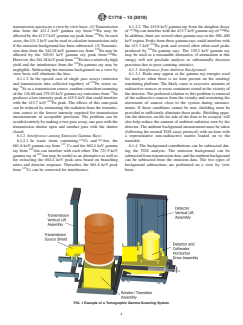
FIG. 1 Example of a Tomographic Gamma Scanning System
C1718 − 10 (2019)
TABLE 1 Commonly Used Transmission Source and Assay
7. Apparatus
Radionuclide Combinations
7.1 InFig.1,thedetectorassemblyisontherighthandside
Radionuclide Peak Transmission Peak
and the transmission assembly is to the left. The translating
of Interest Energy (keV) Source Energy (keV)
235 169
U 185.7 Yb 177.2
(and rotating) platform with the item loaded on it is shown in
198.0
the middle. General guidelines for the selection of detectors
238 75
and signal processing electronics are discussed in relevant
Pu 152.7 Se 136.0
766.4 400.1
operations manuals and NRC Guide 5.9. Data acquisition
systems are considered in ANSI N15.37 and NRC Guide 5.9.
238 152
Pu 152.7 Eu 121.8
766.4 244.7
7.2 Complete hardware and software systems for TGS, of
344.3
both large and small items, are commercially available. The 411.1
778.9
specification and procurement of the hardware and software
should follow a careful evaluation of the measurement quality 239 75
Pu 129.3 Se 121.1
203.6 136.0
objectives, expected materials to be assayed, and associated
345.0 264.7
system costs.This evaluation should be completed by an NDA
375.1 279.5
professional (Guide C1490). The system should have the
413.7 400.1
following components:
239 152
Pu 129.3 Eu 121.8
7.2.1 High-resolution, high purity germanium detector—
203.6 244.7
Detector resolution and efficiency shall be appropriate for the 345.0 344.3
375.1 411.1
user’sspecificapplicationandneedsasdeterminedbyanNDA
413.7
professional (Guide C1490).
239 57
Pu 129.3 Co 122.1
7.2.2 Detector collimator—The detector collimator opening
136.5
shall be a reasonable compromise between spatial resolution
137 152
and counting statistics, judged against the measurement objec- Cs 661.6 Eu 411.1
778.9
tive. The count rate per grab of the TGS can be improved by
using a wider collimator or a higher efficiency detector. 54 152
Mn 834.8 Eu 778.9
867.4
7.2.3 External source of gamma rays from a transmission
964.1
source—An external source shall be used to interrogate the
60 152
itemandcharacterizetheattenuationpropertiesofmatrix.(See
Co 1173.2 Eu 964.1
1332.5 1112.1
Table 1 for suggested sources). The count rate per grab of
1408.0
transmitted gamma rays can be improved by using a transmis-
sion source of higher intensity.
7.2.4 Motorized scanning system—the items shall be
scanned over three axes of motion relative to the detector
8. Preparation of Apparatus
(usuallyverticaltranslation,horizontaltranslation,androtation
8.1 Perform calibrations using the same procedures and
about a vertical axis).
conditions that will be used for the assays of actual items.
7.2.5 Tomographic reconstruction algorithms—TGS recon-
These include, but are not limited to, electronic components,
struction algorithms shall be employed to determine a three-
peak area determination procedures, procedures for the deter-
dimensional map of matrix density and radionuclide distribu-
mination of counting losses, voxel sizes, absorber foil
tion.
combinations, collimator arrangements, and measurement ge-
ometries. Changing conditions will change the calibrations.
7.3 Rate-Loss Correction Source or a Pulser—A Cd
Some commercial systems may allow certain parameters to
source is commonly used as the reference source for perform-
change (for example, aperture, distance from item surface to
ing rate loss corrections.Alternatively, a high precision pulser
detector, etc.) and allow the corresponding calibration factors
may be used for the same purpose.When a pulser is used, care
to be selected.
needs to be taken in the set-up to avoid spectral distortion.
8.2 Adjust the instrument controls to optimize signal pro-
7.4 Software—The system should include one or more
cessing and peak analysis functions. Choose the shaping time
software tools for the collection of data, motion control of the
constanttooptimizethetrade-offbetweenimprovedresolution
system, and analysis of data.The system may include tools for
withlongertimeconstantsanddecreaseddeadtimelosseswith
performing isotopic data collection and analysis.
shorter time constants. Time constants of 4 to 8 µs are
7.5 In two-pass assays, transmission gamma rays can be
commonly used for analog pulse processing electronics. If a
significantly attenuated by using a shutter made out of a high
digital signal processor is used, select filter settings equivalent
Z material.
to the above-mentioned analog shaping times. Follow the
manufacturer’s instructions for setting time constants or filter
7.6 To attenuate the X-rays from high Z collimator and
settings.
shield material, the inner walls of the collimator and shield as
well as the front face of the detector may be lined with a 8.3 Set the conversion gain on the analog-to-digital con-
“graded shield” made of a layer of Sn and a layer of Cu. verter (ADC). Adjust the amplifier gain. Perform pole-zero
C1718 − 10 (2019)
cancellation (if a resistive feed-back pre-amplifier is used). Set automatically by the computer or analyzer, depending on the
up a restore rejection veto (reset inhibit) if a transistor reset software package used.
pre-amplifier is used. Perform an energy and shape calibration
8.8 Setupthenumberofverticallayersoverwhichtheitem
of the detector. If a pulser is used for performing rate loss
willbescanned.Fora208litreora300litredrum,thenumber
corrections, ensure that the amplitude and frequency of the
of vertical layers to be scanned is normally 16.
pulsesaresettotheappropriatevalues.Asignificantadvantage
in using a pulser as opposed to a rate loss source is that the 8.9 Set up acquisition and analysis software to perform the
pulser peak can be placed at an energy where it will not desirednumberofdataacquisitiongrabsperscanandtheassay
interfere with the gamma ray peaks of interest. timeperscan.Alsosetupthesoftwaretoanalyzethedataover
the desired voxel grid.
8.4 Pile-up at high rates—Pulse pile-up can distort peak
shapes and can bias the counts registered in the regions of
8.10 Typically for a 208 litre drum, for a nominal 1h assay
interest (ROI) in the gamma ray spectra. The TGS technique
period, about 112 seconds are spent acquiring data at each of
relies on the counts in the ROIs to determine the transmission
the 16 layers in each of the two modes (transmission and
and emission maps. It is important to eliminate pulse pile-up.
emission). Each layer is broken into a 10 × 10 lattice of square
Pile-uprejectioncircuitryintheamplifiershouldbeenabledto
voxels (Fig. 2). By convention, based on signal-to-noise and
do this.
robustness of the analysis arguments, the number of data grabs
is set at 1.5 times the number of voxels (that is, roughly π/2
8.5 Set up the data acquisition and analysis software.
timesthenumberofvoxelsthatfitaroundthedrumperimeter).
Typically, the data acquisition software will interface with
Thereforeforeachofthe16verticallayers,150measurements
mechanismcontrolhardware(steppermotors,DCmotors,etc.)
are made in order to mathematically over determine the
in order to ensure that the item is scanned properly.
solution for 88 voxels in the 10 × 10 grid in each layer
Additionally, the data acquisition software may also have the
(assuming all data grabs are valid).
capability to automatically set an appropriate assay geometry
8.10.1 Count time for each view (or grab), should be set
(detectorhorizontalposition,detectorcollimatoraperture,etc.)
based on considerations of counting precision and the overall
based on drum dose rate or dead time. In such cases, the
assay time for the measurement requirement.
parameters for the assay geometry must be entered into the
control software. The acquisition software also interfaces with 8.10.2 The number of views per scan per layer must be
the pulse processing electronics and the system computer to greater than the number of voxels in the grid per layer
acquire data for a preset time, and store the data. (typically 1.5 times greater, based on sampling theory).
8.6 Choose collimator sizes that are appropriate to the item
9. Calibration and Reference Materials
type to be assayed.
8.6.1 Collimator aperture must be selected based on (1) the
9.1 Calibration of a TGS system relies on measurements of
distance of the container from the detector, (2) the count rate
well-characterized reference materials containing known
level (or surface dose rate of the container), (3) scanning
amounts of appropriate radionuclides. The radionuclide
diameter of the assay, and (4) the desired voxel grid.
sources used are calibration standards whose activities or
8.6.2 The farther the detector is with respect to the masses are traceable to a national measurements database.The
container, the narrower the collimator aperture should be. For calibration standards are distributed within a container with a
TGS systems used in industrial facilities, for a 208 litre drum
well-characterized matrix. Such a configuration is called a
where the outer surface is at a distance of 500 mm from the reference material in this document. ATGS system calibrated
detector, a collimator aperture of 60 mm would be typical. If a
usingreferencematerialscanbeusedtoquantifyradionuclides
208 litre drum is at a distance of 1000 mm from the detector, in items.Afacility may use a “working reference” to calibrate
a collimator aperture of 40 mm would be typical. For TGS
the system if the objective is to track the relative performance
systems used in a research facility, for assaying 208 litre of the TGS system for quality assurance purposes. A facility
drums,thedistancefromthesurfaceofthedrumtothedetector
can create a working reference by distributing radionuclide
is typically 200 mm. sources, that are not calibration standards, inside a representa-
8.6.3 The higher the surface dose rate of the container, the tive container matrix. A TGS system can be calibrated using
farther the detector should be, and narrower the collimator calibration standards that contain: (1) only those radionuclides
aperture.Thisshouldbedonetomaintainthespatialresolution, that are of interest in the item assays (isotope specific
aswellastoremainbelowtheupperlimitofthedynamiccount calibration), (2) radionuclides that are not necessarily of
rate range of the detector. interestintheitemassaysbutconsistofgammalinesspanning
the energy range of interest, and (3) a mixture of radionuclides
8.6.4 The collimator aperture is typically set 1 to 1.5 times
that are of interest in item assays as well as those that are not
the length of the voxel, based on sensitivity and precision in a
expected in item assays. Calibration standards can consist of
given acquisition time.
SNM radionuclides only, non-SNM radionuclides only, or a
8.7 SetupROIsaroundgammaraypeakenergiesofinterest
mixture of SNM and non-SNM radionuclides. Guides C1156
for emission as well as transmission scans. For each peak, set
and C1592/C1592M provide additional information useful in
upROIstocoverthepeakregionandthecontinuumregionsto
developing and executing a calibration plan.
theleftandrightofthepeak.ROIsaroundpeakstobeusedfor
analysis may be set manually by the operator or semi- 9.2 Calibration:
C1718 − 10 (2019)
FIG. 2 Example of a TGS Voxel Grid Pattern
9.2.1 Calibration of a TGS instrument uses a series of 9.2.5 Repeat measurements (at least 6) of a given reference
reference materials to determine the relationship between the materialmustalsobeperformedtoestablishthereproducibility
corrected count rate of a radionuclide’s characteristic gamma
of the TGS results.
ray and the mass or activity of radionuclide known to be
9.2.6 An item assay that uses an isotope-specific calibration
present.Afterthecorrectionofindividualvoxelcountratesfor
will yield masses or activities for those radionuclides that are
rate-related losses and the attenuation of each voxel, a direct
thesameastheonesusedduringcalibration.TheTGSnumber
proportionality between count rate, summed over all voxels of
obtained from the analysis of the item drum is simply divided
an item, and total radionuclide mass or activity is determined.
by the calibration factor at the corresponding gamma ray
9.2.2 AnoutputofaTGSanalysisisaquantityknownasthe
energy to obtain the radionuclide mass or activity.
“TGSnumber”andtheuncertaintyassociatedwithit.TheTGS
9.2.7 If calibration standards with isotopes of interest are
number and its uncertainty are determined at each emission
not available, a multi-isotope calibration standard that emits
energy, and represent values proportional to the activity or
gamma rays spanning the energy range of interest can be used.
mass of an assayed radionuclide inside the drum. During
When the gamma ray yields are factored in, the TGS calibra-
calibration, TGS assays are performed using reference materi-
tion factor can be expressed in units of TGS number per
als and theTGS numbers are obtained as a function of gamma
gammas per second. The shape of the curve describing TGS
ray energy. The TGS calibration parameter at each energy of
no./gammas/sec as a function of energy is very similar to the
interest is simply the TGS number per unit activity (or mass).
intrinsicefficiencycurveofthedetector.Byfittingacalibration
9.2.3 A separate calibration must be performed for each
curve to the TGS no./gammas/sec data points, it is possible to
geometry of interest (collimator aperture, distance of detector
determine by interpolation the activity or masses of radionu-
from the surface of the container).
clides that are not present in the calibration standard. Further,
9.2.4 After obtaining the calibration parameters, a series of
the similarity of the TGS calibration curve and the intrinsic
verification measurements must be performed using reference
efficiency curve can be exploited in extending the TGS
materials to validate the calibration. The verification measure-
calibration to energies beyond the lowest and highest gamma
ments must span the various geometries of interest, the range
ray energy calibration data points. This extrapolation is done
of activity or mass loadings of the radionuclides, the dynamic
range of the expected matrix attenuations and different source by determining a scaling factor based on relative efficiencies
distributions. for a simple source-detector geometry.
C1718 − 10 (2019)
ε E.E the assay results for such representative items with the known
~ !
max
ScaleFactor 5 (1)
ε~E ! radionuclide masses will indicate the possible range of bias
max
caused by heterogeneity of radionuclide and matrix material
TGS No./gammas/sec 5 Scale_Factor
~ !
E.E
max
and that caused by radionuclide location within the item.
3 ~TGS No./gammas/sec!E (2)
max
9.3.3 Radionuclide particle sizes in assay items may vary
ε~E,E !
min from those in the calibration standards, causing variations in
ScaleFactor 5 (3)
ε E
~ !
min
thecountratepergofradionuclideandyieldingbiasedresults.
An acceptable alternative to the preparation of special repre-
~TGS No./gammas/sec! 5 Scale_Factor
E.E
min
sentative standards for calibration and uncertainty estimation
3 TGS No./gammas/sec E (4)
~ !
min
measurements is the assay of real items (actual process
Caution must be used in extending the TGS calibration be-
materials) by analytical methods less sensitive to particle size
yond the range of calibration data. The hardware and soft-
ware set up, the data acquisition and analysis steps, and the problems (see NRC Guide 5.53). These analytical methods
assay protocol are the same for the isotope-specific and non-
may be total dissolution and solution quantification after
isotope-specific calibrations. A major difference between the
completion of the tomographic gamma ray measurements, or
two methods with regard to the set up is the ROI set up for
combined gamma ray isotopic and calorimetric assay for
the emission scan. In the efficiency calibration method, emis-
plutoniummaterials.Ineithercase,thedeterminationofbiases
sion ROIs must be set up for all the gamma ray peaks of
for these items will require special attention.
interest, not just the ones associated with radionuclides in
the calibration standard.
9.4 Reference Materials for a Non-Isotope-Specific Calibra-
tion:
9.2.8 Discussion of empty drum calibration and matrix
9.4.1 Radionuclide sources for determining a calibration
drum calibration—Guides C1128, C1592/C1592M, and NRC
curve are typically multi-isotope sources having multiple
Guide 5.53 provide useful guidelines for the preparation and
gamma ray energies spanning a broad energy range. The
characterization of reference materials and calibration proce-
available gamma ray energies should be sufficient to appropri-
dures and the statistical analysis of data.
ately define the efficiency function over the energy range of
9.2.9 Ifanewgeometryisneeded,forexample,foraspecial
interest (generally 50 to 2000 keV for nuclear power plant
investigation, for which a direct calibration has not been
waste assays, 50 keVto 1000 keVfor waste containing SNM).
performed, a subject matter expert may be able to apply
9.4.2 Line sources inserted into holes drilled at specific
mathematical tools to estimate the relative change in response
radial locations of a cylindrical container with a non-
and quantify the additional uncertainty.
radioactive matrix material are commonly used (9). Line
9.3 Reference Materials for an Isotope-Specific
sourceuncertaintiesaregenerallyintherangeofafewpercent
Calibration—The suggestions given in Sections 9.2.1 through
at 1σ uncertainty level. Uncertainties in the data for radionu-
9.2.4 are consistent with good practices in performing nonde-
clide half-lives and gamma ray emission intensities also
structive assay measurements. If these recommendations can-
contribute to the measurement uncertainty. Each of these
not be followed because of practical difficulties, then appro-
uncertaintiesmustbeincludedinanuncertaintypropagationto
priate uncertainty estimates must be determined and assigned
determine the total measurement uncertainty (TMU) of an
to account for the differences between the reference material
instrument.TheTMU should be determined for each container
and the real items being assayed.
and material type.
9.3.1 ForTGS assay of small items, reference materials can
be prepared by uniformly dispersing known masses of stable
10. Hazards
chemical compounds with a known isotopic mass fraction of
10.1 Safety Hazards:
the radionuclide of interest throughout a stable diluting me-
10.1.1 This standard does not purport to address all of the
dium such as graphite, diatomaceous earth, or castable silicon
safety concerns, if any, associated with its use. It is the
compounds. The radioactive material should have a particle
responsibility of the user of this standard to establish appro-
size small enough so that the effects of self-attenuation within
priate safety and health practices and determine the applicabil-
each particle are negligible, or the same as the items to be
ity of regulatory limitations prior to use.
assayed,orareknownsoacorrectioncanbeapplied.Although
10.1.2 A TGS system uses a transmission source whose
the mapping procedure used by the instrument usually com-
activity is typically 5 millicuries to 250 millicuries. The
pensates for stratification of the components of the mixture
transmission source must be adequately shielded to avoid
over time, some re-mixing, provided by gently shaking or
excessive exposure relative to facility-specific objectives.
rollingthecontainerpriortoeachmeasurement,maybeuseful
for calibration standards containing powder. 10.1.3 Transuranic materials are both radioactive and toxic.
Adequate laboratory facilities and safe operating procedures
9.3.2 In order to evaluate the magnitude of biases that will
must be considered to protect operators from both unnecessary
becausedbythedeviationofrealitemsfromidealdistributions
exposure to ionizing radiation and contamination while han-
of matrix and radionuclide, prepare representative items from
dling assay items.
segregated varieties of scrap and waste materials typical of
expected assay items. Vary the spatial distribution of the 10.1.4 The recommended analytical procedures call for the
radionuclide from widely dispersed to concentrated in various use of radionuclide sources, some with high levels of ionizing
extreme dimensions of the container volume. Comparison of radiation. Consult a qualified health physicist or radiation
C1718 − 10 (2019)
safetyprofessionalconcerningexposureproblemsandleaktest beam intensity directly, that is without the need to apply a
requirements before handling discrete radioactive sources. calculated decay correction.
10.1.5 The TGS system consists of moving mechanical
11.5 The item is scanned in 3 degrees of freedom;
parts. Necessary safety precautions such as lights and alarm
rotational, translational, and vertical. At each vertical layer a
soundsmustbeusedtoindicatemotionandcommencementof
transmission scan and an emission scan are performed. The
motion. The system must be equipped with emergency stop
container is continuously translated and rotated during the
buttons or switches that can be manually or automatically
scans performed at each layer.
activated if a dangerous situation is encountered.Additionally,
equipment such as overhead cranes or forklifts may have to be
12. Data Analysis
used to load and unload heavy containers. Care must be taken
12.1 Tomographic transmission and emission gamma scans
while operating these so that injury to personnel or damage to
are acquired of characteristic gamma rays. See Table 1 for
the system can be prevented.
energies of primary isotopes to be measured with associated
10.2 Technical Hazards:
transmissionandrate-losscorrectionsources.Thetransmission
10.2.1 The mechanical movement (translation and rotation)
andemissionscansareperformedasdescribedinSection11.5.
of the platform must be synchronized and maintained at a
The tomographic analysis is performed using the dedicated
constant rate. If the rate of motion changes during data
software package. This analysis can be broken down into five
acquisition, the image re-construction will be severely affected
stages:(1)transmissionimagereconstructions,(2)construction
and will bias the TGS results. Routine maintenance must be
of an attenuation-corrected emission response matrix, (3)
performedtokeepthemechanicalpartsandthesteppermotors
emission image reconstruction, (4) normalization of emission
in good working condition.
images to the measured total count rates (optional), and (5)
10.2.2 The TGS method requires that ROIs be defined
summation of emission image voxel values. For each peak
around the gamma ray energies of interest. A peak ROI and a
assayed, the sum of the emission image voxel values gives the
background ROI on both sides of the peak ROI are defined.
uncalibrated source strength for that radionuclide.
Some implementations allow one continuum ROI either below
12.1.1 The description of the transmission problem requires
or above the peak. It is critical that ROIs of adjacent gamma
a logarithmic conversion to obtain a linear form. Let pi equal
ray peaks do not overlap. If this condition is violated, proper
th
the i transmission measurement:
subtractionofthecontinuumunderneaththepeakROIwillnot
be possible.This will affect image reconstruction and will bias p 5 counts/counts (5)
i i max
where counts is the photon count at a given gamma ray
TGS results. i
th
peak energy in the i transmission measurement and counts-
10.2.3 During system installation, care must be taken to
is the unattenuated count at the same gamma ray energy
max
separate the stepper motor electrical cables from the detector
of the transmission source. We define the logarithmic
cables. This is to avoid any electromagnetic noise interference
transmission, v, by the relation:
i
with the detector signals.
v 2 ln p (6)
~ !
i i
10.2.4 If a rate loss source is used, its position with respect
With this conversion, the transmission problem can be de-
to the detector must be maintained at all times. If the position
scribed by an n by n thickness matrix T, where
views voxels
th
varies, the accuracy of rate loss corrections would be compro-
each element T is the linear thickness of the j voxel along
ij
mised. A decay correction is needed. Periodic measurements a ray connecting the transmission source and the detector in
th
the i measurement position. The transmission image is
may reset the clock so that the decay factor does not introduce
found as the solution of the linear system:
uncertainties.
¯
v¯ 5 T·¯µ (7)
11. Procedure
where v is a n -vector of logarithmic transmission mea-
views
surements and µ is a n -vector of linear attenuation coef-
voxels
11.1 Ensure that the TGS system is configured to assay
ficients.
usingthecorrectgeometryandusethecalibrationforthegiven
assay geometry. 12.1.2 The analysis software performs transmission image
reconstructiontocreateanimageoftheattenuationcoefficients
11.2 Set up the software to assay the container over the
for each voxel in the item at every transmissi
...