

ASTM A148/A148M-20e1
(Specification)Standard Specification for Steel Castings, High Strength, for Structural Purposes
General Information
- Abstract
ABSTRACT
This specification covers the standard for carbon steel, alloy steel, and martensitic stainless steel castings that are to be subjected to higher mechanical stresses. All castings shall undergo heat treatment either by full annealing, normalizing, normalizing and tempering, or quenching and tempering and shall be regulated under pyrometers. Several grades of steel castings are covered and shall conform to the required chemical composition for sulfur and phosphorus. A tension test shall be performed and shall conform to the required tensile strength, yield point, and elongation. The notch bar impact properties shall also be determined by testing one set of three Charpy V-notch impact specimens.
SCOPE
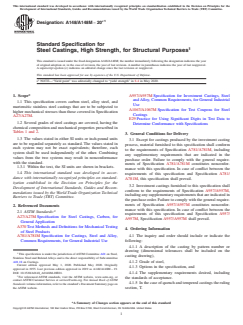
1.1 This specification covers carbon steel, alloy steel, and martensitic stainless steel castings that are to be subjected to higher mechanical stresses than those covered in Specification A27/A27M.
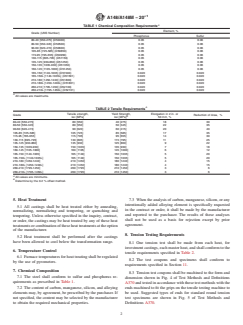
1.2 Several grades of steel castings are covered, having the chemical composition and mechanical properties prescribed in Tables 1 and 2.
1.3 The values stated in either SI units or inch-pound units are to be regarded separately as standard. The values stated in each system may not be exact equivalents; therefore, each system shall be used independently of the other. Combining values from the two systems may result in nonconformance with the standard.
1.3.1 Within the text, the SI units are shown in brackets.
1.4 This international standard was developed in accordance with internationally recognized principles on standardization established in the Decision on Principles for the Development of International Standards, Guides and Recommendations issued by the World Trade Organization Technical Barriers to Trade (TBT) Committee.
- Status
- Published
- Publication Date
- 30-Apr-2020
- Technical Committee
- A01 - Steel, Stainless Steel and Related Alloys
- Drafting Committee
- A01.18 - Castings

Overview
ASTM A148/A148M-20e1 is the standard specification for high-strength steel castings used in structural applications. Developed by ASTM International, this standard ensures that carbon steel, alloy steel, and martensitic stainless steel castings meet stringent requirements when subjected to higher mechanical stresses. These specifications are critical for industries requiring cast components with elevated strength, durability, and reliability, such as construction, heavy machinery, bridge components, and energy infrastructure.
This document outlines requirements for chemical composition, mechanical properties, heat treatment procedures, and testing, establishing a reliable benchmark for the quality and performance of steel castings in demanding structural roles.
Key Topics
Scope of Application
- Applies to steel castings, including carbon, alloy, and martensitic stainless steels
- Suitable for structural uses where higher mechanical stresses occur
- Offers options in SI and inch-pound units, used independently
Material Grades and Chemical Requirements
- Covers several grades of steel with specified limits for sulfur and phosphorus
- Grades have distinct minimum requirements for tensile strength, yield strength, and elongation
Mechanical Property Requirements
- Includes mandatory tension testing to ensure castings meet tensile and yield strength specifications
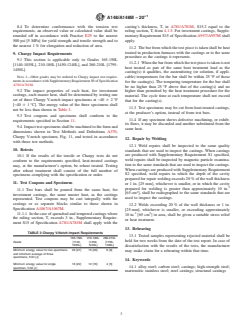
- Charpy V-notch impact testing required for select grades, assessing toughness
Heat Treatment Process
- Mandates controlled heat treatments such as annealing, normalizing, tempering, or quenching and tempering
- Ensures consistent mechanical properties and performance
Quality Assurance and Testing
- Requires the use of pyrometers for furnace temperature control
- Specifies procedures for test specimen preparation and locations
- Allows for retests and outlines conditions for weld repairs
Applications
ASTM A148/A148M steel castings deliver high strength and reliability, supporting a broad range of structural applications, including:
- Building and Bridge Construction: Used for load-bearing components and connections requiring robust steel properties.
- Heavy Equipment Manufacturing: Applied in mining, material handling, and earthmoving machinery where durability is critical.
- Energy Sector: Suitable for turbine housings, pressure vessels, and infrastructure subject to high mechanical loads.
- Transportation Infrastructure: Employed in railway and marine components which endure cyclical stresses and impact loads.
- Industrial Machinery: Integral to presses, frames, and other machinery subjected to high operational forces.
By conforming to ASTM A148/A148M, manufacturers and engineers ensure material consistency, structural integrity, and compliance with international industry standards for high-strength steel castings.
Related Standards
For comprehensive quality assurance and compatibility within the steel casting industry, ASTM A148/A148M-20e1 should be considered alongside these related standards:
- ASTM A27/A27M: Standard Specification for Steel Castings, Carbon, for General Application
- ASTM A370: Test Methods and Definitions for Mechanical Testing of Steel Products
- ASTM A781/A781M: Common Requirements for Steel and Alloy Castings for General Industrial Use
- ASTM A957/A957M: Specification for Investment Castings, Steel and Alloy, General Requirements
- ASTM A1067/A1067M: Specification for Test Coupons for Steel Castings
Adherence to ASTM A148/A148M and its related specifications helps ensure safety, durability, and performance in structural steel casting applications worldwide.
Keywords: ASTM A148, high-strength steel castings, structural steel, carbon steel castings, alloy steel, martensitic stainless steel, heat treatment, mechanical properties, Charpy impact test, structural applications, international standard, steel foundry, quality assurance.
Relations
- Effective Date
- 01-May-2020
- Effective Date
- 01-Mar-2024
- Effective Date
- 01-May-2020
- Effective Date
- 01-Sep-2019
- Effective Date
- 01-Jul-2019
- Effective Date
- 01-Sep-2018
- Effective Date
- 01-Sep-2018
- Effective Date
- 01-Jun-2018
- Effective Date
- 15-May-2018
- Effective Date
- 15-May-2018
- Effective Date
- 01-Mar-2018
- Effective Date
- 01-Jan-2018
- Refers
ASTM A370-17a - Standard Test Methods and Definitions for Mechanical Testing of Steel Products - Effective Date
- 15-Nov-2017
- Effective Date
- 01-May-2017
- Effective Date
- 01-May-2017
Get Certified
Connect with accredited certification bodies for this standard

Element Materials Technology
Materials testing and product certification.

Inštitut za kovinske materiale in tehnologije
Institute of Metals and Technology. Materials testing, metallurgical analysis, NDT.
Sponsored listings
Frequently Asked Questions
ASTM A148/A148M-20e1 is a technical specification published by ASTM International. Its full title is "Standard Specification for Steel Castings, High Strength, for Structural Purposes". This standard covers: ABSTRACT This specification covers the standard for carbon steel, alloy steel, and martensitic stainless steel castings that are to be subjected to higher mechanical stresses. All castings shall undergo heat treatment either by full annealing, normalizing, normalizing and tempering, or quenching and tempering and shall be regulated under pyrometers. Several grades of steel castings are covered and shall conform to the required chemical composition for sulfur and phosphorus. A tension test shall be performed and shall conform to the required tensile strength, yield point, and elongation. The notch bar impact properties shall also be determined by testing one set of three Charpy V-notch impact specimens. SCOPE 1.1 This specification covers carbon steel, alloy steel, and martensitic stainless steel castings that are to be subjected to higher mechanical stresses than those covered in Specification A27/A27M. 1.2 Several grades of steel castings are covered, having the chemical composition and mechanical properties prescribed in Tables 1 and 2. 1.3 The values stated in either SI units or inch-pound units are to be regarded separately as standard. The values stated in each system may not be exact equivalents; therefore, each system shall be used independently of the other. Combining values from the two systems may result in nonconformance with the standard. 1.3.1 Within the text, the SI units are shown in brackets. 1.4 This international standard was developed in accordance with internationally recognized principles on standardization established in the Decision on Principles for the Development of International Standards, Guides and Recommendations issued by the World Trade Organization Technical Barriers to Trade (TBT) Committee.
ABSTRACT This specification covers the standard for carbon steel, alloy steel, and martensitic stainless steel castings that are to be subjected to higher mechanical stresses. All castings shall undergo heat treatment either by full annealing, normalizing, normalizing and tempering, or quenching and tempering and shall be regulated under pyrometers. Several grades of steel castings are covered and shall conform to the required chemical composition for sulfur and phosphorus. A tension test shall be performed and shall conform to the required tensile strength, yield point, and elongation. The notch bar impact properties shall also be determined by testing one set of three Charpy V-notch impact specimens. SCOPE 1.1 This specification covers carbon steel, alloy steel, and martensitic stainless steel castings that are to be subjected to higher mechanical stresses than those covered in Specification A27/A27M. 1.2 Several grades of steel castings are covered, having the chemical composition and mechanical properties prescribed in Tables 1 and 2. 1.3 The values stated in either SI units or inch-pound units are to be regarded separately as standard. The values stated in each system may not be exact equivalents; therefore, each system shall be used independently of the other. Combining values from the two systems may result in nonconformance with the standard. 1.3.1 Within the text, the SI units are shown in brackets. 1.4 This international standard was developed in accordance with internationally recognized principles on standardization established in the Decision on Principles for the Development of International Standards, Guides and Recommendations issued by the World Trade Organization Technical Barriers to Trade (TBT) Committee.
ASTM A148/A148M-20e1 is classified under the following ICS (International Classification for Standards) categories: 77.140.80 - Iron and steel castings. The ICS classification helps identify the subject area and facilitates finding related standards.
ASTM A148/A148M-20e1 has the following relationships with other standards: It is inter standard links to ASTM A148/A148M-20, ASTM A370-24, ASTM A27/A27M-20, ASTM A27/A27M-19, ASTM A370-19, ASTM A957/A957M-18a, ASTM A781/A781M-18c, ASTM A781/A781M-18b, ASTM A957/A957M-18, ASTM A781/A781M-18a, ASTM A1067/A1067M-12a(2018), ASTM A781/A781M-18, ASTM A370-17a, ASTM A781/A781M-17, ASTM A27/A27M-17. Understanding these relationships helps ensure you are using the most current and applicable version of the standard.
ASTM A148/A148M-20e1 is available in PDF format for immediate download after purchase. The document can be added to your cart and obtained through the secure checkout process. Digital delivery ensures instant access to the complete standard document.
Standards Content (Sample)
This international standard was developed in accordance with internationally recognized principles on standardization established in the Decision on Principles for the
Development of International Standards, Guides and Recommendations issued by the World Trade Organization Technical Barriers to Trade (TBT) Committee.
´1
Designation:A148/A148M −20
Standard Specification for
Steel Castings, High Strength, for Structural Purposes
This standard is issued under the fixed designationA148/A148M; the number immediately following the designation indicates the year
of original adoption or, in the case of revision, the year of last revision.Anumber in parentheses indicates the year of last reapproval.
A superscript epsilon (´) indicates an editorial change since the last revision or reapproval.
This standard has been approved for use by agencies of the U.S. Department of Defense.
ε NOTE—“Yield point” was editorially changed to “yield strength” in 8.4 in May 2020.
1. Scope* A957/A957MSpecification for Investment Castings, Steel
andAlloy, Common Requirements, for General Industrial
1.1 This specification covers carbon steel, alloy steel, and
Use
martensitic stainless steel castings that are to be subjected to
A1067/A1067MSpecification for Test Coupons for Steel
higher mechanical stresses than those covered in Specification
Castings
A27/A27M.
E29Practice for Using Significant Digits in Test Data to
1.2 Several grades of steel castings are covered, having the
Determine Conformance with Specifications
chemical composition and mechanical properties prescribed in
Tables 1 and 2.
3. General Conditions for Delivery
1.3 The values stated in either SI units or inch-pound units
3.1 Except for castings produced by the investment casting
are to be regarded separately as standard. The values stated in
process, material furnished to this specification shall conform
each system may not be exact equivalents; therefore, each
to the requirements of Specification A781/A781M, including
system shall be used independently of the other. Combining
any supplementary requirements that are indicated in the
values from the two systems may result in nonconformance
purchase order. Failure to comply with the general require-
with the standard.
ments of Specification A781/A781M constitutes nonconfor-
1.3.1 Within the text, the SI units are shown in brackets.
mance with this specification. In case of conflict between the
1.4 This international standard was developed in accor-
requirements of this specification and Specification A781/
dance with internationally recognized principles on standard-
A781M, this specification shall prevail.
ization established in the Decision on Principles for the
3.2 Investment castings furnished to this specification shall
Development of International Standards, Guides and Recom-
conform to the requirements of Specification A957/A957M,
mendations issued by the World Trade Organization Technical
includinganysupplementaryrequirementsthatareindicatedin
Barriers to Trade (TBT) Committee.
the purchase order. Failure to comply with the general require-
ments of Specification A957/A957M constitutes nonconfor-
2. Referenced Documents
mance with this specification. In case of conflict between the
2.1 ASTM Standards:
requirements of this specification and Specification A957/
A27/A27MSpecification for Steel Castings, Carbon, for
A957M, Specification A957/A957M shall prevail.
General Application
A370Test Methods and Definitions for Mechanical Testing
4. Ordering Information
of Steel Products
A781/A781MSpecification for Castings, Steel and Alloy, 4.1 The inquiry and order should include or indicate the
following:
Common Requirements, for General Industrial Use
4.1.1 A description of the casting by pattern number or
drawing (dimensional tolerances shall be included on the
This specification is under the jurisdiction ofASTM Committee A01 on Steel,
casting drawing),
Stainless Steel and RelatedAlloys and is the direct responsibility of Subcommittee
A01.18 on Castings. 4.1.2 Grade of steel,
Current edition approved May 1, 2020. Published May 2020. Originally
4.1.3 Options in the specification, and
approved in 1955. Last previous edition approved in 2019 as A148/A148M–19.
DOI: 10.1520/A0148_A0148M-20E01. 4.1.4 The supplementary requirements desired, including
For referenced ASTM standards, visit the ASTM website, www.astm.org, or
the standards of acceptance.
contact ASTM Customer Service at service@astm.org. For Annual Book of ASTM
4.1.5 Inthecaseofquenchandtemperedcastingstheruling
Standards volume information, refer to the standard’s Document Summary page on
the ASTM website. section, T.
*A Summary of Changes section appears at the end of this standard
Copyright © ASTM International, 100 Barr Harbor Drive, PO Box C700, West Conshohocken, PA 19428-2959. United States
´1
A148/A148M−20
A
TABLE 1 Chemical Composition Requirements
Element, %
Grade (UNS Number)
Phosphorus Sulfur
80-40 [550-275] (D50400) 0.05 0.06
80-50 [550-345] (D50500) 0.05 0.06
90-60 [620-415] (D50600) 0.05 0.06
105-85 [725-585] (D50850) 0.05 0.06
115-95 [795-655] (D50950) 0.05 0.06
130-115 [895-795] (D51150) 0.05 0.06
135-125 [930-860] (D51250) 0.05 0.06
150-135 [1035-930] (D51350) 0.05 0.06
160-145 [1105-1000] (D51450) 0.05 0.06
165-150 [1140-1035] (D51500) 0.020 0.020
165-150L [1140-1035L] (D51501) 0.020 0.020
210-180 [1450-1240] (D51800) 0.020 0.020
210-180L [1450-1240L] (D51801) 0.020 0.020
260-210 [1795-1450] (D52100) 0.020 0.020
260-210L [1795-1450L] (D52101) 0.020 0.020
A
All values are maximums.
A
TABLE 2 Tensile Requirements
Tensile strength, Yield Strength, Elongation in 2 in. or
Grade Reduction of Area, %
B
ksi [MPa] ksi [MPa] 50 mm, %
80-40 [550-275] 80 [550] 40 [275] 18 30
80-50 [550-345] 80 [550] 50 [345] 22 35
90-60 [620-415] 90 [620] 60 [415] 20 40
105-85 [725-585] 105 [725] 85 [585] 17 35
115-95 [795-655] 115 [795] 95 [655] 14 30
130-115 [895-795] 130 [895] 115 [795] 11 25
135-125 [930-860] 135 [930] 125 [860] 9 22
150-135 [1035-930] 150 [1035] 135 [930] 7 18
160-145 [1105-1000] 160 [1105] 145 [1000] 6 12
165-150 [1140-1035] 165 [1140] 150 [1035] 5 20
165-150L [1140-1035L] 165 [1140] 150 [1035] 5 20
210-180 [1450-1240] 210 [1450] 180 [1240] 4 15
210-180L [1450-1240L] 210 [1450] 180 [1240] 4 15
260-210 [1795-1450] 260 [1795] 210 [1450] 3 6
260-210L [1795-1450L] 260 [1795] 210 [1450] 3 6
A
All values are minimums.
B
Determine by the 0.2 % offset method.
5. Heat Treatment 7.3 Whentheanalysisofcarbon,manganese,silicon,orany
intentionally added alloying element is specifically requested
5.1 All castings shall be heat treated either by annealing,
in the contract or order, it shall be made by the manufacturer
normalizing, normalizing and tempering, or quenching and
and reported to the purchaser. The results of these analyses
tempering. Unless otherwise specified in the inquiry, contract,
shall not be used as a basis for rejection except by prior
or order, the castings may be heat treated by any of these heat
agreement.
treatmentsorcombinationoftheseheattreatmentsattheoption
of the manufacturer.
8. Tension Testing Requirements
5.2 Heat treatment shall be performed after the castings
have been allowed to cool below the transformation range.
8.1 One tension test shall be made from each heat, for
investmentcastings,eachmasterheat,andshallconformtothe
6. Temperature Control
tensile requirements specified in Table 2.
6.1 Furnacetemperaturesforheattreatingshallberegulated
8.2 The test coupons and specimens shall conform to
by the use of pyrometers.
requirements specified in Section 11.
7. Chemical Composition
8.3 Tension test coupons shall be machined to the form and
7.1 The steel shall conform to sulfur and phosphorus re-
dimension shown in Fig. 4 of Test Methods and Definitions
quirements as prescribed in Table 1.
A370andtestedinaccordancewiththosetestmethodswiththe
ends machined to fit the grips on the tensile testing machine to
7.2 The content of carbon, manganese, silicon, and alloying
be used. Suggested types of ends for standard round tension
elementsmay,byagreement,beprescribedbythepurchaser.If
test specimens are shown in Fig. 5 of Test Methods and
not specified, the content may be selected by the manufacturer
to obtain the required mechanical properties. Definitions A370.
´1
A148/A148M−20
8.4 To determine conformance with the tension test casting’s thickness, T, in A781/A781M, S15.2 equal to the
requirements, an observed value or calculated value shall be ruling section, T, from 4.1.5. For investment castin
...