

ASTM E2242-21
(Test Method)Standard Test Method for Column Percolation Extraction of Mine Rock by the Meteoric Water Mobility Procedure
General Information
- Abstract
SIGNIFICANCE AND USE
5.1 This test method is intended as a means for obtaining an extract from mine rock samples. The extract may be used to estimate the final pH and release of certain constituents of the test sample under the laboratory conditions described in this test method.
5.2 The pH of the extraction fluid used in this test method should reflect the pH of precipitation in the geographic region in which the mine rock is being evaluated.
5.3 This test method is designed to mobilize potential contaminants present in the solids, so that the resulting extract can be used to assess leachate that could potentially be produced from mine rock in the field.
5.4 This test method has not been demonstrated to simulate actual site leaching conditions.
5.5 This test method produces extracts that are amenable to the determination of both major and minor (trace) constituents. When minor constituents are being determined, it is especially important that precautions be taken in sample preservation, storage, and handling to avoid possible contamination of the extracts.
5.6 This test method is a comparative method intended for use as a routine method for monitoring mine rock. It is assumed that all who use this method will be trained analysts capable of performing skillfully and safely. It is expected that work will be performed in a properly equipped laboratory under appropriate quality control practices such as those described in Guide E882.
SCOPE
1.1 This test method provides a procedure for the column percolation extraction of mine rock in order to determine the potential for dissolution and mobility of certain constituents by meteoric water.
1.2 This test method is intended to describe the procedure for performing column percolation extractions only. It does not describe all types of sampling and analytical requirements that may be associated with its application.
1.3 The values stated in SI units are to be regarded as the standard. The values given in parentheses are provided for information only and are not considered standard.
1.4 This standard does not purport to address all of the safety concerns, if any, associated with its use. It is the responsibility of the user of this standard to establish appropriate safety, health, and environmental practices and determine the applicability of regulatory limitations prior to use.
1.5 This international standard was developed in accordance with internationally recognized principles on standardization established in the Decision on Principles for the Development of International Standards, Guides and Recommendations issued by the World Trade Organization Technical Barriers to Trade (TBT) Committee.
- Status
- Published
- Publication Date
- 30-Sep-2021
- Technical Committee
- E01 - Analytical Chemistry for Metals, Ores, and Related Materials
- Drafting Committee
- E01.02 - Ores, Concentrates, and Related Metallurgical Materials
Buy Documents
ASTM E2242-21 - Standard Test Method for Column Percolation Extraction of Mine Rock by the Meteoric Water Mobility Procedure
REDLINE ASTM E2242-21 - Standard Test Method for Column Percolation Extraction of Mine Rock by the Meteoric Water Mobility Procedure
Overview
ASTM E2242-21, "Standard Test Method for Column Percolation Extraction of Mine Rock by the Meteoric Water Mobility Procedure," defines a laboratory method to evaluate the potential release and mobility of constituents from mine rock when contacted by meteoric (precipitation-based) water. This test method provides a standardized procedure for extracting samples, allowing analysts to assess the potential for contaminant leaching under controlled conditions that simulate natural precipitation events. The data collected is used primarily for comparative purposes in monitoring and managing environmental impacts from mining operations.
Key Topics
- Column Percolation Extraction: Utilizes a laboratory column packed with mine rock, through which water-simulating regional precipitation-is percolated to mobilize soluble constituents.
- Meteoric Water Mobility Procedure: Focuses on mimicking water from rainfall to assess which constituents could be leached under real-world scenarios.
- Assessment of Leachate: Provides insights into the potential pH changes and constituent release from mine rock, which can inform environmental risk evaluations.
- Comparative Laboratory Method: Intended for routine monitoring and comparative analysis-results are not intended to simulate actual site leaching but rather serve as a basis for monitoring potential contaminant mobility.
- Sample Handling and Preservation: Emphasizes avoidance of contamination during sample collection, handling, storage, and extraction, which is critical when testing for both major and trace elements.
- Suitability and Limitations: Best suited for coarser mine rock, with alternative procedures recommended for fine-grained materials or cases of poor percolation.
Applications
- Environmental Monitoring: Mining companies and environmental consultants use ASTM E2242-21 to monitor the leaching potential of waste rock piles, overburden, and ore stockpiles, ensuring compliance with regulatory requirements.
- Site Characterization: Provides baseline data for environmental impact assessments and informs mine waste management strategies by identifying which contaminants could be mobilized by rainfall.
- Risk Management: Supports the development of mitigation plans by predicting leachate chemistry and guiding containment or treatment design.
- Regulatory Submissions: Often included in permitting documents and ongoing compliance monitoring to demonstrate adherence to environmental protection standards.
- Comparative Assessments: Enables standardized comparison between mine sites or waste management practices, supporting consistent reporting and environmental due diligence.
Related Standards
- ASTM E877: Practice for Sampling and Sample Preparation of Iron Ores and Related Materials.
- ASTM D1193: Specification for Reagent Water.
- ASTM D1293: Test Methods for pH of Water.
- ASTM D6234: Test Method for Shake Extraction of Mining Waste by the Synthetic Precipitation Leaching Procedure.
- ASTM E50: Practices for Apparatus, Reagents, and Safety Considerations for Chemical Analysis.
- ASTM E882: Guide for Accountability and Quality Control in the Chemical Analysis Laboratory.
Practical Value
Adopting ASTM E2242-21 ensures a consistent and reliable approach to evaluating the environmental impact of mine rock in contact with precipitation. The standardized procedures improve the quality of data, facilitate regulatory acceptance, and support effective environmental stewardship in the mining industry. By helping predict potential leachate chemistry, this method is essential for risk assessment, management of mining waste, and the protection of surrounding ecosystems from contamination.
Relevant keywords: column percolation extraction, mine rock, meteoric water mobility, leachate assessment, mining environmental monitoring, ASTM E2242-21, contaminant mobility, waste rock testing.
Relations
- Effective Date
- 01-Jan-2020
- Effective Date
- 01-Nov-2019
- Effective Date
- 15-May-2019
- Effective Date
- 01-Sep-2017
- Effective Date
- 01-Dec-2016
- Effective Date
- 01-Dec-2016
- Effective Date
- 01-Aug-2016
- Effective Date
- 15-May-2016
- Effective Date
- 01-Jul-2015
- Effective Date
- 15-May-2015
- Effective Date
- 01-Feb-2015
- Effective Date
- 15-Aug-2014
- Effective Date
- 01-Apr-2014
- Effective Date
- 15-Feb-2014
- Effective Date
- 01-Dec-2013
Buy Documents
ASTM E2242-21 - Standard Test Method for Column Percolation Extraction of Mine Rock by the Meteoric Water Mobility Procedure
REDLINE ASTM E2242-21 - Standard Test Method for Column Percolation Extraction of Mine Rock by the Meteoric Water Mobility Procedure
Get Certified
Connect with accredited certification bodies for this standard

Bureau Veritas Chile
Bureau Veritas certification services in Chile.
Bureau Veritas Peru
Bureau Veritas certification services in Peru.
BVQI Peru
Bureau Veritas certification in Peru.
Sponsored listings
Frequently Asked Questions
ASTM E2242-21 is a standard published by ASTM International. Its full title is "Standard Test Method for Column Percolation Extraction of Mine Rock by the Meteoric Water Mobility Procedure". This standard covers: SIGNIFICANCE AND USE 5.1 This test method is intended as a means for obtaining an extract from mine rock samples. The extract may be used to estimate the final pH and release of certain constituents of the test sample under the laboratory conditions described in this test method. 5.2 The pH of the extraction fluid used in this test method should reflect the pH of precipitation in the geographic region in which the mine rock is being evaluated. 5.3 This test method is designed to mobilize potential contaminants present in the solids, so that the resulting extract can be used to assess leachate that could potentially be produced from mine rock in the field. 5.4 This test method has not been demonstrated to simulate actual site leaching conditions. 5.5 This test method produces extracts that are amenable to the determination of both major and minor (trace) constituents. When minor constituents are being determined, it is especially important that precautions be taken in sample preservation, storage, and handling to avoid possible contamination of the extracts. 5.6 This test method is a comparative method intended for use as a routine method for monitoring mine rock. It is assumed that all who use this method will be trained analysts capable of performing skillfully and safely. It is expected that work will be performed in a properly equipped laboratory under appropriate quality control practices such as those described in Guide E882. SCOPE 1.1 This test method provides a procedure for the column percolation extraction of mine rock in order to determine the potential for dissolution and mobility of certain constituents by meteoric water. 1.2 This test method is intended to describe the procedure for performing column percolation extractions only. It does not describe all types of sampling and analytical requirements that may be associated with its application. 1.3 The values stated in SI units are to be regarded as the standard. The values given in parentheses are provided for information only and are not considered standard. 1.4 This standard does not purport to address all of the safety concerns, if any, associated with its use. It is the responsibility of the user of this standard to establish appropriate safety, health, and environmental practices and determine the applicability of regulatory limitations prior to use. 1.5 This international standard was developed in accordance with internationally recognized principles on standardization established in the Decision on Principles for the Development of International Standards, Guides and Recommendations issued by the World Trade Organization Technical Barriers to Trade (TBT) Committee.
SIGNIFICANCE AND USE 5.1 This test method is intended as a means for obtaining an extract from mine rock samples. The extract may be used to estimate the final pH and release of certain constituents of the test sample under the laboratory conditions described in this test method. 5.2 The pH of the extraction fluid used in this test method should reflect the pH of precipitation in the geographic region in which the mine rock is being evaluated. 5.3 This test method is designed to mobilize potential contaminants present in the solids, so that the resulting extract can be used to assess leachate that could potentially be produced from mine rock in the field. 5.4 This test method has not been demonstrated to simulate actual site leaching conditions. 5.5 This test method produces extracts that are amenable to the determination of both major and minor (trace) constituents. When minor constituents are being determined, it is especially important that precautions be taken in sample preservation, storage, and handling to avoid possible contamination of the extracts. 5.6 This test method is a comparative method intended for use as a routine method for monitoring mine rock. It is assumed that all who use this method will be trained analysts capable of performing skillfully and safely. It is expected that work will be performed in a properly equipped laboratory under appropriate quality control practices such as those described in Guide E882. SCOPE 1.1 This test method provides a procedure for the column percolation extraction of mine rock in order to determine the potential for dissolution and mobility of certain constituents by meteoric water. 1.2 This test method is intended to describe the procedure for performing column percolation extractions only. It does not describe all types of sampling and analytical requirements that may be associated with its application. 1.3 The values stated in SI units are to be regarded as the standard. The values given in parentheses are provided for information only and are not considered standard. 1.4 This standard does not purport to address all of the safety concerns, if any, associated with its use. It is the responsibility of the user of this standard to establish appropriate safety, health, and environmental practices and determine the applicability of regulatory limitations prior to use. 1.5 This international standard was developed in accordance with internationally recognized principles on standardization established in the Decision on Principles for the Development of International Standards, Guides and Recommendations issued by the World Trade Organization Technical Barriers to Trade (TBT) Committee.
ASTM E2242-21 is classified under the following ICS (International Classification for Standards) categories: 73.060.01 - Metalliferous minerals in general. The ICS classification helps identify the subject area and facilitates finding related standards.
ASTM E2242-21 has the following relationships with other standards: It is inter standard links to ASTM E135-20, ASTM E1601-19, ASTM E135-19, ASTM E50-17, ASTM E882-10(2016)e1, ASTM E882-10(2016), ASTM E50-11(2016), ASTM E135-16, ASTM E135-15a, ASTM E135-15, ASTM D7237-15, ASTM E135-14b, ASTM E135-14a, ASTM E135-14, ASTM E135-13a. Understanding these relationships helps ensure you are using the most current and applicable version of the standard.
ASTM E2242-21 is available in PDF format for immediate download after purchase. The document can be added to your cart and obtained through the secure checkout process. Digital delivery ensures instant access to the complete standard document.
Standards Content (Sample)
This international standard was developed in accordance with internationally recognized principles on standardization established in the Decision on Principles for the
Development of International Standards, Guides and Recommendations issued by the World Trade Organization Technical Barriers to Trade (TBT) Committee.
Designation: E2242 − 21
Standard Test Method for
Column Percolation Extraction of Mine Rock by the
Meteoric Water Mobility Procedure
This standard is issued under the fixed designation E2242; the number immediately following the designation indicates the year of
original adoption or, in the case of revision, the year of last revision.Anumber in parentheses indicates the year of last reapproval.A
superscript epsilon (´) indicates an editorial change since the last revision or reapproval.
1. Scope CyanidewithFlowInjectionAnalysis(FIA)UtilizingGas
Diffusion Separation and Amperometric Detection
1.1 This test method provides a procedure for the column
E29Practice for Using Significant Digits in Test Data to
percolation extraction of mine rock in order to determine the
Determine Conformance with Specifications
potentialfordissolutionandmobilityofcertainconstituentsby
E50Practices for Apparatus, Reagents, and Safety Consid-
meteoric water.
erations for Chemical Analysis of Metals, Ores, and
1.2 This test method is intended to describe the procedure
Related Materials
forperformingcolumnpercolationextractionsonly.Itdoesnot
E135Terminology Relating to Analytical Chemistry for
describe all types of sampling and analytical requirements that
Metals, Ores, and Related Materials
may be associated with its application.
E389Test Method for Particle Size or Screen Analysis at
1.3 The values stated in SI units are to be regarded as the 4.75mm (No.4) Sieve and Coarser for Metal-Bearing
Ores and Related Materials
standard. The values given in parentheses are provided for
information only and are not considered standard. E691Practice for Conducting an Interlaboratory Study to
Determine the Precision of a Test Method
1.4 This standard does not purport to address all of the
E877Practice for Sampling and Sample Preparation of Iron
safety concerns, if any, associated with its use. It is the
Ores and Related Materials for Determination of Chemi-
responsibility of the user of this standard to establish appro-
cal Composition and Physical Properties
priate safety, health, and environmental practices and deter-
E882Guide for Accountability and Quality Control in the
mine the applicability of regulatory limitations prior to use.
Chemical Analysis Laboratory
1.5 This international standard was developed in accor-
E1601Practice for Conducting an Interlaboratory Study to
dance with internationally recognized principles on standard-
Evaluate the Performance of an Analytical Method
ization established in the Decision on Principles for the
2.2 Other References:
Development of International Standards, Guides and Recom-
Meteoric Water Mobility Procedure,Bureau of Mining
mendations issued by the World Trade Organization Technical
Regulation and Reclamation, Nevada Division of Envi-
Barriers to Trade (TBT) Committee.
ronmental Protection, 9/19/90
2. Referenced Documents
Standard Methods for the Examination of Water and Waste-
water,18th edition, APHA/AWWA/WEF, 1992
2.1 ASTM Standards:
D1193Specification for Reagent Water
3. Terminology
D1293Test Methods for pH of Water
D6234Test Method for Shake Extraction of Mining Waste 3.1 Definitions:
by the Synthetic Precipitation Leaching Procedure 3.1.1 For definitions of terms used in this test method, see
D7237Test Method for Free Cyanide and Aquatic Free Terminology E135.
3.1.2 meteoric water, n—rainfall that has the potential to
contact materials and mobilize soluble constituents from mine
This test method is under the jurisdiction of ASTM Committee E01 on
rock at a mining or mineral processing site.
Analytical Chemistry for Metals, Ores, and Related Materials and is the direct
responsibility of Subcommittee E01.02 on Ores, Concentrates, and Related Metal- 3.1.3 mine rock, n—ore, waste rock or overburden exca-
lurgical Materials.
vated in order to recover metals or minerals during mining
Current edition approved Oct. 1, 2021. Published October 2021. Originally
operations or coarse processed ore such as heap leach spoils.
approved in 2002. Last previous edition approved in 2013 as E2242–13. DOI:
10.1520/E2242-21.
For referenced ASTM standards, visit the ASTM website, www.astm.org, or 4. Summary of Test Method
contact ASTM Customer Service at service@astm.org. For Annual Book of ASTM
4.1 The test material is placed in a plastic column and
Standards volume information, refer to the standard’s Document Summary page on
the ASTM website. contactedwithwatertoproduceaneffluentcontaininganequal
Copyright © ASTM International, 100 Barr Harbor Drive, PO Box C700, West Conshohocken, PA 19428-2959. United States
E2242 − 21
weight of solution to dry solids during a leaching period of up a solution discharge outlet situated above the sealed bottom of
to 48 h. The extract is collected and preserved for analysis of the column and below a perforated support plate.Adrawing of
inorganic constituents. a suitable extraction column is shown in Fig. 1.
7.3 Filtration Device, of a composition suitable to the
5. Significance and Use
nature of the analyses to be performed and equipped with a
5.1 Thistestmethodisintendedasameansforobtainingan 0.45µm pore size filter. An assembly for pre-filtration or a
extract from mine rock samples. The extract may be used to centrifuge may be required if 0.45µm filtration is difficult.
estimate the final pH and release of certain constituents of the
7.4 Filter Media, glass wool (inert) or a plastic fiber pad is
test sample under the laboratory conditions described in this
placed onto the support plate before loading the laboratory
test method.
sample into the column, to minimize fines migration, and onto
5.2 The pH of the extraction fluid used in this test method the top of the test sample after column loading, to aid in
should reflect the pH of precipitation in the geographic region making an even water distribution.
in which the mine rock is being evaluated.
7.5 Laboratory Balance, capable of weighing to 1.0 g.
5.3 This test method is designed to mobilize potential
7.6 pH Meter, with a readability of 0.01 units and an
contaminants present in the solids, so that the resulting extract
accuracy of at least 6 0.05 units at 25 °C.
can be used to assess leachate that could potentially be
7.7 Tubing, surgical or synthetic tubing sufficient in diam-
produced from mine rock in the field.
eter and length for the extraction column assembly (pump,
5.4 This test method has not been demonstrated to simulate
column outlet).
actual site leaching conditions.
7.8 Water and Extract Containers, sufficient in size to
5.5 This test method produces extracts that are amenable to
contain the water added during extraction. Containers must be
thedeterminationofbothmajorandminor(trace)constituents.
covered to avoid contamination.
When minor constituents are being determined, it is especially
7.9 Water Metering Device, a metering pump or constant
important that precautions be taken in sample preservation,
head device to insure constant rate extraction fluid application
storage, and handling to avoid possible contamination of the
during column percolation.
extracts.
5.6 This test method is a comparative method intended for
8. Reagents and Materials
use as a routine method for monitoring mine rock. It is
8.1 Purity of Reagents—Reagent grade chemicals shall be
assumed that all who use this method will be trained analysts
used in all tests. Unless otherwise indicated, it is intended that
capable of performing skillfully and safely. It is expected that
all reagents shall conform to the specifications of the Commit-
work will be performed in a properly equipped laboratory
tee onAnalytical Reagents of theAmerican Chemical Society,
under appropriate quality control practices such as those
where such specifications are available. Other grades may be
described in Guide E882.
used, provided it is first ascertained that the reagent is of
sufficiently high purity to permit its use without lessening the
6. Interferences
accuracy of the determination.
6.1 This test method may not be suitable for obtaining
8.2 Purity of Water—Unless otherwise indicated, references
extractsfromfinelydividedsolids(suchas:finelycrusheddrill
to water shall be understood to mean Type II reagent water at
cuttings, clays, sludges, mill tailings, etc.), due to difficulty in
18 °C to 27 °C conforming to Specification D1193.Type III or
obtainingarepresentativeextractsolution.Ifittakesmorethan
IV may be used if they effect no measurable change in the
48 h for the column to produce an extract which has a mass
blank or sample.
equivalent to 70% of the dry test sample weight, use of an
alternate extraction procedure may be required, such as Test
9. Hazards
Method D6234.
9.1 For precautions to be observed in the use of analytical
NOTE 1—See Appendix X1 for the alternative bottle roll extraction
methods associated with this standard, refer to Practices E50.
option for fine-grained solids.
10. Sampling and Sample Preparation
7. Apparatus
10.1 Theamountofgrosssampletobesenttothelaboratory
7.1 Drying Pans or Dishes, for moisture content
should he sufficient to perform the moisture content determi-
determinations, 1 kg capacity.
nation as specified in 10.3, and to provide at least 5 kg of test
7.2 Extraction Column, PVC column of 15cm (6in.) O.D.
sample on a dry weight basis for extraction. Gross sample
ofsufficientheighttocontainaminimumof5kgoftestsample
weights in the range of 7 kg to 25 kg are appropriate.
withafeedparticlesizethatjustpassesa5cm(2in.)sieveand
sufficient additional height to contain applied water volume
Reagent Chemicals, American Chemical Society Specifications, American
should poor percolation occur. For a 5kg test sample, a 15cm
Chemical Society, Washington, DC, www.chemistry.org. For suggestions on the
O.D. × 45cm high column is recommended. Additional
testing of reagents not listed by the American Chemical Society, see the United
column height will be required for test sample quantities
States Pharmacopeia and National Formulary, U.S. Pharmacopeial Convention,
greaterthan5kg.Thebottomofthecolumnmustbesealedand Inc. (USPC), Rockville, MD, http://www.usp.
E2242 − 21
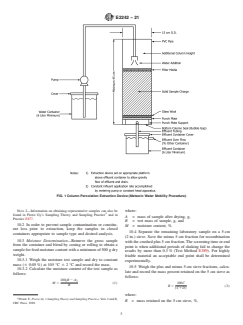
FIG. 1 Column Percolation Extraction Device (Meteoric Water Mobility Procedure)
NOTE 2—Information on obtaining representative samples can also be
where:
found in Pierre Gy’s Sampling Theory and Sampling Practice and in
A = mass of sample after drying, g,
Practice E877.
B = wet mass of sample, g, and
10.2 In order to prevent sample contamination or constitu-
M = moisture content, %.
ent loss prior to extraction, keep the samples in closed
10.4 Separate the remaining laboratory sample on a 5cm
containers appropriate to sample type and desired analysis.
(2in.) sieve. Save the minus 5cm fraction for recombination
10.3 Moisture Determination—Remove the gross sample
with the crushed plus 5cm fraction.The screening time or end
from the container and blend by coning or rolling to obtain a
point is when additional periods of shaking fail to change the
sampleforfeedmoisturecontentwithaminimumof500gdry
results by more than 0.3% (Test Method E389). For highly
weight.
friable material an acceptable end point shall be determined
10.3.1 Weigh the moisture test sample and dry to constant
experimentally.
mass (6 0.05%) at 105 °C 6 2 °C and record the mass.
10.5 Weigh the plus and minus 5cm sieve fractions, calcu-
10.3.2 Calculate the moisture content of the test sample as
late and record the mass percent retained on the 5cm sieve as
follows:
follows:
100 B 2 A
~ !
M 5 (1) 100C
B
R 5 (2)
~C1D!
where:
Pitard, F., Pierre Gy’s Sampling Theory and Sampling Practice, Vols. I and II,
R = mass retained on the 5cm sieve, %,
CRC Press, 1989.
E2242 − 21
through the column, abort the test and repeat the evaluation
C = mass retained on the 5cm sieve, g, and
using an alternate testing procedure, such as described in X1.2
D = mass passing the 5cm sieve, g.
or Test Method D6234.
10.6 Crushorhandbreakthematerialsretainedonthe5cm
11.5 Discontinue water addition and effluent collection
sieve so that they just pass through the 5cm (2in.) sieve,
when the effluent mass is equal to the dry mass of the test
combinewiththesavedfractionpassedthroughthe5cmsieve
sample or 48 h has elapsed, whichever occurs first. If, after 48
and mix the prepared sample.
h, the effluent mass is not at least 70% of the dry mass of the
10.7 Thoroughly blend the prepared sample and calculate
testsample,abortthetestandselectanalternatetestingmethod
theminimumtestsamplemasscontaining5kgdrymass,based
for the sample, such as described in X1.3 or Test Method
on the feed moisture content from 10.3, as follows:
D6234.
5 310
S 5 (3) 11.6 Thoroughlymixtheeffluentandletthecolumneffluent
~100 2 M!
continue to drain into a waste container.
where:
11.7 Immediately measure and record the final pH of the
S = minimum sample mass for testing, g and
effluent in accordance with Test Methods D1293. Record the
M = moisture content, %.
date, time, and final effluent mass.
10.8 Divide the prepared sample, if necessary, to obtain a
11.8 Extract—Quantitatively transfer a 2L portion of the
testsamplesuitableforprocessinginthecolumnapparatusbut
effluent through a large glass funnel to a filtration device
not less than the minimum sample mass from 10.7. and weigh
equipped with a 0.45µm filter for analyses of dissolved
to 61g.Labelandreserveanyexcesspreparedsampleforany
constituents. Pre-filtration using a coarse porosity glass filter
additional testing which may be required.
andcentrifugeseparationproceduresmaybenecessarypriorto
10.9 Calculate the dry mass of the test sample as follows:
filtration for some difficult to filter effluents. Immediately
measure and record the final pH of the extract in accordance
E 100 2 M
~ !
L 5 (4)
withTestMethodsD1293.Recordthefinaleffluentandextract
masses.
where:
11.8.1 Retain a 250mL portion of the extract for metals
L =
...
This document is not an ASTM standard and is intended only to provide the user of an ASTM standard an indication of what changes have been made to the previous version. Because
it may not be technically possible to adequately depict all changes accurately, ASTM recommends that users consult prior editions as appropriate. In all cases only the current version
of the standard as published by ASTM is to be considered the official document.
Designation: E2242 − 13 E2242 − 21
Standard Test Method for
Column Percolation Extraction of Mine Rock by the
Meteoric Water Mobility Procedure
This standard is issued under the fixed designation E2242; the number immediately following the designation indicates the year of
original adoption or, in the case of revision, the year of last revision. A number in parentheses indicates the year of last reapproval. A
superscript epsilon (´) indicates an editorial change since the last revision or reapproval.
1. Scope
1.1 This test method provides a procedure for the column percolation extraction of mine rock in order to determine the potential
for dissolution and mobility of certain constituents by meteoric water.
1.2 This test method is intended to describe the procedure for performing column percolation extractions only. It does not describe
all types of sampling and analytical requirements that may be associated with its application.
1.3 The values stated in SI units are to be regarded as the standard. The values given in parentheses are provided for information
only and are not considered standard.
1.4 This standard does not purport to address all of the safety concerns, if any, associated with its use. It is the responsibility
of the user of this standard to establish appropriate safety safety, health, and healthenvironmental practices and determine the
applicability of regulatory limitations prior to use.
1.5 This international standard was developed in accordance with internationally recognized principles on standardization
established in the Decision on Principles for the Development of International Standards, Guides and Recommendations issued
by the World Trade Organization Technical Barriers to Trade (TBT) Committee.
2. Referenced Documents
2.1 ASTM Standards:
D1193 Specification for Reagent Water
D1293 Test Methods for pH of Water
D6234 Test Method for Shake Extraction of Mining Waste by the Synthetic Precipitation Leaching Procedure
D7237 Test Method for Free Cyanide and Aquatic Free Cyanide with Flow Injection Analysis (FIA) Utilizing Gas Diffusion
Separation and Amperometric Detection
E29 Practice for Using Significant Digits in Test Data to Determine Conformance with Specifications
E50 Practices for Apparatus, Reagents, and Safety Considerations for Chemical Analysis of Metals, Ores, and Related Materials
E135 Terminology Relating to Analytical Chemistry for Metals, Ores, and Related Materials
E389 Test Method for Particle Size or Screen Analysis at 4.75 mm (No.4) Sieve and Coarser for Metal-Bearing Ores and Related
Materials
E691 Practice for Conducting an Interlaboratory Study to Determine the Precision of a Test Method
This test method is under the jurisdiction of ASTM Committee E01 on Analytical Chemistry for Metals, Ores, and Related Materials and is the direct responsibility of
Subcommittee E01.02 on Ores, Concentrates, and Related Metallurgical Materials.
Current edition approved Oct. 1, 2013Oct. 1, 2021. Published November 2013October 2021. Originally approved in 2002. Last previous edition approved in 20122013
as E2242 – 12a.E2242 – 13. DOI: 10.1520/E2242-13.10.1520/E2242-21.
For referenced ASTM standards, visit the ASTM website, www.astm.org, or contact ASTM Customer Service at service@astm.org. For Annual Book of ASTM Standards
volume information, refer to the standard’s Document Summary page on the ASTM website.
Copyright © ASTM International, 100 Barr Harbor Drive, PO Box C700, West Conshohocken, PA 19428-2959. United States
E2242 − 21
E877 Practice for Sampling and Sample Preparation of Iron Ores and Related Materials for Determination of Chemical
Composition and Physical Properties
E882 Guide for Accountability and Quality Control in the Chemical Analysis Laboratory
E1601 Practice for Conducting an Interlaboratory Study to Evaluate the Performance of an Analytical Method
2.2 Other References:
Meteoric Water Mobility Procedure, Bureau of Mining Regulation and Reclamation, Nevada Division of Environmental
Protection, 9/19/90
Standard Methods for the Examination of Water and Wastewater, 18th edition, APHA/AWWA/WEF, 1992
3. Terminology
3.1 Definitions:
3.1.1 For definitions of terms used in this test method, see Terminology E135.
3.1.2 meteoric water—water, n—rainfall that has the potential to contact materials and mobilize soluble constituents from mine
rock at a mining or mineral processing site.
3.1.3 mine rock—rock, n—ore, waste rock or overburden excavated in order to recover metals or minerals during mining
operations or coarse processed ore such as heap leach spoils.
4. Summary of Test Method
4.1 The test material is placed in a plastic column and contacted with water to produce an effluent containing an equal weight of
solution to dry solids during a leaching period of up to 48 h. The extract is collected and preserved for analysis of inorganic
constituents.
5. Significance and Use
5.1 This test method is intended as a means for obtaining an extract from mine rock samples. The extract may be used to estimate
the final pH and release of certain constituents of the test sample under the laboratory conditions described in this test method.
5.2 The pH of the extraction fluid used in this test method should reflect the pH of precipitation in the geographic region in which
the mine rock is being evaluated.
5.3 This test method is designed to mobilize potential contaminants present in the solids, so that the resulting extract can be used
to assess leachate that could potentially be produced from mine rock in the field.
5.4 This test method has not been demonstrated to simulate actual site leaching conditions.
5.5 This test method produces extracts that are amenable to the determination of both major and minor (trace) constituents. When
minor constituents are being determined, it is especially important that precautions be taken in sample preservation, storage, and
handling to avoid possible contamination of the extracts.
5.6 This test method is a comparative method intended for use as a routine method for monitoring mine rock. It is assumed that
all who use this method will be trained analysts capable of performing skillfully and safely. It is expected that work will be
performed in a properly equipped laboratory under appropriate quality control practices such as those described in Guide E882.
6. Interferences
6.1 This test method may not be suitable for obtaining extracts from finely divided solids (such as: finely crushed drill cuttings,
clays, sludges, mill tailings, etc.), due to difficulty in obtaining a representative extract solution. If it takes more than 48 h for the
column to produce an extract which has a mass equivalent to 70 % of the dry test sample weight, use of an alternate extraction
procedure may be required, such as Test Method D6234.
NOTE 1—See Appendix X1 for the alternative bottle roll extraction option for fine-grained solids.
E2242 − 21
7. Apparatus
7.1 Drying Pans or Dishes, for moisture content determinations, 1 kg capacity.
7.2 Extraction Column, PVC column of 15-cm (6-in.)15 cm (6 in.) O.D. of sufficient height to contain a minimum of 5 kg of test
sample with a feed particle size that just passes a 5-cm (2-in.)5 cm (2 in.) sieve and sufficient additional height to contain applied
water volume should poor percolation occur. For a 5-kg5 kg test sample, a 15-cm15 cm O.D. × 45-cm45 cm high column is
recommended. Additional column height will be required for test sample quantities greater than 5 kg. The bottom of the column
must be sealed and a solution discharge outlet situated above the sealed bottom of the column and below a perforated support plate.
A drawing of a suitable extraction column is shown in Fig. 1.
7.3 Filtration Device, of a composition suitable to the nature of the analyses to be performed and equipped with a 0.45-μm0.45 μm
pore size filter. An assembly for pre-filtration or a centrifuge may be required if 0.45-μm0.45 μm filtration is difficult.
7.4 Filter Media, glass wool (inert) or a plastic fiber pad is placed onto the support plate before loading the laboratory sample into
the column, to minimize fines migration, and onto the top of the test sample after column loading, to aid in making an even water
distribution.
7.5 Laboratory Balance, capable of weighing to 1.0 g.
FIG. 1 Column Percolation Extraction Device (Meteoric Water Mobility Procedure)
E2242 − 21
7.6 pH Meter, with a readability of 0.01 units and an accuracy of at least 6 0.05 units at 25 °C.
7.7 Tubing, surgical or synthetic tubing sufficient in diameter and length for the extraction column assembly (pump, column
outlet).
7.8 Water and Extract Containers, sufficient in size to contain the water added during extraction. Containers must be covered to
avoid contamination.
7.9 Water Metering Device, a metering pump or constant head device to insure constant rate extraction fluid application during
column percolation.
8. Reagents and Materials
8.1 Purity of Reagents—Reagent grade chemicals shall be used in all tests. Unless otherwise indicated, it is intended that all
reagents shall conform to the specifications of the Committee on Analytical Reagents of the American Chemical Society, where
such specifications are available. Other grades may be used, provided it is first ascertained that the reagent is of sufficiently high
purity to permit its use without lessening the accuracy of the determination.
8.2 Purity of Water—Unless otherwise indicated, references to water shall be understood to mean Type II reagent water at 18 °C
to 27 °C conforming to Specification D1193. Type III or IV may be used if they effect no measurable change in the blank or sample.
9. Hazards
9.1 For precautions to be observed in the use of analytical methods associated with this standard, refer to Practices E50.
10. Sampling and Sample Preparation
10.1 The amount of gross sample to be sent to the laboratory should he sufficient to perform the moisture content determination
as specified in 10.3, and to provide at least 5 kg of test sample on a dry weight basis for extraction. Gross sample weights in the
range of 7 kg to 25 kg are appropriate.
NOTE 2—Information on obtaining representative samples can also be found in Pierre Gy’s Sampling Theory and Sampling Practice and in Practice E877.
10.2 In order to prevent sample contamination or constituent loss prior to extraction, keep the samples in closed containers
appropriate to sample type and desired analysis.
10.3 Moisture Determination—Remove the gross sample from the container and blend by coning or rolling to obtain a sample for
feed moisture content with a minimum of 500-g500 g dry weight.
10.3.1 Weigh the moisture test sample and dry to constant weightmass (6 0.05 %) at 105 °C 6 2 °C and record the weight.mass.
10.3.2 Calculate the moisture content of the test sample as follows:
100~B 2 A!
M 5 (1)
B
where:
A = mass of sample after drying, g,
B = wet mass of sample, g, and
M = moisture content, %.
Reagent Chemicals, American Chemical Society Specifications, American Chemical Society, Washington, DC. DC, www.chemistry.org. For suggestions on the testing
of reagents not listed by the American Chemical Society, see the United States Pharmacopeia and National Formulary, U.S. Pharmacopeial Convention, Inc. (USPC),
Rockville, MD.MD, http://www.usp.
Pitard, F., Pierre Gy’s Sampling Theory and Sampling Practice, Vols. I and II, CRC Press, 1989.
E2242 − 21
10.4 Separate the remaining laboratory sample on a 5-cm (2-in.)5 cm (2 in.) sieve. Save the minus 5-cm5 cm fraction for
recombination with the crushed plus 5-cm5 cm fraction. The screening time or end point is when additional periods of shaking fail
to change the results by more than 0.3 % (Test Method E389). For highly friable material an acceptable end point shall be
determined experimentally.
10.5 Weigh the plus and minus 5-cm5 cm sieve fractions, calculate and record the weightmass percent retained on the 5-cm5 cm
sieve as follows:
100C
R 5 (2)
~C1D!
where:
R = weight retained on the 5-cm sieve, %,
C = mass retained on the 5-cm sieve, g, and
D = mass passing the 5-cm sieve, g.
R = mass retained on the 5 cm sieve, %,
C = mass retained on the 5 cm sieve, g, and
D = mass passing the 5 cm sieve, g.
10.6 Crush or hand break the materials retained on the 5-cm5 cm sieve so that they just pass through the 5-cm (2-in.)5 cm (2 in.)
sieve, combine with the saved fraction passed through the 5-cm5 cm sieve and mix the prepared sample.
10.7 Thoroughly blend the prepared sample and calculate the minimum test sample weightmass containing 5-kg5 kg dry
weight,mass, based on the feed moisture content from 10.3, as follows:
S 5 (3)
100 2 M
~ !
where:
S = minimum sample mass for testing, g and
M = moisture content, %.
10.8 Divide the prepared sample, if necessary, to obtain a test sample suitable for processing in the column apparatus but not less
than the minimum sample weightmass from 10.7. and weigh to 6 1 g. Label and reserve any excess prepared sample for any
additional testing which may be required.
10.9 Calculate the dry weightmass of the test sample as follows:
E 1002M
~ !
L 5 (4)
where:
L = dry mass of the test sample, g,
E = gross mass of the test sample, g, and
M = moisture content of the gross sample, %.
11. Procedure
11.1 Place filter media (7.4) in the bottom of the extraction column and load the laboratory sample incrementally (~1-kg/
increment)(~1 kg ⁄increment) into the column. To minimize particle segregation and compaction during column loading, the sample
portions shall be dropped from no more than 0.6 m (24 in.) when introduced from the top of the column, and no tamping, shaking,
or other methods to compact the sample will be employed. Place filter media over the test sample in the column.
11.2 Use a water addition rate of 3.5 mL/min for minimum weightmass samples in the range of 5-kg5 kg to 5.5-kg5.5 kg dry
weight.mass.
E2242 − 21
11.2.1 For samples greater than 5.5-kg5.5 kg dry weight,mass, calculate the rate of water addition to the column to add a
weightmass of water equal to the dry weightmass of the test sample during 24 h as follows:
L
F 5 (5)
where:
F = water addition rate, mL/min, and
L = dry mass of the laboratory sample, g.
11.3 Measure and record
...