

ASTM E2307-23b
(Test Method)Standard Test Method for Determining Fire Resistance of Perimeter Fire Barriers Using Intermediate-Scale, Multi-story Test Apparatus
General Information
- Abstract
SIGNIFICANCE AND USE
5.1 This test method provides for the following measurements and evaluations:
5.1.1 Movement capacity of the perimeter fire barrier.
5.1.2 Loadbearing capacity of the perimeter joint protection is optional.
5.1.3 Ability of the perimeter fire barrier to resist the passage of flames and hot gases.
5.1.4 Transmission of heat through the perimeter fire barrier.
5.2 This test method does not provide the following:
5.2.1 Evaluation of the degree to which the perimeter fire barrier contributes to the fire hazard by generation of smoke, toxic gases, or other products of combustion,
5.2.2 Measurement of the degree of control or limitation of the passage of smoke or products of combustion through the perimeter fire barrier,
Note 1: This test method does not measure the quantity of smoke or hot gases through the floor assembly, the wall assembly, or the perimeter joint protection.
5.2.3 Measurement of flame spread over the surface of the perimeter fire barrier,
Note 2: The information in 5.2.1 through 5.2.3 are determined by other suitable fire test methods. For example, Test Method E84 is used to determine 5.2.3.
5.2.4 Durability of the test specimen under actual service conditions, including the effects of cycled temperature,
5.2.5 Effects of a load on the movement cycling of the perimeter fire barrier established by this test method,
5.2.6 Rotational, vertical, and horizontal shear capabilities of the test specimen,
5.2.7 Any other attributes of the test specimen, such as wear resistance, chemical resistance, air infiltration, water-tightness, and so forth, and
5.2.8 A measurement of the capability of the test specimen to resist:
5.2.8.1 Flame propagation over the exterior faces of the test specimen,
5.2.8.2 Spread of flame within the combustible core component of the exterior wall assembly from one story to the next,
Note 3: Some exterior wall assemblies are made from sandwich panels, which use EPS foam or other similar mat...
SCOPE
1.1 This test method measures the performance of the perimeter fire barrier and its ability to maintain a seal to prevent fire spread during the deflection and deformation of the exterior wall assembly and floor assembly during the fire test, while resisting fire exposure from an interior compartment fire as well as from the flame plume emitted from the window burner below. The end point of the fire-resistance test is the period of time elapsing before the first condition of compliance is reached as the perimeter fire barrier is subjected to a time-temperature fire exposure.
1.2 The fire exposure conditions used are those specified by this test method for the first 30 min of exposure and then conform to the Test Methods E119 time-temperature curve for the remainder of the test in the test room.
1.3 This test method specifies the heating conditions, methods of test, and criteria for evaluation of the ability of a perimeter fire barrier to maintain the fire resistance where a floor and exterior wall assembly are juxtaposed to a perimeter joint.
1.4 Test results establish the performance of perimeter fire barriers during the fire-exposure period and shall not be construed as having determined the suitability of perimeter fire barriers for use after that exposure.
1.5 This test method does not provide quantitative information about the perimeter fire barrier relative to the rate of leakage of smoke or gases or both. While it requires that such phenomena be noted and reported when describing the general behavior of perimeter fire barrier during the fire-resistance test, such phenomena are not part of the conditions of compliance.
1.6 Potentially important factors and fire characteristics not addressed by this test method include, but are not limited to:
1.6.1 The performance of the perimeter fire barrier constructed with components other than those tested, and
1.6.2 The cyclic movement capabilities of per...
- Status
- Published
- Publication Date
- 31-Oct-2023
- Technical Committee
- E05 - Fire Standards
- Drafting Committee
- E05.11 - Fire Resistance
Buy Documents
ASTM E2307-23b - Standard Test Method for Determining Fire Resistance of Perimeter Fire Barriers Using Intermediate-Scale, Multi-story Test Apparatus
REDLINE ASTM E2307-23b - Standard Test Method for Determining Fire Resistance of Perimeter Fire Barriers Using Intermediate-Scale, Multi-story Test Apparatus
Overview
ASTM E2307-23b is the Standard Test Method for Determining Fire Resistance of Perimeter Fire Barriers Using Intermediate-Scale, Multi-story Test Apparatus. Published by ASTM International, this standard provides a highly specialized method for assessing the fire resistance of perimeter fire barrier systems, specifically at the critical interface between a building’s floor assembly and exterior wall assembly. The purpose is to measure the ability of these perimeter barriers to prevent fire spread from one story to another through the perimeter joint, especially during architectural movement, such as thermal expansion, seismic events, or wind loads.
Key Topics
- Fire Resistance Evaluation: ASTM E2307-23b details procedures for testing the performance of perimeter fire barriers in maintaining a fire-resistive seal during movement and under intense fire exposure, including from both interior compartment fires and direct flame impingement from the exterior (simulated window burner).
- Movement and Deflection: The method measures the capacity of the joint protection system to accommodate deflection and deformation of adjacent building elements while maintaining its fire-resistive properties.
- Criteria for Assessment: Evaluation focuses on preventing the passage of flames and hot gases, as well as limiting the heat transmission through the fire barrier.
- Optional Loadbearing Assessment: While primarily aimed at movement and fire resistance, the standard allows (optionally) for assessment of a barrier’s loadbearing capabilities.
- Exclusions: The test does not evaluate factors like smoke generation, toxic emissions, flame spread over surfaces, durability under actual service conditions, or weather/resistance attributes.
Applications
- Building Construction: Used by architects, structural engineers, and building code officials, ASTM E2307-23b supports the design, specification, and quality assurance of perimeter fire barrier systems for mid-rise and high-rise buildings.
- Fire Safety Code Compliance: The standard is often referenced to demonstrate compliance with fire containment requirements for the perimeter joints in curtain wall and façade systems.
- System Qualification: Manufacturers and installers use this test to qualify new or existing fire barrier assemblies, ensuring that perimeter joint systems offer reliable resistance against fire spread in the real-world conditions of a building envelope.
- Retrofit Projects: For existing buildings undergoing upgrades or façade renovations, compliance with ASTM E2307-23b provides documented evidence of enhanced perimeter fire protection, which can be critical for project approval and insurance purposes.
Related Standards
- ASTM E119: Test Methods for Fire Tests of Building Construction and Materials. ASTM E2307-23b uses the E119 time-temperature curve during the fire exposure period.
- ASTM E84: Test Method for Surface Burning Characteristics of Building Materials, used to assess flame spread, which is outside the scope of E2307-23b.
- ASTM E108, E1529, E1966: Related standards addressing fire resistance of other building assemblies and joint systems.
- NFPA 285: Standard Method of Test for the Evaluation of Flammability Characteristics of Exterior Non-Load-Bearing Wall Assemblies.
- GA-600: Fire Resistance and Sound Control Design Manual by the Gypsum Association for reference wall construction details.
Practical Value
Implementing ASTM E2307-23b significantly improves perimeter fire safety by:
- Mitigating Vertical Fire Spread: Properly tested perimeter joint barriers prevent fire from jumping between floors, enhancing occupant safety and property protection.
- Facilitating Regulatory Approvals: Demonstrating compliance with international fire safety codes and standards, streamlining building permitting and approvals.
- Supporting Design Innovation: Enables the use of innovative façade and floor systems by providing a standardized method for fire resistance validation at perimeter joints.
By utilizing ASTM E2307-23b, designers and stakeholders in the construction and building materials sectors can ensure that perimeter fire barriers provide robust and dependable performance during critical fire scenarios.
Relations
- Effective Date
- 01-Nov-2023
- Effective Date
- 01-Jan-2024
- Effective Date
- 01-Dec-2023
- Effective Date
- 01-Sep-2023
- Effective Date
- 01-Nov-2023
- Effective Date
- 01-Nov-2023
- Effective Date
- 01-Nov-2023
- Effective Date
- 01-Nov-2023
- Effective Date
- 01-Nov-2023
- Effective Date
- 01-Nov-2023
- Effective Date
- 01-Nov-2023
- Effective Date
- 01-Nov-2023
- Effective Date
- 01-Nov-2023
- Effective Date
- 01-Nov-2023
- Effective Date
- 01-Nov-2023
Buy Documents
ASTM E2307-23b - Standard Test Method for Determining Fire Resistance of Perimeter Fire Barriers Using Intermediate-Scale, Multi-story Test Apparatus
REDLINE ASTM E2307-23b - Standard Test Method for Determining Fire Resistance of Perimeter Fire Barriers Using Intermediate-Scale, Multi-story Test Apparatus
Get Certified
Connect with accredited certification bodies for this standard

CIS Institut d.o.o.
Personal Protective Equipment (PPE) certification body. Notified Body NB-2890 for EU Regulation 2016/425 PPE.

Kiwa BDA Testing
Building and construction product certification.
Kmetijski inštitut Slovenije
Agricultural Institute of Slovenia. Soil testing, plant health, agricultural product analysis.
Sponsored listings
Frequently Asked Questions
ASTM E2307-23b is a standard published by ASTM International. Its full title is "Standard Test Method for Determining Fire Resistance of Perimeter Fire Barriers Using Intermediate-Scale, Multi-story Test Apparatus". This standard covers: SIGNIFICANCE AND USE 5.1 This test method provides for the following measurements and evaluations: 5.1.1 Movement capacity of the perimeter fire barrier. 5.1.2 Loadbearing capacity of the perimeter joint protection is optional. 5.1.3 Ability of the perimeter fire barrier to resist the passage of flames and hot gases. 5.1.4 Transmission of heat through the perimeter fire barrier. 5.2 This test method does not provide the following: 5.2.1 Evaluation of the degree to which the perimeter fire barrier contributes to the fire hazard by generation of smoke, toxic gases, or other products of combustion, 5.2.2 Measurement of the degree of control or limitation of the passage of smoke or products of combustion through the perimeter fire barrier, Note 1: This test method does not measure the quantity of smoke or hot gases through the floor assembly, the wall assembly, or the perimeter joint protection. 5.2.3 Measurement of flame spread over the surface of the perimeter fire barrier, Note 2: The information in 5.2.1 through 5.2.3 are determined by other suitable fire test methods. For example, Test Method E84 is used to determine 5.2.3. 5.2.4 Durability of the test specimen under actual service conditions, including the effects of cycled temperature, 5.2.5 Effects of a load on the movement cycling of the perimeter fire barrier established by this test method, 5.2.6 Rotational, vertical, and horizontal shear capabilities of the test specimen, 5.2.7 Any other attributes of the test specimen, such as wear resistance, chemical resistance, air infiltration, water-tightness, and so forth, and 5.2.8 A measurement of the capability of the test specimen to resist: 5.2.8.1 Flame propagation over the exterior faces of the test specimen, 5.2.8.2 Spread of flame within the combustible core component of the exterior wall assembly from one story to the next, Note 3: Some exterior wall assemblies are made from sandwich panels, which use EPS foam or other similar mat... SCOPE 1.1 This test method measures the performance of the perimeter fire barrier and its ability to maintain a seal to prevent fire spread during the deflection and deformation of the exterior wall assembly and floor assembly during the fire test, while resisting fire exposure from an interior compartment fire as well as from the flame plume emitted from the window burner below. The end point of the fire-resistance test is the period of time elapsing before the first condition of compliance is reached as the perimeter fire barrier is subjected to a time-temperature fire exposure. 1.2 The fire exposure conditions used are those specified by this test method for the first 30 min of exposure and then conform to the Test Methods E119 time-temperature curve for the remainder of the test in the test room. 1.3 This test method specifies the heating conditions, methods of test, and criteria for evaluation of the ability of a perimeter fire barrier to maintain the fire resistance where a floor and exterior wall assembly are juxtaposed to a perimeter joint. 1.4 Test results establish the performance of perimeter fire barriers during the fire-exposure period and shall not be construed as having determined the suitability of perimeter fire barriers for use after that exposure. 1.5 This test method does not provide quantitative information about the perimeter fire barrier relative to the rate of leakage of smoke or gases or both. While it requires that such phenomena be noted and reported when describing the general behavior of perimeter fire barrier during the fire-resistance test, such phenomena are not part of the conditions of compliance. 1.6 Potentially important factors and fire characteristics not addressed by this test method include, but are not limited to: 1.6.1 The performance of the perimeter fire barrier constructed with components other than those tested, and 1.6.2 The cyclic movement capabilities of per...
SIGNIFICANCE AND USE 5.1 This test method provides for the following measurements and evaluations: 5.1.1 Movement capacity of the perimeter fire barrier. 5.1.2 Loadbearing capacity of the perimeter joint protection is optional. 5.1.3 Ability of the perimeter fire barrier to resist the passage of flames and hot gases. 5.1.4 Transmission of heat through the perimeter fire barrier. 5.2 This test method does not provide the following: 5.2.1 Evaluation of the degree to which the perimeter fire barrier contributes to the fire hazard by generation of smoke, toxic gases, or other products of combustion, 5.2.2 Measurement of the degree of control or limitation of the passage of smoke or products of combustion through the perimeter fire barrier, Note 1: This test method does not measure the quantity of smoke or hot gases through the floor assembly, the wall assembly, or the perimeter joint protection. 5.2.3 Measurement of flame spread over the surface of the perimeter fire barrier, Note 2: The information in 5.2.1 through 5.2.3 are determined by other suitable fire test methods. For example, Test Method E84 is used to determine 5.2.3. 5.2.4 Durability of the test specimen under actual service conditions, including the effects of cycled temperature, 5.2.5 Effects of a load on the movement cycling of the perimeter fire barrier established by this test method, 5.2.6 Rotational, vertical, and horizontal shear capabilities of the test specimen, 5.2.7 Any other attributes of the test specimen, such as wear resistance, chemical resistance, air infiltration, water-tightness, and so forth, and 5.2.8 A measurement of the capability of the test specimen to resist: 5.2.8.1 Flame propagation over the exterior faces of the test specimen, 5.2.8.2 Spread of flame within the combustible core component of the exterior wall assembly from one story to the next, Note 3: Some exterior wall assemblies are made from sandwich panels, which use EPS foam or other similar mat... SCOPE 1.1 This test method measures the performance of the perimeter fire barrier and its ability to maintain a seal to prevent fire spread during the deflection and deformation of the exterior wall assembly and floor assembly during the fire test, while resisting fire exposure from an interior compartment fire as well as from the flame plume emitted from the window burner below. The end point of the fire-resistance test is the period of time elapsing before the first condition of compliance is reached as the perimeter fire barrier is subjected to a time-temperature fire exposure. 1.2 The fire exposure conditions used are those specified by this test method for the first 30 min of exposure and then conform to the Test Methods E119 time-temperature curve for the remainder of the test in the test room. 1.3 This test method specifies the heating conditions, methods of test, and criteria for evaluation of the ability of a perimeter fire barrier to maintain the fire resistance where a floor and exterior wall assembly are juxtaposed to a perimeter joint. 1.4 Test results establish the performance of perimeter fire barriers during the fire-exposure period and shall not be construed as having determined the suitability of perimeter fire barriers for use after that exposure. 1.5 This test method does not provide quantitative information about the perimeter fire barrier relative to the rate of leakage of smoke or gases or both. While it requires that such phenomena be noted and reported when describing the general behavior of perimeter fire barrier during the fire-resistance test, such phenomena are not part of the conditions of compliance. 1.6 Potentially important factors and fire characteristics not addressed by this test method include, but are not limited to: 1.6.1 The performance of the perimeter fire barrier constructed with components other than those tested, and 1.6.2 The cyclic movement capabilities of per...
ASTM E2307-23b is classified under the following ICS (International Classification for Standards) categories: 13.220.20 - Fire protection. The ICS classification helps identify the subject area and facilitates finding related standards.
ASTM E2307-23b has the following relationships with other standards: It is inter standard links to ASTM E2307-23a, ASTM E176-24, ASTM E84-23d, ASTM E84-23c, ASTM E1966-15(2019), ASTM E3038-22a, ASTM E2837-23, ASTM E2874-23, ASTM E2816-20a, ASTM E2912-17, ASTM E2393-20a, ASTM E329-23, ASTM E176-21ae1, ASTM E2750-23, ASTM E3157-23. Understanding these relationships helps ensure you are using the most current and applicable version of the standard.
ASTM E2307-23b is available in PDF format for immediate download after purchase. The document can be added to your cart and obtained through the secure checkout process. Digital delivery ensures instant access to the complete standard document.
Standards Content (Sample)
This international standard was developed in accordance with internationally recognized principles on standardization established in the Decision on Principles for the
Development of International Standards, Guides and Recommendations issued by the World Trade Organization Technical Barriers to Trade (TBT) Committee.
Designation: E2307 − 23b An American National Standard
Standard Test Method for
Determining Fire Resistance of Perimeter Fire Barriers
Using Intermediate-Scale, Multi-story Test Apparatus
This standard is issued under the fixed designation E2307; the number immediately following the designation indicates the year of
original adoption or, in the case of revision, the year of last revision. A number in parentheses indicates the year of last reapproval. A
superscript epsilon (´) indicates an editorial change since the last revision or reapproval.
INTRODUCTION
A perimeter fire barrier is the perimeter joint protection that provides fire resistance to prevent
passage of fire from floor to floor within the building at the opening between the exterior wall
assembly and the floor assembly. A perimeter fire barrier is a unique building construction detail not
addressed by other fire test methods.
Among its other functions, a perimeter fire barrier impedes the vertical spread of fire from the floor
of origin to the floor(s) above, at the building’s exterior perimeter and accommodates various
movements such as those induced by thermal differentials, seismicity, and wind loads.
This test method describes criteria and test methods used to determine the fire resistance of
perimeter fire barriers when subjected to standard fire exposure conditions using the intermediate-
scale, multistory test apparatus (ISMA). The use of the multi-story test apparatus and this test method
are intended to simulate a possible fire exposure on a perimeter fire barrier.
1. Scope 1.4 Test results establish the performance of perimeter fire
barriers during the fire-exposure period and shall not be
1.1 This test method measures the performance of the
construed as having determined the suitability of perimeter fire
perimeter fire barrier and its ability to maintain a seal to
barriers for use after that exposure.
prevent fire spread during the deflection and deformation of the
1.5 This test method does not provide quantitative informa-
exterior wall assembly and floor assembly during the fire test,
while resisting fire exposure from an interior compartment fire tion about the perimeter fire barrier relative to the rate of
leakage of smoke or gases or both. While it requires that such
as well as from the flame plume emitted from the window
burner below. The end point of the fire-resistance test is the phenomena be noted and reported when describing the general
behavior of perimeter fire barrier during the fire-resistance test,
period of time elapsing before the first condition of compliance
is reached as the perimeter fire barrier is subjected to a such phenomena are not part of the conditions of compliance.
time-temperature fire exposure.
1.6 Potentially important factors and fire characteristics not
addressed by this test method include, but are not limited to:
1.2 The fire exposure conditions used are those specified by
1.6.1 The performance of the perimeter fire barrier con-
this test method for the first 30 min of exposure and then
structed with components other than those tested, and
conform to the Test Methods E119 time-temperature curve for
the remainder of the test in the test room. 1.6.2 The cyclic movement capabilities of perimeter fire
barriers other than the cycling conditions tested.
1.3 This test method specifies the heating conditions, meth-
1.7 This test method is used to measure and describe the
ods of test, and criteria for evaluation of the ability of a
response of materials, products or assemblies to heat and flame
perimeter fire barrier to maintain the fire resistance where a
under controlled conditions but does not by itself incorporate
floor and exterior wall assembly are juxtaposed to a perimeter
all factors required for the fire-hazard or fire-risk assessment of
joint.
the materials, products, or assemblies under actual fire condi-
tions.
This test method is under the jurisdiction of ASTM Committee E05 on Fire
Standards and is the direct responsibility of Subcommittee E05.11 on Fire
1.8 Units—The values stated in inch-pound units are to be
Resistance.
regarded as standard. The values given in parentheses are
Current edition approved Nov. 1, 2023. Published December 2023. Originally
mathematical conversions to SI units that are provided for
approved in 2004. Last previous edition approved in 2023 as E2307 – 23a. DOI:
10.1520/E2307-23B. information only and are not considered standard.
Copyright © ASTM International, 100 Barr Harbor Drive, PO Box C700, West Conshohocken, PA 19428-2959. United States
E2307 − 23b
1.9 The text of this test method references notes and 3.2 Definitions:
footnotes which provide explanatory material. These notes and
3.2.1 blockout, n—a recess formed in the floor assembly to
footnotes (excluding those in tables and figures) shall not be
accommodate the installation of the perimeter joint protection,
considered as requirements of the standard. flush with the wearing surface of the floor assembly.
1.10 This standard does not purport to address all of the
3.2.2 curtain wall assembly, n—either a rated or non-rated,
safety concerns, if any, associated with its use. It is the
nonbearing exterior wall assembly secured to and supported by
responsibility of the user of this standard to establish appro-
the structural members of the building.
priate safety, health, and environmental practices and deter-
3.2.3 exterior wall assembly, n—a curtain wall or a load-
mine the applicability of regulatory limitations prior to use.
bearing exterior wall that is either fire resistance rated or one
1.11 This international standard was developed in accor-
that is not.
dance with internationally recognized principles on standard-
3.2.4 floor assembly, n—a fire resistance rated loadbearing
ization established in the Decision on Principles for the
horizontal separating element adjacent to and separate from the
Development of International Standards, Guides and Recom-
floor of the observation room.
mendations issued by the World Trade Organization Technical
3.2.4.1 Discussion—Floor assemblies tested in accordance
Barriers to Trade (TBT) Committee.
with Test Methods E119 are required to be loadbearing.
2. Referenced Documents
3.2.5 integrity, n—the ability of a perimeter fire barrier,
2.1 ASTM Standards:
when exposed to fire from two sides, to prevent the passage of
E84 Test Method for Surface Burning Characteristics of
flame and hot gases through it and the occurrence of flames on
Building Materials
its unexposed sides as determined by using a cotton pad.
E108 Test Methods for Fire Tests of Roof Coverings
3.2.6 maximum joint width, n—the widest opening of the
E119 Test Methods for Fire Tests of Building Construction
perimeter joint as defined by the test sponsor.
and Materials
3.2.7 minimum joint width, n—the narrowest opening of the
E176 Terminology of Fire Standards
perimeter joint as defined by the test sponsor.
E511 Test Method for Measuring Heat Flux Using a Copper-
Constantan Circular Foil, Heat-Flux Transducer 3.2.8 movement cycle, n—the change between the minimum
E631 Terminology of Building Constructions
and the maximum joint widths.
E1529 Test Methods for Determining Effects of Large Hy-
3.2.9 nominal joint width, n—the specified opening of the
drocarbon Pool Fires on Structural Members and Assem-
perimeter joint as defined by the test sponsor that is selected for
blies
test purposes.
E1966 Test Method for Fire-Resistive Joint Systems
3.2.10 observation room, n—the second-story room of the
2.2 Other Documents:
ISMA.
Uniform Building Code Standard No. 26-9 Method of Test
for the Evaluation of Flammability Characteristics of 3.2.11 perimeter fire barrier, n—the perimeter joint protec-
Exterior, Non-Loadbearing Wall Assemblies Containing tion that provides fire resistance to prevent the passage of fire
Combustible Components Using the Intermediate-Scale from floor to floor within the building at the opening between
Multistory Test Apparatus the exterior wall assembly and the floor assembly. The bound-
NFPA 285 Standard Method of Test for the Evaluation of aries are the edge of the floor assembly and the interior face of
Flammability Characteristics of Exterior Non-Load- the exterior wall assembly in contact with the perimeter joint
Bearing Wall Assemblies Containing Combustible Com- protection.
ponents Using the Intermediate-Scale, Multistory Test
3.2.11.1 Discussion—For the purpose of this standard, a
Apparatus knee wall is not to be considered as part of the exterior wall.
GA-600-2021 Fire Resistance and Sound Control Design
3.2.12 perimeter joint, n—the linear void located between a
Manual, 23rd Edition
juxtaposed exterior wall assembly and floor assembly to
accommodate various movements induced by thermal
3. Terminology
differentials, seismicity, wind loads, and misalignments of the
3.1 Terms defined in Terminology E176 and E631 shall
floor and wall during construction.
prevail for fire standard and building terms not defined in this
3.2.13 perimeter joint protection, n—a fire-resistive joint
document.
system located between the exterior wall assembly and the
floor assembly that fills the perimeter joint.
For referenced ASTM standards, visit the ASTM website, www.astm.org, or
3.2.13.1 Discussion—Fire-resistive joint system is defined
contact ASTM Customer Service at service@astm.org. For Annual Book of ASTM
in Test Method E1966.
Standards volume information, refer to the standard’s Document Summary page on
the ASTM website.
3.2.14 separating element, n—a floor assembly or exterior
International Conference of Building Officials Inc., 5360 Workman Mill Rd.,
wall assembly.
Whittier, CA 90601.
National Fire Protection Association, 1 Batterymarch Park, Quincy, MA
3.2.15 splice, n—the connection or junction within the
02269-9101.
5 length of a perimeter joint protection.
Gypsum Association, 6525 Belcrest Road, Suite 480, Hyattsville, Maryland
20782. 3.2.15.1 Discussion—A splice is a result of the device or
E2307 − 23b
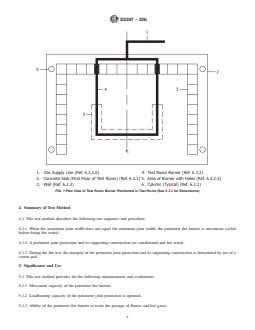
FIG. 1 Plan View of Test Room Burner Positioned in Test Room (See 6.3.2 for Dimensions)
method used to connect or join multiple lengths of the 5. Significance and Use
perimeter joint protection.
5.1 This test method provides for the following measure-
3.2.16 supporting construction, n—the arrangement of sepa-
ments and evaluations:
rating elements forming the intersection into which the perim-
5.1.1 Movement capacity of the perimeter fire barrier.
eter joint protection is installed.
5.1.2 Loadbearing capacity of the perimeter joint protection
3.2.17 test assembly, n—the complete assembly of the test
is optional.
specimen together with the test apparatus.
5.1.3 Ability of the perimeter fire barrier to resist the
passage of flames and hot gases.
3.2.18 test room, n—the first-story room of the ISMA.
5.1.4 Transmission of heat through the perimeter fire barrier.
3.2.19 test specimen, n—the specific test details of the
perimeter fire barrier.
5.2 This test method does not provide the following:
5.2.1 Evaluation of the degree to which the perimeter fire
4. Summary of Test Method
barrier contributes to the fire hazard by generation of smoke,
4.1 This test method describes the following test sequence
toxic gases, or other products of combustion,
and procedure:
5.2.2 Measurement of the degree of control or limitation of
4.1.1 When the maximum joint width does not equal the
the passage of smoke or products of combustion through the
minimum joint width, the perimeter fire barrier is movement
perimeter fire barrier,
cycled before being fire tested.
4.1.2 A perimeter joint protection and its supporting con- NOTE 1—This test method does not measure the quantity of smoke or
hot gases through the floor assembly, the wall assembly, or the perimeter
struction are conditioned and fire tested.
joint protection.
4.1.3 During the fire test, the integrity of the perimeter joint
protection and its supporting construction is determined by use 5.2.3 Measurement of flame spread over the surface of the
of a cotton pad. perimeter fire barrier,
E2307 − 23b
FIG. 2 Plan View of Window Burner and Side Elevation View of Window Burner Location
NOTE 2—The information in 5.2.1 through 5.2.3 are determined by NOTE 3—Some exterior wall assemblies are made from sandwich
other suitable fire test methods. For example, Test Method E84 is used to panels, which use EPS foam or other similar materials that are combus-
determine 5.2.3.
tible.
5.2.4 Durability of the test specimen under actual service
5.2.8.3 Spread of flame over the interior surface (room side)
conditions, including the effects of cycled temperature,
of the test specimen from one story to the next, and
5.2.5 Effects of a load on the movement cycling of the
perimeter fire barrier established by this test method, NOTE 4—While it is a failure to have fire on the interior surface of the
observation room, this test method does not provide a measurement of that
5.2.6 Rotational, vertical, and horizontal shear capabilities
flame spread.
of the test specimen,
5.2.7 Any other attributes of the test specimen, such as wear
5.2.8.4 Lateral spread of flame from the compartment of fire
resistance, chemical resistance, air infiltration, water-tightness,
origin to adjacent spaces.
and so forth, and
NOTE 5—The exterior wall assembly, floor assembly, and perimeter
5.2.8 A measurement of the capability of the test specimen
joint protection are individual components. The capabilities of individual
to resist:
components are not part of this specific test method’s Conditions of
5.2.8.1 Flame propagation over the exterior faces of the test
Compliance.
specimen,
5.2.8.2 Spread of flame within the combustible core com-
ponent of the exterior wall assembly from one story to the next,
E2307 − 23b
FIG. 3 Example of an Exterior Wall Assembly with Window Opening in a Test Frame (See 7.3.1)
5.3 In this test method, the test specimens are subjected to changed, it is not always possible by, or from, this test method
one or more specific test conditions. When different test
to predict changes to the characteristics measured.
conditions are substituted or the end-use conditions are
E2307 − 23b
FIG. 4 Typical Copper Thermocouple Disc and Insulating Pipe (See 6.6 and 6.7)
FIG. 5 Typical Cotton Wool Pad Holder (See 6.8.2)
E2307 − 23b
FIG. 6 T-Shaped Sensor (See 6.10.1.1)
FIG. 7 Tube Sensor (See 6.10.1.2)
5.4 This test method is not intended to be used as the only intended as a specification for all attributes required by a
test method in the selection of a perimeter fire barrier. It is not
E2307 − 23b
FIG. 8 Exposed Thermocouple Layout on Underside of Observation Room Floor in Test Room (See 8.1)
FIG. 9 Exposed Thermocouple Layout in Test Room (See 8.2)
E2307 − 23b
perimeter fire barrier, or any of its individual components, in 6.3.1 The test apparatus in 6.2 shall be equipped with two
order for a perimeter fire barrier to be used in a particular gas-fired burners.
application.
6.3.2 Test Room Burner:
6.3.2.1 Position the test room burner inside the test room.
6. Apparatus
Construct the test room burner (see Fig. 1) as follows:
6.1 The test apparatus described in 6.2 shall be located
6.3.2.2 Use a nominal 2-in. (51 mm) OD steel pipe. The test
inside a test facility. The facility shall have provisions for
room burner shall be rectangular shaped with its longitudinal
supplying fresh combustion make-up air during the test. The
axis at least 78.75 in. (2000 mm) long and its transverse axis at
facility shall be constructed to allow for the exhaust of the
least 60 in. (1524 mm) wide. Extend 72 6 1 in. (1829 6
combustion by-products during the test, while not inducing
25 mm) of the test room burner into the test room.
airflow on the exterior face of the test specimen. The test
6.3.2.3 Drill upward facing nominal diameter 0.125-in.
facility shall protect the test apparatus and test specimen from
(3.2 mm) holes in the pipe. Locate the holes in the front “U”
weather conditions such as wind and rain.
shaped portion of the test room burner. Start holes at a nominal
location of 42 in. (1066 mm) from the back wall on both sides
6.2 Test Apparatus:
of the gas supply pipes and continue across the front gas supply
6.2.1 The ISMA consists of a two-story test structure
pipe. Place the holes nominally 1 in. (25 mm) on center.
consisting of a test room and observation room (see Fig. 2).
Each room in the test apparatus is square having inside length
NOTE 8—The holes drilled are nominal because they are made using a
and width dimensions (unfinished and unprotected by any fire
conventional ⁄8-in. drill bit, therefore, their size is dependent upon the
resistive materials) of 120 6 0.5 in. (3048 6 13 mm) and a tolerances of the drill bit.
height (unfinished and unprotected by any fire resistive mate-
6.3.2.4 Support the test room burner so that it is level and its
rials) of 84 6 0.5 in. (2134 6 13 mm).
horizontal centerline is 30 6 1 in. (762 6 25 mm) above the
floor of the test room.
NOTE 6—The test apparatus is similar to the one used in U.B.C.
Standard No. 26-9 and NFPA 285.
6.3.2.5 Center the test room burner in the test room using
Fig. 1 for reference.
6.2.2 The floors and roof of the test apparatus shall be
supported by columns and beams of a size that will support the 6.3.2.6 Equip the test room burner with a gas supply line
load of the floor and roof. These supports shall be located that is located outside the test apparatus. Wrap the entire gas
outside of both the test room and the observation room. The supply pipe system with a single layer of nominal 1-in.
floor of the observation room shall be 8 6 0.5 in. (203 6 13 (25 mm) thick ceramic fiber blanket, with a minimum density
3 3
mm) thick (see Fig. 8). of 8 lb/ft (128 kg/m ).
6.2.3 The three permanent non-bearing walls that form each
6.3.3 Window Burner:
room of the test apparatus shall support the insulation defined
6.3.3.1 Construct the window burner (see Fig. 2) as follows:
in 6.2.4.1 during the entire fire-resistance test.
NOTE 9—The window burner is similar to the one used in U.B.C.
NOTE 7—Concrete block, 8 6 0.5 in. (203 6 13 mm) thick, has been Standard No. 26-9 and NFPA 285 and is similar to the burner used in the
found to be acceptable.
“Spread of Flame Test” portion of Test Methods E108.
6.2.4 No insulation is required in the observation room; but
6.3.3.2 The window burner shall be rectangular shaped. Use
the interior surfaces of the test room shall be insulated.
a 60 6 0.5-in. (1524 6 13 mm) long piece of nominal 2-in.
6.2.4.1 Insulate the interior face of the walls forming the test
(51 mm) OD pipe for the front of the burner. Cut an upward
room with one layer of nominal 0.625-in. (15.9 mm) thick,
facing slot having a width and length measuring 0.5 6 0.06 in.
Type X gypsum wallboard and one layer of nominal 1.5-in.
(13 6 1.5 mm) by 44 6 0.5 in. (1118 6 13 mm), respectively,
(38 mm) thick ceramic fiber insulation, having a minimum
in the top of the pipe.
3 3
density of 8 lb/ft (128 kg/m ), on the interior face. The
6.3.3.3 Supply the window burner with gas at both ends
maximum insulation thickness permitted on each face is 2.5 in.
using nominal 1-in. (25 mm) OD pipe and a “T” junction at the
(64 mm). Insulate the underside of the floor of the observation
back of the window burner to provide uniform gas pressure at
room in the same manner, except the portion that is designated
the burner slot.
the “floor assembly,” which is adjacent to the perimeter joint
6.3.3.4 Wrap the window burner, including the slot, and the
protection, shall not be insulated (see Fig. 2 and 7.4).
entire gas supply pipe system with a layer of nominal 1-in.
6.2.4.2 Insulate the floor of the test room with two layers of
(25 mm) thick ceramic fiber insulation, with a minimum
3 3
nominal 0.625-in. (15.9 mm) thick, Type X gypsum wallboard.
density of 8 lb/ft (128 kg/m ).
6.2.5 Each room shall have one access opening with a width
6.3.3.5 Position the window burner so that the slot is facing
and height of nominal 3.5 by 6.75 ft (1.07 by 2.06 m). The
up and parallel with the exterior wall assembly. Align the
access opening of the test room shall be capable of being
horizontal center of the window burner slot with the window’s
closed during tests while the access opening of the observation
horizontal centerline (see Fig. 2). Locate the horizontal center-
room shall remain open during tests.
line of the window burner 9 6 0.5 in. (229 6 13 mm) below
6.2.5.1 Additional access openings are permitted in the
the window header’s surface on the exterior of the test room.
observation room for instrumentation and video; however, they
Place the window burner’s vertical centerline a maximum of 6
shall be closed during the test.
in. (152 mm) from the exterior face of the exterior wall
6.3 Burners: assembly. The window burner’s exact distance from the wall’s
E2307 − 23b
exterior face of the exterior wall assembly shall be determined 6.9.1 Use equipment, or device, capable of inducing a
during the calibration procedure, as specified in 9.6. desired load upon the perimeter joint protection.
6.4 Cycling Apparatus—Equipment (or device) shall be 6.10 Pressure-Sensing Probes—Except for the diameters of
used that is capable of inducing movement of a perimeter fire the steel tubes, tolerances are 65 % of dimensions shown in
barrier as specified in Table 3. Fig. 6 or Fig. 7.
6.10.1 The pressure-sensing probes shall be either:
6.5 Test Room and Exterior Wall Assembly Thermocouples:
6.10.1.1 A T-shaped sensor as shown in Fig. 6, or
6.5.1 All thermocouples shall be a bare wire type.
6.10.1.2 A tube sensor as shown in Fig. 7.
6.5.2 The twelve test room thermocouples used to measure
the temperatures in the test room, reference the thermocouples
6.11 Differential Pressure Measurement Instruments:
in 8.1, 8.2 and 8.3, shall be 18 gage Type K (see Figs. 8 and 9). 6.11.1 The differential pressure measurement instrument
6.5.3 The 14 thermocouples used to measure the tempera-
shall be:
tures on the exterior face of the calibration and test wall 6.11.1.1 A manometer or transducer, and
assemblies shall be no larger than 20 gage Type K (see Fig. 10).
6.11.1.2 Capable of reading in graduated increments of no
greater than 0.01 in. H O (2.5 Pa) with a precision of not less
6.6 Copper Disc Thermocouples: 2
than 6 0.005 in. H O (61.25 Pa).
6.6.1 The copper disc thermocouples shall be covered by
pads as specified in 6.7 and shall:
6.12 Calibration Instrumentation:
6.6.1.1 Have a wire diameter of not more than 0.03 in.
NOTE 10—More information about the Gardon gage is contained in Test
(0.7 mm), and
Methods E511 and E1529.
6.6.1.2 Be brazed to the center of the face of a copper disk
6.12.1 Flow rate measurement equipment shall be provided
having the following nominal measurements: 0.5 in. (12 mm)
for each of the burners.
diameter and 0.008 in. (0.2 mm) thick (see Fig. 4).
6.7 Thermocouple Insulating Pads:
7. Test Specimen
6.7.1 Refractory fiber pads shall have the following proper-
7.1 The test specimen shall be representative of the con-
ties:
struction for which the fire-resistance rating is desired with
6.7.1.1 Length and width of 1.20 6 0.02 in. (30 6 0.5 mm),
respect to materials, workmanship, and details. Install the test
6.7.1.2 Thickness of 0.08 6 0.02 in. (2 6 0.5 mm), and
3 3
specimen according to the manufacturer’s specified procedure
6.7.1.3 Density of 56.2 6 6.2 lb/ft (900 6 100 kg/m ).
for conditions representative of those found in building con-
6.7.2 When necessary, shape the pads by wetting, forming,
struction.
and then drying them to provide complete contact on contoured
surfaces. 7.2 Perimeter Joint Protection:
7.2.1 Test each perimeter joint protection with manufac-
6.8 Cotton Pads:
tured and field splices. When the technique of the manufac-
6.8.1 The cotton pad’s nominal size shall be 4 by 4 by
tured splice is the same as the field splice, test only one splice.
0.75 in. (100 by 100 by 19 mm). Cotton pads are to consist of
The minimum distance between a splice and the nearest side
new, undyed, and soft cotton fibers, without any admixture of
wall of the observation room shall be 1.5 times the thickness of
artificial fibers. Each cotton pad shall weigh 3 to 4 g. The
the supporting construction or 12 in. (305 mm), whichever is
cotton pads are to be conditioned prior to use by drying in an
greater. The minimum separation between splices within a test
oven at 212 6 9 °F (100 6 5 °C) for at least 30 min. After
specimen shall be 36 in. (914 mm).
drying, the cotton pads shall be stored in a desiccator for up to
7.2.2 Fire test all perimeter joint protection at its maximum
24 h immediately prior to use.
joint width.
6.8.2 The frame used to hold the cotton pad is to be formed
7.2.3 The perimeter joint protection shall be at least 13 ft
of No. 16 AWG (1.31 mm) steel wire and is to be provided with
(4.06 m) long.
a handle that will reach all points of the test specimen
7.2.4 When the perimeter joint protection has vertical or
accessible from the observation room (see Fig. 5).
horizontal butt joints or seams as part of its design, these joints
6.9 Loading System:
or seams shall be installed according to the manufacturer’s
instructions.
7.3 Exterior Wall Assemblies:
7.3.1 The exterior wall assembly shall be a construction
TABLE 1 Gas and Heat Flow Rates
agreed upon by the test sponsor and laboratory (see Fig. 3).
Window
Test Room Test Room Window
Time Burner 7.3.2 The exterior wall assembly shall be representative of
Burner SCFM Burner Burner
Interval SCFM (m /
that used in common construction practice.
(m /min) Btu/min (kW) Btu/min (kW)
min)
7.3.3 The exterior wall assembly shall be secured to the test
0:00 - 5:00 38.0 (1.08) 39 064 (687) 0.0 (0.00) 0 (0)
apparatus at each end. These fastening details to the test
5:00 - 10:00 38.0 (1.08) 39 064 (687) 9.0 (0.25) 9252 (163)
10:00 - 15:00 43.0 (1.22) 44 204 (777) 12.0 (0.34) 12 336 (217) apparatus and those elsewhere within the test specimen shall be
15:00 - 20:00 46.0 (1.30) 47 288 (831) 16.0 (0.45) 16 448 (289)
representative of that used in practice.
20:00 - 25:00 46.0 (1.30) 47 288 (831) 19.0 (0.54) 19 532 (343)
7.3.4 Details of the erection shall follow the manufacturer’s
25:00 - 30:00 50.0 (1.42) 51 400 (904) 22.0 (0.62) 22 616 (398)
instructions and shall be typical of actual use.
E2307 − 23b
TABLE 2 Average Calibration Values
Time (min)
0-5 5-10 10-15 15-20 20-25 25-30
Test Room Average °F (°C) using TC’s in 8.1 1151 1346 1482 1600 1597 1648
(622) (730) (806) (871) (869) (898)
Interior Face of Exterior Wall Assembly Average °F (°C) 1065 1298 1433 1578 1576 1655
using TC’s in 8.3 (574) (703) (778) (859) (858) (902)
TC #2 - 6 ft (1829 mm) above Top of Floor of Test Room on 602 870 952 992 1046 1078
Exterior Face of Exterior Wall °F(°C) (317) (466) (511) (533) (563) (581)
TC #3 - 7 ft (2134 mm) above Top of Floor of Test Room on 679 1015 1121 1183 1245 1296
Exterior Face of Exterior Wall Assembly °F(°C) (359) (546) (605) (639) (674) (702)
TC #4 - 8 ft (2438 mm) above Top of Floor of Test Room on 646 971 1096 1174 1245 1314
Exterior Face of Exterior Wall Assembly °F(°C) (341) (521) (591) (634) (674) (712)
TC #5 - 9 ft (2743 mm) above Top of Floor of Test Room on 577 858 982 1063 1135 1224
Exterior Face of Exterior Wall Assembly °F(°C) (302) (459) (528) (573) (613) (662)
TC #6 - 10 ft (3048 mm) above Top of Floor of Test Room on 521 765 875 949 1007 1106
Exterior Face of Exterior Wall Assembly °F(°C) (272) (407) (469) (509) (542) (597)
TC #7 - 11 ft (3353 mm) above Top of Floor of Test Room on 472 690 787 856 913 1010
Exterior Face of Exterior Wall Assembly °F(°C) (244) (366) (419) (458) (489) (543)
Calorimeter 7 ft (2134 mm) above Top of Floor of Test Room 5.81 ± 1.29 12.26 ± 2.58 16.13 ± 3.23 18.7 ± 3.87 21.94 ± 4.52 24.52 ± 5.16
2 2
W/in. (W ⁄cm ) (0.9 ± 0.2) (1.9 ± 0.4) (2.5 ± 0.5) (2.9 ± 0.6) (3.4 ± 0.7) (3.8 ± 0.8)
Calorimeter 8 ft (2438 mm) above Top of Floor of Test Room 6.45 ± 1.29 12.90 ± 2.58 16.77 ± 3.23 20.65 ± 3.87 23.87 ± 4.52 25.81 ± 5.16
2 2
W/in. (W ⁄cm ) (1.0 ± 0.2) (2.0 ± 0.4) (2.6 ± 0.5) (3.2 ± 0.6) (3.7 ± 0.7) (4.0 ± 0.8)
Calorimeter 9 ft (2743 mm) above Top of Floor of Test Room 5.16 ± 1.29 9.68 ± 1.94 12.90 ± 2.58 16.13 ± 3.23 19.35 ± 3.87 21.94 ± 4.52
2 2
W/in. (W ⁄cm ) (0.8 ± 0.2) (1.5 ± 0.3) (2.0 ± 0.4) (2.5 ± 0.5) (3.0 ± 0.6) (3.4 ± 0.7)
TABLE 3 Conditions of Test Specimen Cycling
7.3.7.1 Below the floor of the test room a minimum of 2 in.
Movement Minimum Cycling Minimum Number of (51 mm),
Type Rates (cpm) Movement Cycles
7.3.7.2 Above the top of the test apparatus a minimum of
Thermal 1 500
24 in. (610 mm), and
Wind Sway 10 500
7.3.7.3 Past the inside edges of both sidewalls of the
Seismic 30 100
Combined 30 100
apparatus a minimum of 12 in. (305 mm).
followed by:
7.3.8 The exterior wall assembly shall completely close the
10 400
front face of the test apparatus except for a simulated window
opening in the test room.
NOTE 1—The terms used for movement are indicative of the cyclic rate
in expansion and contraction of the perimeter joint and not of the
7.3.9 The window shall:
magnitude or direction of movement.
7.3.9.1 Have a height and width measuring 30 by 78 in. (762
by 1981 mm) with a tolerance of 60.5 in. (613 mm). The
exterior wall assembly shall include two layers of nominal
7.3.5 Prior to the test, the exterior wall assembly and its 0.625-in. (15.9 mm) thick Type X gypsum wallboard covering
components shall be conditioned as outlined in Section 10. an area extending downward from a horizontal line at the
7.3.6 The minimum height and width of the exterior wall elevation of the window lintel to the bottom of the exterior wall
assembly shall be 17.5 by 13.33 ft (5.34 by 4.06 m wide). assembly minus the window opening. The gypsum wallboard
7.3.7 The exterior wall assembly shall extend as follows: shall be located and fastened as shown on Fig. 14.
E2307 − 23b
FIG. 10 Thermocouple Layout on Visual Exterior Face of Calibration or Test Wall (See 9.4)
7.3.9.2 For the calibration wall, have a sill height of 30 6 7.3.10.3 The spandrel beam shall be as used in common
0.5 in. (762 6 13 mm), and for the exterior wall assembly, the construction practice. Protect any outriggers and additional
position of the window shall be documented in relation to the
connections as used in common construction practice.
bottom of the floor assembly that abuts the perimeter joint
7.4 Floor Assembly:
protection.
7.4.1 The floor assembly installed into the test apparatus
7.3.9.3 Be centered horizontally with respect to the test
shall have a fire-resistance rating and representative of that
room, and
7.3.9.4 Be the only opening in the test room at the start of used in common construction practice and be at least 12 in.
the test. (305 mm) wide and at least 13 ft (3.96 m) long.
7.3.10 Spandrel Beam:
7.4.2 The top of the floor assembly shall be located at an
7.3.10.1 Secure a spandrel beam to the underside of the
elevation 60.5 in. (613 mm) relative to the elevation of the
floor assembly construction when its use is required to repre-
top of the observation room floor.
sent the common construction practice attachment of the
exterior wall assembly,
8. Test Room Controls
7.3.10.2 Extend the spandrel beam across the test room
from one interior wall surface to the opposite interior wall 8.1 Test Room Thermocouples—Underside of the
surface of the test room. Observation-Room Floor:
E2307 − 23b
FIG. 11 Layout of Unexposed Surface Thermocouples (See 12.2)
8.1.1 Uniformly distribute at least five bare wire thermo- 8.2.2 Locate the end of the bare wire thermocouple used to
couples to measure the temperature at the underside of the floor measure the temperatures of the side of the test specimen 6 6
of the observation room (see Fig. 8).
0.25 in. (305 6 6 mm) exposed to fire from both the underside
8.1.2 The exposed length of the bare wire thermocouples of the perimeter joint protection and the interior face of the test
positioned at the underside of the observation room floor shall
room of the exterior wall assembly. Locate four bare wire
be at least 6 in. (152 mm).
thermocouples 24 6 1 in. (610 6 25 mm) apart and symmetri-
cally distributed from the centerline of the test assembly (see
8.2 Test Room Thermocouples Monitoring the Test Speci-
Fig. 9).
men:
8.2.1 Position at least four bare wire thermocouples to 8.2.3 Verify the distance established in 8.2.2 at intervals not
exceeding 10 min during the first 30 min of the test and
measure the test room temperature in the vicinity of the test
specimen (see Fig. 9). thereafter at intervals not exceeding 30 min.
E2307 − 23b
FIG. 12 ISMA / E119 Time Temperature Curves
FIG. 13 Typical Blockout (See 3.2.1)
NOTE 11—The method used to accomplish verification of thermocouple face of the exterior wall that is exposed to fire.
position is at the discretion of the laboratory. One possible method is to
8.2.4 Whenever the distance is not as specified in 8.2.2,
measure the distance of the thermocouple wire or tube prior to commenc-
ing the test and then extend the wire or tube until it touches the interior reset the distance to comply with 8.2.2.
E2307 − 23b
FIG. 14 Elevation View of Interior Face of the Exterior Wall Assembly Illustrating Gypsum Wallboard Location (See 7.3.9.1)
8.3 Interior Face Exterior Wall Assembly Thermocouples: surface of the perimeter joint protection. Locate the pressure
8.3.1 Place three bare wire thermocouples on the interior
sensors where they will not be subjected to direct impingement
face, exposed to the test room burner, of the exterior wall
of convection currents. Tubing connected to each pressure
assembly. Locate these thermocouples on the horizontal plane
sensor horizontal both in the test room and at its egress through
that is 72 6 1 in. (1829 6 25 mm) above the top of the test
the test room wall shall be such that the pressure is relative to
room floor as specified in 8.3.2 through 8.3.4.
the same elevation from the inside to the outside of the test
8.3.2 Place the first one on the intersection of the horizontal
room.
plane and the vertical centerline of the exterior wall assembly.
8.3.3 Place the second one on the horizontal plane 24 6
9. Calibration and Standardization
1 in. (610 6 25 mm) to the right of the one in 8.3.2.
9.1 Frequency:
8.3.4 Place the third one on the horizontal plane 24 6 1 in.
9.1.1 Perform the following calibration procedure to evalu-
(610 6 25 mm) to the left of the one in 8.3.2.
ate the flow rates of the gas burners:
8.4 Test Room Pressure:
9.1.1.1 Prior to product testing, or
8.4.1 The minimum vertical distance between pressure
9.1.1.2 When significant changes to the gas flow systems
sensors, referenced in 6.10, shall be one-half the height of the
test room or locate one probe 12 inches below the exposed are made (that is, new flow meters, and the like), or
E2307 − 23b
9.1.1.3 Within one year prior to the test of an actual product 9.5.3 Make the devices flush with the calibration wall
wall assembly. exterior surface.
9.2 Calibration Wall:
9.6 Calibration Test Procedure:
9.2.1 Construct the calibration wall for the calibration test
9.6.1 Start the calibration test and conduct it for 30 min so
of two layers of nominal 0.625-in. (15.9 mm) thick, Type X
that the burners are fired according to Table 1. Stabilize each
gypsum wallboard applied to both sides of 18-gage steel studs burner at its assigned flow rate within 15 s of each change.
spaced approximately 24 in. (610 mm) on centers. Tape all butt
NOTE 13—The type of gas used to fuel the burners is not critical
joints of the gypsum wallboard. Extend the calibration wall at
because Table 2 provides the temperatures that are to be obtained during
least 18 ft (5.49 m) above the floor of the test room and make
the calibration procedure. If those temperatures obtained during the initial
the calibration wall at least 14 ft (4.27 m) wide. calibration are not within the tolerance of Table 2, then the calibration
procedure is to be rerun in accordance with 9.10.
NOTE 12—The 23rd Edition of the Gypsum Association’s Fire Resis-
9.6.2 Conduct the initial calibration test with the window
tance and Sound Control Design Manual (GA 600 2021) provides a detail
of this construction designated GA File No. WP 1548.
burner positioned so that the vertical centerline of the burner is
flush with the exterior face of the wall assembly.
9.2.2 Make the interior surface of the window opening of
gypsum wallboard.
9.7 At the conclusion of the calibration test, compare the
9.2.3 Do not use a spandrel beam.
data obtained to the specified values in Table 2. To prevent
9.2.4 Measure the distance from the inside of the back wall
burner changes from affecting the data, determine the average
of the test room to the interior face of the calibration wall.
values for each time period using data from 15 s into the period
Record this measurement.
through 15 s short of the end of the period. For example, if the
9.2.5 When an opening between the test room and the
average for the 5-10 min time interval is being processed, use
calibration wall exists, fill it with a ceramic fiber material
the data from the actual times of 5:15 through 9:45 for the
having a nominal density of at least 8 lb/ft .
average.
NOTE 14—When the average calibration values in Table 2 are met, the
9.3 Preparation of Calibration Wall Construction:
time-temperature curve during the first 30 min of this fire test will be
9.3.1 Before conducting the calibration test, burn away the
higher than the standard Test Methods E119 time-temperature curve (see
paper facing of the gypsum wallboard on the exterior face of
Fig. 12).
the calibration wall assembly.
9.8 All of the determined average values for the locations
9.3.2 To accomplish this, ignite both the test room burner
shown in Table 2 shall fall within the tolerances of those
and the window burner while immediately adjusting the
specified in Table 2. The allowable tolerances for the compari-
burners to their maximum flow rates as prescribed in Table 1.
son of determined average values to the specified average
9.3.3 Run the burners for 5 min at these maximum flow
values in Table 2 are:
rates and then shut them off.
9.8.1 610 % for temperatures, and
9.4 As a minimum, record temperature measurements at the
9.8.2 As shown in Table 2 for the heat flux measurements.
following locations:
9.9 The values for thermocouples 1 and, 8 through 14,
9.4.1 At 14 locations on the vertical centerline of the visual
defined by 9.4.1.4 and as shown in Fig. 10, shall be reported,
face of the exterior wall assembly.
but they are not used in the calibration determination.
9.4.1.1 Place the first bare wire thermocouple 54 6 0.25 in.
(1372 6 6 mm) above the top of the test room floor. 9.10 When the actual test values are not within tolerance, do
9.4.1.2 Place the second bare wire thermocouple 18 6
the following until the determined values are within tolerance:
0.25 in. (458 6 6 mm) above the one in 9.4.1.1.
9.10.1 Repeat the calibration and the gas flows, or
9.4.1.3 Successively place each of the remaining bare wire
9.10.2 Adjust the window burner position.
thermocouples 12 6 0.25 in. (305 6 6 mm) above the one
9.11 Use the flow rates derived from the calibration test
previously placed (see Fig. 10).
when it is demonstrated that the burners must follow different
9.4.1.4 Successively number the bare wire thermocouples
flow rates to attain the following:
on the exterior face of the exterior wall assembly 1 through 14.
9.11.1 The prescribed test room temperatures, or
Number the thermocouple in the window opening #1 and the
9.11.2 Exterior temperatures and heat fluxes, or both.
thermocouple at the top of the calibration wall #14. The higher
9.12 When it is demonstrated that the window burner must
the location of the thermocouple, the higher the number of the
thermocouple. be repositioned within 0 and 6 in. (152 mm) of the calibration
wall’s exterior face to attain the prescribed exterior tempera-
9.4.2 Place three bare wire thermocouples on the face of the
calibration wall exposed to the test room burner according to tures and heat fluxes, then use the position derived from the
calibration test in all subsequent testing.
8.3.
9.5 Heat Flux Measurements:
10. Conditioning
9.5.1 Measure the total heat flux at a minimum of three
locations (see 6.12). 10.1 Prior to testing, condition the test specimen in air
9.5.2 Locate the devices on the exterior face of the calibra- having 50 % relative humidity at 73 6 5 °F (23 6 3 °C). The
tion wall, adjacent to thermocouples 3, 4, and 5 referenced in objective of this conditioning is for the test specimen to reach
9.4.1.4. equilibrium. Do not require the supporting construction to be
E2307 − 23b
conditioned with the perimeter joint protection. When condi- separate from it. Cycle each perimeter joint protection accord-
tioning to these conditions cannot be accomplished, conduct ing to the cyclic rate and number of movement cycles selected
the testing when the most damp portion of the supporting by the test sponsor as indicated in 11.3. One cycle consists of
construction and perimeter joint protection have achieved starting at the nominal joint width, opening to the maximum
equilibrium resulting from storage in air having 50 to 75 % joint width, closing to the minimum joint width, and returning
relative humidity at 73 6 5 °F (23 6 3 °C). to the nominal joint width.
10.1.1 Exception—Continue the conditioning only until the
11.5 Do not allow alterations or modifications, which will
supporting construction has developed sufficient strength to
enhance the thermal performance of the perimeter joint
retain the perimeter joint protection securely in position when
protection, during or after the movement cycling.
the following conditions occur:
11.6 Examine the perimeter joint protection after movement
10.1.1.1 An equilibrium condition is not achieved within a
cycling. Note, photograph, and report any indication of stress,
twelve-month conditioning period, or
deformation, or fatigue of the test specimen.
10.1.1.2 The supporting construction or perimeter joint
protection is such that hermetic sealing resulting from the
11.7 When a perimeter joint protection has been movement
conditioning has prevented drying of the interior of the
cycled separately from its supporting construction, remove it
supporting construction.
from the cycling apparatus, install it in the supporting
construction, and set it at the maximum joint width prior to fire
10.2 Determine the relative humidity within hardened con-
testing. This process shall not take any longer than 96 h.
crete with a method that uses an electric sensing element.
Determine the relative humidity within a supporting construc-
tion or test specimen made of materials other than concrete 12. Fire-Resistance Test Procedure
with a method such as one that uses an electric sensing
12.1 Test Assembly:
element.
12.1.1 Seal the exterior wall assembly against the test
10.3 Do not use wood with a moisture content greater than
apparatus with an insulating gasket between the wall assembly
13 % as determined by an electrical resistance method.
and the test apparatus. The length of the perimeter joint
protection exposed to heat and flame shall be at least 10 ft. Seal
10.4 When it becomes necessary to use accelerated drying
the open ends of the test specimen against air flow. Throughout
techniques, avoid procedures that will alter the characteristics
the test, check the seals at the ends of the test specimen and
of the test specimen from those produced as a result of drying
repair them, as necessary, to prevent air flow.
according to the procedures specified in 10.1.
12.1.1.1 Measure the distance from the inside of the back
10.5 Within 72 h of the fire test, obtain information on the
wall of the test room to the interior face of the exterior wall
actual moisture content and distribution within the t
...
This document is not an ASTM standard and is intended only to provide the user of an ASTM standard an indication of what changes have been made to the previous version. Because
it may not be technically possible to adequately depict all changes accurately, ASTM recommends that users consult prior editions as appropriate. In all cases only the current version
of the standard as published by ASTM is to be considered the official document.
Designation: E2307 − 23a E2307 − 23b An American National Standard
Standard Test Method for
Determining Fire Resistance of Perimeter Fire Barriers
Using Intermediate-Scale, Multi-story Test Apparatus
This standard is issued under the fixed designation E2307; the number immediately following the designation indicates the year of
original adoption or, in the case of revision, the year of last revision. A number in parentheses indicates the year of last reapproval. A
superscript epsilon (´) indicates an editorial change since the last revision or reapproval.
INTRODUCTION
A perimeter fire barrier is the perimeter joint protection that provides fire resistance to prevent
passage of fire from floor to floor within the building at the opening between the exterior wall
assembly and the floor assembly. A perimeter fire barrier is a unique building construction detail not
addressed by other fire test methods.
Among its other functions, a perimeter fire barrier impedes the vertical spread of fire from the floor
of origin to the floor(s) above, at the building’s exterior perimeter and accommodates various
movements such as those induced by thermal differentials, seismicity, and wind loads.
This test method describes criteria and test methods used to determine the fire resistance of
perimeter fire barriers when subjected to standard fire exposure conditions using the intermediate-
scale, multistory test apparatus (ISMA). The use of the multi-story test apparatus and this test method
are intended to simulate a possible fire exposure on a perimeter fire barrier.
1. Scope
1.1 This test method measures the performance of the perimeter fire barrier and its ability to maintain a seal to prevent fire spread
during the deflection and deformation of the exterior wall assembly and floor assembly during the fire test, while resisting fire
exposure from an interior compartment fire as well as from the flame plume emitted from the window burner below. The end point
of the fire-resistance test is the period of time elapsing before the first condition of compliance is reached as the perimeter fire
barrier is subjected to a time-temperature fire exposure.
1.2 The fire exposure conditions used are those specified by this test method for the first 30 min of exposure and then conform
to the Test Methods E119 time-temperature curve for the remainder of the test in the test room.
1.3 This test method specifies the heating conditions, methods of test, and criteria for evaluation of the ability of a perimeter fire
barrier to maintain the fire resistance where a floor and exterior wall assembly are juxtaposed to a perimeter joint.
1.4 Test results establish the performance of perimeter fire barriers during the fire-exposure period and shall not be construed as
having determined the suitability of perimeter fire barriers for use after that exposure.
1.5 This test method does not provide quantitative information about the perimeter fire barrier relative to the rate of leakage of
This test method is under the jurisdiction of ASTM Committee E05 on Fire Standards and is the direct responsibility of Subcommittee E05.11 on Fire Resistance.
Current edition approved July 1, 2023Nov. 1, 2023. Published July 2023December 2023. Originally approved in 2004. Last previous edition approved in 2023 as
E2307 – 23.E2307 – 23a. DOI: 10.1520/E2307-23A.10.1520/E2307-23B.
Copyright © ASTM International, 100 Barr Harbor Drive, PO Box C700, West Conshohocken, PA 19428-2959. United States
E2307 − 23b
smoke or gases or both. While it requires that such phenomena be noted and reported when describing the general behavior of
perimeter fire barrier during the fire-resistance test, such phenomena are not part of the conditions of compliance.
1.6 Potentially important factors and fire characteristics not addressed by this test method include, but are not limited to:
1.6.1 The performance of the perimeter fire barrier constructed with components other than those tested, and
1.6.2 The cyclic movement capabilities of perimeter fire barriers other than the cycling conditions tested.
1.7 This test method is used to measure and describe the response of materials, products or assemblies to heat and flame under
controlled conditions but does not by itself incorporate all factors required for the fire-hazard or fire-risk assessment of the
materials, products, or assemblies under actual fire conditions.
1.8 Units—The values stated in inch-pound units are to be regarded as standard. The values given in parentheses are mathematical
conversions to SI units that are provided for information only and are not considered standard.
1.9 The text of this test method references notes and footnotes which provide explanatory material. These notes and footnotes
(excluding those in tables and figures) shall not be considered as requirements of the standard.
1.10 This standard does not purport to address all of the safety concerns, if any, associated with its use. It is the responsibility
of the user of this standard to establish appropriate safety, health, and environmental practices and determine the applicability of
regulatory limitations prior to use.
1.11 This international standard was developed in accordance with internationally recognized principles on standardization
established in the Decision on Principles for the Development of International Standards, Guides and Recommendations issued
by the World Trade Organization Technical Barriers to Trade (TBT) Committee.
2. Referenced Documents
2.1 ASTM Standards:
E84 Test Method for Surface Burning Characteristics of Building Materials
E108 Test Methods for Fire Tests of Roof Coverings
E119 Test Methods for Fire Tests of Building Construction and Materials
E176 Terminology of Fire Standards
E511 Test Method for Measuring Heat Flux Using a Copper-Constantan Circular Foil, Heat-Flux Transducer
E631 Terminology of Building Constructions
E1529 Test Methods for Determining Effects of Large Hydrocarbon Pool Fires on Structural Members and Assemblies
E1966 Test Method for Fire-Resistive Joint Systems
2.2 Other Documents:
Uniform Building Code Standard No. 26-9 Method of Test for the Evaluation of Flammability Characteristics of Exterior,
Non-Loadbearing Wall Assemblies Containing Combustible Components Using the Intermediate-Scale Multistory Test
Apparatus
NFPA 285 Standard Method of Test for the Evaluation of Flammability Characteristics of Exterior Non-Load-Bearing Wall
Assemblies Containing Combustible Components Using the Intermediate-Scale, Multistory Test Apparatus
GA-600-2021 Fire Resistance and Sound Control Design Manual, 23rd Edition
3. Terminology
3.1 Terms defined in Terminology E176 and E631 shall prevail for fire standard and building terms not defined in this document.
3.2 Definitions:
3.2.1 blockout, n—a recess formed in the floor assembly to accommodate the installation of the perimeter joint protection, flush
with the wearing surface of the floor assembly.
For referenced ASTM standards, visit the ASTM website, www.astm.org, or contact ASTM Customer Service at service@astm.org. For Annual Book of ASTM Standards
volume information, refer to the standard’s Document Summary page on the ASTM website.
International Conference of Building Officials Inc., 5360 Workman Mill Rd., Whittier, CA 90601.
National Fire Protection Association, 1 Batterymarch Park, Quincy, MA 02269-9101.
Gypsum Association, 6525 Belcrest Road, Suite 480, Hyattsville, Maryland 20782.
E2307 − 23b
3.2.2 curtain wall assembly, n—either a rated or non-rated, nonbearing exterior wall assembly secured to and supported by the
structural members of the building.
3.2.3 exterior wall assembly, n—a curtain wall or a loadbearing exterior wall that is either fire resistance rated or one that is not.
3.2.4 floor assembly, n—a fire resistance rated loadbearing horizontal separating element adjacent to and separate from the floor
of the observation room.
3.2.4.1 Discussion—
Floor assemblies tested in accordance with Test Methods E119 are required to be loadbearing.
3.2.5 integrity, n—the ability of a perimeter fire barrier, when exposed to fire from two sides, to prevent the passage of flame and
hot gases through it and the occurrence of flames on its unexposed sides as determined by using a cotton pad.
3.2.6 maximum joint width, n—the widest opening of the perimeter joint as defined by the test sponsor.
3.2.7 minimum joint width, n—the narrowest opening of the perimeter joint as defined by the test sponsor.
3.2.8 movement cycle, n—the change between the minimum and the maximum joint widths.
3.2.9 nominal joint width, n—the specified opening of the perimeter joint as defined by the test sponsor that is selected for test
purposes.
3.2.10 observation room, n—the second-story room of the ISMA.
3.2.11 perimeter fire barrier, n—the perimeter joint protection that provides fire resistance to prevent the passage of fire from floor
to floor within the building at the opening between the exterior wall assembly and the floor assembly. The boundaries are the edge
of the floor assembly and the interior face of the exterior wall assembly in contact with the perimeter joint protection.
3.2.11.1 Discussion—
For the purpose of this standard, a knee wall is not to be considered as part of the exterior wall.
3.2.12 perimeter joint, n—the linear void located between a juxtaposed exterior wall assembly and floor assembly to accommodate
various movements induced by thermal differentials, seismicity, wind loads, and misalignments of the floor and wall during
construction.
3.2.13 perimeter joint protection, n—a fire-resistive joint system located between the exterior wall assembly and the floor
assembly that fills the perimeter joint.
3.2.13.1 Discussion—
Fire-resistive joint system is defined in Test Method E1966.
3.2.14 separating element, n—a floor assembly or exterior wall assembly.
3.2.15 splice, n—the connection or junction within the length of a perimeter joint protection.
3.2.15.1 Discussion—
A splice is a result of the device or method used to connect or join multiple lengths of the perimeter joint protection.
3.2.16 supporting construction, n—the arrangement of separating elements forming the intersection into which the perimeter joint
protection is installed.
3.2.17 test assembly, n—the complete assembly of the test specimen together with the test apparatus.
3.2.18 test room, n—the first-story room of the ISMA.
3.2.19 test specimen, n—the specific test details of the perimeter fire barrier.
E2307 − 23b
FIG. 1 Plan View of Test Room Burner Positioned in Test Room (See 6.3.2 for Dimensions)
4. Summary of Test Method
4.1 This test method describes the following test sequence and procedure:
4.1.1 When the maximum joint width does not equal the minimum joint width, the perimeter fire barrier is movement cycled
before being fire tested.
4.1.2 A perimeter joint protection and its supporting construction are conditioned and fire tested.
4.1.3 During the fire test, the integrity of the perimeter joint protection and its supporting construction is determined by use of a
cotton pad.
5. Significance and Use
5.1 This test method provides for the following measurements and evaluations:
5.1.1 Movement capacity of the perimeter fire barrier.
5.1.2 Loadbearing capacity of the perimeter joint protection is optional.
5.1.3 Ability of the perimeter fire barrier to resist the passage of flames and hot gases.
E2307 − 23b
FIG. 2 Plan View of Window Burner and Side Elevation View of Window Burner Location
5.1.4 Transmission of heat through the perimeter fire barrier.
5.2 This test method does not provide the following:
5.2.1 Evaluation of the degree to which the perimeter fire barrier contributes to the fire hazard by generation of smoke, toxic gases,
or other products of combustion,
5.2.2 Measurement of the degree of control or limitation of the passage of smoke or products of combustion through the perimeter
fire barrier,
NOTE 1—This test method does not measure the quantity of smoke or hot gases through the floor assembly, the wall assembly, or the perimeter joint
protection.
5.2.3 Measurement of flame spread over the surface of the perimeter fire barrier,
E2307 − 23b
FIG. 3 Example of an Exterior Wall Assembly with Window Opening in a Test Frame (See 7.3.1)
NOTE 2—The information in 5.2.1 through 5.2.3 are determined by other suitable fire test methods. For example, Test Method E84 is used to determine
5.2.3.
5.2.4 Durability of the test specimen under actual service conditions, including the effects of cycled temperature,
E2307 − 23b
FIG. 4 Typical Copper Thermocouple Disc and Insulating Pipe (See 6.6 and 6.7)
FIG. 5 Typical Cotton Wool Pad Holder (See 6.8.2)
E2307 − 23b
FIG. 6 T-Shaped Sensor (See 6.10.1.1)
FIG. 7 Tube Sensor (See 6.10.1.2)
5.2.5 Effects of a load on the movement cycling of the perimeter fire barrier established by this test method,
E2307 − 23b
FIG. 8 Exposed Thermocouple Layout on Underside of Observation Room Floor in Test Room (See 8.1)
FIG. 9 Exposed Thermocouple Layout in Test Room (See 8.2)
5.2.6 Rotational, vertical, and horizontal shear capabilities of the test specimen,
E2307 − 23b
5.2.7 Any other attributes of the test specimen, such as wear resistance, chemical resistance, air infiltration, water-tightness, and
so forth, and
5.2.8 A measurement of the capability of the test specimen to resist:
5.2.8.1 Flame propagation over the exterior faces of the test specimen,
5.2.8.2 Spread of flame within the combustible core component of the exterior wall assembly from one story to the next,
NOTE 3—Some exterior wall assemblies are made from sandwich panels, which use EPS foam or other similar materials that are combustible.
5.2.8.3 Spread of flame over the interior surface (room side) of the test specimen from one story to the next, and
NOTE 4—While it is a failure to have fire on the interior surface of the observation room, this test method does not provide a measurement of that flame
spread.
5.2.8.4 Lateral spread of flame from the compartment of fire origin to adjacent spaces.
NOTE 5—The exterior wall assembly, floor assembly, and perimeter joint protection are individual components. The capabilities of individual components
are not part of this specific test method’s Conditions of Compliance.
E2307 − 23b
5.3 In this test method, the test specimens are subjected to one or more specific test conditions. When different test conditions are
substituted or the end-use conditions are changed, it is not always possible by, or from, this test method to predict changes to the
characteristics measured.
5.4 This test method is not intended to be used as the only test method in the selection of a perimeter fire barrier. It is not intended
as a specification for all attributes required by a perimeter fire barrier, or any of its individual components, in order for a perimeter
fire barrier to be used in a particular application.
6. Apparatus
6.1 The test apparatus described in 6.2 shall be located inside a test facility. The facility shall have provisions for supplying fresh
combustion make-up air during the test. The facility shall be constructed to allow for the exhaust of the combustion by-products
during the test, while not inducing airflow on the exterior face of the test specimen. The test facility shall protect the test apparatus
and test specimen from weather conditions such as wind and rain.
6.2 Test Apparatus:
6.2.1 The ISMA consists of a two-story test structure consisting of a test room and observation room (see Fig. 2). Each room in
the test apparatus is square having inside length and width dimensions (unfinished and unprotected by any fire resistive materials)
of 120 6 0.5 in. (3048 6 13 mm) and a height (unfinished and unprotected by any fire resistive materials) of 84 6 0.5 in. (2134
6 13 mm).
NOTE 6—The test apparatus is similar to the one used in U.B.C. Standard No. 26-9 and NFPA 285.
6.2.2 The floors and roof of the test apparatus shall be supported by columns and beams of a size that will support the load of
the floor and roof. These supports shall be located outside of both the test room and the observation room. The floor of the
observation room shall be 8 6 0.5 in. (203 6 13 mm) thick (see Fig. 8).
6.2.3 The three permanent non-bearing walls that form each room of the test apparatus shall support the insulation defined in
6.2.4.1 during the entire fire-resistance test.
NOTE 7—Concrete block, 8 6 0.5 in. (203 6 13 mm) thick, has been found to be acceptable.
6.2.4 No insulation is required in the observation room; but the interior surfaces of the test room shall be insulated.
6.2.4.1 Insulate the interior face of the walls forming the test room with one layer of nominal 0.625-in. (15.9-mm)(15.9 mm) thick,
Type X gypsum wallboard and one layer of nominal 1.5-in. (38-mm)(38 mm) thick ceramic fiber insulation, having a minimum
3 3
density of 8 lb/ft (128 kg/m ), on the interior face. The maximum insulation thickness permitted on each face is 2.5 in. (64 mm).
Insulate the underside of the floor of the observation room in the same manner, except the portion that is designated the “floor
assembly,” which is adjacent to the perimeter joint protection, shall not be insulated (see Fig. 2 and 7.4).
6.2.4.2 Insulate the floor of the test room with two layers of nominal 0.625-in. (15.9-mm)(15.9 mm) thick, Type X gypsum
wallboard.
6.2.5 Each room shall have one access opening with a width and height of nominal 3.5 by 6.75 ft (1.07 by 2.06 m). The access
opening of the test room shall be capable of being closed during tests while the access opening of the observation room shall
remain open during tests.
6.2.5.1 Additional access openings are permitted in the observation room for instrumentation and video; however, they shall be
closed during the test.
6.3 Burners:
6.3.1 The test apparatus in 6.2 shall be equipped with two gas-fired burners.
E2307 − 23b
6.3.2 Test Room Burner:
6.3.2.1 Position the test room burner inside the test room. Construct the test room burner (see Fig. 1) as follows:
6.3.2.2 Use a nominal 2-in. (51-mm)(51 mm) OD steel pipe. The test room burner shall be rectangular shaped with its longitudinal
axis at least 78.75 in. (2000 mm) long and its transverse axis at least 60 in. (1524 mm) wide. Extend 72 6 1 in. (1829 6 25 mm)
of the test room burner into the test room.
6.3.2.3 Drill upward facing nominal diameter 0.125-in. (3.2-mm)(3.2 mm) holes in the pipe. Locate the holes in the front “U”
shaped portion of the test room burner. Start holes at a nominal location of 42 in. (1066 mm) from the back wall on both sides
of the gas supply pipes and continue across the front gas supply pipe. Place the holes nominally 1 in. (25 mm) on center.
NOTE 8—The holes drilled are nominal because they are made using a conventional ⁄8-in. drill bit, therefore, their size is dependent upon the tolerances
of the drill bit.
6.3.2.4 Support the test room burner so that it is level and its horizontal centerline is 30 6 1 in. (762 6 25 mm) above the floor
of the test room.
6.3.2.5 Center the test room burner in the test room using Fig. 1 for reference.
6.3.2.6 Equip the test room burner with a gas supply line that is located outside the test apparatus. Wrap the entire gas supply pipe
system with a single layer of nominal 1-in. (25-mm)(25 mm) thick ceramic fiber blanket, with a minimum density of 8 lb/ft (128
kg/m ).
6.3.3 Window Burner:
6.3.3.1 Construct the window burner (see Fig. 2) as follows:
NOTE 9—The window burner is similar to the one used in U.B.C. Standard No. 26-9 and NFPA 285 and is similar to the burner used in the “Spread of
Flame Test” portion of Test Methods E108.
6.3.3.2 The window burner shall be rectangular shaped. Use a 60 6 0.5-in. (1524 6 13-mm)13 mm) long piece of nominal 2-in.
(51-mm)(51 mm) OD pipe for the front of the burner. Cut an upward facing slot having a width and length measuring 0.5 6 0.06
in. (13 6 1.5 mm) by 44 6 0.5 in. (1118 6 13 mm), respectively, in the top of the pipe.
6.3.3.3 Supply the window burner with gas at both ends using nominal 1-in. (25-mm)(25 mm) OD pipe and a “T” junction at the
back of the window burner to provide uniform gas pressure at the burner slot.
6.3.3.4 Wrap the window burner, including the slot, and the entire gas supply pipe system with a layer of nominal 1-in.
3 3
(25-mm)(25 mm) thick ceramic fiber insulation, with a minimum density of 8 lb/ft (128 kg/m ).
6.3.3.5 Position the window burner so that the slot is facing up and parallel with the exterior wall assembly. Align the horizontal
center of the window burner slot with the window’s horizontal centerline (see Fig. 2). Locate the horizontal centerline of the
window burner 9 6 0.5 in. (229 6 13 mm) below the window header’s surface on the exterior of the test room. Place the window
burner’s vertical centerline a maximum of 6 in. (152 mm) from the exterior face of the exterior wall assembly. The window
burner’s exact distance from the wall’s exterior face of the exterior wall assembly shall be determined during the calibration
procedure, as specified in 9.6.
6.4 Cycling Apparatus—Equipment (or device) shall be used that is capable of inducing movement of a perimeter fire barrier as
specified in Table 3.
6.5 Test Room and Exterior Wall Assembly Thermocouples:
6.5.1 All thermocouples shall be a bare wire type.
E2307 − 23b
TABLE 1 Gas and Heat Flow Rates
Window
Test Room Test Room Window
Time Burner
Burner SCFM Burner Burner
Interval SCFM (m /
(m /min) Btu/min (kW) Btu/min (kW)
min)
0:00 - 5:00 38.0 (1.08) 39 064 (687) 0.0 (0.00) 0 (0)
5:00 - 10:00 38.0 (1.08) 39 064 (687) 9.0 (0.25) 9252 (163)
10:00 - 15:00 43.0 (1.22) 44 204 (777) 12.0 (0.34) 12 336 (217)
15:00 - 20:00 46.0 (1.30) 47 288 (831) 16.0 (0.45) 16 448 (289)
20:00 - 25:00 46.0 (1.30) 47 288 (831) 19.0 (0.54) 19 532 (343)
25:00 - 30:00 50.0 (1.42) 51 400 (904) 22.0 (0.62) 22 616 (398)
6.5.2 The twelve test room thermocouples used to measure the temperatures in the test room, reference the thermocouples in 8.1,
8.2 and 8.3, shall be 18 gage Type K (see Figs. 8 and 9).
6.5.3 The 14 thermocouples used to measure the temperatures on the exterior face of the calibration and test wall assemblies shall
be no larger than 20 gage Type K (see Fig. 10).
6.6 Copper Disc Thermocouples:
6.6.1 The copper disc thermocouples shall be covered by pads as specified in 6.7 and shall:
6.6.1.1 Have a wire diameter of not more than 0.03 in. (0.7 mm), and
6.6.1.2 Be brazed to the center of the face of a copper disk having the following nominal measurements: 0.5 in. (12 mm) diameter
and 0.008 in. (0.2 mm) thick (see Fig. 4).
6.7 Thermocouple Insulating Pads:
6.7.1 Refractory fiber pads shall have the following properties:
6.7.1.1 Length and width of 1.20 6 0.02 in. (30 6 0.5 mm),
6.7.1.2 Thickness of 0.08 6 0.02 in. (2 6 0.5 mm), and
3 3
6.7.1.3 Density of 56.2 6 6.2 lb/ft (900 6 100 kg/m ).
6.7.2 When necessary, shape the pads by wetting, forming, and then drying them to provide complete contact on contoured
surfaces.
6.8 Cotton Pads:
6.8.1 The cotton pad’s nominal size shall be 4 by 4 by 0.75 in. (100 by 100 by 19 mm). Cotton pads are to consist of new, undyed,
and soft cotton fibers, without any admixture of artificial fibers. Each cotton pad shall weigh 3 to 4 g. The cotton pads are to be
conditioned prior to use by drying in an oven at 212 6 9 °F (100 6 5 °C) for at least 30 min. After drying, the cotton pads shall
be stored in a desiccator for up to 24 h immediately prior to use.
6.8.2 The frame used to hold the cotton pad is to be formed of No. 16 AWG (1.31-mm)(1.31 mm) steel wire and is to be provided
with a handle that will reach all points of the test specimen accessible from the observation room (see Fig. 5).
6.9 Loading System:
6.9.1 Use equipment, or device, capable of inducing a desired load upon the perimeter joint protection.
6.10 Pressure-Sensing Probes—Except for the diameters of the steel tubes, tolerances are 65 % of dimensions shown in Fig. 6
or Fig. 7.
E2307 − 23b
TABLE 2 Average Calibration Values
Time (min)
0-5 5-10 10-15 15-20 20-25 25-30
Test Room Average °F (°C) using TC’s in 8.1 1151 1346 1482 1600 1597 1648
(622) (730) (806) (871) (869) (898)
Interior Face of Exterior Wall Assembly Average °F (°C) 1065 1298 1433 1578 1576 1655
using TC’s in 8.3 (574) (703) (778) (859) (858) (902)
TC #2 - 6 ft (1829 mm) above Top of Floor of Test Room on 602 870 952 992 1046 1078
Exterior Face of Exterior Wall °F(°C) (317) (466) (511) (533) (563) (581)
TC #3 - 7 ft (2134 mm) above Top of Floor of Test Room on 679 1015 1121 1183 1245 1296
Exterior Face of Exterior Wall Assembly °F(°C) (359) (546) (605) (639) (674) (702)
TC #4 - 8 ft (2438 mm) above Top of Floor of Test Room on 646 971 1096 1174 1245 1314
Exterior Face of Exterior Wall Assembly °F(°C) (341) (521) (591) (634) (674) (712)
TC #5 - 9 ft (2743 mm) above Top of Floor of Test Room on 577 858 982 1063 1135 1224
Exterior Face of Exterior Wall Assembly °F(°C) (302) (459) (528) (573) (613) (662)
TC #6 - 10 ft (3048 mm) above Top of Floor of Test Room on 521 765 875 949 1007 1106
Exterior Face of Exterior Wall Assembly °F(°C) (272) (407) (469) (509) (542) (597)
TC #7 - 11 ft (3353 mm) above Top of Floor of Test Room on 472 690 787 856 913 1010
Exterior Face of Exterior Wall Assembly °F(°C) (244) (366) (419) (458) (489) (543)
Calorimeter 7 ft (2134 mm) above Top of Floor of Test Room 5.81 ± 1.29 12.26 ± 2.58 16.13 ± 3.23 18.7 ± 3.87 21.94 ± 4.52 24.52 ± 5.16
2 2
W/in. (W ⁄cm ) (0.9 ± 0.2) (1.9 ± 0.4) (2.5 ± 0.5) (2.9 ± 0.6) (3.4 ± 0.7) (3.8 ± 0.8)
Calorimeter 8 ft (2438 mm) above Top of Floor of Test Room 6.45 ± 1.29 12.90 ± 2.58 16.77 ± 3.23 20.65 ± 3.87 23.87 ± 4.52 25.81 ± 5.16
2 2
W/in. (W ⁄cm ) (1.0 ± 0.2) (2.0 ± 0.4) (2.6 ± 0.5) (3.2 ± 0.6) (3.7 ± 0.7) (4.0 ± 0.8)
Calorimeter 9 ft (2743 mm) above Top of Floor of Test Room 5.16 ± 1.29 9.68 ± 1.94 12.90 ± 2.58 16.13 ± 3.23 19.35 ± 3.87 21.94 ± 4.52
2 2
W/in. (W ⁄cm ) (0.8 ± 0.2) (1.5 ± 0.3) (2.0 ± 0.4) (2.5 ± 0.5) (3.0 ± 0.6) (3.4 ± 0.7)
TABLE 3 Conditions of Test Specimen Cycling
Movement Minimum Cycling Minimum Number of
Type Rates (cpm) Movement Cycles
Thermal 1 500
Wind Sway 10 500
Seismic 30 100
Combined 30 100
followed by:
10 400
NOTE 1—The terms used for movement are indicative of the cyclic rate in
expansion and contraction of the perimeter joint and not of the magnitude
or direction of movement.
6.10.1 The pressure-sensing probes shall be either:
6.10.1.1 A T-shaped sensor as shown in Fig. 6, or
6.10.1.2 A tube sensor as shown in Fig. 7.
6.11 Differential Pressure Measurement Instruments:
6.11.1 The differential pressure measurement instrument shall be:
6.11.1.1 A manometer or transducer, and
6.11.1.2 Capable of reading in graduated increments of no greater than 0.01 in. H O (2.5 Pa) with a precision of not less than 6
0.005 in. H O (61.25 Pa).
6.12 Calibration Instrumentation:
NOTE 10—More information about the Gardon gage is contained in Test Methods E511 and E1529.
6.12.1 Flow rate measurement equipment shall be provided for each of the burners.
E2307 − 23b
FIG. 10 Thermocouple Layout on Visual Exterior Face of Calibration or Test Wall (See 9.4)
7. Test Specimen
7.1 The test specimen shall be representative of the construction for which the fire-resistance rating is desired with respect to
materials, workmanship, and details. Install the test specimen according to the manufacturer’s specified procedure for conditions
representative of those found in building construction.
7.2 Perimeter Joint Protection:
7.2.1 Test each perimeter joint protection with manufactured and field splices. When the technique of the manufactured splice is
the same as the field splice, test only one splice. The minimum distance between a splice and the nearest side wall of the
observation room shall be 1.5 times the thickness of the supporting construction or 12 in. (305 mm), whichever is greater. The
minimum separation between splices within a test specimen shall be 36 in. (914 mm).
7.2.2 Fire test all perimeter joint protection at its maximum joint width.
7.2.3 The perimeter joint protection shall be at least 13 ft (4.06 m) long.
7.2.4 When the perimeter joint protection has vertical or horizontal butt joints or seams as part of its design, these joints or seams
shall be installed according to the manufacturer’s instructions.
E2307 − 23b
7.3 Exterior Wall Assemblies:
7.3.1 The exterior wall assembly shall be a construction agreed upon by the test sponsor and laboratory (see Fig. 3).
7.3.2 The exterior wall assembly shall be representative of that used in common construction practice.
7.3.3 The exterior wall assembly shall be secured to the test apparatus at each end. These fastening details to the test apparatus
and those elsewhere within the test specimen shall be representative of that used in practice.
7.3.4 Details of the erection shall follow the manufacturer’s instructions and shall be typical of actual use.
7.3.5 Prior to the test, the exterior wall assembly and its components shall be conditioned as outlined in Section 10.
7.3.6 The minimum height and width of the exterior wall assembly shall be 17.5 by 13.33 ft (5.34 by 4.06 m wide).
7.3.7 The exterior wall assembly shall extend as follows:
7.3.7.1 Below the floor of the test room a minimum of 2 in. (51 mm),
7.3.7.2 Above the top of the test apparatus a minimum of 24 in. (610 mm), and
7.3.7.3 Past the inside edges of both sidewalls of the apparatus a minimum of 12 in. (305 mm).
7.3.8 The exterior wall assembly shall completely close the front face of the test apparatus except for a simulated window opening
in the test room.
7.3.9 The window shall:
7.3.9.1 Have a height and width measuring 30 by 78 in. (762 by 1981 mm) with a tolerance of 60.5 in. (613 mm). The exterior
wall assembly shall include two layers of nominal 0.625-in. (15.9-mm)(15.9 mm) thick Type X gypsum wallboard covering an area
extending downward from a horizontal line at the elevation of the window lintel to the bottom of the exterior wall assembly minus
the window opening. The gypsum wallboard shall be located and fastened as shown on Fig. 14.
E2307 − 23b
FIG. 11 Layout of Unexposed Surface Thermocouples (See 12.2)
7.3.9.2 For the calibration wall, have a sill height of 30 6 0.5 in. (762 6 13 mm), and for the exterior wall assembly, the position
of the window shall be documented in relation to the bottom of the floor assembly that abuts the perimeter joint protection.
7.3.9.3 Be centered horizontally with respect to the test room, and
7.3.9.4 Be the only opening in the test room at the start of the test.
7.3.10 Spandrel Beam:
7.3.10.1 Secure a spandrel beam to the underside of the floor assembly construction when its use is required to represent the
common construction practice attachment of the exterior wall assembly,
E2307 − 23b
FIG. 12 ISMA / E119 Time Temperature Curves (See Note 5)
FIG. 13 Typical Blockout (See 12.2.4.33.2.1)
7.3.10.2 Extend the spandrel beam across the test room from one interior wall surface to the opposite interior wall surface of the
test room.
E2307 − 23b
FIG. 14 Elevation View of Interior Face of the Exterior Wall Assembly Illustrating Gypsum Wallboard Location (See 7.3.9.1)
7.3.10.3 The spandrel beam shall be as used in common construction practice. Protect any outriggers and additional connections
as used in common construction practice.
7.4 Floor Assembly:
7.4.1 The floor assembly installed into the test apparatus shall have a fire-resistance rating and representative of that used in
common construction practice and be at least 12 in. (305 mm) wide and at least 13 ft (3.96 m) long.
7.4.2 The top of the floor assembly shall be located at an elevation 60.5 in. (613 mm) relative to the elevation of the top of the
observation room floor.
8. Test Room Controls
8.1 Test Room Thermocouples—Underside of the Observation-Room Floor:
E2307 − 23b
8.1.1 Uniformly distribute at least five bare wire thermocouples to measure the temperature at the underside of the floor of the
observation room (see Fig. 8.). ).
8.1.2 The exposed length of the bare wire thermocouples positioned at the underside of the observation room floor shall be at least
6 in. (152 mm).
8.2 Test Room Thermocouples Monitoring the Test Specimen:
8.2.1 Position at least four bare wire thermocouples to measure the test room temperature in the vicinity of the test specimen (see
Fig. 9).
8.2.2 Locate the end of the bare wire thermocouple used to measure the temperatures of the side of the test specimen 6 6 0.25
in. (305 6 6 mm) exposed to fire from both the underside of the perimeter joint protection and the interior face of the test room
of the exterior wall assembly. Locate four bare wire thermocouples 24 6 1 in. (610 6 25 mm) apart and symmetrically distributed
from the centerline of the test assembly (see Fig. 9).
8.2.3 Verify the distance established in 8.2.2 at intervals not exceeding 10 min during the first 30 min of the test and thereafter
at intervals not exceeding 30 min.
NOTE 11—The method used to accomplish verification of thermocouple position is at the discretion of the laboratory. One possible method is to measure
the distance of the thermocouple wire or tube prior to commencing the test and then extend the wire or tube until it touches the interior face of the exterior
wall that is exposed to fire.
8.2.4 Whenever the distance is not as specified in 8.2.2, reset the distance to comply with 8.2.2.
8.3 Interior Face Exterior Wall Assembly Thermocouples:
8.3.1 Place three bare wire thermocouples on the interior face, exposed to the test room burner, of the exterior wall assembly.
Locate these thermocouples on the horizontal plane that is 72 6 1 in. (1829 6 25 mm) above the top of the test room floor as
specified in 8.3.2 through 8.3.4.
8.3.2 Place the first one on the intersection of the horizontal plane and the vertical centerline of the exterior wall assembly.
8.3.3 Place the second one on the horizontal plane 24 6 1 in. (610 6 25 mm) to the right of the one in 8.3.2.
8.3.4 Place the third one on the horizontal plane 24 6 1 in. (610 6 25 mm) to the left of the one in 8.3.2.
8.4 Test Room Pressure:
8.4.1 The minimum vertical distance between pressure sensors, referenced in 6.10, shall be one-half the height of the test room
or locate one probe 12 inches below the exposed surface of the perimeter joint protection. Locate the pressure sensors where they
will not be subjected to direct impingement of convection currents. Tubing connected to each pressure sensor horizontal both in
the test room and at its egress through the test room wall shall be such that the pressure is relative to the same elevation from the
inside to the outside of the test room.
9. Calibration and Standardization
9.1 Frequency:
9.1.1 Perform the following calibration procedure to evaluate the flow rates of the gas burners:
9.1.1.1 Prior to product testing, or
9.1.1.2 When significant changes to the gas flow systems are made (that is, new flow meters, and the like), or
9.1.1.3 Within one year prior to the test of an actual product wall assembly.
E2307 − 23b
9.2 Calibration Wall:
9.2.1 Construct the calibration wall for the calibration test of two layers of nominal 0.625-in. (15.9-mm)(15.9 mm) thick, Type X
gypsum wallboard applied to both sides of 18-gage steel studs spaced approximately 24 in. (610 mm) on centers. Tape all butt
joints of the gypsum wallboard. Extend the calibration wall at least 18 ft (5.49 m) above the floor of the test room and make the
calibration wall at least 14 ft (4.27 m) wide.
NOTE 12—The 23rd Edition of the Gypsum Association’s Fire Resistance and Sound Control Design Manual (GA 600 2021) provides a detail of this
construction designated GA File No. WP 1548.
9.2.2 Make the interior surface of the window opening of gypsum wallboard.
9.2.3 Do not use a spandrel beam.
9.2.4 Measure the distance from the inside of the back wall of the test room to the interior face of the calibration wall. Record
this measurement.
9.2.5 When an opening between the test room and the calibration wall exists, fill it with a ceramic fiber material having a nominal
density of at least 8 lb/ft .
9.3 Preparation of Calibration Wall Construction:
9.3.1 Before conducting the calibration test, burn away the paper facing of the gypsum wallboard on the exterior face of the
calibration wall assembly.
9.3.2 To accomplish this, ignite both the test room burner and the window burner while immediately adjusting the burners to their
maximum flow rates as prescribed in Table 1.
9.3.3 Run the burners for 5 min at these maximum flow rates and then shut them off.
9.4 As a minimum, record temperature measurements at the following locations:
9.4.1 At 14 locations on the vertical centerline of the visual face of the exterior wall assembly.
9.4.1.1 Place the first bare wire thermocouple 54 6 0.25 in. (1372 6 6 mm) above the top of the test room floor.
9.4.1.2 Place the second bare wire thermocouple 18 6 0.25 in. (458 6 6 mm) above the one in 9.4.1.1.
9.4.1.3 Successively place each of the remaining bare wire thermocouples 12 6 0.25 in. (305 6 6 mm) above the one previously
placed (See(see Fig. 10.).).
9.4.1.4 Successively number the bare wire thermocouples on the exterior face of the exterior wall assembly 1 through 14. Number
the thermocouple in the window opening #1 and the thermocouple at the top of the calibration wall #14. The higher the location
of the thermocouple, the higher the number of the thermocouple.
9.4.2 Place three bare wire thermocouples on the face of the calibration wall exposed to the test room burner according to 8.3.
9.5 Heat Flux Measurements:
9.5.1 Measure the total heat flux at a minimum of three locations (see 6.12.).).
9.5.2 Locate the devices on the exterior face of the calibration wall, adjacent to thermocouples 3, 4, and 5 referenced in 9.4.1.4.
9.5.3 Make the devices flush with the calibration wall exterior surface.
E2307 − 23b
9.6 Calibration Test Procedure:
9.6.1 Start the calibration test and conduct it for 30 min so that the burners are fired according to Table 1. Stabilize each burner
at its assigned flow rate within 15 s of each change.
NOTE 13—The type of gas used to fuel the burners is not critical because Table 2 provides the temperatures that are to be obtained during the calibration
procedure. If those temperatures obtained during the initial calibration are not within the tolerance of Table 2, then the calibration procedure is to be rerun
in accordance with 9.10.
9.6.2 Conduct the initial calibration test with the window burner positioned so that the vertical centerline of the burner is flush
with the exterior face of the wall assembly.
9.7 At the conclusion of the calibration test, compare the data obtained to the specified values in Table 2. To prevent burner
changes from affecting the data, determine the average values for each time period using data from 15 s into the period through
15 s short of the end of the period. For example, if the average for the 5-10 min time interval is being processed, use the data from
the actual times of 5:15 through 9:45 for the average.
NOTE 14—When the average calibration values in Table 2 are met, the time-temperature curve during the first 30 min of this fire test will be higher than
the standard Test Methods E119 time-temperature curve (see Fig. 12).
9.8 All of the determined average values for the locations shown in Table 2 shall fall within the tolerances of those specified in
Table 2. The allowable tolerances for the comparison of determined average values to the specified average values in Table 2 are:
9.8.1 610 % for temperatures, and
9.8.2 As shown in Table 2 for the heat flux measurements.
9.9 The values for thermocouples 1 and, 8 through 14, defined by 9.4.1.4 and as shown in Fig. 10, shall be reported, but they are
not used in the calibration determination.
9.10 When the actual test values are not within tolerance, do the following until the determined values are within tolerance:
9.10.1 Repeat the calibration and the gas flows, or
9.10.2 Adjust the window burner position.
9.11 Use the flow rates derived from the calibration test when it is demonstrated that the burners must follow different flow rates
to attain the following:
9.11.1 The prescribed test room temperatures, or
9.11.2 Exterior temperatures and heat fluxes, or both.
9.12 When it is demonstrated that the window burner must be repositioned within 0 and 6 in. (152 mm) of the calibration wall’s
exterior face to attain the prescribed exterior temperatures and heat fluxes, then use the position derived from the calibration test
in all subsequent testing.
10. Conditioning
10.1 Prior to testing, condition the test specimen in air having 50 % relative humidity at 73 6 5 °F (23 6 3 °C). The objective
of this conditioning is for the test specimen to reach equilibrium. Do not require the supporting construction to be conditioned with
the perimeter joint protection. When conditioning to these conditions cannot be accomplished, conduct the testing when the most
damp portion of the supporting construction and perimeter joint protection have achieved equilibrium resulting from storage in air
having 50 to 75 % relative humidity at 73 6 5 °F (23 6 3 °C).
E2307 − 23b
10.1.1 Exception—Continue the conditioning only until the supporting construction has developed sufficient strength to retain the
perimeter joint protection securely in position when the following conditions occur:
10.1.1.1 An equilibrium condition is not achieved within a twelve-month conditioning period, or
10.1.1.2 The supporting construction or perimeter joint protection is such that hermetic sealing resulting from the conditioning has
prevented drying of the interior of the supporting construction.
10.2 Determine the relative humidity within hardened concrete with a method that uses an electric sensing element. Determine
the relative humidity within a supporting construction or test specimen made of materials other than concrete with a method such
as one that uses an electric sensing element.
10.3 Do not use wood with a moisture content greater than 13 % as determined by an electrical resistance method.
10.4 When it becomes necessary to use accelerated drying techniques, avoid procedures that will alter the characteristics of the
test specimen from those produced as a result of drying according to the procedures specified in 10.1.
10.5 Within 72 h of the fire test, obtain information on the actual moisture content and distribution within the test specimen. When
the moisture condition of the test specimen is capable of changing significantly from the 72-h sampling condition prior to test,
make the sampling not later than 24 h prior to the test.
10.6 Any additional curing regime requested by the manufacturer and sponsor shall be followed and clearly reported.
10.7 During the cure time, the entire test construction shall be protected from weather.
11. Movement Cycling Test Procedure
11.1 The test sponsor shall provide the laboratory with the nominal, maximum, and minimum joint width values for the perimeter
joint protection being tested. Require movement cycling, when the maximum joint width does not equal the minimum joint width
(See(see 3.2.6 and 3.2.7.).).
NOTE 15—A perimeter joint is considered “static” when its maximum and minimum joint widths are equal because it will not move. A perimeter joint
is consider
...