

ASTM D8198-18
(Specification)Standard Specification for Hydraulically Applied 100 % Wood Fiber Mulches
General Information
- Abstract
SCOPE
1.1 This specification covers the physical properties and testing requirements for 100 % wood fiber Hydraulic Erosion Control Products (HECP) mulches.
1.2 Units—The values stated in SI units are to be regarded as standard. The values given in parentheses are mathematical conversions to inch-pound units, which are provided for information only and are not considered standard. Reporting of test results in units other than SI shall not be regarded as nonconformance with this standard. The sieve designations are identified using the “alternative” system in accordance with Practice E11, such as 3-in. and No. 200, instead of the “standard” of 75-mm and 75-µm, respectively.
1.3 All observed and calculated values shall conform to the guidelines for significant digits and rounding established in Practice D6026, unless superseded by this test method.
1.3.1 The procedures used to specify how data are collected/recorded and calculated in the standard are regarded as the industry standard. In addition, they are representative of the significant digits that generally should be retained. The procedures used do not consider material variation, purpose for obtaining the data, special purpose studies, or any considerations for the user’s objectives; and it is common practice to increase or reduce significant digits of reported data to be commensurate with these considerations. It is beyond the scope of these test methods to consider significant digits used in analysis methods for engineering data.
1.4 This standard does not purport to address all of the safety concerns, if any, associated with its use. It is the responsibility of the user of this standard to establish appropriate safety, health, and environmental practices and determine the applicability of regulatory limitations prior to use.
1.5 This international standard was developed in accordance with internationally recognized principles on standardization established in the Decision on Principles for the Development of International Standards, Guides and Recommendations issued by the World Trade Organization Technical Barriers to Trade (TBT) Committee.
- Status
- Published
- Publication Date
- 14-Jul-2018
- Technical Committee
- D18 - Soil and Rock
- Drafting Committee
- D18.25 - Erosion and Sediment Control Technology


Overview
ASTM D8198-18: Standard Specification for Hydraulically Applied 100% Wood Fiber Mulches establishes requirements for the physical properties and testing methods for wood fiber Hydraulic Erosion Control Products (HECPs) mulches. This international standard supports industries and organizations in properly evaluating and using wood fiber mulches for erosion control and vegetation establishment. The specification was developed under globally recognized standards principles in line with World Trade Organization Technical Barriers to Trade (TBT) Committee guidelines.
Key Topics
- Material Requirements: Specifies that wood fiber mulch must be produced from 100% virgin, recycled, or a combination of wood chips. It classifies mulches into three types depending on manufacturing techniques and water holding capacities.
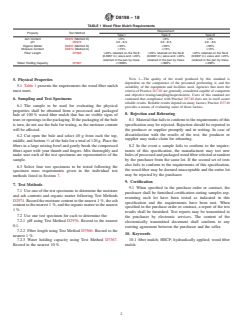
- Physical Properties: Sets requirements for key attributes such as ash content, pH, organic matter, moisture content, fiber length, and water holding capacity. Each property must be measured using referenced ASTM test methods, ensuring standardized quality and performance.
- Sampling and Testing: Details sampling procedures, including the representative selection of material from multiple points within a bale, and outlines how test specimens must be prepared and analyzed according to established methods.
- Conformance and Certification: Includes guidance on quality assurance, rejection and rehearing procedures, and certification of materials to guarantee that wood fiber mulches meet the required criteria.
- Units and Reporting: Prioritizes the use of SI units, while also providing inch-pound unit conversions for information. Results reported in non-SI units are not considered nonconformance.
Applications
Hydraulically applied 100% wood fiber mulches are widely utilized in:
- Erosion Control: Applied to exposed soil surfaces to minimize soil displacement by wind and water, supporting compliance with environmental regulations on construction and landscaping sites.
- Vegetation Establishment: Facilitates the effective growth of grass, native plants, and other vegetation on slopes, embankments, and disturbed terrains by maintaining optimum moisture and protecting seeds.
- Infrastructure Projects: Used extensively in road construction, energy infrastructure, and urban development to stabilize soil and reduce environmental impact.
- Land Rehabilitation: Essential in land reclamation and restoration projects where quick vegetative cover and soil protection are critical.
By following ASTM D8198-18, specifiers, contractors, and regulatory authorities can confidently select and verify hydraulically applied wood fiber mulch products that deliver dependable performance in controlling erosion and aiding revegetation.
Related Standards
Several ASTM standards complement the requirements in ASTM D8198-18, including:
- ASTM D653: Terminology relating to soil, rock, and contained fluids - essential definitions used in this and related soil erosion standards.
- ASTM D2974: Test methods for moisture, ash, and organic matter of peat and other organic soils.
- ASTM D2976: Test method for pH of peat materials.
- ASTM D3740: Practice for minimum requirements for agencies engaged in soil and rock testing in engineering applications.
- ASTM D6026: Practice for using significant digits in geotechnical data.
- ASTM D7367: Test method for determining the water holding capacity of fiber mulches for hydraulic planting.
- ASTM D7560: Test method for determination of fiber length percentages in HECPs.
- ASTM E11: Specification for woven wire test sieve cloth and test sieves.
These standards ensure rigorous assessment, quality control, and industry-wide consistency in the selection and application of wood fiber erosion control products.
Keywords: wood fiber mulch, hydraulically applied, hydraulic erosion control product, ASTM D8198-18, erosion control, revegetation, standard specification, soil stabilization
Relations
- Effective Date
- 01-Nov-2023
- Effective Date
- 15-Jan-2020
- Effective Date
- 15-Jan-2020
- Effective Date
- 01-Oct-2019
- Effective Date
- 15-Jun-2019
- Effective Date
- 15-Jun-2019
- Effective Date
- 01-Nov-2014
- Effective Date
- 01-Aug-2014
- Effective Date
- 15-Apr-2014
- Effective Date
- 01-Oct-2013
- Effective Date
- 01-Jun-2013
- Effective Date
- 01-May-2012
- Effective Date
- 01-Mar-2012
- Effective Date
- 01-Sep-2011
- Effective Date
- 01-Sep-2011
Get Certified
Connect with accredited certification bodies for this standard

Control Union Certifications
Global certification for agriculture and sustainability.

Hohenstein Institut
Textile testing and certification.

Bureau Veritas Bangladesh
Bureau Veritas certification services in Bangladesh.
Sponsored listings
Frequently Asked Questions
ASTM D8198-18 is a technical specification published by ASTM International. Its full title is "Standard Specification for Hydraulically Applied 100 % Wood Fiber Mulches". This standard covers: SCOPE 1.1 This specification covers the physical properties and testing requirements for 100 % wood fiber Hydraulic Erosion Control Products (HECP) mulches. 1.2 Units—The values stated in SI units are to be regarded as standard. The values given in parentheses are mathematical conversions to inch-pound units, which are provided for information only and are not considered standard. Reporting of test results in units other than SI shall not be regarded as nonconformance with this standard. The sieve designations are identified using the “alternative” system in accordance with Practice E11, such as 3-in. and No. 200, instead of the “standard” of 75-mm and 75-µm, respectively. 1.3 All observed and calculated values shall conform to the guidelines for significant digits and rounding established in Practice D6026, unless superseded by this test method. 1.3.1 The procedures used to specify how data are collected/recorded and calculated in the standard are regarded as the industry standard. In addition, they are representative of the significant digits that generally should be retained. The procedures used do not consider material variation, purpose for obtaining the data, special purpose studies, or any considerations for the user’s objectives; and it is common practice to increase or reduce significant digits of reported data to be commensurate with these considerations. It is beyond the scope of these test methods to consider significant digits used in analysis methods for engineering data. 1.4 This standard does not purport to address all of the safety concerns, if any, associated with its use. It is the responsibility of the user of this standard to establish appropriate safety, health, and environmental practices and determine the applicability of regulatory limitations prior to use. 1.5 This international standard was developed in accordance with internationally recognized principles on standardization established in the Decision on Principles for the Development of International Standards, Guides and Recommendations issued by the World Trade Organization Technical Barriers to Trade (TBT) Committee.
SCOPE 1.1 This specification covers the physical properties and testing requirements for 100 % wood fiber Hydraulic Erosion Control Products (HECP) mulches. 1.2 Units—The values stated in SI units are to be regarded as standard. The values given in parentheses are mathematical conversions to inch-pound units, which are provided for information only and are not considered standard. Reporting of test results in units other than SI shall not be regarded as nonconformance with this standard. The sieve designations are identified using the “alternative” system in accordance with Practice E11, such as 3-in. and No. 200, instead of the “standard” of 75-mm and 75-µm, respectively. 1.3 All observed and calculated values shall conform to the guidelines for significant digits and rounding established in Practice D6026, unless superseded by this test method. 1.3.1 The procedures used to specify how data are collected/recorded and calculated in the standard are regarded as the industry standard. In addition, they are representative of the significant digits that generally should be retained. The procedures used do not consider material variation, purpose for obtaining the data, special purpose studies, or any considerations for the user’s objectives; and it is common practice to increase or reduce significant digits of reported data to be commensurate with these considerations. It is beyond the scope of these test methods to consider significant digits used in analysis methods for engineering data. 1.4 This standard does not purport to address all of the safety concerns, if any, associated with its use. It is the responsibility of the user of this standard to establish appropriate safety, health, and environmental practices and determine the applicability of regulatory limitations prior to use. 1.5 This international standard was developed in accordance with internationally recognized principles on standardization established in the Decision on Principles for the Development of International Standards, Guides and Recommendations issued by the World Trade Organization Technical Barriers to Trade (TBT) Committee.
ASTM D8198-18 is classified under the following ICS (International Classification for Standards) categories: 13.080.01 - Soil quality and pedology in general; 59.080.70 - Geotextiles. The ICS classification helps identify the subject area and facilitates finding related standards.
ASTM D8198-18 has the following relationships with other standards: It is inter standard links to ASTM D3740-23, ASTM D2974-20e1, ASTM D2974-20, ASTM D3740-19, ASTM D7367-19e1, ASTM D7367-19, ASTM D2974-14, ASTM D653-14, ASTM D7367-14, ASTM E11-13, ASTM D2974-13, ASTM D3740-12a, ASTM D3740-12, ASTM D653-11, ASTM D3740-11. Understanding these relationships helps ensure you are using the most current and applicable version of the standard.
ASTM D8198-18 is available in PDF format for immediate download after purchase. The document can be added to your cart and obtained through the secure checkout process. Digital delivery ensures instant access to the complete standard document.
Standards Content (Sample)
This international standard was developed in accordance with internationally recognized principles on standardization established in the Decision on Principles for the
Development of International Standards, Guides and Recommendations issued by the World Trade Organization Technical Barriers to Trade (TBT) Committee.
Designation:D8198 −18
Standard Specification for
Hydraulically Applied 100% Wood Fiber Mulches
This standard is issued under the fixed designation D8198; the number immediately following the designation indicates the year of
original adoption or, in the case of revision, the year of last revision. A number in parentheses indicates the year of last reapproval. A
superscript epsilon (´) indicates an editorial change since the last revision or reapproval.
1. Scope mendations issued by the World Trade Organization Technical
Barriers to Trade (TBT) Committee.
1.1 This specification covers the physical properties and
testing requirements for 100 % wood fiber Hydraulic Erosion
2. Referenced Documents
Control Products (HECP) mulches.
2.1 ASTM Standards:
1.2 Units—The values stated in SI units are to be regarded
D653 Terminology Relating to Soil, Rock, and Contained
as standard. The values given in parentheses are mathematical
Fluids
conversions to inch-pound units, which are provided for
D2974 Test Methods for Moisture,Ash, and Organic Matter
information only and are not considered standard. Reporting of
of Peat and Other Organic Soils
test results in units other than SI shall not be regarded as
D2976 Test Method for pH of Peat Materials
nonconformance with this standard. The sieve designations are
D3740 Practice for Minimum Requirements for Agencies
identified using the “alternative” system in accordance with
Engaged in Testing and/or Inspection of Soil and Rock as
Practice E11, such as 3-in. and No. 200, instead of the
Used in Engineering Design and Construction
“standard” of 75-mm and 75-µm, respectively.
D6026 Practice for Using Significant Digits in Geotechnical
Data
1.3 All observed and calculated values shall conform to the
D7367 Test Method for Determining Water Holding Capac-
guidelines for significant digits and rounding established in
ity of Fiber Mulches for Hydraulic Planting
Practice D6026, unless superseded by this test method.
D7560 Test Method for Determination of Fiber Length
1.3.1 Theproceduresusedtospecifyhowdataarecollected/
Percentages in Hydraulic Erosion Control Products
recorded and calculated in the standard are regarded as the
(HECPs)
industry standard. In addition, they are representative of the
E11 Specification for Woven Wire Test Sieve Cloth and Test
significant digits that generally should be retained. The proce-
Sieves
dures used do not consider material variation, purpose for
obtaining the data, special purpose studies, or any consider-
3. Terminology
ations for the user’s objectives; and it is common practice to
3.1 Definitions:
increase or reduce significant digits of reported data to be
3.1.1 For definitions of common technical terms used in this
commensuratewiththeseconsiderations.Itisbeyondthescope
standard, refer to Terminology D653.
of these test methods to consider significant digits used in
3.1.2 hydraulic erosion control product, (HECP), n—a
analysis methods for engineering data.
manufactured,temporary,degradable,prepackagedfibrousma-
1.4 This standard does not purport to address all of the
terial that is mixed with water and hydraulically applied as a
safety concerns, if any, associated with its use. It is the
slurry designed to reduce soil erosion and assist in the
responsibility of the user of this standard to establish appro-
establishment and growth of vegetation.
priate safety, health, and environmental practices and deter-
mine the applicability of regulatory limitations prior to use.
4. Materials
1.5 This international standard was developed in accor-
4.1 Wood fiber mulch shall be produced from wood chips
dance with internationally recognized principles on standard-
that are 100 % virgin, or recycled, or a combination of both.
ization established in the Decision on Principles for the
There are typically three types of wood fiber mulch based on
Development of International Standards, Guides and Recom-
various levels of manufacturing technologies that impact the
water holding capacity of the fibers.
This test method is under the jurisdiction ofASTM Committee D18 on Soil and
Rock and is the direct responsibility of Subcommittee D18.25 on Erosion and For referenced ASTM standards, visit the ASTM website, www.astm.org, or
Sediment Control Technology. contact ASTM Customer Service at service@astm.org. For Annual Book of ASTM
Current edition approved July 15, 2018. Published August 2018. DOI: 10.1520/ Standards volume information, refer to the standard’s Document Summary page on
D8198-18. the ASTM website.
Copyright © ASTM International, 100 Barr Harbor Drive, PO Box C700, West Conshohocken, PA 19428-2959. United States
D8198−18
TABLE 1 Wood Fiber Mulch Requirements
Requirement
Property Test Method
Type I Type II Type III
Ash Content D2974 (Method D) #5% #5% #5%
pH D2976 4.0 - 8.5 4.0 - 8.5 4.0 - 8.5
Organic Matter D2974 (Method D) $95% $95% $95%
Moisture Content D2974 (Method
...