

ASTM D6378-22
(Test Method)Standard Test Method for Determination of Vapor Pressure (VPX) of Petroleum Products, Hydrocarbons, and Hydrocarbon-Oxygenate Mixtures (Triple Expansion Method)
General Information
- Abstract
SIGNIFICANCE AND USE
5.1 Vapor pressure is a very important physical property of volatile liquids for shipping and storage.
5.2 The vapor pressure of gasoline and gasoline-oxygenate blends is regulated by various government agencies.
5.3 Specifications for volatile petroleum products generally include vapor pressure limits to ensure products of suitable volatility performance.
5.4 In this test method, an air saturation procedure prior to the measurement is not required, thus eliminating losses of high volatile compounds during this step. This test method is faster and minimizes potential errors from improper air saturation. This test method permits VPX determinations in the field.
5.5 This test method can be applied in online applications in which an air saturation procedure prior to the measurement cannot be performed.
SCOPE
1.1 This test method covers the use of automated vapor pressure instruments to determine the vapor pressure exerted in vacuum by volatile, liquid petroleum products, hydrocarbons, and hydrocarbon-oxygenate mixtures including ethanol blends up to 85 % (volume fraction). This test method is suitable for testing samples with boiling points above 0 °C (32 °F) that exert a vapor pressure between 7 kPa and 150 kPa (1.0 psi and 21 psi) at 37.8 °C (100 °F) at a vapor-to-liquid ratio of 4:1. The liquid sample volume size required for analysis is dependent upon the vapor-to-liquid ratio chosen (see Note 1) and the measuring chamber volume capacity of the instrument (see 6.1.1 and Note 5).
Note 1: The test method is suitable for the determination of the vapor pressure of volatile, liquid petroleum products at temperatures from 0 °C to 100 °C at vapor to liquid ratios of 4:1 to 1:1 (X = 4 to 1) and pressures up to 500 kPa (70 psi), but the precision statement (see Section 16) may not be applicable.
Note 2: The precision (see Section 16) using 1 L containers was determined in a 2003 interlaboratory study (ILS);2 the precision using 250 mL containers was determined in a 2016 ILS.3
1.2 This test method also covers the use of automated vapor pressure instruments to determine the vapor pressure exerted in vacuum by aviation turbine fuels. This test method is suitable for testing aviation turbine fuel samples with boiling points above 0 °C (32 °F) that exert a vapor pressure between 0 kPa and 110 kPa (0 psi and 15.5 psi) at a vapor-to-liquid ratio of 4:1, in the temperature range from 25 °C to 100 °C (77 °F to 212 °F).
Note 3: The precision (see Section 16) for aviation turbine fuels using 100 mL containers was determined in a 2007 ILS.4
1.3 The vapor pressure (VPX) determined by this test method at a vapor-liquid ratio of 4:1 (X = 4) of gasoline and gasoline-oxygenate blends at 37.8 °C can be correlated to the dry vapor pressure equivalent (DVPE) value determined by Test Method D5191 (see 16.3). This condition does not apply when the sample is aviation turbine fuel.
1.4 The values stated in SI units are to be regarded as standard. The values given in parentheses after SI units are provided for information only and are not considered standard.
1.5 This standard does not purport to address all of the safety concerns, if any, associated with its use. It is the responsibility of the user of this standard to establish appropriate safety, health, and environmental practices and determine the applicability of regulatory limitations prior to use. For specific warning statements, see 7.2 – 7.8.
1.6 This international standard was developed in accordance with internationally recognized principles on standardization established in the Decision on Principles for the Development of International Standards, Guides and Recommendations issued by the World Trade Organization Technical Barriers to Trade (TBT) Committee.
- Status
- Published
- Publication Date
- 30-Jun-2022
- Technical Committee
- D02 - Petroleum Products, Liquid Fuels, and Lubricants
- Drafting Committee
- D02.08 - Volatility
Buy Documents
ASTM D6378-22 - Standard Test Method for Determination of Vapor Pressure (VP<inf>X</inf>) of Petroleum Products, Hydrocarbons, and Hydrocarbon-Oxygenate Mixtures (Triple Expansion Method)
REDLINE ASTM D6378-22 - Standard Test Method for Determination of Vapor Pressure (VP<inf>X</inf>) of Petroleum Products, Hydrocarbons, and Hydrocarbon-Oxygenate Mixtures (Triple Expansion Method)
Overview
ASTM D6378-22 is the international standard test method for the determination of vapor pressure (VPX) of petroleum products, hydrocarbons, and hydrocarbon-oxygenate mixtures, including ethanol blends, using the triple expansion method. Vapor pressure is a key physical property affecting the storage, transport, and regulatory compliance of volatile fuels such as gasoline, aviation turbine fuels, and their blends. The triple expansion method enables more efficient, accurate, and field-applicable vapor pressure measurement using automated instruments, without the need for air saturation prior to testing.
Key Topics
- Significance of Vapor Pressure: Vapor pressure influences the volatility, performance, and safety of fuels. Accurate vapor pressure values are crucial for determining compliance with shipping, storage, and environmental regulations.
- Scope of Application: The method applies to a wide range of volatile liquid petroleum products, pure hydrocarbons, hydrocarbon-oxygenate mixtures, and aviation turbine fuels.
- Measurement Range:
- For most petroleum products and blends: boiling points above 0°C, vapor pressures from 7 kPa to 150 kPa (1.0 psi to 21 psi) at 37.8°C (100°F), at vapor-to-liquid ratios of 4:1.
- For aviation turbine fuels: vapor pressures from 0 kPa to 110 kPa (0 psi to 15.5 psi) in the range 25°C to 100°C.
- Automated Instrumentation: Utilizes a temperature-controlled measuring chamber with a built-in piston to perform triple expansions, allowing for precise vapor pressure determination while minimizing volatility loss and measurement error.
- Field and Online Applicability: The air saturation step is eliminated, making the method suitable for both laboratory and online in-process testing, enhancing accuracy and speed.
Applications
- Fuel Regulatory Compliance: Used for determining the vapor pressure of gasoline and gasoline-oxygenate blends, which are subject to government regulation for environmental and performance reasons.
- Quality Control in Refining: Ensures that petroleum products meet necessary vapor pressure specifications, essential for product grading and marketing.
- Aviation Fuel Testing: Applies to aviation turbine fuels to ensure consistency and safety in the aviation industry.
- Shipping and Storage Safety: Measurement of vapor pressure informs fuel handling protocols, reducing risk during transport and storage.
- Process Monitoring: The automated method supports real-time, online vapor pressure monitoring in refinery and fuel distribution operations.
Related Standards
For comprehensive volatility measurement and sampling, ASTM D6378-22 is often used alongside the following standards:
- ASTM D323: Test Method for Vapor Pressure of Petroleum Products (Reid Method)
- ASTM D4953: Vapor Pressure of Gasoline and Gasoline-Oxygenate Blends (Dry Method)
- ASTM D5191: Vapor Pressure of Petroleum Products and Liquid Fuels (Mini Method)
- ASTM D4057: Manual Sampling of Petroleum and Petroleum Products
- ASTM D4177: Automatic Sampling of Petroleum and Petroleum Products
- ASTM D5842: Sampling and Handling of Fuels for Volatility Measurement
- ASTM D5854: Mixing and Handling of Liquid Samples
- ASTM D6299/D6300/D6708: Statistical Methods for Quality Assurance and Data Precision
Practical Value
By providing a reliable, efficient, and field-capable method for vapor pressure determination, ASTM D6378-22 supports the petroleum industry’s need for consistent product quality, regulatory compliance, and safe operations. The elimination of the air saturation step reduces errors and speeds up analysis, making it practical for both laboratory and online process applications. The method’s correlation to other standard vapor pressure metrics further enhances its versatility and utility.
Keywords: ASTM D6378-22, vapor pressure, petroleum products, hydrocarbon mixtures, gasoline blends, aviation turbine fuel, triple expansion, fuel volatility, regulatory compliance, automated vapor pressure testing, fuel quality control.
Relations
- Effective Date
- 01-Mar-2024
- Effective Date
- 01-Mar-2024
- Effective Date
- 01-Dec-2023
- Effective Date
- 01-Dec-2023
- Effective Date
- 01-Nov-2023
- Refers
ASTM D5842-23 - Standard Practice for Sampling and Handling of Fuels for Volatility Measurement - Effective Date
- 01-Oct-2023
- Effective Date
- 01-Jun-2020
- Effective Date
- 01-May-2020
- Effective Date
- 01-Dec-2019
- Refers
ASTM D5842-19 - Standard Practice for Sampling and Handling of Fuels for Volatility Measurement - Effective Date
- 01-Nov-2019
- Effective Date
- 01-May-2019
- Effective Date
- 01-Dec-2018
- Effective Date
- 01-Apr-2018
- Effective Date
- 01-Apr-2018
- Effective Date
- 15-Dec-2017
Buy Documents
ASTM D6378-22 - Standard Test Method for Determination of Vapor Pressure (VP<inf>X</inf>) of Petroleum Products, Hydrocarbons, and Hydrocarbon-Oxygenate Mixtures (Triple Expansion Method)
REDLINE ASTM D6378-22 - Standard Test Method for Determination of Vapor Pressure (VP<inf>X</inf>) of Petroleum Products, Hydrocarbons, and Hydrocarbon-Oxygenate Mixtures (Triple Expansion Method)
Get Certified
Connect with accredited certification bodies for this standard

Element Materials Technology
Materials testing and product certification.

ABS Group Brazil
ABS Group certification services in Brazil.

ABS Quality Evaluations Inc.
American Bureau of Shipping quality certification.
Sponsored listings
Frequently Asked Questions
ASTM D6378-22 is a standard published by ASTM International. Its full title is "Standard Test Method for Determination of Vapor Pressure (VP<inf>X</inf>) of Petroleum Products, Hydrocarbons, and Hydrocarbon-Oxygenate Mixtures (Triple Expansion Method)". This standard covers: SIGNIFICANCE AND USE 5.1 Vapor pressure is a very important physical property of volatile liquids for shipping and storage. 5.2 The vapor pressure of gasoline and gasoline-oxygenate blends is regulated by various government agencies. 5.3 Specifications for volatile petroleum products generally include vapor pressure limits to ensure products of suitable volatility performance. 5.4 In this test method, an air saturation procedure prior to the measurement is not required, thus eliminating losses of high volatile compounds during this step. This test method is faster and minimizes potential errors from improper air saturation. This test method permits VPX determinations in the field. 5.5 This test method can be applied in online applications in which an air saturation procedure prior to the measurement cannot be performed. SCOPE 1.1 This test method covers the use of automated vapor pressure instruments to determine the vapor pressure exerted in vacuum by volatile, liquid petroleum products, hydrocarbons, and hydrocarbon-oxygenate mixtures including ethanol blends up to 85 % (volume fraction). This test method is suitable for testing samples with boiling points above 0 °C (32 °F) that exert a vapor pressure between 7 kPa and 150 kPa (1.0 psi and 21 psi) at 37.8 °C (100 °F) at a vapor-to-liquid ratio of 4:1. The liquid sample volume size required for analysis is dependent upon the vapor-to-liquid ratio chosen (see Note 1) and the measuring chamber volume capacity of the instrument (see 6.1.1 and Note 5). Note 1: The test method is suitable for the determination of the vapor pressure of volatile, liquid petroleum products at temperatures from 0 °C to 100 °C at vapor to liquid ratios of 4:1 to 1:1 (X = 4 to 1) and pressures up to 500 kPa (70 psi), but the precision statement (see Section 16) may not be applicable. Note 2: The precision (see Section 16) using 1 L containers was determined in a 2003 interlaboratory study (ILS);2 the precision using 250 mL containers was determined in a 2016 ILS.3 1.2 This test method also covers the use of automated vapor pressure instruments to determine the vapor pressure exerted in vacuum by aviation turbine fuels. This test method is suitable for testing aviation turbine fuel samples with boiling points above 0 °C (32 °F) that exert a vapor pressure between 0 kPa and 110 kPa (0 psi and 15.5 psi) at a vapor-to-liquid ratio of 4:1, in the temperature range from 25 °C to 100 °C (77 °F to 212 °F). Note 3: The precision (see Section 16) for aviation turbine fuels using 100 mL containers was determined in a 2007 ILS.4 1.3 The vapor pressure (VPX) determined by this test method at a vapor-liquid ratio of 4:1 (X = 4) of gasoline and gasoline-oxygenate blends at 37.8 °C can be correlated to the dry vapor pressure equivalent (DVPE) value determined by Test Method D5191 (see 16.3). This condition does not apply when the sample is aviation turbine fuel. 1.4 The values stated in SI units are to be regarded as standard. The values given in parentheses after SI units are provided for information only and are not considered standard. 1.5 This standard does not purport to address all of the safety concerns, if any, associated with its use. It is the responsibility of the user of this standard to establish appropriate safety, health, and environmental practices and determine the applicability of regulatory limitations prior to use. For specific warning statements, see 7.2 – 7.8. 1.6 This international standard was developed in accordance with internationally recognized principles on standardization established in the Decision on Principles for the Development of International Standards, Guides and Recommendations issued by the World Trade Organization Technical Barriers to Trade (TBT) Committee.
SIGNIFICANCE AND USE 5.1 Vapor pressure is a very important physical property of volatile liquids for shipping and storage. 5.2 The vapor pressure of gasoline and gasoline-oxygenate blends is regulated by various government agencies. 5.3 Specifications for volatile petroleum products generally include vapor pressure limits to ensure products of suitable volatility performance. 5.4 In this test method, an air saturation procedure prior to the measurement is not required, thus eliminating losses of high volatile compounds during this step. This test method is faster and minimizes potential errors from improper air saturation. This test method permits VPX determinations in the field. 5.5 This test method can be applied in online applications in which an air saturation procedure prior to the measurement cannot be performed. SCOPE 1.1 This test method covers the use of automated vapor pressure instruments to determine the vapor pressure exerted in vacuum by volatile, liquid petroleum products, hydrocarbons, and hydrocarbon-oxygenate mixtures including ethanol blends up to 85 % (volume fraction). This test method is suitable for testing samples with boiling points above 0 °C (32 °F) that exert a vapor pressure between 7 kPa and 150 kPa (1.0 psi and 21 psi) at 37.8 °C (100 °F) at a vapor-to-liquid ratio of 4:1. The liquid sample volume size required for analysis is dependent upon the vapor-to-liquid ratio chosen (see Note 1) and the measuring chamber volume capacity of the instrument (see 6.1.1 and Note 5). Note 1: The test method is suitable for the determination of the vapor pressure of volatile, liquid petroleum products at temperatures from 0 °C to 100 °C at vapor to liquid ratios of 4:1 to 1:1 (X = 4 to 1) and pressures up to 500 kPa (70 psi), but the precision statement (see Section 16) may not be applicable. Note 2: The precision (see Section 16) using 1 L containers was determined in a 2003 interlaboratory study (ILS);2 the precision using 250 mL containers was determined in a 2016 ILS.3 1.2 This test method also covers the use of automated vapor pressure instruments to determine the vapor pressure exerted in vacuum by aviation turbine fuels. This test method is suitable for testing aviation turbine fuel samples with boiling points above 0 °C (32 °F) that exert a vapor pressure between 0 kPa and 110 kPa (0 psi and 15.5 psi) at a vapor-to-liquid ratio of 4:1, in the temperature range from 25 °C to 100 °C (77 °F to 212 °F). Note 3: The precision (see Section 16) for aviation turbine fuels using 100 mL containers was determined in a 2007 ILS.4 1.3 The vapor pressure (VPX) determined by this test method at a vapor-liquid ratio of 4:1 (X = 4) of gasoline and gasoline-oxygenate blends at 37.8 °C can be correlated to the dry vapor pressure equivalent (DVPE) value determined by Test Method D5191 (see 16.3). This condition does not apply when the sample is aviation turbine fuel. 1.4 The values stated in SI units are to be regarded as standard. The values given in parentheses after SI units are provided for information only and are not considered standard. 1.5 This standard does not purport to address all of the safety concerns, if any, associated with its use. It is the responsibility of the user of this standard to establish appropriate safety, health, and environmental practices and determine the applicability of regulatory limitations prior to use. For specific warning statements, see 7.2 – 7.8. 1.6 This international standard was developed in accordance with internationally recognized principles on standardization established in the Decision on Principles for the Development of International Standards, Guides and Recommendations issued by the World Trade Organization Technical Barriers to Trade (TBT) Committee.
ASTM D6378-22 is classified under the following ICS (International Classification for Standards) categories: 75.080 - Petroleum products in general. The ICS classification helps identify the subject area and facilitates finding related standards.
ASTM D6378-22 has the following relationships with other standards: It is inter standard links to ASTM D6300-24, ASTM D6708-24, ASTM D6300-23a, ASTM D6299-23a, ASTM D2892-23, ASTM D5842-23, ASTM D2892-20, ASTM D4953-20, ASTM D6300-19a, ASTM D5842-19, ASTM D6708-19, ASTM D5191-18a, ASTM D2892-18, ASTM D6708-18, ASTM D6299-17b. Understanding these relationships helps ensure you are using the most current and applicable version of the standard.
ASTM D6378-22 is available in PDF format for immediate download after purchase. The document can be added to your cart and obtained through the secure checkout process. Digital delivery ensures instant access to the complete standard document.
Standards Content (Sample)
This international standard was developed in accordance with internationally recognized principles on standardization established in the Decision on Principles for the
Development of International Standards, Guides and Recommendations issued by the World Trade Organization Technical Barriers to Trade (TBT) Committee.
Designation: D6378 − 22
Standard Test Method for
Determination of Vapor Pressure (VP ) of Petroleum
X
Products, Hydrocarbons, and Hydrocarbon-Oxygenate
Mixtures (Triple Expansion Method)
This standard is issued under the fixed designation D6378; the number immediately following the designation indicates the year of
original adoption or, in the case of revision, the year of last revision. A number in parentheses indicates the year of last reapproval. A
superscript epsilon (´) indicates an editorial change since the last revision or reapproval.
100 mL containers was determined in a 2007 ILS.
1. Scope*
1.3 The vapor pressure (VP ) determined by this test
1.1 This test method covers the use of automated vapor
X
method at a vapor-liquid ratio of 4:1 (X = 4) of gasoline and
pressureinstrumentstodeterminethevaporpressureexertedin
gasoline-oxygenate blends at 37.8 °C can be correlated to the
vacuum by volatile, liquid petroleum products, hydrocarbons,
dry vapor pressure equivalent (DVPE) value determined by
and hydrocarbon-oxygenate mixtures including ethanol blends
Test Method D5191 (see 16.3). This condition does not apply
up to 85 % (volume fraction). This test method is suitable for
when the sample is aviation turbine fuel.
testing samples with boiling points above 0 °C (32 °F) that
exert a vapor pressure between 7 kPa and 150 kPa (1.0 psi and
1.4 The values stated in SI units are to be regarded as
21 psi)at37.8 °C(100 °F)atavapor-to-liquidratioof4:1.The
standard. The values given in parentheses after SI units are
liquid sample volume size required for analysis is dependent
provided for information only and are not considered standard.
upon the vapor-to-liquid ratio chosen (see Note 1) and the
1.5 This standard does not purport to address all of the
measuring chamber volume capacity of the instrument (see
safety concerns, if any, associated with its use. It is the
6.1.1 and Note 5).
responsibility of the user of this standard to establish appro-
NOTE 1—The test method is suitable for the determination of the vapor priate safety, health, and environmental practices and deter-
pressure of volatile, liquid petroleum products at temperatures from 0 °C
mine the applicability of regulatory limitations prior to use.
to 100 °C at vapor to liquid ratios of 4:1 to 1:1 (X=4to1)and pressures
For specific warning statements, see 7.2 – 7.8.
up to 500 kPa (70 psi), but the precision statement (see Section 16) may
1.6 This international standard was developed in accor-
not be applicable.
dance with internationally recognized principles on standard-
NOTE 2—The precision (see Section 16) using 1 L containers was
determined in a 2003 interlaboratory study (ILS); the precision using
ization established in the Decision on Principles for the
250 mL containers was determined in a 2016 ILS.
Development of International Standards, Guides and Recom-
mendations issued by the World Trade Organization Technical
1.2 This test method also covers the use of automated vapor
pressureinstrumentstodeterminethevaporpressureexertedin Barriers to Trade (TBT) Committee.
vacuum by aviation turbine fuels. This test method is suitable
2. Referenced Documents
for testing aviation turbine fuel samples with boiling points
above 0 °C (32 °F) that exert a vapor pressure between 0 kPa
2.1 ASTM Standards:
and 110 kPa (0 psi and 15.5 psi) at a vapor-to-liquid ratio of
D323 TestMethodforVaporPressureofPetroleumProducts
4:1, in the temperature range from 25 °C to 100 °C (77 °F to
(Reid Method)
212 °F).
D2892 Test Method for Distillation of Crude Petroleum
(15-Theoretical Plate Column)
NOTE 3—The precision (see Section 16) for aviation turbine fuels using
D4057 Practice for Manual Sampling of Petroleum and
Petroleum Products
This test method is under the jurisdiction of ASTM Committee D02 on
D4177 Practice for Automatic Sampling of Petroleum and
Petroleum Products, Liquid Fuels, and Lubricants and is the direct responsibility of
Petroleum Products
Subcommittee D02.08 on Volatility.
Current edition approved July 1, 2022. Published August 2022. Originally
approved in 1999. Last previous edition approved in 2020 as D6378 – 20. DOI:
10.1520/D6378-22. Supporting data have been filed at ASTM International Headquarters and may
Supporting data have been filed at ASTM International Headquarters and may beobtainedbyrequestingResearchReportRR:D02-1651.ContactASTMCustomer
beobtainedbyrequestingResearchReportRR:D02-1619.ContactASTMCustomer Service at service@astm.org.
Service at service@astm.org. For referenced ASTM standards, visit the ASTM website, www.astm.org, or
Research Report IP 394 (EN 130161) and IP 619 (EN 130163) 2016, contact ASTM Customer Service at service@astm.org. For Annual Book of ASTM
available from the Energy Institute, 61 New Cavendish Street, London W1G 7AR, Standards volume information, refer to the standard’s Document Summary page on
UK , email: ILS@energyinst.org. the ASTM website.
*A Summary of Changes section appears at the end of this standard
Copyright © ASTM International, 100 Barr Harbor Drive, PO Box C700, West Conshohocken, PA 19428-2959. United States
D6378 − 22
D4306 Practice for Aviation Fuel Sample Containers for 5. Significance and Use
Tests Affected by Trace Contamination
5.1 Vapor pressure is a very important physical property of
D4953 Test Method for Vapor Pressure of Gasoline and
volatile liquids for shipping and storage.
Gasoline-Oxygenate Blends (Dry Method)
5.2 The vapor pressure of gasoline and gasoline-oxygenate
D5191 Test Method for Vapor Pressure of Petroleum Prod-
blends is regulated by various government agencies.
ucts and Liquid Fuels (Mini Method)
D5842 Practice for Sampling and Handling of Fuels for
5.3 Specifications for volatile petroleum products generally
Volatility Measurement
include vapor pressure limits to ensure products of suitable
D5854 Practice for Mixing and Handling of Liquid Samples
volatility performance.
of Petroleum and Petroleum Products
5.4 In this test method, an air saturation procedure prior to
D6299 Practice for Applying Statistical Quality Assurance
the measurement is not required, thus eliminating losses of
and Control Charting Techniques to Evaluate Analytical
high volatile compounds during this step. This test method is
Measurement System Performance
faster and minimizes potential errors from improper air satu-
D6300 Practice for Determination of Precision and Bias
ration. This test method permits VP determinations in the
X
Data for Use in Test Methods for Petroleum Products,
field.
Liquid Fuels, and Lubricants
D6708 Practice for StatisticalAssessment and Improvement 5.5 Thistestmethodcanbeappliedinonlineapplicationsin
of Expected Agreement Between Two Test Methods that
which an air saturation procedure prior to the measurement
Purport to Measure the Same Property of a Material cannot be performed.
3. Terminology
6. Apparatus
3.1 Definitions of Terms Specific to This Standard:
6.1 The apparatus suitable for this test method employs a
3.1.1 dry vapor pressure equivalent (DVPE), n—a value
small volume, cylindrically shaped measuring chamber with
calculated by a correlation equation from the total pressure
associated equipment to control the chamber temperature
(Test Method D5191), which is equivalent to the value ob-
within the range from 0 °C to 100 °C. The measuring chamber
tained on the sample by Test Method D4953, Procedure A.
shall contain a movable piston with a maximum dead volume
3.1.2 partial pressure from dissolved air (PPA), n—the of less than 1 % of the total volume at the lowest position to
pressure exerted in vacuum from dissolved air that escapes allow sample introduction into the measuring chamber and
from the liquid phase into the vapor phase. expansion to the desired vapor-liquid ratio. A static pressure
transducer shall be incorporated in the piston. The measuring
3.1.3 Reid vapor pressure equivalent (RVPE), n—a value
chamber shall contain an inlet/outlet valve combination for
calculated by a correlation equation from the TP , which is
X
sample introduction and expulsion. The piston and the valve
equivalent to the value obtained on the sample by Test Method
combination shall be at the same temperature as the measuring
D323.
chamber to avoid any condensation or excessive evaporation.
3.1.4 total pressure (TP ), n—the pressure exerted in
X
6.1.1 The measuring chamber shall be designed to contain
vacuum by air- and gas-containing petroleum products, com-
between5 mLand15 mLofliquidandvaporandbecapableof
ponents and feedstocks, and other liquids, in the absence of
maintaining a vapor-liquid ratio of 4:1 to 1:1. The accuracy of
undissolved water at a vapor-liquid ratio of X:1.
the adjusted vapor-liquid ratio shall be within 0.05.
3.1.5 vapor pressure (VP ), n—the total pressure minus the
X
NOTE 5—The measuring chamber employed by the instruments used in
PPA in the liquid at a vapor-liquid ratio of X:1.
generating the precision and bias statements were constructed of nickel
VP 5 TP 2 PPA (1)
X X plated aluminum and stainless steel with a total volume of 5 mL.
Measuring chambers exceeding a 5 mL capacity can be used, but the
4. Summary of Test Method precision and bias statements (see Section 16) are not known to apply.
6.1.2 The pressure transducer shall have a minimum opera-
4.1 Employing a measuring chamber with a built-in piston,
tional range from 0 kPa to 200 kPa (0 psi to 29 psi) with a
a sample of known volume is drawn into the temperature
minimum resolution of 0.1 kPa (0.01 psi) and a minimum
controlled chamber at 20 °C or higher. After sealing the
accuracy of 60.2 kPa (60.03 psi). The pressure measurement
chamber, the temperature of the chamber is increased to a
systemshallincludeassociatedelectronicsandreadoutdevices
specified value simultaneously with the first expansion. Two
to display the resulting pressure reading.
further expansions are performed to a final volume of (X + 1)
times that of the test specimen.After each expansion, the TP 6.1.3 Electronic temperature control shall be used to main-
X
isdetermined.ThePPAandthesolubilityofairinthespecimen tain the measuring chamber at the prescribed temperature
within 60.1 °Cforthedurationofthevaporpressuremeasure-
are calculated from the three resulting pressures. The (VP )is
X
calculated by subtracting the PPA in the liquid from TP . ment.
X
NOTE 4—For liquids containing very low levels of high vapor pressure
6.1.4 A platinum resistance thermometer shall be used for
contaminants, which behave like a gas, this test method of determination
measuring the temperature of the measuring chamber. The
of the PPAand gases may lead to wrong results since the partial pressure
minimum temperature range of the measuring device shall be
ofthecontaminantswillbeincludedinthePPA.Thiseffectisshownwhen
from 0 °C to 100 °C with a resolution of 0.1 °C and an
the value of the PPA and gases exceeds the average maximum limit of
7 kPa (1 psi). accuracy of 60.1 °C.
D6378 − 22
TABLE 1 Accepted Reference Value (ARV) and Acceptable Testing Range for Reference Fluids (Note 17)
Recommended Instrument Acceptable Testing Range for
ARV [VP (37.8 °C)] ± Uncertainty,
Reference Fluid Manufacturer Tolerance, Reference Fuel [VP (37.8 °C)],
(kPa)
(kPa) (kPa)
Pentane 107.9 ± 0.2 ±1.0 107.9 ± 1.2 (106.7 to 109.1)
2,2 Dimethylbutane 68.8 ± 0.2 ±1.0 68.8 ± 1.2 (67.6 to 70.0)
2,3 Dimethylbutane 51.7 ± 0.2 ±1.0 51.7 ± 1.2 (50.5 to 52.9)
Recommended Instrument Acceptable Testing Range for
ARV [VP (37.8 °C)] ± Uncertainty,
(37.8 °C)],
Reference Fluid Manufacturer Tolerance, Reference Fuel [VP
(psi)
(psi) (psi)
Pentane 15.65 ± 0.03 ±0.14 15.65 ± 0.17 (15.48 to 15.82)
2,2 Dimethylbutane 9.98 ± 0.03 ±0.14 9.98 ± 0.17 (9.81 to 10.15)
2,3 Dimethylbutane 7.50 ± 0.03 ±0.14 7.50 ± 0.17 (7.33 to 7.67)
NOTE 7—Verification fluids reported by 12 of the D6378 data set
6.1.5 Thevaporpressureapparatusshallhaveprovisionsfor
participants in the 2003 ILS (see 16.1) included the following (with
rinsing the measuring chamber with a solvent of low vapor
number of data sets identified in parentheses): 2,2-dimethylbutane (11),
pressure or with the next sample to be tested.
and 2,3-dimethylbutane (1).
6.2 Vacuum Pump for Calibration, capable of reducing the
7.2 Cyclopentane, (Warning—Cyclopentane is flammable
pressure in the measuring chamber to less than 0.01 kPa
and a health hazard).
(0.001 psi) absolute.
7.3 2,2-Dimethylbutane, (Warning—2,2-dimethylbutane is
6.3 McLeod Vacuum Gauge or Calibrated Electronic
flammable and a health hazard).
VacuumMeasuringDeviceforCalibration,tocoveratleastthe
range from 0.01 kPa to 0.67 kPa (0.1 mm to 5 mm Hg). The
7.4 2,3-Dimethylbutane, (Warning—2,3-dimethylbutane is
calibration of the electronic vacuum measuring device shall be
flammable and a health hazard).
regularly verified in accordance with Annex A6.3 on Vacuum
7.5 Methanol, (Warning—Methanol is flammable and a
Sensors in Test Method D2892.
health hazard).
6.4 Pressure Measuring Device for Calibration, capable of
7.6 2-Methylpentane, (Warning—2-methylpentane is flam-
measuring local station pressure with an accuracy and a
mable and a health hazard).
resolution of 0.1 kPa (1 mm Hg), or better, at the same
elevationrelativetosealevelastheapparatusinthelaboratory.
7.7 Pentane, (Warning—Pentane is flammable and a health
hazard).
NOTE 6—This test method does not give full details of instruments
suitableforcarryingoutthistest.Detailsontheinstallation,operation,and
7.8 Toluene, (Warning—Toluene is flammable and a health
maintenance of each instrument may be found in the manufacturer’s
manual. hazard).
7.9 Cyclopentane, 98.0 minimum purity (Warning—
7. Reagents and Materials
Cyclopentane is flammable and a health hazard).
7.1 Purity of Reagents—Use chemicals of at least 99 %
purity for verification of instrument performance (see Section
8. Sampling and Sample Introduction
11). Unless otherwise indicated, it is intended that all reagents
conform to the specifications of the Committee of Analytical
8.1 General Requirements:
Reagents of the American Chemical Society where such
8.1.1 The extreme sensitivity of vapor pressure measure-
specifications are available. Lower purities can be used,
ments to losses through evaporation and the resulting changes
provided it is first ascertained that the reagent is of sufficient
in composition is such as to require the utmost precaution and
purity to permit its use without lessening the accuracy of the
the most meticulous care in the drawing and handling of
determination.
samples.
7.1.1 The chemicals in 7.3, 7.4, and 7.7 are suggested for
8.1.2 Obtain a sample and test specimen in accordance with
verification of instrument performance (see Section 11), based
Practice D4057, D4177, D4306, D5842,or D5854 when
on the reference fuels analyzed in the 2003 interlaboratory
appropriate, except do not use the Sampling by Water Dis-
study (ILS) (see 16.1, Table 1, and Note 17). Such reference
placement section for fuels containing oxygenates.
fuels are not to be used for instrument calibration. Table 1
8.1.2.1 For gasolines and gasoline-oxygenate blends, use
identifies the accepted reference value (ARV) and uncertainty
either a 250 mL or 1 L (1 qt) sized container filled between
limits, as well as the acceptable testing range for each of the
70 % and 80 % with sample. Samples in containers of other
reference fuels listed.
sizes, as prescribed in 8.1.2, may be used with the same ullage
requirements, but precision can be affected.
ACS Reagent Chemicals, Specifications and Procedures for Reagents and
NOTE 8—Relative bias information when testing gasoline and gasoline-
Standard-Grade Reference Materials, American Chemical Society, Washington,
oxygenate blends using 250 mL or 1 L containers is given in Section 16.
DC. For suggestions on the testing of reagents not listed by theAmerican Chemical
Society, see Analar Standards for Laboratory Chemicals, BDH Ltd., Poole, Dorset,
8.1.2.2 For aviation turbine fuel, use a 100 mL size con-
U.K., and the United States Pharmacopeia and National Formulary, U.S. Pharma-
copeial Convention, Inc. (USPC), Rockville, MD. tainer filled to a minimum of 80 % with sample. However,
D6378 − 22
samples in containers of other sizes as prescribed in 8.1.2 may dissolved gas relative to ambient barometric pressure. Hydro-
be used, with the same ullage requirement, but the precision carbon loss increases as saturation gas pressure increases.
can be affected. Sealed sample systems are recommended for gas saturations
8.1.3 Perform the VP determination, including the rinsing greater than about 2 bar gas pressure (about 2 atmospheres or
X
(see 9.3), on the first test specimen withdrawn from a sample 30 psia).
container. Do not use the remaining sample in the container for 8.2.5 For bottle samples, insert the sample introduction tube
a second VP determination. If a second determination is as close to the sample bottle bottom as practical.
X
necessary, obtain a new sample. This condition does not apply 8.2.6 Pressurized samples from a sealed sample system,
when the sample is aviation turbine fuel. pressurized floating pressure cylinders or equivalent may be
usedwithinthepressureandtemperaturelimitsspecifiedbythe
NOTE 9—For gasoline and gasoline-oxygenate blends, the effect of
manufacturer for the instrument being used. Excessive ex-
taking more than one test specimen from the same sample container was
tremes of pressure and temperature may result in precision
evaluated as part of the 2003 ILS (see 16.1). A precision effect was
observedbetweenthefirstandsecondreplicatestakenfromthecontainers
different than that measured under the conditions of ambient
evaluated. The current precision statements were derived using the first
pressure and temperature used to prepare the precision state-
test specimen withdrawn from 250 mL and 1 L containers.
ment. The temperature and pressure of the sample system
NOTE 10—For aviation turbine fuels the effect of taking more than one
should be controlled so that only a single phase liquid is in the
testspecimenfromthesamesamplecontainerwasevaluatedaspartofthe
2007 ILS (see 16.1). No precision effect was observed between the first sealed sample system during sample introduction.
and second replicates taken from the 100 mL containers evaluated.
8.2.6.1 Excessive cooling of samples that contain alcohols
couldresultinphaseseparation(see8.4),extractionofalcohol,
8.1.4 Protect samples from excessive temperatures prior to
and a lower vapor pressure value being determined, unless the
testing. This can be accomplished by storage in an appropriate
sampleremainswellmixedduringsampleintroduction(thatis,
ice bath or refrigerator.
introduction of a test specimen is representative of the com-
8.1.5 Donottestsamplesstoredinleakycontainers.Discard
position once heated to test temperature). This can be pre-
and obtain a new sample if leaks are detected.
vented by not cooling samples containing alcohols, prior to the
8.2 Sampling Handling—This test method does not require
vapor pressure determination.
pre-chilling of the sample and air saturation at ambient
8.2.6.2 Excessive cooling of samples may result in forma-
barometric pressure in order to limit the variability in the
tion of ice or hydrates that may impair proper operation of the
dissolvedgascontentofthesamplepriortomeasurement.This
sample system.
test method measures the total sample vapor pressure at three
8.2.6.3 Excessive heating of samples may result in vapor
V/L ratios (triple expansion) in order to estimate the partial
formation, resulting in a higher or lower measured vapor
pressure of dissolved gas and hydrocarbon partial pressure
pressure, depending if vapor or remaining liquid phase is
using ideal gas calculations. This has been shown to be
introduced, respectively.
acceptable up to at least 5 bar (about 5 atmospheres) of gas
8.3 Verification of Sample Container Filling—If the sample
saturation.
is contained in a transparent container, verify that the container
8.2.1 Samples may be introduced to the instrument over a
is 70 % to 80 % full by suitable means, such as by using a
wide variation of temperatures and pressures, provided the test
marked ruler or by comparing it to a like container that has the
specimen remains as a single phase (that is, no separated liquid
70 % and 80 % levels clearly marked. If the container is not
or gaseous phase). Experiments with temperatures between
transparent, unseal it and, using a suitable gauge, confirm that
–10 °C to +50 °C and ambient pressures up to 300 kPa have
the sample volume equals 70 % to 80 % of the container
been found suitable with certain gasoline samples.
capacity (see Note 11). When the sample is aviation turbine
8.2.2 For gasoline and gasoline-oxygenate blends, the pre-
fuel, verify that the container is at least 80 % full prior to
cision statement is based on sample introduction at ambient
removal of the first specimen.
temperatureandpressurefromeither250 mLor1 Lcontainers.
For aviation turbine fuels, the precision is based on sample
NOTE 11—For non-transparent containers, one way to confirm that the
introduction at ambient temperature and pressure from 100 mL sample volume equals 70 % to 80 % of the container capacity is to use a
dipstickthathasbeenpre-markedtoindicatethe70 %and80 %container
containers. Precision may be affected with sample introduction
capacities. The dipstick should be of such material that it shows wetting
under different conditions, but such information has not been
after being immersed and withdrawn from the sample. To confirm the
determined.
sample volume, insert the dipstick into the sample container so that it
8.2.3 Sample pre-chilling or air saturation, or both, are not
touches the bottom of the container at a perpendicular angle before
removing the dipstick.
required, but sample chilling, air saturation, or degassing, or a
combinationthereof,isacceptable,asitwillhavenosignificant
8.3.1 Discardthesampleifthecontainerisfilledtolessthan
effect on the result. This allows vapor pressure and distillation
70 %, by volume, of the container capacity.
tests to be conducted on the same sample.
8.3.2 If the container is more than 80 % by volume full,
8.2.4 Degassing and some hydrocarbon loss occurs during
pour out enough sample to bring the container contents within
the air saturation step when the sample is supersaturated with
the 70 % to 80 % by volume range. Do not return any sample
to the container once it has been withdrawn.
8.3.3 Reseal the container, if opened.
Supporting data have been filed at ASTM International Headquarters and may
8.4 Verification of Single Phase Sample—After drawing the
beobtainedbyrequestingResearchReportRR:D02-1609.ContactASTMCustomer
Service at service@astm.org. test specimens and transferring them into the instrument for
D6378 − 22
A, B
TABLE 2 Accepted Reference Value (ARV) and Acceptable Test Range for Reference Fluids from the 2020 ILS
Acceptable Tolerance Range for
ARV [VP ] ± Expanded Uncertainty, Reference Fluid Standard Deviation
Reference Fluid Single Result on Reference Fluid
(kPa) (kPa) Determined in ILS
[VP ], (kPa)
44.0/56.0 (m/m) N-pentane/Toluene 64.66 ± 0.23 0.50 63.0 to 66.3
Cyclopentane (98.0 % min. purity) 68.92 ± 0.20 0.43 67.4 to 70.5
Acceptable Tolerance Range for
ARV [VP ] ± Expanded Uncertainty, Reference Fluid Standard Deviation
Reference Fluid Single Result on Reference Fluid
(psi) (psi) Determined in ILS
[VP ], (psi)
44.0/56.0 (m/m) N-pentane/Toluene 9.377 ± 0.033 0.072 9.14 to 9.61
Cyclopentane (98.0% min. purity) 9.996 ± 0.029 0.062 9.77 to 10.22
A
Supporting data have been filed at ASTM International Headquarters and may be obtained by requesting Research Report RR:D02-2035. Contact ASTM Customer
Service at service@astm.org.
B
99.4 % min. purity N-pentane and 99.5 % min. purity Toluene used for the 44.0/56.0 N-pentane/Toluene blend.
with instrument type and frequency of use. A calibration check of the
analysis, check the remaining sample for phase separation. If
pressure transducer at least once every six months is recommended.
the sample is contained in a transparent container, this obser-
vation can be made prior to sample transfer. If the sample is
10.1.2 Connect a McLeod gauge or a calibrated electronic
contained in a non-transparent container, shake the sample
vacuummeasuringdevicetothevacuumsourceinlinewiththe
thoroughly and immediately pour a portion of the remaining
measuring chamber (see Note 13). Apply vacuum to the
sampleintoaglasscontainerandobserveforevidenceofphase
measuring chamber. When the vacuum measuring device
separation. A hazy appearance is to be carefully distinguished
registers a pressure less than 0.1 kPa (0.8 mm Hg), adjust the
from separation into distinct phases. If the sample separates
transducer control to zero or to the actual reading on the
into two distinct phases with a discernible common boundary,
vacuum measuring device as dictated by the instrument design
then discard the test and the sample. If the sample has a hazy
or manufacturer’s instructions.
appearance, but does not have two distinct phases, then phase
NOTE 13—Refer to Annex A6.3 on Vacuum Sensors in Test Method
separation has not occurred. The test is valid, but the precision
D2892 for further details concerning the calibration of electronic vacuum
and bias in Section 16 may not apply (see 15.2). This
measuring devices and proper maintenance of McLeod gauges.
verification procedure does not apply when the sample is
10.1.3 Open the measuring chamber of the apparatus to
aviation turbine fuel.
atmospheric pressure and observe the corresponding pressure
9. Preparation of Apparatus
value of the transducer. Ensure that the apparatus is set to
display the TP and not a calculated or corrected value.
9.1 Prepare the instrument for operation in accordance with X
Compare this pressure value with the pressure obtained from a
the manufacturer’s instructions.
mercury barometer, or equivalent, as the pressure reference
9.2 Rinse the measuring chamber, if necessary, with a
standard. The pressure measuring device shall measure the
solvent.Acetone has a sufficiently low vapor pressure and can
local station pressure at the same elevation as the apparatus in
be used successfully. Rinsing is performed by drawing the
the laboratory at the time of pressure comparison.
solvent into the chamber by the piston and expelling the
solvent into the waste container. NOTE 14—Many aneroid barometers, such as those used at weather
stations and airports, are precorrected to give sea level readings. These
9.3 To avoid contamination of the test specimen with the
shall not be used for calibration of the apparatus.
previous sample or the solvent, rinse the measuring chambe
...
This document is not an ASTM standard and is intended only to provide the user of an ASTM standard an indication of what changes have been made to the previous version. Because
it may not be technically possible to adequately depict all changes accurately, ASTM recommends that users consult prior editions as appropriate. In all cases only the current version
of the standard as published by ASTM is to be considered the official document.
Designation: D6378 − 20 D6378 − 22
Standard Test Method for
Determination of Vapor Pressure (VP ) of Petroleum
X
Products, Hydrocarbons, and Hydrocarbon-Oxygenate
Mixtures (Triple Expansion Method)
This standard is issued under the fixed designation D6378; the number immediately following the designation indicates the year of
original adoption or, in the case of revision, the year of last revision. A number in parentheses indicates the year of last reapproval. A
superscript epsilon (´) indicates an editorial change since the last revision or reapproval.
1. Scope*
1.1 This test method covers the use of automated vapor pressure instruments to determine the vapor pressure exerted in vacuum
by volatile, liquid petroleum products, hydrocarbons, and hydrocarbon-oxygenate mixtures including ethanol blends up to 85 %
(volume fraction). This test method is suitable for testing samples with boiling points above 0 °C (32 °F) that exert a vapor pressure
between 7 kPa and 150 kPa (1.0 psi and 21 psi) at 37.8 °C (100 °F) at a vapor-to-liquid ratio of 4:1. The liquid sample volume size
required for analysis is dependent upon the vapor-to-liquid ratio chosen (see Note 1) and the measuring chamber volume capacity
of the instrument (see 6.1.1 and Note 5).
NOTE 1—The test method is suitable for the determination of the vapor pressure of volatile, liquid petroleum products at temperatures from 0 °C to 100 °C
at vapor to liquid ratios of 4:1 to 1:1 (X = 4 to 1) and pressures up to 500 kPa (70 psi), but the precision statement (see Section 16) may not be applicable.
NOTE 2—The precision (see Section 16) using 1 L containers was determined in a 2003 interlaboratory study (ILS); the precision using 250 mL containers
was determined in a 2016 ILS.
1.2 This test method also covers the use of automated vapor pressure instruments to determine the vapor pressure exerted in
vacuum by aviation turbine fuels. This test method is suitable for testing aviation turbine fuel samples with boiling points above
0 °C (32 °F) that exert a vapor pressure between 0 kPa and 110 kPa (0 psi and 15.5 psi) at a vapor-to-liquid ratio of 4:1, in the
temperature range from 25 °C to 100 °C (77 °F to 212 °F).
NOTE 3—The precision (see Section 16) for aviation turbine fuels using 100 mL containers was determined in a 2007 ILS.
1.3 The vapor pressure (VP ) determined by this test method at a vapor-liquid ratio of 4:1 (X = 4) of gasoline and
X
gasoline-oxygenate blends at 37.8 °C can be correlated to the dry vapor pressure equivalent (DVPE) value determined by Test
Method D5191 (see 16.3). This condition does not apply when the sample is aviation turbine fuel.
This test method is under the jurisdiction of ASTM Committee D02 on Petroleum Products, Liquid Fuels, and Lubricants and is the direct responsibility of Subcommittee
D02.08 on Volatility.
Current edition approved May 1, 2020July 1, 2022. Published May 2020August 2022. Originally approved in 1999. Last previous edition approved in 20182020 as
D6378 – 18a.D6378 – 20. DOI: 10.1520/D6378-20.10.1520/D6378-22.
Supporting data have been filed at ASTM International Headquarters and may be obtained by requesting Research Report RR:D02-1619. Contact ASTM Customer
Service at service@astm.org.
Research Report IP 394 (EN 130161) and IP 619 (EN 130163) 2016, available from the Energy Institute, 61 New Cavendish Street, London W1G 7AR, UK , email:
ILS@energyinst.org.
Supporting data have been filed at ASTM International Headquarters and may be obtained by requesting Research Report RR:D02-1651. Contact ASTM Customer
Service at service@astm.org.
*A Summary of Changes section appears at the end of this standard
Copyright © ASTM International, 100 Barr Harbor Drive, PO Box C700, West Conshohocken, PA 19428-2959. United States
D6378 − 22
1.4 The values stated in SI units are to be regarded as standard. The values given in parentheses after SI units are provided for
information only and are not considered standard.
1.5 This standard does not purport to address all of the safety concerns, if any, associated with its use. It is the responsibility
of the user of this standard to establish appropriate safety, health, and environmental practices and determine the applicability of
regulatory limitations prior to use. For specific warning statements, see 7.2 – 7.8.
1.6 This international standard was developed in accordance with internationally recognized principles on standardization
established in the Decision on Principles for the Development of International Standards, Guides and Recommendations issued
by the World Trade Organization Technical Barriers to Trade (TBT) Committee.
2. Referenced Documents
2.1 ASTM Standards:
D323 Test Method for Vapor Pressure of Petroleum Products (Reid Method)
D2892 Test Method for Distillation of Crude Petroleum (15-Theoretical Plate Column)
D4057 Practice for Manual Sampling of Petroleum and Petroleum Products
D4177 Practice for Automatic Sampling of Petroleum and Petroleum Products
D4306 Practice for Aviation Fuel Sample Containers for Tests Affected by Trace Contamination
D4953 Test Method for Vapor Pressure of Gasoline and Gasoline-Oxygenate Blends (Dry Method)
D5191 Test Method for Vapor Pressure of Petroleum Products and Liquid Fuels (Mini Method)
D5842 Practice for Sampling and Handling of Fuels for Volatility Measurement
D5854 Practice for Mixing and Handling of Liquid Samples of Petroleum and Petroleum Products
D6299 Practice for Applying Statistical Quality Assurance and Control Charting Techniques to Evaluate Analytical Measure-
ment System Performance
D6300 Practice for Determination of Precision and Bias Data for Use in Test Methods for Petroleum Products, Liquid Fuels, and
Lubricants
D6708 Practice for Statistical Assessment and Improvement of Expected Agreement Between Two Test Methods that Purport
to Measure the Same Property of a Material
3. Terminology
3.1 Definitions of Terms Specific to This Standard:
3.1.1 dry vapor pressure equivalent (DVPE), n—a value calculated by a correlation equation from the total pressure (Test Method
D5191), which is equivalent to the value obtained on the sample by Test Method D4953, Procedure A.
3.1.2 partial pressure from dissolved air (PPA), n—the pressure exerted in vacuum from dissolved air that escapes from the liquid
phase into the vapor phase.
3.1.3 Reid vapor pressure equivalent (RVPE), n—a value calculated by a correlation equation from the TP , which is equivalent
X
to the value obtained on the sample by Test Method D323.
3.1.4 total pressure (TP ),n—the pressure exerted in vacuum by air- and gas-containing petroleum products, components and
X
feedstocks, and other liquids, in the absence of undissolved water at a vapor-liquid ratio of X:1.
3.1.5 vapor pressure (VP ),n—the total pressure minus the PPA in the liquid at a vapor-liquid ratio of X:1.
X
VP 5 TP 2 PPA (1)
X X
4. Summary of Test Method
4.1 Employing a measuring chamber with a built-in piston, a sample of known volume is drawn into the temperature controlled
chamber at 20 °C or higher. After sealing the chamber, the temperature of the chamber is increased to a specified value
simultaneously with the first expansion. Two further expansions are performed to a final volume of (X + 1) times that of the test
For referenced ASTM standards, visit the ASTM website, www.astm.org, or contact ASTM Customer Service at service@astm.org. For Annual Book of ASTM Standards
volume information, refer to the standard’s Document Summary page on the ASTM website.
D6378 − 22
specimen. After each expansion, the TP is determined. The PPA and the solubility of air in the specimen are calculated from the
X
three resulting pressures. The (VP ) is calculated by subtracting the PPA in the liquid from TP .
X X
NOTE 4—For liquids containing very low levels of high vapor pressure contaminants, which behave like a gas, this test method of determination of the
PPA and gases may lead to wrong results since the partial pressure of the contaminants will be included in the PPA. This effect is shown when the value
of the PPA and gases exceeds the average maximum limit of 7 kPa (1 psi).
5. Significance and Use
5.1 Vapor pressure is a very important physical property of volatile liquids for shipping and storage.
5.2 The vapor pressure of gasoline and gasoline-oxygenate blends is regulated by various government agencies.
5.3 Specifications for volatile petroleum products generally include vapor pressure limits to ensure products of suitable volatility
performance.
5.4 In this test method, an air saturation procedure prior to the measurement is not required, thus eliminating losses of high volatile
compounds during this step. This test method is faster and minimizes potential errors from improper air saturation. This test method
permits VP determinations in the field.
X
5.5 This test method can be applied in online applications in which an air saturation procedure prior to the measurement cannot
be performed.
6. Apparatus
6.1 The apparatus suitable for this test method employs a small volume, cylindrically shaped measuring chamber with associated
equipment to control the chamber temperature within the range from 0 °C to 100 °C. The measuring chamber shall contain a
movable piston with a maximum dead volume of less than 1 % of the total volume at the lowest position to allow sample
introduction into the measuring chamber and expansion to the desired vapor-liquid ratio. A static pressure transducer shall be
incorporated in the piston. The measuring chamber shall contain an inlet/outlet valve combination for sample introduction and
expulsion. The piston and the valve combination shall be at the same temperature as the measuring chamber to avoid any
condensation or excessive evaporation.
6.1.1 The measuring chamber shall be designed to contain between 5 mL and 15 mL of liquid and vapor and be capable of
maintaining a vapor-liquid ratio of 4:1 to 1:1. The accuracy of the adjusted vapor-liquid ratio shall be within 0.05.
NOTE 5—The measuring chamber employed by the instruments used in generating the precision and bias statements were constructed of nickel plated
aluminum and stainless steel with a total volume of 5 mL. Measuring chambers exceeding a 5 mL capacity can be used, but the precision and bias
statements (see Section 16) are not known to apply.
6.1.2 The pressure transducer shall have a minimum operational range from 0 kPa to 200 kPa (0 psi to 29 psi) with a minimum
resolution of 0.1 kPa (0.01 psi) and a minimum accuracy of 60.2 kPa (60.03 psi). The pressure measurement system shall include
associated electronics and readout devices to display the resulting pressure reading.
6.1.3 Electronic temperature control shall be used to maintain the measuring chamber at the prescribed temperature within
60.1 °C for the duration of the vapor pressure measurement.
6.1.4 A platinum resistance thermometer shall be used for measuring the temperature of the measuring chamber. The minimum
temperature range of the measuring device shall be from 0 °C to 100 °C with a resolution of 0.1 °C and an accuracy of 60.1 °C.
6.1.5 The vapor pressure apparatus shall have provisions for rinsing the measuring chamber with a solvent of low vapor pressure
or with the next sample to be tested.
6.2 Vacuum Pump for Calibration, capable of reducing the pressure in the measuring chamber to less than 0.01 kPa (0.001 psi)
absolute.
6.3 McLeod Vacuum Gauge or Calibrated Electronic Vacuum Measuring Device for Calibration, to cover at least the range from
D6378 − 22
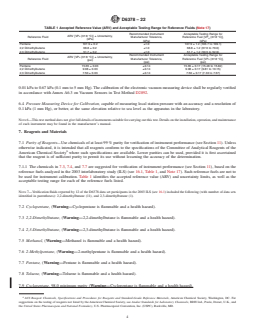
TABLE 1 Accepted Reference Value (ARV) and Acceptable Testing Range for Reference Fluids (Note 17)
Recommended Instrument Acceptable Testing Range for
ARV [VP (37.8 °C)] ± Uncertainty,
Reference Fluid Manufacturer Tolerance, Reference Fuel [VP (37.8 °C)],
(kPa)
(kPa) (kPa)
Pentane 107.9 ± 0.2 ±1.0 107.9 ± 1.2 (106.7 to 109.1)
2,2 Dimethylbutane 68.8 ± 0.2 ±1.0 68.8 ± 1.2 (67.6 to 70.0)
2,3 Dimethylbutane 51.7 ± 0.2 ±1.0 51.7 ± 1.2 (50.5 to 52.9)
Recommended Instrument Acceptable Testing Range for
ARV [VP (37.8 °C)] ± Uncertainty,
Reference Fluid Manufacturer Tolerance, Reference Fuel [VP (37.8 °C)],
(psi)
(psi) (psi)
Pentane 15.65 ± 0.03 ±0.14 15.65 ± 0.17 (15.48 to 15.82)
2,2 Dimethylbutane 9.98 ± 0.03 ±0.14 9.98 ± 0.17 (9.81 to 10.15)
2,3 Dimethylbutane 7.50 ± 0.03 ±0.14 7.50 ± 0.17 (7.33 to 7.67)
0.01 kPa to 0.67 kPa (0.1 mm to 5 mm Hg). The calibration of the electronic vacuum measuring device shall be regularly verified
in accordance with Annex A6.3 on Vacuum Sensors in Test Method D2892.
6.4 Pressure Measuring Device for Calibration, capable of measuring local station pressure with an accuracy and a resolution of
0.1 kPa (1 mm Hg), or better, at the same elevation relative to sea level as the apparatus in the laboratory.
NOTE 6—This test method does not give full details of instruments suitable for carrying out this test. Details on the installation, operation, and maintenance
of each instrument may be found in the manufacturer’s manual.
7. Reagents and Materials
7.1 Purity of Reagents—Use chemicals of at least 99 % purity for verification of instrument performance (see Section 11). Unless
otherwise indicated, it is intended that all reagents conform to the specifications of the Committee of Analytical Reagents of the
American Chemical Society where such specifications are available. Lower purities can be used, provided it is first ascertained
that the reagent is of sufficient purity to permit its use without lessening the accuracy of the determination.
7.1.1 The chemicals in 7.3, 7.4, and 7.7 are suggested for verification of instrument performance (see Section 11), based on the
reference fuels analyzed in the 2003 interlaboratory study (ILS) (see 16.1, Table 1, and Note 17). Such reference fuels are not to
be used for instrument calibration. Table 1 identifies the accepted reference value (ARV) and uncertainty limits, as well as the
acceptable testing range for each of the reference fuels listed.
NOTE 7—Verification fluids reported by 12 of the D6378 data set participants in the 2003 ILS (see 16.1) included the following (with number of data sets
identified in parentheses): 2,2-dimethylbutane (11), and 2,3-dimethylbutane (1).
7.2 Cyclopentane, (Warning—Cyclopentane is flammable and a health hazard).
7.3 2,2-Dimethylbutane, (Warning—2,2-dimethylbutane is flammable and a health hazard).
7.4 2,3-Dimethylbutane, (Warning—2,3-dimethylbutane is flammable and a health hazard).
7.5 Methanol, (Warning—Methanol is flammable and a health hazard).
7.6 2-Methylpentane, (Warning—2-methylpentane is flammable and a health hazard).
7.7 Pentane, (Warning—Pentane is flammable and a health hazard).
7.8 Toluene, (Warning—Toluene is flammable and a health hazard).
7.9 Cyclopentane, 98.0 minimum purity (Warning—Cyclopentane is flammable and a health hazard).
ACS Reagent Chemicals, Specifications and Procedures for Reagents and Standard-Grade Reference Materials, American Chemical Society, Washington, DC. For
suggestions on the testing of reagents not listed by the American Chemical Society, see Analar Standards for Laboratory Chemicals, BDH Ltd., Poole, Dorset, U.K., and
the United States Pharmacopeia and National Formulary, U.S. Pharmacopeial Convention, Inc. (USPC), Rockville, MD.
D6378 − 22
8. Sampling and Sample Introduction
8.1 General Requirements:
8.1.1 The extreme sensitivity of vapor pressure measurements to losses through evaporation and the resulting changes in
composition is such as to require the utmost precaution and the most meticulous care in the drawing and handling of samples.
8.1.2 Obtain a sample and test specimen in accordance with Practice D4057, D4177, D4306, D5842, or D5854 when appropriate,
except do not use the Sampling by Water Displacement section for fuels containing oxygenates.
8.1.2.1 For gasolines and gasoline-oxygenate blends, use either a 250 mL or 1 L (1 qt) sized container filled between 70 % and
80 % with sample. Samples in containers of other sizes, as prescribed in 8.1.2, may be used with the same ullage requirements,
but precision can be affected.
NOTE 8—Relative bias information when testing gasoline and gasoline-oxygenate blends using 250 mL or 1 L containers is given in Section 16.
8.1.2.2 For aviation turbine fuel, use a 100 mL size container filled to a minimum of 80 % with sample. However, samples in
containers of other sizes as prescribed in 8.1.2 may be used, with the same ullage requirement, but the precision can be affected.
8.1.3 Perform the VP determination, including the rinsing (see 9.3), on the first test specimen withdrawn from a sample container.
X
Do not use the remaining sample in the container for a second VP determination. If a second determination is necessary, obtain
X
a new sample. This condition does not apply when the sample is aviation turbine fuel.
NOTE 9—For gasoline and gasoline-oxygenate blends, the effect of taking more than one test specimen from the same sample container was evaluated
as part of the 2003 ILS (see 16.1). A precision effect was observed between the first and second replicates taken from the containers evaluated. The current
precision statements were derived using the first test specimen withdrawn from 250 mL and 1 L containers.
NOTE 10—For aviation turbine fuels the effect of taking more than one test specimen from the same sample container was evaluated as part of the 2007
ILS (see 16.1). No precision effect was observed between the first and second replicates taken from the 100 mL containers evaluated.
8.1.4 Protect samples from excessive temperatures prior to testing. This can be accomplished by storage in an appropriate ice bath
or refrigerator.
8.1.5 Do not test samples stored in leaky containers. Discard and obtain a new sample if leaks are detected.
8.2 Sampling Handling—This test method does not require pre-chilling of the sample and air saturation at ambient barometric
pressure in order to limit the variability in the dissolved gas content of the sample prior to measurement. This test method measures
the total sample vapor pressure at three V/L ratios (triple expansion) in order to estimate the partial pressure of dissolved gas and
hydrocarbon partial pressure using ideal gas calculations. This has been shown to be acceptable up to at least 5 bar (about 5
atmospheres) of gas saturation.
8.2.1 Samples may be introduced to the instrument over a wide variation of temperatures and pressures, provided the test specimen
remains as a single phase (that is, no separated liquid or gaseous phase). Experiments with temperatures between –10 °C to +50 °C
and ambient pressures up to 300 kPa have been found suitable with certain gasoline samples.
8.2.2 For gasoline and gasoline-oxygenate blends, the precision statement is based on sample introduction at ambient temperature
and pressure from either 250 mL or 1 L containers. For aviation turbine fuels, the precision is based on sample introduction at
ambient temperature and pressure from 100 mL containers. Precision may be affected with sample introduction under different
conditions, but such information has not been determined.
8.2.3 Sample pre-chilling or air saturation, or both, are not required, but sample chilling, air saturation, or degassing, or a
combination thereof, is acceptable, as it will have no significant effect on the result. This allows vapor pressure and distillation tests
to be conducted on the same sample.
8.2.4 Degassing and some hydrocarbon loss occurs during the air saturation step when the sample is supersaturated with dissolved
Supporting data have been filed at ASTM International Headquarters and may be obtained by requesting Research Report RR:D02-1609. Contact ASTM Customer
Service at service@astm.org.
D6378 − 22
gas relative to ambient barometric pressure. Hydrocarbon loss increases as saturation gas pressure increases. Sealed sample
systems are recommended for gas saturations greater than about 2 bar gas pressure (about 2 atmospheres or 30 psia).
8.2.5 For bottle samples, insert the sample introduction tube as close to the sample bottle bottom as practical.
8.2.6 Pressurized samples from a sealed sample system, pressurized floating pressure cylinders or equivalent may be used within
the pressure and temperature limits specified by the manufacturer for the instrument being used. Excessive extremes of pressure
and temperature may result in precision different than that measured under the conditions of ambient pressure and temperature used
to prepare the precision statement. The temperature and pressure of the sample system should be controlled so that only a single
phase liquid is in the sealed sample system during sample introduction.
8.2.6.1 Excessive cooling of samples that contain alcohols could result in phase separation (see 8.4), extraction of alcohol, and
a lower vapor pressure value being determined, unless the sample remains well mixed during sample introduction (that is,
introduction of a test specimen is representative of the composition once heated to test temperature). This can be prevented by not
cooling samples containing alcohols, prior to the vapor pressure determination.
8.2.6.2 Excessive cooling of samples may result in formation of ice or hydrates that may impair proper operation of the sample
system.
8.2.6.3 Excessive heating of samples may result in vapor formation, resulting in a higher or lower measured vapor pressure,
depending if vapor or remaining liquid phase is introduced, respectively.
8.3 Verification of Sample Container Filling—If the sample is contained in a transparent container, verify that the container is 70 %
to 80 % full by suitable means, such as by using a marked ruler or by comparing it to a like container that has the 70 % and 80 %
levels clearly marked. If the container is not transparent, unseal it and, using a suitable gauge, confirm that the sample volume
equals 70 % to 80 % of the container capacity (see Note 11). When the sample is aviation turbine fuel, verify that the container
is at least 80 % full prior to removal of the first specimen.
NOTE 11—For non-transparent containers, one way to confirm that the sample volume equals 70 % to 80 % of the container capacity is to use a dipstick
that has been pre-marked to indicate the 70 % and 80 % container capacities. The dipstick should be of such material that it shows wetting after being
immersed and withdrawn from the sample. To confirm the sample volume, insert the dipstick into the sample container so that it touches the bottom of
the container at a perpendicular angle before removing the dipstick.
8.3.1 Discard the sample if the container is filled to less than 70 %, by volume, of the container capacity.
8.3.2 If the container is more than 80 % by volume full, pour out enough sample to bring the container contents within the 70 %
to 80 % by volume range. Do not return any sample to the container once it has been withdrawn.
8.3.3 Reseal the container, if opened.
8.4 Verification of Single Phase Sample—After drawing the test specimens and transferring them into the instrument for analysis,
check the remaining sample for phase separation. If the sample is contained in a transparent container, this observation can be made
prior to sample transfer. If the sample is contained in a non-transparent container, shake the sample thoroughly and immediately
pour a portion of the remaining sample into a glass container and observe for evidence of phase separation. A hazy appearance
is to be carefully distinguished from separation into distinct phases. If the sample separates into two distinct phases with a
discernible common boundary, then discard the test and the sample. If the sample has a hazy appearance, but does not have two
distinct phases, then phase separation has not occurred. The test is valid, but the precision and bias in Section 16 may not apply
(see 15.2). This verification procedure does not apply when the sample is aviation turbine fuel.
9. Preparation of Apparatus
9.1 Prepare the instrument for operation in accordance with the manufacturer’s instructions.
9.2 Rinse the measuring chamber, if necessary, with a solvent. Acetone has a sufficiently low vapor pressure and can be used
successfully. Rinsing is performed by drawing the solvent into the chamber by the piston and expelling the solvent into the waste
container.
D6378 − 22
9.3 To avoid contamination of the test specimen with the previous sample or the solvent, rinse the measuring chamber a minimum
of three times with the sample to be tested. Fill the measuring chamber with sample to at least half the total volume of the chamber
for each rinse. This rinsing procedure shall always be carried out immediately before the measuring procedure (see 13.4).
9.4 If a syringe is used for introduction of the test specimen, ensure the syringe is at the same temperature conditions as the sample.
Avoid water contamination of the syringe reservoir by suitably sealing the syringe during the cooling process.
10. Calibration
10.1 Pressure Transducer:
10.1.1 Check the calibration of the transducer as indicated from the verification of instrument performance (see Section 11) and
quality control checks (see Section 12). The calibration of the transducer is checked using two reference points: zero pressure
(<0.1 kPa) and the ambient barometric pressure.
NOTE 12—Calibration frequency of the pressure transducer may vary with instrument type and frequency of use. A calibration check of the pressure
transducer at least once every six months is recommended.
10.1.2 Connect a McLeod gauge or a calibrated electronic vacuum measuring device to the vacuum source in line with the
measuring chamber (see Note 13). Apply vacuum to the measuring chamber. When the vacuum measuring device registers a
pressure less than 0.1 kPa (0.8 mm Hg), adjust the transducer control to zero or to the actual reading on the vacuum measuring
device as dictated by the instrument design or manufacturer’s instructions.
NOTE 13—Refer to Annex A6.3 on Vacuum Sensors in Test Method D2892 for further details concerning the calibration of electronic vacuum measuring
devices and proper maintenance of McLeod gauges.
10.1.3 Open the measuring chamber of the apparatus to atmospheric pressure and observe the corresponding pressure value of the
transducer. Ensure that the apparatus is set to display the TP and not a calculated or corrected value. Compare this pressure value
X
with the pressure obtained from a mercury barometer, or equivalent, as the pressure reference standard. The pressure measuring
device shall measure the local station pressure at the same elevation as the apparatus in the laboratory at the time of pressure
comparison.
NOTE 14—Many aneroid barometers, such as those used at weather stations and airports, are precorrected to give sea level readings. These shall not be
used for calibration of the apparatus.
10.1.4 Repeat 10.1.2 and 10.1.3 until the zero and barometric pressures read correctly without further adjustments.
10.2 Temperature Sensor—Verify the calibration of the platinum resistance thermometer used to monitor the measuring chamber
temperature at least every six months against a nationally traceable thermometer, such as one that is traceable to National Institute
of Standards and Technology (NIST) or to na
...