

ASTM D5842-23
(Practice)Standard Practice for Sampling and Handling of Fuels for Volatility Measurement
General Information
- Abstract
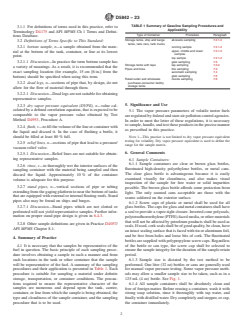
SIGNIFICANCE AND USE
5.1 The vapor pressure parameters of volatile motor fuels are regulated by federal and state air pollution control agencies. In order to meet the letter of these regulations, it is necessary to sample, handle, and test these products in the precise manner as prescribed in this practice.
Note 1: This practice is not limited to dry vapor pressure equivalent testing for volatility. Dry vapor pressure equivalent is used to define the range for the sample matrix.
SCOPE
1.1 This practice covers procedures and equipment for obtaining, mixing, and handling representative samples of volatile fuels for the purpose of testing for compliance with the standards set forth for volatility related measurements applicable to light fuels.
1.2 The applicable dry vapor pressure equivalent range of this practice is 13 kPa to 110 kPa (2 psia to 16 psia).
1.3 This practice is applicable to the sampling, mixing, and handling of reformulated fuels including those containing oxygenates. This practice is not applicable to crude oil. For the sampling of crude oil, refer to Practice D4057/API MPMS Chapter 8.1, Practice D4177/API MPMS Chapter 8.2, and Practice D8009/API MPMS Chapter 8.5.
1.4 The values stated in SI units are to be regarded as the standard except in some cases where drawings may show inch-pound measurements, which are customary for that equipment.
1.5 This standard does not purport to address all of the safety concerns, if any, associated with its use. It is the responsibility of the user of this standard to establish appropriate safety, health, and environmental practices and determine the applicability of regulatory limitations prior to use.
1.6 This international standard was developed in accordance with internationally recognized principles on standardization established in the Decision on Principles for the Development of International Standards, Guides and Recommendations issued by the World Trade Organization Technical Barriers to Trade (TBT) Committee.
- Status
- Published
- Publication Date
- 30-Sep-2023
- Technical Committee
- D02 - Petroleum Products, Liquid Fuels, and Lubricants
- Drafting Committee
- D02.02 - Hydrocarbon Measurement for Custody Transfer (Joint ASTM-API)
Buy Documents
ASTM D5842-23 - Standard Practice for Sampling and Handling of Fuels for Volatility Measurement
REDLINE ASTM D5842-23 - Standard Practice for Sampling and Handling of Fuels for Volatility Measurement
Overview
ASTM D5842-23: Standard Practice for Sampling and Handling of Fuels for Volatility Measurement establishes procedures and equipment requirements for obtaining, mixing, and handling representative samples of volatile fuels. Developed by ASTM International and the American Petroleum Institute (API), this standard ensures fuel samples used for vapor pressure and volatility measurements satisfy regulatory and quality compliance, especially as these parameters are often mandated by federal and state air pollution control agencies. The practice applies to light fuels, including reformulated fuels containing oxygenates, within the dry vapor pressure equivalent (DVPE) range of 13 kPa to 110 kPa (2 psia to 16 psia). Crude oil sampling is specifically excluded.
Key Topics
Representative Sample Collection
Outlines precise techniques for collecting samples from:- Storage tanks (top, bottom, mid-level, and all-levels sampling)
- Tank trucks, tank cars, and tank ships or barges
- Pipelines and filling lines (including automatic sampling)
- Retail fuel dispensers (nozzle sampling)
Sample Integrity and Handling
Emphasizes:- Use of clean, vapor-tight containers (glass, fluorinated HDPE, or approved metal cans)
- Rinsing and flushing containers with product before sampling
- Consistent filling volumes (typically 70% - 85% of container capacity)
- Immediate cooling to preserve vapor characteristics
Applicable Fuel Types and Limits
- Focuses on gasoline, reformulated fuels, and gasoline-oxygenate blends
- Stipulates exclusions and directs crude oil sampling to other ASTM/API standards
Safety and Compliance
- Calls for strict adherence to applicable health, safety, and environmental practices during fuel sample collection, handling, and transport
- Includes guidance for proper labeling and documentation of samples
Applications
This practice is widely used in the petrochemical and fuel supply industries to facilitate:
Regulatory Compliance
Ensures that volatile fuel products meet the vapor pressure limits set by air quality and environmental agencies, protecting air quality and public health.Quality Assurance
Standardizes sample collection to improve the reliability and accuracy of laboratory volatility measurements, reducing the possibility of non-representative or contaminated samples that can lead to false compliance conclusions.Supply Chain Integrity
Supports custody transfer, quality disputes, and fuel certification by providing repeatable sampling methodologies for tank farms, pipelines, refineries, and retail fuel outlets.Laboratory Analysis Preparation
Details Precise handling procedures to preserve volatile constituents and prevent evaporation losses prior to testing using methods such as ASTM D4953.
Related Standards
- ASTM D4057 / API MPMS Chapter 8.1: Manual Sampling of Petroleum and Petroleum Products
- ASTM D4177 / API MPMS Chapter 8.2: Automatic Sampling of Petroleum and Petroleum Products
- ASTM D4953: Vapor Pressure of Gasoline and Gasoline-Oxygenate Blends (Dry Method)
- ASTM D5854 / API MPMS Chapter 8.3: Mixing and Handling of Liquid Samples of Petroleum and Petroleum Products
- ASTM D7717: Preparing Volumetric Blends of Denatured Fuel Ethanol and Gasoline Blendstocks for Laboratory Analysis
- ASTM D8009 / API MPMS Chapter 8.5: Manual Piston Cylinder Sampling for Volatile Crude Oils, Condensates, and Liquid Petroleum Products
Practical Value
Implementing ASTM D5842-23 provides organizations with standard procedures that minimize sampling errors, protect sample representativeness, and ensure compliance with environmental and product quality mandates. By following these established practices, laboratories and fuel handlers can be confident in the consistency and accuracy of volatility testing results-essential for regulatory reporting, fuel blending operations, and overall product integrity in the petroleum industry.
Relations
- Replaces
ASTM D5842-19 - Standard Practice for Sampling and Handling of Fuels for Volatility Measurement - Effective Date
- 01-Oct-2023
- Effective Date
- 01-Oct-2023
- Effective Date
- 01-Oct-2023
- Effective Date
- 01-Oct-2023
- Effective Date
- 01-Oct-2023
- Effective Date
- 01-Oct-2023
- Effective Date
- 01-Oct-2023
- Effective Date
- 01-Oct-2023
- Effective Date
- 01-Oct-2023
- Effective Date
- 01-Oct-2023
- Referred By
ASTM D4177-22e1 - Standard Practice for Automatic Sampling of Petroleum and Petroleum Products - Effective Date
- 01-Oct-2023
- Effective Date
- 01-Oct-2023
- Effective Date
- 01-Oct-2023
- Effective Date
- 01-Oct-2023
- Effective Date
- 01-Oct-2023
Buy Documents
ASTM D5842-23 - Standard Practice for Sampling and Handling of Fuels for Volatility Measurement
REDLINE ASTM D5842-23 - Standard Practice for Sampling and Handling of Fuels for Volatility Measurement
Get Certified
Connect with accredited certification bodies for this standard

Element Materials Technology
Materials testing and product certification.

ABS Group Brazil
ABS Group certification services in Brazil.

ABS Quality Evaluations Inc.
American Bureau of Shipping quality certification.
Sponsored listings
Frequently Asked Questions
ASTM D5842-23 is a standard published by ASTM International. Its full title is "Standard Practice for Sampling and Handling of Fuels for Volatility Measurement". This standard covers: SIGNIFICANCE AND USE 5.1 The vapor pressure parameters of volatile motor fuels are regulated by federal and state air pollution control agencies. In order to meet the letter of these regulations, it is necessary to sample, handle, and test these products in the precise manner as prescribed in this practice. Note 1: This practice is not limited to dry vapor pressure equivalent testing for volatility. Dry vapor pressure equivalent is used to define the range for the sample matrix. SCOPE 1.1 This practice covers procedures and equipment for obtaining, mixing, and handling representative samples of volatile fuels for the purpose of testing for compliance with the standards set forth for volatility related measurements applicable to light fuels. 1.2 The applicable dry vapor pressure equivalent range of this practice is 13 kPa to 110 kPa (2 psia to 16 psia). 1.3 This practice is applicable to the sampling, mixing, and handling of reformulated fuels including those containing oxygenates. This practice is not applicable to crude oil. For the sampling of crude oil, refer to Practice D4057/API MPMS Chapter 8.1, Practice D4177/API MPMS Chapter 8.2, and Practice D8009/API MPMS Chapter 8.5. 1.4 The values stated in SI units are to be regarded as the standard except in some cases where drawings may show inch-pound measurements, which are customary for that equipment. 1.5 This standard does not purport to address all of the safety concerns, if any, associated with its use. It is the responsibility of the user of this standard to establish appropriate safety, health, and environmental practices and determine the applicability of regulatory limitations prior to use. 1.6 This international standard was developed in accordance with internationally recognized principles on standardization established in the Decision on Principles for the Development of International Standards, Guides and Recommendations issued by the World Trade Organization Technical Barriers to Trade (TBT) Committee.
SIGNIFICANCE AND USE 5.1 The vapor pressure parameters of volatile motor fuels are regulated by federal and state air pollution control agencies. In order to meet the letter of these regulations, it is necessary to sample, handle, and test these products in the precise manner as prescribed in this practice. Note 1: This practice is not limited to dry vapor pressure equivalent testing for volatility. Dry vapor pressure equivalent is used to define the range for the sample matrix. SCOPE 1.1 This practice covers procedures and equipment for obtaining, mixing, and handling representative samples of volatile fuels for the purpose of testing for compliance with the standards set forth for volatility related measurements applicable to light fuels. 1.2 The applicable dry vapor pressure equivalent range of this practice is 13 kPa to 110 kPa (2 psia to 16 psia). 1.3 This practice is applicable to the sampling, mixing, and handling of reformulated fuels including those containing oxygenates. This practice is not applicable to crude oil. For the sampling of crude oil, refer to Practice D4057/API MPMS Chapter 8.1, Practice D4177/API MPMS Chapter 8.2, and Practice D8009/API MPMS Chapter 8.5. 1.4 The values stated in SI units are to be regarded as the standard except in some cases where drawings may show inch-pound measurements, which are customary for that equipment. 1.5 This standard does not purport to address all of the safety concerns, if any, associated with its use. It is the responsibility of the user of this standard to establish appropriate safety, health, and environmental practices and determine the applicability of regulatory limitations prior to use. 1.6 This international standard was developed in accordance with internationally recognized principles on standardization established in the Decision on Principles for the Development of International Standards, Guides and Recommendations issued by the World Trade Organization Technical Barriers to Trade (TBT) Committee.
ASTM D5842-23 is classified under the following ICS (International Classification for Standards) categories: 75.160.20 - Liquid fuels. The ICS classification helps identify the subject area and facilitates finding related standards.
ASTM D5842-23 has the following relationships with other standards: It is inter standard links to ASTM D5842-19, ASTM D7794-21, ASTM D4814-23a, ASTM D396-21, ASTM D7343-20, ASTM D3764-23, ASTM D8340-22, ASTM D8076-21b, ASTM D2885-21, ASTM D86-23ae1, ASTM D4177-22e1, ASTM D6378-22, ASTM D5854-19a, ASTM D6122-23, ASTM D6377-20. Understanding these relationships helps ensure you are using the most current and applicable version of the standard.
ASTM D5842-23 is available in PDF format for immediate download after purchase. The document can be added to your cart and obtained through the secure checkout process. Digital delivery ensures instant access to the complete standard document.
Standards Content (Sample)
This international standard was developed in accordance with internationally recognized principles on standardization established in the Decision on Principles for the
Development of International Standards, Guides and Recommendations issued by the World Trade Organization Technical Barriers to Trade (TBT) Committee.
Designation: D5842 − 23
Manual of Petroleum Measurement Standards (MPMS) Chapter 8.4
Standard Practice for
Sampling and Handling of Fuels for Volatility Measurement
This standard is issued under the fixed designation D5842; the number immediately following the designation indicates the year of
original adoption or, in the case of revision, the year of last revision. A number in parentheses indicates the year of last reapproval. A
superscript epsilon (´) indicates an editorial change since the last revision or reapproval.
1. Scope* 2. Referenced Documents
2.1 ASTM Standards:
1.1 This practice covers procedures and equipment for
D4057 Practice for Manual Sampling of Petroleum and
obtaining, mixing, and handling representative samples of
Petroleum Products (API MPMS Chapter 8.1)
volatile fuels for the purpose of testing for compliance with the
D4175 Terminology Relating to Petroleum Products, Liquid
standards set forth for volatility related measurements appli-
Fuels, and Lubricants
cable to light fuels.
D4177 Practice for Automatic Sampling of Petroleum and
1.2 The applicable dry vapor pressure equivalent range of
Petroleum Products (API MPMS Chapter 8.2)
this practice is 13 kPa to 110 kPa (2 psia to 16 psia).
D4953 Test Method for Vapor Pressure of Gasoline and
Gasoline-Oxygenate Blends (Dry Method)
1.3 This practice is applicable to the sampling, mixing, and
D5854 Practice for Mixing and Handling of Liquid Samples
handling of reformulated fuels including those containing
of Petroleum and Petroleum Products (API MPMS Chap-
oxygenates. This practice is not applicable to crude oil. For the
ter 8.3)
sampling of crude oil, refer to Practice D4057/API MPMS
D7717 Practice for Preparing Volumetric Blends of Dena-
Chapter 8.1, Practice D4177/API MPMS Chapter 8.2, and
tured Fuel Ethanol and Gasoline Blendstocks for Labora-
Practice D8009/API MPMS Chapter 8.5.
tory Analysis
1.4 The values stated in SI units are to be regarded as the
D8009 Practice for Manual Piston Cylinder Sampling for
standard except in some cases where drawings may show
Volatile Crude Oils, Condensates, and Liquid Petroleum
inch-pound measurements, which are customary for that equip-
Products (API MPMS Chapter 8.5)
ment.
2.2 API Standards:
MPMS Chapter 1 Terms and Definitions Database
1.5 This standard does not purport to address all of the
MPMS Chapter 8.1—Practice for Manual Sampling of Pe-
safety concerns, if any, associated with its use. It is the
troleum and Petroleum Products (ASTM Practice D4057)
responsibility of the user of this standard to establish appro-
MPMS Chapter 8.2—Practice for Automatic Sampling of
priate safety, health, and environmental practices and deter-
Petroleum and Petroleum Products (ASTM Practice
mine the applicability of regulatory limitations prior to use.
D4177)
1.6 This international standard was developed in accor-
MPMS Chapter 8.3—Practice for Mixing and Handling of
dance with internationally recognized principles on standard-
Liquid Samples of Petroleum and Petroleum Products
ization established in the Decision on Principles for the
(ASTM Practice D5854)
Development of International Standards, Guides and Recom-
MPMS Chapter 8.5—Practice for Manual Piston Cylinder
mendations issued by the World Trade Organization Technical
Sampling for Volatile Crude Oils, Condensates, and Liq-
Barriers to Trade (TBT) Committee.
uid Petroleum Products (ASTM Practice D8009)
3. Terminology
This practice is under the jurisdiction of ASTM Committee D02 on Petroleum
3.1 Definitions:
Products, Liquid Fuels, and Lubricants and the API Committee on Petroleum
Measurement, and is the direct responsibility of Subcommittee D02.02 /COMQ the
joint ASTM-API Committee on Hydrocarbon Measurement for Custody Transfer
(Joint ASTM-API). This practice has been approved by the sponsoring committees For referenced ASTM standards, visit the ASTM website, www.astm.org, or
and accepted by the Cooperating Societies in accordance with established proce- contact ASTM Customer Service at service@astm.org. For Annual Book of ASTM
dures. This practice was issued as a joint ASTM-API standard in 1995. Standards volume information, refer to the standard’s Document Summary page on
Current edition approved Oct. 1, 2023. Published February 2024. Originally the ASTM website.
approved in 1995. Last previous edition approved in 2019 as D5842 – 19. DOI: Available from American Petroleum Institute (API), 1220 L. St., NW,
10.1520/D5842-23. Washington, DC 20005-4070, http://www.api.org.
*A Summary of Changes section appears at the end of this standard
© Jointly copyrighted by ASTM International, 100 Barr Harbor Drive, PO Box C700, West Conshohocken, PA 19428-2959, USA and the American Petroleum Institute (API), 1220 L Street NW, Washington DC 20005, USA
D5842 − 23
TABLE 1 Summary of Gasoline Sampling Procedures and
3.1.1 For definitions of terms used in this practice, refer to
Applicability
Terminology D4175 and API MPMS Ch 1 Terms and Defini-
Type of Container Procedure Paragraph
tions Database.
Storage tanks, ship and barge all-levels sampling 7.2.1.2
3.2 Definitions of Terms Specific to This Standard:
tanks, tank cars, tank trucks
3.2.1 bottom sample, n—a sample obtained from the mate-
running sample 7.2.1.2
upper, middle and lower 7.2.1.2
rial at the bottom of the tank, container, or line at its lowest
samples
point.
top sample 7.2.1.2
grab sampling 7.5
3.2.1.1 Discussion—In practice the term bottom sample has
Storage tanks with taps tap sampling 7.2.2
a variety of meanings. As a result, it is recommended that the
Pipes and lines line sampling 7.3
exact sampling location (for example, 15 cm [6 in.] from the
automatic sampling 7.4
grab sampling 7.5
bottom) should be specified when using this term.
Retail outlet and wholesale nozzle sampling 7.6
purchaser-consumer facility
3.2.2 dead legs, n—sections of pipe that, by design, do not
storage tanks
allow for the flow of material through them.
3.2.2.1 Discussion—Dead legs are not suitable for obtaining
representative samples.
5. Significance and Use
3.2.3 dry vapor pressure equivalent (DVPE), n—value cal-
culated by a defined correlation equation, that is expected to be
5.1 The vapor pressure parameters of volatile motor fuels
comparable to the vapor pressure value obtained by Test
are regulated by federal and state air pollution control agencies.
Method D4953, Procedure A.
In order to meet the letter of these regulations, it is necessary
to sample, handle, and test these products in the precise manner
3.2.4 flush, v—to fill the volume of the line or container with
as prescribed in this practice.
the liquid and discard it. In the case of flushing a bottle, it
should be filled at least 80 % full.
NOTE 1—This practice is not limited to dry vapor pressure equivalent
testing for volatility. Dry vapor pressure equivalent is used to define the
3.2.5 relief lines, n—sections of pipe that lead to a pressure/
range for the sample matrix.
vacuum relief valve.
6. General Comments
3.2.5.1 Discussion—Relief lines are not suitable for obtain-
ing representative samples.
6.1 Sample Containers:
6.1.1 Sample containers are clear or brown glass bottles,
3.2.6 rinse, v—to thoroughly wet the interior surfaces of the
fluorinated high-density polyethylene bottles, or metal cans.
sampling container with the material being sampled and then
The clear glass bottle is advantageous because it is easily
discard the liquid. Approximately 10 % of the container
examined visually for cleanliness, and also makes visual
volume is adequate for this purpose.
inspection of the sample for free water or solid impurities
3.2.7 stand pipes, n—vertical sections of pipe or tubing
possible. The brown glass bottle affords some protection from
extending from the gaging platform to near the bottom of tanks
light. The only seamed cans acceptable are those with the
that are equipped with external or internal floating roofs. Stand
seams soldered on the exterior surface.
pipes also may be found on ships and barges.
6.1.2 Screw caps of plastic or metal shall be used for all
3.2.7.1 Discussion—Stand pipes which are not slotted or
glass bottles. The caps for glass and metal containers shall have
perforated will not yield representative samples. Further infor-
a seal to provide a vapor-tight closure. Inverted cone polyseals,
mation on proper stand pipe design is given in 6.4.3.
polytetrafluoroethylene (PTFE)-faced media, or other materials
that will not be affected by petroleum products shall be used as
3.2.8 Other sample definitions are given in Practice D4057/
seals. If used, cork seals shall be of good quality, be clean, have
API MPMS Chapter 8.1.
an intact sealing surface that is faced with tin or aluminum foil,
and be free from holes and loose bits of cork. The fluorinated
4. Summary of Practice
bottles are supplied with polypropylene screw caps. Regardless
4.1 It is necessary that the samples be representative of the of the bottle or can type, the screw cap shall be selected to
fuel in question. The basic principle of each sampling proce- ensure the sample integrity for the duration of the sample retain
dure involves obtaining a sample in such a manner and from period.
such locations in the tank or other container that the sample 6.1.3 Sample size is dictated by the test method to be
will be representative of the fuel. A summary of the sampling performed. One litre (32 oz) bottles or cans are generally used
procedures and their application is presented in Table 1. Each for manual vapor pressure testing. Some vapor pressure meth-
procedure is suitable for sampling a material under definite ods may allow a smaller sample size to be taken, such as in a
storage, transportation, or container conditions. The precau- 125 mL (4 oz) bottle. See Fig. 1.
tions required to ensure the representative character of the 6.1.4 All sample containers shall be absolutely clean and
samples are numerous and depend upon the tank, carrier, free of foreign matter. Before reusing a container, wash it with
container, or line from which the sample is being obtained, the strong soap solution, rinse it thoroughly with tap water, and
type and cleanliness of the sample container, and the sampling finally with distilled water. Dry completely and stopper, or cap,
procedure that is to be used. the container immediately.
D5842 − 23
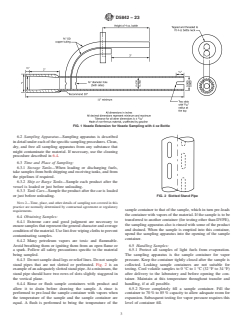
FIG. 1 Nozzle Extension for Nozzle Sampling with 4 oz Bottle
6.2 Sampling Apparatus—Sampling apparatus is described
in detail under each of the specific sampling procedures. Clean,
dry, and free all sampling apparatus from any substance that
might contaminate the material. If necessary, use the cleaning
procedure described in 6.4.
6.3 Time and Place of Sampling:
6.3.1 Storage Tanks—When loading or discharging fuels,
take samples from both shipping and receiving tanks, and from
the pipelines if required.
6.3.2 Ship or Barge Tanks—Sample each product after the
vessel is loaded or just before unloading.
6.3.3 Tank Cars—Sample the product after the car is loaded
FIG. 2 Slotted Stand Pipe
or just before unloading.
NOTE 2—Time, place, and other details of sampling not covered in this
practice are normally determined by contractual agreement or regulatory
sample container to that of the sample, which in turn pre-loads
requirements.
the container with vapors of the material. If the sample is to be
6.4 Obtaining Samples:
transferred to another container (for testing other than DVPE),
6.4.1 Extreme care and good judgment are necessary to
the sampling apparatus also is rinsed with some of the product
ensure samples that represent the general character and average
and drained. When the sample is emptied into this container,
condition of the material. Use lint-free wiping cloths to prevent
upend the sampling apparatus into the opening of the sample
contaminating samples.
container.
6.4.2 Many petroleum vapors are toxic and flammable.
Avoid breathing them or igniting them from an open flame or 6.5 Handling Samples:
a spark. Follow all safety precautions specific to the material 6.5.1 Protect all samples of light fuels from evaporation.
being sampled. The sampling apparatus is the sample container for vapor
6.4.3 Do not sample dead legs or relief lines. Do not sample pressure. Keep the container tightly closed after the sample is
stand pipes that are not slotted or perforated. Fig. 2 is an collected. Leaking sample containers are not suitable for
example of an adequately slotted stand pipe. At a minimum, the testing. Cool volatile samples to 0 °C to 1 °C (32 °F to 34 °F)
stand pipe should have two rows of slots slightly staggered in after delivery to the laboratory and before opening the con-
the vertical plane. tainer. Maintain at this temperature throughout transfer and
6.4.4 Rinse or flush sample containers with product and handling, if at all possible.
allow it to drain before drawing the sample. A rinse is 6.5.2 Never completely fill a sample container. Fill the
performed to pre-load the sample container with vapors when container to 70 % to 85 % capacity to allow adequate room for
the temperature of the sample and the sample container are expansion. Subsequent testing for vapor pressure requires this
equal. A flush is performed to bring the temperature of the level of container fill.
...
This document is not an ASTM standard and is intended only to provide the user of an ASTM standard an indication of what changes have been made to the previous version. Because
it may not be technically possible to adequately depict all changes accurately, ASTM recommends that users consult prior editions as appropriate. In all cases only the current version
of the standard as published by ASTM is to be considered the official document.
Designation: D5842 − 19 D5842 − 23
Manual of Petroleum Measurement Standards (MPMS) Chapter 8.4
Standard Practice for
Sampling and Handling of Fuels for Volatility Measurement
This standard is issued under the fixed designation D5842; the number immediately following the designation indicates the year of
original adoption or, in the case of revision, the year of last revision. A number in parentheses indicates the year of last reapproval. A
superscript epsilon (´) indicates an editorial change since the last revision or reapproval.
1. Scope*
1.1 This practice covers procedures and equipment for obtaining, mixing, and handling representative samples of volatile fuels for
the purpose of testing for compliance with the standards set forth for volatility related measurements applicable to light fuels.
1.2 The applicable dry vapor pressure equivalent range of this practice is 13 kPa to 110 kPa (2 psia to 16 psia).
1.3 This practice is applicable to the sampling, mixing, and handling of reformulated fuels including those containing oxygenates.
This practice is not applicable to crude oil. For the sampling of crude oil, refer to Practice D4057/API MPMS Chapter 8.1, Practice
D4177/API MPMS Chapter 8.2, and Practice D8009/API MPMS Chapter 8.5.
1.4 The values stated in SI units are to be regarded as the standard except in some cases where drawings may show inch-pound
measurements, which are customary for that equipment.
1.5 This standard does not purport to address all of the safety concerns, if any, associated with its use. It is the responsibility
of the user of this standard to establish appropriate safety, health, and environmental practices and determine the applicability of
regulatory limitations prior to use.
1.6 This international standard was developed in accordance with internationally recognized principles on standardization
established in the Decision on Principles for the Development of International Standards, Guides and Recommendations issued
by the World Trade Organization Technical Barriers to Trade (TBT) Committee.
2. Referenced Documents
2.1 ASTM Standards:
D4057 Practice for Manual Sampling of Petroleum and Petroleum Products (API MPMS Chapter 8.1)
D4175 Terminology Relating to Petroleum Products, Liquid Fuels, and Lubricants
D4177 Practice for Automatic Sampling of Petroleum and Petroleum Products (API MPMS Chapter 8.2)
D4953 Test Method for Vapor Pressure of Gasoline and Gasoline-Oxygenate Blends (Dry Method)
D5854 Practice for Mixing and Handling of Liquid Samples of Petroleum and Petroleum Products (API MPMS Chapter 8.3)
D7717 Practice for Preparing Volumetric Blends of Denatured Fuel Ethanol and Gasoline Blendstocks for Laboratory Analysis
This practice is under the jurisdiction of ASTM Committee D02 on Petroleum Products, Liquid Fuels, and Lubricants and the API Committee on Petroleum Measurement,
and is the direct responsibility of Subcommittee D02.02 /COMQ the joint ASTM-API Committee on Hydrocarbon Measurement for Custody Transfer (Joint ASTM-API).
This practice has been approved by the sponsoring committees and accepted by the Cooperating Societies in accordance with established procedures. This practice was issued
as a joint ASTM-API standard in 1995.
Current edition approved Nov. 1, 2019Oct. 1, 2023. Published December 2019February 2024. Originally approved in 1995. Last previous edition approved in 20172019
as D5842 – 17.D5842 – 19. DOI: 10.1520/D5842-19.10.1520/D5842-23.
For referenced ASTM standards, visit the ASTM website, www.astm.org, or contact ASTM Customer Service at service@astm.org. For Annual Book of ASTM Standards
volume information, refer to the standard’s Document Summary page on the ASTM website.
*A Summary of Changes section appears at the end of this standard
© Jointly copyrighted by ASTM International, 100 Barr Harbor Drive, PO Box C700, West Conshohocken, PA 19428-2959, USA and the American Petroleum Institute (API), 1220 L Street NW, Washington DC 20005, USA
D5842 − 23
D8009 Practice for Manual Piston Cylinder Sampling for Volatile Crude Oils, Condensates, and Liquid Petroleum Products (API
MPMS Chapter 8.5)
2.2 API Standards:
MPMS Chapter 1 Terms and Definitions Database
MPMS Chapter 8.1—Practice for Manual Sampling of Petroleum and Petroleum Products (ASTM Practice D4057)
MPMS Chapter 8.2—Practice for Automatic Sampling of Petroleum and Petroleum Products (ASTM Practice D4177)
MPMS Chapter 8.3—Practice for Mixing and Handling of Liquid Samples of Petroleum and Petroleum Products (ASTM
Practice D5854)
MPMS Chapter 8.5—Practice for Manual Piston Cylinder Sampling for Volatile Crude Oils, Condensates, and Liquid Petroleum
Products (ASTM Practice D8009)
3. Terminology
3.1 Definitions:
3.1.1 For definitions of terms used in this practice, refer to Terminology D4175 and API MPMS Ch 1 Terms and Definitions
Database.
3.2 Definitions of Terms Specific to This Standard:
3.2.1 bottom sample, n—a sample obtained from the material at the bottom of the tank, container, or line at its lowest point.
3.2.1.1 Discussion—
In practice the term bottom sample has a variety of meanings. As a result, it is recommended that the exact sampling location (for
example, 15 cm [6 in.] from the bottom) should be specified when using this term.
3.2.2 dead legs, n—sections of pipe that, by design, do not allow for the flow of material through them.
3.2.2.1 Discussion—
Dead legs are not suitable for obtaining representative samples.
3.2.3 dry vapor pressure equivalent (DVPE), n—value calculated by a defined correlation equation, that is expected to be
comparable to the vapor pressure value obtained by Test Method D4953, Procedure A.
3.2.4 flush, v—to fill the volume of the line or container with the liquid and discard it. In the case of flushing a bottle, it should
be filled at least 80 % full.
3.2.5 relief lines, n—sections of pipe that lead to a pressure/vacuum relief valve.
3.2.5.1 Discussion—
Relief lines are not suitable for obtaining representative samples.
3.2.6 rinse, v—to thoroughly wet the interior surfaces of the sampling container with the material being sampled and then discard
the liquid. Approximately 10 % of the container volume is adequate for this purpose.
3.2.7 stand pipes, n—vertical sections of pipe or tubing extending from the gaging platform to near the bottom of tanks that are
equipped with external or internal floating roofs. Stand pipes also may be found on ships and barges.
3.2.7.1 Discussion—
Stand pipes which are not slotted or perforated will not yield representative samples. Further information on proper stand pipe
design is given in 6.4.3.
3.2.8 Other sample definitions are given in Practice D4057/API MPMS Chapter 8.1.
4. Summary of Practice
4.1 It is necessary that the samples be representative of the fuel in question. The basic principle of each sampling procedure
involves obtaining a sample in such a manner and from such locations in the tank or other container that the sample will be
representative of the fuel. A summary of the sampling procedures and their application is presented in Table 1. Each procedure is
suitable for sampling a material under definite storage, transportation, or container conditions. The precautions required to ensure
Available from American Petroleum Institute (API), 1220 L. St., NW, Washington, DC 20005-4070, http://www.api.org.
D5842 − 23
TABLE 1 Summary of Gasoline Sampling Procedures and
Applicability
Type of Container Procedure Paragraph
Storage tanks, ship and barge all-levels sampling 7.2.1.2
tanks, tank cars, tank trucks
running sample 7.2.1.2
upper, middle and lower 7.2.1.2
samples
top sample 7.2.1.2
grab sampling 7.5
Storage tanks with taps tap sampling 7.2.2
Pipes and lines line sampling 7.3
automatic sampling 7.4
grab sampling 7.5
Retail outlet and wholesale nozzle sampling 7.6
purchaser-consumer facility
storage tanks
the representative character of the samples are numerous and depend upon the tank, carrier, container, or line from which the
sample is being obtained, the type and cleanliness of the sample container, and the sampling procedure that is to be used.
5. Significance and Use
5.1 The vapor pressure parameters of volatile motor fuels are regulated by federal and state air pollution control agencies. In order
to meet the letter of these regulations, it is necessary to sample, handle, and test these products in the precise manner as prescribed
in this practice.
NOTE 1—This practice is not limited to dry vapor pressure equivalent testing for volatility. Dry vapor pressure equivalent is used to define the range for
the sample matrix.
6. General Comments
6.1 Sample Containers:
6.1.1 Sample containers are clear or brown glass bottles, fluorinated high-density polyethylene bottles, or metal cans. The clear
glass bottle is advantageous because it is easily examined visually for cleanliness, and also makes visual inspection of the sample
for free water or solid impurities possible. The brown glass bottle affords some protection from light. The only seamed cans
acceptable are those with the seams soldered on the exterior surface.
6.1.2 Screw caps of plastic or metal shall be used for all glass bottles. The caps for glass and metal containers shall have a seal
to provide a vapor-tight closure. Inverted cone polyseals, polytetrafluoroethylene (PTFE)-faced media, or other materials that will
not be affected by petroleum products shall be used as seals. If used, cork seals shall be of good quality, be clean, have an intact
sealing surface that is faced with tin or aluminum foil, and be free from holes and loose bits of cork. The fluorinated bottles are
supplied with polypropylene screw caps. Regardless of the bottle or can type, the screw cap shall be selected to ensure the sample
integrity for the duration of the sample retain period.
6.1.3 Sample size is dictated by the test method to be performed. One litre (32 oz) bottles or cans are generally used for manual
vapor pressure testing. Some vapor pressure methods may allow a smaller sample size to be taken, such as in a 125 mL (4 oz)
bottle. See Fig. 1.
6.1.4 All sample containers shall be absolutely clean and free of foreign matter. Before reusing a container, wash it with strong
soap solution, rinse it thoroughly with tap water, and finally with distilled water. Dry completely and stopper, or cap, the container
immediately.
6.2 Sampling Apparatus—Sampling apparatus is described in detail under each of the specific sampling procedures. Clean, dry,
and free all sampling apparatus from any substance that might contaminate the material. If necessary, use the cleaning procedure
described in 6.4.
6.3 Time and Place of Sampling:
D5842 − 23
FIG. 1 Nozzle Extension for Nozzle Sampling with 4 oz Bottle
6.3.1 Storage Tanks—When loading or discharging fuels, take samples from both shipping and receiving tanks, and from the
pipelines if required.
6.3.2 Ship or Barge Tanks—Sample each product after the vessel is loaded or just before unloading.
6.3.3 Tank Cars—Sample the product after the car is loaded or just before unloading.
NOTE 2—Time, place, and other details of sampling not covered in this practice are normally determined by contractual agreement or regulatory
requirements.
6.4 Obtaining Samples:
6.4.1 Extreme care and good judgment are necessary to ensure samples that represent the general character and average condition
of the material. Use lint-free wiping cloths to prevent contaminating samples.
6.4.2 Many petroleum vapors are toxic and flammable. Avoid breathing them or igniting them from an open flame or a spark.
Follow all safety precautions specific to the material being sampled.
6.4.3 Do not sample dead legs or relief lines. Do not sample stand pipes that are not slotted or perforated. Fig. 2 is an example
FIG. 2 Slotted Stand Pipe
D5842 − 23
of an adequately slotted stand pipe. At a minimum, the stand pipe should have two rows of slots slightly staggered in the vertical
plane.
6.4.4 Rinse or flush sample containers with product and allow it to drain before drawing the sample. A rinse is performed to
pre-load the sample container with vapors when the temperature of the sample and the sample container are equal. A flush is
performed to bring the temperature of the sample container to that of the sample, which in turn pre-loads the container with vapors
of the material. If the sample is to be transferred to another container (for testing other than DVPE), the sampling apparatus also
is rinsed with some of the product and drained. When the sample is emptied into this container, upend the sampling apparatus into
the opening of the sample container.
6.5 Handling Samples:
6.5.1 Protect all samples of light fuels from evaporation. The sampling apparatus is the sample container for vapor pressure. Keep
the container tightly closed after the sample is collected. Leaking sample containers are not suitable for testing. Cool volatile
samples to 0 °C to 1 °C (32 °F to 34 °F) after delivery to the laboratory and before opening the container. Maintain at this
temperature throughout transfer and handling, if at all possible.
6.5.2 Never completely fill a sample container. Fill the container to 70 % to 85 % capacity to allow adequate room for expansion.
Subsequent testing for vapor pressur
...