

ASTM D5986-23
(Test Method)Standard Test Method for Determination of Oxygenates, Benzene, Toluene, C8–C12 Aromatics and Total Aromatics in Finished Gasoline by Gas Chromatography/Fourier Transform Infrared Spectroscopy
General Information
- Abstract
SIGNIFICANCE AND USE
5.1 Test methods to determine oxygenates, benzene, and the aromatic content of gasoline are necessary to assess product quality and to meet new fuel regulations.
5.2 This test method can be used for gasolines that contain oxygenates (alcohols and ethers) as additives. It has been determined that the common oxygenates found in finished gasoline do not interfere with the analysis of benzene and other aromatics by this test method.
SCOPE
1.1 This test method covers the quantitative determination of oxygenates: methyl-t-butylether (MTBE), di-isopropyl ether (DIPE), ethyl-t-butylether (ETBE), t-amylmethyl ether (TAME), methanol (MeOH), ethanol (EtOH), 2-propanol (2-PrOH), t-butanol (t-BuOH), 1-propanol (1-PrOH), 2-butanol (2-BuOH), i-butanol (i-BuOH), 1-butanol (1-BuOH); benzene, toluene and C8–C12 aromatics, and total aromatics in finished motor gasoline by gas chromatography/Fourier Transform infrared spectroscopy (GC/FTIR).
1.2 This test method covers the following concentration ranges: 0.1 % to 20 % by volume per component for ethers and alcohols; 0.1 % to 2 % by volume benzene; 1 % to 15 % by volume for toluene, 10 % to 40 % by volume total (C6–C12) aromatics.
1.3 The method has not been tested by ASTM for refinery individual hydrocarbon process streams, such as reformates, fluid catalytic cracking naphthas, etc., used in blending of gasolines.
1.4 The values stated in SI units are to be regarded as standard. No other units of measurement are included in this standard.
1.5 This standard does not purport to address all of the safety concerns, if any, associated with its use. It is the responsibility of the user of this standard to establish appropriate safety, health, and environmental practices and determine the applicability of regulatory limitations prior to use.
1.6 This international standard was developed in accordance with internationally recognized principles on standardization established in the Decision on Principles for the Development of International Standards, Guides and Recommendations issued by the World Trade Organization Technical Barriers to Trade (TBT) Committee.
- Status
- Published
- Publication Date
- 30-Sep-2023
- Technical Committee
- D02 - Petroleum Products, Liquid Fuels, and Lubricants
- Drafting Committee
- D02.04.0L - Gas Chromatography Methods
Buy Documents
ASTM D5986-23 - Standard Test Method for Determination of Oxygenates, Benzene, Toluene, C<inf>8</inf >–C<inf>12</inf> Aromatics and Total Aromatics in Finished Gasoline by Gas Chromatography/Fourier Transform Infrared Spectroscopy
REDLINE ASTM D5986-23 - Standard Test Method for Determination of Oxygenates, Benzene, Toluene, C<inf>8</inf >–C<inf>12</inf> Aromatics and Total Aromatics in Finished Gasoline by Gas Chromatography/Fourier Transform Infrared Spectroscopy
Overview
ASTM D5986-23 is a standard test method established by ASTM International for the quantitative determination of oxygenates, benzene, toluene, C8–C12 aromatics, and total aromatics in finished motor gasoline. This method utilizes gas chromatography combined with Fourier Transform Infrared Spectroscopy (GC/FTIR) to ensure accurate and reliable measurement of these important fuel components. The results are vital for evaluating gasoline quality and complying with current fuel regulations, especially concerning environmental and safety standards.
Key Topics
Scope of Analysis: This method applies to measuring the following in gasoline:
- Oxygenates (e.g., methyl-t-butylether (MTBE), di-isopropyl ether (DIPE), ethyl-t-butylether (ETBE), TAME, methanol, ethanol, and various butanols and propanols)
- Benzene (0.1% to 2% by volume)
- Toluene (1% to 15% by volume)
- C8–C12 aromatics (10% to 40% by volume total aromatics)
Method Significance:
- Supports regulatory compliance by providing accurate data on regulated compounds such as benzene.
- Ensures finished gasoline meets performance and environmental standards.
- Particularly useful for gasolines containing alcohols and ethers-oxygenates do not interfere with aromatic analysis.
Process Outline:
- Gasoline samples are analyzed by GC/FTIR.
- Calibration involves high-purity standards.
- The method requires strict quality control referencing and calibration procedures.
- Results are reported in SI units.
Safety & Units:
- Emphasizes safety, health, and environment considerations; users must establish appropriate procedures.
- Results are reported strictly in SI units.
Applications
- Fuel Quality Control: Refineries and fuel suppliers use this method to monitor and manage the oxygenate and aromatic content in gasoline, ensuring the product meets market and regulatory demands.
- Regulatory Compliance: Essential for verifying that gasoline sold at retail points adheres to limits set on benzene and total aromatics by environmental agencies.
- Product Development: Valuable in reformulation of gasoline, especially when blending with alternative additives, to evaluate the impact on aromatic and oxygenate levels.
- Laboratory Analysis: Frequently applied in fuel testing laboratories where high accuracy and precision are required for sample analysis and reporting.
Related Standards
- ASTM D1298 – Density, Relative Density, or API Gravity of Crude Petroleum and Liquid Petroleum Products by Hydrometer Method
- ASTM D4052 – Density, Relative Density, and API Gravity of Liquids by Digital Density Meter
- ASTM D4057 – Practice for Manual Sampling of Petroleum and Petroleum Products
- ASTM D4175 – Terminology Relating to Petroleum Products, Liquid Fuels, and Lubricants
- ASTM D4307 – Preparation of Liquid Blends for Use as Analytical Standards
- ASTM E355 – Gas Chromatography Terms and Relationships
Practical Value
ASTM D5986-23 is essential for the petroleum industry, regulatory bodies, and testing laboratories. It ensures reliable analysis of oxygenates and aromatics in gasoline, which are critical for fuel safety, performance, and regulatory compliance. Utilizing advanced GC/FTIR techniques, this standard provides a robust framework to accurately monitor fuel composition, ultimately contributing to both public health and environmental protection.
Keywords: ASTM D5986-23, oxygenates in gasoline, benzene analysis, toluene, C8–C12 aromatics, total aromatics, gasoline quality testing, GC/FTIR, fuel regulations, ASTM standards.
Relations
- Effective Date
- 01-Oct-2023
- Refers
ASTM D4175-23a - Standard Terminology Relating to Petroleum Products, Liquid Fuels, and Lubricants - Effective Date
- 15-Dec-2023
- Refers
ASTM D4175-23e1 - Standard Terminology Relating to Petroleum Products, Liquid Fuels, and Lubricants - Effective Date
- 01-Jul-2023
- Refers
ASTM D4175-23 - Standard Terminology Relating to Petroleum Products, Liquid Fuels, and Lubricants - Effective Date
- 01-Jul-2023
- Effective Date
- 15-Jul-2017
Buy Documents
ASTM D5986-23 - Standard Test Method for Determination of Oxygenates, Benzene, Toluene, C<inf>8</inf >–C<inf>12</inf> Aromatics and Total Aromatics in Finished Gasoline by Gas Chromatography/Fourier Transform Infrared Spectroscopy
REDLINE ASTM D5986-23 - Standard Test Method for Determination of Oxygenates, Benzene, Toluene, C<inf>8</inf >–C<inf>12</inf> Aromatics and Total Aromatics in Finished Gasoline by Gas Chromatography/Fourier Transform Infrared Spectroscopy
Get Certified
Connect with accredited certification bodies for this standard

DNV
DNV is an independent assurance and risk management provider.

Lloyd's Register
Lloyd's Register is a global professional services organisation specialising in engineering and technology.
DNV Energy Systems
Energy and renewable energy certification.
Sponsored listings
Frequently Asked Questions
ASTM D5986-23 is a standard published by ASTM International. Its full title is "Standard Test Method for Determination of Oxygenates, Benzene, Toluene, C<inf>8</inf >–C<inf>12</inf> Aromatics and Total Aromatics in Finished Gasoline by Gas Chromatography/Fourier Transform Infrared Spectroscopy". This standard covers: SIGNIFICANCE AND USE 5.1 Test methods to determine oxygenates, benzene, and the aromatic content of gasoline are necessary to assess product quality and to meet new fuel regulations. 5.2 This test method can be used for gasolines that contain oxygenates (alcohols and ethers) as additives. It has been determined that the common oxygenates found in finished gasoline do not interfere with the analysis of benzene and other aromatics by this test method. SCOPE 1.1 This test method covers the quantitative determination of oxygenates: methyl-t-butylether (MTBE), di-isopropyl ether (DIPE), ethyl-t-butylether (ETBE), t-amylmethyl ether (TAME), methanol (MeOH), ethanol (EtOH), 2-propanol (2-PrOH), t-butanol (t-BuOH), 1-propanol (1-PrOH), 2-butanol (2-BuOH), i-butanol (i-BuOH), 1-butanol (1-BuOH); benzene, toluene and C8–C12 aromatics, and total aromatics in finished motor gasoline by gas chromatography/Fourier Transform infrared spectroscopy (GC/FTIR). 1.2 This test method covers the following concentration ranges: 0.1 % to 20 % by volume per component for ethers and alcohols; 0.1 % to 2 % by volume benzene; 1 % to 15 % by volume for toluene, 10 % to 40 % by volume total (C6–C12) aromatics. 1.3 The method has not been tested by ASTM for refinery individual hydrocarbon process streams, such as reformates, fluid catalytic cracking naphthas, etc., used in blending of gasolines. 1.4 The values stated in SI units are to be regarded as standard. No other units of measurement are included in this standard. 1.5 This standard does not purport to address all of the safety concerns, if any, associated with its use. It is the responsibility of the user of this standard to establish appropriate safety, health, and environmental practices and determine the applicability of regulatory limitations prior to use. 1.6 This international standard was developed in accordance with internationally recognized principles on standardization established in the Decision on Principles for the Development of International Standards, Guides and Recommendations issued by the World Trade Organization Technical Barriers to Trade (TBT) Committee.
SIGNIFICANCE AND USE 5.1 Test methods to determine oxygenates, benzene, and the aromatic content of gasoline are necessary to assess product quality and to meet new fuel regulations. 5.2 This test method can be used for gasolines that contain oxygenates (alcohols and ethers) as additives. It has been determined that the common oxygenates found in finished gasoline do not interfere with the analysis of benzene and other aromatics by this test method. SCOPE 1.1 This test method covers the quantitative determination of oxygenates: methyl-t-butylether (MTBE), di-isopropyl ether (DIPE), ethyl-t-butylether (ETBE), t-amylmethyl ether (TAME), methanol (MeOH), ethanol (EtOH), 2-propanol (2-PrOH), t-butanol (t-BuOH), 1-propanol (1-PrOH), 2-butanol (2-BuOH), i-butanol (i-BuOH), 1-butanol (1-BuOH); benzene, toluene and C8–C12 aromatics, and total aromatics in finished motor gasoline by gas chromatography/Fourier Transform infrared spectroscopy (GC/FTIR). 1.2 This test method covers the following concentration ranges: 0.1 % to 20 % by volume per component for ethers and alcohols; 0.1 % to 2 % by volume benzene; 1 % to 15 % by volume for toluene, 10 % to 40 % by volume total (C6–C12) aromatics. 1.3 The method has not been tested by ASTM for refinery individual hydrocarbon process streams, such as reformates, fluid catalytic cracking naphthas, etc., used in blending of gasolines. 1.4 The values stated in SI units are to be regarded as standard. No other units of measurement are included in this standard. 1.5 This standard does not purport to address all of the safety concerns, if any, associated with its use. It is the responsibility of the user of this standard to establish appropriate safety, health, and environmental practices and determine the applicability of regulatory limitations prior to use. 1.6 This international standard was developed in accordance with internationally recognized principles on standardization established in the Decision on Principles for the Development of International Standards, Guides and Recommendations issued by the World Trade Organization Technical Barriers to Trade (TBT) Committee.
ASTM D5986-23 is classified under the following ICS (International Classification for Standards) categories: 27.060.10 - Liquid and solid fuel burners; 71.040.50 - Physicochemical methods of analysis. The ICS classification helps identify the subject area and facilitates finding related standards.
ASTM D5986-23 has the following relationships with other standards: It is inter standard links to ASTM D5986-96(2019), ASTM D4175-23a, ASTM D4175-23e1, ASTM D4175-23, ASTM D1298-12b(2017)e1. Understanding these relationships helps ensure you are using the most current and applicable version of the standard.
ASTM D5986-23 is available in PDF format for immediate download after purchase. The document can be added to your cart and obtained through the secure checkout process. Digital delivery ensures instant access to the complete standard document.
Standards Content (Sample)
This international standard was developed in accordance with internationally recognized principles on standardization established in the Decision on Principles for the
Development of International Standards, Guides and Recommendations issued by the World Trade Organization Technical Barriers to Trade (TBT) Committee.
Designation: D5986 − 23
Standard Test Method for
Determination of Oxygenates, Benzene, Toluene, C –C
8 12
Aromatics and Total Aromatics in Finished Gasoline by Gas
Chromatography/Fourier Transform Infrared Spectroscopy
This standard is issued under the fixed designation D5986; the number immediately following the designation indicates the year of
original adoption or, in the case of revision, the year of last revision. A number in parentheses indicates the year of last reapproval. A
superscript epsilon (´) indicates an editorial change since the last revision or reapproval.
1. Scope* 2. Referenced Documents
1.1 This test method covers the quantitative determination 2.1 ASTM Standards:
of oxygenates: methyl-t-butylether (MTBE), di-isopropyl ether D1298 Test Method for Density, Relative Density, or API
(DIPE), ethyl-t-butylether (ETBE), t-amylmethyl ether Gravity of Crude Petroleum and Liquid Petroleum Prod-
(TAME), methanol (MeOH), ethanol (EtOH), 2-propanol (2- ucts by Hydrometer Method
PrOH), t-butanol (t-BuOH), 1-propanol (1-PrOH), 2-butanol D4052 Test Method for Density, Relative Density, and API
(2-BuOH), i-butanol (i-BuOH), 1-butanol (1-BuOH); benzene, Gravity of Liquids by Digital Density Meter
toluene and C –C aromatics, and total aromatics in finished D4057 Practice for Manual Sampling of Petroleum and
8 12
motor gasoline by gas chromatography/Fourier Transform Petroleum Products
infrared spectroscopy (GC/FTIR). D4175 Terminology Relating to Petroleum Products, Liquid
Fuels, and Lubricants
1.2 This test method covers the following concentration
D4307 Practice for Preparation of Liquid Blends for Use as
ranges: 0.1 % to 20 % by volume per component for ethers and
Analytical Standards
alcohols; 0.1 % to 2 % by volume benzene; 1 % to 15 % by
E355 Practice for Gas Chromatography Terms and Relation-
volume for toluene, 10 % to 40 % by volume total (C –C )
6 12
ships
aromatics.
1.3 The method has not been tested by ASTM for refinery 3. Terminology
individual hydrocarbon process streams, such as reformates,
3.1 Definitions:
fluid catalytic cracking naphthas, etc., used in blending of
3.1.1 This test method makes reference to common gas
gasolines.
chromatographic procedures, terms, and relationships. Detailed
1.4 The values stated in SI units are to be regarded as definitions of these can be found in Practice E355 and
standard. No other units of measurement are included in this Terminology D4175.
standard. 3.2 Definitions of Terms Specific to This Standard:
3.2.1 aromatics, n—refers to any organic compound con-
1.5 This standard does not purport to address all of the
taining a benzene or naphthalene ring.
safety concerns, if any, associated with its use. It is the
responsibility of the user of this standard to establish appro- 3.2.2 calibrated aromatic component, n—in this test
priate safety, health, and environmental practices and deter- method, refers to the individual aromatic components which
mine the applicability of regulatory limitations prior to use. have a specific calibration.
1.6 This international standard was developed in accor-
3.2.3 cool on-column injector, n—in gas chromatography, a
dance with internationally recognized principles on standard-
direct sample introduction system which is set at a temperature
ization established in the Decision on Principles for the
at or below the boiling point of solutes or solvent on injection
Development of International Standards, Guides and Recom-
and then heated at a rate equal to or greater than the column.
mendations issued by the World Trade Organization Technical
Normally used to eliminate boiling point discrimination on
Barriers to Trade (TBT) Committee.
injection or to reduce adsorption, or both, on glass liners within
injectors. The sample is injected directly into the head of the
capillary column tubing or retention gap.
This test method is under the jurisdiction of ASTM Committee D02 on
Petroleum Products, Liquid Fuels, and Lubricants and is the direct responsibility of
Subcommittee D02.04.0L on Gas Chromatography Methods. For referenced ASTM standards, visit the ASTM website, www.astm.org, or
Current edition aproved Oct. 1, 2023. Published November 2023. Originally contact ASTM Customer Service at service@astm.org. For Annual Book of ASTM
approved in 1996. Last previous edition approved in 2019 as D5986 – 96 (2019). Standards volume information, refer to the standard’s Document Summary page on
DOI: 10.1520/D5986-23. the ASTM website.
*A Summary of Changes section appears at the end of this standard
Copyright © ASTM International, 100 Barr Harbor Drive, PO Box C700, West Conshohocken, PA 19428-2959. United States
D5986 − 23
3.2.4 Gram-Schmidt chromatogram, n—a nonselective 0.1 μL) sample sizes at the head of the WCOT column or a
summation of total intensity from a spectral scan per unit time retention gap. An autosampler is mandatory.
which resembles in profile a flame ionization detector chro- 6.1.2 WCOT column containing a methylsilicone stationary
matogram. phase which elutes the aromatic hydrocarbons according to
their boiling points. A column containing a relatively thick film
3.2.5 retention gap, n—in gas chromatography, refers to a
of stationary phase, such as 4 μm to 5 μm, is recommended to
deactivated precolumn which acts as a zone of low retention
prevent column sample overload.
power for reconcentrating bands in space. The polarity of the
precolumn must be similar to that of the analytical column.
6.2 FTIR Spectrometer:
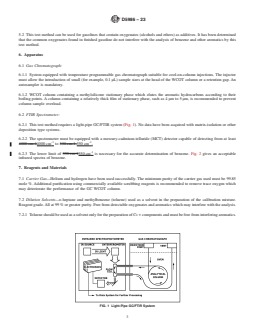
6.2.1 This test method requires a light-pipe GC/FTIR sys-
3.2.6 selective wavelength chromatogram (SWC), n—in this
tem (Fig. 1). No data have been acquired with matrix-isolation
test method, refers to a selective chromatogram obtained by
or other deposition type systems.
summing the spectral intensity in a narrow spectral wavelength
6.2.2 The spectrometer must be equipped with a mercury-
or frequency range as a function of elution time which is
cadmium-telluride (MCT) detector capable of detecting from at
unique to the compound being quantitated.
-1 -1
least 4000 cm to 550 cm .
3.2.7 uncalibrated aromatic component, n—in this test
-1
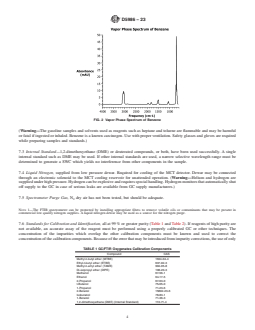
6.2.3 The lower limit of 550 cm is necessary for the
method, refers to individual aromatics for which a calibration is
accurate determination of benzene. Fig. 2 gives an acceptable
not available and whose concentrations are estimated from the
infrared spectra of benzene.
response factor of a calibrated aromatic component.
3.2.8 wall coated open tubular (WCOT), n—a type of
7. Reagents and Materials
capillary column prepared by coating or bonding the inside
7.1 Carrier Gas—Helium and hydrogen have been used
wall of the capillary with a thin film of stationary phase.
successfully. The minimum purity of the carrier gas used must
be 99.85 mole %. Additional purification using commercially
4. Summary of Test Method
available scrubbing reagents is recommended to remove trace
4.1 A gas chromatograph equipped with a methylsilicone
oxygen which may deteriorate the performance of the GC
WCOT column is interfaced to a Fourier transform infrared
WCOT column.
spectrometer. The sample is injected through a cool on-column
7.2 Dilution Solvents—n-heptane and methylbenzene (tolu-
injector capable of injecting a small sample size without
ene) used as a solvent in the preparation of the calibration
overloading the column.
mixture. Reagent grade. All at 99 % or greater purity. Free
4.2 Calibration is performed using mixtures of specified
from detectable oxygenates and aromatics which may interfere
pure oxygenates and aromatic hydrocarbons on a mass basis.
with the analysis.
Volume percent data is calculated from the densities of the
7.2.1 Toluene should be used as a solvent only for the
individual components and the density of the sample. Multi-
preparation of C + components and must be free from inter-
point calibrations consisting of at least five levels and brack-
fering aromatics. (Warning—The gasoline samples and sol-
eting the concentration of the specified individual aromatics is
vents used as reagents such as heptane and toluene are
required. Unidentified aromatic hydrocarbons present which
flammable and may be harmful or fatal if ingested or inhaled.
have not been specifically calibrated for are quantitated using
Benzene is a known carcinogen. Use with proper ventilation.
the response factor of 1,2,3,5-tetramethylbenzene and summed
Safety glasses and gloves are required while preparing samples
with the other calibrated aromatic components to obtain a total
and standards.)
aromatic concentration of the sample.
7.3 Internal Standard—1,2-dimethoxyethane (DME) or
4.3 Specified quality control mixture(s) are analyzed to
deuterated compounds, or both, have been used successfully. A
monitor the performance of the calibrated GC/FTIR system.
5. Significance and Use
5.1 Test methods to determine oxygenates, benzene, and the
aromatic content of gasoline are necessary to assess product
quality and to meet new fuel regulations.
5.2 This test method can be used for gasolines that contain
oxygenates (alcohols and ethers) as additives. It has been
determined that the common oxygenates found in finished
gasoline do not interfere with the analysis of benzene and other
aromatics by this test method.
6. Apparatus
6.1 Gas Chromatograph:
6.1.1 System equipped with temperature programmable gas
chromatograph suitable for cool-on-column injections. The
injector must allow the introduction of small (for example, FIG. 1 Light-Pipe GC/FTIR System
D5986 − 23
TABLE 2 GC/FTIR Aromatic Hydrocarbons Calibration
Components (Calibrated Aromatic Components)
Compound CAS No.
Benzene 71-43-2
Methylbenzene 108-88-3
Ethylbenzene 100-41-4
1,3-Dimethylbenzene 108-38-3
1,4-Dimethylbenzene 106-42-3
1,2-Dimethylbenzene 95-47-6
(1-Methylethyl)-benzene 98-82-8
Propyl-benzene 103-65-1
1-methyl-3-ethylbenzene 620-14-4
1-methyl-4-ethylbenzene 622-96-8
1,3,5-trimethylbenzene 108-67-8
1-methyl-2-ethylbenzene 611-14-3
1,2,4-trimethylbenzene 95-63-6
1,2,3-trimethylbenzene 526-73-8
Indan 496-11-7
1,4-diethylbenzene 105-05-5
Butylbenzene 104-51-8
1,2-Diethylbenzene 135-01-3
1,2,4,5-Tetramethylbenzene 95-93-2
1,2,3,5-Tetramethylbenzene 527-53-7
Naphthalene 91-20-3
2-methyl-naphthalene 91-57-6
FIG. 2 Vapor Phase Spectrum of Benzene
1-methyl-naphthalene 90-12-0
single internal standard such as DME may be used. If other
internal standards are used, a narrow selective wavelength
niques. The concentration of the impurities which overlap the
range must be determined to generate a SWC which yields no
other calibration components must be known and used to
interference from other components in the sample.
correct the concentration of the calibration components. Be-
7.4 Liquid Nitrogen, supplied from low pressure dewar.
cause of the error that may be introduced from impurity
Required for cooling of the MCT detector. Dewar may be
corrections, the use of only high purity reagents is strongly
connected through an electronic solenoid to the MCT cooling
recommended. Standards are used for calibration as well for
reservoir for unattended operation. (Warning—Helium and
establishing the identification by retention time in conjunction
hydrogen are supplied under high pressure. Hydrogen can be
with spectral match.
explosive and requires special handling. Hydrogen monitors
that automatically shut off supply to the GC in case of serious
8. Sampling
leaks are available from GC supply manufacturers.)
8.1 Make every effort to ensure that the sample is represen-
7.5 Spectrometer Purge Gas, N dry air has not been tested,
tative of the fuel source from which it is taken. Follow the
but should be adequate.
recommendations of Practice D4057 or its equivalent when
NOTE 1—The FTIR spectrometer can be protected by installing appro- obtaining samples from bulk storage or pipelines. Sampling to
priate filters to remove volatile oils or contaminants that may be present
meet certain regulatory specifications may require the use of
in commercial low quality nitrogen supplies. A liquid nitrogen dewar may
specific sampling procedures. Consult appropriate regulations.
be used as a source for the nitrogen purge.
8.2 Take appropriate steps to minimize the loss of light
7.6 Standards for Calibration and Identification, all at 99 %
hydrocarbons from the gasoline sample while sampling and
or greater purity (Table 1 and Table 2). If reagents of high
during analyses. Upon receipt in the laboratory chill the sample
purity are not available, an accurate assay of the reagent must
in its original container to 0 °C to 5 °C (32 °F to 40 °F) before
be performed using a properly calibrated GC or other tech-
and after a sample is obtained for analysis.
8.3 After the sample is prepared for analysis with internal
TABLE 1 GC/FTIR Oxygenates Calibration Components
standard(s), chill the sample and transfer to an appropriate
Compound CAS
autosampler vial with minimal headspace. Re-chill the remain-
Methyl-t-butyl ether (MTBE) 1634-04-4
der of the sample immediately and protect from evaporation for
Ethyl-t-butyl ether (ETBE) 637-92-3
further analyses, if necessary.
Methyl-t-amyl ether (TAME) 994-05-8
Di-isopropyl ether (DIPE) 108-20-3
Methanol 67-56-1
9. Calibration Procedure
Ethanol 64-17-5
2-Propanol 67-63-0
9.1 Preparation of Calibration Standards—Prepare multi-
t-Butanol 75-65-0
component calibration standards using the compounds listed in
1-Propanol 71-23-6
2-Butanol 15892-23-6 Table 1 and Table 2 by mass according to Practice D4307.
Isobutanol 78-83-1
Prepare calibration solutions as described in 9.1 – 9.1.4 for
1-Butanol 71-36-3
each set. Adjust these concentrations, as necessary, to ensure
1,2-dimethoxyethane (DME) (Internal Standard) 110-71-4
that the concentrations of the components in the actual samples
D5986 − 23
TABLE 3 Relative Densities and Calibration Procedure for
are bracketed by the calibration concentrations. Solid compo-
Aromatic Hydrocarbons
nents are weighed directly into the flask or vial. The specified
Relative Densities
volumes of each calibration component are weighed into
Compound Calibration Set
60 °F ⁄60 °F
100 mL volumetric flasks or 100 mL septum capped vials.
Benzene 0.8845 Set A
Prepare a calibration standard as follows. Cap and record the
Methylbenzene 0.8719 Set A
Ethylbenzene 0.8717 Set A
tare weight of the 100 mL volumetric flask or vial to 0.1 mg.
1,3-Dimethylbenzene 0.8687 Set A
Remove the cap and carefully add components to the flask or
1,4-Dimethylbenzene 0.8657 Set A
vial starting with the least volatile component. Cap the flask
1,2-Dimethylbenzene 0.8848 Set A
(1-Methylethyl)-benzene 0.8663 Set B
and record the net mass (Wi) of the aromatic component added
Propyl-benzene 0.8666 Set B
to 0.1 mg. Repeat the addition and weighing procedure for
1-Methyl-3-ethylbenzene 0.8690 Set B
1-Methyl-4-ethylbenzene 0.8657 Set B
each component. Similarly add the internal standard and record
1,3,5-Trimethylbenzene 0.8696 Set B
its net mass (Ws) to 0.1 mg. Store the capped calibration
1-Methyl-2-ethylbenzene 0.8852 Set B
standards in a refrigerator at 0 °C to 5 °C (32 °F to 40 °F) when
1,2,4-Trimethylbenzene 0.8802 Set B
1,2,3-Trimethylbenzene 0.8987 Set B
not in use.
Indan 0.9685 Set B
1,4-Diethylbenzene 0.8663 Set C
NOTE 2—Mix all calibration solutions for at least 30 s on a Vortex mixer
Butylbenzene 0.8646 Set C
after preparation or equivalent. Highly precise sample robotic sample
1,2-Diethylbenzene 0.8843 Set C
preparation systems are available commercially. These systems may be
1,2,4,5-Tetramethylbenzene 0.8918 Set C
used provided that the results for the quality control reference material
1,2,3,5-Tetramethylbenzene 0.8946 Set C
(Section 11) are met when prepared in this manner. Naphthalene 1.000 Set C
2-Methyl-Naphthalene 1.000 Set C
9.1.1 Ethers and Alcohols: 1-Methyl-Naphthalene 1.000 Set C
Uncalibrated aromatics 1.000 .
9.1.1.1 Three sets of at least six calibration levels each
(eighteen total solutions) are prepared bracketing the 0 % to
20 % by volume range. Set 1: for MTBE, DIPE, ETBE,
9.1.2.2 For ethylbenzene, m, p, and o-xylenes (EX): 1 mL,
TAME; Set 2: MeOH, EtOH, 2-PrOH, t-BuOH; and Set 3:
3 mL, 5 mL, 7 mL, 9 mL, and 10 mL of each analyte is added
1-PrOH, 2-BuOH, i-BuOH, 1-BuOH.
to the respective flasks above while accurately recording the
9.1.1.2 For each above Set: 1 mL, 3 mL, 5 mL, 10 mL,
masses.
15 mL, and 20 mL aliquots of each component are pipetted into
9.1.2.3 For toluene (T): 1 mL, 3 mL, 5 mL, 7 mL, 10 mL,
respective 100 mL volumetric flasks or vials while accurately
15 mL aliquots are added to respective flasks above (that is,
recording the masses. For example, for Set 1, into flask one add
least concentrated toluene is in solution with least concentrated
1.0 mL MTBE, 1.0 mL DIPE, 1.0 mL ETBE, 1.0 mL TAME;
ethylbenzene and xylenes-EX) while accurately recording the
into flask two add 3.0 mL MTBE, 3.0 mL DIPE, 3.0 mL ETBE,
masses.
3.0 mL TAME; and so forth. Add the oxygenate in reverse
9.1.2.4 For benzene (B): 0.10 mL, 0.30 mL, 0.50 mL, 1 mL,
order of their boiling points. The above procedure produces six
2 mL, 3 mL of benzene are weighed into respective 100 mL
calibration solutions for each set with the concentrations of
flasks or vials (that is, least concentrated benzene is in solution
each analyte at 1 % by volume, 3 % by volume, 5 % by vol-
with least concentrated TEX above).
ume, 10 % by volume, 15 % by volume, and 20 % by volume. 9.1.2.5 The flasks or vials are then filled to 100 mL with
10.0 mL of DME (internal standard) is then added at constant
n-heptane. This procedure generates calibration solutions con-
volumes to each flask or vial while recording its mass. The taining increasing amounts of benzene from 0.1 % to 3 %
flasks or vials are then filled to 100 mL total volume with by volume, toluene from 1 % to 15 % by volume, and ethyl-
benzene and m, p, and o-xylenes each from 1 % to 10 %
toluene. It is not necessary to weigh the amount of solvent
by volume with the internal standard (DME) at a constant 10 %
added since the calculations are based on the absolute masses
by volume.
of the calibration components and the internal standard com-
9.1.3 C Aromatics (Table 3/Set B):
ponents.
9.1.3.1 Add 0.5 mL, 1.0 mL, 2.0 mL, 3.0 mL, 5 mL of each
9.1.1.3 For best accuracy at concentrations below 1 %,
of the C -aromatics in Table 2 to the respective five flasks or
prepare calibration standard sets to bracket the expected
vials (that is, add all of the 0.5 mL concentrations together in
concentration. Some of the alcohols are present at low concen-
flask one, all of the 1.0 mL concentrations to flask two, and so
trations in gasoline blends. In this case, for example, if the
forth) while accurately recording the masses.
expected analyte concentration is 0.5 % by volume, prepare
9.1.3.2 Add 10.0 mL of DME to each of the five flasks or
calibration solutions by mass in the range of 0.1 % to 1.0 % by
vials and record the mass of DME.
volume. Furthermore, if the components in Set 3 are all at these
9.1.3.3 The flasks or vials are then filled to 100 mL with
low concentrations then for calibration they can be added to Set
n-heptane. This procedure generates calibration solutions for
2, thus reducing the calibration solutions to Sets 1 and 2.
the C aromatics in the range of 0.5 % to 5 % by volume.
9.1.2 Benzene, Toluene, Ethylbenzene, Xylenes (BTEX)
9.1.4 C + Aromatics (Table 3/Set C):
(Table 3/Set A):
9.1.4.1 Add 0.5 mL, 1.0 mL, 2.0 mL, 3.0 mL, 4 mL or
9.1.2.1 To each of six 100 mL volumetric flasks or vials, add
grams, if solids, of each of the C -aromatics in Table 2 to the
10.0 mL of DME and record the mass. respective five flasks or vials (that is, add all of the 0.5 mL
D5986 − 23
TABLE 5 GC/FTIR Conditions
concentrations together in flask one, all of the 1.0 mL concen-
trations to flask two, etc
...
This document is not an ASTM standard and is intended only to provide the user of an ASTM standard an indication of what changes have been made to the previous version. Because
it may not be technically possible to adequately depict all changes accurately, ASTM recommends that users consult prior editions as appropriate. In all cases only the current version
of the standard as published by ASTM is to be considered the official document.
Designation: D5986 − 96 (Reapproved 2019) D5986 − 23
Standard Test Method for
Determination of Oxygenates, Benzene, Toluene, C –C
8 12
Aromatics and Total Aromatics in Finished Gasoline by Gas
Chromatography/Fourier Transform Infrared Spectroscopy
This standard is issued under the fixed designation D5986; the number immediately following the designation indicates the year of
original adoption or, in the case of revision, the year of last revision. A number in parentheses indicates the year of last reapproval. A
superscript epsilon (´) indicates an editorial change since the last revision or reapproval.
1. Scope Scope*
1.1 This test method covers the quantitative determination of oxygenates: methyl-t-butylether (MTBE), di-isopropyl ether (DIPE),
ethyl-t-butylether (ETBE), t-amylmethyl ether (TAME), methanol (MeOH), ethanol (EtOH), 2-propanol (2-PrOH), t-butanol
(t-BuOH), 1-propanol (1-PrOH), 2-butanol (2-BuOH), i-butanol (i-BuOH), 1-butanol (1-BuOH); benzene, toluene and C –C
8 12
aromatics, and total aromatics in finished motor gasoline by gas chromatography/Fourier Transform infrared spectroscopy
(GC/FTIR).
1.2 This test method covers the following concentration ranges: 0.1 % to 20 % by volume per component for ethers and alcohols;
0.1 % to 2 % by volume benzene; 1 % to 15 % by volume for toluene, 10 % to 40 % by volume total (C –C ) aromatics.
6 12
1.3 The method has not been tested by ASTM for refinery individual hydrocarbon process streams, such as reformates, fluid
catalytic cracking naphthas, etc., used in blending of gasolines.
1.4 The values stated in SI units are to be regarded as standard. No other units of measurement are included in this standard.
1.5 This standard does not purport to address all of the safety concerns, if any, associated with its use. It is the responsibility
of the user of this standard to establish appropriate safety, health, and environmental practices and determine the applicability of
regulatory limitations prior to use.
1.6 This international standard was developed in accordance with internationally recognized principles on standardization
established in the Decision on Principles for the Development of International Standards, Guides and Recommendations issued
by the World Trade Organization Technical Barriers to Trade (TBT) Committee.
2. Referenced Documents
2.1 ASTM Standards:
D1298 Test Method for Density, Relative Density, or API Gravity of Crude Petroleum and Liquid Petroleum Products by
Hydrometer Method
D4052 Test Method for Density, Relative Density, and API Gravity of Liquids by Digital Density Meter
D4057 Practice for Manual Sampling of Petroleum and Petroleum Products
This test method is under the jurisdiction of ASTM Committee D02 on Petroleum Products, Liquid Fuels, and Lubricants and is the direct responsibility of Subcommittee
D02.04.0L on Gas Chromatography Methods.
Current edition approvedaproved Dec. 1, 2019Oct. 1, 2023. Published December 2019November 2023. Originally approved in 1996. Last previous edition approved in
20152019 as D5986 – 96 (2015).(2019). DOI: 10.1520/D5986-96R19.10.1520/D5986-23.
For referenced ASTM standards, visit the ASTM website, www.astm.org, or contact ASTM Customer Service at service@astm.org. For Annual Book of ASTM Standards
volume information, refer to the standard’s Document Summary page on the ASTM website.
*A Summary of Changes section appears at the end of this standard
Copyright © ASTM International, 100 Barr Harbor Drive, PO Box C700, West Conshohocken, PA 19428-2959. United States
D5986 − 23
D4175 Terminology Relating to Petroleum Products, Liquid Fuels, and Lubricants
D4307 Practice for Preparation of Liquid Blends for Use as Analytical Standards
E355 Practice for Gas Chromatography Terms and Relationships
3. Terminology
3.1 Definitions:
3.1.1 This test method makes reference to common gas chromatographic procedures, terms, and relationships. Detailed definitions
of these can be found in Practice E355 and Terminology D4175.
3.2 Definitions of Terms Specific to This Standard:
3.2.1 aromatics—aromatics, n—refers to any organic compound containing a benzene or naphthalene ring.
3.2.2 calibrated aromatic component—component, n—in this test method, refers to the individual aromatic components which
have a specific calibration.
3.2.3 cool on-column injector—injector, n—in gas chromatography, a direct sample introduction system which is set at a
temperature at or below the boiling point of solutes or solvent on injection and then heated at a rate equal to or greater than the
column. Normally used to eliminate boiling point discrimination on injection or to reduce adsorption, or both, on glass liners within
injectors. The sample is injected directly into the head of the capillary column tubing or retention gap.
3.2.4 Gram-Schmidt chromatogram—chromatogram, n—a nonselective summation of total intensity from a spectral scan per unit
time which resembles in profile a flame ionization detector chromatogram.
3.2.5 retention gap—gap, n—in gas chromatography, refers to a deactivated precolumn which acts as a zone of low retention
power for reconcentrating bands in space. The polarity of the precolumn must be similar to that of the analytical column.
3.2.6 selective wavelength chromatogram (SWC)—(SWC), n—in this test method, refers to a selective chromatogram obtained by
summing the spectral intensity in a narrow spectral wavelength or frequency range as a function of elution time which is unique
to the compound being quantitated.
3.2.7 uncalibrated aromatic component—component, n—in this test method, refers to individual aromatics for which a calibration
is not available and whose concentrations are estimated from the response factor of a calibrated aromatic component.
3.2.8 wall coated open tubular (WCOT)—(WCOT), n—a type of capillary column prepared by coating or bonding the inside wall
of the capillary with a thin film of stationary phase.
4. Summary of Test Method
4.1 A gas chromatograph equipped with a methylsilicone WCOT column is interfaced to a Fourier transform infrared
spectrometer. The sample is injected through a cool on-column injector capable of injecting a small sample size without
overloading the column.
4.2 Calibration is performed using mixtures of specified pure oxygenates and aromatic hydrocarbons on a mass basis. Volume
%percent data is calculated from the densities of the individual components and the density of the sample. Multipoint calibrations
consisting of at least five levels and bracketing the concentration of the specified individual aromatics is required. Unidentified
aromatic hydrocarbons present which have not been specifically calibrated for are quantitated using the response factor of
1,2,3,5-tetramethylbenzene and summed with the other calibrated aromatic components to obtain a total aromatic concentration of
the sample.
4.3 Specified quality control mixture(s) are analyzed to monitor the performance of the calibrated GC/FTIR system.
5. Significance and Use
5.1 Test methods to determine oxygenates, benzene, and the aromatic content of gasoline are necessary to assess product quality
and to meet new fuel regulations.
D5986 − 23
5.2 This test method can be used for gasolines that contain oxygenates (alcohols and ethers) as additives. It has been determined
that the common oxygenates found in finished gasoline do not interfere with the analysis of benzene and other aromatics by this
test method.
6. Apparatus
6.1 Gas Chromatograph:
6.1.1 System equipped with temperature programmable gas chromatograph suitable for cool-on-column injections. The injector
must allow the introduction of small (for example, 0.1 μL) sample sizes at the head of the WCOT column or a retention gap. An
autosampler is mandatory.
6.1.2 WCOT column containing a methylsilicone stationary phase which elutes the aromatic hydrocarbons according to their
boiling points. A column containing a relatively thick film of stationary phase, such as 4 μm to 5 μm, is recommended to prevent
column sample overload.
6.2 FTIR Spectrometer:
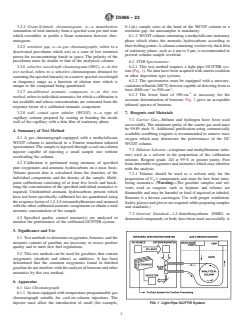
6.2.1 This test method requires a light-pipe GC/FTIR system (Fig. 1). No data have been acquired with matrix-isolation or other
deposition type systems.
6.2.2 The spectrometer must be equipped with a mercury-cadmium-telluride (MCT) detector capable of detecting from at least
-1 -1
4000 cm-14000 cm to 550 cm-1.550 cm .
-1
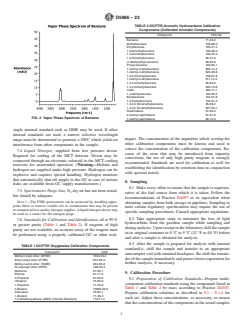
6.2.3 The lower limit of 550 cm-1550 cm is necessary for the accurate determination of benzene. Fig. 2 gives an acceptable
infrared spectra of benzene.
7. Reagents and Materials
7.1 Carrier Gas—Helium and hydrogen have been used successfully. The minimum purity of the carrier gas used must be 99.85
mole %. Additional purification using commercially available scrubbing reagents is recommended to remove trace oxygen which
may deteriorate the performance of the GC WCOT column.
7.2 Dilution Solvents—n-heptane and methylbenzene (toluene) used as a solvent in the preparation of the calibration mixture.
Reagent grade. All at 99 % or greater purity. Free from detectable oxygenates and aromatics which may interfere with the analysis.
7.2.1 Toluene should be used as a solvent only for the preparation of C + components and must be free from interfering aromatics.
FIG. 1 Light-Pipe GC/FTIR System
D5986 − 23
FIG. 2 Vapor Phase Spectrum of Benzene
(Warning—The gasoline samples and solvents used as reagents such as heptane and toluene are flammable and may be harmful
or fatal if ingested or inhaled. Benzene is a known carcinogen. Use with proper ventilation. Safety glasses and gloves are required
while preparing samples and standards.)
7.3 Internal Standard—1,2-dimethoxyethane (DME) or deuterated compounds, or both, have been used successfully. A single
internal standard such as DME may be used. If other internal standards are used, a narrow selective wavelength range must be
determined to generate a SWC which yields no interference from other components in the sample.
7.4 Liquid Nitrogen, supplied from low pressure dewar. Required for cooling of the MCT detector. Dewar may be connected
through an electronic solenoid to the MCT cooling reservoir for unattended operation. (Warning—Helium and hydrogen are
supplied under high pressure. Hydrogen can be explosive and requires special handling. Hydrogen monitors that automatically shut
off supply to the GC in case of serious leaks are available from GC supply manufacturers.)
7.5 Spectrometer Purge Gas, N dry air has not been tested, but should be adequate.
NOTE 1—The FTIR spectrometer can be protected by installing appropriate filters to remove volatile oils or contaminants that may be present in
commercial low quality nitrogen supplies. A liquid nitrogen dewar may be used as a source for the nitrogen purge.
7.6 Standards for Calibration and Identification, all at 99 % or greater purity (Table 1 and Table 2). If reagents of high purity are
not available, an accurate assay of the reagent must be performed using a properly calibrated GC or other techniques. The
concentration of the impurities which overlap the other calibration components must be known and used to correct the
concentration of the calibration components. Because of the error that may be introduced from impurity corrections, the use of only
TABLE 1 GC/FTIR Oxygenates Calibration Components
Compound CAS
Methyl-t-butyl ether (MTBE) 1634-04-4
Ethyl-t-butyl ether (ETBE) 637-92-3
Methyl-t-amyl ether (TAME) 994-05-8
Di-isopropyl ether (DIPE) 108-20-3
Methanol 67-56-1
Ethanol 64-17-5
2-Propanol 67-63-0
t-Butanol 75-65-0
1-Propanol 71-23-6
2-Butanol 15892-23-6
Isobutanol 78-83-1
1-Butanol 71-36-3
1,2-dimethoxyethane (DME) (Internal Standard) 110-71-4
D5986 − 23
TABLE 2 GC/FTIR Aromatic Hydrocarbons Calibration
Components (Calibrated Aromatic Components)
Compound CAS No.
Benzene 71-43-2
Methylbenzene 108-88-3
Ethylbenzene 100-41-4
1,3-Dimethylbenzene 108-38-3
1,4-Dimethylbenzene 106-42-3
1,2-Dimethylbenzene 95-47-6
(1-Methylethyl)-benzene 98-82-8
Propyl-benzene 103-65-1
1-methyl-3-ethylbenzene 620-14-4
1-methyl-4-ethylbenzene 622-96-8
1,3,5-trimethylbenzene 108-67-8
1-methyl-2-ethylbenzene 611-14-3
1,2,4-trimethylbenzene 95-63-6
1,2,3-trimethylbenzene 526-73-8
Indan 496-11-7
1,4-diethylbenzene 105-05-5
Butylbenzene 104-51-8
1,2-Diethylbenzene 135-01-3
1,2,4,5-Tetramethylbenzene 95-93-2
1,2,3,5-Tetramethylbenzene 527-53-7
Naphthalene 91-20-3
2-methyl-naphthalene 91-57-6
1-methyl-naphthalene 90-12-0
high purity reagents is strongly recommended. Standards are used for calibration as well for establishing the identification by
retention time in conjunction with spectral match.
8. Sampling
8.1 Make every effort to ensure that the sample is representative of the fuel source from which it is taken. Follow the
recommendations of Practice D4057 or its equivalent when obtaining samples from bulk storage or pipelines. Sampling to meet
certain regulatory specifications may require the use of specific sampling procedures. Consult appropriate regulations.
8.2 Take appropriate steps to minimize the loss of light hydrocarbons from the gasoline sample while sampling and during
analyses. Upon receipt in the laboratory chill the sample in its original container to 0 °C to 5 °C (32 °F to 40 °F) before and after
a sample is obtained for analysis.
8.3 After the sample is prepared for analysis with internal standard(s), chill the sample and transfer to an appropriate autosampler
vial with minimal headspace. Re-chill the remainder of the sample immediately and protect from evaporation for further analyses,
if necessary.
9. Calibration Procedure
9.1 Preparation of Calibration Standards—Prepare multi-component calibration standards using the compounds listed in Table 1
and Table 2 by mass according to Practice D4307. Prepare calibration solutions as described in 9.1 – 9.1.4 for each set. Adjust these
concentrations, as necessary, to ensure that the concentrations of the components in the actual samples are bracketed by the
calibration concentrations. Solid components are weighed directly into the flask or vial. The specified volumes of each calibration
component are weighed into 100 mL volumetric flasks or 100 mL septum capped vials. Prepare a calibration standard as follows.
Cap and record the tare weight of the 100 mL volumetric flask or vial to 0.1 mg. Remove the cap and carefully add components
to the flask or vial starting with the least volatile component. Cap the flask and record the net mass (Wi) of the aromatic component
added to 0.1 mg. Repeat the addition and weighing procedure for each component. Similarly add the internal standard and record
its net mass (Ws) to 0.1 mg. Store the capped calibration standards in a refrigerator at 0 °C to 5 °C (32 °F to 40 °F) when not in
use.
NOTE 2—Mix all calibration solutions for at least 30 s on a Vortex mixer after preparation or equivalent. Highly precise sample robotic sample preparation
systems are available commercially. These systems may be used provided that the results for the quality control reference material (Section 11) are met
when prepared in this manner.
9.1.1 Ethers and Alcohols:
D5986 − 23
9.1.1.1 Three sets of at least six calibration levels each (eighteen total solutions) are prepared bracketing the 0 volume % to
20 volume % 0 % to 20 % by volume range. Set 1: for MTBE, DIPE, ETBE, TAME; Set 2: MeOH, EtOH, 2-PrOH, t-BuOH; and
Set 3: 1-PrOH, 2-BuOH, i-BuOH, 1-BuOH.
9.1.1.2 For each above Set: 1 mL, 3 mL, 5 mL, 10 mL, 15 mL, and 20 mL aliquots of each component are pipetted into respective
100 mL volumetric flasks or vials while accurately recording the masses. For example, for Set 1, into flask one add 1.0 mL MTBE,
1.0 mL DIPE, 1.0 mL ETBE, 1.0 mL TAME; into flask two add 3.0 mL MTBE, 3.0 mL DIPE, 3.0 mL ETBE, 3.0 mL TAME; and
so forth. Add the oxygenate in reverse order of their boiling points. The above procedure produces six calibration solutions for each
set with the concentrations of each analyte at 1 % by volume, 3 % by volume, 5 % by volume, 10 % by volume, 15 % by volume,
and 20 % by volume. 10.0 mL of DME (internal standard) is then added at constant volumes to each flask or vial while recording
its mass. The flasks or vials are then filled to 100 mL total volume with toluene. It is not necessary to weigh the amount of solvent
added since the calculations are based on the absolute masses of the calibration components and the internal standard components.
9.1.1.3 For best accuracy at concentrations below 1 %, prepare calibration standard sets to bracket the expected concentration.
Some of the alcohols are present at low concentrations in gasoline blends. In this case, for example, if the expected analyte
concentration is 0.5 % by volume, prepare calibration solutions by mass in the range of 0.1 % to 1.0 % by volume. Furthermore,
if the components in Set 3 are all at these low concentrations then for calibration they can be added to Set 2, thus reducing the
calibration solutions to Sets 1 and 2.
9.1.2 Benzene, Toluene, Ethylbenzene, Xylenes (BTEX) (Table 3/Set A):
9.1.2.1 To each of six 100 mL volumetric flasks or vials, add 10.0 mL of DME and record the mass.
9.1.2.2 For ethylbenzene, m, p, and o-xylenes (EX): 1 mL, 3 mL, 5 mL, 7 mL, 9 mL, and 10 mL of each analyte is added to the
respective flasks above while accurately recording the masses.
9.1.2.3 For toluene (T): 1 mL, 3 mL, 5 mL, 7 mL, 10 mL, 15 mL aliquots are added to respective flasks above (that is, least
concentrated toluene is in solution with least concentrated ethylbenzene and xylenes-EX) while accurately recording the masses.
9.1.2.4 For benzene (B): 0.10 mL, 0.30 mL, 0.50 mL, 1 mL, 2 mL, 3 mL of benzene are weighed into respective 100 mL flasks
or vials (that is, least concentrated benzene is in solution with least concentrated TEX above).
9.1.2.5 The flasks or vials are then filled to 100 mL with n-heptane. This procedure generates calibration solutions containing
TABLE 3 Relative Densities and Calibration Procedure for
Aromatic Hydrocarbons
Relative Densities
Compound Calibration Set
60 °F ⁄60 °F
Benzene 0.8845 Set A
Methylbenzene 0.8719 Set A
Ethylbenzene 0.8717 Set A
1,3-Dimethylbenzene 0.8687 Set A
1,4-Dimethylbenzene 0.8657 Set A
1,2-Dimethylbenzene 0.8848 Set A
(1-Methylethyl)-benzene 0.8663 Set B
Propyl-benzene 0.8666 Set B
1-Methyl-3-ethylbenzene 0.8690 Set B
1-Methyl-4-ethylbenzene 0.8657 Set B
1,3,5-Trimethylbenzene 0.8696 Set B
1-Methyl-2-ethylbenzene 0.8852 Set B
1,2,4-Trimethylbenzene 0.8802 Set B
1,2,3-Trimethylbenzene 0.8987 Set B
Indan 0.9685 Set B
1,4-Diethylbenzene 0.8663 Set C
Butylbenzene 0.8646 Set C
1,2-Diethylbenzene 0.8843 Set C
1,2,4,5-Tetramethylbenzene 0.8918 Set C
1,2,3,5-Tetramethylbenzene 0.8946 Set C
Naphthalene 1.000 Set C
2-Methyl-Naphthalene 1.000 Set C
1-Methyl-Naphthalene 1.000 Set C
Uncalibrated aromatics 1.000 .
D5986 − 23
increasing amounts of benzene from 0.1 % to 3 % by volume, toluene from 1 % to 15 % by volume, and ethylbenzene and m, p,
and o-xylenes each from 1 % to 10 % by volume with the internal standard (DME) at a constant 10 % by volume.
9.1.3 C Aromatics (Table 3/Set B):
9.1.3.1 Add 0.5 mL, 1.0 mL, 2.0 mL, 3.0 mL, 5 mL of each of the C -aromatics in Table 2 to the respective five flasks or vials
(that is, add all of the 0.5 mL concentrations together in flask one, all of the 1.0 mL concentrations to flask two, and so forth) while
accurately recording the masses.
9.1.3.2 Add 10.0 mL of DME to each of the five flasks or vials and record the mass of DME.
9.1.3.3 The flasks or vials are then filled to 100 mL with n-heptane. This procedure generates calibration solutions for the C
aromatics in the range of 0.5 % to 5 % by volume.
9.1.4 C + Aromatics (Table 3/Set C):
9.1.4.1 Add 0.5 mL, 1.0 mL, 2.0 mL, 3.0 mL, 4 mL or grams, if solids, of each of the C -aromatics in Table 2 to the respective
five flasks or vials (that is, add all of the 0.5 mL concentrations together in flask one, all of the 1.0 mL concentrations to flask two,
etc.) while accurately recording the masses.
9.1.4.2 Add 10.0 mL of DME to each of the five flasks or vials and record the mass of DME.
9.1.4.3 The flasks or vials are then filled to 100 mL with toluene. This
...