

ASTM F3120/F3120M-20
(Specification)Standard Specification for Ice Protection for General Aviation Aircraft
General Information
- Abstract
ABSTRACT
This specification provides international standards for ice protection aspects of airworthiness and design for ”general aviation” aircraft. The applicant for a design approval must seek the individual guidance of their respective civil aviation authority (CAA) body concerning the use of this standard as part of a certification plan.
The standards cover: types of aircraft operational requirements; crew external visibility (windshields and windows); ice shedding (engine inlet ice ingestion, propeller ice shedding, airframe ice shedding, ice protection system failure considerations); engine installation and induction system ice protection (propellers, turbine engines in flight, turbine engines on ground).
Also addressed in this specification are instrumentation ice protection, flight into icing conditions, aircraft not approved for flight in icing, and atmospheric icing conditions.
SCOPE
1.1 This specification covers international standards for ice protection aspects of airworthiness and design for “general aviation” aircraft.
1.2 The applicant for a design approval must seek the individual guidance of their respective civil aviation authority (CAA) body concerning the use of this specification as part of a certification plan. For information on which CAA regulatory bodies have accepted this specification (in whole or in part) as a means of compliance to their Small Aircraft Airworthiness regulations (hereinafter referred to as “the Rules”), refer to ASTM F44 webpage (www.ASTM.org/COMMITTEE/F44.htm) which includes CAA website links.
1.3 Units—The values are stated in units common to the field of aircraft icing. Typically SI or inch-pound units are used, but in some cases this has resulted in the use of mixed units due to the historical development of these values. In cases where values are given in one system with the other system following in brackets, the values stated in each system are not necessarily exact equivalents; therefore, to ensure conformance with the standard, each system shall be used independently of the other, and values from the two systems shall not be combined.
1.4 This standard does not purport to address all of the safety concerns, if any, associated with its use. It is the responsibility of the user of this standard to establish appropriate safety, health, and environmental practices and determine the applicability of regulatory limitations prior to use.
1.5 This international standard was developed in accordance with internationally recognized principles on standardization established in the Decision on Principles for the Development of International Standards, Guides and Recommendations issued by the World Trade Organization Technical Barriers to Trade (TBT) Committee.
- Status
- Published
- Publication Date
- 14-Aug-2020
- Technical Committee
- F44 - General Aviation Aircraft
- Drafting Committee
- F44.10 - General
Buy Documents
ASTM F3120/F3120M-20 - Standard Specification for Ice Protection for General Aviation Aircraft
REDLINE ASTM F3120/F3120M-20 - Standard Specification for Ice Protection for General Aviation Aircraft
Overview
ASTM F3120/F3120M-20: Standard Specification for Ice Protection for General Aviation Aircraft establishes internationally recognized criteria for the airworthiness and design of ice protection systems in general aviation aircraft. Developed by ASTM International, this standard addresses critical safety considerations for operating aircraft in atmospheric icing conditions, ensuring crew visibility, engine health, reliable instrumentation, and safe flight characteristics. It also establishes guidance for civil aviation authorities (CAA) in using this standard as part of a certification plan for general aviation aircraft designs.
Key Topics
Types of Aircraft and Operational Requirements
- Applies to a wide range of general aviation aircraft operating under various rules (VFR, IFR, and flight in known icing)
- Operational requirements change depending on certification and approval for flight into icing
Crew External Visibility
- Requirements for windshield and window ice clearing to maintain adequate visibility under icing conditions
Ice Shedding Management
- Addresses ice accumulation and subsequent shedding from the airframe, engine inlets, and propellers
- Evaluates airframe damage tolerance and engine ice ingestion risk
Engine and Induction System Ice Protection
- Specifies protection methods for propellers, turbine engines (in flight and on the ground), and their air inlets
- Addresses falling/blowing snow and ground icing scenarios
Instrumentation Ice Protection
- Recommends use of heated pitot probes and static ports
- Stipulates alerts for inoperative pitot heating and requirements for alternate static sources
Flight Into Icing Conditions
- Details requirements and analytical methods for designing, analyzing, and testing ice protection systems
- Outlines certification test plans, including lab and flight testing
- Includes guidelines for aircraft flight manuals (AFM) regarding operating limitations, procedures, and performance data in icing
Applications
Practical applications of ASTM F3120/F3120M-20 span across general aviation aircraft design, certification, and continued airworthiness. The standard is a key resource for:
- Aircraft manufacturers: Ensuring compliance with international ice protection and airworthiness requirements when designing new aircraft or updating existing models
- Certification applicants: Providing a framework and recognized methods for satisfying regulatory requirements for ice protection in aircraft type certification projects
- Civil aviation regulatory authorities: Referencing the standard as a means of compliance or assessing equivalency in airworthiness certification processes
- Maintenance and operation teams: Understanding requirements for inspection, operation, and maintenance of ice protection systems in cold weather operations
- Flight crews: Reference for AFM content, ensuring safe operating practices and response procedures when flying into potential or known icing
Related Standards
ASTM F3120/F3120M-20 is directly supported by and references several related industry standards and regulatory requirements:
- ASTM F3060: Terminology for Aircraft
- ASTM F3061/F3061M: Specification for Systems and Equipment in Small Aircraft
- ASTM F3066/F3066M: Powerplant Installation Hazard Mitigation
- ASTM F3082/F3082M: Weights and Centers of Gravity of Aircraft
- ASTM F3093/F3093M: Aeroelasticity Requirements
- ASTM F3117/F3117M: Crew Interface in Aircraft
- ASTM F3173/F3173M: Aircraft Handling Characteristics
- ASTM F3179/F3179M: Performance of Aircraft
- ASTM F3180/F3180M: Low-Speed Flight Characteristics
- ASTM F3230: Safety Assessment of Systems and Equipment
- ASTM F3231/F3231M and F3316/F3316M: Electrical Systems in Aircraft
Federal and Industry Standards:
- FAA 14 CFR Part 23 and Part 33
- SAE AS403A, AS5498, AS5562
- EUROCAE ED-103 for icing detection systems
- MIL-STD-210
- NACA TN 3984
Keywords: aircraft icing, ice protection system, ASTM F3120, general aviation standards, CAA certification, aircraft safety, airworthiness, instrument ice protection, engine ice ingestion, propeller icing, flight into known icing
Conclusion
Adherence to ASTM F3120/F3120M-20 enhances the safety, reliability, and regulatory compliance of general aviation aircraft operating in cold weather environments prone to atmospheric icing. This standard is an essential tool for designers, manufacturers, and regulators focused on robust ice protection strategies within the aviation industry.
Relations
- Effective Date
- 01-Oct-2023
- Effective Date
- 01-Sep-2023
- Effective Date
- 01-Jan-2020
- Effective Date
- 01-Nov-2019
- Effective Date
- 01-Nov-2019
- Effective Date
- 01-Jun-2019
- Effective Date
- 15-Feb-2019
- Effective Date
- 01-Nov-2018
- Refers
ASTM F3180/F3180M-18 - Standard Specification for Low-Speed Flight Characteristics of Aircraft - Effective Date
- 01-Jun-2018
- Effective Date
- 15-May-2018
- Effective Date
- 01-May-2018
- Refers
ASTM F3066/F3066M-17 - Standard Specification for Aircraft Powerplant Installation Hazard Mitigation - Effective Date
- 01-Dec-2017
- Refers
ASTM F3180/F3180M-17 - Standard Specification for Low-Speed Flight Characteristics of Aircraft - Effective Date
- 15-Oct-2017
- Effective Date
- 01-Sep-2017
- Effective Date
- 15-Feb-2017
Buy Documents
ASTM F3120/F3120M-20 - Standard Specification for Ice Protection for General Aviation Aircraft
REDLINE ASTM F3120/F3120M-20 - Standard Specification for Ice Protection for General Aviation Aircraft
Get Certified
Connect with accredited certification bodies for this standard

BUREAU VERITAS Certification Germany
Bureau Veritas certification in Germany.

Element Materials Technology
Materials testing and product certification.

AQMS Ltd.
AQMS provides ISO certification to SMEs across the UK.
Sponsored listings
Frequently Asked Questions
ASTM F3120/F3120M-20 is a technical specification published by ASTM International. Its full title is "Standard Specification for Ice Protection for General Aviation Aircraft". This standard covers: ABSTRACT This specification provides international standards for ice protection aspects of airworthiness and design for ”general aviation” aircraft. The applicant for a design approval must seek the individual guidance of their respective civil aviation authority (CAA) body concerning the use of this standard as part of a certification plan. The standards cover: types of aircraft operational requirements; crew external visibility (windshields and windows); ice shedding (engine inlet ice ingestion, propeller ice shedding, airframe ice shedding, ice protection system failure considerations); engine installation and induction system ice protection (propellers, turbine engines in flight, turbine engines on ground). Also addressed in this specification are instrumentation ice protection, flight into icing conditions, aircraft not approved for flight in icing, and atmospheric icing conditions. SCOPE 1.1 This specification covers international standards for ice protection aspects of airworthiness and design for “general aviation” aircraft. 1.2 The applicant for a design approval must seek the individual guidance of their respective civil aviation authority (CAA) body concerning the use of this specification as part of a certification plan. For information on which CAA regulatory bodies have accepted this specification (in whole or in part) as a means of compliance to their Small Aircraft Airworthiness regulations (hereinafter referred to as “the Rules”), refer to ASTM F44 webpage (www.ASTM.org/COMMITTEE/F44.htm) which includes CAA website links. 1.3 Units—The values are stated in units common to the field of aircraft icing. Typically SI or inch-pound units are used, but in some cases this has resulted in the use of mixed units due to the historical development of these values. In cases where values are given in one system with the other system following in brackets, the values stated in each system are not necessarily exact equivalents; therefore, to ensure conformance with the standard, each system shall be used independently of the other, and values from the two systems shall not be combined. 1.4 This standard does not purport to address all of the safety concerns, if any, associated with its use. It is the responsibility of the user of this standard to establish appropriate safety, health, and environmental practices and determine the applicability of regulatory limitations prior to use. 1.5 This international standard was developed in accordance with internationally recognized principles on standardization established in the Decision on Principles for the Development of International Standards, Guides and Recommendations issued by the World Trade Organization Technical Barriers to Trade (TBT) Committee.
ABSTRACT This specification provides international standards for ice protection aspects of airworthiness and design for ”general aviation” aircraft. The applicant for a design approval must seek the individual guidance of their respective civil aviation authority (CAA) body concerning the use of this standard as part of a certification plan. The standards cover: types of aircraft operational requirements; crew external visibility (windshields and windows); ice shedding (engine inlet ice ingestion, propeller ice shedding, airframe ice shedding, ice protection system failure considerations); engine installation and induction system ice protection (propellers, turbine engines in flight, turbine engines on ground). Also addressed in this specification are instrumentation ice protection, flight into icing conditions, aircraft not approved for flight in icing, and atmospheric icing conditions. SCOPE 1.1 This specification covers international standards for ice protection aspects of airworthiness and design for “general aviation” aircraft. 1.2 The applicant for a design approval must seek the individual guidance of their respective civil aviation authority (CAA) body concerning the use of this specification as part of a certification plan. For information on which CAA regulatory bodies have accepted this specification (in whole or in part) as a means of compliance to their Small Aircraft Airworthiness regulations (hereinafter referred to as “the Rules”), refer to ASTM F44 webpage (www.ASTM.org/COMMITTEE/F44.htm) which includes CAA website links. 1.3 Units—The values are stated in units common to the field of aircraft icing. Typically SI or inch-pound units are used, but in some cases this has resulted in the use of mixed units due to the historical development of these values. In cases where values are given in one system with the other system following in brackets, the values stated in each system are not necessarily exact equivalents; therefore, to ensure conformance with the standard, each system shall be used independently of the other, and values from the two systems shall not be combined. 1.4 This standard does not purport to address all of the safety concerns, if any, associated with its use. It is the responsibility of the user of this standard to establish appropriate safety, health, and environmental practices and determine the applicability of regulatory limitations prior to use. 1.5 This international standard was developed in accordance with internationally recognized principles on standardization established in the Decision on Principles for the Development of International Standards, Guides and Recommendations issued by the World Trade Organization Technical Barriers to Trade (TBT) Committee.
ASTM F3120/F3120M-20 is classified under the following ICS (International Classification for Standards) categories: 49.045 - Structure and structure elements; 49.100 - Ground service and maintenance equipment. The ICS classification helps identify the subject area and facilitates finding related standards.
ASTM F3120/F3120M-20 has the following relationships with other standards: It is inter standard links to ASTM F3061/F3061M-23b, ASTM F3179/F3179M-23, ASTM F3060-20, ASTM F3061/F3061M-19a, ASTM F3316/F3316M-19, ASTM F3061/F3061M-19, ASTM F3093/F3093M-19, ASTM F3117/F3117M-18c, ASTM F3180/F3180M-18, ASTM F3316/F3316M-18, ASTM F3179/F3179M-18, ASTM F3066/F3066M-17, ASTM F3180/F3180M-17, ASTM F3173/F3173M-17, ASTM F3231/F3231M-17. Understanding these relationships helps ensure you are using the most current and applicable version of the standard.
ASTM F3120/F3120M-20 is available in PDF format for immediate download after purchase. The document can be added to your cart and obtained through the secure checkout process. Digital delivery ensures instant access to the complete standard document.
Standards Content (Sample)
This international standard was developed in accordance with internationally recognized principles on standardization established in the Decision on Principles for the
Development of International Standards, Guides and Recommendations issued by the World Trade Organization Technical Barriers to Trade (TBT) Committee.
Designation:F3120/F3120M −20
Standard Specification for
Ice Protection for General Aviation Aircraft
ThisstandardisissuedunderthefixeddesignationF3120/F3120M;thenumberimmediatelyfollowingthedesignationindicatestheyear
of original adoption or, in the case of revision, the year of last revision. A number in parentheses indicates the year of last reapproval.
A superscript epsilon (´) indicates an editorial change since the last revision or reapproval.
1. Scope 2. Referenced Documents
2.1 ASTM Standards:
1.1 This specification covers international standards for ice
F3060 Terminology for Aircraft
protection aspects of airworthiness and design for “general
F3061/F3061M Specification for Systems and Equipment in
aviation” aircraft.
Small Aircraft
1.2 The applicant for a design approval must seek the
F3066/F3066M Specification forAircraft Powerplant Instal-
individual guidance of their respective civil aviation authority
lation Hazard Mitigation
(CAA) body concerning the use of this specification as part of
F3082/F3082M Specification for Weights and Centers of
a certification plan. For information on which CAAregulatory
Gravity of Aircraft
bodies have accepted this specification (in whole or in part) as
F3093/F3093M Specification for Aeroelasticity Require-
a means of compliance to their Small Aircraft Airworthiness
ments
regulations (hereinafter referred to as “the Rules”), refer to F3117/F3117M Specification for Crew Interface in Aircraft
ASTM F44 webpage (www.ASTM.org/COMMITTEE/
F3173/F3173M Specification for Aircraft Handling Charac-
F44.htm) which includes CAA website links. teristics
F3179/F3179M Specification for Performance of Aircraft
1.3 Units—The values are stated in units common to the
F3180/F3180M Specification for Low-Speed Flight Charac-
field of aircraft icing. Typically SI or inch-pound units are
teristics of Aircraft
used, but in some cases this has resulted in the use of mixed
F3230 Practice for Safety Assessment of Systems and
unitsduetothehistoricaldevelopmentofthesevalues.Incases
Equipment in Small Aircraft
where values are given in one system with the other system
F3231/F3231M Specification for Electrical Systems forAir-
following in brackets, the values stated in each system are not
craft with Combustion Engine Electrical Power Genera-
necessarilyexactequivalents;therefore,toensureconformance
tion
with the standard, each system shall be used independently of
F3316/F3316M Specification for Electrical Systems forAir-
the other, and values from the two systems shall not be
craft with Electric or Hybrid-Electric Propulsion
combined.
2.2 Federal Standards:
1.4 This standard does not purport to address all of the
14 CFR Part 23 (Amdt 62) Airworthiness Standards:
safety concerns, if any, associated with its use. It is the
Normal, Utility, Aerobatic, and Commuter Category Air-
responsibility of the user of this standard to establish appro-
craft
priate safety, health, and environmental practices and deter- 14CFRPart33(Amdt34) AirworthinessStandards:Aircraft
mine the applicability of regulatory limitations prior to use. Engines
14 CFR Part 33 Rule 68 Airworthiness Standards: Induction
1.5 This international standard was developed in accor-
System Icing
dance with internationally recognized principles on standard-
ization established in the Decision on Principles for the
2.3 Other Standards:
Development of International Standards, Guides and Recom- EUROCAE ED-103 Minimum Operational Performance
mendations issued by the World Trade Organization Technical Standard for Inflight Icing Detection Systems
Barriers to Trade (TBT) Committee.
1 2
ThisspecificationisunderthejurisdictionofASTMCommitteeF44onGeneral For referenced ASTM standards, visit the ASTM website, www.astm.org, or
Aviation Aircraft and is the direct responsibility of Subcommittee F44.10 on contact ASTM Customer Service at service@astm.org. For Annual Book of ASTM
General. Standards volume information, refer to the standards Document Summary page on
Current edition approved Aug. 15, 2020. Published September 2020. Originally the ASTM website.
approved in 2015. Last previous edition approved in 2019 as F3120/F3120M–19. Available from U.S. Government Publishing Office (GPO), 732 N. Capitol St.,
DOI: 10.1520/F3120_F3120M-20. NW, Washington, DC 20401, http://www.gpo.gov.
Copyright © ASTM International, 100 Barr Harbor Drive, PO Box C700, West Conshohocken, PA 19428-2959. United States
F3120/F3120M−20
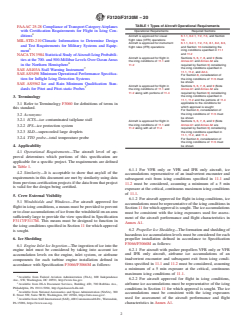
TABLE 1 Types of Aircraft Operational Requirements
FAAAC 25-28 Compliance ofTransport CategoryAirplanes
with Certification Requirements for Flight in Icing Con- Operational Requirements Required Sections
ditions Aircraft is approved for visual 6.1.1, 6.2.1, 7.2, 7.3, and Section
flight rules (VFR) operations 10.
MIL-STD-210 Climatic Information to Determine Design
Aircraft is approved for instrument 6.1.1, 6.2.1, 7.2, 7.3, 8.1, 8.2, 8.3,
and Test Requirements for Military Systems and Equip-
flight rules (IFR) operations and Section 10 considering the
icing conditions specified in 11.1
ment
and 11.2
NACATN3984 StatisticalStudyofAircraftIcingProbabili-
Aircraft is approved for flight in Sections 5, 6, 7, 8, and 9 (Note
tiesatthe700-and500-MillibarLevelsOverOceanAreas
the icing conditions of 11.1 and Annex A1 and Annex A2 are
11.2 required by Section 9) considering
in the Northern Hemisphere
the icing conditions specified in
SAE AS403A Stall Warning Instrument
11.1, 11.2, and A2.4.
SAEAS5498 Minimum Operational Performance Specifica-
For Section 8, consideration of
the icing conditions of 11.5 must
tion for Inflight Icing Detection Systems
be shown
SAE AS5562 Ice and Rain Minimum Qualification Stan-
Aircraft is approved for flight in Sections 5, 6, 7, 8, and 9 (Note
dards for Pitot and Pitot-static Probes
the icing conditions of 11.1 and Annex A1 and Annex A2 are
11.2 along with portions of 11.4 required by Section 9) considering
the icing conditions specified in
3. Terminology
11.1, 11.2 and the portions of 11.4
3.1 Refer to Terminology F3060 for definitions of terms in applicable to the conditions for
which approval is sought
this standard.
For Section 8, consideration of
the icing conditions of 11.5 must
3.2 Acronyms:
be shown
3.2.1 ICTS—ice contaminated tailplane stall
Aircraft is approved for flight in Sections 5, 6, 7, 8, and 9 (Note
the icing conditions of 11.1 and Annex A1 and Annex A2 are
3.2.2 IPS—ice protection system
11.2 along with all of 11.4 required by Section 9) considering
3.2.3 SLD—supercooled large droplets
the icing conditions specified in
11.1, 11.2, and 11.4.
3.2.4 TTO probe—total temperature probe
For Section 8, consideration of
the icing conditions of 11.5 must
4. Applicability be shown
4.1 Operational Requirements—The aircraft level of ap-
proval determines which portions of this specification are
applicable for a specific project. The requirements are defined
in Table 1.
6.1.1 For VFR only or VFR and IFR only aircraft, ice
4.2 Similarity—It is acceptable to show that any/all of the
accumulations representative of an inadvertent encounter and
requirements in this document are met by similarity using data
subsequent exit from icing conditions specified in 11.1 and
frompreviouscertificationprojectsifthedatafromthatproject
11.2 must be considered, assuming a minimum ofa5min
is valid for the design being certified.
exposure at the critical, continuous maximum icing conditions
of 11.1.
5. Crew External Visibility
6.1.2 For aircraft approved for flight in icing conditions, ice
5.1 Windshields and Windows—For aircraft approved for
accumulations must be representative of the icing conditions in
flight in icing conditions, a means must be provided to prevent
Section 11forwhichapprovalissought.Theiceaccumulations
or to clear accumulations of ice from the windshield on an area
must be consistent with the icing exposures used for assess-
sufficiently large to provide the view specified in Specification
ment of the aircraft performance and flight characteristics in
F3117/F3117M. This means must be designed to function in
Annex A1.
the icing conditions specified in Section 11 for which approval
6.2 PropellerIceShedding—The formation and shedding of
is sought.
hazardous ice accumulation levels must be considered for each
6. Ice Shedding
propeller installation defined in accordance to Specification
F3066/F3066M as follows:
6.1 EngineInletIceIngestion—The ingestion of ice into the
6.2.1 For aircraft with pusher propellers VFR only or VFR
engine inlet must be considered by taking into account ice
and IFR only aircraft, airframe ice accumulations of an
accumulation levels on the engine, inlet system, or airframe
inadvertent encounter and subsequent exit from icing condi-
components for each turbine engine installation defined in
tions specified in 11.1 and 11.2 must be considered, assuming
accordance with Specification F3066/F3066M as follows:
a minimum of a 5 min exposure at the critical, continuous
maximum icing conditions of 11.1.
Available from Federal Aviation Administration (FAA), 800 Independence
6.2.2 For aircraft approved for flight in icing conditions,
Ave., SW, Washington, DC 20591, http://www.faa.gov.
airframe ice accumulations must be representative of the icing
Available from DLA Document Services, Building 4/D, 700 Robbins Ave.,
Philadelphia, PA 19111-5094, http://quicksearch.dla.mil.
conditions in Section 11 for which approval is sought. The ice
Available from National Aeronautics and Space Administration (NASA), 300
accumulations must be consistent with the icing exposures
E. Street SW, Suite 5R30, Washington, DC 20546, https://ntrs.nasa.gov/.
used for assessment of the aircraft performance and flight
Available from SAE International (SAE), 400 Commonwealth Dr.,Warrendale,
PA 15096, https://www.sae.org. characteristics in Annex A1.
F3120/F3120M−20
6.3 Airframe Ice Shedding—Ice accumulation levels and the aircraft engine certification ice ingestion or hail ingestion
damage criteria that must be considered with respect to certification test results.
airframe ice shedding are as follows:
6.3.1 For aircraft approved for flight in icing conditions, 7. Engine Installation and Induction System Ice
airframe ice accumulations must be representative of the icing
Protection
conditions in Section 11 for which approval is sought. The ice
7.1 Propellers—For aircraft approved for flight in icing
accumulations must be consistent with the icing exposures
conditions, propellers and other components of complete
used for assessment of the aircraft performance and flight
engine installations defined in accordance with Specification
characteristics in Annex A1.
F3066/F3066M must meet the requirements of 7.1.1 through
6.3.2 Any airframe damage resulting from ice shedding:
7.1.2.
6.3.2.1 Must not significantly affect the airframe’s structural
7.1.1 Ice accumulations must be representative of the icing
integrity.
conditions in Section 11 for which approval is sought. The ice
6.3.2.2 Must not degrade performance and flight character-
accumulations must be consistent with the icing exposures
istics below levels required in Annex A1.
used for assessment of the aircraft performance and flight
6.3.2.3 Be shown acceptable for continued in-service use.
characteristics in Annex A1.
6.3.3 Engine ingestion of shed ice during flight test demon-
7.1.2 An analysis shall be provided that:
strations must not result in more damage than the engine was
7.1.2.1 Substantiates the chordwise and spanwise ice pro-
satisfactorily demonstrated to withstand during testing for
tection coverage.
engine type certification.
7.1.2.2 Substantiates the IPS thermal energy rates or fluid
6.4 Ice Protection System (IPS) Failure Considerations—
rates.
Hazards associated with the potential shedding of ice from
7.1.2.3 Calculates intercycle ice accretions for propeller
normally protected surfaces that can result in engine ingestion
deice systems and shows resulting efficiency losses.The use of
or significant airframe damage (beyond levels required to meet
Fig. A1.1 or Fig. A1.2, as appropriate for the icing condition
flight standards defined in Annex A1) must be mitigated
being addressed, is also acceptable in place of the analysis.
through the system safety requirement as defined in Specifica-
7.2 Turbine Engines in Flight—Each turbine engine and its
tion F3061/F3061M. Ice accumulations must be representative
air inlet system must operate throughout its flight power range
of the icing conditions in Section 11 for which approval is
as described in Specification F3066/F3066M:
soughtusingexitscenariosasdescribedinA2.3.Consideration
7.2.1 In the icing conditions specified in 11.1 and 11.2.
of system failures after an unintentional encounter outside of
7.2.2 In the icing conditions of 11.4 for which approval is
the approved icing conditions of Section 11 is not required.
sought.
6.5 Ice Shedding Analysis:
7.2.3 In both falling and blowing snow conditions of Table
6.5.1 Experience from prior engine ice ingestion certifica-
2 within the limitations established for the airplane for such
tion testing indicates that high aspect ratio ice slabs typically
operation.
break into smaller pieces during ingestion resulting in indi-
vidual pieces that are typically one-third to one-half the
7.3 Turbine Engines on Ground—Each turbine engine and
original size.
its air inlet system must operate at idle on the ground as
6.5.1.1 Aspect ratio is defined as the ratio of the maximum
described in Specification F3066/F3066M.
dimension over the minimum dimension. Typical engine in-
7.3.1 In the rime and glaze icing conditions defined in Table
gestioncertificationiceslabshaveaspectratiosgreaterthan24.
3.
6.5.1.2 Industry experience also indicates that general air-
7.3.2 For aircraft approved for operation in the icing con-
frame shapes (radome, base of windshield, and antennas)
ditions of 11.4, the large droplet condition as defined in Table
typically experience similar or greater breakup due to the rapid
3 also applies.
deceleration as they enter the airstream. However, aspect ratios
7.3.3 InbothfallingandblowingsnowofTable2withinthe
and results are more variable than the engine testing experi-
limitations established for the airplane for such operation.
ence.
6.5.2 Thinairframeiceshapesorsinglehorniceshapeswith
similar aspect ratios to the engine ice ingestion certification
shapes can assume a breakup to one-third of the original
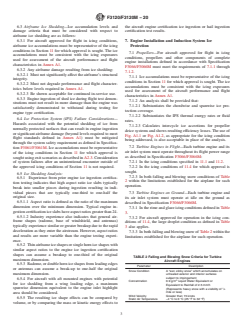
TABLE 2 Falling and Blowing Snow Criteria for Turbine
maximum dimension.
Aircraft Engines
6.5.3 Radome,ordoublehorniceshapesfromleadingedges
Parameter Description
or antennas can assume a break-up to one-half the original
Snow Condition A “wet, sticky snow” which accumulates on
maximum dimension.
unheated exterior and interior surfaces
subject to impingement
6.5.4 For aircraft with aft mounted engines with potential
Concentration 0.9 g/m Liquid Water Equivalent or
for ice shedding from a wing leading edge, a maximum
Equivalent to Rainfall of 2.5 mm/h
spanwise dimension equivalent to the engine inlet highlight
(Represents heavy snow with a visibility of ⁄4
mile or less)
area should be considered.
Wind Velocity Greater than 15 knots
6.5.5 The resulting ice shape effects can be compared by
Static Air Temperature –4 °C to 0 °C (25 °F to 32 °F)
volume, or by comparing the mass or kinetic energy effects to
F3120/F3120M−20
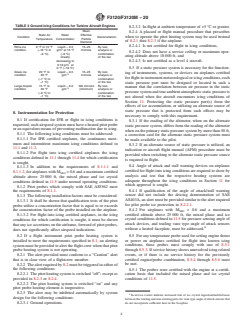
TABLE 3 Ground Icing Conditions for Turbine Aircraft Engines
8.2.3.2 In-flight at ambient temperature of +5 °C or greater.
Mean
8.2.4 A placard or flight manual procedure that prescribes
Static Air Water Effective
when to operate the pitot heating system may be used instead
Condition Demonstration
Temperature Concentration Particle
of 8.2.1 thru 8.2.3 if the airplane:
Diameter
8.2.4.1 Is not certified for flight in icing conditions,
Rime ice 0°Fto15°F Liquid – 0.3 15–25 By test,
condition (–18 °C to g/m at 15 °F microns analysis or
8.2.4.2 Does not have a service ceiling or maximum oper-
–9 °C) (–9 °C) combination
ating altitude above 18 000 ft, and
linearly of the two
decreasing to
8.2.4.3 Is not certified as a level 4 aircraft.
0.19 g/m at
0 °F (–18 °C) 8.3 If a static pressure system is necessary for the function-
Glaze ice 20 °F to Liquid – 0.3 15–25 By test,
ing of instruments, systems, or devices on airplanes certified
^3
condition 30 °F g/m microns analysis or
forflightininstrumentmeteorologicaloricingconditions,each
(–7°Cto combination
–1 °C) of the two
static pressure port must be designed or located in such a
Large droplet 15 °F to Liquid – 0.3 100 microns By test,
manner that the correlation between air pressure in the static
^3
condition 30 °F g/m (minimum) analysis or
pressuresystemandtrueambientatmosphericstaticpressureis
(–9°Cto combination
–1 °C) of the two
not altered when the aircraft encounters icing conditions of
Section 11. Protecting the static pressure port(s) from the
effects of ice accumulation, or utilizing an alternate source of
static pressure that is protected from such effects may be
8. Instrumentation Ice Protection
necessary to comply with this requirement.
8.1 If certification for IFR or flight in icing conditions is
8.3.1 If the reading of the altimeter, when on the alternate
requested, each airspeed system must have a heated pitot probe
static pressure system, differs from the reading of the altimeter
or an equivalent means of preventing malfunction due to icing.
when on the primary static pressure system by more than 50 ft,
8.1.1 The following icing conditions must be addressed:
a correction card for the alternate static pressure system must
8.1.1.1 For IFR certified airplanes, the continuous maxi-
be made available to the pilot.
mum and intermittent maximum icing conditions defined in
8.3.2 If an alternate source of static pressure is utilized, an
11.1 and 11.2.
indication or aircraft flight manual (AFM) procedure must be
8.1.1.2 For flight into icing certified airplanes the icing
provided when switching to the alternate static pressure source
conditions defined in 11.1 through 11.4 for which certification
is required in flight.
is sought.
8.4 Angle of attack and stall warning devices on airplanes
8.1.1.3 In addition to the requirements of 8.1.1.1 and
certified for flight into icing conditions are required to show by
8.1.1.2, for airplanes with M > 0.6 and a maximum certified
MO
analysis and test that the respective heating systems are
altitude above 25 000 ft, the mixed phase and ice crystal
adequate throughout the icing conditions in Section 11 for
conditions defined in 11.5 under normal operating conditions.
which approval is sought.
8.1.2 Pitot probes which comply with SAE AS5562 meet
8.4.1 If qualification of the angle of attack/stall warning
the requirements of 8.1.1.
sensor did not include the deicing demonstration of SAE
8.1.3 The following installation factors must be considered:
AS403A,analertmustbeprovidedsimilartothealertrequired
8.1.3.1 It shall be shown that qualification tests of the pitot
for pilot probe ice protection in 8.2.2.1.
probe utilize a concentration factor that is equal to or exceeds
8.4.2 For airplanes with M > 0.6 and a maximum
the concentration factor of the probe installed on the airplane.
MO
certified altitude above 25 000 ft, the mixed phase and ice
8.1.3.2 For flight into icing certified airplanes, in the icing
crystal conditions defined in 11.5 for pressure sensing angle of
conditions for which certification is sought, it must be shown
attack devices, and trailing vane type angle of attack sensors
that any ice accretions on the airframe, forward of pitot probes,
without a heated faceplate, must be addressed.
does not significantly affect airspeed indications.
8.2 If a flight instrument pitot probe heating system is 8.5 For any temperature probe used for setting engine thrust
installed to meet the requirements specified in 8.1, an alerting or power on airplanes certified for flight into known icing
system must be provided to alert the flight crew when that pitot conditions, these probes must comply with one of 8.5.1
probe heating system is not operating. through 8.5.3. If service history shows unresolved icing related
8.2.1 The alert provided must conform to a “Caution” alert events, or if there is no service history for the previously
certified engine/probe combination, 8.5.4 through 8.5.6 must
that is in clear view of a flightcrew member.
8.2.2 The alert required by 8.2 must be triggered in either of be met.
the following conditions: 8.5.1 The probes were certified with the engine at a certifi-
8.2.2.1 The pitot heating system is switched “off”; except as
cation basis that included the mixed phase and ice crystal
provided in 8.2.3 or 8.2.4. conditions of 11.5.
8.2.2.2 The pitot heating system is switched “on” and any
pitot probe heating element is inoperative.
8.2.3 The alert may be inhibited automatically by system
In-service events indicate increased risk of ice crystal ingestion/melt/refreeze
design for the following conditions:
betweentherotatingandnon-rotatingpartsforvanetypeangleofattacksensorsthat
8.2.3.1 Ground operations. do not incorporate sufficient heat in the faceplate.
F3120/F3120M−20
8.5.1.1 As installed, the concentration factor must be shown (2) This analysis is needed to establish the chordwise
to be no higher than that demonstrated for the Part 33 or CS-E extents of the areas to be protected or the potential for any
engine certification. impingement aft of the protected areas.
(3) A Langmuir A distribution at 40 µ median volumetric
8.5.2 The probes are not susceptible to blockage by ice
diameter (MVD) may be used in the chordwise protection
crystals by design. This must be demonstrated by either:
analysis,howevericeaccretionthatmayresultusingLangmuir
8.5.2.1 Service history; or
E or using local collection efficiencies below 0.1, or both, shall
8.5.2.2 Tests in the ice crystal conditions defined in 11.5,
be accounted for in defining critical ice accretions.
including all appropriate concentration factors.
(4) This type of analysis also determines the quantity of
8.5.3 The probes are similar to other designs, used under
heat (or flow rate for fluid systems) required for thermal (or
similar engine inlet conditions, in certified application with no
fluid) IPSs.
ice crystal events in service, and the following must be similar
(5) Analysis codes may be used provided they have been
to the previously certified design:
found acceptable by the governing civil aviation authority, or
8.5.3.1 Inlet conditions, including mass airflow, and instal-
will be validated during subsequent tests. See A2.1.1.3.
lation of the temperature probes, including local concentration
9.1.2 When performing the system safety analysis required
factor of ice crystals;
in Specification F3061/F3061M for the IPSs and airplane
8.5.3.2 Software logic used to monitor temperature signals
systems; 9.1.2.1 – 9.1.2.3 must be met.
(including for ice crystal blockage) and select the temperature
9.1.2.1 Substantiation of the hazard classification of IPS
for engine thrust setting; and
failure conditions shall be accomplished through analysis or
8.5.3.3 Flight envelope (altitude, temperature, airspeed).
simulated failure ice shape flight testing, or both.
8.5.4 The system design must mitigate the threat of ice
9.1.2.2 Table 4 provides the probability of encountering the
crystal blockage by full authority digital engine control (FA-
icing conditions in Section 11 for an airplane certified for flight
DEC)logicorflightcrewwarningindications,orboth,orother
in icing conditions.
similar means.
9.1.2.3 IPS power sources must meet the system safety
8.5.5 The amount of thrust loss due to temperature probe
analysis and power source capacity requirements of Specifica-
icingmustbelessthan3%atthetake-offandgo-aroundpower
tion F3061/F3061M.
settings unless it is shown a larger loss of thrust is acceptable.
9.1.3 Critical ice shape accumulations on antennas, masts,
The value of3%isthe interpretation of “serious loss of power
orothercomponentsattachedexternallytotheaircraftmustnot
or thrust” for compliance to induction system icing require-
resultinhazards,suchasdamagetotheseexternalcomponents,
ments in past engine certification projects.
or damage from ice shedding into the engines or impacting the
8.5.6 The AFM shall include any required statements and airframe (reference Section 6).
procedures associated with the requirements of 8.5.5. 9.1.3.1 Similarity to prior design, flight tests in simulated or
natural icing conditions, critical shape impact assessments, or
use of artificial ice shapes to assess bending or vibration
9. Flight Into Icing Conditions
characteristics of external components are all acceptable meth-
9.1 Certificationforflightintoicingconditionsmustcomply
ods when properly substantiated.
with the requirements of 9.1.1 through 9.1.9.
9.1.4 When performing the flutter analysis required in
9.1.1 Analyses must be performed to establish, on the basis
Specification F3093/F3093M, any mass accumulations on
of the aircraft’s operational needs, the coverage and adequacy
unprotected and protected surfaces, including any accretions
oftheIPSforthevariouscomponentsoftheaircraftasfollows:
that could develop on control surfaces, must be considered. Ice
(1) the icing conditions defined in Section 11 for which
accretions to consider must include the holding and failure
approval is sought, which shall include a 45 min hold with no
shapes defined in Annex A2.
horizontal extent correction; and (2) the flight conditions that
9.1.5 When performing the electrical load analysis required
provide the maximum water catch.
in Specification F3231/F3231M or Specification F3316/
9.1.1.1 For airframe areas left unprotected, supporting data
F3316M, the operation of IPSs and airplane systems must be
and rationale must be provided for allowing them to remain
unprotected. Appendix X1 contains a list of areas that shall be
TABLE 4 Probability of Encountering Icing
considered. The performance and flight characteristics require-
mentsof9.1.6andthesheddingrequirementsofSection6shall
NOTE 1—Probabilities should not be reduced based on phases of flight.
be considered when determining airframe areas to be left
Airworthiness Level
Continuous Maximum
unprotected.
(in accordance with Supercooled Large
and Intermittent Maxi-
Specification F3061/ Drop Icing Conditions
9.1.1.2 A drop impingement or water catch analysis, or mum Icing Conditions
F3061M)
both, shall be accomplished, of the wing, horizontal and
-1
1 10 per
-2
10 per
vertical stabilizers, and any other leading edges or protuber-
2 flight
flight
A
3 hour
ances that may require protection as applicable for the type of
B
hour
IPS.
A
Based on NACA TN 3984 icing observations.
(1) The analysis must consider all the airplane’s flight
B
Reference FAA AC 25-28, Probability of Encountering Appendix O Conditions
configurations, phases of flight, and operating envelopes (in-
section.
cluding airspeeds, altitudes, and angles of attack).
F3120/F3120M−20
considered throughout the airplane flight envelope under con- (iii)Aflashlight or other portable illumination source is not
ditions requiring operation of the systems. permitted to provide external lighting.
9.1.9.4 For aircraft equipped for a crew of two pilots, if
9.1.5.1 If applicable, a load shedding sequence must be
external visual cues are required for IPS activation or detection
provided so the pilot may assure that adequate power is
of freezing drizzle, freezing rain, or severe ice accretions, they
available to the ice protection equipment and other necessary
shall be provided for both pilots in their normal seating
equipment for flight in icing conditions.
position.
9.1.6 The performance and flight characteristics require-
9.1.9.5 The airplane must incorporate provisions to allow
ments of Annex A1 must be met.
the flightcrew close access to the wing upper surface to
9.1.7 Except as provided by 4.2, in addition to the analysis
facilitate a pre-takeoff contamination inspection if not possible
and physical evaluation prescribed in 9.1.1 through 9.1.6, the
while standing on the ground. Recessed steps and handles in
effectiveness of the IPS as a whole and its components must be
the fuselage, in proximity to the wing leading edge, would be
shown by flight tests of the aircraft or its components in
one example.
measured natural atmospheric icing conditions.
9.1.9.6 A primary or advisory ice detection system must
9.1.8 One or more of the following tests, as found necessary
comply with Annex A4.
to determine the adequacy of the IPS and airplane systems
9.1.10 After the initial activation of the airframe IPS:
must be accomplished.
9.1.10.1 The IPS must be designed to operate continuously;
9.1.8.1 Laboratory dry air or simulated icing tests, or a
or
combination of both, of the components or models of the
9.1.10.2 The airplane must be equipped with a system that
components;
automatically cycles the IPS; or
9.1.8.2 Flight dry air tests of the IPS as a whole, or its
9.1.10.3 An ice detection system must be provided to alert
individual components;
the flightcrew each time the IPS must be cycled.
9.1.8.3 Flight test of the aircraft or its components in
9.1.11 The following weight and center of gravity limita-
measured simulated icing conditions;
tions (Specification F3082/F3082M Load Distribution Limits
9.1.8.4 Flight test of the aircraft in a cold soak condition
section and Weight Limits section) must be considered for
following exposure to liquid precipitation to evaluate the
flight into known icing aircraft.
following systems:
9.1.11.1 No changes in the airplane load distribution limits
(1) Pneumatic systems susceptible to accumulations of
andairplaneweightlimits,fromthosefornon-icingconditions,
ambient moisture.
are allowed for flight in icing conditions.
(2) Angle of attack sensors.
9.1.11.2 The flight tests required in Annex A1 shall be
9.1.9 Ameans must be provided for determining the forma-
conducted at the critical weight and center of gravity position.
tion of ice on the critical parts of the aircraft when required for
9.1.12 The AFM must contain information for the safe
activation of IPSs, or for exiting severe icing conditions.
operation of the aircraft in icing conditions.
9.1.9.1 For all phases of flight in which the IPS is allowed
9.1.12.1 The limitations section of the AFM must include:
to be operated, one of the following methods of icing detection
(1) A statement similar to the following: “In icing condi-
and activation of the airframe IPS must be provided:
tions the airplane and its IPSs must be operated as described in
(i) A primary ice detection system that automatically
theoperatingproceduressectionofthismanual.Wherespecific
activates, or alerts the flightcrew to activate, the airframe IPS.
operational speeds and performance information have been
(ii) Identification of conditions conducive to airframe icing
establishedforsuchconditions,thisinformationmustbeused.”
as defined by an appropriate static or total air temperature and
(2) A statement similar to “Takeoff is prohibited with any
visible moisture for use by the flightcrew to activate the
frost, ice, snow or slush adhering to the wings, horizontal
airframe IPS with or without an advisory ice detection system.
stabilizer, control surfaces, propeller blades, or engine inlet.”
(iii) A definition of visual cues for recognition of the first
Modify as applicable or add any other surface deemed critical.
sign of ice accretion on a specified surface to alert the
(3) For high speed and level 4 category airplanes, a visual
flightcrew to activate the airframe IPS.
and tactile inspection of the wing leading edge and upper
9.1.9.2 An advisory ice detection system that automatically
surface in:
activates, or alerts the flightcrew to activate the airframe ice
(a) Ground icing conditions.
protection may be used to supplement 9.1.9.1(ii) or (iii).
(b) Conditions conducive to upper wing surface ice ac-
9.1.9.3 For the cues in 9.1.9.1(ii) or (iii), adequate lighting cretion caused by cold soak fuel, unless it is shown that the
must be provided for the use of this means during night aircraft design precludes such surface ice contamination.
operation. (4) Minimum airspeed in icing conditions for all flap
(i) Any illumination must be of a type that will not cause settings approved for flight in icing conditions.
glare or reflection that would handicap crewmembers in the (5) Flap:
(a) Maximum flap deflection if required to preclude ice
performance of their duties.
(ii) Lighting must be sufficient to allow all required contaminated tailplane stall (ICTS).
flightcrew to observe the ice accretion in their normal seated (b) A statement similar to “flaps must be retracted for
position. holding or extended operations in icing conditions.”
F3120/F3120M−20
(6) IPSs: (1) Pre-flight checks of IPSs prior to flights in known or
(a) For airplanes without a primary ice detection system, forecast icing. Pre-flight procedures of fluid anti ice/deice
the AFM Limitations shall require activation of IPSs at first systems shall be referenced in the Limitations section. Fluid
systems, even when operational, may require time to “prime”
sign of ice accretion on a specified monitored or reference
the panels.
surface or in potential icing conditions. Potential icing condi-
(2) Recovery procedure for stall warning, and low airspeed
tions shall be defined as 5 °C ambient temperature/10° total
awareness system activation if applicable, that emphasizes
temperature in visible moisture (clouds, fog, precipitation).
reduction in angle of attack.
(b) For airplanes with fluid IPSs, the AFM Limitations
(3) Exiting SLD, if approval did not include either a
shall state a minimum dispatch fluid level that is at least the
portion or the whole envelope of 11.4.
amount required for protection for 45 min based on the flow
rate required in critical continuous maximum icing conditions, 9.1.12.3 The performance section of theAFM must include
with no correction for cloud horizontal extent. the following in the same format as non-icing performance
data:
(7) Astatementprohibitingflightinsevereicingconditions
(1) Stall speed increase due to critical ice accretion and
or conditions that are determined to contain freezing rain or
corrections on reference landing approach speed, V .
freezing drizzle if approval did not include neither a portion
REF
(2) Effects of IPS operation or ice accretions, or both, if
nor the whole supercooled large droplets (SLD) envelope in
applicable, on takeoff speeds and performance.
11.4, along with listing the following visual cues to identify
(3) Balked landing climb data, and approach climb data if
these conditions:
required to be determined, with critical ice accretions.
(a) Unusually extensive ice accreted on the airframe in
(4) En route climb performance if the service ceiling with
areas not normally observed to collect ice.
critical ice accretions is less than 22 000 ft.
(b) Accumulation of ice on the upper surface or lower
(5) Landing distance data if reference landing approach
surface of the wing aft of the protected area.
speed, V in icing conditions is higher than non-icing.
REF
(c) Accumulation of ice on the propeller spinner or
9.1.13 The airframe IPS must be designed and certified to
engine nacelle farther back than normally observed.
the icing conditions of Section 11 for which approval is sought
(d) Accumulation of ice on cockpit side windows.
and be available above 30 000 ft. If the system is inhibited
(e) Visible rain at temperatures below +5 °C OAT.
above 30 000 ft or if the airframe IPS performance is inten-
(f) Droplets that splash or splatter on impact at tempera-
tionally reduced to meet power availability requirements for
tures below +5 °C OAT.
altitudesabove30 000ft,itmustbeshownthattheairplanecan
(g) Performance losses larger than normally encountered
operate safely in icing conditions at altitudes above 30 000 ft,
in icing conditions. It is possible to experience severe ice
or approval for flight in icing shall be restricted to operations
accretions not visible to the flight crew, such as wing lower
below that altitude.
surface accretion on a low wing airplane, or propeller blade
9.1.13.1 For airframe IPSs inhibited above 30 000 ft, the
accretion.
applicant must show compliance to the flight characteristic
(8) Astatement that if the airplane encounters severe icing
requirements in A1.1.1 with either the critical ice accretions
conditionsorconditionsthataredeterminedtocontainfreezing
defined in 9.1.13.5 or with simulated failure ice shapes defined
rain or freezing drizzle, for which the airplane is not approved,
in A2.3.
the pilot must immediately exit them by changing altitude or
course, or landing. If necessary, request air traffic control 9.1.13.2 For airframe IPS with intentionally reduced perfor-
(ATC) priority to exit the SLD conditions or declare an mance to meet power availability requirements for altitudes
above 30 000 ft, the applicant may show that the critical
emergency. Additionally the following procedures must be
protected surface ice accretion above 30 000 ft is less critical
included in the AFM limitations section:
than the critical protected surface ice that exists in Section 11
(a) The autopilot must be disconnected. If the autopilot is
icing conditions for which approval is sought. “Less critical”
engaged, hold the control wheel firmly and disengage the
mustaccountforsize,chordlocation,andshapeofrunbackice.
autopilot.
(b) If the flaps are extended, do not retract them until the 9.1.13.3 Analysis, validated by test, may be used to deter-
airframe is clear of ice or airplane has landed. mine the wing runback ice that exists above 30 000 ft on
(c) Avoid abrupt and excessive maneuvering. thermal systems.
(d) If an unusual roll response or uncommanded control
9.1.13.4 Dryairflighttestsabove30 000ftshallvalidatethe
movement is observed, reduce the angle-of-attack by increas-
internal heat model and empirical data must validate the
ing airspeed or rolling wings level (if in a turn), and apply
external heat model. A pressurized icing tunnel or sea level
additional power, if needed.
tunnel with scaling for altitude may be acceptable sources of
(e) Report these weather conditions to ATC.
empirical data.
(9) All wing ice inspection lights must be operable prior to
9.1.13.5 The critical ice accretion above 30 000 ft must
flightintoknownorforecasticingatnight.Thissupersedesany
consider:
relief provided by the Master Minimum Equipment List
(1) Unprotected surfaces, A transit (climb, cruise, or de-
(MMEL).
scent) through the more critical of 11.1 or 11.2 icing condi-
9.1.12.2 The procedures section of the AFM must include: tions.
F3120/F3120M−20
(2) Protected surfaces: A transit (climb, cruise, or descent) 11. Atmospheric Icing Conditions
at altitudes between 30 000 ft and the maximum operating
11.1 The maximum continuous intensity of atmospheric
altitude through the more critical of 11.1 or 11.2 icing
icing conditions (Continuous Maximum Icing) is defined by
conditions.
the variables of the cloud liquid water content (LWC), the
9.1.13.6 For turbojet engines mounted behind the wing, the
mean effective diameter of the cloud droplets, the ambient air
applicant must show that shedding of ice accretions above
temperature, and the inter-relationship of these three variables
30 000 ft will not result in a loss of engine thrust. All the
as shown in Fig. 1. The limiting icing envelope in terms of
protected surface ice accretion shall be considered to shed at
altitude and temperature is given in Fig. 2.
once. For example, an airplane in which the airframe ice
11.1.1 The inter-relationship of cloud LWC with drop di-
protection is inhibited above 30 000 ft, all the ice will shed at
ameter and altitude is determined from Fig. 1 and Fig. 2.
once when the system is activated during descent through
11.1.2 The cloud LWC for continuous maximum icing
30 000 ft.
conditions of a horizontal extent, other than 17.4 nautical
miles, is determined by the value of LWC of Fig. 1, multiplied
10. Aircraft Not Approved for Flight in Icing
by the appropriate factor from Fig. 3.
10.1 Aircraft Without Airframe IPSs—Operating limitations
11.2 The intermittent maximum intensity of atmospheric
and kinds of operation placards must specifically prohibit
icing conditions (Intermittent Maximum Icing) is defined by
operation into known icing conditions.
the variables of the cloud LWC, the mean effective diameter of
10.2 Aircraft With Inadvertent Encounter IPSs:
the cloud droplets, the ambient air temperature, and the
10.2.1 IPSs that are installed on aircraft not approved for
interrelationship of these three variables as shown in Fig. 4.
flight in icing are defined as inadvertent IPSs. These systems
The limiting icing envelope in terms of altitude and tempera-
are neither designed, nor approved for flight in known icing
ture is given in Fig. 5.
conditions and are subject to the same operating limitations as
11.2.1 The inter-relationship of cloud LWC with drop di-
aircraft without IPSs.
ameter and altitude is determined from Fig. 4 and Fig. 5.
10.2.2 The installation of the system (not operating) must
11.2.2 The cloud LWC for intermittent maximum icing
notdegradeperformanceandflightcharacteristicsbelowlevels
conditions of a horizontal extent, other than 2.6 nautical miles,
required in 14 CFR Part 23Amend 62, referenced in Section 2.
is determined by the value of cloud LWC of Fig. 4 multiplied
10.2.3 If the operation of the system can affect the require-
by the appropriate factor in Fig. 6.
ments of 14 CFR Part 23 Amend 62, referenced in Section 2,
11.3 The maximum intensity of atmospheric icing condi-
itmustbedemonstratedthattherearenohazardouseffectswith
tions for takeoff (Takeoff Maximum Icing) is defined by the
system operation (for example, deicer inflation, fluid
cloud LWC of 0.35 g/m , the mean effective diameter of the
dispersion, hot bleed air effects).
cloud droplets of 20 microns, and the ambient air temperature
10.2.4 The systems must meet the systems level require-
at ground level of –9 °C. The Takeoff Maximum Icing condi-
ments as defined in Specification F3061/F3061M. However
tions extend from ground level to a height of 1500 ft above the
since the aircraft is not approved for flight in icing, the system
level of the takeoff surface.
hazard classification is “no safety effect.”
10.2.5 Other systems requirements from Specification
11.4 SLD icing conditions consist of freezing drizzle and
F3061/F3061M must be met similar to other non essential
freezing rain occurring in or below, or both, stratiform clouds.
equipment. This includes consideration of potential effects on
SLD icing conditions are defined by the parameters of altitude,
essentialequipmentandthepotentialforhazardsduetosystem
vertical and horizontal extent, temperature, LWC, and water
failures not related to icing effects.
mass distribution as a function of drop diameter distribution.
10.2.6 Since this aircraft is prohibited from flight in icing,
11.4.1 FreezingDrizzle—Conditionswithspectramaximum
the ice protection effectiveness of the system when operating
drop diameters from 100 µm to 500 µm.
normallymustnotcreateagreaterhazardthanthesameaircraft
11.4.1.1 Pressure altitude range: 0 to 22 000 ft MSL.
operating with no IPS. For example on systems where runback
11.4.1.2 Maximum vertical extent: 12 000 ft.
icecanbedeveloped,itmustbedemonstratedthantheeffectof
11.4.1.3 Horizontal extent: standard distance of 17.4 nauti-
the runback is no greater than the potential effect of the same
cal miles.
aircraft inadvertently encountering icing conditions.
11.4.1.4 Total LWC: Fig. 7. LWC in grams per cubic meter
10.2.7 AFM must include the system description and sys-
(g/m ) based on horizontal extent standard distance of 17.4
tem operating information and provide guidance on operating
nautical miles.
the aircraft within the limitations of the approval (for example,
11.4.1.5 Drop diameter distribution: Fig. 8.
not approved for flight into icing, abnormal procedures for
11.4.1.6 Altitude and temperature envelope: Fig. 9.
inadvertent encounters).
11.4.2 Freezing Rain—Conditions with spectra maximum
10.2.8 AFM shall include warning information on the po-
drop diameters greater than 500 µm.
tentialeffectsofinadvertenticeaccumulationssuchas:thestall
11.4.2.1 Pressure altitude range: 0 to 12 000 ft MSL.
speeds may increase; stall warning may not be reliable; there
11.4.2.2 Maximum vertical e
...
This document is not an ASTM standard and is intended only to provide the user of an ASTM standard an indication of what changes have been made to the previous version. Because
it may not be technically possible to adequately depict all changes accurately, ASTM recommends that users consult prior editions as appropriate. In all cases only the current version
of the standard as published by ASTM is to be considered the official document.
Designation: F3120/F3120M − 19 F3120/F3120M − 20
Standard Specification for
Ice Protection for General Aviation Aircraft
This standard is issued under the fixed designation F3120/F3120M; the number immediately following the designation indicates the year
of original adoption or, in the case of revision, the year of last revision. A number in parentheses indicates the year of last reapproval.
A superscript epsilon (´) indicates an editorial change since the last revision or reapproval.
1. Scope
1.1 This specification covers international standards for ice protection aspects of airworthiness and design for “general aviation”
aircraft.
1.2 The applicant for a design approval must seek the individual guidance of their respective CAA civil aviation authority (CAA)
body concerning the use of this specification as part of a certification plan. For information on which CAA regulatory bodies have
accepted this specification (in whole or in part) as a means of compliance to their Small Aircraft Airworthiness regulations
(hereinafter referred to as “the Rules”), refer to ASTM F44 webpage (www.ASTM.org/COMMITTEE/F44.htm) which includes
CAA website links.
1.3 Units—The values are stated in units common to the field of aircraft icing. Typically SI or inch-pound units are used, but in
some cases this has resulted in the use of mixed units due to the historical development of these values. In cases where values are
given in one system with the other system following in brackets, the values stated in each system mayare not benecessarily exact
equivalents; therefore, to ensure conformance with the standard, each system shall be used independently of the other. Combining
other, and values from the two systems may result in non-conformance with the standard.shall not be combined.
1.4 This standard does not purport to address all of the safety concerns, if any, associated with its use. It is the responsibility
of the user of this standard to establish appropriate safety, health, and environmental practices and determine the applicability of
regulatory limitations prior to use.
1.5 This international standard was developed in accordance with internationally recognized principles on standardization
established in the Decision on Principles for the Development of International Standards, Guides and Recommendations issued
by the World Trade Organization Technical Barriers to Trade (TBT) Committee.
2. Referenced Documents
2.1 ASTM Standards:
F3060 Terminology for Aircraft
F3061/F3061M Specification for Systems and Equipment in Small Aircraft
F3066/F3066M Specification for Aircraft Powerplant Installation Hazard Mitigation
F3082/F3082M Specification for Weights and Centers of Gravity of Aircraft
F3093/F3093M Specification for Aeroelasticity Requirements
F3117/F3117M Specification for Crew Interface in Aircraft
F3173/F3173M Specification for Aircraft Handling Characteristics
This specification is under the jurisdiction of ASTM Committee F44 on General Aviation Aircraft and is the direct responsibility of Subcommittee F44.10 on General.
Current edition approved Nov. 1, 2019Aug. 15, 2020. Published December 2019September 2020. Originally approved in 2015. Last previous edition approved in 20152019
as F3120/F3120M–15.–19. DOI: 10.1520/F3120_F3120M–19.10.1520/F3120_F3120M-20.
For referenced ASTM standards, visit the ASTM website, www.astm.org, or contact ASTM Customer Service at service@astm.org. For Annual Book of ASTM Standards
volume information, refer to the standards Document Summary page on the ASTM website.
Copyright © ASTM International, 100 Barr Harbor Drive, PO Box C700, West Conshohocken, PA 19428-2959. United States
F3120/F3120M − 20
F3179/F3179M Specification for Performance of Aircraft
F3180/F3180M Specification for Low-Speed Flight Characteristics of Aircraft
F3230 Practice for Safety Assessment of Systems and Equipment in Small Aircraft
F3231/F3231M Specification for Electrical Systems for Aircraft with Combustion Engine Electrical Power Generation
F3316/F3316M Specification for Electrical Systems for Aircraft with Electric or Hybrid-Electric Propulsion
2.2 Federal Standards:
14 CFR Part 23 (Amdt 62) Airworthiness Standards: Normal, Utility, Aerobatic, and Commuter Category Aircraft
14 CFR Part 33 (Amdt 34) Airworthiness Standards: Aircraft Engines
14 CFR Part 33 Rule 68 Airworthiness Standards: Induction System Icing
2.3 Other Standards:
EUROCAE ED-103 Minimum Operational Performance Standard for Inflight Icing Detection Systems
FAA AC 25-28 Compliance of Transport Category Airplanes with Certification Requirements for Flight in Icing Conditions
Available from U.S. Government Publishing Office (GPO), 732 N. Capitol St., NW, Washington, DC 20401, http://www.gpo.gov.
Available from Federal Aviation Administration (FAA), 800 Independence Ave., SW, Washington, DC 20591, http://www.faa.gov.
F3120/F3120M − 20
MIL-STD-210 Climatic Information to Determine Design and Test Requirements for Military Systems and Equipment
NACA TN 3984 Statistical Study of Aircraft Icing Probabilities at the 700- and 500-Millibar Levels Over Ocean Areas in the
Northern Hemisphere
SAE AS403A Stall Warning Instrument
SAE AS5498 Minimum Operational Performance Specification for Inflight Icing Detection Systems
SAE AS5562 Ice and Rain Minimum Qualification Standards for Pitot and Pitot-static Probes
3. Terminology
3.1 Refer to Terminology F3060 for definitions of terms in this standard.
3.2 Acronyms:
3.2.1 ICTS—ice contaminated tailplane stall
3.2.2 IPS—ice protection system
3.2.3 SLD—supercooled large droplets
3.2.4 TTO Probe—probe—total temperature probe
4. Applicability
4.1 Operational Requirements—The aircraft level of approval determines which portions of this specification are applicable for
a specific project. The requirements are defined in Table 1.
4.2 Similarity—It is acceptable to show that any/all of the requirements in this document are met by similarity using data from
previous certification projects if the data from that project is valid for the design being certified.
5. Crew External Visibility
5.1 Windshields and Windows—For aircraft approved for flight in icing conditions, a means must be provided to prevent or to clear
accumulations of ice from the windshield on an area sufficiently large to provide the view specified in Specification
F3117/F3117M. This means must be designed to function in the icing conditions specified in Section 11 for which approval is
sought.
6. Ice Shedding
6.1 Engine Inlet Ice Ingestion—The ingestion of ice into the engine inlet must be considered by taking into account ice
accumulation levels on the engine, inlet system, or airframe components for each turbine engine installation defined in accordance
with Specification F3066/F3066M as follows:
6.1.1 For VFR only or VFR and IFR only aircraft, ice accumulations representative of an inadvertent encounter and subsequent
exit from icing conditions specified in 11.1 and 11.2 must be considered, assuming a minimum of a five minute5 min exposure
at the critical, continuous maximum icing conditions of 11.1.
6.1.2 For aircraft approved for flight in icing conditions, ice accumulations must be representative of the icing conditions in
Section 11 for which approval is sought. The ice accumulations must be consistent with the icing exposures used for assessment
of the aircraft performance and flight characteristics in Annex A1.
6.2 Propeller Ice Shedding—The formation and shedding of hazardous ice accumulation levels must be considered for each
propeller installation defined in accordance to Specification F3066/F3066M as follows:
Available from DLA Document Services, Building 4/D, 700 Robbins Ave., Philadelphia, PA 19111-5094, http://quicksearch.dla.mil.
Available from National Aeronautics and Space Administration (NASA), 300 E. Street SW, Suite 5R30, Washington, DC 20546, https://ntrs.nasa.gov/.
Available from SAE International (SAE), 400 Commonwealth Dr., Warrendale, PA 15096, https://www.sae.org.
F3120/F3120M − 20
TABLE 1 Types of Aircraft Operational Requirements
Operational Requirements Required Sections
Aircraft is approved for VFR 6.1.1, 6.2.1, and Section 10.
operations
Aircraft is approved for visual 6.1.1, 6.2.1, 7.2, 7.3, and Section
flight rules (VFR) operations 10.
Aircraft is approved for IFR 6.1.1, 6.2.1, 8.1, 8.2, 8.3, and
operations Section 10 considering the icing
conditions specified in 11.1 and
11.2
Aircraft is approved for instrument 6.1.1, 6.2.1, 7.2, 7.3, 8.1, 8.2, 8.3,
flight rules (IFR) operations and Section 10 considering the
icing conditions specified in 11.1
and 11.2
Aircraft is approved for flight in Sections 5, 6, 7, 8, and 9 (Note
the icing conditions of 11.1 and Annex A1 and Annex A2 are
11.2 required by Section 9) considering
the icing conditions specified in
11.1, 11.2, and A2.4.
For Section 8, consideration of
the icing conditions of 11.5 must
be shown
Aircraft is approved for flight in Sections 5, 6, 7, 8, and 9 (Note
the icing conditions of 11.1 and Annex A1 and Annex A2 are
11.2 along with portions of 11.4 required by Section 9) considering
the icing conditions specified in
11.1, 11.2 and the portions of 11.4
applicable to the conditions for
which approval is sought
For Section 8, consideration of
the icing conditions of 11.5 must
be shown
Aircraft is approved for flight in Sections 5, 6, 7, 8, and 9 (Note
the icing conditions of 11.1 and Annex A1 and Annex A2 are
11.2 along with all of 11.4 required by Section 9) considering
the icing conditions specified in
11.1, 11.2, and 11.4.
For Section 8, consideration of
the icing conditions of 11.5 must
be shown
6.2.1 For aircraft with pusher propellers VFR only or VFR and IFR only aircraft, airframe ice accumulations of an inadvertent
encounter and subsequent exit from icing conditions specified in 11.1 and 11.2 must be considered, assuming a minimum of a five
minute5 min exposure at the critical, continuous maximum icing conditions of 11.1.
6.2.2 For aircraft approved for flight in icing conditions, airframe ice accumulations must be representative of the icing conditions
in Section 11 for which approval is sought. The ice accumulations must be consistent with the icing exposures used for assessment
of the aircraft performance and flight characteristics in Annex A1.
6.3 Airframe Ice Shedding—Ice accumulation levels and damage criteria that must be considered with respect to airframe ice
shedding are as follows:
6.3.1 For aircraft approved for flight in icing conditions, airframe ice accumulations must be representative of the icing conditions
in Section 11 for which approval is sought. The ice accumulations must be consistent with the icing exposures used for assessment
of the aircraft performance and flight characteristics in Annex A1.
6.3.2 Any airframe damage resulting from ice shedding:
6.3.2.1 Must not significantly affect the airframe’s structural integrity.
6.3.2.2 Must not degrade performance and flight characteristics below levels required in Annex A1.
6.3.2.3 Be shown acceptable for continued in-service use.
6.3.3 Engine ingestion of shed ice during flight test demonstrations must not result in more damage than the engine was
satisfactorily demonstrated to withstand during testing for engine type certification.
F3120/F3120M − 20
6.4 Ice Protection System (IPS) Failure Considerations—Hazards associated with the potential shedding of ice from normally
protected surfaces that can result in engine ingestion or significant airframe damage (beyond levels required to meet flight
standards defined in Annex A1) must be mitigated through the system safety requirement as defined in Specification
F3061/F3061M. Ice accumulations must be representative of the icing conditions in Section 11 for which approval is sought using
exit scenarios as described in A2.3. Consideration of system failures after an unintentional encounter outside of the approved icing
conditions of Section 11 is not required.
6.5 Ice Shedding Analysis:
6.5.1 Experience from prior engine ice ingestion certification testing indicates that high aspect ratio ice slabs typically break into
smaller pieces during ingestion resulting in individual pieces that are typically one-third to one-half the original size.
6.5.1.1 Aspect ratio is defined as the ratio of the maximum dimension over the minimum dimension. Typical engine ingestion
certification ice slabs have aspect ratios greater than 24.
6.5.1.2 Industry experience also indicates that general airframe shapes (radome, base of windshield, and antennas) typically
experience similar or greater breakup due to the rapid deceleration as they enter the airstream. However, aspect ratios and results
are more variable than the engine testing experience.
6.5.2 Thin airframe ice shapes or single horn ice shapes with similar aspect ratios to the engine ice ingestion certification shapes
can assume a breakup to one-third of the original maximum dimension.
6.5.3 Radome, or double horn ice shapes from leading edges or antennas can assume a break-up to one-half the original maximum
dimension.
6.5.4 For aircraft with aft mounted engines with potential for ice shedding from a wing leading edge, a maximum spanwise
dimension equivalent to the engine inlet highlight area should be considered.
6.5.5 The resulting ice shape effects can be compared by volume, or by comparing the mass or kinetic energy effects to the aircraft
engine certification ice ingestion or hail ingestion certification test results.
7. Engine Installation and Induction System Ice Protection
7.1 Propellers—For aircraft approved for flight in icing conditions, propellers and other components of complete engine
installations defined in accordance with Specification F3066/F3066M must meet the requirements of 7.1.1 through 7.1.2.
7.1.1 Ice accumulations must be representative of the icing conditions in Section 11 for which approval is sought. The ice
accumulations must be consistent with the icing exposures used for assessment of the aircraft performance and flight characteristics
in Annex A1.
7.1.2 An analysis shall be provided that:
7.1.2.1 Substantiates the chordwise and spanwise ice protection coverage.
7.1.2.2 Substantiates the ice protection system IPS thermal energy rates or fluid rates.
7.1.2.3 Calculates intercycle ice accretions for propeller deice systems and shows resulting efficiency losses. The use of Fig. A1.1
or Fig. A1.2, as appropriate for the icing condition being addressed, is also acceptable in place of the analysis.
7.2 Turbine Engines in Flight—Each turbine engine and its air inlet system must operate throughout its flight power range as
described in Specification F3066/F3066M:
7.2.1 In the icing conditions specified in 11.1 and 11.2.
7.2.2 In the icing conditions of 11.4 for which approval is sought.
F3120/F3120M − 20
7.2.3 In both falling and blowing snow conditions of Table 2 within the limitations established for the airplane for such operation.
7.3 Turbine Engines on Ground—Each turbine engine and its air inlet system must operate at idle on the ground as described in
Specification F3066/F3066M.
7.3.1 In the rime and glaze icing conditions defined in Table 3.
7.3.2 For aircraft approved for operation in the icing conditions of 11.4, the large droplet condition as defined in Table 3 also
applies.
7.3.3 In both falling and blowing snow of Table 2 within the limitations established for the airplane for such operation.
8. Instrumentation Ice Protection
8.1 If certification for instrument flight rules (IFR) IFR or flight in icing conditions is requested, each airspeed system must have
a heated pitot probe or an equivalent means of preventing malfunction due to icing.
8.1.1 The following icing conditions must be addressed:
8.1.1.1 For IFR certified airplanes, the continuous maximum and intermittent maximum icing conditions defined in 11.1 and 11.2.
8.1.1.2 For flight into icing certified airplanes the icing conditions defined in 11.1 through 11.4 for which certification is sought.
8.1.1.3 In addition to the requirements of 8.1.1.1 and 8.1.1.2, for airplanes with V or V ≥ 250 KCAS (and M ≥ 0.6)> 0.6
NE MO MO
and a maximum certified altitude above 25 000 ft, the mixed phase and ice crystal conditions defined in 11.5. under normal
operating conditions.
8.1.2 Pitot probes which comply with SAE AS5562 meet the requirements of 8.1.1.
8.1.3 The following installation factors must be considered:
8.1.3.1 It shall be shown that qualification tests of the pitot probe utilize a concentration factor that is equal to or exceeds the
concentration factor of the probe installed on the airplane.
8.1.3.2 For flight into icing certified airplanes, in the icing conditions for which certification is sought, it must be shown that any
ice accretions on the airframe, forward of pitot probes, does not significantly affect airspeed indications.
8.2 If a flight instrument pitot probe heating system is installed to meet the requirements specified in 8.1, an alerting system must
be provided to alert the flight crew when that pitot probe heating system is not operating.
8.2.1 The alert provided must conform to a “Caution” alert that is in clear view of a flightcrew member.
TABLE 2 Falling and Blowing Snow Criteria for Turbine
Aircraft Engines
Parameter Description
Snow Condition A “wet, sticky snow” which accumulates on
unheated exterior and interior surfaces
subject to impingement
Concentration 0.9 g/m Liquid Water Equivalent or
Equivalent to Rainfall of 2.5 mm/hr
(Represents heavy snow with a visibility of ⁄4
mile or less)
Concentration 0.9 g/m Liquid Water Equivalent or
Equivalent to Rainfall of 2.5 mm/h
(Represents heavy snow with a visibility of ⁄4
mile or less)
Wind Velocity Greater than 15 knots
Static Air Temperature –4 °C to 0 °C (25 °F to 32 °F)
F3120/F3120M − 20
TABLE 3 Ground Icing Conditions for Turbine Aircraft Engines
Mean
Static Air Water Effective
Condition Demonstration
Temperature Concentration Particle
Diameter
Rime ice 0 °F to 15 °F Liquid – 0.3 15–25 By test,
condition (–18 °C to g/m at 15 °F microns analysis or
–9 °C) (–9 °C) combination
linearly of the two
decreasing to
0.19 g/m at
0 °F (–18 °C)
Glaze ice 20 °F to Liquid – 0.3 15–25 By test,
^3
condition 30 °F g/m microns analysis or
(–7 °C to combination
–1 °C) of the two
Large droplet 15 °F to Liquid – 0.3 100 microns By test,
^3
condition 30 °F g/m (minimum) analysis or
(–9 °C to combination
–1 °C) of the two
8.2.2 The alert required by 8.2 must be triggered in either of the following conditions:
8.2.2.1 The pitot heating system is switched “off”; except as provided in 8.2.3 or 8.2.4.
8.2.2.2 The pitot heating system is switched “on” and any pitot probe heating element is inoperative.
8.2.3 The alert may be inhibited automatically by system design for the following conditions:
8.2.3.1 Ground operations.
8.2.3.2 In-flight at ambient temperature of +5 °C or greater.
8.2.4 A placard or flight manual procedure that prescribes when to operate the pitot heating system may be used instead of 8.2.1
thru 8.2.3 if the airplane:
8.2.4.1 Is not certified for flight in icing conditions,
8.2.4.2 Does not have a service ceiling or maximum operating altitude above 18 000 ft, and
8.2.4.3 Is not certified as a level 4 aircraft.
8.3 If a static pressure system is necessary for the functioning of instruments, systems, or devices on airplanes certified for flight
in instrument meteorological or icing conditions, each static pressure port must be designed or located in such a manner that the
correlation between air pressure in the static pressure system and true ambient atmospheric static pressure is not altered when the
aircraft encounters icing conditions of Section 11. Protecting the static pressure port(s) from the effects of ice accumulation, or
utilizing an alternate source of static pressure that is protected from such effects may be necessary to comply with this requirement.
8.3.1 If the reading of the altimeter, when on the alternate static pressure system, differs from the reading of the altimeter when
on the primary static pressure system by more than 50 ft, a correction card for the alternate static pressure system must be made
available to the pilot.
8.3.2 If an alternate source of static pressure is utilized, an indication or AFM aircraft flight manual (AFM) procedure must be
provided when switching to the alternate static pressure source is required in flight.
8.4 Angle of attack and stall warning devices on airplanes certified for flight into icing conditions are required to show by analysis
and test that the respective heating systems are adequate throughout the icing conditions in Section 11 for which approval is sought.
8.4.1 If qualification of the angle of attack/stall warning sensor did not include the deicing demonstration of SAE AS403A, an alert
must be provided similar to the alert required for pilot probe ice protection in 8.2.2.1.
F3120/F3120M − 20
8.4.2 For airplanes with M ≥> 0.6 and a maximum certified altitude above 25 000 ft, the mixed phase and ice crystal conditions
MO
defined in 11.5 for pressure sensing angle of attack devices, and trailing vane type angle of attack sensors without a heated
faceplate, must be addressed.
8.5 If engine inlet TTO probes are installed and provide data for thrust setting For any temperature probe used for setting engine
thrust or power on airplanes certified for flight into known icing conditions, these probes must comply with one of 8.5.1 through
8.5.3. If service history shows unresolved icing related events, or if there is no service history for the previously certified
engine/probe combination, 8.5.4 through 8.5.6 must be met.
8.5.1 The probes were certified with the engine at FAA Part 33 Amendment 34 or higher.a certification basis that included the
mixed phase and ice crystal conditions of 11.5.
8.5.1.1 As installed, the concentration factor must be shown to be no higher than that demonstrated for the Part 33 or CS-E engine
certification.
8.5.2 The probes are not susceptible to blockage by ice crystals by design (for example, are not heated).design. This must be
demonstrated by either:
8.5.2.1 Service history; or
8.5.2.2 Tests in the ice crystal conditions defined in 11.5, including all appropriate concentration factors.
8.5.3 The probes are similar to other designs which have designs, used under similar engine inlet conditions, in certified
application with no ice crystal events in service.service, and the following must be similar to the previously certified design:
8.5.3.1 Inlet conditions, including mass airflow, and installation of the temperature probes, including local concentration factor of
ice crystals;
8.5.3.2 Software logic used to monitor temperature signals (including for ice crystal blockage) and select the temperature for
engine thrust setting; and
8.5.3.3 Flight envelope (altitude, temperature, airspeed).
8.5.4 The system design mitigates must mitigate the threat of ice crystal blockage by FADEC logic andfull authority digital engine
control (FADEC) logic or flight crew warning indications, or both, or other similar means.
8.5.5 Show the The amount of thrust loss due to TTO icing is temperature probe icing must be less than 3 % at the take-off and
go-around power settings. settings unless it is shown a larger loss of thrust is acceptable. The value of 3 % is the interpretation
of “serious loss of power or thrust” for compliance to FAA Part 33 Rule 68, Induction system icing, in past induction system icing
requirements in past engine certification projects.
8.5.6 The AFM shall include any required statements and procedures associated with the requirements of 8.5.5.
9. Flight Into Icing Conditions
9.1 Certification for flight into icing conditions must comply with the requirements of 9.1.1 through 9.1.109.1.9.
9.1.1 Analyses must be performed to establish, on the basis of the aircraft’s operational needs, the coverage and adequacy of the
ice protection system IPS for the various components of the aircraft as follows: (1) the icing conditions defined in Section 11 for
which approval is sought, which shall include a 45 min hold with no horizontal extent correction; and (2) the flight conditions that
provide the maximum water catch.
9.1.1.1 For airframe areas left unprotected, supporting data and rationale must be provided for allowing them to remain
In-service events indicate increased risk of ice crystal ingestion/melt/refreeze between the rotating and non-rotating parts for vane type angle of attack sensors that do
not incorporate sufficient heat in the faceplate.
F3120/F3120M − 20
unprotected. Appendix X1 contains a list of areas that shall be considered. The performance and flight characteristics requirements
of 9.1.6 and the shedding requirements of Section 6 shall be considered when determining airframe areas to be left unprotected.
9.1.1.2 A drop impingement and/oror water catch analysis analysis, or both, shall be accomplished, of the wing, horizontal and
vertical stabilizers, and any other leading edges or protuberances that may require protection as applicable for the type of ice
protection system.IPS.
(1) The analysis must consider all the airplane’s flight configurations, phases of flight, and operating envelopes (including
airspeeds, altitudes, and angles of attack).
(2) This analysis is needed to establish the chordwise extents of the areas to be protected or the potential for any impingement
aft of the protected areas.
(3) A Langmuir A distribution at 40 μ MVD median volumetric diameter (MVD) may be used in the chordwise protection
analysis, however ice accretion that may result using Langmuir E and/oror using local collection efficiencies below 0.1 0.1, or both,
shall be accounted for in defining critical ice accretions.
(4) This type of analysis also determines the quantity of heat (or flow rate for fluid systems) required for thermal (or fluid) ice
protection systems. IPSs.
(5) Analysis codes may be used provided they have been found acceptable by the governing civil aviation authority, or will
be validated during subsequent tests. See A2.1.1.3.
9.1.2 When performing the system safety analysis required in Specification F3061/F3061M for the ice protection systems IPSs
and airplane systems; 9.1.2.1 – 9.1.2.3 must be met.
9.1.2.1 Substantiation of the hazard classification of ice protection system IPS failure conditions shall be accomplished through
analysis and/oror simulated failure ice shape flight testing.testing, or both.
9.1.2.2 Table 4 provides the probability of encountering the icing conditions in Section 11 for an airplane certified for flight in
icing conditions.
9.1.2.3 Ice protection system IPS power sources must meet the system safety analysis and power source capacity requirements of
Specification F3061/F3061M.
9.1.3 Critical ice shape accumulations on antennas, masts, or other components attached externally to the aircraft must not result
in hazards, such as damage to these external components, or damage from ice shedding into the engines or impacting the airframe
(reference Section 6).
9.1.3.1 Similarity to prior design, flight tests in simulated or natural icing conditions, critical shape impact assessments, or use of
artificial ice shapes to assess bending or vibration characteristics of external components are all acceptable methods when properly
substantiated.
9.1.4 When performing the flutter analysis required in Specification F3093/F3093M, any mass accumulations on unprotected and
protected surfaces, including any accretions that could develop on control surfaces, must be considered. Ice accretions to consider
must include the holding and failure shapes defined in Annex A2.
9.1.5 When performing the electrical load analysis required in Specification F3231/F3231M or Specification F3316/F3316M, the
operation of ice protection systems IPSs and airplane systems must be considered throughout the airplane flight envelope under
conditions requiring operation of the systems.
TABLE 4 Probability of Encountering Icing
NOTE 1—Probabilities should not be reduced based on phases of flight.
Airworthiness Level
Continuous Maximum
(per (in accordance Supercooled Large
and Intermittent Maxi-
with Specification Drop Icing Conditions
mum Icing Conditions
F3061/F3061M)
-1
1 10 per
-2
10 per
2 flight
flight
A
hour
B
hour
4 1
A
Based on NACA TN 3984 icing observations.
B
Reference FAA AC 25-28, Probability of Encountering Appendix O Conditions
section.
F3120/F3120M − 20
9.1.5.1 If applicable, a load shedding sequence must be provided so the pilot may assure that adequate power is available to the
ice protection equipment and other necessary equipment for flight in icing conditions.
9.1.6 The performance and flight characteristics requirements of Annex A1 must be met.
9.1.7 Except as provided by 9.1.94.2, in addition to the analysis and physical evaluation prescribed in 9.1.1 through 9.1.6, the
effectiveness of the ice protection system IPS as a whole and its components must be shown by flight tests of the aircraft or its
components in measured natural atmospheric icing conditions.
9.1.8 One or more of the following tests, as found necessary to determine the adequacy of the ice protection system IPS and
airplane systems must be accomplished.
9.1.8.1 Laboratory dry air or simulated icing tests, or a combination of both, of the components or models of the components;
9.1.8.2 Flight dry air tests of the ice protection system IPS as a whole, or its individual components;
9.1.8.3 Flight test of the aircraft or its components in measured simulated icing conditions;
9.1.8.4 Flight test of the aircraft in a cold soak condition following exposure to liquid precipitation to evaluate the following
systems:
(1) Pneumatic systems susceptible to accumulations of ambient moisture.
(2) Angle of attack sensors.
9.1.9 If certification for flight into icing conditions has been accomplished on prior type certificated aircraft whose designs include
components that are thermodynamically and aerodynamically equivalent to those used on a new aircraft design, certification of
these equivalent components may be accomplished by similarity to meet the requirements in 9.1.1 and 9.1.7, provided that the
applicant accounts for any differences in installation of these components.
9.1.9 A means must be provided for determining the formation of ice on the critical parts of the aircraft when required for
activation of ice protection systems, IPSs, or for exiting severe icing conditions.
9.1.9.1 For all phases of flight in which the ice protection system IPS is allowed to be operated, one of the following methods of
icing detection and activation of the airframe ice protection system IPS must be provided:
(i) A primary ice detection system that automatically activates, or alerts the flightcrew to activate, the airframe ice protection
system.IPS.
(ii) Identification of conditions conducive to airframe icing as defined by an appropriate static or total air temperature and
visible moisture for use by the flightcrew to activate the airframe ice protectionIPS with or without an advisory ice detection
system.
(iii) A definition of visual cues for recognition of the first sign of ice accretion on a specified surface to alert the flightcrew to
activate the airframe ice protection system.IPS.
(4) An advisory ice detection system that alerts the flightcrew to activate the airframe ice protection system in addition to (2)
or (3).
9.1.9.2 An advisory ice detection system that automatically activates, or alerts the flightcrew to activate the airframe ice protection
may be used to supplement 9.1.9.1 (ii) or (iii).
9.1.9.3 For the cues in 9.1.10.19.1.9.1, (ii) or (iii), adequate lighting must be provided for the use of this means during night
operation.
(i) Any illumination must be of a type that will not cause glare or reflection that would handicap crewmembers in the
performance of their duties.
(ii) Lighting must be sufficient to allow all required flightcrew to observe the ice accretion in their normal seated position.
(iii) A flashlight or other portable illumination source is not permitted to provide external lighting.
9.1.9.4 For aircraft equipped for a crew of two pilots, if external visual cues are required for ice protection system IPS activation
or detection of freezing drizzle, freezing rain, or severe ice accretions, they shall be provided for both pilots in their normal seating
position.
F3120/F3120M − 20
9.1.9.5 The airplane must incorporate provisions to allow the flightcrew close access to the wing upper surface to facilitate a
pre-takeoff contamination inspection if not possible while standing on the ground. Recessed steps and handles in the fuselage, in
proximity to the wing leading edge, would be one example.
9.1.9.6 A primary or advisory ice detection system must comply with Annex A4.
9.1.10 After the initial activation of the airframe ice protection system:IPS:
9.1.10.1 The ice protection system IPS must be designed to operate continuously; or
9.1.10.2 The airplane must be equipped with a system that automatically cycles the ice protection system; IPS; or
9.1.10.3 An ice detection system must be provided to alert the flightcrew each time the ice protection system IPS must be cycled.
9.1.11 The following weight and center of gravity limitations (Specification F3082/F3082M Load Distribution Limits section and
Weight Limits section) must be considered for flight into known icing aircraft.
9.1.11.1 No changes in the airplane load distribution limits and airplane weight limits, from those for non-icing conditions, are
allowed for flight in icing conditions.
9.1.11.2 The flight tests required in Annex A1 shall be conducted at the critical weight and center of gravity position.
9.1.12 The Aircraft Flight Manual (AFM) AFM must contain information for the safe operation of the aircraft in icing conditions.
9.1.12.1 The limitations section of the AFM must include:
(1) A statement similar to the following: “In icing conditions the airplane and its ice protection systems IPSs must be operated
as described in the operating procedures section of this manual. Where specific operational speeds and performance information
have been established for such conditions, this information must be used.”
(2) A statement similar to “Takeoff is prohibited with any frost, ice, snow or slush adhering to the wings, horizontal stabilizer,
control surfaces, propeller blades, or engine inlet.” Modify as applicable or add any other surface deemed critical.
(3) For high speed and level 4 category airplanes, a visual and tactile inspection of the wing leading edge and upper surface
in:
(a) Ground icing conditions.
(b) Conditions conducive to upper wing surface ice accretion caused by cold soak fuel, unless it is shown that the aircraft
design precludes such surface ice contamination.
(4) Minimum airspeed in icing conditions for all flap settings approved for flight in icing conditions.
(5) Flap:
(a) Maximum flap deflection if required to preclude ICTS.ice contaminated tailplane stall (ICTS).
(b) A statement similar to “flaps must be retracted for holding or extended operations in icing conditions.”
F3120/F3120M − 20
(6) Ice protection systems:IPSs:
(a) For airplanes without a primary ice detection system, the AFM Limitations shall require activation of ice protection
systems IPSs at first sign of ice accretion on a specified monitored or reference surface or in potential icing conditions. Potential
icing conditions shall be defined as 5 °C ambient temperature/10° total temperature in visible moisture (clouds, fog, precipitation).
(b) For airplanes with fluid ice protection systems, IPSs, the AFM Limitations shall state a minimum dispatch fluid level that
is at least the amount required for protection for 45 min based on the flow rate required in critical continuous maximum icing
conditions, with no correction for cloud horizontal extent.
(7) A statement prohibiting flight in severe icing conditions or conditions that are determined to contain freezing rain or
freezing drizzle if approval did not include neither a portion nor the whole SLD supercooled large droplets (SLD) envelope in 11.4,
along with listing the following visual cues to identify these conditions:
(a) Unusually extensive ice accreted on the airframe in areas not normally observed to collect ice.
(b) Accumulation of ice on the upper surface or lower surface of the wing aft of the protected area.
(c) Accumulation of ice on the propeller spinner or engine nacelle farther back than normally observed.
(d) Accumulation of ice on cockpit side windows.
(e) Visible rain at temperatures below +5 °C OAT.
(f) Droplets that splash or splatter on impact at temperatures below +5 °C OAT.
(g) Performance losses larger than normally encountered in icing conditions. It is possible to experience severe ice accretions
not visible to the flight crew, such as wing lower surface accretion on a low wing airplane, or propeller blade accretion.
(8) A statement that if the airplane encounters severe icing conditions or conditions that are determined to contain freezing rain
or freezing drizzle, for which the airplane is not approved, the pilot must immediately exit them by changing altitude or course,
or landing. If necessary, request ATC air traffic control (ATC) priority to exit the SLD conditions or declare an emergency.
Additionally the following procedures must be included in the AFM limitations section:
(a) The autopilot must be disconnected. If the autopilot is engaged, hold the control wheel firmly and disengage the autopilot.
(b) If the flaps are extended, do not retract them until the airframe is clear of ice or airplane has landed.
(c) Avoid abrupt and excessive maneuvering.
(d) If an unusual roll response or uncommanded control movement is observed, reduce the angle-of-attack by increasing
airspeed or rolling wings level (if in a turn), and apply additional power, if needed.
(e) Report these weather conditions to ATC.
(9) All wing ice inspection lights must be operable prior to flight into known or forecast icing at night. This supersedes any
relief provided by the Master Minimum Equipment List (MMEL).
9.1.12.2 The procedures section of the AFM must include:
(1) Pre-flight checks of ice protection systems IPSs prior to flights in known or forecast icing. Pre-flight procedures of fluid
anti ice/deice systems shall be referenced in the Limitations section. Fluid systems, even when operational, may require time to
“prime” the panels.
(2) Recovery procedure for stall warning, and low airspeed awareness system activation if applicable, that emphasizes
reduction in angle of attack.
(3) Exiting SLD, if approval did not include either a portion or the whole envelope of 11.4.
9.1.12.3 The performance section of the AFM must include the following in the same format as non-icing performance data:
(1) Stall speed increase due to critical ice accretion and corrections on reference landing approach speed, V .
REF
(2) Effects of ice protection system operation and/orIPS operation or ice accretions, or both, if applicable, on takeoff speeds
and performance.
(3) Balked landing climb data, and approach climb data if required to be determined, with critical ice accretions.
(4) Enroute En route climb performance if the service ceiling with critical ice accretions is less than 22 000 ft.
(5) Landing distance data if reference landing approach speed, V in icing conditions is higher than non-icing.
REF
9.1.13 The airframe ice protection system IPS must be designed and certified to the icing conditions of Section 11 for which
approval is sought and be available above 30 000 ft. If the system is inhibited above 30 000 ft or if the airframe ice protection
system IPS performance is intentionally reduced to meet power availability requirements for altitudes above 30 000 ft, it must be
shown that the airplane can operate safely in icing conditions at altitudes above 30 000 ft, or approval for flight in icing shall be
restricted to operations below that altitude.
9.1.13.1 For airframe ice protection systems IPSs inhibited above 30 000 ft, the applicant must show compliance to the flight
characteristic requirements in A1.1.1 with either the critical ice accretions defined in 9.1.14.59.1.13.5 or with simulated failure ice
shapes defined in A2.3.
9.1.13.2 For airframe ice protection system IPS with intentionally reduced performance to meet power availability requirements
F3120/F3120M − 20
for altitudes above 30 000 ft, the applicant may show that the critical protected surface ice accretion above 30 000 ft is less critical
than the critical protected surface ice that exists in Section 11 icing conditions for which approval is sought. “Less critical” must
account for size, chord location, and shape of runback ice.
9.1.13.3 Analysis, validated by test, may be used to determine the wing runback ice that exists above 30 000 ft on thermal systems.
9.1.13.4 Dry air flight tests above 30 000 ft shall validate the internal heat model and empirical data must validate the external
heat model. A pressurized icing tunnel or sea level tunnel with scaling for altitude may be acceptable sources of empirical data.
9.1.13.5 The critical ice accretion above 30 000 ft must consider:
(1) Unprotected surfaces, A transit (climb, cruise, or descent) through the more critical of 11.1 or 11.2 icing conditions.
(2) Protected surfaces: A transit (climb, cruise, or descent) at altitudes between 30 000 ft and the maximum operating altitude
through the more critical of 11.1 or 11.2 icing conditions.
9.1.13.6 For turbojet engines mounted behind the wing, the applicant must show that shedding of ice accretions above 30 000 ft
will not result in a loss of engine thrust. All the protected surface ice accretion shall be considered to shed at once. For example,
an airplane in which the airframe ice protection is inhibited above 30 000 ft, all the ice will shed at once when the system is
activated during descent through 30 000 ft.
10. Aircraft Not Approved for Flight in Icing
10.1 Aircraft Without Airframe Ice Protection Systems—IPSs—Operating limitations and kinds of operation placards must
specifically prohibit operation into known icing conditions.
10.2 Aircraft With Inadvertent Encounter Ice Protection Systems: IPSs:
10.2.1 Ice protection systems IPSs that are installed on aircraft not approved for flight in icing are defined as inadvertent ice
protection systems. IPSs. These systems are neither designed, nor approved for flight in known icing conditions and are subject
to the same operating limitations as aircraft without ice protection systems.IPSs.
10.2.2 The installation of the system (not operating) must not degrade performance and flight characteristics below levels required
in 14 CFR Part 23 Amend 62, referenced in Section 2.
10.2.3 If the operation of the system can affect the requirements of 14 CFR Part 23 Amend 62, referenced in Section 2, it must
be demonstrated that there are no hazardous effects with system operation (for example, deicer inflation, fluid dispersion, hot bleed
air effects).
10.2.4 The systems must meet the systems level requirements as defined in Specification F3061/F3061M. However since the
aircraft is not approved for flight in icing, the system hazard classification is “no safety effect.”
10.2.5 Other systems requirements from Specification F3061/F3061M must be met similar to other non essential equipment. This
includes consideration of potential effects on essential equipment and the potential for hazards due to system failures not related
to icing effects.
10.2.6 Since this aircraft is prohibited from flight in icing, the ice protection effectiveness of the system when operating normally
must not create a greater hazard than the same aircraft operating with no ice protection system. IPS. For example on systems where
runback ice can be developed, it must be demonstrated than the effect of the runback is no greater than the potential effect of the
same aircraft inadvertently encounterin
...