

ASTM E3037-20
(Test Method)Standard Test Method for Measuring Relative Movement Capabilities of Through-Penetration Firestop Systems
General Information
- Abstract
SIGNIFICANCE AND USE
5.1 This test method is intended to standardize the cyclic movement of a through-penetration firestop system prior to a fire resistance test. If the amplitude of movement in a design application can be predicted, then the numerical values of allowable movement can be used as one data point in helping to establish suitability of the through-penetration firestop system for the given application.
Note 4: The fire resistance rating of a through-penetration firestop system is established in accordance with a relevant fire test, as acceptable to the Authority Having Jurisdiction. Examples of such tests include Test Method E814, CAN/ULC-S115, UL 1479, and ISO 10295-1.
5.2 This test method will assist users, producers, building officials, code authorities, and others in understanding relative movement capabilities of representative test specimens of through-penetration firestop systems under standardized test conditions.
5.3 This test method is not intended to predict the absolute movement capabilities of all likely permutations of through-penetration firestop systems under all likely types of real-life movement.
5.4 This test method does not provide information on:
5.4.1 Durability of the through-penetration firestop system under actual service conditions, including the effects of cycled temperature on the through-penetration firestop system;
5.4.2 Rotational shear capabilities of the test specimen;
5.4.3 Any other attributes of the test specimen, such as wear resistance, chemical resistance, air infiltration, water-tightness, and so forth; and
5.4.4 Compatibility of through-penetration firestop system components and the penetrating items.
5.5 This test method is only to be used as one element in the selection of a through-penetration firestop system for a particular application.
5.6 This is not a fire test standard. To determine the effect of cyclic movement on the fire resistance rating of a though-penetration firestop system, conduct a fire ...
SCOPE
1.1 This test method covers testing procedures for through-penetration firestop systems. This test method is intended for the following uses:
Note 1: Refer to Test Method E814 for definition of “through-penetration firestop system.”
1.1.1 To determine relative movement capability in two separate and distinct planes of movement for different types of through-penetration firestop systems,
1.1.2 To standardize a comparison of movement capability by establishing standardized test conditions, in order to allow the type of through-penetration firestop system’s movement capabilities to be examined,
1.1.3 To provide the user with information on amplitudes of relative movement between the penetrating items and the substrate (concrete-based or gypsum-based).
Note 2: Amplitude is the measure of change over a single cycle.
1.2 This test method is intended to be used only as part of a specification or acceptance criteria due to the limited movements tested, and limited number of variables examined.
1.3 This test method uses standardized configurations for the test specimen. Test results will not be representative of all possible through-penetration firestop systems.
1.4 The values stated in inch-pound units are to be regarded as standard. The values given in parentheses are mathematical conversions to SI units that are provided for information only and are not considered standard.
1.5 The text of this standard references notes, comments, and footnotes which provide explanatory material. These notes, comments, and footnotes (excluding those in tables and figures) shall not be considered requirements of this standard.
1.6 This standard does not purport to address all of the safety concerns, if any, associated with its use. It is the responsibility of the user of this standard to establish appropriate safety, health, and environmental practices and determine the applicability of regulatory limitations prior t...
- Status
- Published
- Publication Date
- 30-Jun-2020
- Technical Committee
- E06 - Performance of Buildings
- Drafting Committee
- E06.21 - Serviceability
Buy Documents
ASTM E3037-20 - Standard Test Method for Measuring Relative Movement Capabilities of Through-Penetration Firestop Systems
REDLINE ASTM E3037-20 - Standard Test Method for Measuring Relative Movement Capabilities of Through-Penetration Firestop Systems
Overview
ASTM E3037-20 - Standard Test Method for Measuring Relative Movement Capabilities of Through-Penetration Firestop Systems is an international standard developed by ASTM International. This test method provides a standardized process to determine the relative movement capabilities of through-penetration firestop systems. These firestop systems play a crucial role in maintaining fire-resistive barriers in buildings by sealing openings created by pipes, ducts, or cables passing through fire-rated walls or floors.
This standard is designed to assess how well these systems can accommodate movement in building components, such as thermal expansion, structural movement, or seismic activity, before a fire resistance test is performed.
Key Topics
- Cyclic Movement Testing: The standard specifies a procedure for subjecting through-penetration firestop systems to repeated movements in two directions: perpendicular (z-direction) and parallel (y-direction) to the plane of the test assembly.
- Test Assemblies: Test specimens are installed in representative substrates, such as concrete or gypsum wall assemblies, to simulate real-world conditions.
- Amplitude and Displacement: The test measures and records the amplitude, or total displacement, the system can handle before failure or damage occurs.
- Performance Assessment: Visual inspections are made after each cycle to evaluate any cracks, separation, deformation, or complete failure.
- Reporting: Detailed documentation, including photographs and construction details, are required to allow repeatability and comparison.
Applications
ASTM E3037-20 is applicable to:
- Building Design and Construction: Used by specifiers, architects, and engineers to assess whether a particular through-penetration firestop system is suitable for use in situations where movement is anticipated.
- Product Evaluation: Manufacturers and third-party testing agencies use this standard to quantify the movement capability of firestop products, providing a performance benchmark for code compliance and project specifications.
- Code Authorities and Inspectors: Building officials and code authorities rely on the results from this test method to make informed decisions regarding fire safety in structures with penetrations that may experience differential movement.
- Comparative Assessment: The standardized conditions facilitate direct comparison between different firestop systems, supporting clearer product selection and specification.
Note: This test method evaluates movement capability prior to conducting a fire resistance test, such as ASTM E814, CAN/ULC-S115, UL 1479, or ISO 10295-1. The fire resistance rating itself must be established using a relevant fire test recognized by authorities having jurisdiction.
Related Standards
ASTM E3037-20 references several key standards for comprehensive evaluation of firestop systems:
- ASTM E814: Test Method for Fire Tests of Penetration Firestop Systems
- UL 1479: Standard for Fire Tests of Penetration Firestops
- CAN/ULC-S115: Standard Method of Fire Tests of Firestop Systems
- ISO 10295-1: Fire testing of service installations - Part 1: Penetration seals
- EN 1366: Fire resistance tests for service installations
- ASTM E119, ISO 834, UL 263, CAN/ULC-S101: General fire resistance test standards for building materials and elements
Practical Value
This ASTM E3037-20 standard provides practical advantages, such as:
- Risk Mitigation: By understanding the movement capabilities of firestop systems, stakeholders can reduce the risk of fire spread due to system failure after building movement.
- Specification Compliance: Results can be integrated into project requirements to ensure compliance with local building codes and fire safety regulations.
- Installation Guidance: Offers insight into installation methods, limits, and performance expectations to guide both product application and system selection.
By following ASTM E3037-20, the fire protection industry can better ensure the integrity of fire-rated assemblies where penetrations are subject to building movement, enhancing overall fire safety and code compliance.
Relations
- Effective Date
- 01-Jan-2024
- Effective Date
- 01-Oct-2019
- Effective Date
- 15-Dec-2018
- Effective Date
- 01-Nov-2018
- Effective Date
- 01-Nov-2018
- Effective Date
- 01-Sep-2018
- Effective Date
- 01-Jun-2018
- Effective Date
- 01-Mar-2018
- Effective Date
- 01-Mar-2018
- Effective Date
- 01-Jul-2016
- Effective Date
- 01-Apr-2016
- Effective Date
- 01-Aug-2015
- Effective Date
- 01-Aug-2015
- Effective Date
- 01-Jul-2015
- Effective Date
- 01-Mar-2015
Buy Documents
ASTM E3037-20 - Standard Test Method for Measuring Relative Movement Capabilities of Through-Penetration Firestop Systems
REDLINE ASTM E3037-20 - Standard Test Method for Measuring Relative Movement Capabilities of Through-Penetration Firestop Systems
Get Certified
Connect with accredited certification bodies for this standard

DIBt (Deutsches Institut für Bautechnik)
German Institute for Building Technology.
DIN CERTCO
DIN Group product certification.

Kiwa BDA Testing
Building and construction product certification.
Sponsored listings
Frequently Asked Questions
ASTM E3037-20 is a standard published by ASTM International. Its full title is "Standard Test Method for Measuring Relative Movement Capabilities of Through-Penetration Firestop Systems". This standard covers: SIGNIFICANCE AND USE 5.1 This test method is intended to standardize the cyclic movement of a through-penetration firestop system prior to a fire resistance test. If the amplitude of movement in a design application can be predicted, then the numerical values of allowable movement can be used as one data point in helping to establish suitability of the through-penetration firestop system for the given application. Note 4: The fire resistance rating of a through-penetration firestop system is established in accordance with a relevant fire test, as acceptable to the Authority Having Jurisdiction. Examples of such tests include Test Method E814, CAN/ULC-S115, UL 1479, and ISO 10295-1. 5.2 This test method will assist users, producers, building officials, code authorities, and others in understanding relative movement capabilities of representative test specimens of through-penetration firestop systems under standardized test conditions. 5.3 This test method is not intended to predict the absolute movement capabilities of all likely permutations of through-penetration firestop systems under all likely types of real-life movement. 5.4 This test method does not provide information on: 5.4.1 Durability of the through-penetration firestop system under actual service conditions, including the effects of cycled temperature on the through-penetration firestop system; 5.4.2 Rotational shear capabilities of the test specimen; 5.4.3 Any other attributes of the test specimen, such as wear resistance, chemical resistance, air infiltration, water-tightness, and so forth; and 5.4.4 Compatibility of through-penetration firestop system components and the penetrating items. 5.5 This test method is only to be used as one element in the selection of a through-penetration firestop system for a particular application. 5.6 This is not a fire test standard. To determine the effect of cyclic movement on the fire resistance rating of a though-penetration firestop system, conduct a fire ... SCOPE 1.1 This test method covers testing procedures for through-penetration firestop systems. This test method is intended for the following uses: Note 1: Refer to Test Method E814 for definition of “through-penetration firestop system.” 1.1.1 To determine relative movement capability in two separate and distinct planes of movement for different types of through-penetration firestop systems, 1.1.2 To standardize a comparison of movement capability by establishing standardized test conditions, in order to allow the type of through-penetration firestop system’s movement capabilities to be examined, 1.1.3 To provide the user with information on amplitudes of relative movement between the penetrating items and the substrate (concrete-based or gypsum-based). Note 2: Amplitude is the measure of change over a single cycle. 1.2 This test method is intended to be used only as part of a specification or acceptance criteria due to the limited movements tested, and limited number of variables examined. 1.3 This test method uses standardized configurations for the test specimen. Test results will not be representative of all possible through-penetration firestop systems. 1.4 The values stated in inch-pound units are to be regarded as standard. The values given in parentheses are mathematical conversions to SI units that are provided for information only and are not considered standard. 1.5 The text of this standard references notes, comments, and footnotes which provide explanatory material. These notes, comments, and footnotes (excluding those in tables and figures) shall not be considered requirements of this standard. 1.6 This standard does not purport to address all of the safety concerns, if any, associated with its use. It is the responsibility of the user of this standard to establish appropriate safety, health, and environmental practices and determine the applicability of regulatory limitations prior t...
SIGNIFICANCE AND USE 5.1 This test method is intended to standardize the cyclic movement of a through-penetration firestop system prior to a fire resistance test. If the amplitude of movement in a design application can be predicted, then the numerical values of allowable movement can be used as one data point in helping to establish suitability of the through-penetration firestop system for the given application. Note 4: The fire resistance rating of a through-penetration firestop system is established in accordance with a relevant fire test, as acceptable to the Authority Having Jurisdiction. Examples of such tests include Test Method E814, CAN/ULC-S115, UL 1479, and ISO 10295-1. 5.2 This test method will assist users, producers, building officials, code authorities, and others in understanding relative movement capabilities of representative test specimens of through-penetration firestop systems under standardized test conditions. 5.3 This test method is not intended to predict the absolute movement capabilities of all likely permutations of through-penetration firestop systems under all likely types of real-life movement. 5.4 This test method does not provide information on: 5.4.1 Durability of the through-penetration firestop system under actual service conditions, including the effects of cycled temperature on the through-penetration firestop system; 5.4.2 Rotational shear capabilities of the test specimen; 5.4.3 Any other attributes of the test specimen, such as wear resistance, chemical resistance, air infiltration, water-tightness, and so forth; and 5.4.4 Compatibility of through-penetration firestop system components and the penetrating items. 5.5 This test method is only to be used as one element in the selection of a through-penetration firestop system for a particular application. 5.6 This is not a fire test standard. To determine the effect of cyclic movement on the fire resistance rating of a though-penetration firestop system, conduct a fire ... SCOPE 1.1 This test method covers testing procedures for through-penetration firestop systems. This test method is intended for the following uses: Note 1: Refer to Test Method E814 for definition of “through-penetration firestop system.” 1.1.1 To determine relative movement capability in two separate and distinct planes of movement for different types of through-penetration firestop systems, 1.1.2 To standardize a comparison of movement capability by establishing standardized test conditions, in order to allow the type of through-penetration firestop system’s movement capabilities to be examined, 1.1.3 To provide the user with information on amplitudes of relative movement between the penetrating items and the substrate (concrete-based or gypsum-based). Note 2: Amplitude is the measure of change over a single cycle. 1.2 This test method is intended to be used only as part of a specification or acceptance criteria due to the limited movements tested, and limited number of variables examined. 1.3 This test method uses standardized configurations for the test specimen. Test results will not be representative of all possible through-penetration firestop systems. 1.4 The values stated in inch-pound units are to be regarded as standard. The values given in parentheses are mathematical conversions to SI units that are provided for information only and are not considered standard. 1.5 The text of this standard references notes, comments, and footnotes which provide explanatory material. These notes, comments, and footnotes (excluding those in tables and figures) shall not be considered requirements of this standard. 1.6 This standard does not purport to address all of the safety concerns, if any, associated with its use. It is the responsibility of the user of this standard to establish appropriate safety, health, and environmental practices and determine the applicability of regulatory limitations prior t...
ASTM E3037-20 is classified under the following ICS (International Classification for Standards) categories: 13.220.50 - Fire-resistance of building materials and elements; 23.040.99 - Other pipeline components; 91.060.10 - Walls. Partitions. Facades. The ICS classification helps identify the subject area and facilitates finding related standards.
ASTM E3037-20 has the following relationships with other standards: It is inter standard links to ASTM E176-24, ASTM E119-19, ASTM E176-18a, ASTM E119-18c, ASTM E119-18ce1, ASTM E119-18b, ASTM E119-18a, ASTM E176-18, ASTM E119-18, ASTM E119-16a, ASTM E119-16, ASTM E176-15a, ASTM E176-15ae1, ASTM E119-15, ASTM E631-15. Understanding these relationships helps ensure you are using the most current and applicable version of the standard.
ASTM E3037-20 is available in PDF format for immediate download after purchase. The document can be added to your cart and obtained through the secure checkout process. Digital delivery ensures instant access to the complete standard document.
Standards Content (Sample)
This international standard was developed in accordance with internationally recognized principles on standardization established in the Decision on Principles for the
Development of International Standards, Guides and Recommendations issued by the World Trade Organization Technical Barriers to Trade (TBT) Committee.
Designation: E3037 − 20
Standard Test Method for
Measuring Relative Movement Capabilities of Through-
Penetration Firestop Systems
This standard is issued under the fixed designation E3037; the number immediately following the designation indicates the year of
original adoption or, in the case of revision, the year of last revision. A number in parentheses indicates the year of last reapproval. A
superscript epsilon (´) indicates an editorial change since the last revision or reapproval.
1. Scope responsibility of the user of this standard to establish appro-
priate safety, health, and environmental practices and deter-
1.1 This test method covers testing procedures for through-
mine the applicability of regulatory limitations prior to use.
penetration firestop systems. This test method is intended for
Some specific hazards statements are given in Section 7 on
the following uses:
Safety Hazards.
NOTE 1—Refer to Test Method E814 for definition of “through-
1.7 This international standard was developed in accor-
penetration firestop system.”
dance with internationally recognized principles on standard-
1.1.1 To determine relative movement capability in two
ization established in the Decision on Principles for the
separate and distinct planes of movement for different types of
Development of International Standards, Guides and Recom-
through-penetration firestop systems,
mendations issued by the World Trade Organization Technical
1.1.2 To standardize a comparison of movement capability
Barriers to Trade (TBT) Committee.
by establishing standardized test conditions, in order to allow
2. Referenced Documents
the type of through-penetration firestop system’s movement
capabilities to be examined,
2.1 ASTM Standards:
1.1.3 To provide the user with information on amplitudes of
E119 Test Methods for Fire Tests of Building Construction
relative movement between the penetrating items and the
and Materials
substrate (concrete-based or gypsum-based).
E176 Terminology of Fire Standards
E631 Terminology of Building Constructions
NOTE 2—Amplitude is the measure of change over a single cycle.
E814 Test Method for Fire Tests of Penetration Firestop
1.2 This test method is intended to be used only as part of a
Systems
specification or acceptance criteria due to the limited move-
E1399/E1399M Test Method for Cyclic Movement and
ments tested, and limited number of variables examined.
Measuring the Minimum and Maximum Joint Widths of
1.3 This test method uses standardized configurations for
Architectural Joint Systems
the test specimen. Test results will not be representative of all
2.2 ISO Standards:
possible through-penetration firestop systems.
ISO 834 Fire-resistance tests -- Elements of building con-
struction
1.4 The values stated in inch-pound units are to be regarded
ISO 10295-1 Fire tests for building elements and compo-
as standard. The values given in parentheses are mathematical
nents -- Fire testing of service installations -- Part 1:
conversions to SI units that are provided for information only
Penetration seals
and are not considered standard.
2.3 UL Standards:
1.5 The text of this standard references notes, comments,
UL263 StandardforFireTestsofBuildingConstructionand
and footnotes which provide explanatory material. These
Materials
notes, comments, and footnotes (excluding those in tables and
ANSI/UL 1479 Standard for Fire Tests of Penetration
figures) shall not be considered requirements of this standard.
Firestops
1.6 This standard does not purport to address all of the
safety concerns, if any, associated with its use. It is the
For referenced ASTM standards, visit the ASTM website, www.astm.org, or
contact ASTM Customer Service at service@astm.org. For Annual Book of ASTM
Standards volume information, refer to the standard’s Document Summary page on
This test method is under the jurisdiction of ASTM Committee E06 on the ASTM website.
Performance of Buildings and is the direct responsibility of Subcommittee E06.21 Available from International Organization for Standardization (ISO), ISO
on Serviceability. Central Secretariat, BIBC II, Chemin de Blandonnet 8, CP 401, 1214 Vernier,
Current edition approved July 1, 2020. Published July 2020. Originally approved Geneva, Switzerland, http://www.iso.org.
in 2016. Last previous edition approved in 2019 as E3037–19. DOI: 10.1520/ Available from Underwriters Laboratories (UL), 2600 N.W. Lake Rd., Camas,
E3037-20. WA 98607-8542, http://www.ul.com.
Copyright © ASTM International, 100 Barr Harbor Drive, PO Box C700, West Conshohocken, PA 19428-2959. United States
E3037 − 20
2.4 ULC Standards: based or gypsum-based), and firestop material or device,
CAN/ULC-S101 Standard Methods of Fire Endurance Tests including their method of installation.
of Building Construction and Materials
3.3.8 y-direction, n—the direction of movement parallel to
CAN/ULC-S115 Standard Method of Fire Tests of Firestop
the surface of the test assembly.
Systems
3.3.9 z-direction, n—the direction of movement perpendicu-
2.5 Other Standards:
6 lar to the surface of the test assembly.
EN 1366 Fire resistance tests for service installations
FEMA 461 Interim Testing Protocols for Determining the
4. Summary of Test Method
Seismic Performance Characteristics of Structural and
Nonstructural Components
4.1 A rectangular test assembly is made from concrete or
IMO FTP Code International Code for the Application of
gypsum board according to the targeted application. The
Fire Test Procedures
penetrating item and firestop materials are chosen to represent
the type of through-penetration firestop system for which
3. Terminology
movement data is desired.
3.1 For definitions of terms used in this test method and
NOTE 3—A simplified example of such a test assembly is shown
associated with building issues, refer to the definitions con-
schematically in Fig. 1.
tained in Terminology E631. For definitions of terms used in
4.2 Two independent tests are conducted for each combina-
this test method and associated with fire issues, refer to the
tion of through-penetration firestop system type and test
definitions contained in Terminology E176.
assembly. One of the tests cycles the penetrating item in the
3.2 When there is a conflict betweenTerminology E631 and
direction perpendicular to the plane of the test assembly. A
Terminology E176 definitions, Terminology E176 definitions
second independent test is conducted to cycle the through-
shall apply.
penetration firestop system in the direction parallel to the plane
3.3 Definitions of Terms Specific to This Standard:
of the test assembly. The cycling tests continue to the magni-
3.3.1 allowable movement, n—the cyclic displacement
tude requested by the test sponsor, as adjusted by ongoing
length measured and recorded from a given test series prior to
observations during the test.
the one for which failure of the through-penetration firestop
4.3 The cyclic movement tests are followed by a fire
system was observed.
resistance test of each test assembly, as described in 9.11,to
3.3.2 annular space, n—the distance, measured in a straight
establish the fire resistance rating of each such assembly.
line,betweentheoutermostportionofthepenetratingitemand
the inside periphery of the opening in the test assembly.
5. Significance and Use
3.3.3 cyclic movement, n—the periodic change between the
5.1 This test method is intended to standardize the cyclic
extremes of movement in one plane in an automatically
movement of a through-penetration firestop system prior to a
mechanically controlled system.
fire resistance test. If the amplitude of movement in a design
3.3.4 penetrating item,n—thecontinuousitemthattraverses
application can be predicted, then the numerical values of
from one side of a wall or floor or roof to the opposite side
allowable movement can be used as one data point in helping
through the opening in the assembly.
to establish suitability of the through-penetration firestop
3.3.4.1 Discussion—Examples of penetrating items include
system for the given application.
cables, conduits, ducts, pipes.
NOTE 4—The fire resistance rating of a through-penetration firestop
3.3.5 substrate, n—the material of the wall assembly or roof
system is established in accordance with a relevant fire test, as acceptable
assembly that the through-penetration passes through.
to the Authority Having Jurisdiction. Examples of such tests include Test
Method E814, CAN/ULC-S115, UL 1479, and ISO 10295-1.
3.3.6 test specimen, n—the penetrating item or items, the
test assembly through which the penetrating items are arranged
5.2 This test method will assist users, producers, building
to pass, and the materials or devices, or both, that seal the
officials, code authorities, and others in understanding relative
opening in the through-penetration firestop system being
movement capabilities of representative test specimens of
tested.
through-penetration firestop systems under standardized test
3.3.7 type of through-penetration firestop system, n—the conditions.
unique combination of penetrating item type (for example,
5.3 This test method is not intended to predict the absolute
metal pipe, plastic pipe, cabling), substrate type (concrete-
movement capabilities of all likely permutations of through-
penetration firestop systems under all likely types of real-life
movement.
Available from ULC Canada, 7 Underwriters Road, Toronto, Ontario, Canada
M1R 3A9, http://canada.ul.com/ulcstandards.
5.4 This test method does not provide information on:
Available from European Committee for Standardization (CEN), Avenue
Marnix 17, B-1000, Brussels, Belgium, http://www.cen.eu. 5.4.1 Durability of the through-penetration firestop system
Available from Federal Emergency Management Agency (FEMA), 500 C St.,
under actual service conditions, including the effects of cycled
SW, Washington, DC 20472, http://www.fema.gov.
temperature on the through-penetration firestop system;
Available from International Maritime Organization (IMO), 4 Albert
Embankment, London SE1 7SR, United Kingdom, http://www.imo.org. 5.4.2 Rotational shear capabilities of the test specimen;
E3037 − 20
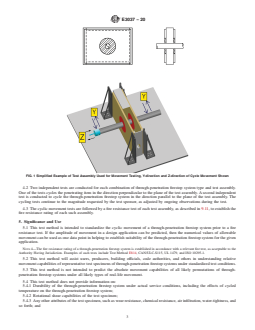
FIG. 1 Simplified Example of Test Assembly Used for Movement Testing, Y-direction and Z-direction of Cycle Movement Shown
Linear Variable Differential Transformer (LVDT).
5.4.3 Any other attributes of the test specimen, such as wear
NOTE 6—If a load cell is connected to the displacement device, it might
resistance, chemical resistance, air infiltration, water-tightness,
be damaged if the resistance to movement exceeds the rated capacity of
and so forth; and
the load cell.
5.4.4 Compatibility of through-penetration firestop system
6.3 Mounting Plates, or other apparatus suitable to install
components and the penetrating items.
the test specimen and undergo the test procedures.
5.5 This test method is only to be used as one element in the
selection of a through-penetration firestop system for a particu-
7. Safety Hazards
lar application.
7.1 Warning—Take proper precautions to protect the ob-
5.6 This is not a fire test standard.To determine the effect of
serversintheeventofanyfailure.Ifextremepressuresdevelop
cyclic movement on the fire resistance rating of a though-
during this test, considerable energy and hazard are involved.
penetration firestop system, conduct a fire test in accordance
Incasesoffailure,thehazardtopersonnelislessifaprotective
with a fire resistance test method acceptable to the Authority
shield is used and protective eye wear worn. Do not permit
Having Jurisdiction subsequent to this movement test.
personnel between the shield and equipment during the test
procedure.
6. Apparatus
6.1 Testing Machine, capable of a range of movement that
8. Test Specimens
includes the maximum z-direction and y-direction movement
8.1 Test Assembly:
planned for the test. It shall be capable of continual repetitious
8.1.1 A concrete substrate shall be 4.5 in. 6 0.50 in. (114
movement between two specified dimensions, equipped with
mm 6 13 mm) thick. The concrete used shall have a nominal
an automatic counter to record the relative movement between
density of 150 pcf (2403 kg/m ) and a minimum compressive
the penetrating item and the test assembly during the test.
strength of 3000 psi (20.68 MPa).
6.2 Measuring Device, capable of an accuracy of 0.010 in.
NOTE 7—This dimension has been selected to provide a generic,
6 0.005 in. (0.25 mm 6 0.013 mm).
representative test assembly that can provide meaningful data for a wide
NOTE 5—One example of a commonly used measuring device is the variety of conditions.
E3037 − 20
NOTE 8—The concrete types or dimensions as permitted by 8.1.5 will
8.1.7 When the through-penetration firestop system is com-
result in different test assemblies when needed.
posed of sealants, and the penetrating item or group of
8.1.2 Prior to the test, condition concrete test specimens in penetrating items is closer to circular than to rectangular in
an ambient atmosphere of 50 % to 75 % relative humidity at cross-section,theopeninginthetestassemblytoaccommodate
73 °F 6 5 °F (23 °C 6 3 °C) until an equilibrium moisture the penetrating item shall be round, with the penetrating item
condition is achieved within the test specimen (Note 9). placed at its geometric center.
8.1.3 With some concrete construction it is difficult or 8.1.8 When the through-penetration firestop system is com-
impossible to achieve such uniformity. Where this is the case, posed of sealants, and the penetrating item or group of
testspecimensshallbepermittedtobetestedwhenthedampest penetrating items is closer to rectangular than to circular in
portion of the test specimen has achieved a moisture content cross-section,theopeninginthetestassemblytoaccommodate
corresponding to conditioning to equilibrium with air in the the penetrating item shall be rectangular, with equal annular
rangeof50 %to75%relativehumidityat73 °F 65 °F(23 °C space on all four sides as specified in 8.1.10.
6 3 °C). 8.1.9 When the through-penetration firestop system is com-
posed of pre-formed firestop devices, the hole may be of any
NOTE9—Arecommendedmethodfordeterminingtherelativehumidity
shape and size as representative of the end use application.
within a hardened concrete test specimen with electric sensing elements is
describedinAppendixIofthepaperbyMenzel. Asimilarprocedurewith 8.1.10 When the through-penetration firestop system is
electric sensing elements is permitted to be used to determine the relative
composedofsealants,theopeninginthetestassemblythatwill
humidity within test specimens made with other materials.
accommodatethepenetratingitemshallbeofsuchsizethatthe
8.1.4 A gypsum wall assembly shall consist of1hfire annular space is 2.5 in. 6 0.125 in. (64 mm 6 3.2 mm) for a
resistance rated construction using ⁄8 in. or 16 mm nominal
circular opening, and if the opening is square, the distance to
thickness boards mounted on 3 ⁄8 in. (92 mm) nominal 24 the mid-point of all four sides shall be 2.5 in. 6 0.125 in. (64
gauge studs. Stud spacing shall be 16 in. 6 0.5 in. (381 mm 6
mm 6 3.2 mm).
13 mm). The assembly shall consist only of gypsum boards,
8.1.10.1 When a 2.5 in. (64 mm) annular space is known to
framing members, tracks, and screws. It shall be fastened as
be unable to pass a fire resistance test, even without movement
specified in the listing of the 1 h assembly used. The gypsum
cycling, the annular space shall be permitted to be the largest
board shall not be of the abuse-resistant or impact-resistant
available for the specific combination of sealant, substrate, and
types, unless that board type is reported, as mandated by 8.1.5. penetrating item, as determined by previous fire testing.
The testing machine’s attachment to the test assembly shall not
8.1.11 When movement testing is to be performed with the
rest or otherwise support the free span of gypsum board
objective of establishing that a non-zero amount of movement
betweenstuds.Inthedirectionparalleltothestuds,thegypsum
is allowable in the y-direction or in the z-direction for firestop
board span shall not have any rigid supports at either end, or if
systems composed of sealants and with the penetrating item
a support is necessary at one or both ends, the gypsum board
having a point of contact with the substrate, a separate,
shall have a minimum unsupported free span of 14 in.
additional movement test shall be conducted for that condition.
(356 mm) as measured parallel to the studs.The opening in the
The additional test shall have the penetrating item firestopped
gypsum wall for the through-penetration shall be centered
in contact with the substrate prior to movement testing. The
within the assembly. The opening is permitted to be framed or
annularspaceonthesideofthepenetratingitemoppositetothe
not framed, depending on the condition that is being investi-
pointofcontactshallbeaminimumof2.5in.,unlessotherwise
gated.
allowable by 8.1.10.1.
NOTE 10—This gypsum wall assembly has been chosen to provide a
NOTE 12—Without testing specifically for the point of contact
generic, representative test assembly that can provide meaningful data for
condition, the movement capability as calculated by the Extension of Data
a wide variety of conditions.
in Appendix X3 for a point of contact condition would always be
NOTE 11—The minimum free span of gypsum board is being specified
calculated to be zero.
due to the possibility that gypsum board flexure during movement testing
8.1.11.1 The y-direction movement cycle specified in 9.6
in the z-direction will influence the results.
shall be permitted to be modified so that the penetrant has only
8.1.5 Other substrate types, thicknesses, and variations shall
one direction of movement, away from the zero position, as
be permitted to be tested, as needed, to produce data that is
opposed to the back-and-forth movement otherwise required in
representative of field conditions that are not well represented
9.6. The penetrating item shall be moved away from the zero
by the concrete or gypsum test assemblies specified in 8.1.1
position in a direction away from the point of contact, for the
through 8.1.4. When materials, dimensions, or characteristics
distance indicated in Table 1, then returning to the zero
differentthanthosespecifiedin8.1.1through8.1.4areusedfor
position to complete one movement cycle.
the test assembly, indicate in the test report that a non-standard
NOTE13—Movementinthedirectiontowardsthepointofcontactisnot
test assembly was used, as well as why that non-standard test
physically possible, since the point of contact precludes further movement
assembly was selected.
of the penetrant towards the substrate.
8.1.6 The test assembly substrate shall be a new, never-
8.2 Penetrating Items:
before-used substrate.
8.2.1 The penetrating item shall be centered in the opening.
NOTE14—Althoughthestandardizedtestconditionisspecifiedwiththe
Menzel, C. A., “A Method for Determining the Moisture Condition of
Hardened Concrete in Terms of Relative Humidity,” Proceedings, ASTM, Vol 55, penetrating item centered in the opening, real life installations typically
1955, p. 1085. involvepenetratingitemsnotcenteredintheopening.Thetestmethodcan
E3037 − 20
TABLE 1 Displacement Sequence for Y-direction
otherwise by the test sponsor, the penetrating item shall be
Movement Amplitude
orientedapproximatelyperpendiculartothetestassemblyatan
Repeats Displacement (in.)
angle of 90° 6 5°.
10 0.125
8.3.2 The penetrating item shall be permitted to be sup-
3 0.15
ported by attachment to the test assembly during the period
3 0.18
3 0.22 when the test specimen is being built, cured if necessary and
3 0.26
transported to the testing machine.
3 0.31
3 0.37
NOTE 15—For penetrating items that are relatively heavy, consideration
3 0.45
should be given to the means of transferring the test sample from the
3 0.54
location where the through-penetration firestop system is installed and
3 0.64
cured, if necessary, to the location of the testing machine, without
3 0.77
damaging the through-penetration firestop system due to the dead weight
3 0.93
of the penetrating item. Similar consideration should be given to the
3 1.11
3 1.34 means of transferring the test sample from the location where the
3 1.60
movement testing is performed to the location of the fire test furnace.
3 1.93
8.4 Through-penetration Firestop System Installation:
3 2.32
A
8.4.1 Components of a through-penetration firestop system
A
Table may be extended indefinitely using Repeats = 3 and Displacement = Ds ×
shall be installed in a manner that is representative of how
1.2 (Ds is displacement at last sequence). For annular spaces less than Ds,itis
those components are specified for installation in the fire
permissible for Ds = annular space.
resistance rated design listings for which the movement test is
intended to be referenced, and in accordance with the manu-
facturer’s published installation instructions.
NOTE 16—Examples of listed through-penetration firestop system
nevertheless provide useful data for those off-center installations, such as
details that must be conformed to include mechanical fastening and
by using the Extension of Data methods described in Appendix X3 on the
attachment methods for solid components, sealant depth, tooling for
annular space values of an actual field installation.
sealants, and compression for backing materials.
8.2.2 When a plastic pipe is used for the penetrating item, a
NOTE 17—Although the generalized and standardized nature of this test
minimum schedule 40 pipe shall be used, or equivalent
procedure is intended to produce results that can be applied to more than
a single listed through-penetration firestop system, compliance with
thickness where a different pipe thickness nomenclature is
installation instructions that are part of a through-penetration firestop
used.
system listing can impact the results of this test, either in helping or
8.2.3 Pipes or bundles of pipes, such as a line set, shall be
hindering the test specimen’s ability to withstand movement prior to
installed in the center of the opening.
damage. The test results from this test would normally be considered to
apply only to listed through-penetration firestop systems with installation
8.2.4 When testing a through-penetration firestop system
instructionssimilartotheinstallationinstructionsusedtoconstructthetest
thatistestedandlistedforcablebundles,thecablebundleshall
specimen. If one or more significant variations from the through-
be sufficiently stiffened by inserting rigid materials such as an
penetration firestop system listing instructions are used to construct the
angle iron inside the bundle. The inserted rigid material shall
test specimen, the test results would not normally be considered to apply
be located at the approximate center of the bundle.
to the through-penetration firestop system that does not incorporate that
particular installation technique.An example of a modification that would
8.2.5 In cases when a cable tray is tested, lay a single layer
1 1 make the movement test non-applicable to the intended through-
of cables with a diameter of ⁄2 in. 6 ⁄8 in. (13 mm 6 3 mm)
penetration firestop system listing would be the application of a releasing
tocoverthebottomofthecabletray.Affixthecablestothetray
agent at the interface between a penetrating item and the adjacent firestop
eliminating the relative movement between the cables and the
product, or between a penetrating item and the adjacent assembly, where
cable tray when cyclic movement is conducted in the
the application of such a releasing agent is not part of the through-
penetration firestop system listing or the manufacturer’s installation
y-direction and z-direction.
instructions.Amovementtestthatusesaningredientthatisnotallowedby
8.2.6 When testing ducts, the following shall apply:
a listed through-penetration firestop system, or which omits an ingredient
(a) The shape of the opening in the test assembly shall be
that is required by the referenced listed through-penetration firestop
determined by the test sponsor, so as to replicate the real-life
system, is not to be considered valid for ascertaining the movement
relationship between opening shape and duct shape.
capabilities of that listed through-penetration firestop system.
(b) a minimum 4 in. 6 ⁄2 in. (100 mm 6 13 mm) diameter
8.4.2 Through-penetration firestop systems that involve
roundduct,orminimum4in.by4in. 6 ⁄2in.(100mmby100
liquid-applied sealants shall allow the sealant(s) to cure in one
mm 6 13 mm) square duct shall be used as a representative
of the following ways:
duct.
(a) for a period of 90 days in air having 40 % to 60 %
8.2.7 When an insulated pipe is to be tested, the insulation
relative humidity at 73 °F 6 5 °F (23 °C 6 3 °C), or
and pipe shall be bonded together so as to ensure that they
(b) for a period of four weeks in a heated chamber
move together, without any differential movement in the
maintained at a temperature of 100 °F 6 5 °F (38 °C 6 3 °C),
z-direction.
in air having 15 % to 35 % relative humidity.
8.3 Penetrating Item Support:
NOTE 18—When desired by the test sponsor, curing shall be permitted
8.3.1 The penetrating item shall be secured on each side of
via storage in a heated chamber. The curing of sealants is a particular
the test assembly, but independent of the test assembly so as to
concern for this test method, since under-cured materials will possibly
allow the cyclic movement. Unless specifically requested allow for more movement without damage than they would after more
-----------
...
This document is not an ASTM standard and is intended only to provide the user of an ASTM standard an indication of what changes have been made to the previous version. Because
it may not be technically possible to adequately depict all changes accurately, ASTM recommends that users consult prior editions as appropriate. In all cases only the current version
of the standard as published by ASTM is to be considered the official document.
Designation: E3037 − 19 E3037 − 20
Standard Test Method for
Measuring Relative Movement Capabilities of Through-
Penetration Firestop Systems
This standard is issued under the fixed designation E3037; the number immediately following the designation indicates the year of
original adoption or, in the case of revision, the year of last revision. A number in parentheses indicates the year of last reapproval. A
superscript epsilon (´) indicates an editorial change since the last revision or reapproval.
1. Scope
1.1 This test method covers testing procedures for through-penetration firestop systems. This test method is intended for the
following uses:
NOTE 1—Refer to Test Method E814 for definition of “through-penetration firestop system.”
1.1.1 To determine relative movement capability in two separate and distinct planes of movement for different types of
through-penetration firestop systems,
1.1.2 To standardize a comparison of movement capability by establishing standardized test conditions, in order to allow the
type of through-penetration firestop system’s movement capabilities to be examined,
1.1.3 To provide the user with information on amplitudes of relative movement between the penetrating items and the substrate
(concrete-based or gypsum-based).
NOTE 2—Amplitude is the measure of change over a single cycle.
1.2 This test method is intended to be used only as part of a specification or acceptance criteria due to the limited movements
tested, and limited number of variables examined.
1.3 This test method uses standardized configurations for the test specimen. Test results will not be representative of all possible
through-penetration firestop systems.
1.4 The values stated in inch-pound units are to be regarded as standard. The values given in parentheses are mathematical
conversions to SI units that are provided for information only and are not considered standard.
1.5 The text of this standard references notes, comments, and footnotes which provide explanatory material. These notes,
comments, and footnotes (excluding those in tables and figures) shall not be considered requirements of this standard.
1.6 This standard does not purport to address all of the safety concerns, if any, associated with its use. It is the responsibility
of the user of this standard to establish appropriate safety, health, and environmental practices and determine the applicability of
regulatory limitations prior to use. Some specific hazards statements are given in Section 7 on Safety Hazards.
1.7 This international standard was developed in accordance with internationally recognized principles on standardization
established in the Decision on Principles for the Development of International Standards, Guides and Recommendations issued
by the World Trade Organization Technical Barriers to Trade (TBT) Committee.
2. Referenced Documents
2.1 ASTM Standards:
E119 Test Methods for Fire Tests of Building Construction and Materials
E176 Terminology of Fire Standards
E631 Terminology of Building Constructions
E814 Test Method for Fire Tests of Penetration Firestop Systems
E1399/E1399M Test Method for Cyclic Movement and Measuring the Minimum and Maximum Joint Widths of Architectural
Joint Systems
This test method is under the jurisdiction of ASTM Committee E06 on Performance of Buildings and is the direct responsibility of Subcommittee E06.21 on
Serviceability.
Current edition approved Dec. 1, 2019July 1, 2020. Published January 2020July 2020. Originally approved in 2016. Last previous edition approved in 20162019 as
E3037–16.–19. DOI: 10.1520/E3037–19.10.1520/E3037-20.
For referenced ASTM standards, visit the ASTM website, www.astm.org, or contact ASTM Customer Service at service@astm.org. For Annual Book of ASTM Standards
volume information, refer to the standard’s Document Summary page on the ASTM website.
Copyright © ASTM International, 100 Barr Harbor Drive, PO Box C700, West Conshohocken, PA 19428-2959. United States
E3037 − 20
2.2 ISO Standards:
ISO 834 Fire-resistance tests -- Elements of building construction
ISO 10295-1 Fire tests for building elements and components -- Fire testing of service installations -- Part 1: Penetration seals
2.3 UL Standards:
UL 263 Standard for Fire Tests of Building Construction and Materials
ANSI/UL 1479 Standard for Fire Tests of Penetration Firestops
2.4 ULC Standards:
CAN/ULC-S101 Standard Methods of Fire Endurance Tests of Building Construction and Materials
CAN/ULC-S115 Standard Method of Fire Tests of Firestop Systems
2.5 Other Standards:
EN 1366 Fire resistance tests for service installations
FEMA 461 Interim Testing Protocols for Determining the Seismic Performance Characteristics of Structural and Nonstructural
Components
IMO FTP Code International Code for the Application of Fire Test Procedures
3. Terminology
3.1 For definitions of terms used in this test method and associated with building issues, refer to the definitions contained in
Terminology E631. For definitions of terms used in this test method and associated with fire issues, refer to the definitions
contained in Terminology E176.
3.2 When there is a conflict between Terminology E631 and Terminology E176 definitions, Terminology E176 definitions shall
apply.
3.3 Definitions of Terms Specific to This Standard:
3.3.1 allowable movement, n—the cyclic displacement length measured and recorded from a given test series prior to the one
for which failure of the through-penetration firestop system was observed.
3.3.2 annular space, n—the distance, measured in a straight line, between the outer most portion of the penetrating item and
the inside periphery of the opening in the test assembly.
3.3.3 cyclic movement, n—the periodic change between the extremes of movement in one plane in an automatically
mechanically controlled system.
3.3.4 penetrating item, n—the continuous item that traverses from one side of a wall or floor or roof to the opposite side through
the opening in the assembly.
3.3.4.1 Discussion—
Examples of penetrating items include cables, conduits, ducts, pipes.
3.3.5 substrate, n—the material of the wall assembly or roof assembly that the through-penetration passes through.
3.3.6 test specimen, n—the penetrating item or items, the test assembly through which the penetrating items are arranged to pass,
and the materials or devices, or both, that seal the opening in the through-penetration firestop system being tested.
3.3.7 type of through-penetration firestop system, n—the unique combination of penetrating item type (for example, metal pipe,
plastic pipe, cabling), substrate type (concrete-based or gypsum-based), and firestop material or device, including their method of
installation.
3.3.8 y-direction, n—the direction of movement parallel to the surface of the test assembly.
3.3.9 z-direction, n—the direction of movement perpendicular to the surface of the test assembly.
4. Summary of Test Method
4.1 A rectangular test assembly is made from concrete or gypsum board according to the targeted application. The penetrating
item and firestop materials are chosen to represent the type of through-penetration firestop system for which movement data is
desired.
NOTE 3—A simplified example of such a test assembly is shown schematically in Fig. 1.
Available from International Organization for Standardization (ISO), ISO Central Secretariat, BIBC II, Chemin de Blandonnet 8, CP 401, 1214 Vernier, Geneva,
Switzerland, http://www.iso.org.
Available from Underwriters Laboratories (UL), 2600 N.W. Lake Rd., Camas, WA 98607-8542, http://www.ul.com.
Available from ULC Canada, 7 Underwriters Road, Toronto, Ontario, Canada M1R 3A9, http://canada.ul.com/ulcstandards.
Available from European Committee for Standardization (CEN), Rue de la Science 23, B - 1040, Avenue Marnix 17, B-1000, Brussels, Belgium, http://www.cen.eu.
Available from Federal Emergency Management Agency (FEMA), 500 C St., SW, Washington, DC 20472, http://www.fema.gov.
Available from International Maritime Organization, Organization (IMO), 4 Albert Embankment, London SE1 7SR, United Kingdom, http://www.imo.org.
E3037 − 20
FIG. 1 Simplified Example of Test Assembly Used for Movement Testing, Y-direction and Z-direction of Cycle Movement Shown
4.2 Two independent tests are conducted for each combination of through-penetration firestop system type and test assembly.
One of the tests cycles the penetrating item in the direction perpendicular to the plane of the test assembly. A second independent
test is conducted to cycle the through-penetration firestop system in the direction parallel to the plane of the test assembly. The
cycling tests continue to the magnitude requested by the test sponsor, as adjusted by ongoing observations during the test.
4.3 The cyclic movement tests are followed by a fire resistance test of each test assembly, as described in 9.11, to establish the
fire resistance rating of each such assembly.
5. Significance and Use
5.1 This test method is intended to standardize the cyclic movement of a through-penetration firestop system prior to a fire
resistance test. If the amplitude of movement in a design application can be predicted, then the numerical values of allowable
movement can be used as one data point in helping to establish suitability of the through-penetration firestop system for the given
application.
NOTE 4—The fire resistance rating of a through-penetration firestop system is established in accordance with a relevant fire test, as acceptable to the
Authority Having Jurisdiction. Examples of such tests include Test Method E814, CAN/ULC-S115, UL 1479, and ISO 10295-1.
5.2 This test method will assist users, producers, building officials, code authorities, and others in understanding relative
movement capabilities of representative test specimens of through-penetration firestop systems under standardized test conditions.
5.3 This test method is not intended to predict the absolute movement capabilities of all likely permutations of through-
penetration firestop systems under all likely types of real-life movement.
5.4 This test method does not provide information on:
5.4.1 Durability of the through-penetration firestop system under actual service conditions, including the effects of cycled
temperature on the through-penetration firestop system;
5.4.2 Rotational shear capabilities of the test specimen;
5.4.3 Any other attributes of the test specimen, such as wear resistance, chemical resistance, air infiltration, water-tightness, and
so forth; and
E3037 − 20
5.4.4 Compatibility of through-penetration firestop system components and the penetrating items.
5.5 This test method is only to be used as one element in the selection of a through-penetration firestop system for a particular
application.
5.6 This is not a fire test standard. To determine the effect of cyclic movement on the fire resistance rating of a
though-penetration firestop system, conduct a fire test in accordance with a fire resistance test method acceptable to the Authority
Having Jurisdiction subsequent to this movement test.
6. Apparatus
6.1 Testing Machine, capable of a range of movement that includes the maximum z-direction and y-direction movement planned
for the test. It shall be capable of continual repetitious movement between two specified dimensions, equipped with an automatic
counter to record the relative movement between the penetrating item and the test assembly during the test.
6.2 Measuring Device, capable of an accuracy of 0.010 in. 6 0.005 in. (0.25 mm 6 0.013 mm).
NOTE 5—One example of a commonly used measuring device is the Linear Variable Differential Transformer (LVDT).
NOTE 6—If a load cell is connected to the displacement device, it might be damaged if the resistance to movement exceeds the rated capacity of the
load cell.
6.3 Mounting Plates, or other apparatus suitable to install the test specimen and undergo the test procedures.
7. Safety Hazards
7.1 Warning—Take proper precautions to protect the observers in the event of any failure. If extreme pressures develop during
this test, considerable energy and hazard are involved. In cases of failure, the hazard to personnel is less if a protective shield is
used and protective eye wear worn. Do not permit personnel between the shield and equipment during the test procedure.
8. Test Specimens
8.1 Test Assembly:
8.1.1 A concrete substrate shall be 4.5 in. 6 0.50 in. (114 mm 6 13 mm) thick. The concrete used shall have a nominal density
of 150 pcf (2403 kg/m ) and a minimum compressive strength of 3000 psi (20.68 MPa).
NOTE 7—This dimension has been selected to provide a generic, representative test assembly that can provide meaningful data for a wide variety of
conditions.
E3037 − 20
NOTE 8—The concrete types or dimensions as permitted by 8.1.5 will result in different test assemblies when needed.
8.1.2 Prior to the test, condition concrete test specimens in an ambient atmosphere of 50 % to 75 % relative humidity at 73 °F
6 5 °F (23 °C 6 3 °C) until an equilibrium moisture condition is achieved within the test specimen (Note 9).
8.1.3 With some concrete construction it is difficult or impossible to achieve such uniformity. Where this is the case, test
specimens shall be permitted to be tested when the dampest portion of the test specimen has achieved a moisture content
corresponding to conditioning to equilibrium with air in the range of 50 % to 75 % relative humidity at 73 °F 6 5 °F (23 °C 6
3 °C).
NOTE 9—A recommended method for determining the relative humidity within a hardened concrete test specimen with electric sensing elements is
described in Appendix I of the paper by Menzel. A similar procedure with electric sensing elements is permitted to be used to determine the relative
humidity within test specimens made with other materials.
8.1.4 A gypsum wall assembly shall consist of 1 h fire resistance rated construction using ⁄8 in. or 16 mm nominal thickness
boards mounted on 3 ⁄8 in. (92 mm) nominal 24 gauge studs. Stud spacing shall be 16 in. 6 0.5 in. (381 mm 6 13 mm). The
assembly shall consist only of gypsum boards, framing members, tracks, and screws. It shall be fastened as specified in the listing
of the 1 h assembly used. The gypsum board shall not be of the abuse-resistant or impact-resistant types, unless that board type
is reported, as mandated by 8.1.5. The testing machine’s attachment to the test assembly shall not rest or otherwise support the free
span of gypsum board between studs. In the direction parallel to the studs, the gypsum board span shall not have any rigid supports
at either end, or if a support is necessary at one or both ends, the gypsum board shall have a minimum unsupported free span of
14 in. (356 mm) as measured parallel to the studs. The opening in the gypsum wall for the through-penetration shall be centered
within the assembly. The opening is permitted to be framed or not framed, depending on the condition that is being investigated.
NOTE 10—This gypsum wall assembly has been chosen to provide a generic, representative test assembly that can provide meaningful data for a wide
variety of conditions.
NOTE 11—The minimum free span of gypsum board is being specified due to the possibility that gypsum board flexure during movement testing in
the z-direction will influence the results.
8.1.5 Other substrate types, thicknesses, and variations shall be permitted to be tested, as needed, to produce data that is
representative of field conditions that are not well represented by the concrete or gypsum test assemblies specified in 8.1.1 through
8.1.4. When materials, dimensions, or characteristics different than those specified in 8.1.1 through 8.1.4 are used for the test
assembly, indicate in the test report that a non-standard test assembly was used, as well as why that non-standard test assembly
was selected.
8.1.6 The test assembly substrate shall be a new, never-before-used substrate.
8.1.7 When the through-penetration firestop system is composed of sealants, and the penetrating item or group of penetrating
items is closer to circular than to rectangular in cross-section, the opening in the test assembly to accommodate the penetrating
item shall be round, with the penetrating item placed at its geometric center.
8.1.8 When the through-penetration firestop system is composed of sealants, and the penetrating item or group of penetrating
items is closer to rectangular than to circular in cross-section, the opening in the test assembly to accommodate the penetrating
item shall be rectangular, with equal annular space on all four sides as specified in 8.1.10.
8.1.9 When the through-penetration firestop system is composed of pre-formed firestop devices, the hole may be of any shape
and size as representative of the end use application.
8.1.10 When the through-penetration firestop system is composed of sealants, the opening in the test assembly that will
accommodate the penetrating item shall be of such size that the annular space is 2.5 in. 6 0.125 in. (64 mm 6 3.2 mm) for a
circular opening, and if the opening is square, the distance to the mid-point of all four sides shall be 2.5 in. 6 0.125 in. (64 mm
6 3.2 mm).
8.1.10.1 When a 2.5 in. (64 mm) annular space is known to be unable to pass a fire resistance test, even without movement
cycling, the annular space shall be permitted to be the largest available for the specific combination of sealant, substrate, and
penetrating item, as determined by previous fire testing.
8.1.11 When movement testing is to be performed with the objective of establishing that a non-zero amount of movement is
allowable in the y-direction or in the z-direction for firestop systems composed of sealants and with the penetrating item having
a point of contact with the substrate, a separate, additional movement test shall be conducted for that condition. The additional test
shall have the penetrating item firestopped in contact with the substrate prior to movement testing. The annular space on the side
of the penetrating item opposite to the point of contact shall be a minimum of 2.5 in., unless otherwise allowable by 8.1.10.1.
NOTE 12—Without testing specifically for the point of contact condition, the movement capability as calculated by the Extension of Data in Appendix
X3 for a point of contact condition would always be calculated to be zero.
8.1.11.1 The y-direction movement cycle specified in 9.6 shall be permitted to be modified so that the penetrant has only one
direction of movement, away from the zero position, as opposed to the back-and-forth movement otherwise required in 9.6. The
penetrating item shall be moved away from the zero position in a direction away from the point of contact, for the distance
indicated in Table 1, then returning to the zero position to complete one movement cycle.
Menzel, C. A., “A Method for Determining the Moisture Condition of Hardened Concrete in Terms of Relative Humidity,” Proceedings, ASTM, Vol 55, 1955, p. 1085.
E3037 − 20
TABLE 1 Displacement Sequence for Y-direction
Movement Amplitude
Repeats Displacement (in.)
10 0.125
3 0.15
3 0.18
3 0.22
3 0.26
3 0.31
3 0.37
3 0.45
3 0.54
3 0.64
3 0.77
3 0.93
3 1.11
3 1.34
3 1.60
3 1.93
3 2.32
3 2.50
A
A
Table may be extended indefinitely using Repeats = 3 and Displacement = Ds ×
1.2 (Ds is displacement at last sequence). For annular spaces less than Ds, it is
permissible for Ds = annular space.
NOTE 13—Movement in the direction towards the point of contact is not physically possible, since the point of contact precludes further movement
of the penetrant towards the substrate.
8.2 Penetrating Items:
8.2.1 The penetrating item shall be centered in the opening.
NOTE 14—Although the standardized test condition is specified with the penetrating item centered in the opening, real life installations typically involve
penetrating items not centered in the opening. The test method can nevertheless provide useful data for those off-center installations, such as by using
the Extension of Data methods described in Appendix X3 on the annular space values of an actual field installation.
8.2.2 When a plastic pipe is used for the penetrating item, a minimum schedule 40 pipe shall be used, or equivalent thickness
where a different pipe thickness nomenclature is used.
8.2.3 Pipes or bundles of pipes, such as a line set, shall be installed in the center of the opening.
8.2.4 When testing a through-penetration firestop system that is tested and listed for cable bundles, the cable bundle shall be
sufficiently stiffened by inserting rigid materials such as an angle iron inside the bundle. The inserted rigid material shall be located
at the approximate center of the bundle.
1 1
8.2.5 In cases when a cable tray is tested, lay a single layer of cables with a diameter of ⁄2 in. 6 ⁄8 in. (13 mm 6 3 mm) to
cover the bottom of the cable tray. Affix the cables to the tray eliminating the relative movement between the cables and the cable
tray when cyclic movement is conducted in the y-direction and z-direction.
8.2.6 When testing ducts, the following shall apply:
(a) The shape of the opening in the test assembly shall be determined by the test sponsor, so as to replicate the real-life
relationship between opening shape and duct shape.
1 1
(b) a minimum 4 in. 6 ⁄2 in. (100 mm 6 13 mm) diameter round duct, or minimum 4 in. by 4 in. 6 ⁄2 in. (100 mm by 100
mm 6 13 mm) square duct shall be used as a representative duct.
8.2.7 When an insulated pipe is to be tested, the insulation and pipe shall be bonded together so as to ensure that they move
together, without any differential movement in the z-direction.
8.3 Penetrating Item Support:
8.3.1 The penetrating item shall be secured on each side of the test assembly, but independent of the test assembly so as to allow
the cyclic movement. Unless specifically requested otherwise by the test sponsor, the penetrating item shall be oriented
approximately perpendicular to the test assembly at an angle of 90° 6 5°.
8.3.2 The penetrating item shall be permitted to be supported by attachment to the test assembly during the period when the
test specimen is being built, cured if necessary and transported to the testing machine.
NOTE 15—For penetrating items that are relatively heavy, consideration should be given to the means of transferring the test sample from the location
where the through-penetration firestop system is installed and cured, if necessary, to the location of the testing machine, without damaging the
through-penetration firestop system due to the dead weight of the penetrating item. Similar consideration should be given to the means of transferring
the test sample from the location where the movement testing is performed to the location of the fire test furnace.
8.4 Through-penetration Firestop System Installation:
E3037 − 20
8.4.1 Components of a through-penetration firestop system shall be installed in a manner that is representative of how those
components are specified for installation in the fire resistance rated design listings for which the movement test is intended to be
referenced, and in accordance with the manufacturer’s published installation instructions.
NOTE 16—Examples of listed through-penetration firestop system details that must be conformed to include mechanical fastening and attachment
methods for solid components, sealant depth, tooling for sealants, and compression for backing materials.
NOTE 17—Although the generalized and standardized nature of this test procedure is intended to produce results that can be applied to more than a
single listed through-penetration firestop system, compliance with installation instructions that are part of a through-penetration firestop system listing
can impact the results of this test, either in helping or hindering the test specimen’s ability to withstand movement prior to damage. The test results from
this test would normally be considered to apply only to listed through-penetration firestop systems with installation instructions similar to the installation
instructions used to construct the test specimen. If one or more significant variations from the through-penetration firestop system listing instructions are
used to construct the test specimen, the test results would not normally be considered to apply to the through-penetration firestop system that does not
incorporate that particular installation technique. An example of a modification that would make the movement test non-applicable to the intended
through-penetration firestop system listing would be the application of a releasing agent at the interface between a penetrating item and the adjacent
firestop product, or between a penetrating item and the adjacent assembly, where the application of such a releasing agent is not part of the
through-penetration firestop system listing or the manufacturer’s installation instructions. A movement test that uses an ingredient that is not allowed by
a listed through-penetration firestop system, or which omits an ingredient that is required by the referenced listed through-penetration firestop system,
is not to be considered valid for ascertaining the movement capabilities of that listed through-penetration firestop system.
8.4.2 Through-penetration firestop systems that involve liquid-applied sealants shall allow the sealant(s) to cure in one of the
following ways:
(a) for a period of 90 days in air having 40 % to 60 % relative humidity at 73 °F 6 5 °F (23 °C 6 3 °C), or
(b) for a period of four weeks in a heated chamber maintained at a temperature of 100 °F 6 5 °F (38 °C 6 3 °C), in air having
15 % to 35 % relative humidity.
NOTE 18—When desired by the test sponsor, curing shall be permitted via storage in a heated cham
...