

ASTM A995/A995M-20
(Specification)Standard Specification for Castings, Austenitic-Ferritic (Duplex) Stainless Steel, for Pressure-Containing Parts
General Information
- Abstract
ABSTRACT
This specification covers austenitic-ferritic (duplex) stainless steel castings for valves, flanges, fittings, and other pressure-containing parts. The grades of steels covered here are: Grade 1B, Grade 2A, Grade 3A, Grade 4A, Grade 5A, and Grade 6A. The steel castings shall be heat-treated up to required temperature and shall undergo water quenching or rapid cooling by other means after heating. Heat and product analyses shall be performed wherein specimens shall conform to required chemical composition of carbon, manganese, silicon, phosphorus, sulfur, chromium, nickel, molybdenum, copper, tungsten, and nitrogen. All steels shall undergo tension test, and shall conform to the following mechanical requirements: tensile strength, yield strength, and elongation.
SCOPE
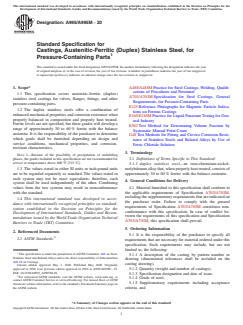
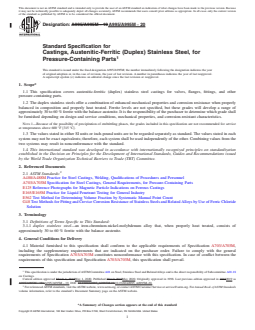
1.1 This specification covers austenitic-ferritic (duplex) stainless steel castings for valves, flanges, fittings, and other pressure-containing parts.
1.2 The duplex stainless steels offer a combination of enhanced mechanical properties and corrosion resistance when properly balanced in composition and properly heat treated. Ferrite levels are not specified, but these grades will develop a range of approximately 30 to 60 % ferrite with the balance austenite. It is the responsibility of the purchaser to determine which grade shall be furnished depending on design and service conditions, mechanical properties, and corrosion-resistant characteristics.
Note 1: Because of the possibility of precipitation of embrittling phases, the grades included in this specification are not recommended for service at temperatures above 600 °F [315 °C].
1.3 The values stated in either SI units or inch-pound units are to be regarded separately as standard. The values stated in each system may not be exact equivalents; therefore, each system shall be used independently of the other. Combining values from the two systems may result in nonconformance with the standard.
1.4 This international standard was developed in accordance with internationally recognized principles on standardization established in the Decision on Principles for the Development of International Standards, Guides and Recommendations issued by the World Trade Organization Technical Barriers to Trade (TBT) Committee.
- Status
- Published
- Publication Date
- 30-Apr-2020
- Technical Committee
- A01 - Steel, Stainless Steel and Related Alloys
- Drafting Committee
- A01.18 - Castings
Buy Documents
ASTM A995/A995M-20 - Standard Specification for Castings, Austenitic-Ferritic (Duplex) Stainless Steel, for Pressure-Containing Parts
REDLINE ASTM A995/A995M-20 - Standard Specification for Castings, Austenitic-Ferritic (Duplex) Stainless Steel, for Pressure-Containing Parts
Overview
ASTM A995/A995M-20 is an international standard specification developed by ASTM International that covers austenitic-ferritic (duplex) stainless steel castings for use in valves, flanges, fittings, and other pressure-containing parts. This standard ensures that castings produced for pressure applications deliver the required mechanical properties and corrosion resistance through carefully defined chemical compositions and heat treatment procedures. The specification applies to several duplex stainless steel grades and mandates rigorous quality and testing protocols to ensure safety and performance in demanding industrial environments.
Key Topics
- Scope and Grades: The standard applies to six primary grades of duplex stainless steel (1B, 2A, 3A, 4A, 5A, and 6A), each with distinct chemical and mechanical properties suited for various operating conditions and requirements.
- Mechanical Properties: Each grade must meet minimum tensile strength, yield strength, and elongation standards. After heat treatment, samples undergo tension testing to confirm compliance.
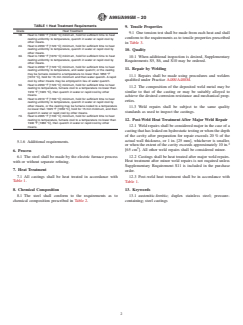
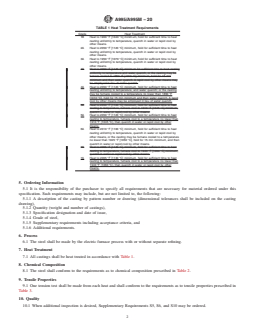
- Heat Treatment: All castings must be heat treated according to specified minima, followed by water quenching or rapid cooling. This step optimizes the balance of ferrite (30-60%) and austenite phases for enhanced mechanical strength and corrosion resistance.
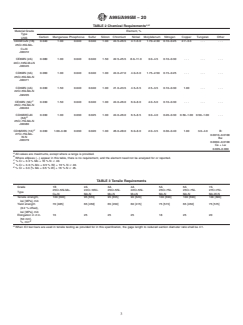
- Chemical Composition: The specification details maximum and minimum content for elements such as carbon, manganese, silicon, chromium, nickel, molybdenum, among others, to ensure the desired duplex microstructure and properties.
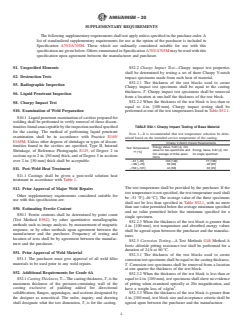
- Supplementary Testing: Optional requirements are provided for radiographic inspection, liquid penetrant inspection, Charpy impact tests, corrosion resistance (Test Methods G48), and weld repair protocols.
- Repair and Quality Assurance: Weld repairs must adhere to qualified procedures, with post-weld heat treatment required for major repairs. Supplementary provisions detail requirements for ferrite content measurement and prior approval of weld filler materials.
Applications
Products manufactured to ASTM A995/A995M-20 are widely used wherever high-pressure containment and corrosion resistance are critical, including:
- Oil & Gas Industry: Pressure-containing castings for valves, flanges, and fittings in offshore and onshore environments.
- Chemical and Petrochemical Processing: Equipment requiring resistance to chloride-induced stress corrosion and pitting.
- Power Generation: Components subject to aggressive media and pressures, such as those in nuclear or fossil fuel plants.
- Marine and Water Treatment Facilities: Piping and processing systems exposed to saline or brackish water.
- Pulp and Paper Production: Systems handling corrosive chemicals and high-pressure solvents.
The duplex stainless steels specified in ASTM A995/A995M-20 are chosen for these critical applications due to their exceptional combination of strength, toughness, and resistance to localized corrosion.
Related Standards
Several ASTM standards are referenced within ASTM A995/A995M-20 to provide additional test methods or general requirements for cast steel pressure parts:
- ASTM A703/A703M: Specification for Steel Castings, General Requirements, for Pressure-Containing Parts
- ASTM A488/A488M: Practice for Steel Castings, Welding, Qualification of Procedures and Personnel
- ASTM E125: Reference Photographs for Magnetic Particle Indications on Ferrous Castings
- ASTM E165/E165M: Practice for Liquid Penetrant Testing for General Industry
- ASTM E562: Test Method for Determining Volume Fraction by Systematic Manual Point Count
- ASTM G48: Test Methods for Pitting and Crevice Corrosion Resistance of Stainless Steels and Related Alloys by Use of Ferric Chloride Solution
Users of ASTM A995/A995M-20 are encouraged to consult these related standards to ensure full compliance and optimize the performance of pressure-containing parts made from austenitic-ferritic (duplex) stainless steels.
Relations
- Effective Date
- 01-May-2020
- Effective Date
- 01-Mar-2024
- Effective Date
- 15-Aug-2019
- Effective Date
- 01-Sep-2018
- Effective Date
- 01-Jul-2018
- Effective Date
- 01-Jul-2018
- Effective Date
- 01-May-2018
- Effective Date
- 01-Nov-2017
- Effective Date
- 01-May-2017
- Effective Date
- 01-May-2017
- Effective Date
- 01-Mar-2016
- Effective Date
- 01-Jun-2015
- Effective Date
- 01-Jun-2015
- Effective Date
- 01-Oct-2013
- Effective Date
- 01-May-2013
Buy Documents
ASTM A995/A995M-20 - Standard Specification for Castings, Austenitic-Ferritic (Duplex) Stainless Steel, for Pressure-Containing Parts
REDLINE ASTM A995/A995M-20 - Standard Specification for Castings, Austenitic-Ferritic (Duplex) Stainless Steel, for Pressure-Containing Parts
Get Certified
Connect with accredited certification bodies for this standard

Element Materials Technology
Materials testing and product certification.

Inštitut za kovinske materiale in tehnologije
Institute of Metals and Technology. Materials testing, metallurgical analysis, NDT.
Sponsored listings
Frequently Asked Questions
ASTM A995/A995M-20 is a technical specification published by ASTM International. Its full title is "Standard Specification for Castings, Austenitic-Ferritic (Duplex) Stainless Steel, for Pressure-Containing Parts". This standard covers: ABSTRACT This specification covers austenitic-ferritic (duplex) stainless steel castings for valves, flanges, fittings, and other pressure-containing parts. The grades of steels covered here are: Grade 1B, Grade 2A, Grade 3A, Grade 4A, Grade 5A, and Grade 6A. The steel castings shall be heat-treated up to required temperature and shall undergo water quenching or rapid cooling by other means after heating. Heat and product analyses shall be performed wherein specimens shall conform to required chemical composition of carbon, manganese, silicon, phosphorus, sulfur, chromium, nickel, molybdenum, copper, tungsten, and nitrogen. All steels shall undergo tension test, and shall conform to the following mechanical requirements: tensile strength, yield strength, and elongation. SCOPE 1.1 This specification covers austenitic-ferritic (duplex) stainless steel castings for valves, flanges, fittings, and other pressure-containing parts. 1.2 The duplex stainless steels offer a combination of enhanced mechanical properties and corrosion resistance when properly balanced in composition and properly heat treated. Ferrite levels are not specified, but these grades will develop a range of approximately 30 to 60 % ferrite with the balance austenite. It is the responsibility of the purchaser to determine which grade shall be furnished depending on design and service conditions, mechanical properties, and corrosion-resistant characteristics. Note 1: Because of the possibility of precipitation of embrittling phases, the grades included in this specification are not recommended for service at temperatures above 600 °F [315 °C]. 1.3 The values stated in either SI units or inch-pound units are to be regarded separately as standard. The values stated in each system may not be exact equivalents; therefore, each system shall be used independently of the other. Combining values from the two systems may result in nonconformance with the standard. 1.4 This international standard was developed in accordance with internationally recognized principles on standardization established in the Decision on Principles for the Development of International Standards, Guides and Recommendations issued by the World Trade Organization Technical Barriers to Trade (TBT) Committee.
ABSTRACT This specification covers austenitic-ferritic (duplex) stainless steel castings for valves, flanges, fittings, and other pressure-containing parts. The grades of steels covered here are: Grade 1B, Grade 2A, Grade 3A, Grade 4A, Grade 5A, and Grade 6A. The steel castings shall be heat-treated up to required temperature and shall undergo water quenching or rapid cooling by other means after heating. Heat and product analyses shall be performed wherein specimens shall conform to required chemical composition of carbon, manganese, silicon, phosphorus, sulfur, chromium, nickel, molybdenum, copper, tungsten, and nitrogen. All steels shall undergo tension test, and shall conform to the following mechanical requirements: tensile strength, yield strength, and elongation. SCOPE 1.1 This specification covers austenitic-ferritic (duplex) stainless steel castings for valves, flanges, fittings, and other pressure-containing parts. 1.2 The duplex stainless steels offer a combination of enhanced mechanical properties and corrosion resistance when properly balanced in composition and properly heat treated. Ferrite levels are not specified, but these grades will develop a range of approximately 30 to 60 % ferrite with the balance austenite. It is the responsibility of the purchaser to determine which grade shall be furnished depending on design and service conditions, mechanical properties, and corrosion-resistant characteristics. Note 1: Because of the possibility of precipitation of embrittling phases, the grades included in this specification are not recommended for service at temperatures above 600 °F [315 °C]. 1.3 The values stated in either SI units or inch-pound units are to be regarded separately as standard. The values stated in each system may not be exact equivalents; therefore, each system shall be used independently of the other. Combining values from the two systems may result in nonconformance with the standard. 1.4 This international standard was developed in accordance with internationally recognized principles on standardization established in the Decision on Principles for the Development of International Standards, Guides and Recommendations issued by the World Trade Organization Technical Barriers to Trade (TBT) Committee.
ASTM A995/A995M-20 is classified under the following ICS (International Classification for Standards) categories: 77.140.80 - Iron and steel castings. The ICS classification helps identify the subject area and facilitates finding related standards.
ASTM A995/A995M-20 has the following relationships with other standards: It is inter standard links to ASTM A995/A995M-19, ASTM A488/A488M-24, ASTM E562-19e1, ASTM A703/A703M-18a, ASTM A488/A488M-18e1, ASTM A488/A488M-18, ASTM A703/A703M-18, ASTM A703/A703M-17a, ASTM A488/A488M-17, ASTM A703/A703M-17, ASTM A488/A488M-16, ASTM A703/A703M-15, ASTM A703/A703M-15e1, ASTM A703/A703M-13a, ASTM A703/A703M-13. Understanding these relationships helps ensure you are using the most current and applicable version of the standard.
ASTM A995/A995M-20 is available in PDF format for immediate download after purchase. The document can be added to your cart and obtained through the secure checkout process. Digital delivery ensures instant access to the complete standard document.
Standards Content (Sample)
This international standard was developed in accordance with internationally recognized principles on standardization established in the Decision on Principles for the
Development of International Standards, Guides and Recommendations issued by the World Trade Organization Technical Barriers to Trade (TBT) Committee.
Designation: A995/A995M −20
Standard Specification for
Castings, Austenitic-Ferritic (Duplex) Stainless Steel, for
Pressure-Containing Parts
This standard is issued under the fixed designationA995/A995M; the number immediately following the designation indicates the year
of original adoption or, in the case of revision, the year of last revision.Anumber in parentheses indicates the year of last reapproval.
A superscript epsilon (´) indicates an editorial change since the last revision or reapproval.
1. Scope* A488/A488MPractice for Steel Castings, Welding, Qualifi-
cations of Procedures and Personnel
1.1 This specification covers austenitic-ferritic (duplex)
A703/A703M Specification for Steel Castings, General
stainless steel castings for valves, flanges, fittings, and other
Requirements, for Pressure-Containing Parts
pressure-containing parts.
E125Reference Photographs for Magnetic Particle Indica-
1.2 The duplex stainless steels offer a combination of
tions on Ferrous Castings
enhancedmechanicalpropertiesandcorrosionresistancewhen
E165/E165MPractice for Liquid Penetrant Testing for Gen-
properly balanced in composition and properly heat treated.
eral Industry
Ferrite levels are not specified, but these grades will develop a
E562Test Method for Determining Volume Fraction by
range of approximately 30 to 60% ferrite with the balance
Systematic Manual Point Count
austenite. It is the responsibility of the purchaser to determine
G48Test Methods for Pitting and Crevice Corrosion Resis-
which grade shall be furnished depending on design and
tance of Stainless Steels and Related Alloys by Use of
service conditions, mechanical properties, and corrosion-
Ferric Chloride Solution
resistant characteristics.
3. Terminology
NOTE 1—Because of the possibility of precipitation of embrittling
phases, the grades included in this specification are not recommended for 3.1 Definitions of Terms Specific to This Standard:
service at temperatures above 600°F [315°C].
3.1.1 duplex stainless steel—an iron-chromium-nickel-
molybdenumalloythat,whenproperlyheattreated,consistsof
1.3 The values stated in either SI units or inch-pound units
approximately 30 to 60% ferrite with the balance austenite.
are to be regarded separately as standard. The values stated in
each system may not be exact equivalents; therefore, each
4. General Conditions for Delivery
system shall be used independently of the other. Combining
values from the two systems may result in nonconformance 4.1 Material furnished to this specification shall conform to
the applicable requirements of Specification A703/A703M,
with the standard.
includingthesupplementaryrequirementsthatareindicatedon
1.4 This international standard was developed in accor-
the purchaser order. Failure to comply with the general
dance with internationally recognized principles on standard-
requirements of Specification A703/A703M constitutes non-
ization established in the Decision on Principles for the
conformance with this specification. In case of conflict be-
Development of International Standards, Guides and Recom-
tween the requirements of this specification and Specification
mendations issued by the World Trade Organization Technical
A703/A703M, this specification shall prevail.
Barriers to Trade (TBT) Committee.
5. Ordering Information
2. Referenced Documents
5.1 It is the responsibility of the purchaser to specify all
2.1 ASTM Standards:
requirements that are necessary for material ordered under this
specification. Such requirements may include, but are not
limited to, the following:
This specification is under the jurisdiction ofASTM Committee A01 on Steel,
5.1.1 A description of the casting by pattern number or
Stainless Steel and RelatedAlloys and is the direct responsibility of Subcommittee
drawing (dimensional tolerances shall be included on the
A01.18 on Castings.
casting drawing),
Current edition approved May 1, 2020. Published May 2020. Originally
5.1.2 Quantity (weight and number of castings),
approved in 1998. Last previous edition approved in 2019 as A995/A995M–19.
DOI: 10.1520/A0995_A0995M-20.
5.1.3 Specification designation and date of issue,
For referenced ASTM standards, visit the ASTM website, www.astm.org, or
5.1.4 Grade of steel,
contact ASTM Customer Service at service@astm.org. For Annual Book of ASTM
5.1.5 Supplementary requirements including acceptance
Standards volume information, refer to the standard’s Document Summary page on
the ASTM website. criteria, and
*A Summary of Changes section appears at the end of this standard
Copyright © ASTM International, 100 Barr Harbor Drive, PO Box C700, West Conshohocken, PA 19428-2959. United States
A995/A995M − 20
TABLE 1 Heat Treatment Requirements
9. Tensile Properties
Grade Heat Treatment
9.1 One tension test shall be made from each heat and shall
1B Heat to 1900 °F [1040 °C] minimum, hold for sufficient time to heat
conform to the requirements as to tensile properties prescribed
casting uniformly to temperature, quench in water or rapid cool by
other means.
in Table 3.
2A Heat to 2050 °F [1120 °C] minimum, hold for sufficient time to heat
casting uniformly to temperature, quench in water or rapid cool by
10. Quality
other means.
3A Heat to 1950 °F [1070 °C] minimum, hold for sufficient time to heat
10.1 When additional inspection is desired, Supplementary
casting uniformly to temperature, quench in water or rapid cool by
Requirements S5, S6, and S10 may be ordered.
other means.
4A Heat to 2050 °F [1120 °C] minimum, hold for sufficient time to heat
11. Repair by Welding
casting uniformly to temperature, and water quench; or the casting
may be furnace cooled to a temperature no lower than 1850 °F
11.1 Repairs shall be made using procedures and welders
[1010 °C], hold for 15 min minimum and then water quench. A rapid
qualified under Practice A488/A488M.
cool by other means may be employed in lieu of water quench.
5A Heat to 2050 °F [1120 °C] minimum, hold for sufficient time to heat
11.2 The composition of the deposited weld metal may be
casting to temperature, furnace cool to a temperature no lower than
1910 °F [1045 °C], then quench in water or rapid cool by other similar to that of the casting or may be suitably alloyed to
means.
achieve the desired corrosion resistance and mechanical prop-
6A Heat to 2010 °F [1100 °C] minimum, hold for sufficient time to heat
erties.
casting uniformly to temperature, quench in water or rapid cool by
other means, or the casting may be furnace cooled to a temperature
11.3 Weld repairs shall be subject to the same quality
no lower than 1925 °F [1050 °C], hold for 15 min minimum, and then
standards as used to inspect the castings.
quench in water or rapid cool by other means.
7A Heat to 2065 °F [1130 °C] minimum, hold for sufficient time to heat
casting to temperature, furnace cool to a temperature no lower than 12. Post-Weld Heat Treatment After Major Weld Repair
1940 °F [1060 °C], then quench in water or rapid cool by other
12.1 Weld repairs shall be considered major in the case of a
means.
castingthathasleakedonhydrostatictestingorwhenthedepth
of the cavity after preparation for repair exceeds 20% of the
actual wall thickness, or 1 in. [25 mm], whichever is smaller,
5.1.6 Additional requirements.
or when the extent of the cavity exceeds approximately 10 in.
[65 cm ]. All other weld repairs shall be considered minor.
6. Process
12.2 Castings shall be heat treated after major weld repairs.
6.1 The steel shall be made by the electric furnace process
Heat treatment after minor weld repairs is not required unless
with or without separate refining.
Supplementary Requirement S11 is included in the purchase
7. Heat Treatment
order.
7.1 All castings shall be heat treated in accordance with
12.3 Post-weld heat treatment shall be in accordance with
Table 1.
Table 1.
8. Chemical Composition 13. Keywords
8.1 The steel shall conform to the requirements as to 13.1 austenitic-ferritic; duplex stainless steel; pressure-
chemical composition prescribed in Table 2. containing; steel castings
A995/A995M − 20
A,B
TABLE 2 Chemical Requirements
Material Grade Element, %
Type
Carbon Manganese Phosphorus Sulfur Silicon Chromium Nickel Molybdenum Nitrogen Copper Tungsten Other
UNS
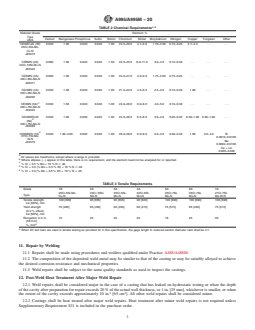
CD4MCuN (1B) 0.040 1.00 0.040 0.040 1.00 24.5–26.5 4.7–6.0 1.70–2.30 0.10–0.25 2.7–3.3 . . . . . .
25Cr-5Ni-Mo-
Cu-N
J93372
CE8MN (2A) 0.080 1.00 0.040 0.040 1.50 22.5–25.5 8.0–11.0 3.0–4.5 0.10–0.30 . . . . . . . . .
24Cr-10Ni-Mo-N
J93345
CD6MN (3A) 0.060 1.00 0.040 0.040 1.00 24.0–27.0 4.0–6.0 1.75–2.50 0.15–0.25 . . . . . . . . .
25Cr-5Ni-Mo-N
J93371
CD3MN (4A) 0.030 1.50 0.040 0.040 1.00 21.0–23.5 4.5–6.5 2.5–3.5 0.10–0.30 1.00 . . . . . .
22Cr-5Ni-Mo-N
J92205
C
CE3MN (5A) 0.030 1.50 0.040 0.040 1.00 24.0–26.0 6.0–8.0 4.0–5.0 0.10–0.30 . . . . . . . . .
25Cr-7Ni-Mo-N
J93404
CD3MWCuN 0.030 1.00 0.030 0.025 1.00 24.0–26.0 6.5–8.5 3.0–4.0 0.20–0.30 0.50–1.00 0.50–1.00 . . .
D
(6A)
25Cr-7Ni-Mo-N
J93380
E
CD3MWN (7A) 0.030 1.00–3.00 0.030 0.020 1.00 26.0–28.0 6.0–8.0 2.0–3.5 0.30–0.40 1.00 3.0–4.0 B:
27Cr-7Ni-Mo-
0.0010–0.0100
W-N
Ba:
J93379
0.0002–0.0100
Ce + La:
0.005–0.030
A
All values are maximums, except where a range is provided.
B
Where ellipses (.) appear in this table, there is no requirement, and the element need not be analyzed for or reported.
C
%Cr+3.3% Mo+16% N$ 40.
D
%Cr+3.3(%Mo+0.5%W)+16%N$ 40.
E
%Cr+3.3(%Mo+0.5%W)+16%N$ 45.
TABLE 3 Tensile Requirements
Grade 1B 2A 3A 4A 5A 6A 7A
25Cr-5Ni-Mo- 24Cr-10Ni- 25Cr-5Ni- 22Cr-5Ni- 25Cr-7Ni- 25Cr-7Ni- 27Cr-7Ni-
Type
Cu-N Mo-N Mo-N Mo-N Mo-N Mo-N Mo-W-N
Tensile strength, 100 [690] 95 [655] 95 [655] 90 [620] 100 [690] 100 [690] 100 [690]
ksi [MPa], min
Yield strength 70 [485] 65 [450] 65 [450] 60 [415] 75 [515] 65 [450] 75 [515]
(0.2 % offset),
ksi [MPa], min
Elongation in 2 in. 16 25 25 25 18 25 20
[50 mm],
A
%, min
A
When ICI test bars are used in tensile testing as provided for in this specification, the gage length to reduced section diameter ratio shall be 4:1.
A995/A995M − 20
SUPPLEMENTARY REQUIREMENTS
Thefollowingsupplementaryrequirementsshallnotapplyunlessspecifiedinthepurchaseorder.A
list of standardized supplementary requirements for use at the option of the purchaser is i
...
This document is not an ASTM standard and is intended only to provide the user of an ASTM standard an indication of what changes have been made to the previous version. Because
it may not be technically possible to adequately depict all changes accurately, ASTM recommends that users consult prior editions as appropriate. In all cases only the current version
of the standard as published by ASTM is to be considered the official document.
Designation: A995/A995M − 19 A995/A995M − 20
Standard Specification for
Castings, Austenitic-Ferritic (Duplex) Stainless Steel, for
Pressure-Containing Parts
This standard is issued under the fixed designation A995/A995M; the number immediately following the designation indicates the year
of original adoption or, in the case of revision, the year of last revision. A number in parentheses indicates the year of last reapproval.
A superscript epsilon (´) indicates an editorial change since the last revision or reapproval.
1. Scope*
1.1 This specification covers austenitic-ferritic (duplex) stainless steel castings for valves, flanges, fittings, and other
pressure-containing parts.
1.2 The duplex stainless steels offer a combination of enhanced mechanical properties and corrosion resistance when properly
balanced in composition and properly heat treated. Ferrite levels are not specified, but these grades will develop a range of
approximately 30 to 60 % ferrite with the balance austenite. It is the responsibility of the purchaser to determine which grade shall
be furnished depending on design and service conditions, mechanical properties, and corrosion-resistant characteristics.
NOTE 1—Because of the possibility of precipitation of embrittling phases, the grades included in this specification are not recommended for service
at temperatures above 600 °F [315 °C].
1.3 The values stated in either SI units or inch-pound units are to be regarded separately as standard. The values stated in each
system may not be exact equivalents; therefore, each system shall be used independently of the other. Combining values from the
two systems may result in nonconformance with the standard.
1.4 This international standard was developed in accordance with internationally recognized principles on standardization
established in the Decision on Principles for the Development of International Standards, Guides and Recommendations issued
by the World Trade Organization Technical Barriers to Trade (TBT) Committee.
2. Referenced Documents
2.1 ASTM Standards:
A488/A488M Practice for Steel Castings, Welding, Qualifications of Procedures and Personnel
A703/A703M Specification for Steel Castings, General Requirements, for Pressure-Containing Parts
E125 Reference Photographs for Magnetic Particle Indications on Ferrous Castings
E165/E165M Practice for Liquid Penetrant Testing for General Industry
E562 Test Method for Determining Volume Fraction by Systematic Manual Point Count
G48 Test Methods for Pitting and Crevice Corrosion Resistance of Stainless Steels and Related Alloys by Use of Ferric Chloride
Solution
3. Terminology
3.1 Definitions of Terms Specific to This Standard:
3.1.1 duplex stainless steel—an iron-chromium-nickel-molybdenum alloy that, when properly heat treated, consists of
approximately 30 to 60 % ferrite with the balance austenite.
4. General Conditions for Delivery
4.1 Material furnished to this specification shall conform to the applicable requirements of Specification A703/A703M,
including the supplementary requirements that are indicated on the purchaser order. Failure to comply with the general
requirements of Specification A703/A703M constitutes nonconformance with this specification. In case of conflict between the
requirements of this specification and Specification A703/A703M, this specification shall prevail.
This specification is under the jurisdiction of ASTM Committee A01 on Steel, Stainless Steel and Related Alloys and is the direct responsibility of Subcommittee A01.18
on Castings.
Current edition approved March 1, 2019May 1, 2020. Published March 2019May 2020. Originally approved in 1998. Last previous edition approved in 20182019 as
A995/A995M – 18a.A995/A995M – 19. DOI: 10.1520/A0995_A0995M-19.10.1520/A0995_A0995M-20.
For referenced ASTM standards, visit the ASTM website, www.astm.org, or contact ASTM Customer Service at service@astm.org. For Annual Book of ASTM Standards
volume information, refer to the standard’s Document Summary page on the ASTM website.
*A Summary of Changes section appears at the end of this standard
Copyright © ASTM International, 100 Barr Harbor Drive, PO Box C700, West Conshohocken, PA 19428-2959. United States
A995/A995M − 20
TABLE 1 Heat Treatment Requirements
Grade Heat Treatment
1B Heat to 1900 °F [1040 °C] minimum, hold for sufficient time to heat
casting uniformly to temperature, quench in water or rapid cool by
other means.
2A Heat to 2050 °F [1120 °C] minimum, hold for sufficient time to heat
casting uniformly to temperature, quench in water or rapid cool by
other means.
3A Heat to 1950 °F [1070 °C] minimum, hold for sufficient time to heat
casting uniformly to temperature, quench in water or rapid cool by
other means.
4A Heat to 2050 °F [1120 °C] minimum for sufficient time to heat casting
uniformly to temperature and water quench, or the casting may be
furnace cooled to 1850 °F [1010 °C] minimum, hold for 15 min
minimum and then water quench. A rapid cool by other means may
be employed in lieu of water quench.
4A Heat to 2050 °F [1120 °C] minimum, hold for sufficient time to heat
casting uniformly to temperature, and water quench; or the casting
may be furnace cooled to a temperature no lower than 1850 °F
[1010 °C], hold for 15 min minimum and then water quench. A rapid
cool by other means may be employed in lieu of water quench.
5A Heat to 2050 °F [1120 °C] minimum, hold for sufficient time to heat
casting to temperature, furnace cool to 1910 °F [1045 °C] minimum,
quench in water or rapid cool by other means.
5A Heat to 2050 °F [1120 °C] minimum, hold for sufficient time to heat
casting to temperature, furnace cool to a temperature no lower than
1910 °F [1045 °C], then quench in water or rapid cool by other
means.
6A Heat to 2010 °F [1100 °C] minimum, hold for sufficient time to heat
casting uniformly to temperature, quench in water or rapid cool by
other means, or the casting may be furnace cooled to a temperature
no lower than 1925 °F [1050 °C], hold for 15 min minimum, and then
quench in water or rapid cool by other means.
7A Heat to 2065 °F [1130 °C] minimum, hold for sufficient time to heat
casting to temperature, furnace cool to 1940 °F [1060 °C] minimum,
quench in water or rapid cool by other means.
7A Heat to 2065 °F [1130 °C] minimum, hold for sufficient time to heat
casting to temperature, furnace cool to a temperature no lower than
1940 °F [1060 °C], then quench in water or rapid cool by other
means.
5. Ordering Information
5.1 It is the responsibility of the purchaser to specify all requirements that are necessary for material ordered under this
specification. Such requirements may include, but are not limited to, the following:
5.1.1 A description of the casting by pattern number or drawing (dimensional tolerances shall be included on the casting
drawing),
5.1.2 Quantity (weight and number of castings),
5.1.3 Specification designation and date of issue,
5.1.4 Grade of steel,
5.1.5 Supplementary requirements including acceptance criteria, and
5.1.6 Additional requirements.
6. Process
6.1 The steel shall be made by the electric furnace process with or without separate refining.
7. Heat Treatment
7.1 All castings shall be heat treated in accordance with Table 1.
8. Chemical Composition
8.1 The steel shall conform to the requirements as to chemical composition prescribed in Table 2.
9. Tensile Properties
9.1 One tension test shall be made from each heat and shall conform to the requirements as to tensile properties prescribed in
Table 3.
10. Quality
10.1 When additional inspection is desired, Supplementary Requirements S5, S6, and S10 may be ordered.
A995/A995M − 20
A,B
TABLE 2 Chemical Requirements
Material Grade Element, %
Type
Carbon Manganese Phosphorus Sulfur Silicon Chromium Nickel Molybdenum Nitrogen Copper Tungsten Other
UNS
CD4MCuN (1B) 0.040 1.00 0.040 0.040 1.00 24.5–26.5 4.7–6.0 1.70–2.30 0.10–0.25 2.7–3.3 . . . . . .
25Cr-5Ni-Mo-
Cu-N
J93372
CE8MN (2A) 0.080 1.00 0.040 0.040 1.50 22.5–25.5 8.0–11.0 3.0–4.5 0.10–0.30 . . . . . . . . .
24Cr-10Ni-Mo-N
J93345
CD6MN (3A) 0.060 1.00 0.040 0.040 1.00 24.0–27.0 4.0–6.0 1.75–2.50 0.15–0.25 . . . . . . . . .
25Cr-5Ni-Mo-N
J93371
CD3MN (4A) 0.030 1.50 0.040 0.040 1.00 21.0–23.5 4.5–6.5 2.5–3.5 0.10–0.30 1.00 . . . . . .
22Cr-5Ni-Mo-N
J92205
C
CE3MN (5A) 0.030 1.50 0.040 0.040 1.00 24.0–26.0 6.0–8.0 4.0–5.0 0.10–0.30 . . . . . . . . .
25Cr-7Ni-Mo-N
J93404
CD3MWCuN 0.030 1.00 0.030 0.025 1.00 24.0–26.0 6.5–8.5 3.0–4.0 0.20–0.30 0.50–1.00 0.50–1.00 . . .
D
(6A)
25Cr-7Ni-Mo-N
J93380
E
CD3MWN (7A) 0.030 1.00–3.00 0.030 0.020 1.00 26.0–28.0 6.0–8.0 2.0–3.5 0.30–0.40 1.00 3.0–4.0 B:
27Cr-7Ni-Mo-
0.0010–0.0100
W-N
Ba:
J93379
0.0002–0.0100
Ce + La:
0.005–0.030
A
All values are maximums, except where a range is provided.
B
Where ellipses (.) appear in this table, there is no requirement, and the element need not be analyzed for or reported.
C
% Cr + 3.3 % Mo + 16 % N $ 40.
D
% Cr + 3.3 (% Mo + 0.5 % W) + 16 % N $ 40.
E
% Cr + 3.3 (% Mo + 0.5 % W) + 16 % N $ 45.
TABLE 3 Tensile Requirements
Grade 1B 2A 3A 4A 5A 6A 7A
25Cr-5Ni-Mo- 24Cr-10Ni- 25Cr-5Ni- 22Cr-5Ni- 25Cr-7Ni- 25Cr-7Ni- 27Cr-7Ni-
Type
Cu-N Mo-N Mo-N Mo-N Mo-N Mo-N Mo-W-N
Tensile strength, 100 [690] 95 [655] 95 [655] 90 [620] 100 [690] 100 [690] 100 [690]
ksi [MPa], min
Yield strength 70 [485] 65 [450] 65 [450] 60 [415] 75 [515] 65 [450] 75 [515]
(0.2 % offset),
ksi [MPa], min
Elongation in 2 in. 16 25 25 25 18 25 20
[50 mm],
A
%, min
A
When ICI test bars are used in tensile testing as provided for in this specification, the gage length to reduced section diameter ratio shall be 4:1.
11. Repair by Welding
11.1 Repairs shall be made using procedures and welders qualified under Practice A488/A488M.
11.2 The composition of the deposited weld metal may be similar to that of the casting or may be suitably alloyed to achieve
the desired corrosion resistance and mechanical properties.
11.3 Weld repairs shall be subject to the same quality standards as used to inspect the castings.
12. Post-Weld Heat Treatment After Major Weld Repair
12.1 Weld repairs shall be considered major in the case of a casting that has leaked on hydrostatic testing or when the depth
of the cavity after preparation for repair exceeds 20 % of the actual wall thickness, or 1 in. [25 mm], whichever is smaller, or when
2 2
the extent of the cavity exceeds approximately 10 in. [65 cm ]. All other weld repairs shall be considered minor.
12.2 Castings shall be heat treated after major weld repairs. Heat treatment after minor weld repairs is not required unless
Supplementary Requirement S11 is included in the purchase order.
A995/A995M − 20
12.3 Post-weld heat treatment shall be in accordance with Table 1.
13. Keywords
13.1 austenitic-ferritic; duplex stainless steel; pressure-containing; steel castings
SUPPLEMENTARY REQUIREMENTS
The following supplementary requirements shall not apply unless specified in the purcha
...