

SIST ISO 55001:2024
(Main)Asset management - Asset management system - Requirements
General Information
- Abstract
This document specifies requirements for an asset management system.
This document is applicable to all types of assets and all types and sizes of organizations.
Consistent with the organization’s asset management policy, the intended results of an asset management system include:
- realized value from assets throughout their life for the organization and its stakeholders;
- achievement of asset management objectives and fulfilment of applicable requirements;
- continual improvement of asset management, the asset management system and the performance of assets.
This document does not specify financial, accounting nor technical requirements for managing specific asset types.
NOTE For the purposes of ISO 55000, this document and ISO 55002, the term “asset management system” is used to refer to a management system for asset management.
- Status
- Published
- Public Enquiry End Date
- 23-Oct-2023
- Publication Date
- 11-Aug-2024
- Technical Committee
- VZD - Maintenance
- Current Stage
- 6060 - National Implementation/Publication (Adopted Project)
- Start Date
- 21-Jun-2024
- Due Date
- 26-Aug-2024
- Completion Date
- 12-Aug-2024
Buy Documents


ISO 55001:2024 - Asset management — Asset management system — Requirements Released:7/3/2024
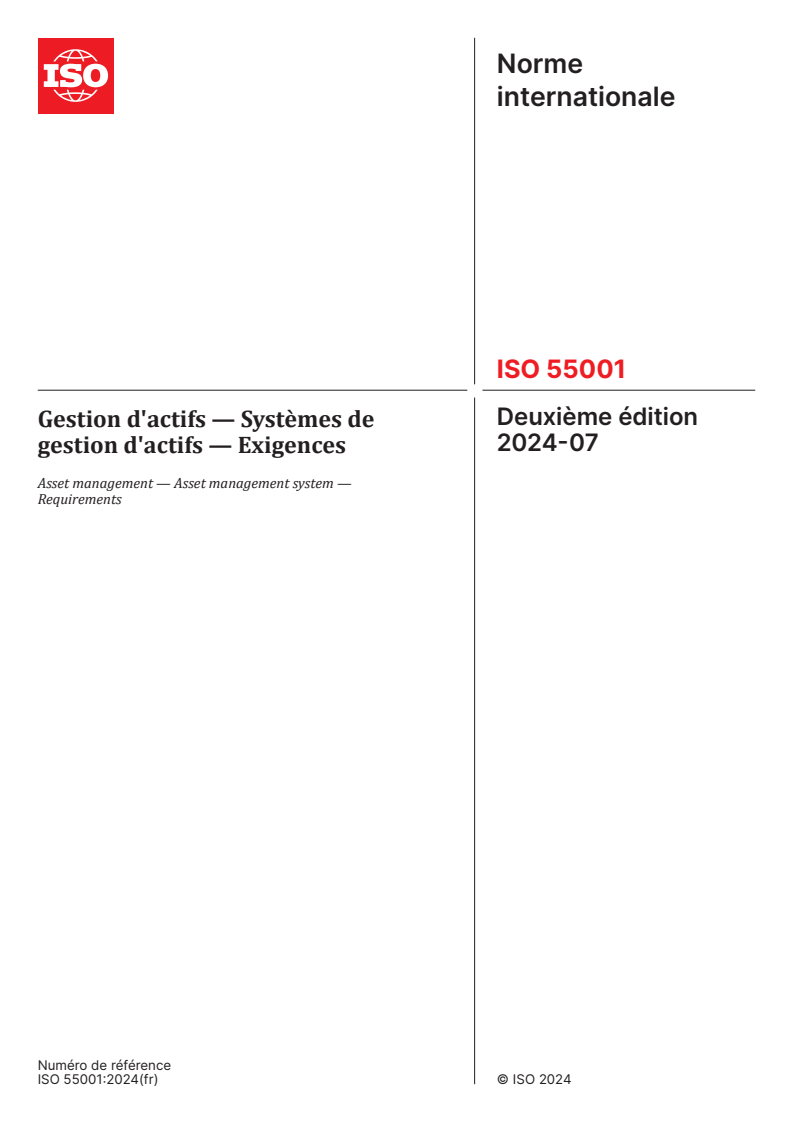
ISO 55001:2024 - Gestion d'actifs — Systèmes de gestion d'actifs — Exigences/3/2024
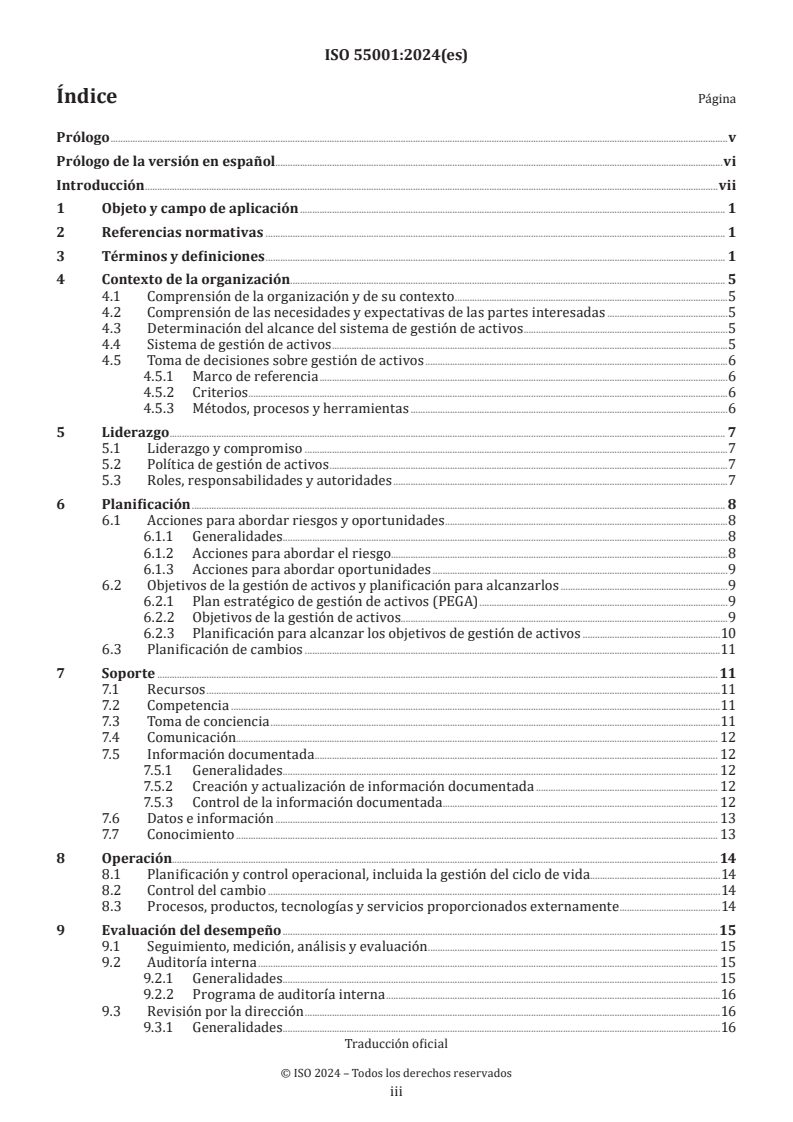
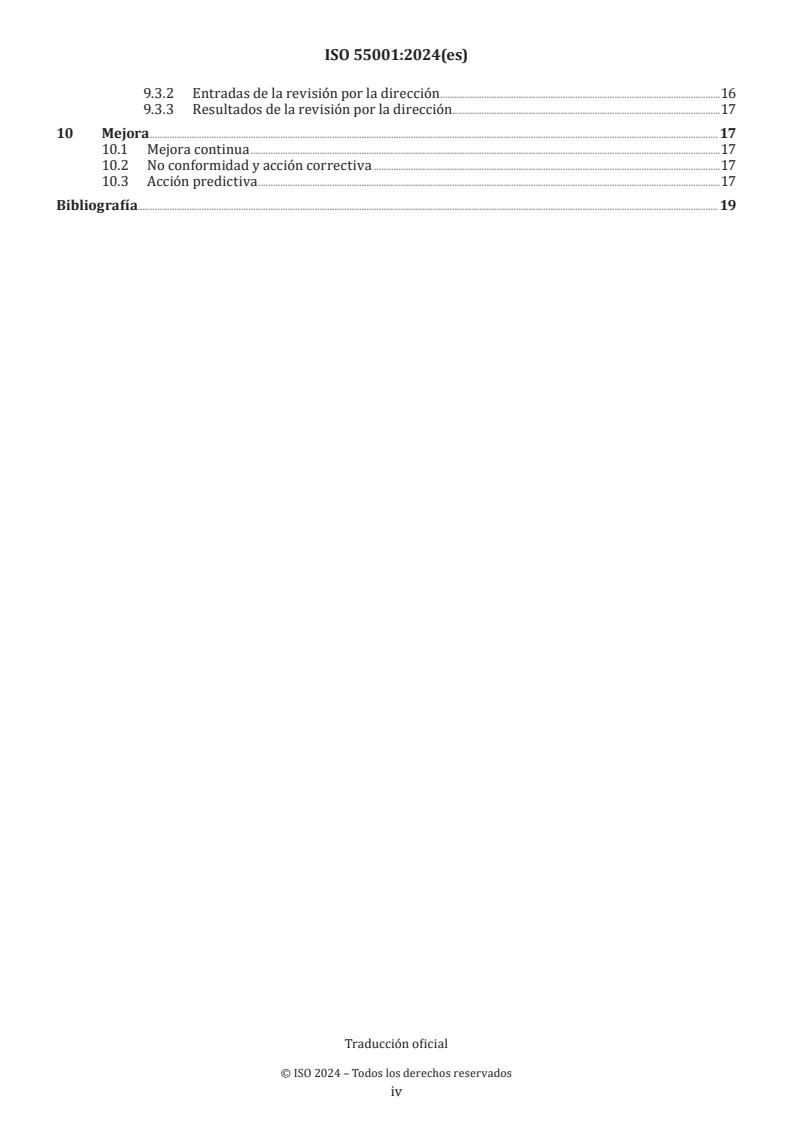
ISO 55001:2024 - Asset management — Asset management system — Requirements Released:11/20/2024
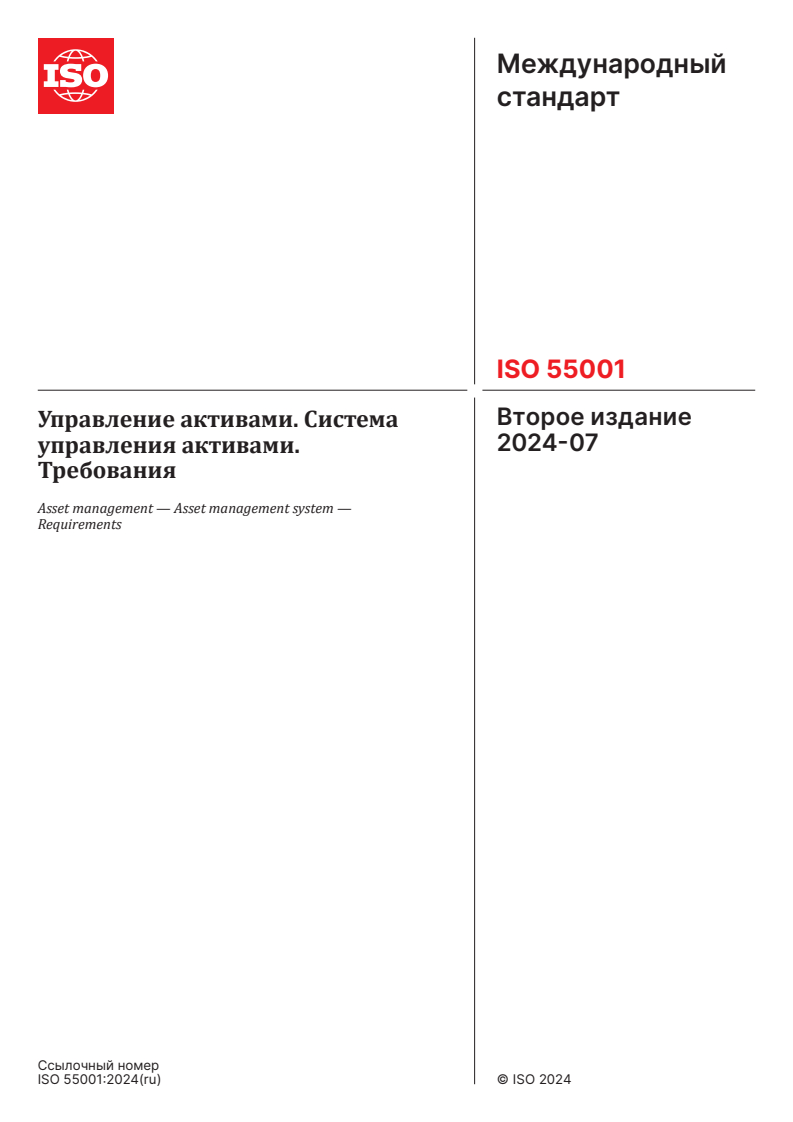
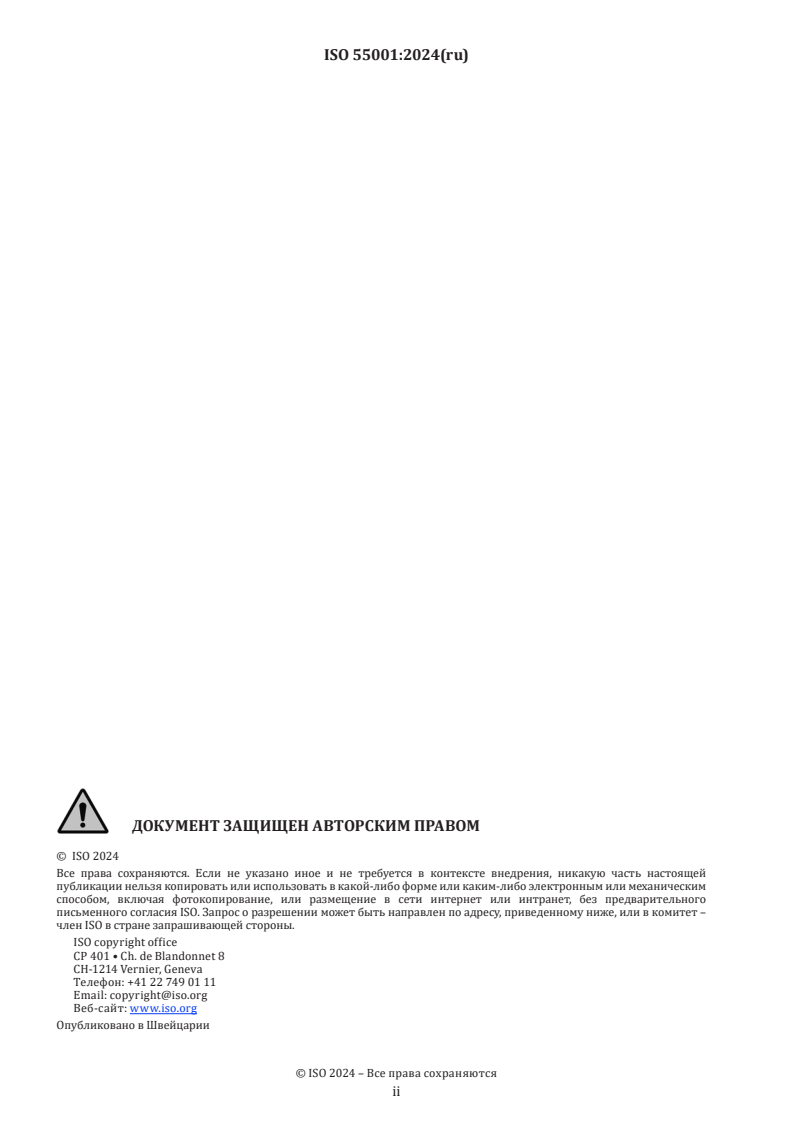

ISO 55001:2024 - Asset management — Asset management system — Requirements Released:1/30/2025
Overview
SIST ISO 55001:2024 - Asset management - Asset management system - Requirements - defines the requirements for establishing, implementing, maintaining and continually improving an asset management system (AMS). Applicable to all types and sizes of organizations and to all asset types (physical and non‑physical), the standard focuses on achieving realized value from assets across their life‑cycle, meeting applicable requirements, and driving continual improvement of asset performance and the AMS itself. SIST ISO 55001:2024 is the second edition and replaces ISO 55001:2014.
Key topics and requirements
SIST ISO 55001:2024 follows the Harmonized Structure for management system standards and emphasizes the following core areas:
- Context of the organization (Clause 4): understanding internal/external factors, stakeholder needs, and defining the AMS scope.
- Asset management decision‑making: frameworks, criteria, methods, processes and tools to support consistent, value‑focused decisions.
- Leadership and policy (Clause 5): top management commitment, asset management policy, roles, responsibilities and authorities.
- Planning (Clause 6): addressing risks and opportunities, setting asset management objectives, and developing a Strategic Asset Management Plan (SAMP).
- Support (Clause 7): resources, competence, awareness, communication, documented information, data and knowledge management.
- Operation (Clause 8): operational planning and control, including life‑cycle management, control of change, and management of externally provided processes and services.
- Performance evaluation (Clause 9): monitoring, measurement, analysis, internal audit and management review.
- Improvement (Clause 10): continual improvement, nonconformity and corrective actions, and the newly emphasized predictive action (formerly preventive action).
The 2024 revision increases emphasis on leadership, clarifies lifecycle responsibilities, distinguishes how to address risks versus opportunities, and introduces stronger requirements for decision‑making and knowledge management.
Practical applications and who uses this standard
SIST ISO 55001:2024 is used to design and operate a structured AMS that aligns asset decisions with organizational objectives. Typical uses include:
- Public and private asset‑intensive organizations (utilities, transport, manufacturing, property owners)
- Asset managers, maintenance teams, reliability and lifecycle engineers
- Senior management and governance bodies to demonstrate stewardship and accountability
- Service providers and consultants designing asset management processes
- Auditors and assessors evaluating AMS conformity and performance
Practical applications include aligning financial, technical and operational decisions, improving asset performance and sustainability, managing lifecycle costs, and integrating asset data and knowledge across functions.
Related standards
- ISO 55000 - overview and terminology for asset management
- ISO 55002 - guidance on applying ISO 55001 requirements
- ISO/TS 55010, ISO 55011, ISO 55012, ISO 55013 - guidance on alignment with financial functions, public policy, people involvement, and asset data management
Keywords: ISO 55001, asset management, asset management system, SIST ISO 55001:2024, asset lifecycle, strategic asset management plan, asset data, risk and opportunities, continual improvement.
Relations
- Effective Date
- 01-Sep-2024
Buy Documents
ISO 55001:2024 - Asset management — Asset management system — Requirements Released:7/3/2024
ISO 55001:2024 - Gestion d'actifs — Systèmes de gestion d'actifs — Exigences/3/2024
ISO 55001:2024 - Asset management — Asset management system — Requirements Released:11/20/2024
ISO 55001:2024 - Asset management — Asset management system — Requirements Released:1/30/2025
Get Certified
Connect with accredited certification bodies for this standard

BSI Group
BSI (British Standards Institution) is the business standards company that helps organizations make excellence a habit.

Bureau Veritas
Bureau Veritas is a world leader in laboratory testing, inspection and certification services.

DNV
DNV is an independent assurance and risk management provider.
Sponsored listings
Frequently Asked Questions
SIST ISO 55001:2024 is a standard published by the Slovenian Institute for Standardization (SIST). Its full title is "Asset management - Asset management system - Requirements". This standard covers: This document specifies requirements for an asset management system. This document is applicable to all types of assets and all types and sizes of organizations. Consistent with the organization’s asset management policy, the intended results of an asset management system include: - realized value from assets throughout their life for the organization and its stakeholders; - achievement of asset management objectives and fulfilment of applicable requirements; - continual improvement of asset management, the asset management system and the performance of assets. This document does not specify financial, accounting nor technical requirements for managing specific asset types. NOTE For the purposes of ISO 55000, this document and ISO 55002, the term “asset management system” is used to refer to a management system for asset management.
This document specifies requirements for an asset management system. This document is applicable to all types of assets and all types and sizes of organizations. Consistent with the organization’s asset management policy, the intended results of an asset management system include: - realized value from assets throughout their life for the organization and its stakeholders; - achievement of asset management objectives and fulfilment of applicable requirements; - continual improvement of asset management, the asset management system and the performance of assets. This document does not specify financial, accounting nor technical requirements for managing specific asset types. NOTE For the purposes of ISO 55000, this document and ISO 55002, the term “asset management system” is used to refer to a management system for asset management.
SIST ISO 55001:2024 is classified under the following ICS (International Classification for Standards) categories: 03.100.01 - Company organization and management in general; 03.100.10 - Purchasing. Procurement. Logistics; 03.100.70 - Management systems. The ICS classification helps identify the subject area and facilitates finding related standards.
SIST ISO 55001:2024 has the following relationships with other standards: It is inter standard links to SIST ISO 55001:2014. Understanding these relationships helps ensure you are using the most current and applicable version of the standard.
SIST ISO 55001:2024 is available in PDF format for immediate download after purchase. The document can be added to your cart and obtained through the secure checkout process. Digital delivery ensures instant access to the complete standard document.
Standards Content (Sample)
SLOVENSKI STANDARD
01-september-2024
Nadomešča:
SIST ISO 55001:2014
Obvladovanje premoženja - Sistemi vodenja premoženja - Zahteve
Asset management — Asset management system — Requirements
Gestion d'actifs — Systèmes de gestion d'actifs — Exigences
Ta slovenski standard je istoveten z: ISO 55001:2024
ICS:
03.100.10 Nabava. Dobava. Logistika Purchasing. Procurement.
Logistics
03.100.70 Sistemi vodenja Management systems
2003-01.Slovenski inštitut za standardizacijo. Razmnoževanje celote ali delov tega standarda ni dovoljeno.
International
Standard
ISO 55001
Second edition
Asset management — Asset
2024-07
management system —
Requirements
Gestion d'actifs — Systèmes de gestion d'actifs — Exigences
Reference number
© ISO 2024
All rights reserved. Unless otherwise specified, or required in the context of its implementation, no part of this publication may
be reproduced or utilized otherwise in any form or by any means, electronic or mechanical, including photocopying, or posting on
the internet or an intranet, without prior written permission. Permission can be requested from either ISO at the address below
or ISO’s member body in the country of the requester.
ISO copyright office
CP 401 • Ch. de Blandonnet 8
CH-1214 Vernier, Geneva
Phone: +41 22 749 01 11
Email: copyright@iso.org
Website: www.iso.org
Published in Switzerland
ii
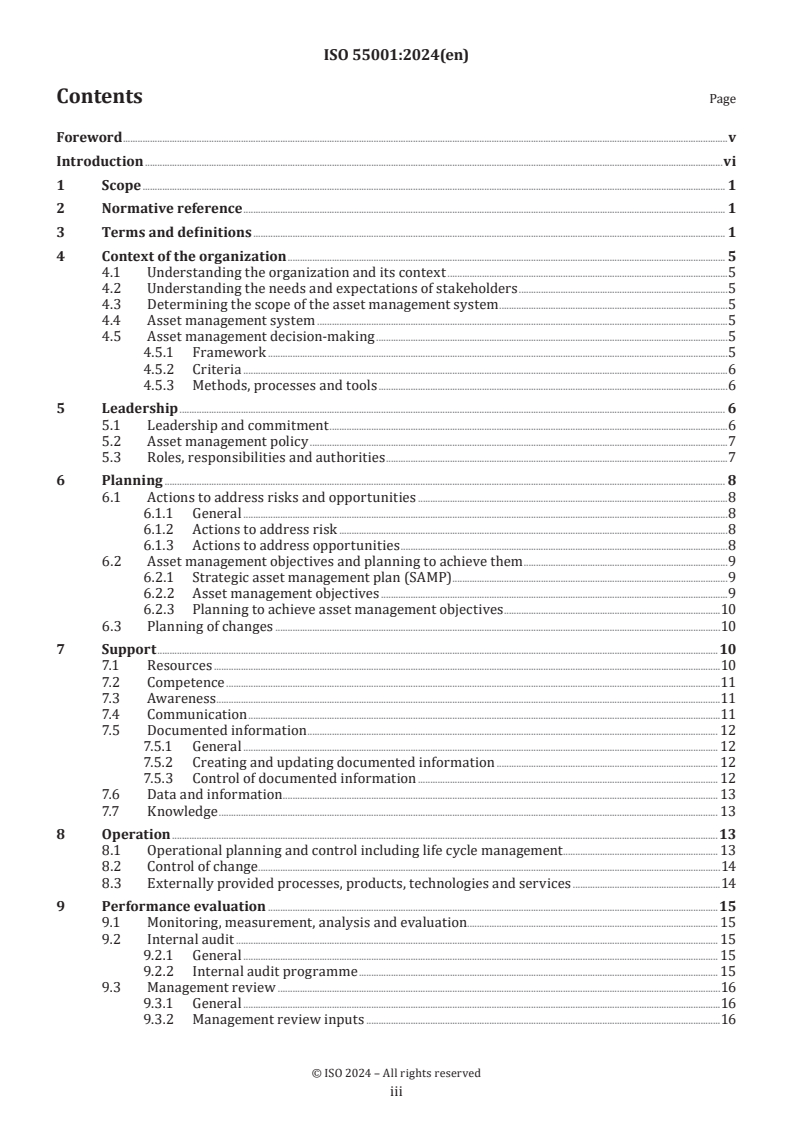
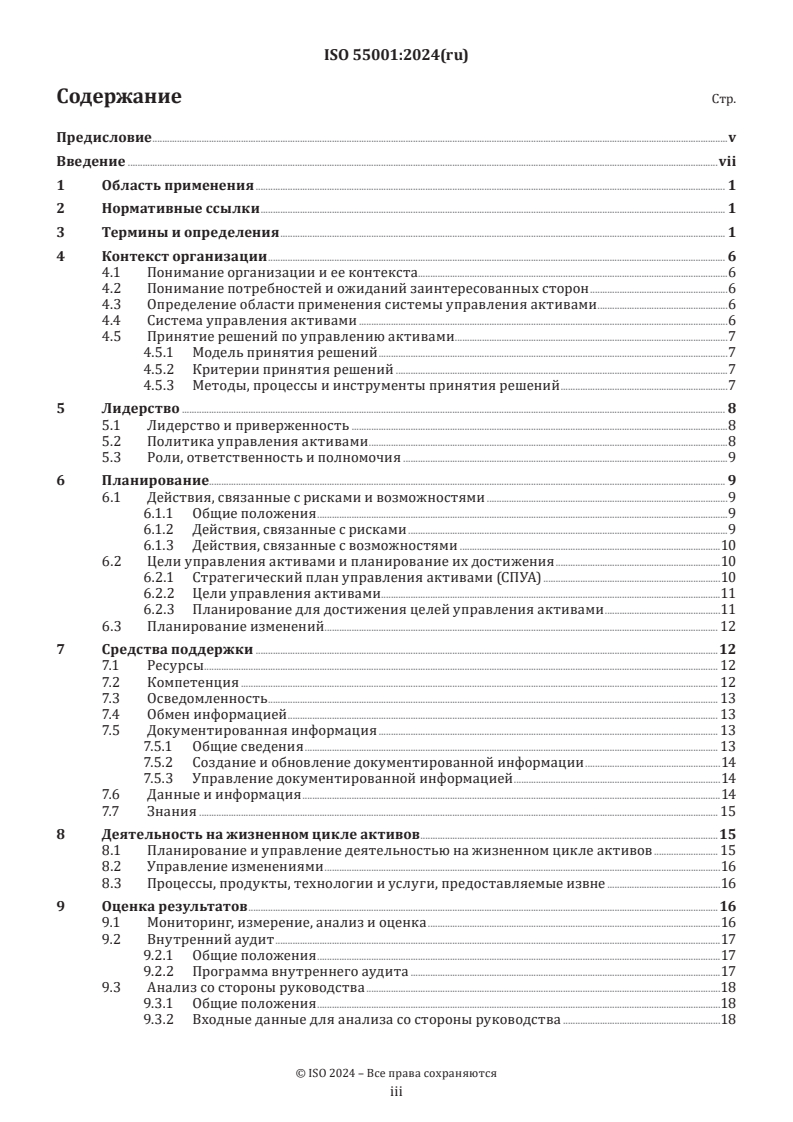
Contents Page
Foreword .v
Introduction .vi
1 Scope . 1
2 Normative reference . 1
3 Terms and definitions . 1
4 Context of the organization . 5
4.1 Understanding the organization and its context .5
4.2 Understanding the needs and expectations of stakeholders .5
4.3 Determining the scope of the asset management system .5
4.4 Asset management system .5
4.5 Asset management decision-making .5
4.5.1 Framework .5
4.5.2 Criteria .6
4.5.3 Methods, processes and tools .6
5 Leadership . 6
5.1 Leadership and commitment .6
5.2 Asset management policy .7
5.3 Roles, responsibilities and authorities .7
6 Planning . 8
6.1 Actions to address risks and opportunities .8
6.1.1 General .8
6.1.2 Actions to address risk .8
6.1.3 Actions to address opportunities .8
6.2 Asset management objectives and planning to achieve them .9
6.2.1 Strategic asset management plan (SAMP) .9
6.2.2 Asset management objectives .9
6.2.3 Planning to achieve asset management objectives .10
6.3 Planning of changes .10
7 Support .10
7.1 Resources .10
7.2 Competence .11
7.3 Awareness .11
7.4 Communication .11
7.5 Documented information . 12
7.5.1 General . 12
7.5.2 Creating and updating documented information . 12
7.5.3 Control of documented information . 12
7.6 Data and information . . 13
7.7 Knowledge . 13
8 Operation .13
8.1 Operational planning and control including life cycle management . 13
8.2 Control of change . .14
8.3 Externally provided processes, products, technologies and services .14
9 Performance evaluation .15
9.1 Monitoring, measurement, analysis and evaluation . . 15
9.2 Internal audit . 15
9.2.1 General . 15
9.2.2 Internal audit programme . 15
9.3 Management review .16
9.3.1 General .16
9.3.2 Management review inputs .16
iii
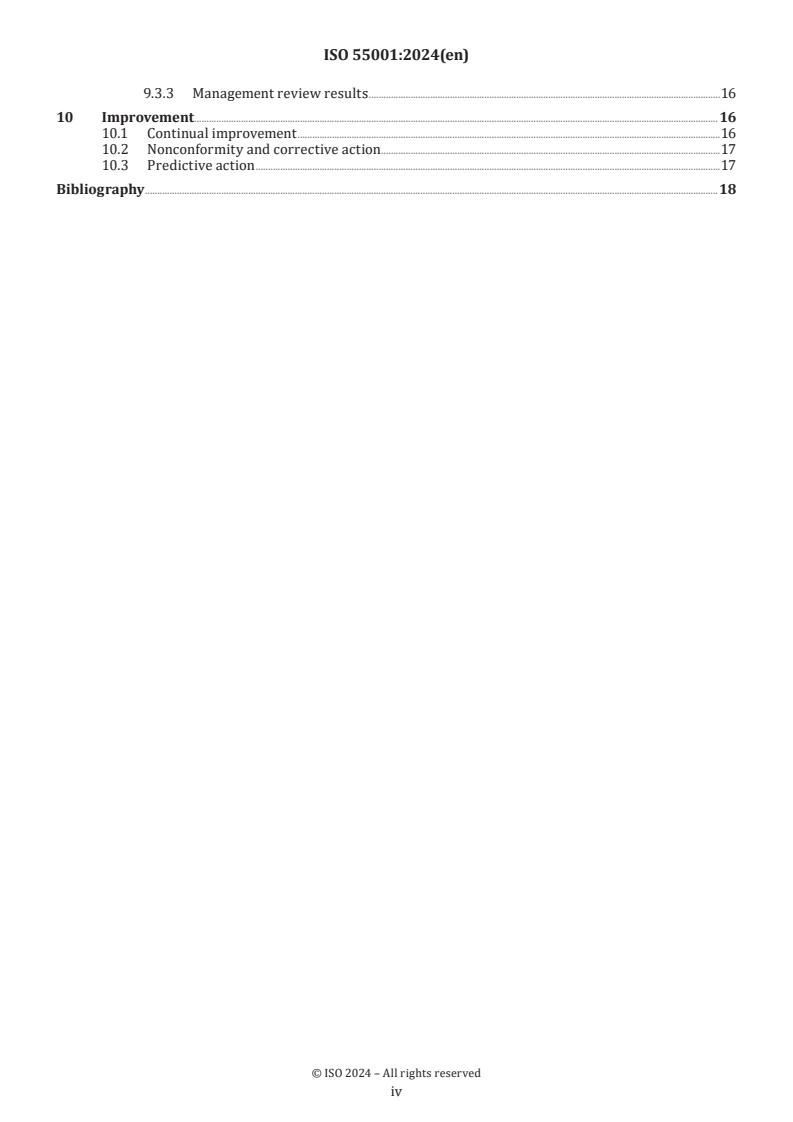
9.3.3 Management review results .16
10 Improvement .16
10.1 Continual improvement .16
10.2 Nonconformity and corrective action .17
10.3 Predictive action .17
Bibliography .18
iv
Foreword
ISO (the International Organization for Standardization) is a worldwide federation of national standards
bodies (ISO member bodies). The work of preparing International Standards is normally carried out through
ISO technical committees. Each member body interested in a subject for which a technical committee
has been established has the right to be represented on that committee. International organizations,
governmental and non-governmental, in liaison with ISO, also take part in the work. ISO collaborates closely
with the International Electrotechnical Commission (IEC) on all matters of electrotechnical standardization.
The procedures used to develop this document and those intended for its further maintenance are described
in the ISO/IEC Directives, Part 1. In particular, the different approval criteria needed for the different types
of ISO document should be noted. This document was drafted in accordance with the editorial rules of the
ISO/IEC Directives, Part 2 (see www.iso.org/directives).
ISO draws attention to the possibility that the implementation of this document may involve the use of (a)
patent(s). ISO takes no position concerning the evidence, validity or applicability of any claimed patent
rights in respect thereof. As of the date of publication of this document, ISO had not received notice of (a)
patent(s) which may be required to implement this document. However, implementers are cautioned that
this may not represent the latest information, which may be obtained from the patent database available at
www.iso.org/patents. ISO shall not be held responsible for identifying any or all such patent rights.
Any trade name used in this document is information given for the convenience of users and does not
constitute an endorsement.
For an explanation of the voluntary nature of standards, the meaning of ISO specific terms and expressions
related to conformity assessment, as well as information about ISO’s adherence to the World Trade
Organization (WTO) principles in the Technical Barriers to Trade (TBT), see www.iso.org/iso/foreword.html.
This document was prepared by Technical Committee ISO/TC 251, Asset management.
This second edition cancels and replaces the first edition (ISO 55001:2014), which has been technically
revised.
The main changes are as follows:
— application of the Harmonized Structure for Management System Standards, which includes the
incorporation of the common core management system terminological entries in Clause 3;
— inclusion of new subclauses dealing with asset management decision-making, the strategic asset
management plan and knowledge;
— making clear that operational planning and control includes life cycle management;
— making a clear distinction between how an organization shall address “risk” and how it shall address
“opportunities”;
— renaming the subclause “preventive action” to “predictive action” and full technical revision of the
content of this subclause (see 10.3);
— a stronger emphasis on leadership and its role in supporting the enablement and success of the asset
management system.
Any feedback or questions on this document should be directed to the user’s national standards body. A
complete listing of these bodies can be found at www.iso.org/members.html.
v
Introduction
This document specifies requirements for the establishment, implementation, operation, maintenance and
improvement of a management system for asset management, referred to as an “asset management system”.
This document can be used by any organization of any size and type. The organization determines to which
of its assets this document applies, taking into account its legal, regulatory and contractual requirements.
This document can be applied to all types of assets both physical and non-physical.
This document is primarily intended for use by:
— those involved in the establishment, implementation, operation, maintenance and improvement of an
asset management system;
— those contracted or involved in delivering asset management activities and service providers;
— internal and external parties involved in assessing an organization’s ability to meet asset management
system requirements.
The order in which requirements are presented in this document does not reflect their importance nor imply
the order in which they are to be implemented.
General information on asset management, and information on the terminology applicable to this document,
is provided in ISO 55000.
Further guidance regarding the application of the requirements in this document is provided in ISO 55002.
Additional guidance on specific elements of the asset management system as specified in this document is
provided in ISO/TS 55010 (alignment between financial and non-financial functions of the organization),
ISO 55012 (people involvement and competence) and ISO 55013 (management of asset data).
Guidance on development of public policy to enable asset management is provided in ISO 55011.
There are some important principles associated with asset management, including:
— value: asset management focuses on the value assets provide to the organization over time;
— alignment: asset management aligns financial, technical and operational decisions with the organizational
objectives, promoting vertical and horizontal coordination;
— leadership: leadership and sustained commitment at all levels are crucial for successful asset management.
The primary outcomes of asset management are the realization of value and the achievement of
organizational objectives. There are also some characteristics that result from the implementation of a
systematic approach to asset management, including the following:
— assurance: asset management provides better organizational oversight and accountability;
— adaptability: asset management enables organizations to adapt more rapidly and effectively to changes
in internal and external context;
— sustainability: asset management promotes long-term thinking, considering future impacts, risks,
uncertainties and opportunities to realize value.
This document has been prepared using the Harmonized Structure for ISO Management System Standards
(i.e. identical clause numbers, clause titles, text and common terms and core definitions) intended to
enhance alignment among Management System Standards and to facilitate their combined and integrated
implementation. This document is therefore designed to enable an organization to align and integrate its
asset management system with related management system requirements.
vi
International Standard ISO 55001:2024(en)
Asset management — Asset management system —
Requirements
1 Scope
This document specifies requirements for an asset management system.
This document is applicable to all types of assets and all types and sizes of organizations.
Consistent with the organization’s asset management policy, the intended results of an asset management
system include:
— realized value from assets throughout their life for the organization and its stakeholders;
— achievement of asset management objectives and fulfilment of applicable requirements;
— continual improvement of asset management, the asset management system and the performance of assets.
This document does not specify financial, accounting nor technical requirements for managing specific
asset types.
NOTE For the purposes of ISO 55000, this document and ISO 55002, the term “asset management system” is used
to refer to a management system for asset management.
2 Normative reference
The following documents are referred to in the text in such a way that some or all of their content constitutes
requirements of this document. For dated references, only the edition cited applies. For undated references,
the latest edition of the referenced document (including any amendments) applies.
ISO 55000, Asset management — Vocabulary, overview and principles
3 Terms and definitions
For the purposes of this document, the terms and definitions given in ISO 55000 and the following apply.
ISO and IEC maintain terminology databases for use in standardization at the following addresses:
— ISO Online browsing platform: available at https:// www .iso .org/ obp
— IEC Electropedia: available at https:// www .electropedia .org/
3.1
organization
person or group of people that has its own functions with responsibilities, authorities and relationships to
achieve its objectives (3.6)
Note 1 to entry: The concept of organization includes, but is not limited to, sole-trader, company, corporation, firm,
enterprise, authority, partnership, charity or institution, or part or combination thereof, whether incorporated or not,
public or private.
Note 2 to entry: If the organization is part of a larger entity, the term “organization” refers only to the part of the larger
entity that is within the scope of the asset management system (3.4).
3.2
stakeholder
interested party
person or organization (3.1) that can affect, be affected by, or perceive itself to be affected by a decision or
activity
3.3
top management
person or group of people who directs and controls an organization (3.1) at the highest level
Note 1 to entry: Top management has the power to delegate authority and provide resources within the organization.
Note 2 to entry: If the scope of the management system (3.4) covers only part of an organization, then top management
refers to those who direct and control that part of the organization.
3.4
management system
set of interrelated or interacting elements of an organization (3.1) to establish policies (3.5) and objectives
(3.6), as well as processes (3.8) to achieve those objectives
Note 1 to entry: A management system can address a single discipline or several disciplines.
Note 2 to entry: The management system elements include the organization’s structure, roles and responsibilities,
planning and operation.
3.5
policy
intentions and direction of an organization (3.1) as formally expressed by its top management (3.3)
3.6
objective
result to be achieved
Note 1 to entry: An objective can be strategic, tactical, or operational.
Note 2 to entry: Objectives can relate to different disciplines (such as finance, health and safety, and environment).
They can be, for example, organization-wide or specific to a project, service, product or process (3.8).
Note 3 to entry: An objective can be expressed in other ways, e.g. as an intended result, as a purpose, as an operational
criterion, as an asset management objective or by the use of other words with similar meaning (e.g. aim, goal, or
target).
Note 4 to entry: In the context of asset management systems (3.4), asset management objectives are set by the
organization (3.1), consistent with the asset management policy (3.5), to achieve specific results.
3.7
risk
effect of uncertainty on objectives (3.6)
Note 1 to entry: An effect is a deviation from the expected — positive or negative.
Note 2 to entry: Uncertainty is the state, even partial, of deficiency of information related to, understanding or
knowledge of, an event, its consequence, or likelihood.
Note 3 to entry: Risk is often characterized by reference to potential events (as defined in ISO 31073) and consequences
(as defined in ISO 31073), or a combination of these.
Note 4 to entry: Risk is often expressed in terms of a combination of the consequences of an event (including changes
in circumstances) and the associated likelihood (as defined in ISO 31073) of occurrence.
3.8
process
set of interrelated or interacting activities that uses or transforms inputs to deliver a result
Note 1 to entry: Whether the result of a process is called an output, a product or a service depends on the context of
the reference.
3.9
competence
ability to apply knowledge and skills to achieve intended results
3.10
documented information
information required to be controlled and maintained by an organization (3.1) and the medium on which it
is contained
Note 1 to entry: Documented information can be in any format and media and from any source.
Note 2 to entry: Documented information can refer to:
— the management system (3.4), including related processes (3.8);
— information created in order for the organization to operate (documentation);
— evidence of results achieved (records).
3.11
performance
measurable result
Note 1 to entry: Performance can relate either to quantitative or qualitative findings.
Note 2 to entry: Performance can relate to managing activities, processes (3.8), products, services, systems or
organizations (3.1).
Note 3 to entry: For the purposes of asset management, performance can relate to assets in their ability to fulfil
requirements (3.17) or objectives (3.6) and thereby their ability to realize value.
3.12
continual improvement
recurring activity to enhance performance (3.11)
3.13
effectiveness
extent to which planned activities are realized and planned results are achieved
3.14
requirement
need or expectation that is stated, generally implied or obligatory
Note 1 to entry: “Generally implied” means that it is custom or common practice for the organization (3.1) and
stakeholders (3.2) that the need or expectation under consideration is implied.
Note 2 to entry: A specified requirement is one that is stated, e.g. in documented information (3.10).
3.15
conformity
fulfilment of a requirement (3.14)
3.16
nonconformity
non-fulfilment of a requirement (3.14)
Note 1 to entry: Nonconformity can be any deviation from asset management system (3.4) requirements (e.g. from
relevant work standards, practices, procedures, legal requirements), or any failure of an asset to meet or perform to
specification.
3.17
corrective action
action to eliminate the cause(s) of a nonconformity (3.16) and to prevent recurrence
3.18
preventive action
action to eliminate the cause of a potential nonconformity (3.16) or other undesirable potential situation
Note 1 to entry: There can be more than one cause for a potential nonconformity.
Note 2 to entry: Preventive action is taken to prevent occurrence and to preserve an asset’s function whereas corrective
action (3.17) is taken to prevent recurrence.
Note 3 to entry: Preventive action is normally carried out while the asset is functionally available and operable or
prior to the initiation of functional failure.
Note 4 to entry: Preventive action includes the replenishment of consumables where the consumption is a functional
requirement.
[SOURCE: ISO 55000:2024, 3.3.20]
3.19
incident
unplanned event or occurrence
[SOURCE: ISO 55000:2024, 3.3.22]
3.20
audit
systematic and independent process (3.8) for obtaining evidence and evaluating it objectively to determine
the extent to which the audit criteria are fulfilled
Note 1 to entry: An audit can be an internal audit (first party) or an external audit (second party or third party), and it
can be a combined audit (combining two or more disciplines).
Note 2 to entry: An internal audit is conducted by the organization (3.1) itself, or by an external party on its behalf.
Note 3 to entry: “Audit evidence” and “audit criteria” are defined in ISO 19011.
3.21
measurement
process (3.8) to determine a value
Note 1 to entry: In this definition a “value” refers to a numerical value, which is different than value in the context of
stakeholder’s (3.2) value or asset management value.
3.22
monitoring
determining the status of a system, a process (3.8) or an activity
Note 1 to entry: To determine the status, there can be a need to check, supervise or critically observe.
Note 2 to entry: For the purposes of asset management, monitoring can also refer to determining the status of an
asset. This is typically referred to as “condition monitoring” or “performance monitoring”.
4 Context of the organization
4.1 Understanding the organization and its context
The organization shall determine external and internal issues that are relevant to its purpose and that affect
its ability to achieve the intended result(s) of its asset management system.
The organization shall determine whether climate change is a relevant issue.
4.2 Understanding the needs and expectations of stakeholders
The organization shall determine:
a) the stakeholders that are relevant to the asset management system;
b) the relevant requirements of these stakeholders;
c) which of these requirements will be addressed through the asset management system;
d) the impacts of assets and asset management activities on stakeholders, as well as their significance to
the organizational objectives.
NOTE 1 Such impacts can be positive or negative, financial or non-financial, and can be considered in the
determination of value, in decision-making, in prioritization of resources and activities, and in performance
monitoring.
NOTE 2 Impacts on stakeholders can include, but are not limited to, cost, risk, performance, safety, capital value
revenue, environmental impact, reputation, quality, sustainability and compliance.
NOTE 3 Relevant stakeholders can have requirements rela
...
International
Standard
ISO 55001
Second edition
Asset management — Asset
2024-07
management system —
Requirements
Gestion d'actifs — Systèmes de gestion d'actifs — Exigences
Reference number
© ISO 2024
All rights reserved. Unless otherwise specified, or required in the context of its implementation, no part of this publication may
be reproduced or utilized otherwise in any form or by any means, electronic or mechanical, including photocopying, or posting on
the internet or an intranet, without prior written permission. Permission can be requested from either ISO at the address below
or ISO’s member body in the country of the requester.
ISO copyright office
CP 401 • Ch. de Blandonnet 8
CH-1214 Vernier, Geneva
Phone: +41 22 749 01 11
Email: copyright@iso.org
Website: www.iso.org
Published in Switzerland
ii
Contents Page
Foreword .v
Introduction .vi
1 Scope . 1
2 Normative reference . 1
3 Terms and definitions . 1
4 Context of the organization . 5
4.1 Understanding the organization and its context .5
4.2 Understanding the needs and expectations of stakeholders .5
4.3 Determining the scope of the asset management system .5
4.4 Asset management system .5
4.5 Asset management decision-making .5
4.5.1 Framework .5
4.5.2 Criteria .6
4.5.3 Methods, processes and tools .6
5 Leadership . 6
5.1 Leadership and commitment .6
5.2 Asset management policy .7
5.3 Roles, responsibilities and authorities .7
6 Planning . 8
6.1 Actions to address risks and opportunities .8
6.1.1 General .8
6.1.2 Actions to address risk .8
6.1.3 Actions to address opportunities .8
6.2 Asset management objectives and planning to achieve them .9
6.2.1 Strategic asset management plan (SAMP) .9
6.2.2 Asset management objectives .9
6.2.3 Planning to achieve asset management objectives .10
6.3 Planning of changes .10
7 Support .10
7.1 Resources .10
7.2 Competence .11
7.3 Awareness .11
7.4 Communication .11
7.5 Documented information . 12
7.5.1 General . 12
7.5.2 Creating and updating documented information . 12
7.5.3 Control of documented information . 12
7.6 Data and information . . 13
7.7 Knowledge . 13
8 Operation .13
8.1 Operational planning and control including life cycle management . 13
8.2 Control of change . .14
8.3 Externally provided processes, products, technologies and services .14
9 Performance evaluation .15
9.1 Monitoring, measurement, analysis and evaluation . . 15
9.2 Internal audit . 15
9.2.1 General . 15
9.2.2 Internal audit programme . 15
9.3 Management review .16
9.3.1 General .16
9.3.2 Management review inputs .16
iii
9.3.3 Management review results .16
10 Improvement .16
10.1 Continual improvement .16
10.2 Nonconformity and corrective action .17
10.3 Predictive action .17
Bibliography .18
iv
Foreword
ISO (the International Organization for Standardization) is a worldwide federation of national standards
bodies (ISO member bodies). The work of preparing International Standards is normally carried out through
ISO technical committees. Each member body interested in a subject for which a technical committee
has been established has the right to be represented on that committee. International organizations,
governmental and non-governmental, in liaison with ISO, also take part in the work. ISO collaborates closely
with the International Electrotechnical Commission (IEC) on all matters of electrotechnical standardization.
The procedures used to develop this document and those intended for its further maintenance are described
in the ISO/IEC Directives, Part 1. In particular, the different approval criteria needed for the different types
of ISO document should be noted. This document was drafted in accordance with the editorial rules of the
ISO/IEC Directives, Part 2 (see www.iso.org/directives).
ISO draws attention to the possibility that the implementation of this document may involve the use of (a)
patent(s). ISO takes no position concerning the evidence, validity or applicability of any claimed patent
rights in respect thereof. As of the date of publication of this document, ISO had not received notice of (a)
patent(s) which may be required to implement this document. However, implementers are cautioned that
this may not represent the latest information, which may be obtained from the patent database available at
www.iso.org/patents. ISO shall not be held responsible for identifying any or all such patent rights.
Any trade name used in this document is information given for the convenience of users and does not
constitute an endorsement.
For an explanation of the voluntary nature of standards, the meaning of ISO specific terms and expressions
related to conformity assessment, as well as information about ISO’s adherence to the World Trade
Organization (WTO) principles in the Technical Barriers to Trade (TBT), see www.iso.org/iso/foreword.html.
This document was prepared by Technical Committee ISO/TC 251, Asset management.
This second edition cancels and replaces the first edition (ISO 55001:2014), which has been technically
revised.
The main changes are as follows:
— application of the Harmonized Structure for Management System Standards, which includes the
incorporation of the common core management system terminological entries in Clause 3;
— inclusion of new subclauses dealing with asset management decision-making, the strategic asset
management plan and knowledge;
— making clear that operational planning and control includes life cycle management;
— making a clear distinction between how an organization shall address “risk” and how it shall address
“opportunities”;
— renaming the subclause “preventive action” to “predictive action” and full technical revision of the
content of this subclause (see 10.3);
— a stronger emphasis on leadership and its role in supporting the enablement and success of the asset
management system.
Any feedback or questions on this document should be directed to the user’s national standards body. A
complete listing of these bodies can be found at www.iso.org/members.html.
v
Introduction
This document specifies requirements for the establishment, implementation, operation, maintenance and
improvement of a management system for asset management, referred to as an “asset management system”.
This document can be used by any organization of any size and type. The organization determines to which
of its assets this document applies, taking into account its legal, regulatory and contractual requirements.
This document can be applied to all types of assets both physical and non-physical.
This document is primarily intended for use by:
— those involved in the establishment, implementation, operation, maintenance and improvement of an
asset management system;
— those contracted or involved in delivering asset management activities and service providers;
— internal and external parties involved in assessing an organization’s ability to meet asset management
system requirements.
The order in which requirements are presented in this document does not reflect their importance nor imply
the order in which they are to be implemented.
General information on asset management, and information on the terminology applicable to this document,
is provided in ISO 55000.
Further guidance regarding the application of the requirements in this document is provided in ISO 55002.
Additional guidance on specific elements of the asset management system as specified in this document is
provided in ISO/TS 55010 (alignment between financial and non-financial functions of the organization),
ISO 55012 (people involvement and competence) and ISO 55013 (management of asset data).
Guidance on development of public policy to enable asset management is provided in ISO 55011.
There are some important principles associated with asset management, including:
— value: asset management focuses on the value assets provide to the organization over time;
— alignment: asset management aligns financial, technical and operational decisions with the organizational
objectives, promoting vertical and horizontal coordination;
— leadership: leadership and sustained commitment at all levels are crucial for successful asset management.
The primary outcomes of asset management are the realization of value and the achievement of
organizational objectives. There are also some characteristics that result from the implementation of a
systematic approach to asset management, including the following:
— assurance: asset management provides better organizational oversight and accountability;
— adaptability: asset management enables organizations to adapt more rapidly and effectively to changes
in internal and external context;
— sustainability: asset management promotes long-term thinking, considering future impacts, risks,
uncertainties and opportunities to realize value.
This document has been prepared using the Harmonized Structure for ISO Management System Standards
(i.e. identical clause numbers, clause titles, text and common terms and core definitions) intended to
enhance alignment among Management System Standards and to facilitate their combined and integrated
implementation. This document is therefore designed to enable an organization to align and integrate its
asset management system with related management system requirements.
vi
International Standard ISO 55001:2024(en)
Asset management — Asset management system —
Requirements
1 Scope
This document specifies requirements for an asset management system.
This document is applicable to all types of assets and all types and sizes of organizations.
Consistent with the organization’s asset management policy, the intended results of an asset management
system include:
— realized value from assets throughout their life for the organization and its stakeholders;
— achievement of asset management objectives and fulfilment of applicable requirements;
— continual improvement of asset management, the asset management system and the performance of assets.
This document does not specify financial, accounting nor technical requirements for managing specific
asset types.
NOTE For the purposes of ISO 55000, this document and ISO 55002, the term “asset management system” is used
to refer to a management system for asset management.
2 Normative reference
The following documents are referred to in the text in such a way that some or all of their content constitutes
requirements of this document. For dated references, only the edition cited applies. For undated references,
the latest edition of the referenced document (including any amendments) applies.
ISO 55000, Asset management — Vocabulary, overview and principles
3 Terms and definitions
For the purposes of this document, the terms and definitions given in ISO 55000 and the following apply.
ISO and IEC maintain terminology databases for use in standardization at the following addresses:
— ISO Online browsing platform: available at https:// www .iso .org/ obp
— IEC Electropedia: available at https:// www .electropedia .org/
3.1
organization
person or group of people that has its own functions with responsibilities, authorities and relationships to
achieve its objectives (3.6)
Note 1 to entry: The concept of organization includes, but is not limited to, sole-trader, company, corporation, firm,
enterprise, authority, partnership, charity or institution, or part or combination thereof, whether incorporated or not,
public or private.
Note 2 to entry: If the organization is part of a larger entity, the term “organization” refers only to the part of the larger
entity that is within the scope of the asset management system (3.4).
3.2
stakeholder
interested party
person or organization (3.1) that can affect, be affected by, or perceive itself to be affected by a decision or
activity
3.3
top management
person or group of people who directs and controls an organization (3.1) at the highest level
Note 1 to entry: Top management has the power to delegate authority and provide resources within the organization.
Note 2 to entry: If the scope of the management system (3.4) covers only part of an organization, then top management
refers to those who direct and control that part of the organization.
3.4
management system
set of interrelated or interacting elements of an organization (3.1) to establish policies (3.5) and objectives
(3.6), as well as processes (3.8) to achieve those objectives
Note 1 to entry: A management system can address a single discipline or several disciplines.
Note 2 to entry: The management system elements include the organization’s structure, roles and responsibilities,
planning and operation.
3.5
policy
intentions and direction of an organization (3.1) as formally expressed by its top management (3.3)
3.6
objective
result to be achieved
Note 1 to entry: An objective can be strategic, tactical, or operational.
Note 2 to entry: Objectives can relate to different disciplines (such as finance, health and safety, and environment).
They can be, for example, organization-wide or specific to a project, service, product or process (3.8).
Note 3 to entry: An objective can be expressed in other ways, e.g. as an intended result, as a purpose, as an operational
criterion, as an asset management objective or by the use of other words with similar meaning (e.g. aim, goal, or
target).
Note 4 to entry: In the context of asset management systems (3.4), asset management objectives are set by the
organization (3.1), consistent with the asset management policy (3.5), to achieve specific results.
3.7
risk
effect of uncertainty on objectives (3.6)
Note 1 to entry: An effect is a deviation from the expected — positive or negative.
Note 2 to entry: Uncertainty is the state, even partial, of deficiency of information related to, understanding or
knowledge of, an event, its consequence, or likelihood.
Note 3 to entry: Risk is often characterized by reference to potential events (as defined in ISO 31073) and consequences
(as defined in ISO 31073), or a combination of these.
Note 4 to entry: Risk is often expressed in terms of a combination of the consequences of an event (including changes
in circumstances) and the associated likelihood (as defined in ISO 31073) of occurrence.
3.8
process
set of interrelated or interacting activities that uses or transforms inputs to deliver a result
Note 1 to entry: Whether the result of a process is called an output, a product or a service depends on the context of
the reference.
3.9
competence
ability to apply knowledge and skills to achieve intended results
3.10
documented information
information required to be controlled and maintained by an organization (3.1) and the medium on which it
is contained
Note 1 to entry: Documented information can be in any format and media and from any source.
Note 2 to entry: Documented information can refer to:
— the management system (3.4), including related processes (3.8);
— information created in order for the organization to operate (documentation);
— evidence of results achieved (records).
3.11
performance
measurable result
Note 1 to entry: Performance can relate either to quantitative or qualitative findings.
Note 2 to entry: Performance can relate to managing activities, processes (3.8), products, services, systems or
organizations (3.1).
Note 3 to entry: For the purposes of asset management, performance can relate to assets in their ability to fulfil
requirements (3.17) or objectives (3.6) and thereby their ability to realize value.
3.12
continual improvement
recurring activity to enhance performance (3.11)
3.13
effectiveness
extent to which planned activities are realized and planned results are achieved
3.14
requirement
need or expectation that is stated, generally implied or obligatory
Note 1 to entry: “Generally implied” means that it is custom or common practice for the organization (3.1) and
stakeholders (3.2) that the need or expectation under consideration is implied.
Note 2 to entry: A specified requirement is one that is stated, e.g. in documented information (3.10).
3.15
conformity
fulfilment of a requirement (3.14)
3.16
nonconformity
non-fulfilment of a requirement (3.14)
Note 1 to entry: Nonconformity can be any deviation from asset management system (3.4) requirements (e.g. from
relevant work standards, practices, procedures, legal requirements), or any failure of an asset to meet or perform to
specification.
3.17
corrective action
action to eliminate the cause(s) of a nonconformity (3.16) and to prevent recurrence
3.18
preventive action
action to eliminate the cause of a potential nonconformity (3.16) or other undesirable potential situation
Note 1 to entry: There can be more than one cause for a potential nonconformity.
Note 2 to entry: Preventive action is taken to prevent occurrence and to preserve an asset’s function whereas corrective
action (3.17) is taken to prevent recurrence.
Note 3 to entry: Preventive action is normally carried out while the asset is functionally available and operable or
prior to the initiation of functional failure.
Note 4 to entry: Preventive action includes the replenishment of consumables where the consumption is a functional
requirement.
[SOURCE: ISO 55000:2024, 3.3.20]
3.19
incident
unplanned event or occurrence
[SOURCE: ISO 55000:2024, 3.3.22]
3.20
audit
systematic and independent process (3.8) for obtaining evidence and evaluating it objectively to determine
the extent to which the audit criteria are fulfilled
Note 1 to entry: An audit can be an internal audit (first party) or an external audit (second party or third party), and it
can be a combined audit (combining two or more disciplines).
Note 2 to entry: An internal audit is conducted by the organization (3.1) itself, or by an external party on its behalf.
Note 3 to entry: “Audit evidence” and “audit criteria” are defined in ISO 19011.
3.21
measurement
process (3.8) to determine a value
Note 1 to entry: In this definition a “value” refers to a numerical value, which is different than value in the context of
stakeholder’s (3.2) value or asset management value.
3.22
monitoring
determining the status of a system, a process (3.8) or an activity
Note 1 to entry: To determine the status, there can be a need to check, supervise or critically observe.
Note 2 to entry: For the purposes of asset management, monitoring can also refer to determining the status of an
asset. This is typically referred to as “condition monitoring” or “performance monitoring”.
4 Context of the organization
4.1 Understanding the organization and its context
The organization shall determine external and internal issues that are relevant to its purpose and that affect
its ability to achieve the intended result(s) of its asset management system.
The organization shall determine whether climate change is a relevant issue.
4.2 Understanding the needs and expectations of stakeholders
The organization shall determine:
a) the stakeholders that are relevant to the asset management system;
b) the relevant requirements of these stakeholders;
c) which of these requirements will be addressed through the asset management system;
d) the impacts of assets and asset management activities on stakeholders, as well as their significance to
the organizational objectives.
NOTE 1 Such impacts can be positive or negative, financial or non-financial, and can be considered in the
determination of value, in decision-making, in prioritization of resources and activities, and in performance
monitoring.
NOTE 2 Impacts on stakeholders can include, but are not limited to, cost, risk, performance, safety, capital value
revenue, environmental impact, reputation, quality, sustainability and compliance.
NOTE 3 Relevant stakeholders can have requirements related to climate change.
4.3 Determining the scope of the asset management system
The organization shall determine the boundaries and applicability of the asset management system to
establish its scope.
When determining this scope, the organization shall consider:
a) the external and internal issues referred to in 4.1;
b) the requirements referred to in 4.2;
c) the interaction with other management systems.
The
...
Norme
internationale
ISO 55001
Deuxième édition
Gestion d'actifs — Systèmes de
2024-07
gestion d'actifs — Exigences
Asset management — Asset management system —
Requirements
Numéro de référence
DOCUMENT PROTÉGÉ PAR COPYRIGHT
© ISO 2024
Tous droits réservés. Sauf prescription différente ou nécessité dans le contexte de sa mise en œuvre, aucune partie de cette
publication ne peut être reproduite ni utilisée sous quelque forme que ce soit et par aucun procédé, électronique ou mécanique,
y compris la photocopie, ou la diffusion sur l’internet ou sur un intranet, sans autorisation écrite préalable. Une autorisation peut
être demandée à l’ISO à l’adresse ci-après ou au comité membre de l’ISO dans le pays du demandeur.
ISO copyright office
Case postale 401 • Ch. de Blandonnet 8
CH-1214 Vernier, Genève
Tél.: +41 22 749 01 11
E-mail: copyright@iso.org
Web: www.iso.org
Publié en Suisse
ii
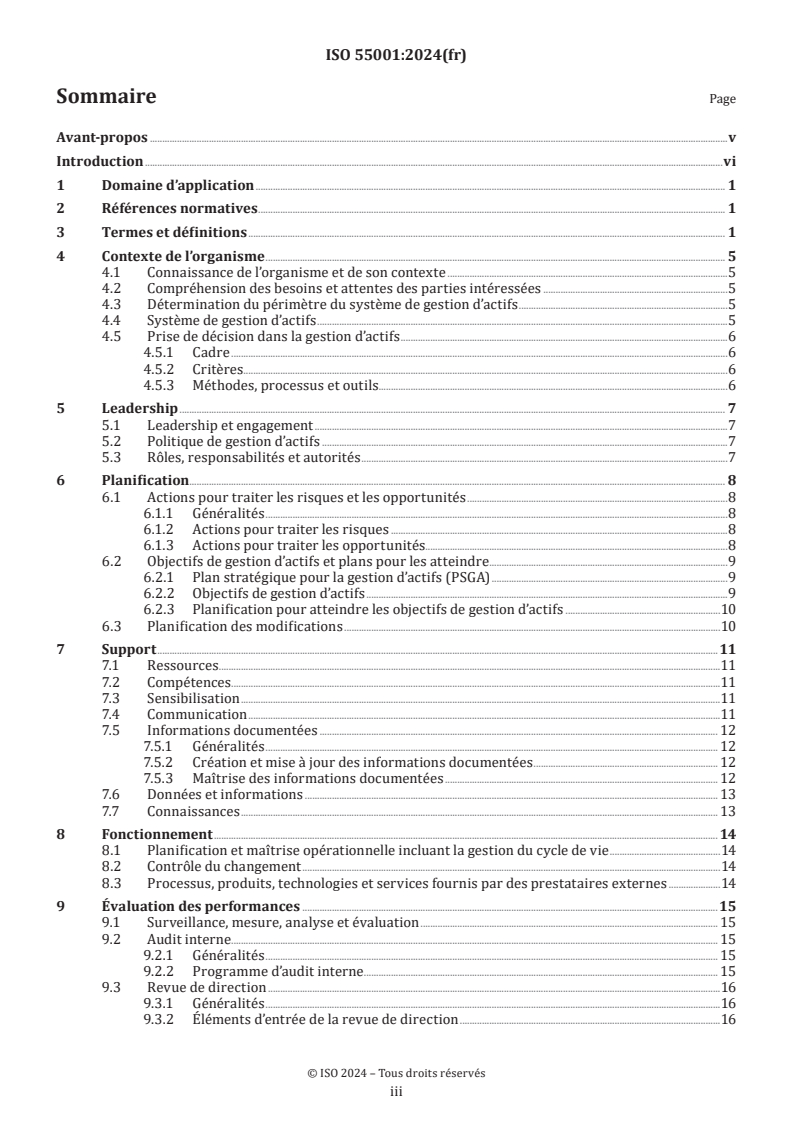
Sommaire Page
Avant-propos .v
Introduction .vi
1 Domaine d’application . 1
2 Références normatives . 1
3 Termes et définitions . 1
4 Contexte de l’organisme . 5
4.1 Connaissance de l’organisme et de son contexte .5
4.2 Compréhension des besoins et attentes des parties intéressées .5
4.3 Détermination du périmètre du système de gestion d’actifs .5
4.4 Système de gestion d’actifs .5
4.5 Prise de décision dans la gestion d’actifs .6
4.5.1 Cadre .6
4.5.2 Critères.6
4.5.3 Méthodes, processus et outils.6
5 Leadership . 7
5.1 Leadership et engagement .7
5.2 Politique de gestion d’actifs .7
5.3 Rôles, responsabilités et autorités .7
6 Planification. 8
6.1 Actions pour traiter les risques et les opportunités .8
6.1.1 Généralités .8
6.1.2 Actions pour traiter les risques .8
6.1.3 Actions pour traiter les opportunités.8
6.2 Objectifs de gestion d’actifs et plans pour les atteindre .9
6.2.1 Plan stratégique pour la gestion d’actifs (PSGA) .9
6.2.2 Objectifs de gestion d’actifs .9
6.2.3 Planification pour atteindre les objectifs de gestion d’actifs .10
6.3 Planification des modifications .10
7 Support .11
7.1 Ressources .11
7.2 Compétences . . .11
7.3 Sensibilisation .11
7.4 Communication .11
7.5 Informations documentées . 12
7.5.1 Généralités . 12
7.5.2 Création et mise à jour des informations documentées . 12
7.5.3 Maîtrise des informations documentées . 12
7.6 Données et informations . 13
7.7 Connaissances . 13
8 Fonctionnement . 14
8.1 Planification et maîtrise opérationnelle incluant la gestion du cycle de vie .14
8.2 Contrôle du changement .14
8.3 Processus, produits, technologies et services fournis par des prestataires externes .14
9 Évaluation des performances .15
9.1 Surveillance, mesure, analyse et évaluation . 15
9.2 Audit interne . . 15
9.2.1 Généralités . 15
9.2.2 Programme d’audit interne . 15
9.3 Revue de direction .16
9.3.1 Généralités .16
9.3.2 Éléments d’entrée de la revue de direction .16
iii
9.3.3 Résultats des revues de direction .16
10 Amélioration . 17
10.1 Amélioration continue .17
10.2 Non-conformité et actions correctives .17
10.3 Action prédictive .17
Bibliographie . 19
iv
Avant-propos
L’ISO (Organisation internationale de normalisation) est une fédération mondiale d’organismes nationaux
de normalisation (comités membres de l’ISO). L’élaboration des Normes internationales est en général
confiée aux comités techniques de l’ISO. Chaque comité membre intéressé par une étude a le droit de faire
partie du comité technique créé à cet effet. Les organisations internationales, gouvernementales et non
gouvernementales, en liaison avec l’ISO participent également aux travaux. L’ISO collabore étroitement avec
la Commission électrotechnique internationale (IEC) en ce qui concerne la normalisation électrotechnique.
Les procédures utilisées pour élaborer le présent document et celles destinées à sa mise à jour sont
décrites dans les Directives ISO/IEC, Partie 1. Il convient, en particulier, de prendre note des différents
critères d’approbation requis pour les différents types de documents ISO. Le présent document a
été rédigé conformément aux règles de rédaction données dans les Directives ISO/IEC, Partie 2 (voir
www.iso.org/directives).
L’ISO attire l’attention sur le fait que la mise en application du présent document peut entraîner l’utilisation
d’un ou de plusieurs brevets. L’ISO ne prend pas position quant à la preuve, à la validité et à l’applicabilité de
tout droit de brevet revendiqué à cet égard. À la date de publication du présent document, l’ISO n’avait pas
reçu notification qu’un ou plusieurs brevets pouvaient être nécessaires à sa mise en application. Toutefois,
il y a lieu d’avertir les responsables de la mise en application du présent document que des informations
plus récentes sont susceptibles de figurer dans la base de données de brevets, disponible à l’adresse
www.iso.org/brevets. L’ISO ne saurait être tenue pour responsable de ne pas avoir identifié tout ou partie de
tels droits de propriété.
Les appellations commerciales éventuellement mentionnées dans le présent document sont données pour
information, par souci de commodité, à l’intention des utilisateurs et ne sauraient constituer un engagement.
Pour une explication de la nature volontaire des normes, la signification des termes et expressions
spécifiques de l’ISO liés à l’évaluation de la conformité, ou pour toute information au sujet de l’adhésion de
l’ISO aux principes de l’Organisation mondiale du commerce (OMC) concernant les obstacles techniques au
commerce (OTC), voir www.iso.org/avant-propos.
Le présent document a été élaboré par le comité technique ISO/TC 251, Gestion d’actifs.
Cette deuxième édition annule et remplace la première édition (ISO 55001:2014), qui a fait l’objet d’une
révision technique.
Les principales modifications sont les suivantes:
— application de la Structure Harmonisée pour les Normes de Systèmes de Management, ce qui inclut l’ajout
des entrées terminologiques communes liées aux systèmes de management dans l’Article 3;
— ajout de nouveaux paragraphes traitant de la prise de décision dans la gestion d’actifs, du plan stratégique
pour la gestion d’actifs et des connaissances;
— ajout précisant que la planification opérationnelle et le contrôle incluent la gestion du cycle de vie;
— distinction claire entre le mode de gestion des «risques» et le mode de gestion des «opportunités» par
l’organisme;
— nouvelle dénomination pour le paragraphe «action préventive» qui devient «action prédictive» et
révision technique complète du contenu de ce paragraphe (voir 10.3);
— renforcement de l’importance du leadership et du rôle de soutien qu’il joue dans la mise en place et le
succès du système de gestion d’actifs.
Il convient que l’utilisateur adresse tout retour d’information ou toute question concernant le présent
document à l’organisme national de normalisation de son pays. Une liste exhaustive desdits organismes se
trouve à l’adresse www.iso.org/fr/members.html.
v
Introduction
Le présent document spécifie les exigences pour l’établissement, la mise en œuvre, le fonctionnement, la
maintenance et l’amélioration d’un système de management pour la gestion d’actifs (appelé un système de
gestion d’actifs).
Le présent document peut être utilisé par tout organisme, quels que soient sa taille et son type. L’organisme
détermine auquel de ses actifs le présent document s’applique en tenant compte des exigences légales,
réglementaires et contractuelles. Le présent document peut être appliqué à tous les types d’actifs physiques
et non physiques.
Le présent document est principalement destiné à être utilisé par:
— les personnes impliquées dans l’élaboration, la mise en œuvre, le fonctionnement, la maintenance et
l’amélioration d’un système de gestion d’actifs;
— les personnes engagées ou impliquées dans des activités de gestion d’actifs et de prestations de services;
— parties internes et externes impliquées dans l’appréciation de l’aptitude d’un organisme à satisfaire aux
exigences du système de gestion d’actifs.
L’ordre dans lequel les exigences sont présentées dans le présent document ne reflète pas leur importance ni
l’ordre dans lequel elles doivent être mises en œuvre.
Des informations générales sur la gestion d’actifs ainsi que des informations sur la terminologie applicable
au présent document sont fournies dans l’ISO 55000.
D’autres recommandations concernant l’application des exigences du présent document sont fournies dans
l’ISO 55002.
L’ISO/TS 55010 (alignement entre les fonctions financières et non financières de l’organisme), l’ISO 55012
(implication et compétences des personnes) et l’ISO 55013 (gestion des données en tant qu’actifs) fournissent
des recommandations supplémentaires relatives aux éléments spécifiques du système de gestion d’actifs,
comme spécifié dans le présent document.
L’ISO 55011 fournit des recommandations relatives à l’élaboration de politiques publiques pour permettre la
gestion d’actifs.
Certains principes importants sont associés à la gestion d’actifs, notamment:
— valeur: La gestion d’actifs se concentre sur la valeur que les actifs apportent à l’organisme au fil du temps;
— alignement: La gestion d’actifs aligne les décisions financières, techniques et opérationnelles sur les
objectifs de l’organisme, favorisant ainsi une coordination verticale et horizontale;
— leadership: Le leadership et l’engagement durable à tous les niveaux sont cruciaux pour une gestion
d’actifs réussie.
Les principaux résultats de la gestion d’actifs sont la création de la valeur et la réalisation des objectifs de
l’organisme. Il existe également certaines caractéristiques qui résultent de la mise en œuvre d’une approche
systématique de la gestion d’actifs, notamment:
— assurance: La gestion d’actifs permet d’améliorer le contrôle et la responsabilité de l’organisme;
— adaptabilité: La gestion d’actifs permet aux organismes de s’adapter plus rapidement et plus efficacement
aux changements du contexte interne et externe;
— soutenabilité: La gestion d’actifs favorise une réflexion à long terme, en tenant compte des impacts futurs,
des risques, des incertitudes et des opportunités pour créer de la valeur.
Le présent document a été élaboré à l’aide de la Structure Harmonisée pour les Normes de Systèmes de
Management de l’ISO (base commune pour la numérotation et les titres des articles, le texte, les termes
vi
courants et les définitions de base), qui vise à renforcer l’harmonisation des Normes de Systèmes de
Management et à faciliter leur mise en œuvre combinée et intégrée. Le présent document est donc destiné
à permettre à un organisme d’aligner et d’intégrer son système de gestion d’actifs avec les exigences des
systèmes de management associés.
vii
Norme internationale ISO 55001:2024(fr)
Gestion d'actifs — Systèmes de gestion d'actifs — Exigences
1 Domaine d’application
Le présent document spécifie les exigences relatives à un système de gestion d’actifs.
Le présent document s’applique à tous les types d’actifs ainsi qu’à tous les types et toutes les tailles
d’organismes.
Conformément à la politique de gestion d’actifs d’un organisme, les résultats attendus d’un système de
gestion d’actifs sont les suivants:
— la valeur créée à partir des actifs tout au long de leur vie pour l’organisme et ses parties intéressées;
— la réalisation des objectifs de gestion d’actifs et le respect des exigences applicables;
— l’amélioration continue de la gestion d’actifs, du système de gestion d’actifs et de la performance des actifs.
Le présent document ne spécifie pas d’exigences de nature financière, comptable ou technique concernant la
gestion de types d’actifs spécifiques.
NOTE Pour les besoins de l’ISO 55000, du présent document et de l’ISO 55002, le terme «système de gestion
d’actifs» est utilisé pour désigner un système de management pour la gestion d’actifs.
2 Références normatives
Les documents suivants sont cités dans le texte de sorte qu’ils constituent, pour tout ou partie de leur
contenu, des exigences du présent document. Pour les références datées, seule l’édition citée s’applique. Pour
les références non datées, la dernière édition du document de référence s’applique (y compris les éventuels
amendements).
ISO 55000, Gestion d’actifs — Vocabulaire, aperçu général et principes
3 Termes et définitions
Pour les besoins du présent document, les termes et les définitions de l’ISO 55000 ainsi que les suivants
s’appliquent.
L’ISO et l’IEC tiennent à jour des bases de données terminologiques destinées à être utilisées en normalisation,
consultables aux adresses suivantes:
— ISO Online browsing platform: disponible à l’adresse https:// www .iso .org/ obp
— IEC Electropedia: disponible à l’adresse https:// www .electropedia .org/
3.1
organisme
personne ou groupe de personnes ayant ses propres fonctions, avec des responsabilités, des autorités et des
relations lui permettant d’atteindre ses objectifs (3.6)
Note 1 à l'article: Le concept d’organisme englobe, sans s’y limiter, les travailleurs indépendants, les compagnies,
les sociétés, les firmes, les entreprises, les administrations, les partenariats, les organisations caritatives ou les
institutions, ou bien une partie ou une combinaison des entités précédemment mentionnées, qu’il s’agisse d’une
personne morale ou non, de droit public ou privé.
Note 2 à l'article: Si l’organisme fait partie d’une plus grande entité, le terme «organisme» fait uniquement référence à
la partie de cette entité qui est comprise dans le champ d’application du système de gestion d’actifs (3.4)
3.2
partie intéressée
partie prenante
personne ou organisme (3.1) qui peut soit influer sur une décision ou une activité, soit être influencé(e) ou se
sentir influencé(e) par une décision ou une activité
3.3
direction
personne ou groupe de personnes qui oriente et dirige un organisme (3.1) au plus haut niveau
Note 1 à l'article: La direction a le pouvoir de déléguer son autorité et de fournir des ressources au sein de l’organisme.
Note 2 à l'article: Si le domaine d’application du système de management (3.4) ne couvre qu’une partie de l’organisme,
alors «direction» fait référence à ceux qui orientent et dirigent cette partie de l’organisme.
3.4
système de management
ensemble d’éléments corrélés ou en interaction d’un organisme (3.1), utilisés pour établir des politiques (3.5)
et des objectifs (3.6), ainsi que des processus (3.8) de façon à atteindre ces objectifs
Note 1 à l'article: Un système de management peut aborder un seul ou plusieurs domaines.
Note 2 à l'article: Les éléments du système de management comprennent la structure, les rôles et les responsabilités, la
planification et le fonctionnement de l’organisme.
3.5
politique
intentions et orientations d’un organisme (3.1) telles qu’elles sont officiellement formulées par sa direction (3.3)
3.6
objectif
résultat à atteindre
Note 1 à l'article: Un objectif peut être stratégique, tactique ou opérationnel.
Note 2 à l'article: Les objectifs peuvent se rapporter à plusieurs domaines (tels que la finance, la santé et la sécurité, et
l’environnement). Ils peuvent, par exemple, concerner tout l’organisme ou bien un projet, un service, un produit ou un
processus (3.8).
Note 3 à l'article: Il est possible qu’un objectif soit exprimé de différentes manières, par exemple par un résultat
attendu, une finalité, un critère opérationnel, un objectif de gestion d’actifs, ou par l’utilisation d’autres termes ayant
la même signification (par exemple ambition, but ou cible).
Note 4 à l'article: Dans le contexte des normes de systèmes de management (3.4) pour la gestion d’actifs, les objectifs
encadrés par la norme sont fixés par l’organisme (3.1), en cohérence avec sa politique (3.5) de gestion d’actifs et en vue
d’obtenir des résultats précis.
3.7
risque
effet de l’incertitude sur les objectifs (3.6)
Note 1 à l'article: Un effet est un écart, positif ou négatif, par rapport à une attente.
Note 2 à l'article: L’incertitude est l’état, même partiel, de manque d’information, de compréhension ou de connaissance
relative à un événement, à ses conséquences ou à sa vraisemblance.
Note 3 à l'article: Un risque est souvent caractérisé par référence à des événements potentiels (tels que définis
dans l’ISO 31073) et à des conséquences potentielles (telles que définies dans l’ISO 31073), ou par référence à une
combinaison des deux.
Note 4 à l'article: Un risque est souvent exprimé en termes de combinaison des conséquences d’un événement (y
compris une variation des circonstances) et de la vraisemblance (telle que définie dans l’ISO 31073) de son occurrence.
3.8
processus
ensemble d’activités corrélées ou en interaction qui utilise ou transforme des éléments d’entrée pour
produire un résultat Note 1 à l’article: La désignation du «résultat d’un processus» comme «élément de
sortie», «produit» ou «service» dépend du contexte de référence
3.9
compétence
aptitude à mettre en pratique des connaissances et des savoir-faire pour obtenir les résultats attendus
3.10
information documentée
information devant être maîtrisée et tenue à jour par un organisme (3.1) ainsi que le support sur lequel elle
est disponible
Note 1 à l'article: Les informations documentées peuvent se présenter sous n’importe quels format et support et
peuvent provenir de n’importe quelle source.
Note 2 à l'article: «Information documentée» peut renvoyer:
— au système de management (3.4), y compris les processus (3.8) connexes;
— aux informations créées en vue du fonctionnement de l’organisme (documentation);
— aux preuves des résultats atteints (enregistrements).
3.11
performance
résultat mesurable
Note 1 à l'article: Les performances peuvent se rapporter à des résultats quantitatifs ou qualitatifs.
Note 2 à l'article: Les performances peuvent concerner le management d’activités, de processus (3.8), de produits, de
services, de systèmes ou d’organismes (3.1).
Note 3 à l'article: Pour les besoins de la gestion d’actifs, les performances peuvent concerner les actifs dans leur
aptitude à satisfaire à des exigences (3.17) ou à réaliser des objectifs (3.6) et donc dans leur aptitude à créer de la valeur.
3.12
amélioration continue
activité récurrente menée pour améliorer les performances (3.11)
3.13
efficacité
niveau de réalisation des activités planifiées et d’obtention des résultats escomptés
3.14
exigence
besoin ou attente formulé(e), généralement implicite, ou obligatoire
Note 1 à l'article: «Généralement implicite» signifie qu’il est habituel ou courant, pour l’organisme (3.1) et les parties
intéressées (3.2), que le besoin ou l’attente en question soit implicite.
Note 2 à l'article: Une exigence spécifiée est une exigence qui est formulée, par exemple dans une information
documentée (3.10).
3.15
conformité
satisfaction d’une exigence (3.14)
3.16
non-conformité
non-satisfaction d’une exigence (3.14)
Note 1 à l'article: Une non-conformité peut être tout écart par rapport aux exigences d’un système de management (3.4)
pour la gestion d’actifs (par rapport à des normes de travail applicables, pratiques, procédures, exigences légales, etc.)
ou toute incapacité d’un actif à respecter les spécifications ou à livrer des performances conformes aux spécifications.
3.17
action corrective
action visant à éliminer la ou les causes d’une non-conformité (3.16) et à prévenir sa récurrence
3.18
action préventive
action visant à éliminer la cause d’une non-conformité (3.16) potentielle ou d’une autre situation potentielle
indésirable
Note 1 à l'article: Il peut y avoir plusieurs causes à une non-conformité potentielle.
Note 2 à l'article: Une action préventive est entreprise pour prévenir l’occurrence et pour maintenir la fonction d’un
actif, alors qu’une action corrective (3.17) est entreprise pour prévenir la réapparition.
Note 3 à l'article: Une action préventive est normalement entreprise lorsque l’actif est fonctionnellement disponible et
utilisable ou avant la survenue d’une défaillance fonctionnelle.
Note 4 à l'article: Une action préventive comprend le réapprovisionnement en matières consommables lorsque la
consommation est une exigence fonctionnelle.
[SOURCE: ISO 55000:2024, 3.3.20]
3.19
incident
événement ou occurrence non planifié(e)
[SOURCE: ISO 55000:2024, 3.3.22]
3.20
audit
processus (3.8) systématique et indépendant visant à obtenir des preuves et à les évaluer de manière
objective pour déterminer dans quelle mesure les critères d’audit sont satisfaits
Note 1 à l'article: Un audit peut être interne (de première partie) ou externe (de seconde ou tierce partie), et il peut être
un audit combiné (s’il combine au moins deux domaines).
Note 2 à l'article: Un audit interne est conduit par l’organisme (3.1) lui-même ou par une partie externe pour le compte
de celui-ci.
Note 3 à l'article: Les termes «preuves d’audit» et «critères d’audit» sont définis dans l’ISO 19011.
3.21
mesurage
processus (3.8) visant à déterminer une valeur
Note 1 à l'article: Dans cette définition, une «valeur» correspond à une valeur numérique, ce qui est différent de la
valeur dans le contexte de valeur pour des parties intéressées (3.2) ou de valeur en gestion d’actifs.
3.22
surveillance
détermination de l’état d’un système, d’un processus (3.8) ou d’une activité
Note 1 à l'article: Pour déterminer cet état, il peut être nécessaire de vérifier, de superviser ou d’observer d’un point de
vue critique.
Note 2 à l'article: Pour les besoins de la gestion d’actifs, la surveillance peut également se rapporter à la détermination
de l’état d’un actif. Cela est typiquement désigné par «surveillance conditionnelle» ou «surveillance des performances».
4 Contexte de l’organisme
4.1 Connaissance de l’organisme et de son contexte
L’organisme doit déterminer les enjeux externes et internes pertinents compte tenu de ses objectifs, et qui
influent sur sa capacité à obtenir le(s) résultat(s) attendu(s) de son système de gestion d’actifs.
L’organisme doit déterminer si de tels enjeux découlent des changements climatiques.
4.2 Compréhension des besoins et attentes des parties intéressées
L’organisme doit déterminer:
a) les parties intéressées qui sont concernées par le système de gestion d’actifs;
b) les exigences pertinentes de ces parties intéressées;
c) lesquelles de ces exigences seront traitées par le système de gestion d’actifs;
d) l’impact des actifs et des activités de gestion d’actifs sur les parties intéressées ainsi que leur contribution
aux objectifs de l’organisme.
NOTE 1 De tels impacts peuvent être positifs ou négatifs, financiers ou non financiers et peuvent être pris en
compte dans la détermination de la valeur, la prise de décision, la hiérarchisation des ressources et des activités ainsi
que dans la surveillance des performances.
NOTE 2 Les impacts sur les parties intéressées peuvent inclure, sans toutefois s’y limiter, les coûts, les risques, les
performances, la sécurité, le rendement de la valeur en capital, l’impact environnemental, la réputation, la qualité, la
soutenabilité et la conformité.
NOTE 3 Les parties intéressées concernées peuvent avoir des exigences relatives aux changements climatiques.
4.3 Détermination du périmètre du système de gestion d’actifs
L’organisme doit déterminer les limites et l’applicabilité du système de gestion d’actifs pour en établir son
périmètre.
Lorsqu’il établit ce périmètre, l’organisme doit prendre en compte:
a) les enjeux internes et externes auxquels il est fait référence en 4.1;
b) les exigences auxquelles il est fait référence en 4.2;
c) l’interaction avec d’autres systèmes de management.
L’organisme doit déterminer le portefeuille d’actifs couvert par le périmètre du système de gestion d’actifs.
Le périmètre doit être disponible sous la forme d’une information documentée. Le périmètre doit inclure les
détails des portefeuilles d’actifs couverts.
4.4 Système de gestion d’actifs
L’organisme doit établir, mettre en œuvre, tenir à jour et continuellement améliorer un système de gestion
d’actifs, y compris les processus nécessaires et leurs interactions, conformément aux exigences du présent
document.
4.5 Prise de décision dans la gestion d’actifs
4.5.1 Cadre
L’organisme doit établir et appliquer un cadre pour la prise de décision dans la gestion d’actifs adapté à la
nature, à la taille et à la complexité de l’organisme.
Le cadre de prise de décision doit être utilisé pour:
— définir et déterminer la valeur que l’organisme souhaite tirer de ses actifs par l’application du système de
gestion d’actifs;
— définir les critères à utiliser pour la prise de décision en matière de gestion d’actifs visant à réaliser la
valeur déterminée.
Lors de l’établissement et de l’application de ce cadre, l’organisme doit tenir compte:
a) du contexte, des objectifs de l’organisme ainsi que des enjeux externes et internes;
b) des exigences des parties intéressées;
c) du périmètre du système de gestion d’actifs qui détermine l’éventail des décisions à prendre à propos
des actifs, de la gestion d’actifs et du système de gestion d’actifs;
d) des risques et opportunités.
4.5.2 Critères
Lors de la définition des critères à utiliser pour la prise de décision en matière de gestion d’actifs, l’organisme
doit tenir compte:
a) des impacts potentiels des décisions, y compris la période pendant laquelle ces impacts peuvent
survenir;
b) la complexité des décisions;
c) l’urgence ou le temps disponible pour prendre les décisions;
d) les capabilités adaptées pour y parvenir.
NOTE Le temps, les coûts et les efforts de préparation d’une décision sont proportionnels aux critères donnés en
a) à d).
4.5.3 Méthodes, processus et outils
Le cadre utilisé pour prendre des décisions de gestion d’actifs doit être utilisé par l’organisme pour
déterminer et choisir les méthodes, processus et outils appropriés en tenant compte de la nécessité de:
a) traiter des options disponibles pour réaliser la plus grande valeur sur l’ensemble du cycle de vie de l’actif
ou d’autres horizons pertinents;
b) traiter des risques et des opportunités et de leur possible évolution au fil du temps;
c) avoir confiance dans les informations;
d) soutenir la gouvernance pour une prise de décision appropriée, en temps opportun.
5 Leadership
5.1 Leadership et engagement
La direction doit faire preuve de leadership et affirmer son engagement en faveur du système de gestion
d’actifs en:
a) s’assurant que la politique de gestion d’actifs, le périmètre du système de gestion d’actifs, le plan
stratégique pour la gestion d’actifs (PGSA) et les objectifs de gestion d’actifs sont établis et sont
compatibles avec la direction stratégique de l’organisme et ses objectifs;
b) s’assurant que les exigences liées au système de gestion d’actifs sont intégrées aux processus métiers de
l’organisme;
c) s’assurant que les ressources nécessaires pour le système de gestion d’actifs sont disponibles;
d) communiquant sur l’importance de l’efficacité de la gestion d’actifs efficace et de la conformité aux
exigences liées à ce système;
e) s’assurant que le système de gestion d’actifs produit le ou les résultats escomptés;
f) orientant, en sensibilisant et en soutenant les personnes pour qu’elles contribuent à l’efficacité du
système de gestion d’actifs;
g) favorisant l’amélioration continue;
h) soutenant d’autres rôles concernés, à eux aussi, faire preuve de leadership tel qu’il s’applique à leurs
domaines de responsabilité;
i) s’assurant que les critères de prise de décision en matière de gestion d’actifs sont établis, utilisés et
alignés avec les objectifs de l’organisme;
j) validant la politique de gestion d’actifs, le périmètre du système de gestion d’actifs et le PSGA.
NOTE La référence au «métier» dans le présent document peut s’interpréter au sens large, c’est-à-dire comme les
activités qui contribuent directement aux finalités de l’organisme.
5.2 Politique de gestion d’actifs
La direction doit établir une politique de gestion d’actifs qui:
a) est adaptée à la mission de l’organisme;
b) fournit un cadre pour l’établissement d’objectifs de gestion d’actifs;
c) inclut l’engagement de satisfaire aux exigences applicables;
d) comprend un engagement en faveur de l’amélioration continue du système de gestion d’actifs;
e) Est cohérente avec les autres politiques pertinentes de l’organisme.
La politique de gestion d’actifs doit:
— être disponible sous la forme d’information documentée;
— être communiquée au sein de l’organisme;
— être disponible pour les parties intéressées, le cas échéant.
5.3 Rôles, responsabilités et autorités
La direction doit s’assurer que les responsabilités et autorités des rôles pertinents sont attribuées et
communiquées au sein de l’organisme.
La direction doit attribuer la responsabilité et l’autorité pour:
a) s’assurer que le système de gestion d’actifs est conforme aux exigences du présent document;
b) rendre compte à la direction et aux parties intéressées concernées des performances des actifs, de la
gestion d’actifs et du système de gestion d’actifs.
6 Planification
6.1 Actions pour traiter les risques et les opportunités
6.1.1 Généralités
Lors de la planification de son système de gestion d’actifs, l’organisme doit examiner les enjeux mentionnés
en 4.1 et les exigences mentionnées en 4.2 et déterminer les risques et les opportunités à traiter pour:
a) donner l’assurance que les actifs, la gestion d’actifs et le système de gestion d’actifs peuvent atteindre le
ou les résultats attendus;
b) prévenir ou réduire les effets indésirables; et
c) parvenir à une amélioration continue.
6.1.2 Actions pour traiter les risques
L’organisme doit déterminer les processus d’évaluation des risques concernant les actifs, la gestion d’actifs
et le système de gestion d’actifs, et notamment pour:
— l’identification des risques;
— l’analyse des risques et de leur évolution au fil du temps;
— l’évaluation des risques;
— la détermination de l’importance des actifs dans la réalisation des objectifs de gestion d’actifs;
— la prise en compte d’autres options et le choix d’options privilégiées de traitement des risques.
L’organisme doit s’assurer que les risques liés aux actifs, à la gestion d’actifs et au système de gestion d’actifs
sont pris en compte dans l’approche de management des risques de l’organisme, y compris la planification de
contingences.
L’organisme doit planifier:
a) les actions menées pour traiter, suivre et communiquer les risques liés aux actifs, à la gestion d’actifs et
au système de gestion d’actifs, compte tenu de la manière dont ceux-ci peuvent évoluer dans le temps;
b) comment:
— intégrer et mettre en œuvre les actions au sein des processus du système de gestion d’actifs;
— évaluer l’efficacité de ces actions.
Des informations documentées doivent être disponibles pour ces actions planifiées, leur mise en œuvre et
leur évaluation.
6.1.3 Actions pour traiter les opportunités
L’organisme doit établir des processus pour:
— identifier, rassembler, collecter ou saisir des opportunités;
— décider des opportunités à saisir pour améliorer les performances des actifs, de la gestion d’actifs et du
système de gestion d’actifs.
NOTE Les opportunités peuvent être identifiées à partir de l’analyse des enjeux en 4.1 et des exigences des parties
intéressées en 4.2, et des écarts issus des résultats attendus, de l’analyse des causes, de l’analyse des risques, de la
revue des événements non planifiés, de l’innovation, de l’amélioration continue, des conclusions d’audit interne ou
externe ou de la revue de direction.
L’organisme doit planifier:
a) des actions pour traiter les opportunités sélectionnées, compte tenu de la manière dont celles-ci peuvent
évoluer dans le temps;
b) comment:
— intégrer et mettre en œuvre les actions au sein des processus du système de gestion d’actifs;
— évaluer l’efficacité de ces actions.
Des informations documentées doivent être disponibles pour ces actions planifiées, leur mise en œuvre et
leur évaluation.
6.2 Objectifs de gestion d’actifs et plans pour les atteindre
6.2.1 Plan stratégique pour la gestion d’actifs (PSGA)
L’organisme doit créer un PSGA contenant les stratégies et approches de prise de décision, et la mise en
œuvre et l’alignement de toutes les activités de gestion d’actifs.
Le PSGA doit:
a) être cohérent avec la politique de gestion d’actifs;
b) comprendre le cadre de prise de décision pour la gestion d’actifs et exiger l’application de la valeur
définie et déterminée à réaliser;
c) déterminer les objectifs de gestion d’actifs ainsi que l’approche qui à utiliser pour réaliser ces objectifs;
d) déterminer le processus visant à identifier les capabilités nécessaires à la réalisation des objectifs de
gestion d’actifs;
e) préciser les échéances pertinentes pour la réalisation du PSGA;
f) préciser les contingences pour la réalisation du PSGA et les approches pour les traiter;
g) déterminer les approches pour améliorer le système de gestion d’actifs, la gestion d’actifs et les actifs.
L’organisme doit s’assurer que le PSGA est aligné sur ses plans financiers et les autres plans de ressources, et
qu’il indique la manière dont cet alignement est réalisé.
Le PSGA doit être disponible sous la forme d’une information documentée et doit faire l’objet d’une revue et
d’une mise à jour périodiques.
NOTE Le PGSA peut se composer d’une combinaison de différents documents.
6.2.2 Objectifs de gestion d’actifs
L’organisme doit établir, aux fonctions et niveaux concernés, des objectifs de la gestion d’actifs.
Lorsqu’il établit ses objectifs de gestion d’actifs, l’organisme doit tenir compte:
— de son contexte interne et externe, actuel et futur;
— des risques et opportunités;
— de l’état, des performances et des capabilités de ses actifs.
Les objectifs de gestion d’actifs doivent:
a) être cohérents avec les objectifs de l’organisme, et alignés sur ces derniers;
b) être déterminés pour créer de la valeur;
c) être cohérents avec la politique de gestion d’actifs;
d) être mesurables (si c’est possible);
e) prendre en compte les exigences applicables (voir 4.2);
f) être surveillés;
g) être communiqués aux parties intéressées concernées;
h) être revus et mis à jour, le cas échéant;
i) être disponibles sous la forme d’informations documentées.
6.
...
Norma internacional
ISO 55001
Segunda edición
Gestión de activos — Sistema de
2024-07
gestión de activos — Requisitos
Asset management — Asset management system —
Requirements
Publicado por la Secretaría Central de ISO en Ginebra, Suiza,
como traducción oficial en español avalada por el Translation
Management Group, que ha certificado la conformidad en
relación con las versiones inglesa y francesa.
Número de referencia
DOCUMENTO PROTEGIDO POR COPYRIGHT
© ISO 2024
Todos los derechos reservados. Salvo que se especifique de otra manera o se requiera en el contexto de su implementación, no
puede reproducirse ni utilizarse ninguna parte de esta publicación bajo ninguna forma y por ningún medio, electrónico o mecánico,
incluidos el fotocopiado, o la publicación en Internet o una Intranet, sin la autorización previa por escrito. La autorización puede
solicitarse a ISO en la siguiente dirección o al organismo miembro de ISO en el país del solicitante.
ISO copyright office
CP 401 • Ch. de Blandonnet 8
CH-1214 Vernier, Geneva
Phone: +41 22 749 01 11
Email: copyright@iso.org
Website: www.iso.org
Publicado en Suiza
Versión en español publicada en 2024
Traducción oficial
ii
Índice Página
Prólogo .v
Prólogo de la versión en español.vi
Introducción .vii
1 Objeto y campo de aplicación . 1
2 Referencias normativas . 1
3 Términos y definiciones . 1
4 Contexto de la organización . 5
4.1 Comprensión de la organización y de su contexto .5
4.2 Comprensión de las necesidades y expectativas de las partes interesadas .5
4.3 Determinación del alcance del sistema de gestión de activos .5
4.4 Sistema de gestión de activos .5
4.5 Toma de decisiones sobre gestión de activos .6
4.5.1 Marco de referencia .6
4.5.2 Criterios .6
4.5.3 Métodos, procesos y herramientas .6
5 Liderazgo . 7
5.1 Liderazgo y compromiso .7
5.2 Política de gestión de activos .7
5.3 Roles, responsabilidades y autoridades .7
6 Planificación . 8
6.1 Acciones para abordar riesgos y oportunidades .8
6.1.1 Generalidades .8
6.1.2 Acciones para abordar el riesgo.8
6.1.3 Acciones para abordar oportunidades .9
6.2 Objetivos de la gestión de activos y planificación para alcanzarlos .9
6.2.1 Plan estratégico de gestión de activos (PEGA) .9
6.2.2 Objetivos de la gestión de activos.9
6.2.3 Planificación para alcanzar los objetivos de gestión de activos .10
6.3 Planificación de cambios .11
7 Soporte .11
7.1 Recursos .11
7.2 Competencia .11
7.3 Toma de conciencia .11
7.4 Comunicación. 12
7.5 Información documentada . 12
7.5.1 Generalidades . 12
7.5.2 Creación y actualización de información documentada . 12
7.5.3 Control de la información documentada. 12
7.6 Datos e información . 13
7.7 Conocimiento . 13
8 Operación . 14
8.1 Planificación y control operacional, incluida la gestión del ciclo de vida .14
8.2 Control del cambio .14
8.3 Procesos, productos, tecnologías y servicios proporcionados externamente .14
9 Evaluación del desempeño .15
9.1 Seguimiento, medición, análisis y evaluación . 15
9.2 Auditoría interna . 15
9.2.1 Generalidades . 15
9.2.2 Programa de auditoría interna .16
9.3 Revisión por la dirección .16
9.3.1 Generalidades .16
Traducción oficial
iii
9.3.2 Entradas de la revisión por la dirección .16
9.3.3 Resultados de la revisión por la dirección .17
10 Mejora . 17
10.1 Mejora continua .17
10.2 No conformidad y acción correctiva .17
10.3 Acción predictiva .17
Bibliografía. 19
Traducción oficial
iv
Prólogo
ISO (Organización Internacional de Normalización) es una federación mundial de organismos nacionales
de normalización (organismos miembros de ISO). El trabajo de elaboración de las Normas Internacionales
se lleva a cabo normalmente a través de los comités técnicos de ISO. Cada organismo miembro interesado
en una materia para la cual se haya establecido un comité técnico, tiene el derecho de estar representado
en dicho comité. Las organizaciones internacionales, gubernamentales y no gubernamentales, vinculadas
con ISO, también participan en el trabajo. ISO colabora estrechamente con la Comisión Electrotécnica
Internacional (IEC) en todos los temas de normalización electrotécnica.
En la Parte 1 de las Directivas ISO/IEC se describen los procedimientos utilizados para desarrollar este
documento y aquellos previstos para su mantenimiento posterior. En particular debería tomarse nota
de los diferentes criterios de aprobación necesarios para los distintos tipos de documentos ISO. Este
documento ha sido redactado de acuerdo con las reglas editoriales de la Parte 2 de las Directivas ISO/IEC
(véase www.iso.org/directives).
ISO llama la atención sobre la posibilidad de que la implementación de este documento pueda conllevar el uso
de una o varias patentes. ISO no se posiciona respecto a la evidencia, validez o aplicabilidad de los derechos
de patente reivindicados. A la fecha de publicación de este documento, ISO no había recibido notificación
de que una o varias patentes pudieran ser necesarias para su implementación. No obstante, se advierte a
los usuarios que esta puede no ser la información más reciente, la cual puede obtenerse de la base de datos
de patentes disponible en www.iso.org/patents. ISO no será responsable de la identificación de parte o la
totalidad de dichos derechos de patente.
Cualquier nombre comercial utilizado en este documento es información que se proporciona para comodidad
del usuario y no constituye una recomendación.
Para una explicación de la naturaleza voluntaria de las normas, el significado de los términos específicos de
ISO y las expresiones relacionadas con la evaluación de la conformidad, así como la información acerca de la
adhesión de ISO a los principios de la Organización Mundial del Comercio (OMC) respecto a los Obstáculos
Técnicos al Comercio (OTC), véase www.iso.org/iso/foreword.html.
Este documento ha sido elaborado por el Comité Técnico ISO/TC 251, Gestión de activos.
Esta segunda edición anula y sustituye a la primera edición (ISO 55001:2014) que ha sido revisada
técnicamente.
Los cambios principales en comparación con la edición previa son los siguientes:
— aplicar la Estructura Armonizada para las Normas de Sistemas de Gestión, que incluye la incorporación
de las entradas terminológicas básicas comunes a los sistemas de gestión en el Capítulo 3;
— incluir nuevos apartados que tratan la toma de decisiones en materia de gestión de activos, el plan
estratégico de gestión de activos y el conocimiento;
— dejar claro que la planificación y el control operacionales incluyen la gestión del ciclo de vida;
— hacer una distinción clara entre cómo una organización debe abordar el “riesgo” y cómo debe abordar las
“oportunidades”;
— cambiar el nombre del apartado “medida preventiva” a “acción predictiva” y realizar una revisión técnica
completa del contenido de este apartado (véase 10.3);
— enfatizar el liderazgo y su papel en el apoyo, puesta en marcha y el éxito del sistema de gestión de activos.
Cualquier comentario o pregunta sobre este documento deberían dirigirse al organismo nacional de
normalización del usuario. En www.iso.org/members.html se puede encontrar un listado completo de estos
organismos.
Traducción oficial
v
Prólogo de la versión en español
Este documento ha sido traducido por el Grupo de Trabajo Spanish Translation Task Force (STTF) del Comité
Técnico ISO/TC 251, Gestión de activos, en el que participan representantes de los organismos nacionales de
normalización y otras partes interesadas, para lograr la unificación de la terminología en lengua española
en el ámbito de la gestión de activos.
Este documento ha sido validado por el ISO/TMBG/Spanish Translation Management Group (STMG)
conformado por los siguientes países: Argentina, Bolivia, Chile, Colombia, Costa Rica, Cuba, Ecuador, El
Salvador, España, Guatemala, Honduras, República Dominicana, México, Panamá, Paraguay, Perú y Uruguay.
Traducción oficial
vi
Introducción
Este documento especifica los requisitos para el establecimiento, implementación, operación, mantenimiento
y mejora de un sistema de gestión para la gestión de activos denominado “sistema de gestión de activos”.
Este documento puede ser utilizado por cualquier organización de cualquier tamaño y tipo. La organización
determina a cuáles de sus activos se aplica este documento, teniendo en cuenta sus requisitos legales,
reglamentarios y contractuales. Este documento se puede aplicar a todo tipo de activos, tanto físicos, como
no físicos.
Este documento está destinado principalmente a ser utilizado por:
— aquellos involucrados en el establecimiento, implementación, operación, mantenimiento y mejora de un
sistema de gestión de activos;
— aquellos contratados o involucrados en la realización de actividades de gestión de activos y proveedores
de servicios;
— partes internas y externas involucradas en la evaluación de la capacidad de una organización para
cumplir con los requisitos del sistema de gestión de activos.
La secuencia en que se presentan los requisitos en este documento no refleja su importancia ni implica el
orden en que deben implementarse.
La información general sobre la gestión de activos e información sobre la terminología aplicable a este
documento se proporciona en la Norma ISO 55000.
En la Norma ISO 55002 se proporciona orientación adicional sobre la aplicación de los requisitos de este
documento.
Se proporciona orientación adicional sobre elementos específicos del sistema de gestión de activos detallados
en este documento en las Normas ISO/TS 55010 (alineación entre funciones financieras y no financieras de
la organización), ISO 55012 (participación y competencia de las personas) e ISO 55013 (gestión de datos de
activos).
En la Norma ISO 55011 se proporciona orientación sobre el desarrollo de políticas públicas para promover la
gestión de activos.
Existen algunos principios importantes asociados con la gestión de activos, que incluyen:
— valor: la gestión de activos se centra en el valor que los activos proporcionan a la organización a lo largo
del tiempo;
— alineación: la gestión de activos alinea las decisiones financieras, técnicas y operacionales con los
objetivos de la organización, promoviendo la coordinación vertical y horizontal;
— liderazgo: el liderazgo y el compromiso mantenido en todos los niveles son cruciales para una gestión
exitosa de los activos.
Los resultados principales de la gestión de activos son la obtención de valor y el logro de los objetivos
organizacionales. También hay algunas características que resultan de la implementación de un enfoque
sistemático para la gestión de activos, incluidas las siguientes:
— aseguramiento: la gestión de activos proporciona una mejor supervisión y rendición de cuentas de la
organización;
— adaptabilidad: la gestión de activos permite a las organizaciones adaptarse más rápida y eficazmente a
los cambios en el contexto interno y externo;
— sostenibilidad: la gestión de activos promueve el pensamiento a largo plazo, considerando los impactos,
riesgos, incertidumbres y oportunidades futuros para generar valor.
Traducción oficial
vii
Este documento ha sido preparado utilizando la Estructura Armonizada para las normas ISO de Sistema
de Gestión (es decir, numeración idéntica de capítulos, títulos de apartados, texto y términos y definiciones
principales comunes) con la intención de mejorar la alineación entre las normas de Sistema de Gestión y
facilitar su implementación combinada e integrada. Por lo tanto, este documento está diseñado para permitir
que una organización alinee e integre su sistema de gestión de activos con los requisitos relacionados de
otros sistemas de gestión.
Traducción oficial
viii
Norma internacional ISO 55001:2024(es)
Gestión de activos — Sistema de gestión de activos —
Requisitos
1 Objeto y campo de aplicación
Este documento especifica los requisitos para un sistema de gestión de activos.
Este documento es aplicable a todo tipo de activos y a todo tipo y tamaño de organizaciones.
De acuerdo con la política de gestión de activos de la organización, los resultados previstos de un sistema de
gestión de activos incluyen:
— valor obtenido de los activos a lo largo de su vida para la organización y sus partes interesadas;
— logro de los objetivos de gestión de activos y cumplimiento de los requisitos aplicables;
— mejora continua de la gestión de activos, del sistema de gestión de activos y del desempeño de los activos.
Este documento no especifica requisitos financieros, contables ni técnicos para gestionar tipos de activos
específicos.
NOTA Para los fines de la Norma ISO 55000, de este documento y de la Norma ISO 55002, el término "sistema de
gestión de activos" se utiliza para referirse a un sistema de gestión para la gestión de activos.
2 Referencias normativas
En el texto se hace referencia a los siguientes documentos de manera que parte o la totalidad de su contenido
constituyen requisitos de este documento. Para las referencias con fecha, solo se aplica la edición citada.
Para las referencias sin fecha se aplica la última edición (incluida cualquier modificación de esta).
ISO 55000, Gestión de activos — Vocabulario, descripción general y principios
3 Términos y definiciones
Para los fines de este documento, se aplican los términos y definiciones incluidos en la Norma ISO 55000
además de los siguientes:
ISO e IEC mantienen bases de datos terminológicas para su utilización en normalización en las siguientes
direcciones:
— Plataforma de búsqueda en línea de ISO: disponible en https:// www .iso .org/ obp
— Electropedia de IEC: disponible en https:// www .electropedia .org/
3.1
organización
persona o grupo de personas que tiene funciones propias con responsabilidades, autoridades y relaciones
para lograr sus objetivos (3.6)
Nota 1 a la entrada: El concepto de organización incluye, entre otros, trabajador autónomo, compañía, corporación,
empresa, autoridad, sociedad, organización benéfica o institución, o parte o combinación de las mismas, ya sea
constituida o no, pública o privada.
Nota 2 a la entrada: Si la organización es parte de una entidad más grande, el término “organización” se refiere sólo a la
parte de la entidad más grande que está dentro del alcance del sistema de gestión (3.4) de activos.
Traducción oficial
3.2
parte interesada
persona u organización (3.1) que puede afectar, verse afectada o percibirse afectada por una decisión o
actividad
3.3
alta dirección
persona o grupo de personas que dirige y controla una organización (3.1) al más alto nivel
Nota 1 a la entrada: La alta dirección tiene el poder de delegar autoridad y proporcionar recursos dentro de la
organización.
Nota 2 a la entrada: Si el alcance del sistema de gestión (3.4) cubre solo una parte de una organización, entonces la alta
dirección se refiere a aquellos que dirigen y controlan esa parte de la organización.
3.4
sistema de gestión
conjunto de elementos interrelacionados o que interactúan de una organización (3.1) para establecer políticas
(3.5) y objetivos (3.6), así como procesos (3.8) para lograr esos objetivos
Nota 1 a la entrada: Un sistema de gestión puede abordar una sola disciplina o varias disciplinas.
Nota 2 a la entrada: Los elementos del sistema de gestión incluyen la estructura, roles y responsabilidades, planificación
y operación de la organización.
3.5
política
intenciones y dirección de una organización (3.1) expresadas formalmente por su alta dirección (3.3)
3.6
objetivo
resultado a lograr
Nota 1 a la entrada: Un objetivo puede ser estratégico, táctico u operacional.
Nota 2 a la entrada: Los objetivos pueden relacionarse con diferentes disciplinas (como finanzas, salud y seguridad y
medio ambiente). Pueden ser, por ejemplo, de toda la organización o específicos de un proyecto, servicio, producto o
proceso (3.8).
Nota 3 a la entrada: Un objetivo se puede expresar de otras maneras, por ejemplo como un resultado previsto, como
un propósito, como un criterio operacional, como un objetivo de gestión de activos o mediante el uso de otras palabras
con significado similar (por ejemplo, meta u objetivo).
Nota 4 a la entrada: En el contexto de los sistemas de gestión de activos (3.4), los objetivos de gestión de activos son
establecidos por la organización (3.1), de conformidad con la política (3.5) de gestión de activos, para lograr resultados
específicos.
3.7
riesgo
efecto de la incertidumbre sobre los objetivos (3.6)
Nota 1 a la entrada: Un efecto es una desviación de lo esperado, positiva o negativa.
Nota 2 a la entrada: La incertidumbre es el estado, incluso parcial, de deficiencia de información relacionada con la
comprensión o conocimiento de un evento, su consecuencia o probabilidad.
Nota 3 a la entrada: El riesgo a menudo se caracteriza por referencia a eventos potenciales (como se define en la Norma
ISO 31073) y consecuencias (como se define en la Norma ISO 31073), o una combinación de estos.
Nota 4 a la entrada: El riesgo a menudo se expresa en términos de una combinación de las consecuencias de un evento
(incluidos los cambios en las circunstancias) y la probabilidad asociada (como se define en la Norma ISO 31073) de
que ocurra.
Traducción oficial
3.8
proceso
conjunto de actividades interrelacionadas o que interactúan y que utilizan o transforman insumos para
producir un resultado
Nota 1 a la entrada: Que el resultado de un proceso se denomine salida, producto o servicio depende del contexto de la
referencia.
3.9
competencia
capacidad para aplicar conocimientos y habilidades para lograr los resultados previstos
3.10
información documentada
información que una organización (3.1) debe controlar y mantener y el medio en el que está contenida
Nota 1 a la entrada: La información documentada puede estar en cualquier formato y medio y proceder de cualquier fuente.
Nota 2 a la entrada: La información documentada puede referirse a:
— el sistema de gestión (3.4), incluidos los procesos (3.8) relacionados;
— información creada para que la organización funcione (documentación);
— evidencia de los resultados obtenidos (registros).
3.11
desempeño
resultado medible
Nota 1 a la entrada: El desempeño puede relacionarse con hallazgos cuantitativos o cualitativos.
Nota 2 a la entrada: El desempeño puede estar relacionado con la gestión de actividades, procesos (3.8), productos,
servicios, sistemas u organizaciones (3.1).
Nota 3 a la entrada: Para propósitos de la gestión de activos, el desempeño puede relacionarse con los activos en su
capacidad para cumplir con los requisitos (3.17) u objetivos (3.6) y, por lo tanto, con su capacidad para generar valor.
3.12
mejora continua
actividad recurrente para mejorar el desempeño (3.11)
3.13
eficacia
grado en que se realizan las actividades planificadas y se logran los resultados planificados
3.14
requisito
necesidad o expectativa declarada, generalmente implícita u obligatoria
Nota 1 a la entrada: “Generalmente implícito” significa que es costumbre o práctica común para la organización (3.1) y
las partes interesadas (3.2) que la necesidad o expectativa bajo consideración esté implícita.
Nota 2 a la entrada: Un requisito específico es aquel que se establece, por ejemplo, en información documentada (3.10).
3.15
conformidad
cumplimiento de un requisito (3.14)
Traducción oficial
3.16
no conformidad
incumplimiento de un requisito (3.14)
Nota 1 a la entrada: La no conformidad puede ser cualquier desviación de los requisitos del sistema de gestión (3.4) de
activos (por ejemplo, normas de trabajo, prácticas, procedimientos, requisitos legales pertinentes), o cualquier falla de
un activo para cumplir o funcionar según las especificaciones.
3.17
acción correctiva
acción para eliminar la(s) causa(s) de una no conformidad (3.16) y prevenir su recurrencia
3.18
acción preventiva
acción para eliminar la causa de una no conformidad (3.16) potencial u otra situación potencial indeseable
Nota 1 a la entrada: Puede haber más de una causa para una posible no conformidad.
Nota 2 a la entrada: Se toman acciones preventivas para evitar que ocurran y para preservar la función de un activo,
mientras que se toman acciones correctivas (3.17) para evitar que se repitan.
Nota 3 a la entrada: La acción preventiva normalmente se lleva a cabo mientras el activo está funcionalmente
disponible y operable o antes del inicio de la falla funcional.
Nota 4 a la entrada: La acción preventiva incluye la reposición de consumibles cuando el consumo es un requisito
funcional.
[FUENTE: ISO 55000:2024, 3.3.20]
3.19
incidente
suceso o evento no planificado
[FUENTE: ISO 55000:2024, 3.3.22]
3.20
auditoría
proceso (3.8) sistemático e independiente para obtener evidencia y evaluarla objetivamente para determinar
en qué medida se cumplen los criterios de auditoría
Nota 1 a la entrada: Una auditoría puede ser una auditoría interna (de primera parte) o una auditoría externa (de
segunda o de tercera parte), y puede ser una auditoría combinada (que combina dos o más disciplinas).
Nota 2 a la entrada: Una auditoría interna es realizada por la propia organización (3.1), o por una parte externa en
su nombre.
Nota 3 a la entrada: “Evidencia de auditoría” y “criterios de auditoría” se definen en la Norma ISO 19011.
3.21
medición
proceso (3.8) para determinar un valor
Nota 1 a la entrada: En esta definición, "valor " se refiere a un valor numérico, que es diferente del valor en el contexto
del valor para las partes interesadas (3.2) o el valor para la gestión de activos.
3.22
seguimiento
determinación del estado de un sistema, un proceso (3.8) o una actividad
Nota 1 a la entrada: Para determinar el estado, puede ser necesario verificar, supervisar u observar críticamente.
Nota 2 a la entrada: Para los fines de la gestión de activos, el seguimiento también puede referirse a la determinación
del estado de un activo. Esto normalmente se conoce como “seguimiento de condición” o “seguimiento de desempeño”.
Traducción oficial
4 Contexto de la organización
4.1 Comprensión de la organización y de su contexto
La organización debe determinar las cuestiones externas e internas que son pertinentes para su propósito y
que afecten su capacidad para lograr el resultado previsto de su sistema de gestión de activos.
La organización debe determinar si el cambio climático es una cuestión pertinente.
4.2 Comprensión de las necesidades y expectativas de las partes interesadas
La organización debe determinar:
a) las partes interesadas que son pertinentes para el sistema de gestión de activos;
b) los requisitos pertinentes de estas partes interesadas;
c) cuáles de estos requisitos se abordará a través del sistema de gestión de activos;
d) los impactos de los activos y las actividades de gestión de activos en las partes interesadas, así como su
importancia para los objetivos de la organización.
NOTA 1 Dichos impactos pueden ser positivos o negativos, financieros o no financieros, y pueden considerarse en la
determinación del valor, en la toma de decisiones, en la priorización de recursos y actividades y en el seguimiento del
desempeño.
NOTA 2 Los impactos sobre las partes interesadas pueden incluir, entre otros, costos, riesgos, desempeño,
seguridad, ingresos por valor de capital, impacto ambiental, reputación, calidad, sostenibilidad y requisitos legales.
NOTA 3 Las partes interesadas pertinentes pueden tener requisitos relacionados con el cambio climático.
4.3 Determinación del alcance del sistema de gestión de activos
La organización debe determinar los límites y la aplicabilidad del sistema de gestión de activos para
establecer su alcance.
Cuando determina este alcance, la organización debe considerar:
a) las cuestiones externas e internas mencionadas en el apartado 4.1;
b) los requisitos mencionados en el apartado 4.2;
c) la interacción con otros sistemas de gestión.
La organización debe determinar el portafolio de activos cubierta por el alcance del sistema de gestión de
activos.
El alcance debe estar disponible como información documentada. El alcance debe incluir detalles del
portafolio de activos cubiertos.
4.4 Sistema de gestión de activos
La organización debe establecer, implementar, mantener y mejorar continuamente un sistema de gestión
de activos, incluidos los procesos necesarios y sus interacciones, de acuerdo con los requisitos de este
documento.
Traducción oficial
4.5 Toma de decisiones sobre gestión de activos
4.5.1 Marco de referencia
La organización debe establecer y aplicar un marco de referencia para la toma de decisiones en materia de
gestión de activos que sea apropiado al tipo, tamaño y complejidad de la organización.
El marco de referencia para la toma de decisiones se debe utilizar para:
— definir y determinar el valor que la organización pretende obtener de sus activos mediante la aplicación
del sistema de gestión de activos;
— definir los criterios que se utilizarán en la toma de decisiones de gestión de activos para alcanzar el valor
determinado.
Al establecer y aplicar el marco de referencia, la organización debe tener en cuenta:
a) el contexto de la organización, los objetivos organizacionales y las cuestiones externas e internas;
b) requisitos de las partes interesadas;
c) el alcance del sistema de gestión de activos que determina el rango de decisiones que se tomarán sobre
los activos, la gestión de activos y el sistema de gestión de activos;
d) riesgos y oportunidades.
4.5.2 Criterios
Al definir los criterios que se utilizarán para la toma de decisiones en la gestión de activos, la organización
debe tener en cuenta:
a) los impactos potenciales de las decisiones, incluido el período de tiempo durante el cuál dichos impactos
pueden ocurrir;
b) la complejidad de las decisiones;
c) la urgencia o el tiempo disponible para tomar las decisiones;
d) capacidades apropiadas a lo anterior.
NOTA La cantidad de tiempo, costo y esfuerzo para prepararse para una decisión es proporcional a los elementos
indicados en a) a d).
4.5.3 Métodos, procesos y herramientas
La organización debe utilizar el marco de referencia para la toma de decisiones de gestión de activos para
determinar y seleccionar métodos, procesos y herramientas apropiados, considerando la necesidad de:
a) abordar opciones para obtener el mayor valor durante el ciclo de vida del activo u otros horizontes
pertinentes;
b) abordar los riesgos y oportunidades y cómo estos pueden cambiar con el tiempo;
c) tener confianza en la información;
d) apoyar a la gobernanza para una toma de decisiones apropiada y oportuna.
Traducción oficial
5 Liderazgo
5.1 Liderazgo y compromiso
La alta dirección debe demostrar liderazgo y compromiso con respecto al sistema de gestión de activos:
a) asegurándose que se establezcan la política de gestión de activos, el alcance del sistema de gestión de
activos, el plan estratégico de gestión de activos (PEGA) y los objetivos de gestión de activos y que éstos
sean compatibles con la dirección estratégica de la organización y sus objetivos organizacionales;
b) asegurándose la integración de los requisitos del sistema de gestión de activos en los procesos de
negocio de la organización;
c) asegurándose de que los recursos necesarios para el sistema de gestión de activos estén disponibles;
d) comunicando la importancia de una gestión de activos eficaz y del cumplimiento de los requisitos del
sistema de gestión de activos;
e) asegurándose de que el sistema de gestión de activos logre el resultado previsto;
f) dirigiendo, sensibilizando y apoyando a las personas para que contribuyan a la eficacia del sistema de
gestión de activos;
g) promoviendo la mejora continua;
h) apoyando a otros roles pertinentes para demostrar su liderazgo en lo que respecta a su ámbito de
responsabilidad;
i) asegurándose de que los criterios de toma de decisiones de gestión de activos se establezcan y utilicen y
estén alineados con los objetivos de la organización;
j) aprobando la política de gestión de activos, el alcance del sistema de gestión de activos y el PEGA.
NOTA La referencia a “negocios” en este documento puede interpretarse de manera amplia en el sentido de
aquellas actividades que son fundamentales para los propósitos de la existencia de la organización.
5.2 Política de gestión de activos
La alta dirección debe establecer una política de gestión de activos que:
a) sea apropiada para el propósito de la organización;
b) proporcione un marco de referencia para establecer objetivos de gestión de activos;
c) incluya un compromiso de cumplir los requisitos aplicables;
d) incluya un compromiso de mejora continua del sistema de gestión de activos;
e) sea consistente con otras políticas organizacionales pertinentes.
La política de gestión de activos debe:
— estar disponible como información documentada;
— ser comunicada dentro de la organización;
— estar a disposición de las partes interesadas, según sea apropiado.
5.3 Roles, responsabilidades y autoridades
La alta dirección debe asegurar que las responsabilidades y autoridades para los roles pertinentes se asignen
y comuniquen dentro de la organización.
Traducción oficial
La alta dirección debe asignar la responsabilidad y autoridad para:
a) asegurarse de que el sistema de gestión de activos cumpla con los requisitos de este documento;
b) informar sobre el desempeño de los activos, la gestión de activos y el sistema de gestión de activos a la
alta dirección y a las partes interesadas pertinentes.
6 Planificación
6.1 Acciones para abordar riesgos y oportunidades
6.1.1 Generalidades
Al planificar el sistema de gestión de activos, la organización debe considerar las cuestiones mencionadas en
el apartado 4.1 y los requisitos mencionados en el apartado 4.2 y determinar los riesgos y oportunidades que
es necesario abordar para:
a) asegurar que los activos, la gestión de activos y el sistema de gestión de activos puedan lograr sus
resultados previstos;
b) prevenir o reducir efectos no deseados;
c) lograr la mejora continua.
6.1.2 Acciones para abordar el riesgo
La organización debe establecer procesos para la evaluación de riesgos relacionados con los activos, la
gestión de activos y el sistema de gestión de activos, incluyendo:
— la identificación de riesgos;
— el análisis de los riesgos y cómo cambian con el tiempo;
— la evaluación de los riesgos;
— determinar la criticidad de los activos para lograr los objetivos de gestión de activos;
— considerar alternativas y decidir las opciones preferidas para tratar los riesgos.
La organización debe asegurar que sus riesgos relacionados con los activos, la gestión de activos y el sistema
de gestión de activos se consideren en el enfoque de gestión de riesgos de la organización, incluida la
planificación de contingencias.
La organización debe planificar:
a) acciones para abordar, tratar, hacer el seguimiento y comunicar los riesgos relacionados con los activos,
la gestión de activos y el sistema de gestión de activos, teniendo en cuenta cómo estos riesgos pueden
cambiar con el tiempo;
b) cómo:
— integrar e implementar las acciones en los procesos de su sistema de gestión de activos;
— evaluar la eficacia de estas acciones.
Las acciones previstas y su ejecución y evaluación deben estar disponibles como información documentada.
Traducción oficial
6.1.3 Acciones para abordar oportunidades
La organización debe establecer procesos para:
— identificar, reunir, recopilar, o capturar oportunidades;
— decidir sobre las oportunidades que deban abordarse para mejorar el desempeño de los activos, la gestión
de activos y el sistema de gestión de activos.
NOTA Las oportunidades pueden identificarse a partir del análisis de las cuestiones según el apartado 4.1 y los
requisitos de las partes interesadas según el apartado 4.2 y las desviaciones de los resultados previstos esperados, el
análisis de causas, el análisis de riesgos, la revisión de eventos no planificados, la innovación, la mejora continua, los
hallazgos de auditorías internas o externas o la revisión por la dirección.
La organización debe planificar:
a) acciones para abordar las oportunidades que se han decidido, teniendo en cuenta cómo estas
oportunidades pueden cambiar con el tiempo;
b) cómo:
— integrar e implementar las acciones en los procesos de su sistema de gestión de activos;
— evaluar la eficacia de estas acciones.
Las acciones previstas y su ejecución y evaluación deben estar disponibles como información documentada.
6.2 Objetivos de la gestión de activos y planificación para alcanzarlos
6.2.1 Plan estratégico de gestión de activos (PEGA)
La organización debe desarrollar un PEGA que contenga las estrategias y enfoques para la toma de decisiones
y la implementación y alineación de las actividades de gestión de activos.
EL PEGA debe:
a) ser coherente con la política de gestión de activos;
b) incluir el marco de referencia para la toma de decisiones de gestión de activos y requerir la aplicación
del valor definido y determinado a alcanzar;
c) determinar los objetivos de la gestión de activos, así como el enfoque que se utilizará para alcanzarlos;
d) determinar el proceso para identificar las capacidades necesarias para lograr los objetivos de gestión de
activos;
e) detallar los plazos pertinentes para el cumplimiento del PEGA;
f) detallar las contingencias para el cumplimiento del PEGA y los enfoques para abordarlas;
g) determinar enfoques para mejorar el sistema de gestión de activos, la gestión de activos y los activos.
La organización debe asegurar que el PEGA esté alineado con sus planes financieros y de otros recursos y
describir cómo esto se logra.
El PEGA debe estar disponible como información documentada y debe ser revisado y actualizado
periódicamente.
NOTA El PEGA puede consistir en una combinación de diferentes documentos.
6.2.2 Objetivos de la gestión de activos
La organización debe establecer objetivos de gestión de activos en funciones y niveles pertinentes.
Traducción oficial
...
Международный
стандарт
ISO 55001
Второе издание
Управление активами. Система
2024-07
управления активами.
Требования
Asset management — Asset management system —
Requirements
Ссылочный номер
ДОКУМЕНТ ЗАЩИЩЕН АВТОРСКИМ ПРАВОМ
© ISO 2024
Все права сохраняются. Если не указано иное и не требуется в контексте внедрения, никакую часть настоящей
публикации нельзя копировать или использовать в какой-либо форме или каким-либо электронным или механическим
способом, включая фотокопирование, или размещение в сети интернет или интранет, без предварительного
письменного согласия ISO. Запрос о разрешении может быть направлен по адресу, приведенному ниже, или в комитет –
член ISO в стране запрашивающей стороны.
ISO copyright office
CP 401 • Ch. de Blandonnet 8
CH-1214 Vernier, Geneva
Телефон: +41 22 749 01 11
Email: copyright@iso.org
Веб-сайт: www.iso.org
Опубликовано в Швейцарии
ii
Содержание Стр.
Предисловие .v
Введение .vii
1 Область применения . 1
2 Нормативные ссылки . 1
3 Термины и определения . 1
4 Контекст организации .6
4.1 Понимание организации и ее контекста .6
4.2 Понимание потребностей и ожиданий заинтересованных сторон .6
4.3 Определение области применения системы управления активами .6
4.4 Система управления активами .6
4.5 Принятие решений по управлению активами .7
4.5.1 Модель принятия решений .7
4.5.2 Критерии принятия решений .7
4.5.3 Методы, процессы и инструменты принятия решений .7
5 Лидерство .8
5.1 Лидерство и приверженность .8
5.2 Политика управления активами .8
5.3 Роли, ответственность и полномочия .9
6 Планирование.9
6.1 Действия, связанные с рисками и возможностями .9
6.1.1 Общие положения .9
6.1.2 Действия, связанные с рисками .9
6.1.3 Действия, связанные с возможностями .10
6.2 Цели управления активами и планирование их достижения .10
6.2.1 Стратегический план управления активами (СПУА) .10
6.2.2 Цели управления активами .11
6.2.3 Планирование для достижения целей управления активами .11
6.3 Планирование изменений . 12
7 Средства поддержки .12
7.1 Ресурсы . 12
7.2 Компетенция . 12
7.3 Осведомленность . 13
7.4 Обмен информацией . 13
7.5 Документированная информация . 13
7.5.1 Общие сведения . 13
7.5.2 Создание и обновление документированной информации .14
7.5.3 Управление документированной информацией .14
7.6 Данные и информация .14
7.7 Знания . 15
8 Деятельность на жизненном цикле активов .15
8.1 Планирование и управление деятельностью на жизненном цикле активов . 15
8.2 Управление изменениями .16
8.3 Процессы, продукты, технологии и услуги, предоставляемые извне .16
9 Оценка результатов .16
9.1 Мониторинг, измерение, анализ и оценка .16
9.2 Внутренний аудит .17
9.2.1 Общие положения .17
9.2.2 Программа внутреннего аудита .17
9.3 Анализ со стороны руководства .18
9.3.1 Общие положения .18
9.3.2 Входные данные для анализа со стороны руководства .18
iii
9.3.3 Результаты анализа со стороны руководства .18
10 Улучшение .18
10.1 Постоянное улучшение .18
10.2 Несоответствия и корректирующие действия .18
10.3 Прогнозирующие действия .19
Библиография .20
iv
Предисловие
Международная организация по стандартизации (ISO) является всемирной федерацией
национальных организаций по стандартизации (комитетов-членов ISO). Разработка
международных стандартов обычно осуществляется техническими комитетами ISO. Каждый
комитет-член, заинтересованный в деятельности, для которой был создан технический комитет,
имеет право быть представленным в этом комитете. Международные правительственные и
неправительственные организации, имеющие связи с ISO, также принимают участие в работах.
Что касается стандартизации в области электротехники, ISO работает в тесном сотрудничестве с
Международной электротехнической комиссией (IEC).
Процедуры, используемые для разработки данного документа, и процедуры, предусмотренные
для его дальнейшего ведения, описаны в Директивах ISO/IEC Directives, Part 1. В частности, следует
отметить различные критерии утверждения, требуемые для различных типов документов ISO.
Проект данного документа был разработан в соответствии с редакционными правилами Директив
ISO/IEC Directives, Part 2 (см. www.iso.org/directives).
Необходимо обратить внимание на возможность того, что ряд элементов данного документа могут
быть предметом патентных прав. ISO не занимает никакой позиции относительно доказательств,
действительности или применимости любых заявленных патентных прав в отношении них. На
дату публикации этого документа ИСО не получила уведомление о (а) патенте (ах), который может
потребоваться для внедрения этого документа. Однако разработчики предупреждаются, что это
может не отражать последнюю информацию, которая может быть получена из патентной базы
данных, доступной по адресу. см. www.iso.org/patents. Международная организация ISO не должна
нести ответственность за идентификацию таких прав, частично или полностью.
Любое торговое наименование, использованное в данном документе, является информацией,
предоставляемой для удобства пользователей, а не свидетельством в пользу того или иного товара
или той или иной компании.
Для пояснения добровольного характера стандартов, значения конкретных терминов и
выражений ISO, относящихся к оценке соответствия, а также информацию о соблюдении
Международной организацией ISO принципов ВТО по техническим барьерам в торговле (TБT), см.
www.iso.org/iso/foreword.html.
Данный документ был подготовлен Техническим комитетом ISO/TC 251, Управление активами.
Это второе издание отменяет и заменяет первое издание (ISO 55001:2014), которое было технически
пересмотрено.
Основные изменения заключаются в следующем:
— применение гармонизированной структуры стандартов на системы менеджмента, в том числе
включение общих основных терминологических позиций системы менеджмента в пункта 3;
— включение новых подпунктов, касающихся принятия решений по управлению активами,
стратегического плана управления активами и знаний;
— разъяснение того, что операционное планирование и управление включают в себя управление
жизненным циклом;
— проведение четкого различия между тем, как организация должна реагировать на "риски", и
тем, как она должна реагировать на "возможности";
— переименование подпункта "предупреждающие действия" в "прогнозирующие действия" и
полный технический пересмотр содержания этого подпункта (см. 10.3);
— усиление акцента на лидерстве и его роли в поддержке создания и успешного функционирования
системы управления активами.
v
Все замечания, вопросы и запросы по данному документу следует направлять в свой
национальный орган по стандартизации. Полный перечень этих органов можно найти на сайте
www.iso.org/members.html.
vi
Введение
Настоящий документ устанавливает требования к разработке, внедрению, поддержанию в
рабочем состоянии и улучшению системы менеджмента для управления активами, которая далее
именуется, как «система управления активами».
Настоящий документ может быть использован любой организацией любого размера и типа.
Организация сама определяет, к каким ее активам относится данный документ, с учетом
своих законодательных, нормативных и договорных требований. Настоящий документ может
применяться ко всем типам активов, как физическим, так и нефизическим.
Настоящий документ предназначен в первую очередь для использования:
— теми, кто участвует в разработке, внедрении, поддержании в рабочем состоянии и улучшении
системы управления активами;
— теми, кто заключил договор или участвует в осуществлении деятельности по управлению
активами и поставляет услуги;
— внутренними и внешними сторонами, участвующими в оценке способности организации
соответствовать требованиям системы управления активами.
Порядок, в котором требования представлены в этом документе, не отражает их важности и не
подразумевает порядок их выполнения.
Общая информация об управлении активами и терминология, применимая в настоящем документе,
приведены в ISO 55000.
Дальнейшие рекомендации по применению требований настоящего документа приведены в
ISO 55002.
Дополнительные рекомендации по конкретным элементам системы управления активами,
указанным в настоящем документе, приведены в ISO/TS 55010 (согласование финансовых и
нефинансовых функций организации), ISO 55012 (вовлечение и компетентность персонала) и
ISO 55013 (управление данными об активах).
Руководство по разработке публичной политики, обеспечивающей управление активами,
содержится в стандарте ISO 55011.
Существует несколько важных принципов, связанных с управлением активами, в том числе:
— ценность: управление активами фокусируется на ценности, которую активы приносят
организации с течением времени;
— согласованность: управление активами приводит финансовые, технические и операционные
решения в соответствие с целями организации, способствуя вертикальной и горизонтальной
координации;
— лидерство: лидерство и постоянная приверженность на всех уровнях имеют решающее значение
для успешного управления активами.
Основными результатами управления активами являются получение ценности и достижение
целей организации. Существуют также некоторые характеристики, которые являются результатом
внедрения системного подхода к управлению активами, в том числе следующие:
— гарантии: управление активами обеспечивает более эффективный контроль и подотчетность в
организации;
— адаптивность: управление активами позволяет организациям быстрее и эффективнее
адаптироваться к изменениям внутреннего и внешнего контекста;
vii
— устойчивость: управление активами способствует развитию долгосрочного мышления,
учитывая будущие воздействия, риски, неопределенности и возможности для создания
ценности.
Настоящий документ подготовлен с использованием гармонизированной структуры стандартов
ISO на системы менеджмента (т.е. одинаковые номера пунктов, названия пунктов, текст и общие
термины и основные определения), предназначенной для улучшения согласованности между
стандартами на системы менеджмента и облегчения их совместного и интегрированного
применения. Таким образом, данный документ разработан для того, чтобы организация могла
согласовать и интегрировать свою систему управления активами с требованиями других систем
менеджмента.
viii
Международный стандарт ISO 55001:2024(ru)
Управление активами. Система управления активами.
Требования
1 Область применения
Настоящий документ устанавливает требования к системе управления активами.
Настоящий документ применим ко всем типам активов и организациям всех типов и размеров.
В соответствии с политикой по управлению активами организации, предполагаемые результаты
системы управления активами включают:
— реализованную ценность для организации и ее заинтересованных сторон, полученную от
использования активов на протяжении всего их жизненного цикла;
— достижение целей управления активами и выполнение применимых требований;
— постоянное улучшение управления активами, системы управления активами и
производительности активов.
Настоящий документ не определяет финансовые, бухгалтерские или технические требования к
управлению конкретными видами активов.
ПРИМЕЧАНИЕ Для целей ISO 55000, настоящего документа и ISO 55002 термин "система управления
активами" используется для обозначения системы менеджмента для управления активами.
2 Нормативные ссылки
В настоящем документе использованы нормативные ссылки на следующие документы таким
образом, что часть или все их содержание представляет собой требования настоящего документа.
Для датированных ссылок применяется только указанное издание. Для недатированных ссылок
применяется последнее издание документа, на который дана ссылка (включая любые изменения).
ISO 55000, Управление активами. Терминология, общее представление и принципы
3 Термины и определения
В данном документе используются термины и определения, приведенные в ISO 55000 а также
следующие.
Организации ISO и IEC ведут терминологические базы данных для применения в стандартизации
по следующим ссылкам:
— просмотровая онлайн-платформа ISO: https:// www .iso .org/ obp
— IEC Electropedia: https:// www .electropedia .org/
3.1
организация
organization
лицо или группа лиц, которые имеют свои собственные функции с распределением ответственности,
полномочий и взаимоотношений для достижения своих целей (3.6)
Примечание 1 к статье: Понятие организации включает, не ограничиваясь ими, индивидуального
предпринимателя, компанию, корпорацию, фирму, предприятие, орган власти, партнерство,
благотворительную организацию или учреждение, часть или комбинацию перечисленного, будь то
зарегистрированные или нет, в государственной или частной форме собственности.
Примечание 2 к статье: Если организация является частью более крупной организации, то термин
"организация" относится только к той части более крупной организации, которая находится в области
применения системы менеджмента (3.4).
3.2
Заинтересованная сторона
stakeholder
interested party
лицо или организация (3.1), которая может влиять, или подвергаться влиянию, или считает, что
подвергается влиянию решений или деятельности
3.3
высшее руководство
top management
лицо или группа лиц, осуществляющих руководство и управление организацией (3.1) на высшем уровне
Примечание 1 к статье: Высшее руководство наделяет полномочиями и выделяет ресурсы внутри
организации.
Примечание 2 к статье: Если область применения системы менеджмента (3.4) охватывает только часть
организации, то термин «высшее руководство» относится к тем лицам, которые руководят и управляют этой
частью организации.
3.4
система менеджмента
management system
совокупность взаимосвязанных или взаимодействующих элементов организации (3.1) для
разработки политик (3.5), целей (3.6) и процессов (3.8) для достижения этих целей
Примечание 1 к статье: Система менеджмента может относиться к одной или к нескольким предметным
областям.
Примечание 2 к статье: Элементы системы менеджмента включают структуру организации, роли и
обязанности, планирование и функционирование.
3.5
политика
policy
намерения и курс организации (3.1), официально сформулированные ее высшим руководством (3.3)
3.6
цель
objective
результат, который должен быть достигнут
Примечание 1 к статье: Цель может быть стратегической, тактической или оперативной.
Примечание 2 к статье: Цели могут относиться к различным областям (таким как финансы, здоровье и
безопасность, окружающая среда). Они могут быть, например, общеорганизационными или определены
применительно к проекту, продукту и или процессу (3.8).
Примечание 3 к статье: Цель может быть выражена различными способами, например, намеченный
результат, намерение, эксплуатационный показатель, цель управления активами или с использованием
других терминов, имеющих аналогичное значение.
Примечание 4 к статье: Применительно к системе менеджмента (3.4) цели управления активами
устанавливаются организацией (3.1) в соответствии с политикой (3.5) управления активами для достижения
определенных измеримых результатов.
3.7
риск
risk
влияние неопределенности на цели (3.6)
Примечание 1 к статье: Влияние — это отклонение от того, что ожидается (положительное и/или
отрицательное).
Примечание 2 к статье: Неопределенность — это состояние недостатка, даже частичного, информации,
понимания или знания относительно события, его последствий или возможности его наступления.
Примечание 3 к статье: Риск часто выражают в потенциальных событиях (как определено в ISO 31073) и
последствиях (как определено в ISO 31073), или в их комбинации.
Примечание 4 к статье: Риск часто выражают в виде комбинации последствий события (включая изменения
в обстоятельствах) и связанной с ними вероятности или возможности наступления (как определено в
ISO 31073).
3.8
процесс
process
совокупность взаимосвязанных или взаимодействующих видов деятельности, в которых
используются или преобразуются входные данные для получения результата
Примечание 1 к статье: Называется ли результат процесса выходом, продуктом или услугой, зависит от
особенностей процесса.
3.9
компетенция
competence
способность применять знания и навыки для достижения намеченных результатов
3.10
документированная информация
documented information
информация, которая должна управляться и поддерживаться в рабочем состоянии организацией
(3.1), и носитель, на котором она содержится
Примечание 1 к статье: Документированная информация может быть в любом формате, на любом носителе и
иметь любой источник.
Примечание 2 к статье: Документированная информация может относиться к:
— системе менеджмента (3.4), включая связанные с ней процессы (3.8);
— информации, созданной с целью функционирования организации (документация);
— свидетельствам достигнутых результатов (записи).
3.11
показатель деятельности (управление активами, система управления активами)
производительность (актив)
performance
измеримый результат
Примечание 1 к статье: Показатель деятельности может относиться как к количественным, так и к
качественным результатам.
Примечание 2 к статье: Показатель деятельности может относиться к управленческой деятельности,
процессам (3.8), продукции (включая услуги), системам или организациям (3.1).
Примечание 3 к статье: Для целей управления активами производительность активов может относиться
к их способности соответствовать требованиям (3.17) или целям (3.6) и, следовательно, к их способности
создавать ценность.
3.12
постоянное улучшение
continual improvement
повторяющаяся деятельность по повышению показателей деятельности (3.11)
3.13
результативность
effectiveness
степень реализации запланированной деятельности и достижения запланированных результатов
3.14
требование
requirement
потребность или ожидание, которое установлено, обычно подразумевается или является
обязательным
Примечание 1 к статье: «Обычно подразумевается» означает, что это общепринятая или специфическая
практика для организации (3.1) и заинтересованных сторон (3.2), когда рассматриваемые потребности или
ожидания подразумеваются.
Примечание 2 к статье: Установленным является такое требование, которое изложено, например, в
документированной информации (3.10).
3.15
соответствие
conformity
выполнение требования (3.14)
3.16
несоответствие
nonconformity
невыполнение требования (3.14)
Примечание 1 к статье: Несоответствие может быть любым отклонением от требований системы
менеджмента (3.4) (например, от применимых стандартов, используемых практик, процедур,
законодательных требований) или отказ актива, который приводит к невыполнению технических
требований.
3.17
корректирующие действие
corrective action
действие по устранению причины (причин) несоответствия (3.16) и предотвращению его
повторения
3.18
предупреждающее действие
preventive action
действие по устранению причины потенциального несоответствия (3.16) или иной нежелательной
потенциальной ситуации
Примечание 1 к статье: Потенциальное несоответствие может иметь несколько причин.
Примечание 2 к статье: Предупреждающее действие предпринимают для предотвращения возникновения
несоответствия и сохранения функции актива, тогда как корректирующее действие (3.17) предпринимают
для предотвращения его повторения.
Примечание 3 к статье: Предупреждающее действие, как правило, выполняется в период, когда актив
функционирует, или готов к функционированию, или до момента начала возникновения функционального отказа.
Примечание 4 к статье: Предупреждающее действие включает пополнение расходных материалов там, где
расходование материалов является функциональным требованием.
[ИСТОЧНИК: ISO 55000:2024, 3.3.20]
3.19
инцидент
incident
внеплановое событие или происшествие
[ИСТОЧНИК: ISO 55000:2024, 3.3.22]
3.20
аудит
audit
систематический и независимый процесс (3.8) получения свидетельств аудита и объективного их
оценивания с целью установления степени выполнения согласованных критериев аудита
Примечание 1 к статье: Аудит может быть внутренним (первой стороны) или внешним (второй стороны
или третьей стороны), и может быть совместный или интегрированный аудит (совмещение двух или более
дисциплин).
Примечание 2 к статье: Внутренний аудит проводится самой организацией (3.1) или внешней стороной от
ее имени.
Примечание 3 к статье: «Свидетельство аудита» и «критерий аудита» определены в ISO 19011.
3.21
измерение
measurement
процесс (3.8) определения величины
Примечание 1 к статье: В данном определении слово "величина" означает численное значение, что отличается
от термина «ценность» в контексте ценности заинтересованных сторон (3.2) или ценности управления
активами.
3.22
мониторинг
monitoring
определение состояния системы, процесса (3.8) или деятельности
Примечание 1 к статье: Для определения состояния может потребоваться проверка, надзор или наблюдение.
Примечание 2 к статье: Для целей управления активами мониторинг может также относиться к
определению состояния актива. Как правило, это называется «мониторингом технического состояния» или
«мониторингом производительности».
4 Контекст организации
4.1 Понимание организации и ее контекста
Организация должна определить внешние и внутренние обстоятельства, которые имеют
отношение к ее намерениям и которые влияют на способность организации достичь намеченных
результатов ее системы управления активами.
Организация должна определить, является ли изменение климата обстоятельством, имеющим
отношение к организации.
4.2 Понимание потребностей и ожиданий заинтересованных сторон
Организация должна определить:
a) заинтересованные стороны, имеющие отношение к системе управления активами;
b) требования этих заинтересованных сторон в отношении управления активами организации;
c) какие из этих требований будут выполняться с помощью системы управления активами;
d) влияние активов и деятельности по управлению активами на заинтересованные стороны, а
также их значимость для достижения целей организации.
ПРИМЕЧАНИЕ 1 Это влияние может быть положительным или отрицательным, финансовым или
нефинансовым, и может учитываться при определении ценности, принятии решений, определении
приоритетности выделения ресурсов и видов деятельности, а также при мониторинге показателей
деятельности.
ПРИМЕЧАНИЕ 2 Влияние на заинтересованные стороны может включать, помимо прочего, затраты,
риски, производительность активов, безопасность, доход на капитал, воздействие на окружающую среду,
репутацию, качество, устойчивость и соответствие требованиям.
ПРИМЕЧАНИЕ 3 Заинтересованные стороны организации могут иметь требования, связанные с
изменением климат.
4.3 Определение области применения системы управления активами
Организация должна определить границы и применимость системы управления активами, чтобы
установить область ее применения.
При определении области применения организация должна учитывать:
a) внешние и внутренние обстоятельства, упомянутые в пункте 4.1;
b) требования, указанные в пункте 4.2;
c) взаимодействие с другими системами менеджмента.
Организация должна определить портфель активов, охватываемый областью применения системы
управления активами.
Область применения должна быть доступна как документированная информации. Область
применения должна включать подробную информацию о портфеле активов.
4.4 Система управления активами
Организация должна разработать, внедрить, поддерживать в рабочем состоянии и постоянно
улучшать систему управления активами, включая необходимые процессы и их взаимодействие, в
соответствии с требованиями настоящего стандарта.
...