

ISO 1787:1984
(Main)Cinematography — Camera usage of 8 mm Type S motion-picture film — Specifications
General Information
- Abstract
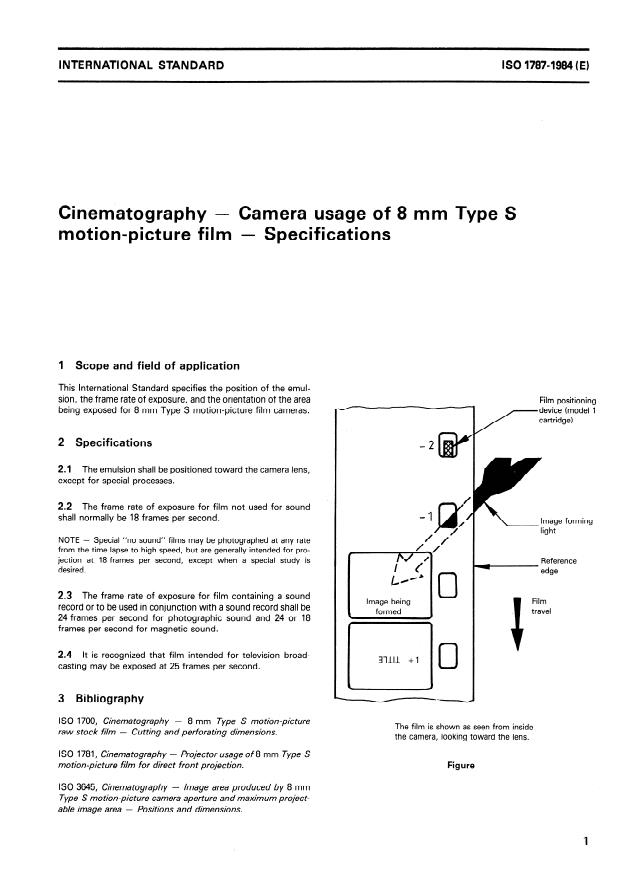
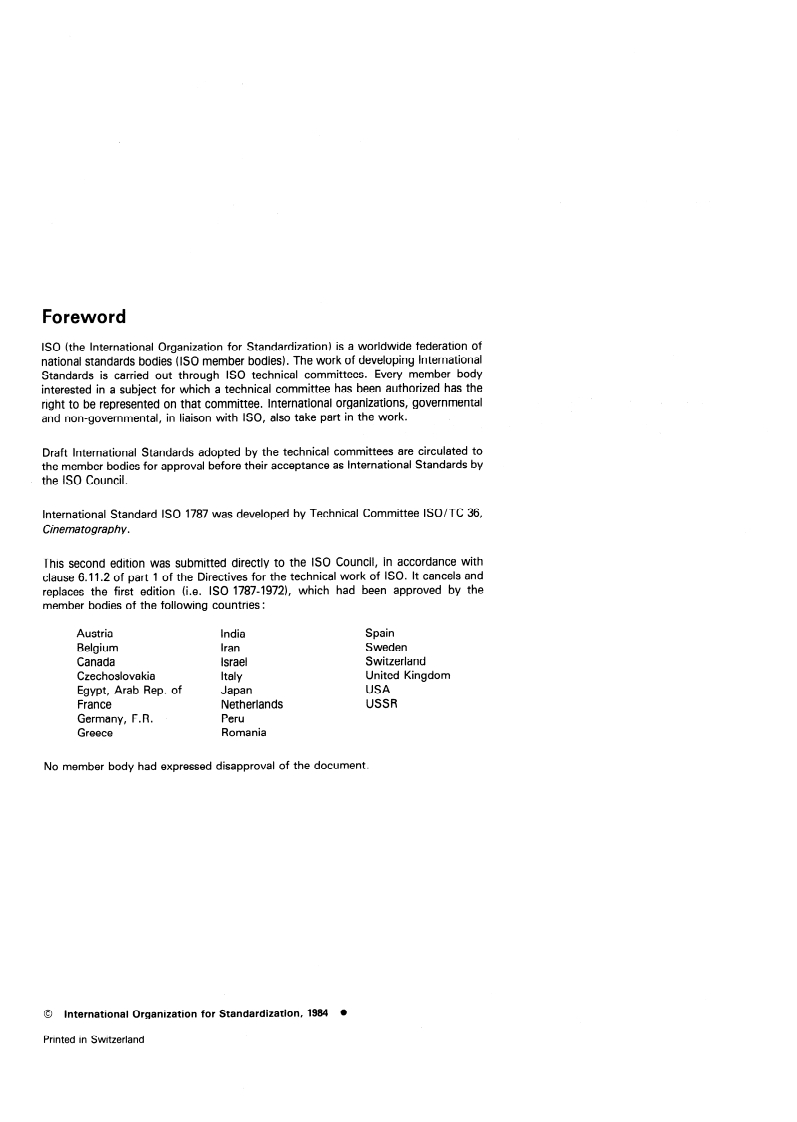
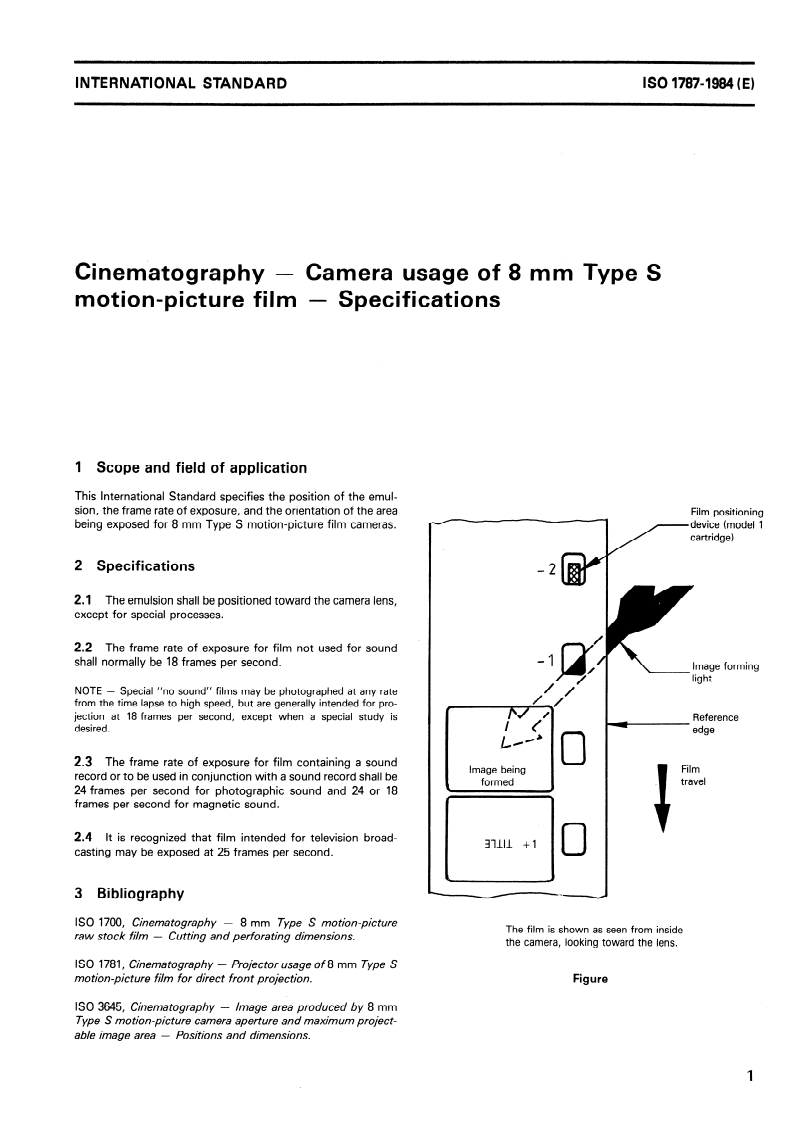
This International Standard specifies the position of the emulsion, the frame rate of exposure, and the orientation of the area being exposed for 8 mm Type S motion-picture film cameras.
- Status
- Published
- Publication Date
- 29-Feb-1984
- Technical Committee
- ISO/TC 36 - Cinematography
- Drafting Committee
- ISO/TC 36 - Cinematography
- Current Stage
- 9060 - Close of review
- Completion Date
- 03-Jun-2028
Buy Documents

ISO 1787:1984 - Cinematography -- Camera usage of 8 mm Type S motion-picture film -- Specifications
ISO 1787:1984 - Cinematography — Camera usage of 8 mm Type S motion-picture film — Specifications/1/1984
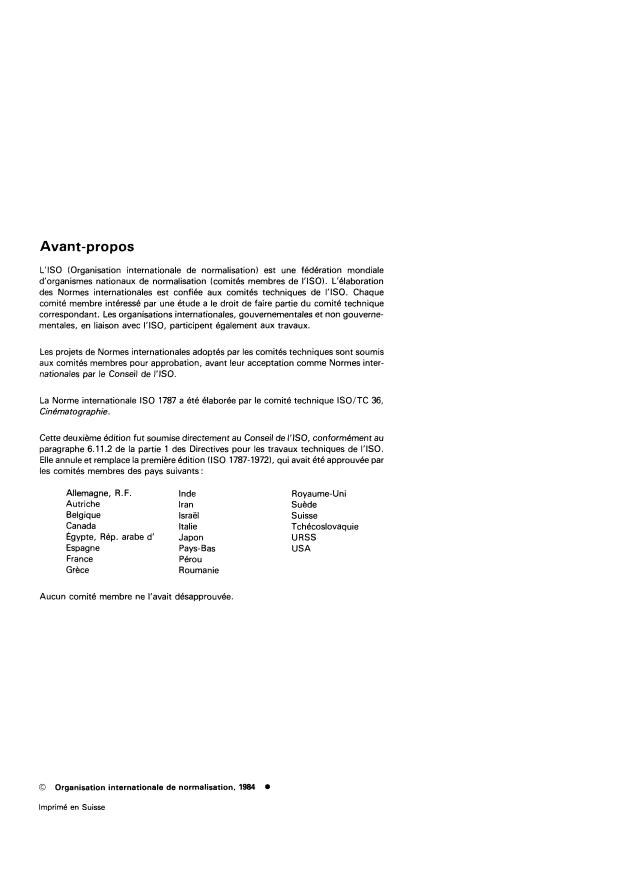
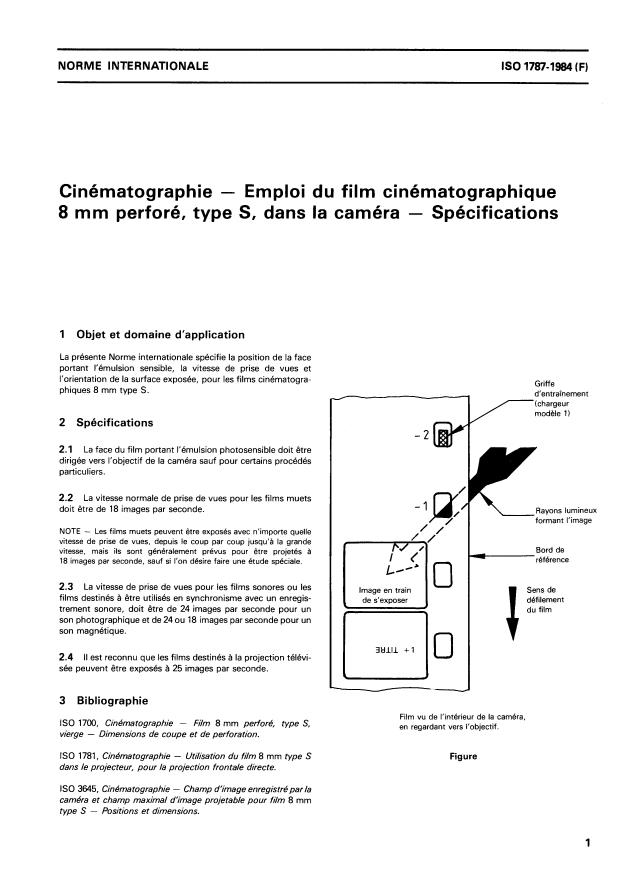

ISO 1787:1984 - Cinématographie -- Emploi du film cinématographique 8 mm perforé, type S, dans la caméra -- Spécifications
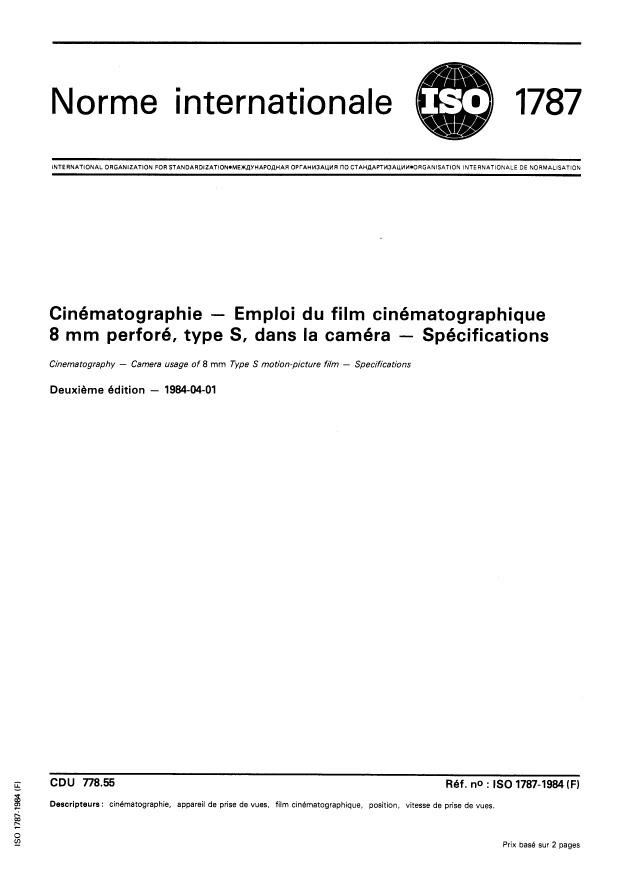
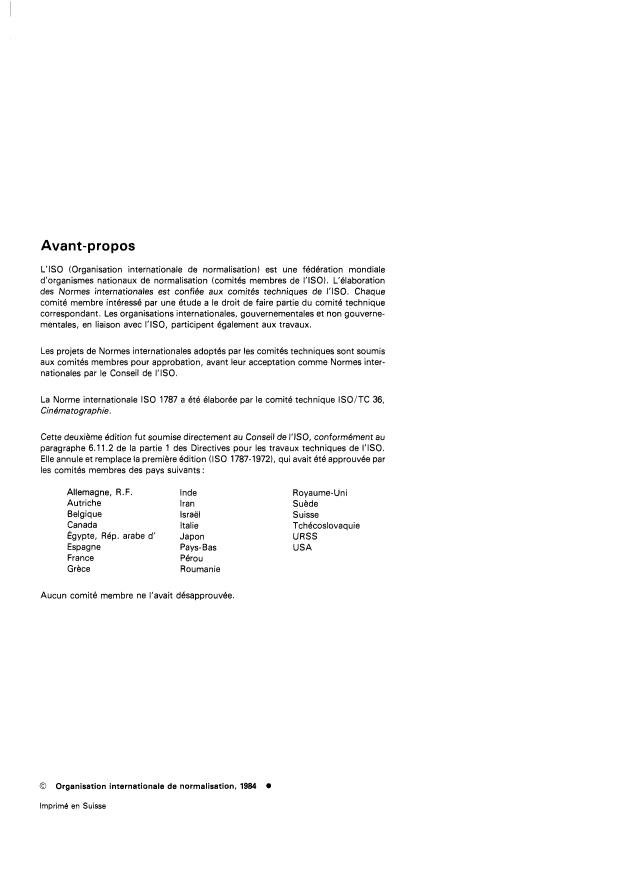

ISO 1787:1984 - Cinématographie -- Emploi du film cinématographique 8 mm perforé, type S, dans la caméra -- Spécifications
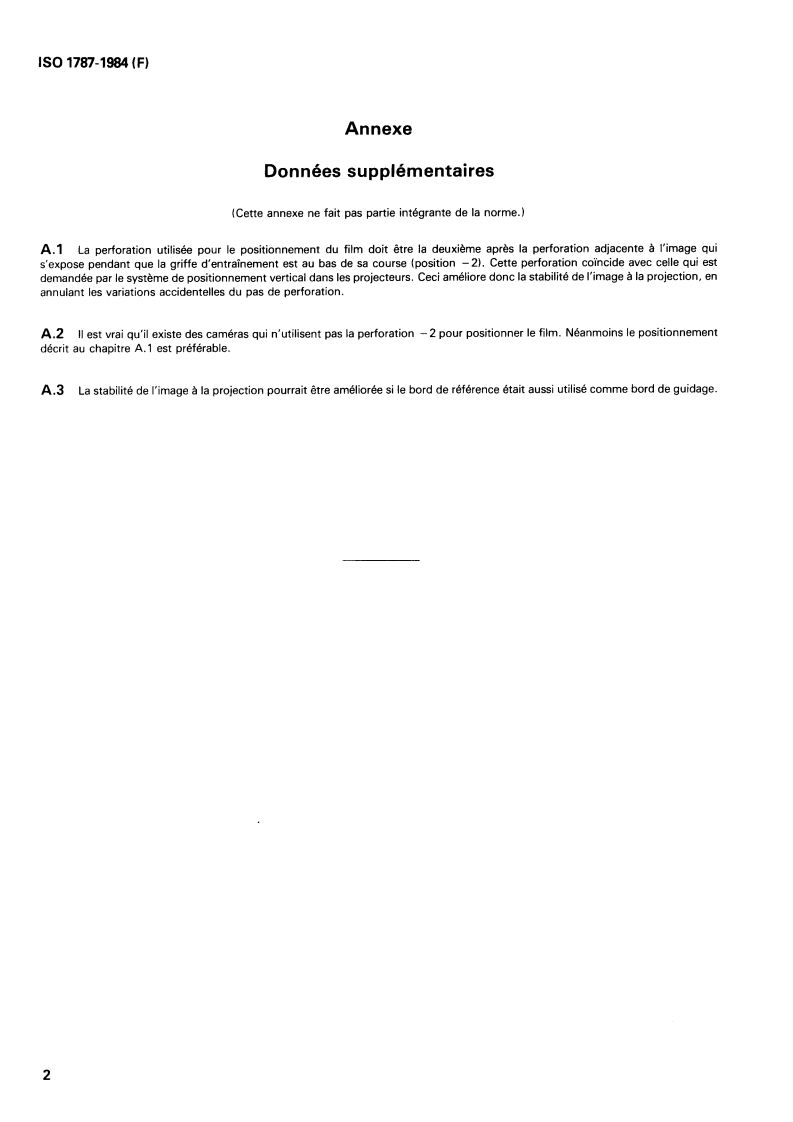
ISO 1787:1984 - Cinématographie — Emploi du film cinématographique 8 mm perforé, type S, dans la caméra — Spécifications/1/1984
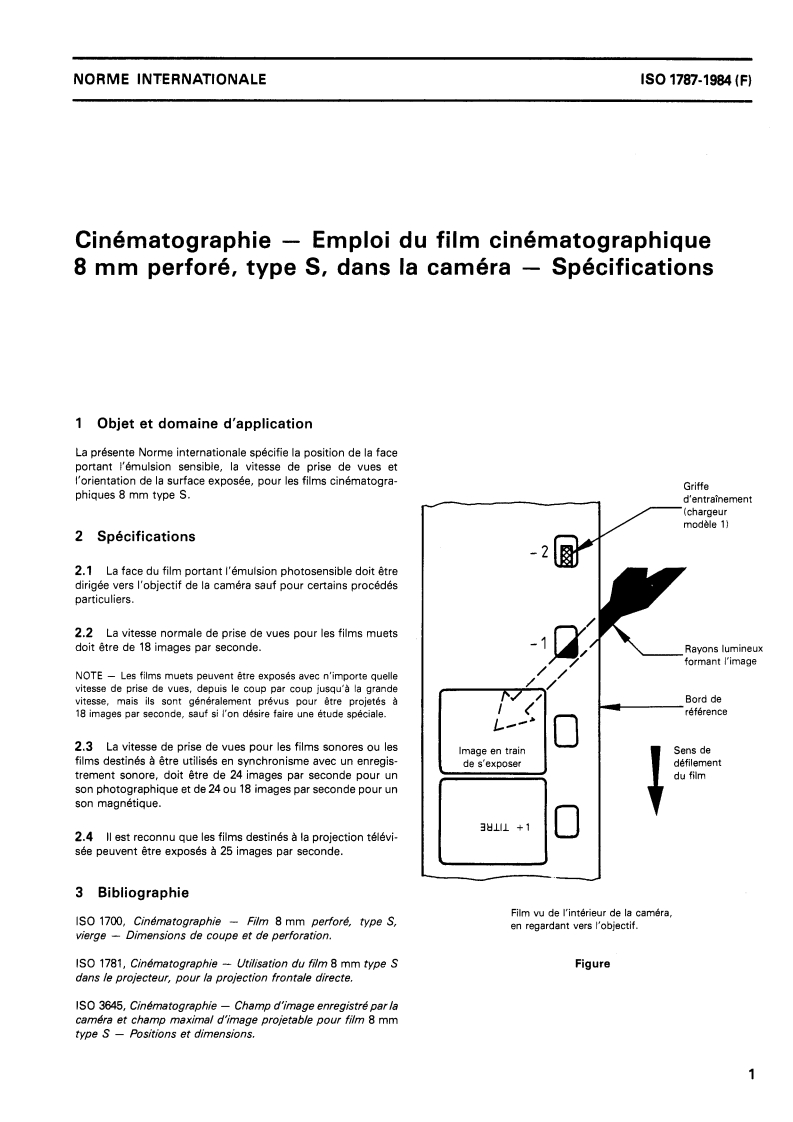
ISO 1787:1984 - Cinématographie — Emploi du film cinématographique 8 mm perforé, type S, dans la caméra — Spécifications/1/1984
Overview
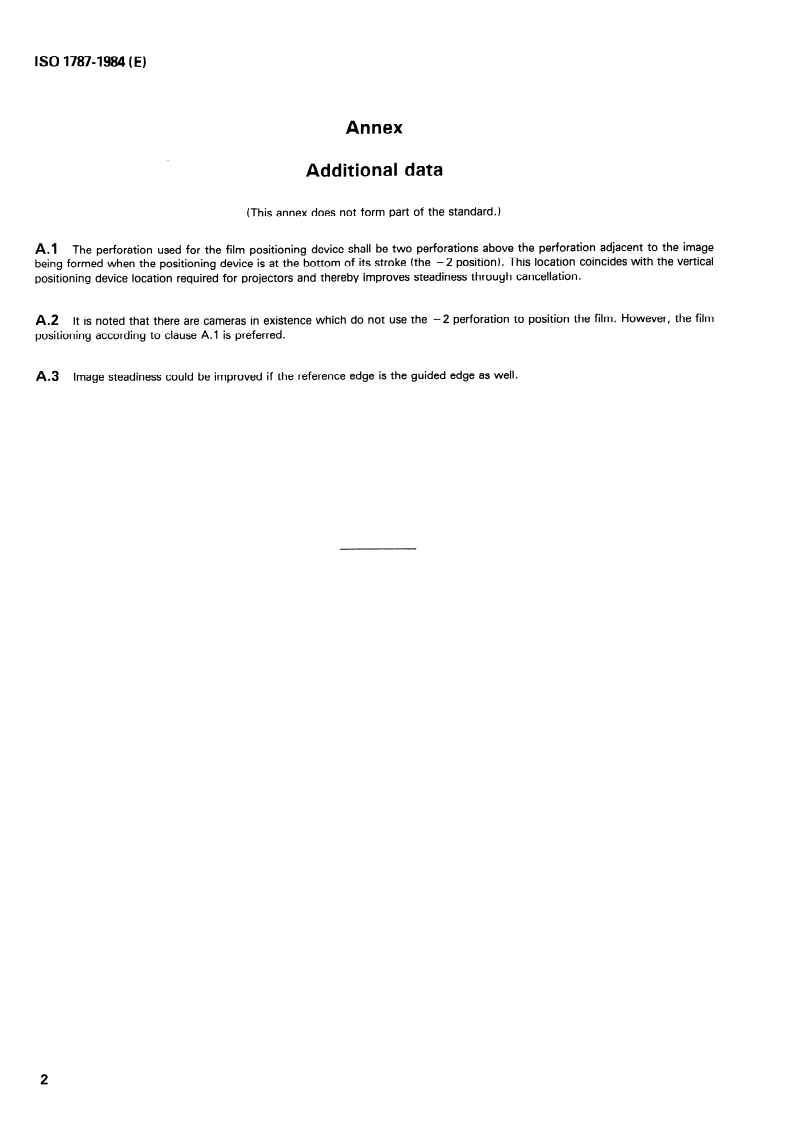
ISO 1787:1984 - Cinematography - Camera Usage of 8 mm Type S Motion-Picture Film - Specifications is an internationally recognized standard developed by ISO/TC 36 (Cinematography). This standard outlines key technical requirements for the use of 8 mm Type S motion-picture film in cameras. It specifies critical parameters for film positioning, exposure frame rates, and orientation of the film during image capture, establishing uniformity and quality across the use, capture, and eventual projection of this film format.
Keywords: ISO 1787, 8 mm Type S film, motion-picture camera, cinematography standards, film emulsion positioning, camera frame rate specification, film orientation
Key Topics
ISO 1787:1984 addresses the following essential elements in motion-picture film camera usage:
- Film Emulsion Positioning: The emulsion (light-sensitive side) of 8 mm Type S film must face the camera lens when loaded, ensuring correct image formation, except for specific, non-standard processes.
- Exposure Frame Rate:
- For silent films (films not intended for synchronized sound), the standard frame rate is 18 frames per second (fps).
- Films containing a sound record or intended for sound synchronization must be exposed at 24 fps (photographic sound), or at 24 or 18 fps for magnetic sound.
- Films designated for television broadcasting may be exposed at 25 fps to match broadcast requirements.
- Film Area Orientation: It specifies how the film area is oriented during exposure, helping achieve consistency across cameras and facilitating correct projection and editing practices.
- Film Positioning Device: Recommendations on the perforation alignment for steadiness and image clarity, with preference for certain standardized positioning methods.
Applications
The ISO 1787:1984 standard benefits a range of stakeholders in the motion-picture industry, including:
- Filmmakers and Production Houses: Ensures that cameras are configured for correct emulsion positioning and exposure rates, leading to reliable and compatible footage.
- Manufacturers of Cameras and Equipment: Assures that film-loading mechanisms and frame rate controls adhere to global norms for interoperability and user-friendliness.
- Archivists and Technicians: Guarantees that captured footage aligns with projection and preservation requirements, minimizing image distortion, jitter, or compatibility issues.
- Broadcast and Educational Institutions: Allows for consistent film preparation for television broadcast and educational use, given the specified 25 fps standard.
Implementing this standard enhances image steadiness, sound synchronization, and film handling efficiency, ultimately supporting the technical quality and interchangeability of 8 mm Type S motion-picture films.
Related Standards
To further support uniform practices in cinematography, ISO 1787 refers to several related standards:
- ISO 1700 - Cinematography - 8 mm Type S motion-picture raw stock film: Cutting and perforating dimensions
- ISO 1781 - Cinematography - Projector usage of 8 mm Type S motion-picture film for direct front projection
- ISO 3645 - Cinematography - Image area produced by 8 mm Type S motion-picture camera aperture and maximum projectable image area: Positions and dimensions
Adhering to these interconnected standards facilitates comprehensive, end-to-end compatibility across the entire motion-picture production and projection process.
By following ISO 1787:1984, the motion-picture industry ensures reliable camera operation, optimized film handling, and consistent quality for 8 mm Type S motion-picture films worldwide.
Relations
- Effective Date
- 15-Apr-2008
Buy Documents
ISO 1787:1984 - Cinematography -- Camera usage of 8 mm Type S motion-picture film -- Specifications
ISO 1787:1984 - Cinematography — Camera usage of 8 mm Type S motion-picture film — Specifications/1/1984
ISO 1787:1984 - Cinématographie -- Emploi du film cinématographique 8 mm perforé, type S, dans la caméra -- Spécifications
ISO 1787:1984 - Cinématographie -- Emploi du film cinématographique 8 mm perforé, type S, dans la caméra -- Spécifications
ISO 1787:1984 - Cinématographie — Emploi du film cinématographique 8 mm perforé, type S, dans la caméra — Spécifications/1/1984
ISO 1787:1984 - Cinématographie — Emploi du film cinématographique 8 mm perforé, type S, dans la caméra — Spécifications/1/1984
Frequently Asked Questions
ISO 1787:1984 is a standard published by the International Organization for Standardization (ISO). Its full title is "Cinematography — Camera usage of 8 mm Type S motion-picture film — Specifications". This standard covers: This International Standard specifies the position of the emulsion, the frame rate of exposure, and the orientation of the area being exposed for 8 mm Type S motion-picture film cameras.
This International Standard specifies the position of the emulsion, the frame rate of exposure, and the orientation of the area being exposed for 8 mm Type S motion-picture film cameras.
ISO 1787:1984 is classified under the following ICS (International Classification for Standards) categories: 37.060.10 - Motion picture equipment. The ICS classification helps identify the subject area and facilitates finding related standards.
ISO 1787:1984 has the following relationships with other standards: It is inter standard links to ISO 1787:1972. Understanding these relationships helps ensure you are using the most current and applicable version of the standard.
ISO 1787:1984 is available in PDF format for immediate download after purchase. The document can be added to your cart and obtained through the secure checkout process. Digital delivery ensures instant access to the complete standard document.
Standards Content (Sample)
International Standard 1787
-
INTERNATIONAL ORGANIZATION FOR STANDARDIZATlON.ME~YHAPO~HAF OPTAHM3Al&lfl IlO CTAHAAPTl43AL(MM.ORGANlSATlON INTERNATIONALE DE NORMALISATION
Camera usage of 8 mm Type S
Cinematography -
motion-picture film - Specifications
Cinhmatographie - Emploi du film cinbmatographigue 8 mm perfort!, type S, dans la cam&a - Sp4cifications
Second edition - 1984-04-01
Ref. No. IS0 17874984 (E)
UDC 778.55
motion-picture film, position (location), specifications.
Descriptors : cinematography, camera speed, motion-picture cameras,
Price based on 2 pages
Foreword
IS0 (the International Organization for Standardization9 is a worldwide federation of
national standards bodies (IS0 member bodies). The work of developing International
Standards is carried out through IS0 technical committees. Every member body
interested in a subject for which a technical committee has been authorized has the
right to be represented on that committee. International organizations, governmental
and non-governmental, in liaison with ISO, also take part in the work.
Draft International Standards adopted by the technical committees are circulated to
the member bodies for approval before their acceptance as International Standards by
the IS0 Council.
International Standard IS0 1787 was developed by Technical Committee ISO/TC 36,
Cinematography.
This second edition was submitted directly to the IS0 Council, in accordance with
clause 6.11.2 of part 1 of the Directives for the technical work of ISO. It cancels and
replaces the first edition (i.e. IS0 178749729, which had been approved by the
member bodies of the following countries:
Austria India Spain
Belgium Sweden
Iran
Canada Israel Switzerland
Czechoslovakia United Kingdom
Italy
Egypt, Arab Rep. of Japan USA
France
Netherlands USSR
Germany, F. R. Peru
Greece
Romania
No member body had expressed disapproval of the document.
0 International Organization for Standardization, 1984
Printed in Switzerland
INTERNATIONAL STANDARD IS0 17874984 (E)
Cinematography - Camera usage of 8 mm Type S
motion-picture film - Specifications
1 Scope and field of application
This International Standard specifies the positio
...
International Standard 1787
-
INTERNATIONAL ORGANIZATION FOR STANDARDIZATlON.ME~YHAPO~HAF OPTAHM3Al&lfl IlO CTAHAAPTl43AL(MM.ORGANlSATlON INTERNATIONALE DE NORMALISATION
Camera usage of 8 mm Type S
Cinematography -
motion-picture film - Specifications
Cinhmatographie - Emploi du film cinbmatographigue 8 mm perfort!, type S, dans la cam&a - Sp4cifications
Second edition - 1984-04-01
Ref. No. IS0 17874984 (E)
UDC 778.55
motion-picture film, position (location), specifications.
Descriptors : cinematography, camera speed, motion-picture cameras,
Price based on 2 pages
Foreword
IS0 (the International Organization for Standardization9 is a worldwide federation of
national standards bodies (IS0 member bodies). The work of developing International
Standards is carried out through IS0 technical committees. Every member body
interested in a subject for which a technical committee has been authorized has the
right to be represented on that committee. International organizations, governmental
and non-governmental, in liaison with ISO, also take part in the work.
Draft International Standards adopted by the technical committees are circulated to
the member bodies for approval before their acceptance as International Standards by
the IS0 Council.
International Standard IS0 1787 was developed by Technical Committee ISO/TC 36,
Cinematography.
This second edition was submitted directly to the IS0 Council, in accordance with
clause 6.11.2 of part 1 of the Directives for the technical work of ISO. It cancels and
replaces the first edition (i.e. IS0 178749729, which had been approved by the
member bodies of the following countries:
Austria India Spain
Belgium Sweden
Iran
Canada Israel Switzerland
Czechoslovakia United Kingdom
Italy
Egypt, Arab Rep. of Japan USA
France
Netherlands USSR
Germany, F. R. Peru
Greece
Romania
No member body had expressed disapproval of the document.
0 International Organization for Standardization, 1984
Printed in Switzerland
INTERNATIONAL STANDARD IS0 17874984 (E)
Cinematography - Camera usage of 8 mm Type S
motion-picture film - Specifications
1 Scope and field of application
This International Standard specifies the positio
...
~~~~~
Norme internationale 1787
INTERNATIONAL ORGANIZATION FOR STANDARDIZATIONOME~YHAPO~HAR OPrAHH3AUHR no CTAHAAPTH3AUblblOORGANlSATlON INTERNATIONALE DE NORMALISATION
Cinematographie - Emploi du film cinematographique
8 mm perfore, type S, dans la camera - Specifications
Cinematography - Camera usage of 8 rnrn Type S motion-picture film - Specifications
Deuxieme edition - 1984-04-01
CDU 778.55 Ref. no : IS0 1787-1984 (F)
LL
Descripteurs : cin8rnatographie. appareil de prise de vues, film cinematographique, position, vitesse de prise de vues.
z '
s Prix base sur 2 pages
Avant- pro pos
L'ISO (Organisation internationale de normalisation) est une federation rnondiale
d'organisrnes nationaux de normalisation (comites rnernbres de I'ISO). L'elaboration
des Norrnes internationales est confiee aux comites techniques de I'ISO. Chaque
cornite rnernbre interesse par une etude a le droit de faire partie du cornite technique
correspondant. Les organisations internationales, gouvernernentales et non gouverne-
mentales, en liaison avec I'ISO, participent egalernent aux travaux.
Les projets de Norrnes internationales adoptes par les comites techniques sont sournis
aux comites rnernbres pour approbation, avant leur acceptation cornrne Norrnes inter-
nationales par le Conseil de I'ISO.
La Norrne internationale IS0 1787 a ete elaboree par le cornite technique ISO/TC 36,
Cinkmatographie.
Cette deuxieme edition fut sournise directernent au Conseil de I'ISO, conformement au
paragraphe 6.1 1.2 de la partie 1 des Directives pour les travaux techniques de I'ISO.
Elle annule et rernplace la premiere edition (IS0 1787-19721, qui avait et6 approuvee par
les comites rnembres des pays suivants :
Allemagne, R.F.
lnde Royaurne-Uni
Autriche
Iran Suede
Belgique Israel
Suisse
Canada ltalie Tchecoslovaquie
Egypte, Rep. arabe d'
Japon URSS
Espagne Pays-Bas USA
France Perou
Grece Roumanie
Aucun cornite rnernbre ne I'avait desapprouvee.
0 Organisation internationale de normalisation, 1984 0
Imprim6 en Suisse
N 0 R M E I NTE R N AT1 ON ALE IS0 1787-1984 (F)
Cinematographie - Emploi du film cinematographique
8 mm perfore, type S, dans la camera - Specifications
1 Objet et domaine d'application
La presente Norme internationale specifie la position de la face
portant I'emulsion sensible, la vitesse de prise de vues et
I'orientation de la surface exposee, Dour les films cinematogra-
Griffe
phiques 8 mm type S.
d'e
...
Norme internationale 1787
INTERNATIONAL ORGANIZATION FOR STANDARDIZATION*MEXPYHAPOAHAR OPrAHM3AUMR no CTAHPAPTH3AUMM*ORGANlSATlON INTERNATIONALE DE NORMALISATION
Cinematographie - Emploi du film cinematographique
8 mm perfore, type S, dans la cam6ra - Specifications
Cinematography - Camera usage of 8 mm Type S motion-picture film - Specifications
Deuxieme ddition - 1984-04-01
CDU 778.55 Rdf. no : IS0 1787-1984 (F)
k
'
Descripteurs : cinematographie, appareil de prise de vues, film cinematographique, position, vitesse de prise de vues.
z
U
v,
Prix base sur 2 pages
Avant-propos
L‘ISO (Organisation internationale de normalisation) est une federation mondiale
d’organismes nationaux de normalisation (comites membres de I‘ISO). L’elaboration
des Normes internationales est confiee aux comites techniques de I’ISO. Chaque
comite membre interesse par une etude a le droit de faire partie du comite technique
correspondant. Les organisations internationales, gouvernementales et non gouverne-
mentales, en liaison avec I’ISO, participent egalement aux travaux.
Les projets de Normes internationales adoptes par les comites techniques sont soumis
aux comites membres pour approbation, avant leur acceptation comme Normes inter-
I‘ISO.
nationales par le Conseil de
La Norme internationale IS0 1787 a Bte elaboree par le comite technique ISOiTC 36,
Cinhatographie.
Cette deuxieme edition fut soumise directement au Conseil de I’ISO, conformement au
1 des Directives pour les travaux techniques de I’ISO.
paragraphe 6.11.2 de la partie
Elle annule et remplace la premiere edition (IS0 1787-19721, qui avait ete approuvee par
les comites membres des pays suivants :
Allemagne, R.F. lnde Royaume-Uni
Autriche
Iran Suede
Belgique Israel
Suisse
Canada
ltalie Tchecoslovaquie
Egypte, Rep. arabe d’ URSS
Japon
Espagne Pays-Bas USA
France Perou
Grbce
Roumanie
Aucun comite mernbre ne I’avait desapprouvee.
@ Organisation internationale de normalisation, 1984 0
lmprimb en Suisse
~ ~~~ ~~~~~~~ ~
NORME INTERNATIONALE IS0 1787-1984 (F)
Cinematographie - Emploi du film cinematographique
8 mm perfore, type S, dans la camera - Specifications
1 Objet et domaine d‘application
La presente Norme internationale specifie la position de la face
portant I’emulsion sensible, la vitesse de prise de vues et
I‘orientation de la surface exposee, pour les films cinematogra-
Griffe
ph
...
~~~~~
Norme internationale 1787
INTERNATIONAL ORGANIZATION FOR STANDARDIZATIONOME~YHAPO~HAR OPrAHH3AUHR no CTAHAAPTH3AUblblOORGANlSATlON INTERNATIONALE DE NORMALISATION
Cinematographie - Emploi du film cinematographique
8 mm perfore, type S, dans la camera - Specifications
Cinematography - Camera usage of 8 rnrn Type S motion-picture film - Specifications
Deuxieme edition - 1984-04-01
CDU 778.55 Ref. no : IS0 1787-1984 (F)
LL
Descripteurs : cin8rnatographie. appareil de prise de vues, film cinematographique, position, vitesse de prise de vues.
z '
s Prix base sur 2 pages
Avant- pro pos
L'ISO (Organisation internationale de normalisation) est une federation rnondiale
d'organisrnes nationaux de normalisation (comites rnernbres de I'ISO). L'elaboration
des Norrnes internationales est confiee aux comites techniques de I'ISO. Chaque
cornite rnernbre interesse par une etude a le droit de faire partie du cornite technique
correspondant. Les organisations internationales, gouvernernentales et non gouverne-
mentales, en liaison avec I'ISO, participent egalernent aux travaux.
Les projets de Norrnes internationales adoptes par les comites techniques sont sournis
aux comites rnernbres pour approbation, avant leur acceptation cornrne Norrnes inter-
nationales par le Conseil de I'ISO.
La Norrne internationale IS0 1787 a ete elaboree par le cornite technique ISO/TC 36,
Cinkmatographie.
Cette deuxieme edition fut sournise directernent au Conseil de I'ISO, conformement au
paragraphe 6.1 1.2 de la partie 1 des Directives pour les travaux techniques de I'ISO.
Elle annule et rernplace la premiere edition (IS0 1787-19721, qui avait et6 approuvee par
les comites rnembres des pays suivants :
Allemagne, R.F.
lnde Royaurne-Uni
Autriche
Iran Suede
Belgique Israel
Suisse
Canada ltalie Tchecoslovaquie
Egypte, Rep. arabe d'
Japon URSS
Espagne Pays-Bas USA
France Perou
Grece Roumanie
Aucun cornite rnernbre ne I'avait desapprouvee.
0 Organisation internationale de normalisation, 1984 0
Imprim6 en Suisse
N 0 R M E I NTE R N AT1 ON ALE IS0 1787-1984 (F)
Cinematographie - Emploi du film cinematographique
8 mm perfore, type S, dans la camera - Specifications
1 Objet et domaine d'application
La presente Norme internationale specifie la position de la face
portant I'emulsion sensible, la vitesse de prise de vues et
I'orientation de la surface exposee, Dour les films cinematogra-
Griffe
phiques 8 mm type S.
d'e
...
Norme internationale 1787
INTERNATIONAL ORGANIZATION FOR STANDARDIZATION*MEXPYHAPOAHAR OPrAHM3AUMR no CTAHPAPTH3AUMM*ORGANlSATlON INTERNATIONALE DE NORMALISATION
Cinematographie - Emploi du film cinematographique
8 mm perfore, type S, dans la cam6ra - Specifications
Cinematography - Camera usage of 8 mm Type S motion-picture film - Specifications
Deuxieme ddition - 1984-04-01
CDU 778.55 Rdf. no : IS0 1787-1984 (F)
k
'
Descripteurs : cinematographie, appareil de prise de vues, film cinematographique, position, vitesse de prise de vues.
z
U
v,
Prix base sur 2 pages
Avant-propos
L‘ISO (Organisation internationale de normalisation) est une federation mondiale
d’organismes nationaux de normalisation (comites membres de I‘ISO). L’elaboration
des Normes internationales est confiee aux comites techniques de I’ISO. Chaque
comite membre interesse par une etude a le droit de faire partie du comite technique
correspondant. Les organisations internationales, gouvernementales et non gouverne-
mentales, en liaison avec I’ISO, participent egalement aux travaux.
Les projets de Normes internationales adoptes par les comites techniques sont soumis
aux comites membres pour approbation, avant leur acceptation comme Normes inter-
I‘ISO.
nationales par le Conseil de
La Norme internationale IS0 1787 a Bte elaboree par le comite technique ISOiTC 36,
Cinhatographie.
Cette deuxieme edition fut soumise directement au Conseil de I’ISO, conformement au
1 des Directives pour les travaux techniques de I’ISO.
paragraphe 6.11.2 de la partie
Elle annule et remplace la premiere edition (IS0 1787-19721, qui avait ete approuvee par
les comites membres des pays suivants :
Allemagne, R.F. lnde Royaume-Uni
Autriche
Iran Suede
Belgique Israel
Suisse
Canada
ltalie Tchecoslovaquie
Egypte, Rep. arabe d’ URSS
Japon
Espagne Pays-Bas USA
France Perou
Grbce
Roumanie
Aucun comite mernbre ne I’avait desapprouvee.
@ Organisation internationale de normalisation, 1984 0
lmprimb en Suisse
~ ~~~ ~~~~~~~ ~
NORME INTERNATIONALE IS0 1787-1984 (F)
Cinematographie - Emploi du film cinematographique
8 mm perfore, type S, dans la camera - Specifications
1 Objet et domaine d‘application
La presente Norme internationale specifie la position de la face
portant I’emulsion sensible, la vitesse de prise de vues et
I‘orientation de la surface exposee, pour les films cinematogra-
Griffe
ph
...