

ASTM B878-97(2019)
(Test Method)Standard Test Method for Nanosecond Event Detection for Electrical Contacts and Connectors
General Information
- Abstract
SIGNIFICANCE AND USE
4.1 The tests in this test method are designed to assess the resistance stability of electrical contacts or connections.
4.2 The described procedures are for the detection of events that result from short duration, high-resistance fluctuations, or of voltage variations that may result in improper triggering of high speed digital circuits.
4.3 In those procedures, the test currents are 100 mA (±20 mA) when the test sample has a resistance between 0 and 10 Ω. Since the minimum resistance change required to produce an event (defined in 3.2.1) is specified as 10 Ω (see 1.3), the voltage increase required to produce this event must be at least 1.0 V.
4.4 The detection of nanosecond-duration events is considered necessary when an application is susceptible to noise. However, these procedures are not capable of determining the actual duration of the event detected.
4.5 The integrity of nanosecond-duration signals can only be maintained with transmission lines; therefore, contacts in series are connected to a detector channel through coaxial cable. The detector will indicate when the resistance monitored exceeds the minimum event resistance for more than the specified duration.
4.6 The test condition designation corresponding to a specific minimum event duration of 1, 10, or 50 ns is listed in Table 1. These shall be specified in the referencing document.
SCOPE
1.1 This test method describes equipment and techniques for detecting contact resistance transients yielding resistances greater than a specified value and lasting for at least a specified minimum duration.
1.2 The minimum durations specified in this standard are 1, 10, and 50 nanoseconds (ns).
1.3 The minimum sample resistance required for an event detection in this standard is 10 Ω.
1.4 An ASTM guide for measuring electrical contact transients of various durations is available as Guide B854.
1.5 The values stated in SI units are to be regarded as standard. No other units of measurement are included in this standard.
1.6 This standard does not purport to address all of the safety concerns, if any, associated with its use. It is the responsibility of the user of this standard to become familiar with all hazards including those identified in the appropriate Material Safety Data Sheet (MSDS) for this product/material as provided by the manufacturer, to establish appropriate safety, health, and environmental practices, and determine the applicability of regulatory limitations prior to use.
1.7 This international standard was developed in accordance with internationally recognized principles on standardization established in the Decision on Principles for the Development of International Standards, Guides and Recommendations issued by the World Trade Organization Technical Barriers to Trade (TBT) Committee.
- Status
- Published
- Publication Date
- 31-Oct-2019
- Technical Committee
- B02 - Nonferrous Metals and Alloys
Overview
ASTM B878-97(2019) - Standard Test Method for Nanosecond Event Detection for Electrical Contacts and Connectors is an internationally recognized testing method developed by ASTM International. This standard aims to assess the resistance stability of electrical contacts and connectors by detecting nanosecond-duration resistance fluctuations. Using precise equipment and techniques, the method identifies short-lived electrical transients that may indicate high-resistance events, which are critical for ensuring the reliability of components in high-speed digital circuits and other sensitive electrical systems.
This standard is particularly significant in industries where electrical contact integrity directly affects system performance, safety, and reliability. The detection process focuses on events as brief as 1 nanosecond, ensuring even the shortest disruptions are identified.
Key Topics
- Nanosecond Event Detection: The method targets detection of resistance increases greater than 10 Ω, with durations of at least 1, 10, or 50 nanoseconds.
- Test Equipment Setup: Specifies requirements for detectors (such as impedance, current supply, EMI protection) and test configuration using coaxial cables to maintain signal integrity.
- Electromagnetic Interference (EMI) Management: Outlines procedures for minimizing EMI-induced false positives, including control channels and sample grounding techniques.
- Measurement Techniques: Uses time domain reflectometry (TDR) to assess the sample’s ability to transmit fast rise time pulses and verify proper test setup.
- Reporting Requirements: Details information to be included in test reports, like contact positions, environmental conditions, event histories, and operator identification.
Applications
ASTM B878-97(2019) provides value in several practical applications:
- High-Speed Electronics: Ensures that connectors and contacts do not introduce transient resistance changes capable of triggering faults in fast digital circuits.
- Connector and Contact Qualification: Supports manufacturers in certifying products for use in environments sensitive to microsecond and nanosecond events, such as telecommunications, computing, and aerospace.
- Quality Assurance: Assists quality control teams in identifying intermittent defects or weaknesses that could appear only under certain environmental stress conditions.
- Failure Analysis: Enables engineers to distinguish between actual product failures and false positives caused by EMI, enhancing root cause analysis processes.
- Research and Development: Supports the development and evaluation of new materials and connector designs for better performance under fast transient conditions.
Related Standards
When implementing or referencing ASTM B878-97(2019), consider these related standards and guidelines:
- ASTM B542: Terminology Relating to Electrical Contacts and Their Use – Provides essential definitions for consistent interpretation of test results.
- ASTM B854: Guide for Measuring Electrical Contact Intermittences – Offers additional guidance for measuring contact transients of various durations.
- IEC 801-2: Provides standards for electrostatic discharge immunity required for detector equipment in this methodology.
- EN 50 082-1: European standard for electromagnetic compatibility test environments relevant to this method.
Conclusion
ASTM B878-97(2019) is a key standard for ensuring the integrity of electrical connectors and contacts in sensitive, high-speed, or noise-prone applications. By specifying methods for nanosecond event detection, it helps prevent operational failures caused by resistance fluctuations and provides practical guidelines for accurate measurement, EMI minimization, and comprehensive reporting. Incorporating this standard enhances reliability and safety in critical electronic systems.
Keywords: nanosecond event detection, electrical contacts, connectors, resistance stability, EMI, ASTM B878, high-speed digital circuits, transient detection, time domain reflectometry.
Relations
- Effective Date
- 01-Nov-2019
- Effective Date
- 01-Feb-2013
- Effective Date
- 01-Oct-2010
- Effective Date
- 01-May-2007
- Effective Date
- 01-May-2004
- Effective Date
- 01-May-2004
- Effective Date
- 10-Oct-2000
- Effective Date
- 10-Oct-1998
Get Certified
Connect with accredited certification bodies for this standard

BSMI (Bureau of Standards, Metrology and Inspection)
Taiwan's standards and inspection authority.
Sponsored listings
Frequently Asked Questions
ASTM B878-97(2019) is a standard published by ASTM International. Its full title is "Standard Test Method for Nanosecond Event Detection for Electrical Contacts and Connectors". This standard covers: SIGNIFICANCE AND USE 4.1 The tests in this test method are designed to assess the resistance stability of electrical contacts or connections. 4.2 The described procedures are for the detection of events that result from short duration, high-resistance fluctuations, or of voltage variations that may result in improper triggering of high speed digital circuits. 4.3 In those procedures, the test currents are 100 mA (±20 mA) when the test sample has a resistance between 0 and 10 Ω. Since the minimum resistance change required to produce an event (defined in 3.2.1) is specified as 10 Ω (see 1.3), the voltage increase required to produce this event must be at least 1.0 V. 4.4 The detection of nanosecond-duration events is considered necessary when an application is susceptible to noise. However, these procedures are not capable of determining the actual duration of the event detected. 4.5 The integrity of nanosecond-duration signals can only be maintained with transmission lines; therefore, contacts in series are connected to a detector channel through coaxial cable. The detector will indicate when the resistance monitored exceeds the minimum event resistance for more than the specified duration. 4.6 The test condition designation corresponding to a specific minimum event duration of 1, 10, or 50 ns is listed in Table 1. These shall be specified in the referencing document. SCOPE 1.1 This test method describes equipment and techniques for detecting contact resistance transients yielding resistances greater than a specified value and lasting for at least a specified minimum duration. 1.2 The minimum durations specified in this standard are 1, 10, and 50 nanoseconds (ns). 1.3 The minimum sample resistance required for an event detection in this standard is 10 Ω. 1.4 An ASTM guide for measuring electrical contact transients of various durations is available as Guide B854. 1.5 The values stated in SI units are to be regarded as standard. No other units of measurement are included in this standard. 1.6 This standard does not purport to address all of the safety concerns, if any, associated with its use. It is the responsibility of the user of this standard to become familiar with all hazards including those identified in the appropriate Material Safety Data Sheet (MSDS) for this product/material as provided by the manufacturer, to establish appropriate safety, health, and environmental practices, and determine the applicability of regulatory limitations prior to use. 1.7 This international standard was developed in accordance with internationally recognized principles on standardization established in the Decision on Principles for the Development of International Standards, Guides and Recommendations issued by the World Trade Organization Technical Barriers to Trade (TBT) Committee.
SIGNIFICANCE AND USE 4.1 The tests in this test method are designed to assess the resistance stability of electrical contacts or connections. 4.2 The described procedures are for the detection of events that result from short duration, high-resistance fluctuations, or of voltage variations that may result in improper triggering of high speed digital circuits. 4.3 In those procedures, the test currents are 100 mA (±20 mA) when the test sample has a resistance between 0 and 10 Ω. Since the minimum resistance change required to produce an event (defined in 3.2.1) is specified as 10 Ω (see 1.3), the voltage increase required to produce this event must be at least 1.0 V. 4.4 The detection of nanosecond-duration events is considered necessary when an application is susceptible to noise. However, these procedures are not capable of determining the actual duration of the event detected. 4.5 The integrity of nanosecond-duration signals can only be maintained with transmission lines; therefore, contacts in series are connected to a detector channel through coaxial cable. The detector will indicate when the resistance monitored exceeds the minimum event resistance for more than the specified duration. 4.6 The test condition designation corresponding to a specific minimum event duration of 1, 10, or 50 ns is listed in Table 1. These shall be specified in the referencing document. SCOPE 1.1 This test method describes equipment and techniques for detecting contact resistance transients yielding resistances greater than a specified value and lasting for at least a specified minimum duration. 1.2 The minimum durations specified in this standard are 1, 10, and 50 nanoseconds (ns). 1.3 The minimum sample resistance required for an event detection in this standard is 10 Ω. 1.4 An ASTM guide for measuring electrical contact transients of various durations is available as Guide B854. 1.5 The values stated in SI units are to be regarded as standard. No other units of measurement are included in this standard. 1.6 This standard does not purport to address all of the safety concerns, if any, associated with its use. It is the responsibility of the user of this standard to become familiar with all hazards including those identified in the appropriate Material Safety Data Sheet (MSDS) for this product/material as provided by the manufacturer, to establish appropriate safety, health, and environmental practices, and determine the applicability of regulatory limitations prior to use. 1.7 This international standard was developed in accordance with internationally recognized principles on standardization established in the Decision on Principles for the Development of International Standards, Guides and Recommendations issued by the World Trade Organization Technical Barriers to Trade (TBT) Committee.
ASTM B878-97(2019) is classified under the following ICS (International Classification for Standards) categories: 17.220.20 - Measurement of electrical and magnetic quantities. The ICS classification helps identify the subject area and facilitates finding related standards.
ASTM B878-97(2019) has the following relationships with other standards: It is inter standard links to ASTM B542-13(2019), ASTM B542-13, ASTM B854-98(2010)e1, ASTM B542-07, ASTM B542-04, ASTM B854-98(2004), ASTM B542-00, ASTM B854-98. Understanding these relationships helps ensure you are using the most current and applicable version of the standard.
ASTM B878-97(2019) is available in PDF format for immediate download after purchase. The document can be added to your cart and obtained through the secure checkout process. Digital delivery ensures instant access to the complete standard document.
Standards Content (Sample)
This international standard was developed in accordance with internationally recognized principles on standardization established in the Decision on Principles for the
Development of International Standards, Guides and Recommendations issued by the World Trade Organization Technical Barriers to Trade (TBT) Committee.
Designation: B878 − 97 (Reapproved 2019)
Standard Test Method for
Nanosecond Event Detection for Electrical Contacts and
Connectors
This standard is issued under the fixed designation B878; the number immediately following the designation indicates the year of
original adoption or, in the case of revision, the year of last revision. A number in parentheses indicates the year of last reapproval. A
superscript epsilon (´) indicates an editorial change since the last revision or reapproval.
1. Scope B542 Terminology Relating to Electrical Contacts and Their
Use
1.1 This test method describes equipment and techniques
B854 Guide for Measuring Electrical Contact Intermittences
for detecting contact resistance transients yielding resistances
2.2 Other Standards:
greater than a specified value and lasting for at least a specified
IEC 801-2 ed 2:91
minimum duration.
EN 50 082-1:94
1.2 The minimum durations specified in this standard are 1,
10, and 50 nanoseconds (ns). 3. Terminology
1.3 The minimum sample resistance required for an event 3.1 Definitions—Many terms used in this standard are de-
detection in this standard is 10 Ω. fined in Terminology B542.
1.4 An ASTM guide for measuring electrical contact tran- 3.2 Definitions of Terms Specific to This Standard:
sients of various durations is available as Guide B854. 3.2.1 event, n—a condition in which the sample resistance
increases by more than 10 Ω for more than a specified time
1.5 The values stated in SI units are to be regarded as
duration.
standard. No other units of measurement are included in this
standard.
4. Significance and Use
1.6 This standard does not purport to address all of the
4.1 The tests in this test method are designed to assess the
safety concerns, if any, associated with its use. It is the
resistance stability of electrical contacts or connections.
responsibility of the user of this standard to become familiar
4.2 The described procedures are for the detection of events
with all hazards including those identified in the appropriate
that result from short duration, high-resistance fluctuations, or
Material Safety Data Sheet (MSDS) for this product/material
of voltage variations that may result in improper triggering of
as provided by the manufacturer, to establish appropriate
high speed digital circuits.
safety, health, and environmental practices, and determine the
applicability of regulatory limitations prior to use.
4.3 In those procedures, the test currents are 100 mA (620
1.7 This international standard was developed in accor-
mA) when the test sample has a resistance between 0 and 10 Ω.
dance with internationally recognized principles on standard-
Since the minimum resistance change required to produce an
ization established in the Decision on Principles for the
event (defined in 3.2.1) is specified as 10 Ω (see 1.3), the
Development of International Standards, Guides and Recom-
voltage increase required to produce this event must be at least
mendations issued by the World Trade Organization Technical
1.0 V.
Barriers to Trade (TBT) Committee.
4.4 The detection of nanosecond-duration events is consid-
ered necessary when an application is susceptible to noise.
2. Referenced Documents
However, these procedures are not capable of determining the
2.1 ASTM Standards:
actual duration of the event detected.
4.5 The integrity of nanosecond-duration signals can only
This test method is under the jurisdiction of ASTM Committee B02 on be maintained with transmission lines; therefore, contacts in
Nonferrous Metals and Alloys and is the direct responsibility of Subcommittee
series are connected to a detector channel through coaxial
B02.05 on Precious Metals and Electrical Contact Materials and Test Methods.
cable. The detector will indicate when the resistance monitored
Current edition approved Nov. 1, 2019. Published November 2019. Originally
exceeds the minimum event resistance for more than the
approved in 1997. Last previous edition approved in 2014 as B878 – 97 (2014).
DOI: 10.1520/B0878-97R19.
specified duration.
For referenced ASTM standards, visit the ASTM website, www.astm.org, or
contact ASTM Customer Service at service@astm.org. For Annual Book of ASTM
Standards volume information, refer to the standard’s Document Summary page on Available from American National Standards Institute (ANSI), 25 W. 43rd St.,
the ASTM website. 4th Floor, New York, NY 10036, http://www.ansi.org.
Copyright © ASTM International, 100 Barr Harbor Drive, PO Box C700, West Conshohocken, PA 19428-2959. United States
B878 − 97 (2019)
4.6 The test condition designation corresponding to a spe-
cific minimum event duration of 1, 10, or 50 ns is listed in
Table 1. These shall be specified in the referencing document.
5. Apparatus
5.1 Detector—The detector used shall be an AnaTech 64
EHD, 32 EHD, or equivalent. The detector shall meet the
following requirements:
5.1.1 Electromagnetic Interference (EMI)—The detector
shall pass the European Community (EC) electrostatic dis-
charge (ESD) requirement for computers (EN 50 082-1:94
based on IEC 801-2, ed. 2:91). The performance criteria is “1)
normal performance within the specification limits;” that is, no
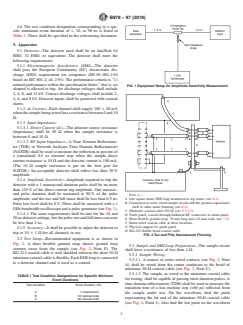
FIG. 1 Equipment Setup for Amplitude Sensitivity Measurement
channel is allowed to trip. Air discharge voltages shall include
2, 4, 8, and 15 kV. Contact discharge voltages shall include 2,
4, 6, and 8 kV. Detector inputs shall be protected with coaxial
shorts.
5.1.2 dc Current—Each channel shall supply 100 6 20 mA
when the sample being tested has a resistance between 0 and 10
Ω.
5.1.3 Input Impedance:
5.1.3.1 Direct Current (dc)—The detector source resistance
(impedance) shall be 50 Ω when the sample resistance is
between 0 and 10 Ω.
5.1.3.2 RF Input Impedance—A Time Domain Reflectome-
ter (TDR) or Network Analyzer Time Domain Reflectometer
(NATDR) shall be used to measure the reflection in percent of
a (simulated) 0.5 ns risetime step when the sample direct
current resistance is 10 Ω and the detector current is 100 mA.
(The 10 Ω sample resistance is put on the bias port for
NATDR.) An acceptable detector shall reflect less than 30 %
amplitude.
5.1.4 Amplitude Sensitivity—Amplitude required to trip the
detector with a 1 nanosecond duration pulse shall be no more
than 120 % of the direct current trip amplitude. One nanosec-
ond pulse duration shall be measured at 90 % of the pulse
NOTE 1—
amplitude, and the rise and fall times shall be less than 0.5 ns. A One square meter EMI loop monitored at top center (see 6.1).
B Connection to series wired sample circuit with the greatest capacitance
Pulse low level shall be 0 V. These shall be measured with a 1
shell or other metal fixturing (see 6.1).
GHz bandwidth oscilloscope and a pulse generator (see Fig. 1).
C Miniature coaxial cable (50 Ω) (see 5.3.1.1).
5.1.4.1 The same requirements shall be met for the 10 and
D Patch panel, coaxial through-bulkhead RF connectors in metal panel.
50 ns detector settings, but the pulse rise and fall times can now
E Short flexible ground strap, 70 mm long and >25 mm wide (see 7.3).
be less than 2 ns. F Strain relief coaxial cable at these locations.
G Physical support for patch panel.
5.1.5 Accuracy—It shall be possible to adjust the detector to
H RG-223 double braid coaxial cable.
trip at 10 6 1 Ω for all channels in use.
FIG. 2 Ten and Fifty Nanosecond Fixturing
5.2 Test Setup—Recommended equipment is as shown in
Fig. 2. A short flexible ground strap directs ground loop
5.3 Sample and EMI Loop Preparation—The sample circuit
currents away from the sample (see Fig. 2, Note E). The
shall have a resistance of less than 4 Ω.
RG-223 coaxial cable is well shielded whereas the short 50 Ω
5.3.1 Sample Wiring:
miniature coaxial cable is flexible. Each EMI loop is connected
5.3.1.1 A contact or series-wired contacts (see Fig. 3, Note
to a detector channel and is used as a control.
A) shall be wired from the center conductor to the braid of
miniature 50-Ω coaxial cable (see Fig. 2, Note C).
5.3.1.2 The sample, as wired to the miniature coaxial cable
TABLE 1 Test Condition Designations for Specific Minimum
for testing, shall be capable of passing short duration pulses. A
Event Durations
time domain reflectometer (TDR) shall be used to measure the
Test Condition Event Duration, min
transition time of a fast risetime step (<60 ps) reflected from
A 1 nanosecond
the sample under test. On the waveform, find the point
B 10 nanoseconds
representing the far end of the miniature 50-Ω coaxial cable
C 50 nanoseconds
(see Fig. 4, Point 1). Also find the last point on the waveform
B878 − 97 (2019)
tors (see Fig. 3, Note D). This is done for the sample channels
only, not the control channels.
NOTE 1—If there is no metal fixturing within 5 cm of the sample circu
...