

ASTM D8399-23
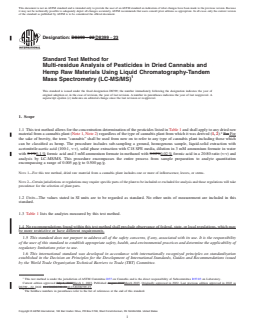
(Test Method)Standard Test Method for Multi-residue Analysis of Pesticides in Dried Cannabis and Hemp Raw Materials Using Liquid Chromatography-Tandem Mass Spectrometry (LC-MS/MS)
General Information
- Abstract
SIGNIFICANCE AND USE
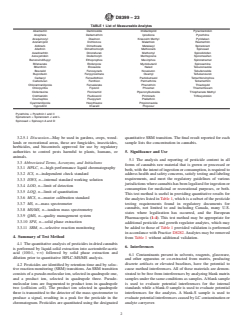
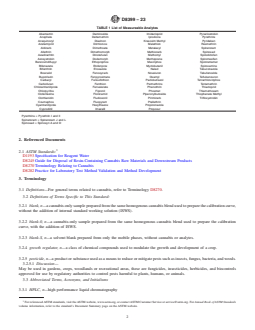
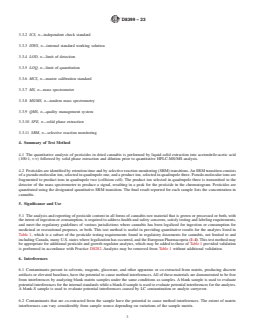
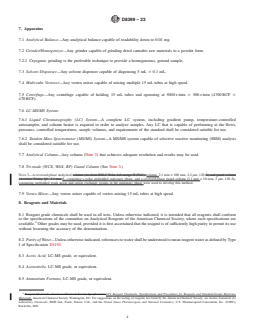
5.1 The analysis and reporting of pesticide content in all forms of cannabis raw material that is grown or processed or both, with the intent of ingestion or consumption, is required to address health and safety concerns, satisfy testing and labeling requirements, and meet the regulatory guidelines of various jurisdictions where cannabis has been legalized for ingestion or consumption for medicinal or recreational purposes, or both. This test method is useful in providing quantitative results for the analytes listed in Table 1, which is a subset of the pesticide testing requirements found in regulatory documents for cannabis, not limited to and including Canada, many U.S. states where legalization has occurred, and the European Pharmacopeia (1-4). This test method may be appropriate for additional pesticide and growth regulator analytes, which may be added to those of Table 1 provided validation is performed in accordance with Practice D8282. Analytes may be removed from Table 1 without additional validation.
SCOPE
1.1 This test method allows for the concentration determination of the pesticides listed in Table 1 and shall apply to any dried raw material from a cannabis plant (Note 1, Note 2) regardless of the type of cannabis plant from which it was derived (1, 2).2 For the sake of brevity, the term “cannabis” shall be used from now on to refer to any type of cannabis plant including those which can be classified as hemp. The procedure includes sub-sampling a ground, homogenous sample, liquid-solid extraction with acetonitrile:acetic acid (100:1, v:v), solid phase extraction with C18 SPE media, dilution in 3 mM ammonium formate in water with 0.1 % formic acid and 3 mM ammonium formate in methanol with 0.02 % formic acid in a 20:80 ratio (v:v) and analysis by LC-MS/MS. This procedure encompasses the entire process from sample preparation to analyte quantitation encompassing a range of 0.005 µg/g to 0.500 µg/g.
Pyrethrins = Pyrethrin I and II
Spinetoram = Spinetoram J and L
Spinosad = Spinosyn A and D
Note 1: For this test method, dried raw material from a cannabis plant includes one or more of inflorescence, leaves, or stems.
Note 2: Certain jurisdictions or regulations may require specific parts of the plant to be included or excluded for analysis and those regulations will take precedence for the selection of plant parts.
1.2 Units—The values stated in SI units are to be regarded as standard. No other units of measurement are included in this standard.
1.3 Table 1 lists the analytes measured by this test method.
1.4 No recommendations found within this test method shall preclude observance of federal, state, or local regulations, which may be more restrictive or have different requirements.
1.5 This standard does not purport to address all of the safety concerns, if any, associated with its use. It is the responsibility of the user of this standard to establish appropriate safety, health, and environmental practices and determine the applicability of regulatory limitations prior to use.
1.6 This international standard was developed in accordance with internationally recognized principles on standardization established in the Decision on Principles for the Development of International Standards, Guides and Recommendations issued by the World Trade Organization Technical Barriers to Trade (TBT) Committee.
- Status
- Published
- Publication Date
- 28-Feb-2023
- Technical Committee
- D37 - Cannabis
- Drafting Committee
- D37.03 - Laboratory
Buy Documents
ASTM D8399-23 - Standard Test Method for Multi-residue Analysis of Pesticides in Dried Cannabis and Hemp Raw Materials Using Liquid Chromatography-Tandem Mass Spectrometry (LC-MS/MS)
REDLINE ASTM D8399-23 - Standard Test Method for Multi-residue Analysis of Pesticides in Dried Cannabis and Hemp Raw Materials Using Liquid Chromatography-Tandem Mass Spectrometry (LC-MS/MS)
Overview
ASTM D8399-23 is the international standard test method for the multi-residue analysis of pesticides in dried cannabis and hemp raw materials using liquid chromatography-tandem mass spectrometry (LC-MS/MS). Developed by ASTM Committee D37, this methodology provides a reliable and validated approach to detect and quantify a wide spectrum of pesticide residues in cannabis products destined for medicinal or recreational use. This standard ensures consumer safety, supports regulatory compliance, and underpins transparent product labeling in markets where cannabis use is legal.
Key Topics
Scope and Application
- Applies to all forms of dried cannabis or hemp plant materials, including inflorescence, leaves, and stems, regardless of plant type.
- Designed for material intended for ingestion or consumption and critical for quality assurance in legal cannabis markets.
Test Method Summary
- Involves sample homogenization, liquid-solid extraction using acetonitrile:acetic acid, solid phase extraction (SPE) clean-up, and analysis via advanced LC-MS/MS instrumentation.
- The quantitative method provides detection and quantification in the range of 0.005 µg/g to 0.500 µg/g for listed pesticides.
Analytes Covered
- Includes a comprehensive panel of pesticides frequently regulated in Canada, multiple US states, and the European Pharmacopeia. Examples: abamectin, pyrethrins, imidacloprid, spinosad, and over 80 other compounds.
Regulatory Alignment
- Supports compliance with jurisdiction-specific pesticide regulations for cannabis, helping cultivators, processors, and labs to meet global requirements.
- Encourages validation according to ASTM D8282 if additional analytes are included.
Applications
Product Safety and Compliance
- Essential for ensuring that medicinal and recreational cannabis products meet safety thresholds for pesticide residues.
- Assists licensed laboratories, cultivators, processors, and regulators in demonstrating compliance with health and safety standards.
Market Access and Transparency
- Facilitates market access for producers by demonstrating adherence to internationally recognized analytical protocols.
- Promotes transparency in product labeling, giving consumers and patients confidence in cannabis product safety.
Versatility in Sample Types
- Applicable to any dried cannabis raw material, including those classified as hemp, enabling broad industry application.
- Can adapt to additional analytes with proper validation, supporting continuous regulatory updates.
Harmonization Across Jurisdictions
- Aligns cannabis testing procedures across different legal markets, aiding organizations that operate in multiple regions or export products internationally.
Related Standards
- ASTM D8270: Terminology relating to cannabis, providing foundational definitions.
- ASTM D8282: Practice for laboratory test method validation and development, referenced for validation of additional analytes.
- ASTM D1193: Specification for reagent water, ensuring high-quality analytical procedures.
- ASTM D8245: Guide for the disposal of cannabis raw materials and downstream products.
Keywords: ASTM D8399-23, cannabis pesticide testing, LC-MS/MS, hemp pesticide analysis, regulatory compliance, cannabis quality control, multi-residue analysis, pesticide residues, cannabis laboratory standards, cannabis product safety
ASTM D8399-23 is an essential standard for the accurate detection and quantification of pesticides in cannabis. Laboratories, cultivators, and producers seeking regulatory compliance and consumer trust should implement this multi-residue analysis method to ensure product safety and market access.
Relations
- Refers
ASTM D8282-19 - Standard Practice for Laboratory Test Method Validation and Method Development - Effective Date
- 01-Sep-2019
- Effective Date
- 15-Jan-2019
- Effective Date
- 01-Mar-2006
- Effective Date
- 10-Feb-1999
- Effective Date
- 10-Feb-1999
Buy Documents
ASTM D8399-23 - Standard Test Method for Multi-residue Analysis of Pesticides in Dried Cannabis and Hemp Raw Materials Using Liquid Chromatography-Tandem Mass Spectrometry (LC-MS/MS)
REDLINE ASTM D8399-23 - Standard Test Method for Multi-residue Analysis of Pesticides in Dried Cannabis and Hemp Raw Materials Using Liquid Chromatography-Tandem Mass Spectrometry (LC-MS/MS)
Get Certified
Connect with accredited certification bodies for this standard

BSI Group
BSI (British Standards Institution) is the business standards company that helps organizations make excellence a habit.

TÜV Rheinland
TÜV Rheinland is a leading international provider of technical services.

TÜV SÜD
TÜV SÜD is a trusted partner of choice for safety, security and sustainability solutions.
Sponsored listings
Frequently Asked Questions
ASTM D8399-23 is a standard published by ASTM International. Its full title is "Standard Test Method for Multi-residue Analysis of Pesticides in Dried Cannabis and Hemp Raw Materials Using Liquid Chromatography-Tandem Mass Spectrometry (LC-MS/MS)". This standard covers: SIGNIFICANCE AND USE 5.1 The analysis and reporting of pesticide content in all forms of cannabis raw material that is grown or processed or both, with the intent of ingestion or consumption, is required to address health and safety concerns, satisfy testing and labeling requirements, and meet the regulatory guidelines of various jurisdictions where cannabis has been legalized for ingestion or consumption for medicinal or recreational purposes, or both. This test method is useful in providing quantitative results for the analytes listed in Table 1, which is a subset of the pesticide testing requirements found in regulatory documents for cannabis, not limited to and including Canada, many U.S. states where legalization has occurred, and the European Pharmacopeia (1-4). This test method may be appropriate for additional pesticide and growth regulator analytes, which may be added to those of Table 1 provided validation is performed in accordance with Practice D8282. Analytes may be removed from Table 1 without additional validation. SCOPE 1.1 This test method allows for the concentration determination of the pesticides listed in Table 1 and shall apply to any dried raw material from a cannabis plant (Note 1, Note 2) regardless of the type of cannabis plant from which it was derived (1, 2).2 For the sake of brevity, the term “cannabis” shall be used from now on to refer to any type of cannabis plant including those which can be classified as hemp. The procedure includes sub-sampling a ground, homogenous sample, liquid-solid extraction with acetonitrile:acetic acid (100:1, v:v), solid phase extraction with C18 SPE media, dilution in 3 mM ammonium formate in water with 0.1 % formic acid and 3 mM ammonium formate in methanol with 0.02 % formic acid in a 20:80 ratio (v:v) and analysis by LC-MS/MS. This procedure encompasses the entire process from sample preparation to analyte quantitation encompassing a range of 0.005 µg/g to 0.500 µg/g. Pyrethrins = Pyrethrin I and II Spinetoram = Spinetoram J and L Spinosad = Spinosyn A and D Note 1: For this test method, dried raw material from a cannabis plant includes one or more of inflorescence, leaves, or stems. Note 2: Certain jurisdictions or regulations may require specific parts of the plant to be included or excluded for analysis and those regulations will take precedence for the selection of plant parts. 1.2 Units—The values stated in SI units are to be regarded as standard. No other units of measurement are included in this standard. 1.3 Table 1 lists the analytes measured by this test method. 1.4 No recommendations found within this test method shall preclude observance of federal, state, or local regulations, which may be more restrictive or have different requirements. 1.5 This standard does not purport to address all of the safety concerns, if any, associated with its use. It is the responsibility of the user of this standard to establish appropriate safety, health, and environmental practices and determine the applicability of regulatory limitations prior to use. 1.6 This international standard was developed in accordance with internationally recognized principles on standardization established in the Decision on Principles for the Development of International Standards, Guides and Recommendations issued by the World Trade Organization Technical Barriers to Trade (TBT) Committee.
SIGNIFICANCE AND USE 5.1 The analysis and reporting of pesticide content in all forms of cannabis raw material that is grown or processed or both, with the intent of ingestion or consumption, is required to address health and safety concerns, satisfy testing and labeling requirements, and meet the regulatory guidelines of various jurisdictions where cannabis has been legalized for ingestion or consumption for medicinal or recreational purposes, or both. This test method is useful in providing quantitative results for the analytes listed in Table 1, which is a subset of the pesticide testing requirements found in regulatory documents for cannabis, not limited to and including Canada, many U.S. states where legalization has occurred, and the European Pharmacopeia (1-4). This test method may be appropriate for additional pesticide and growth regulator analytes, which may be added to those of Table 1 provided validation is performed in accordance with Practice D8282. Analytes may be removed from Table 1 without additional validation. SCOPE 1.1 This test method allows for the concentration determination of the pesticides listed in Table 1 and shall apply to any dried raw material from a cannabis plant (Note 1, Note 2) regardless of the type of cannabis plant from which it was derived (1, 2).2 For the sake of brevity, the term “cannabis” shall be used from now on to refer to any type of cannabis plant including those which can be classified as hemp. The procedure includes sub-sampling a ground, homogenous sample, liquid-solid extraction with acetonitrile:acetic acid (100:1, v:v), solid phase extraction with C18 SPE media, dilution in 3 mM ammonium formate in water with 0.1 % formic acid and 3 mM ammonium formate in methanol with 0.02 % formic acid in a 20:80 ratio (v:v) and analysis by LC-MS/MS. This procedure encompasses the entire process from sample preparation to analyte quantitation encompassing a range of 0.005 µg/g to 0.500 µg/g. Pyrethrins = Pyrethrin I and II Spinetoram = Spinetoram J and L Spinosad = Spinosyn A and D Note 1: For this test method, dried raw material from a cannabis plant includes one or more of inflorescence, leaves, or stems. Note 2: Certain jurisdictions or regulations may require specific parts of the plant to be included or excluded for analysis and those regulations will take precedence for the selection of plant parts. 1.2 Units—The values stated in SI units are to be regarded as standard. No other units of measurement are included in this standard. 1.3 Table 1 lists the analytes measured by this test method. 1.4 No recommendations found within this test method shall preclude observance of federal, state, or local regulations, which may be more restrictive or have different requirements. 1.5 This standard does not purport to address all of the safety concerns, if any, associated with its use. It is the responsibility of the user of this standard to establish appropriate safety, health, and environmental practices and determine the applicability of regulatory limitations prior to use. 1.6 This international standard was developed in accordance with internationally recognized principles on standardization established in the Decision on Principles for the Development of International Standards, Guides and Recommendations issued by the World Trade Organization Technical Barriers to Trade (TBT) Committee.
ASTM D8399-23 is classified under the following ICS (International Classification for Standards) categories: 11.120.99 - Other standards related to pharmaceutics; 71.040.01 - Analytical chemistry in general. The ICS classification helps identify the subject area and facilitates finding related standards.
ASTM D8399-23 has the following relationships with other standards: It is inter standard links to ASTM D8282-19, ASTM D8245-19, ASTM D1193-06, ASTM D1193-99e1, ASTM D1193-99. Understanding these relationships helps ensure you are using the most current and applicable version of the standard.
ASTM D8399-23 is available in PDF format for immediate download after purchase. The document can be added to your cart and obtained through the secure checkout process. Digital delivery ensures instant access to the complete standard document.
Standards Content (Sample)
This international standard was developed in accordance with internationally recognized principles on standardization established in the Decision on Principles for the
Development of International Standards, Guides and Recommendations issued by the World Trade Organization Technical Barriers to Trade (TBT) Committee.
Designation: D8399 − 23
Standard Test Method for
Multi-residue Analysis of Pesticides in Dried Cannabis and
Hemp Raw Materials Using Liquid Chromatography-Tandem
Mass Spectrometry (LC-MS/MS)
This standard is issued under the fixed designation D8399; the number immediately following the designation indicates the year of
original adoption or, in the case of revision, the year of last revision. A number in parentheses indicates the year of last reapproval. A
superscript epsilon (´) indicates an editorial change since the last revision or reapproval.
1. Scope 1.6 This international standard was developed in accor-
dance with internationally recognized principles on standard-
1.1 This test method allows for the concentration determi-
ization established in the Decision on Principles for the
nation of the pesticides listed in Table 1 and shall apply to any
Development of International Standards, Guides and Recom-
dried raw material from a cannabis plant (Note 1, Note 2)
mendations issued by the World Trade Organization Technical
regardless of the type of cannabis plant from which it was
2 Barriers to Trade (TBT) Committee.
derived (1, 2). For the sake of brevity, the term “cannabis”
shall be used from now on to refer to any type of cannabis plant
2. Referenced Documents
including those which can be classified as hemp. The proce-
2.1 ASTM Standards:
dure includes sub-sampling a ground, homogenous sample,
liquid-solid extraction with acetonitrile:acetic acid (100:1, v:v), D1193 Specification for Reagent Water
D8245 Guide for Disposal of Resin-Containing Cannabis
solid phase extraction with C18 SPE media, dilution in 3 mM
ammonium formate in water with 0.1 % formic acid and 3 mM Raw Materials and Downstream Products
D8270 Terminology Relating to Cannabis
ammonium formate in methanol with 0.02 % formic acid in a
20:80 ratio (v:v) and analysis by LC-MS/MS. This procedure D8282 Practice for Laboratory Test Method Validation and
Method Development
encompasses the entire process from sample preparation to
analyte quantitation encompassing a range of 0.005 μg ⁄g to
3. Terminology
0.500 μg ⁄g.
NOTE 1—For this test method, dried raw material from a cannabis plant
3.1 Definitions—For general terms related to cannabis, refer
includes one or more of inflorescence, leaves, or stems.
to Terminology D8270.
NOTE 2—Certain jurisdictions or regulations may require specific parts
of the plant to be included or excluded for analysis and those regulations
3.2 Definitions of Terms Specific to This Standard:
will take precedence for the selection of plant parts.
3.2.1 blank, n—a cannabis-only sample prepared from the
1.2 Units—The values stated in SI units are to be regarded
same homogenous cannabis blend used to prepare the calibra-
as standard. No other units of measurement are included in this
tion curve, without the addition of internal standard working
standard.
solution (ISWS).
1.3 Table 1 lists the analytes measured by this test method.
3.2.2 blank-0, n—a cannabis-only sample prepared from the
same homogenous cannabis blend used to prepare the calibra-
1.4 No recommendations found within this test method shall
tion curve, with the addition of ISWS.
preclude observance of federal, state, or local regulations,
which may be more restrictive or have different requirements. 3.2.3 blank-S, n—a solvent blank prepared from only the
mobile phases, without cannabis or analytes.
1.5 This standard does not purport to address all of the
safety concerns, if any, associated with its use. It is the 3.2.4 growth regulator, n—a class of chemical compounds
used to modulate the growth and development of a crop.
responsibility of the user of this standard to establish appro-
priate safety, health, and environmental practices and deter-
3.2.5 pesticide, n—a product or substance used as a means
mine the applicability of regulatory limitations prior to use.
to reduce or mitigate pests such as insects, fungus, bacteria,
and weeds.
This test method is under the jurisdiction of ASTM Committee D37 on
Cannabis and is the direct responsibility of Subcommittee D37.03 on Laboratory.
Current edition approved March 1, 2023. Published March 2023. Originally
approved in 2022. Last previous edition approved in 2022 as D8399 – 22. DOI: For referenced ASTM standards, visit the ASTM website, www.astm.org, or
10.1520/D8399-23. contact ASTM Customer Service at service@astm.org. For Annual Book of ASTM
The boldface numbers in parentheses refer to the list of references at the end of Standards volume information, refer to the standard’s Document Summary page on
this standard. the ASTM website.
Copyright © ASTM International, 100 Barr Harbor Drive, PO Box C700, West Conshohocken, PA 19428-2959. United States
D8399 − 23
TABLE 1 List of Measureable Analytes
Abamectin Daminozide Imidacloprid Pyraclostrobin
Acephate Deltamethrin Iprodione Pyrethrins
Acequinocyl Diazinon Kresoxim Methyl Pyridaben
Acetamiprid Dichlorvos Malathion Resmethrin
Aldicarb Dimethoate Metalaxyl Spinetoram
Allethrin Dimethomorph Methiocarb Spinosad
Azadirachtin Dinotefuran Methomyl Spirodiclofen
Azoxystrobin Dodemorph Methoprene Spiromesifen
Benzovindiflupyr Ethoprophos Mevinphos Spirotetramat
Bifenazate Etofenprox Myclobutanil Spiroxamine
Bifenthrin Etoxazole Naled Tebuconazole
Boscalid Fenoxycarb Novaluron Tebufenozide
Buprofezin Fenpyroximate Oxamyl Teflubenzuron
Carbaryl Fensulfothion Paclobutrazol Tetrachlorvinphos
Carbofuran Fenthion Permethrins Tetramethrin
Chlorantraniliprole Fenvalerate Phenothrin Thiacloprid
Chlorpyrifos Fipronil Phosmet Thiamethoxam
Clofentezine Flonicamid Piperonylbutoxide Thiophanate Methyl
Clothianidin Fludioxonil Pirimicarb Trifloxystrobin
Coumaphos Fluopyram Prallethrin
Cyantraniliprole Hexythiazox Propiconazole
Cyprodinil Imazalil Propoxur
Pyrethrins = Pyrethrin I and II
Spinetoram = Spinetoram J and L
Spinosad = Spinosyn A and D
3.2.5.1 Discussion—May be used in gardens, crops, wood- quantitative SRM transition. The final result reported for each
lands or recreational areas, these are fungicides, insecticides, sample lists the concentration in cannabis.
herbicides, and biocontrols approved for use by regulatory
authorities to control pests harmful to plants, humans, or
5. Significance and Use
animals.
5.1 The analysis and reporting of pesticide content in all
3.3 Abbreviated Terms, Acronyms, and Initialisms
forms of cannabis raw material that is grown or processed or
3.3.1 HPLC, n—high performance liquid chromatography
both, with the intent of ingestion or consumption, is required to
3.3.2 ICS, n—independent check standard address health and safety concerns, satisfy testing and labeling
requirements, and meet the regulatory guidelines of various
3.3.3 ISWS, n—internal standard working solution
jurisdictions where cannabis has been legalized for ingestion or
3.3.4 LOD, n—limit of detection
consumption for medicinal or recreational purposes, or both.
3.3.5 LOQ, n—limit of quantitation
This test method is useful in providing quantitative results for
3.3.6 MCS, n—master calibration standard
the analytes listed in Table 1, which is a subset of the pesticide
testing requirements found in regulatory documents for
3.3.7 MS, n—mass spectrometer
cannabis, not limited to and including Canada, many U.S.
3.3.8 MS/MS, n—tandem mass spectrometry
states where legalization has occurred, and the European
3.3.9 QMS, n—quality management system
Pharmacopeia (1-4). This test method may be appropriate for
3.3.10 SPE, n—solid phase extraction
additional pesticide and growth regulator analytes, which may
be added to those of Table 1 provided validation is performed
3.3.11 SRM, n—selective reaction monitoring
in accordance with Practice D8282. Analytes may be removed
4. Summary of Test Method from Table 1 without additional validation.
4.1 The quantitative analysis of pesticides in dried cannabis
6. Interferences
is performed by liquid-solid extraction into acetonitrile:acetic
acid (100:1, v:v) followed by solid phase extraction and
6.1 Contaminants present in solvents, reagents, glassware,
dilution prior to quantitative HPLC-MS/MS analysis.
and other apparatus or co-extracted from matrix, producing
4.2 Pesticides are identified by retention time and by selec- discrete artifacts or elevated baselines, have the potential to
cause method interferences. All of these materials are demon-
tive reaction monitoring (SRM) transitions. An SRM transition
consists of a pseudo-molecular ion, selected in quadrupole one, strated to be free from interferences by analyzing blank matrix
samples under the same conditions as samples. A blank sample
and a product ion, selected in quadrupole three. Pseudo-
molecular ions are fragmented to product ions in quadrupole is used to evaluate potential interferences for the internal
standards while a blank-0 sample is used to evaluate potential
two (collision cell). The product ion selected in quadrupole
three is transmitted to the detector of the mass spectrometer to interferences for the analytes. A blank-S sample is used to
produce a signal, resulting in a peak for the pesticide in the evaluate potential interferences caused by LC contamination or
chromatogram. Pesticides are quantitated using the designated analyte carryover.
D8399 − 23
6.2 Contaminants that are co-extracted from the sample 8.2 Purity of Water—Unless otherwise indicated, references
have the potential to cause method interferences. The extent of to water shall be understood to mean reagent water as defined
matrix interferences can vary considerably from sample source by Type I of Specification D1193.
depending on variations of the sample matrix.
8.3 Acetic Acid, LC-MS grade, or equivalent.
8.4 Acetonitrile, LC-MS grade, or equivalent.
7. Apparatus
8.5 Ammonium Formate, LC-MS grade, or equivalent.
7.1 Analytical Balance—Any analytical balance capable of
readability down to 0.01 mg. 8.6 Dried cannabis raw material.
7.2 Grinder/Homogenizer—Any grinder capable of grind-
8.7 Formic Acid, LC-MS grade, or equivalent.
ing dried cannabis raw materials to a powder form.
8.8 Methanol, LC-MS grade, or equivalent.
7.2.1 Cryogenic grinding is the preferable technique to
8.9 Pesticides Reference Material Solution, 96 components
provide a homogeneous, ground sample.
in acetonitrile, or equivalent.
7.3 Solvent Dispenser—Any solvent dispenser capable of
8.10 C18, SPE cartridges.
dispensing 5 mL 6 0.1 mL.
8.11 Autosampler Vials, amber silanized glass, 2 mL.
7.4 Multi-tube Vortexer—Any vortex mixer capable of mix-
ing multiple 15 mL tubes at high speed.
9. Hazards
7.5 Centrifuge—Any centrifuge capable of holding 15 mL
9.1 All work with solvents shall be carried out in a fume
tubes and operating at 5000 r ⁄min 6 500 r ⁄min (4700 RCF 6
hood while personal protection equipment is worn, including
470 RCF).
gloves, safety glasses or goggles, and a lab coat.
7.6 LC-MS/MS System:
9.2 Several solvents are used in this test method, including
7.6.1 Liquid Chromatography (LC) System—A complete LC
methanol and acetonitrile. Check their safety datasheet to
system, including gradient pump, temperature-controlled
identify specific hazards. See Guide D8245. Follow local
autosampler, and column heater is required in order to analyze
regulations for proper disposal of spent chemicals.
samples. Any LC that is capable of performing at the flows,
pressures, controlled temperatures, sample volumes, and re- 10. Calibration and Standardization
quirements of the standard shall be considered suitable for use.
10.1 The mass spectrometer shall be calibrated per manu-
7.6.2 Tandem Mass Spectrometer (MS/MS) System—A
facturer specifications before analysis. In order to obtain valid
MS/MS system capable of selective reactive monitoring
and accurate analytical values within the confidence limits, the
(SRM) analysis shall be considered suitable for use.
following procedures shall be followed when performing the
7.7 Analytical Column—Any column (Note 3) that achieves
test method.
adequate resolution and results may be used.
10.2 Calibration and Standardization:
7.8 Tri-mode (WCX, WAX, RP) Guard Column (See Note 3.)
10.2.1 This test method uses calibration samples (CAL) and
NOTE 3—A reversed-phase analytical column, 2.1 mm × 100 mm, 2.2
independent check samples (ICS) prepared in a blend of
μm, 120 Å, containing a polar embedded stationary phase, and a
high-THCA, balanced THCA-CBDA, and high-CBDA dried
reversed-phase guard column (2.1 mm × 10 mm, 5 μm, 120 Å), containing
cannabis and subsequently extracted into solution.
embedded weak anion and cation exchange groups in the stationary phase
10.2.1.1 The blended cannabis is designed to include high
were used to develop this method.
levels of naturally occurring cannabinoids from multiple
7.9 Vortex Mixer—Any vortex mixer capable of vortex
cultivars, resulting in a sample that is as close to the average
mixing 15 mL tubes at high speed.
cannabis sample as possible.
10.2.2 Seven (7) calibration levels and three (3) ICS levels
8. Reagents and Materials
shall be prepared, each containing the analytes listed in Table
8.1 Reagent grade chemicals shall be used in all tests.
1. Additional calibration and ICS levels may be added as
Unless otherwise indicated, it is intended that all reagents shall
deemed necessary. Stock solutions are typically available as
conform to the specifications of the committee on Analytical
100 μg ⁄mL to 1000 μg ⁄mL in either methanol or acetonitrile
Reagents of the American Chemical Society, where such
and may contain 0.1 % formic acid. Prepare an appropriate
specifications are available. Other grades may be used, pro-
volume of two (2) master calibration standard (MCS) solutions
vided it is first ascertained that the reagent is of sufficiently
in amber, silanized glass vials by combining the analytical
high purity to permit its use without lessening the accuracy of
reference standards and diluting to a concentration of 8.33
the determination.
μg/mL with acetonitrile. The two MCS solutions shall be
prepared using stocks from different suppliers, different lots, or
different vials/ampules. One MCS solution is to be used for
preparation of the CAL solutions and the other for preparation
ACS Reagent Chemicals, Specifications and Procedures for Reagents and
Standard-Grade Reference Materials, American Chemical Society, Washington,
of the ICS solutions. MCS solutions with fewer analytes may
DC. For suggestions on the testing of reagents not listed by the American Chemical
be prepared provided that the analyte concentrations remain the
Society, see Analar Standards for Laboratory Chemicals, BDH Ltd., Poole, Dorset,
same. Pesticide reference standard solutions shall be stored
U.K., and the United States Pharmacopeia and National Formulary, U.S. Pharma-
copeial Convention, Inc. (USPC), Rockville, MD. according to the manufacturers’ instructions and used prior to
D8399 − 23
the expiration date stated by the manufacturer. MCS solutions, tions. Regression type used shall be validated by each labora-
CAL solutions, and ICS solutions shall be stored at –20 °C or tory. A minimum of five (5) points is considered acceptable for
lower and replaced every six (6) months. each analyte. If the low or high CAL point are rejected, the
10.2.3 Prepare spiking solutions by diluting the MCS solu- reporting range shall be modified to reflect this change (Note
tion in amber, silanized glass vials as described in Table 2, or 4). The linearity of group-calibrated analytes shall be evaluated
equivalent. on the group calibration rather than the calibration of the
10.2.4 Prepare individual internal standard stock solutions individual components comprising the group.
for daminozide-d (IS-1), myclobutanil-d (IS-2), diazinon-d 10.2.10 Quadratic calibration may be used if the coefficient
4 4 5
2 2
(IS-3), piperonylbutoxide-d (IS-4), and deltamethrin-d (IS-5) of determination, r , is ≥0.99. A weighting of 1/x or 1/x is
9 5
at 100 μg/mL by weighing 0.1 mg of each internal standard to recommended to give more emphasis to the lower concentra-
a vial and dissolving in 1.0 mL of acetonitrile. tions. Regression type used shall be validated by each labora-
10.2.5 Prepare an internal standard working solution tory. A minimum of five (5) points is considered acceptable for
(ISWS) at a concentration of 1.0 μg/mL of each internal each analyte. If the low or high CAL point is rejected, the
standard by combining 200 μL of each of the internal stock reporting range shall be modified to reflect this change (Note
solutions and diluting to a total volume of 20.0 mL with 4).
acetonitrile. Final volumes may be changed provided the
NOTE 4—Certain jurisdictions or regulations may prohibit the rejection
proportions remain the same.
of calibration points and those regulations will take precedence.
10.2.6 Prepare matrix-matched calibration standards in 15
10.2.11 The retention time window of the SRM transitions
mL centrifuge tubes by spiking 1.00 g 6 0.05 g of dried and
shall be within 65 % of the retention time of the analyte in a
ground cannabis known to be free of pesticides with the
mid-point CAL sample. If this is not the case, re-examine the
appropriate spiking solution, or equivalent, as described in
CAL samples to determine if there was a shift in retention time
Table 3. The spiked cannabis is extracted alongside unknown
during the analysis. If a retention time shift occurred, the
cannabis samples by following the procedure detailed in
sample shall be re-injected. If the retention time is still
Section 11.
incorrect in the sample, refer to the peak as an unknown.
10.2.7 After completing the extractions detailed in Section
10.2.12 ICS samples shall be injected at the beginning,
11, inject each CAL to obtain the chromatograms, monitoring
middle, and end of the run, including ICS samples injected a
the SRM transitions of each analyte and its internal standard.
minimum of every 10 samples. The concentration of the ICS
Calibration software is used to conduct quantitation of the
samples, at concentrations above the LOQ for each analyte,
target analytes with SRM transitions of each analyte used for
shall have a bias ≤30 % of the nominal concentration for a
quantitation and confirmation.
given analyte. If this is not the case, any unknown samples
10.2.8 The calibration software manual should be consulted
displaying a signal for the biased analyte injected between
to use the software properly. The quantitative method uses peak
accepted ICS injections shall be re-analyzed. The ICS with the
area ratios of analyte/internal standard versus the analyte
area count nearest the unknown sample shall be used to
concentration in units of ng/g (ng of pesticide per g of dried
evaluate this criterion.
cannabis). Regressions (that is, linear or quadratic depending
10.3 Method Blanks:
on the instrument used) may be generated using the data
system software. Regression type used shall be validated by 10.3.1 A blank sample shall be injected at least once in the
each laboratory. Forcing the regression line through the origin run. Any peak in the blank sample at the retention time and
is not recommended. Each CAL used to generate the regression SRM transitions of the internal standards shall have a peak area
shall have a calculated concentration ≤25 % bias (≤40 % for ≤4 0% of the average of the internal standard peak areas of the
CAL 1) from the nominal concentration and may be rejected if CAL samples.
this criteria is not met. 10.3.2 A blank-0 sample shall be injected at least once in the
10.2.9 Linear calibration may be used if the coefficient of run. Any peak in the blank-0 sample at the retention time and
2 2
determination, r , is ≥0.99. A weighting of 1/x or 1/x is SRM transition of the analyte shall have a concentration ≤40 %
recommended to give more emphasis to the lower concentra- of the LOQ for that analyte.
TABLE 2 Spiking Solution Preparation for Matrix-matched Calibration
NOTE 1—Final volumes may be changed provided the proportions remain the same.
Volume of Solution Volume of ACN Final Volume Conc.
Spiking Solution Solution Used
(μL) (μL) (μL) (μg/mL)
Spike 1 MCS-1 10 990 1000 0.083
Spike 2 MCS-1 20 980 1000 0.17
Spike 3 MCS-1 40 960 1000 0.33
Spike 4 MCS-2 50 950 1000 0.42
Spike 5 MCS-1 100 900 1000 0.83
Spike 6 MCS-2 150 850 1000 1.25
Spike 7 MCS-1 200 800 1000 1.67
Spike 8 MCS-1 400 600 1000 3.33
Spike 9 MCS-2 500 500 1000 4.17
Spike 10 MCS-1 1000 0 1000 8.33
D8399 − 23
TABLE 3 Analyte Concentrations in Matrix-matched Calibration Curve
NOTE 1—Final volumes may be changed provided the proportions remain the same.
Spiking Solution Conc. Volume Used Pesticides
Cal Level Spiking Solution Used
(μg/mL) (μL) (μg/mL)
Blank Spike 0 0.00 60 0.000
CAL 5 Spike 1 0.08 60 0.005
CAL 10 Spike 2 0.17 60 0.010
CAL 20 Spike 3 0.33 60 0.020
CAL 50 Spike 5 0.83 60 0.050
CAL 100 Spike 7 1.67 60 0.100
CAL 200 Spike 8 3.33 60 0.200
CAL 500 Spike 10 8.33 60 0.500
ICS 25 Spike 4 0.42 60 0.025
ICS 75 Spike 6 1.25 60 0.075
ICS 250 Spike 9 4.17 60 0.250
TABLE 5 HPLC Gradient Conditions
10.3.3 A blank-S sample shall be injected a minimum of
Time (min) Flow (mL/min) %B
every 10 samples. Any peak in the blank-S sample at the
0.000 0.5 20
retention time and SRM transition of the internal standards or
5.500 0.5 75
analytes shall have an area count ≤40 % of CAL-1.
10.500 0.5 98
13.000 0.5 98
10.4 If a laboratory has not performed the test before or if
13.100 0.5 20
there has been a major change in the measurement system, for
16.000 0.5 20
example: a new analyst or new equipment, perform a precision
and bias study to demonstrate laboratory capability.
TABLE 6 MS Ion Parameters
10.4.1 Analyze at least four (4) replicates of the ICS
samples. The sample shall be taken through the complete Parameter Setting
analytical test method. Calculate mean (average) concentration
Scan Type MRM
Ion Source Heated Electrospray
and % RSD and compare to the concentration of the ICS
Polarity Positive/Negative
samples. The calculated concentration of the analytes in the
Ion Spray Voltage (V) 4000/3000
ICS samples (with concentrations above the LOQ) shall have a
Sheath Gas (arbitrary units) 70
Aux Gas (arbitrary units) 25
calculated percent deviation ≤30 % and an RSD ≤30 %.
Sweep Gas (arbitrary units) 2
10.4.2 This study shall be repeated until a single operator
Ion Transfer Tube Temperature (°C) 310
precision and RSD are within the acceptance criteria. Vaporizer Temperature (°C) 150
RF Lens Analyte Specific
Collision Gas (mTorr) 2.0
11. Conditioning and Instrument Parameters
Cycle Time (s) 0.4
11.1 Analyze using a tandem mass spectrometer (MS/MS)
coupled to a high performance liquid chromatography (HPLC)
system.
Table 7 are examples only and may be different in name,
11.2 Introduce sample using an autosampler and achieve
number and setting for various instruments. Parameters should
analyte separation on an appropriate reverse phase column
be optimized for specific LC-MS systems.
(Note 5). Equilibrate the instrument by injecting a minimum of
NOTE 5—A C18, 2.2 μm, 120 Å, 2.1 mm × 100 mm HPLC column fitted
three blank-S samples. See Tables 4-6 for additional instrument
with a tri-mode (WCX, WAX, RP) 5 μm, 2.1 mm × 10 mm guard column
parameters. Parameters in Tables 4-6 and RF lens parameter in
was used with the gradient described in Table 5 to develop this test
method.
TABLE 4 HPLC Conditions
11.3 Equilibrate the instrument by injecting a minimum of
Parameter Setting two blank solution samples. Blank solutions consist of acetoni-
Column C18 2.2 μm, 120 Å,
...
This document is not an ASTM standard and is intended only to provide the user of an ASTM standard an indication of what changes have been made to the previous version. Because
it may not be technically possible to adequately depict all changes accurately, ASTM recommends that users consult prior editions as appropriate. In all cases only the current version
of the standard as published by ASTM is to be considered the official document.
Designation: D8399 − 22 D8399 − 23
Standard Test Method for
Multi-residue Analysis of Pesticides in Dried Cannabis and
Hemp Raw Materials Using Liquid Chromatography-Tandem
Mass Spectrometry (LC-MS/MS)
This standard is issued under the fixed designation D8399; the number immediately following the designation indicates the year of
original adoption or, in the case of revision, the year of last revision. A number in parentheses indicates the year of last reapproval. A
superscript epsilon (´) indicates an editorial change since the last revision or reapproval.
1. Scope
1.1 This test method allows for the concentration determination of the pesticides listed in Table 1 and shall apply to any dried raw
material from a cannabis plant (Note 1, Note 2) regardless of the type of cannabis plant from which it was derived (1, 2). For For
the sake of brevity, the term “cannabis” shall be used from now on to refer to any type of cannabis plant including those which
can be classified as hemp. The procedure includes sub-sampling a ground, homogenous sample, liquid-solid extraction with
acetonitrile:acetic acid (100:1, v:v), solid phase extraction with C18 SPE media, dilution in 3 mM ammonium formate in water
with 0.1%0.1 % formic acid and 3 mM ammonium formate in methanol with 0.02%0.02 % formic acid in a 20:80 ratio (v:v) and
analysis by LC-MS/MS. This procedure encompasses the entire process from sample preparation to analyte quantitation
encompassing a range of 0.005 μg ⁄g to 0.500 μg ⁄g.
NOTE 1—For this test method, dried raw material from a cannabis plant includes one or more of inflorescence, leaves, or stems.
NOTE 2—Certain jurisdictions or regulations may require specific parts of the plant to be included or excluded for analysis and those regulations will take
precedence for the selection of plant parts.
1.2 Units—The values stated in SI units are to be regarded as standard. No other units of measurement are included in this
standard.
1.3 Table 1 lists the analytes measured by this test method.
1.4 No recommendations found within this test method shall preclude observance of federal, state, or local regulations, which may
be more restrictive or have different requirements.
1.5 This standard does not purport to address all of the safety concerns, if any, associated with its use. It is the responsibility
of the user of this standard to establish appropriate safety, health, and environmental practices and determine the applicability of
regulatory limitations prior to use.
1.6 This international standard was developed in accordance with internationally recognized principles on standardization
established in the Decision on Principles for the Development of International Standards, Guides and Recommendations issued
by the World Trade Organization Technical Barriers to Trade (TBT) Committee.
This test method is under the jurisdiction of ASTM Committee D37 on Cannabis and is the direct responsibility of Subcommittee D37.03 on Laboratory.
Current edition approved July 1, 2022March 1, 2023. Published August 2022March 2023. Originally approved in 2022. Last previous edition approved in 2022 as
D8399 – 22. DOI: 10.1520/D8399-22.10.1520/D8399-23.
The boldface numbers in parentheses refer to the list of references at the end of this standard.
Copyright © ASTM International, 100 Barr Harbor Drive, PO Box C700, West Conshohocken, PA 19428-2959. United States
D8399 − 23
TABLE 1 List of Measureable Analytes
Abamectin Daminozide Imidacloprid Pyraclostrobin
Acephate Deltamethrin Iprodione Pyrethrins
Acequinocyl Diazinon Kresoxim Methyl Pyridaben
Acetamiprid Dichlorvos Malathion Resmethrin
Aldicarb Dimethoate Metalaxyl Spinetoram
Allethrin Dimethomorph Methiocarb Spinosad
Azadirachtin Dinotefuran Methomyl Spirodiclofen
Azoxystrobin Dodemorph Methoprene Spiromesifen
Benzovindiflupyr Ethoprophos Mevinphos Spirotetramat
Bifenazate Etofenprox Myclobutanil Spiroxamine
Bifenthrin Etoxazole Naled Tebuconazole
Boscalid Fenoxycarb Novaluron Tebufenozide
Buprofezin Fenpyroximate Oxamyl Teflubenzuron
Carbaryl Fensulfothion Paclobutrazol Tetrachlorvinphos
Carbofuran Fenthion Permethrins Tetramethrin
Chlorantraniliprole Fenvalerate Phenothrin Thiacloprid
Chlorpyrifos Fipronil Phosmet Thiamethoxam
Clofentezine Flonicamid Piperonylbutoxide Thiophanate Methyl
Clothianidin Fludioxonil Pirimicarb Trifloxystrobin
Coumaphos Fluopyram Prallethrin
Cyantraniliprole Hexythiazox Propiconazole
Cyprodinil Imazalil Propoxur
Pyrethrins = Pyrethrin I and II
Spinetoram = Spinetoram J and L
Spinosad = Spinosyn A and D
2. Referenced Documents
2.1 ASTM Standards:
D1193 Specification for Reagent Water
D8245 Guide for Disposal of Resin-Containing Cannabis Raw Materials and Downstream Products
D8270 Terminology Relating to Cannabis
D8282 Practice for Laboratory Test Method Validation and Method Development
3. Terminology
3.1 Definitions—For general terms related to cannabis, refer to Terminology D8270.
3.2 Definitions of Terms Specific to This Standard:
3.2.1 blank, n—a cannabis-only sample prepared from the same homogenous cannabis blend used to prepare the calibration curve,
without the addition of internal standard working solution (ISWS).
3.2.2 blank-0, n—a cannabis-only sample prepared from the same homogenous cannabis blend used to prepare the calibration
curve, with the addition of ISWS.
3.2.3 blank-S, n—a solvent blank prepared from only the mobile phases, without cannabis or analytes.
3.2.4 growth regulator, n—a class of chemical compounds used to modulate the growth and development of a crop.
3.2.5 pesticide, n—a product or substance used as a means to reduce or mitigate pests such as insects, fungus, bacteria, and weeds.
3.2.5.1 Discussion—
May be used in gardens, crops, woodlands or recreational areas, these are fungicides, insecticides, herbicides, and biocontrols
approved for use by regulatory authorities to control pests harmful to plants, humans, or animals.
3.3 Abbreviated Terms, Acronyms, and Initialisms
3.3.1 HPLC, n—high performance liquid chromatography
For referenced ASTM standards, visit the ASTM website, www.astm.org, or contact ASTM Customer Service at service@astm.org. For Annual Book of ASTM Standards
volume information, refer to the standard’s Document Summary page on the ASTM website.
D8399 − 23
3.3.2 ICS, n—independent check standard
3.3.3 ISWS, n—internal standard working solution
3.3.4 LOD, n—limit of detection
3.3.5 LOQ, n—limit of quantitation
3.3.6 MCS, n—master calibration standard
3.3.7 MS, n—mass spectrometer
3.3.8 MS/MS, n—tandem mass spectrometry
3.3.9 QMS, n—quality management system
3.3.10 SPE, n—solid phase extraction
3.3.11 SRM, n—selective reaction monitoring
4. Summary of Test Method
4.1 The quantitative analysis of pesticides in dried cannabis is performed by liquid-solid extraction into acetonitrile:acetic acid
(100:1, v:v) followed by solid phase extraction and dilution prior to quantitative HPLC-MS/MS analysis.
4.2 Pesticides are identified by retention time and by selective reaction monitoring (SRM) transitions. An SRM transition consists
of a pseudo-molecular ion, selected in quadrupole one, and a product ion, selected in quadrupole three. Pseudo-molecular ions are
fragmented to product ions in quadrupole two (collision cell). The product ion selected in quadrupole three is transmitted to the
detector of the mass spectrometer to produce a signal, resulting in a peak for the pesticide in the chromatogram. Pesticides are
quantitated using the designated quantitative SRM transition. The final result reported for each sample lists the concentration in
cannabis.
5. Significance and Use
5.1 The analysis and reporting of pesticide content in all forms of cannabis raw material that is grown or processed or both, with
the intent of ingestion or consumption, is required to address health and safety concerns, satisfy testing and labeling requirements,
and meet the regulatory guidelines of various jurisdictions where cannabis has been legalized for ingestion or consumption for
medicinal or recreational purposes, or both. This test method is useful in providing quantitative results for the analytes listed in
Table 1, which is a subset of the pesticide testing requirements found in regulatory documents for cannabis, not limited to and
including Canada, many U.S. states where legalization has occurred, and the European Pharmacopeia (1-4). This test method may
be appropriate for additional pesticide and growth regulator analytes, which may be added to those of Table 1 provided validation
is performed in accordance with Practice D8282. Analytes may be removed from Table 1 without additional validation.
6. Interferences
6.1 Contaminants present in solvents, reagents, glassware, and other apparatus or co-extracted from matrix, producing discrete
artifacts or elevated baselines, have the potential to cause method interferences. All of these materials are demonstrated to be free
from interferences by analyzing blank matrix samples under the same conditions as samples. A blank sample is used to evaluate
potential interferences for the internal standards while a blank-0 sample is used to evaluate potential interferences for the analytes.
A blank-S sample is used to evaluate potential interferences caused by LC contamination or analyte carryover.
6.2 Contaminants that are co-extracted from the sample have the potential to cause method interferences. The extent of matrix
interferences can vary considerably from sample source depending on variations of the sample matrix.
D8399 − 23
7. Apparatus
7.1 Analytical Balance—Any analytical balance capable of readability down to 0.01 mg.
7.2 Grinder/Homogenizer—Any grinder capable of grinding dried cannabis raw materials to a powder form.
7.2.1 Cryogenic grinding is the preferable technique to provide a homogeneous, ground sample.
7.3 Solvent Dispenser—Any solvent dispenser capable of dispensing 5 mL 6 0.1 mL.
7.4 Multi-tube Vortexer—Any vortex mixer capable of mixing multiple 15 mL tubes at high speed.
7.5 Centrifuge—Any centrifuge capable of holding 15 mL tubes and operating at 5000 r ⁄min 6 500 r ⁄min (4700 RCF 6
470 RCF).
7.6 LC-MS/MS System:
7.6.1 Liquid Chromatography (LC) System—A complete LC system, including gradient pump, temperature-controlled
autosampler, and column heater is required in order to analyze samples. Any LC that is capable of performing at the flows,
pressures, controlled temperatures, sample volumes, and requirements of the standard shall be considered suitable for use.
7.6.2 Tandem Mass Spectrometer (MS/MS) System—A MS/MS system capable of selective reactive monitoring (SRM) analysis
shall be considered suitable for use.
7.7 Analytical Column—Any column (Note 3) that achieves adequate resolution and results may be used.
7.8 Tri-mode (WCX, WAX, RP) Guard Column (See Note 3.)
NOTE 3—A reversed-phase analytical column (Acclaim RSLC Polar Advantage II (PA2), column, 2.1 mm × 100 mm, 2.2 μm, 120 Å) and guard column
(Acclaim Trinity Q1, 2.1 mm Å, containing a polar embedded stationary phase, and a reversed-phase guard column (2.1 mm × 10 mm, 5 μm, 120 Å),
containing embedded weak anion and cation exchange groups in the stationary phase were used to develop this method.
7.9 Vortex Mixer—Any vortex mixer capable of vortex mixing 15 mL tubes at high speed.
8. Reagents and Materials
8.1 Reagent grade chemicals shall be used in all tests. Unless otherwise indicated, it is intended that all reagents shall conform
to the specifications of the committee on Analytical Reagents of the American Chemical Society, where such specifications are
available. Other grades may be used, provided it is first ascertained that the reagent is of sufficiently high purity to permit its use
without lessening the accuracy of the determination.
8.2 Purity of Water—Unless otherwise indicated, references to water shall be understood to mean reagent water as defined by Type
I of Specification D1193.
8.3 Acetic Acid, LC-MS grade, or equivalent.
8.4 Acetonitrile, LC-MS grade, or equivalent.
8.5 Ammonium Formate, LC-MS grade, or equivalent.
Reagent Chemicals, American Chemical Society Specifications,ACS Reagent Chemicals, Specifications and Procedures for Reagents and Standard-Grade Reference
Materials, American Chemical Society, Washington, DC. For suggestions on the testing of reagents not listed by the American Chemical Society, see Analar Standards for
Laboratory Chemicals, BDH Ltd., Poole, Dorset, U.K., and the United States Pharmacopeia and National Formulary, U.S. Pharmacopeial Convention, Inc. (USPC),
Rockville, MD.
D8399 − 23
8.6 Dried cannabis raw material.
8.7 Formic Acid, LC-MS grade, or equivalent.
8.8 Methanol, LC-MS grade, or equivalent.
8.9 Pesticides Reference Material Solution, 96 components in acetonitrile, or equivalent.
8.10 C18, SPE cartridges.
8.11 Autosampler Vials, amber silanized glass, 2 mL.
9. Hazards
9.1 All work with solvents shall be carried out in a fume hood while personal protection equipment is worn, including gloves,
safety glasses or goggles, and a lab coat.
9.2 Several solvents are used in this test method, including methanol and acetonitrile. Check their safety datasheet to identify
specific hazards. See Guide D8245. Follow local regulations for proper disposal of spent chemicals.
10. Calibration and Standardization
10.1 The mass spectrometer shall be calibrated per manufacturer specifications before analysis. In order to obtain valid and
accurate analytical values within the confidence limits, the following procedures shall be followed when performing the test
method.
10.2 Calibration and Standardization:
10.2.1 This test method uses calibration samples (CAL) and independent check samples (ICS) prepared in a blend of high-THCA,
balanced THCA-CBDA, and high-CBDA dried cannabis and subsequently extracted into solution.
10.2.1.1 The blended cannabis is designed to include high levels of naturally occurring cannabinoids from multiple cultivars,
resulting in a sample that is as close to the average cannabis sample as possible.
10.2.2 Seven (7) calibration levels and three (3) ICS levels shall be prepared, each containing the analytes listed in Table 1.
Additional calibration and ICS levels may be added as deemed necessary. Stock solutions are typically available as 100 μg ⁄mL to
1000 μg ⁄mL in either methanol or acetonitrile and may contain 0.1 % formic acid. Prepare an appropriate volume of two (2) master
calibration standard (MCS) solutions in amber, silanized glass vials by combining the analytical reference standards and diluting
to a concentration of 8.33 μg/mL with acetonitrile. The two MCS solutions shall be prepared using stocks from different suppliers,
different lots, or different vials/ampules. One MCS solution is to be used for preparation of the CAL solutions and the other for
preparation of the ICS solutions. MCS solutions with fewer analytes may be prepared provided that the analyte concentrations
remain the same. Pesticide reference standard solutions shall be stored according to the manufacturers’ instructions and used prior
to the expiration date stated by the manufacturer. MCS solutions, CAL solutions, and ICS solutions shall be stored at –20 °C or
lower and replaced every six (6) months.
10.2.3 Prepare spiking solutions by diluting the MCS solution in amber, silanized glass vials as described in Table 2, or equivalent.
10.2.4 Prepare individual internal standard stock solutions for daminozide-d (IS-1), myclobutanil-d (IS-2), diazinon-d (IS-3),
4 4 5
piperonylbutoxide-d (IS-4), and deltamethrin-d (IS-5) at 100 μg/mL by weighing 0.1 mg of each internal standard to a vial and
9 5
dissolving in 1.0 mL of acetonitrile.
10.2.5 Prepare an internal standard working solution (ISWS) at a concentration of 1.0 μg/mL of each internal standard by
combining 200 μL of each of the internal stock solutions and diluting to a total volume of 20.0 mL with acetonitrile. Final volumes
may be changed provided the proportions remain the same.
D8399 − 23
TABLE 2 Spiking Solution Preparation for Matrix-matched Calibration
NOTE 1—Final volumes may be changed provided the proportions remain the same.
Volume of Solution Volume of ACN Final Volume Conc.
Spiking Solution Solution Used
(μL) (μL) (μL) (μg/mL)
Spike 1 MCS-1 10 990 1000 0.083
Spike 2 MCS-1 20 980 1000 0.17
Spike 3 MCS-1 40 960 1000 0.33
Spike 4 MCS-2 50 950 1000 0.42
Spike 5 MCS-1 100 900 1000 0.83
Spike 6 MCS-2 150 850 1000 1.25
Spike 7 MCS-1 200 800 1000 1.67
Spike 8 MCS-1 400 600 1000 3.33
Spike 9 MCS-2 500 500 1000 4.17
Spike 10 MCS-1 1000 0 1000 8.33
10.2.6 Prepare matrix-matched calibration standards in 15 mL centrifuge tubes by spiking 1.00 g 6 0.05 g of dried and ground
cannabis known to be free of pesticides with the appropriate spiking solution, or equivalent, as described in Table 3. The spiked
cannabis is extracted alongside unknown cannabis samples by following the procedure detailed in Section 11.
10.2.7 After completing the extractions detailed in Section 11, inject each CAL to obtain the chromatograms, monitoring the SRM
transitions of each analyte and its internal standard. Calibration software is used to conduct quantitation of the target analytes with
SRM transitions of each analyte used for quantitation and confirmation.
10.2.8 The calibration software manual should be consulted to use the software properly. The quantitative method uses peak area
ratios of analyte/internal standard versus the analyte concentration in units of ng/g (ng of pesticide per g of dried cannabis).
Regressions (that is, linear or quadratic depending on the instrument used) may be generated using the data system software.
Regression type used shall be validated by each laboratory. Forcing the regression line through the origin is not recommended.
Each CAL used to generate the regression shall have a calculated concentration ≤25 % bias (≤40 % for CAL 1) from the nominal
concentration and may be rejected if this criteria is not met.
2 2
10.2.9 Linear calibration may be used if the coefficient of determination, r , is ≥0.98.≥0.99. A weighting of 1/x or 1/x is
recommended to give more emphasis to the lower concentrations. Regression type used shall be validated by each laboratory. A
minimum of five (5) points is considered acceptable for each analyte. If the low or high CAL point are rejected, the reporting range
shall be modified to reflect this change (Note 4). The linearity of group-calibrated analytes shall be evaluated on the group
calibration rather than the calibration of the individual components comprising the group.
2 2
10.2.10 Quadratic calibration may be used if the coefficient of determination, r , is ≥0.98.≥0.99. A weighting of 1/x or 1/x is
recommended to give more emphasis to the lower concentrations. Regression type used shall be validated by each laboratory. A
minimum of five (5) points is considered acceptable for each analyte. If the low or high CAL point is rejected, the reporting range
shall be modified to reflect this change (Note 4).
NOTE 4—Certain jurisdictions or regulations may prohibit the rejection of the high or low calibration points and those regulations will take precedence.
TABLE 3 Analyte Concentrations in Matrix-matched Calibration Curve
NOTE 1—Final volumes may be changed provided the proportions remain the same.
Spiking Solution Conc. Volume Used Pesticides
Cal Level Spiking Solution Used
(μg/mL) (μL) (μg/mL)
Blank Spike 0 0.00 60 0.000
CAL 5 Spike 1 0.08 60 0.005
CAL 10 Spike 2 0.17 60 0.010
CAL 20 Spike 3 0.33 60 0.020
CAL 50 Spike 5 0.83 60 0.050
CAL 100 Spike 7 1.67 60 0.100
CAL 200 Spike 8 3.33 60 0.200
CAL 500 Spike 10 8.33 60 0.500
ICS 25 Spike 4 0.42 60 0.025
ICS 75 Spike 6 1.25 60 0.075
ICS 250 Spike 9 4.17 60 0.250
D8399 − 23
10.2.11 The retention time window of the SRM transitions shall be within 65 % of the retention time of the analyte in a mid-point
CAL sample. If this is not the case, re-examine the CAL samples to determine if there was a shift in retention time during the
analysis. If a retention time shift occurred, the sample shall be re-injected. If the retention time is still incorrect in the sample, refer
to the peak as an unknown.
10.2.12 ICS samples shall be injected at the beginning, middle, and end of the run, including ICS samples injected a minimum
of every 10 samples. The concentration of the ICS samples, at concentrations above the LOQ for each analyte, shall have a bias
≤30 % of the nominal concentration for a given analyte. If this is not the case, any unknown samples displaying a signal for the
biased analyte injected between accepted ICS injections shall be re-analyzed. The ICS with the area count nearest the unknown
sample shall be used to evaluate this criterion.
10.3 Method Blanks:
10.3.1 A blank sample shall be injected at least once in the run. Any peak in the blank sample at the retention time and SRM
transitions of the internal standards shall have a peak area ≤4 0% of the average of the internal standard peak areas of the CAL
samples.
10.3.2 A blank-0 sample shall be injected at least once in the run. Any peak in the blank-0 sample at the retention time and SRM
transition of the analyte shall have a concentration ≤40 % of the LOQ for that analyte.
10.3.3 A blank-S sample shall be injected a minimum of every 10 samples. Any peak in the blank-S sample at the retention time
and SRM transition of the internal standards or analytes shall have an area count ≤40 % of CAL-1.
10.4 If a laboratory has not performed the test before or if there has been a major change in the measurement system, for example:
a new analyst or new equipment, perform a precision and bias study to demonstrate laboratory capability.
10.4.1 Analyze at least four (4) replicates of the ICS samples. The sample shall be taken through the complete analytical test
method. Calculate mean (average) concentration and % RSD and compare to the concentration of the ICS samples. The calculated
concentration of the analytes in the ICS samples (with concentrations above the LOQ) shall have a calculated percent deviation
≤30 % and an RSD ≤30 %.
10.4.2 This study shall be repeated until a single operator precision and RSD are within the acceptance criteria.
11. Conditioning and Instrument Parameters
11.1 Analyze using a tandem mass spectrometer (MS/MS) coupled to a high performance liquid chromatography (HPLC) system.
11.2 Introduce sample using an autosampler and achieve analyte separation on an appropriate reverse phase column (Note 5).
Equilibrate the instrument by injecting a minimum of three blank-S samples. See Tables 4-6 for additional instrument parameters.
TABLE 4 HPLC Conditions
Parameter Setting
Column C18 2.2 μm, 120 Å, 2.1 mm x 100 mm
Guard Column Tri-mode (WCX, WAX, RP) 5 μm, 2.1 mm x
10 mm
Mobile Phase A 3 mM Ammonium formate in water + 0.1 %
formic acid
Mobile Phase B 3 mM Ammonium formate in methanol +
0.02 % formic acid
Flow Rate (mL/min) 0.5
Run Time (min) 16
Column Temp. (°C) 30
Switch Valve Times (min) 0-0.3 min to waste, 0.3-11.5 min to the mass
spectrometer, 11.5-16 min to waste
Injection Volume (μL) 1.0
Needle Wash ACN:MeOH:Water:formic acid (40:40:20:1,
v:v:v:v)
AS Temperature (°C) 5 °C
D8399 − 23
TABLE 5 HPLC Gradient Conditions
Time (min) Flow (mL/min) %B
0.000 0.5 20
5.500 0.5 75
10.500 0.5 98
13.000 0.5 98
13.100 0.5 20
16.000 0.5 20
TABLE 6 MS Ion Parameters
Parameter Setting
Scan Type MRM
Ion Source Heated Electrospray
Polarity Positive/Negative
Ion Spray Voltage (V) 4000/3000
Sheath Gas (arbitrary units) 70
Aux Gas (arb
...