

ASTM E1600-23
(Test Method)Standard Test Methods for Determination of Gold in Cyanide Solutions
General Information
- Abstract
SIGNIFICANCE AND USE
4.1 In primary metallurgical processes for gold bearing ores, gold is extracted with an alkaline cyanide solution. Metallurgical accounting, process control, and ore evaluation procedures depend on accurate, precise, and prompt measurements of the gold levels.
4.2 These test methods are comparative referee methods for compliance with compositional specifications for metal amounts or to monitor processes. It is assumed that all who use these methods will be trained users capable of performing common laboratory procedures skillfully and safely. It is expected that work will be performed in a properly equipped laboratory under appropriate quality control practices such as those described in Guide E882, and that proper waste disposal procedures will be followed.
SCOPE
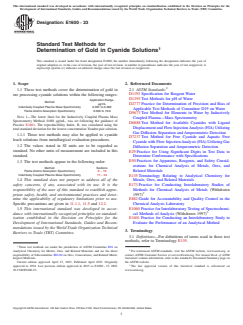
1.1 These test methods cover the determination of gold in ore processing cyanide solutions within the following ranges:
Method
Application Range,
μg/mL
Inductively Coupled Plasma Mass Spectrometry
0.001 to 0.500
Flame Atomic Absorption Spectrometry
0.300 to 10.0
Note 1: The lower limit for the Inductively Coupled Plasma Mass Spectrometry Method, 0.001 µg/mL, was set following the guidance of Practice E1601. The reproducibility Index, R, was calculated using the total standard deviation for the lowest concentration Youden pair solution.
1.1.1 These test methods may also be applied to cyanide leach solutions from metallurgical evaluation procedures.
1.2 The values stated in SI units are to be regarded as standard. No other units of measurement are included in this standard.
1.3 The test methods appear in the following order:
Method
Sections
Flame Atomic Absorption Spectrometry
9 – 16
Inductively Coupled Plasma Mass Spectrometry
17 – 24
1.4 This standard does not purport to address all of the safety concerns, if any, associated with its use. It is the responsibility of the user of this standard to establish appropriate safety, health, and environmental practices and determine the applicability of regulatory limitations prior to use. Specific precautions are given in 11.1.1, 11.5 and 12.2.
1.5 This international standard was developed in accordance with internationally recognized principles on standardization established in the Decision on Principles for the Development of International Standards, Guides and Recommendations issued by the World Trade Organization Technical Barriers to Trade (TBT) Committee.
- Status
- Published
- Publication Date
- 14-Apr-2023
- Technical Committee
- E01 - Analytical Chemistry for Metals, Ores, and Related Materials
- Drafting Committee
- E01.02 - Ores, Concentrates, and Related Metallurgical Materials
Overview
ASTM E1600-23 is an internationally recognized standard developed by ASTM International for the determination of gold concentration in cyanide solutions. These test methods are crucial in primary metallurgical processes where gold is extracted from ore using alkaline cyanide solutions. Accurate and timely measurements of gold levels are essential for metallurgical accounting, process control, and ore evaluation. The standard offers validated comparative referee test procedures, ensuring reliable compliance with compositional specifications and supporting high-quality process monitoring.
ASTM E1600-23 outlines comparative analytical methods, providing precision and reproducibility across a range of gold concentrations. The standard is designed for use by trained laboratory professionals within appropriately equipped and quality-controlled laboratory environments, with an emphasis on safe handling and disposal of cyanide and other reagents.
Key Topics
- Scope and Ranges Covered:
- The standard covers gold determinations in cyanide solutions by:
- Inductively Coupled Plasma Mass Spectrometry (ICP-MS) from 0.001 to 0.500 µg/mL.
- Flame Atomic Absorption Spectrometry (FAAS) from 0.300 to 10.0 µg/mL.
- The standard covers gold determinations in cyanide solutions by:
- Metallurgical Significance:
- Ensures accurate process control and compliance for gold extraction and ore assessments.
- Provides methods for both primary process solutions and cyanide leach solutions from metallurgical evaluations.
- Laboratory Practices:
- Requires adherence to quality control procedures, sampling techniques, and strict safety protocols.
- Trained personnel and properly maintained equipment are essential for reliable results.
- Quality and Precision:
- Supported by multi-laboratory studies to validate reproducibility and repeatability.
- Recommendations for the use of reference materials and internal standards.
- Safety and Environmental Considerations:
- Outlines critical safety measures when handling cyanide and preparation of solutions.
- Waste management protocols must comply with environmental standards.
Applications
- Gold Mining and Ore Processing:
- Used for monitoring gold extraction efficiency during the leaching process with cyanide.
- Assists process operators and metallurgists in tracking gold recovery yields.
- Metallurgical Accounting:
- Provides reliable benchmarks for reconciliation of gold balances in plant operations.
- Process Control and Optimization:
- Enables timely adjustments to extraction processes, ensuring improved recoveries and reduced reagent costs.
- Ore Evaluation and Resource Estimation:
- Supports geologists and engineers in characterizing ore for economic feasibility studies.
- Quality Assurance in Laboratories:
- Offers standardized protocols that help laboratories comply with industry regulations and specifications.
Related Standards
- ASTM D1193 – Specification for Reagent Water: Ensures the purity of water in analytical procedures.
- ASTM D1293 – Test Methods for pH of Water: Used for pH adjustment and monitoring during sample preparation.
- ASTM D5673 – Test Method for Elements in Water by ICP-MS: Foundation for the gold determination by ICP-MS described in E1600-23.
- ASTM E29 – Practice for Using Significant Digits in Test Data: Guidelines for rounding and reporting results.
- ASTM E50 – Practices for Apparatus, Reagents, and Safety Considerations: Ensures laboratory safety and material compatibility.
- ASTM E882 – Guide for Accountability and Quality Control in Chemical Analysis: Recommends quality management in chemical laboratories.
- ASTM E1601 – Practice for Interlaboratory Studies: Guidance for evaluating method performance across laboratories.
By adhering to ASTM E1600-23, laboratories and process operators in the gold mining industry can achieve reliable, standardized determinations of gold in cyanide solutions, improving process control, accountability, and compliance with international best practices.
Relations
- Effective Date
- 15-Nov-2023
- Effective Date
- 01-Jan-2020
- Effective Date
- 01-Nov-2019
- Effective Date
- 15-May-2019
- Effective Date
- 01-Sep-2017
- Effective Date
- 01-Dec-2016
- Effective Date
- 01-Dec-2016
- Effective Date
- 01-Aug-2016
- Effective Date
- 15-May-2016
- Effective Date
- 01-Jul-2015
- Effective Date
- 01-Jul-2015
- Effective Date
- 15-May-2015
- Effective Date
- 01-Feb-2015
- Effective Date
- 15-Aug-2014
- Effective Date
- 01-Apr-2014
Get Certified
Connect with accredited certification bodies for this standard

Bureau Veritas Chile
Bureau Veritas certification services in Chile.
Bureau Veritas Peru
Bureau Veritas certification services in Peru.
BVQI Peru
Bureau Veritas certification in Peru.
Sponsored listings
Frequently Asked Questions
ASTM E1600-23 is a standard published by ASTM International. Its full title is "Standard Test Methods for Determination of Gold in Cyanide Solutions". This standard covers: SIGNIFICANCE AND USE 4.1 In primary metallurgical processes for gold bearing ores, gold is extracted with an alkaline cyanide solution. Metallurgical accounting, process control, and ore evaluation procedures depend on accurate, precise, and prompt measurements of the gold levels. 4.2 These test methods are comparative referee methods for compliance with compositional specifications for metal amounts or to monitor processes. It is assumed that all who use these methods will be trained users capable of performing common laboratory procedures skillfully and safely. It is expected that work will be performed in a properly equipped laboratory under appropriate quality control practices such as those described in Guide E882, and that proper waste disposal procedures will be followed. SCOPE 1.1 These test methods cover the determination of gold in ore processing cyanide solutions within the following ranges: Method Application Range, μg/mL Inductively Coupled Plasma Mass Spectrometry 0.001 to 0.500 Flame Atomic Absorption Spectrometry 0.300 to 10.0 Note 1: The lower limit for the Inductively Coupled Plasma Mass Spectrometry Method, 0.001 µg/mL, was set following the guidance of Practice E1601. The reproducibility Index, R, was calculated using the total standard deviation for the lowest concentration Youden pair solution. 1.1.1 These test methods may also be applied to cyanide leach solutions from metallurgical evaluation procedures. 1.2 The values stated in SI units are to be regarded as standard. No other units of measurement are included in this standard. 1.3 The test methods appear in the following order: Method Sections Flame Atomic Absorption Spectrometry 9 – 16 Inductively Coupled Plasma Mass Spectrometry 17 – 24 1.4 This standard does not purport to address all of the safety concerns, if any, associated with its use. It is the responsibility of the user of this standard to establish appropriate safety, health, and environmental practices and determine the applicability of regulatory limitations prior to use. Specific precautions are given in 11.1.1, 11.5 and 12.2. 1.5 This international standard was developed in accordance with internationally recognized principles on standardization established in the Decision on Principles for the Development of International Standards, Guides and Recommendations issued by the World Trade Organization Technical Barriers to Trade (TBT) Committee.
SIGNIFICANCE AND USE 4.1 In primary metallurgical processes for gold bearing ores, gold is extracted with an alkaline cyanide solution. Metallurgical accounting, process control, and ore evaluation procedures depend on accurate, precise, and prompt measurements of the gold levels. 4.2 These test methods are comparative referee methods for compliance with compositional specifications for metal amounts or to monitor processes. It is assumed that all who use these methods will be trained users capable of performing common laboratory procedures skillfully and safely. It is expected that work will be performed in a properly equipped laboratory under appropriate quality control practices such as those described in Guide E882, and that proper waste disposal procedures will be followed. SCOPE 1.1 These test methods cover the determination of gold in ore processing cyanide solutions within the following ranges: Method Application Range, μg/mL Inductively Coupled Plasma Mass Spectrometry 0.001 to 0.500 Flame Atomic Absorption Spectrometry 0.300 to 10.0 Note 1: The lower limit for the Inductively Coupled Plasma Mass Spectrometry Method, 0.001 µg/mL, was set following the guidance of Practice E1601. The reproducibility Index, R, was calculated using the total standard deviation for the lowest concentration Youden pair solution. 1.1.1 These test methods may also be applied to cyanide leach solutions from metallurgical evaluation procedures. 1.2 The values stated in SI units are to be regarded as standard. No other units of measurement are included in this standard. 1.3 The test methods appear in the following order: Method Sections Flame Atomic Absorption Spectrometry 9 – 16 Inductively Coupled Plasma Mass Spectrometry 17 – 24 1.4 This standard does not purport to address all of the safety concerns, if any, associated with its use. It is the responsibility of the user of this standard to establish appropriate safety, health, and environmental practices and determine the applicability of regulatory limitations prior to use. Specific precautions are given in 11.1.1, 11.5 and 12.2. 1.5 This international standard was developed in accordance with internationally recognized principles on standardization established in the Decision on Principles for the Development of International Standards, Guides and Recommendations issued by the World Trade Organization Technical Barriers to Trade (TBT) Committee.
ASTM E1600-23 is classified under the following ICS (International Classification for Standards) categories: 73.060.99 - Other metalliferous minerals. The ICS classification helps identify the subject area and facilitates finding related standards.
ASTM E1600-23 has the following relationships with other standards: It is inter standard links to ASTM D6888-16(2023), ASTM E135-20, ASTM E1601-19, ASTM E135-19, ASTM E50-17, ASTM E882-10(2016), ASTM E882-10(2016)e1, ASTM E50-11(2016), ASTM E135-16, ASTM E135-15a, ASTM D5673-15, ASTM E135-15, ASTM D7237-15, ASTM E135-14b, ASTM E135-14a. Understanding these relationships helps ensure you are using the most current and applicable version of the standard.
ASTM E1600-23 is available in PDF format for immediate download after purchase. The document can be added to your cart and obtained through the secure checkout process. Digital delivery ensures instant access to the complete standard document.
Standards Content (Sample)
This international standard was developed in accordance with internationally recognized principles on standardization established in the Decision on Principles for the
Development of International Standards, Guides and Recommendations issued by the World Trade Organization Technical Barriers to Trade (TBT) Committee.
Designation: E1600 − 23
Standard Test Methods for
Determination of Gold in Cyanide Solutions
This standard is issued under the fixed designation E1600; the number immediately following the designation indicates the year of
original adoption or, in the case of revision, the year of last revision. A number in parentheses indicates the year of last reapproval. A
superscript epsilon (´) indicates an editorial change since the last revision or reapproval.
1. Scope 2. Referenced Documents
1.1 These test methods cover the determination of gold in 2.1 ASTM Standards:
D1193 Specification for Reagent Water
ore processing cyanide solutions within the following ranges:
D1293 Test Methods for pH of Water
Application Range,
Method
μg/mL D2777 Practice for Determination of Precision and Bias of
Inductively Coupled Plasma Mass Spectrometry 0.001 to 0.500
Applicable Test Methods of Committee D19 on Water
Flame Atomic Absorption Spectrometry 0.300 to 10.0
D5673 Test Method for Elements in Water by Inductively
NOTE 1—The lower limit for the Inductively Coupled Plasma Mass
Coupled Plasma—Mass Spectrometry
Spectrometry Method, 0.001 μg/mL, was set following the guidance of
D6888 Test Method for Available Cyanides with Ligand
Practice E1601. The reproducibility Index, R, was calculated using the
Displacement and Flow Injection Analysis (FIA) Utilizing
total standard deviation for the lowest concentration Youden pair solution.
Gas Diffusion Separation and Amperometric Detection
1.1.1 These test methods may also be applied to cyanide
D7237 Test Method for Free Cyanide and Aquatic Free
leach solutions from metallurgical evaluation procedures.
Cyanide with Flow Injection Analysis (FIA) Utilizing Gas
1.2 The values stated in SI units are to be regarded as
Diffusion Separation and Amperometric Detection
standard. No other units of measurement are included in this
E29 Practice for Using Significant Digits in Test Data to
standard.
Determine Conformance with Specifications
E50 Practices for Apparatus, Reagents, and Safety Consid-
1.3 The test methods appear in the following order:
erations for Chemical Analysis of Metals, Ores, and
Method Sections
Related Materials
Flame Atomic Absorption Spectrometry 9 – 16
Inductively Coupled Plasma Mass Spectrometry 17 – 24
E135 Terminology Relating to Analytical Chemistry for
1.4 This standard does not purport to address all of the
Metals, Ores, and Related Materials
safety concerns, if any, associated with its use. It is the E173 Practice for Conducting Interlaboratory Studies of
responsibility of the user of this standard to establish appro-
Methods for Chemical Analysis of Metals (Withdrawn
priate safety, health, and environmental practices and deter- 1997)
mine the applicability of regulatory limitations prior to use. E882 Guide for Accountability and Quality Control in the
Specific precautions are given in 11.1.1, 11.5 and 12.2. Chemical Analysis Laboratory
1.5 This international standard was developed in accor- E1060 Practice for Interlaboratory Testing of Spectrochemi-
dance with internationally recognized principles on standard- cal Methods of Analysis (Withdrawn 1997)
ization established in the Decision on Principles for the E1601 Practice for Conducting an Interlaboratory Study to
Development of International Standards, Guides and Recom- Evaluate the Performance of an Analytical Method
mendations issued by the World Trade Organization Technical
3. Terminology
Barriers to Trade (TBT) Committee.
3.1 Definitions—For definitions of terms used in these test
methods, refer to Terminology E135.
These test methods are under the jurisdiction of ASTM Committee E01 on
Analytical Chemistry for Metals, Ores, and Related Materials and are the direct For referenced ASTM standards, visit the ASTM website, www.astm.org, or
responsibility of Subcommittee E01.02 on Ores, Concentrates, and Related Metal- contact ASTM Customer Service at service@astm.org. For Annual Book of ASTM
lurgical Materials. Standards volume information, refer to the standard’s Document Summary page on
Current edition approved April 15, 2023. Published April 2023. Originally the ASTM website.
approved in 1994. Last previous edition approved in 2015 as E1600 – 15. DOI: The last approved version of this historical standard is referenced on
10.1520/E1600-23. www.astm.org.
Copyright © ASTM International, 100 Barr Harbor Drive, PO Box C700, West Conshohocken, PA 19428-2959. United States
E1600 − 23
4. Significance and Use 7.2 Purity of Water—Unless otherwise indicated, references
to water shall mean reagent water conforming to Type I or II of
4.1 In primary metallurgical processes for gold bearing ores,
Specification D1193. Type III or IV may be used if they effect
gold is extracted with an alkaline cyanide solution. Metallur-
no measurable change in the blank or sample.
gical accounting, process control, and ore evaluation proce-
dures depend on accurate, precise, and prompt measurements
of the gold levels.
FLAME ATOMIC ABSORPTION SPECTROMETRY
4.2 These test methods are comparative referee methods for
8. Summary of Test Method
compliance with compositional specifications for metal
amounts or to monitor processes. It is assumed that all who use
8.1 The sample solution is collected and preserved with
these methods will be trained users capable of performing
NaOH, if necessary, by careful adjustment of pH. The test
common laboratory procedures skillfully and safely. It is
solution is filtered and gold content is determined by flame
expected that work will be performed in a properly equipped
atomic absorption spectrometry.
laboratory under appropriate quality control practices such as
those described in Guide E882, and that proper waste disposal
9. Interferences
procedures will be followed.
9.1 Elements normally found in ore processing cyanide
solutions do not interfere. Use of instrumental background
5. Hazards
correction is required to compensate for nonspecific absorption
5.1 For precautions to be observed in these methods, refer to
interferences in the flame.
Practice E50.
NOTE 2—Alkaline soluble arsenic can cause low bias on Au by Flame
5.2 Hydrogen cyanide and alkali cyanide are very toxic
AAS. Sample Dilution, matrix spikes, or Method of Standard Additions
substances. Use an efficient fume hood. Cyanide must be
may be needed.
disposed of with care, avoiding contact with acid that releases
10. Apparatus
hydrogen cyanide gas. Oxidation of cyanide with chlorine or
hypochlorite must be conducted at high pH (greater than 11) to
10.1 Flame Atomic Absorption Spectrometer, equipped with
prevent generation of toxic cyanogen chloride gas.
background correction and capable of measuring gold at the
242.8-nm wavelength using an air and acetylene flame over a
5.3 See specific warnings in 11.1.1, 11.5 and 12.2.
linear range from 0.3 μg ⁄mL to 10.0 μg ⁄mL gold.
6. Sampling and Sample Preparation
11. Reagents and Materials
6.1 Collect, store, and dispose of the sample in accordance
with Practices E50.
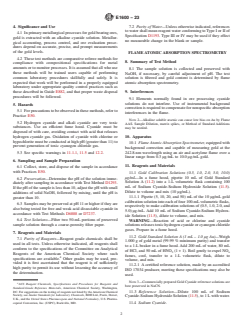
11.1 Gold Calibration Solutions (0.5, 1.0, 2.0, 5.0, 10.0)
μg/mL—In a fume hood, pipette 10 mL of Gold Standard
6.2 Preservation—Determine the pH of the solution imme-
Solution A (11.2) into a 1-L volumetric flask containing 100
diately after sampling in accordance with Test Method D1293.
mL of Sodium Cyanide-Sodium Hydroxide Solution (11.5).
If the pH of the sample is less than 10, adjust the pH with small
Dilute to volume and mix (10 μg/mL).
additions of solid NaOH, followed by mixing, until the pH is
11.1.1 Pipette (5, 10, 20, and 50) mL of the 10 μg/mL gold
greater than 10.
calibration solution into each of four 100-mL volumetric flasks,
6.3 Samples may be preserved at pH 11 or higher if they are
respectively to make calibration solutions of (0.5, 1.0, 2.0, and
also being tested for free and weak acid dissociable cyanide in
5.0) μg ⁄mL. Add 10 mL of Sodium Cyanide-Sodium Hydrox-
accordance with Test Methods D6888 or D7237.
ide Solution (11.5), dilute to volume, and mix.
6.4 Test Solutions—Filter two 50-mL portions of preserved
WARNING—Reaction of acid or chlorine and cyanide
sample solution through a coarse-porosity filter paper.
solutions releases toxic hydrogen cyanide or cyanogen chloride
gases. Prepare in a fume hood.
7. Reagents and Materials
11.2 Gold Standard Solution A (1 mL – 1.0 μg Au)—Weigh
7.1 Purity of Reagents—Reagent grade chemicals shall be
1.000 g of gold metal (99.99 % minimum purity) and transfer
used in all tests. Unless otherwise indicated, all reagents shall
to a 1-L beaker in a fume hood. Add 200 mL of water, 80 mL
conform to the specifications of the Committee on Analytical
of HCl, and 50 mL of HNO (1 + 1). Boil gently to expel NO
3 x
Reagents of the American Chemical Society where such
fumes, cool, transfer to a 1-L volumetric flask, dilute to
specifications are available. Other grades may be used, pro-
volume, and mix.
vided it is first ascertained that the reagent is of sufficiently
11.2.1 A certified reference solution, made by an accredited
high purity to permit its use without lessening the accuracy of
ISO 17034 producer, meeting these specifications may also be
the determination.
used.
NOTE 3—Commercially prepared Gold Cyanide reference solutions are
ACS Reagent Chemicals, Specifications and Procedures for Reagents and
best preserved in NaCN.
Standard-Grade Reference Materials, American Chemical Society, Washington,
DC. For suggestions on the testing of reagents not listed by the American Chemical 11.3 Reference Solution—Dilute 100 mL of Sodium
Society, see Analar Standards for Laboratory Chemicals, BDH Ltd., Poole, Dorset,
Cyanide-Sodium Hydroxide Solution (11.5), to 1 L with water.
U.K., and the United States Pharmacopeia and National Formulary, U.S. Pharma-
copeial Convention, Inc. (USPC), Rockville, MD. 11.4 Sodium Cyanide.
E1600 − 23
11.5 Sodium Cyanide–Sodium Hydroxide Solution— cient to permit estimation of ⁄50 of the difference between
Dissolve 10 g of NaOH, then 10 g of sodium cyanide in 1 L of absorbance measurements (0.1 μg/mL).
water. 12.4.3 Adequate linearity is confirmed if the slope of the
WARNING —The preparation, storage, use, and disposal of calibration curve between the 5 μg/mL and 10 μg/mL calibra-
tion solutions is at least 90 % of the slope between the
sodium cyanide solutions requires special care and attention.
Avoid any possibility of inhalation, ingestion, or skin contact reference solution and the 0.5-μg/mL calibration solution.
with the compound, its solution, or its vapors. Work only in a
well-ventilated hood. 13. Calibration
13.1 Calibrate the instrument in absorbance or gold
12. Preparation of Apparatus
concentration, in accordance with the manufacturer’s instruc-
tions.
12.1 Follow the instrument manufacturer’s instructions to
adjust the instrument for gold at 242.8 nm. Stabilize the
instrument with background correction applied in accordance 14. Procedure
with the manufacturer’s instructions. With the gold hollow
14.1 High-Precision Method:
cathode lamp in position, energized and stabilized, adjust the
14.1.1 Adjust the instrument to zero with the reference
wavelength to maximize the energy response of the 242.8-nm
solution and measure the test sample solution to determine its
wavelength. Ignite the burner, allow it to reach thermal
place in the order of increasing concentration of the calibration
equilibrium, and adjust the instrument to zero while aspirating
solutions.
water.
14.1.2 Aspirate the test solution and the closely bracketing
calibration solutions in order of increasing absorbance or
12.2 The use of an air-acetylene, lean, blue flame and
concentration without intervening water aspirations. Repeat
caustic stabilized drain bottle is required.
three times and calculate the average absorbance or concentra-
WARNING—Reaction of acid and cyanide solutions in the
tion value for each of the three solutions.
burner chamber drain bottle may release toxic hydrogen
cyanide gas. Add an excess of NaOH to the drain bottle to
14.2 Linear Curve Method:
maintain the pH above eleven.
14.2.1 Record the reference solution and calibration solu-
tion readings before and after each test sample solution,
12.3 Determine if the instrument precision is acceptable as
selecting a different calibration solution after each test solution.
follows:
14.2.2 Continue recording measurements until at least three
12.3.1 Calibrate the instrument in absorbance, in accor-
readings have been recorded for all test sample solutions and at
dance with the manufacturer’s instructions. Set the absorbance
least one reading has been recorded for each calibration
to zero while aspirating the reference solution.
solution. Calculate the average reading for each of the solu-
12.3.2 Aspirate the calibration solutions in order of increas-
tions.
ing concentration, and select a calibration solution from 0.2
absorbance units (AU) to 0.4 AU.
15. Calculation
12.3.3 Alternate readings on the selected calibration solu-
tion and reference solution, and calculate the standard devia-
15.1 High-Precision Method—The gold concentration of the
tion of the readings on the selected calibration solution using
test solution is calculated as follows:
accepted statistical methods. Measure the standard deviation in
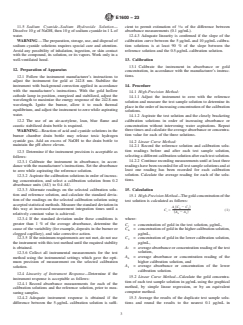
A C 2 C
~ !
t h 1
this way at increased measurement integration times until a
C 5 (1)
t
~A 2 A !
h 1
relatively constant value is achieved.
12.3.4 If the standard deviation under these conditions is where:
greater than 1 % of the average absorbance, determine the
C = concentration of gold in the test solution, μg/mL,
t
cause of the variability (for example, deposits in the burner or
C = concentration of gold in the higher calibration solution,
h
clogged capillary), and take corrective action. μg/mL,
12.3.5 If the minimum requirements are not met, do not use C = concentration of gold in the lower calibration solution,
μg/mL,
the instrument with this test method until the required stability
A = average absorbance or concentration reading of the test
is obtained.
t
solution,
12.3.6 Collect all instrumental measurements for the test
A = average absorbance or concentration reading of the
method using the instrumental settings which gave the opti- h
higher calibration solution, and
mum precision of measurement on the selected calibration
A = average absorbance or concentration of the lower
solution.
calibration solution.
12.4 Linearity of Instrument Response—Determine if the
15.2 Linear Curve Method—Calculate the gold concentra-
instrument response is acceptable as follows:
tion of each test sample solution in μg/mL using the graphical
12.4.1 Record absorbance measurements for each of the
method, by simple linear regression, or by an equivalent
calibration solutions and the reference solution, prior to mea-
computer method.
suring samples.
12.4.2 Adequate instrument response is obtained if the 15.3 Average the results of the duplicate test sample solu-
difference between the 5-μg/mL calibration solution is suffi- tions and round the results to the nearest 0.1 μg/mL in
E1600 − 23
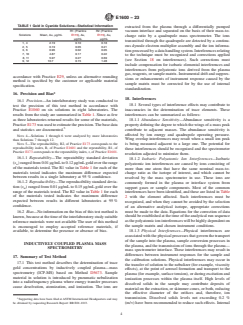
TABLE 1 Gold in Cyanide Solutions—Statistical Information
extracted from the plasma through a differentially pumped
R1 (Practice R2 (Practice vacuum interface and separated on the basis of their mass-to-
Solutions Mean, Au, μg/mL E173), Au, E173), Au,
charge ratio by a quadrupole mass spectrometer. The ions
μg/mL μg/mL
transmitted through the quadrupole are detected by a continu-
1, 4 2.19 0.10 0.18
ous dynode electron multiplier assembly and the ion informa-
2, 5 0.19 0.05 0.21
3, 6 0.96 0.02 0.05
tion processed by a data handling system. Interferences relating
7, 10 4.87 0.17 0.22
to the technique must be recognized and corrections applied
8, 11 5.97 0.27 0.69
(see Section 18 on interferences). Such corrections must
9, 12 10.7 0.15 1.28
include compensation for isobaric elemental interferences and
interferences from polyatomic ions derived from the plasma
gas, reagents, or sample matrix. Instrumental drift and suppres-
accordance with Practice E29, unless an alternative rounding
sions or enhancements of instrument response caused by the
method is specified by the customer or applicable material
sample matrix must be corrected for by the use of internal
specification.
standardization.
16. Precision and Bias
18. Interferences
16.1 Precision—An interlaboratory study was conducted to
test the precision of this test method in accordance with 18.1 Several types of interference effects may contribute to
inaccuracies in the determination of trace elements. These
Practice E1060 on six solutions in eight laboratories. The
results from the study are summarized in Table 1. Since as few interferences can be summarized as follows:
as three laboratories returned results for some of the materials, 18.1.1 Abundance Sensitivity—Abundance sensitivity is a
Practice E173 was used to estimate the precision. The base data
property defining the degree to which the wings of a mass peak
and statistics are documented. contribute to adjacent masses. The abundance sensitivity is
affected by ion energy and quadrupole operating pressure.
NOTE 4—Solutions 1 through 6 were analyzed by more laboratories
Wing overlap interferences may result when a small ion peak
than Solutions 7 through 12.
NOTE 5—The reproducibility, R2, of Practice E173 corresponds to the is being measured adjacent to a large one. The potential for
reproducibility index, R, of Practice E1601 and the repeatability, R1, of
these interferences should be recognized and the spectrometer
Practice E173 corresponds to the repeatability index, r, of Practice E1601.
resolution adjusted to minimize them.
16.1.1 Repeatability—The repeatability standard deviation
18.1.2 Isobaric Polyatomic Ion Interferences—Isobaric
(s ) ranged from 0.01 μg/mL to 0.12 μg/mL gold over the range
w polyatomic ion interferences are caused by ions consisting of
of the materials tested. The R1 value in Table 1 for each of the
more than one atom that have the same nominal mass-to-
materials tested indicates the maximum difference expected
charge ratio as the isotope of interest, and which cannot be
between results in a single laboratory at 95 % confidence.
resolved by the mass spectrometer in use. These ions are
16.1.2 Reproducibility—The reproducibility standard devia-
commonly formed in the plasma or interface system from
tion (s ) ranged from 0.01 μg/mL to 0.1
...
This document is not an ASTM standard and is intended only to provide the user of an ASTM standard an indication of what changes have been made to the previous version. Because
it may not be technically possible to adequately depict all changes accurately, ASTM recommends that users consult prior editions as appropriate. In all cases only the current version
of the standard as published by ASTM is to be considered the official document.
Designation: E1600 − 15 E1600 − 23
Standard Test Methods for
Determination of Gold in Cyanide Solutions
This standard is issued under the fixed designation E1600; the number immediately following the designation indicates the year of
original adoption or, in the case of revision, the year of last revision. A number in parentheses indicates the year of last reapproval. A
superscript epsilon (´) indicates an editorial change since the last revision or reapproval.
1. Scope
1.1 These test methods cover the determination of gold in ore processing cyanide solutions within the following ranges:
Application Range,
Method
μg/mL
Inductively Coupled Plasma Mass Spectrometry 0.001 to 0.500
Flame Atomic Absorption Spectrometry 0.300 to 10.0
NOTE 1—The lower limit for the Inductively Coupled Plasma Mass Spectrometry Method, 0.001 μg/mL, was set following the guidance of Practice
E1601. The reproducibility Index, R, was calculated using the total standard deviation for the lowest concentration Youden pair solution.
1.1.1 These test methods may also be applied to cyanide leach solutions from metallurgical evaluation procedures.
1.2 The values stated in SI units are to be regarded as standard. No other units of measurement are included in this standard.
1.3 The test methods appear in the following order:
Method Sections
Flame Atomic Absorption Spectrometry 9 – 16
Inductively Coupled Plasma Mass Spectrometry 17 – 24
1.4 This standard does not purport to address all of the safety concerns, if any, associated with its use. It is the responsibility
of the user of this standard to establish appropriate safety and healthsafety, health, and environmental practices and determine
the applicability of regulatory limitations prior to use. Specific precautions are given in 11.1, 11.1.1, 11.5, and 12.2.
1.5 This international standard was developed in accordance with internationally recognized principles on standardization
established in the Decision on Principles for the Development of International Standards, Guides and Recommendations issued
by the World Trade Organization Technical Barriers to Trade (TBT) Committee.
2. Referenced Documents
2.1 ASTM Standards:
D1193 Specification for Reagent Water
D1293 Test Methods for pH of Water
These test methods are under the jurisdiction of ASTM Committee E01 on Analytical Chemistry for Metals, Ores, and Related Materials and are the direct responsibility
of Subcommittee E01.02 on Ores, Concentrates, and Related Metallurgical Materials.
Current edition approved April 1, 2015April 15, 2023. Published May 2015April 2023. Originally approved in 1994. Last previous edition approved in 20132015 as
E1600 – 13.E1600 – 15. DOI: 10.1520/E1600-15.10.1520/E1600-23.
For referenced ASTM standards, visit the ASTM website, www.astm.org, or contact ASTM Customer Service at service@astm.org. For Annual Book of ASTM Standards
volume information, refer to the standard’s Document Summary page on the ASTM website.
Copyright © ASTM International, 100 Barr Harbor Drive, PO Box C700, West Conshohocken, PA 19428-2959. United States
E1600 − 23
D2777 Practice for Determination of Precision and Bias of Applicable Test Methods of Committee D19 on Water
D5673 Test Method for Elements in Water by Inductively Coupled Plasma—Mass Spectrometry
D6888 Test Method for Available Cyanides with Ligand Displacement and Flow Injection Analysis (FIA) Utilizing Gas
Diffusion Separation and Amperometric Detection
D7237 Test Method for Free Cyanide and Aquatic Free Cyanide with Flow Injection Analysis (FIA) Utilizing Gas Diffusion
Separation and Amperometric Detection
E29 Practice for Using Significant Digits in Test Data to Determine Conformance with Specifications
E50 Practices for Apparatus, Reagents, and Safety Considerations for Chemical Analysis of Metals, Ores, and Related Materials
E135 Terminology Relating to Analytical Chemistry for Metals, Ores, and Related Materials
E173 Practice for Conducting Interlaboratory Studies of Methods for Chemical Analysis of Metals (Withdrawn 1997)
E882 Guide for Accountability and Quality Control in the Chemical Analysis Laboratory
E1060 Practice for Interlaboratory Testing of Spectrochemical Methods of Analysis (Withdrawn 1997)
E1601 Practice for Conducting an Interlaboratory Study to Evaluate the Performance of an Analytical Method
3. Terminology
3.1 Definitions—For definitions of terms used in these test methods, refer to Terminology E135.
4. Significance and Use
4.1 In primary metallurgical processes for gold bearing ores, gold is extracted with an alkaline cyanide solution. Metallurgical
accounting, process control, and ore evaluation procedures depend on accurate, precise, and prompt measurements of the gold
concentrations.levels.
4.2 These test methods are comparative referee methods for compliance with compositional specifications for metal concentra-
tionamounts or to monitor processes. It is assumed that all who use these methods will be trained analystsusers capable of
performing common laboratory procedures skillfully and safely. It is expected that work will be performed in a properly equipped
laboratory under appropriate quality control practices such as those described in Guide E882, and that proper waste disposal
procedures will be followed.
5. Hazards
5.1 For precautions to be observed in these methods, refer to Practice E50.
5.2 Hydrogen cyanide and alkali cyanide are very toxic substances. Use an efficient fume hood. Cyanide must be disposed of with
care, avoiding contact with acid that releases hydrogen cyanide gas. Oxidation of cyanide with chlorine or hypochlorite must be
carried out conducted at high pH (greater than 11) to prevent generation of toxic cyanogen chloride gas.
5.3 See specific warnings in 11.1.1, 11.5, and 12.2.
6. Sampling and Sample Preparation
6.1 Collect, store, and dispose of the sample in accordance with Practices E50.
6.2 Preservation—Determine the pH of the solution immediately after sampling in accordance with Test Method D1293. If the pH
of the sample is less than 10, adjust the pH with small additions of solid sodium hydroxide, NaOH, followed by mixing, until the
pH is greater than 10.
6.3 Samples may be preserved toat pH 11 or higher if they are also being tested for free and weak acid dissociable cyanide in
accordance with Test Methods D6888 or D7237.
6.4 Test Solutions—Filter two 50-mL portions of preserved sample solution through a coarse-porosity filter paper.
The last approved version of this historical standard is referenced on www.astm.org.
E1600 − 23
7. Reagents and Materials
7.1 Purity of Reagents—Reagent grade chemicals shall be used in all tests. Unless otherwise indicated, it is intended that all
reagents shall conform to the specifications of the Committee on Analytical Reagents of the American Chemical Society where
such specifications are available. Other grades may be used, provided it is first ascertained that the reagent is of sufficiently high
purity to permit its use without lessening the accuracy of the determination.
7.2 Purity of Water—Unless otherwise indicated, references to water shall be understood to mean reagent water conforming to
Type I or II of Specification D1193. Type III or IV may be used if they effect no measurable change in the blank or sample.
FLAME ATOMIC ABSORPTION SPECTROMETRY
8. Summary of Test Method
8.1 The sample solution is collected and preserved with sodium hydroxide, NaOH, if necessary, by careful adjustment of pH. The
test solution is filtered and gold content is determined by flame atomic absorption spectrometry.
9. Interferences
9.1 Elements normally found in ore processing cyanide solutions do not interfere. Use of instrumental background correction is
required to compensate for nonspecific absorption interferences in the flame.
NOTE 2—Alkaline soluble arsenic can cause low bias on Au by Flame AA.AAS. Sample Dilution, matrix spikes, or Method of Standard Additions may
be needed.
10. Apparatus
10.1 Flame Atomic Absorption Spectrometer, equipped with background correction and capable of measuring gold at the 242.8-nm
wavelength using an air and acetylene flame over a linear range from 0.30.3 μg μg/mL to 10.0⁄mL to 10.0 μg μg/mL ⁄mL gold.
11. Reagents and Materials
11.1 Gold Calibration Solutions (0.5, 1.0, 2.0, 5.0, 10.0) μg/mL—In a fume hood, pipette 10 mL of Gold Standard Solution A
(11.2) into a 1-L volumetric flask containing 100 mL of Sodium Cyanide-Sodium Hydroxide Solution (11.5). Dilute to volume and
mix (10 μg/mL).
11.1.1 Pipette (5, 10, 20, and 50) mL of the 10 μg/mL gold calibration solution into each of four 100-mL volumetric flasks,
respectively. respectively to make calibration solutions of (0.5, 1.0, 2.0, and 5.0) μg ⁄mL. Add 10 mL of Sodium Cyanide-Sodium
Hydroxide Solution (11.5), dilute to volume, and mix.
WARNING—Reaction of acid or chlorine and cyanide solutions releases toxic hydrogen cyanide or cyanogen chloride gases.
Prepare in a fume hood.
11.2 Gold Standard Solution A (1 mL – 1.0 μg Au)—Weigh 1.000 g of gold metal (99.99 % minimum purity) and transfer to a 1-L
beaker in a fume hood. Add 200 mL of water, 80 mL of HCl, and 50 mL of HNO (1 + 1). Boil gently to expel NO fumes, cool,
3 x
transfer to a 1-L volumetric flask, dilute to volume, and mix.
11.2.1 A certified reference solution solution, made by an accredited ISO 17034 producer, meeting these specifications may also
be used.
NOTE 3—Commercially prepared Gold Cyanide reference solutions should beare best preserved in NaCN.
Reagent Chemical, American Chemical Society Specifications,ACS Reagent Chemicals, Specifications and Procedures for Reagents and Standard-Grade Reference
Materials, American Chemical Society, Washington, DC. For suggestions on the testing of reagents not listed by the American Chemical Society, see Analar Standards for
Laboratory Chemicals, BDH Ltd., Poole, Dorset, U.K., and the United States Pharmacopeia and National Formulary, U.S. Pharmaceutical Convention, Inc.,Pharmacopeial
Convention, Inc. (USPC), Rockville, MD.
E1600 − 23
11.3 Reference Solution—Dilute 100 mL of Sodium Cyanide-Sodium Hydroxide Solution (11.5), to 1 L with water.
11.4 Sodium Cyanide.
11.5 Sodium Cyanide–Sodium Hydroxide Solution—Dissolve 10 g of sodium hydroxide, NaOH, then 10 g of sodium cyanide in
1 L of water.
WARNING —The preparation, storage, use, and disposal of sodium cyanide solutions requirerequires special care and attention.
Avoid any possibility of inhalation, ingestion, or skin contact with the compound, its solution, or its vapors. Work only in a
well-ventilated hood.
11.6 Sodium Hydroxide.
12. Preparation of Apparatus
12.1 Follow the instrument manufacturer’s instructions to adjust the instrument for gold at 242.8 nm. Warm up Stabilize the
instrument with background correction applied in accordance with the manufacturer’s instructions. With the gold hollow cathode
lamp in position, energized and stabilized, adjust the wavelength to maximize the energy response of the 242.8-nm line.
Lightwavelength. Ignite the burner, allow it to reach thermal equilibrium, and adjust the instrument to zero while aspirating water.
12.2 The use of an air-acetylene, lean, blue flame and caustic stabilized drain bottle is required.
WARNING—Reaction of acid and cyanide solutions in the burner chamber drain bottle may release toxic hydrogen cyanide
gas. Add an excess of sodium hydroxide NaOH to the drain bottle to maintain the pH above eleven.
12.3 Determine if the instrument precision is acceptable as follows:
12.3.1 Calibrate the instrument in absorbance, in accordance with the manufacturer’s instructions in absorbance. instructions. Set
the absorbance to zero while aspirating the reference solution.
12.3.2 Aspirate the calibration solutions in order of increasing concentration, and select a calibration solution in the absorbance
range from 0.2 absorbance units (AU) to 0.4 AU.
12.3.3 Alternate readings on the selected calibration solution and reference solution, and calculate the standard deviation of the
readings on the selected calibration solution using accepted statistical methods. Measure the standard deviation in this way at
increased measurement integration times until a relatively constant value is achieved.
12.3.4 If the standard deviation under these conditions is greater than 1 % of the average absorbance, determine the cause of the
variability (for example, deposits in the burner or clogged capillary), and take corrective action.
12.3.5 If the minimum requirements are not met, do not use the instrument with this test method until the required stability is
obtained.
12.3.6 Collect all instrumental measurements for the test method using the instrumental settings which gave the optimum precision
of measurement on the selected calibration solution.
12.4 Linearity of Instrument Response—Determine if the instrument response is acceptable as follows:
12.4.1 Record absorbance measurements for each of the calibration solutions and the reference solution, prior to determining-
measuring samples.
12.4.2 Adequate instrument response is obtained if the difference between the 5-μg/mL calibration solution is sufficient to permit
estimation of ⁄50 of the difference between them absorbance measurements (0.1 μg/mL).
12.4.3 Adequate linearity is confirmed if the slope of the calibration curve between the 5 μg/mL and 10 μg/mL calibration solutions
is at least 90 % of the slope between the reference solution and the 0.5-μg/mL calibration solution.
E1600 − 23
13. Calibration
13.1 Calibrate the instrument in absorbance or gold concentration, in accordance with the manufacturer’s instructions in
absorbance or gold concentration.instructions.
14. Procedure
14.1 High-Precision Method:
14.1.1 Adjust the instrument to zero with the reference solution and measure the test sample solution to determine its place in the
order of increasing concentration of the calibration solutions.
14.1.2 Aspirate the test solution and the closely bracketing calibration solutions in order of increasing absorbance or concentration
without intervening water aspirations. Repeat three times and calculate the average absorbance or concentration value for each of
the three solutions.
14.2 Linear Curve Method:
14.2.1 Record the reference solution and calibration solution readings before and after each test sample solution, selecting a
different calibration solution after each test solution.
14.2.2 Continue recording measurements until at least three readings have been recorded for all test sample solutions and at least
one reading has been recorded for each calibration solution. Calculate the average reading for each of the solutions.
15. Calculation
15.1 High-Precision Method—The gold concentration of the test solution is calculated as follows:
A C 2 C
~ !
t h 1
C 5 (1)
t
~A 2 A !
h 1
where:
C = concentration of gold in the test solution, μg/mL,
t
C = concentration of gold in the higher calibration solution, μg/mL,
h
C = concentration of gold in the lower calibration solution, μg/mL,
A = average absorbance or concentration reading of the test solution,
t
A = average absorbance or concentration reading of the higher calibration solution, and
h
A = average absorbance or concentration of the lower calibration solution.
15.2 Linear Curve Method—Calculate the gold concentration of each test sample solution in micrograms per millilitre μg/mL
using the graphical method, by simple linear regression, or by an equivalent computer method.
15.3 Average the results of the duplicate test sample solutions and round the results to the nearest 0.1 μg/mL in accordance with
Practice E29, unless an alternative rounding method is specified by the customer or applicable material specification.
16. Precision and Bias
16.1 Precision—An interlaboratory study was undertakenconducted to test the precision of this test method in accordance with
Practice E1060 on six solutions in eight laboratories. The results from the study are summarized in Table 1. Since as few as three
laboratories returned results for some of the materials, Practice E173 was used to estimate the precision. The base data and statistics
are documented.
NOTE 4—Solutions 1 through 6 were analyzed by more laboratories than Solutions 7 through 12.
NOTE 5—The reproducibility, R2, of Practice E173 corresponds to the reproducibility index, R, of Practice E1601 and the repeatability, R1, of Practice
Supporting data have been filed at ASTM International Headquarters and may be obtained by requesting Research Report: RR:E01-1013.
E1600 − 23
TABLE 1 Gold in Cyanide Solutions—Statistical Information
R1 (Practice R2 (Practice
Solutions Mean, Au, μg/mL E173), Au, E173), Au,
μg/mL μg/mL
1, 4 2.19 0.10 0.18
2, 5 0.19 0.05 0.21
3, 6 0.96 0.02 0.05
7, 10 4.87 0.17 0.22
8, 11 5.97 0.27 0.69
9, 12 10.7 0.15 1.28
E173 corresponds to the repeatability index, r, of Practice E1601.
16.1.1 Repeatability—The repeatability standard deviation (s ) ranged from 0.01 μg/mL to 0.12 μg/mL gold over the range of the
w
materials tested. The R1 value in Table 1 for each of the materials tested indicates the maximum difference expected between
results in a single laboratory at 95 % confidence.
16.1.2 Reproducibility—The reproducibility standard deviation (s ) ranged from 0.01 μg/mL to 0.15 μg/mL gold over the range
sr
of the materials tested. The R2 value in Table 1 for each of the materials tested indicates the maximum difference expected between
results in different laboratories at 95 % confidence.
16.2 Bias—No information on the bias of this test method is known, because at the time of the interlaboratory study suitable
reference materials were not available The user of this method is encouraged to employ accepted reference materials, if available,
to determine the presence or absence of bias.
INDUCTIVELY COUPLED PLASMA MASS SPECTROMETRY
17. Summary of Test Method
17.1 This test method describes the determination of trace gold concentrations by inductively coupled plasma—mass spectrometry
(ICP-MS) based on Method D5673. Sample material in solution is introduced by pneumatic nebulization into a radiofrequency
plasma where energy transfer processes cause desolvation, atomization, and ionization. The ions are extracted from the plasma
through a differentially pumped vacuum interface and separated on the basis of their mass-to-charge ratio by a quadrupole mass
spectrometer. The ions transmitted through the quadrupole are detected by a continuous dynode electron multiplier assembly and
the ion information processed by a data handling system. Interferences relating to the technique must be recognized and corrected
forcorrections applied (see Section 18 on interferences). Such corrections must include compensation for isobaric elemental
interferences and interferences from polyatomic ions derived from the plasma gas, reagents, or sample matrix. Instrumental drift
as well as and suppressions or enhancements of instrument response caused by the sample matrix must be corrected for by the use
of internal standardization.
18. Interferences
18.1 Several types of interference effects may contribute t
...