

ASTM D5882-16
(Test Method)Standard Test Method for Low Strain Impact Integrity Testing of Deep Foundations
General Information
- Abstract
SIGNIFICANCE AND USE
4.1 Low strain impact integrity testing provides acceleration or velocity and force (optional) data on slender structural elements (that is, structural columns, driven concrete piles, cast in place concrete piles, concrete filled steel pipe piles, timber piles, etc.). The method works best on solid concrete sections, and has limited application to unfilled steel pipe piles, H piles, or steel sheet piles. These data assist evaluation of the pile cross-sectional area and length, the pile integrity and continuity, as well as consistency of the pile material, although evaluation is approximate. This test method will not provide information regarding the pile bearing capacity. It is generally helpful to consider the soil profile, construction method and site records when evaluating data obtained by this method. Other useful information to consider and compare with results of this test includes low strain integrity test results of similar piles at the same site, concrete cylinder or core strength test results, automated monitoring data on equipment placing the concrete when augered piles are used, or information obtained from crosshole sonic logging (Test Method D6760) or thermal integrity profiling (Test Methods D7949) if available.
4.1.1 Methods of Testing:
4.1.1.1 Pulse Echo Method (PEM)—The pile head motion is measured as a function of time. The time domain record is then evaluated for pile integrity.
4.1.1.2 Transient Response Method (TRM)—The pile head motion and force (measured with an instrumented hammer) are measured as a function of time. The data are evaluated usually in the frequency domain.
SCOPE
1.1 This test method covers the procedure for determining the integrity of individual vertical or inclined piles by measuring and analyzing the velocity (required) and force (optional) response of the pile induced by an (hand held hammer or other similar type) impact device usually applied axially and perpendicularly to the pile head surface. This test method is applicable to long structural elements that function in a manner similar to any deep foundation units (such as driven piles, augeured piles, or drilled shafts), regardless of their method of installation provided that they are receptive to low strain impact testing.
1.2 This standard provides minimum requirements for low strain impact testing of piles. Plans, specifications, and/or provisions prepared by a qualified engineer, and approved by the agency requiring the test(s), may provide additional requirements and procedures as needed to satisfy the objectives of a particular test program.
1.3 The text of this standard references notes and footnotes which provide explanatory material. These notes and footnotes (excluding those in tables and figures) shall not be considered as requirements of the standard.
1.4 The values stated in SI units are to be regarded as standard. No other units of measurement are included in this standard.
1.5 All observed and calculated values shall conform to the guidelines for significant digits and rounding established in Practice D6026.
1.6 The method used to specify how data are collected, calculated, or recorded in this standard is not directly related to the accuracy to which the data can be applied in design or other uses, or both. How one applies the results obtained using this standard is beyond its scope.
1.7 This standard may involve hazardous materials, operations, and equipment. This standard does not purport to address all of the safety concerns, if any, associated with its use. It is the responsibility of the user of this standard to establish appropriate safety and health practices and determine the applicability of regulatory limitations prior to use.
Note 1: he quality of the result produced by this test method is dependent on the competence of the personnel performing it, and the suitability of the equipment and facilities used. Agencies that meet the criteria of...
- Status
- Published
- Publication Date
- 30-Jun-2016
- Technical Committee
- D18 - Soil and Rock
- Drafting Committee
- D18.11 - Deep Foundations
Buy Documents
ASTM D5882-16 - Standard Test Method for Low Strain Impact Integrity Testing of Deep Foundations
REDLINE ASTM D5882-16 - Standard Test Method for Low Strain Impact Integrity Testing of Deep Foundations
Overview
ASTM D5882-16 specifies the Standard Test Method for Low Strain Impact Integrity Testing of Deep Foundations. Developed by ASTM International, this standard outlines procedures to assess the structural integrity and continuity of deep foundation elements-such as driven concrete piles, cast-in-place concrete piles, drilled shafts, and similar units-using low strain impact testing methods. The standard is especially relevant in geotechnical engineering, quality assurance, and construction monitoring, offering a non-destructive technique for identifying potential defects, inconsistencies, or discontinuities in structural piles.
Low strain integrity testing involves applying a controlled impact-usually with a hand-held hammer-to the exposed head of a deep foundation element. The resulting acceleration or velocity, and optionally force, of the pile head is measured and analyzed to assess the pile's physical dimensions and material consistency.
Key Topics
- Low Strain Impact Testing: The test measures velocity (required) and force (optional) responses of piles after an axial impact at the pile head.
- Applicability: Best suited for solid concrete sections, including concrete piles, concrete-filled steel pipe piles, and timber piles. The method is less effective for unfilled steel pipe piles, H-piles, or steel sheet piles.
- Testing Methods:
- Pulse Echo Method (PEM): Evaluates pile head motion over time to infer pile integrity.
- Transient Response Method (TRM): Measures both pile head motion and force, typically analyzed in the frequency domain.
- Data Interpretation: The test assists in qualitative evaluation of pile length, cross-sectional area, material uniformity, and detection of significant anomalies or defects. It does not provide information on pile bearing capacity.
- Test Procedure: Includes site preparation, attachment of sensors (accelerometers or velocity transducers), application of controlled impacts, recording and analysis of velocity (and optional force) signals, and data quality checks.
Applications
ASTM D5882-16 is widely used in the following practical scenarios:
- Construction and Quality Assurance: Low strain integrity testing is utilized during and after deep foundation installation to verify the consistency and continuity of piles, increasing confidence in structural performance.
- Engineering Assessments: Results from the test are considered, along with soil profile, installation records, and supplementary data (such as crosshole sonic logging or thermal integrity profiling), to make informed decisions about pile acceptance.
- Damage and Defect Investigation: The method is effective in identifying major defects, cracks, or sections with reduced cross-sectional area within the effective length of a pile.
- Project Documentation: The standard provides requirements for reporting essential information, including pile identification, construction details, sensor placement, test data, and analysis method, ensuring consistent and traceable results.
Related Standards
When implementing ASTM D5882-16, it is often beneficial to refer to other related ASTM standards to complement the integrity evaluation process. Notable related standards include:
- ASTM D6760: Standard Test Method for Integrity Testing of Concrete Deep Foundations by Ultrasonic Crosshole Testing
- ASTM D7949: Test Methods for Thermal Integrity Profiling of Concrete Deep Foundations
- ASTM D653: Terminology Relating to Soil, Rock, and Contained Fluids
- ASTM D3740: Practice for Minimum Requirements for Agencies Engaged in Testing and/or Inspection of Soil and Rock
- ASTM D6026: Practice for Using Significant Digits in Geotechnical Data
By adhering to ASTM D5882-16, professionals in geotechnical engineering, construction, and structural assessment can employ a standardized, reliable approach for evaluating the integrity of deep foundation systems using non-destructive, low strain impact testing techniques. This enhances the safety, quality, and compliance of foundation projects.
Relations
- Effective Date
- 01-Nov-2023
- Effective Date
- 01-Oct-2019
- Effective Date
- 01-Dec-2016
- Effective Date
- 01-Aug-2014
- Effective Date
- 01-May-2012
- Effective Date
- 01-Mar-2012
- Effective Date
- 01-Sep-2011
- Effective Date
- 01-Sep-2011
- Effective Date
- 01-Mar-2010
- Effective Date
- 01-Jan-2009
- Effective Date
- 01-Dec-2008
- Effective Date
- 01-Nov-2008
- Effective Date
- 01-Mar-2008
- Effective Date
- 01-Jan-2008
- Effective Date
- 15-Dec-2007
Buy Documents
ASTM D5882-16 - Standard Test Method for Low Strain Impact Integrity Testing of Deep Foundations
REDLINE ASTM D5882-16 - Standard Test Method for Low Strain Impact Integrity Testing of Deep Foundations
Get Certified
Connect with accredited certification bodies for this standard

IMP NDT d.o.o.
Non-destructive testing services. Radiography, ultrasonic, magnetic particle, penetrant, visual inspection.
Inštitut za kovinske materiale in tehnologije
Institute of Metals and Technology. Materials testing, metallurgical analysis, NDT.
Q Techna d.o.o.
NDT and quality assurance specialist. 30+ years experience. NDT personnel certification per ISO 9712, nuclear and thermal power plant inspections, QA/
Sponsored listings
Frequently Asked Questions
ASTM D5882-16 is a standard published by ASTM International. Its full title is "Standard Test Method for Low Strain Impact Integrity Testing of Deep Foundations". This standard covers: SIGNIFICANCE AND USE 4.1 Low strain impact integrity testing provides acceleration or velocity and force (optional) data on slender structural elements (that is, structural columns, driven concrete piles, cast in place concrete piles, concrete filled steel pipe piles, timber piles, etc.). The method works best on solid concrete sections, and has limited application to unfilled steel pipe piles, H piles, or steel sheet piles. These data assist evaluation of the pile cross-sectional area and length, the pile integrity and continuity, as well as consistency of the pile material, although evaluation is approximate. This test method will not provide information regarding the pile bearing capacity. It is generally helpful to consider the soil profile, construction method and site records when evaluating data obtained by this method. Other useful information to consider and compare with results of this test includes low strain integrity test results of similar piles at the same site, concrete cylinder or core strength test results, automated monitoring data on equipment placing the concrete when augered piles are used, or information obtained from crosshole sonic logging (Test Method D6760) or thermal integrity profiling (Test Methods D7949) if available. 4.1.1 Methods of Testing: 4.1.1.1 Pulse Echo Method (PEM)—The pile head motion is measured as a function of time. The time domain record is then evaluated for pile integrity. 4.1.1.2 Transient Response Method (TRM)—The pile head motion and force (measured with an instrumented hammer) are measured as a function of time. The data are evaluated usually in the frequency domain. SCOPE 1.1 This test method covers the procedure for determining the integrity of individual vertical or inclined piles by measuring and analyzing the velocity (required) and force (optional) response of the pile induced by an (hand held hammer or other similar type) impact device usually applied axially and perpendicularly to the pile head surface. This test method is applicable to long structural elements that function in a manner similar to any deep foundation units (such as driven piles, augeured piles, or drilled shafts), regardless of their method of installation provided that they are receptive to low strain impact testing. 1.2 This standard provides minimum requirements for low strain impact testing of piles. Plans, specifications, and/or provisions prepared by a qualified engineer, and approved by the agency requiring the test(s), may provide additional requirements and procedures as needed to satisfy the objectives of a particular test program. 1.3 The text of this standard references notes and footnotes which provide explanatory material. These notes and footnotes (excluding those in tables and figures) shall not be considered as requirements of the standard. 1.4 The values stated in SI units are to be regarded as standard. No other units of measurement are included in this standard. 1.5 All observed and calculated values shall conform to the guidelines for significant digits and rounding established in Practice D6026. 1.6 The method used to specify how data are collected, calculated, or recorded in this standard is not directly related to the accuracy to which the data can be applied in design or other uses, or both. How one applies the results obtained using this standard is beyond its scope. 1.7 This standard may involve hazardous materials, operations, and equipment. This standard does not purport to address all of the safety concerns, if any, associated with its use. It is the responsibility of the user of this standard to establish appropriate safety and health practices and determine the applicability of regulatory limitations prior to use. Note 1: he quality of the result produced by this test method is dependent on the competence of the personnel performing it, and the suitability of the equipment and facilities used. Agencies that meet the criteria of...
SIGNIFICANCE AND USE 4.1 Low strain impact integrity testing provides acceleration or velocity and force (optional) data on slender structural elements (that is, structural columns, driven concrete piles, cast in place concrete piles, concrete filled steel pipe piles, timber piles, etc.). The method works best on solid concrete sections, and has limited application to unfilled steel pipe piles, H piles, or steel sheet piles. These data assist evaluation of the pile cross-sectional area and length, the pile integrity and continuity, as well as consistency of the pile material, although evaluation is approximate. This test method will not provide information regarding the pile bearing capacity. It is generally helpful to consider the soil profile, construction method and site records when evaluating data obtained by this method. Other useful information to consider and compare with results of this test includes low strain integrity test results of similar piles at the same site, concrete cylinder or core strength test results, automated monitoring data on equipment placing the concrete when augered piles are used, or information obtained from crosshole sonic logging (Test Method D6760) or thermal integrity profiling (Test Methods D7949) if available. 4.1.1 Methods of Testing: 4.1.1.1 Pulse Echo Method (PEM)—The pile head motion is measured as a function of time. The time domain record is then evaluated for pile integrity. 4.1.1.2 Transient Response Method (TRM)—The pile head motion and force (measured with an instrumented hammer) are measured as a function of time. The data are evaluated usually in the frequency domain. SCOPE 1.1 This test method covers the procedure for determining the integrity of individual vertical or inclined piles by measuring and analyzing the velocity (required) and force (optional) response of the pile induced by an (hand held hammer or other similar type) impact device usually applied axially and perpendicularly to the pile head surface. This test method is applicable to long structural elements that function in a manner similar to any deep foundation units (such as driven piles, augeured piles, or drilled shafts), regardless of their method of installation provided that they are receptive to low strain impact testing. 1.2 This standard provides minimum requirements for low strain impact testing of piles. Plans, specifications, and/or provisions prepared by a qualified engineer, and approved by the agency requiring the test(s), may provide additional requirements and procedures as needed to satisfy the objectives of a particular test program. 1.3 The text of this standard references notes and footnotes which provide explanatory material. These notes and footnotes (excluding those in tables and figures) shall not be considered as requirements of the standard. 1.4 The values stated in SI units are to be regarded as standard. No other units of measurement are included in this standard. 1.5 All observed and calculated values shall conform to the guidelines for significant digits and rounding established in Practice D6026. 1.6 The method used to specify how data are collected, calculated, or recorded in this standard is not directly related to the accuracy to which the data can be applied in design or other uses, or both. How one applies the results obtained using this standard is beyond its scope. 1.7 This standard may involve hazardous materials, operations, and equipment. This standard does not purport to address all of the safety concerns, if any, associated with its use. It is the responsibility of the user of this standard to establish appropriate safety and health practices and determine the applicability of regulatory limitations prior to use. Note 1: he quality of the result produced by this test method is dependent on the competence of the personnel performing it, and the suitability of the equipment and facilities used. Agencies that meet the criteria of...
ASTM D5882-16 is classified under the following ICS (International Classification for Standards) categories: 19.060 - Mechanical testing. The ICS classification helps identify the subject area and facilitates finding related standards.
ASTM D5882-16 has the following relationships with other standards: It is inter standard links to ASTM D3740-23, ASTM D3740-19, ASTM D6760-16, ASTM D653-14, ASTM D3740-12a, ASTM D3740-12, ASTM D653-11, ASTM D3740-11, ASTM D3740-10, ASTM D653-09, ASTM D653-08a, ASTM D653-08, ASTM D3740-08, ASTM D6760-08, ASTM D653-07f. Understanding these relationships helps ensure you are using the most current and applicable version of the standard.
ASTM D5882-16 is available in PDF format for immediate download after purchase. The document can be added to your cart and obtained through the secure checkout process. Digital delivery ensures instant access to the complete standard document.
Standards Content (Sample)
This international standard was developed in accordance with internationally recognized principles on standardization established in the Decision on Principles for the
Development of International Standards, Guides and Recommendations issued by the World Trade Organization Technical Barriers to Trade (TBT) Committee.
Designation: D5882 − 16
Standard Test Method for
Low Strain Impact Integrity Testing of Deep Foundations
This standard is issued under the fixed designation D5882; the number immediately following the designation indicates the year of
original adoption or, in the case of revision, the year of last revision.Anumber in parentheses indicates the year of last reapproval.A
superscript epsilon (´) indicates an editorial change since the last revision or reapproval.
1. Scope* establish appropriate safety and health practices and deter-
mine the applicability of regulatory limitations prior to use.
1.1 This test method covers the procedure for determining
the integrity of individual vertical or inclined piles by measur-
NOTE 1—he quality of the result produced by this test method is
dependent on the competence of the personnel performing it, and the
ing and analyzing the velocity (required) and force (optional)
suitability of the equipment and facilities used. Agencies that meet the
responseofthepileinducedbyan(handheldhammerorother
criteria of Practice D3740 are generally considered capable of competent
similartype)impactdeviceusuallyappliedaxiallyandperpen-
and objective testing/sampling/ inspection/etc. Users of this test method
dicularlytothepileheadsurface.Thistestmethodisapplicable
are cautioned that compliance with Practice D3740 does not in itself
to long structural elements that function in a manner similar to
assure reliable results. Reliable results depend on many factors; Practice
D3740 provides a means of evaluating some of those factors.
anydeepfoundationunits(suchasdrivenpiles,augeuredpiles,
or drilled shafts), regardless of their method of installation
2. Referenced Documents
provided that they are receptive to low strain impact testing.
2.1 ASTM Standards:
1.2 This standard provides minimum requirements for low
D653Terminology Relating to Soil, Rock, and Contained
strain impact testing of piles. Plans, specifications, and/or
Fluids
provisions prepared by a qualified engineer, and approved by
D3740Practice for Minimum Requirements for Agencies
the agency requiring the test(s), may provide additional re-
Engaged in Testing and/or Inspection of Soil and Rock as
quirements and procedures as needed to satisfy the objectives
Used in Engineering Design and Construction
of a particular test program.
D6026Practice for Using Significant Digits in Geotechnical
1.3 The text of this standard references notes and footnotes
Data
whichprovideexplanatorymaterial.Thesenotesandfootnotes
D6760Test Method for Integrity Testing of Concrete Deep
(excluding those in tables and figures) shall not be considered
Foundations by Ultrasonic Crosshole Testing
as requirements of the standard.
D7949Test Methods for Thermal Integrity Profiling of
1.4 The values stated in SI units are to be regarded as
Concrete Deep Foundations
standard. No other units of measurement are included in this
standard.
3. Terminology
1.5 All observed and calculated values shall conform to the
3.1 Definitions—Except as defined in 3.2, the terminology
guidelines for significant digits and rounding established in
used in this test method conforms with Terminology D653.
Practice D6026.
3.2 Definitions of Terms Specific to This Standard:
1.6 The method used to specify how data are collected,
3.2.1 pile integrity, n—the qualitative evaluation of the
calculated,orrecordedinthisstandardisnotdirectlyrelatedto
physical dimensions, continuity of a pile, and consistency of
theaccuracytowhichthedatacanbeappliedindesignorother
the pile material.
uses, or both. How one applies the results obtained using this
3.2.2 pile impedance, n—the dynamic Young’s modulus of
standard is beyond its scope.
the pile material multiplied by the applicable cross sectional
1.7 This standard may involve hazardous materials,
area of the pile and divided by the strain wave speed.
operations, and equipment. This standard does not purport to
3.2.3 pulse echo method, n—test in which measurements of
address all of the safety concerns, if any, associated with its
the pile head velocity and force (force measurement optional)
use. It is the responsibility of the user of this standard to
are evaluated as a function of time.
ThistestmethodisunderthejurisdictionofASTMCommitteeD18onSoiland
RockandisthedirectresponsibilityofSubcommitteeD18.11onDeepFoundations. For referenced ASTM standards, visit the ASTM website, www.astm.org, or
CurrenteditionapprovedJuly1,2016.PublishedJuly2016.Originallyapproved contact ASTM Customer Service at service@astm.org. For Annual Book of ASTM
in 1995. Last previous edition approved in 2013 as D5882 – 07(2013). DOI: Standards volume information, refer to the standard’s Document Summary page on
10.1520/D5882-16. the ASTM website.
*A Summary of Changes section appears at the end of this standard
Copyright © ASTM International, 100 Barr Harbor Drive, PO Box C700, West Conshohocken, PA 19428-2959. United States
D5882 − 16
3.2.4 transient response method, n—test in which the ratio equivalent in performance to the specified accelerometers.
of velocity transform to force transform (force measurement Calibrate the transducer to an accuracy of 5% throughout the
required) are evaluated as a function of frequency. applicable measurement range. If damage is suspected during
use, recalibrate or replace the accelerometer.
4. Significance and Use
5.2.2 Force Measurement (optional)—The impact device
shallbecapableofmeasuringtheimpactforceasafunctionof
4.1 Lowstrainimpactintegritytestingprovidesacceleration
time. The hammer may have a force load cell between the tip
or velocity and force (optional) data on slender structural
and hammer body. Alternatively, the hammer may have an
elements(thatis,structuralcolumns,drivenconcretepiles,cast
accelerometer attached and the measured acceleration may be
in place concrete piles, concrete filled steel pipe piles, timber
converted to force using the hammer mass. The force calibra-
piles, etc.). The method works best on solid concrete sections,
tion shall be within 5%. The hammer must be tuned such that
and has limited application to unfilled steel pipe piles, H piles,
the fourrier transform of the measured force shall have a
or steel sheet piles. These data assist evaluation of the pile
smooth spectrum, without any local peaks.
cross-sectional area and length, the pile integrity and
5.2.3 Placement of Transducers—Themotionsensorshould
continuity,aswellasconsistencyofthepilematerial,although
beplacedatornearthepileheadusingasuitable,ortemporary,
evaluation is approximate. This test method will not provide
thinlayerofbondingmaterial(thatis,wax,vaseline,puttyetc.)
information regarding the pile bearing capacity. It is generally
so that it is assured that it correctly measures the axial pile
helpful to consider the soil profile, construction method and
motion (transducer axis of sensitivity aligned with the pile
site records when evaluating data obtained by this method.
axis). The motion sensor is placed generally near the center of
Other useful information to consider and compare with results
the pile. Additional locations should be considered for piles
of this test includes low strain integrity test results of similar
with diameters greater than 500 mm. The low strain impact
piles at the same site, concrete cylinder or core strength test
shouldbeappliedtothepileheadwithinadistanceof300mm
results, automated monitoring data on equipment placing the
from the motion sensor. If the pile head is not accessible, as
concrete when augered piles are used, or information obtained
when already integral with the structure, the sensor(s) may be
from crosshole sonic logging (Test Method D6760) or thermal
attached to the side of the pile shaft.
integrity profiling (Test Methods D7949) if available.
4.1.1 Methods of Testing:
5.3 Signal Transmission—Thesignalsfromthesensorsshall
4.1.1.1 Pulse Echo Method (PEM)—Thepileheadmotionis
be conveyed to the apparatus for recording, reducing, and
measuredasafunctionoftime.Thetimedomainrecordisthen
displaying the data, see 5.4, by a low noise shielded cable or
evaluated for pile integrity.
equivalent.
4.1.1.2 Transient Response Method (TRM)—The pile head
5.4 Apparatus for Recording, Reducing and Displaying
motionandforce(measuredwithaninstrumentedhammer)are
Data:
measured as a function of time.The data are evaluated usually
5.4.1 General—The signals from the motion and force
in the frequency domain.
(optional) sensors, see 5.2, shall be conveyed to an apparatus
for recording, reducing, and displaying data as a function of
5. Apparatus
time. The apparatus shall include a graphic display of velocity
5.1 Apparatus for Applying Impact:
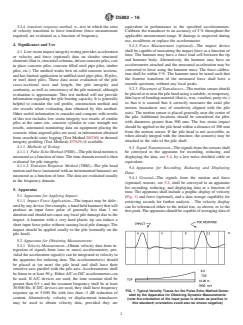
(Fig. 1) and force (optional), and a data storage capability for
5.1.1 Impact Force Application—The impact may be deliv-
retrieving records for further analysis. . The velocity display
eredbyanydevice(forexample,ahandheldhammer)thatwill
can be referenced either to the initial rise, as shown, or to the
produce an input force pulse of generally less than 1 ms
firstpeak.Theapparatusshouldbecapableofaveragingdataof
durationandshouldnotcauseanylocalpiledamageduetothe
impact. A hammer with a very hard plastic tip can induce a
short input force pulse without causing local pile damage. The
impact should be applied axially to the pile (normally on the
pile head).
5.2 Apparatus for Obtaining Measurements:
5.2.1 Velocity Measurement—Obtain velocity data from in-
tegration of signals from (one or more) accelerometers, pro-
vided the acceleration signal(s) can be integrated to velocity in
the apparatus for reducing data. The accelerometer(s) should
be placed at (or near) the pile head and shall have their
sensitive axis parallel with the pile axis. Accelerometers shall
belineartoatleast50 g.EitherA/CorD/Caccelerometerscan
be used. If A/C devices are used, the time constant shall be
greater than 0.5 s and the resonant frequency shall be at least
30000 Hz. If D/C devices are used, they shall have frequency
FIG. 1 Typical Velocity Traces for the Pulse Echo Method Gener-
response up to 5000 Hz with less than−3 dB reduction of
ated by the Apparatus for Obtaining Dynamic Measurements
content. Alternatively, velocity or displacement transducers
(note the orientation of the input pulse is shown as positive in
may be used to obtain velocity data, provided they are this standard; orientation could also be shown negative)
D5882 − 16
several blows to reinforce the repetitive information from soil 5.4.3.1 Velocity Data—If accelerometers are used (see
and pile effects while reducing random noise effects. The 5.2.2), the apparatus shall provide signal conditioning and
apparatus shall be able to apply increasing intensity amplifi- integrate acceleration to obtain velocity. The apparatus shall
cation of the motion signal with time after the impact to balance the velocity signal to zero between impact events.
enhance the interpretation of the measured motions that are
5.4.3.2 Force Measurements—The apparatus shall provide
reducedbysoilandpilematerialdamping.Theapparatusmust signal conditioning and amplification, for the force measure-
have filtering capability with variable frequency limits for
ments. The force output shall be balanced to zero between
eliminating high frequency, or low frequency signal impact events.
components, or both. The apparatus shall be capable of
5.4.3.3 Signal Conditioning—The force and velocity data
transferring all data to a permanent storage medium. The
shall have equal frequency response curves to avoid relative
apparatus shall allow for a permanent graphical output of the
phase shifts and amplitude differences.
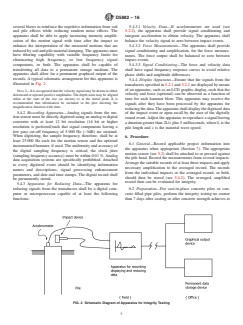
records. A typical schematic arrangement for this apparatus is
5.4.4 Display Apparatus—Ensure that the signals from the
illustrated in Fig. 2.
transducersspecifiedin5.2.1and5.2.2aredisplayedbymeans
of an apparatus, such as an LCD graphic display, such that the
NOTE2—Itisrecognizedthatthevelocitysignalmaybedrawnineither
velocity and force (optional) can be observed as a function of
downwardorupwardpositiveamplitudes.Thedepthscalemaybealigned
either at the start of the rise (as shown) or at the initial peak. It is
time for each hammer blow. This apparatus may receive the
recommended that information be included in the plot showing the
signals after they have been processed by the apparatus for
magnification function with time.
reducingthedata.Theapparatusshalldisplaythedigitizeddata
5.4.2 Recording Apparatus—Analog signals from the mo-
of the impact event or upon recall by the user of the digitally
tionsensormustbedirectlydigitizedusingananalogtodigital
storedevent.Adjusttheapparatustoreproduceasignalhaving
converter with at least 12 bit resolution (16 bit or higher
adurationgreaterthan2L/cplus5milliseconds,whereListhe
resolution is preferred)such that signal components having a
pile length and c is the material wave speed.
low pass cut-off frequency of 5000 Hz (−3dB) are retained.
When digitizing, the sample frequency, therefore, shall be at
6. Procedure
least 25000 Hz each for the motion sensor and the optional
6.1 General—Record applicable project information into
instrumented hammer, if used.The uniformity and accuracy of
the apparatus when appropriate (Section 7). The appropriate
the digital sampling frequency is critical; the clock jitter
motion sensor (see 5.2) shall be attached to or pressed against
(sampling frequency accuracy) must be within 0.01%.Analog
the pile head. Record the measurements from several impacts.
data acquisition systems are specifically prohibited. Attached
Averagethesuitablerecordsofatleastthreeimpactsandapply
to every digitized event should be identifying information
necessary amplification to the averaged record. The records
names and descriptions, signal processing enhancement
from the individual impacts or the averaged record, or both,
parameters, and date and time stamps. The digital record shall
should then be stored (see 5.4.2). The averaged, amplified
be permanently stored.
record then can be evaluated for integrity.
5.4.3 Apparatus for Reducing Data—The apparatus for
reducing signals from the transducers shall be a digital com- 6.2 Preparation—For cast-in-place concrete piles or con-
puter or microprocessor capable of at least the following crete filled pipe
...
This document is not an ASTM standard and is intended only to provide the user of an ASTM standard an indication of what changes have been made to the previous version. Because
it may not be technically possible to adequately depict all changes accurately, ASTM recommends that users consult prior editions as appropriate. In all cases only the current version
of the standard as published by ASTM is to be considered the official document.
Designation: D5882 − 07 (Reapproved 2013) D5882 − 16
Standard Test Method for
Low Strain Impact Integrity Testing of Deep Foundations
This standard is issued under the fixed designation D5882; the number immediately following the designation indicates the year of
original adoption or, in the case of revision, the year of last revision. A number in parentheses indicates the year of last reapproval. A
superscript epsilon (´) indicates an editorial change since the last revision or reapproval.
1. Scope Scope*
1.1 This test method covers the procedure for determining the integrity of individual vertical or inclined piles by measuring and
analyzing the velocity (required) and force (optional) response of the pile induced by an (hand held hammer or other similar type)
impact device usually applied axially and perpendicularly to the pile head surface. This test method is applicable to long structural
elements that function in a manner similar to any deep foundation units (such as driven piles, augeured piles, or drilled shafts),
regardless of their method of installation provided that they are receptive to low strain impact testing.
1.2 This standard provides minimum requirements for low strain impact testing of piles. Plans, specifications, and/or provisions
prepared by a qualified engineer, and approved by the agency requiring the test(s), may provide additional requirements and
procedures as needed to satisfy the objectives of a particular test program.
1.3 The text of this standard references notes and footnotes which provide explanatory material. These notes and footnotes
(excluding those in tables and figures) shall not be considered as requirements of the standard.
1.4 The values stated in SI units are to be regarded as standard. No other units of measurement are included in this standard.
1.5 All observed and calculated values shall conform to the guidelines for significant digits and rounding established in Practice
D6026.
1.6 The method used to specify how data are collected, calculated, or recorded in this standard is not directly related to the
accuracy to which the data can be applied in design or other uses, or both. How one applies the results obtained using this standard
is beyond its scope.
1.7 This standard may involve hazardous materials, operations, and equipment. This standard does not purport to address all
of the safety concerns, if any, associated with its use. It is the responsibility of the user of this standard to establish appropriate
safety and health practices and determine the applicability of regulatory limitations prior to use.
NOTE 1—he quality of the result produced by this test method is dependent on the competence of the personnel performing it, and the suitability of
the equipment and facilities used. Agencies that meet the criteria of Practice D3740 are generally considered capable of competent and objective
testing/sampling/ inspection/etc. Users of this test method are cautioned that compliance with Practice D3740 does not in itself assure reliable results.
Reliable results depend on many factors; Practice D3740 provides a means of evaluating some of those factors.
2. Referenced Documents
2.1 ASTM Standards:
D653 Terminology Relating to Soil, Rock, and Contained Fluids
D3740 Practice for Minimum Requirements for Agencies Engaged in Testing and/or Inspection of Soil and Rock as Used in
Engineering Design and Construction
D6026 Practice for Using Significant Digits in Geotechnical Data
D6760 Test Method for Integrity Testing of Concrete Deep Foundations by Ultrasonic Crosshole Testing
D7949 Test Methods for Thermal Integrity Profiling of Concrete Deep Foundations
3. Terminology
3.1 Definitions—Except as defined in 3.2, the terminology used in this test method conforms with Terminology D653.
3.2 Definitions of Terms Specific to This Standard:
This test method is under the jurisdiction of ASTM Committee D18 on Soil and Rock and is the direct responsibility of Subcommittee D18.11 on Deep Foundations.
Current edition approved Nov. 1, 2013July 1, 2016. Published January 2014July 2016. Originally approved in 1995. Last previous edition approved in 20002013 as D5882
– 07.07(2013). DOI: 10.1520/D5882-07R13.10.1520/D5882-16.
For referenced ASTM standards, visit the ASTM website, www.astm.org, or contact ASTM Customer Service at service@astm.org. For Annual Book of ASTM Standards
volume information, refer to the standard’s Document Summary page on the ASTM website.
*A Summary of Changes section appears at the end of this standard
Copyright © ASTM International, 100 Barr Harbor Drive, PO Box C700, West Conshohocken, PA 19428-2959. United States
D5882 − 16
3.2.1 pile integrity, n—the qualitative evaluation of the physical dimensions, continuity of a pile, and consistency of the pile
material.
3.2.2 pile impedance, n—the dynamic Young’s modulus of the pile material multiplied by the applicable cross sectional area
of the pile and divided by the strain wave speed.
3.2.3 pulse echo method, n—test in which measurements of the pile head velocity and force (force measurement optional) are
evaluated as a function of time.
3.2.4 transient response method, n—test in which the ratio of velocity transform to force transform (force measurement
required) are evaluated as a function of frequency.
4. Significance and Use
4.1 Low strain impact integrity testing provides acceleration or velocity and force (optional) data on slender structural elements
(that is, structural columns, driven concrete piles, cast in place concrete piles, concrete filled steel pipe piles, timber piles, etc.).
The method works best on solid concrete sections, and has limited application to unfilled steel pipe piles, H piles, or steel sheet
piles. These data assist evaluation of pile integrity and pile physical dimensions (that is, cross-sectional area, length), continuity,
andthe pile cross-sectional area and length, the pile integrity and continuity, as well as consistency of the pile material, although
evaluation is approximate and not exact. approximate. This test method will not giveprovide information regarding the pile bearing
capacity. It is generally helpful to consider the soil profile, construction method and site records when evaluating data obtained by
this method. Other useful information to consider and compare with results of this test includes low strain integrity test results of
similar piles at the same site, concrete cylinder or core strength test results, automated monitoring data on equipment placing the
concrete when augered piles are used, or information obtained from crosshole sonic logging (Test Method D6760) or thermal
integrity profiling (Test Methods D7949) if available.
4.1.1 Methods of Testing:
4.1.1.1 Pulse Echo Method (PEM)—The pile head motion is measured as a function of time. The time domain record is then
evaluated for pile integrity.
4.1.1.2 Transient Response Method (TRM)—The pile head motion and force (measured with an instrumented hammer) are
measured as a function of time. The data are evaluated usually in the frequency domain.
5. Apparatus
5.1 Apparatus for Applying Impact:
5.1.1 Impact Force Application—The impact may be delivered by any device (for example, a hand held hammer) that will
produce an input force pulse of generally less than 1 ms duration and should not cause any local pile damage due to the impact.
A hammer with a very hard plastic tip can induce a short input force pulse without causing local pile damage. The impact should
be applied axially to the pile (normally on the pile head).
5.2 Apparatus for Obtaining Measurements:
5.2.1 Velocity Measurement—Obtain velocity data from integration of signals from (one or more) accelerometers, provided the
acceleration signal(s) can be integrated to velocity in the apparatus for reducing data. The accelerometer(s) should be placed at (or
near) the pile head and shall have their sensitive axis parallel with the pile axis. Accelerometers shall be linear to at least 50 g.
Either A/C or D/C accelerometers can be used. If A/C devices are used, the time constant shall be greater than 0.5 s and the resonant
frequency shall be at least 30 000 Hz. If D/C devices are used, they shall have frequency response up to 5 000 Hz with less than −3
dB reduction of content. Alternatively, velocity or displacement transducers may be used to obtain velocity data, provided they are
equivalent in performance to the specified accelerometers. Calibrate the transducer to an accuracy of 5 % throughout the applicable
measurement range. If damage is suspected during use, recalibrate or replace the accelerometer.
5.2.2 Force Measurement (optional)—The impact device shall be capable of measuring the impact force as a function of time.
The hammer may have a force load cell between the tip and hammer body. Alternatively, the hammer may have an accelerometer
attached and the measured acceleration may be converted to force using the hammer mass. The force calibration shall be within
5 %. The hammer must be tuned such that the fourrier transform of the measured force shall have a smooth spectrum, without any
local peaks.
5.2.3 Placement of Transducers—The motion sensor should be placed at or near the pile head using a suitable, or temporary,
thin layer of bonding material (that is, wax, vaseline, putty etc.) so that it is assured that it correctly measures the axial pile motion
(transducer axis of sensitivity aligned with the pile axis). The motion sensor is placed generally near the center of the pile.
Additional locations should be considered for piles with diameters greater than 500 mm. The low strain impact should be applied
to the pile head within a distance of 300 mm from the motion sensor. If the pile head is not accessible, as when already integral
with the structure, the sensor(s) may be attached to the side of the pile shaft.
5.3 Signal Transmission—The signals from the sensors shall be conveyed to the apparatus for recording, reducing, and
displaying the data, see 5.4, by a low noise shielded cable or equivalent.
5.4 Apparatus for Recording, Reducing and Displaying Data:
D5882 − 16
5.4.1 General—The signals from the motion and force (optional) sensors, see 5.2, shall be conveyed to an apparatus for
recording, reducing, and displaying data as a function of time. The apparatus shall include a graphic display of velocity (Fig. 1)
and force (optional), and a data storage capability for retrieving records for further analysis. . The velocity display can be
referenced either to the initial rise, as shown, or to the first peak. The apparatus should be capable of averaging data of several
blows to reinforce the repetitive information from soil and pile effects while reducing random noise effects. The apparatus shall
be able to apply increasing intensity amplification of the motion signal with time after the impact to enhance the interpretation of
the measured motions that are reduced by soil and pile material damping. The apparatus must have filtering capability with variable
frequency limits for eliminating high frequency, or low frequency signal components, or both. The apparatus shall be capable of
transferring all data to a permanent storage medium. The apparatus shall allow for a permanent graphical output of the records.
A typical schematic arrangement for this apparatus is illustrated in Fig. 2.
NOTE 2—It is recognized that the velocity signal may be drawn in either downward or upward positive amplitudes. The depth scale may be aligned
either at the start of the rise (as shown) or at the initial peak. It is recommended that information be included in the plot showing the magnification function
with time.
5.4.2 Recording Apparatus—Analog signals from the motion sensor must be directly digitized using an analog to digital
converter with at least 12 bit resolution (16 bit or higher resolution is preferred)such that signal components having a low pass
cut-off frequency of 5 000 Hz (−3dB) are retained. When digitizing, the sample frequency, therefore, shall be at least 25 000 Hz
each for the motion sensor and the optional instrumented hammer, if used. The uniformity and accuracy of the digital sampling
frequency is critical; the clock jitter (sampling frequency accuracy) must be within 0.01 %. Analog data acquisition systems are
specifically prohibited. Attached to every digitized event should be identifying information names and descriptions, signal
processing enhancement parameters, and date and time stamps. The digital record shall be permanently stored.
5.4.3 Apparatus for Reducing Data—The apparatus for reducing signals from the transducers shall be a digital computer or
microprocessor capable of at least the following functions:
5.4.3.1 Velocity Data—If accelerometers are used (see 5.2.2), the apparatus shall provide signal conditioning and integrate
acceleration to obtain velocity. The apparatus shall balance the velocity signal to zero between impact events.
5.4.3.2 Force Measurements—The apparatus shall provide signal conditioning and amplification, for the force measurements.
The force output shall be balanced to zero between impact events.
5.4.3.3 Signal Conditioning—The force and velocity data shall have equal frequency response curves to avoid relative phase
shifts and amplitude differences.
5.4.4 Display Apparatus—Ensure that the signals from the transducers specified in 5.2.1 and 5.2.2 are displayed by means of
an apparatus, such as an LCD graphic display, such that the velocity and force (optional) can be observed as a function of time
for each hammer blow. This apparatus may receive the signals after they have been processed by the apparatus for reducing the
data. The apparatus shall display the digitized data of the impact event or upon recall by the user of the digitally stored event.
Adjust the apparatus to reproduce a signal having a duration greater than 2L/c plus 5 milliseconds, where L is the pile length and
c is the material wave speed.
6. Procedure
6.1 General—Record applicable project information into the apparatus when appropriate (Section 7). The appropriate motion
sensor (see 5.2) shall be attached to or pressed against the pile head. Record the measurements from several impacts. Average the
suitable records of at least three impacts and apply necessary amplification to the averaged record. The records from the individual
impacts or the averaged record, or both, should then be stored (see 5.4.2). The averaged, amplified record then can be evaluated
for integrity.
FIG. 1 Typical Velocity Traces for the Pulse Echo Method Generated by the Apparatus for Obtaining Dynamic Measurement
...