

ASTM D5306-24
(Test Method)Standard Test Method for Linear Flame Propagation Rate of Lubricating Oils and Hydraulic Fluids
General Information
- Abstract
SIGNIFICANCE AND USE
5.1 The linear flame propagation rate of a sample is a property that is relevant to the overall assessment of the flammability or relative ignitability of fire resistance lubricants and hydraulic fluids. It is intended to be used as a bench-scale test for distinguishing between the relative resistance to ignition of such materials. It is not intended to be used for the evaluation of the relative flammability of flammable, extremely flammable, or volatile fuels, solvents, or chemicals.
SCOPE
1.1 This test method covers the determination of the linear flame propagation rates of lubricating oils and hydraulic fluids supported on the surfaces of and impregnated into ceramic fiber media. Data thus generated are to be used for the comparison of relative flammability.
1.2 This test method should be used to measure and describe the properties of materials, products, or assemblies in response to heat and flame under controlled laboratory conditions and should not be used to describe or appraise the fire hazard or fire risk of materials, products, or assemblies under actual fire conditions. However, results of this test method may be used as elements of fire risk which takes into account all of the factors that are pertinent to an assessment of the fire hazard of a particular end use.
1.3 The values stated in SI units are to be regarded as standard. No other units of measurement are included in this standard.
1.4 This standard does not purport to address all of the safety concerns, if any, associated with its use. It is the responsibility of the user of this standard to establish appropriate safety, health, and environmental practices and determine the applicability of regulatory limitations prior to use.
1.5 This international standard was developed in accordance with internationally recognized principles on standardization established in the Decision on Principles for the Development of International Standards, Guides and Recommendations issued by the World Trade Organization Technical Barriers to Trade (TBT) Committee.
- Status
- Published
- Publication Date
- 29-Feb-2024
- Technical Committee
- D02 - Petroleum Products, Liquid Fuels, and Lubricants
- Drafting Committee
- D02.N0 - Hydraulic Fluids
Buy Documents
ASTM D5306-24 - Standard Test Method for Linear Flame Propagation Rate of Lubricating Oils and Hydraulic Fluids
REDLINE ASTM D5306-24 - Standard Test Method for Linear Flame Propagation Rate of Lubricating Oils and Hydraulic Fluids
Overview
ASTM D5306-24: Standard Test Method for Linear Flame Propagation Rate of Lubricating Oils and Hydraulic Fluids provides a reliable procedure for quantifying the linear flame propagation rate of lubricating oils and hydraulic fluids supported on and impregnated into ceramic fiber media. Developed by ASTM International, this standard is instrumental in distinguishing the relative ignitability or fire resistance of these fluids. The test delivers comparative data useful in safety assessments, product development, and regulatory compliance for manufacturers and end users of fire-resistant lubricants and hydraulic fluids.
Key Topics
- Flame Propagation Rate Measurement: Focuses on evaluating the average speed at which flame travels along oil- or fluid-impregnated ceramic fibers under controlled laboratory conditions.
- Relative Flammability Assessment: The method is primarily designed to distinguish between the relative resistance to ignition among fire-resistant lubricating oils and hydraulic fluids, not for appraising the overall fire hazard or risk of volatile fuels, solvents, or chemicals.
- Controlled Test Environment: Ensures uniformity in test results by outlining strict procedures and apparatus requirements, including the use of ceramic fiber media, thermocouples, and stripchart recorders.
- Precision and Repeatability: Presents guidelines on interlaboratory studies and statistical methods to guarantee that results are consistent and reproducible.
- Safety and Best Practices: Emphasizes the responsibility of users to adhere to appropriate safety, health, and environmental practices during testing.
Applications
The ASTM D5306-24 test method is widely utilized in several practical contexts, including:
- Product Safety Evaluation: Enables lubricant and hydraulic fluid manufacturers to compare flammability properties, supporting the development of safer, fire-resistant formulations.
- Regulatory Compliance: Assists manufacturers in meeting both international and local regulatory requirements by providing standardized and reproducible flammability data.
- Quality Control: Used by quality assurance teams to ensure that batches of hydraulic fluids and lubricants consistently meet fire resistance specifications.
- Material Selection: Guides engineers and equipment designers in selecting suitable fire-resistant fluids for critical applications such as industrial machinery, aerospace, military vehicles, and other high-safety environments.
- Risk Assessment: Results from this method can be used as part of broader fire risk assessment processes, alongside other relevant factors, in various end-use applications.
Related Standards
ASTM D5306-24 references and aligns with several other standards, supporting a comprehensive approach to petroleum product testing and fire safety:
- ASTM D4175: Terminology Relating to Petroleum Products, Liquid Fuels, and Lubricants - Provides definitions of terms used within this and related standards.
- ASTM E691: Practice for Conducting an Interlaboratory Study to Determine the Precision of a Test Method - Supports the statistical assessment of the test method's precision.
- MIL-H-83282C and MIL-H-46170B: Military specifications for synthetic hydraulic fluids with fire resistance requirements.
Practical Value
Implementing ASTM D5306-24 delivers significant benefits for safety, quality, and regulatory compliance in industries relying on hydraulic fluids and lubricating oils. Organizations using this standard can:
- Objectively assess and compare the ignition resistance of various fluid formulations.
- Reduce fire risks in sensitive operational environments.
- Meet stringent safety standards demanded in industries such as manufacturing, transportation, energy production, and defense.
By following ASTM D5306-24, industries can ensure safer, more reliable performance of lubricating oils and hydraulic fluids where fire resistance is critical.
Relations
- Effective Date
- 01-Mar-2024
Buy Documents
ASTM D5306-24 - Standard Test Method for Linear Flame Propagation Rate of Lubricating Oils and Hydraulic Fluids
REDLINE ASTM D5306-24 - Standard Test Method for Linear Flame Propagation Rate of Lubricating Oils and Hydraulic Fluids
Get Certified
Connect with accredited certification bodies for this standard

Element Materials Technology
Materials testing and product certification.

ABS Group Brazil
ABS Group certification services in Brazil.

ABS Quality Evaluations Inc.
American Bureau of Shipping quality certification.
Sponsored listings
Frequently Asked Questions
ASTM D5306-24 is a standard published by ASTM International. Its full title is "Standard Test Method for Linear Flame Propagation Rate of Lubricating Oils and Hydraulic Fluids". This standard covers: SIGNIFICANCE AND USE 5.1 The linear flame propagation rate of a sample is a property that is relevant to the overall assessment of the flammability or relative ignitability of fire resistance lubricants and hydraulic fluids. It is intended to be used as a bench-scale test for distinguishing between the relative resistance to ignition of such materials. It is not intended to be used for the evaluation of the relative flammability of flammable, extremely flammable, or volatile fuels, solvents, or chemicals. SCOPE 1.1 This test method covers the determination of the linear flame propagation rates of lubricating oils and hydraulic fluids supported on the surfaces of and impregnated into ceramic fiber media. Data thus generated are to be used for the comparison of relative flammability. 1.2 This test method should be used to measure and describe the properties of materials, products, or assemblies in response to heat and flame under controlled laboratory conditions and should not be used to describe or appraise the fire hazard or fire risk of materials, products, or assemblies under actual fire conditions. However, results of this test method may be used as elements of fire risk which takes into account all of the factors that are pertinent to an assessment of the fire hazard of a particular end use. 1.3 The values stated in SI units are to be regarded as standard. No other units of measurement are included in this standard. 1.4 This standard does not purport to address all of the safety concerns, if any, associated with its use. It is the responsibility of the user of this standard to establish appropriate safety, health, and environmental practices and determine the applicability of regulatory limitations prior to use. 1.5 This international standard was developed in accordance with internationally recognized principles on standardization established in the Decision on Principles for the Development of International Standards, Guides and Recommendations issued by the World Trade Organization Technical Barriers to Trade (TBT) Committee.
SIGNIFICANCE AND USE 5.1 The linear flame propagation rate of a sample is a property that is relevant to the overall assessment of the flammability or relative ignitability of fire resistance lubricants and hydraulic fluids. It is intended to be used as a bench-scale test for distinguishing between the relative resistance to ignition of such materials. It is not intended to be used for the evaluation of the relative flammability of flammable, extremely flammable, or volatile fuels, solvents, or chemicals. SCOPE 1.1 This test method covers the determination of the linear flame propagation rates of lubricating oils and hydraulic fluids supported on the surfaces of and impregnated into ceramic fiber media. Data thus generated are to be used for the comparison of relative flammability. 1.2 This test method should be used to measure and describe the properties of materials, products, or assemblies in response to heat and flame under controlled laboratory conditions and should not be used to describe or appraise the fire hazard or fire risk of materials, products, or assemblies under actual fire conditions. However, results of this test method may be used as elements of fire risk which takes into account all of the factors that are pertinent to an assessment of the fire hazard of a particular end use. 1.3 The values stated in SI units are to be regarded as standard. No other units of measurement are included in this standard. 1.4 This standard does not purport to address all of the safety concerns, if any, associated with its use. It is the responsibility of the user of this standard to establish appropriate safety, health, and environmental practices and determine the applicability of regulatory limitations prior to use. 1.5 This international standard was developed in accordance with internationally recognized principles on standardization established in the Decision on Principles for the Development of International Standards, Guides and Recommendations issued by the World Trade Organization Technical Barriers to Trade (TBT) Committee.
ASTM D5306-24 is classified under the following ICS (International Classification for Standards) categories: 75.100 - Lubricants, industrial oils and related products; 75.120 - Hydraulic fluids. The ICS classification helps identify the subject area and facilitates finding related standards.
ASTM D5306-24 has the following relationships with other standards: It is inter standard links to ASTM D5306-92(2018). Understanding these relationships helps ensure you are using the most current and applicable version of the standard.
ASTM D5306-24 is available in PDF format for immediate download after purchase. The document can be added to your cart and obtained through the secure checkout process. Digital delivery ensures instant access to the complete standard document.
Standards Content (Sample)
This international standard was developed in accordance with internationally recognized principles on standardization established in the Decision on Principles for the
Development of International Standards, Guides and Recommendations issued by the World Trade Organization Technical Barriers to Trade (TBT) Committee.
Designation: D5306 − 24
Standard Test Method for
Linear Flame Propagation Rate of Lubricating Oils and
Hydraulic Fluids
This standard is issued under the fixed designation D5306; the number immediately following the designation indicates the year of
original adoption or, in the case of revision, the year of last revision. A number in parentheses indicates the year of last reapproval. A
superscript epsilon (´) indicates an editorial change since the last revision or reapproval.
1. Scope* D4175 Terminology Relating to Petroleum Products, Liquid
Fuels, and Lubricants
1.1 This test method covers the determination of the linear
E691 Practice for Conducting an Interlaboratory Study to
flame propagation rates of lubricating oils and hydraulic fluids
Determine the Precision of a Test Method
supported on the surfaces of and impregnated into ceramic
2.2 Military Specifications:
fiber media. Data thus generated are to be used for the
MIL-H-83282C Hydraulic Fluid, Fire Resistant, Synthetic
comparison of relative flammability.
Hydrocarbon Base, Aircraft NATO Code Number H-537
1.2 This test method should be used to measure and describe
MIL-H-46170B Amm.1, Hydraulic Fluid, Rust Inhibited,
the properties of materials, products, or assemblies in response
Fire Resistant, Synthetic Hydrocarbon Base
to heat and flame under controlled laboratory conditions and
should not be used to describe or appraise the fire hazard or fire
3. Terminology
risk of materials, products, or assemblies under actual fire
3.1 Definitions:
conditions. However, results of this test method may be used as
3.1.1 For definitions of terms used in this test method, refer
elements of fire risk which takes into account all of the factors
to Terminology D4175.
that are pertinent to an assessment of the fire hazard of a
3.2 Definitions of Terms Specific to This Standard:
particular end use.
3.2.1 linear flame propagation rate, n—the average quotient
1.3 The values stated in SI units are to be regarded as
of the distance of flame travel and the time required for the
standard. No other units of measurement are included in this
flame front to travel that distance.
standard.
1.4 This standard does not purport to address all of the
4. Summary of Test Method
safety concerns, if any, associated with its use. It is the
4.1 A section of a ceramic fiber support medium (string) is
responsibility of the user of this standard to establish appro-
impregnated with the sample under specific conditions. The
priate safety, health, and environmental practices and deter-
impregnated fiber is placed on a standard support. The sample
mine the applicability of regulatory limitations prior to use.
is ignited and the time required for the flame front to propagate
1.5 This international standard was developed in accor-
across a measured distance is determined by use of a thermo-
dance with internationally recognized principles on standard-
electric system. The average propagation rate is then calculated
ization established in the Decision on Principles for the
from the measured distance of flame travel and the time
Development of International Standards, Guides and Recom-
required for the flame front to propagate over that distance.
mendations issued by the World Trade Organization Technical
Barriers to Trade (TBT) Committee.
5. Significance and Use
2. Referenced Documents
5.1 The linear flame propagation rate of a sample is a
property that is relevant to the overall assessment of the
2.1 ASTM Standards:
flammability or relative ignitability of fire resistance lubricants
and hydraulic fluids. It is intended to be used as a bench-scale
This test method is under the jurisdiction of ASTM Committee D02 on
test for distinguishing between the relative resistance to igni-
Petroleum Products, Liquid Fuels, and Lubricants and is the direct responsibility of
tion of such materials. It is not intended to be used for the
Subcommittee D02.N0 on Hydraulic Fluids.
evaluation of the relative flammability of flammable, extremely
Current edition approved March 1, 2024. Published March 2024. Originally
approved in 1992. Last previous edition approved in 2018 as D5306 – 92 (2018).
flammable, or volatile fuels, solvents, or chemicals.
DOI: 10.1520/D5306-24.
For referenced ASTM standards, visit the ASTM website, www.astm.org, or
contact ASTM Customer Service at service@astm.org. For Annual Book of ASTM
Standards volume information, refer to the standard’s Document Summary page on Available from DLA Document Services, Bldg. 4, Section D, 700 Robbins
the ASTM website. Ave., Philadelphia, PA 19111-5094, https://assist.dla.mil/online/start.
*A Summary of Changes section appears at the end of this standard
Copyright © ASTM International, 100 Barr Harbor Drive, PO Box C700, West Conshohocken, PA 19428-2959. United States
D5306 − 24
6. Apparatus 8. Procedure
8.1 Tie small loops in each end of a 500 mm section of
6.1 Apparatus for measurement of linear flame propagation
ceramic fiber support (string). Place a few millilitres of the
rates:
sample to be studied in an evaporating dish. Immerse the
ceramic fiber support (string) in the liquid sample for 60 s.
Avoid immersion of the loops at the end of the string.
8.2 While the ceramic fiber support (string) is immersed in
the sample, carefully wrap an absorbent paper wiper around the
15 mm diameter chrome plated rod. Leave one end of the rod
uncovered by the wiper.
8.3 Remove the ceramic fiber support (string) section from
the liquid sample and attach a 50 g weight to the loop at each
end. Fix the chrome-plated rod with its absorbent paper
wrapping in a horizontal position and hang the soaked string
section with attached weights over the unwrapped section of
the rod. Press down gently on the uppermost weight to cause
the soaked string to pass over the bare rod, flexing gently as it
moves. When the lower weight has been drawn up to the rod,
reverse the process until the first weight has again been drawn
FIG. 1 Apparatus for Determination of Linear Flame Propagation
up the rod. Repeat the cycle four times to work the sample
Rates
thoroughly into the string.
8.4 Transfer the string with attached weights to the covered
portion of the chrome-plated rod. Pass the string over the
absorbent paper in the manner described in 8.3. After each
6.1.1 Open Top Stainless Steel Box, as shown in Fig. 1.
complete double cycle, lift the string from the paper, rotate it
6.1.2 Recorder, stripchart, fast responses. A zero-centered
through 180° as it is held taut in a vertical position and then
recorder with a 65 mV range and a one-half second full-scale
replace it on a fresh area of the absorbent medium. Again pass
deflection capacity has been found to be satisfactory. A chart
the string over the paper in the manner described in 8.3. Repeat
speed of at least 1 in. ⁄min has been used for most studies.
until four double cycles have been completed.
6.1.3 Differential Thermocouple Pair, 30 gauge with bare
8.5 Place the string support and thermocouple holder in a
junctions and double fiberglass wrap insulation, ISA, Type J or
draft-free hood with the ventilation turned off. Level the
Type K may be prepared from any premium grade thermo-
apparatus with a spirit level. Place the prepared string on the
couple wire.
string supports. The attached weights should be left in place to
6.1.4 Fume Hood, draft-free when ventilation system is not
provide tension in the string. Adjust the differential thermo-
operative.
couple junctions so that they are exactly 2 mm directly above
6.1.5 Weights, 50 g 6 0.01 g, with attached hooks; two
the string. Connect the differential thermocouple pair to the
required.
fast-response, zero-centered strip chart recorder.
6.1.6 Chrome-Plated Tube or Rod, 15 mm diameter by
375 mm long. 8.6 Start the recorder chart after an appropriate warm-up
6.1.7 Porcelain or Glass Dish, approximately 135 mL ca- period. With an ignition source, ignite the sample on the string
pacity. near its support at one end of the apparatus. Permit the flame to
advance along the string past each thermocouple until it
7. Materials extinguishes itself upon reaching the opposite string support.
Stop the recorder and start the hood ventilator to exhaust the
7.1 Absorbent Paper Wipers, 375 mm by 213 mm.
combustion products of the sample. (Warning—Take extreme
7.2 Ceramic Fiber, twisted yarn type 390/312, 4/5, 2.72 or
care to avoid inhalation of the combustion products as ex-
type 390/312, 3/4, 2.72. Ceramic fiber size used shall be agreed
tremely toxic substances are formed during the combustion of
upon by supplier and consumer and shall be specified in test
some synthetic materials, especially halogenated and
report.
phosphorus-based compounds.)
7.3 Ignition Source, any paper book matches or wooden
8.7 Measure the horizontal distance between the thermo-
kitchen matches can be used.
couples and interval between the first thermal effects as shown
in Fig. 2. From the measured interval, the chart speed of the
recorder and the known horizontal distance
...
This document is not an ASTM standard and is intended only to provide the user of an ASTM standard an indication of what changes have been made to the previous version. Because
it may not be technically possible to adequately depict all changes accurately, ASTM recommends that users consult prior editions as appropriate. In all cases only the current version
of the standard as published by ASTM is to be considered the official document.
Designation: D5306 − 92 (Reapproved 2018) D5306 − 24
Standard Test Method for
Linear Flame Propagation Rate of Lubricating Oils and
Hydraulic Fluids
This standard is issued under the fixed designation D5306; the number immediately following the designation indicates the year of
original adoption or, in the case of revision, the year of last revision. A number in parentheses indicates the year of last reapproval. A
superscript epsilon (´) indicates an editorial change since the last revision or reapproval.
1. Scope Scope*
1.1 This test method covers the determination of the linear flame propagation rates of lubricating oils and hydraulic fluids
supported on the surfaces of and impregnated into ceramic fiber media. Data thus generated are to be used for the comparison of
relative flammability.
1.2 This test method should be used to measure and describe the properties of materials, products, or assemblies in response to
heat and flame under controlled laboratory conditions and should not be used to describe or appraise the fire hazard or fire risk
of materials, products, or assemblies under actual fire conditions. However, results of this test method may be used as elements
of fire risk which takes into account all of the factors that are pertinent to an assessment of the fire hazard of a particular end use.
1.3 The values stated in SI units are to be regarded as standard. No other units of measurement are included in this standard.
1.4 This standard does not purport to address all of the safety concerns, if any, associated with its use. It is the responsibility
of the user of this standard to establish appropriate safety, health, and environmental practices and determine the applicability of
regulatory limitations prior to use.
1.5 This international standard was developed in accordance with internationally recognized principles on standardization
established in the Decision on Principles for the Development of International Standards, Guides and Recommendations issued
by the World Trade Organization Technical Barriers to Trade (TBT) Committee.
2. Referenced Documents
2.1 ASTM Standards:
D4175 Terminology Relating to Petroleum Products, Liquid Fuels, and Lubricants
E691 Practice for Conducting an Interlaboratory Study to Determine the Precision of a Test Method
2.2 Military Specifications:
MIL-H-83282C Hydraulic Fluid, Fire Resistant, Synthetic Hydrocarbon Base, Aircraft NATO Code Number H-537
MIL-H-46170B Amm.1, Hydraulic Fluid, Rust Inhibited, Fire Resistant, Synthetic Hydrocarbon Base
3. Terminology
3.1 Definitions:
This test method is under the jurisdiction of ASTM Committee D02 on Petroleum Products, Liquid Fuels, and Lubricants and is the direct responsibility of Subcommittee
D02.N0 on Hydraulic Fluids.
Current edition approved Oct. 1, 2018March 1, 2024. Published November 2018March 2024. Originally approved in 1992. Last previous edition approved in 20132018
as D5306 – 92 (2013).(2018). DOI: 10.1520/D5306-92R18.10.1520/D5306-24.
For referenced ASTM standards, visit the ASTM website, www.astm.org, or contact ASTM Customer Service at service@astm.org. For Annual Book of ASTM Standards
volume information, refer to the standard’s Document Summary page on the ASTM website.
Available from DLA Document Services, Bldg. 4, Section D, 700 Robbins Ave., Philadelphia, PA 19111-5094, https://assist.dla.mil/online/start.
*A Summary of Changes section appears at the end of this standard
Copyright © ASTM International, 100 Barr Harbor Drive, PO Box C700, West Conshohocken, PA 19428-2959. United States
D5306 − 24
3.1.1 For definitions of terms used in this test method, refer to Terminology D4175.
3.2 Definitions of Terms Specific to This Standard:
3.2.1 linear flame propagation rate, n—the average quotient of the distance of flame travel and the time required for the flame
front to travel that distance.
4. Summary of Test Method
4.1 A section of a ceramic fiber support medium (string) is impregnated with the sample under specific conditions. The
impregnated fiber is placed on a standard support. The sample is ignited and the time required for the flame front to propagate
across a measured distance is determined by use of a thermoelectric system. The average propagation rate is then calculated from
the measured distance of flame travel and the time required for the flame front to propagate over that distance.
5. Significance and Use
5.1 The linear flame propagation rate of a sample is a property that is relevant to the overall assessment of the flammability or
relative ignitability of fire resistance lubricants and hydraulic fluids. It is intended to be used as a bench-scale test for distinguishing
between the relative resistance to ignition of such materials. It is not intended to be used for the evaluation of the relative
flammability of flammable, extremely flammable, or volatile fuels, solvents, or chemicals.
6. Apparatus
6.1 Apparatus for measurement of linear flame propagation rates:
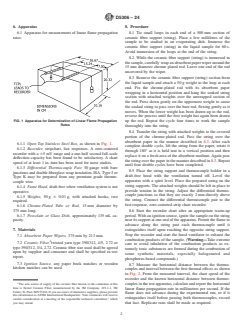
FIG. 1 Apparatus for Determination of Linear Flame Propagation Rates
6.1.1 Open Top Stainless Steel Box, as shown in Fig. 1.
6.1.2 Recorder, stripchart, fast responses. A zero-centered recorder with a 65 mV range and a one-half second full-scale deflection
capacity has been found to be satisfactory. A chart speed of at least 1 in. ⁄min has been used for most studies.
6.1.3 Differential Thermocouple Pair, 30 gauge with bare junctions and double fiberglass wrap insulation, ISA, Type J or Type K
may be prepared from any premium grade thermocouple wire.
6.1.4 Fume Hood, draft-free when ventilation system is not operative.
6.1.5 Weights, 50 g 6 0.01 g, with attached hooks; two required.
6.1.6 Chrome-Plated Tube or Rod, 15 mm diameter by 375 mm long.
6.1.7 Porcelain or Glass Dish, approximately 135 mL capacity.
D5306 − 24
7. Materials
7.1 Absorbent Paper Wipers, 375 mm by 213 mm.
7.2 Ceramic Fiber, twisted yarn type 390/312, 4/5, 2.72 or type 390/312, 3/4, 2.72. Ceramic fiber size used shall be agreed upon
by supplier and consumer and shall be specified in test report.
7.3 Ignition Source, any paper book matches or wooden kitchen matches can be used.
8. Procedure
8.1 Tie small loops in each end of a 500 mm section of ceramic fiber support (string). Place a few millilitres of the sample to be
studied in an evaporating dish. Immerse the ceramic fiber support (string) in the liquid sample for 60 s. Avoid immersion of the
loops at the end of the string.
8.2 While the ceramic fiber support (string) is immersed in the sample, carefully wrap an absorbent paper wiper around the 15 mm
diameter chrome plated rod. Leave one end of the rod uncovered by the wiper.
8.3 Remove the ceramic fiber support (string) section from the liquid sample and attach a 50 g weight to the loop at each end. Fix
the chrome-plated rod with its absorbent paper wrapping in a horizontal position and hang the soaked string section with attached
weights over the unwrapped section of the rod. Press down gently on the uppermost weight to cause the soaked string to pass over
the bare rod, flexing gently as it moves. When the lower weight has been drawn up to the rod, reverse the process until the first
weight has again been drawn up the rod. Repeat the cycle four times to work the sample thoroughly into the string.
8.4 Transfer the string with attached weights to the covered portion of the chrome-plated rod. Pass the string over the absorbent
paper in the manner described in 8.3. After each complete double cycle, lift the string from the paper, rotate it through 180° as
it is held taut in a vertical position and then replace it on a fresh area of the absorbent medium. Again pass the string over the paper
in the manner described in 8.3. Repeat until four double cycles have been completed.
8.5 Place the string support and thermocouple holder in a draft-free hood with the ventilation turned off. Level the apparatus with
a spirit level. Place the prepared string on the string supports. The attached weights should be left in place to provide tension in
the string. Adjust the differential thermocouple junctions so that they are exactly 2 mm directly above the string. Connect the
differential thermocouple pair to the fast-response, zero-centered strip chart recorder.
8.6 Start the recorder chart after an appropriate warm-up period. With an ignition source, ignite the sample on the string near its
support at one end of the apparatus. Permit the flame to advance along the string past each thermocouple until it extinguishes itself
upon reaching the opposite string support. Stop the recorder and start the hood ventilator to exhaust the combustion products of
the sample. (Warning—Take extreme care to avoid inhalation of the combustion products as extremely toxic substances are
formed during the combustion of some synthetic materials, especially halogenated and phosphorus-based compounds.)
8.7 Measure the horizontal distance between the thermocouples and interval between the
...