

ASTM A689-97(2018)
(Specification)Standard Specification for Carbon and Alloy Steel Bars for Springs
General Information
- Abstract
ABSTRACT
This specification covers hot-wrought steel bars for the manufacture of general purpose springs such as coil, torsion, and leaf. The steel shall be melt processed by using open-hearth, basic-oxygen, or electric furnace. The materials shall undergo heat analysis and shall conform to the required chemical compositions and hardenability. The steel specimens shall conform to the required values of rounded corner radii and cross section tolerances for round-edge flat bars.
SCOPE
1.1 This specification covers hot-wrought steel bars to be used for the manufacture of general-purpose springs such as coil, torsion, and leaf.
1.2 The values stated in inch-pound units are to be regarded as standard. The values given in parentheses are mathematical conversions to SI units that are provided for information only and are not considered standard.
1.3 This international standard was developed in accordance with internationally recognized principles on standardization established in the Decision on Principles for the Development of International Standards, Guides and Recommendations issued by the World Trade Organization Technical Barriers to Trade (TBT) Committee.
- Status
- Published
- Publication Date
- 31-Aug-2018
- Technical Committee
- A01 - Steel, Stainless Steel and Related Alloys
- Drafting Committee
- A01.15 - Bars

Overview
ASTM A689-97(2018) - Standard Specification for Carbon and Alloy Steel Bars for Springs defines the requirements for hot-wrought steel bars intended for manufacturing general-purpose springs, including coil, torsion, and leaf springs. This international standard, developed by ASTM, addresses essential aspects such as chemical composition, hardenability, cross-section tolerances, and manufacturing processes, ensuring consistent quality and performance in spring steel bars for diverse industrial applications.
Key Topics
Scope and Purpose
- Covers hot-wrought carbon and alloy steel bars used for springs.
- Intended for coil, torsion, and leaf spring manufacture.
- Applies to general-purpose, industrial, and automotive spring applications.
Manufacturing Processes
- Bars produced using open-hearth, basic-oxygen, or electric furnace melting.
- May include secondary refining practices such as electroslag or vacuum arc remelting.
Steel Grades and Chemistry
- Chemical composition must meet ASTM series grades (1000, 4100, 5100, 6100, 8600, 9200, and related Boron grades).
- Modifications in chemistry are allowed to achieve specified hardenability for specific bar sizes or spring requirements.
Physical Requirements and Tolerances
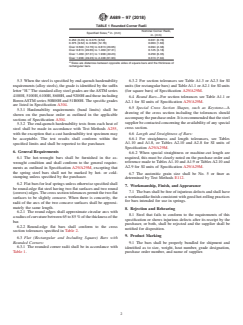
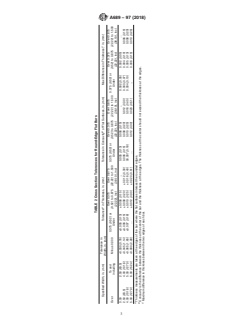
- Precise tolerances for rounded corner radii and cross-section for round-edge flat bars.
- Adherence to straightness, length, and surface finish specifications.
- Grain size requirements ensure material consistency and performance.
Testing and Reporting
- Mandatory heat analysis and hardenability testing.
- Requirements for documenting and reporting steel composition and test results to purchasers.
- End-quench (Jominy) hardenability testing as specified in referenced ASTM standards.
Applications
ASTM A689 steel bars are is widely used in industries where reliable spring performance is critical. Practical applications include:
- Automotive Manufacturing
- Production of suspension coil, leaf, and torsion springs for vehicles.
- Industrial Equipment
- Springs for heavy machinery, agricultural tools, and construction equipment.
- Railway and Transit
- Critical components in rail car suspensions and couplings.
- General Mechanical Springs
- Used in hardware, door mechanisms, and other devices requiring resilient spring action.
The specification ensures that steel bars meet stringent requirements for durability, toughness, and dimensional accuracy, which are crucial for safety and operational effectiveness in high-stress environments.
Related Standards
For comprehensive compliance and integration into specialized applications, ASTM A689-97(2018) references and aligns with several related ASTM standards:
- ASTM A29/A29M - General requirements for steel bars, hot-wrought carbon and alloy.
- ASTM A255 - Test methods for determining steel hardenability.
- ASTM A304 - Specification for steel bars subject to end-quench hardenability requirements.
- ASTM A322 - Specification for alloy steel bars, standard grades.
- ASTM A576 - Specification for special quality hot-wrought carbon steel bars.
- ASTM E112 - Test methods for determining average grain size.
Following ASTM A689-97(2018) alongside these related standards establishes a robust framework for selecting and verifying suitable spring steel bars for high-performance and safety-critical uses.
Keywords: ASTM A689, steel bars for springs, spring steel specification, carbon steel, alloy steel, coil spring bar, torsion spring bar, leaf spring specification, hardenability, steel bar tolerances, industrial springs, automotive spring steel.
Relations
- Effective Date
- 01-Sep-2018
- Effective Date
- 01-Nov-2023
- Effective Date
- 01-Sep-2018
- Effective Date
- 01-Sep-2018
- Effective Date
- 01-Nov-2017
- Effective Date
- 01-Dec-2016
- Effective Date
- 01-Nov-2015
- Effective Date
- 01-Oct-2014
- Effective Date
- 01-May-2013
- Effective Date
- 15-Nov-2012
- Effective Date
- 01-May-2012
- Effective Date
- 01-May-2012
- Refers
ASTM A576-90b(2012) - Standard Specification for Steel Bars, Carbon, Hot-Wrought, Special Quality - Effective Date
- 01-Mar-2012
- Effective Date
- 01-Oct-2011
- Effective Date
- 01-Oct-2011
Get Certified
Connect with accredited certification bodies for this standard

Element Materials Technology
Materials testing and product certification.

Inštitut za kovinske materiale in tehnologije
Institute of Metals and Technology. Materials testing, metallurgical analysis, NDT.
Sponsored listings
Frequently Asked Questions
ASTM A689-97(2018) is a technical specification published by ASTM International. Its full title is "Standard Specification for Carbon and Alloy Steel Bars for Springs". This standard covers: ABSTRACT This specification covers hot-wrought steel bars for the manufacture of general purpose springs such as coil, torsion, and leaf. The steel shall be melt processed by using open-hearth, basic-oxygen, or electric furnace. The materials shall undergo heat analysis and shall conform to the required chemical compositions and hardenability. The steel specimens shall conform to the required values of rounded corner radii and cross section tolerances for round-edge flat bars. SCOPE 1.1 This specification covers hot-wrought steel bars to be used for the manufacture of general-purpose springs such as coil, torsion, and leaf. 1.2 The values stated in inch-pound units are to be regarded as standard. The values given in parentheses are mathematical conversions to SI units that are provided for information only and are not considered standard. 1.3 This international standard was developed in accordance with internationally recognized principles on standardization established in the Decision on Principles for the Development of International Standards, Guides and Recommendations issued by the World Trade Organization Technical Barriers to Trade (TBT) Committee.
ABSTRACT This specification covers hot-wrought steel bars for the manufacture of general purpose springs such as coil, torsion, and leaf. The steel shall be melt processed by using open-hearth, basic-oxygen, or electric furnace. The materials shall undergo heat analysis and shall conform to the required chemical compositions and hardenability. The steel specimens shall conform to the required values of rounded corner radii and cross section tolerances for round-edge flat bars. SCOPE 1.1 This specification covers hot-wrought steel bars to be used for the manufacture of general-purpose springs such as coil, torsion, and leaf. 1.2 The values stated in inch-pound units are to be regarded as standard. The values given in parentheses are mathematical conversions to SI units that are provided for information only and are not considered standard. 1.3 This international standard was developed in accordance with internationally recognized principles on standardization established in the Decision on Principles for the Development of International Standards, Guides and Recommendations issued by the World Trade Organization Technical Barriers to Trade (TBT) Committee.
ASTM A689-97(2018) is classified under the following ICS (International Classification for Standards) categories: 77.140.25 - Spring steels. The ICS classification helps identify the subject area and facilitates finding related standards.
ASTM A689-97(2018) has the following relationships with other standards: It is inter standard links to ASTM A689-97(2013)e1, ASTM A576-23, ASTM A322-13(2018)e1, ASTM A255-10(2018), ASTM A576-17, ASTM A304-16, ASTM A29/A29M-15, ASTM A255-10(2014), ASTM A322-13, ASTM E112-12, ASTM A29/A29M-12, ASTM A29/A29M-12e1, ASTM A576-90b(2012), ASTM A29/A29M-11a, ASTM A304-11. Understanding these relationships helps ensure you are using the most current and applicable version of the standard.
ASTM A689-97(2018) is available in PDF format for immediate download after purchase. The document can be added to your cart and obtained through the secure checkout process. Digital delivery ensures instant access to the complete standard document.
Standards Content (Sample)
This international standard was developed in accordance with internationally recognized principles on standardization established in the Decision on Principles for the
Development of International Standards, Guides and Recommendations issued by the World Trade Organization Technical Barriers to Trade (TBT) Committee.
Designation: A689 −97 (Reapproved 2018)
Standard Specification for
Carbon and Alloy Steel Bars for Springs
This standard is issued under the fixed designation A689; the number immediately following the designation indicates the year of
original adoption or, in the case of revision, the year of last revision. A number in parentheses indicates the year of last reapproval. A
superscript epsilon (´) indicates an editorial change since the last revision or reapproval.
1. Scope 3.1.1 ASTM designation A689,
3.1.2 ASTM grade number indicating the chemical compo-
1.1 This specification covers hot-wrought steel bars to be
sition (see 5.1), special chemistry required (see 5.2), or
used for the manufacture of general-purpose springs such as
hardenability (see 5.3),
coil, torsion, and leaf.
3.1.3 Quantity (number of bars or weight),
1.2 The values stated in inch-pound units are to be regarded
3.1.4 Cross section description and dimensions or drawings
as standard. The values given in parentheses are mathematical
of section,
conversions to SI units that are provided for information only
3.1.5 Bar lengths,
and are not considered standard.
3.1.6 When purchaser’s processing requires cold shearing,
1.3 This international standard was developed in accor- cold punching, and cold trimming, this should be noted.
dance with internationally recognized principles on standard-
3.1.7 When special straightness or machine-cut lengths are
ization established in the Decision on Principles for the required, reference on the purchase order should be made to
Development of International Standards, Guides and Recom-
Tables A1.10 and A1.9 or Tables A2.10 and A2.9 for SI units
mendations issued by the World Trade Organization Technical of Specification A29/A29M, and
Barriers to Trade (TBT) Committee.
3.1.8 Weight limitations per shipping bundle.
4. Melting Practice
2. Referenced Documents
4.1 The steel shall be made by one or more of the following
2.1 ASTM Standards:
primary processes: basic-oxygen or electric-furnace. The pri-
A29/A29M SpecificationforGeneralRequirementsforSteel
mary melting may incorporate separate degassing or refining
Bars, Carbon and Alloy, Hot-Wrought
and may be followed by secondary melting using electroslag
A255 Test Methods for Determining Hardenability of Steel
remelting or vacuum arc remelting. Where secondary melting
A304 Specification for Carbon andAlloy Steel Bars Subject
is employed, the heat shall be defined as all of the ingots
to End-Quench Hardenability Requirements
remelted from a single primary heat.
A322 Specification for Steel Bars, Alloy, Standard Grades
A576 Specification for Steel Bars, Carbon, Hot-Wrought,
5. Chemical Composition or Hardenability Requirements
Special Quality
5.1 Whenthesteelisspecifiedbychemicalcomposition,the
E112 Test Methods for Determining Average Grain Size
standard steel grades are the ASTM series 1000, 4100, 5100,
6100, 8600, and 9200, and those including BoronASTM series
3. Ordering Information
10B00, 15B00, 50B00, and 51B00. The specific grades are
3.1 Purchase orders for material to this specification shall
listed in Specifications A322 and A576.
include the following information as required to describe the
5.2 Modifications may be made in the chemistry of the
desired material adequately:
standard ASTM grades to suit the hardenability required for a
particular bar size, spring shape, or other special requirements.
This specification is under the jurisdiction of ASTM Committee A01 on Steel, The steel supplier should be consulted on availability of any
Stainless Steel and Related Alloys and is the direct responsibility of Subcommittee
special chemical compositions.
A01.15 on Bars.
5.2.1 A chemical analysis of each heat of steel purchased
Current edition approved Sept. 1, 2018. Published September 2018. Originally
ɛ1
under 5.1 and 5.2 shall be made by the steel producer to
approved in 1974. Last previous edition approved in 2013 as A689 –97 (2013) .
DOI: 10.1520/A0689-97R18.
determine the percentage of the elements, which percentages
For referenced ASTM standards, visit the ASTM website, www.astm.org, or
shall conform to the requirements of the designated ASTM
contact ASTM Customer Service at service@astm.org. For Annual Book of ASTM
grade or special chemistry. The chemical analysis thus deter-
Standards volume information, refer to the standard’s Document Summary page on
the ASTM website. mined shall be reported to the purchaser.
Copyright © ASTM International, 100 Barr Harbor Drive, PO Box C700, West Conshohocken, PA 19428-2959. United States
A689 − 97 (2018)
TABLE 1 Rounded Corner Radii
Nominal Corner Radii,
A
Specified Sizes, in. (mm)
in. (mm)
0.250 (6.35) to 0.375 (9.52) 0.031 (0.78)
0.375 (9.52) to 0.500 (12.70) 0.063 (1.60)
Over 0.500 (12.70) to 0.813 (20.65) 0.094 (2.38)
Over 0.813 (20.65) to 1.469 (37.31) 0.125 (3.18)
Over 1.469 (37.31) to 1.938 (49.23) 0.250 (6.35)
Over 1.938 (49.23) to 2.438 (61.93) 0.313 (7.94)
A
Sizes are distances between opposite sides of square bars and the thickness of
rectangular bars.
5.3 When the steel is specified by end-quench hardenability 6.3.2 For section tolerances see Table A1.3 or A2.3 for SI
requirements (alloy steels), the grade is identified by the suffix units (for rectangular bars) and TableA1.1 orA2.1 for SI units
letter “H.”The standard alloy steel grades are theASTM series (for square bars) of Specification A29/A29M.
4100H,5100H,6100H,8600H,and9200Handthoseincluding
6.4 Round Bars—For section tolerances see Table A1.1 or
BoronASTM series 50B00H and 51B00H. The specific grades
A2.1 for SI units of Specification A29/A29M.
are listed in Specification A304.
6.5
...