

ASTM A407-23
(Specification)Standard Specification for Steel Wire, Cold-Drawn, for Coiled-Type Springs
General Information
- Abstract
SCOPE
1.1 This specification covers round, cold-drawn, steel spring wire having properties and quality intended for the manufacture of the following types of upholstery springs:
1.1.1 Type A—Coiled (Marshall pack),
1.1.2 Type B—Coiled and knotted,
1.1.3 Type C—Coiled and knotted (offset style),
1.1.4 Type D—Coiled and hooked (single and cross helicals),
1.1.5 Type E—Coiled and hooked (short tension—regular tensile strength),
1.1.6 Type F—Coiled and hooked (short tension—high tensile strength),
1.1.7 Type G—Regular lacing,
1.1.8 Type H—Automatic lacing,
1.1.9 Type I—Zig-zag (U-formed),
1.1.10 Type J—Square-formed, and
1.1.11 Type K—Sinuous for furniture spring units.
1.2 These types of upholstery springs are used in the manufacture of automotive seat springs, furniture springs, bed spring units, mattresses, furniture cushions, and automobile seats. This wire is not intended for the manufacture of mechanical springs.
1.3 The values stated in inch-pound units are to be regarded as standard. The values given in parentheses are mathematical conversions to SI units that are provided for information only and are not considered standard.
1.4 This standard does not purport to address all of the safety concerns, if any, associated with its use. It is the responsibility of the user of this standard to establish appropriate safety, health, and environmental practices and determine the applicability of regulatory limitations prior to use.
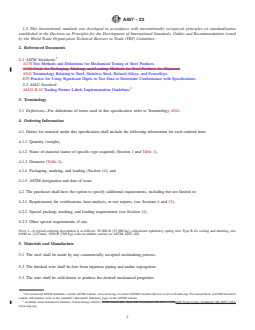
1.5 This international standard was developed in accordance with internationally recognized principles on standardization established in the Decision on Principles for the Development of International Standards, Guides and Recommendations issued by the World Trade Organization Technical Barriers to Trade (TBT) Committee.
- Status
- Published
- Publication Date
- 31-Mar-2023
- Technical Committee
- A01 - Steel, Stainless Steel and Related Alloys
- Drafting Committee
- A01.03 - Steel Rod and Wire
Buy Documents
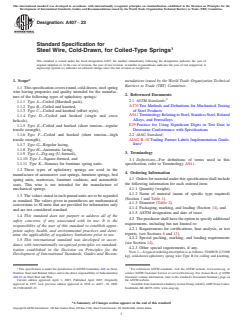
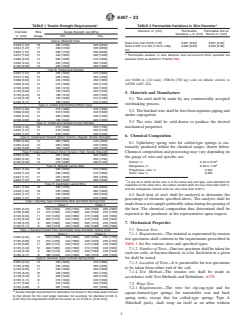
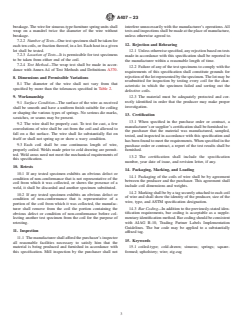

ASTM A407-23 - Standard Specification for Steel Wire, Cold-Drawn, for Coiled-Type Springs
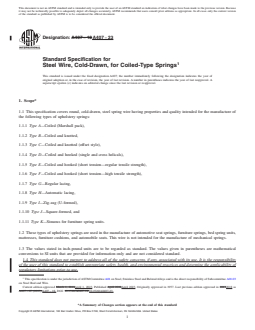
REDLINE ASTM A407-23 - Standard Specification for Steel Wire, Cold-Drawn, for Coiled-Type Springs
Overview
ASTM A407-23: Standard Specification for Steel Wire, Cold-Drawn, for Coiled-Type Springs defines the requirements for round, cold-drawn steel spring wire specifically designed for upholstery springs. Developed by ASTM International, this standard is crucial for manufacturers of automotive seat springs, furniture springs, bed spring units, mattresses, and similar products that require durable and consistent upholstery spring wire. ASTM A407 is not intended for use in mechanical spring manufacturing, focusing solely on wire for coiled-type upholstery springs and related lacing wires.
Key Topics
- Scope and Purpose
- Covers round, cold-drawn steel spring wire suitable for multiple upholstery spring forms, including coiled, knotted, hooked, lacing, zig-zag, square-formed, and sinuous types.
- Specifies that wire produced under this standard is not for mechanical springs.
- Types of Springs Covered
- Type A: Coiled (Marshall pack)
- Type B: Coiled and knotted
- Type C: Offset coiled and knotted
- Types D to F: Various coiled and hooked configurations
- Types G and H: Regular and automatic lacing wires
- Type I: Zig-zag (U-formed)
- Type J: Square-formed
- Type K: Sinuous for furniture springs
- Ordering and Manufacturing
- Specifies requirements for ordering, including quantity, material type, diameter, packaging, and ASTM designation.
- Production by accepted steelmaking processes; cold-drawing to achieve required mechanical properties.
- Chemical and Mechanical Properties
- Carbon content typically ranges from 0.45% to 0.70%; manganese 0.60% to 1.20%; limitations on phosphorus and sulfur.
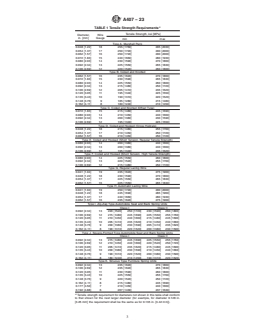
- Tensile strength, elongation, and other mechanical properties are provided for each type and size.
- Quality and Testing
- Outlines mechanical testing protocols including tension and wrap tests in accordance with referenced ASTM test methods.
- Permissible variations in diameter and out-of-roundness specified.
- Surface quality requirements ensure wire is free of defects like die marks, scratches, or seams.
Applications
Steel wire manufactured to ASTM A407-23 is widely used in:
- Automotive Seats: For seat and back spring units offering strength and flexibility.
- Furniture Construction: In sofas, chairs, and furniture cushions utilizing various formed and sinuous springs.
- Mattresses and Bed Units: For both inner support cores and edge support lacing.
- Upholstery Manufacturing: Where consistency in spring properties ensures comfort, durability, and product quality.
The standard enables manufacturers and purchasers to specify and verify the performance and quality of cold-drawn steel wire used in these upholstered products, ensuring safety, durability, and compliance with industry requirements.
Related Standards
Several related ASTM and industry standards are referenced for comprehensive compliance and quality assurance:
- ASTM A370: Test Methods and Definitions for Mechanical Testing of Steel Products
- ASTM A700: Guide for Packaging, Marking, and Loading Methods for Steel Products for Shipment
- ASTM A941: Terminology Relating to Steel, Stainless Steel, Related Alloys, and Ferroalloys
- ASTM E29: Practice for Using Significant Digits in Test Data to Determine Conformance with Specifications
- AIAG B-10: Trading Partner Labels Implementation Guidelines (for bar coding and labeling)
Practical Value
Implementing ASTM A407-23 in production and procurement ensures:
- Consistent Product Performance: Standardized mechanical properties deliver reliable spring action in end use.
- Supply Chain Confidence: Clear requirements make sourcing and quality control straightforward.
- Compliance: Alignment with globally recognized ASTM standards assures conformity to market and regulatory expectations.
- Enhanced Durability: Precision in chemical composition and mechanical characteristics leads to long-lasting upholstered products.
Keywords: cold-drawn steel wire, coiled-type springs, upholstery springs, tensile strength, furniture springs, ASTM A407, sinuous springs, zig-zag springs, upholstery wire.
Relations
- Effective Date
- 01-Mar-2024
- Effective Date
- 01-Mar-2024
- Effective Date
- 01-Jul-2019
- Refers
ASTM A370-17a - Standard Test Methods and Definitions for Mechanical Testing of Steel Products - Effective Date
- 15-Nov-2017
- Effective Date
- 01-Sep-2017
- Effective Date
- 01-Jan-2017
- Effective Date
- 01-Nov-2015
- Effective Date
- 01-Nov-2015
- Effective Date
- 15-May-2014
- Effective Date
- 15-Nov-2013
- Effective Date
- 01-Jun-2013
- Effective Date
- 01-May-2013
- Effective Date
- 01-Apr-2013
- Refers
ASTM A370-12a - Standard Test Methods and Definitions for Mechanical Testing of Steel Products - Effective Date
- 15-Oct-2012
- Effective Date
- 15-Mar-2012
Buy Documents
ASTM A407-23 - Standard Specification for Steel Wire, Cold-Drawn, for Coiled-Type Springs
REDLINE ASTM A407-23 - Standard Specification for Steel Wire, Cold-Drawn, for Coiled-Type Springs
Get Certified
Connect with accredited certification bodies for this standard

Element Materials Technology
Materials testing and product certification.

Inštitut za kovinske materiale in tehnologije
Institute of Metals and Technology. Materials testing, metallurgical analysis, NDT.
Sponsored listings
Frequently Asked Questions
ASTM A407-23 is a technical specification published by ASTM International. Its full title is "Standard Specification for Steel Wire, Cold-Drawn, for Coiled-Type Springs". This standard covers: SCOPE 1.1 This specification covers round, cold-drawn, steel spring wire having properties and quality intended for the manufacture of the following types of upholstery springs: 1.1.1 Type A—Coiled (Marshall pack), 1.1.2 Type B—Coiled and knotted, 1.1.3 Type C—Coiled and knotted (offset style), 1.1.4 Type D—Coiled and hooked (single and cross helicals), 1.1.5 Type E—Coiled and hooked (short tension—regular tensile strength), 1.1.6 Type F—Coiled and hooked (short tension—high tensile strength), 1.1.7 Type G—Regular lacing, 1.1.8 Type H—Automatic lacing, 1.1.9 Type I—Zig-zag (U-formed), 1.1.10 Type J—Square-formed, and 1.1.11 Type K—Sinuous for furniture spring units. 1.2 These types of upholstery springs are used in the manufacture of automotive seat springs, furniture springs, bed spring units, mattresses, furniture cushions, and automobile seats. This wire is not intended for the manufacture of mechanical springs. 1.3 The values stated in inch-pound units are to be regarded as standard. The values given in parentheses are mathematical conversions to SI units that are provided for information only and are not considered standard. 1.4 This standard does not purport to address all of the safety concerns, if any, associated with its use. It is the responsibility of the user of this standard to establish appropriate safety, health, and environmental practices and determine the applicability of regulatory limitations prior to use. 1.5 This international standard was developed in accordance with internationally recognized principles on standardization established in the Decision on Principles for the Development of International Standards, Guides and Recommendations issued by the World Trade Organization Technical Barriers to Trade (TBT) Committee.
SCOPE 1.1 This specification covers round, cold-drawn, steel spring wire having properties and quality intended for the manufacture of the following types of upholstery springs: 1.1.1 Type A—Coiled (Marshall pack), 1.1.2 Type B—Coiled and knotted, 1.1.3 Type C—Coiled and knotted (offset style), 1.1.4 Type D—Coiled and hooked (single and cross helicals), 1.1.5 Type E—Coiled and hooked (short tension—regular tensile strength), 1.1.6 Type F—Coiled and hooked (short tension—high tensile strength), 1.1.7 Type G—Regular lacing, 1.1.8 Type H—Automatic lacing, 1.1.9 Type I—Zig-zag (U-formed), 1.1.10 Type J—Square-formed, and 1.1.11 Type K—Sinuous for furniture spring units. 1.2 These types of upholstery springs are used in the manufacture of automotive seat springs, furniture springs, bed spring units, mattresses, furniture cushions, and automobile seats. This wire is not intended for the manufacture of mechanical springs. 1.3 The values stated in inch-pound units are to be regarded as standard. The values given in parentheses are mathematical conversions to SI units that are provided for information only and are not considered standard. 1.4 This standard does not purport to address all of the safety concerns, if any, associated with its use. It is the responsibility of the user of this standard to establish appropriate safety, health, and environmental practices and determine the applicability of regulatory limitations prior to use. 1.5 This international standard was developed in accordance with internationally recognized principles on standardization established in the Decision on Principles for the Development of International Standards, Guides and Recommendations issued by the World Trade Organization Technical Barriers to Trade (TBT) Committee.
ASTM A407-23 is classified under the following ICS (International Classification for Standards) categories: 77.140.25 - Spring steels. The ICS classification helps identify the subject area and facilitates finding related standards.
ASTM A407-23 has the following relationships with other standards: It is inter standard links to ASTM A370-24, ASTM A941-24, ASTM A370-19, ASTM A370-17a, ASTM A941-17, ASTM A370-17, ASTM A370-15, ASTM A941-15, ASTM A370-14, ASTM A370-13, ASTM A941-13b, ASTM A941-13a, ASTM A941-13, ASTM A370-12a, ASTM A370-12. Understanding these relationships helps ensure you are using the most current and applicable version of the standard.
ASTM A407-23 is available in PDF format for immediate download after purchase. The document can be added to your cart and obtained through the secure checkout process. Digital delivery ensures instant access to the complete standard document.
Standards Content (Sample)
This international standard was developed in accordance with internationally recognized principles on standardization established in the Decision on Principles for the
Development of International Standards, Guides and Recommendations issued by the World Trade Organization Technical Barriers to Trade (TBT) Committee.
Designation: A407 − 23
Standard Specification for
Steel Wire, Cold-Drawn, for Coiled-Type Springs
This standard is issued under the fixed designation A407; the number immediately following the designation indicates the year of
original adoption or, in the case of revision, the year of last revision. A number in parentheses indicates the year of last reapproval. A
superscript epsilon (´) indicates an editorial change since the last revision or reapproval.
1. Scope* mendations issued by the World Trade Organization Technical
Barriers to Trade (TBT) Committee.
1.1 This specification covers round, cold-drawn, steel spring
wire having properties and quality intended for the manufac-
2. Referenced Documents
ture of the following types of upholstery springs:
2.1 ASTM Standards:
1.1.1 Type A—Coiled (Marshall pack),
A370 Test Methods and Definitions for Mechanical Testing
1.1.2 Type B—Coiled and knotted,
of Steel Products
1.1.3 Type C—Coiled and knotted (offset style),
A941 Terminology Relating to Steel, Stainless Steel, Related
1.1.4 Type D—Coiled and hooked (single and cross
Alloys, and Ferroalloys
helicals),
E29 Practice for Using Significant Digits in Test Data to
1.1.5 Type E—Coiled and hooked (short tension—regular
Determine Conformance with Specifications
tensile strength),
1.1.6 Type F—Coiled and hooked (short tension—high 2.2 AIAG Standard:
AIAG B-10 Trading Partner Labels Implementation Guide-
tensile strength),
lines
1.1.7 Type G—Regular lacing,
1.1.8 Type H—Automatic lacing,
3. Terminology
1.1.9 Type I—Zig-zag (U-formed),
1.1.10 Type J—Square-formed, and
3.1 Definitions—For definitions of terms used in this
1.1.11 Type K—Sinuous for furniture spring units.
specification, refer to Terminology A941.
1.2 These types of upholstery springs are used in the
4. Ordering Information
manufacture of automotive seat springs, furniture springs, bed
4.1 Orders for material under this specification shall include
spring units, mattresses, furniture cushions, and automobile
the following information for each ordered item:
seats. This wire is not intended for the manufacture of
mechanical springs. 4.1.1 Quantity (weight),
4.1.2 Name of material (name of specific type required)
1.3 The values stated in inch-pound units are to be regarded
(Section 1 and Table 1),
as standard. The values given in parentheses are mathematical
4.1.3 Diameter (Table 2),
conversions to SI units that are provided for information only
4.1.4 Packaging, marking, and loading (Section 14), and
and are not considered standard.
4.1.5 ASTM designation and date of issue.
1.4 This standard does not purport to address all of the
4.2 The purchaser shall have the option to specify additional
safety concerns, if any, associated with its use. It is the
requirements, including but not limited to:
responsibility of the user of this standard to establish appro-
4.2.1 Requirements for certifications, heat analysis, or test
priate safety, health, and environmental practices and deter-
reports, (see Sections 6 and 13),
mine the applicability of regulatory limitations prior to use.
4.2.2 Special packing, marking, and loading requirements
1.5 This international standard was developed in accor-
(see Section 14),
dance with internationally recognized principles on standard-
4.2.3 Other special requirements, if any.
ization established in the Decision on Principles for the
NOTE 1—A typical ordering description is as follows: 50 000 lb [15 000
Development of International Standards, Guides and Recom-
kg], cold-drawn upholstery spring wire Type B for coiling and knotting,
1 2
This specification is under the jurisdiction of ASTM Committee A01 on Steel, For referenced ASTM standards, visit the ASTM website, www.astm.org, or
Stainless Steel and Related Alloys and is the direct responsibility of Subcommittee contact ASTM Customer Service at service@astm.org. For Annual Book of ASTM
A01.03 on Steel Rod and Wire. Standards volume information, refer to the standard’s Document Summary page on
Current edition approved April 1, 2023. Published April 2023. Originally the ASTM website.
approved in 1957. Last previous edition approved in 2018 as A407 – 18. DOI: Available from Automotive Industry Action Group (AIAG), 4400 Town Center,
10.1520/A0407-23. Southfield, MI 48075-1104, www.aiag.org.
*A Summary of Changes section appears at the end of this standard
Copyright © ASTM International, 100 Barr Harbor Drive, PO Box C700, West Conshohocken, PA 19428-2959. United States
A407 − 23
A A
TABLE 1 Tensile Strength Requirements TABLE 2 Permissible Variations in Wire Diameter
Diameter, in. [mm] Permissible Permissible Out-of-
Tensile Strength, ksi [MPa]
Diameter, Wire
Variations, ± in. [mm] Round, in. [mm]
in. [mm] Gauge
min max
Type A, Marshall Pack
Sizes finer than 0.076 [1.93] 0.001 [0.02] 0.001 [0.02]
0.048 [1.22] 18 255 [1760] 295 [2030]
Sizes 0.076 to 0.192 [1.93 to 4.88], 0.002 [0.05] 0.002 [0.05]
0.054 [1.37] 17 250 [1720] 290 [2000]
incl
0.062 [1.57] 16 250 [1720] 290 [2000]
A
0.072 [1.83] 15 240 [1660] 280 [1930] Permissible variation in wire diameter and out-of-round limits specified are
absolute limits as defined in Practice E29.
0.080 [2.03] 14 230 [1590] 270 [1860]
0.092 [2.34] 13 225 [1550] 265 [1830]
0.106 [2.69] 12 220 [1520] 260 [1800]
Type B, Coiled and Knotted
0.062 [1.57] 16 235 [1620] 270 [1860]
0.072 [1.83] 15 230 [1590] 265 [1830]
0.080 [2.03] 14 225 [1550] 260 [1800] size 0.080 in. [2.0 mm], 1500-lb [700 kg] coils on tubular carriers to
0.092 [2.34] 13 215 [1480] 250 [1720] ASTM A407–XX.
0.106 [2.69] 12 205 [1410] 235 [1620]
0.120 [3.05] 11 195 [1340] 225 [1550]
5. Materials and Manufacture
0.135 [3.43] 10 190 [1310] 220 [1520]
0.148 [3.76] 9 185 [1280] 215 [1480]
5.1 The steel shall be made by any commercially accepted
0.162 [4.11] 8 180 [1240] 210 [1450]
steelmaking process.
Type C, Coiled and Knotted (Offset Type)
0.072 [1.83] 15 215 [1480] 245 [1690]
5.2 The finished wire shall be free from injurious piping and
0.080 [2.03] 14 210 [1450] 240 [1660]
undue segregation.
0.092 [2.34] 13 200 [1380] 230 [1590]
0.106 [2.69] 12 195 [1340] 225 [1550]
5.3 The wire shall be cold-drawn to produce the desired
Type D, Coiled and Hooked (Cross Helicals)
0.048 [1.22] 18 215 [1480] 255 [1760] mechanical properties.
0.054 [1.37] 17 210 [1450] 250 [1720]
0.062 [1.57] 16 210 [1450] 250 [1720]
6. Chemical Composition
Type E, Coiled and Hooked (Short Tension, Regular Tensile Strength)
0.080 [2.03] 14 200 [1380] 240 [1660]
6.1 Upholstery spring wire for coiled-type springs is cus-
0.092 [2.34] 13 200 [1380] 240 [1660]
tomarily produced within the chemical ranges shown below.
0.106 [2.69] 12 195 [1340] 235 [1620]
Type F, Coiled and Hooked (Short Tension, High Tensile Strength)
Chemical composition and processing may vary depending on
0.080 [2.03] 14 225 [1550] 260 [1800]
the gauge of wire and specific use.
0.092 [2.34] 13 220 [1520] 255 [1760]
A
0.106 [2.69] 12 215 [1480] 250 [1720]
Carbon, % 0.45 to 0.70
A
Type G, Regular Lacing Wire Manganese, %, 0.60 to 1.20
0.041 [1.04] 19 235 [1620] 275 [1900]
Phosphorus, max, % 0.040
0.048 [1.22] 18 230 [1590] 270 [1860] Sulfur, max, % 0.050
0.054 [1.37] 17 225 [1550] 265 [1830]
0.062 [1.57] 16 225 [1550] 265 [1830]
A
In any lot in which all the wire is of the same size and type, and submitted for
Type H, Automatic Lacing Wire
inspection at the same time, the carbon content shall not vary more than 0.20 %,
0.041 [1.04] 19 250 [1720] 290 [2000]
and the manganese content shall not vary more than 0.30 %.
0.048 [1.22] 18 245 [1690] 285 [1960]
0.054 [1.37] 17 240 [1660] 280 [1930]
6.2 Each heat of steel shall be analyzed to determine the
0.062 [1.57] 16 235 [1620] 275 [1900]
percentage of elements specified above. The analysis shall be
Type I, Zig-Zag Type Automobile Seat and Back Spring Units
made from a test sample preferably taken during the pouring of
Class I Class II
0.092 [2.34] 13 220 [1520] 250 [1720] 230 [1590] 260 [1800] the heat. The chemical composition thus determined shall be
0.106 [2.69] 12 215 [1480] 245 [1690] 225 [1550] 255 [1760]
reported to the purchaser or his representative upon request
...
This document is not an ASTM standard and is intended only to provide the user of an ASTM standard an indication of what changes have been made to the previous version. Because
it may not be technically possible to adequately depict all changes accurately, ASTM recommends that users consult prior editions as appropriate. In all cases only the current version
of the standard as published by ASTM is to be considered the official document.
Designation: A407 − 18 A407 − 23
Standard Specification for
Steel Wire, Cold-Drawn, for Coiled-Type Springs
This standard is issued under the fixed designation A407; the number immediately following the designation indicates the year of
original adoption or, in the case of revision, the year of last revision. A number in parentheses indicates the year of last reapproval. A
superscript epsilon (´) indicates an editorial change since the last revision or reapproval.
1. Scope*
1.1 This specification covers round, cold-drawn, steel spring wire having properties and quality intended for the manufacture of
the following types of upholstery springs:
1.1.1 Type A—Coiled (Marshall pack),
1.1.2 Type B—Coiled and knotted,
1.1.3 Type C—Coiled and knotted (offset style),
1.1.4 Type D—Coiled and hooked (single and cross helicals),
1.1.5 Type E—Coiled and hooked (short tension—regular tensile strength),
1.1.6 Type F—Coiled and hooked (short tension—high tensile strength),
1.1.7 Type G—Regular lacing,
1.1.8 Type H—Automatic lacing,
1.1.9 Type I—Zig-zag (U-formed),
1.1.10 Type J—Square-formed, and
1.1.11 Type K—Sinuous for furniture spring units.
1.2 These types of upholstery springs are used in the manufacture of automotive seat springs, furniture springs, bed spring units,
mattresses, furniture cushions, and automobile seats. This wire is not intended for the manufacture of mechanical springs.
1.3 The values stated in inch-pound units are to be regarded as standard. The values given in parentheses are mathematical
conversions to SI units that are provided for information only and are not considered standard.
1.4 This standard does not purport to address all of the safety concerns, if any, associated with its use. It is the responsibility
of the user of this standard to establish appropriate safety, health, and environmental practices and determine the applicability of
regulatory limitations prior to use.
This specification is under the jurisdiction of ASTM Committee A01 on Steel, Stainless Steel and Related Alloys and is the direct responsibility of Subcommittee A01.03
on Steel Rod and Wire.
Current edition approved March 1, 2018April 1, 2023. Published April 2018April 2023. Originally approved in 1957. Last previous edition approved in 20132018 as
A407 – 07 (2013).A407 – 18. DOI: 10.1520/A0407-18.10.1520/A0407-23.
*A Summary of Changes section appears at the end of this standard
Copyright © ASTM International, 100 Barr Harbor Drive, PO Box C700, West Conshohocken, PA 19428-2959. United States
A407 − 23
1.5 This international standard was developed in accordance with internationally recognized principles on standardization
established in the Decision on Principles for the Development of International Standards, Guides and Recommendations issued
by the World Trade Organization Technical Barriers to Trade (TBT) Committee.
2. Referenced Documents
2.1 ASTM Standards:
A370 Test Methods and Definitions for Mechanical Testing of Steel Products
A700 Guide for Packaging, Marking, and Loading Methods for Steel Products for Shipment
A941 Terminology Relating to Steel, Stainless Steel, Related Alloys, and Ferroalloys
E29 Practice for Using Significant Digits in Test Data to Determine Conformance with Specifications
2.2 AIAG Standard:
AIAG B-10 Trading Partner Labels Implementation Guidelines
3. Terminology
3.1 Definitions—For definitions of terms used in this specification, refer to Terminology A941.
4. Ordering Information
4.1 Orders for material under this specification shall include the following information for each ordered item:
4.1.1 Quantity (weight),
4.1.2 Name of material (name of specific type required) (Section 1 and Table 1),
4.1.3 Diameter (Table 2),
4.1.4 Packaging, marking, and loading (Section 14), and
4.1.5 ASTM designation and date of issue.
4.2 The purchaser shall have the option to specify additional requirements, including but not limited to:
4.2.1 Requirements for certifications, heat analysis, or test reports, (see Sections 6 and 13),
4.2.2 Special packing, marking, and loading requirements (see Section 14),
4.2.3 Other special requirements, if any.
NOTE 1—A typical ordering description is as follows: 50 000 lb [15 000 kg], cold-drawn upholstery spring wire Type B for coiling and knotting, size
0.080 in. [2.0 mm], 1500-lb [700 kg] coils on tubular carriers to ASTM A407–XX.
5. Materials and Manufacture
5.1 The steel shall be made by any commercially accepted steelmaking process.
5.2 The finished wire shall be free from injurious piping and undue segregation.
5.3 The wire shall be cold-drawn to produce the desired mechanical properties.
For referenced ASTM standards, visit the ASTM website, www.astm.org, or contact ASTM Customer Service at service@astm.org. For Annual Book of ASTM Standards
volume information, refer to the standard’s Document Summary page on the ASTM website.
Available from Automotive Industry Action Group (AIAG), 26200 Lahser Rd., Suite 200, Southfield, MI 48033-7100,4400 Town Center, Southfield, MI 48075-1104,
www.aiag.org.
A407 − 23
A
TABLE 1 Tensile Strength Requirements
Tensile Strength, ksi [MPa]
Diameter, Wire
in. [mm] Gauge
min max
Type A, Marshall Pack
0.048 [1.22] 18 255 [1760] 295 [2030]
0.054 [1.37] 17 250 [1720] 290 [2000]
0.062 [1.57] 16 250 [1720] 290 [2000]
0.072 [1.83] 15 240 [1660] 280 [1930]
0.080 [2.03] 14 230 [1590] 270 [1860]
0.092 [2.34] 13 225 [1550] 265 [1830]
0.106 [2.69] 12 220 [1520] 260 [1800]
Type B, Coiled and Knotted
0.062 [1.57] 16 235 [1620] 270 [1860]
0.072 [1.83] 15 230 [1590] 265 [1830]
0.080 [2.03] 14 225 [1550] 260 [1800]
0.092 [2.34] 13 215 [1480] 250 [1720]
0.106 [2.69] 12 205 [1410] 235 [1620]
0.120 [3.05] 11 195 [1340] 225 [1550]
0.135 [3.43] 10 190 [1310] 220 [1520]
0.148 [3.76] 9 185 [1280] 215 [1480]
0.162 [4.11] 8 180 [1240] 210 [1450]
Type C, Coiled and Knotted (Offset Type)
0.072 [1.83] 15 215 [1480] 245 [1690]
0.080 [2.03] 14 210 [1450] 240 [1660]
0.092 [2.34] 13 200 [1380] 230 [1590]
0.106 [2.69] 12 195 [1340] 225 [1550]
Type D, Coiled and Hooked (Cross Helicals)
0.048 [1.22] 18 215 [1480] 255 [1760]
0.054 [1.37] 17 210 [1450] 250 [1720]
0.062 [1.57] 16 210 [1450] 250 [1720]
Type E, Coiled and Hooked (Short Tension, Regular Tensile Strength)
0.080 [2.03] 14 200 [1380] 240 [1660]
0.092 [2.34] 13 200 [1380] 240 [1660]
0.106 [2.69] 12 195 [1340] 235 [1620]
Type F, Coiled and Hooked (Short Tension, High Tensile Strength)
0.080 [2.03] 14 225 [1550] 260 [1800]
0.092 [2.34] 13 220 [1520] 255 [1760]
0.106 [2.69] 12 215 [1480] 250 [1720]
Type G, Regular Lacing Wire
0.041 [1.04] 19 235 [1620] 275 [1900]
0.048 [1.22] 18 230 [1590] 270 [1860]
0.054 [1.37] 17 225 [1550] 265 [1830]
0.062 [1.57] 16 225 [1550] 265 [1830]
Type H, Automatic Lacing Wire
0.041 [1.04] 19 250 [1720] 290 [2000]
0.048 [1.22] 18 245 [1690] 285 [1960]
0.054 [1.37] 17 240 [1660] 280 [1930]
0.062 [1.57] 16 235 [1620] 275 [1900]
Type I, Zig-Zag Type Automobile Seat and Back Spring Units
Class I Class II
0.092 [2.34] 13 220 [1520] 250 [1720] 230 [1590] 260 [1800]
0.106 [2.69] 12 215 [1480] 245 [1690] 225 [1550] 255 [1760]
0.120 [3.05] 11 210 [1450] 240 [1660] 215 [1480] 245 [1690]
0.135 [3.43] 10 205 [1410] 235 [1620] 210 [1450] 240 [1660]
0.148 [3.76] 9 200 [1380] 230 [1590] 205 [1410] 235 [1620]
0.162 [4.11] 8 190 [1310] 220 [1520] 200 [1380] 230 [1590]
Type J, Square-Formed Type Automobile Seat and Back Spring Units
Class I Class II
0.092 [2.34] 13 215 [1480] 245 [1690] 225 [1550] 255 [1760]
0.106 [2.69] 12 210 [1450] 240 [1660] 220 [1520] 250 [1720]
0.120 [3.05] 11 205 [1410] 235 [1620] 215 [1480] 245 [1690]
0.135 [3.43] 10 200 [1380] 230 [1590] 210 [1450] 240 [1660]
0.148 [3.76] 9 190 [1310] 220 [1520] 200 [1380] 230 [1590]
0.162 [4.11] 8 180 [1240] 210 [1450] 190 [1310] 220 [1520]
Type K, Sinuous Type Furniture Spring Units
0.092 [2.34] 13 235 [1620] 270 [1860]
0.106 [2.69] 12 235 [1620] 265 [1830]
0.120 [3.05] 11 230 [1590] 260 [1800]
0.135 [3.43] 10 225 [1550] 255 [1760]
0.148 [3.76] 9 220 [1520] 250 [1720]
0.162 [4.11] 8 215 [1480] 245 [1690]
0.177 [4.50] 7 210 [1450] 240 [1660]
0.192 [4.88] 6 207 [1430] 237 [1630]
A
Tensile strength requirement for diameters not shown in this table shall conform
to that shown for the next larger diameter (for example, for diameter 0.128 in.
[3.25 mm] the requirement shall be the same as for 0.135 in. [3.42 mm]).
A407 − 23
A
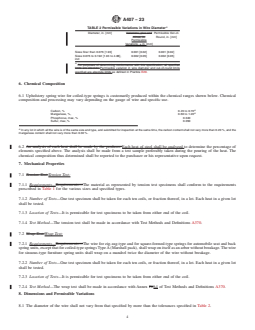
TABLE 2 Permissible Variations in Wire Diameter
Diameter, in. [mm] Variations, plus and Permissible Out-of-
minus, in. Round, in. [mm]
Permissible
Variations, ± in. [mm]
Sizes finer than 0.076 [1.93] 0.001 [0.02] 0.001 [0.02]
Sizes 0.076 to 0.192 [1.93 to 4.88], 0.002 [0.05] 0.002 [0.05]
incl
A
For purposes of det
...