

ASTM F3233/F3233M-23a
(Specification)Standard Specification for Flight and Navigation Instrumentation in Aircraft
General Information
- Abstract
ABSTRACT
This specification establishes the requirements for the instrumentation aspects of airworthiness and design for "small" aircraft. It prescribes the Aircraft Type Code (ATC) compliance matrix based on airworthiness level, number of engines, type of engine(s), stall speed, cruise speed, meteorological conditions, altitude, and maneuvers. An ATC is defined by taking into account both the technical considerations regarding the design of the aircraft and the airworthiness level established based upon risk-based criteria. The instrumentation requirements established by this specification cover flight and navigation instruments, electronic display instrument systems, airspeed indicating system, static pressure system, magnetic direction indicator, and instruments using a power source.
SCOPE
1.1 This specification covers flight and navigation instrumentation aspects of airworthiness and design. The material was developed through open consensus of international experts in general aviation. This information was created by focusing on Level 1, 2, 3, and 4 Normal Category aeroplanes; however, the content may be more broadly applicable, and should not be unduly limited. The topics covered within this specification are flight and navigation instruments including those for airspeed, altitude, attitude, heading, free air temperature, and speed warning.
1.2 The applicant for a design approval shall seek the individual guidance of their respective CAA body concerning the use of this specification as part of a certification plan. For information on which CAA regulatory bodies have accepted this specification (in whole or in part) as a means of compliance to their Small Aircraft Airworthiness regulations (hereinafter referred to as “the Rules”), refer to ASTM F44 webpage (www.ASTM.org/COMMITTEE/F44.htm), which includes CAA website links. Annex A1 maps the means of compliance described in this specification to EASA CS 23, amendment 5 or later, and FAA 14 CFR 23, amendment 64 or later.
1.3 The values stated in either SI units or inch-pound units are to be regarded separately as standard. The values stated in each system are not necessarily exact equivalents; therefore, to ensure conformance with the standard, each system shall be used independently of the other, and values from the two systems shall not be combined.
1.4 This standard does not purport to address all of the safety concerns, if any, associated with its use. It is the responsibility of the user of this standard to establish appropriate safety, health, and environmental practices and determine the applicability of regulatory limitations prior to use.
1.5 This international standard was developed in accordance with internationally recognized principles on standardization established in the Decision on Principles for the Development of International Standards, Guides and Recommendations issued by the World Trade Organization Technical Barriers to Trade (TBT) Committee.
- Status
- Published
- Publication Date
- 31-Oct-2023
- Technical Committee
- F44 - General Aviation Aircraft
- Drafting Committee
- F44.50 - Systems and Equipment
Buy Documents
ASTM F3233/F3233M-23a - Standard Specification for Flight and Navigation Instrumentation in Aircraft
REDLINE ASTM F3233/F3233M-23a - Standard Specification for Flight and Navigation Instrumentation in Aircraft
Overview
ASTM F3233/F3233M-23a: Standard Specification for Flight and Navigation Instrumentation in Aircraft establishes consensus-based requirements for the design and airworthiness of flight and navigation instruments used in "small" aircraft. Developed by ASTM Committee F44 on General Aviation Aircraft, this standard applies primarily to Level 1-4 Normal Category aeroplanes but offers broader industry relevance. The specification addresses critical instrumentation such as airspeed indicators, altimeters, attitude and heading reference units, static pressure systems, electronic display systems, and magnetic direction indicators-each vital for safe, compliant aircraft operation.
ASTM F3233/F3233M-23a provides an Aircraft Type Code (ATC) compliance matrix based on parameters including airworthiness level, engine number and type, performance characteristics, and expected operating environments. This robust structure promotes harmonization with global regulations, such as EASA CS-23 and FAA 14 CFR 23, through mapped means of compliance.
Key Topics
This standard covers:
- Flight and Navigation Instruments: Minimum requirements for airspeed indicators, sensitive altimeters, attitude instruments, heading indicators, free air temperature indicators, and speed warning devices.
- Electronic Display Instrument Systems: Requirements for arrangement, visibility, redundancy, and rapid information access under failure conditions.
- Airspeed Indicating System: Calibration processes and system error limits, with emphasis on reliable operation across various flight conditions and protection against icing.
- Static Pressure System: Design for accuracy, durability, moisture drainage, and compliance with proof testing requirements for both pressurized and unpressurized aircraft.
- Magnetic Direction Indicators: Accuracy and installation criteria, allowable deviation limits, and supplemental display requirements.
- Power Source Instruments: Provisions for feedback regarding power adequacy, independent power supplies, and energy redundancy for Instrument Flight Rules (IFR) operations.
Compliance Matrix:
The standard’s ATC matrix aligns compliance requirements to a variety of aircraft configurations and flight profiles, supporting both designers and regulators in selecting applicable sections.
Applications
ASTM F3233/F3233M-23a is an essential tool for:
- Aircraft Designers and Manufacturers: Ensures new small aircraft designs meet global certification requirements for instrumentation.
- Modification and Upgrade Projects: Guides integration and retrofitting of modern flight and navigation instruments, including electronic display systems and advanced altimeters.
- Certification and Regulatory Compliance Efforts: Supports compliance demonstration to authorities such as the FAA and EASA through a clear standards-based approach.
- Quality Assurance and Maintenance: Provides technical requirements and guidance for ensuring instrument reliability and ongoing airworthiness throughout an aircraft’s lifecycle.
Design Approval Process:
Applicants must coordinate with their respective Civil Aviation Authorities (CAAs) when incorporating this standard into certification plans. The standard explicitly recommends referencing the ASTM F44 committee web page for details on CAA acceptance and regulatory mapping.
Related Standards
ASTM F3233/F3233M-23a works in concert with numerous other international and industry standards, including:
- ASTM F3060: Terminology for Aircraft
- ASTM F3061/F3061M: Systems and Equipment in Aircraft
- ASTM F3116/F3116M: Design Loads and Conditions
- ASTM F3117/F3117M: Crew Interface in Aircraft
- ASTM F3120/F3120M: Ice Protection for General Aviation Aircraft
- ASTM F3174/F3174M: Establishing Operating Limitations for Aeroplanes
- ASTM F3229/F3229M: Static Pressure System Tests for Small Aircraft
- ASTM F3230: Safety Assessment of Systems and Equipment in Small Aircraft
- FAA TSO-C10/TSO-C209: Altimeter and Electronic Flight Display Systems
- EASA CS-23/FAA 14 CFR 23: Certification specifications for normal category airplanes
Keywords: flight instruments, aircraft navigation instruments, aviation instrumentation standard, airspeed indicators, electronic display systems, aircraft type code, instrument system compliance, ASTM F3233
Relations
- Replaces
ASTM F3233/F3233M-23 - Standard Specification for Flight and Navigation Instrumentation in Aircraft - Effective Date
- 01-Nov-2023
- Effective Date
- 01-Nov-2023
- Refers
ASTM F3229/F3229M-17(2023) - Standard Practice for Static Pressure System Tests in Small Aircraft - Effective Date
- 01-May-2023
- Effective Date
- 01-Nov-2023
- Effective Date
- 01-Nov-2023
- Effective Date
- 01-Nov-2023
- Effective Date
- 01-Nov-2023
- Effective Date
- 01-Nov-2023
- Effective Date
- 01-Nov-2023
- Referred By
ASTM F3228-21 - Standard Specification for Flight Data and Voice Recording in Small Aircraft - Effective Date
- 01-Nov-2023
- Effective Date
- 01-Nov-2023
Buy Documents
ASTM F3233/F3233M-23a - Standard Specification for Flight and Navigation Instrumentation in Aircraft
REDLINE ASTM F3233/F3233M-23a - Standard Specification for Flight and Navigation Instrumentation in Aircraft
Get Certified
Connect with accredited certification bodies for this standard

BSI Group
BSI (British Standards Institution) is the business standards company that helps organizations make excellence a habit.

Bureau Veritas
Bureau Veritas is a world leader in laboratory testing, inspection and certification services.

DNV
DNV is an independent assurance and risk management provider.
Sponsored listings
Frequently Asked Questions
ASTM F3233/F3233M-23a is a technical specification published by ASTM International. Its full title is "Standard Specification for Flight and Navigation Instrumentation in Aircraft". This standard covers: ABSTRACT This specification establishes the requirements for the instrumentation aspects of airworthiness and design for "small" aircraft. It prescribes the Aircraft Type Code (ATC) compliance matrix based on airworthiness level, number of engines, type of engine(s), stall speed, cruise speed, meteorological conditions, altitude, and maneuvers. An ATC is defined by taking into account both the technical considerations regarding the design of the aircraft and the airworthiness level established based upon risk-based criteria. The instrumentation requirements established by this specification cover flight and navigation instruments, electronic display instrument systems, airspeed indicating system, static pressure system, magnetic direction indicator, and instruments using a power source. SCOPE 1.1 This specification covers flight and navigation instrumentation aspects of airworthiness and design. The material was developed through open consensus of international experts in general aviation. This information was created by focusing on Level 1, 2, 3, and 4 Normal Category aeroplanes; however, the content may be more broadly applicable, and should not be unduly limited. The topics covered within this specification are flight and navigation instruments including those for airspeed, altitude, attitude, heading, free air temperature, and speed warning. 1.2 The applicant for a design approval shall seek the individual guidance of their respective CAA body concerning the use of this specification as part of a certification plan. For information on which CAA regulatory bodies have accepted this specification (in whole or in part) as a means of compliance to their Small Aircraft Airworthiness regulations (hereinafter referred to as “the Rules”), refer to ASTM F44 webpage (www.ASTM.org/COMMITTEE/F44.htm), which includes CAA website links. Annex A1 maps the means of compliance described in this specification to EASA CS 23, amendment 5 or later, and FAA 14 CFR 23, amendment 64 or later. 1.3 The values stated in either SI units or inch-pound units are to be regarded separately as standard. The values stated in each system are not necessarily exact equivalents; therefore, to ensure conformance with the standard, each system shall be used independently of the other, and values from the two systems shall not be combined. 1.4 This standard does not purport to address all of the safety concerns, if any, associated with its use. It is the responsibility of the user of this standard to establish appropriate safety, health, and environmental practices and determine the applicability of regulatory limitations prior to use. 1.5 This international standard was developed in accordance with internationally recognized principles on standardization established in the Decision on Principles for the Development of International Standards, Guides and Recommendations issued by the World Trade Organization Technical Barriers to Trade (TBT) Committee.
ABSTRACT This specification establishes the requirements for the instrumentation aspects of airworthiness and design for "small" aircraft. It prescribes the Aircraft Type Code (ATC) compliance matrix based on airworthiness level, number of engines, type of engine(s), stall speed, cruise speed, meteorological conditions, altitude, and maneuvers. An ATC is defined by taking into account both the technical considerations regarding the design of the aircraft and the airworthiness level established based upon risk-based criteria. The instrumentation requirements established by this specification cover flight and navigation instruments, electronic display instrument systems, airspeed indicating system, static pressure system, magnetic direction indicator, and instruments using a power source. SCOPE 1.1 This specification covers flight and navigation instrumentation aspects of airworthiness and design. The material was developed through open consensus of international experts in general aviation. This information was created by focusing on Level 1, 2, 3, and 4 Normal Category aeroplanes; however, the content may be more broadly applicable, and should not be unduly limited. The topics covered within this specification are flight and navigation instruments including those for airspeed, altitude, attitude, heading, free air temperature, and speed warning. 1.2 The applicant for a design approval shall seek the individual guidance of their respective CAA body concerning the use of this specification as part of a certification plan. For information on which CAA regulatory bodies have accepted this specification (in whole or in part) as a means of compliance to their Small Aircraft Airworthiness regulations (hereinafter referred to as “the Rules”), refer to ASTM F44 webpage (www.ASTM.org/COMMITTEE/F44.htm), which includes CAA website links. Annex A1 maps the means of compliance described in this specification to EASA CS 23, amendment 5 or later, and FAA 14 CFR 23, amendment 64 or later. 1.3 The values stated in either SI units or inch-pound units are to be regarded separately as standard. The values stated in each system are not necessarily exact equivalents; therefore, to ensure conformance with the standard, each system shall be used independently of the other, and values from the two systems shall not be combined. 1.4 This standard does not purport to address all of the safety concerns, if any, associated with its use. It is the responsibility of the user of this standard to establish appropriate safety, health, and environmental practices and determine the applicability of regulatory limitations prior to use. 1.5 This international standard was developed in accordance with internationally recognized principles on standardization established in the Decision on Principles for the Development of International Standards, Guides and Recommendations issued by the World Trade Organization Technical Barriers to Trade (TBT) Committee.
ASTM F3233/F3233M-23a is classified under the following ICS (International Classification for Standards) categories: 49.020 - Aircraft and space vehicles in general. The ICS classification helps identify the subject area and facilitates finding related standards.
ASTM F3233/F3233M-23a has the following relationships with other standards: It is inter standard links to ASTM F3233/F3233M-23, ASTM F3229/F3229M-23, ASTM F3229/F3229M-17(2023), ASTM F3064/F3064M-21, ASTM F3563-22, ASTM F3264-23, ASTM F3227/F3227M-22, ASTM F3061/F3061M-23b, ASTM F3173/F3173M-23, ASTM F3228-21, ASTM F3117/F3117M-23a. Understanding these relationships helps ensure you are using the most current and applicable version of the standard.
ASTM F3233/F3233M-23a is available in PDF format for immediate download after purchase. The document can be added to your cart and obtained through the secure checkout process. Digital delivery ensures instant access to the complete standard document.
Standards Content (Sample)
This international standard was developed in accordance with internationally recognized principles on standardization established in the Decision on Principles for the
Development of International Standards, Guides and Recommendations issued by the World Trade Organization Technical Barriers to Trade (TBT) Committee.
Designation: F3233/F3233M − 23a
Standard Specification for
Flight and Navigation Instrumentation in Aircraft
This standard is issued under the fixed designation F3233/F3233M; the number immediately following the designation indicates the year
of original adoption or, in the case of revision, the year of last revision. A number in parentheses indicates the year of last reapproval.
A superscript epsilon (´) indicates an editorial change since the last revision or reapproval.
1. Scope Development of International Standards, Guides and Recom-
mendations issued by the World Trade Organization Technical
1.1 This specification covers flight and navigation instru-
Barriers to Trade (TBT) Committee.
mentation aspects of airworthiness and design. The material
was developed through open consensus of international experts
2. Referenced Documents
in general aviation. This information was created by focusing
2.1 Following is a list of external standards reference
on Level 1, 2, 3, and 4 Normal Category aeroplanes; however,
throughout this specification; the earliest revision acceptable
the content may be more broadly applicable, and should not be
for use is indicated. In all cases, later document revisions are
unduly limited. The topics covered within this specification are
acceptable if shown to be equivalent to the listed revision, or if
flight and navigation instruments including those for airspeed,
otherwise formally accepted by the governing civil aviation
altitude, attitude, heading, free air temperature, and speed
authority; earlier revisions are not acceptable.
warning.
2.2 ASTM Standards:
1.2 The applicant for a design approval shall seek the
F3060 Terminology for Aircraft
individual guidance of their respective CAA body concerning
F3061/F3061M Specification for Systems and Equipment in
the use of this specification as part of a certification plan. For
Aircraft
information on which CAA regulatory bodies have accepted
F3116/F3116M Specification for Design Loads and Condi-
this specification (in whole or in part) as a means of compli-
tions
ance to their Small Aircraft Airworthiness regulations (herein-
F3117/F3117M Specification for Crew Interface in Aircraft
after referred to as “the Rules”), refer to ASTM F44 webpage
F3120/F3120M Specification for Ice Protection for General
(www.ASTM.org/COMMITTEE/F44.htm), which includes
Aviation Aircraft
CAA website links. Annex A1 maps the means of compliance
F3174/F3174M Specification for Establishing Operating
described in this specification to EASA CS 23, amendment 5 or
Limitations and Information for Aeroplanes
later, and FAA 14 CFR 23, amendment 64 or later.
F3229/F3229M Practice for Static Pressure System Tests in
1.3 The values stated in either SI units or inch-pound units
Small Aircraft
are to be regarded separately as standard. The values stated in
F3230 Practice for Safety Assessment of Systems and
each system are not necessarily exact equivalents; therefore, to
Equipment in Small Aircraft
ensure conformance with the standard, each system shall be 3
2.3 CARs Standard:
used independently of the other, and values from the two
CAR 523 Normal, utility, aerobatic and commuter category
systems shall not be combined.
aeroplanes and Airworthiness manual chapter 523 –
1.4 This standard does not purport to address all of the
Normal, utility, aerobatic and commuter category aero-
safety concerns, if any, associated with its use. It is the
planes
responsibility of the user of this standard to establish appro-
2.4 EASA Standard:
priate safety, health, and environmental practices and deter-
CS-23 Certification Specifications for Normal-Category
mine the applicability of regulatory limitations prior to use.
Aeroplanes
1.5 This international standard was developed in accor-
2.5 FAA Technical Standard Orders:
dance with internationally recognized principles on standard-
TSO-C10 Pressure Altimeter Systems
ization established in the Decision on Principles for the
For referenced ASTM standards, visit the ASTM website, www.astm.org, or
contact ASTM Customer Service at service@astm.org. For Annual Book of ASTM
This specification is under the jurisdiction of ASTM Committee F44 on General Standards volume information, refer to the standard’s Document Summary page on
Aviation Aircraft and is the direct responsibility of Subcommittee F44.50 on the ASTM website.
Systems and Equipment. Available from Transport Canada, 330 Sparks St., Ottawa, ON K1A 0N5,
Current edition approved Nov. 1, 2023. Published December 2023. Originally https://tc.canada.ca/en.
approved in 2017. Last previous edition approved in 2023 as F3233/F3233M–23. Available from European Union Aviation Safety Agency (EASA), Konrad-
DOI: 10.1520/F3233_F3233M-23A. Adenauer-Ufer 3, D-50668 Cologne, Germany, https://www.easa.europa.eu.
Copyright © ASTM International, 100 Barr Harbor Drive, PO Box C700, West Conshohocken, PA 19428-2959. United States
F3233/F3233M − 23a
A mark-out (×) in any of the applicable ATC character field columns
TSO-C209 Electronic Flight Instrument System (EFIS) Dis-
indicates that the requirements of that subsection are not applicable to an
play
aircraft if that ATC character field is applicable.
2.6 Federal Standard:
Example—An aircraft with an ATC of 1SRLLDLN is being considered.
14 CFR 23 Code of Federal Regulations Title 14 Part
Since all applicable columns are empty for 4.1.3, that subsection is
23—Airworthiness Standards: Normal Category Air- applicable to the aircraft. Since both the “R” engine type column and the
“L” cruise speed column for 4.1.4 contain white circles, then that
planes
subsection is not applicable; however, for an aircraft with an ATC of
1SRLHDLN, 4.1.4 would be applicable since the “H” cruise speed
3. Terminology
column does not contain a white circle. 4.1.5 would not be applicable to
either aircraft, since it contains an × in the “R” engine type column.
3.1 Terminology specific to this specification is provided
below. For general terminology, refer to Terminology F3060.
4.1 Flight and Navigation Instruments:
4.1.1 A means to determine airspeed shall be provided.
3.2 Definitions:
3.2.1 aircraft type code, n—an Aircraft Type Code (ATC) is 4.1.2 A means to determine altitude shall be provided.
defined by considering both the technical considerations re- 4.1.3 A means to determine aircraft heading or direction of
garding the design of the aircraft and the airworthiness level
flight shall be provided.
established based upon risk-based criteria; the method of
NOTE 2—The choice of technology to meet this requirement may be
defining an ATC applicable to this specification is defined in
mandated by some governing aviation authorities due to external require-
Practice F3230.
ments; for example, a magnetic direction indicator.
3.2.2 continued safe flight and landing, n—continued safe
4.1.4 A means to determine free air temperature shall be
flight and landing as applicable to this specification is defined
provided.
in Specification F3061/F3061M.
4.1.5 A speed warning device shall be provided for turbine-
3.2.3 high speed, n—an aircraft’s performance level is
engine-powered aircraft.
considered high speed if V or V is greater than 463 km/h
4.1.6 A speed warning device shall be provided for aircraft
MO NO
[250 knots], or M is greater than M0.6.
MO for which V /M and V /M are established under Speci-
MO MO D D
fication F3116/F3116M “Design Airspeeds” and Specification
3.2.4 instrument, n—the term instrument includes devices
F3174/F3174M “Establishing Operating Limitations” if V /
that are physically contained in one unit or component, and
MO
M is greater than 0.8 V /M .
devices that are composed of two or more physically separate MO D D
4.1.7 Any speed warning device required by 4.1.5 or 4.1.6
units or components connected together (such as a remote
shall give effective aural warning (differing distinctively from
indicating gyroscopic direction indicator that includes a mag-
aural warnings used for other purposes) to the pilots whenever
netic sensing element, a gyroscopic unit, an amplifier, and an
the speed exceeds V plus 11.11 km/h [6 knots] or M +
indicator connected together).
MO MO
0.01.
3.2.5 low speed, n—an aircraft’s performance level is con-
4.1.8 The upper limit of the production tolerance for any
sidered low speed if V or V is less than or equal to
MO NO
speed warning device required by 4.1.5 or 4.1.6 shall not
463 km ⁄h [250 knots], or M is less than or equal to M0.6.
MO
exceed the prescribed warning speed.
3.2.6 primary display, n—primary display refers to the
4.1.9 The lower limit of any speed warning device required
display of a parameter that is located such that the pilot looks
by 4.1.5 or 4.1.6 shall be set to minimize nuisance warnings.
at it first when wanting to view that parameter.
4.1.10 If an attitude display is installed, the instrument
3.2.7 sensitive altimeter, n—an instrument that measures
design shall not provide any means, accessible to the flight
altitude as a function of atmospheric pressure typically with an
crew, of adjusting the relative positions of the attitude refer-
adjustable barometric scale that allows the reference pressure
ence symbol and the horizon line beyond that necessary for
to be set to a range of predefined atmospheric pressure
parallax correction.
references. The “sensitive” element of the altimeter relates to
4.1.11 If airspeed limitations vary with altitude, the airspeed
the sensitivity of the instrument’s displayed change in altitude
indicator shall have a maximum allowable airspeed indicator
over the total range of display. (For some examples of sensitive
showing the variation of V with altitude.
MO
altimeter implementations, see TSO-C10( ) or TSO-C209( )).
4.1.12 The altimeter shall be a sensitive type.
4.1.13 A third attitude instrument shall be provided that
4. Instrumentation
meets the requirements of 4.1.13.1 – 4.1.13.6.
NOTE 1—Table 1 provides correlation between various Aircraft Type
Codes and the individual requirements contained within this section; refer 4.1.13.1 The third attitude instrument shall be powered from
to 3.2.1. For each subsection, an indicator can be found under each ATC
a source independent of the electrical generating system.
character field; three indicators are used:
4.1.13.2 The third attitude instrument shall continue reliable
An empty cell ( ) in all applicable ATC character field columns
operation for a minimum of 30 min after total failure of the
indicates that an aircraft shall meet the requirements of that subsection.
electrical generating system.
A white circle (○) in multiple columns indicates that the requirements
of that subsection are not applicable to an aircraft only if all such ATC
4.1.13.3 The third attitude instrument shall operate indepen-
character fields are applicable.
dently of any other attitude indicating system.
4.1.13.4 The third attitude instrument shall be operative
without selection after total failure of the electrical generating
Available from U.S. Government Publishing Office (GPO), 732 N. Capitol St.,
NW, Washington, DC 20401, http://www.gpo.gov. system.
F3233/F3233M − 23a
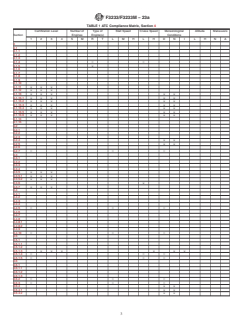
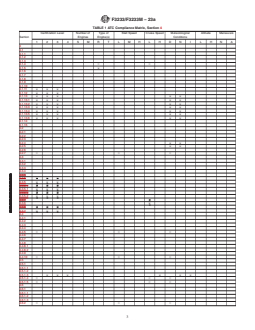
TABLE 1 ATC Compliance Matrix, Section 4
Certification Level Number of Type of Stall Speed Cruise Speed Meteorological Altitude Maneuvers
Engines Engine(s) Conditions
Section
1 2 3 4 S M R T L M H L H D N I L H N A
4.1
4.1.1
4.1.2
4.1.3
4.1.4 C C
4.1.5 ×
4.1.6
4.1.7
4.1.8
4.1.9
4.1.10
4.1.11 × × ×
4.1.12 × × ×
4.1.13 × × × × ×
4.1.13.1 × × × × ×
4.1.13.2 × × × × ×
4.1.13.3 × × × × ×
4.1.13.4 × × × × ×
4.1.13.5 × × × × ×
4.1.13.6 × × × × ×
4.1.14
4.1.15
4.2
4.2.1
4.2.2
4.2.3
4.2.4 × ×
4.2.5 × ×
4.2.6
4.2.7 C C C
4.3
4.3.1
4.3.2
4.3.3
4.3.4
4.3.5 × × ×
4.3.5.1 × × ×
4.3.5.2 × × ×
4.3.6 ×
4.3.7 × × ×
4.4
4.4.1
4.4.2
4.4.3
4.4.4
4.4.5 C C C
4.4.6
4.4.7
4.4.8
4.4.8.1
4.4.8.2
4.4.9
4.4.10 C C C
4.5
4.5.1
4.5.1.1
4.5.1.2
4.5.1.3 × × × × × ×
4.5.1.4 C C C
4.5.1.5 C C C
4.6
4.6.1
4.6.1.1
4.6.1.2
4.6.1.3
4.6.2 C C C
4.6.3 C C C
4.6.4 × ×
4.6.4.1 × ×
4.6.4.2 × ×
F3233/F3233M − 23a
4.1.13.5 The third attitude instrument shall be located in a 4.3.3 The design and installation of each airspeed indicating
position acceptable to the governing civil aviation authority system shall provide positive drainage of moisture from the
that will make it plainly visible to and usable by any pilot at the pitot static plumbing.
pilot’s station.
4.3.4 If certification for instrument flight rules or flight in
4.1.13.6 The third attitude instrument shall be appropriately
icing conditions is requested, each airspeed system shall have
lighted during all phases of operation.
a heated pitot tube or an equivalent means of preventing
4.1.14 Instrument panel vibration may not damage, or
malfunction due to icing; refer to Specification F3120/
impair the accuracy of, any instrument.
F3120M.
4.1.15 The instrument lights shall have enough distance or
4.3.5 Each airspeed system shall be calibrated to determine
insulating material between current-carrying parts and the
the system error during the accelerate-takeoff ground run.
housing so that vibration in flight will not cause shorting.
4.3.5.1 The airspeed system ground run calibration shall be
determined from 0.8 of the minimum value of V to the
4.2 Electronic Display Instrument Systems:
maximum value of V , considering the approved ranges of
4.2.1 Electronic display indicators shall meet the arrange- 2
altitude and weight.
ment and visibility requirements of Specification F3117/
F3117M. 4.3.5.2 The airspeed system ground run calibration shall be
determined assuming an engine failure at the minimum value
4.2.2 Electronic display indicators shall not inhibit the
of V .
primary display of attitude, airspeed, altitude, or powerplant
parameters needed by any pilot to set power within established 4.3.6 Aircraft with high speed performance levels (refer to
limitations, in any normal mode of operation.
3.2.3) shall meet the requirements of 4.3.5, 4.3.5.1, and 4.3.5.2
4.2.3 Electronic display indicators shall not inhibit the regardless of seating capacity.
primary display of powerplant parameters needed by any pilot
4.3.7 Where duplicate airspeed indicators are required, their
to properly set or monitor powerplant limitations during the
respective pitot tubes shall be far enough apart to avoid damage
engine starting mode of operation.
to both tubes in a collision with a bird.
4.2.4 Electronic display indicators shall have an indepen-
4.4 Static Pressure System:
dent magnetic direction indicator and either an independent
4.4.1 Each instrument provided with static pressure case
secondary mechanical altimeter, airspeed indicator, and atti-
connections shall be so vented that the influence of aircraft
tude instrument or electronic display of parameters for altitude,
speed, the opening and closing of windows, airflow variations,
airspeed, and attitude that are independent from the aircraft’s
moisture, or other foreign matter will least affect the accuracy
primary electrical power system.
of the instruments except as noted in Specification F3120/
4.2.5 If secondary instruments are installed to comply with
F3120M.
4.2.4, they may be installed in panel positions that are
4.4.2 The design and installation of a static pressure system
displaced from the primary positions specified by Specification
shall be such that positive drainage of moisture is provided.
F3117/F3117M, but shall be located where they meet the
4.4.3 The design and installation of a static pressure system
pilot’s visibility requirements of Specification F3117/F3117M.
shall be such that chafing of the tubing, and excessive
4.2.6 Electronic display indicators shall provide, where
distortion or restriction at bends in the tubing, is avoided.
appropriate, direction and rate of change of the parameter
4.4.4 The design and installation of a static pressure system
being displayed to the pilot.
shall be such that the materials used are durable, suitable for
4.2.7 The electronic display indicators, including their sys-
the purpose intended, and protected against corrosion.
tems and installations, and considering other aircraft systems,
4.4.5 To demonstrate the integrity of the static pressure
shall be designed so that one display of information essential
for continued safe flight and landing will be available within system, a proof test shall be conducted for unpressurized
aircraft in accordance with Practice F3229/F3229M.
1 s to the crew by a single pilot action or by automatic means
for continued safe operation, after any single failure or prob-
4.4.6 To demonstrate the integrity of the static pressure
able combination of failures (refer to Practice F3230). system, a proof test shall be conducted for pressurized aircraft
in accordance with Practice F3229/F3229M.
4.3 Airspeed Indicating System:
4.4.7 If certification for instrument flight rules or flight in
4.3.1 Each airspeed indicating instrument shall be calibrated
icing conditions is requested and a static pressure system is
to indicate true airspeed (at sea level with a standard atmo-
necessary for the functioning of instruments, systems, or
sphere) with a minimum practicable instrument calibration
devices, the static pressure system shall comply with the
error when the corresponding pitot and static pressures are
provisions of Specification F3120/F3120M.
applied.
4.4.8 Except as provided in 4.4.9, if the static pressure
4.3.2 Each airspeed system shall be calibrated in flight to
system incorporates both a primary and an alternate static
determine the system error. The system error, including posi-
pressure source, the means for selecting one or the other source
tion error, but excluding the airspeed indicator instrument
shall be designed in accordance with 4.4.8.1 and 4.4.8.2.
calibration error, shall not exceed 3 % of the calibrated
4.4.8.1 When either static pressure source is selected, the
airspeed or 9.3 km/h [5 knots], whichever is greater, through-
other source shall be blocked off.
out the following speed ranges: 1.3 V to V /M or V ,
S1 MO MO NE
whichever is appropriate with flaps retracted; and, 1.3 V to 4.4.8.2 Both static pressure sources shall not be blocked off
S1
V with flaps extended. simultaneously.
FE
F3233/F3233M − 23a
4.4.9 For unpressurized aircraft, 4.4.8.1 does not apply if it 4.6.1 Each instrument that uses a power source shall have a
can be demonstrated that the static pressure system calibration, means to indicate to the crew if power is not adequate to
when either static pressure source is selected, is not changed by sustain proper instrument performance.
the other static pressure source being open or blocked. 4.6.1.1 In showing compliance with 4.6.1, the power shall
4.4.10 Each static pressure system must be calibrated in
be sensed at the instrument, not at the power source only.
flight to determine the system error. The system error, in
4.6.1.2 In showing compliance with 4.6.1, for electric and
indicated pressure altitude, at sea-level, with a standard
vacuum/pressure instruments, the power is considered to be
atmosphere, excluding instrument calibration error, may not adequate when the voltage or the vacuum/pressure,
exceed 69 m [630 ft] per 185 km ⁄h [100 knots] speed for the
respectively, is within approved limits.
appropriate configuration in the speed range between 1.3 V
4.6.1.3 If a separate indicator is used to meet the require-
S0
with flaps extended, and 1.8 V with flaps retracted. However,
ments of 4.6.1, it shall be located so that the pilot using the
S1
the error need not be less than 69 m [630 ft].
instruments can monitor the indicator with minimum head and
eye movement.
4.5 Direction Indicator:
4.6.2 The installation and power supply systems for instru-
4.5.1 If a magnetic direction indicator is used to satisfy the
ments that use a power source shall be designed so that the
requirements of 4.1.3, the following requirements shall be met.
failure of one instrument will not interfere with the proper
4.5.1.1 Except as provided in 4.5.1.3 or 4.5.1.4, each
supply of energy to the remaining instruments.
magnetic direction indicator shall be installed so that its
4.6.3 The installation and power supply systems for instru-
accuracy is not excessively affected by the aircraft’s vibration
ments that use a power source shall be designed so that the
or magnetic fields.
failure of the energy supply from one source will not interfere
4.5.1.2 Except as provided in 4.5.1.3 or 4.5.1.4, the com-
with the proper supply of energy from any other source.
pensated installation of the magnetic direction indicator shall
4.6.4 For certification for Instrument Flight Rules (IFR)
not have a deviation in level flight greater than 10° on any
operations, the heading, altitude, airspeed, and attitude instru-
heading.
ments shall meet the requirements of either 4.6.4.1 or 4.6.4.2.
4.5.1.3 The compensated installation of the magnetic direc-
4.6.4.1 In showing compliance with 4.6.4, there shall be two
tion indicator may deviate more than 10° when a radio is
independent sources of power (not driven by the same engine
transmitting, but shall not exceed 15°.
on multiengine aircraft), and a manual or an automatic means
4.5.1.4 A magnetic nonstabilized direction indicator may
to select each power source.
deviate more than 10° due to the operation of electrically
4.6.4.2 As an alternative to the requirements of 4.6.4.1,
powered systems such as electrically heated windshields if
either a magnetic stabilized direction indicator, which does not there shall be a separate display of parameters for heading,
altitude, airspeed, and attitude that has a power source inde-
have a deviation in level flight greater than 10° on any heading,
or a gyroscopic direction indicator, is installed. pendent from the aircraft’s primary electrical power system.
4.5.1.5 Deviations of a magnetic nonstabilized direction
indicator of more than 10° shall be placarded in accordance 5. Keywords
with Specification F3117/F3117M.
5.1 electronic display; indication; instrumentation; instru-
4.6 Instruments Using a Power Source: ments
ANNEX
(Mandatory Information)
A1. CORRELATION OF STANDARD CONTENT AND THE RULES
A1.1 See Table A1.1. A1.3 Means of Compliance Correlation Sorted by EASA
CS-23 Rule
A1.2 Means of Compliance Correlation Sorted by FAA 14
A1.3.1 See Table A1.3.
CFR Rule
NOTE A1.2—The specification sections shown in the specification
A1.2.1 See Table A1.2.
column will be at the highest level at which everything below that level is
NOTE A1.1—The specification sections shown in the specification
the same as the level shown.
column will be at the highest level at which everything below that level is
the same as the level shown.
F3233/F3233M − 23a
TABLE A1.1 Means of Compliance Correl
...
This document is not an ASTM standard and is intended only to provide the user of an ASTM standard an indication of what changes have been made to the previous version. Because
it may not be technically possible to adequately depict all changes accurately, ASTM recommends that users consult prior editions as appropriate. In all cases only the current version
of the standard as published by ASTM is to be considered the official document.
Designation: F3233/F3233M − 23 F3233/F3233M − 23a
Standard Specification for
Flight and Navigation Instrumentation in Aircraft
This standard is issued under the fixed designation F3233/F3233M; the number immediately following the designation indicates the year
of original adoption or, in the case of revision, the year of last revision. A number in parentheses indicates the year of last reapproval.
A superscript epsilon (´) indicates an editorial change since the last revision or reapproval.
1. Scope
1.1 This specification covers flight and navigation instrumentation aspects of airworthiness and design. The material was
developed through open consensus of international experts in general aviation. This information was created by focusing on Level
1, 2, 3, and 4 Normal Category aeroplanes; however, the content may be more broadly applicable, and should not be unduly
limited. The topics covered within this specification are flight and navigation instruments including those for airspeed, altitude,
attitude, heading, free air temperature, and speed warning.
1.2 The applicant for a design approval shall seek the individual guidance of their respective CAA body concerning the use of this
specification as part of a certification plan. For information on which CAA regulatory bodies have accepted this specification (in
whole or in part) as a means of compliance to their Small Aircraft Airworthiness regulations (hereinafter referred to as “the Rules”),
refer to ASTM F44 webpage (www.ASTM.org/COMMITTEE/F44.htm), which includes CAA website links. Annex A1 maps the
means of compliance described in this specification to EASA CS 23, amendment 5 or later, and FAA 14 CFR 23, amendment 64
or later.
1.3 The values stated in either SI units or inch-pound units are to be regarded separately as standard. The values stated in each
system are not necessarily exact equivalents; therefore, to ensure conformance with the standard, each system shall be used
independently of the other, and values from the two systems shall not be combined.
1.4 This standard does not purport to address all of the safety concerns, if any, associated with its use. It is the responsibility
of the user of this standard to establish appropriate safety, health, and environmental practices and determine the applicability of
regulatory limitations prior to use.
1.5 This international standard was developed in accordance with internationally recognized principles on standardization
established in the Decision on Principles for the Development of International Standards, Guides and Recommendations issued
by the World Trade Organization Technical Barriers to Trade (TBT) Committee.
2. Referenced Documents
2.1 Following is a list of external standards reference throughout this specification; the earliest revision acceptable for use is
indicated. In all cases, later document revisions are acceptable if shown to be equivalent to the listed revision, or if otherwise
formally accepted by the governing civil aviation authority; earlier revisions are not acceptable.
2.2 ASTM Standards:
This specification is under the jurisdiction of ASTM Committee F44 on General Aviation Aircraft and is the direct responsibility of Subcommittee F44.50 on Systems
and Equipment.
Current edition approved June 1, 2023Nov. 1, 2023. Published July 2023December 2023. Originally approved in 2017. Last previous edition approved in 20212023 as
F3233/F3233M–21. DOI: 10.1520/F3233_F3233M-23.–23. DOI: 10.1520/F3233_F3233M-23A.
For referenced ASTM standards, visit the ASTM website, www.astm.org, or contact ASTM Customer Service at service@astm.org. For Annual Book of ASTM Standards
volume information, refer to the standard’s Document Summary page on the ASTM website.
Copyright © ASTM International, 100 Barr Harbor Drive, PO Box C700, West Conshohocken, PA 19428-2959. United States
F3233/F3233M − 23a
F3060 Terminology for Aircraft
F3061/F3061M Specification for Systems and Equipment in Aircraft
F3116/F3116M Specification for Design Loads and Conditions
F3117/F3117M Specification for Crew Interface in Aircraft
F3120/F3120M Specification for Ice Protection for General Aviation Aircraft
F3174/F3174M Specification for Establishing Operating Limitations and Information for Aeroplanes
F3229/F3229M Practice for Static Pressure System Tests in Small Aircraft
F3230 Practice for Safety Assessment of Systems and Equipment in Small Aircraft
2.3 CARs Standard:
CAR 523 Normal, utility, aerobatic and commuter category aeroplanes and Airworthiness manual chapter 523 – Normal, utility,
aerobatic and commuter category aeroplanes
2.4 EASA Standard:
CS-23 Certification Specifications for Normal-Category Aeroplanes
2.5 FAA Technical Standard Orders:
TSO-C10 Pressure Altimeter Systems
TSO-C209 Electronic Flight Instrument System (EFIS) Display
2.6 Federal Standard:
14 CFR 23 Code of Federal Regulations Title 14 Part 23—Airworthiness Standards: Normal Category Airplanes
3. Terminology
3.1 Terminology specific to this specification is provided below. For general terminology, refer to Terminology F3060.
3.2 Definitions:
3.2.1 aircraft type code, n—an Aircraft Type Code (ATC) is defined by considering both the technical considerations regarding
the design of the aircraft and the airworthiness level established based upon risk-based criteria; the method of defining an ATC
applicable to this specification is defined in SpecificationPractice F3061/F3061MF3230.
3.2.2 continued safe flight and landing, n—continued safe flight and landing as applicable to this specification is defined in
Specification F3061/F3061M.
3.2.3 high speed, n—an aircraft’s performance level is considered high speed if V or V is greater than 463 km/h [250
NEMO NO
knots], or M is greater than M0.6.
MO
3.2.4 instrument, n—the term instrument includes devices that are physically contained in one unit or component, and devices that
are composed of two or more physically separate units or components connected together (such as a remote indicating gyroscopic
direction indicator that includes a magnetic sensing element, a gyroscopic unit, an amplifier, and an indicator connected together).
3.2.5 low speed, n—an aircraft’s performance level is considered low speed if V or V is less than or equal to 463463 km
NEMO NO
km/h ⁄h [250 knots], or M is less than or equal to M0.6.
MO
3.2.6 primary display, n—primary display refers to the display of a parameter that is located such that the pilot looks at it first when
wanting to view that parameter.
3.2.7 sensitive altimeter, n—an instrument that measures altitude as a function of atmospheric pressure typically with an adjustable
barometric scale that allows the reference pressure to be set to a range of predefined atmospheric pressure references. The
“sensitive” element of the altimeter relates to the sensitivity of the instrument’s displayed change in altitude over the total range
of display. (For some examples of sensitive altimeter implementations, see TSO-C10( ) or TSO-C209( )).
4. Instrumentation
NOTE 1—Table 1 provides correlation between various Aircraft Type Codes and the individual requirements contained within this section; refer to 3.2.1.
For each subsection, an indicator can be found under each ATC character field; three indicators are used:
Available from Transport Canada, 330 Sparks St., Ottawa, ON K1A 0N5, https://tc.canada.ca/en.
Available from European Union Aviation Safety Agency (EASA), Konrad-Adenauer-Ufer 3, D-50668 Cologne, Germany, https://www.easa.europa.eu.
Available from U.S. Government Publishing Office (GPO), 732 N. Capitol St., NW, Washington, DC 20401, http://www.gpo.gov.
F3233/F3233M − 23a
TABLE 1 ATC Compliance Matrix, Section 4
Certification Level Number of Type of Stall Speed Cruise Speed Meteorological Altitude Maneuvers
Engines Engine(s) Conditions
Section
1 2 3 4 S M R T L M H L H D N I L H N A
4.1
4.1.1
4.1.2
4.1.3
4.1.4 C C
4.1.5 ×
4.1.6
4.1.7
4.1.8
4.1.9
4.1.10
4.1.11 × × ×
4.1.12 × × ×
4.1.13 × × × × ×
4.1.13.1 × × × × ×
4.1.13.2 × × × × ×
4.1.13.3 × × × × ×
4.1.13.4 × × × × ×
4.1.13.5 × × × × ×
4.1.13.6 × × × × ×
4.1.14
4.1.15
4.2
4.2.1
4.2.2
4.2.3
4.2.4 × ×
4.2.5 × ×
4.2.6
4.2.7 C C C
4.3
4.3.1
4.3.2
4.3.3
4.3.4
4.3.5
4.3.6 × × ×
4.3.5 × × ×
4.3.6.1 × × ×
4.3.5.1 × × ×
4.3.6.2 × × ×
4.3.5.2 × × ×
4.3.7 ×
4.3.6 ×
4.3.8 × × ×
4.3.7 × × ×
4.4
4.4.1
4.4.2
4.4.3
4.4.4
4.4.5 C C C
4.4.6
4.4.7
4.4.8
4.4.8.1
4.4.8.2
4.4.9
4.4.10 C C C
4.5
4.5.1
4.5.1.1
4.5.1.2
4.5.1.3 × × × × × ×
4.5.1.4 C C C
4.5.1.5 C C C
4.6
4.6.1
4.6.1.1
4.6.1.2
4.6.1.3
4.6.2 C C C
F3233/F3233M − 23a
TABLE 1 Continued
Certification Level Number of Type of Stall Speed Cruise Speed Meteorological Altitude Maneuvers
Engines Engine(s) Conditions
Section
1 2 3 4 S M R T L M H L H D N I L H N A
4.6.3 C C C
4.6.4 × ×
4.6.4.1 × ×
4.6.4.2 × ×
An empty cell ( ) in all applicable ATC character field columns indicates that an aircraft shall meet the requirements of that subsection.
A white circle (○) in multiple columns indicates that the requirements of that subsection are not applicable to an aircraft only if all such ATC character
fields are applicable.
A mark-out (×) in any of the applicable ATC character field columns indicates that the requirements of that subsection are not applicable to an aircraft
if that ATC character field is applicable.
Example—An aircraft with an ATC of 1SRLLDLN is being considered. Since all applicable columns are empty for 4.1.3, that subsection is applicable
to the aircraft. Since both the “R” engine type column and the “L” cruise speed column for 4.1.4 contain white circles, then that subsection is not
applicable; however, for an aircraft with an ATC of 1SRLHDLN, 4.1.4 would be applicable since the “H” cruise speed column does not contain a white
circle. 4.1.5 would not be applicable to either aircraft, since it contains an × in the “R” engine type column.
4.1 Flight and Navigation Instruments:
4.1.1 A means to determine airspeed shall be provided.
4.1.2 A means to determine altitude shall be provided.
4.1.3 A means to determine aircraft heading or direction of flight shall be provided.
NOTE 2—The choice of technology to meet this requirement may be mandated by some governing aviation authorities due to external requirements; for
example, a magnetic direction indicator.
4.1.4 A means to determine free air temperature shall be provided.
4.1.5 A speed warning device shall be provided for turbine-engine-powered aircraft.
4.1.6 A speed warning device shall be provided for aircraft for which V /M and V /M are established under Specification
MO MO D D
F3116/F3116M “Design Airspeeds” and Specification F3174/F3174M “Establishing Operating Limitations” if V /M is
MO MO
greater than 0.8 V /M .
D D
4.1.7 Any speed warning device required by 4.1.5 or 4.1.6 shall give effective aural warning (differing distinctively from aural
warnings used for other purposes) to the pilots whenever the speed exceeds V plus 11.11 km/h [6 knots] or M + 0.01.
MO MO
4.1.8 The upper limit of the production tolerance for any speed warning device required by 4.1.5 or 4.1.6 shall not exceed the
prescribed warning speed.
4.1.9 The lower limit of any speed warning device required by 4.1.5 or 4.1.6 shall be set to minimize nuisance warnings.
4.1.10 If an attitude display is installed, the instrument design shall not provide any means, accessible to the flight crew, of
adjusting the relative positions of the attitude reference symbol and the horizon line beyond that necessary for parallax correction.
4.1.11 If airspeed limitations vary with altitude, the airspeed indicator shall have a maximum allowable airspeed indicator showing
the variation of V with altitude.
MO
4.1.12 The altimeter shall be a sensitive type.
4.1.13 A third attitude instrument shall be provided that meets the requirements of 4.1.13.1 – 4.1.13.6.
4.1.13.1 The third attitude instrument shall be powered from a source independent of the electrical generating system.
4.1.13.2 The third attitude instrument shall continue reliable operation for a minimum of 30 min after total failure of the electrical
generating system.
F3233/F3233M − 23a
4.1.13.3 The third attitude instrument shall operate independently of any other attitude indicating system.
4.1.13.4 The third attitude instrument shall be operative without selection after total failure of the electrical generating system.
4.1.13.5 The third attitude instrument shall be located in a position acceptable to the governing civil aviation authority that will
make it plainly visible to and usable by any pilot at the pilot’s station.
4.1.13.6 The third attitude instrument shall be appropriately lighted during all phases of operation.
4.1.14 Instrument panel vibration may not damage, or impair the accuracy of, any instrument.
4.1.15 The instrument lights shall have enough distance or insulating material between current-carrying parts and the housing so
that vibration in flight will not cause shorting.
4.2 Electronic Display Instrument Systems:
4.2.1 Electronic display indicators shall meet the arrangement and visibility requirements of Specification F3117/F3117M.
4.2.2 Electronic display indicators shall not inhibit the primary display of attitude, airspeed, altitude, or powerplant parameters
needed by any pilot to set power within established limitations, in any normal mode of operation.
4.2.3 Electronic display indicators shall not inhibit the primary display of powerplant parameters needed by any pilot to properly
set or monitor powerplant limitations during the engine starting mode of operation.
4.2.4 Electronic display indicators shall have an independent magnetic direction indicator and either an independent secondary
mechanical altimeter, airspeed indicator, and attitude instrument or electronic display of parameters for altitude, airspeed, and
attitude that are independent from the aircraft’s primary electrical power system.
4.2.5 If secondary instruments are installed to comply with 4.2.4, they may be installed in panel positions that are displaced from
the primary positions specified by Specification F3117/F3117M, but shall be located where they meet the pilot’s visibility
requirements of Specification F3117/F3117M.
4.2.6 Electronic display indicators shall provide, where appropriate, direction and rate of change of the parameter being displayed
to the pilot.
4.2.7 The electronic display indicators, including their systems and installations, and considering other aircraft systems, shall be
designed so that one display of information essential for continued safe flight and landing will be available within 1 s 1 s to the
crew by a single pilot action or by automatic means for continued safe operation, after any single failure or probable combination
of failures (refer to Practice F3230).
4.3 Airspeed Indicating System:
4.3.1 Each airspeed indicating instrument shall be calibrated to indicate true airspeed (at sea level with a standard atmosphere)
with a minimum practicable instrument calibration error when the corresponding pitot and static pressures are applied.
4.3.2 Each airspeed system shall be calibrated in flight to determine the system error.
4.3.2 Each airspeed system shall be calibrated in flight to determine the system error. The system error, including position error,
but excluding the airspeed indicator instrument calibration error, shall not exceed 3 % of the calibrated airspeed or 9.3 km/h [5
knots], whichever is greater, throughout the following speed ranges: 1.3 V to V /M or V , whichever is appropriate with
S1 MO MO NE
flaps retracted; and, 1.3 V to V with flaps extended.
S1 FE
4.3.3 The design and installation of each airspeed indicating system shall provide positive drainage of moisture from the pitot
static plumbing.
4.3.4 If certification for instrument flight rules or flight in icing conditions is requested, each airspeed system shall have a heated
pitot tube or an equivalent means of preventing malfunction due to icing; refer to Specification F3120/F3120M.
F3233/F3233M − 23a
4.3.5 Each airspeed system shall be calibrated to determine the system error during the accelerate-takeoff ground run.
4.3.5.1 The airspeed system ground run calibration shall be determined from 0.8 of the minimum value of V to the maximum
value of V , considering the approved ranges of altitude and weight.
4.3.5.2 The airspeed system ground run calibration shall be determined assuming an engine failure at the minimum value of V .
4.3.6 Aircraft with high speed performance levels (refer to 3.2.3) shall meet the requirements of 4.3.64.3.5, 4.3.6.14.3.5.1, and
4.3.6.24.3.5.2 regardless of seating capacity.
4.3.7 Where duplicate airspeed indicators are required, their respective pitot tubes shall be far enough apart to avoid damage to
both tubes in a collision with a bird.
4.4 Static Pressure System:
4.4.1 Each instrument provided with static pressure case connections shall be so vented that the influence of aircraft speed, the
opening and closing of windows, airflow variations, moisture, or other foreign matter will least affect the accuracy of the
instruments except as noted in Specification F3120/F3120M.
4.4.2 The design and installation of a static pressure system shall be such that positive drainage of moisture is provided.
4.4.3 The design and installation of a static pressure system shall be such that chafing of the tubing, and excessive distortion or
restriction at bends in the tubing, is avoided.
4.4.4 The design and installation of a static pressure system shall be such that the materials used are durable, suitable for the
purpose intended, and protected against corrosion.
4.4.5 To demonstrate the integrity of the static pressure system, a proof test shall be conducted for unpressurized aircraft in
accordance with Practice F3229/F3229M.
4.4.6 To demonstrate the integrity of the static pressure system, a proof test shall be conducted for pressurized aircraft in
accordance with Practice F3229/F3229M.
4.4.7 If certification for instrument flight rules or flight in icing conditions is requested and a static pressure system is necessary
for the functioning of instruments, systems, or devices, the static pressure system shall comply with the provisions of Specification
F3120/F3120M.
4.4.8 Except as provided in 4.4.9, if the static pressure system incorporates both a primary and an alternate static pressure source,
the means for selecting one or the other source shall be designed in accordance with 4.4.8.1 and 4.4.8.2.
4.4.8.1 When either static pressure source is selected, the other source shall be blocked off.
4.4.8.2 Both static pressure sources shall not be blocked off simultaneously.
4.4.9 For unpressurized aircraft, 4.4.8.1 does not apply if it can be demonstrated that the static pressure system calibration, when
either static pressure source is selected, is not changed by the other static pressure source being open or blocked.
4.4.10 Each static pressure system shallmust be calibrated in accordance with Practiceflight to determine the system error. The
system error, in indicated pressure altitude, at sea-level, with a F3229/F3229M.standard atmosphere, excluding instrument
calibration error, may not exceed 69 m [630 ft] per 185 km ⁄h [100 knots] speed for the appropriate configuration in the speed
range between 1.3 V with flaps extended, and 1.8 V with flaps retracted. However, the error need not be less than 69 m
S0 S1
[630 ft].
4.5 Direction Indicator:
4.5.1 If a magnetic direction indicator is used to satisfy the requirements of 4.1.3, the following requirements shall be met.
F3233/F3233M − 23a
4.5.1.1 Except as provided in 4.5.1.3 or 4.5.1.4, each magnetic direction indicator shall be installed so that its accuracy is not
excessively affected by the aircraft’s vibration or magnetic fields.
4.5.1.2 Except as provided in 4.5.1.3 or 4.5.1.4, the compensated installation of the magnetic direction indicator shall not have
a deviation in level flight greater than 10° on any heading.
4.5.1.3 The compensated installation of the magnetic direction indicator may deviate more than 10° when a radio is transmitting,
but shall not exceed 15°.
4.5.1.4 A magnetic nonstabilized direction indicator may deviate more than 10° due to the operation of electrically powered
systems such as electrically heated windshields if either a magnetic stabilized direction indicator, which does not have a deviation
in level flight greater than 10° on any heading, or a gyroscopic direction indicator, is installed.
4.5.1.5 Deviations of a magnetic nonstabilized direction indicator of more than 10° shall be placarded in accordance with
Specification F3117/F3117M.
4.6 Instruments Using a Power Source:
4.6.1 Each instrument that uses a power source shall have a means to indicate to the crew if power is not adequate to sustain proper
instrument performance.
4.6.1.1 In showing compliance with 4.6.1, the power shall be sensed at the instrument, not at the power source only.
4.6.1.2 In showing compliance with 4.6.1, for electric and vacuum/pressure instruments, the power is considered to be adequate
when the voltage or the vacuum/pressure, respectively, is within approved limits.
4.6.1.3 If a separate indicator is used to meet the requirements of 4.6.1, it shall be located so that the pilot using the instruments
can monitor the indicator with minimum head and eye movement.
4.6.2 The installation and power supply systems for instruments that use a power source shall be designed so that the failure of
one instrument will not interfere with the proper supply of energy to the remaining instruments.
4.6.3 The installation and power supply systems for instruments that use a power source shall be designed so that the failure of
the energy supply from one source will not interfere with the proper supply of energy from any other source.
4.6.4 For certification for Instrument Flight Rules (IFR) operations, the heading, altitude, airspeed, and attitude instruments shall
meet the requirements of either 4.6.4.1 or 4.6.4.2.
4.6.4.1 In showing compliance with 4.6.4, there shall be two independent sources of power (not driven by the same engine on
multiengine aircraft), and a manual or an automatic means to select each power source.
4.6.4.2 As an alternative to the requirements of 4.6.4.1, there shall be a separate display of parameters for heading, altitude,
airspeed, and attitude that has a power source independent from the aircraft’s primary electrical power system.
5. Keywords
5.1 electronic display; indication; instrumentation; instruments
F3233/F3233M − 23a
ANNEX
(Mandatory Information)
A1. CORRELATION OF STANDARD CONTENT AND THE RULES
A1.1 See Table A1.1.
A1.2 Means of Compliance Correlation Sorted by FAA 14 CFR Rule
A1.2.1 See Table A1.2.
NOTE A1.1—The specification sections shown in the specification column will be at the highest level at which everything below that level is the same
as the level shown.
A1.3 Means of Compliance Correlation Sorted by EASA CS-23 Rule
A1.3.1 See Table A1.3.
NOTE A1.2—The specification sections shown in the specification column will be at the highest level at which everything below that level is the same
as the level shown.
F3233/F3233M − 23a
TABLE A1.1 Means of Compliance Correlation Sorted by Standard Section
Specification Rev Section Subpart Rule amndt64 Subpart CS23 amndt5
F3233/F3233M 23 4.1.1 F 23.2500a F 23.2500b
F3233/F3233M 23 4.1.2 F 23.2500a F 23.2500b
F3233/F3233M 23 4.1.3 F 23.2500a F 23.2500b
F3233/F3233M 23 4.1.4 F 23.2500a F 23.2500b
F3233/F3233M 23 4.1.5 F 23.2500a F 23.2500b
F3233/F3233M 23 4.1.5 G 23.2605b G 23.2605b
F3233/F3233M 23 4.1.6 F 23.2500a F 23.2500b
...