

ASTM F3331-18(2023)
(Practice)Standard Practice for Aircraft Water Loads
General Information
- Abstract
SIGNIFICANCE AND USE
4.1 This practice provides one means for determining the aeroplane structural loads for either dual floats or single hulls when taxiing on, taking off from, or landing on water. This practice satisfies the water loads requirements set forth in the Design Loads and Conditions Specification for Normal Category Aeroplanes.
SCOPE
1.1 This practice provides equations for calculating water loads for aeroplane dual floats and single hulls. The material was developed through open consensus of international experts in general aviation. This information was created by focusing on Level 1, 2, 3, and 4 Normal Category aeroplanes. The content may be more broadly applicable; it is the responsibility of the Applicant to substantiate broader applicability as a specific means of compliance.
1.2 An applicant intended to propose this information as Means of Compliance for a design approval must seek guidance from their respective oversight authority (for example, published guidance from applicable CAAs) concerning the acceptable use and application thereof. For information on which oversight authorities have accepted this standard (in whole or in part) as an acceptable Means of Compliance to their regulatory requirements (hereinafter “the Rules”), refer to ASTM Committee F44 web page (www.astm.org/COMMITTEE/F44.htm).
1.3 Units—The values stated in inch-pound units are to be regarded as standard.
1.4 This standard does not purport to address all of the safety concerns, if any, associated with its use. It is the responsibility of the user of this standard to establish appropriate safety, health, and environmental practices and determine the applicability of regulatory limitations prior to use.
1.5 This international standard was developed in accordance with internationally recognized principles on standardization established in the Decision on Principles for the Development of International Standards, Guides and Recommendations issued by the World Trade Organization Technical Barriers to Trade (TBT) Committee.
- Status
- Published
- Publication Date
- 31-Aug-2023
- Technical Committee
- F44 - General Aviation Aircraft
- Drafting Committee
- F44.30 - Structures
Overview
ASTM F3331-18(2023), Standard Practice for Aircraft Water Loads, establishes a comprehensive method for calculating structural water loads experienced by aeroplanes operating with dual floats or single hulls during taxiing, takeoff, or landing on water. Developed by ASTM Committee F44 on General Aviation Aircraft, this international standard is primarily aimed at normal category aeroplanes (Levels 1 through 4). The practice sets out equations, methods, and requirements, making it a key document for designers, manufacturers, and regulatory authorities overseeing seaplanes and amphibious aircraft.
This standard supports compliance with water load requirements in recognized Design Loads and Conditions specifications and aligns with global standardization principles set by the World Trade Organization Technical Barriers to Trade Committee.
Key Topics
- Structural Water Loads: Provides equations and methodology to determine critical loads for both dual float and single hull aeroplanes across various operational scenarios, including taxi, takeoff, and landing on water.
- Design Criteria and Assumptions: Specifies limits for design weight, center of gravity, and loading conditions based on realistic aircraft operations.
- Application of Loads: Details how load factors and water pressures are distributed across hulls and floats, including symmetrical and unsymmetrical loading for both single and twin float configurations.
- Bottom Pressures: Outlines requirements for hull and float bottom pressures under various design situations to ensure adequate structural integrity during impact and waterborne operations.
- Auxiliary Float and Seawing Loads: Establishes loading cases for auxiliary floats and seawings to prevent structural failure under worst-case water conditions.
- International Compliance: Offers guidance for applicants aiming to use this practice as a means of compliance with airworthiness regulations. Users must coordinate with their respective oversight authority or Civil Aviation Authority (CAA) regarding acceptance as a compliance standard.
Applications
ASTM F3331-18(2023) applies widely across the aviation industry, supporting:
- Aircraft Certification: Facilitates substantiation of structural integrity for seaplanes and amphibious aircraft, enabling compliance with airworthiness regulations in multiple jurisdictions.
- Design and Engineering: Assists aircraft manufacturers and design engineers in specifying appropriate structural configurations for hulls, floats, and associated attachments to survive operational water loads.
- Safety and Reliability: Enhances operational safety by ensuring waterborne aircraft can withstand forces encountered during routine and emergency maneuvers on water.
- Regulatory Submissions: Provides an accepted industry benchmark for regulatory submissions when applying for design approvals, type certificates, or changes to existing certifications.
Related Standards
- ASTM F3060 – Terminology for Aircraft: Defines terms and abbreviations used throughout standards affecting general aviation aircraft.
- Design Loads and Conditions Specifications: Referenced for establishing compliance baselines for normal category aeroplanes.
- Other ASTM F44 Standards: Additional standards covering airworthiness, structures, and flight characteristics of general aviation aircraft.
- Oversight Guidance from CAAs: Applicants should review regulatory guidance and the ASTM Committee F44 web page for a list of authorities that accept this practice as a means of compliance.
Keywords: aircraft water loads, seaplane design, normal category aeroplanes, float loads, hull loads, ASTM F3331, aviation standards, waterborne aircraft, aircraft certification, airworthiness compliance, bottom pressure, twin float, single hull, auxiliary float, seawing loads.
Relations
- Effective Date
- 01-Jan-2020
- Effective Date
- 01-Nov-2016
- Effective Date
- 01-Apr-2016
- Effective Date
- 15-Sep-2015
- Effective Date
- 01-May-2015
- Effective Date
- 01-Mar-2015
- Effective Date
- 01-Dec-2014
Get Certified
Connect with accredited certification bodies for this standard

BSI Group
BSI (British Standards Institution) is the business standards company that helps organizations make excellence a habit.

Bureau Veritas
Bureau Veritas is a world leader in laboratory testing, inspection and certification services.

DNV
DNV is an independent assurance and risk management provider.
Sponsored listings
Frequently Asked Questions
ASTM F3331-18(2023) is a standard published by ASTM International. Its full title is "Standard Practice for Aircraft Water Loads". This standard covers: SIGNIFICANCE AND USE 4.1 This practice provides one means for determining the aeroplane structural loads for either dual floats or single hulls when taxiing on, taking off from, or landing on water. This practice satisfies the water loads requirements set forth in the Design Loads and Conditions Specification for Normal Category Aeroplanes. SCOPE 1.1 This practice provides equations for calculating water loads for aeroplane dual floats and single hulls. The material was developed through open consensus of international experts in general aviation. This information was created by focusing on Level 1, 2, 3, and 4 Normal Category aeroplanes. The content may be more broadly applicable; it is the responsibility of the Applicant to substantiate broader applicability as a specific means of compliance. 1.2 An applicant intended to propose this information as Means of Compliance for a design approval must seek guidance from their respective oversight authority (for example, published guidance from applicable CAAs) concerning the acceptable use and application thereof. For information on which oversight authorities have accepted this standard (in whole or in part) as an acceptable Means of Compliance to their regulatory requirements (hereinafter “the Rules”), refer to ASTM Committee F44 web page (www.astm.org/COMMITTEE/F44.htm). 1.3 Units—The values stated in inch-pound units are to be regarded as standard. 1.4 This standard does not purport to address all of the safety concerns, if any, associated with its use. It is the responsibility of the user of this standard to establish appropriate safety, health, and environmental practices and determine the applicability of regulatory limitations prior to use. 1.5 This international standard was developed in accordance with internationally recognized principles on standardization established in the Decision on Principles for the Development of International Standards, Guides and Recommendations issued by the World Trade Organization Technical Barriers to Trade (TBT) Committee.
SIGNIFICANCE AND USE 4.1 This practice provides one means for determining the aeroplane structural loads for either dual floats or single hulls when taxiing on, taking off from, or landing on water. This practice satisfies the water loads requirements set forth in the Design Loads and Conditions Specification for Normal Category Aeroplanes. SCOPE 1.1 This practice provides equations for calculating water loads for aeroplane dual floats and single hulls. The material was developed through open consensus of international experts in general aviation. This information was created by focusing on Level 1, 2, 3, and 4 Normal Category aeroplanes. The content may be more broadly applicable; it is the responsibility of the Applicant to substantiate broader applicability as a specific means of compliance. 1.2 An applicant intended to propose this information as Means of Compliance for a design approval must seek guidance from their respective oversight authority (for example, published guidance from applicable CAAs) concerning the acceptable use and application thereof. For information on which oversight authorities have accepted this standard (in whole or in part) as an acceptable Means of Compliance to their regulatory requirements (hereinafter “the Rules”), refer to ASTM Committee F44 web page (www.astm.org/COMMITTEE/F44.htm). 1.3 Units—The values stated in inch-pound units are to be regarded as standard. 1.4 This standard does not purport to address all of the safety concerns, if any, associated with its use. It is the responsibility of the user of this standard to establish appropriate safety, health, and environmental practices and determine the applicability of regulatory limitations prior to use. 1.5 This international standard was developed in accordance with internationally recognized principles on standardization established in the Decision on Principles for the Development of International Standards, Guides and Recommendations issued by the World Trade Organization Technical Barriers to Trade (TBT) Committee.
ASTM F3331-18(2023) is classified under the following ICS (International Classification for Standards) categories: 49.020 - Aircraft and space vehicles in general. The ICS classification helps identify the subject area and facilitates finding related standards.
ASTM F3331-18(2023) has the following relationships with other standards: It is inter standard links to ASTM F3060-20, ASTM F3060-16a, ASTM F3060-16, ASTM F3060-15b, ASTM F3060-15a, ASTM F3060-15, ASTM F3060-14. Understanding these relationships helps ensure you are using the most current and applicable version of the standard.
ASTM F3331-18(2023) is available in PDF format for immediate download after purchase. The document can be added to your cart and obtained through the secure checkout process. Digital delivery ensures instant access to the complete standard document.
Standards Content (Sample)
This international standard was developed in accordance with internationally recognized principles on standardization established in the Decision on Principles for the
Development of International Standards, Guides and Recommendations issued by the World Trade Organization Technical Barriers to Trade (TBT) Committee.
Designation: F3331 − 18 (Reapproved 2023)
Standard Practice for
Aircraft Water Loads
This standard is issued under the fixed designation F3331; the number immediately following the designation indicates the year of
original adoption or, in the case of revision, the year of last revision. A number in parentheses indicates the year of last reapproval. A
superscript epsilon (´) indicates an editorial change since the last revision or reapproval.
1. Scope 2. Referenced Documents
1.1 This practice provides equations for calculating water 2.1 ASTM Standards:
loads for aeroplane dual floats and single hulls. The material F3060 Terminology for Aircraft
was developed through open consensus of international experts
3. Terminology
in general aviation. This information was created by focusing
on Level 1, 2, 3, and 4 Normal Category aeroplanes. The
3.1 A listing of terms, abbreviations, acronyms, and sym-
content may be more broadly applicable; it is the responsibility bols related to aircraft covered by ASTM Committees F37 and
of the Applicant to substantiate broader applicability as a
F44 airworthiness design standards can be found in Terminol-
specific means of compliance. ogy for Aircraft F3060. Items listed below are more specific to
this standard.
1.2 An applicant intended to propose this information as
Means of Compliance for a design approval must seek guid-
4. Significance and Use
ance from their respective oversight authority (for example,
4.1 This practice provides one means for determining the
published guidance from applicable CAAs) concerning the
aeroplane structural loads for either dual floats or single hulls
acceptable use and application thereof. For information on
when taxiing on, taking off from, or landing on water. This
which oversight authorities have accepted this standard (in
practice satisfies the water loads requirements set forth in the
whole or in part) as an acceptable Means of Compliance to
Design Loads and Conditions Specification for Normal Cat-
their regulatory requirements (hereinafter “the Rules”), refer to
egory Aeroplanes.
ASTM Committee F44 web page (www.astm.org/
COMMITTEE/F44.htm).
5. Calculation of Aeroplane Water Loads
1.3 Units—The values stated in inch-pound units are to be
5.1 Design Weights and Center of Gravity Positions:
regarded as standard.
5.1.1 Design Weights—The water load requirements must
1.4 This standard does not purport to address all of the
be met at each operating weight up to the design landing
safety concerns, if any, associated with its use. It is the
weight except that, for the takeoff condition prescribed in 5.5,
responsibility of the user of this standard to establish appro-
the design water takeoff weight (the maximum weight for
priate safety, health, and environmental practices and deter-
water taxi and takeoff run) must be used.
mine the applicability of regulatory limitations prior to use.
5.1.2 Center of Gravity—The critical centers of gravity
1.5 This international standard was developed in accor-
within the limits for which certification is requested must be
dance with internationally recognized principles on standard-
considered to reach maximum design loads for each part of the
ization established in the Decision on Principles for the
seaplane structure.
Development of International Standards, Guides and Recom-
5.2 Application of Loads:
mendations issued by the World Trade Organization Technical
5.2.1 Unless otherwise prescribed, the seaplane as a whole
Barriers to Trade (TBT) Committee.
is assumed to be subjected to the loads corresponding to the
load factors specified in 5.3.
This practice is under the jurisdiction of ASTM Committee F44 on General
Aviation Aircraft and is the direct responsibility of Subcommittee F44.30 on
Structures. For referenced ASTM standards, visit the ASTM website, www.astm.org, or
Current edition approved Sept. 1, 2023. Published September 2023. Originally contact ASTM Customer Service at service@astm.org. For Annual Book of ASTM
approved in 2018. Last previous edition approved in 2018 as F3331 – 18. DOI: Standards volume information, refer to the standard’s Document Summary page on
10.1520/F3331-18R23. the ASTM website.
Copyright © ASTM International, 100 Barr Harbor Drive, PO Box C700, West Conshohocken, PA 19428-2959. United States
F3331 − 18 (2023)
5.2.2 In applying the loads resulting from the load factors
prescribed in 5.3, the loads may be distributed over the hull or
main float bottom (in order to avoid excessive local shear loads
and bending moments at the location of water load application)
using pressures not less than those prescribed in 5.6.3.
5.2.3 For twin float seaplanes, each float must be treated as
an equivalent hull on a fictitious seaplane with a weight equal
to one-half the weight of the twin float seaplane.
5.2.4 Except in the takeoff condition of 5.5, the aerody-
namic lift on the seaplane during the impact is assumed to be
⁄3 of the weight of the seaplane.
5.3 Water Loads—Hull and Main Float Load Factors:
5.3.1 Water reaction load factors n must be computed in
w
the following manner:
5.3.1.1 For the step landing case:
C V
1 S0
n 5 (1)
2⁄3 1⁄3
w
tan β W
~ !
5.3.1.2 For the bow and stern landing case:
C V K
1 S0 1
n 5 × (2)
2⁄3 1⁄3 2 2⁄3
w
tan β W 1 1 r
~ ! ~ !
x
5.3.2 The following values are used:
5.3.2.1 n = water reaction load factor (that is, the water
w
reaction divided by seaplane weight).
5.3.2.2 C = empirical seaplane operations factor equal to
0.012 (except that this factor may not be less than that
necessary to obtain the minimum value of step load factor of
2.33).
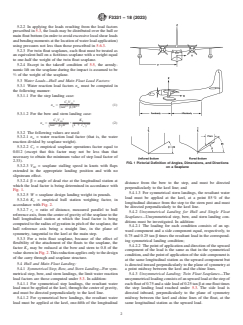
FIG. 1 Pictorial Definition of Angles, Dimensions, and Directions
5.3.2.3 V = seaplane stalling speed in knots with flaps
S0 on a Seaplane
extended in the appropriate landing position and with no
slipstream effect.
5.3.2.4 β = angle of dead rise at the longitudinal station at
distance from the bow to the step, and must be directed
which the load factor is being determined in accordance with
perpendicularly to the keel line; and
Fig. 1.
5.4.1.3 For symmetrical stern landings, the resultant water
5.3.2.5 W = seaplane design landing weight in pounds.
load must be applied at the keel, at a point 85 % of the
5.3.2.6 K = empirical hull station weighing factor, in
longitudinal distance from the step to the stern post and must
accordance with Fig. 2.
be directed perpendicularly to the keel line.
5.3.2.7 r = ratio of distance, measured parallel to hull
x
5.4.2 Unsymmetrical Landing for Hull and Single Float
reference axis, from the center of gravity of the seaplane to the
Seaplanes—Unsymmetrical step, bow, and stern landing con-
hull longitudinal station at which the load factor is being
ditions must be investigated. In addition:
computed to the radius of gyration in pitch of the seaplane, the
5.4.2.1 The loading for each condition consists of an up-
hull reference axis being a straight line, in the plane of
ward component and a side component equal, respectively, to
symmetry, tangential to the keel at the main step.
0.75 and 0.25 tan β times the resultant load in the correspond-
5.3.3 For a twin float seaplane, because of the effect of
ing symmetrical landing condition;
flexibility of the attachment of the floats to the seaplane, the
5.4.2.2 The point of application and direction of the upward
factor K may be reduced at the bow and stern to 0.8 of the
component of the load is the same as that in the symmetrical
value shown in Fig. 2. This reduction applies only to the design
condition, and the point of application of the side component is
of the carry through and seaplane structure.
at the same longitudinal station as the upward component but
5.4 Hull and Main Float Landing:
is directed inward perpendicularly to the plane of symmetry at
5.4.1 Symmetrical Step, Bow, and Stern Landing—For sym-
a point midway between the keel and the chine lines.
metrical step, bow, and stern landings, the limit water reaction
5.4.3 Unsymmetrical Landing; Twin Float Seaplanes—The
load factors are those computed under 5.3. In addition:
unsymmetrical loading consists of an upward load at the step of
5.4.1.1 For symmetrical step landings, the resultant water each float of 0.75 and a side load of 0.25 tan β at one float times
load must be applied at the keel, through the center of gravity,
the step landing load reached under 5.3. The side load is
and must be directed perpendicularly to the keel line. directed inboard, perpendicularly to the plane of symmetry
5.4.1.2 For symmetrical bow landings, the resultant water midway between the keel and chine lines of the float, at the
load must be applied at the keel, one-fifth of the longitudinal same longitudinal station as the upward load.
----------------------
...