

ASTM F3264-23
(Specification)Standard Specification for Normal Category Aeroplanes Certification
General Information
- Abstract
ABSTRACT
This specification covers industry standards which have been determined by consensus to demonstrate compliance to the requirements (”the Rules”) for Level 1, 2, 3, 4 Normal Category Aeroplanes. It includes only standards that are considered mature enough for general application to certification projects and have been found acceptable by committee consensus to propose to the civil aviation authorities (CAAs) for acceptance as a Means of Compliance to their Rules. CAAs may accept a specific revision of this specification as an acceptable Means of Compliance (MoC) to their requirements. The applicant must seek individual guidance from their respective CAA concerning the use of this specification and any referenced Specifications, Practices, Test Methods, or Guides to show compliance to the CAA rules. Alternatively, an applicant may propose a MoC other than those included in this specification, but it is their responsibility to obtain acceptance of their proposed MoC from their CAA.
This specification covers requirements for flight (e.g., weight/mass and center of gravity, stall speed, takeoff performance, landing); structures (structural design envelope, structural design loads, flight load conditions, aeroelasticity, special factors of safety, emergency conditions); design and construction (flight control systems, landing gear systems, buoyancy for seaplanes and amphibians, occupant physical environment, fire protection); powerplant (powerplant installation, powerplant installation hazard assessment, powerplant installation ice protection, powerplant installation fire protection); equipment (systems and equipment function and safety, external and cockpit lighting, flight in icing conditions); and flight crew interface and other information (flightcrew compartment interface, instrument markings, airplane flight manual, continued airworthiness).
SCOPE
1.1 Applicability:
1.1.1 This specification identifies the industry standards that have been determined by consensus to demonstrate compliance to the requirements (“the Rules”) for Normal Category Aeroplanes.
1.1.2 Only standards that are considered mature enough for general application to certification projects and have been found acceptable by committee consensus to propose to the CAAs for acceptance as a Means of Compliance to their Rules are included.
1.1.3 In the event that a particular CAA’s requirements are not harmonized with the other CAA’s requirements, the standards will be written to include the non-harmonized requirements as well as the harmonized requirements with the applicability defined in the standard.
1.1.4 In addition to identifying the standards that have been approved by the F44 Committee, the structure of this specification follows the structure of the existing performance/objective-based rules for Normal Category aeroplanes as closely as practical. However, due to differences employed by the authorities in structuring the rules, some sections of this specification may parallel the structure of a particular authority’s rules, but not all. The intent was to structure this specification in such a way that the users could identify what standards would be applicable to specific rules with the specifications at the highest level and practices and test methods being at the next level down. Guides that support a specification or practice will be at the next level down from what they support.
1.2 Civil Aviation Authorities:
1.2.1 CAAs may accept a specific revision of this specification as an acceptable Means of Compliance (MoC) to their requirements. Acceptance and applicability as a MoC to the CAA’s airworthiness rules remains the decision of the respective CAAs. CAAs may accept this specification, with or without limitations as defined in their specification acceptance document. For information on which CAAs have accepted these standards (in whole or in part) as an acceptable MoC to their Rules, refer to the ASTM F44 webp...
- Status
- Published
- Publication Date
- 31-Dec-2022
- Technical Committee
- F44 - General Aviation Aircraft
- Drafting Committee
- F44.10 - General
Buy Documents
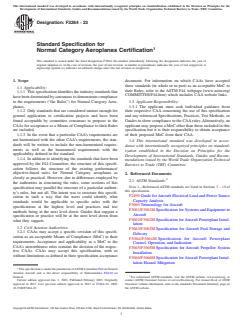
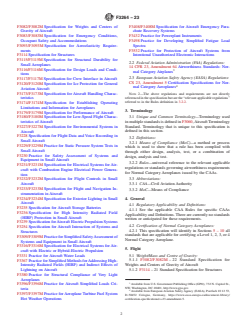
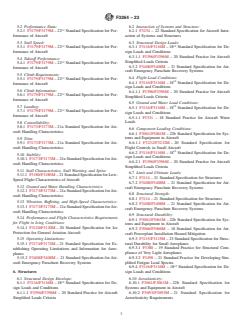
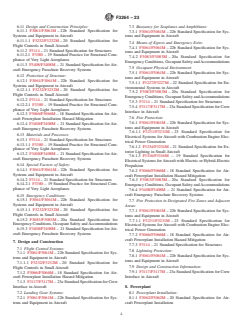
ASTM F3264-23 - Standard Specification for Normal Category Aeroplanes Certification
REDLINE ASTM F3264-23 - Standard Specification for Normal Category Aeroplanes Certification
Overview
ASTM F3264-23: Standard Specification for Normal Category Aeroplanes Certification sets forth industry-accepted standards that support compliance with regulatory requirements for certification of Level 1, 2, 3, and 4 normal category aeroplanes. Developed by committee consensus, this ASTM specification provides a comprehensive catalog of mature and widely-accepted standards for use by civil aviation authorities (CAAs) and industry applicants as recognized Means of Compliance (MoC) to national and international airworthiness rules. The standard is structured to align with both harmonized and non-harmonized requirements across jurisdictions, following objective-based performance rules for normal category aeroplanes.
Key Topics
Applicability and Scope
- Identifies standards accepted by consensus for demonstrating compliance with applicable airworthiness rules
- Covers both harmonized (international) and non-harmonized (authority-specific) requirements, with defined applicability
Flight Requirements
- Performance data including takeoff, climb, landing, controllability, and stall characteristics
- Requirements related to aircraft weight, center of gravity, and operating limitations
Structural Requirements
- Structural design envelope, loads, and conditions
- Aeroelasticity, special factors of safety, and emergency scenarios
Design and Construction
- Flight control systems, landing gear, occupant environment, emergency egress, and fire protection
- Buoyancy and special considerations for seaplanes and amphibians
Powerplant Requirements
- Installation standards for engines, fuel systems, electric propulsion, and related hazard assessments
- Comprehensive standards for ice protection, exhaust, fire safety, and operational characteristics
Equipment and Systems
- Systems and equipment function, safety, installation, cockpit and external lighting
- Protection from high-intensity radiated fields (HIRF) and lightning
Flight Crew Interface and Information
- Design for flightcrew compartment interface, instrument marking, flight data recorders, and airworthiness documentation
Applications
ASTM F3264-23 is a critical resource for:
Aircraft Manufacturers
Ensures certification projects adhere to recognized industry standards, streamlining the approval process across various jurisdictions.Certification Applicants
Provides a clear and organized catalog of standards used to demonstrate compliance with CAA regulations for normal category aeroplanes. Applicants must coordinate with their CAA to confirm which standards are accepted for their specific certification projects.Civil Aviation Authorities (CAAs)
Offers CAAs a vetted set of standards to adopt or adapt as Means of Compliance for their regulatory schemes, improving international harmonization and mutual recognition of certification data.Aerospace Design and Engineering Firms
Guides technical teams in implementing compliant structures, systems, and practices from project inception through testing, documentation, and final approval.
Practical value:
- Reduces certification risk through consensus-backed methods and mature practices
- Speeds market entry by facilitating recognition of standards across international borders
- Offers flexibility for applicants to propose alternative Means of Compliance when justified and accepted by authorities
Related Standards
ASTM F3264-23 references numerous supporting standards for the certification of normal category aeroplanes, including but not limited to:
- Flight and Performance: ASTM F3082 (Weights and Centers of Gravity), F3179 (Performance), F3180 (Low-Speed Flight)
- Structures: F3114 (Structures), F3115 (Structural Durability), F3116 (Design Loads and Conditions)
- Powerplant: F3062 (Powerplant Installation), F3063 (Fuel Storage and Delivery), F3239 (Electric Propulsion)
- Systems and Equipment: F3061 (Systems and Equipment), F3233 (Flight and Navigation Instrumentation), F3236 (HIRF Protection)
- Safety and Emergency: F3083 (Emergency Conditions, Occupant Safety), F3408 (Emergency Parachute Recovery)
- Regulatory References: FAA 14 CFR 23, EASA CS-23
For a complete list and details of referenced standards, consult the ASTM F3264-23 official publication and the ASTM Committee F44 resources.
Keywords: ASTM F3264-23, Normal Category Aeroplanes, Aeroplane Certification, Means of Compliance, Civil Aviation Authority, Airworthiness Standards, Aircraft Regulations, ASTM Standards, Aviation Safety, Aircraft Structures, Powerplant Installation, Systems Compliance
Relations
- Effective Date
- 01-Mar-2024
- Effective Date
- 01-Mar-2024
- Refers
ASTM F3233/F3233M-23a - Standard Specification for Flight and Navigation Instrumentation in Aircraft - Effective Date
- 01-Nov-2023
- Effective Date
- 01-Nov-2023
- Effective Date
- 01-Nov-2023
- Effective Date
- 01-Oct-2023
- Effective Date
- 01-Oct-2023
- Effective Date
- 01-Oct-2023
- Effective Date
- 01-Oct-2023
- Effective Date
- 01-Oct-2023
- Effective Date
- 01-Sep-2023
- Effective Date
- 01-Jun-2020
- Effective Date
- 01-Jan-2020
- Effective Date
- 01-Nov-2019
- Effective Date
- 01-Nov-2019
Buy Documents
ASTM F3264-23 - Standard Specification for Normal Category Aeroplanes Certification
REDLINE ASTM F3264-23 - Standard Specification for Normal Category Aeroplanes Certification
Get Certified
Connect with accredited certification bodies for this standard

BSI Group
BSI (British Standards Institution) is the business standards company that helps organizations make excellence a habit.

Bureau Veritas
Bureau Veritas is a world leader in laboratory testing, inspection and certification services.

DNV
DNV is an independent assurance and risk management provider.
Sponsored listings
Frequently Asked Questions
ASTM F3264-23 is a technical specification published by ASTM International. Its full title is "Standard Specification for Normal Category Aeroplanes Certification". This standard covers: ABSTRACT This specification covers industry standards which have been determined by consensus to demonstrate compliance to the requirements (”the Rules”) for Level 1, 2, 3, 4 Normal Category Aeroplanes. It includes only standards that are considered mature enough for general application to certification projects and have been found acceptable by committee consensus to propose to the civil aviation authorities (CAAs) for acceptance as a Means of Compliance to their Rules. CAAs may accept a specific revision of this specification as an acceptable Means of Compliance (MoC) to their requirements. The applicant must seek individual guidance from their respective CAA concerning the use of this specification and any referenced Specifications, Practices, Test Methods, or Guides to show compliance to the CAA rules. Alternatively, an applicant may propose a MoC other than those included in this specification, but it is their responsibility to obtain acceptance of their proposed MoC from their CAA. This specification covers requirements for flight (e.g., weight/mass and center of gravity, stall speed, takeoff performance, landing); structures (structural design envelope, structural design loads, flight load conditions, aeroelasticity, special factors of safety, emergency conditions); design and construction (flight control systems, landing gear systems, buoyancy for seaplanes and amphibians, occupant physical environment, fire protection); powerplant (powerplant installation, powerplant installation hazard assessment, powerplant installation ice protection, powerplant installation fire protection); equipment (systems and equipment function and safety, external and cockpit lighting, flight in icing conditions); and flight crew interface and other information (flightcrew compartment interface, instrument markings, airplane flight manual, continued airworthiness). SCOPE 1.1 Applicability: 1.1.1 This specification identifies the industry standards that have been determined by consensus to demonstrate compliance to the requirements (“the Rules”) for Normal Category Aeroplanes. 1.1.2 Only standards that are considered mature enough for general application to certification projects and have been found acceptable by committee consensus to propose to the CAAs for acceptance as a Means of Compliance to their Rules are included. 1.1.3 In the event that a particular CAA’s requirements are not harmonized with the other CAA’s requirements, the standards will be written to include the non-harmonized requirements as well as the harmonized requirements with the applicability defined in the standard. 1.1.4 In addition to identifying the standards that have been approved by the F44 Committee, the structure of this specification follows the structure of the existing performance/objective-based rules for Normal Category aeroplanes as closely as practical. However, due to differences employed by the authorities in structuring the rules, some sections of this specification may parallel the structure of a particular authority’s rules, but not all. The intent was to structure this specification in such a way that the users could identify what standards would be applicable to specific rules with the specifications at the highest level and practices and test methods being at the next level down. Guides that support a specification or practice will be at the next level down from what they support. 1.2 Civil Aviation Authorities: 1.2.1 CAAs may accept a specific revision of this specification as an acceptable Means of Compliance (MoC) to their requirements. Acceptance and applicability as a MoC to the CAA’s airworthiness rules remains the decision of the respective CAAs. CAAs may accept this specification, with or without limitations as defined in their specification acceptance document. For information on which CAAs have accepted these standards (in whole or in part) as an acceptable MoC to their Rules, refer to the ASTM F44 webp...
ABSTRACT This specification covers industry standards which have been determined by consensus to demonstrate compliance to the requirements (”the Rules”) for Level 1, 2, 3, 4 Normal Category Aeroplanes. It includes only standards that are considered mature enough for general application to certification projects and have been found acceptable by committee consensus to propose to the civil aviation authorities (CAAs) for acceptance as a Means of Compliance to their Rules. CAAs may accept a specific revision of this specification as an acceptable Means of Compliance (MoC) to their requirements. The applicant must seek individual guidance from their respective CAA concerning the use of this specification and any referenced Specifications, Practices, Test Methods, or Guides to show compliance to the CAA rules. Alternatively, an applicant may propose a MoC other than those included in this specification, but it is their responsibility to obtain acceptance of their proposed MoC from their CAA. This specification covers requirements for flight (e.g., weight/mass and center of gravity, stall speed, takeoff performance, landing); structures (structural design envelope, structural design loads, flight load conditions, aeroelasticity, special factors of safety, emergency conditions); design and construction (flight control systems, landing gear systems, buoyancy for seaplanes and amphibians, occupant physical environment, fire protection); powerplant (powerplant installation, powerplant installation hazard assessment, powerplant installation ice protection, powerplant installation fire protection); equipment (systems and equipment function and safety, external and cockpit lighting, flight in icing conditions); and flight crew interface and other information (flightcrew compartment interface, instrument markings, airplane flight manual, continued airworthiness). SCOPE 1.1 Applicability: 1.1.1 This specification identifies the industry standards that have been determined by consensus to demonstrate compliance to the requirements (“the Rules”) for Normal Category Aeroplanes. 1.1.2 Only standards that are considered mature enough for general application to certification projects and have been found acceptable by committee consensus to propose to the CAAs for acceptance as a Means of Compliance to their Rules are included. 1.1.3 In the event that a particular CAA’s requirements are not harmonized with the other CAA’s requirements, the standards will be written to include the non-harmonized requirements as well as the harmonized requirements with the applicability defined in the standard. 1.1.4 In addition to identifying the standards that have been approved by the F44 Committee, the structure of this specification follows the structure of the existing performance/objective-based rules for Normal Category aeroplanes as closely as practical. However, due to differences employed by the authorities in structuring the rules, some sections of this specification may parallel the structure of a particular authority’s rules, but not all. The intent was to structure this specification in such a way that the users could identify what standards would be applicable to specific rules with the specifications at the highest level and practices and test methods being at the next level down. Guides that support a specification or practice will be at the next level down from what they support. 1.2 Civil Aviation Authorities: 1.2.1 CAAs may accept a specific revision of this specification as an acceptable Means of Compliance (MoC) to their requirements. Acceptance and applicability as a MoC to the CAA’s airworthiness rules remains the decision of the respective CAAs. CAAs may accept this specification, with or without limitations as defined in their specification acceptance document. For information on which CAAs have accepted these standards (in whole or in part) as an acceptable MoC to their Rules, refer to the ASTM F44 webp...
ASTM F3264-23 is classified under the following ICS (International Classification for Standards) categories: 49.020 - Aircraft and space vehicles in general. The ICS classification helps identify the subject area and facilitates finding related standards.
ASTM F3264-23 has the following relationships with other standards: It is inter standard links to ASTM F3064/F3064M-24, ASTM F3309/F3309M-24, ASTM F3233/F3233M-23a, ASTM F3532-23, ASTM F3229/F3229M-23, ASTM F3061/F3061M-23b, ASTM F3116/F3116M-23a, ASTM F3396/F3396M-23a, ASTM F3232/F3232M-23a, ASTM F3367-23, ASTM F3179/F3179M-23, ASTM F3062/F3062M-20, ASTM F3060-20, ASTM F3061/F3061M-19a, ASTM F3316/F3316M-19. Understanding these relationships helps ensure you are using the most current and applicable version of the standard.
ASTM F3264-23 is available in PDF format for immediate download after purchase. The document can be added to your cart and obtained through the secure checkout process. Digital delivery ensures instant access to the complete standard document.
Standards Content (Sample)
This international standard was developed in accordance with internationally recognized principles on standardization established in the Decision on Principles for the
Development of International Standards, Guides and Recommendations issued by the World Trade Organization Technical Barriers to Trade (TBT) Committee.
Designation: F3264 − 23
Standard Specification for
Normal Category Aeroplanes Certification
This standard is issued under the fixed designation F3264; the number immediately following the designation indicates the year of
original adoption or, in the case of revision, the year of last revision. A number in parentheses indicates the year of last reapproval. A
superscript epsilon (´) indicates an editorial change since the last revision or reapproval.
1. Scope document. For information on which CAAs have accepted
these standards (in whole or in part) as an acceptable MoC to
1.1 Applicability:
their Rules, refer to the ASTM F44 webpage (www.astm.org/
1.1.1 This specification identifies the industry standards that
COMMITTEE/F44.htm) which includes CAA website links.
have been determined by consensus to demonstrate compliance
to the requirements (“the Rules”) for Normal Category Aero- 1.3 Applicant Responsibility:
planes. 1.3.1 The applicant must seek individual guidance from
1.1.2 Only standards that are considered mature enough for their respective CAA concerning the use of this specification
general application to certification projects and have been and any referenced Specifications, Practices, Test Methods, or
found acceptable by committee consensus to propose to the Guides to show compliance to the CAA rules. Alternatively, an
CAAs for acceptance as a Means of Compliance to their Rules applicant may propose a MoC other than those included in this
are included. specification but it is their responsibility to obtain acceptance
1.1.3 In the event that a particular CAA’s requirements are of their proposed MoC from their CAA.
not harmonized with the other CAA’s requirements, the stan-
1.4 This international standard was developed in accor-
dards will be written to include the non-harmonized require-
dance with internationally recognized principles on standard-
ments as well as the harmonized requirements with the
ization established in the Decision on Principles for the
applicability defined in the standard.
Development of International Standards, Guides and Recom-
1.1.4 In addition to identifying the standards that have been
mendations issued by the World Trade Organization Technical
approved by the F44 Committee, the structure of this specifi-
Barriers to Trade (TBT) Committee.
cation follows the structure of the existing performance/
objective-based rules for Normal Category aeroplanes as
2. Referenced Documents
closely as practical. However, due to differences employed by
2.1 ASTM Standards:
the authorities in structuring the rules, some sections of this
specification may parallel the structure of a particular authori- NOTE 1—Referenced ASTM standards are listed in Sections 5 – 10 of
this specification.
ty’s rules, but not all. The intent was to structure this specifi-
F2490 Guide for Aircraft Electrical Load and Power Source
cation in such a way that the users could identify what
Capacity Analysis
standards would be applicable to specific rules with the
F3060 Terminology for Aircraft
specifications at the highest level and practices and test
F3061/F3061M Specification for Systems and Equipment in
methods being at the next level down. Guides that support a
Aircraft
specification or practice will be at the next level down from
F3062/F3062M Specification for Aircraft Powerplant Instal-
what they support.
lation
1.2 Civil Aviation Authorities:
F3063/F3063M Specification for Aircraft Fuel Storage and
1.2.1 CAAs may accept a specific revision of this specifi-
Delivery
cation as an acceptable Means of Compliance (MoC) to their
F3064/F3064M Specification for Aircraft Powerplant
requirements. Acceptance and applicability as a MoC to the
Control, Operation, and Indication
CAA’s airworthiness rules remains the decision of the respec-
F3065/F3065M Specification for Aircraft Propeller System
tive CAAs. CAAs may accept this specification, with or
Installation
without limitations as defined in their specification acceptance
F3066/F3066M Specification for Aircraft Powerplant Instal-
lation Hazard Mitigation
This specification is under the jurisdiction of ASTM Committee F44 on General
Aviation Aircraft and is the direct responsibility of Subcommittee F44.10 on
General. For referenced ASTM standards, visit the ASTM website, www.astm.org, or
Current edition approved Jan. 1, 2023. Published February 2023. Originally contact ASTM Customer Service at service@astm.org. For Annual Book of ASTM
approved in 2017. Last previous edition approved in 2021 as F3264–21. DOI: Standards volume information, refer to the standard’s Document Summary page on
10.1520/F3264-23. the ASTM website.
Copyright © ASTM International, 100 Barr Harbor Drive, PO Box C700, West Conshohocken, PA 19428-2959. United States
F3264 − 23
F3082/F3082M Specification for Weights and Centers of F3408/F3408M Specification for Aircraft Emergency Para-
Gravity of Aircraft chute Recovery Systems
F3083/F3083M Specification for Emergency Conditions, F3432 Practice for Powerplant Instruments
Occupant Safety and Accommodations F3498 Practice for Developing Simplified Fatigue Load
F3093/F3093M Specification for Aeroelasticity Require- Spectra
ments F3532 Practice for Protection of Aircraft Systems from
F3114 Specification for Structures Intentional Unauthorized Electronic Interactions
F3115/F3115M Specification for Structural Durability for
2.2 Federal Aviation Administration (FAA) Regulations:
Small Aeroplanes
14 CFR 23, Amendment 64 Airworthiness Standards: Nor-
F3116/F3116M Specification for Design Loads and Condi-
mal Category Airplanes
tions
2.3 European Aviation Safety Agency (EASA) Regulations:
F3117/F3117M Specification for Crew Interface in Aircraft
CS 23, Amendment 5 Certification Specifications for Nor-
F3120/F3120M Specification for Ice Protection for General
mal Category Aeroplanes
Aviation Aircraft
F3173/F3173M Specification for Aircraft Handling Charac-
NOTE 2—The above regulations and requirements are not directly
teristics referenced in the specification but are the “relevant applicable regulations”
referred to in the Rules definition in 3.2.2.
F3174/F3174M Specification for Establishing Operating
Limitations and Information for Aeroplanes
3. Terminology
F3179/F3179M Specification for Performance of Aircraft
F3180/F3180M Specification for Low-Speed Flight Charac- 3.1 Unique and Common Terminology—Terminology used
in multiple standards is defined in F3060, Aircraft Terminology
teristics of Aircraft
F3227/F3227M Specification for Environmental Systems in Standard. Terminology that is unique to this specification is
defined in this section.
Aircraft
F3228 Specification for Flight Data and Voice Recording in
3.2 Definitions:
Small Aircraft
3.2.1 Means of Compliance (MoC)—a method or process
F3229/F3229M Practice for Static Pressure System Tests in
which is used to show that a rule has been complied with
Small Aircraft
through either design, analysis, test, or a combination of
F3230 Practice for Safety Assessment of Systems and
design, analysis and test.
Equipment in Small Aircraft
3.2.2 Rules—universal reference to the relevant applicable
F3231/F3231M Specification for Electrical Systems for Air-
regulations or standards governing airworthiness requirements
craft with Combustion Engine Electrical Power Genera-
for Normal Category Aeroplanes issued by the CAAs.
tion
3.3 Abbreviations:
F3232/F3232M Specification for Flight Controls in Small
3.3.1 CAA—Civil Aviation Authority
Aircraft
F3233/F3233M Specification for Flight and Navigation In-
3.3.2 MoC—Means of Compliance
strumentation in Aircraft
F3234/F3234M Specification for Exterior Lighting in Small
4. General
Aircraft
4.1 Regulatory Applicability and Definitions:
F3235 Specification for Aircraft Storage Batteries
4.1.1 See the applicable CAA Rules for specific CAAs
F3236 Specification for High Intensity Radiated Field
Applicability and Definitions. There are currently no standards
(HIRF) Protection in Small Aircraft
written or anticipated for these requirements.
F3239 Specification for Aircraft Electric Propulsion Systems
4.2 Certification of Normal Category Aeroplanes:
F3254 Specification for Aircraft Interaction of Systems and
4.2.1 This specification will identify in Sections 5 – 10 all
Structures
standards that are applicable for certifying a Level 1, 2, 3, or 4
F3309/F3309M Practice for Simplified Safety Assessment of
Normal Category Aeroplane.
Systems and Equipment in Small Aircraft
F3316/F3316M Specification for Electrical Systems for Air-
5. Flight
craft with Electric or Hybrid-Electric Propulsion
F3331 Practice for Aircraft Water Loads 5.1 Weight/Mass and Centre of Gravity:
5.1.1 F3082/F3082M – 22 Standard Specification for
F3367 Practice for Simplified Methods for Addressing High-
Intensity Radiated Fields (HIRF) and Indirect Effects of Weights and Centers of Gravity of Aircraft
5.1.2 F3114 – 21 Standard Specification for Structures
Lightning on Aircraft
F3380 Practice for Structural Compliance of Very Light
Aeroplanes
Available from U.S. Government Publishing Office (GPO), 732 N. Capitol St.,
F3396/F3396M Practice for Aircraft Simplified Loads Cri-
NW, Washington, DC 20401, http://www.gpo.gov.
teria
Available from European Aviation Safety Agency (EASA), Postfach 10 12 53,
F3397/F3397M Practice for Aeroplane Turbine Fuel System
D-50452 Cologne, Germany, https://www.easa.europa.eu/document-library/
Hot Weather Operations certification-specifications/cs-23-amendment-5.
F3264 − 23
5.2 Performance Data: 6.2 Interaction of Systems and Structure:
ɛ1
5.2.1 F3179/F3179M – 22 Standard Specification for Per- 6.2.1 F3254 – 22 Standard Specification for Aircraft Inter-
formance of Aircraft action of Systems and Structures
5.3 Stall Speed: 6.3 Structural Design Loads:
ɛ1 ɛ2
5.3.1 F3179/F3179M – 22 Standard Specification for Per- 6.3.1 F3116/F3116M – 18 Standard Specification for De-
formance of Aircraft sign Loads and Conditions
6.3.1.1 F3396/F3396M – 20 Standard Practice for Aircraft
5.4 Takeoff Performance:
ɛ1
Simplified Loads Criteria
5.4.1 F3179/F3179M – 22 Standard Specification for Per-
6.3.2 F3408/F3408M – 21 Standard Specification for Air-
formance of Aircraft
craft Emergency Parachute Recovery Systems
5.5 Climb Requirements:
ɛ1 6.4 Flight Load Conditions:
5.5.1 F3179/F3179M – 22 Standard Specification for Per-
ɛ2
6.4.1 F3116/F3116M – 18 Standard Specification for De-
formance of Aircraft
sign Loads and Conditions
5.6 Climb Information:
6.4.1.1 F3396/F3396M – 20 Standard Practice for Aircraft
ɛ1
5.6.1 F3179/F3179M – 22 Standard Specification for Per-
Simplified Loads Criteria
formance of Aircraft
6.5 Ground and Water Load Conditions:
5.7 Landing: ɛ2
6.5.1 F3116/F3116M – 18 Standard Specification for De-
ɛ1
5.7.1 F3179/F3179M – 22 Standard Specification for Per-
sign Loads and Conditions
formance of Aircraft
6.5.1.1 F3331 – 18 Standard Practice for Aircraft Water
Loads
5.8 Controllability:
5.8.1 F3173/F3173M – 21a Standard Specification for Air-
6.6 Component Loading Conditions:
craft Handling Characteristics
6.6.1 F3061/F3061M – 22b Standard Specification for Sys-
5.9 Trim: tems and Equipment in Aircraft
6.6.1.1 F3232/F3232M – 20 Standard Specification for
5.9.1 F3173/F3173M – 21a Standard Specification for Air-
craft Handling Characteristics Flight Controls in Small Aircraft
ɛ2
6.6.2 F3116/F3116M – 18 Standard Specification for De-
5.10 Stability:
sign Loads and Conditions
5.10.1 F3173/F3173M – 21a Standard Specification for Air-
6.6.2.1 F3396/F3396M – 20 Standard Practice for Aircraft
craft Handling Characteristics
Simplified Loads Criteria
5.11 Stall Characteristics, Stall Warning, and Spins:
6.7 Limit and Ultimate Loads:
5.11.1 F3180/F3180M – 21 Standard Specification for Low-
6.7.1 F3114 – 21 Standard Specification for Structures
Speed Flight Characteristics of Aircraft
6.7.2 F3408/F3408M – 21 Standard Specification for Air-
5.12 Ground and Water Handling Characteristics:
craft Emergency Parachute Recovery Systems
5.12.1 F3173/F3173M – 21a Standard Specification for Air-
6.8 Structural Strength:
craft Handling Characteristics
6.8.1 F3114 – 21 Standard Specification for Structures
5.13 Vibration, Buffeting, and High-Speed Characteristics:
6.8.2 F3408/F3408M – 21 Standard Specification for Air-
5.13.1 F3173/F3173M – 21a Standard Specification for Air-
craft Emergency Parachute Recovery Systems
craft Handling Characteristics
6.9 Structural Durability:
5.14 Performance and Flight Characteristics Requirements
6.9.1 F3061/F3061M – 22b Standard Specification for Sys-
for Flight in Icing Conditions:
tems and Equipment in Aircraft
5.14.1 F3120/F3120M – 20 Standard Specification for Ice
6.9.2 F3066/F3066M – 18 Standard Specification for Air-
Protection for General Aviation Aircraft
craft Powerplant Installation Hazard Mitigation
6.9.3 F3115/F3115M – 23 Standard Specification for Struc-
5.15 Operating Limitations:
tural Durability for Small Aeroplanes
5.15.1 F3174/F3174M – 21 Standard Specification for Es-
6.9.3.1 F3380 – 19 Standard Practice for Structural Com-
tablishing Operating Limitations and Information for Aero-
pliance of Very Light Aeroplanes
planes
6.9.3.2 F3498 – 21 Standard Practice for Developing Sim-
5.15.2 F3408/F3408M – 21 Standard Specification for Air-
plified Fatigue Load Spectra
craft Emergency Parachute Recovery Systems
ɛ2
6.9.4 F3116/F3116M – 18 Standard Specification for De-
6. Structures sign Loads and Conditions
6.1 Structural Design Envelope: 6.10 Aeroelasticity:
ɛ2
6.1.1 F3116/F3116M – 18 Standard Specification for De- 6.10.1 F3061/F3061M – 22b Standard Specification for
sign Loads and Conditions Systems and Equipment in Aircraft
6.1.1.1 F3396/F3396M – 20 Standard Practice for Aircraft 6.10.2 F3093/F3093M – 21 Standard Specification for
Simplified Loads Criteria Aeroelasticity Requirements
F3264 − 23
6.11 Design and Construction Principles: 7.3 Buoyancy for Seaplanes and Amphibians:
6.11.1 F3061/F3061M – 22b Standard Specification for 7.3.1 F3061/F3061M – 22b Standard Specification for Sys-
Systems and Equipment in Aircraft tems and Equipment in Aircraft
6.11.1.1 F3232/F3232M – 20 Standard Specification for
7.4 Means of Egress and Emergency Exits:
Flight Controls in Small Aircraft
7.4.1 F3061/F3061M – 22b Standard Specification for Sys-
6.11.2 F3114 – 21 Standard Specification for Structures
tems and Equipment in Aircraft
6.11.2.1 F3380 – 19 Standard Practice for Structural Com-
7.4.2 F3083/F3083M – 20a Standard Specification for
pliance of Very Light Aeroplanes
Emergency Conditions, Occupant Safety and Accommodations
6.11.3 F3408/F3408M – 21 Standard Specification for Air-
7.5 Occupant Physical Environment:
craft Emergency Parachute Recovery Systems
7.5.1 F3061/F3061M – 22b Standard Specification for Sys-
6.12 Protection of Structure:
tems and Equipment in Aircraft
6.12.1 F3061/F3061M – 22b Standard Specification for
7.5.1.1 F3227/F3227M – 22 Standard Specification for En-
Systems and Equipment in Aircraft
vironmental Systems in Aircraft
6.12.1.1 F3232/F3232M – 20 Standard Specification for
7.5.2 F3083/F3083M – 20a Standard Specification for
Flight Controls in Small Aircraft
Emergency Conditions, Occupant Safety and Accommodations
6.12.2 F3114 – 21 Standard Specification for Structures
7.5.3 F3114 – 21 Standard Specification for Structures
6.12.2.1 F3380 – 19 Standard Practice for Structural Com-
7.5.4 F3117/F3117M – 23a Standard Specification for Crew
pliance of Very Light Aeroplanes
Interface in Aircraft
6.12.3 F3066/F3066M – 18 Standard Specification for Air-
7.6 Fire Protection:
craft Powerplant Installation Hazard Mitigation
7.6.1 F3061/F3061M – 22b Standard Specification for Sys-
6.12.4 F3408/F3408M – 21 Standard Specification for Air-
tems and Equipment in Aircraft
craft Emergency Parachute Recovery Systems
7.6.1.1 F3231/F3231M – 23 Standard Specification for
6.13 Materials and Processes:
Electrical Systems for Aircraft with Combustion Engine Elec-
6.13.1 F3114 – 21 Standard Specification for Structures
trical Power Generation
6.13.1.1 F3380 – 19 Standard Practice for Structural Com-
7.6.1.2 F3234/F3234M – 21 Standard Specification for Ex-
pliance of Very Light Aeroplanes
terior Lighting in Small Aircraft
6.13.2 F3408/F3408M – 21 Standard Specification for Air-
7.6.1.3 F3316/F3316M – 19 Standard Specification for
craft Emergency Parachute Recovery Systems
Electrical Systems for Aircraft with Electric or Hybrid-Electric
6.14 Special Factors of Safety:
Propulsion
6.14.1 F3061/F3061M – 22b Standard Specification for
7.6.2 F3066/F3066M – 18 Standard Specification for Air-
Systems and Equipment in Aircraft
craft Powerplant Installation Hazard Mitigation
6.14.2 F3114 – 21 Standard Specification for Structures
7.6.3 F3083/F3083M – 20a Standard Specification for
6.14.2.1 F3380 – 19 Standard Practice for Structural Com-
Emergency Conditions, Occupant Safety and Accommodations
pliance of Very Light Aeroplanes
7.6.4 F3408/F3408M – 21 Standard Specification for Air-
craft Emergency Parachute Recovery Systems
6.15 Emergency Conditions:
6.15.1 F3061/F3061M – 22b Standard Specification for
7.7 Fire Protection in Designated Fire Zones and Adjacent
Systems and Equipment in Aircraft
Areas:
6.15.1.1 F3232/F3232M – 20 Standard Specification for
7.7.1 F3061/F3061M – 22b Standard Specification for Sys-
Flight Controls in Small Aircraft
tems and Equipment in Aircraft
6.15.2 F3083/F3083M – 20a Standard Specification for
7.7.1.1 F3231/F3231M – 23 Standard Specification for
Emergency Conditions, Occupant Safety and Accommodations
Electrical Systems for Aircraft with Combustion Engine Elec-
6.15.3 F3408/F3408M – 21 Standard Specification for Air-
trical Power Generation
craft Emergency Parachute Recovery Systems
7.7.2 F3066/F3066M – 18 Standard Specification for Air-
craft Powerplant Installation Hazard Mitigation
7. Design and Construction
7.7.3 F3114 – 21 Standard Specification for Structures
7.1 Flight Control Systems:
7.8 Lightning Protection:
7.1.1 F3061/F3061M – 22b Standard Specification for Sys-
7.8.1 F3061/F3061M – 22b Standard Specification for Sys-
tems and Equipment in Aircraft
tems and Equipment in Aircraft
7.1.1.1 F3232/F3232M – 20 Standard Specification for
7.9 Design and Construction Information:
Flight Controls in Small Aircraft
7.9.1 F3117/F3117M – 23a Standard Specification for Crew
7.1.2 F3066/F3066M – 18 Standard Specification for Air-
Interface in Aircraft
craft Powerplant Installation Hazard Mitigation
7.1.3 F3117/F3117M – 23a Standard Specification for Crew
8. Powerplant
Interface in Aircraft
7.2 Landing Gear Systems: 8.1 Powerplant Installation:
7.2.1 F3061/F3061M – 22b Standard Specification for Sys- 8.1.1 F3062/F3062M – 20 Standard Specification for Air-
tems and Equipment in Aircraft craft Powerplant Installation
F3264 − 23
8.1.2 F3063/F3063M – 21 Standard Specification for Air- 8.5.3 F3239 – 22a Standard Specification for Aircraft Elec-
craft Fuel Storage and Delivery tric Propulsion Systems
8.1.3 F3064/F3064M – 21 Standard Specification for Air-
8.6 Powerplant Operational Characteristics:
craft Powerplant Control, Operation, and Indication
8.6.1 F3062/F3062M – 20 Standard Specification for Air-
8.1.3.1 F3432 – 20a Standard Practice for Powerplant In-
craft Powerplant Installation
struments
8.6.2 F3064/F3064M – 21 Standard Specification for Air-
8.1.4 F3065/F3065M – 21a Standard Specification for Air-
craft Powerplant Control, Operation, and Indication
craft Propeller System Installation
8.6.2.1 F3432 – 20a Standard Practice for Powerplant In-
8.1.5 F3066/F3066M – 18 Standard Specification for Air-
struments
craft Powerplant Installation Hazard Mitigation
8.6.3 F3065/F3065M – 21a Standard Specification for Air-
8.1.6 F3239 – 22a Standard Specification for Aircraft Elec-
craft Propeller System Installation
tric Propulsion Systems
8.6.4 F3066/F3066M – 18 Standard Specification for Air-
craft Powerplant Installation Hazard Mitigation
8.2 Power or Thrust Control Systems:
8.6.5 F3117/F3117M – 23a Standard Specification for Crew
8.2.1 F3062/F3062M – 20 Standard Specification for Air-
Interface in Aircraft
craft Powerplant Installation
8.6.6 F3239 – 22a Standard Specification for Aircraft Elec-
8.2.2 F3064/F3064M – 21 Standard Specification for Air-
tric Propulsion Systems
craft Powerplant Control, Operation, and Indication
8.2.2.1 F3432 – 20a Standard Practice for Powerplant In-
8.7 Fuel and Energy Storage and Distribution Systems:
struments
8.7.1 F3062/F3062M – 20 Standard Specification for Air-
8.2.3 F3065/F3065M – 21a Standard Specification for Air-
craft Powerplant Installation
craft Propeller System Installation
8.7.2 F3063/F3063M – 21 Standard Specification for Air-
8.2.4 F3117/F3117M – 23a Standard Specification for Crew
craft Fuel Storage and Delivery
Interface in Aircraft
8.7.2.1 F3397/F3397M – 21 Standard Practice for Aero-
plane Turbine Fuel System Hot Weather Operations
8.3 Powerplant Installation Hazard Assessment:
8.7.3 F3064/F3064M – 21 Standard Specification for Air-
8.3.1 F3061/F3061M – 22b Standard Specification for Sys-
craft Powerplant Control, Operation, and Indication
tems and Equipment in Aircraft
8.7.3.1 F3432 – 20a Standard Practice for Powerplant In-
8.3.2 F3062/F3062M – 20 Standard Specification for Air-
struments
craft Powerplant Installation
8.7.4 F3066/F3066M – 18 Standard Specification for Air-
8.3.3 F3063/F3063M – 21 Standard Specification for Air-
craft Powerplant Installation Hazard Mitigation
craft Fuel Storage and Delivery
8.7.5 F3114 – 21 Standard Specification for Structures
8.3.4 F3064/F3064M – 21 Standard Specification for Air-
8.7.6 F3239 – 22a Standard Specification for Aircraft Elec-
craft Powerplant Control, Operation, and Indication
tric Propulsion Systems
8.3.4.1 F3432 – 20a Standard Practice for Powerplant In-
struments
8.8 Powerplant Induction, Exhaust, and Support Systems:
8.3.5 F3065/F3065M – 21a Standard Specification for Air-
8.8.1 F3062/F3062M – 20 Standard Specification for Air-
craft Propeller System Installation
craft Powerplant Installation
8.3.6 F3066/F3066M – 18 Standard Specification for Air-
8.8.2 F3239 – 22a Standard Specification for Aircraft Elec-
craft Powerplant Installation Hazard Mitigation
tric Propulsion Systems
8.3.7 F3117/F3117M – 23a Standard Specification for Crew
8.9 Powerplant Installation Fire Protection:
Interface in Aircraft
8.9.1 F3061/F3061M – 22b Standard Specification for Sys-
8.3.8 F3239 – 22a Standard Specification for Aircraft Elec-
tems and Equipment in Aircraft
tric Propulsion Systems
8.9.2 F3062/F3062M – 20 Standard Specification for Air-
8.4 Powerplant Installation Ice Protection: craft Powerplant Installation
8.4.1 F3062/F3062M – 20 Standard Specification for Air- 8.9.3 F3063/F3063M – 21 Standard Specification for Air-
craft Powerplant Installation
craft Fuel Storage and Delivery
8.4.2 F3063/F3063M – 21 Standard Specification for Air-
8.9.4 F3064/F3064M – 21 Standard Specification for Air-
craft Fuel Storage and Delivery craft Powerplant Control, Operation, and Indication
8.4.3 F3066/F3066M – 18 Standard Specification for Air- 8.9.4.1 F3432 – 20a Standard Practice for Powerplant In-
craft Powerplant Installation Hazard Mitigation
struments
8.4.4 F3239 – 22a Standard Specification for Aircraft Elec-
8.9.5 F3066/F3066M – 18 Standard Specification for Air-
tric Propulsion Systems craft Powerplant Installation Hazard Mitigation
8.9.6 F3239 – 22a Standard Specification for Aircraft Elec-
8.5 Reversing Systems:
tric Propulsion Systems
8.5.1 F3062/F3062M – 20 Standard Specification for Air-
craft Powerplant Installation 8.10 Powerplant Installation Information:
8.5.2 F3065/F3065M – 21a Standard Specification for Air- 8.10.1 F3117/F3117M – 23a Standard Specification for
craft Propeller System Installation Crew Interface in Aircraft
F3264 − 23
8.10.2 F3174/F3174M – 21 Standard Specification for Es- 9.3.1.3 F3227/F3227M – 22 Standard Specification for En-
tablishing Operating Limitations and Information for Aero- vironmental Systems in Aircraft
planes 9.3.1.4 F3309/F3309M – 21 Standard Practice for Simpli-
fied Safety Assessment of Systems and Equipment in Small
9. Equipment
Aircraft
9.3.1.5 F3532 – 22 Standard Practice for Protection of
9.1 Systems and Equipment Function Requirements:
Aircraft Systems from Intentional Unauthorized Electronic
9.1.1 F3061/F3061M – 22b Standard Specification for Sys-
Interactions
tems and Equipment in Aircraft
9.3.2 F3408/F3408M – 21 Standard Specification for Air-
9.1.1.1 F3231/F3231M – 23 Standard Specification for
craft Emergency Parachute Recovery Systems
Electrical Systems for Aircraft with Combustion Engine Elec-
trical Power Generation
9.4 Electrical and Electronic System Lightning Protection:
(a) F3235 – 22 Standard Specification for Aircraft Storage
9.4.1 F3061/F3061M – 22b Standard Specification for Sys-
Batteries
tems and Equipment in Aircraft
9.1.1.2 F3232/F3232M – 20 Standard Specification for
9.4.1.1 F3367 – 21a Standard Practice for Simplified Meth-
Flight Controls in Small Aircraft
ods for Addressing High-Intensity Radiated Fields (HIRF) and
9.1.1.3 F3233/F3233M – 21 Standard Specification for
Indirect Effects of Lightning on Aircraft
Flight and Navigation Instrumentation in Aircraft
9.5 High Intensity Radiated Fields (HIRF) Protection:
(a) F3229/F3229M – 17 Standard Practice for Static Pres-
9.5.1 F3061/F3061M – 22b Standard Specification for Sys-
sure System Tests in Small Aircraft
tems and Equipment in Aircraft
9.1.1.4 F3316/F3316M – 19 Standard Specification for
9.5.1.1 F3236 – 21a Standard Specification for High Inten-
Electrical Systems for Aircraft with Electric or Hybrid-Electric
sity Radiated Field (HIRF) Protection in Small Aircraft
Propulsion
9.5.1.2 F3367 – 21a Standard Practice for Simplified Meth-
9.1.2 F3064/F3064M – 21 Standard Specification for Air-
ods for Addressing High-Intensity Radiated Fields (HIRF) and
craft Powerplant Control, Operation, and Indication
Indirect Effects of Lightning on Aircraft
9.1.2.1 F3432 – 20a Standard Practice for Powerplant In-
9.6 System Power Generation, Storage, and Distribution:
struments
9.6.1 F3061/F3061M – 22b Standard Specification for Sys-
9.1.3 F3066/F3066M – 18 Standard Specification for Air-
tems and Equipment in Aircraft
craft Powerplant Installation Hazard Mitigation
9.6.1.1 F3231/F3231M – 23 Standard Specification for
9.1.4 F3117/F3117M – 23a Standard Specification for Crew
Electrical Systems for Aircraft with Combustion Engine Elec-
Interface in Aircraft
trical Power Generation
9.1.5 F3120/F3120M – 20 Standard Specification for Ice
(a) F2490 – 20 Standard Guide for Aircraft Electrical Load
Protection for General Aviation Aircraft
and Power Source Capacity Analysis
9.1.6 F3408/F3408M – 21 Standard Specification for Air-
9.6.1.2 F3233/F3233M – 21 Standard Specification for
craft Emergency Parachute Recovery Systems
Flight and Navigation Instrumentation in Aircraft
9.2 Equipment Function and Installation Requirements:
9.6.1.3 F3316/F3316M – 19 Standard Specification for
9.2.1 F3061/F3061M – 22b Standard Specification for Sys-
Electrical Systems for Aircraft with Electric or Hybrid-Electric
tems and Equipment in Aircraft
Propulsion
9.2.1.1 F3231/F3231M – 23 Standard Specification for
(a) F2490 – 20 Standard Guide for Aircraft Electrical Load
Electrical Systems for Aircraft with Combustion Engine Elec-
and Power Source Capacity Analysis
trical Power Generation
9.6.2 F3117/F3117M – 23a Standard Specification for Crew
(a) F3235 – 22 Standard Specification for Aircraft Storage
Interface in Aircraft
Batteries
9.6.3 F3120/F3120M – 20 Standard Specification for Ice
9.2.1.2 F3232/F3232M – 20 Standard Specification for
Protection for General Aviation Aircraft
Flight Controls in Small Aircraft
9.7 External and Cockpit Lighting:
9.2.1.3 F3233/F3233M – 21 Standard Specification for
Flight and Navigation Instrumentation in Aircraft 9.7.1 F3061/F3061M – 22b Standard Specification for Sys-
tems and Equipment in Aircraft
9.2.1.4 F3316/F3316M – 19 Standard Specification for
Electrical Systems for Aircraft with Electric or Hybrid-Electric 9.7.1.1 F3233/F3233M – 21 Standard Specification for
Flight and Navigation Instrumentation in Aircraft
Propulsion
9.2.2 F3408/F3408M – 21 Standard Specification for Air- 9.7.1.2 F3234/F3234M – 21 Standard Specification for Ex-
terior Lighting in Small Aircraft
craft Emergency Parachute Recovery Systems
9.7.2 F3117/F3117M – 23a Standard Specification for Crew
9.3 Equipment, Systems, and Installation:
Interface in Aircraft
9.3.1 F3061/F3061M – 22b Standard Specification for Sys-
9.7.3 F3120/F3120M – 20 Standard Specification for Ice
tems and Equipment in Aircraft
Protection for General Aviation Aircraft
9.3.1.1 F3230 – 21a Standard Practice for Safety Assess-
ment of Systems and Equipment in Small Aircraft 9.8 Safety Equipment:
9.3.1.2 F3233/F3233M – 21 Standard Specification for 9.8.1 F3061/F3061M – 22b Standard Specification for Sys-
Flight and Navigation Instrumentation in Aircraft tems and Equipment in Aircraft
F3264 − 23
9.8.2 F3083/F3083M – 20a Standard Specification for 10.2.1.2 F3231/F3231M – 23 Standard Specification for
Emergency Conditions, Occupant Safety and Accommodations Electrical Systems for Aircraft with Combustion Engine Elec-
trical Power Generation
9.8.3 F3117/F3117M – 23a Standard Specification for Crew
10.2.1.3 F3232/F3232M – 20 Standard Specification for
Interface in Aircraft
Flight Controls in Small Aircraft
9.9 Flight in Icing Conditions:
10.2.1.4 F3233/F3233M – 21 Standard Specification for
9.9.1 F3061/F3061M – 22b Standard Specification for Sys-
Flight and Navigation Instrumentation in Aircraft
tems and Equipment in Aircraft
10.2.2 F3062/F3062M – 20 Standard Specification for Air-
9.9.1.1 F3233/F3233M – 21 Standard Specification for
craft Powerplant Installation
Flight and Navigation Instrumentation in Aircraft
10.2.3 F3063/F3063M – 21 Standard Specification for Air-
9.9.2 F3120/F3120M – 20 Standard Specification for Ice
craft Fuel Storage and Delivery
Protection for General Aviation Aircraft
10.2.4 F3064/F3064M – 21 Standard Specification for Air-
craft Powerplant Control, Operation, and Indication
9.10 Pressurized System Elements:
10.2.4.1 F3432 – 20a Standard Practice for Powerplant
9.10.1 F3061/F3061M – 22b Standard Specification for
Instruments
Systems and Equipment in Aircraft
10.2.5 F3117/F3117M – 23a Standard Specification for
9.10.1.1 F3229/F3229M – 17 Standard Practice for Static
Crew Interface in Aircraft
Pressure System Tests in Small Aircraft
10.2.6 F3120/F3120M – 20 Standard Specification for Ice
9.11 Equipment Containing High-Energy Rotors:
Protection for General Aviation Aircraft
9.11.1 F3061/F3061M – 22b Standard Specification for
10.2.7 F3408/F3408M – 21 Standard Specification for Air-
Systems and Equipment in Aircraft
craft Emergency Parachute Recovery Systems
9.12 Installation of Cockpit Recorders:
10.3 Instrument Markings, Control Markings, and Plac-
9.12.1 F3061/F3061M – 22b Standard Specification for
ards:
Systems and Equipment in Aircraft
10.3.1 F3061/F3061M – 22b Standard Specification for
9.12.1.1 F3228 – 21 Standard Specification for Flight Data
Systems and Equipment in Aircraft
and Voice Recording in Small Aircraft
10.3.2 F3063/F3063M – 21 Standard Specification for Air-
craft Fuel Storage and Delivery
9.13 Installation of Flight Data Recorders:
10.3.3 F3117/F3117M – 23a Standard Specification for
9.13.1 F3061/F3061M – 22b Standard Specification for
Crew Interface in Aircraft
Systems and Equipment in Aircraft
10.3.4 F3120/F3120M – 20 Standard Specification for Ice
9.13.1.1 F3228 – 21 Standard Specification for Flight Data
Protection for General Aviation Aircraft
and Voice Recording in Small Aircraft
10.3.5 F3408/F3408M – 21 Standard Specification for Air-
craft Emergency Parachute Recovery Systems
10. Flight Crew Interface and Other Information
10.4 Flight, Navigation, and Powerplant Instruments:
10.1 Flightcrew Compartment Interface:
10.4.1 F3061/F3061M – 22b Standard Specification for
10.1.1 F3061/F3061M – 22b Standard Specification for
Systems and Equipment in Aircraft
Systems and Equipment in Aircraft
10.4.2 F3062/F3062M – 20 Standard Specification for Air-
10.1.1.1 F3232/F3232M – 20 Standard Specification for
craft Powerplant Installation
Flight Controls in Small Aircraft
10.4.3 F3064/F3064M – 21 Standard Specification for Air-
10.1.2 F3062/F3062M – 20 Standard Specification for Air-
craft Powerplant Control, Operation, and Indication
craft Powerplant Installation
10.4.3.1 F3432 – 20a Standard Practice for Powerplant
10.1.3 F3063/F3063M – 21 Standard Specification for Air-
Instruments
craft Fuel Storage and Delivery
10.4.4 F3117/F3117M – 23a Standard Specification for
10.1.4 F3064/F3064M – 21 Standard Specification for Air-
Crew Interface in Aircraft
craft Powerplant Control, Operation, and Indication
10.5 Airplane Flight Manual:
10.1.4.1 F3432 – 20a Standard Practice for Powerplant
10.5.1 F3117/F3117M – 23a Standard Specification for
Instruments
Crew Interface in Aircraft
10.1.5 F3114 – 21 Standard Specification for Structures
10.5.2 F3174/F3174M – 21 Standard Specification for Es-
10.1.6 F3117/F3117M – 23a Standard Specification for
tablishing Operating Limitations and Information for Aero-
Crew Interface in Aircraft
planes
10.1.7 F3408/F3408M – 21 Standard Specification for Air-
10.5.3 F3120/F3120M – 20 Standard Specification for Ice
craft Emergency Parachute Recovery Systems
Protection for General Aviation Aircraft
10.5.4 F3408/F3408M – 21 Standard Specification for Air-
10.2 Installation and Operation Information:
craft Emergency Parachute Recovery Systems
10.2.1 F3061/F3061M – 22b Standard Specification for
Systems and Equipment in Aircraft
10.6 Instructions for Continued Airworthiness:
10.2.1.1 F3227/F3227M – 22 Standard Specification for 10.6.1 F3120/F3120M – 20 Standard Specification for Ice
Environmental Systems in Aircraft Protection for General Aviation Aircraft
F3264 − 23
10.6.2 F3117/F3117M – 23a Standard Specification for 10.6.3 F3408/F3408M – 21 Standard Specification for Air-
Crew Interface in Aircraft craft Emergency Parachute Recovery Systems
APPENDIX
(Nonmandatory Information)
X1. REVISIONS
X1.1 Revisions to F3264 – 17 Approved March 1, 2018
TABLE X1.1 Revisions
Section Change Description Reason/Rationale for Change
1.1.2 Deleted “Unless specifically designed otherwise, the herein referenced Deleted this statement as an Editorial Change as it was redundant with
specifications are only applicable to the aeroplanes defined in 1.1.1.” other information in Section 1 and potentially misleading.
Renumbered remaining sections in 1.1.
1.3.1 Changed “to obtain approval” to “to obtain acceptance” in last Changed “approved” to “accepted” because the Standards are accepted
sentence. and not approved.
2.1 The title of F3082/F3082M changed with the revision from –16 to –17. This change is to implement the title that matches F3082/F3082M – 17.
2.2 Corrected Title of Standard: 14 CFR 23, Amendment 64 Airworthiness This change was title correction change only.
Standards: Normal Category Airplanes was Airworthiness Standards:
Normal, Utility, Acrobatic, and Commuter Category Airplanes
2.3 Corrected title from “CS 23, Amendment 5 Normal, Utility, Aerobatic, This change was title correction change only.
and Commuter Aeroplanes”/To correct title.
Footnote 4 Added hyperlink to EASA Standards by Editorial Change. Editorial Change to add hyperlink to EASA Standards.
5.1.1 F3082/F3082M – 17 Standard Specification for Weights and Center of Updated to change revision level of F3082/F3082M and title.
Gravity of Aircraft was F3082/F3082M was F3082/F3082M – 16 Stan-
dard Specification for Flight for General Aviation Aeroplanes.
5.1.2 Add F3114 – 15 to 5.1. F3114 – 15 is being added because it provides the requirement for a lev-
eling means that is required to determine the aircraft CG required for
performance compliance per AMC to 23.2100(c).
6.8.1 Editorial Change to add revision version “–15” to F3114 and “for” be- Added missing revision information.
tween Specification and Structures.
6.9.1 Added F3061/F3061M – 17 Standard Specification for Systems and F3061/F3061M – 17, 10.9 provides the AMC to 23.2240(d) High-energy
Equipment as 6.9.1 to keep Standards in numerical sequence. fragments.
6.9.3 Renumbered F3115/F3115M – 15 Standard Specification for Structural Renumbered from 6.9.1 to 6.9.2 to keep Standards in numerical se-
Durability for Small Aeroplanes to 6.9.3. quence.
7.6.2 Removed F3065/F3065M – 15 Standard Specification for Installation Change is to remove F3065/F3065M – 15 that should not have been
and Integration of Propeller Systems called out under Fire Protection.
7.6.2 Added F3066/F3066M – 15 Standard Specification for Powerplant Sys- F3066/F3066M – 15 should be called out as AMC for Fire Protection.
tems Specific Hazard Mitigation
7.7.2 Added F3066/F3066M – 15 Standard Specification for Powerplant Sys- F3066/F3066M – 15 Standard Specification for Powerplant Systems Spe-
tems Hazard Mitigation in 7.7. cific Hazard Mitigation provides AMC to Fire protection in Designated
Fire Zones and Adjacent Areas.
7.7.3 Changed Section number for F3114 – 15 Standard Specification for This change was the result of inserting F3066/F3066M to 7.7.
Structures from 7.7.2 to 7.7.3.
8.2.3 Removed F3065/F3065M – 15 Standard Specification for Installation F3065/F3065M – 15 is not required as AMC for 23.2405 Power or Thrust
and Integration of Propeller Systems. Control System.
8.2.4 Removed F3066/F3066M – 15 Standard Specification for Powerplant F3066/F3066M – 15 is not applicable AMC to 23.2405.
Systems Specific Hazard Mitigation from 8.2.
8.3.3 Added F3063/F3063M – 16a Standard Specification for Design and Added F3063/F3063M – 16a is AMC for 23.2410 Powerplant Installation
Integration of Fuel/Energy Storage and Delivery System Installations Hazard Assessment.
for Aeroplanes to 8.3.
8.3.4 Added F3064/F3064M – 15 Standard Specification for Control, Opera- F3064/F3064M – 15 is AMC for 2410 Powerplant Installation Hazard As-
tional Characteristics and Installation of Instruments and Sensors of sessment.
Propulsion Systems to 8.3.
8.3.5 Added F3065/F3065M – 15 Standard Specification for Installation and F3065/F3065M – 15 is AMC for 2410 Powerplant Installation Hazard As-
Integration of Propeller System to 8.3. sessment.
8.3.6 Renumbered from 8.3.3 to 8.3.6. Renumbering was due to insertion of F3063/F3063M, F3064/F3064M,
and F3065/F3065M.
8.3.7 F3117 – 15 Standard Specification for Crew Interface in Aircraft. F3117 – 15 Standard Specification for Crew Interface in Aircraft is AMC
for 23.2410.
8.4.2 Added F3063/F3063M – 16a Standard Specification for Design and F3063/F3063M – 16a is AMC for 23.2415.
Integration of Fuel/Energy Storage and Delivery System Installations
for Aeroplanes.
8.4.3 Renumbered F3066/F3066M from 8.4.2 to 8.4.3. Renumbered F3066/F3066M due to insertion of F3063/F3063M.
8.5.2 Removed F3064/F3064M – 15 Standard Specification for Control, Op- Removed F3064/F3064M – 15 as it was determined it was not needed
erational Characteristics and Installation of Instruments and Sensors of for AMC to 23.2420 Reversing Systems.
Propulsion Systems.
8.5.2 Added F3065/F3065M – 15 Standard Specification for Installation and F3065/F3065M – 15 is required as AMC for 23.2420 Reversing Systems.
Integration of Propeller Systems.
F3264 − 23
TABLE X1.1 Continued
Section Change Description Reason/Rationale for Change
8.5.3 Removed F3066/F3066M – 15 Standard Specification for Powerplant Removed F3066/F3066M – 15 as it is not required for AMC for 23.2420
Systems Specific Hazard Mitigation. Reversing Systems.
8.6.3 F3065/F3065M – 15 Standard Specification for Installation and Integra- F3065/F3065M – 15 is AMC for Powerplant Operational Characteristics
tion of Propeller System. 23.2425.
8.6.4 Renumbered 8.6.3 F3066/F3066M – 15 Standard Specification for Renumbered 8.6.3 F3066/F3066M – 15 to 8.6.4 due to insertion of
Powerplant Systems Specific Hazard Mitigation. F3065/F3065M ahead of F3066/F3066M.
8.6.5 Added F3117 – 15 Standard Specification for Crew Interface in Air- F3117 – 15 is AMC to 23.2425 Powerplant Operational Characteristics.
craft.
8.9.2 Added by Editorial Change –15 revision level on F3066/F3066M – 15 Revision level –15 was missing on F3066/F3066M – 15 Standard Specifi-
Standard Specification for Powerplant Systems Specific Hazard Mitiga- cation for Powerplant Systems Specific Hazard Mitigation.
tion.
9.1.1.1(a) Changed the revision level and title from F3235 – 17 Standard Specifi- Revised to make revision and title match current revision and title.
cation for Electrical Storage Batteries in Small Aircraft to F3235 – 17a
Standard Specification for Aircraft Storage Batteries.
9.2.1.1(a) Changed the revision level and title from F3235 – 17 Standard Specifi- Revised to make revision and title match current revision and title.
cation for Electrical Storage Batteries in Small Aircraft to F3235 – 17a
Standard Specification for Aircraft Storage Batteries.
9.3.1.2(a) Changed the revision level and title from F3235 – 17 Standard Specifi- Revised to make revision and title match current revision and title.
cation for Electrical Storage Batteries in Small Aircraft to F3235 – 17a
Standard Specification for Aircraft Storage Batteries.
9.6.1.1(a) Changed the revision level and title from F3235 – 17 Standard Specifi- Revised to make revision and title match current revision and title.
cation for Electrical Storage Batteries in Small Aircraft to F3235 – 17a
Standard Specification for Aircraft Storage Batteries.
9.10.2 Added F3229/F3229M – 17 Standard Practice for Static Pressure Sys- F3229/F3229M – 17 is AMC for 23.2545.
tem Tests in Small Aircraft.
9.11 Added F3061/F3061M Standard Specification for Systems and Equip- Change to add F3061/F3061M is required to meet requirements of
ment in Small Aircraft for Equipment Containing High-Energy Rotors. 23.2240.
X1.2 Revisions to F3264 – 18 Approved October 1, 2018
TABLE X1.2 Revisions
Section Change Description Reason/Rationale for Change
2.1 Added F3309/F3309M Standard Practice for Simplified Safety Assess- F3309/F3309M has recently been published and provides a simplified
ment of Systems and Equipment in Small Aircraft system safety assessment approach intended for Level 1 and 2 aircraft
that can be used in lieu of the traditional system safety methods speci-
fied in F3230. By providing a simplified method for system safety
analysis, it reduces the depth of analysis required to comply with the
regulations for conventional systems installed on small aircraft.
8.7.5 Added 8.7.5 F3114 – 15 Standard Specification for Structures “F3264, 8.7 needs to add F3061/F3061M – 17 and F3114 – 15. The
missing link is 23.721 at amendment 63 is captured by 23.2430(a)(6) in
the NPRM cross reference table. 23.721(a) ended up in F3114 as para-
graph 4.8. Both requirements involve fuel tank/system leakage due to
landing gear failures.”
9.1.1.5 Added F3309/F3309M – 18 Standard Practice for Simplified Safety As- F3309/F3309M has recently been published and provides a simplified
sessment of Systems and Equipment in Small Aircraft system safety assessment approach intended for Level 1 and Level 2
aircraft that can be used in lieu of the traditional system safety methods
specified in F3230. By providing a simplified method for system safety
analysis, it reduces the depth of analysis required to comply with the
regulations for conventional systems installed on small aircraft.
9.1.5 Added F3120/F3120M – 15 Standard Specification for Ice Protection F3120/F3120M ice protection should be added to 9.1. 9.1 is tied to
for General Aviation Aircraft 23.2500 which for both FAA and EASA says that equipment should per-
form it’s intended function throughout the aircraft environmental and op-
erational limits. F3120/F3120M has several paragraphs that will directly
cross to 23.2500 for compliance. F3120/F3120M sections 8.1 – 8.5 de-
scribe requirements for installed equipment to be able to operate in the
FIKI environment.
9.2.1.1 Deleted 9.2.1.1 F3230 – 17 Standard Practice for Safety Assessment It is recommended section 9.2.1.1 containing F3230 be removed from
of Systems and Equipment in Small Aircraft any compliance to either FAA 23.2505 or CS23.2505. The FAA NOA ties
section 9.2 to 23.2505 which is “equipment must function as intended”
which is about demonstrating that it does what it is claimed to do when
the system is operating normally. F3230 is about how you protect the
aircraft when things fail and are not working correctly, so it has nothing
to do with 23.2505 compliance.
EASA CS23.2505(a) talks ab
...
This document is not an ASTM standard and is intended only to provide the user of an ASTM standard an indication of what changes have been made to the previous version. Because
it may not be technically possible to adequately depict all changes accurately, ASTM recommends that users consult prior editions as appropriate. In all cases only the current version
of the standard as published by ASTM is to be considered the official document.
Designation: F3264 − 21 F3264 − 23
Standard Specification for
Normal Category Aeroplanes Certification
This standard is issued under the fixed designation F3264; the number immediately following the designation indicates the year of
original adoption or, in the case of revision, the year of last revision. A number in parentheses indicates the year of last reapproval. A
superscript epsilon (´) indicates an editorial change since the last revision or reapproval.
1. Scope
1.1 Applicability:
1.1.1 This specification identifies the industry standards that have been determined by consensus to demonstrate compliance to the
requirements (“the Rules”) for Normal Category Aeroplanes.
1.1.2 Only standards that are considered mature enough for general application to certification projects and have been found
acceptable by committee consensus to propose to the CAAs for acceptance as a Means of Compliance to their Rules are included.
1.1.3 In the event that a particular CAA’s requirements are not harmonized with the other CAA’s requirements, the standards will
be written to include the non-harmonized requirements as well as the harmonized requirements with the applicability defined in
the standard.
1.1.4 In addition to identifying the standards that have been approved by the F44 Committee, the structure of this specification
follows the structure of the existing performance/objective-based rules for Normal Category aeroplanes as closely as practical.
However, due to differences employed by the authorities in structuring the rules, some sections of this specification may parallel
the structure of a particular authority’s rules, but not all. The intent was to structure this specification in such a way that the users
could identify what standards would be applicable to specific rules with the specifications at the highest level and practices and
test methods being at the next level down. Guides that support a specification or practice will be at the next level down from what
they support.
1.2 Civil Aviation Authorities:
1.2.1 CAAs may accept a specific revision of this specification as an acceptable Means of Compliance (MoC) to their
requirements. Acceptance and applicability as a MoC to the CAA’s airworthiness rules remains the decision of the respective
CAAs. CAAs may accept this specification, with or without limitations as defined in their specification acceptance document. For
information on which CAAs have accepted these standards (in whole or in part) as an acceptable MoC to their Rules, refer to the
ASTM F44 webpage (www.astm.org/COMMITTEE/F44.htm) which includes CAA website links.
1.3 Applicant Responsibility:
1.3.1 The applicant must seek individual guidance from their respective CAA concerning the use of this specification and any
referenced Specifications, Practices, Test Methods, or Guides to show compliance to the CAA rules. Alternatively, an applicant
may propose a MoC other than those included in this specification but it is their responsibility to obtain acceptance of their
proposed MoC from their CAA.
This specification is under the jurisdiction of ASTM Committee F44 on General Aviation Aircraft and is the direct responsibility of Subcommittee F44.10 on General.
Current edition approved Aug. 1, 2021Jan. 1, 2023. Published September 2021February 2023. Originally approved in 2017. Last previous edition approved in 20192021
as F3264–19. DOI: 10.1520/F3264-21.–21. DOI: 10.1520/F3264-23.
Copyright © ASTM International, 100 Barr Harbor Drive, PO Box C700, West Conshohocken, PA 19428-2959. United States
F3264 − 23
1.4 This international standard was developed in accordance with internationally recognized principles on standardization
established in the Decision on Principles for the Development of International Standards, Guides and Recommendations issued
by the World Trade Organization Technical Barriers to Trade (TBT) Committee.
2. Referenced Documents
2.1 ASTM Standards:
NOTE 1—Referenced ASTM standards are listed in Sections 5 – 10 of this specification.
F2490 Guide for Aircraft Electrical Load and Power Source Capacity Analysis
F3060 Terminology for Aircraft
F3061/F3061M Specification for Systems and Equipment in Aircraft
F3062/F3062M Specification for Aircraft Powerplant Installation
F3063/F3063M Specification for Aircraft Fuel Storage and Delivery
F3064/F3064M Specification for Aircraft Powerplant Control, Operation, and Indication
F3065/F3065M Specification for Aircraft Propeller System Installation
F3066/F3066M Specification for Aircraft Powerplant Installation Hazard Mitigation
F3082/F3082M Specification for Weights and Centers of Gravity of Aircraft
F3083/F3083M Specification for Emergency Conditions, Occupant Safety and Accommodations
F3093/F3093M Specification for Aeroelasticity Requirements
F3114 Specification for Structures
F3115/F3115M Specification for Structural Durability for Small Aeroplanes
F3116/F3116M Specification for Design Loads and Conditions
F3117/F3117M Specification for Crew Interface in Aircraft
F3120/F3120M Specification for Ice Protection for General Aviation Aircraft
F3173/F3173M Specification for Aircraft Handling Characteristics
F3174/F3174M Specification for Establishing Operating Limitations and Information for Aeroplanes
F3179/F3179M Specification for Performance of Aircraft
F3180/F3180M Specification for Low-Speed Flight Characteristics of Aircraft
F3227/F3227M Specification for Environmental Systems in Aircraft
F3228 Specification for Flight Data and Voice Recording in Small Aircraft
F3229/F3229M Practice for Static Pressure System Tests in Small Aircraft
F3230 Practice for Safety Assessment of Systems and Equipment in Small Aircraft
F3231/F3231M Specification for Electrical Systems for Aircraft with Combustion Engine Electrical Power Generation
F3232/F3232M Specification for Flight Controls in Small Aircraft
F3233/F3233M Specification for Flight and Navigation Instrumentation in Aircraft
F3234/F3234M Specification for Exterior Lighting in Small Aircraft
F3235 Specification for Aircraft Storage Batteries
F3236 Specification for High Intensity Radiated Field (HIRF) Protection in Small Aircraft
F3239 Specification for Aircraft Electric Propulsion Systems
F3254 Specification for Aircraft Interaction of Systems and Structures
F3309/F3309M Practice for Simplified Safety Assessment of Systems and Equipment in Small Aircraft
F3316/F3316M Specification for Electrical Systems for Aircraft with Electric or Hybrid-Electric Propulsion
F3331 Practice for Aircraft Water Loads
F3367 Practice for Simplified Methods for Addressing High-Intensity Radiated Fields (HIRF) and Indirect Effects of Lightning
on Aircraft
F3380 Practice for Structural Compliance of Very Light Aeroplanes
F3396/F3396M Practice for Aircraft Simplified Loads Criteria
F3397/F3397M Practice for Aeroplane Turbine Fuel System Hot Weather Operations
F3408/F3408M Specification for Aircraft Emergency Parachute Recovery Systems
F3432 Practice for Powerplant Instruments
F3498 Practice for Developing Simplified Fatigue Load Spectra
F3532 Practice for Protection of Aircraft Systems from Intentional Unauthorized Electronic Interactions
For referenced ASTM standards, visit the ASTM website, www.astm.org, or contact ASTM Customer Service at service@astm.org. For Annual Book of ASTM Standards
volume information, refer to the standard’s Document Summary page on the ASTM website.
F3264 − 23
2.2 Federal Aviation Administration (FAA) Regulations:
14 CFR 23, Amendment 64 Airworthiness Standards: Normal Category Airplanes
2.3 European Aviation Safety Agency (EASA) Regulations:
CS 23, Amendment 5 Certification Specifications for Normal Category Aeroplanes
NOTE 2—The above regulations and requirements are not directly referenced in the specification but are the “relevant applicable regulations” referred to
in the Rules definition in 3.2.2.
3. Terminology
3.1 Unique and Common Terminology—Terminology used in multiple standards is defined in F3060, Aircraft Terminology
Standard. Terminology that is unique to this specification is defined in this section.
3.2 Definitions:
3.2.1 Means of Compliance (MoC)—a method or process which is used to show that a rule has been complied with through either
design, analysis, test, or a combination of design, analysis and test.
3.2.2 Rules—universal reference to the relevant applicable regulations or standards governing airworthiness requirements for
Normal Category Aeroplanes issued by the CAAs.
3.3 Abbreviations:
3.3.1 CAA—Civil Aviation Authority
3.3.2 MoC—Means of Compliance
4. General
4.1 Regulatory Applicability and Definitions:
4.1.1 See the applicable CAA Rules for specific CAAs Applicability and Definitions. There are currently no standards written or
anticipated for these requirements.
4.2 Certification of Normal Category Aeroplanes:
4.2.1 This specification will identify in Sections 5 – 10 all standards that are applicable for certifying a Level 1, 2, 3, or 4 Normal
Category Aeroplane.
5. Flight
5.1 Weight/Mass and Centre of Gravity:
5.1.1 F3082/F3082M – 17 – 22 Standard Specification for Weights and Centers of Gravity of Aircraft
5.1.2 F3114 – 21 Standard Specification for Structures
Available from U.S. Government Publishing Office (GPO), 732 N. Capitol St., NW, Washington, DC 20401, http://www.gpo.gov.
Available from European Aviation Safety Agency (EASA), Postfach 10 12 53, D-50452 Cologne, Germany, https://www.easa.europa.eu/document-library/certification-
specifications/cs-23-amendment-5.
F3264 − 23
5.2 Performance Data:
ɛ1
5.2.1 F3179/F3179M – 20 – 22 Standard Specification for Performance of Aircraft
5.3 Stall Speed:
ɛ1
5.3.1 F3179/F3179M – 20 – 22 Standard Specification for Performance of Aircraft
F3264 − 23
5.4 Takeoff Performance:
ɛ1
5.4.1 F3179/F3179M – 20 – 22 Standard Specification for Performance of Aircraft
5.5 Climb Requirements:
ɛ1
5.5.1 F3179/F3179M – 20 – 22 Standard Specification for Performance of Aircraft
5.6 Climb Information:
ɛ1
5.6.1 F3179/F3179M – 20 – 22 Standard Specification for Performance of Aircraft
5.7 Landing:
ɛ1
5.7.1 F3179/F3179M – 20 – 22 Standard Specification for Performance of Aircraft
5.8 Controllability:
5.8.1 F3173/F3173M – 21 – 21a Standard Specification for Aircraft Handling Characteristics
5.9 Trim:
5.9.1 F3173/F3173M – 21 – 21a Standard Specification for Aircraft Handling Characteristics
5.10 Stability:
5.10.1 F3173/F3173M – 21 – 21a Standard Specification for Aircraft Handling Characteristics
5.11 Stall Characteristics, Stall Warning, and Spins:
5.11.1 F3180/F3180M – 19 – 21 Standard Specification for Low-Speed Flight Characteristics of Aircraft
5.12 Ground and Water Handling Characteristics:
5.12.1 F3173/F3173M – 21 – 21a Standard Specification for Aircraft Handling Characteristics
5.13 Vibration, Buffeting, and High-Speed Characteristics:
5.13.1 F3173/F3173M – 21 – 21a Standard Specification for Aircraft Handling Characteristics
5.14 Performance and Flight Characteristics Requirements for Flight in Icing Conditions:
5.14.1 F3120/F3120M – 20 Standard Specification for Ice Protection for General Aviation Aircraft
5.15 Operating Limitations:
5.15.1 F3174/F3174M – 19 – 21 Standard Specification for Establishing Operating Limitations and Information for Aeroplanes
5.15.2 F3408/F3408M – 21 Standard Specification for Aircraft Emergency Parachute Recovery Systems
6. Structures
6.1 Structural Design Envelope:
F3264 − 23
ɛ2
6.1.1 F3116/F3116M – 18 Standard Specification for Design Loads and Conditions
6.1.1.1 F3396/F3396M – 20 Standard Practice for Aircraft Simplified Loads Criteria
6.2 Interaction of Systems and Structure:
6.2.1 F3254 – 1922 Standard Specification for Aircraft Interaction of Systems and Structures
6.3 Structural Design Loads:
ɛ2
6.3.1 F3116/F3116M – 18 Standard Specification for Design Loads and Conditions
6.3.1.1 F3396/F3396M – 20 Standard Practice for Aircraft Simplified Loads Criteria
6.3.2 F3408/F3408M – 21 Standard Specification for Aircraft Emergency Parachute Recovery Systems
6.4 Flight Load Conditions:
ɛ2
6.4.1 F3116/F3116M – 18 Standard Specification for Design Loads and Conditions
6.4.1.1 F3396/F3396M – 20 Standard Practice for Aircraft Simplified Loads Criteria
6.5 Ground and Water Load Conditions:
ɛ2
6.5.1 F3116/F3116M – 18 Standard Specification for Design Loads and Conditions
6.5.1.1 F3331 – 18 Standard Practice for Aircraft Water Loads
6.6 Component Loading Conditions:
6.6.1 F3061/F3061M – 20 – 22b Standard Specification for Systems and Equipment in Small Aircraft
6.6.1.1 F3232/F3232M – 20 Standard Specification for Flight Controls in Small Aircraft
ɛ2
6.6.2 F3116/F3116M – 18 Standard Specification for Design Loads and Conditions
6.6.2.1 F3396/F3396M – 20 Standard Practice for Aircraft Simplified Loads Criteria
6.7 Limit and Ultimate Loads:
6.7.1 F3114 – 21 Standard Specification for Structures
6.7.2 F3408/F3408M – 21 Standard Specification for Aircraft Emergency Parachute Recovery Systems
6.8 Structural Strength:
6.8.1 F3114 – 21 Standard Specification for Structures
6.8.2 F3408/F3408M – 21 Standard Specification for Aircraft Emergency Parachute Recovery Systems
6.9 Structural Durability:
6.9.1 F3061/F3061M – 20 – 22b Standard Specification for Systems and Equipment in Small Aircraft
6.9.2 F3066/F3066M – 18 Standard Specification for Aircraft Powerplant Installation Hazard Mitigation
F3264 − 23
6.9.3 F3115/F3115M – 20 – 23 Standard Specification for Structural Durability for Small Aeroplanes
6.9.3.1 F3380 – 19 Standard Practice for Structural Compliance of Very Light Aeroplanes
6.9.3.2 F3498 – 21 Standard Practice for Developing Simplified Fatigue Load Spectra
ɛ2
6.9.4 F3116/F3116M – 18 Standard Specification for Design Loads and Conditions
6.10 Aeroelasticity:
6.10.1 F3061/F3061M – 20 – 22b Standard Specification for Systems and Equipment in Small Aircraft
6.10.2 F3093/F3093M – 21 Standard Specification for Aeroelasticity Requirements
F3264 − 23
6.11 Design and Construction Principles:
6.11.1 F3061/F3061M – 20 – 22b Standard Specification for Systems and Equipment in Small Aircraft
6.11.1.1 F3232/F3232M – 20 Standard Specification for Flight Controls in Small Aircraft
6.11.2 F3114 – 21 Standard Specification for Structures
6.11.2.1 F3380 – 19 Standard Practice for Structural Compliance of Very Light Aeroplanes
6.11.3 F3408/F3408M – 21 Standard Specification for Aircraft Emergency Parachute Recovery Systems
6.12 Protection of Structure:
6.12.1 F3061/F3061M – 20 – 22b Standard Specification for Systems and Equipment in Small Aircraft
6.12.1.1 F3232/F3232M – 20 Standard Specification for Flight Controls in Small Aircraft
6.12.2 F3114 – 21 Standard Specification for Structures
6.12.2.1 F3380 – 19 Standard Practice for Structural Compliance of Very Light Aeroplanes
6.12.3 F3066/F3066M – 18 Standard Specification for Aircraft Powerplant Installation Hazard Mitigation
6.12.4 F3408/F3408M – 21 Standard Specification for Aircraft Emergency Parachute Recovery Systems
6.13 Materials and Processes:
6.13.1 F3114 – 21 Standard Specification for Structures
6.13.1.1 F3380 – 19 Standard Practice for Structural Compliance of Very Light Aeroplanes
6.13.2 F3408/F3408M – 21 Standard Specification for Aircraft Emergency Parachute Recovery Systems
6.14 Special Factors of Safety:
6.14.1 F3061/F3061M – 20 – 22b Standard Specification for Systems and Equipment in Small Aircraft
6.14.2 F3114 – 21 Standard Specification for Structures
6.14.2.1 F3380 – 19 Standard Practice for Structural Compliance of Very Light Aeroplanes
6.15 Emergency Conditions:
6.15.1 F3061/F3061M – 20 – 22b Standard Specification for Systems and Equipment in Small Aircraft
6.15.1.1 F3232/F3232M – 20 Standard Specification for Flight Controls in Small Aircraft
6.15.2 F3083/F3083M – 20a Standard Specification for Emergency Conditions, Occupant Safety and Accommodations
6.15.3 F3408/F3408M – 21 Standard Specification for Aircraft Emergency Parachute Recovery Systems
7. Design and Construction
7.1 Flight Control Systems:
F3264 − 23
7.1.1 F3061/F3061M – 20 – 22b Standard Specification for Systems and Equipment in Small Aircraft
7.1.1.1 F3232/F3232M – 20 Standard Specification for Flight Controls in Small Aircraft
7.1.2 F3066/F3066M – 18 Standard Specification for Aircraft Powerplant Installation Hazard Mitigation
7.1.3 F3117/F3117M – 2023a Standard Specification for Crew Interface in Aircraft
7.2 Landing Gear Systems:
7.2.1 F3061/F3061M – 20 – 22b Standard Specification for Systems and Equipment in Small Aircraft
7.3 Buoyancy for Seaplanes and Amphibians:
7.3.1 F3061/F3061M – 20 – 22b Standard Specification for Systems and Equipment in Small Aircraft
7.4 Means of Egress and Emergency Exits:
7.4.1 F3061/F3061M – 20 – 22b Standard Specification for Systems and Equipment in Small Aircraft
7.4.2 F3083/F3083M – 20a Standard Specification for Emergency Conditions, Occupant Safety and Accommodations
7.5 Occupant Physical Environment:
7.5.1 F3061/F3061M – 20 – 22b Standard Specification for Systems and Equipment in Small Aircraft
7.5.1.1 F3227/F3227M – 21 – 22 Standard Specification for Environmental Systems in Aircraft
7.5.2 F3083/F3083M – 20a Standard Specification for Emergency Conditions, Occupant Safety and Accommodations
7.5.3 F3114 – 21 Standard Specification for Structures
7.5.4 F3117/F3117M – 20 – 23a Standard Specification for Crew Interface in Aircraft
7.6 Fire Protection:
7.6.1 F3061/F3061M – 20 – 22b Standard Specification for Systems and Equipment in Small Aircraft
7.6.1.1 F3231/F3231M – 21 – 23 Standard Specification for Electrical Systems for Aircraft with Combustion Engine Electrical
Power Generation
7.6.1.2 F3234/F3234M – 17 – 21 Standard Specification for Exterior Lighting in Small Aircraft
7.6.1.3 F3316/F3316M – 19 Standard Specification for Electrical Systems for Aircraft with Electric or Hybrid-Electric Propulsion
7.6.2 F3066/F3066M – 18 Standard Specification for Aircraft Powerplant Installation Hazard Mitigation
7.6.3 F3083/F3083M – 20a Standard Specification for Emergency Conditions, Occupant Safety and Accommodations
7.6.4 F3408/F3408M – 21 Standard Specification for Aircraft Emergency Parachute Recovery Systems
7.7 Fire Protection in Designated Fire Zones and Adjacent Areas:
7.7.1 F3061/F3061M – 20 – 22b Standard Specification for Systems and Equipment in Small Aircraft
F3264 − 23
7.7.1.1 F3231/F3231M – 21 – 23 Standard Specification for Electrical Systems for Aircraft with Combustion Engine Electrical
Power Generation
7.7.2 F3066/F3066M – 18 Standard Specification for Aircraft Powerplant Installation Hazard Mitigation
7.7.3 F3114 – 21 Standard Specification for Structures
7.8 Lightning Protection:
7.8.1 F3061/F3061M – 20 – 22b Standard Specification for Systems and Equipment in Small Aircraft
7.9 Design and Construction Information:
7.9.1 F3117/F3117M – 2023a Standard Specification for Crew Interface in Aircraft
8. Powerplant
8.1 Powerplant Installation:
8.1.1 F3062/F3062M – 20 Standard Specification for Aircraft Powerplant Installation
8.1.2 F3063/F3063M – 20 – 21 Standard Specification for Aircraft Fuel Storage and Delivery
8.1.3 F3064/F3064M – 21 Standard Specification for Aircraft Powerplant Control, Operation, and Indication
8.1.3.1 F3432 – 20a Standard Practice for Powerplant Instruments
8.1.4 F3065/F3065M – 21a Standard Specification for Aircraft Propeller System Installation
8.1.5 F3066/F3066M – 18 Standard Specification for Aircraft Powerplant Installation Hazard Mitigation
8.1.6 F3239 – 1922a Standard Specification for Aircraft Electric Propulsion Systems
8.2 Power or Thrust Control Systems:
8.2.1 F3062/F3062M – 20 Standard Specification for Aircraft Powerplant Installation
8.2.2 F3064/F3064M – 21 Standard Specification for Aircraft Powerplant Control, Operation, and Indication
8.2.2.1 F3432 – 20a Standard Practice for Powerplant Instruments
8.2.3 F3065/F3065M – 21a Standard Specification for Aircraft Propeller System Installation
8.2.4 F3117/F3117M – 2023a Standard Specification for Crew Interface in Aircraft
8.3 Powerplant Installation Hazard Assessment:
8.3.1 F3061/F3061M – 20 – 22b Standard Specification for Systems and Equipment in Small Aircraft
8.3.2 F3062/F3062M – 20 Standard Specification for Aircraft Powerplant Installation
8.3.3 F3063/F3063M – 20 – 21 Standard Specification for Aircraft Fuel Storage and Delivery
8.3.4 F3064/F3064M – 21 Standard Specification for Aircraft Powerplant Control, Operation, and Indication
8.3.4.1 F3432 – 20a Standard Practice for Powerplant Instruments
F3264 − 23
8.3.5 F3065/F3065M – 21a Standard Specification for Aircraft Propeller System Installation
8.3.6 F3066/F3066M – 18 Standard Specification for Aircraft Powerplant Installation Hazard Mitigation
8.3.7 F3117/F3117M – 20 – 23a Standard Specification for Crew Interface in Aircraft
8.3.8 F3239 – 1922a Standard Specification for Aircraft Electric Propulsion Systems
8.4 Powerplant Installation Ice Protection:
8.4.1 F3062/F3062M – 20 Standard Specification for Aircraft Powerplant Installation
8.4.2 F3063/F3063M – 20 – 21 Standard Specification for Aircraft Fuel Storage and Delivery
8.4.3 F3066/F3066M – 18 Standard Specification for Aircraft Powerplant Installation Hazard Mitigation
8.4.4 F3239 – 1922a Standard Specification for Aircraft Electric Propulsion Systems
8.5 Reversing Systems:
8.5.1 F3062/F3062M – 20 Standard Specification for Aircraft Powerplant Installation
8.5.2 F3065/F3065M – 21a Standard Specification for Aircraft Propeller System Installation
8.5.3 F3239 – 1922a Standard Specification for Aircraft Electric Propulsion Systems
8.6 Powerplant Operational Characteristics:
8.6.1 F3062/F3062M – 20 Standard Specification for Aircraft Powerplant Installation
8.6.2 F3064/F3064M – 21 Standard Specification for Aircraft Powerplant Control, Operation, and Indication
8.6.2.1 F3432 – 20a Standard Practice for Powerplant Instruments
8.6.3 F3065/F3065M – 21a Standard Specification for Aircraft Propeller System Installation
8.6.4 F3066/F3066M – 18 Standard Specification for Aircraft Powerplant Installation Hazard Mitigation
8.6.5 F3117/F3117M – 20 – 23a Standard Specification for Crew Interface in Aircraft
8.6.6 F3239 – 1922a Standard Specification for Aircraft Electric Propulsion Systems
8.7 Fuel and Energy Storage and Distribution Systems:
8.7.1 F3062/F3062M – 20 Standard Specification for Aircraft Powerplant Installation
8.7.2 F3063/F3063M – 20 – 21 Standard Specification for Aircraft Fuel Storage and Delivery
8.7.2.1 F3397/F3397M – 21 Standard Practice for Aeroplane Turbine Fuel System Hot Weather Operations
8.7.3 F3064/F3064M – 21 Standard Specification for Aircraft Powerplant Control, Operation, and Indication
8.7.3.1 F3432 – 20a Standard Practice for Powerplant Instruments
8.7.4 F3066/F3066M – 18 Standard Specification for Aircraft Powerplant Installation Hazard Mitigation
F3264 − 23
8.7.5 F3114 – 21 Standard Specification for Structures
8.7.6 F3239 – 1922a Standard Specification for Aircraft Electric Propulsion Systems
8.8 Powerplant Induction, Exhaust, and Support Systems:
8.8.1 F3062/F3062M – 20 Standard Specification for Aircraft Powerplant Installation
8.8.2 F3239 – 1922a Standard Specification for Aircraft Electric Propulsion Systems
8.9 Powerplant Installation Fire Protection:
8.9.1 F3061/F3061M – 20 – 22b Standard Specification for Systems and Equipment in Small Aircraft
8.9.2 F3062/F3062M – 20 Standard Specification for Aircraft Powerplant Installation
8.9.3 F3063/F3063M – 2021 Standard Specification for Aircraft Fuel Storage and Delivery
8.9.4 F3064/F3064M – 21 Standard Specification for Aircraft Powerplant Control, Operation, and Indication
8.9.4.1 F3432 – 20a Standard Practice for Powerplant Instruments
8.9.5 F3066/F3066M – 18 Standard Specification for Aircraft Powerplant Installation Hazard Mitigation
8.9.6 F3239 – 1922a Standard Specification for Aircraft Electric Propulsion Systems
8.10 Powerplant Installation Information:
8.10.1 F3117/F3117M – 2023a Standard Specification for Crew Interface in Aircraft
8.10.2 F3174/F3174M – 1921 Standard Specification for Establishing Operating Limitations and Information for Aeroplanes
9. Equipment
9.1 Systems and Equipment Function Requirements:
9.1.1 F3061/F3061M – 20 – 22b Standard Specification for Systems and Equipment in Small Aircraft
9.1.1.1 F3231/F3231M – 21 – 23 Standard Specification for Electrical Systems for Aircraft with Combustion Engine Electrical
Power Generation
(a) F3235 – 17a – 22 Standard Specification for Aircraft Storage Batteries
9.1.1.2 F3232/F3232M – 20 Standard Specification for Flight Controls in Small Aircraft
9.1.1.3 F3233/F3233M – 21 Standard Specification for Flight and Navigation Instrumentation in Aircraft
(a) F3229/F3229M – 17 Standard Practice for Static Pressure System Tests in Small Aircraft
9.1.1.4 F3316/F3316M – 19 Standard Specification for Electrical Systems for Aircraft with Electric or Hybrid-Electric Propulsion
9.1.2 F3064/F3064M – 21 Standard Specification for Aircraft Powerplant Control, Operation, and Indication
9.1.2.1 F3432 – 20a Standard Practice for Powerplant Instruments
9.1.3 F3066/F3066M – 18 Standard Specification for Aircraft Powerplant Installation Hazard Mitigation
9.1.4 F3117/F3117M – 20 – 23a Standard Specification for Crew Interface in Aircraft
F3264 − 23
9.1.5 F3120/F3120M – 20 Standard Specification for Ice Protection for General Aviation Aircraft
9.1.6 F3408/F3408M – 21 Standard Specification for Aircraft Emergency Parachute Recovery Systems
9.2 Equipment Function and Installation Requirements:
9.2.1 F3061/F3061M – 20 – 22b Standard Specification for Systems and Equipment in Small Aircraft
9.2.1.1 F3231/F3231M – 21 – 23 Standard Specification for Electrical Systems for Aircraft with Combustion Engine Electrical
Power Generation
(a) F3235 – 17a – 22 Standard Specification for Aircraft Storage Batteries
9.2.1.2 F3232/F3232M – 20 Standard Specification for Flight Controls in Small Aircraft
9.2.1.3 F3233/F3233M – 21 Standard Specification for Flight and Navigation Instrumentation in Aircraft
9.2.1.4 F3316/F3316M – 19 Standard Specification for Electrical Systems for Aircraft with Electric or Hybrid-Electric Propulsion
9.2.2 F3408/F3408M – 21 Standard Specification for Aircraft Emergency Parachute Recovery Systems
9.3 Equipment, Systems, and Installation:
9.3.1 F3061/F3061M – 20 – 22b Standard Specification for Systems and Equipment in Small Aircraft
9.3.1.1 F3230 – 20a – 21a Standard Practice for Safety Assessment of Systems and Equipment in Small Aircraft
9.3.1.2 F3233/F3233M – 21 Standard Specification for Flight and Navigation Instrumentation in Aircraft
9.3.1.3 F3227/F3227M – 21 – 22 Standard Specification for Environmental Systems in Aircraft
9.3.1.4 F3309/F3309M – 21 Standard Practice for Simplified Safety Assessment of Systems and Equipment in Small Aircraft
9.3.1.5 F3532 – 22 Standard Practice for Protection of Aircraft Systems from Intentional Unauthorized Electronic Interactions
9.3.2 F3408/F3408M – 21 Standard Specification for Aircraft Emergency Parachute Recovery Systems
9.4 Electrical and Electronic System Lightning Protection:
9.4.1 F3061/F3061M – 20 – 22b Standard Specification for Systems and Equipment in Small Aircraft
9.4.1.1 F3367 – 2121a Standard Practice for Simplified Methods for Addressing High-Intensity Radiated Fields (HIRF) and
Indirect Effects of Lightning on Aircraft
9.5 High Intensity Radiated Fields (HIRF) Protection:
9.5.1 F3061/F3061M – 20 – 22b Standard Specification for Systems and Equipment in Small Aircraft
9.5.1.1 F3236 – 17 – 21a Standard Specification for High Intensity Radiated Field (HIRF) Protection in Small Aircraft
9.5.1.2 F3367 – 2121a Standard Practice for Simplified Methods for Addressing High-Intensity Radiated Fields (HIRF) and
Indirect Effects of Lightning on Aircraft
9.6 System Power Generation, Storage, and Distribution:
9.6.1 F3061/F3061M – 20 – 22b Standard Specification for Systems and Equipment in Small Aircraft
F3264 − 23
9.6.1.1 F3231/F3231M – 21 – 23 Standard Specification for Electrical Systems for Aircraft with Combustion Engine Electrical
Power Generation
(a) F2490 – 20 Standard Guide for Aircraft Electrical Load and Power Source Capacity Analysis
9.6.1.2 F3233/F3233M – 21 Standard Specification for Flight and Navigation Instrumentation in Aircraft
9.6.1.3 F3316/F3316M – 19 Standard Specification for Electrical Systems for Aircraft with Electric or Hybrid-Electric Propulsion
(a) F2490 – 20 Standard Guide for Aircraft Electrical Load and Power Source Capacity Analysis
9.6.2 F3117/F3117M – 20 – 23a Standard Specification for Crew Interface in Aircraft
9.6.3 F3120/F3120M – 20 Standard Specification for Ice Protection for General Aviation Aircraft
9.7 External and Cockpit Lighting:
9.7.1 F3061/F3061M – 20 – 22b Standard Specification for Systems and Equipment in Small Aircraft
9.7.1.1 F3233/F3233M – 21 Standard Specification for Flight and Navigation Instrumentation in Aircraft
9.7.1.2 F3234/F3234M – 17 – 21 Standard Specification for Exterior Lighting in Small Aircraft
9.7.2 F3117/F3117M – 20 – 23a Standard Specification for Crew Interface in Aircraft
9.7.3 F3120/F3120M – 20 Standard Specification for Ice Protection for General Aviation Aircraft
9.8 Safety Equipment:
9.8.1 F3061/F3061M – 20 – 22b Standard Specification for Systems and Equipment in Small Aircraft
9.8.2 F3083/F3083M – 20a Standard Specification for Emergency Conditions, Occupant Safety and Accommodations
9.8.3 F3117/F3117M – 2023a Standard Specification for Crew Interface in Aircraft
9.9 Flight in Icing Conditions:
9.9.1 F3061/F3061M – 20 – 22b Standard Specification for Systems and Equipment in Small Aircraft
9.9.1.1 F3233/F3233M – 21 Standard Specification for Flight and Navigation Instrumentation in Aircraft
9.9.2 F3120/F3120M – 20 Standard Specification for Ice Protection for General Aviation Aircraft
9.10 Pressurized System Elements:
9.10.1 F3061/F3061M – 20 Standard Specification for Systems and Equipment in Small Aircraft
9.10.1 F3229/F3229MF3061/F3061M – 17 Standard Practice for Static Pressure System Tests in Small – 22b Standard
Specification for Systems and Equipment in Aircraft
9.10.1.1 F3229/F3229M – 17 Standard Practice for Static Pressure System Tests in Small Aircraft
9.11 Equipment Containing High-Energy Rotors:
9.11.1 F3061/F3061M – 20 – 22b Standard Specification for Systems and Equipment in Small Aircraft
9.12 Installation of Cockpit Recorders:
F3264 − 23
9.12.1 F3061/F3061M – 20 – 22b Standard Specification for Systems and Equipment in Small Aircraft
9.12.1.1 F3228 – 17 – 21 Standard Specification for Flight Data and Voice Recording in Small Aircraft
F3264 − 23
9.13 Installation of Flight Data Recorders:
9.13.1 F3061/F3061M – 20 – 22b Standard Specification for Systems and Equipment in Small Aircraft
9.13.1.1 F3228 – 17 – 21 Standard Specification for Flight Data and Voice Recording in Small Aircraft
10. Flight Crew Interface and Other Information
10.1 Flightcrew Compartment Interface:
10.1.1 F3061/F3061M – 20 – 22b Standard Specification for Systems and Equipment in Small Aircraft
10.1.1.1 F3232/F3232M – 20 Standard Specification for Flight Controls in Small Aircraft
10.1.2 F3062/F3062M – 20 Standard Specification for Aircraft Powerplant Installation
10.1.3 F3063/F3063M – 20 – 21 Standard Specification for Aircraft Fuel Storage and Delivery
10.1.4 F3064/F3064M – 21 Standard Specification for Aircraft Powerplant Control, Operation, and Indication
10.1.4.1 F3432 – 20a Standard Practice for Powerplant Instruments
10.1.5 F3114 – 21 Standard Specification for Structures
10.1.6 F3117/F3117M – 20 – 23a Standard Specification for Crew Interface in Aircraft
10.1.7 F3408/F3408M – 21 Standard Specification for Aircraft Emergency Parachute Recovery Systems
10.2 Installation and Operation Information:
10.2.1 F3061/F3061M – 20 – 22b Standard Specification for Systems and Equipment in Small Aircraft
10.2.1.1 F3227/F3227M – 21 – 22 Standard Specification for Environmental Systems in Aircraft
10.2.1.2 F3231/F3231M – 21 – 23 Standard Specification for Electrical Systems for Aircraft with Combustion Engine Electrical
Power Generation
10.2.1.3 F3232/F3232M – 20 Standard Specification for Flight Controls in Small Aircraft
10.2.1.4 F3233/F3233M – 21 Standard Specification for Flight and Navigation Instrumentation in Aircraft
10.2.2 F3062/F3062M – 20 Standard Specification for Aircraft Powerplant Installation
10.2.3 F3063/F3063M – 20 – 21 Standard Specification for Aircraft Fuel Storage and Delivery
10.2.4 F3064/F3064M – 21 Standard Specification for Aircraft Powerplant Control, Operation, and Indication
10.2.4.1 F3432 – 20a Standard Practice for Powerplant Instruments
10.2.5 F3117/F3117M – 20 – 23a Standard Specification for Crew Interface in Aircraft
10.2.6 F3120/F3120M – 20 Standard Specification for Ice Protection for General Aviation Aircraft
10.2.7 F3408/F3408M – 21 Standard Specification for Aircraft Emergency Parachute Recovery Systems
10.3 Instrument Markings, Control Markings, and Placards:
F3264 − 23
10.3.1 F3061/F3061M – 20 – 22b Standard Specification for Systems and Equipment in Small Aircraft
10.3.2 F3063/F3063M – 20 – 21 Standard Specification for Aircraft Fuel Storage and Delivery
10.3.3 F3117/F3117M – 20 – 23a Standard Specification for Crew Interface in Aircraft
10.3.4 F3120/F3120M – 20 Standard Specification for Ice Protection for General Aviation Aircraft
10.3.5 F3408/F3408M – 21 Standard Specification for Aircraft Emergency Parachute Recovery Systems
10.4 Flight, Navigation, and Powerplant Instruments:
10.4.1 F3061/F3061M – 20 – 22b Standard Specification for Systems and Equipment in Small Aircraft
10.4.2 F3062/F3062M – 20 Standard Specification for Aircraft Powerplant Installation
10.4.3 F3064/F3064M – 21 Standard Specification for Aircraft Powerplant Control, Operation, and Indication
10.4.3.1 F3432 – 20a Standard Practice for Powerplant Instruments
10.4.4 F3117/F3117M – 2023a Standard Specification for Crew Interface in Aircraft
10.5 Airplane Flight Manual:
10.5.1 F3117/F3117M – 20 – 23a Standard Specification for Crew Interface in Aircraft
10.5.2 F3174/F3174M – 19 – 21 Standard Specification for Establishing Operating Limitations and Information for Aeroplanes
10.5.3 F3120/F3120M – 20 Standard Specification for Ice Protection for General Aviation Aircraft
10.5.4 F3408/F3408M – 21 Standard Specification for Aircraft Emergency Parachute Recovery Systems
10.6 Instructions for Continued Airworthiness:
10.6.1 F3120/F3120M – 20 Standard Specification for Ice Protection for General Aviation Aircraft
10.6.2 F3117/F3117M – 20 – 23a Standard Specification for Crew Interface in Aircraft
10.6.3 F3408/F3408M – 21 Standard Specification for Aircraft Emergency Parachute Recovery Systems
APPENDIX
(Nonmandatory Information)
X1. REVISIONS
X1.1 Revisions to F3264 – 17 Approved March 1, 2018
TABLE X1.1 Revisions
Section Change Description Reason/Rationale for Change
1.1.2 Deleted “Unless specifically designed otherwise, the herein referenced Deleted this statement as an Editorial Change as it was redundant with
specifications are only applicable to the aeroplanes defined in 1.1.1.” other information in Section 1 and potentially misleading.
Renumbered remaining sections in 1.1.
1.3.1 Changed “to obtain approval” to “to obtain acceptance” in last Changed “approved” to “accepted” because the Standards are accepted
sentence. and not approved.
F3264 − 23
TABLE X1.1 Continued
Section Change Description Reason/Rationale for Change
2.1 The title of F3082/F3082M changed with the revision from –16 to –17. This change is to implement the title that matches F3082/F3082M – 17.
2.2 Corrected Title of Standard: 14 CFR 23, Amendment 64 Airworthiness This change was title correction change only.
Standards: Normal Category Airplanes was Airworthiness Standards:
Normal, Utility, Acrobatic, and Commuter Category Airplanes
2.3 Corrected title from “CS 23, Amendment 5 Normal, Utility, Aerobatic, This change was title correction change only.
and Commuter Aeroplanes”/To correct title.
Footnote 4 Added hyperlink to EASA Standards by Editorial Change. Editorial Change to add hyperlink to EASA Standards.
5.1.1 F3082/F3082M – 17 Standard Specification for Weights and Center of Updated to change revision level of F3082/F3082M and title.
Gravity of Aircraft was F3082/F3082M was F3082/F3082M – 16 Stan-
dard Specification for Flight for General Aviation Aeroplanes.
5.1.2 Add F3114 – 15 to 5.1. F3114 – 15 is being added because it provides the requirement for a lev-
eling means that is required to determine the aircraft CG required for
performance compliance per AMC to 23.2100(c).
6.8.1 Editorial Change to add revision version “–15” to F3114 and “for” be- Added missing revision information.
tween Specification and Structures.
6.9.1 Added F3061/F3061M – 17 Standard Specification for Systems and F3061/F3061M – 17, 10.9 provides the AMC to 23.2240(d) High-energy
Equipment as 6.9.1 to keep Standards in numerical sequence. fragments.
6.9.3 Renumbered F3115/F3115M – 15 Standard Specification for Structural Renumbered from 6.9.1 to 6.9.2 to keep Standards in numerical se-
Durability for Small Aeroplanes to 6.9.3. quence.
7.6.2 Removed F3065/F3065M – 15 Standard Specification for Installation Change is to remove F3065/F3065M – 15 that should not have been
and Integration of Propeller Systems called out under Fire Protection.
7.6.2 Added F3066/F3066M – 15 Standard Specification for Powerplant Sys- F3066/F3066M – 15 should be called out as AMC for Fire Protection.
tems Specific Hazard Mitigation
7.7.2 Added F3066/F3066M – 15 Standard Specification for Powerplant Sys- F3066/F3066M – 15 Standard Specification for Powerplant Systems Spe-
tems Hazard Mitigation in 7.7. cific Hazard Mitigation provides AMC to Fire protection in Designated
Fire Zones and Adjacent Areas.
7.7.3 Changed Section number for F3114 – 15 Standard Specification for This change was the result of inserting F3066/F3066M to 7.7.
Structures from 7.7.2 to 7.7.3.
8.2.3 Removed F3065/F3065M – 15 Standard Specification for Installation F3065/F3065M – 15 is not required as AMC for 23.2405 Power or Thrust
and Integration of Propeller Systems. Control System.
8.2.4 Removed F3066/F3066M – 15 Standard Specification for Powerplant F3066/F3066M – 15 is not applicable AMC to 23.2405.
Systems Specific Hazard Mitigation from 8.2.
8.3.3 Added F3063/F3063M – 16a Standard Specification for Design and Added F3063/F3063M – 16a is AMC for 23.2410 Powerplant Installation
Integration of Fuel/Energy Storage and Delivery System Installations Hazard Assessment.
for Aeroplanes to 8.3.
8.3.4 Added F3064/F3064M – 15 Standard Specification for Control, Opera- F3064/F3064M – 15 is AMC for 2410 Powerplant Installation Hazard As-
tional Characteristics and Installation of Instruments and Sensors of sessment.
Propulsion Systems to 8.3.
8.3.5 Added F3065/F3065M – 15 Standard Specification for Installation and F3065/F3065M – 15 is AMC for 2410 Powerplant Installation Hazard As-
Integration of Propeller System to 8.3. sessment.
8.3.6 Renumbered from 8.3.3 to 8.3.6. Renumbering was due to insertion of F3063/F3063M, F3064/F3064M,
and F3065/F3065M.
8.3.7 F3117 – 15 Standard Specification for Crew Interface in Aircraft. F3117 – 15 Standard Specification for Crew Interface in Aircraft is AMC
for 23.2410.
8.4.2 Added F3063/F3063M – 16a Standard Specification for Design and F3063/F3063M – 16a is AMC for 23.2415.
Integration of Fuel/Energy Storage and Delivery System Installations
for Aeroplanes.
8.4.3 Renumbered F3066/F3066M from 8.4.2 to 8.4.3. Renumbered F3066/F3066M due to insertion of F3063/F3063M.
8.5.2 Removed F3064/F3064M – 15 Standard Specification for Control, Op- Removed F3064/F3064M – 15 as it was determined it was not needed
erational Characteristics and Installation of Instruments and Sensors of for AMC to 23.2420 Reversing Systems.
Propulsion Systems.
8.5.2 Added F3065/F3065M – 15 Standard Specification for Installation and F3065/F3065M – 15 is required as AMC for 23.2420 Reversing Systems.
Integration of Propeller Systems.
8.5.3 Removed F3066/F3066M – 15 Standard Specification for Powerplant Removed F3066/F3066M – 15 as it is not required for AMC for 23.2420
Systems Specific Hazard Mitigation. Reversing Systems.
8.6.3 F3065/F3065M – 15 Standard Specification for Installation and Integra- F3065/F3065M – 15 is AMC for Powerplant Operational Characteristics
tion of Propeller System. 23.2425.
8.6.4 Renumbered 8.6.3 F3066/F3066M – 15 Standard Specification for Renumbered 8.6.3 F3066/F3066M – 15 to 8.6.4 due to insertion of
Powerplant Systems Specific Hazard Mitigation. F3065/F3065M ahead of F3066/F3066M.
8.6.5 Added F3117 – 15 Standard Specification for Crew Interface in Air- F3117 – 15 is AMC to 23.2425 Powerplant Operational Characteristics.
craft.
8.9.2 Added by Editorial Change –15 revision level on F3066/F3066M – 15 Revision level –15 was missing on F3066/F3066M – 15 Standard Specifi-
Standard Specification for Powerplant Systems Specific Hazard Mitiga- cation for Powerplant Systems Specific Hazard Mitigation.
tion.
9.1.1.1(a) Changed the revision level and title from F3235 – 17 Standard Specifi- Revised to make revision and title match current revision and title.
cation for Electrical Storage Batteries in Small Aircraft to F3235 – 17a
Standard Specification for Aircraft Storage Batteries.
9.2.1.1(a) Changed the revision level and title from F3235 – 17 Standard Specifi- Revised to make revision and title match current revision and title.
cation for Electrical Storage Batteries in Small Aircraft to F3235 – 17a
Standard Specification for Aircraft Storage Batteries.
9.3.1.2(a) Changed the revision level and title from F3235 – 17 Standard Specifi- Revised to make revision and title match current revision and title.
cation for Electrical Storage Batteries in Small Aircraft to F3235 – 17a
Standard Specification for Aircraft Storage Batteries.
9.6.1.1(a) Changed the revision level and title from F3235 – 17 Standard Specifi- Revised to make revision and title match current revision and title.
cation for Electrical Storage Batteries in Small Aircraft to F3235 – 17a
Standard Specification for Aircraft Storage Batteries.
F3264 − 23
TABLE X1.1 Continued
Section Change Description Reason/Rationale for Change
9.10.2 Added F3229/F3229M – 17 Standard Practice for Static Pressure Sys- F3229/F3229M – 17 is AMC for 23.2545.
tem Tests in Small Aircraft.
9.11 Added F3061/F3061M Standard Specification for Systems and Equip- Change to add F3061/F3061M is required to meet requirements of
ment in Small Aircraft for Equipment Containing High-Energy Rotors. 23.2240.
X1.2 Revisions to F3264 – 18 Approved October 1, 2018
TABLE X1.2 Revisions
Section Change Description Reason/Rationale for Change
2.1 Added F3309/F3309M Standard Practice for Simplified Safety Assess- F3309/F3309M has recently been published and provides a simplified
ment of Systems and Equipment in Small Aircraft system safety assessment approach intended for Level 1 and 2 aircraft
that can be used in lieu of the traditional system safety methods speci-
fied in F3230. By providing a simplified method for system safety
analysis, it reduces the depth of analysis required to comply with the
regulations for conventional systems installed on small aircraft.
8.7.5 Added 8.7.5 F3114 – 15 Standard Specification for Structures “F3264, 8.7 needs to add F3061/F3061M – 17 and F3114 – 15. The
missing link is 23.721 at amendment 63 is captured by 23.2430(a)(6) in
the NPRM cross reference table. 23.721(a) ended up in F3114 as para-
graph 4.8. Both requirements involve fuel tank/system leakage due to
landing gear failures.”
9.1.1.5 Added F3309/F3309M – 18 Standard Practice for Simplified Safety As- F3309/F3309M has recently been published and provides a simplified
sessment of Systems and Equipment in Small Aircraft system safety asse
...