

ASTM B247M-20
(Specification)Standard Specification for Aluminum and Aluminum-Alloy Die Forgings, Hand Forgings, and Rolled Ring Forgings (Metric)
General Information
- Abstract
ABSTRACT
This specification covers aluminum and aluminum-alloy die forgings, hand forgings, and rolled ring forgings and includes the following UNS alloy designations: A91100, A92014, A92018, A92025, A92219, A92618, A93003, A94032, A95083, A96061, A96066, A96151, A97049, A97050, A97075, A97076, and A97175. Tempers covered by this specification includes: H112, T4, T6, T61, T73, T74, T7352, T7452, T7454, T652, T852, and H111 as well as F and 01 types. The forgings may be manufactured by pressing, hammering, or rolling, at the option of the producer. Requirements for quality assurance, chemical analysis, tension and hardness tests, heat treatment, heat-treat response, and stress corrosion resistance and stress-corrosion cracking test are detailed. The forgings shall conform to the chemical composition requirements prescribed for aluminum, silicon, iron, copper, manganese, magnesium, chromium, nickel, zinc, zirconium, and titanium. Forgings having the specified thickness shall meet the requirements specified for the mechanical properties such as tensile strength, yield strength, elongation, and Brinell hardness.
SCOPE
1.1 This specification covers aluminum-alloy (Note 1) die forgings, hand forgings, and rolled ring forgings as shown in Tables 2-4 and in Section 10 for heat-treatable alloy forgings supplied in the F and 01 tempers. The maximum thicknesses for forgings within the scope of this specification are as indicated in those tables.
Note 1: Throughout this specification use of the term alloy in the general sense includes aluminum as well as aluminum alloy.
Note 2: For forging stock supplied as rolled or cold-finished bar or rod see Specification B211/B211M. For forging stock supplied as extruded bar or rod see Specification B221M.
1.2 Alloy and temper designations are in accordance with ANSI H35.1/H35.1(M). The equivalent Unified Numbering System alloy designations are those of Table 1 preceded by A9, for example, A91100 for aluminum 1100 in accordance with Practice E527.
1.3 For acceptance criteria for inclusion of new aluminum and aluminum alloys in this specification, see Annex A2.
1.4 This specification is the SI companion to Specification B247.
1.5 This international standard was developed in accordance with internationally recognized principles on standardization established in the Decision on Principles for the Development of International Standards, Guides and Recommendations issued by the World Trade Organization Technical Barriers to Trade (TBT) Committee.
- Status
- Published
- Publication Date
- 30-Apr-2020
- Technical Committee
- B07 - Light Metals and Alloys
- Drafting Committee
- B07.03 - Aluminum Alloy Wrought Products
Buy Documents
ASTM B247M-20 - Standard Specification for Aluminum and Aluminum-Alloy Die Forgings, Hand Forgings, and Rolled Ring Forgings (Metric)
REDLINE ASTM B247M-20 - Standard Specification for Aluminum and Aluminum-Alloy Die Forgings, Hand Forgings, and Rolled Ring Forgings (Metric)
Overview
ASTM B247M-20 is the international standard specification developed by ASTM International for aluminum and aluminum-alloy die forgings, hand forgings, and rolled ring forgings using metric (SI) units. This standard covers a range of wrought aluminum alloys, each identified by Unified Numbering System (UNS) designations such as A91100, A92014, and A96061. ASTM B247M-20 specifies strict requirements for the chemical composition, mechanical properties, heat treatment, and quality assurance of aluminum forgings used in demanding engineering applications.
Key Topics
- Scope of Application: ASTM B247M-20 applies to die forgings, hand forgings, and rolled ring forgings produced from several aluminum and aluminum-alloy compositions. It details maximum thicknesses for each type of forging, as well as required alloy tempers including H112, T4, T6, and others.
- Alloy and Temper Designations: The standard uses established alloy and temper designations as per ANSI H35.1/H35.1(M) and the Unified Numbering System (UNS). For example, A91100 refers to aluminum 1100.
- Mechanical Properties: Forgings must meet specified limits for tensile strength, yield strength, elongation, and Brinell hardness. These requirements vary by alloy, temper, and product form (die, hand, or ring forging).
- Chemical Composition: Detailed limits are prescribed for elements including aluminum, silicon, iron, copper, manganese, magnesium, chromium, nickel, zinc, zirconium, and titanium. These ensure material consistency and suitability for critical applications.
- Manufacturing Methods: The standard allows forging by pressing, hammering, or rolling, at the discretion of the producer, provided the final product meets all specified mechanical and chemical requirements.
- Quality Assurance and Testing: Requirements include tension and hardness tests, chemical analysis, heat treatment confirmation, stress corrosion resistance testing, and ultrasonic/laboratory inspections where specified.
- Ordering and Traceability: Orders must specify the standard designation, quantity, alloy, temper, and dimensions; more detailed requirements (such as inspection protocols) can be added as needed.
Applications
Forgings covered by ASTM B247M-20 are widely used in sectors demanding high-performance, reliable components:
- Aerospace: Aircraft structural parts, landing gear, and engine components rely on precise mechanical and chemical properties for safety and durability.
- Automotive: Critical suspension, transmission, engine, and chassis parts that require robust performance under high stress.
- Defense: Military vehicles and armament systems make use of certified forgings to ensure reliability and longevity under extreme conditions.
- Industrial Machinery: Equipment such as heavy-duty cranes, pumps, and turbines benefit from the mechanical strength and tailored properties of standardized aluminum forgings.
Related Standards
ASTM B247M-20 works in coordination with other standards for aluminum products and testing methods, including:
- ASTM B247: The inch-pound companion to B247M for aluminum and aluminum-alloy forgings.
- ASTM B211/B211M: Specifications for aluminum-alloy rolled or cold-finished bar, rod, and wire.
- ASTM B221M: Aluminum and aluminum-alloy extruded bars, rods, wire, profiles, and tubes.
- ASTM B594: Ultrasonic inspection of aluminum-alloy wrought products.
- ASTM B557M: Tension testing of wrought and cast aluminum and magnesium-alloy products in metric units.
- ANSI H35.1/H35.1M: Alloy and temper designation systems for aluminum.
- AMS 2772 / ASTM B918/B918M: Practices covering heat treatment of wrought aluminum alloys.
For global users, adherence to ASTM B247M-20 ensures consistency, quality, and international recognition in the manufacture and supply of high-strength aluminum forgings for critical applications.
Relations
- Effective Date
- 01-May-2020
- Effective Date
- 01-Dec-2023
- Effective Date
- 01-Nov-2023
- Effective Date
- 01-Oct-2023
- Effective Date
- 01-May-2020
- Effective Date
- 15-Jun-2019
- Effective Date
- 01-Jan-2019
- Effective Date
- 01-Nov-2017
- Effective Date
- 01-Oct-2017
- Effective Date
- 15-Sep-2017
- Effective Date
- 01-Aug-2017
- Effective Date
- 01-Jun-2017
- Effective Date
- 01-May-2017
- Effective Date
- 15-Jan-2017
- Effective Date
- 01-Nov-2016
Buy Documents
ASTM B247M-20 - Standard Specification for Aluminum and Aluminum-Alloy Die Forgings, Hand Forgings, and Rolled Ring Forgings (Metric)
REDLINE ASTM B247M-20 - Standard Specification for Aluminum and Aluminum-Alloy Die Forgings, Hand Forgings, and Rolled Ring Forgings (Metric)
Get Certified
Connect with accredited certification bodies for this standard

Element Materials Technology
Materials testing and product certification.

Inštitut za kovinske materiale in tehnologije
Institute of Metals and Technology. Materials testing, metallurgical analysis, NDT.
Sponsored listings
Frequently Asked Questions
ASTM B247M-20 is a technical specification published by ASTM International. Its full title is "Standard Specification for Aluminum and Aluminum-Alloy Die Forgings, Hand Forgings, and Rolled Ring Forgings (Metric)". This standard covers: ABSTRACT This specification covers aluminum and aluminum-alloy die forgings, hand forgings, and rolled ring forgings and includes the following UNS alloy designations: A91100, A92014, A92018, A92025, A92219, A92618, A93003, A94032, A95083, A96061, A96066, A96151, A97049, A97050, A97075, A97076, and A97175. Tempers covered by this specification includes: H112, T4, T6, T61, T73, T74, T7352, T7452, T7454, T652, T852, and H111 as well as F and 01 types. The forgings may be manufactured by pressing, hammering, or rolling, at the option of the producer. Requirements for quality assurance, chemical analysis, tension and hardness tests, heat treatment, heat-treat response, and stress corrosion resistance and stress-corrosion cracking test are detailed. The forgings shall conform to the chemical composition requirements prescribed for aluminum, silicon, iron, copper, manganese, magnesium, chromium, nickel, zinc, zirconium, and titanium. Forgings having the specified thickness shall meet the requirements specified for the mechanical properties such as tensile strength, yield strength, elongation, and Brinell hardness. SCOPE 1.1 This specification covers aluminum-alloy (Note 1) die forgings, hand forgings, and rolled ring forgings as shown in Tables 2-4 and in Section 10 for heat-treatable alloy forgings supplied in the F and 01 tempers. The maximum thicknesses for forgings within the scope of this specification are as indicated in those tables. Note 1: Throughout this specification use of the term alloy in the general sense includes aluminum as well as aluminum alloy. Note 2: For forging stock supplied as rolled or cold-finished bar or rod see Specification B211/B211M. For forging stock supplied as extruded bar or rod see Specification B221M. 1.2 Alloy and temper designations are in accordance with ANSI H35.1/H35.1(M). The equivalent Unified Numbering System alloy designations are those of Table 1 preceded by A9, for example, A91100 for aluminum 1100 in accordance with Practice E527. 1.3 For acceptance criteria for inclusion of new aluminum and aluminum alloys in this specification, see Annex A2. 1.4 This specification is the SI companion to Specification B247. 1.5 This international standard was developed in accordance with internationally recognized principles on standardization established in the Decision on Principles for the Development of International Standards, Guides and Recommendations issued by the World Trade Organization Technical Barriers to Trade (TBT) Committee.
ABSTRACT This specification covers aluminum and aluminum-alloy die forgings, hand forgings, and rolled ring forgings and includes the following UNS alloy designations: A91100, A92014, A92018, A92025, A92219, A92618, A93003, A94032, A95083, A96061, A96066, A96151, A97049, A97050, A97075, A97076, and A97175. Tempers covered by this specification includes: H112, T4, T6, T61, T73, T74, T7352, T7452, T7454, T652, T852, and H111 as well as F and 01 types. The forgings may be manufactured by pressing, hammering, or rolling, at the option of the producer. Requirements for quality assurance, chemical analysis, tension and hardness tests, heat treatment, heat-treat response, and stress corrosion resistance and stress-corrosion cracking test are detailed. The forgings shall conform to the chemical composition requirements prescribed for aluminum, silicon, iron, copper, manganese, magnesium, chromium, nickel, zinc, zirconium, and titanium. Forgings having the specified thickness shall meet the requirements specified for the mechanical properties such as tensile strength, yield strength, elongation, and Brinell hardness. SCOPE 1.1 This specification covers aluminum-alloy (Note 1) die forgings, hand forgings, and rolled ring forgings as shown in Tables 2-4 and in Section 10 for heat-treatable alloy forgings supplied in the F and 01 tempers. The maximum thicknesses for forgings within the scope of this specification are as indicated in those tables. Note 1: Throughout this specification use of the term alloy in the general sense includes aluminum as well as aluminum alloy. Note 2: For forging stock supplied as rolled or cold-finished bar or rod see Specification B211/B211M. For forging stock supplied as extruded bar or rod see Specification B221M. 1.2 Alloy and temper designations are in accordance with ANSI H35.1/H35.1(M). The equivalent Unified Numbering System alloy designations are those of Table 1 preceded by A9, for example, A91100 for aluminum 1100 in accordance with Practice E527. 1.3 For acceptance criteria for inclusion of new aluminum and aluminum alloys in this specification, see Annex A2. 1.4 This specification is the SI companion to Specification B247. 1.5 This international standard was developed in accordance with internationally recognized principles on standardization established in the Decision on Principles for the Development of International Standards, Guides and Recommendations issued by the World Trade Organization Technical Barriers to Trade (TBT) Committee.
ASTM B247M-20 is classified under the following ICS (International Classification for Standards) categories: 77.150.10 - Aluminium products. The ICS classification helps identify the subject area and facilitates finding related standards.
ASTM B247M-20 has the following relationships with other standards: It is inter standard links to ASTM B247M-15, ASTM E1004-23, ASTM B660-23, ASTM B211/B211M-23, ASTM B247-20, ASTM G47-98(2019), ASTM B211/B211M-19, ASTM B881-17, ASTM E1251-17a, ASTM E1251-17, ASTM B918/B918M-17a, ASTM E1004-17, ASTM B918/B918M-17, ASTM E3061-17, ASTM B985-12(2016). Understanding these relationships helps ensure you are using the most current and applicable version of the standard.
ASTM B247M-20 is available in PDF format for immediate download after purchase. The document can be added to your cart and obtained through the secure checkout process. Digital delivery ensures instant access to the complete standard document.
Standards Content (Sample)
This international standard was developed in accordance with internationally recognized principles on standardization established in the Decision on Principles for the
Development of International Standards, Guides and Recommendations issued by the World Trade Organization Technical Barriers to Trade (TBT) Committee.
Designation: B247M −20
Standard Specification for
Aluminum and Aluminum-Alloy Die Forgings, Hand
Forgings, and Rolled Ring Forgings (Metric)
This standard is issued under the fixed designation B247M; the number immediately following the designation indicates the year of
original adoption or, in the case of revision, the year of last revision. A number in parentheses indicates the year of last reapproval. A
superscript epsilon (´) indicates an editorial change since the last revision or reapproval.
This standard has been approved for use by agencies of the U.S. Department of Defense.
1. Scope* 2.2 ASTM Standards:
B211/B211M Specification for Aluminum and Aluminum-
1.1 This specification covers aluminum-alloy (Note 1) die
Alloy Rolled or Cold Finished Bar, Rod, and Wire
forgings, hand forgings, and rolled ring forgings as shown in
B221M Specification for Aluminum and Aluminum-Alloy
Tables 2-4 and in Section 10 for heat-treatable alloy forgings
Extruded Bars, Rods, Wire, Profiles, and Tubes (Metric)
supplied in the F and 01 tempers. The maximum thicknesses
B247 Specification forAluminum andAluminum-Alloy Die
for forgings within the scope of this specification are as
Forgings, Hand Forgings, and Rolled Ring Forgings
indicated in those tables.
B557M Test Methods for Tension Testing Wrought and Cast
NOTE 1—Throughout this specification use of the term alloy in the
Aluminum- and Magnesium-Alloy Products (Metric)
general sense includes aluminum as well as aluminum alloy.
B594 Practice for Ultrasonic Inspection ofAluminum-Alloy
NOTE2—Forforgingstocksuppliedasrolledorcold-finishedbarorrod
Wrought Products
seeSpecificationB211/B211M.Forforgingstocksuppliedasextrudedbar
or rod see Specification B221M.
B660 Practices for Packaging/Packing of Aluminum and
Magnesium Products
1.2 Alloy and temper designations are in accordance with
B881 Terminology Relating toAluminum- and Magnesium-
ANSI H35.1/H35.1(M). The equivalent Unified Numbering
Alloy Products
SystemalloydesignationsarethoseofTable1precededbyA9,
B918/B918M Practice for Heat Treatment of Wrought Alu-
for example, A91100 for aluminum 1100 in accordance with
minum Alloys
Practice E527.
B985 Practice for SamplingAluminum Ingots, Billets, Cast-
1.3 For acceptance criteria for inclusion of new aluminum
ings and Finished or Semi-Finished Wrought Aluminum
and aluminum alloys in this specification, see Annex A2.
Products for Compositional Analysis
1.4 This specification is the SI companion to Specification
E10 Test Method for Brinell Hardness of Metallic Materials
B247. E29 Practice for Using Significant Digits in Test Data to
Determine Conformance with Specifications
1.5 This international standard was developed in accor-
E165/E165M Practice for Liquid Penetrant Testing for Gen-
dance with internationally recognized principles on standard-
eral Industry
ization established in the Decision on Principles for the
E527 Practice for Numbering Metals and Alloys in the
Development of International Standards, Guides and Recom-
Unified Numbering System (UNS)
mendations issued by the World Trade Organization Technical
E716 Practices for Sampling and Sample Preparation of
Barriers to Trade (TBT) Committee.
Aluminum and Aluminum Alloys for Determination of
Chemical Composition by Spark Atomic Emission Spec-
2. Referenced Documents
trometry
2.1 The following documents of the issue in effect on date
E1004 Test Method for Determining Electrical Conductivity
of material purchase form a part of this specification to the
Using the Electromagnetic (Eddy Current) Method
extent referenced herein.
E1251 Test Method for Analysis of Aluminum and Alumi-
num Alloys by Spark Atomic Emission Spectrometry
This specification is under the jurisdiction of ASTM Committee B07 on Light
Metals and Alloys and is the direct responsibility of Subcommittee B07.03 on
Aluminum Alloy Wrought Products. For referenced ASTM standards, visit the ASTM website, www.astm.org, or
Current edition approved May 1, 2020. Published May 2020. Originally contact ASTM Customer Service at service@astm.org. For Annual Book of ASTM
approved in 1980. Last previous edition approved in 2015 as B247M – 15. DOI: Standards volume information, refer to the standard’s Document Summary page on
10.1520/B0247M-20. the ASTM website.
*A Summary of Changes section appears at the end of this standard
Copyright © ASTM International, 100 Barr Harbor Drive, PO Box C700, West Conshohocken, PA 19428-2959. United States
B247M − 20
A,B,C,D
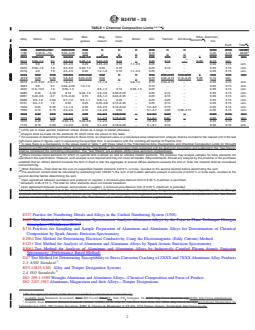
TABLE 1 Chemical Composition Limits
Other
Man- Mag- Chro- E Aluminum,
Elements
Alloy Silicon Iron Copper Nickel Zinc Titanium Zirconium
ganese nesium mium min
F
Each Total
G
1100 0.95 Si + Fe 0.05–0.20 0.05 . . . 0.10 . . 0.05 0.15 99.00
H
2014 0.50–1.2 0.7 3.9–5.0 0.40–1.2 0.20–0.8 0.10 . 0.25 0.15 . 0.05 0.15 rem.
2018 0.9 1.0 3.5–4.5 0.20 0.45–0.9 0.10 1.7–2.3 0.25 . . 0.05 0.15 rem.
2025 0.50–1.2 1.0 3.9–5.0 0.40–1.2 0.05 0.10 . 0.25 0.15 . 0.05 0.15 rem.
2218 0.9 1.0 3.5–4.5 0.20 1.2–1.8 0.10 1.7–2.3 0.25 . . 0.05 0.15 rem.
I
2219 0.20 0.30 5.8–6.8 0.20–0.40 0.02 . . 0.10 0.02–0.10 0.10–0.25 0.05 0.15 rem.
2618 0.10–0.25 0.9–1.3 1.9–2.7 . 1.3–1.8 . 0.9–1.2 0.10 0.04–0.10 . 0.05 0.15 rem.
3003 0.6 0.7 0.05–0.20 1.0–1.5 . . . 0.10 . . 0.05 0.15 rem.
4032 11.0–13.5 1.0 0.50–1.3 . 0.8–1.3 0.10 0.50–1.3 0.25 . . 0.05 0.15 rem.
5083 0.40 0.40 0.10 0.40–1.0 4.0–4.9 0.05–0.25 . 0.25 0.15 . 0.05 0.15 rem.
6061 0.40–0.8 0.7 0.15–0.40 0.15 0.8–1.2 0.04–0.35 . 0.25 0.15 . 0.05 0.15 rem.
6066 0.9–1.8 0.50 0.7–1.2 0.6–1.1 0.8–1.4 0.40 . 0.25 0.20 . 0.05 0.15 rem.
6151 0.6–1.2 1.0 0.35 0.20 0.45–0.8 0.15–0.35 . 0.25 0.15 . 0.05 0.15 rem.
7049 0.25 0.35 1.2–1.9 0.20 2.0–2.9 0.10–0.22 . 7.2–8.2 0.10 . 0.05 0.15 rem.
7050 0.12 0.15 2.0–2.6 0.10 1.9–2.6 0.04 . 5.7–6.7 0.06 0.08–0.15 0.05 0.15 rem.
J
7075 0.40 0.50 1.2–2.0 0.30 2.1–2.9 0.18–0.28 . 5.1–6.1 0.20 . 0.05 0.15 rem.
7076 0.40 0.6 0.30–1.0 0.30–0.8 1.2–2.0 . . 7.0–8.0 0.20 . 0.05 0.15 rem.
7175 0.15 0.20 1.2–2.0 0.10 2.1–2.9 0.18–0.28 . 5.1–6.1 0.10 . 0.05 0.15 rem.
A
Limits are in mass percent maximum unless shown as a range or stated otherwise.
B
Analysis shall be made for the elements for which limits are shown in this table.
C
For purposes of determining conformance to these limits, an observed value or a calculated value obtained from analysis shall be rounded to the nearest unit in the last
right-hand place of figures used in expressing the specified limit, in accordance with the rounding-off method of Practice E29.
D
In case there is a discrepancy in the values listed in Table 1 with those listed in the “International Alloy Designations and Chemical Composition Limits for Wrought
Aluminum and Wrought Aluminum Alloys” (known as the “Teal Sheets”), the composition limits registered with the Aluminum Association and published in the “Teal Sheets”
shall be considered the controlling composition. The “Teal Sheets” are available athttp://www.aluminum.org/tealsheets.
E
Others includes listed elements for which no specific limit is shown as well as unlisted metallic elements. The producer may analyze samples for trace elements not
specified in the specification. However, such analysis is not required and may not cover all metallic Others elements. Should any analysis by the producer or the purchaser
establish that an Others element exceeds the limit of Each or that the aggregate of several Others elements exceeds the limit of Total, the material shall be considered
nonconforming.
F
Other Elements—Total shall be the sum of unspecified metallic elements 0.010 % or more, rounded to the second decimal before determining the sum.
G
The aluminum content shall be calculated by subtracting from 100.00 % the sum of all metallic elements present in amounts of 0.010 % or more each, roundedtothe
second decimal before determining the sum.
H
Upon agreement between purchaser and producer or supplier, a zirconium-plus-titanium limit of 0.20 % maximum is permitted.
I
Vanadium, 0.05–0.15 %. The total for other elements does not include Vanadium.
J
Upon agreement between purchaser and producer or supplier, a zirconium-plus-titanium limit of 0.25 % maximum is permitted.
E3061 Test Method for Analysis of Aluminum and Alumi- 6
2.6 SAE Standard:
numAlloys by Inductively Coupled PlasmaAtomic Emis-
AMS 2772 Heat Treatment of Aluminum Alloy Raw Mate-
sion Spectrometry (Performance Based Method)
rials
G47 Test Method for Determining Susceptibility to Stress-
2.7 Federal Standard:
Corrosion Cracking of 2XXX and 7XXX Aluminum
Fed. Std. No. 123 Marking for Shipment (Civil Agencies)
Alloy Products
2.8 National Aerospace Standard:
2.3 ANSI Standard:
NAS 410 Certification and Qualification of Nondestructive
H35.1/H35.1(M) Alloy and Temper Designation Systems
Test Personnel
2.4 ISO Standards:
2.9 Other Standard:
ISO 209-1:1989 Wrought Aluminum and Aluminum
CENEN14242 AluminumandAluminumAlloys,Chemical
Alloys—Chemical Composition and Form of Product
Analysis. Inductively Coupled Plasma Optical Emission
ISO 2107:1983 Aluminum, Magnesium and their Alloys—
Spectral Analysis
Temper Designations
3. Terminology
2.5 Military Standard:
MIL-STD-129 Marking for Shipment and Storage (Refer-
3.1 Definitions:
enced in MIL-STD-649 and applies only to direct ship-
3.1.1 Refer to Terminology B881 for definitions of product
ments to Department of Defense agencies.)
terms used in this specification.
3.2 Definitions of Terms Specific to This Standard:
Available fromAluminumAssociation, 1400 Crystal Dr., Suite 430,Arlington,
VA 22202, http://www.aluminum.org. Available from SAE International (SAE), 400 Commonwealth Dr.,Warrendale,
Available from International Organization for Standardization (ISO), ISO PA 15096, http://www.sae.org.
Central Secretariat, BIBC II, Chemin de Blandonnet 8, CP 401, 1214 Vernier, Available from Aerospace Industries Association (AIA), 1000 Wilson Blvd.,
Geneva, Switzerland, http://www.iso.org. Suite 1700, Arlington, VA 22209, http://www.aia-aerospace.org.
5 8
Available from DLA Document Services, Building 4/D, 700 Robbins Ave., Available from European Committee for Standardization (CEN), Avenue
Philadelphia, PA 19111-5094, http://quicksearch.dla.mil. Marnix 17, B-1000, Brussels, Belgium, http://www.cen.eu.
B247M − 20
A,B
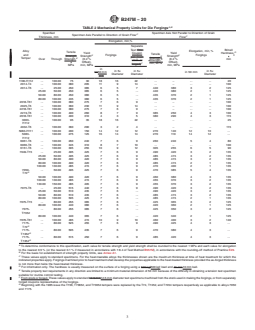
TABLE 2 Mechanical Property Limits for Die Forgings
Specified Specimen Axis Not Parallel to Direction of Grain
C
Specimen Axis Parallel to Direction of Grain Flow
C
Thickness, mm Flow
Elongation, min,%
Brinell
Alloy and Yield Yield Elongation, min, %
Separate
D
Hardness,
E E
Tensile Tensile
Strength Strength
Temper Forgings
Forgings Test
min
E E
Over Through Strength, (0.2 % Strength, (0.2 %
F
Coupon
MPa Offset), min, MPa Offset),
min, MPa min, MPa
in in 5× in 5× in 5×
in 50 mm
50 mm Diameter Diameter Diameter
1100-H112 . 100.00 75 30 18 16 22 . . . . 20
2014-T4 . 100.00 380 205 11 9 14 . . . . 100
2014-T6 . 25.00 450 385 6 5 7 440 380 3 2 125
25.00 50.00 450 385 6 5 . 440 380 2 1 125
50.00 80.00 450 380 6 5 . 435 370 2 1 125
80.00 100.00 435 380 6 5 . 435 370 2 1 125
2018-T61 . 100.00 380 275 7 6 9 . . . . 100
2025-T6 . 100.00 360 230 11 9 14 . . . . 100
2218-T61 . 100.00 380 275 7 6 9 . . . . 100
2219-T6 . 100.00 400 260 8 7 9 385 250 4 3 100
2618-T61 . 100.00 400 310 4 3 5 380 290 4 3 115
3003- . 100.00 95 35 18 16 22 . . . . 25
H112
4032-T6 . 100.00 360 290 3 2 4 . . . . 115
5083-H111 . 100.00 290 150 14 12 12 270 140 12 10 .
5083- . 100.00 275 125 16 14 14 270 110 14 12 .
H112
6061-T6 . 100.00 260 240 7 6 9 260 240 5 4 80
6066-T6 . 100.00 345 310 8 7 10 . . . . 100
6151-T6 . 100.00 305 255 10 9 12 305 255 6 5 90
7049-T73 . 25.00 495 425 7 6 9 490 420 3 2 135
25.00 50.00 495 425 7 6 9 485 415 3 2 135
50.00 80.00 490 420 7 6 9 485 415 3 2 135
80.00 100.00 490 420 7 6 9 485 415 2 1 135
100.00 130.00 485 415 7 6 9 470 400 2 1 135
7050- . 50.00 495 425 7 6 9 470 385 5 4 135
G
T74
50.00 100.00 490 420 7 6 9 460 380 4 3 135
100.00 130.00 485 415 7 6 9 455 370 3 2 135
130.00 150.00 485 405 7 6 9 455 370 3 2 135
7075-T6 . 25.00 515 440 7 6 9 490 420 3 2 135
25.00 50.00 510 435 7 6 . 490 420 3 2 135
50.00 80.00 510 435 7 6 . 485 415 3 2 135
80.00 100.00 505 425 7 6 . 485 415 2 1 135
7075-T73 . 80.00 455 385 7 6 . 425 365 3 2 125
80.00 100.00 440 380 7 6 . 420 360 2 1 125
7075- . 80.00 455 385 7 6 . 425 350 3 2 125
T7352
80.00 100.00 440 365 7 6 . 420 340 2 1 125
7076-T61 . 100.00 485 415 10 9 10 460 400 3 2 140
7175- . 80.00 525 455 7 6 9 490 425 4 3 .
G
T74
7175- . 80.00 505 435 7 6 9 470 380 4 3 .
G
T7452
7175- . 80.00 515 450 7 6 9 485 420 4 3 .
G
T7454
A
To determine conformance to this specification, each value for tensile strength and yield strength shall be rounded to the nearest 1 MPa and each value for elongation
to the nearest 0.5 % (or the nearest 0.1 % if measured in accordance with 7.8.4 of Test Method B557M), in accordance with the rounding-off method of Practice E29.
B
For the basis for establishment of strength property limits, see Annex A1.
C
These values apply to standard specimens. For the heat-treatable alloys the thicknesses shown are the maximum thickness at time of heat treatment for which the
indicated properties apply. Forgings machined prior to heat treatment shall develop the properties applicable to the heat-treated thickness provided the as-forged thickness
is not more than twice the heat-treated thickness.
D
For information only. The hardness is usually measured on the surface of a forging using a 500 kgf load and 10 mm ball.
E
Tensile property test requirements in any direction are limited to a minimum material dimension of 50 mm because of the difficulty in obtaining a tension test specimen
suitable for routine control testing.
F
From stock or forged. These values apply to standard 12.5 mm diameter test specimens machined from the stock used in making the forgings, or from separately forged
coupons representative of the forgings.
G
Beginning with the 1985 issue the T736, T73652, and T73654 tempers were replaced by the T74, T7452, and T7454 tempers respectively as applicable to alloys 7050
and 7175.
B247M − 20
A,B,C
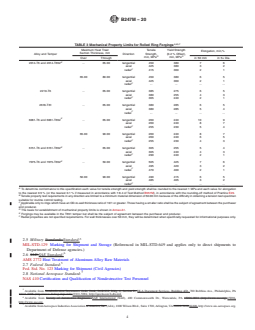
TABLE 3 Mechanical Property Limits for Rolled Ring Forgings
Maximum Heat Treat
Tensile Yield Strength
Elongation, min,%
Section Thickness, mm
Alloy and Temper Direction Strength, (0.2 % Offset),
D D
min, MPa min, MPa
Over Through in 50 mm in 5× Dia.
E
2014-T6 and 2014-T652 . 65.00 tangential 450 380 7 6
axial 425 380 3 2
F
radial 415 360 2 1
65.00 80.00 tangential 450 380 6 5
axial 425 360 2 1
F
radial . . . .
2219-T6 . 65.00 tangential 385 275 6 5
axial 380 255 4 3
F
radial 365 240 2 1
2618-T61 . 65.00 tangential 380 285 6 5
axial 380 285 5 4
F
radial . . . .
E
6061-T6 and 6061-T652 . 65.00 tangential 260 240 10 9
axial 260 240 8 7
F
radial 255 230 5 4
65.00 90.00 tangential 260 240 8 7
axial 260 240 6 5
F
radial 255 230 4 3
E
6151-T6 and 6151-T652 . 65.00 tangential 305 255 5 4
axial 305 240 4 3
F
radial 290 240 2 1
E
7075-T6 and 7075-T652 . 50.00 tangential 505 425 7 6
axial 495 420 3 2
F
radial 470 400 2 1
50.00 90.00 tangential 490 415 6 5
axial 485 405 3 2
F
radial . . . .
A
To determine conformance to this specification each value for tensile strength and yield strength shall be rounded to the nearest 1 MPa and each value for elongation
to the nearest 0.5 % (or the nearest 0.1 % if measured in accordance with 7.8.4 of Test Method B557M), in accordance with the rounding-off method of Practice E29.
B
Tensile property test requirements in any direction are limited to a minimum material dimension of 50.00 mm because of the difficulty in obtaining a tension test specimen
suitable for routine control testing.
C
Applicable only to rings which have an OD-to-wall thickness ratio of 10/1 or greater. Those having a smaller ratio shall be the subject of agreement between the purchaser
and producer.
D
The basis for establishment of mechanical property limits is shown in Annex A1.
E
Forgings may be available in the T651 temper but shall be the subject of agreement between the purchaser and producer.
F
Radial properties are not specified requirements. For wall thicknesses over 50 mm, they will be determined when specifically requested for informational purposes only.
TABLE 4 Ultrasonic Discontinuity Limits for Die and Hand
A
Forgings
Maximum
Thickness, mm
Discontinuity
Alloy Product Mass per
B
Class
Over Through
Piece, kg
7049 Die
12.50 100.00 150 B
7050 Forgings
7049 Hand
25.00 200.00 300 A
7050 Forgings
A
Discontinuities in excess of those listed in this table shall be allowed if it is
established that they will be removed by machining or that they are in noncritical
areas.
B
The discontinuity class limits are defined in Section 11 of Practice B594.
B247M − 20
3.2.1 capable of—the term capable of as used in this responsible for the performance of all inspection and test
specification means that the test need not be performed by the requirements specified herein.The producer may use their own
producer of the material; however, should subsequent testing or any other suitable facilities for the performance of the
by the purchaser establish that the material does not meet the inspection and test requirements specified herein, unless dis-
requirements, the material shall be subject to rejection. approvedbythepurchaserintheorderoratthetimeofcontract
signing. The purchaser shall have the right to perform any of
4. Ordering Information
the inspections and tests set forth in this specification where
such inspections are deemed necessary to ensure that material
4.1 Orders for material to this specification shall include the
conforms to prescribed requirements.
following information:
4.1.1 This specification designation (which includes the
6.2 Lot Definition—An inspection lot shall be defined as
number, the year, and the revision letter, if applicable),
follows:
4.1.2 Quantity in pieces or kilograms,
6.2.1 For heat-treated tempers, an inspection lot shall con-
4.1.3 Alloy (Section 7),
sist of forgings of the same shape or group of forgings of
4.1.4 Temper (Section 8), and
similar size and shape of the same alloy and heat-treated in the
4.1.5 Dimensions(Section13).Adrawingisrequiredfordie
same furnace charge. If forgings are heat-treated in a continu-
forgings and for hand forgings whose shapes are not simple
ous furnace, forgings charged consecutively during continuous
rectangles.
operation of the furnace shall be considered a furnace charge;
for such forgings weighing 2.5 kg or less the maximum mass
4.2 Additionally, orders for material to this specification
of a lot shall be 1000 kg; and for heavier forgings it shall be
shall include the following information when required by the
3000 kg.
purchaser:
6.2.2 For nonheat-treated tempers, an inspection lot shall
4.2.1 For die forgings, whether tensile property and grain
consist of an identifiable quantity of forgings of similar size
flow survey shall be made (see 8.2.1.1),
and shape of the same alloy and temper subjected to inspection
4.2.2 For die forgings, whether tension tests are required
at one time.
using specimens not parallel to the direction of grain flow and
whether such test specimens shall be prepared by a specific
7. Chemical Composition
method (see 8.3.1),
4.2.3 For hand forgings, whether tension tests shall be made 7.1 Limits—The forgings shall conform to the chemical
inotherthanthelongtransverseandshorttransversedirections
composition limits specified in Table 1. Conformance shall be
(see 8.3.3), determined by the producer by taking samples in accordance
4.2.4 For rolled ring forgings, whether tension tests shall be
with Practices E716 when the ingots are poured and analyzing
made in the radial direction (see 8.3.4),
those samples in accordance with Practices E716 and analyzed
4.2.5 Whether it is required in tension tests that small
in accordance with Test Methods E1251, E3061, or EN 14242.
elongations shall be measured by a special procedure (see
At least one sample shall be taken for each group of ingots
8.4.2),
poured simultaneously from the same source of molten metal.
4.2.6 Whether heat is to be treatment in accordance a
If the producer has determined the chemical composition
specific heat treatment practice described in Section 9,
during pouring of the ingots, they shall not be required to
4.2.7 Whether 7075-F material shall meet the requirements
sample and analyze the finished product.
for T73 temper (10.3),
7.2 If it becomes necessary to analyze forgings for confor-
4.2.8 Whether ultrasonic inspection is required (Section 14
mance to chemical composition limits, the methods of sam-
and Table 4),
pling and methods of analysis shall be as provided in the
4.2.9 Whether liquid-penetrant inspection is required (see
following:
15.3),
7.2.1 Methods of Sampling—Samples for chemical analysis
4.2.10 Whether inspection or witness of inspection and tests
shall be taken in accordance with Practice B985.
by the purchaser’s representative is required prior to material
7.2.2 Methods of Analysis—Analysis shall be performed in
shipment (Section 16),
accordance with Test Methods E1251, E3061, or EN 14242.
4.2.11 Whether certification is required (Section 18),
NOTE 3—It is standard practice in the United States aluminum industry
4.2.12 Whether hand forgings shall be marked for identifi-
to determine conformance to the chemical composition limits prior to
cation (Section 19), and
further processing of ingots into wrought products. Due to the continuous
4.2.13 Whether Practices B660 applies and, if so, the levels
nature of the process, it is not practical to keep a specific ingot analysis
of preservation, packaging, and packing required (Section 20).
identified with a specific quantity of finished material.
5. Materials and Manufacture
8. Mechanical Properties of Material as Supplied
5.1 The forgings may be manufactured by pressing,
8.1 Limits:
hammering, or rolling, at the option of the producer.
8.1.1 Die forgings shall conform to the tensile requirements
in Table 2.
6. Responsibility for Quality Assurance
8.1.1.1 Die forgings shall be capable of conforming to the
6.1 Responsibility for Inspection and Tests—Unless other- Brinell hardness requirements in Table 2 when measured at or
wise specified in the contract or purchase order, the producer is near the surface, except that in case of question the basis for
B247M − 20
acceptance shall be conformance with the specified minimum made only in the tangential and axial directions, but when
tensile requirements of Table 2. required by the purchaser tests shall also be made in the radial
direction for informational purposes.
8.1.2 Hand forgings shall conform to the tensile require-
ments in Table 5.
8.4 Test Methods:
8.1.3 Rolled ring forgings shall conform to the tensile
8.4.1 The tension tests shall be made in accordance with
property requirements in Table 3.
Test Method B557M.
8.4.2 If required when the specified elongation is less than
8.2 Number of Specimens:
3 % and the elongation measured in the usual manner is less
8.2.1 For die forgings, hand forgings, and rolled ring
than 4 %, the elongation of round tension specimens shall be
forgings, there shall be at least one tension specimen taken
measured in accordance with 7.8.4 of Test Method B557M.
from each lot (see 6.2).
8.4.3 Brinell hardness tests shall be made in accordance
8.2.1.1 For die forgings, when specified, a grain-flow pat-
withTest Method E10, by applying a 500 kgf load on a 10 mm
tern and tensile-property survey shall be made on a forging
ball for 10 to 15 s. Other equivalent combinations of load and
representative of the first production parts (see 8.3.2). It shall
ball or alternative methods of testing may be used if desired
be repeated after any major change in forging technique.
provided that, in case of dispute, the results secured with the
8.3 Test Specimen:
500 kgf load and 10 mm ball shall be the basis of acceptance.
8.3.1 For die forgings, unless otherwise specified by the
purchaser at the time of placing the order, test specimens shall
9. Heat Treatment
be prepared with the axis of the specimen as nearly parallel to
9.1 Unless otherwise specified, it is the producers option to
the direction of maximum metal flow as possible, and, at the
heat treat in accordance with Practice B918/B918M or
option of the forging producer, by one of the following
AMS2772 for the applicable tempers designated in Tables 2
methods:
and 3.
8.3.1.1 Method 1—Machined from a section of the stock
used in making the forgings.
10. Producer Confirmation of Heat-treat Response
8.3.1.2 Method 2—Machined from a coupon forged from
the stock.
10.1 In addition to the requirements of Section 8, die
8.3.1.3 Method 3—Machined from a prolongation of the
forgings in alloys 2014, 2018, 2025, 2218, 2219, 2618, 4032,
forging.
6061, 6066, 6151, 7075, and 7076 produced in the F and 01
8.3.1.4 Method4—Machinedfromoneoftheforgingsinthe tempers (within the size limits specified in Table 2) shall, after
lot.
proper solution heat treatment and precipitation heat treatment,
conform to the tensile properties specified in Table 2 for T6
NOTE 4—Test specimens obtained by Method 1, 2, or 3 will usually
temper forgings except for 2018, 2218, 2618, and 7076 for
have different properties from those obtained by Method 4. Samples
which T61 temper requirements apply.
obtained by Methods 1, 2, or 3 indicate only the general strength level of
the forging that would be obtained with proper heat treatment.
10.2 In addition to the requirements of Section 8, hand
8.3.1.5 Specimens representing heat-treated forgings shall
forgings in alloys 2014, 2219, 2618, 6061, and 7075 produced
be heat-treated with the forgings they represent or shall be
in the F and 01 tempers (within the size limits specified in
machined from coupons that have been so treated.
Table 5) shall, after proper solution heat treatment and precipi-
8.3.2 If required, a die forging representative of the first
tation heat treatment, conform to the tensile properties speci-
production parts shall be selected after forging techniques have
fied in Table 5 for T6 temper forgings except for 2618 for
been established, and shall be tested as follows:
which T61 temper requirements apply.
8.3.2.1 Tension test specimens shall be taken in two direc-
10.3 Alloy 7049 die and hand forgings in the F and O
tions: (1) substantially parallel to, and (2) not parallel to the
tempers and, when specified, 7075 die and hand forgings in the
forging flow lines. The locations shall be as indicated on the
F and 01 tempers (within the size limits specified in Tables 2
forgingengineeringdrawingor,ifnotindicated,fromgenerally
and 5, respectively) shall, after proper solution heat treatment
representative areas.
and precipitation heat treatment, conform to the tensile prop-
8.3.2.2 A sample forging shall be sectioned at the locations
erties specified in Tables 2 and 5, as applicable for T73 type
of the specimens, to show the grain flow.
temper, and Section 12.
8.3.3 For hand forgings, the specimens shall be taken from
10.4 Alloys 7050 and 7175 die and hand forgings in the F
a prolongation of the forgings or from a forging chosen to
and O tempers (within the size limits specified in Tables 2 and
represent the lot. Tests will regu
...
This document is not an ASTM standard and is intended only to provide the user of an ASTM standard an indication of what changes have been made to the previous version. Because
it may not be technically possible to adequately depict all changes accurately, ASTM recommends that users consult prior editions as appropriate. In all cases only the current version
of the standard as published by ASTM is to be considered the official document.
Designation: B247M − 15 B247M − 20
Standard Specification for
Aluminum and Aluminum-Alloy Die Forgings, Hand
Forgings, and Rolled Ring Forgings (Metric)
This standard is issued under the fixed designation B247M; the number immediately following the designation indicates the year of
original adoption or, in the case of revision, the year of last revision. A number in parentheses indicates the year of last reapproval. A
superscript epsilon (´) indicates an editorial change since the last revision or reapproval.
This standard has been approved for use by agencies of the U.S. Department of Defense.
1. Scope*
1.1 This specification covers aluminum-alloy (Note 1) die forgings, hand forgings, and rolled ring forgings as shown in Tables
2-4 and in Section 10 for heat-treatable alloy forgings supplied in the F and 01 tempers. The maximum thicknesses for forgings
within the scope of this specification are as indicated in those tables.
NOTE 1—Throughout this specification use of the term alloy in the general sense includes aluminum as well as aluminum alloy.
NOTE 2—For forging stock supplied as rolled or cold-finished bar or rod see Specification B211B211/B211MM. For forging stock supplied as extruded
bar or rod see Specification B221B221MM.
1.2 Alloy and temper designations are in accordance with ANSI H35.1/H35.1(M). The equivalent Unified Numbering System
alloy designations are those of Table 1 preceded by A9, for example, A91100 for aluminum 1100 in accordance with Practice E527.
1.3 For acceptance criteria for inclusion of new aluminum and aluminum alloys in this specification, see Annex A2.
1.4 This specification is the SI companion to Specification B247.
1.5 This international standard was developed in accordance with internationally recognized principles on standardization
established in the Decision on Principles for the Development of International Standards, Guides and Recommendations issued
by the World Trade Organization Technical Barriers to Trade (TBT) Committee.
2. Referenced Documents
2.1 The following documents of the issue in effect on date of material purchase form a part of this specification to the extent
referenced herein.
2.2 ASTM Standards:
B211B211/B211M Specification for Aluminum and Aluminum-Alloy Rolled or Cold-Finished Cold Finished Bar, Rod, and Wire
(Metric) B0211_B0211M
B221B221M Specification for Aluminum and Aluminum-Alloy Extruded Bars, Rods, Wire, Profiles, and Tubes (Metric)
B247 Specification for Aluminum and Aluminum-Alloy Die Forgings, Hand Forgings, and Rolled Ring Forgings
B557M Test Methods for Tension Testing Wrought and Cast Aluminum- and Magnesium-Alloy Products (Metric)
B594 Practice for Ultrasonic Inspection of Aluminum-Alloy Wrought Products
B660 Practices for Packaging/Packing of Aluminum and Magnesium Products
B881 Terminology Relating to Aluminum- and Magnesium-Alloy Products
B918B918/B918M Practice for Heat Treatment of Wrought Aluminum Alloys
B985 Practice for Sampling Aluminum Ingots, Billets, Castings and Finished or Semi-Finished Wrought Aluminum Products for
Compositional Analysis
E10 Test Method for Brinell Hardness of Metallic Materials
E29 Practice for Using Significant Digits in Test Data to Determine Conformance with Specifications
E34 Test Methods for Chemical Analysis of Aluminum and Aluminum-Base Alloys (Withdrawn 2017)
E165E165/E165M Practice for Liquid Penetrant Testing for General Industry
This specification is under the jurisdiction of ASTM Committee B07 on Light Metals and Alloys and is the direct responsibility of Subcommittee B07.03 on Aluminum
Alloy Wrought Products.
Current edition approved Oct. 1, 2015May 1, 2020. Published October 2015May 2020. Originally approved in 1980. Last previous edition approved in 20092015 as
B247M – 09.B247M – 15. DOI: 10.1520/B0247M-15.10.1520/B0247M-20.
For referenced ASTM standards, visit the ASTM website, www.astm.org, or contact ASTM Customer Service at service@astm.org. For Annual Book of ASTM Standards
volume information, refer to the standard’s Document Summary page on the ASTM website.
*A Summary of Changes section appears at the end of this standard
Copyright © ASTM International, 100 Barr Harbor Drive, PO Box C700, West Conshohocken, PA 19428-2959. United States
B247M − 20
A,B,C,JD
TABLE 1 Chemical Composition Limits
Other
Man- Mag- Chro- Aluminum,
Alloy Silicon Iron Copper Nickel Zinc Titanium Zirconium DE
Elements
ganese nesium mium min
EF
Each Total
F
1100 0.95 Si + Fe 0.05–0.20 0.05 . . . 0.10 . . 0.05 0.15 99.00
G
1100 0.95 Si + Fe 0.05–0.20 0.05 . . . 0.10 . . 0.05 0.15 99.00
G
2014 0.50–1.2 0.7 3.9–5.0 0.40–1.2 0.20–0.8 0.10 . 0.25 0.15 . 0.05 0.15 rem.
H
2014 0.50–1.2 0.7 3.9–5.0 0.40–1.2 0.20–0.8 0.10 . 0.25 0.15 . 0.05 0.15 rem.
2018 0.9 1.0 3.5–4.5 0.20 0.45–0.9 0.10 1.7–2.3 0.25 . . 0.05 0.15 rem.
2025 0.50–1.2 1.0 3.9–5.0 0.40–1.2 0.05 0.10 . 0.25 0.15 . 0.05 0.15 rem.
2218 0.9 1.0 3.5–4.5 0.20 1.2–1.8 0.10 1.7–2.3 0.25 . . 0.05 0.15 rem.
H
2219 0.20 0.30 5.8–6.8 0.20–0.40 0.02 . . 0.10 0.02–0.10 0.10–0.25 0.05 0.15 rem.
I
2219 0.20 0.30 5.8–6.8 0.20–0.40 0.02 . . 0.10 0.02–0.10 0.10–0.25 0.05 0.15 rem.
2618 0.10–0.25 0.9–1.3 1.9–2.7 . 1.3–1.8 . 0.9–1.2 0.10 0.04–0.10 . 0.05 0.15 rem.
3003 0.6 0.7 0.05–0.20 1.0–1.5 . . . 0.10 . . 0.05 0.15 rem.
4032 11.0–13.5 1.0 0.50–1.3 . 0.8–1.3 0.10 0.50–1.3 0.25 . . 0.05 0.15 rem.
5083 0.40 0.40 0.10 0.40–1.0 4.0–4.9 0.05–0.25 . 0.25 0.15 . 0.05 0.15 rem.
6061 0.40–0.8 0.7 0.15–0.40 0.15 0.8–1.2 0.04–0.35 . 0.25 0.15 . 0.05 0.15 rem.
6066 0.9–1.8 0.50 0.7–1.2 0.6–1.1 0.8–1.4 0.40 . 0.25 0.20 . 0.05 0.15 rem.
6151 0.6–1.2 1.0 0.35 0.20 0.45–0.8 0.15–0.35 . 0.25 0.15 . 0.05 0.15 rem.
7049 0.25 0.35 1.2–1.9 0.20 2.0–2.9 0.10–0.22 . 7.2–8.2 0.10 . 0.05 0.15 rem.
7050 0.12 0.15 2.0–2.6 0.10 1.9–2.6 0.04 . 5.7–6.7 0.06 0.08–0.15 0.05 0.15 rem.
I
7075 0.40 0.50 1.2–2.0 0.30 2.1–2.9 0.18–0.28 . 5.1–6.1 0.20 . 0.05 0.15 rem.
J
7075 0.40 0.50 1.2–2.0 0.30 2.1–2.9 0.18–0.28 . 5.1–6.1 0.20 . 0.05 0.15 rem.
7076 0.40 0.6 0.30–1.0 0.30–0.8 1.2–2.0 . . 7.0–8.0 0.20 . 0.05 0.15 rem.
7175 0.15 0.20 1.2–2.0 0.10 2.1–2.9 0.18–0.28 . 5.1–6.1 0.10 . 0.05 0.15 rem.
A
Limits are in mass percent maximum unless shown as a range or stated otherwise.
B
Analysis shall be made for the elements for which limits are shown in this table.
C
For purposes of determining conformance to these limits, an observed value or a calculated value obtained from analysis shall be rounded to the nearest unit in the last
right-hand place of figures used in expressing the specified limit, in accordance with the rounding-off method of Practice E29.
D
In case there is a discrepancy in the values listed in Table 1 with those listed in the “International Alloy Designations and Chemical Composition Limits for Wrought
Aluminum and Wrought Aluminum Alloys” (known as the “Teal Sheets”), the composition limits registered with the Aluminum Association and published in the “Teal Sheets”
shall be considered the controlling composition. The “Teal Sheets” are available athttp://www.aluminum.org/tealsheets.
E
Others includes listed elements for which no specific limit is shown as well as unlisted metallic elements. The producer may analyze samples for trace elements not
specified in the specification. However, such analysis is not required and may not cover all metallic Others elements. Should any analysis by the producer or the purchaser
establish that an Others element exceeds the limit of Each or that the aggregate of several Others elements exceeds the limit of Total, the material shall be considered
nonconforming.
F
Other Elements—Total shall be the sum of unspecified metallic elements 0.010 % or more, rounded to the second decimal before determining the sum.
G
The aluminum content shall be calculated by subtracting from 100.00 % the sum of all metallic elements present in amounts of 0.010 % or more each, rounded to the
second decimal before determining the sum.
H
Upon agreement between purchaser and producer or supplier, a zirconium-plus-titanium limit of 0.20 % maximum is permitted.
I
Vanadium, 0.05–0.15 %. The total for other elements does not include Vanadium.
J
Upon agreement between purchaser and producer or supplier, a zirconium-plus-titanium limit of 0.25 % maximum is permitted.
J
In case there is a discrepancy in the values listed in Table 1 with those listed in the “ International Alloy Designations and Chemical Composition Limits for Wrought
Aluminum and Wrought Aluminum Alloys” (known as the “Teal Sheets”), the composition limits registered with the Aluminum Association and published in the “Teal Sheets”
shall be considered the controlling composition. The “Teal Sheets” are available athttp://www.aluminum.org/tealsheets.
E527 Practice for Numbering Metals and Alloys in the Unified Numbering System (UNS)
E607 Test Method for Atomic Emission Spectrometric Analysis Aluminum Alloys by the Point to Plane Technique Nitrogen
Atmosphere (Withdrawn 2011)
E716 Practices for Sampling and Sample Preparation of Aluminum and Aluminum Alloys for Determination of Chemical
Composition by Spark Atomic Emission Spectrometry
E1004 Test Method for Determining Electrical Conductivity Using the Electromagnetic (Eddy Current) Method
E1251 Test Method for Analysis of Aluminum and Aluminum Alloys by Spark Atomic Emission Spectrometry
E3061 Test Method for Analysis of Aluminum and Aluminum Alloys by Inductively Coupled Plasma Atomic Emission
Spectrometry (Performance Based Method)
G47 Test Method for Determining Susceptibility to Stress-Corrosion Cracking of 2XXX and 7XXX Aluminum Alloy Products
2.3 ANSI Standard:
H35.1/H35.1(M) Alloy and Temper Designation Systems
2.4 ISO Standards:
ISO 209-1:1989 Wrought Aluminum and Aluminum Alloys—Chemical Composition and Form of Product
ISO 2107:1983 Aluminum, Magnesium and their Alloys—Temper Designations
The last approved version of this historical standard is referenced on www.astm.org.
Available from Aluminum Association, Inc., 1400 Crystal Drive,Dr., Suite 430, Arlington, VA 22202 (http://www.aluminum.org).22202, http://www.aluminum.org.
Available from American National Standards Institute (ANSI), 25 W. 43rd St., 4th Floor, New York, NY 10036 (http://www.ansi.org).International Organization for
Standardization (ISO), ISO Central Secretariat, BIBC II, Chemin de Blandonnet 8, CP 401, 1214 Vernier, Geneva, Switzerland, http://www.iso.org.
B247M − 20
A,B
TABLE 2 Mechanical Property Limits for Die Forgings
Specified Specimen Axis Not Parallel to Direction of Grain
C
Specimen Axis Parallel to Direction of Grain Flow
C
Thickness, mm Flow
Elongation, min,%
Separate
Brinell
Test Cou-
Alloy Elongation, min, %
Tensile D
Yield Yield
Coupon Hardness,
Tensile
and Forgings
E Forgings E
Strength Strength Strength
E ,
pon (from
Strength
Temper E
Over Through (0.2 % (0.2 %
Strength, E min
stock or ,Strength,
Offset), Offset),
,
F
min, MPa
forged)
min, MPa min, MPa
MPa
in
in 5× in 5× in 5×
5050 mm in 50 mm
Diameter Diameter Diameter
mm
1100-H112 . 100.00 75 30 18 16 22 . . . . 20
2014-T4 . 100.00 380 205 11 9 14 . . . . 100
2014-T6 . 25.00 450 385 6 5 7 440 380 3 2 125
25.00 50.00 450 385 6 5 . 440 380 2 1 125
50.00 80.00 450 380 6 5 . 435 370 2 1 125
80.00 100.00 435 380 6 5 . 435 370 2 1 125
2018-T61 . 100.00 380 275 7 6 9 . . . . 100
2025-T6 . 100.00 360 230 11 9 14 . . . . 100
2218-T61 . 100.00 380 275 7 6 9 . . . . 100
2219-T6 . 100.00 400 260 8 7 9 385 250 4 3 100
2618-T61 . 100.00 400 310 4 3 5 380 290 4 3 115
3003- . 100.00 95 35 18 16 22 . . . . 25
H112
4032-T6 . 100.00 360 290 3 2 4 . . . . 115
5083-H111 . 100.00 290 150 14 12 12 270 140 12 10 .
5083- . 100.00 275 125 16 14 14 270 110 14 12 .
H112
6061-T6 . 100.00 260 240 7 6 9 260 240 5 4 80
6066-T6 . 100.00 345 310 8 7 10 . . . . 100
6151-T6 . 100.00 305 255 10 9 12 305 255 6 5 90
7049-T73 . 25.00 495 425 7 6 9 490 420 3 2 135
25.00 50.00 495 425 7 6 9 485 415 3 2 135
50.00 80.00 490 420 7 6 9 485 415 3 2 135
80.00 100.00 490 420 7 6 9 485 415 2 1 135
100.00 130.00 485 415 7 6 9 470 400 2 1 135
7050- . 50.00 495 425 7 6 9 470 385 5 4 135
G
T74
50.00 100.00 490 420 7 6 9 460 380 4 3 135
100.00 130.00 485 415 7 6 9 455 370 3 2 135
130.00 150.00 485 405 7 6 9 455 370 3 2 135
7075-T6 . 25.00 515 440 7 6 9 490 420 3 2 135
25.00 50.00 510 435 7 6 . 490 420 3 2 135
50.00 80.00 510 435 7 6 . 485 415 3 2 135
80.00 100.00 505 425 7 6 . 485 415 2 1 135
7075-T73 . 80.00 455 385 7 6 . 425 365 3 2 125
80.00 100.00 440 380 7 6 . 420 360 2 1 125
7075- . 80.00 455 385 7 6 . 425 350 3 2 125
T7352
80.00 100.00 440 365 7 6 . 420 340 2 1 125
7076-T61 . 100.00 485 415 10 9 10 460 400 3 2 140
7175- . 80.00 525 455 7 6 9 490 425 4 3 .
G
T74
7175- . 80.00 505 435 7 6 9 470 380 4 3 .
G
T7452
7175- . 80.00 515 450 7 6 9 485 420 4 3 .
G
T7454
A
To determine conformance to this specification, each value for tensile strength and yield strength shall be rounded to the nearest 1 MPa and each value for elongation
to the nearest 0.5 % (or the nearest 0.1 % if measured in accordance with 7.8.4 of Test Method B557M), in accordance with the rounding-off method of Practice E29.
B
For the basis for establishment of strength property limits, see Annex A1.
C
These values apply to standard specimens. For the heat-treatable alloys the thicknesses shown are the maximum thickness at time of heat treatment for which the
indicated properties apply. Forgings machined prior to heat treatment shall develop the properties applicable to the heat-treated thickness provided the as-forged thickness
is not more than twice the heat-treated thickness.
D
For information only. The hardness is usually measured on the surface of a forging using a 500-kgf500 kgf load and 10-mm10 mm ball.
E
Tensile property test requirements in any direction are limited to a minimum material dimension of 50 mm because of the difficulty in obtaining a tension test specimen
suitable for routine control testing.
F
From stock or forged. These values apply to standard 12.5-mm12.5 mm diameter test specimens machined from the stock used in making the forgings, or from separately
forged coupons representative of the forgings.
G
Beginning with the 1985 issue the T736, T73652, and T73654 tempers were replaced by the T74, T7452, and T7454 tempers respectively as applicable to alloys 7050
and 7175.
B247M − 20
A,B,C
TABLE 3 Mechanical Property Limits for Rolled Ring Forgings
Maximum Heat Treat
Tensile Yield Strength
Elongation, min,%
Section Thickness, mm
Alloy and Temper Direction Strength, (0.2 % Offset),
D D
min, MPa min, MPa
Over Through in 50 mm in 5× Dia.
E
2014-T6 and 2014-T652 . 65.00 tangential 450 380 7 6
axial 425 380 3 2
F
radial 415 360 2 1
65.00 80.00 tangential 450 380 6 5
axial 425 360 2 1
F
radial . . . .
2219-T6 . 65.00 tangential 385 275 6 5
axial 380 255 4 3
F
radial 365 240 2 1
2618-T61 . 65.00 tangential 380 285 6 5
axial 380 285 5 4
F
radial . . . .
E
6061-T6 and 6061-T652 . 65.00 tangential 260 240 10 9
axial 260 240 8 7
F
radial 255 230 5 4
65.00 90.00 tangential 260 240 8 7
axial 260 240 6 5
F
radial 255 230 4 3
E
6151-T6 and 6151-T652 . 65.00 tangential 305 255 5 4
axial 305 240 4 3
F
radial 290 240 2 1
E
7075-T6 and 7075-T652 . 50.00 tangential 505 425 7 6
axial 495 420 3 2
F
radial 470 400 2 1
50.00 90.00 tangential 490 415 6 5
axial 485 405 3 2
F
radial . . . .
A
To determine conformance to this specification each value for tensile strength and yield strength shall be rounded to the nearest 1 MPa and each value for elongation
to the nearest 0.5 % (or the nearest 0.1 % if measured in accordance with 7.8.4 of Test Method B557M), in accordance with the rounding-off method of Practice E29.
B
Tensile property test requirements in any direction are limited to a minimum material dimension of 50.00 mm because of the difficulty in obtaining a tension test specimen
suitable for routine control testing.
C
Applicable only to rings which have an OD-to-wall thickness ratio of 10/1 or greater. Those having a smaller ratio shall be the subject of agreement between the purchaser
and producer.
D
The basis for establishment of mechanical property limits is shown in Annex A1.
E
Forgings may be available in the T651 temper but shall be the subject of agreement between the purchaser and producer.
F
Radial properties are not specified requirements. For wall thicknesses over 50 mm, they will be determined when specifically requested for informational purposes only.
2.5 Military Standards:Standard:
MIL-STD-129 Marking for Shipment and Storage (Referenced in MIL-STD-649 and applies only to direct shipments to
Department of Defense agencies.)
2.6 SAE:SAE Standard:
AMS 2772 Heat Treatment of Aluminum Alloy Raw Materials
2.7 Federal Standard:
Fed. Std. No. 123 Marking for Shipment (Civil Agencies)
2.8 National Aerospace Standard:
NAS 410 Certification and Qualification of Nondestructive Test Personnel
Available from Standardization Documents Order Desk, DODSSP, Bldg. 4, Section D, DLA Document Services, Building 4/D, 700 Robbins Ave., Philadelphia, PA
19111-5098 (http://www.dodssp.daps.mil).19111-5094, http://quicksearch.dla.mil.
Available from Society of Automotive Engineers SAE International (SAE), 400 Commonwealth Dr., Warrendale, PA 15096-0001 (http://www.sae.org).15096,
http://www.sae.org.
Available from Aerospace Industries Association of America, Inc. (AIA), 1000 Wilson Blvd., Suite 1700, Arlington, VA 22209-3928,22209, http://www.aia-aerospace.org.
B247M − 20
TABLE 4 Ultrasonic Discontinuity Limits for Die and Hand
A
Forgings
Maximum
Thickness, mm
Discontinuity
Alloy Product Mass per
B
Class
Over Through
Piece, kg
Maximum
Thickness, mm
Discontinuity
Alloy Product Mass per
B
Class
Over Through
Piece, kg
7049 Die
12.50 100.00 150 B
7050 Forgings
7049 Hand
25.00 200.00 300 A
7050 Forgings
A
Discontinuities in excess of those listed in this table shall be allowed if it is
established that they will be removed by machining or that they are in noncritical
areas.
B
The discontinuity class limits are defineddefined in Section 11 of Practice B594.
2.9 Other Standards:Standard:
CEN EN 14242 Aluminum and Aluminum Alloys, Chemical Analysis. Inductively Coupled Plasma Optical Emission Spectral
Analysis
3. Terminology
3.1 DefinitionsDefinitions:—Refer
3.1.1 Refer to Terminology B881 for definitions of product terms used in this specification. to Terminology B881 for definitions
of product terms used in this specification.
3.2 Definitions of Terms Specific to This Standard:
3.2.1 capable of—Thethe term capable of as used in this specification means that the test need not be performed by the producer
of the material. However,material; however, should subsequent testing by the purchaser establish that the material does not meet
the requirements, the material shall be subject to rejection.
4. Ordering Information
4.1 Orders for material to this specification shall include the following information:
4.1.1 This specification designation (which includes the number, the year, and the revision letter, if applicable),
4.1.2 Quantity in pieces or kilograms,
4.1.3 Alloy (Section 7),
4.1.4 Temper (Section 8), and
4.1.5 Dimensions (Section 13). A drawing is required for die forgings and for hand forgings whose shapes are not simple
rectangles,rectangles.
4.2 Additionally, orders for material to this specification shall include the following information when required by the
purchaser:
4.2.1 For die forgings, whether tensile property and grain flow survey shall be made (see 8.2.1.1),
4.2.2 For die forgings, whether tension tests are required using specimens not parallel to the direction of grain flow and whether
such test specimens shall be prepared by a specific method (see 8.3.1),
4.2.3 For hand forgings, whether tension tests shall be made in other than the long transverse and short transverse directions
(see 8.3.3),
4.2.4 For rolled ring forgings, whether tension tests shall be made in the radial direction (see 8.3.4),
4.2.5 Whether it is required in tension tests that small elongations shall be measured by a special procedure (see 8.4.2),
Available from European Committee for Standardization (CEN), 36 Rue de Stassart, B-1050, Avenue Marnix 17, B-1000, Brussels, Belgium, http://www.cen.eu/esearch.
http://www.cen.eu.
B247M − 20
4.2.6 Whether heat is to be treatment in accordance with Practicea specific B918 is required (heat treatment practice described
in Section 9.29),,
4.2.7 Whether 7075-F material shall meet the requirements for T73 temper (10.3),
4.2.8 Whether ultrasonic inspection is required (Section 14 and Table 4),
4.2.9 Whether liquid-penetrant inspection is required (see 15.3),
4.2.10 Whether inspection or witness of inspection and tests by the purchaser’s representative is required prior to material
shipment (Section 16),
4.2.11 Whether certification is required (Section 18),
4.2.12 Whether hand forgings shall be marked for identification (Section 19), and
4.2.13 Whether Practices B660 applies and, if so, the levels of preservation, packaging, and packing required (Section 20).
5. Materials and Manufacture
5.1 The forgings may be manufactured by pressing, hammering, or rolling, at the option of the producer.
6. Responsibility for Quality Assurance
6.1 Responsibility for Inspection and Tests—Unless otherwise specified in the contract or purchase order, the producer is
responsible for the performance of all inspection and test requirements specified herein. The producer may use their own or any
other suitable facilities for the performance of the inspection and test requirements specified herein, unless disapproved by the
purchaser in the order or at the time of contract signing. The purchaser shall have the right to perform any of the inspections and
tests set forth in this specification where such inspections are deemed necessary to ensure that material conforms to prescribed
requirements.
6.2 Lot Definition—An inspection lot shall be defined as follows:
6.2.1 For heat-treated tempers, an inspection lot shall consist of forgings of the same shape or group of forgings of similar size
and shape of the same alloy and heat-treated in the same furnace charge. If forgings are heat-treated in a continuous furnace,
forgings charged consecutively during continuous operation of the furnace shall be considered a furnace charge; for such forgings
weighing 2.5 kg or less the maximum mass of a lot shall be 1000 kg; and for heavier forgings it shall be 3000 kg.
6.2.2 For nonheat-treated tempers, an inspection lot shall consist of an identifiable quantity of forgings of similar size and shape
of the same alloy and temper subjected to inspection at one time.
7. Chemical Composition
7.1 Limits—The forgings shall conform to the chemical composition limits specified in Table 1. Conformance shall be
determined by the producer by taking samples in accordance with Practices E716 when the ingots are poured and analyzing those
samples in accordance with Practices E716 and analyzed in accordance with Test Methods E34E1251, E607E3061, E1251, or
EN 14242. At least one sample shall be taken for each group of ingots poured simultaneously from the same source of molten
metal. If the producer has determined the chemical composition during pouring of the ingots, they shall not be required to sample
and analyze the finished product.
7.2 If it becomes necessary to analyze forgings for conformance to chemical composition limits, the methods of sampling and
methods of analysis shall be as provided in the following:
7.2.1 Methods of Sampling—Samples for chemical analysis shall be taken in accordance with Practice B985.
7.2.2 Methods of Analysis—Analysis shall be performed in accordance with Test Methods E34E1251, E607E3061, E1251, or
EN 14242.
NOTE 3—It is standard practice in the United States aluminum industry to determine conformance to the chemical composition limits prior to further
processing of ingots into wrought products. Due to the continuous nature of the process, it is not practical to keep a specific ingot analysis identified with
a specific quantity of finished material.
8. Mechanical Properties of Material as Supplied
8.1 Limits:
8.1.1 Die forgings shall conform to the tensile requirements in Table 2.
8.1.1.1 Die forgings shall be capable of conforming to the Brinell hardness requirements in Table 2 when measured at or near
the surface, except that in case of question the basis for acceptance shall be conformance with the specified minimum tensile
requirements of Table 2.
8.1.2 Hand forgings shall conform to the tensile requirements in Table 5.
8.1.3 Rolled ring forgings shall conform to the tensile property requirements in Table 3.
8.2 Number of Specimens:
8.2.1 For die forgings, hand forgings, and rolled ring forgings, there shall be at least one tension specimen taken from each lot
(see 6.2).
8.2.1.1 For die forgings, when specified, a grain-flow pattern and tensile-property survey shall be made on a forging
representative of the first production parts (see 8.3.2). It shall be repeated after any major change in forging technique.
B247M − 20
A,B
TABLE 5 Mechanical Property Limits for Hand Forging
C
Elongation in
Tensile Yield Strength
Thickness, , mm
Alloy and Temper Direction Strength, (0.2% Offset), 5× Diameter
D
Over Through
min, MPa min, MPa s5.65 Ad
œ
2014-T6 . 50.00 longitudinal 450 385 7
long transverse 450 385 2
50.00 80.00 longitudinal 440 385 7
long transverse 440 380 2
short transverse 425 380 1
80.00 100.00 longitudinal 435 380 7
long transverse 435 380 2
short transverse 420 370 1
100.00 130.00 longitudinal 425 370 6
long transverse 425 370 1
short transverse 415 365 1
130.00 150.00 longitudinal 420 365 6
long transverse 420 365 1
short transverse 405 365 1
150.00 180.00 longitudinal 415 360 5
long transverse 415 360 1
short transverse 400 360 1
180.00 200.00 longitudinal 405 350 5
long transverse 405 350 1
short transverse 395 350 1
2014–T652 . 50.00 longitudinal 450 385 7
long transverse 450 385 2
50.00 80.00 longitudinal 440 385 7
long transverse 440 380 2
short transverse 425 360 1
80.00 100.00 longitudinal 435 380 7
long transverse 435 380 2
short transverse 420 350 1
100.00 130.00 longitudinal 425 370 6
long transverse 425 370 1
short transverse 415 345 1
130.00 150.00 longitudinal 420 365 6
long transverse 420 365 1
short transverse 405 345 1
150.00 180.00 longitudinal 415 360 5
long transverse 415 360 1
short transverse 400 340 1
180.00 200.00 longitudinal 405 350 5
long transverse 405 350 1
short transverse 395 330 1
2219-T6 . 100.00 longitudinal 400 275 5
long transverse 380 255 3
E
short transverse 365 240 1
2219-T852 . 100.00 longitudinal 425 345 5
long transverse 425 340 3
E
short transverse 415 315 2
2618-T61 . 50.00 longitudinal 400 325 6
long transverse 380 290 4
E
short transverse 360 290 3
50.00 80.00 longitudinal 395 315 6
long transverse 380 290 4
short transverse 360 290 3
80.00 100.00 longitudinal 385 310 6
long transverse 365 275 4
short transverse 350 270 3
B247M − 20
TABLE 5 Continued
C
Tensile Yield Strength Elongation in
Thickness, , mm
5× Diameter
Alloy and Temper Direction Strength, (0.2% Offset),
D
Over Through
min, MPa min, MPa 5.65 A
s d
œ
5083-H111 . 100.00 longitudinal 290 150 12
long transverse 270 140 10
5083-H112 . 100.00 longitudinal 275 125 14
long transverse 270 110 12
6061-T6 . 100.00 longitudinal 260 240 9
or T652 long transverse 260 240 7
E
short transverse 255 230 4
100.00 200.00 longitudinal 255 235 7
long transverse 255 235 5
short transverse 240 220 3
7049-T73 50.00 80.00 longitudinal 490 420 8
long transverse 490 405 3
short transverse 475 400 2
80.00 100.00 longitudinal 475 405 7
long transverse 475 395 2
short transverse 460 385 1
100.00 130.00 longitudinal 460 385 6
long transverse 460 385 2
short transverse 455 380 1
7049-T7352 25.00 80.00 longitudinal 490 405 8
long transverse 490 395 3
E
short transverse 475 385 2
80.00 100.00 longitudinal 475 395 7
long transverse 475 370 2
short transverse 460 365 1
100.00 130.00 longitudinal 460 370 6
long transverse 460 365 2
short transverse 455 350 1
F
7050-T7452 . 50.00 longitudinal 495 435 8
long transverse 490 420 4
50.00 80.00 longitudinal 495 425 8
long transverse 485 415 4
short transverse 460 380 3
80.00 100.00 longitudinal 490 420 8
long transverse 485 405 4
short transverse 460 380 3
100.00 130.00 longitudinal 485 415 8
long transverse 475 400 3
short transverse 455 370 2
130.00 150.00 longitudinal 475 405 8
long transverse 470 385 3
short transverse 455 365 2
150.00 180.00 longitudinal 470 400 8
long transverse 460 385 3
short transverse 450 360 2
180.00 200.00 longitudinal 460 395 8
long transverse 455 360 3
short transverse 440 345 2
7075-T6 . 50.00 longitudinal 510 435 8
long transverse 505 420 3
50.00 80.00 longitudinal 505 420 8
long transverse 490 405 3
short transverse 475 400 2
B247M − 20
TABLE 5 Continued
C
Tensile Yield Strength Elongation in
Thickness, , mm
5× Diameter
Alloy and Temper Direction Strength, (0.2% Offset),
D
Over Through
min, MPa min, MPa 5.65 A
s d
œ
80.00 100.00 longitudinal 490 415 7
long transverse 485 400 2
short transverse 470 395 1
100.00 130.00 longitudinal 475 400 6
long transverse 470 385 2
short transverse 455 385 1
130.00 150.00 longitudinal 470 385 5
long t
...