

ASTM D8054/D8054M-22
(Test Method)Standard Test Methods for Tensile Testing of Para-Aramid Flat Yarns
General Information
- Abstract
SIGNIFICANCE AND USE
5.1 For application areas such as optical fiber and cable reinforcements, aramid is usually used in a linear – not twisted – form. For designing constructions like this, it is essential to use data based on a specimen without twist applied.
5.1.1 The modulus and FASE of twisted yarns demonstrate reduced values when compared to p-aramid flat yarns.
5.1.2 Use Test Method D7269 for testing of twisted p-aramid yarns.
5.2 The levels of tensile properties obtained when testing aramid yarns are dependent on the age and history of the specimen and on the specific conditions used during the test. Among these conditions are rate of stretching, type of clamps, gauge length of specimen, temperature and humidity of the atmosphere, rate of airflow across the specimen, and temperature and moisture content of the specimen. Testing conditions accordingly are specified precisely to obtain reproducible test results on a specific sample.
5.3 FASE (Force At Specified Elongation) describes the absolute resistance of the p-aramid flat yarn to an imposed elongation.
5.4 Modulus is a measure of resistance of yarn or cord to extension as a force is applied. It is useful for estimating the response of a textile reinforced structure to the application of varying forces and rates of stretching. Although modulus may be determined at any specified force, initial modulus is the value most commonly used.
5.5 Shape, size, and internal construction of the end-product can have appreciable effect on product performance. It is not possible, therefore, to evaluate the performance of end product in terms of the reinforcing material alone.
5.6 If there are differences of practical significance between reported test results for two laboratories (or more), comparative tests should be performed to determine if there is a statistical bias between them, using competent statistical assistance. As a minimum, test samples should be used that are as homogeneous as possible, that are drawn from ...
SCOPE
1.1 These test methods cover the tensile testing of para-aramid flat yarns. The methods include testing procedure only and include no specifications or tolerances.
1.2 This standard includes the following test methods:
Section
Linear Density
10
Force at Specified Elongation (FASE)
11
Modulus
11
1.3 The values stated in either SI units or inch-pound units are to be regarded separately as standard. The values stated in each system are not necessarily exact equivalents; therefore, to ensure conformance with the standard, each system shall be used independently of the other, and values from the two systems shall not be combined.
1.4 This standard does not purport to address all of the safety concerns, if any, associated with its use. It is the responsibility of the user of this standard to establish appropriate safety, health, and environmental practices and determine the applicability of regulatory limitations prior to use.
1.5 This international standard was developed in accordance with internationally recognized principles on standardization established in the Decision on Principles for the Development of International Standards, Guides and Recommendations issued by the World Trade Organization Technical Barriers to Trade (TBT) Committee.
- Status
- Published
- Publication Date
- 31-Oct-2022
- Technical Committee
- D13 - Textiles
- Drafting Committee
- D13.19 - Industrial Fibers and Metallic Reinforcements
Overview
ASTM D8054/D8054M-22 establishes the standard test methods for tensile testing of para-aramid flat yarns. Para-aramid yarns are widely used in industrial applications such as optical fiber and cable reinforcements due to their superior strength and durability. This standard focuses on assessing the tensile properties, including linear density, modulus, and force at specified elongation (FASE), for yarns tested in their "flat" (untwisted) form. Reliable measurement of these properties is critical for material selection, product design, and quality control in industries using aramid reinforcements.
Key Topics
- Tensile Testing Procedures: Defines consistent methods for evaluating the tensile properties of para-aramid flat yarns, focusing on testing without introducing a twist to the yarn, which can affect the results.
- Measured Properties:
- Linear Density: Determines the mass per unit length of the yarn.
- Modulus: Measures the resistance of the yarn to extension under force, indicating its stiffness.
- FASE (Force at Specified Elongation): Assesses the force required to stretch the yarn to predefined elongations, reflecting its resistance to deformation.
- Test Conditions: Specifies precise requirements for temperature, humidity, specimen handling, and testing equipment, as these factors influence test outcomes.
- Sample Preparation: Includes guidelines for sampling, conditioning, and handling to ensure the consistency and reproducibility of results.
- Comparison and Consistency: Provides procedures for interlaboratory comparison and statistical evaluation to resolve discrepancies in test results.
Applications
ASTM D8054/D8054M-22 is essential in various industries where para-aramid yarns are used for reinforcement and high-performance applications:
- Optical Fiber and Cable Manufacturing: Ensures that reinforcement yarns provide consistent strength and durability without the variability introduced by twisting.
- Composite Materials: Supports the design and manufacturing of composite structures where accurate modulus and elongation properties of reinforcements are critical.
- Textile Engineering: Supports the development of technical textiles with predictable mechanical properties.
- Quality Control & R&D: Used by laboratories and manufacturers for material selection, verifying supplier materials, and ensuring compliance with industry requirements.
These test methods help manufacturers optimize product design, improve safety, and comply with international standards. The consistent testing protocol guarantees that selected para-aramid flat yarns will perform reliably within the end products.
Related Standards
ASTM D8054/D8054M-22 provides reference and compatibility with several other ASTM standards, including:
- ASTM D7269: Standard Test Methods for Tensile Testing of Aramid Yarns (for twisted yarns)
- ASTM D1776/D1776M: Practice for Conditioning and Testing Textiles
- ASTM D1907/D1907M: Test Method for Linear Density of Yarn by the Skein Method
- ASTM D2258: Practice for Sampling Yarn for Testing
- ASTM D76: Specification for Tensile Testing Machines for Textiles
- ASTM D6587: Test Method for Yarn Number Using Automatic Tester
- ASTM D3800: Density of High-Modulus Fibers
- ASTM D4848, D123, D6477: Terminologies and practices pertaining to textiles and reinforcements
Adopting ASTM D8054/D8054M-22 alongside complementary standards ensures accurate, repeatable, and internationally recognized results for tensile testing of para-aramid flat yarns. These test methods play a pivotal role in supporting innovation, certification, and quality assurance across the technical textiles and high-performance materials sectors.
Keywords: ASTM D8054/D8054M-22, para-aramid flat yarns, tensile testing, FASE, modulus, linear density, optical fiber reinforcement, textile standards, quality control.
Relations
- Effective Date
- 01-Feb-2020
- Effective Date
- 01-Sep-2018
- Effective Date
- 01-Jul-2018
- Effective Date
- 01-Jul-2018
- Effective Date
- 01-Mar-2017
- Effective Date
- 01-Jan-2016
- Effective Date
- 15-Sep-2015
- Effective Date
- 01-Sep-2015
- Effective Date
- 01-Apr-2015
- Effective Date
- 01-Feb-2015
- Effective Date
- 01-May-2014
- Effective Date
- 15-Jun-2013
- Effective Date
- 15-Jun-2013
- Effective Date
- 15-May-2013
- Effective Date
- 01-May-2013
Get Certified
Connect with accredited certification bodies for this standard

BUREAU VERITAS Certification Germany
Bureau Veritas certification in Germany.

Element Materials Technology
Materials testing and product certification.

AQMS Ltd.
AQMS provides ISO certification to SMEs across the UK.
Sponsored listings
Frequently Asked Questions
ASTM D8054/D8054M-22 is a standard published by ASTM International. Its full title is "Standard Test Methods for Tensile Testing of Para-Aramid Flat Yarns". This standard covers: SIGNIFICANCE AND USE 5.1 For application areas such as optical fiber and cable reinforcements, aramid is usually used in a linear – not twisted – form. For designing constructions like this, it is essential to use data based on a specimen without twist applied. 5.1.1 The modulus and FASE of twisted yarns demonstrate reduced values when compared to p-aramid flat yarns. 5.1.2 Use Test Method D7269 for testing of twisted p-aramid yarns. 5.2 The levels of tensile properties obtained when testing aramid yarns are dependent on the age and history of the specimen and on the specific conditions used during the test. Among these conditions are rate of stretching, type of clamps, gauge length of specimen, temperature and humidity of the atmosphere, rate of airflow across the specimen, and temperature and moisture content of the specimen. Testing conditions accordingly are specified precisely to obtain reproducible test results on a specific sample. 5.3 FASE (Force At Specified Elongation) describes the absolute resistance of the p-aramid flat yarn to an imposed elongation. 5.4 Modulus is a measure of resistance of yarn or cord to extension as a force is applied. It is useful for estimating the response of a textile reinforced structure to the application of varying forces and rates of stretching. Although modulus may be determined at any specified force, initial modulus is the value most commonly used. 5.5 Shape, size, and internal construction of the end-product can have appreciable effect on product performance. It is not possible, therefore, to evaluate the performance of end product in terms of the reinforcing material alone. 5.6 If there are differences of practical significance between reported test results for two laboratories (or more), comparative tests should be performed to determine if there is a statistical bias between them, using competent statistical assistance. As a minimum, test samples should be used that are as homogeneous as possible, that are drawn from ... SCOPE 1.1 These test methods cover the tensile testing of para-aramid flat yarns. The methods include testing procedure only and include no specifications or tolerances. 1.2 This standard includes the following test methods: Section Linear Density 10 Force at Specified Elongation (FASE) 11 Modulus 11 1.3 The values stated in either SI units or inch-pound units are to be regarded separately as standard. The values stated in each system are not necessarily exact equivalents; therefore, to ensure conformance with the standard, each system shall be used independently of the other, and values from the two systems shall not be combined. 1.4 This standard does not purport to address all of the safety concerns, if any, associated with its use. It is the responsibility of the user of this standard to establish appropriate safety, health, and environmental practices and determine the applicability of regulatory limitations prior to use. 1.5 This international standard was developed in accordance with internationally recognized principles on standardization established in the Decision on Principles for the Development of International Standards, Guides and Recommendations issued by the World Trade Organization Technical Barriers to Trade (TBT) Committee.
SIGNIFICANCE AND USE 5.1 For application areas such as optical fiber and cable reinforcements, aramid is usually used in a linear – not twisted – form. For designing constructions like this, it is essential to use data based on a specimen without twist applied. 5.1.1 The modulus and FASE of twisted yarns demonstrate reduced values when compared to p-aramid flat yarns. 5.1.2 Use Test Method D7269 for testing of twisted p-aramid yarns. 5.2 The levels of tensile properties obtained when testing aramid yarns are dependent on the age and history of the specimen and on the specific conditions used during the test. Among these conditions are rate of stretching, type of clamps, gauge length of specimen, temperature and humidity of the atmosphere, rate of airflow across the specimen, and temperature and moisture content of the specimen. Testing conditions accordingly are specified precisely to obtain reproducible test results on a specific sample. 5.3 FASE (Force At Specified Elongation) describes the absolute resistance of the p-aramid flat yarn to an imposed elongation. 5.4 Modulus is a measure of resistance of yarn or cord to extension as a force is applied. It is useful for estimating the response of a textile reinforced structure to the application of varying forces and rates of stretching. Although modulus may be determined at any specified force, initial modulus is the value most commonly used. 5.5 Shape, size, and internal construction of the end-product can have appreciable effect on product performance. It is not possible, therefore, to evaluate the performance of end product in terms of the reinforcing material alone. 5.6 If there are differences of practical significance between reported test results for two laboratories (or more), comparative tests should be performed to determine if there is a statistical bias between them, using competent statistical assistance. As a minimum, test samples should be used that are as homogeneous as possible, that are drawn from ... SCOPE 1.1 These test methods cover the tensile testing of para-aramid flat yarns. The methods include testing procedure only and include no specifications or tolerances. 1.2 This standard includes the following test methods: Section Linear Density 10 Force at Specified Elongation (FASE) 11 Modulus 11 1.3 The values stated in either SI units or inch-pound units are to be regarded separately as standard. The values stated in each system are not necessarily exact equivalents; therefore, to ensure conformance with the standard, each system shall be used independently of the other, and values from the two systems shall not be combined. 1.4 This standard does not purport to address all of the safety concerns, if any, associated with its use. It is the responsibility of the user of this standard to establish appropriate safety, health, and environmental practices and determine the applicability of regulatory limitations prior to use. 1.5 This international standard was developed in accordance with internationally recognized principles on standardization established in the Decision on Principles for the Development of International Standards, Guides and Recommendations issued by the World Trade Organization Technical Barriers to Trade (TBT) Committee.
ASTM D8054/D8054M-22 is classified under the following ICS (International Classification for Standards) categories: 49.025.60 - Textiles. The ICS classification helps identify the subject area and facilitates finding related standards.
ASTM D8054/D8054M-22 has the following relationships with other standards: It is inter standard links to ASTM D1776/D1776M-20, ASTM D4848-98(2018), ASTM D1907/D1907M-12(2018), ASTM D6587-12(2018), ASTM D123-17, ASTM D1776/D1776M-16, ASTM D123-15b, ASTM D123-15a, ASTM D123-15, ASTM D1776/D1776M-15, ASTM E177-14, ASTM D123-13a, ASTM D123-13ae1, ASTM D123-13, ASTM E691-13. Understanding these relationships helps ensure you are using the most current and applicable version of the standard.
ASTM D8054/D8054M-22 is available in PDF format for immediate download after purchase. The document can be added to your cart and obtained through the secure checkout process. Digital delivery ensures instant access to the complete standard document.
Standards Content (Sample)
This international standard was developed in accordance with internationally recognized principles on standardization established in the Decision on Principles for the
Development of International Standards, Guides and Recommendations issued by the World Trade Organization Technical Barriers to Trade (TBT) Committee.
Designation: D8054/D8054M − 22
Standard Test Methods for
Tensile Testing of Para-Aramid Flat Yarns
This standard is issued under the fixed designation D8054/D8054M; the number immediately following the designation indicates the
year of original adoption or, in the case of revision, the year of last revision. A number in parentheses indicates the year of last
reapproval. A superscript epsilon (´) indicates an editorial change since the last revision or reapproval.
1. Scope D2258 Practice for Sampling Yarn for Testing
D3800 Test Method for Density of High-Modulus Fibers
1.1 These test methods cover the tensile testing of para-
D4848 Terminology Related to Force, Deformation and
aramid flat yarns. The methods include testing procedure only
Related Properties of Textiles
and include no specifications or tolerances.
D6477 Terminology Relating to Tire Cord, Bead Wire, Hose
1.2 This standard includes the following test methods:
Reinforcing Wire, and Fabrics
Section
D6587 Test Method for Yarn Number Using Automatic
Linear Density 10
Tester
Force at Specified Elongation (FASE) 11
Modulus 11 D7269 Test Methods for Tensile Testing of Aramid Yarns
E691 Practice for Conducting an Interlaboratory Study to
1.3 The values stated in either SI units or inch-pound units
Determine the Precision of a Test Method
are to be regarded separately as standard. The values stated in
E177 Practice for Use of the Terms Precision and Bias in
each system are not necessarily exact equivalents; therefore, to
ASTM Test Methods
ensure conformance with the standard, each system shall be
used independently of the other, and values from the two
3. Terminology
systems shall not be combined.
3.1 The following terms are relevant to this standard:
1.4 This standard does not purport to address all of the
elongation, flat yarn, force at specified elongation (FASE),
safety concerns, if any, associated with its use. It is the
force-elongation curve, modulus.
responsibility of the user of this standard to establish appro-
priate safety, health, and environmental practices and deter-
3.2 For definitions of terms related to industrial fibers and
mine the applicability of regulatory limitations prior to use.
metallic reinforcements, see Terminology D6477.
1.5 This international standard was developed in accor-
3.3 For definitions of terms related to force and deformation
dance with internationally recognized principles on standard-
in textiles, refer to Terminology D4848.
ization established in the Decision on Principles for the
3.4 For definitions of other terms related to textiles, refer to
Development of International Standards, Guides and Recom-
Terminology D123.
mendations issued by the World Trade Organization Technical
Barriers to Trade (TBT) Committee.
4. Summary of Test Methods
2. Referenced Documents
4.1 Using various test methods and protocols identified in
2.1 ASTM Standards:
the procedures, this standard determines the tensile strength,
D76 Specification for Tensile Testing Machines for Textiles
forceatspecifiedelonation(FASE),lineardensityandmodulus
D123 Terminology Relating to Textiles
of para-aramid flat yarns.
D1776/D1776M Practice for Conditioning and Testing Tex-
tiles 5. Significance and Use
D1907/D1907M Test Method for Linear Density of Yarn
5.1 For application areas such as optical fiber and cable
(Yarn Number) by the Skein Method
reinforcements, aramid is usually used in a linear – not twisted
– form. For designing constructions like this, it is essential to
use data based on a specimen without twist applied.
These test methods are under the jurisdiction of ASTM Committee D13 on
Textiles and are the direct responsibility of Subcommittee D13.19 on Industrial
5.1.1 The modulus and FASE of twisted yarns demonstrate
Fibers and Metallic Reinforcements.
reduced values when compared to p-aramid flat yarns.
Current edition approved Nov. 1, 2022. Published November 2022. DOI:
5.1.2 Use Test Method D7269 for testing of twisted
10.1520/D8054_D8054M-22.
For referenced ASTM standards, visit the ASTM website, www.astm.org, or p-aramid yarns.
contact ASTM Customer Service at service@astm.org. For Annual Book of ASTM
5.2 The levels of tensile properties obtained when testing
Standards volume information, refer to the standard’s Document Summary page on
the ASTM website. aramid yarns are dependent on the age and history of the
Copyright © ASTM International, 100 Barr Harbor Drive, PO Box C700, West Conshohocken, PA 19428-2959. United States
D8054/D8054M − 22
specimen and on the specific conditions used during the test. breaks.The clamps shall maintain constant gripping conditions
Among these conditions are rate of stretching, type of clamps, duringthetestbymeansofpneumaticorhydraulicclamps.The
gauge length of specimen, temperature and humidity of the surface of the jaws in contact with the specimen shall be of a
atmosphere, rate of airflow across the specimen, and tempera- materialandconfigurationthatminimizesslippageorspecimen
ture and moisture content of the specimen. Testing conditions failure, or both, in the clamping zone.
accordingly are specified precisely to obtain reproducible test
6.4 Gauge Length—The gauge length shall be the total
results on a specific sample.
length of yarn measured between the clamping point A of the
5.3 FASE (Force At Specified Elongation) describes the first clamp and the point B of the second clamp in the starting
position (see Appendix X1; Fig. X1.1).
absolute resistance of the p-aramid flat yarn to an imposed
NOTE1—Theselectedtestingequipment(tester,clamp,gaugelength)is
elongation.
known to have an influence on the properties measured. A method for
5.4 Modulus is a measure of resistance of yarn or cord to
eliminating the influences introduced by the selected testing equipment is
given in Test Methods D7269, Appendix X1.
extension as a force is applied. It is useful for estimating the
response of a textile reinforced structure to the application of
7. Sampling
varying forces and rates of stretching. Although modulus may
be determined at any specified force, initial modulus is the 7.1 Yarn—For acceptance testing, sample each lot as di-
value most commonly used. rected in Practice D2258. Take the number of specimens for
testing specified for the specific property measurement to be
5.5 Shape, size, and internal construction of the end-product
made.
can have appreciable effect on product performance. It is not
7.1.1 Number of Samples and Specimens—The recom-
possible, therefore, to evaluate the performance of end product
mended number of specimens is included in the appropriate
in terms of the reinforcing material alone.
sections of specific test methods covered in this standard.
5.6 If there are differences of practical significance between
Where such is not specified, the number of specimens is as
reported test results for two laboratories (or more), compara-
agreed upon between buyer and supplier. Take samples at
tive tests should be performed to determine if there is a
random from each of a number of cones, tubes, bobbins, or
statistical bias between them, using competent statistical assis-
spools within a lot to be as representative as possible within
tance. As a minimum, test samples should be used that are as
practical limitations. Make only one observation on an indi-
homogeneous as possible, that are drawn from the material
vidual package for each physical property determination. Take
from which the disparate test results were obtained, and that
the number of samples, therefore, that will be sufficient to
are randomly assigned in equal numbers to each laboratory for
cover the total number of specimens required for the determi-
testing. Other materials with established test values may be
nation of all physical properties of the yarn.
used for this purpose.The test results from the two laboratories
7.1.2 Preparation of Samples—Remove and discard a mini-
should be compared using a statistical test for unpaired data, at
mum of 25 m [27 yd] from the outside of the package before
a probability level chosen prior to the testing series. If a bias is
taking the sample or any specimens. Use care in handling the
found, either its cause must be found and corrected, or future
sample. Special care should be used to prevent over handling
test results must be adjusted in consideration of the known
and disruption of the filament alignment in the yarn bundle.
bias.
Discard any sample subjected to any change of twist, kinking,
or making any bend with a diameter less than 10 times the yarn
6. Apparatus
thickness (or diameter).
6.1 Tensile Testing Machine—Asingle-strand tensile testing
8. Conditioning
machine of the constant rate of extension (CRE) type. The
tensile testing equipment can be either manually operated or 8.1 Without pre-drying, bring the bobbin with yarn to
equilibriumintheatmospherefortestingasdirectedinPractice
can be an automated device.The specifications and methods of
calibration and verification of these machines shall conform to D1776/D1776M for aramid.
Specification . The tester shall be equipped with an electronic
9. Sample Preparation
data acquisition and data evaluation system.
9.1 Sample Preparation—Take test specimens directly from
6.2 Bollard type clamps, in which the specimen is gripped
the original package. Rewound and skein specimen will likely
between plane-faced jaws and then makes a partial turn (wrap
result in lower values. Remove the surface layer and discard.
angle) around a curved extension (or other type of snubbing
device) of one jaw face before passing to the other similar 9.2 Specimen Preparation—Mount the sample onto a frame
clamp (see Appendix X1; Fig. X1.1). Clamps with a minimum
using the “Rolling take off” method. Examples of suitable
wrap angle of 180° are required for yarns with a linear density frames are shown in Fig. 1. Take off test specimen tangentially
up to 3500 decitex [3000 denier]. For linear densities above
from the bobbin directly without touching any of the measured
3500 decitex [3000 denier], clamps with a minimum wrap part of the yarn and without applying any twist.
angle of 270° are recommended to prevent slippage. See Note
9.3 Holding the yarn firmly at the free end and using the
1.
“rolling take off” method, remove about 1 m for the specimen.
6.3 Clamps shall grip the test specimen without spurious Do not use yarn within 50 mm of either end of the sample ball.
slippageordamagetothetestspecimenwhichcanresultinjaw Do not let test specimen sag or loop.
D8054/D8054M − 22
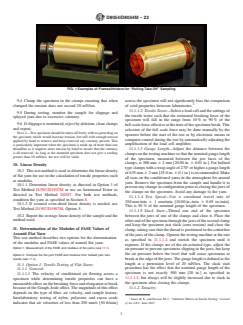
FIG. 1 Examples of Frames/Holders for “Rolling Take Off” Sampling
9.4 Clamp the specimen in the clamps ensuring that when across the specimen will not significantly bias the comparison
clamped the tension does not exceed 20 mN/tex. of cord properties between laboratories.
11.1.1.2 Tensile Tester—Selectaloadcellandthesettingsof
9.5 During testing, monitor the sample for slippage and
the tensile tester such that the estimated breaking force of the
splayed yarn due to excessive catenary.
specimen will fall in the range from 10 % to 90 % of the
9.6 Ifslippageismonitored,rejectbydeletion,cleanclamps
full-scaleforceeffectiveatthetimeofthespecimenbreak.This
and repeat.
selection of the full scale force may be done manually by the
NOTE2—Testspecimenshouldbetakenofffreelywithnogreatdragon
operator before the start of the test or by electronic means or
the specimen which would increase tension, but still with enough tension
computer control during the test by automatically adjusting the
applied by hand to remove and keep removed any catenary present. This
amplification of the load cell amplifier.
is particularly important when the specimen is made up of more than one
threadline as it requires more tension by hand to ensure that the catenary
11.1.1.3 Gauge Length—Adjust the distance between the
is all removed.As long as the mounted specimen does not give a reading
clampsonthetestingmachinesothatthenominalgaugelength
greater than 20 mN/tex, the test will be valid.
of the specimen, measured between the jaw faces of the
clamps, is 500 mm 6 2 mm [20.00 in. 6 0.01 in.]. For bollard
10. Linear Density
typeclampswithawrapangleof270°orhigheragaugelength
10.1 This test method is used to determine the linear density
of635 mm 62mm[25.0 in. 60.1in.]isrecommended.Make
of flat yarn for use in the calculation of tensile properties such
all tests on the conditioned yarns in the atmosphere for aramid
as modulus.
yarn. Remove the specimen from the sample and handle it to
10.1.1 Determine linear density as directed in Option 1 of
preventanychangeinconfigurationpriortoclosingthejawsof
Test Method D1907/D1907M or use an Automated Tester as
the clamps on the specimen. Avoid any damage to the yarn.
directed in Test Method D6587. For both test methods,
11.1.1.4 Test Speed—Use a crosshead travel rate of
condition the yarn as specified in Section 8.
250 mm⁄min 6 1 mm/min [10.00 in.⁄min 6 0.05 in./min].
10.1.2 If scoured oven-dried linear density is needed, use
This is 50 % of the nominal gauge length of the specimen.
Test Method D1907/D1907M, Option 5.
11.1.1.5 Slack Start—Thread one end of the specimen
10.2 Report the average linear density of the sample and the
between the jaws of one of the clamps and close it. Place the
method used.
otherendofthespecimenthroughthejawsofthesecondclamp
and keep the specimen just slack (zero tension) and close the
11. Determination of the Modulus of FASE Values of
clamp,takingcarethatthethreadispositionedinthecenterline
Aramid Flat Yarn
ofthejawsoftheclamp.Operatethetestingmachineattherate
This test method describes two options for the determination
as specified in 11.1.1.4 and stretch the specimen until it
of the modulus and FASE values of aramid flat yarn:
ruptures. If the clamps are of the air-actuated type, adjust the
Option 1: Measurement of the FASE and modulus of flat yarns (see 11.1).
air pressure to prevent specimens slipping in the jaws, but keep
the air pressure below the level that will cause specimens to
Option 2: Compute the flat yarn FASE and modulus from twisted yarn test-
breakattheedgeofthejaws.Thegaugelengthisdefinedasthe
results (see 11.2).
length at a pretension level of 20 mN/tex. The slack start
11.1 Option 1: Tensile Testing of Flat Yarns:
procedure has the effect that the nominal gauge length of the
11.1.1 General:
specimen is not exactly 500 mm [20 in.] as specified in
11.1.1.1 The velocity of conditioned air flowing across a
11.1.1.3, but always will be slightly increased due to slack in
specimen while determining tensile properties can have a
the specimen after closing the clamps.
measurableeffectonthebreakingforceandelongationatbreak
11.1.2 Tenacity:
becauseoftheGough-Jouleeffect.Themagnitudeofthiseffect
depends on the type of fiber, air velocity, and sample history.
Interlaboratory testing of nylon, polyester, and rayon cords
Jones, R. E., and Desson, M. J., “Adiabatic Effects onTensileTesting,” Journal
indicates that air velocities of less than 250 mm/s [50 ft/min] of the I.R.I., June 1967.
D8054/D8054M − 22
11.1.2.1 This test method is used to determine the tenacity l
f
E 5 ·100% (3)
F
ofyarnsafterconditioningintheatmospherefortestingaramid L
at any force level. The calculation of tenacity is required to
where:
determine the modulus (11.1.4).
E = elongation at force F,%,
F
11.1.2.2 Tenacity—Tenacity is defined by dividing the load
l = extension of specimen at force F, mm [in.],
F
(force) by the linear density using Eq 1.
L = length of the specimen, under specified pretension,
F
measured from nip-to-nip of the holding clamps, mm
T 5 (1)
F
LD
[in.].
where: 11.1.3.5 Reporting—This parameter is used for determining
the modulus and FASE and is not reported.
F = force, N [gf],
11.1.4 Modulus of Yarns:
LD = linear density, tex [den], and
T = tenacity, N/tex [gf/den].
11.1.4.1 This test method is used to determine the modulus
F
of yarns after conditioning in the atmosphere for testing
11.1.2.3 Reporting—This parameter is used for determining
aramid.
the modulus and is not reported.
11.1.3 Elongation of Flat Yarns:
11.1.3.1 This test method is used to determine the elonga-
tion of yarns after conditioning in the atmosphere for testing
aramid at any forced level. The calculation of elongation from
clamp displacement is required in order to determine Modulus
and FASE.
11.1.3.2 Pretension—The pretension for aramid yarns cor-
responds with 20 mN⁄tex 6 1 mN/tex [0.20 gf⁄den 6 0.01
gf/den].
11.1.3.3 Slack Start—Calculate the specimen length (L )
including the slack using Eq 2:
L 5 L 1DP (2)
0 S
where:
L = gauge length of the specimen, under specified
pretension, measured from nip-to-nip of the holding
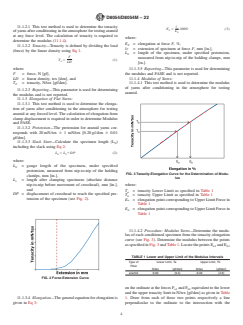
FIG. 3 Tenacity-Elongation Curve for the Determination of Modu-
clamlps, mm [in.],
lus
L = length after clamping specimens (absolute distance
s
nip-to-nip before movement of crosshead), mm [in.], where:
and
T = tenacity Lower Limit as specified in Table 1
a
DP = displacement of crosshead to reach the specified pre-
T = tenacity Upper Limit as specified in Table 1
b
tension of the specimen (see Fig. 2).
E = elongationpointcorrespondingtoUpperLimitForcein
a
Ta
...
This document is not an ASTM standard and is intended only to provide the user of an ASTM standard an indication of what changes have been made to the previous version. Because
it may not be technically possible to adequately depict all changes accurately, ASTM recommends that users consult prior editions as appropriate. In all cases only the current version
of the standard as published by ASTM is to be considered the official document.
Designation: D8054/D8054M − 16 D8054/D8054M − 22
Standard Test Methods for
Tensile Testing of Para-Aramid Flat Yarns
This standard is issued under the fixed designation D8054/D8054M; the number immediately following the designation indicates the
year of original adoption or, in the case of revision, the year of last revision. A number in parentheses indicates the year of last
reapproval. A superscript epsilon (´) indicates an editorial change since the last revision or reapproval.
1. Scope
1.1 These test methods cover the tensile testing of para-aramid flat yarns. The methods include testing procedure only and include
no specifications or tolerances.
1.1.1 This standard includes procedures used to measure force at specified elongation (FASE) of para-aramid flat yarns.
1.1.2 This standard includes procedures used to measure linear density of para-aramid flat yarns.
1.1.3 This standard includes procedures to determine modulus of para-aramid flat yarns.
1.2 This standard includes the following test methods:
Section
Linear Density 10
Force at Specified Elongation (FASE) 11
Modulus 11
1.3 The values stated in either SI units or inch-pound units are to be regarded separately as standard. The values stated in each
system are not necessarily exact equivalents; therefore, to ensure conformance with the standard, each system shall be used
independently of the other, and values from the two systems shall not be combined.
1.4 This standard does not purport to address all of the safety concerns, if any, associated with its use. It is the responsibility
of the user of this standard to establish appropriate safety, health, and environmental practices and determine the applicability of
regulatory limitations prior to use.
1.5 This international standard was developed in accordance with internationally recognized principles on standardization
established in the Decision on Principles for the Development of International Standards, Guides and Recommendations issued
by the World Trade Organization Technical Barriers to Trade (TBT) Committee.
2. Referenced Documents
2.1 ASTM Standards:
D76 Specification for Tensile Testing Machines for Textiles
D123 Terminology Relating to Textiles
D1776/D1776M Practice for Conditioning and Testing Textiles
D1907/D1907M Test Method for Linear Density of Yarn (Yarn Number) by the Skein Method
These test methods are under the jurisdiction of ASTM Committee D13 on Textiles and are the direct responsibility of Subcommittee D13.19 on Industrial Fibers and
Metallic Reinforcements.
Current edition approved July 1, 2016Nov. 1, 2022. Published November 2016November 2022. DOI: 10.1520/D8054_D8054M-16.10.1520/D8054_D8054M-22.
For referenced ASTM standards, visit the ASTM website, www.astm.org, or contact ASTM Customer Service at service@astm.org. For Annual Book of ASTM Standards
volume information, refer to the standard’s Document Summary page on the ASTM website.
Copyright © ASTM International, 100 Barr Harbor Drive, PO Box C700, West Conshohocken, PA 19428-2959. United States
D8054/D8054M − 22
D2258 Practice for Sampling Yarn for Testing
D3800 Test Method for Density of High-Modulus Fibers
D4848 Terminology Related to Force, Deformation and Related Properties of Textiles
D6477 Terminology Relating to Tire Cord, Bead Wire, Hose Reinforcing Wire, and Fabrics
D6587 Test Method for Yarn Number Using Automatic Tester
D7269 Test Methods for Tensile Testing of Aramid Yarns
E691 Practice for Conducting an Interlaboratory Study to Determine the Precision of a Test Method
E177 Practice for Use of the Terms Precision and Bias in ASTM Test Methods
3. Terminology
3.1 Definitions:
3.1.1 flat yarn, n—continuous filament yarns which, when removed from processing package are fully drawn, without twist and
untextured.
3.1.1.1 Discussion—
Flat yarn is either extruded in this form or it could be made as a slit cut structure with no additional processing modifying the
extension direction of the individual elements (for example, filaments) in the yarn.
3.1 The following terms are relevant to this standard: modulus, elongation, flat yarn, force at specified elongation (FASE),
force-elongation curve.curve, modulus.
3.2 For definitions of terms related to industrial fibers and metallic reinforcements, see Terminology D6477.
3.3 For definitions of terms related to force and deformation in textiles, refer to Terminology D4848.
3.4 For definitions of other terms related to textiles, refer to Terminology D123.
4. Summary of Test Methods
4.1 Using various test methods and protocols identified in the procedures, this standard determines the tensile strength, force at
specified elonation (FASE), linear density and modulus of para-aramid flat yarns.
5. Significance and Use
5.1 For application areas such as optical fiber and cable reinforcements, aramid is usually used in a linear – not twisted – form.
For designing constructions like this, it is essential to use data based on a specimen without twist applied.
5.1.1 The modulus and FASE of twisted yarns demonstrate reduced values when compared to p-aramid flat yarns.
5.1.2 Use Test Method D7269 for testing of twisted p-aramid yarns.
5.2 The levels of tensile properties obtained when testing aramid yarns are dependent on the age and history of the specimen and
on the specific conditions used during the test. Among these conditions are rate of stretching, type of clamps, gauge length of
specimen, temperature and humidity of the atmosphere, rate of airflow across the specimen, and temperature and moisture content
of the specimen. Testing conditions accordingly are specified precisely to obtain reproducible test results on a specific sample.
5.3 The FASE is used to describe FASE (Force At Specified Elongation) describes the absolute resistance of the p-aramid flat yarn
to an imposed deformation.elongation.
5.4 The initial modulus of the yarn is the value most commonly used when a specified force is applied to the yarn.Modulus is a
measure of resistance of yarn or cord to extension as a force is applied. It is useful for estimating the response of a textile reinforced
structure to the application of varying forces and rates of stretching. Although modulus may be determined at any specified force,
initial modulus is the value most commonly used.
5.5 Shape, size, and internal construction of the end-product can have appreciable effect on product performance. It is not possible,
therefore, to evaluate the performance of end product in terms of the reinforcing material alone.
D8054/D8054M − 22
5.6 If there are differences of practical significance between reported test results for two laboratories (or more), comparative tests
should be performed to determine if there is a statistical bias between them, using competent statistical assistance. As a minimum,
test samples should be used that are as homogeneous as possible, that are drawn from the material from which the disparate test
results were obtained, and that are randomly assigned in equal numbers to each laboratory for testing. Other materials with
established test values may be used for this purpose. The test results from the two laboratories should be compared using a
statistical test for unpaired data, at a probability level chosen prior to the testing series. If a bias is found, either its cause must be
found and corrected, or future test results must be adjusted in consideration of the known bias.
6. Apparatus
6.1 Tensile Testing Machine—A single-strand tensile testing machine of the constant rate of extension (CRE) type. The tensile
testing equipment can be either manually operated or can be an automated device. The specifications and methods of calibration
and verification of these machines shall conform to Specification D76. The testing machine tester shall be equipped with an
autographic recorder (rectilinear coordinates preferred). It is permissible to use tensile testing machines that have a means for
calculating and displaying the required results without the use of an autographic recorder.electronic data acquisition and data
evaluation system.
6.2 Bollard type clamps, in which the specimen is gripped between plane-faced jaws and then makes a partial turn (wrap angle)
around a curved extension (or other type of snubbing device) of one jaw face before passing to the other similar clamp (see
Appendix X1; Fig. X1.1). Clamps with a minimum wrap angle of 180° are required for yarns with a linear density up to 3500
decitex [3000 denier]. For linear densities above 3500 decitex [3000 denier], clamps with a minimum wrap angle of 270° are
recommended to prevent slippage. See Note 1.
6.3 Clamps shall grip the test specimen without spurious slippage or damage to the test specimen which can result in jaw breaks.
The clamps shall maintain constant gripping conditions during the test by means of pneumatic or hydraulic clamps. The surface
of the jaws in contact with the specimen shall be of a material and configuration that minimizes slippage or specimen failure, or
both, in the clamping zone. (see Appendix X1; Figure X1.1). It is recommended to use pneumatic clamps which can be operated
using a foot pedal.
–6
6.3 The compliance of the total testing system (tensile tester, load cell, and clamping system) shall be less than 0.2 μm [10 in.]
per newton.
6.4 Gauge Length—The gauge length is shall be the total length between the jaw faces of yarn measured between the clamping
point A of the first clamp and the point B of the second clamp in the starting position (see Appendix X1Fig.; Fig. X1.1X1.1).).
NOTE 1—The selected testing equipment (tester, clamp, gauge length) is known to have an influence on the properties measured. A method for eliminating
the influences introduced by the selected testing equipment is given in Test Methods D7269, Appendix X1.
7. Sampling
7.1 Yarn—For acceptance testing, sample each lot as directed in Practice D2258. Take the number of specimens for testing
specified for the specific property measurement to be made.
7.1.1 Number of Samples and Specimens—The recommended number of specimens is included in the appropriate sections of
specific test methods covered in this standard. Where such is not specified, the number of specimens is as agreed upon between
buyer and supplier. Take samples at random from each of a number of cones, tubes, bobbins, or spools within a lot to be as
representative as possible within practical limitations. Make only one observation on an individual package for each physical
property determination. Take the number of samples, therefore, that will be sufficient to cover the total number of specimens
required for the determination of all physical properties of the yarn.
7.1.2 Preparation of Samples—Remove and discard a minimum of 25 m [75[27 yd] from the outside of the package before taking
the sample or any specimens. Use care in handling the sample. Special care should be used to prevent over handling and disruption
of the filament alignment in the yarn bundle. Discard any sample subjected to any change of twist, kinking, or making any bend
with a diameter less than 10 times the yarn thickness (or diameter).
D8054/D8054M − 22
8. Conditioning
8.1 Without pre-drying, bring the bobbin with yarn to equilibrium in the atmosphere for testing as directed in Practice
D1776/D1776M for aramid.
9. Linear Density
9.1 This test method is used to determine the linear density of flat yarn for use in the calculation of tensile properties such as
modulus.
9.1.1 Determine linear density as directed in Option 1 of Test Method D1907/D1907M or use an Automated Tester as directed in
Test Method D6587. For both test methods, condition the yarn as specified in Section 8.
9.1.2 If scoured oven-dried linear density is needed, use Test Method D1907/D1907M, Option 5.
9.2 Report the average linear density of the sample and the method used.
9. Sample Preparation
9.1 Sample Preparation—Take test specimens directly from the original package. Rewound and skein specimen will likely result
in lower values. Remove the surface layer and discard.
9.2 Specimen Preparation—Mount the sample onto a frame using the “Rolling take off” method. Examples of suitable frames are
shown in Fig. 1. Take off test specimen tangentially from the bobbin directly without touching any of the measured part of the yarn
and without applying any twist.
9.3 Holding the yarn firmly at the free end and using the “rolling take off” method, remove about 1 m for the specimen. Do not
use yarn within 50 mm of either end of the sample ball. Do not let test specimen sag or loop.
9.4 Clamp the specimen in the clamps ensuring that when clamped the tension does not exceed 20 mN/tex.
9.5 During testing, monitor the sample for slippage and splayed yarn due to excessive catenary.
9.6 If slippage is monitored, reject by deletion, clean clamps and repeat.
NOTE 2—Test specimen should be taken off freely with no great drag on the specimen which would increase tension, but still with enough tension applied
by hand to remove and keep removed any catenary present. This is particularly important when the specimen is made up of more than one threadline
as it requires more tension by hand to ensure that the catenary is all removed. As long as the mounted specimen does not give a reading greater than 20
mN/tex, the test will be valid.
FIG. 1 Examples of Frames/Holders for “Rolling Take Off” Sampling
D8054/D8054M − 22
10. Linear Density
10.1 This test method is used to determine the linear density of flat yarn for use in the calculation of tensile properties such as
modulus.
10.1.1 Determine linear density as directed in Option 1 of Test Method D1907/D1907M or use an Automated Tester as directed
in Test Method D6587. For both test methods, condition the yarn as specified in Section 8.
10.1.2 If scoured oven-dried linear density is needed, use Test Method D1907/D1907M, Option 5.
10.2 Report the average linear density of the sample and the method used.
11. Determination of the Modulus of FASE Values of Aramid Flat Yarn
This test method describes two options for the determination of the modulus and FASE values of aramid flat yarn:
Option 1: Measurement of the FASE and modulus of flat yarns (see 11.1).
Option 2: Compute the flat yarn FASE and modulus from twisted yarn test-results (see 11.2).
11.1 Option 1: Tensile Testing of Flat Yarns:
11.1.1 General:
11.1.1.1 The velocity of conditioned air flowing across a specimen while determining tensile properties can have a measurable
effect on the breaking force and elongation at break because of the Gough-Joule effect. The magnitude of this effect depends on
the type of fiber, air velocity, and sample history. Interlaboratory testing of nylon, polyester, and rayon cords indicates that air
velocities of less than 250 mm/s [50 ft/min] across the specimen will not significantly bias the comparison of cord properties
between laboratories.
11.1.1.2 Tensile Tester—Select a load cell and the settings of the tensile tester such that the estimated breaking force of the
specimen will fall in the range from 1010 % to 90 % 90 % of the full-scale force effective at the time of the specimen break. This
selection of the full scale force may be done manually by the operator before the start of the test or by electronic means or computer
control during the test by automatically adjusting the amplification of the load cell amplifier.
11.1.1.3 Gauge Length—Adjust the distance between the clamps on the testing machine so that the nominal gauge length of the
specimen, measured between the jaw faces of the clamps, is 500500 mm 6 2 mm [20.00[20.00 in. 6 0.01 in.]. For bollard type
clamps with a wrap angle of 270° or higher a gauge length of 635 mm 6 2 mm [25.0 in. 6 0.1 in.] is recommended. Make all
tests on the conditioned yarns in the atmosphere for aramid yarn. Remove the specimen from the sample and handle it to prevent
any change in configuration prior to closing the jaws of the clamps on the specimen. Avoid any damage to the yarn.
11.1.1.4 Test Speed—Use a crosshead travel rate of 250250 mm ⁄min 6 1 mm/min [10.00[10.00 in. ⁄min 6 0.05 in./min]. This is
50 % of the nominal gauge length of the specimen.
11.1.1.5 Slack Start—Thread one end of the specimen between the jaws of one of the clamps and close it. Place the other end of
the specimen through the jaws of the second clamp and keep the specimen just slack (zero tension) and close the clamp, taking
care that the thread is positioned in the centerline of the jaws of the clamp. Operate the testing machine at the rate as specified
in 11.1.1.4 and stretch the specimen until it ruptures. If the clamps are of the air-actuated type, adjust the air pressure to prevent
specimens slipping in the jaws, but keep the air pressure below the level that will cause specimens to break at the edge of the jaws.
The gauge length is defined as the length at a pretension level of 20 mN/tex. The slack start procedure has the effect that the
nominal gauge length of the specimen is not exactly 500 mm [20 in.] as specified in 11.1.1.3, but always will be slightly increased
due to slack in the specimen after closing the clamps.
11.1.2 Tenacity:
Jones, R. E., and Desson, M. J., “Adiabatic Effects on Tensile Testing,” Journal of the I.R.I., June 1967.
D8054/D8054M − 22
11.1.2.1 This test method is used to determine the tenacity of yarns after conditioning in the atmosphere for testing aramid at any
force level. The calculation of tenacity is required to determine the modulus (11.1.4).
11.1.2.2 Tenacity—Tenacity is defined by dividing the load (force) by the linear density using Eq 1.
F
T 5 (1)
F
LD
where:
F = force, N [gf],
LD = linear density, tex [den], and
T = tenacity, N/tex [gf/den].
F
11.1.2.3 Reporting—This parameter is used for determining the modulus and is not reported.
11.1.3 Elongation of Flat Yarns:
11.1.3.1 This test method is used to determine the elongation of yarns after conditioning in the atmosphere for testing aramid at
any forced level. The calculation of elongation from clamp displacement is required in order to determine Modulus and FASE.
11.1.3.2 Pretension—The pretension for aramid yarns corresponds with 2020 mN ⁄tex 6 1 mN/tex [0.20[0.20 gf ⁄den 6 0.01
gf/den].
11.1.3.3 Slack Start—Calculate the specimen length (L ) including the slack using Eq 2:
L 5 L 1DP (2)
0 S
where:
L = gau
...