

ASTM E580/E580M-22
(Practice)Standard Practice for Installation of Ceiling Suspension Systems for Acoustical Tile and Lay-in Panels in Areas Subject to Earthquake Ground Motions
General Information
- Abstract
ABSTRACT
This practice covers acoustical ceiling suspension systems and their additional requirements for application in areas subject to light to moderate seismic disturbance such as Uniform Building Code Seismic Zone 2, the BOCA Basic National Building Code where Av is less than 0.20 but greater than 0.10, and the Standard Building Code (SBC) where Av is less than 0.20 but greater than 0.05. This practice also covers areas subject to moderate to severe seismic disturbance such as Uniform Building Code Seismic Zones 3 and 4, the BOCA Basic National Building Code where Av is greater than 0.20, and the SBC where Av is greater than 0.20. The application of this practice is to be determined by local authorities. Current seismic maps published by recognized authorities such as those previously mentioned, as well as related material such as Open File 82-1033 and MS-812 Seismicity Maps, should be consulted. This practice is not intended to stifle research and development of new products or methods which may simplify the application method specified herein. A variation, however, must be substantiated by verifiable engineering data. A ceiling area of 144 ft2 [13m2] or less, surrounded by walls that connect directly to the structure above shall be exempt from this practice.
SIGNIFICANCE AND USE
3.1 This practice is a prescriptive set of installation methods to be used for suspended ceilings and is often used in lieu of designing a separate lateral restraint system. The authority having jurisdiction shall determine the applicability of this practice to local code requirements.
3.2 This practice covers installation of suspended ceiling systems and related components in areas that require resistance to the effects of earthquake motions as defined by ASCE 7 and the International Building Code.
3.3 The practice is broken into two main sections. The first section covers areas with light to moderate earthquake potential (Seismic Design Category C) while the second deals with severe earthquake potential (Seismic Design Category D, E & F).
3.4 This practice includes requirements from multiple sources including previous versions of this practice, CISCA Seismic Recommendations for Direct-hung Acoustical Tile and Lay-in Ceilings, Seismic Zones 0-2 and CISCA Guidelines for Seismic Restraint for Direct Hung Suspended Ceiling Assemblies, Seismic Zones 3 & 4, suspended ceiling requirements from the International Building Code and ASCE 7. The purpose is to combine the requirements from these sources into a single comprehensive document.
SCOPE
1.1 This practice covers the installation of suspended systems for acoustical tile and lay-in panels and their additional requirements for two groups of buildings that are constructed to resist the effects of earthquake motions as defined by ASCE 7 and the International Building Code. These groupings are for Seismic Design Category C and Seismic Design Categories D, E and F.
1.2 The authority having jurisdiction shall determine the applicability of this practice.
1.3 Test Methods E3090/E3090M, Specification C635, and Practice C636 cover suspension systems, their installation, and testing without special regard to seismic lateral restraint needs. They remain applicable and shall be followed when this practice is specified.
1.4 Ceilings less than or equal to 144 ft2 [13.4 m2] and surrounded by walls connected to the structure above are exempt from the requirements of this practice.
1.5 This practice is not intended to stifle research and development of new products or methods. This practice is not intended to prevent the installation of any material or prohibit any design or method of construction not prescribed in this practice, provided that any such alternative has been substantiated by verifiable engineering data or full-scale dynamic testing that is acceptable to the authority having jurisdiction.
1.6 Ceiling areas of 1000 ft2 [92.9 m2] or less shall be exempt from the...
- Status
- Published
- Publication Date
- 28-Feb-2022
- Technical Committee
- E33 - Building and Environmental Acoustics
- Drafting Committee
- E33.04 - Application of Acoustical Materials and Systems
Buy Documents
ASTM E580/E580M-22 - Standard Practice for Installation of Ceiling Suspension Systems for Acoustical Tile and Lay-in Panels in Areas Subject to Earthquake Ground Motions
REDLINE ASTM E580/E580M-22 - Standard Practice for Installation of Ceiling Suspension Systems for Acoustical Tile and Lay-in Panels in Areas Subject to Earthquake Ground Motions
Overview
ASTM E580/E580M-22 is the standard practice that guides the installation of ceiling suspension systems for acoustical tile and lay-in panels in buildings located in areas subject to earthquake ground motions. Published by ASTM International, this standard prescribes requirements for both light-to-moderate and moderate-to-severe seismic zones, ensuring safety and performance in accordance with references such as ASCE 7 and the International Building Code (IBC). It provides a unified approach for designers, specifiers, and installers to address seismic restraint and bracing needs for suspended ceilings, which are essential for occupant safety and for maintaining ceiling system integrity during seismic events.
Key Topics
Seismic Design Categories: The standard addresses two main groups:
- Category C: Light to moderate seismic risk.
- Categories D, E, and F: Moderate to severe seismic risk.
Suspension System Requirements:
- Prescriptive installation methods for suspended ceiling systems in accordance with seismic zone classifications.
- Minimum material strength requirements for runners, cross tees, and their connections.
- Distinct performance criteria for heavy-duty main tees in high-risk zones.
Bracing and Restraint:
- Lateral bracing and splay wire installation for large ceiling areas in high seismic zones.
- Requirements for seismic separation joints to limit ceiling size and accommodate movement.
Fixture Support:
- Mechanical attachment of lighting fixtures and ceiling services.
- Independent support for fixtures exceeding specific weight thresholds.
Compatibility and Clearances:
- Interaction with HVAC, mechanical, electrical, and plumbing (MEP) components.
- Perimeter clearances and movement allowances to prevent damage or failure during earthquakes.
Exceptions and Alternatives:
- Exemptions for small ceiling areas and specific ceiling/wall designs.
- Allowance for alternative products or installation methods if substantiated by engineering data.
Applications
ASTM E580/E580M-22 is widely referenced in the design and installation of acoustical ceilings in:
- Commercial buildings: Offices, schools, and healthcare facilities in earthquake-prone regions.
- Institutional settings: Hospitals, government, and high-occupancy buildings where post-event functionality is critical.
- Renovation and new construction projects seeking compliance with local, state, and international seismic safety codes.
This standard is frequently utilized by:
- Architects and engineers: For incorporation into bid documents and construction specifications.
- Ceiling system manufacturers and installers: To ensure compliance and best practices during system assembly.
- Authorities having jurisdiction (AHJs): To enforce construction safety in accordance with local regulations.
Related Standards
Specifiers and practitioners working with ASTM E580/E580M-22 should also be familiar with the following standards and codes:
- ASTM C635: Specification for the manufacture, performance, and testing of metal suspension systems for acoustical tile and lay-in panels.
- ASTM C636: Practice for installation of metal ceiling suspension systems for acoustical tile and lay-in panels.
- ASTM E3090/E3090M: Test methods for strength properties of metal ceiling suspension systems.
- ASCE 7: Minimum design loads for buildings and other structures.
- International Building Code (IBC)
- CISCA Seismic Recommendations/Guidelines: For direct-hung suspended ceiling assemblies.
- NFPA 70: National Electric Code, particularly for fixture installation.
By adhering to ASTM E580/E580M-22, professionals ensure that suspended ceiling installations in seismic regions minimize risk of failure, comply with regulatory requirements, and contribute to the long-term resilience of building interiors. This standard plays a pivotal role in promoting seismic safety for acoustical ceilings in a variety of building types.
Relations
- Effective Date
- 01-Oct-2019
- Effective Date
- 01-Nov-2018
- Effective Date
- 01-Apr-2017
- Effective Date
- 01-Sep-2004
- Effective Date
- 01-Apr-2004
- Effective Date
- 01-Oct-2003
- Effective Date
- 10-May-2000
- Effective Date
- 10-Jun-1996
Buy Documents
ASTM E580/E580M-22 - Standard Practice for Installation of Ceiling Suspension Systems for Acoustical Tile and Lay-in Panels in Areas Subject to Earthquake Ground Motions
REDLINE ASTM E580/E580M-22 - Standard Practice for Installation of Ceiling Suspension Systems for Acoustical Tile and Lay-in Panels in Areas Subject to Earthquake Ground Motions
Get Certified
Connect with accredited certification bodies for this standard

DIBt (Deutsches Institut für Bautechnik)
German Institute for Building Technology.
DIN CERTCO
DIN Group product certification.

Aboma Certification B.V.
Specialized in construction, metal, and transport sectors.
Sponsored listings
Frequently Asked Questions
ASTM E580/E580M-22 is a standard published by ASTM International. Its full title is "Standard Practice for Installation of Ceiling Suspension Systems for Acoustical Tile and Lay-in Panels in Areas Subject to Earthquake Ground Motions". This standard covers: ABSTRACT This practice covers acoustical ceiling suspension systems and their additional requirements for application in areas subject to light to moderate seismic disturbance such as Uniform Building Code Seismic Zone 2, the BOCA Basic National Building Code where Av is less than 0.20 but greater than 0.10, and the Standard Building Code (SBC) where Av is less than 0.20 but greater than 0.05. This practice also covers areas subject to moderate to severe seismic disturbance such as Uniform Building Code Seismic Zones 3 and 4, the BOCA Basic National Building Code where Av is greater than 0.20, and the SBC where Av is greater than 0.20. The application of this practice is to be determined by local authorities. Current seismic maps published by recognized authorities such as those previously mentioned, as well as related material such as Open File 82-1033 and MS-812 Seismicity Maps, should be consulted. This practice is not intended to stifle research and development of new products or methods which may simplify the application method specified herein. A variation, however, must be substantiated by verifiable engineering data. A ceiling area of 144 ft2 [13m2] or less, surrounded by walls that connect directly to the structure above shall be exempt from this practice. SIGNIFICANCE AND USE 3.1 This practice is a prescriptive set of installation methods to be used for suspended ceilings and is often used in lieu of designing a separate lateral restraint system. The authority having jurisdiction shall determine the applicability of this practice to local code requirements. 3.2 This practice covers installation of suspended ceiling systems and related components in areas that require resistance to the effects of earthquake motions as defined by ASCE 7 and the International Building Code. 3.3 The practice is broken into two main sections. The first section covers areas with light to moderate earthquake potential (Seismic Design Category C) while the second deals with severe earthquake potential (Seismic Design Category D, E & F). 3.4 This practice includes requirements from multiple sources including previous versions of this practice, CISCA Seismic Recommendations for Direct-hung Acoustical Tile and Lay-in Ceilings, Seismic Zones 0-2 and CISCA Guidelines for Seismic Restraint for Direct Hung Suspended Ceiling Assemblies, Seismic Zones 3 & 4, suspended ceiling requirements from the International Building Code and ASCE 7. The purpose is to combine the requirements from these sources into a single comprehensive document. SCOPE 1.1 This practice covers the installation of suspended systems for acoustical tile and lay-in panels and their additional requirements for two groups of buildings that are constructed to resist the effects of earthquake motions as defined by ASCE 7 and the International Building Code. These groupings are for Seismic Design Category C and Seismic Design Categories D, E and F. 1.2 The authority having jurisdiction shall determine the applicability of this practice. 1.3 Test Methods E3090/E3090M, Specification C635, and Practice C636 cover suspension systems, their installation, and testing without special regard to seismic lateral restraint needs. They remain applicable and shall be followed when this practice is specified. 1.4 Ceilings less than or equal to 144 ft2 [13.4 m2] and surrounded by walls connected to the structure above are exempt from the requirements of this practice. 1.5 This practice is not intended to stifle research and development of new products or methods. This practice is not intended to prevent the installation of any material or prohibit any design or method of construction not prescribed in this practice, provided that any such alternative has been substantiated by verifiable engineering data or full-scale dynamic testing that is acceptable to the authority having jurisdiction. 1.6 Ceiling areas of 1000 ft2 [92.9 m2] or less shall be exempt from the...
ABSTRACT This practice covers acoustical ceiling suspension systems and their additional requirements for application in areas subject to light to moderate seismic disturbance such as Uniform Building Code Seismic Zone 2, the BOCA Basic National Building Code where Av is less than 0.20 but greater than 0.10, and the Standard Building Code (SBC) where Av is less than 0.20 but greater than 0.05. This practice also covers areas subject to moderate to severe seismic disturbance such as Uniform Building Code Seismic Zones 3 and 4, the BOCA Basic National Building Code where Av is greater than 0.20, and the SBC where Av is greater than 0.20. The application of this practice is to be determined by local authorities. Current seismic maps published by recognized authorities such as those previously mentioned, as well as related material such as Open File 82-1033 and MS-812 Seismicity Maps, should be consulted. This practice is not intended to stifle research and development of new products or methods which may simplify the application method specified herein. A variation, however, must be substantiated by verifiable engineering data. A ceiling area of 144 ft2 [13m2] or less, surrounded by walls that connect directly to the structure above shall be exempt from this practice. SIGNIFICANCE AND USE 3.1 This practice is a prescriptive set of installation methods to be used for suspended ceilings and is often used in lieu of designing a separate lateral restraint system. The authority having jurisdiction shall determine the applicability of this practice to local code requirements. 3.2 This practice covers installation of suspended ceiling systems and related components in areas that require resistance to the effects of earthquake motions as defined by ASCE 7 and the International Building Code. 3.3 The practice is broken into two main sections. The first section covers areas with light to moderate earthquake potential (Seismic Design Category C) while the second deals with severe earthquake potential (Seismic Design Category D, E & F). 3.4 This practice includes requirements from multiple sources including previous versions of this practice, CISCA Seismic Recommendations for Direct-hung Acoustical Tile and Lay-in Ceilings, Seismic Zones 0-2 and CISCA Guidelines for Seismic Restraint for Direct Hung Suspended Ceiling Assemblies, Seismic Zones 3 & 4, suspended ceiling requirements from the International Building Code and ASCE 7. The purpose is to combine the requirements from these sources into a single comprehensive document. SCOPE 1.1 This practice covers the installation of suspended systems for acoustical tile and lay-in panels and their additional requirements for two groups of buildings that are constructed to resist the effects of earthquake motions as defined by ASCE 7 and the International Building Code. These groupings are for Seismic Design Category C and Seismic Design Categories D, E and F. 1.2 The authority having jurisdiction shall determine the applicability of this practice. 1.3 Test Methods E3090/E3090M, Specification C635, and Practice C636 cover suspension systems, their installation, and testing without special regard to seismic lateral restraint needs. They remain applicable and shall be followed when this practice is specified. 1.4 Ceilings less than or equal to 144 ft2 [13.4 m2] and surrounded by walls connected to the structure above are exempt from the requirements of this practice. 1.5 This practice is not intended to stifle research and development of new products or methods. This practice is not intended to prevent the installation of any material or prohibit any design or method of construction not prescribed in this practice, provided that any such alternative has been substantiated by verifiable engineering data or full-scale dynamic testing that is acceptable to the authority having jurisdiction. 1.6 Ceiling areas of 1000 ft2 [92.9 m2] or less shall be exempt from the...
ASTM E580/E580M-22 is classified under the following ICS (International Classification for Standards) categories: 91.060.30 - Ceilings. Floors. Stairs. The ICS classification helps identify the subject area and facilitates finding related standards.
ASTM E580/E580M-22 has the following relationships with other standards: It is inter standard links to ASTM E3090/E3090M-19, ASTM E3090/E3090M-18, ASTM E3090/E3090M-17, ASTM C635-04, ASTM C636-04, ASTM C636-03, ASTM C635-00, ASTM C636-96. Understanding these relationships helps ensure you are using the most current and applicable version of the standard.
ASTM E580/E580M-22 is available in PDF format for immediate download after purchase. The document can be added to your cart and obtained through the secure checkout process. Digital delivery ensures instant access to the complete standard document.
Standards Content (Sample)
This international standard was developed in accordance with internationally recognized principles on standardization established in the Decision on Principles for the
Development of International Standards, Guides and Recommendations issued by the World Trade Organization Technical Barriers to Trade (TBT) Committee.
Designation: E580/E580M − 22
Standard Practice for
Installation of Ceiling Suspension Systems for Acoustical
Tile and Lay-in Panels in Areas Subject to Earthquake
Ground Motions
This standard is issued under the fixed designation E580/E580M; the number immediately following the designation indicates the year
of original adoption or, in the case of revision, the year of last revision. A number in parentheses indicates the year of last reapproval.
A superscript epsilon (´) indicates an editorial change since the last revision or reapproval.
This standard has been approved for use by agencies of the U.S. Department of Defense.
1. Scope 1.8 Free floating ceilings (those not attached directly to any
structural walls) supported by chains or cables from the
1.1 This practice covers the installation of suspended sys-
structure are not required to satisfy the seismic force require-
tems for acoustical tile and lay-in panels and their additional
ments provided they meet the following requirements:
requirements for two groups of buildings that are constructed
1.8.1 The design load for such items shall equal 1.4 times
to resist the effects of earthquake motions as defined byASCE
the vertical operating weight.
7 and the International Building Code.These groupings are for
1.8.2 Seismic interaction effects shall be considered in
Seismic Design Category C and Seismic Design Categories D,
accordance with 5.7.
E and F.
1.8.3 The connection to the structure shall allow a 360°
1.2 The authority having jurisdiction shall determine the
range of motion in the horizontal plane.
applicability of this practice.
1.9 The values stated in either inch-pound or SI units are to
1.3 Test Methods E3090/E3090M, Specification C635, and
be regarded as standard.Within the text, the SI units are shown
Practice C636 cover suspension systems, their installation, and
in brackets. The values stated in each system are not exact
testing without special regard to seismic lateral restraint needs.
equivalents;therefore,eachsystemshallbeusedindependently
They remain applicable and shall be followed when this
of the other. Combining values from the two systems result in
practice is specified.
nonconformance with the specification.
2 2
1.4 Ceilings less than or equal to 144 ft [13.4 m ] and
1.10 This standard does not purport to address all of the
surrounded by walls connected to the structure above are
safety concerns, if any, associated with its use. It is the
exempt from the requirements of this practice.
responsibility of the user of this standard to establish appro-
priate safety, health, and environmental practices and deter-
1.5 This practice is not intended to stifle research and
mine the applicability of regulatory limitations prior to use.
development of new products or methods. This practice is not
1.11 This international standard was developed in accor-
intended to prevent the installation of any material or prohibit
dance with internationally recognized principles on standard-
any design or method of construction not prescribed in this
ization established in the Decision on Principles for the
practice, provided that any such alternative has been substan-
Development of International Standards, Guides and Recom-
tiated by verifiable engineering data or full-scale dynamic
mendations issued by the World Trade Organization Technical
testing that is acceptable to the authority having jurisdiction.
Barriers to Trade (TBT) Committee.
2 2
1.6 Ceiling areas of 1000 ft [92.9 m ] or less shall be
exempt from the lateral force bracing requirements of 5.2.8.
2. Referenced Documents
1.7 Ceilings constructed of gypsum board which is screw or 2
2.1 ASTM Standards:
nail attached to suspended members that support a ceiling on
C635 Specification for Manufacture, Performance, and Test-
one level extending from wall to wall shall be exempt from the
ing of Metal Suspension Systems for Acoustical Tile and
requirements of this practice.
Lay-in Panel Ceilings
C636 Practice for Installation of Metal Ceiling Suspension
This practice is under the jurisdiction of ASTM Committee E33 on Building
and Environmental Acoustics and is the direct responsibility of Subcommittee
E33.04 on Application of Acoustical Materials and Systems. For referenced ASTM standards, visit the ASTM website, www.astm.org, or
Current edition approved March 1, 2022. Published April 2022. Originally contact ASTM Customer Service at service@astm.org. For Annual Book of ASTM
approved in 1976. Last previous edition approved in 2020 as E580/E580M – 20. Standards volume information, refer to the standard’s Document Summary page on
DOI: 10.1520/E0580_E0580M-22. the ASTM website.
Copyright © ASTM International, 100 Barr Harbor Drive, PO Box C700, West Conshohocken, PA 19428-2959. United States
E580/E580M − 22
Systems for Acoustical Tile and Lay-In Panels shall be installed as specified in 5.1 taking into account the
E3090/E3090M Test Methods for Strength Properties of design lateral forces appropriate for Category C. Other devia-
Metal Ceiling Suspension Systems tionsorvariationsshallbesubstantiatedbyverifiableengineer-
2.2 Other Standards: ing data or full-scale dynamic testing.
4.1.2 The main runners and cross runners of the ceiling
ASCE 7 Minimum Design Loads for Buildings and Other
Structures system and their splices, intersection connectors, and expan-
sion devices shall be designed and constructed to carry a mean
CISCA Recommendations for Direct-hung Acoustical Tile
and Lay-in Ceilings, Seismic Zones 0-2 ultimate test load of not less than 60 lb [27 kg] in tension and
in compression when tested per Test Methods E3090/E3090M.
CISCA Guidelines for Seismic Restraint for Direct Hung
Suspended Ceiling Assemblies, Seismic Zones3&4 The tensile test shall allow for a 5° offset of the connection in
any direction.
International Building Code
NFPA 70 National Electric Code
4.2 Suspension System Application:
4.2.1 Unless perimeter members meet the structural load
3. Significance and Use
carrying requirements and have been approved as a structural
3.1 This practice is a prescriptive set of installation methods
part of the system, wall angles or channels shall be considered
to be used for suspended ceilings and is often used in lieu of
as aesthetic closers and shall have no structural value assessed
designing a separate lateral restraint system. The authority
to themselves or their method of attachment to the walls.
having jurisdiction shall determine the applicability of this
4.2.2 All perimeter closure angles or channels shall provide
practice to local code requirements. 7
a support ledge of ⁄8 in. [22 mm] or greater unless the
perimeter ends of each cross runner and main runner shall be
3.2 This practice covers installation of suspended ceiling
independently supported as specified in 4.2.1.
systems and related components in areas that require resistance
4.2.3 Whenaperimeterclosureanglethatprovideslessthan
to the effects of earthquake motions as defined byASCE 7 and
⁄8 in. [22 mm] has been approved for use, the perimeter ends
the International Building Code.
of each cross runner and main runner shall be independently
3.3 The practice is broken into two main sections. The first
supported within 8 in. [200 mm] from each wall or ceiling
section covers areas with light to moderate earthquake poten-
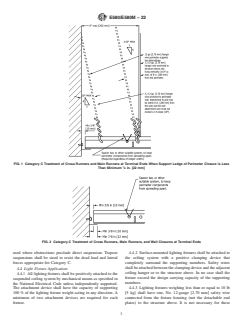
discontinuity (see Fig. 1).
tial (Seismic Design Category C) while the second deals with
4.2.4 The terminal ends of suspension members shall have a
severe earthquake potential (Seismic Design Category D, E &
minimum of ⁄8-in. [10-mm] clearance from the wall as shown
F).
in Fig. 2. Reveal (shadow) edge wall closures with these
3.4 This practice includes requirements from multiple
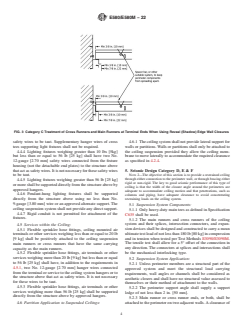
clearances are shown in Fig. 3.
sources including previous versions of this practice, CISCA
4.2.5 Terminal ends of main runners and cross runners shall
SeismicRecommendationsforDirect-hungAcousticalTileand
be prevented from spreading.
Lay-in Ceilings, Seismic Zones 0-2 and CISCAGuidelines for
4.2.6 Permanent runner end attachment (that is, pop rivets)
Seismic Restraint for Direct Hung Suspended Ceiling
for grid alignment purposes shall not be permitted.
Assemblies, Seismic Zones3&4, suspended ceiling require-
4.2.7 All ceiling penetrations (columns, sprinklers, etc.) and
ments from the International Building Code and ASCE 7. The
independently supported fixtures or services shall have a
purposeistocombinetherequirementsfromthesesourcesinto 3
minimum of ⁄8-in. [10-mm] clearance on all sides by using
a single comprehensive document.
suitable escutcheons or perimeter closure details.
4.3 Suspension Wire Application:
4. Seismic Design Category C
4.3.1 Suspension wires that are a minimum of No. 12 gauge
NOTE 1—This section is intended to provide an unrestrained (free-
floating) ceiling system that will accommodate the movement of the [2.70 mm] galvanized, soft-annealed, mild steel wire shall be
structure during a seismic event.
spaced at 4 ft [1200 mm] on center along each main runner,
unlessengineeringcalculationsjustifyingincreasedspacingare
4.1 Suspension System Components:
4.1.1 The recommendations in this section are for ceilings provided.
systems with an average weight over the entire ceiling of 2.5 4.3.2 Each vertical wire shall be attached to the ceiling
2 2
lb/ft [12 N/m ] or less. This average weight includes suspen- suspensionmemberandtothesupportabovesuchthatthewire
sion members, panels or tiles, light fixtures, supported flexible loops shall be tightly wrapped and sharply bent to prevent any
sprinklerdropsandairterminals.(See4.4and4.5fordetailson vertical movement or rotation of the member within the loops.
lights and mechanical services.) Ceilings with an average The wire must be wrapped around itself a minimum of three
2 2
weight over the entire ceiling greater than 2.5 lb/ft [12 N/m ] full turns (360° each) within a 3-in. [75-mm] length. Connec-
tion devices to the supporting construction shall be tested in
tensionanddemonstrateameanultimateloadof200lb[92kg]
Available from American Society of Civil Engineers (ASCE), 1801 Alexander
which will yield an allowable load of 100 lb [46 kg] with a
Bell Drive, Reston, VA 20191 or www.pubs.asce.org.
safety factor of 2 per Test Methods E3090/E3090M.
Available from Ceiling & Interior Systems ConstructionAssociation (CISCA),
1500 Lincoln Hwy, Suite 202, St. Charles, IL 60174.
4.3.3 Suspension wires shall not hang more than one in six
Available from International Code Council (ICC), 4051 West Flossmoor Road,
out of plumb unless countersloping wires are provided.
Country Club Hills, IL 60478-5795.
4.3.4 Wires shall not attach to or bend around interfering
Available from National Fire Prevention association (NFPA), 1 Batterymarch
Park, Quincy, MA 02269-9101. material or equipment. A trapeze or equivalent device shall be
E580/E580M − 22
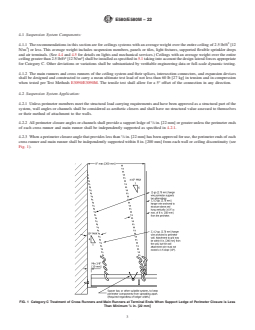
FIG. 1 Category C Treatment of Cross Runners and Main Runners at Terminal Ends When Support Ledge of Perimeter Closure is Less
Than Minimum ⁄8 in. [22 mm]
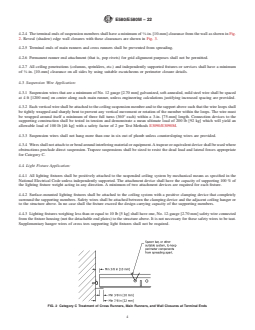
FIG. 2 Category C Treatment of Cross Runners, Main Runners, and Wall Closures at Terminal Ends
used where obstructions preclude direct suspension. Trapeze 4.4.2 Surface-mounted lighting fixtures shall be attached to
suspensions shall be sized to resist the dead load and lateral the ceiling system with a positive clamping device that
forces appropriate for Category C.
completely surround the supporting members. Safety wires
shallbeattachedbetweentheclampingdeviceandtheadjacent
4.4 Light Fixture Application:
ceiling hanger or to the structure above. In no case shall the
4.4.1 All lighting fixtures shall be positively attached to the
fixture exceed the design carrying capacity of the supporting
suspended ceiling system by mechanical means as specified in
members.
the National Electrical Code unless independently supported.
4.4.3 Lighting fixtures weighing less than or equal to 10 lb
The attachment device shall have the capacity of supporting
100 % of the lighting fixture weight acting in any direction. A [5 kg] shall have one, No. 12-gauge [2.70 mm] safety wire
connected from the fixture housing (not the detachable end
minimum of two attachment devices are required for each
fixture. plates) to the structure above. It is not necessary for these
E580/E580M − 22
FIG. 3 Category C Treatment of Cross Runners and Main Runners at Terminal Ends When Using Reveal (Shadow) Edge Wall Closures
safety wires to be taut. Supplementary hanger wires of cross 4.6.1 Theceilingsystemshallnotprovidelateralsupportfor
tees supporting light fixtures shall not be required. walls or partitions. Walls or partitions shall only be attached to
4.4.4 Lighting fixtures weighing greater than 10 lbs [5kg] the ceiling suspension provided they allow the ceiling mem-
but less than or equal to 56 lb [25 kg] shall have two No. brane to move laterally to accommodate the required clearance
12-gauge [2.70 mm] safety wires connected from the fixture as specified in 4.2.4.
housing (not the detachable end plates) to the structure above
thatactassafetywires.Itisnotnecessaryforthesesafetywires
5. Seismic Design Category D,E&F
NOTE 2—The objective of this section is to provide a restrained ceiling
to be taut.
through either connection to the perimeter wall, or through bracing either
4.4.5 Lighting fixtures weighing greater than 56 lb [25 kg]
rigid or non-rigid. The key to good seismic performance of this type of
or more shall be supported directly from the structure above by
ceiling is that the width of the closure angle around the perimeters are
approved hangers.
adequate to accommodate ceiling motion and that penetrations, such as
4.4.6 Pendant-hung lighting fixtures shall be supported
columns and piping, have adequate clearance to avoid concentrating
restraining loads on the ceiling system.
directly from the structure above using no less than No.
9-gauge [3.80 mm] wire or an approved alternate support. The
5.1 Suspension System Components:
ceiling suspension system shall not provide any direct support.
5.1.1 Only heavy-duty main tees as defined in Specification
4.4.7 Rigid conduit is not permitted for attachment of the
C635 shall be used.
fixtures.
5.1.2 The main runners and cross runners of the ceiling
system and their splices, intersection connectors, and expan-
4.5 Services within the Ceiling:
sion devices shall be designed and constructed to carry a mean
4.5.1 Flexible sprinkler hose fittings, ceiling mounted air
ultimatetestloadofnotlessthan180lb[80kg]incompression
terminals or other services weighing less than or equal to 20 lb
and in tension when tested per Test Methods E3090/E3090M.
[9 kg] shall be positively attached to the ceiling suspension
The tensile test shall allow for a 5° offset of the connection in
main runners or cross runners that have the same carrying
any direction. The connectors at splices and intersections shall
capacity as the main runners.
be the mechanical interlocking type.
4.5.2 Flexible sprinkler hose fittings, air terminals or other
services weighing more than 20 lb [9 kg] but less than or equal
5.2 Suspension System Application:
to 56 lb [25 kg] shall have, in addition to the requirements in
5.2.1 Unless perimeter members are a structural part of the
4.5.1, two No. 12-gauge [2.70 mm] hanger wires connected
approved system and meet the structural load carrying
from the terminal or service to the ceiling system hangers or to
requirements, wall angles or channels shall be considered as
the structure above that act as safety wires. It is not necessary
aesthetic closers and shall have no structural
...
This document is not an ASTM standard and is intended only to provide the user of an ASTM standard an indication of what changes have been made to the previous version. Because
it may not be technically possible to adequately depict all changes accurately, ASTM recommends that users consult prior editions as appropriate. In all cases only the current version
of the standard as published by ASTM is to be considered the official document.
Designation: E580/E580M − 20 E580/E580M − 22
Standard Practice for
Installation of Ceiling Suspension Systems for Acoustical
Tile and Lay-in Panels in Areas Subject to Earthquake
Ground Motions
This standard is issued under the fixed designation E580/E580M; the number immediately following the designation indicates the year
of original adoption or, in the case of revision, the year of last revision. A number in parentheses indicates the year of last reapproval.
A superscript epsilon (´) indicates an editorial change since the last revision or reapproval.
This standard has been approved for use by agencies of the U.S. Department of Defense.
1. Scope
1.1 This practice covers the installation of suspended systems for acoustical tile and lay-in panels and their additional requirements
for two groups of buildings that are constructed to resist the effects of earthquake motions as defined by ASCE 7 and the
International Building Code. These groupings are for Seismic Design Category C and Seismic Design Categories D, E and F.
1.2 The authority having jurisdiction shall determine the applicability of this practice.
1.3 Test Methods E3090/E3090M, Specification C635, and Practice C636 cover suspension systems, their installation, and testing
without special regard to seismic lateral restraint needs. They remain applicable and shall be followed when this practice is
specified.
2 2
1.4 Ceilings less than or equal to 144 ft [13.4 m ] and surrounded by walls connected to the structure above are exempt from
the requirements of this practice.
1.5 This practice is not intended to stifle research and development of new products or methods. This practice is not intended to
prevent the installation of any material or prohibit any design or method of construction not prescribed in this practice, provided
that any such alternative has been substantiated by verifiable engineering data or full-scale dynamic testing that is acceptable to
the authority having jurisdiction.
2 2
1.6 Ceiling areas of 1000 ft [92.9 m ] or less shall be exempt from the lateral force bracing requirements of 5.2.8.
1.7 Ceilings constructed of gypsum board which is screw or nail attached to suspended members that support a ceiling on one level
extending from wall to wall shall be exempt from the requirements of this practice.
1.8 Free floating ceilings (those not attached directly to any structural walls) supported by chains or cables from the structure are
not required to satisfy the seismic force requirements provided they meet the following requirements:
1.8.1 The design load for such items shall equal 1.4 times the vertical operating weight.
This practice is under the jurisdiction of ASTM Committee E33 on Building and Environmental Acoustics and is the direct responsibility of Subcommittee E33.04 on
Application of Acoustical Materials and Systems.
Current edition approved April 1, 2020March 1, 2022. Published April 2020April 2022. Originally approved in 1976. Last previous edition approved in 20172020 as
E580/E580M – 17.E580/E580M – 20. DOI: 10.1520/E0580_E0580M-20.10.1520/E0580_E0580M-22.
Copyright © ASTM International, 100 Barr Harbor Drive, PO Box C700, West Conshohocken, PA 19428-2959. United States
E580/E580M − 22
1.8.2 Seismic interaction effects shall be considered in accordance with 5.7.
1.8.3 The connection to the structure shall allow a 360° range of motion in the horizontal plane.
1.9 The values stated in either inch-pound or SI units are to be regarded as standard. Within the text, the SI units are shown in
brackets. The values stated in each system are not exact equivalents; therefore, each system shall be used independently of the
other. Combining values from the two systems result in nonconformance with the specification.
1.10 This standard does not purport to address all of the safety concerns, if any, associated with its use. It is the responsibility
of the user of this standard to establish appropriate safety, health, and environmental practices and determine the applicability of
regulatory limitations prior to use.
1.11 This international standard was developed in accordance with internationally recognized principles on standardization
established in the Decision on Principles for the Development of International Standards, Guides and Recommendations issued
by the World Trade Organization Technical Barriers to Trade (TBT) Committee.
2. Referenced Documents
2.1 ASTM Standards:
C635 Specification for Manufacture, Performance, and Testing of Metal Suspension Systems for Acoustical Tile and Lay-in
Panel Ceilings
C636 Practice for Installation of Metal Ceiling Suspension Systems for Acoustical Tile and Lay-In Panels
E3090/E3090M Test Methods for Strength Properties of Metal Ceiling Suspension Systems
2.2 Other Standards:
ASCE 7 Minimum Design Loads for Buildings and Other Structures
CISCA Recommendations for Direct-hung Acoustical Tile and Lay-in Ceilings, Seismic Zones 0-2
CISCA Guidelines for Seismic Restraint for Direct Hung Suspended Ceiling Assemblies, Seismic Zones 3 & 4
International Building Code
NFPA 70 National Electric Code
3. Significance and Use
3.1 This practice is a prescriptive set of installation methods to be used for suspended ceilings and is often used in lieu of designing
a separate lateral restraint system. The authority having jurisdiction shall determine the applicability of this practice to local code
requirements.
3.2 This practice covers installation of suspended ceiling systems and related components in areas that require resistance to the
effects of earthquake motions as defined by ASCE 7 and the International Building Code.
3.3 The practice is broken into two main sections. The first section covers areas with light to moderate earthquake potential
(Seismic Design Category C) while the second deals with severe earthquake potential (Seismic Design Category D, E & F).
3.4 This practice includes requirements from multiple sources including previous versions of this practice, CISCA Seismic
Recommendations for Direct-hung Acoustical Tile and Lay-in Ceilings, Seismic Zones 0-2 and CISCA Guidelines for Seismic
Restraint for Direct Hung Suspended Ceiling Assemblies, Seismic Zones 3 & 4, suspended ceiling requirements from the
International Building Code and ASCE 7. The purpose is to combine the requirements from these sources into a single
comprehensive document.
4. Seismic Design Category C
NOTE 1—This section is intended to provide an unrestrained (free-floating) ceiling system that will accommodate the movement of the structure during
a seismic event.
For referenced ASTM standards, visit the ASTM website, www.astm.org, or contact ASTM Customer Service at service@astm.org. For Annual Book of ASTM Standards
volume information, refer to the standard’s Document Summary page on the ASTM website.
Available from American Society of Civil Engineers (ASCE), 1801 Alexander Bell Drive, Reston, VA 20191 or www.pubs.asce.org.
Available from Ceiling & Interior Systems Construction Association (CISCA), 1500 Lincoln Hwy, Suite 202, St. Charles, IL 60174.
Available from International Code Council (ICC), 4051 West Flossmoor Road, Country Club Hills, IL 60478-5795.
Available from National Fire Prevention association (NFPA), 1 Batterymarch Park, Quincy, MA 02269-9101.
E580/E580M − 22
4.1 Suspension System Components:
4.1.1 The recommendations in this section are for ceilings systems with an average weight over the entire ceiling of 2.5 lb/ft [12
N/m ] or less. This average weight includes suspension members, panels or tiles, light fixtures, supported flexible sprinkler drops
and air terminals. (See 4.4 and 4.5 for details on lights and mechanical services.) Ceilings with an average weight over the entire
2 2
ceiling greater than 2.5 lb/ft [12 N/m ] shall be installed as specified in 5.1 taking into account the design lateral forces appropriate
for Category C. Other deviations or variations shall be substantiated by verifiable engineering data or full-scale dynamic testing.
4.1.2 The main runners and cross runners of the ceiling system and their splices, intersection connectors, and expansion devices
shall be designed and constructed to carry a mean ultimate test load of not less than 60 lb [27 kg] in tension and in compression
when tested per Test Methods E3090/E3090M. The tensile test shall allow for a 5° offset of the connection in any direction.
4.2 Suspension System Application:
4.2.1 Unless perimeter members meet the structural load carrying requirements and have been approved as a structural part of the
system, wall angles or channels shall be considered as aesthetic closers and shall have no structural value assessed to themselves
or their method of attachment to the walls.
4.2.2 All perimeter closure angles or channels shall provide a support ledge of ⁄8 in. [22 mm] or greater unless the perimeter ends
of each cross runner and main runner shall be independently supported as specified in 4.2.1.
4.2.3 When a perimeter closure angle that provides less than ⁄8 in. [22 mm] has been approved for use, the perimeter ends of each
cross runner and main runner shall be independently supported within 8 in. [200 mm] from each wall or ceiling discontinuity (see
Fig. 1).
FIG. 1 Category C Treatment of Cross Runners and Main Runners at Terminal Ends When Support Ledge of Perimeter Closure is Less
Than Minimum ⁄8 in. [22 mm]
E580/E580M − 22
4.2.4 The terminal ends of suspension members shall have a minimum of ⁄8-in. [10-mm] clearance from the wall as shown in Fig.
2. Reveal (shadow) edge wall closures with these clearances are shown in Fig. 3.
4.2.5 Terminal ends of main runners and cross runners shall be prevented from spreading.
4.2.6 Permanent runner end attachment (that is, pop rivets) for grid alignment purposes shall not be permitted.
4.2.7 All ceiling penetrations (columns, sprinklers, etc.) and independently supported fixtures or services shall have a minimum
of ⁄8-in. [10-mm] clearance on all sides by using suitable escutcheons or perimeter closure details.
4.3 Suspension Wire Application:
4.3.1 Suspension wires that are a minimum of No. 12 gauge [2.70 mm] galvanized, soft-annealed, mild steel wire shall be spaced
at 4 ft [1200 mm] on center along each main runner, unless engineering calculations justifying increased spacing are provided.
4.3.2 Each vertical wire shall be attached to the ceiling suspension member and to the support above such that the wire loops shall
be tightly wrapped and sharply bent to prevent any vertical movement or rotation of the member within the loops. The wire must
be wrapped around itself a minimum of three full turns (360° each) within a 3-in. [75-mm] length. Connection devices to the
supporting construction shall be tested in tension and demonstrate a mean ultimate load of 200 lb [92 kg] which will yield an
allowable load of 100 lb [46 kg] with a safety factor of 2 per Test Methods E3090/E3090M.
4.3.3 Suspension wires shall not hang more than one in six out of plumb unless countersloping wires are provided.
4.3.4 Wires shall not attach to or bend around interfering material or equipment. A trapeze or equivalent device shall be used where
obstructions preclude direct suspension. Trapeze suspensions shall be sized to resist the dead load and lateral forces appropriate
for Category C.
4.4 Light Fixture Application:
4.4.1 All lighting fixtures shall be positively attached to the suspended ceiling system by mechanical means as specified in the
National Electrical Code unless independently supported. The attachment device shall have the capacity of supporting 100 % of
the lighting fixture weight acting in any direction. A minimum of two attachment devices are required for each fixture.
4.4.2 Surface-mounted lighting fixtures shall be attached to the ceiling system with a positive clamping device that completely
surround the supporting members. Safety wires shall be attached between the clamping device and the adjacent ceiling hanger or
to the structure above. In no case shall the fixture exceed the design carrying capacity of the supporting members.
4.4.3 Lighting fixtures weighing less than or equal to 10 lb [5 kg] shall have one, No. 12-gauge [2.70 mm] safety wire connected
from the fixture housing (not the detachable end plates) to the structure above. It is not necessary for these safety wires to be taut.
Supplementary hanger wires of cross tees supporting light fixtures shall not be required.
FIG. 2 Category C Treatment of Cross Runners, Main Runners, and Wall Closures at Terminal Ends
E580/E580M − 22
FIG. 3 Category C Treatment of Cross Runners and Main Runners at Terminal Ends When Using Reveal (Shadow) Edge Wall Closures
4.4.4 Lighting fixtures weighing greater than 10 lbs [5kg] but less than or equal to 56 lb [25 kg] shall have two No. 12-gauge [2.70
mm] safety wires connected from the fixture housing (not the detachable end plates) to the structure above that act as safety wires.
It is not necessary for these safety wires to be taut.
4.4.5 Lighting fixtures weighing greater than 56 lb [25 kg] or more shall be supported directly from the structure above by
approved hangers.
4.4.6 Pendant-hung lighting fixtures shall be supported directly from the structure above using no less than No. 9-gauge [3.80 mm]
wire or an approved alternate support. The ceiling suspension system shall not provide any direct support.
4.4.7 Rigid conduit is not permitted for attachment of the fixtures.
4.5 Services within the Ceiling:
4.5.1 Flexible sprinkler hose fittings, ceiling mounted air terminals or other services weighing less than or equal to 20 lb [9 kg]
shall be positively attached to the ceiling suspension main runners or cross runners that have the same carrying capacity as the main
runners.
4.5.2 Flexible sprinkler hose fittings, air terminals or other services weighing more than 20 lb [9 kg] but less than or equal to 56
lb [25 kg] shall have, in addition to the requirements in 4.5.1, two No. 12-gauge [2.70 mm] hanger wires connected from the
terminal or service to the ceiling system hangers or to the structure above that act as safety wires. It is not necessary for these wires
to be taut.
4.5.3 Flexible sprinkler hose fittings, air terminals or other services weighing more than 56 lb [25 kg] shall be supported directly
from the structure above by approved hangers.
4.6 Partition Application to Suspended Ceilings:
4.6.1 The ceiling system shall not provide lateral support for walls or partitions. Walls or partitions shall only be attached to the
ceiling suspension provided they allow the ceiling membrane to move laterally to accommodate the required clearance as specified
in 4.2.4.
E580/E580M − 22
5. Seismic Design Category D, E & F
NOTE 2—The objective of this section is to provide a restrained ceiling through either connection to the perimeter wall, or through bracing either rigid
or non-rigid. The key to good seismic performance of this type of ceiling is that the width of the closure angle around the perimeters are adequate to
accommodate ceiling motion and that penetrations, such as columns and piping, have adequate clearance to avoid concentrating restraining loads on the
ceiling system.
5.1 Suspension System Components:
5.1.1 Only heavy-duty main tees as defined in Specification C635 shall be used.
5.1.2 The main runners and cross runners of the ceiling system and their splices, intersection connectors, and expansion devices
shall be designed and constructed to carry a mean ultimate test load of not less than 180 lb [80 kg] in compression and in tension
when tested per Test Methods E3090/E3090M. The tensile test shall allow for a 5° offset of the c
...