

ASTM E3226-19
(Test Method)Standard Test Method for Processing Cellulose Sponge-wipes to Detect Bacillus anthracis Spores Sampled from Environmental Surfaces
General Information
- Abstract
SIGNIFICANCE AND USE
5.1 This procedure describes a standardized method of processing cellulose wipes in a biosafety level 3 laboratory in order to detect and provide a semi-quantitative estimate of B. anthracis contamination after sampling of non-porous surfaces. Sampling may be conducted to characterize the extent of contamination or for clearance of an area after decontamination.
SCOPE
1.1 This test method covers a standardized method of processing cellulose wipes in a biosafety level 3 (BSL3) laboratory in order to detect and provide a semi-quantitative estimate of Bacillus anthracis contamination after sampling of non-porous surfaces. Sampling may be conducted to characterize the extent of the contamination, or for area clearance after decontamination.
1.2 The laboratory procedures should be performed in a BSL3 laboratory by those trained for BSL3 microbiological techniques.
1.3 This test method is specific to B. anthracis, but could be adapted for use with other organisms.
1.4 The interlaboratory study was conducted with cellulose sponge wipes pre-moistened with neutralizing buffer. All reproducibility, sensitivity, and specificity data are based on the performance of these wipes. A review was conducted by subcommittee in 2019, and re-confirmed these ILS data are valid.
1.5 Units—The values stated in SI units are to be regarded as standard. The values given in parentheses after SI units are provided for information only and are not considered standard.
1.6 This standard does not purport to address all of the safety concerns, if any, associated with its use. It is the responsibility of the user of this standard to establish appropriate safety, health, and environmental practices and determine the applicability of regulatory limitations prior to use.
1.7 This international standard was developed in accordance with internationally recognized principles on standardization established in the Decision on Principles for the Development of International Standards, Guides and Recommendations issued by the World Trade Organization Technical Barriers to Trade (TBT) Committee.
- Status
- Published
- Publication Date
- 30-Sep-2019
- Technical Committee
- E35 - Pesticides, Antimicrobials, and Alternative Control Agents
- Drafting Committee
- E35.15 - Antimicrobial Agents
Overview
ASTM E3226-19 is a key international standard published by ASTM International, offering a standardized test method for processing cellulose sponge-wipes to detect Bacillus anthracis (anthrax) spores collected from environmental surfaces. This procedure is designed for use in biosafety level 3 (BSL-3) laboratories and provides a semi-quantitative estimate of B. anthracis contamination on non-porous surfaces. The method is employed both to characterize contamination events and to assess clearance after decontamination, helping ensure the safety and compliance of facilities potentially exposed to anthrax spores.
Compliance with ASTM E3226-19 assures laboratories and organizations that environmental sampling and detection of anthrax spores are performed using a method validated through interlaboratory studies and consistent with internationally recognized standardization principles.
Key Topics
- Sampling and Processing: The standard specifies the use of cellulose sponge-wipes, pre-moistened with a neutralizing buffer, to collect spores from non-porous surfaces. The wipes are then processed under BSL-3 conditions to elute any collected spores for further analysis.
- Detection Techniques: Both traditional culture methods and real-time polymerase chain reaction (PCR) are included for the identification and semi-quantitative estimation of B. anthracis spores.
- Quality Control: Internal process controls and field blanks are included in each set of samples to detect potential cross-contamination during both sampling and analysis.
- Sample Documentation: Detailed protocols are outlined for labeling, documentation, and storage of samples, ensuring traceability and integrity throughout the process.
- Reporting and Interpretation: The standard describes how to record and interpret colony-forming units (CFUs), PCR results, and reporting requirements for different contamination scenarios.
- Safety and Compliance: Emphasis is placed on biosafety, with all procedures mandated to be conducted by properly trained personnel in a certified BSL-3 laboratory and in compliance with relevant safety, health, and regulatory requirements.
- Adaptability: Although developed specifically for B. anthracis, the methodology can be adapted for other organisms if necessary.
Applications
The methods in ASTM E3226-19 are vital for organizations responsible for environmental monitoring, bioterrorism preparedness, and response, as well as biohazard decontamination validation. Typical applications include:
- Post-incident assessment: Characterizing the extent and spread of anthrax contamination following a biohazard incident.
- Decontamination efficacy: Verifying the removal or inactivation of B. anthracis spores from critical surfaces after decontamination procedures.
- Regulatory compliance: Supporting government agencies, public health laboratories, and facility operators in meeting biosafety and environmental safety standards.
- Training and validation: Providing a foundation for laboratory staff training, inter-laboratory comparisons, and test method validations.
- Adaptation for other hazards: The method's principles may be extended to the detection of other pathogens on non-porous environmental surfaces.
Related Standards
Adopting ASTM E3226-19 is enhanced by reference to the following related standards and resources:
- ASTM E177: Practice for Use of the Terms Precision and Bias in ASTM Test Methods.
- ASTM E691: Practice for Conducting an Interlaboratory Study to Determine Precision of a Test Method.
- ASTM E2756: Terminology Relating to Antimicrobial and Antiviral Agents.
- CDC and WHO Guidelines: For laboratory safety, infectious sample handling, and biosafety best practices.
- Regulatory Guidance: Such as the U.S. EPA, Department of Transportation (DOT) regulations for shipping hazardous materials, and International Air Transport Association (IATA) Dangerous Goods Regulations.
Practical Value
ASTM E3226-19 offers a robust, validated framework for the reliable detection and quantification of anthrax spores, essential for effective environmental monitoring and public health protection. Its implementation can streamline compliance with safety regulations, support rapid response to biological threats, and underpin effective decontamination and clearance of affected areas. Utilizing this standard ensures that environmental sampling is performed with scientifically sound methods, increasing confidence in results and supporting the overarching goal of maintaining safe, anthrax-free environments.
Relations
- Effective Date
- 01-Nov-2019
- Effective Date
- 01-Apr-2018
- Effective Date
- 01-May-2014
- Effective Date
- 01-May-2013
- Effective Date
- 01-May-2013
- Effective Date
- 01-Nov-2011
- Effective Date
- 01-Oct-2010
- Effective Date
- 01-May-2010
- Effective Date
- 01-Oct-2008
- Effective Date
- 01-Oct-2008
- Refers
ASTM E177-06b - Standard Practice for Use of the Terms Precision and Bias in ASTM Test Methods - Effective Date
- 15-Nov-2006
- Refers
ASTM E177-06a - Standard Practice for Use of the Terms Precision and Bias in ASTM Test Methods - Effective Date
- 01-Nov-2006
- Effective Date
- 01-Nov-2005
- Effective Date
- 01-Nov-2004
- Effective Date
- 01-Nov-2004
Get Certified
Connect with accredited certification bodies for this standard

ECOCERT
Organic and sustainability certification.

Eurofins Food Testing Global
Global leader in food, environment, and pharmaceutical product testing.

Intertek Bangladesh
Intertek certification and testing services in Bangladesh.
Sponsored listings
Frequently Asked Questions
ASTM E3226-19 is a standard published by ASTM International. Its full title is "Standard Test Method for Processing Cellulose Sponge-wipes to Detect <emph type="ital" >Bacillus anthracis</emph> Spores Sampled from Environmental Surfaces". This standard covers: SIGNIFICANCE AND USE 5.1 This procedure describes a standardized method of processing cellulose wipes in a biosafety level 3 laboratory in order to detect and provide a semi-quantitative estimate of B. anthracis contamination after sampling of non-porous surfaces. Sampling may be conducted to characterize the extent of contamination or for clearance of an area after decontamination. SCOPE 1.1 This test method covers a standardized method of processing cellulose wipes in a biosafety level 3 (BSL3) laboratory in order to detect and provide a semi-quantitative estimate of Bacillus anthracis contamination after sampling of non-porous surfaces. Sampling may be conducted to characterize the extent of the contamination, or for area clearance after decontamination. 1.2 The laboratory procedures should be performed in a BSL3 laboratory by those trained for BSL3 microbiological techniques. 1.3 This test method is specific to B. anthracis, but could be adapted for use with other organisms. 1.4 The interlaboratory study was conducted with cellulose sponge wipes pre-moistened with neutralizing buffer. All reproducibility, sensitivity, and specificity data are based on the performance of these wipes. A review was conducted by subcommittee in 2019, and re-confirmed these ILS data are valid. 1.5 Units—The values stated in SI units are to be regarded as standard. The values given in parentheses after SI units are provided for information only and are not considered standard. 1.6 This standard does not purport to address all of the safety concerns, if any, associated with its use. It is the responsibility of the user of this standard to establish appropriate safety, health, and environmental practices and determine the applicability of regulatory limitations prior to use. 1.7 This international standard was developed in accordance with internationally recognized principles on standardization established in the Decision on Principles for the Development of International Standards, Guides and Recommendations issued by the World Trade Organization Technical Barriers to Trade (TBT) Committee.
SIGNIFICANCE AND USE 5.1 This procedure describes a standardized method of processing cellulose wipes in a biosafety level 3 laboratory in order to detect and provide a semi-quantitative estimate of B. anthracis contamination after sampling of non-porous surfaces. Sampling may be conducted to characterize the extent of contamination or for clearance of an area after decontamination. SCOPE 1.1 This test method covers a standardized method of processing cellulose wipes in a biosafety level 3 (BSL3) laboratory in order to detect and provide a semi-quantitative estimate of Bacillus anthracis contamination after sampling of non-porous surfaces. Sampling may be conducted to characterize the extent of the contamination, or for area clearance after decontamination. 1.2 The laboratory procedures should be performed in a BSL3 laboratory by those trained for BSL3 microbiological techniques. 1.3 This test method is specific to B. anthracis, but could be adapted for use with other organisms. 1.4 The interlaboratory study was conducted with cellulose sponge wipes pre-moistened with neutralizing buffer. All reproducibility, sensitivity, and specificity data are based on the performance of these wipes. A review was conducted by subcommittee in 2019, and re-confirmed these ILS data are valid. 1.5 Units—The values stated in SI units are to be regarded as standard. The values given in parentheses after SI units are provided for information only and are not considered standard. 1.6 This standard does not purport to address all of the safety concerns, if any, associated with its use. It is the responsibility of the user of this standard to establish appropriate safety, health, and environmental practices and determine the applicability of regulatory limitations prior to use. 1.7 This international standard was developed in accordance with internationally recognized principles on standardization established in the Decision on Principles for the Development of International Standards, Guides and Recommendations issued by the World Trade Organization Technical Barriers to Trade (TBT) Committee.
ASTM E3226-19 is classified under the following ICS (International Classification for Standards) categories: 07.100.01 - Microbiology in general; 71.040.20 - Laboratory ware and related apparatus. The ICS classification helps identify the subject area and facilitates finding related standards.
ASTM E3226-19 has the following relationships with other standards: It is inter standard links to ASTM E2756-19, ASTM E2756-18, ASTM E177-14, ASTM E691-13, ASTM E177-13, ASTM E691-11, ASTM E177-10, ASTM E2756-10, ASTM E691-08, ASTM E177-08, ASTM E177-06b, ASTM E177-06a, ASTM E691-05, ASTM E177-06, ASTM E177-04. Understanding these relationships helps ensure you are using the most current and applicable version of the standard.
ASTM E3226-19 is available in PDF format for immediate download after purchase. The document can be added to your cart and obtained through the secure checkout process. Digital delivery ensures instant access to the complete standard document.
Standards Content (Sample)
This international standard was developed in accordance with internationally recognized principles on standardization established in the Decision on Principles for the
Development of International Standards, Guides and Recommendations issued by the World Trade Organization Technical Barriers to Trade (TBT) Committee.
Designation: E3226 − 19
Standard Test Method for
Processing Cellulose Sponge-wipes to Detect Bacillus
anthracis Spores Sampled from Environmental Surfaces
This standard is issued under the fixed designation E3226; the number immediately following the designation indicates the year of
original adoption or, in the case of revision, the year of last revision.Anumber in parentheses indicates the year of last reapproval.A
superscript epsilon (´) indicates an editorial change since the last revision or reapproval.
1. Scope 2. Referenced Documents
2.1 ASTM Standards:
1.1 This test method covers a standardized method of
E177Practice for Use of the Terms Precision and Bias in
processing cellulose wipes in a biosafety level 3 (BSL3)
ASTM Test Methods
laboratory in order to detect and provide a semi-quantitative
E691Practice for Conducting an Interlaboratory Study to
estimate of Bacillus anthracis contamination after sampling of
Determine the Precision of a Test Method
non-porous surfaces. Sampling may be conducted to charac-
E2756Terminology Relating toAntimicrobial andAntiviral
terize the extent of the contamination, or for area clearance
Agents
after decontamination.
1.2 The laboratory procedures should be performed in a
3. Terminology
BSL3 laboratory by those trained for BSL3 microbiological
3.1 Fordefinitionsofgeneraltermsusedinthistestmethod,
techniques.
refer to E2756 Terminology Relating to Antimicrobial and
1.3 Thistestmethodisspecificto B. anthracis,butcouldbe Antiviral Agents
adapted for use with other organisms.
3.2 Definitions:
3.2.1 accuracy, n—the closeness of the agreement between
1.4 The interlaboratory study was conducted with cellulose
theresultofameasurementandatruevalueofthequantitythat
sponge wipes pre-moistened with neutralizing buffer. All
is being measured.
reproducibility,sensitivity,andspecificitydataarebasedonthe
performance of these wipes. A review was conducted by
3.2.2 eluate, n—aneluent,whichmaycontaintherecovered
subcommittee in 2019, and re-confirmed these ILS data are organism (s).
valid.
3.3 Definitions of Terms Specific to This Standard:
3.3.1 eluent, n—any solution that is harmless to the organ-
1.5 Units—The values stated in SI units are to be regarded
ism(s) recovered from a surface, and that is added to a wipe to
as standard. The values given in parentheses after SI units are
recover the organism(s) from it.
providedforinformationonlyandarenotconsideredstandard.
3.3.2 laboratory response network (LRN), n—a national
1.6 This standard does not purport to address all of the
network of local, state and federal public health, food testing,
safety concerns, if any, associated with its use. It is the
veterinary diagnostic, and environmental testing laboratories
responsibility of the user of this standard to establish appro-
that provide the laboratory infrastructure and capacity to
priate safety, health, and environmental practices and deter-
respond to biological and chemical terrorism, and other public
mine the applicability of regulatory limitations prior to use.
health emergencies.
1.7 This international standard was developed in accor-
3.3.3 non-porous, adj—describes a surface that is resistant
dance with internationally recognized principles on standard-
to absorption of liquid.
ization established in the Decision on Principles for the
Development of International Standards, Guides and Recom- 3.3.4 quality control (QC), v—the operational techniques
mendations issued by the World Trade Organization Technical and the activities, which sustain a quality of material, product,
Barriers to Trade (TBT) Committee. system, or service that will satisfy given needs; also the use of
such techniques and activities.
This test method is under the jurisdiction of ASTM Committee E35 on
Pesticides, Antimicrobials, and Alternative Control Agents and is the direct For referenced ASTM standards, visit the ASTM website, www.astm.org, or
responsibility of Subcommittee E35.15 on Antimicrobial Agents. contact ASTM Customer Service at service@astm.org. For Annual Book of ASTM
Current edition approved Oct. 1, 2019. Published November 2019. DOI: Standards volume information, refer to the standard’s Document Summary page on
10.1520/E3226–19 the ASTM website.
Copyright © ASTM International, 100 Barr Harbor Drive, PO Box C700, West Conshohocken, PA 19428-2959. United States
E3226 − 19
3.3.4.1 Discussion—The quality control techniques and ac- 4.4 Asemi-quantitative estimate of the amount of contami-
tivities are to ensure the precision of the method, and identify nation is derived based upon growth on the plates, on the filter
if any cross-contamination occurs in the field or in the or in the broth.
laboratory.
4.5 See Annex A1 for work flow diagram.
3.3.5 wipe, n—a sponge, gauze or cloth that is used to
sample a surface for the purpose of collecting organisms from
5. Significance and Use
that surface.
5.1 This procedure describes a standardized method of
3.4 Abbreviations:
processing cellulose wipes in a biosafety level 3 laboratory in
order to detect and provide a semi-quantitative estimate of B.
BSC = Biosafety Cabinet
anthracis contamination after sampling of non-porous sur-
BSL3 = Biosafety Level three
faces.Samplingmaybeconductedtocharacterizetheextentof
CDC = Centers for Disease Control and Prevention, Dept.
contamination or for clearance of an area after decontamina-
of Health and Human Services, United States
tion.
Federal Agency
CFU = colony forming units
6. General Equipment and Labware
LRN = laboratory response network
MCE = mixed cellulose esters
6.1 Biological safety cabinet (BSC),
PBS = phosphate buffered saline
6.2 Seward Stomacher 400 Circulator
PBST = phosphate buffered saline containing 0.02% poly-
6.3 Seward Stomacher closure bags,
sorbate 80
PCR = polymerase chain reaction
6.4 Centrifugewithrotorsandsealablecentrifugebucketsto
TNTC = too numerous to count
hold 50 mL conical tubes,
TSA II = trypticase soy agar with 5% sheep blood
6.5 40 kHz Ultrasonic bath,
TSB = trypticase soy broth
6.6 Vortex mixer,
4. Summary of Test Method
6.7 Pipettors for 1 mL and 100 µL,
4.1 Thesamplingtestmethodisbasedontraditionalculture
6.8 Automaticpipettorsfor5mL,25mLpipettesand50mL
methods, since determining the presence of culturable organ-
pipettes,
isms is important in an environmental investigation.
6.9 Vacuum filtration manifold,
4.1.1 This test method describes the elution of spores from
a wipe, and the culturing for isolation of colonies.
6.10 Vacuumpumporvacuumlinewithvacuumgauge,and
4.1.2 Real time polymerase chain reaction (PCR) confirma-
6.11 Incubator set to appropriate temperature for target
tionofcoloniesand/orpresumptiveidentificationof B. anthra-
organism (35-37 °C for B. anthracis).
cis in eluate and broth can only be performed at a laboratory
response network (LRN) affiliated laboratory, using LRN
7. Reagents and Materials
validated reagents and methods, and therefore communication
7.1 Laboratory marking pen.
with a local LRN laboratory is essential.
7.2 Disposable surgical gown.
4.2 Spores are eluted from the wipe using a circulating
stomacherwhilesubmergedinphosphatebufferedsaline(PBS)
7.3 Disposable gloves.
containing a surfactant.
7.4 Sterile disposable 10 µL loops.
4.2.1 An aliquot of the eluate is diluted in series and spread
7.5 Sterile Cell spreaders.
onto agar plates, another aliquot is filtered and the filter placed
onto agar plates.
7.6 Laboratory tissue wipes.
4.2.2 Thewipeandtheremainingeluateisplacedintobroth
7.7 Sterile screw-capped microcentrifuge tubes.
to maximize the detection of low numbers of B. anthracis
7.8 Sterile, plastic, screw-cap 50 mL centrifuge tubes.
spores.
4.2.3 An aliquot of the eluate is analyzed by real-time PCR,
7.9 Racks for 50 ml centrifuge tubes.
to provide rapid, yet only presumptive results.
4.3 Following overnight incubation, suspect B. anthracis
colonies on agar plates are identified by colony morphology 3
This instrument was used in the multi-lab study to determine the performance
and confirmed by a B. anthracis real-time PCR assay. of the method. It is the only stomacher known to this committee at the time of
method development that performs circulation as well as stomaching of the sample.
4.3.1 If no growth is observed on the plates, the overnight
Ifsimilarproductsareknownandarecommerciallyavailable,pleaseinformASTM
growth in the broth is sub-cultured to plates and presumptive
committee E35.15.
colonies tested using real-time PCR.
ACS Reagent Chemicals, Specifications and Procedures for Reagents and
Standard-Grade Reference Materials, American Chemical Society, Washington,
4.3.2 If no suspect colonies are found on any agar plates,
DC. For suggestions on the testing of reagents not listed by theAmerican Chemical
brothculturesareanalyzedviarealtime-PCRtopresumptively
Society, see Analar Standards for Laboratory Chemicals, BDH Ltd., Poole, Dorset,
identify the presence B. anthracis below the quantification
U.K., and the United States Pharmacopeia and National Formulary, U.S. Pharma-
limit. copeial Convention, Inc. (USPC), Rockville, MD.
E3226 − 19
NOTE 1—The performance characteristics of this procedure are based
7.10 Sterile pipette tips with aerosol filter for 1 mLand 100
on the 3M cellulose sponge-wipe. If another wipe is used, the efficiency
µL pipettors.
maynotbethesameandtherepeatabilitylimitsbasedontestingusingthis
7.11 Sterile disposable 5mL, 25 mL and 50 mL pipettes.
wipe will not apply (3).
9.2 Sampling area—smooth non-porous surface of 645 cm
7.12 Sterile forceps.
(100 in. ).
7.13 Disposable filter funnel containing 47mm diameter,
9.3 Sampling technique—refer to Surface Sampling Proce-
0.45 µm mixed cellulose esters (MCE) membrane.
dures for B. anthracis Spores from Smooth, Non-porous
7.14 Sterile Specimen Cups (4.5 oz).
Surfaces (4) for sampling procedures.
7.15 Specimen cup rack.
9.4 Provide documentation with complete sample descrip-
7.16 Sterile phosphate buffered saline with 0.02% polysor-
tion:
bate 80 (PBST)—Prepare by, dissolving 8 g NaCl, 0.2 g KCl ,
9.4.1 Unique identifier,
1.44 g Na2HPO4, and 0.24 g of KH2PO4, and 2 mL polysor-
9.4.2 Facility sampled,
bate 80 in deionized water.Adjust pH to 7.4 6 0.2 with 0.1 N
9.4.3 Specific site within the facility,
NaOHor0.1NHClandbringtovolumeto1Lwithdeionized
9.4.4 Item sampled or surface description, or both,
water. Autoclave for 20 min at 121°C.
9.4.5 Surface area sampled,
9.4.6 Date, time and identity of the person collecting the
7.17 9 mL serial dilution tubes containing PBST.
sample,
7.18 Trypticase soy agar + 5% sheep blood plates (TSAII),
9.4.7 Name of submitter, and
prepare TSAby adding 40 g powdered media to 1L deionized
9.4.8 Sealed container.
water, autoclave at 121°C for 15 min. Cool to 50°C and add
9.5 Rejection criteria:
50 mLsterile defibrinated sheep blood. Can also be purchased
9.5.1 Incomplete labeling or documentation, or both.
commercially.
9.5.2 Compromised primary containment of samples
7.19 Trypticase Soy broth (TSB), prepared according to
manufacturer’s directions, or purchased commercially.
10. Shipping, Transport, and Storage
7.20 Disposableplastic1Lbeakerscontaining200mL1:10
10.1 Refertothefollowingwebsitesforinformationregard-
dilution of standard household bleach (final concentration
ingtheshippingofinfectioussubstancesandbiologicalagents:
0.525%) for tip and spreader discard.
10.1.1 International Air Transport Association: http://
www.iata.org/publications/dgr/Pages/index.aspx
7.21 Disposable Bleach wipes for clean-up of surfaces after
10.1.2 DepartmentofTransportation:http://hazmat.dot.gov/
possible exposure to B. anthracis spores.
10.1.3 American Society for Microbiology: http://
7.21.1 Products proven effective for surface decontamina-
www.asm.org/
tion of B. anthracis spores can be found in the document;
10.1.4 American Biological Safety Association: http://
Surface Decontamination Methodologies for a Wide-area B.
www.absa.org/
anthracis Incident (1).
10.1.5 The laboratory’s LRN affiliate may also refer to the
7.22 Absorbent workbench pads.
LRN website for additional shipping guidance.
7.23 Wipe with 10 mL neutralizing Buffer (3M Sponge
10.1.6 If intentional contamination is suspected, initiate
Stick;catalog#SSL10NBorunusedwipeofthetypeaccepted
chain-of-custody procedures and documentation, if not already
for processing, for internal process control).
initiated.
10.2 Storage—Samples shall be stored/maintained in a
8. Hazards
BSL-3laboratory.Samplesmustbestoredasshippedat2-8°C
8.1 These procedures should be performed in a BSL3
for up to 48 h after collection, in a secured refrigerator (5).
laboratory. Refer to Procedure for Laboratory Safety and
When ready to process, all samples must be processed on the
Decontamination and the Biosafety in Microbiological and
same day as other samples in the shipment. Culture plates may
Biomedical Laboratories (BMBL) (2).
be maintained in the laboratory until PCR analysis is com-
pleted.
9. Sampling, Test Specimens, and Test Units
11. Preparation of Apparatus
9.1 Acceptable sample types—Wipes of non-porous envi-
ronmentalsurfacessuspectedofcontaminationwith B. anthra-
11.1 Clean the workspace (BSC) by wiping surfaces with
cis spores.
10% bleach, followed by deionized water, and lastly with
9.1.1 Efficiency data based on use of a cellulose sponge-
70%isopropylalcohol(orequivalent).Wipewithadisposable
wipe on a stick pre-moistened with a neutralizing buffer (such
towel to remove any excess liquid. Place an absorbent pad in
as Sponge-Stick with neutralizing buffer, 3M; catalog #SSL-
the BSC prior to beginning work with samples.
10NB).
11.2 Assemble equipment in BSC as needed: Stomacher,
vortex, filtration manifold, automatic pipettors, racks, etc.
The boldface numbers in parentheses refer to a list of references at the end of
11.3 Assemble extra supplies and reagents near BSC.
this standard.
Trademarked by 3M. 11.4 Unpack shipping containers directly into a BSC.
E3226 − 19
11.5 Label one Stomacher bag for each wipe and place in
a bag rack.
11.6 Label one specimen cup for each wipe sample.
11.7 Label two sterile 50 mLcentrifuge tubes for each wipe
sample and place in tube rack.
11.8 For each sample, label eleven TSA II plates and 2
dilution tubes (containing 9 mL PBST) with the sample
number and dilution factors as seen in Table 1.
12. Quality Control
12.1 Include one Internal Process Control (3M Sponge-
Stick with 10 mL neutralizing Buffer, or unused wipe of the
type used for sampling) along with each set of samples
processed,preferablyatleastoneforevery10samples(10%).
If samples are batched by area sampled, include an internal
FIG. 1 Sponge Stick Head in Transport Bag, with Plastic Handle
processcontrolwitheachbatch,evenifthenumberofsamples
Remnant Between the Folds of the Sponge
is less than 10.
12.1.1 This process control will consist of placing a clean,
unused 3M sponge-stick (or wipe of the same type used for
sampling) into a specimen cup.
12.1.2 The cup and wipe will be processed the same way as
the wipe samples. Running this process control is a check for
cross contamination in the laboratory.
12.2 Field blank—provide a blank (clean unused) wipe
alongside samples that were collected from the field.
12.2.1 This field blank shall be processed the same as the
unknown samples to check for cross contamination during the
collection process.
12.2.2 If no field blank is included, proceed without includ-
ing this control.
12.3 Positive control—a positive control is not required for
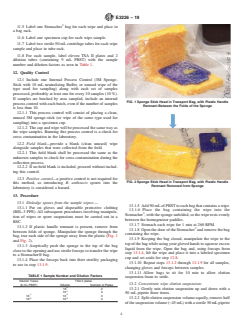
FIG. 2 Sponge Stick Head in Transport Bag, with Plastic Handle
this method, as introducing B. anthracis spores into the
Remnant Removed from Sponge
laboratory is considered a hazard.
13. Procedure
13.1 Dislodge spores from the sample wipes:—
13.1.5 Add90mLofPBSTtoeachbagthatcontainsawipe.
13.1.1 Put on gloves and disposable protective clothing
13.1.6 Place the bag containing the wipe into the
(BSL-3 PPE). All subsequent procedures involving manipula-
Stomacher ,withthespongeunfolded,sothewiperestsevenly
tion of wipes or spore suspensions must be carried out in a
between the homogenizer paddles.
BSC.
13.1.7 Stomach each wipe for 1 min at 260 RPM.
13.1.2 If plastic handle remnant is present, remove from
13.1.8 OpenthedooroftheStomacher andremovethebag
between folds of sponge. Manipulate the sponge through the
containing the wipe.
bag, tear each side of the sponge away from the plastic (Fig. 1
13.1.9 Keeping the bag closed, manipulate the wipe to the
and Fig. 2).
topofthebagwhileusingyourglovedhandstosqueezeexcess
13.1.3 Aseptically push the sponge to the top of the bag
liquid from the wipe. Open the bag and, using forceps from
closetotheopeningandusesterileforcepstotransferthewipe
step 13.1.4, lift the wipe and place it into a labeled specimen
to a Stomacher® bag.
cup and set aside for step 13.8.
13.1.4 Place the forceps back into their sterility packaging
13.1.10 Repeat steps 13.1.2 through 13.1.9 for all samples,
to use in step 13.1.9.
changing gloves and forceps between samples.
13.1.11 Allow bags to sit for 10 min to allow elution
TABLE 1 Sample Number and Dilution Factors
suspension foam to settle.
Dilution Tubes TSA II plates
13.2 Concentrate wipe elution suspension:
(9 mL PBST) Dilution Number of Plates
10 2 13.2.1 Gently mix elution suspension up and down with a
-1
10 3
50 mL pipette three times.
-1 -2
10 10 3
-2 -3 13.2.2 Splitelutionsuspensionvolumeequally,removehalf
10 10 3
ofthesuspensionvolume(~45mL)withasterile50mLpipette
E3226 − 19
-2
suspension resulting in a 10 dilution on the plate. Repeat 2 more times
and place it in a 50 mL screw capped centrifuge tube. Place
for a total of three inoculated plates.
remaining suspension (~45 mL) into a second 50 mL tube.
-2
13.2.3 Repeat steps 13.2.1 through 13.2.2 for all samples.
13.5.4 Spread the inoculum on each of the three 10 -
13.2.4 In BSC—Place tubes into sealing centrifuge buckets.
labeled TSAII plates with one cell spreader. Discard spreader.
13.2.5 Decontaminate sealed centrifuge buckets by wiping
13.5.5 After vortexing tubes well, remove 100 µLfrom the
with 1:10 bleach before removing from the BSC.
initial wipe elution suspension (10 ) with the P100 pipette and
13.2.6 Centrifuge tubes at 3500 × g for 15 min. Do not use
place on to a plate of TSA II labeled 10-1.
the brake option on the centrifuge to slow the rotor, as
NOTE 4—The plating of 100 µL is an additional 1:10 dilution of the
re-suspension of pellet may occur.
0 -1
initial swab elution suspension (10 ) resulting in a 10 dilution on the
13.2.7 Remove supernatant from each tube with a 50 mL
plate. Repeat 2 more times for a total of three inoculated plates.
pipette and discard the supernatant, to leave approximately 3
-1
13.5.6 Spread the inoculum on each of the three 10 -
mL in each tube. The pellet may be easily disturbed and not
labeled TSAII plates with one cell spreader. Discard spreader.
visible, so place pipette tip away from the tube bottom.
13.5.7 Place all plates in an incubator set at 36°C 61 for
13.3 Vortex and sonicate tubes, measure volume:
18-24 h.
13.3.1 Set vortex mixer to high intensity level and touch
13.6 Rapid screening for detection of presumptive B. an-
activation.
thracis in sample
13.3.2 Turn on sonicating water bath.
13.3.3 Vortex tubes for 30 s.
NOTE 5—Real-time PCR must be performed at a LRN laboratory
13.3.4 Transfer tubes to ultrasonic bath and sonicate for 30
utilizingLRNstandardprocedure“RapidPreparationofCellLysatesfrom
s. Culture-grownBacteriaforSubsequentTestingbyReal-timePCRAssay”
and “Detection of Bacillus anthracis DNA.”
13.3.5 Repeat vortex and sonication cycles two additional
times.
13.6.1 Remove 200 µL of undiluted eluate (10 ) and place
13.3.6 Remove suspension (approximately 3 mL) from one
in a pre-labeled tube.
tubewithasterile5mLpipetteandplaceitintheothertubeof
13.6.2 Send to LRN laboratory or perform DNAextraction
the same sample.
using a LRN-approved extraction method and send extract to
13.3.7 Measure final volume (approximately 6 mL) of
LRN laboratory for real time PCR following the current
suspension with 10 mL pipette and record on tube and data
LRN-approved PCR procedure.
sheet (see Appendix X1).
NOTE 6—Culture procedures are priority and must be initiated prior to
13.4 Perform serial dilution of the spore elution suspension
testing this sample by PCR. The result of PCR testing of undiluted eluate
in 9 mL PBST.
is presumptive. A negative PCR result at this stage of testing does not
ensure absence of viable B. anthracis spores. A positive PCR result
13.4.1 Vortex elution suspension on high for 30 s.
0 indicates the presence of B. anthracis DNA but does not determine
13.4.2 Remove 1 mL of spore elution suspension (10 ) and
viability
-1
place in one tube (9 mL) of PBST.This is the 10 suspension.
13.7 Capture spores on filter funnel membranes and culture
Recap the PBST tube and vortex on high for
...