

ASTM F2401-16
(Practice)Standard Practice for Security Checkpoint Metal Detector Screening of Persons with Medical Devices
General Information
- Abstract
SIGNIFICANCE AND USE
5.1 This practice is intended to be used as a guide for the design, configuration, and operation of security checkpoints to minimize exposure of ambulatory medical devices to the electromagnetic fields emitted by metal detector security systems. Guidance is presented for signage and information to help identify persons with ambulatory medical devices and process them through the security checkpoint.
5.2 This practice is intended to help in the training of checkpoint screeners to address the concerns of persons with ambulatory medical devices and to respond to their needs.
5.3 This practice is intended to aid the medical community in advising medical device users who may be affected to identify themselves at security checkpoints so their concerns may be addressed.
5.4 This practice is intended to aid medical device manufacturers to provide consistent information for medical device users, patients, and checkpoint screeners.
SCOPE
1.1 The following practice is intended to address the needs and concerns of persons with implanted, active, medical devices or active ambulatory medical devices, as well as passive implanted medical devices, while maintaining the integrity of the security checkpoint.
1.2 Active and passive implanted medical devices are being used at an increasing rate as a means to prolong and improve quality of life. Although these medical devices are typically designed to operate in the electromagnetic environment experienced in daily life, there is a potential for the disruption of active medical device function when exposed to certain electromagnetic fields emitted by commonly encountered electrically powered products, including handheld and walk-through metal detectors used in security checkpoint screening. In addition, some active or passive implanted devices may trigger the unintended alarm of the metal detector.
1.3 The values stated in SI units are to be regarded as the standard. The values shown in parentheses are for information only.
1.4 This standard does not purport to address all of the safety concerns, if any, associated with its use. It is the responsibility of the user of this standard to establish appropriate safety and health practices and determine the applicability of regulatory limitations prior to use.
- Status
- Published
- Publication Date
- 30-Sep-2016
- Technical Committee
- F12 - Security Systems and Equipment
- Drafting Committee
- F12.60 - Controlled Access Security, Search, and Screening Equipment
Buy Documents
ASTM F2401-16 - Standard Practice for Security Checkpoint Metal Detector Screening of Persons with Medical Devices
REDLINE ASTM F2401-16 - Standard Practice for Security Checkpoint Metal Detector Screening of Persons with Medical Devices
Overview
ASTM F2401-16: Standard Practice for Security Checkpoint Metal Detector Screening of Persons with Medical Devices provides essential guidance for security checkpoints where individuals with active or passive medical devices may be screened using metal detectors. The standard aims to minimize exposure of medical devices to the electromagnetic fields produced by walk-through and handheld metal detectors, ensuring both security and patient safety.
With the increasing prevalence of medical implants such as pacemakers, defibrillators, neural stimulators, and prosthetics, the need for consistent practices in screening environments is vital. ASTM F2401-16 addresses concerns surrounding electromagnetic interference, inadvertent alarms, and appropriate handling to support both screeners and device users.
Key Topics
- Minimizing Device Exposure: The standard outlines best practices for checkpoint layout and traffic flow, reducing the time and proximity a person with a medical device spends within the metal detector's electromagnetic field.
- Signage and Notification: Guidance is provided on effective signage to inform persons with medical devices of screening procedures and their option to notify security staff.
- Screening Procedures: Standardized procedures for identifying, assessing, and addressing the concerns of persons with medical devices are described, including privacy considerations and secondary screening options.
- Screener Training: The document highlights the importance of specialized training for security personnel to recognize medical device types, address user concerns, and implement alternative screening techniques if needed.
- Incident Reporting: ASTM F2401-16 includes procedures for documenting and reporting any incidents of medical device disruption, ensuring information is communicated to supervisors and regulatory bodies as required.
- Alternative Screening Methods: Alternatives such as hand searches and specific scanning techniques are suggested to minimize electromagnetic exposure or reduce false alarms.
Applications
Organizations that benefit from ASTM F2401-16 include:
- Airports and Transportation Hubs: Where high volumes of travelers with various medical devices require screening.
- Government Buildings and Controlled Facilities: Enhanced measures to balance security needs with accessibility rights of medical device users.
- Hospitals and Medical Centers: Staff and patients' visitors can be screened with minimal risk to device functionality.
- Event Venues: Safe entry management for attendees with implantable or ambulatory medical devices.
- Medical Device Manufacturers: Reference point for user instructions and guidance on electromagnetic compatibility at security checkpoints.
Practical applications span checkpoint configuration, staff training, signage, and emergency protocols. By following these guidelines, organizations can improve safety, reduce the risk of device interference, and support regulatory compliance.
Related Standards
ASTM F2401-16 references, aligns with, or is complemented by the following international standards:
- ISO 14117: Active implantable medical devices - Electromagnetic compatibility for cardiac devices.
- ISO 14708 Series: Parts 1-7 address safety, marking, and requirements for various categories of active implantable medical devices, including pacemakers, neurostimulators, infusion pumps, and cochlear implants.
- ANSI/AAMI PC69: Electromagnetic compatibility test protocols for implantable cardiac pacemakers and defibrillators.
These related standards support a harmonized approach to the electromagnetic compatibility of medical devices in environments with electronic security systems.
Keywords: ASTM F2401-16, security checkpoint, metal detector, medical device screening, electromagnetic fields, active medical devices, passive implants, screener training, incident reporting, alternative screening, security standards, ISO 14117, ISO 14708, ANSI/AAMI PC69.
Relations
- Effective Date
- 01-Oct-2016
Buy Documents
ASTM F2401-16 - Standard Practice for Security Checkpoint Metal Detector Screening of Persons with Medical Devices
REDLINE ASTM F2401-16 - Standard Practice for Security Checkpoint Metal Detector Screening of Persons with Medical Devices
Get Certified
Connect with accredited certification bodies for this standard

BSI Group
BSI (British Standards Institution) is the business standards company that helps organizations make excellence a habit.

TÜV Rheinland
TÜV Rheinland is a leading international provider of technical services.

TÜV SÜD
TÜV SÜD is a trusted partner of choice for safety, security and sustainability solutions.
Sponsored listings
Frequently Asked Questions
ASTM F2401-16 is a standard published by ASTM International. Its full title is "Standard Practice for Security Checkpoint Metal Detector Screening of Persons with Medical Devices". This standard covers: SIGNIFICANCE AND USE 5.1 This practice is intended to be used as a guide for the design, configuration, and operation of security checkpoints to minimize exposure of ambulatory medical devices to the electromagnetic fields emitted by metal detector security systems. Guidance is presented for signage and information to help identify persons with ambulatory medical devices and process them through the security checkpoint. 5.2 This practice is intended to help in the training of checkpoint screeners to address the concerns of persons with ambulatory medical devices and to respond to their needs. 5.3 This practice is intended to aid the medical community in advising medical device users who may be affected to identify themselves at security checkpoints so their concerns may be addressed. 5.4 This practice is intended to aid medical device manufacturers to provide consistent information for medical device users, patients, and checkpoint screeners. SCOPE 1.1 The following practice is intended to address the needs and concerns of persons with implanted, active, medical devices or active ambulatory medical devices, as well as passive implanted medical devices, while maintaining the integrity of the security checkpoint. 1.2 Active and passive implanted medical devices are being used at an increasing rate as a means to prolong and improve quality of life. Although these medical devices are typically designed to operate in the electromagnetic environment experienced in daily life, there is a potential for the disruption of active medical device function when exposed to certain electromagnetic fields emitted by commonly encountered electrically powered products, including handheld and walk-through metal detectors used in security checkpoint screening. In addition, some active or passive implanted devices may trigger the unintended alarm of the metal detector. 1.3 The values stated in SI units are to be regarded as the standard. The values shown in parentheses are for information only. 1.4 This standard does not purport to address all of the safety concerns, if any, associated with its use. It is the responsibility of the user of this standard to establish appropriate safety and health practices and determine the applicability of regulatory limitations prior to use.
SIGNIFICANCE AND USE 5.1 This practice is intended to be used as a guide for the design, configuration, and operation of security checkpoints to minimize exposure of ambulatory medical devices to the electromagnetic fields emitted by metal detector security systems. Guidance is presented for signage and information to help identify persons with ambulatory medical devices and process them through the security checkpoint. 5.2 This practice is intended to help in the training of checkpoint screeners to address the concerns of persons with ambulatory medical devices and to respond to their needs. 5.3 This practice is intended to aid the medical community in advising medical device users who may be affected to identify themselves at security checkpoints so their concerns may be addressed. 5.4 This practice is intended to aid medical device manufacturers to provide consistent information for medical device users, patients, and checkpoint screeners. SCOPE 1.1 The following practice is intended to address the needs and concerns of persons with implanted, active, medical devices or active ambulatory medical devices, as well as passive implanted medical devices, while maintaining the integrity of the security checkpoint. 1.2 Active and passive implanted medical devices are being used at an increasing rate as a means to prolong and improve quality of life. Although these medical devices are typically designed to operate in the electromagnetic environment experienced in daily life, there is a potential for the disruption of active medical device function when exposed to certain electromagnetic fields emitted by commonly encountered electrically powered products, including handheld and walk-through metal detectors used in security checkpoint screening. In addition, some active or passive implanted devices may trigger the unintended alarm of the metal detector. 1.3 The values stated in SI units are to be regarded as the standard. The values shown in parentheses are for information only. 1.4 This standard does not purport to address all of the safety concerns, if any, associated with its use. It is the responsibility of the user of this standard to establish appropriate safety and health practices and determine the applicability of regulatory limitations prior to use.
ASTM F2401-16 is classified under the following ICS (International Classification for Standards) categories: 11.040.40 - Implants for surgery, prosthetics and orthotics; 13.320 - Alarm and warning systems. The ICS classification helps identify the subject area and facilitates finding related standards.
ASTM F2401-16 has the following relationships with other standards: It is inter standard links to ASTM F2401-04(2010). Understanding these relationships helps ensure you are using the most current and applicable version of the standard.
ASTM F2401-16 is available in PDF format for immediate download after purchase. The document can be added to your cart and obtained through the secure checkout process. Digital delivery ensures instant access to the complete standard document.
Standards Content (Sample)
This international standard was developed in accordance with internationally recognized principles on standardization established in the Decision on Principles for the
Development of International Standards, Guides and Recommendations issued by the World Trade Organization Technical Barriers to Trade (TBT) Committee.
Designation: F2401 − 16
Standard Practice for
Security Checkpoint Metal Detector Screening of Persons
with Medical Devices
This standard is issued under the fixed designation F2401; the number immediately following the designation indicates the year of
original adoption or, in the case of revision, the year of last revision. A number in parentheses indicates the year of last reapproval. A
superscript epsilon (´) indicates an editorial change since the last revision or reapproval.
1. Scope ISO 14708-1 Implants for surgery – Active implantable
medical devices – Part 1: General requirements for safety,
1.1 The following practice is intended to address the needs
marking and for information to be provided by the
and concerns of persons with implanted, active, medical
manufacturer
devices or active ambulatory medical devices, as well as
ISO 14708-2 Implants for surgery – Active implantable
passive implanted medical devices, while maintaining the
medical devices – Part 2: Cardiac pacemakers
integrity of the security checkpoint.
ISO 14708-3 Implants for surgery – Active implantable
1.2 Active and passive implanted medical devices are being
medical devices – Part 3: Implantable neurostimulators
used at an increasing rate as a means to prolong and improve
ISO 14708-4 Implants for surgery – Active implantable
quality of life. Although these medical devices are typically
medical devices – Part 4: Implantable infusion pumps
designed to operate in the electromagnetic environment expe-
ISO 14708-5 Implants for surgery – Active implantable
rienced in daily life, there is a potential for the disruption of
medical devices – Part 5: Circulatory support devices
active medical device function when exposed to certain elec-
ISO 14708-6 Implants for surgery – Active implantable
tromagnetic fields emitted by commonly encountered electri-
medical devices – Part 6: Particular requirements for
cally powered products, including handheld and walk-through
active implantable medical devices intended to treat tach-
metal detectors used in security checkpoint screening. In
yarrhythmia (including implantable defibrillators)
addition, some active or passive implanted devices may trigger
ISO 14708-7 Implants for surgery – Active implantable
the unintended alarm of the metal detector.
medical devices – Part 7: Particular requirements for
1.3 The values stated in SI units are to be regarded as the
cochlear implant systems
standard. The values shown in parentheses are for information
only.
3. Terminology
1.4 This standard does not purport to address all of the
3.1 Definitions:
safety concerns, if any, associated with its use. It is the
3.1.1 active medical devices, n—electrically powered medi-
responsibility of the user of this standard to establish appro-
cal devices, usually employing electronic circuitry, for human
priate safety and health practices and determine the applica-
bility of regulatory limitations prior to use. physiological monitoring or to deliver medical treatment or
therapy such as drugs or electrical stimulation. These devices
2. Referenced Documents
can be implanted, patient worn, or both.
2.1 ISO Standards: 3.1.2 ambulatory medical devices, n—any medical device
ISO 14117 Active implantable medical devices – Electro-
(active or nonactive) that can be body mounted, worn,
magnetic compatibility – EMC test protocols for implant- implanted, or otherwise mobile with the patient and thus
able cardiac pacemakers, implantable cardioverter
subject to screening at the security checkpoint.
defibrillators, and cardiac resynchronization devices
3.1.3 archway, n—physical structure of a walk-through
metal detector.
This practice is under the jurisdiction of ASTM Committee F12 on Security
3.1.4 electromagnetic field, n—when referenced in this
Systems and Equipment and is the direct responsibility of Subcommittee F12.60 on
practice, it describes the energy field created by the metal
Controlled Access Security, Search, and Screening Equipment.
detector as a means to produce a response to materials with
Current edition approved Oct. 1, 2016. Published October 2016. Originally
approved in 2004. Last previous edition approved in 2010 as F2401– 04 (2010).
electrical conductivity or magnetic susceptibility, or both. The
DOI: 10.1520/F2401-16.
electromagnetic fields used in metal detectors for security
Available from International Organization for Standardization (ISO), ISO
screening applications are typically low frequency and vary
Central Secretariat, BIBC II, Chemin de Blandonnet 8, CP 401, 1214 Vernier,
Geneva, Switzerland, http://www.iso.org. with time and locations.
Copyright © ASTM International, 100 Barr Harbor Drive, PO Box C700, West Conshohocken, PA 19428-2959. United States
F2401 − 16
3.1.5 handheld metal detector, n—portable metal detector the duration of time a person remains inside the archway. To
product used by a security screener to provide localized accomplish this checkpoint layout, the following points should
searches of a person. be considered.
6.1.1 Provide an area for divestiture of metallic objects
3.1.6 passive (nonactive) medical devices,
before screening.
n—nonelectrically powered medical devices. These types of
6.1.2 Provide identifiable queuing area for the human traffic
medical devices may have sufficient metallic content to cause
flow through the security checkpoint. The traffic start point
a response from a metal detector. These devices can be
should be at least 30 cm before the archway entrance.
implanted, patient worn, or both.
6.1.3 Provide a path of free flow to ensure that no distrac-
3.1.7 security checkpoint, n—access point equipped with
tions or obstructions prevent a person from freely passing
personnel and screening devices used as a means to control the
through the archway unhindered. A distance of at least 1 m
flow of weapons or contraband material, or both.
beyond the archway exit where stopping for hand inspection of
parcels or retrieving items from the baggage screening X-ray
3.1.8 security screener, n—trained person performing the
system is recommended.
necessary functions at a security checkpoint.
6.1.4 Provide no-standing zones of 40 cm on each side of
3.1.9 walk-through metal detector, n—a stationary metal
the walk-through metal detector archway for security person-
detector that is typically permanently fixed in a particular
nel.
location but may be temporarily fixed, is typically constructed
6.1.5 Provide a secondary screening area for manual scan-
in an archway form, and that provides a search of the entire
ningwithahandheldmetaldetectororhandsearching,orboth,
body as a person passes through the portal of the detector.
as provided by the security policy.
6.1.6 Provide a means for bypass of the walk-through
4. Summary of Practice
detector directly to the secondary screening area, if allowed by
4.1 This practice provides the means to identify, evaluate, security policy.
andscreenpersonswithambulatorymedicaldevicesandreport
6.2 Signage—Typically security checkpoint metal detectors
incidences involving medical device users.
are visible and identifiable. Signage is suggested to alert
4.2 These means shall include security checkpoint layout, persons with concerns about their medical devices and direct
them to security staff for assistance. An example is “Metal
signage, screening procedures, screener training, and informa-
tion for the medical community (physicians, nurses, device detector in use. Persons with medical devices needing assis-
tance should notify security personnel.”
manufacturers, patients, and so forth) about checkpoint secu-
rityprocedurestoencouragethestandardizationofinformation
6.3 Reporting—Incidents of medical device disruption from
and media provided to persons with medical devices.
exposure to the security equipment that result in injury to the
device user or complaint should immediately be reported to the
5. Significance and Use
security personnel, preferably to the checkpoint supervisor.
Information about the incident should be recorded with as
5.1 This practice is intended to be used as a guide for the
muchofthefollowinginformationasappropriateandavailable
design, configuration, and operation of security checkpoints to
under the circumstances.
minimize exposure of ambulatory medical devices to the
6.3.1 Date, time, and location of incident (for example,
electromagnetic fields emitted by metal detector security sys-
facility name or address and security checkpoint location).
tems. Guidance is presented for signage and information to
6.3.2 Security Equipment and Personnel Involved—Type of
help identify persons with ambulatory medical devices and
equipment (for example, handheld metal detector or walk-
process them through the security checkpoint.
through metal detector), manufacturer, model, model number,
5.2 This practice is intended to help in the training of
serial number, and settings.
checkpoint screeners to address the concerns of persons with
6.3.3 Patient Information—Name, address, telephone
ambulatory medical devices and to respond to their needs.
number, e-mail, patient age, sex, height, weight, and if
available, patient’s physician name and contact information.
5.3 This practice is intended to aid the medical community
6.3.4 Medical Device Information—As much detail about
in advising medical device users who may be affected to
identify themselves at security checkpoints so their concerns the active medical device as possible, including the medical
device type (for example, type, make, model, and serial
may be addressed.
number), device location on or implanted in body, and medical
5.4 This practice is intended to aid medical device manu-
device settings (if known). A photocopy of the patient’s
facturers to provide consistent information for medical device
medical device implant identification card (if available) may
users, patients, and checkpoint screeners.
provide some portion of this information.
6.3.5 Summary of Incident—A description of what
6. Procedure
happened, including communication with the patient before,
6.1 Checkpoint Layout—The security checkpoint shall be during, and after the incident. For walk-through metal
arranged and configured to minimize medical device exposure detectors, how long the patient was in the archway, and for
to the metal detector emissions.This shall be facilitated by free handheld metal detectors, how long the detector was held over
traffic flow through the checkpoint, which in turn minimizes or near the medical device location and at what distance. A
F2401 − 16
figure of the patient and screening equipment showing the 6.4.3 Address Concerns—Methods of addressing patient
patient location and direction is useful. concerns may vary depending on the type of security require-
6.3.6 Patient Complaint—Summary description of what the ment and the availability of alternate screening methods.
patient experienced and when, and what the consequences of Proper training of security personnel will allow appropriate
the incident were for the patient and medical device. assessmentandimplementationofaprescribedsecurityscreen-
6.3.7 Anycommunicationswiththepatient’sphysicianafter ing method. The patient may have concerns that include the
the event. medical device may cause the security equipment to alarm or
6.3.8 All incidents involving medical devices that result in the patient has been advised to minimize or avoid exposure to
patient injury or complaint should be reported to the FDA’s handheld or walk-through metal detectors.
voluntary reporting program, MedWatch.
6.5 Alternative Screening Procedures—Alternative proce-
6.4 Screening Procedures:
dures are often useful in addressing the needs and concerns of
6.4.1 Identify—The use of signage and trained operators patients. The following alternative procedures should be con-
helps to identify persons with medical devices who are
sidered when establishing security policy.
concerned about potential medical device disruption and those 6.5.1 Limited searches with handheld metal detectors that
who are concerned that their devices may cause the metal
minimize medical device exposure by using hand searches in
detectors to alarm. Notification by the medical device user to
the area of the medical implant.
the checkpoint screener should be done before the medical
6.5.2 Hand search for a patient who has been advised to
device user enters the archway or is scanned by a handheld
avoid metal detector searches entirely.
metal detector. The screener should be prepared to handle
6.5.3 It must be recognized that for some security applica-
information discreetly when privacy is a concern.
tions hand searches may not be considered adequate and may
6.4.2 Assess—Methods to assess concerns of persons with
result in a denial of access to certain areas.
medical devices may include a brief interview with the person
6.6 Minimize Exposure—The most basic method of address-
to identify the type of medical device, any medical device user
ing concerns is to minimize exposure. Examples of methods to
safety concerns, or advice received by the device user from
minimize exposure are:
their healthcare provider. Additional information may be ob-
6.6.1 Checkpoint layout designed for free flow through a
tainedfrommedicaldeviceinformationcardsoftensuppliedby
walk-through detector without obstructions that would cause a
medical device manufacturers.The checkpoint operator should
person to stop within the archway.
check this card to verify patient’s name, type and location of
6.6.2 Checkpoint supervision that encourages persons to
medical device, and any recommended restrictions to metal
walk through the center of the archway of a walk-through
detector exposure. Checkpoint operators should respect the
metal detector at a reasonable pace without pausing.
requests of the patient while following security screening
6.6.3 Checkpoint prescreening procedures that encourage
procedures.
the divesting of metallic objects as a means to minimize the
need for multiple security checkpoint screening operations.
6.6.4 Allowing the patient to describe the location of a
Burlington, D.,“Important Information on Anti-Theft and Metal Detector
medical device and to allow the area to be quickly scanned or
Systems and Pacemakers, ICDs, and Spinal Cord Stimulators,” Food and Drug
Administration Notification and Reference List, Available: http://www.fda.gov/ perhaps avoided dur
...
This document is not an ASTM standard and is intended only to provide the user of an ASTM standard an indication of what changes have been made to the previous version. Because
it may not be technically possible to adequately depict all changes accurately, ASTM recommends that users consult prior editions as appropriate. In all cases only the current version
of the standard as published by ASTM is to be considered the official document.
Designation: F2401 − 04 (Reapproved 2010) F2401 − 16
Standard Practice for
Security Checkpoint Metal Detector Screening of Persons
with Medical Devices
This standard is issued under the fixed designation F2401; the number immediately following the designation indicates the year of
original adoption or, in the case of revision, the year of last revision. A number in parentheses indicates the year of last reapproval. A
superscript epsilon (´) indicates an editorial change since the last revision or reapproval.
1. Scope
1.1 The following practice is intended to address the needs and concerns of persons with implanted, active, medical devices or
active ambulatory medical devices, as well as passive implanted medical devices, while maintaining the integrity of the security
checkpoint.
1.2 Active and passive implanted medical devices are being used at an increasing rate as a means to prolong and improve quality
of life. Although these medical devices are typically designed to operate in the electromagnetic environment experienced in daily
life, there is a potential for the disruption of active medical device function when exposed to certain electromagnetic fields emitted
by commonly encountered electrically powered products, including handheld and walk-through metal detectors used in security
checkpoint screening. In addition, some active or passive implanted devices may trigger the unintended alarm of the metal detector.
1.3 The values stated in SI units are to be regarded as the standard. The values shown in parentheses are for information only.
1.4 This standard does not purport to address all of the safety concerns, if any, associated with its use. It is the responsibility
of the user of this standard to establish appropriate safety and health practices and determine the applicability of regulatory
limitations prior to use.
2. Referenced Documents
2.1 ISO Standards:
ISO 14117 Active implantable medical devices – Electromagnetic compatibility – EMC test protocols for implantable cardiac
pacemakers, implantable cardioverter defibrillators, and cardiac resynchronization devices
ISO 14708-1 Implants for surgery – Active implantable medical devices – Part 1: General requirements for safety, marking and
for information to be provided by the manufacturer
ISO 14708-2 Implants for surgery – Active implantable medical devices – Part 2: Cardiac pacemakers
ISO 14708-3 Implants for surgery – Active implantable medical devices – Part 3: Implantable neurostimulators
ISO 14708-4 Implants for surgery – Active implantable medical devices – Part 4: Implantable infusion pumps
ISO 14708-5 Implants for surgery – Active implantable medical devices – Part 5: Circulatory support devices
ISO 14708-6 Implants for surgery – Active implantable medical devices – Part 6: Particular requirements for active implantable
medical devices intended to treat tachyarrhythmia (including implantable defibrillators)
ISO 14708-7 Implants for surgery – Active implantable medical devices – Part 7: Particular requirements for cochlear implant
systems
3. Terminology
3.1 Definitions:
3.1.1 active medical devices, n—electrically powered medical devices, usually employing electronic circuitry, for human
physiological monitoring or to deliver medical treatment or therapy such as drugs or electrical stimulation. These devices can be
implanted, patient worn, or both.
3.1.2 ambulatory medical devices, n—any medical device (active or nonactive) that can be body mounted, worn, implanted, or
otherwise mobile with the patient and thus subject to screening at the security checkpoint.
This practice is under the jurisdiction of ASTM Committee F12 on Security Systems and Equipment and is the direct responsibility of Subcommittee F12.60 on
Controlled Access Security, Search, and Screening Equipment.
Current edition approved May 1, 2010Oct. 1, 2016. Published May 2010October 2016. Originally approved in 2004. Last previous edition approved in 20042010 as
F2401F2401– 04. 04 (2010). DOI: 10.1520/F2401-04R10.10.1520/F2401-16.
Available from International Organization for Standardization (ISO), ISO Central Secretariat, BIBC II, Chemin de Blandonnet 8, CP 401, 1214 Vernier, Geneva,
Switzerland, http://www.iso.org.
Copyright © ASTM International, 100 Barr Harbor Drive, PO Box C700, West Conshohocken, PA 19428-2959. United States
F2401 − 16
3.1.3 archway, n—physical structure of a walk-through metal detector.
3.1.4 electromagnetic field, n—when referenced in this practice, it describes the energy field created by the metal detector as
a means to produce a response to materials with electrical conductivity or magnetic susceptibility, or both. The electromagnetic
fields used in metal detectors for security screening applications are typically low frequency and vary with time and locations.
3.1.5 handheld metal detector, n—portable metal detector product used by a security screener to provide localized searches of
a person.
3.1.6 passive (nonactive) medical devices, n—nonelectrically powered medical devices. These types of medical devices may
have sufficient metallic content to cause a response from a metal detector. These devices can be implanted, patient worn, or both.
3.1.7 security checkpoint, n—access point equipped with personnel and screening devices used as a means to control the flow
of weapons or contraband material, or both.
3.1.8 security screener, n—trained person performing the necessary functions at a security checkpoint.
3.1.9 walk-through metal detector, n—permanently placeda stationary metal detector product typically in an archway form that
is typically permanently fixed in a particular location but may be temporarily fixed, is typically constructed in an archway form,
and that provides a search of the entire body as a person passes through the portal of the detector.
4. Summary of Practice
4.1 This practice provides the means to identify, evaluate, and screen persons with ambulatory medical devices and report
incidences involving medical device users.
4.2 These means shall include security checkpoint layout, signage, screening procedures, screener training, and information for
the medical community (physicians, nurses, device manufacturers, patients, and so forth) about checkpoint security procedures to
encourage the standardization of information and media provided to persons with medical devices.
5. Significance and Use
5.1 This practice is intended to be used as a guide for the design, configuration, and operation of security checkpoints to
minimize exposure of ambulatory medical devices to the electromagnetic fields emitted by metal detector security systems.
Guidance is presented for signage and information to help identify persons with ambulatory medical devices and process them
through the security checkpoint.
5.2 This practice is intended to help in the training of checkpoint screeners to address the concerns of persons with ambulatory
medical devices and to respond to their needs.
5.3 This practice is intended to aid the medical community in advising medical device users who may be affected to identify
themselves at security checkpoints so their concerns may be addressed.
5.4 This practice is intended to aid medical device manufacturers to provide consistent information for medical device users,
patients, and checkpoint screeners.
6. Procedure
6.1 Checkpoint Layout—The security checkpoint shall be arranged and configured to minimize medical device exposure to the
metal detector emissions. This shall be facilitated by free traffic flow through the checkpoint, which in turn minimizes the duration
of time a person remains inside the archway. To accomplish this checkpoint layout, the following points should be considered.
6.1.1 Provide an area for divestiture of metallic objects before screening.
6.1.2 Provide identifiable queuing area for the human traffic flow through the security checkpoint. The traffic start point should
be at least 30 cm before the archway entrance.
6.1.3 Provide a path of free flow to ensure that no distractions or obstructions prevent a person from freely passing through the
archway unhindered. A distance of at least 1 m beyond the archway exit where stopping for hand inspection of parcels or retrieving
items from the baggage screening X-ray system is recommended.
6.1.4 Provide no standing no-standing zones of 40 cm on each side of the walk-through metal detector archway for security
personnel.
6.1.5 Provide a secondary screening area for manual scanning with a handheld metal detector or hand searching, or both, as
provided by the security policy.
6.1.6 Provide a means for bypass of the walk-through detector directly to the secondary screening area, if allowed by security
policy.
6.2 Signage—Typically security checkpoint metal detectors are visible and identifiable. Signage is suggested to alert persons
with concerns about their medical devices and direct them to security staff for assistance. An example is “Metal detector in use.
Persons with medical devices needing assistance should notify security personnel.”
F2401 − 16
6.3 Reporting—Incidents of medical device disruption from exposure to the security equipment that result in injury to the device
user or complaint should immediately be reported to the security personnel, preferably to the checkpoint supervisor. Information
about the incident should be recorded with as much of the following information as appropriate and available under the
circumstances.
6.3.1 Date, time, and location of incident (for example, facility name or address and security checkpoint location).
6.3.2 Security Equipment and Personnel Involved—Type of equipment (for example, handheld metal detector or walk-through
metal detector), manufacturer, model, model number, serial number, and settings.
6.3.3 Patient Information—Name, address, telephone number, e-mail, patient age, sex, height, weight, and if available, patient’s
physician name and contact information.
6.3.4 Medical Device Information—As much detail about the active medical device as possible, including the medical device
type (for example, type, make, model, and serial number), device location on or implanted in body, and medical device settings
(if known). A photocopy of the patient’s medical device implant identification card (if available) may provide some portion of this
information.
6.3.5 Summary of Incident—A description of what happened, including communication with the patient before, during, and after
the incident. For walk-through metal detectors, how long the patient was in the archway, and for handheld metal detectors, how
long the detector was held over or near the medical device location and at what distance. A figure of the patient and screening
equipment showing the patient location and direction is useful.
6.3.6 Patient Complaint—Summary description of what the patient experienced and when, and what the consequences of the
incident were for the patient and medical device.
6.3.7 Any communications with the patient’s physician after the event.
6.3.8 All incidents involving medical devices that result in patient injury or complaint should be reported to the FDA’s voluntary
reporting program, MedWatch MedWatch.( 1).
6.4 Screening Procedures:
6.4.1 Identify—The use of signage and trained operators allows the identification of helps to identify persons with medical
devices whomwho are concerned about potential medical device disruption and those who are concerned that their devices may
cause the metal detectors to alarm. IdentificationNotification by the medical device user or notification to the checkpoint screener
should be done before the medical device user enters the archway or is scanned by a handheld metal detector. The screener should
be prepared to handle information discreetly when privacy is a concern.
6.4.2 Assess—Methods to assess concerns of persons with medical devices may include a brief interview with the person to
identify the type of medical device, any medical device user safety concerns, or advice received by the device user from their
healthcare provider. Additional information may be obtained from medical device information cards often supplied by medical
device manufacturers. The checkpoint operator should check this card to verify patient’s name, type and location of medical device,
and any recommended restrictions to metal detector exposure. Checkpoint operators should respect the requests of the patient while
following security screening procedures.
Burlington, D.,“Important Information on Anti-Theft and Metal Detector Systems and Pacemakers, ICDs, and Spinal Cord Stimulators,” Food and Drug Administration
Notification and Reference List, Available: http://www.fda.gov/MedicalDevices/Safety/AlertsandNotices/PublicHealthNotifications/ucm062288.htm. http://www.fda.gov/
cdrh/safety/easnote.html, Sept. 1998.
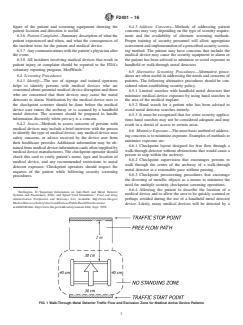
FIG. 1 Walk-Through Metal Detector Traffic Flow and Exclusion Zone for Medical Active Device Patients
F2401 − 16
6.4.3 Address Concerns—Methods of addressing patient concerns may vary depending on the type of security requirement and
the availability of alternate screening methods. Proper training of security personnel will allow appropriate assessment and
implementation of a prescribed security screening method. The patient may have concerns that include the medical device may
cause the security equipment to alarm or the patient has been advised to minimize or avoid exposure to handheld or walk-through
metal detectors.
6.5 Alternative Screening Procedures—Alternative procedures are often useful in addressing the needs and concerns of patients.
The following alternative procedures should be considered when establishing security policy.
6.5.1 Limited searches with handheld metal detectors that minimize medical device exposure by using hand searches in the area
of the medical implant.
6.5.2 Hand search for a patient who has been advised to avoid metal detector searches entirely.
6.5.3 It must be recognized that for some security applications hand searches may not be considered adequate and may result
in a denial of access to certain areas.
6.6 Minimize Exposure—The most basic method of addressing concerns is to minimize exposure. Examples of methods to
minimize exposure are:
6.6.1 Checkpoint layout designed for free flow through a walk-through detector without obstructions that would cause a person
to stop within the archway.
6.6.2 Checkpoint supervision that encourages persons to walk through the center of the archway of a walk-through metal
detector at a reasonable pace without pausing.
6.6.3 Checkpoint prescreening procedures that encourage the divesting of metallic objects as a means to minimize the need for
multiple security checkpoint screening operations.
6.6.4 Allowing the patient to describe the location of a medical device and to allow the area to be quickly scanned or perhaps
avoided during the use of a handheld metal detector device. Likely, many medical devices will be detected by a handheld metal
detector. Knowledge of the location of the medical device can allow a checkpoint screener to expedite a search in that body area.
6.6.5 Keeping a handheld metal detector at least 2.5 cm from a patient’s body when passing over a known area containing a
medical device.
6.6.6 Using hand searches in the area of the medical device if allowed by the policy.
6.6.7 Maintaining a “No Standing Zone” in and around a walk-through metal detector. This includes an area 30 cm before the
entrance and beyond the exit of a walk-through metal detector and 40 cm around the sides of the walk-through metal detector (see
Fig. 1). The electromagnetic field emission from walk-through metal detectors decrease rapidly with distance. Beyond these zones,
concern for medical devices is minimal.
...