

ASTM E1563-21a
(Guide)Standard Guide for Conducting Short-Term Chronic Toxicity Tests with Echinoid Embryos
General Information
- Abstract
SIGNIFICANCE AND USE
5.1 An acute toxicity test is conducted to assess effects of a short-term exposure of organisms to a test material under specific experimental conditions. An acute toxicity test does not provide information concerning whether delayed effects will occur and typically evaluates effects on survival. A chronic test is typically longer in duration and includes a sublethal endpoint to assess effects on a population that might occur beyond the exposure period. Because the echinoderm embryo development test includes a sublethal endpoint, but is also short in duration, these tests are considered to be short-term chronic tests, consistent with EPA guidance.
5.2 Because embryos and larvae are usually assumed to be the most sensitive life stages of these echinoid species, and because some of these species are commercially and recreationally important, the results of these tests are often considered to be a good indication of the acceptability of pollutant concentrations to saltwater species in general. The results of these toxicity tests are often assumed to be an important consideration when assessing the hazard of materials to other saltwater organisms (see Guides E724 and E1023) or when deriving water quality criteria for saltwater organisms (7).
5.3 The results of short-term chronic toxicity tests might be used to predict effects likely to occur to aquatic organisms in field situations as a result of exposure under comparable conditions, except that toxicity to benthic species might depend on sorption or settling of the test material onto the substrate.
5.4 The results of short-term chronic tests might be used to compare the sensitivities of different species and the acute toxicities of different test materials, and to determine the effects of various environmental factors on the results of such tests.
5.5 The results of short-term chronic toxicity tests might be useful for studying the biological availability of, and structure-activity relationships between, t...
SCOPE
1.1 This guide covers procedures for obtaining laboratory data concerning the short-term chronic effects of a test material on echinoderm embryos and the resulting larvae (sea urchins and sand dollars) during static 48- to 96-h exposures. These procedures have generally been used with U.S. East Coast (Arbacia punctulata and Strongylocentrotus droebachiensis ) (1)3 and West Coast species (Strongylocentrotus purpuratus, S. droebachiensis, and Dendraster excentricus) (2). The basic procedures described in this guide first originated in Japan and Scandanavia (3), and parallel procedures have been used with foreign species, especially in Japan and the Mediterranean (4). These procedures will probably be useful for conducting static toxicity tests with embryos of other echinoid species, although modifications might be necessary.
1.2 Other modifications of these procedures might be justified by special needs or circumstances. Although using procedures appropriate to a particular species or special needs and circumstances is more important than following prescribed procedures, the results of tests conducted by using unusual procedures are not likely to be comparable with those of many other tests. The comparison of results obtained by using modified and unmodified versions of these procedures might provide useful information concerning new concepts and procedures for conducting tests starting with embryos of echinoids.
1.3 These procedures are applicable to most chemicals, either individually or in formulations, commercial products, or known mixtures. With appropriate modifications, these procedures can be used to conduct tests on temperature, dissolved oxygen, and pH and on such materials as aqueous effluents (see also Guide E1192), leachates, oils, particulate matter, surface waters, effluents, and sediments (Annex A1). Renewal tests might be preferable to static tests for materials that have a high oxygen demand, are...
- Status
- Published
- Publication Date
- 31-Oct-2021
- Technical Committee
- E50 - Environmental Assessment, Risk Management and Corrective Action
- Drafting Committee
- E50.47 - Biological Effects and Environmental Fate
Buy Documents
ASTM E1563-21a - Standard Guide for Conducting Short-Term Chronic Toxicity Tests with Echinoid Embryos
REDLINE ASTM E1563-21a - Standard Guide for Conducting Short-Term Chronic Toxicity Tests with Echinoid Embryos
Overview
ASTM E1563-21a is the Standard Guide for Conducting Short-Term Chronic Toxicity Tests with Echinoid Embryos. Developed by ASTM International, this guide outlines laboratory procedures for evaluating the short-term chronic effects of chemicals and materials on echinoderm embryos and their resulting larvae-primarily on sea urchins and sand dollars-through exposures lasting 48 to 96 hours. This test method is critical for assessing the impact of various test materials (such as effluents, chemicals, oils, sediments, and particulate matter) on saltwater species, offering valuable insights for environmental risk assessment and regulatory compliance.
Short-term chronic toxicity tests with echinoid embryos provide an effective means to identify sublethal and developmental impacts that might not be detected through standard acute toxicity tests. Because early life stages of echinoid species are often most sensitive to contaminants, these tests serve as indicators for the broader ecological effects on marine environments.
Key Topics
- Test Design and Duration: Outlines static exposure tests of 48–96 hours using fertilized echinoid embryos, with endpoints focused on sublethal effects such as abnormal development.
- Species and Applicability: Common test species include Arbacia punctulata, Strongylocentrotus purpuratus, and Dendraster excentricus. The guide is adaptable for various echinoid species with appropriate modifications.
- Environmental Relevance: Results inform water quality criteria and ecological hazard assessments for marine and estuarine environments.
- Standardized Conditions: Emphasizes the use of consistent water quality (salinity, particulate matter, organic content), controlled temperature, and quality assurance measures to ensure test reliability.
- Safety and Quality Assurance: Provides recommendations for handling test organisms, test materials, laboratory equipment, and solutions, focusing on minimizing contamination, stress, and variability.
Applications
The ASTM E1563-21a standard is widely used in:
- Environmental Risk Assessment: Evaluating the potential hazard of industrial effluents, chemical spills, stormwater runoff, and dredged sediments to marine ecosystems.
- Water Quality Regulation: Supporting regulatory compliance and the derivation of water quality criteria for saltwater organisms based on sensitive life stages.
- Comparative Sensitivity Studies: Comparing responses across different echinoid species or between different test materials to understand varying toxicological impacts.
- Research and Development: Investigating the biological availability, structure-activity relationships, and chronic effects of new chemicals or formulations under controlled laboratory conditions.
- Field Extrapolation: Predicting likely impacts on marine organisms exposed to contaminants in natural settings, noting that sediment sorption and other variables can influence results.
Related Standards
ASTM E1563-21a is part of a broader framework of standards focused on aquatic toxicity and environmental protection. Key related ASTM standards include:
- ASTM E724: Guide for Conducting Static Short-Term Chronic Toxicity Tests Starting with Embryos of Four Species of Saltwater Bivalve Molluscs.
- ASTM E1023: Guide for Assessing the Hazard of a Material to Aquatic Organisms and Their Uses.
- ASTM E729: Guide for Conducting Acute Toxicity Tests on Test Materials with Fishes, Macroinvertebrates, and Amphibians.
- ASTM E1192: Guide for Conducting Acute Toxicity Tests on Aqueous Ambient Samples and Effluents with Fishes, Macroinvertebrates, and Amphibians.
- ASTM E943, E1391, E1525, E1367, and E1706: Standards supporting terminology, sediment testing, and design of biological tests for aquatic environments.
Conclusion
ASTM E1563-21a provides a comprehensive, adaptable procedure for short-term chronic toxicity testing of echinoid embryos, ensuring reliable data to support ecological hazard evaluation and regulatory decision-making. By following standardized methods for test setup and reporting, laboratories and stakeholders can make informed decisions to protect marine environments and comply with environmental standards. For the most current guidance and for implementation details, consult the official ASTM E1563-21a standard.
Relations
- Effective Date
- 01-Apr-2019
- Effective Date
- 01-Sep-2010
- Effective Date
- 01-Mar-2008
- Effective Date
- 01-Feb-2008
- Effective Date
- 01-Feb-2008
- Effective Date
- 01-Feb-2008
- Effective Date
- 01-Feb-2008
- Effective Date
- 01-Feb-2008
- Effective Date
- 01-Oct-2007
- Effective Date
- 01-Oct-2007
Buy Documents
ASTM E1563-21a - Standard Guide for Conducting Short-Term Chronic Toxicity Tests with Echinoid Embryos
REDLINE ASTM E1563-21a - Standard Guide for Conducting Short-Term Chronic Toxicity Tests with Echinoid Embryos
Get Certified
Connect with accredited certification bodies for this standard

BSI Group
BSI (British Standards Institution) is the business standards company that helps organizations make excellence a habit.

Bureau Veritas
Bureau Veritas is a world leader in laboratory testing, inspection and certification services.

DNV
DNV is an independent assurance and risk management provider.
Sponsored listings
Frequently Asked Questions
ASTM E1563-21a is a guide published by ASTM International. Its full title is "Standard Guide for Conducting Short-Term Chronic Toxicity Tests with Echinoid Embryos". This standard covers: SIGNIFICANCE AND USE 5.1 An acute toxicity test is conducted to assess effects of a short-term exposure of organisms to a test material under specific experimental conditions. An acute toxicity test does not provide information concerning whether delayed effects will occur and typically evaluates effects on survival. A chronic test is typically longer in duration and includes a sublethal endpoint to assess effects on a population that might occur beyond the exposure period. Because the echinoderm embryo development test includes a sublethal endpoint, but is also short in duration, these tests are considered to be short-term chronic tests, consistent with EPA guidance. 5.2 Because embryos and larvae are usually assumed to be the most sensitive life stages of these echinoid species, and because some of these species are commercially and recreationally important, the results of these tests are often considered to be a good indication of the acceptability of pollutant concentrations to saltwater species in general. The results of these toxicity tests are often assumed to be an important consideration when assessing the hazard of materials to other saltwater organisms (see Guides E724 and E1023) or when deriving water quality criteria for saltwater organisms (7). 5.3 The results of short-term chronic toxicity tests might be used to predict effects likely to occur to aquatic organisms in field situations as a result of exposure under comparable conditions, except that toxicity to benthic species might depend on sorption or settling of the test material onto the substrate. 5.4 The results of short-term chronic tests might be used to compare the sensitivities of different species and the acute toxicities of different test materials, and to determine the effects of various environmental factors on the results of such tests. 5.5 The results of short-term chronic toxicity tests might be useful for studying the biological availability of, and structure-activity relationships between, t... SCOPE 1.1 This guide covers procedures for obtaining laboratory data concerning the short-term chronic effects of a test material on echinoderm embryos and the resulting larvae (sea urchins and sand dollars) during static 48- to 96-h exposures. These procedures have generally been used with U.S. East Coast (Arbacia punctulata and Strongylocentrotus droebachiensis ) (1)3 and West Coast species (Strongylocentrotus purpuratus, S. droebachiensis, and Dendraster excentricus) (2). The basic procedures described in this guide first originated in Japan and Scandanavia (3), and parallel procedures have been used with foreign species, especially in Japan and the Mediterranean (4). These procedures will probably be useful for conducting static toxicity tests with embryos of other echinoid species, although modifications might be necessary. 1.2 Other modifications of these procedures might be justified by special needs or circumstances. Although using procedures appropriate to a particular species or special needs and circumstances is more important than following prescribed procedures, the results of tests conducted by using unusual procedures are not likely to be comparable with those of many other tests. The comparison of results obtained by using modified and unmodified versions of these procedures might provide useful information concerning new concepts and procedures for conducting tests starting with embryos of echinoids. 1.3 These procedures are applicable to most chemicals, either individually or in formulations, commercial products, or known mixtures. With appropriate modifications, these procedures can be used to conduct tests on temperature, dissolved oxygen, and pH and on such materials as aqueous effluents (see also Guide E1192), leachates, oils, particulate matter, surface waters, effluents, and sediments (Annex A1). Renewal tests might be preferable to static tests for materials that have a high oxygen demand, are...
SIGNIFICANCE AND USE 5.1 An acute toxicity test is conducted to assess effects of a short-term exposure of organisms to a test material under specific experimental conditions. An acute toxicity test does not provide information concerning whether delayed effects will occur and typically evaluates effects on survival. A chronic test is typically longer in duration and includes a sublethal endpoint to assess effects on a population that might occur beyond the exposure period. Because the echinoderm embryo development test includes a sublethal endpoint, but is also short in duration, these tests are considered to be short-term chronic tests, consistent with EPA guidance. 5.2 Because embryos and larvae are usually assumed to be the most sensitive life stages of these echinoid species, and because some of these species are commercially and recreationally important, the results of these tests are often considered to be a good indication of the acceptability of pollutant concentrations to saltwater species in general. The results of these toxicity tests are often assumed to be an important consideration when assessing the hazard of materials to other saltwater organisms (see Guides E724 and E1023) or when deriving water quality criteria for saltwater organisms (7). 5.3 The results of short-term chronic toxicity tests might be used to predict effects likely to occur to aquatic organisms in field situations as a result of exposure under comparable conditions, except that toxicity to benthic species might depend on sorption or settling of the test material onto the substrate. 5.4 The results of short-term chronic tests might be used to compare the sensitivities of different species and the acute toxicities of different test materials, and to determine the effects of various environmental factors on the results of such tests. 5.5 The results of short-term chronic toxicity tests might be useful for studying the biological availability of, and structure-activity relationships between, t... SCOPE 1.1 This guide covers procedures for obtaining laboratory data concerning the short-term chronic effects of a test material on echinoderm embryos and the resulting larvae (sea urchins and sand dollars) during static 48- to 96-h exposures. These procedures have generally been used with U.S. East Coast (Arbacia punctulata and Strongylocentrotus droebachiensis ) (1)3 and West Coast species (Strongylocentrotus purpuratus, S. droebachiensis, and Dendraster excentricus) (2). The basic procedures described in this guide first originated in Japan and Scandanavia (3), and parallel procedures have been used with foreign species, especially in Japan and the Mediterranean (4). These procedures will probably be useful for conducting static toxicity tests with embryos of other echinoid species, although modifications might be necessary. 1.2 Other modifications of these procedures might be justified by special needs or circumstances. Although using procedures appropriate to a particular species or special needs and circumstances is more important than following prescribed procedures, the results of tests conducted by using unusual procedures are not likely to be comparable with those of many other tests. The comparison of results obtained by using modified and unmodified versions of these procedures might provide useful information concerning new concepts and procedures for conducting tests starting with embryos of echinoids. 1.3 These procedures are applicable to most chemicals, either individually or in formulations, commercial products, or known mixtures. With appropriate modifications, these procedures can be used to conduct tests on temperature, dissolved oxygen, and pH and on such materials as aqueous effluents (see also Guide E1192), leachates, oils, particulate matter, surface waters, effluents, and sediments (Annex A1). Renewal tests might be preferable to static tests for materials that have a high oxygen demand, are...
ASTM E1563-21a is classified under the following ICS (International Classification for Standards) categories: 07.080 - Biology. Botany. Zoology; 07.100.20 - Microbiology of water; 13.020.40 - Pollution, pollution control and conservation. The ICS classification helps identify the subject area and facilitates finding related standards.
ASTM E1563-21a has the following relationships with other standards: It is inter standard links to ASTM E1706-19, ASTM E1706-05(2010), ASTM E943-08, ASTM E1192-97(2008), ASTM E1391-03(2008), ASTM E1367-03(2008), ASTM E1525-02(2008), ASTM E1733-95(2008), ASTM E1023-84(2007), ASTM E729-96(2007). Understanding these relationships helps ensure you are using the most current and applicable version of the standard.
ASTM E1563-21a is available in PDF format for immediate download after purchase. The document can be added to your cart and obtained through the secure checkout process. Digital delivery ensures instant access to the complete standard document.
Standards Content (Sample)
This international standard was developed in accordance with internationally recognized principles on standardization established in the Decision on Principles for the
Development of International Standards, Guides and Recommendations issued by the World Trade Organization Technical Barriers to Trade (TBT) Committee.
Designation: E1563 − 21a
Standard Guide for
Conducting Short-Term Chronic Toxicity Tests with Echinoid
1,2
Embryos
This standard is issued under the fixed designation E1563; the number immediately following the designation indicates the year of
original adoption or, in the case of revision, the year of last revision.Anumber in parentheses indicates the year of last reapproval.A
superscript epsilon (´) indicates an editorial change since the last revision or reapproval.
1. Scope* also Guide E1192), leachates, oils, particulate matter, surface
waters, effluents, and sediments (Annex A1). Renewal tests
1.1 This guide covers procedures for obtaining laboratory
mightbepreferabletostatictestsformaterialsthathaveahigh
dataconcerningtheshort-termchroniceffectsofatestmaterial
oxygen demand, are highly volatile, are rapidly transformed
on echinoderm embryos and the resulting larvae (sea urchins
biologically or chemically in aqueous solution, or are removed
and sand dollars) during static 48- to 96-h exposures. These
from test solutions in substantial quantities by the test cham-
procedures have generally been used with U.S. East Coast
bers or organisms during the test.
(Arbacia punctulata and Strongylocentrotus droebachiensis )
(1) andWestCoastspecies(Strongylocentrotus purpuratus, S. 1.4 Results of short-term chronic toxicity tests with echi-
noid embryos should usually be reported as the 50% effect
droebachiensis, and Dendraster excentricus) (2). The basic
procedures described in this guide first originated in Japan and concentration (EC50) based on the total abnormally developed
embryos and larvae. In some situations, it might only be
Scandanavia (3), and parallel procedures have been used with
foreign species, especially in Japan and the Mediterranean (4). necessary to determine whether a specific concentration is
toxic to embryos or whether the EC50 is above or below a
These procedures will probably be useful for conducting static
toxicity tests with embryos of other echinoid species, although specific concentration.
modifications might be necessary.
1.5 This guide is arranged as follows:
1.2 Other modifications of these procedures might be justi-
fied by special needs or circumstances.Although using proce-
dures appropriate to a particular species or special needs and
Section
Scope 1
circumstances is more important than following prescribed
Referenced Documents 2
procedures, the results of tests conducted by using unusual
Terminology 3
procedures are not likely to be comparable with those of many
Summary of Guide 4
Significance and Use 5
other tests. The comparison of results obtained by using
Apparatus 6
modified and unmodified versions of these procedures might
Facilities 6.1
provide useful information concerning new concepts and
Construction Materials 6.2
Test Chambers 6.3
procedures for conducting tests starting with embryos of
Cleaning 6.4
echinoids.
Acceptability 6.5
Safety Precautions 7
1.3 These procedures are applicable to most chemicals,
Dilution Water 8
either individually or in formulations, commercial products, or
Requirements 8.1
known mixtures. With appropriate modifications, these proce- Source 8.2
Treatment 8.3
dures can be used to conduct tests on temperature, dissolved
Characterization 8.4
oxygen,andpHandonsuchmaterialsasaqueouseffluents(see
Test Material 9
General 9.1
Stock Solution 9.2
Test Concentration(s) 9.3
A Standard Guide is a document, developed using the consensus mechanisms
Test Organisms 10
of ASTM that provides guidance for the selection of procedures to accomplish a
Species 10.1
specific test, but which does not stipulate specific procedures.
Age 10.2
ThisguideisunderthejurisdictionofASTMCommitteeE50onEnvironmental Source of Embryos 10.3
Assessment, Risk Management and CorrectiveAction and is the direct responsibil- Handling 10.4
Test Animal Source and Condition 10.5
ity of Subcommittee E50.47 on Biological Effects and Environmental Fate.
Spawning and Fertilization 10.6
Current edition approved Nov. 1, 2021. Published January 2022. Originally
Quality 10.7
approved in 1995. Last previous edition approved in 2021 as E1563–21. DOI:
Procedure 11
10.1520/E1563-21A.
Experimental Design 11.1
Theboldfacenumbersinparenthesesrefertothelistofreferencesattheendof
Dissolved Oxygen 11.2
this standard.
*A Summary of Changes section appears at the end of this standard
Copyright © ASTM International, 100 Barr Harbor Drive, PO Box C700, West Conshohocken, PA 19428-2959. United States
E1563 − 21a
E1525GuideforDesigningBiologicalTestswithSediments
Temperature 11.3
Beginning the Test 11.4
E1706TestMethodforMeasuringtheToxicityofSediment-
Feeding 11.5
Associated Contaminants with Freshwater Invertebrates
Duration of Test 11.6
E1733Guide for Use of Lighting in Laboratory Testing
Biological Data 11.7
Control Performance 11.8
Other Measurements 11.9
3. Terminology
Analytical Methods 12
Acceptability of Test 13 3.1 Definitions:
Calculation of Results 14
3.1.1 The words “must,” “should,” “may,” “can,” and
Report 15
“might” have very specific meanings in this guide. “Must” is
Keywords 16
Annex
usedtoexpressanabsoluterequirement,thatis,tostatethatthe
Sediment Tests Annex A1
test ought to be designed to satisfy the specified condition,
unless the purpose of the test requires a different design.
“Must” is only used in connection with factors that directly
1.6 The values stated in SI units are to be regarded as the
relate to the acceptability of the test (see 13.1). “Should” is
standard.
used to state that the specified condition is recommended and
oughttobemetifpossible.Althoughviolationofone“should”
1.7 This standard does not purport to address all of the
statement is rarely a serious matter, violation of several will
safety concerns, if any, associated with its use. It is the
often render the results questionable. Terms such as “is
responsibility of the user of this standard to establish appro-
desirable,” “is often desirable,” and “might be desirable” are
priate safety, health, and environmental practices and deter-
used in connection with less important factors. “May” is used
mine the applicability of regulatory limitations prior to use.
to mean “is (are) allowed to,” “can” is used to mean “is (are)
Specific precautionary statements are given in Section 7.
able to,” and “might” is used to mean “could possibly.” Thus,
1.8 This international standard was developed in accor-
the classic distinction between “may” and “can” is preserved,
dance with internationally recognized principles on standard-
and “might” is never used as a synonym for either “may” or
ization established in the Decision on Principles for the
“can.”
Development of International Standards, Guides and Recom-
3.1.2 For definitions of other terms used in this guide, refer
mendations issued by the World Trade Organization Technical
to Guide E729 and Terminology E943. For sediment tests
Barriers to Trade (TBT) Committee.
(Annex A1), refer to Guides E1391 and E1525. For an
2. Referenced Documents
explanation of units and symbols, refer to Practice E380.
3.2 Definitions of Terms Specific to This Standard:
2.1 ASTM Standards:
3.2.1 embryo, n—the stages of a multicellular organism’s
E380Practice for Use of the International System of Units
developmentthatoccurbetweenthefertilizationoftheeggand
(SI) (the Modernized Metric System) (Withdrawn 1997)
the pluteus larva.
E724Guide for Conducting Static Short-Term ChronicTox-
3.2.2 pluteus larva, n—a juvenile lifecycle stage character-
icity Tests Starting with Embryos of Four Species of
Saltwater Bivalve Molluscs istic of all echinoids The term “embryo” is used herein to
denote the stages between the fertilization of the egg and the
E729Guide for Conducting Acute Toxicity Tests on Test
Materials with Fishes, Macroinvertebrates, and Amphib- pluteus larva. The term “larva” is used herein to refer to the
ians pluteus larva characteristic of all echinoids (5) (Fig. 1 and Fig.
E943Terminology Relating to Biological Effects and Envi- 2).
ronmental Fate
4. Summary of Guide
E1023Guide for Assessing the Hazard of a Material to
Aquatic Organisms and Their Uses
4.1 Adult sea urchins and sand dollars are brought into the
E1192Guide for ConductingAcute Toxicity Tests onAque-
laboratory and identified to species. If the gonads are not ripe,
ous Ambient Samples and Effluents with Fishes,
the sea urchins or sand dollars should be held and fed until the
Macroinvertebrates, and Amphibians
gonadsarebroughtintoasuitablereproductivestate.Echinoids
E1367TestMethodforMeasuringtheToxicityofSediment-
withripegonadsaremaintainedunderconditionsthatkeepthe
Associated Contaminants with Estuarine and Marine In-
gonads ripe without inducing undesired spontaneous spawning
vertebrates
or resorption of gametes. In order to start a test, spawning is
E1391Guide for Collection, Storage, Characterization, and
induced by using one or more stimuli, which may be physical
Manipulation of Sediments for Toxicological Testing and
(for example, heat or electrical current) or chemical (for
for Selection of Samplers Used to Collect Benthic Inver-
example, potassium chloride).
tebrates
4.2 In each of two or more treatments, embryos and the
resulting larvae of one species are maintained for 48 to 96 h,
depending on the species and test temperature. In each of one
For referenced ASTM standards, visit the ASTM website, www.astm.org, or
contact ASTM Customer Service at service@astm.org. For Annual Book of ASTM
or more control treatments, the embryos and resulting larvae
Standards volume information, refer to the standard’s Document Summary page on
are maintained in dilution water to which no test material has
the ASTM website.
been added in order to provide (1) a measure of the accept-
The last approved version of this historical standard is referenced on
www.astm.org. ability of the test by giving an indication of the quality of the
E1563 − 21a
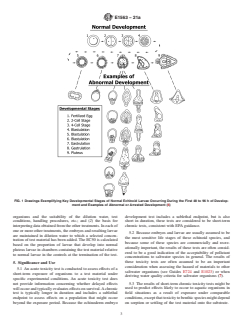
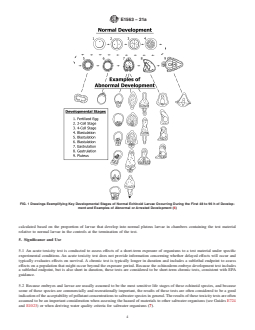
FIG. 1 Drawings Exemplifying Key Developmental Stages of Normal Echinoid Larvae Occurring During the First 48 to 96 h of Develop-
ment and Examples of Abnormal or Arrested Development (6)
organisms and the suitability of the dilution water, test development test includes a sublethal endpoint, but is also
conditions, handling procedures, etc.; and (2) the basis for short in duration, these tests are considered to be short-term
interpretingdataobtainedfromtheothertreatments.Ineachof chronic tests, consistent with EPA guidance.
oneormoreothertreatments,theembryosandresultinglarvae
5.2 Because embryos and larvae are usually assumed to be
are maintained in dilution water to which a selected concen-
the most sensitive life stages of these echinoid species, and
tration of test material has been added.The EC50 is calculated
because some of these species are commercially and recre-
based on the proportion of larvae that develop into normal
ationally important, the results of these tests are often consid-
pluteus larvae in chambers containing the test material relative
ered to be a good indication of the acceptability of pollutant
to normal larvae in the controls at the termination of the test.
concentrations to saltwater species in general. The results of
these toxicity tests are often assumed to be an important
5. Significance and Use
consideration when assessing the hazard of materials to other
5.1 An acute toxicity test is conducted to assess effects of a
saltwater organisms (see Guides E724 and E1023) or when
short-term exposure of organisms to a test material under
deriving water quality criteria for saltwater organisms (7).
specific experimental conditions. An acute toxicity test does
not provide information concerning whether delayed effects 5.3 The results of short-term chronic toxicity tests might be
willoccurandtypicallyevaluateseffectsonsurvival.Achronic used to predict effects likely to occur to aquatic organisms in
test is typically longer in duration and includes a sublethal field situations as a result of exposure under comparable
endpoint to assess effects on a population that might occur conditions,exceptthattoxicitytobenthicspeciesmightdepend
beyond the exposure period. Because the echinoderm embryo on sorption or settling of the test material onto the substrate.
E1563 − 21a
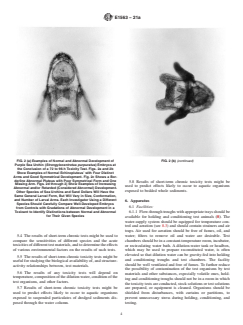
FIG. 2 (a) Examples of Normal and Abnormal Development of
FIG. 2 (b) (continued)
Purple Sea Urchin (Strongylocentrotus purpuratus) Embryos at
the Conclusion of a 72 to 96-h Toxicity Test. Figs. 2a and 2b
Show Examples of Normal Echinopluteus’ with Four Distinct
Arms and Good Symmetrical Development. Fig. 2c Shows a Bor-
derline Abnormal Pluteus with Poor Symmetrical Form and One
5.8 Results of short-term chronic toxicity tests might be
Missing Arm. Figs. 2d through 2j Show Examples of Increasing
used to predict effects likely to occur to aquatic organisms
Abnormal and/or Retarded (Considered Abnormal) Development.
exposed to bedded whole sediments.
Other Species of Sea Urchins and Sand Dollars Will Have the
Same General Larval Form, But Will Vary in Size, Conformation,
and Number of Larval Arms. Each Investigator Using a Different
6. Apparatus
Species Should Carefully Compare Well-Developed Embryos
6.1 Facilities:
from Controls with Gradations of Abnormal Development in a
Toxicant to Identify Distinctions between Normal and Abnormal 6.1.1 Flow-throughtroughswithappropriatetraysshouldbe
for Their Given Species
available for holding and conditioning test animals (8). The
water-supply system should be equipped for temperature con-
trol and aeration (see 8.3) and should contain strainers and air
traps. Air used for aeration should be free of fumes, oil, and
5.4 The results of short-term chronic tests might be used to water; filters to remove oil and water are desirable. Test
compare the sensitivities of different species and the acute
chambersshouldbeinaconstant-temperatureroom,incubator,
toxicitiesofdifferenttestmaterials,andtodeterminetheeffects or recirculating water bath. A dilution-water tank or headbox,
of various environmental factors on the results of such tests.
which may be used to prepare reconstituted water, is often
elevated so that dilution water can be gravity-fed into holding
5.5 The results of short-term chronic toxicity tests might be
and conditioning troughs and test chambers. The facility
usefulforstudyingthebiologicalavailabilityof,andstructure-
should be well ventilated and free of fumes. To further reduce
activity relationships between, test materials.
the possibility of contamination of the test organisms by test
5.6 The results of any toxicity tests will depend on
materials and other substances, especially volatile ones, hold-
temperature,compositionofthedilutionwater,conditionofthe
ing and conditioning troughs should not be in a room in which
test organisms, and other factors.
thetoxicitytestsareconducted,stocksolutionsortestsolutions
5.7 Results of short-term chronic toxicity tests might be are prepared, or equipment is cleaned. Organisms should be
used to predict effects likely to occur to aquatic organisms shielded from disturbances, with curtains or partitions, to
exposed to suspended particulates of dredged sediments dis- prevent unnecessary stress during holding, conditioning, and
posed through the water column. testing.
E1563 − 21a
FIG. 2 (d) (continued)
FIG. 2 (c) (continued)
6.1.2 It is desirable, if feasible, to include some safeguards
in the system that supplies water to holding and conditioning
troughs. Monitors, possibly connected to auxiliary power
supplies, might be designed to initiate aeration, sound alarms,
or activate telephone autodialing alarms if the water flow or
temperature deviates from preset limits. If the temperature
becomestoohighorlow,correctiveactionshouldnotcausethe
temperatureofthewaterinholdingandconditioningtroughsto
increase or decrease more than 2°C/day to reduce the chances
of spontaneous spawning.
6.2 Construction Materials—Equipment and facilities that
contact stock solutions, test solutions, or any water into which
thetestorganismswillbeplacedshouldnotcontainsubstances
that can be leached or dissolved by aqueous solutions in
amounts that affect the test organisms adversely. In addition,
equipment and facilities that contact the stock solutions or test
solutions should be chosen to minimize the sorption of test
FIG. 2 (e) (continued)
materials from water. Glass, Type 316 stainless steel, nylon,
and fluorocarbon plastics should be used whenever possible to
of neoprene rubber and other materials not mentioned above
minimize dissolution, leaching, and sorption, except that stain-
should not be used unless it has been shown that the embryos
lesssteelshouldnotbeusedwhentestingmetals.Concreteand
and resulting larvae of the test species do not show more signs
rigid plastics may be used for holding and conditioning tanks
of stress, such as discoloration, abnormal development, or
and in the water-supply system, but they should be soaked,
death, when held for 48 to 96 h in the static dilution water in
preferablyinflowingdilutionwater,foraweekormorebefore
which the item is soaking than when held in static dilution
use (9). Brass, copper, lead, galvanized metal, cast-iron pipe,
water that does not contain the item.
and natural rubber should not contact the dilution water, stock
solutions,ortestsolutionsbeforeorduringthetest.Itemsmade 6.3 Test Chambers:
E1563 − 21a
FIG. 2 (f) (continued)
FIG. 2 (h) (continued)
should be cleaned before use. New items should be washed
with detergent and rinsed with water, a water-miscible organic
solvent, water, acid (such as 10% concentrated hydrochloric
acid), and at least twice with deionized, distilled, or dilution
water. (Some lots of some organic solvents might leave a film
that is insoluble in water.)At the end of the test, all items that
are to be used again should immediately be (1) emptied; (2)
rinsed with water; (3) cleaned by a procedure appropriate for
FIG. 2 (g) (continued)
removingthetestmaterialfromtheitem(forexample,acidfor
removingmetalsandbasesanddetergentororganicsolventfor
removingorganicchemicals);and(4)rinsedatleasttwicewith
6.3.1 Inatoxicitytestwithaquaticorganisms,testchambers
are defined as the smallest physical units between which there deionized, distilled, or dilution water. Acid is often used to
remove mineral deposits. A hypochlorite solution, often rec-
are no water connections. The chambers should be covered to
keepoutextraneouscontaminantsandbacteriaandtominimize ommendedasadisinfectionagentortoremoveorganicmatter,
should not be used due to the extreme toxicity of chlorine-
the evaporation of test solution and material. Substantial
concentrationsofbacteriainthetestsolutionsmightreducethe produced oxidants to echinoid larvae (11). The test chambers
survival of the embryos and resulting larvae severely, whereas should be rinsed with dilution water just before use.
differences in the amount of evaporation among test chambers
6.5 Acceptability— Before a test is begun with echinoid
will contribute directly to between-chamber variation in sur-
embryos in new test facilities, it is desirable to conduct a
vival. All chambers in a test must be identical.
“non-toxicant” test in which all test chambers contain dilution
6.3.2 Tests are usually conducted in glass chambers that are
water with no added test material to determine (1) whether
250mLto1Lincapacity.Verysmalltestchambers,containing
embryos will survive and develop acceptably (see 11.8); (2)
as little as 10 to 30 mL (10), and sealed test chambers may be
whether the dilution water, handling procedures, etc., are
used if the survival and development of the embryos and
acceptable; (3) whether there are any location effects on either
resulting larvae in the control(s) are acceptable (see 11.8).
survival or development; and (4) the magnitude of between-
6.4 Cleaning—Test chambers and equipment used to pre- chamber variance in the percentage of embryos that develop
pareandstoredilutionwater,stocksolutions,andtestsolutions into normal larvae. It is also highly recommended that each
E1563 − 21a
when washing equipment or putting hands in test solutions),
laboratorycoats,aprons,andglasses.Specialprecautions,such
as covering the test chambers and ventilating the area sur-
rounding the chambers, should be taken when conducting tests
on volatile materials. Information concerning toxicity to hu-
mans (12), recommended handling procedures (13), and
chemical and physical properties of the test material should be
studiedbeforeatestisbegun.Specialproceduresarenecessary
with radiolabeled test materials (14) and with materials that
are, or are suspected of being, carcinogenic (15).
7.2 Although in most cases the disposal of stock solutions,
test solutions, and test organisms poses no special problems,
healthandsafetyprecautionsandapplicableregulationsshould
be considered before beginning a test. Removal or degradation
of the test material might be desirable before disposal of the
stock and test solutions.
7.3 Cleaning of equipment with a volatile solvent such as
acetone should be performed only in a well-ventilated area in
whichnosmokingisallowedandnoopenflame,suchasapilot
light, is present.
7.4 Warning—Anacidicsolutionshouldnotbemixedwith
a hypochlorite solution because hazardous fumes might be
produced.
7.5 To prepare dilute acid solutions, concentrated acid
should be added to water, not vice versa. Opening a bottle of
concentratedacidandaddingconcentratedacidtowatershould
be performed only in a fume hood.
FIG. 2 (i) (continued)
7.6 Precaution—The use of ground-fault systems and leak
detectors is recommended strongly to help prevent electrical
shocks because salt water is a good conductor of electricity.
7.7 Care should be exercised when collecting and handling
sea urchins to avoid puncture wounds from spines. Where
possible, species with blunt spines should be selected over
those with long, sharp spines.
7.8 Preservation of larvae to facilitate microscopic enu-
meration will be performed with a fixative agent such as
buffered formalin, and biological stains (that is, Rose Bengal).
Appropriatesafetyprecautionsshouldbetakenwhenhandling.
8. Dilution Water
8.1 Requirements:
8.1.1 In addition to being available in adequate supply, the
dilution water should (1) be acceptable to adult echinoids and
theirembryosandlarvae,(2)beofuniformquality,and(3)not
affect the test results unnecessarily.
8.1.2 The minimal requirement for an acceptable dilution
FIG. 2 (j) (continued)
water for toxicity tests starting with embryos of sea urchins or
sand dollars is that at least 70% of the embryos resulting from
laboratorydevelopandmaintaina“controlchart”oftheresults
eggs and sperm produced by appropriately conditioned adults
of routine reference toxicant testing and control responses.
result in normal larvae while being maintained in the dilution
waterfor48to96h.Naturalsaltwatervariesinqualityenough
7. Safety Precautions
that even though it is usually acceptable, it might occasionally
7.1 Many materials can affect humans adversely if precau- be toxic to embryos or larvae if, for example, certain toxic
tions are inadequate. Therefore, skin contact with all test algae species are present such as some dinoflagellates (16).
materials and their solutions should be minimized by such 8.1.3 Thequalityofthedilutionwatershouldbesufficiently
means as wearing appropriate protective gloves (especially uniform that the test animals are held and conditioned and that
E1563 − 21a
TABLE 1 Reconstituted Salt Water
thetestisconductedinwaterofthesamequality.Inparticular,
the salinity should always be between 27 and 36 g/kg or parts
NOTE 1—Add the following reagent-grade chemicals (18) in the
per thousand (ppt) (17) and within a test should not vary by
amountsandorderlistedto890mLoffreshwater.Eachchemicalmustbe
A
dissolved before the next is added.
more than 1 ppt among treatments or any renewals during a
Chemical Amount
test. When a test is conducted on an effluent, brine, drilling
B
NaF 3 mg
mud, or other material that affects salinity when mixed with
SrClO20mg
2·6H
dilutionwater,itmightbedesirabletoadjustsalinitybyadding
H BO 30 mg
3 3
artificialseasaltsornaturalsalinebrinestoraisethesalinityor
KBr 100 mg
KCl 700 mg
by adding distilled or deionized water to lower the salinity. If
CaCl ·2H O 1470 mg
2 2
saltsareadded,theadjustedmaterialshouldbewellmixedand
Na SO 4000 mg
2 4
allowed to equilibrate for minimum of 2 h with gentle aeration
MgCl ·6H O 10 780 mg
2 2
NaCl 23 500 mg
(24 h preferred) and salinity confirmed as salts dissolve. The
Na SiO ·HO20mg
2 3 2
additionofartificialsaltscanproduceartifactualtoxicitythatis
NaHCO 200 mg
ameliorated with aging.
A
If the resulting solution is diluted to 1 L, the salinity should be 34 g/kg ± 0.2.The
8.1.4 The dilution water should not affect the test unneces-
reconstitutedwatershouldbestrippedoftracemetals(33).Ifnecessary,thewater
should be diluted to the desired salinity at the time of use.
sarily because of such things as sorption or complexation of
B
It is presently unknown if NaF affects the development of echinoid embryos and
test material. Therefore, concentrations of both total organic
larvae.InitialtestsshouldbeconductedwithandwithoutNaFifreconstitutedwater
carbon (TOC) and particulate matter should be less than 5
is used for test animal holding or test water.
mg/L in the dilution water. The concentrations of both TOC
and particulate matter can be greater than 5 mg/L in the water
in which the test animals are held and conditioned, since food
or COD should be measured at least twice per year and
will normally be present in the holding tanks.
whenever substantial changes might be expected. If the water
8.1.5 If it is desired to study the effect of an environmental
is prepared from a surface water, TOC or COD should be
factor such asTOC, particulate matter, or dissolved oxygen on
measuredoneachbatch.Problemshavebeenencounteredwith
theresultsofatest,itisnecessarytousewaterthatisnaturally
some species in reconstituted salt water, but sometimes these
or artificially high in TOC or particulate matter or low in
problems have been overcome by conditioning (aging) and
dissolved oxygen. If such water is used, it is important that
aerating the reconstituted water.
adequate analyses be performed to characterize the water and
8.2.3 Natural Dilution Water—If natural salt water is used,
that a comparable test be available or be conducted in a more
itshouldbeobtainedfromanuncontaminated,uniformquality
usual dilution water to facilitate interpretation of the results
source. The quality of saline well water is usually more
obtained in the special water.
uniform than that of saline surface water, but acceptability
based on embryo and larval survival and normal development
8.2 Source:
should be assessed. If surface water is used, it should be
8.2.1 Reconstituted Water—Use of reconstituted water is
obtained from an area known to support a healthy, naturally
often not worth the effort for tests with echinoid embryos
reproducing population of echinoids. The water intake should
because of (1) the large volume needed for holding and
bepositioned(forexample,approximately5to10mbelowthe
conditioning the test animals, (2) the necessity of providing
surface) to minimize fluctuations in quality and the possibility
adequate food for the test animals (see 10.5.5), and (3)
of contamination and to maximize the concentration of dis-
occasionally poor survival and development of the embryos
solved oxygen and healthy phytoplankton (see 10.5.5). A
and resulting larvae. Commercially available sea salts have
specially designed system is usually necessary to obtain salt
been used successfully for echinoid embryo testing given
water from a natural source (see Guide E729). Chlorinated
proper conditioning of the water. Be sure to use only salts that
water should not be used as, or in the preparation of, saline
are fast-dissolving and closely match the ion mix found in
dilution water because chlorine-produced oxidants are quite
naturalseawater.Atrialtestwithanynewbrandorbatchofsalt
toxictotheembryosandlarvaeofseaurchinsandsanddollars
is recommended prior to any testing of samples when feasible.
(15). Dechlorinated water should be used only as a last resort
Additionally,commerciallyavailableseasaltsshouldbefreeof
because dechlorination is often incomplete. Sodium bisulfite is
ethylenediaminetetraacetic acid (EDTA) or other chelating
probably better for dechlorinating water than sodium sulfite,
agents that may remove or mask toxicity in a sample that is
and both are more reliable than carbon filters, especially for
being tested.
removing chloramines (19). Some organic chloramines,
8.2.2 Reconstituted water is prepared by adding a commer-
however,reactslowlywithsodiumbisulfite (20).Inadditionto
cially available sea salt or specified amounts of reagent-grade
residualchlorine,municipaldrinkingwateroftencontainshigh
chemicals (18) to high-quality water with (1) conductivity less
concentrations of copper, lead, zinc, and fluoride, and the
than 1 µS/cm and (2) eitherTOC less than 2 mg/Lor chemical
quality is often rather variable. The concentrations of most
oxygen demand (COD) less than 5 mg/L. A formula for
metals can usually be reduced by using a chelating resin (21),
reconstituted water that may be acceptable for use with
but the use of different-dilution water might be preferable.
echinoids is given in Table 1. Acceptable water for the
dissolution of sea salts can usually be prepared by using a 8.3 Treatment:
properly operated deionization, distillation, or reverse osmosis 8.3.1 Unless natural seawater is used, dilution water should
unit.Conductivityshouldbemeasuredoneachbatch,andTOC be aerated intensively for 24 to 48 h by such means as air
E1563 − 21a
stones, surface aerators, or column aerators (22) before addi- 8.4.2 For each method used (see Section 12), the detection
tion of the test material. To prevent contamination with limit should be below either (1) the concentration in the
undesirable bacterial species during aeration, the air used dilution water or (2) the lowest concentration that has been
should be filtered through a 0.22-µm bacterial filter, the shown to affect embryos, larvae, or adults of sea urchins and
container should be covered, and aeration should not last for sand dollars unacceptably (26).
more than 48 h. Adequate aeration will bring the pH and
concentrations of dissolved oxygen and other gases into
9. Test Material
equilibrium with air and minimize the oxygen demand and
9.1 General—Test materials may include a range of sample
concentrations of volatiles. The concentration of dissolved
types such as effluents, materials or products, specific
oxygen in dilution water should be between 90 and 100%
chemicals, solvents, oils, surface waters, drilling fluids,
saturation (23) to help ensure that dissolved oxygen concen-
stormwater, and sediments. For chemical or product testing
trationsareacceptableinthetestchambers.Supersaturationby 6
studiesthetestmaterialshouldbereagent-grade (18) orbetter,
dissolved gases, which can be caused by heating the dilution
unless a test on a formulation, commercial product, or
water,shouldbeavoidedtopreventpossiblesymptomssimilar
technical-grade or use-grade material is specifically needed.
to gas-bubble disease in fish (22, 24).
Before a test is begun, the following should be known about
8.3.2 The salinity and pH of dilution water may be adjusted
the test material:
by the addition of appropriate reagent-grade chemicals (18),
9.1.1 Identities and concentrations of major ingredients and
sea salts or brine (especially to prevent excessive decreases in
major impurities, that is, impurities that constitute more than
salinity,see8.2),acid,base,anddeionizedordistilledwater,if
approximately 1% of the material.
it has been shown that the addition does not cause adverse
9.1.2 Solubility and stability in the dilution water.
effects on embryos, larvae, and adults of the test species at the
9.1.3 Measured or estimated toxicity to an aquatic species,
concentration used.
preferablythetestspeciesorlarvalstageofanotherechinoidor
8.3.3 Except possibly when holding and conditioning adult
marine invertebrate.
echinoids (see 10.5.5), filtration through bag, sand, sock, or
9.1.4 Precision and bias of the analytical method at the
depth-type (honeycomb) cartridge filters may be used to keep
planned concentration(s) of the test material, if the test con-
the concentration of particulate matter acceptably low (see
centrations are to be measured.
8.1.4) and as a pretreatment before ultraviolet sterilization or
9.1.5 Estimate of toxicity to humans.
filtration through a finer filter.
9.1.6 Recommended handling procedures (see 7.1).
8.3.4 Water that might be contaminated with facultative
9.2 Stock Solution:
pathogens may be passed through a properly maintained
9.2.1 In some cases, the test material can be added directly
ultraviolet sterilizer (25) equipped with an intensity meter and
to the dilution water, but often it is dissolved in a solvent to
flow controls or passed through a filter effective to 0.45 µm or
formastocksolutionthatisthenaddedtothedilutionwater.If
less.
a stock solution is used, the concentration and stability of the
8.3.5 Water from a surface water source should be passed
test material in it should be determined before beginning the
throughagradedseriesoffilters,withthefinesteffectiveto1.0
test. If the test material is subject to photolysis, the stock
µm or less to remove the embryos and larvae of marine
solution should be shielded from light.
animals, parasites, and predators. If bacteria are to be removed
9.2.2 Except possibly for tests on hydrolyzable, oxidizable,
by filtration, a filter effective to 0.45 µm or less must be used.
and reducible materials, the preferred solvent is dilution water,
Filtration through activated carbon may be used to remove
although filtration or sterilization (or both) of the water might
toxic algal exocrines and other organic chemicals.
be necessary. If the salinity of the test treatments will not be
8.4 Characterization:
affected, deionized or distilled water may be used. Several
8.4.1 Thefollowingitemsshouldbemeasuredatleasttwice
techniques have been developed specifically for preparing
per year and more often if such measurements have not been
aqueous stock solutions of slightly soluble materials (27). The
made semiannually for at least two years or if surface water is
minimum necessary amount of a strong acid or base may be
used: salinity (or chlorinity), pH, particulate matter, TOC,
used in the preparation of an aqueous stock solution, but such
organophosphorus pesticides, organic chlorine (or organochlo-
reagents might affect the pH of test solutions appreciably. Use
rine pesticides plus PCBs), chlorinated phenoxy herbicides,
of a more soluble form of the test material, such as chloride or
ammonia, cyanide, sulfide, bromide, fluoride, iodide, nitrate,
sulfate salts of organic amines, sodium or potassium salts of
phosphate, sulfate, calcium, magnesium, potassium,
phenols and organic acids, and chloride or nitrate salts of
aluminum, arsenic, beryllium, boron, cadmium, chromium,
metals, might affect the pH more than use of the minimum
cobalt, copper, iron, lead, manganese, mercury, molybdenum,
necessary amount of a strong acid or base.
nickel, selenium, silver, and zinc.
9.2.3 If a solvent other than dilution water is used, its
concentration in test solutions should be kept to a minimum
and should be low enough that it does not affect the test
Reagent Chemicals, American Chemical Society Specifications, American
Chemical Society, Washington, DC. For suggestions on the testing of reagents not
species. Because of its low toxicity to aquatic animals, low
listed by the American Chemical Society, see Analar Standards for Laboratory
volatility, and high ability to dissolve many organic chemicals,
Chemicals, BDH Ltd., Poole, Dorset, U.K., and the United States Pharmacopeia
triethylene glycol is often a good organic solvent for preparing
and National Formulary,U.S.PharmaceuticalConvention,Inc.(USPC),Rockville,
MD. stock solutions (28). Other water-miscible organic solvents
E1563 − 21a
such as methanol, ethanol, and acetone may also be used, but exposed to concentrations above solubility.The use of concen-
they might stimulate undesirable growths of microorganisms, trations that are more than ten times greater than solubility is
and acetone is also quite volatile. If an organic solvent is used, probably not worthwhile.With some test materials, it might be
itshouldbereagent-grade (18)orbetter, anditsconcentration found that concentrations above solubility do not kill or affect
in any test solution should not exceed 0.5 mL/L. A surfactant a greater percentage of test organisms than does the concen-
should not be used in the preparation of a stock solution tration that is the solubility limit; such information is certainly
becauseitmightaffecttheformandtoxicityofthetestmaterial worth knowing.
in the test solutions. (These limitations do not apply to any
9.3.3 In some situations, usually related to regulatory
ingredient of a mixture, formulation, or commercial product
activities, it is necessary to determine only whether (1)a
unless an extra amount of solvent is used in preparation of the
specificconcentrationoftestmaterialistoxictotheembryosor
stock solution.)
larvae of the test species or (2) the EC50 is above or below a
9.2.4 If no solvent other than water is used, only a dilution-
specific concentration. For example, the specific concentration
water control must be included in the test. For echinoids, at
might be the concentration occurring in a surface water, the
least70%oftheembryosintroducedintothecontroltreatment
concentration resulting from the direct application of the
must result in normal larvae at the end of the test. These
material to a body of water, or the solubility limit of the
stipulationsmaybespecies-specificandmaybetoohighortoo
material in water. When there is only interest in a specific
low for some lesser tested echinoid species.
concentration, it is only necessary to test only that concentra-
9.2.5 If a solvent other than water is used and the concen- tion plus a control (see 11.1), and it is not necessary to
tration of solvent is the same in all test solutions that contain
determine an EC50.
test material, a solvent control, containing the same concen-
tration of solvent as the test solutions and using solvent from
10. Test Organisms
the same batch used to make the stock solution, must be
10.1 Species—Whenever possible, either Atlantic sea ur-
includedinthetest.Inaddition,adilution-watercontrolshould
chins (Arbacia punctulata), green sea urchins (Strongylocen-
be included in the test. The number of embryos that result in
trotus droebachiensis), available on the northern Atlantic and
normallarvaeattheendofthetestmustbeatleast70%ofthe
Pacific coasts, Pacific purple sea urchins (S. purpuratus), or
initialnumberinthesolventcontrol.Ifadilution-watercontrol
Pacific eccentric sand dollars (Dendraster excentricus) should
is included in the test, the number of embryos that result in
be used as the test species. These species were selected on the
normal larvae at the end of the test should be at least 70% of
basis of availability, commercial importance of several of the
the initial number in the dilution-water control.
species, past successful use, and ease of handling in the
9.2.6 If a solvent other than water is used and the concen-
laboratory. Their use is encouraged to increase the compara-
tration of solvent is not the same in all test solutions that
bility of results and availability of much information on a few
contain test material, both a solvent control, containing the
species rather than little information on many species. The
highest concentration of solvent present in any other treatment
species used should be identified by using an appropriate
and using solvent from the same batch used to make the stock
taxonomickey.Successfultoxicitytestscanbeconductedwith
solution, and a dilution-water control must be included in the
embryosofotherechinoidspecies,butthecomparabilityofthe
test.The number of embryos that result in normal larvae at the
results will be less.
endofthetestmustbeatleast70%oftheinitialnumberinthe
solvent control and in the dilution-water control. 10.2 Age—The test must be begun with embryos within 4 h
afterfertilization,whentheembryosareinthe2-,4-,and8-cell
9.2.7 If a solvent other than water is used to prepare a stock
stages.
solution,itmightbedesirabletoconductsimultaneoustestson
the test material using two chemically unrelated solvents or
10.3 Source of Embryos—Embryos used to begin a test can
two different concentrations of the same solvent to obtain
be obtained from females and males that have been collected
information concerning possible effects of the solvent on the
freshly from the field or that had been maintained in the
results of the test.
dilution water in the laboratory before they were stimulated to
9.3 Test Concentration(s): spawn.
9.3.1 If the test is intended to allow the calculation of an
10.4 Handling—The organisms should be handled as little
EC50, the test concentrations should bracket the predicted
as possible. When handling is necessary, it should be done
EC50. The prediction might be based on the results of a test
carefully, gently, and quickly, so that the organisms are not
with the same or a similar test material and the same or a
stressed unnecessarily.Adults that are injured during handling
similar species. If a useful prediction is not available, it is
should be discarded. Equipment used to transfer embryos (but
usually desirable to conduct a range-finding test in which
not exposed to toxicants) should be cleaned between uses by
embryosandresultinglarvaeareexposedforatotalof48to96
washing with clean sea water or distilled or deionized water.
h to a control and three to five concentrations of the test
Handsshouldbewashedbeforeandafterhandlingbroodstock.
materialthatdifferbyafactoroften.Thegreaterthesimilarity
10.5 Test Animal Source and Condition:
between the range-finding test and the actual test, the more
useful the range-finding test will be.
10.5.1 For any one test or a series of related tests, all test
9.3.2 Ifnecessary,concentrationsabovesolubilityshouldbe animals should be collected from the same location, which
used because organisms in the real world are sometimes should be known precisely. The test animals may be obtained
E1563 − 21a
from a commercial source only if the original specific collec- availabilityofgoodqualityeggs;spermforeggfertilizationare
tion location of the sea urchins or sand dollars can be almost always available.
identified.Tominimizethepossibilityofgeneticorphysiologi-
10.5.4 When the test animals are first brought into the
cal adaptation to chemicals or aberrant water quality, the
laboratory, they should be acclimated to dilution water over a
organisms should be collected from a location that is not
period of two or more days to prevent stress due to abrupt
subject to obvious point or non-point source pollution and has
changes in water quality. The temperature may generally be
water that is comparable in quality to that which will be used
changed at a rate not to exceed 2°C⁄day, and the salinity at a
for the holding and testing. Mature individuals should be
rate not to exceed 1 g/kg/day. An abrupt increase in tempera-
obtained. Sex ratios are generally 1:1, although sea urchins
ture or salinity might not only induce spawning, especially of
maysometimesaggregatebysexinthefield.Hermaphroditism
males, but also harm the gametes seriously (30) and kill the
is rare but can occur. The echinoid species, like bivalve
adults. Following proper acclimation to the laboratory holding
mollusks,areseasonallygravid,butconoftenbemaintainedin
conditions, some test animals can be test-spawned to check
a gravid condition with proper laboratory manipulation of the
gamete quality if enough animals are available. The animals
holdingconditions(thatis,temperature,light,andsalinity)and
can be spawned by the method of choice (see 10.6.2) and the
foodsupply(bothquantityandquali
...
This document is not an ASTM standard and is intended only to provide the user of an ASTM standard an indication of what changes have been made to the previous version. Because
it may not be technically possible to adequately depict all changes accurately, ASTM recommends that users consult prior editions as appropriate. In all cases only the current version
of the standard as published by ASTM is to be considered the official document.
Designation: E1563 − 21 E1563 − 21a
Standard Guide for
Conducting Short-Term Chronic Toxicity Tests with Echinoid
1,2
Embryos
This standard is issued under the fixed designation E1563; the number immediately following the designation indicates the year of
original adoption or, in the case of revision, the year of last revision. A number in parentheses indicates the year of last reapproval. A
superscript epsilon (´) indicates an editorial change since the last revision or reapproval.
1. Scope Scope*
1.1 This guide covers procedures for obtaining laboratory data concerning the short-term chronic effects of a test material on
echinoderm embryos and the resulting larvae (sea urchins and sand dollars) during static 48- to 96-h exposures. These procedures
have generally been used with U.S. East Coast (Arbacia punctulata and Strongylocentrotus droebachiensis ) (1) and West Coast
species (Strongylocentrotus purpuratus, S. droebachiensis, and Dendraster excentricus) (2). The basic procedures described in this
guide first originated in Japan and Scandanavia (3), and parallel procedures have been used with foreign species, especially in
Japan and the Mediterranean (4). These procedures will probably be useful for conducting static toxicity tests with embryos of
other echinoid species, although modifications might be necessary.
1.2 Other modifications of these procedures might be justified by special needs or circumstances. Although using procedures
appropriate to a particular species or special needs and circumstances is more important than following prescribed procedures, the
results of tests conducted by using unusual procedures are not likely to be comparable with those of many other tests. The
comparison of results obtained by using modified and unmodified versions of these procedures might provide useful information
concerning new concepts and procedures for conducting tests starting with embryos of echinoids.
1.3 These procedures are applicable to most chemicals, either individually or in formulations, commercial products, or known
mixtures. With appropriate modifications, these procedures can be used to conduct tests on temperature, dissolved oxygen, and pH
and on such materials as aqueous effluents (see also Guide E1192), leachates, oils, particulate matter, surface waters, effluents, and
sediments (Annex A1). Renewal tests might be preferable to static tests for materials that have a high oxygen demand, are highly
volatile, are rapidly transformed biologically or chemically in aqueous solution, or are removed from test solutions in substantial
quantities by the test chambers or organisms during the test.
1.4 Results of short-term chronic toxicity tests with echinoid embryos should usually be reported as the 50 % effect concentration
(EC50) based on the total abnormally developed embryos and larvae. In some situations, it might only be necessary to determine
whether a specific concentration is toxic to embryos or whether the EC50 is above or below a specific concentration.
1.5 This guide is arranged as follows:
A Standard Guide is a document, developed using the consensus mechanisms of ASTM that provides guidance for the selection of procedures to accomplish a specific
test, but which does not stipulate specific procedures.
This guide is under the jurisdiction of ASTM Committee E50 on Environmental Assessment, Risk Management and Corrective Action and is the direct responsibility
of Subcommittee E50.47 on Biological Effects and Environmental Fate.
Current edition approved Jan. 15, 2021Nov. 1, 2021. Published February 2021January 2022. Originally approved in 1995. Last previous edition approved in 20122021
as E1563 – 98 (2012).E1563 – 21. DOI: 10.1520/E1563-21.10.1520/E1563-21A.
The boldface numbers in parentheses refer to the list of references at the end of this standard.
*A Summary of Changes section appears at the end of this standard
Copyright © ASTM International, 100 Barr Harbor Drive, PO Box C700, West Conshohocken, PA 19428-2959. United States
E1563 − 21a
Section
Scope 1
Referenced Documents 2
Terminology 3
Summary of Guide 4
Significance and Use 5
Apparatus 6
Facilities 6.1
Construction Materials 6.2
Test Chambers 6.3
Cleaning 6.4
Acceptability 6.5
Safety Precautions 7
Dilution Water 8
Requirements 8.1
Source 8.2
Treatment 8.3
Characterization 8.4
Test Material 9
General 9.1
Stock Solution 9.2
Test Concentration(s) 9.3
Test Organisms 10
Species 10.1
Age 10.2
Source of Embryos 10.3
Handling 10.4
Test Animal Source and Condition 10.5
Spawning and Fertilization 10.6
Quality 10.7
Procedure 11
Experimental Design 11.1
Dissolved Oxygen 11.2
Temperature 11.3
Beginning the Test 11.4
Feeding 11.5
Duration of Test 11.6
Biological Data 11.7
Control Performance 11.8
Other Measurements 11.9
Analytical Methods 12
Acceptability of Test 13
Calculation of Results 14
Report 15
Keywords 16
Annex
Sediment Tests Annex A1
1.6 The values stated in SI units are to be regarded as the standard.
1.7 This standard does not purport to address all of the safety concerns, if any, associated with its use. It is the responsibility of
the user of this standard to establish appropriate safety and health practices and determine the applicability of regulatory
limitations. Specific precautionary statements are given in Section 7.
1.7 This standard does not purport to address all of the safety concerns, if any, associated with its use. It is the responsibility
of the user of this standard to establish appropriate safety, health, and environmental practices and determine the applicability of
regulatory limitations prior to use. Specific precautionary statements are given in Section 7.
1.8 This international standard was developed in accordance with internationally recognized principles on standardization
established in the Decision on Principles for the Development of International Standards, Guides and Recommendations issued
by the World Trade Organization Technical Barriers to Trade (TBT) Committee.
2. Referenced Documents
2.1 ASTM Standards:
For referenced ASTM standards, visit the ASTM website, www.astm.org, or contact ASTM Customer Service at service@astm.org. For Annual Book of ASTM Standards
volume information, refer to the standard’s Document Summary page on the ASTM website.
E1563 − 21a
E380 Practice for Use of the International System of Units (SI) (the Modernized Metric System) (Withdrawn 1997)
E724 Guide for Conducting Static Short-Term Chronic Toxicity Tests Starting with Embryos of Four Species of Saltwater
Bivalve Molluscs
E729 Guide for Conducting Acute Toxicity Tests on Test Materials with Fishes, Macroinvertebrates, and Amphibians
E943 Terminology Relating to Biological Effects and Environmental Fate
E1023 Guide for Assessing the Hazard of a Material to Aquatic Organisms and Their Uses
E1192 Guide for Conducting Acute Toxicity Tests on Aqueous Ambient Samples and Effluents with Fishes, Macroinvertebrates,
and Amphibians
E1367 Test Method for Measuring the Toxicity of Sediment-Associated Contaminants with Estuarine and Marine Invertebrates
E1391 Guide for Collection, Storage, Characterization, and Manipulation of Sediments for Toxicological Testing and for
Selection of Samplers Used to Collect Benthic Invertebrates
E1525 Guide for Designing Biological Tests with Sediments
E1706 Test Method for Measuring the Toxicity of Sediment-Associated Contaminants with Freshwater Invertebrates
E1733 Guide for Use of Lighting in Laboratory Testing
3. Terminology
3.1 Definitions:
3.1.1 The term “embryo” is used herein to denote the stages between the fertilization of the egg and the pluteus larva. The term
“larva” is used herein to refer to the pluteus larva characteristic of all echinoids (5) (Fig. 1 and Fig. 2 ).
3.1.1 The words “must,” “should,” “may,” “can,” and “might” have very specific meanings in this guide. “Must” is used to express
an absolute requirement, that is, to state that the test ought to be designed to satisfy the specified condition, unless the purpose of
the test requires a different design. “Must” is only used in connection with factors that directly relate to the acceptability of the
test (see 13.1). “Should” is used to state that the specified condition is recommended and ought to be met if possible. Although
violation of one “should” statement is rarely a serious matter, violation of several will often render the results questionable. Terms
such as “is desirable,” “is often desirable,” and “might be desirable” are used in connection with less important factors. “May” is
used to mean “is (are) allowed to,” “can” is used to mean “is (are) able to,” and “might” is used to mean “could possibly.” Thus,
the classic distinction between “may” and “can” is preserved, and “might” is never used as a synonym for either “may” or “can.”
3.1.2 For definitions of other terms used in this guide, refer to Guide E729 and Terminology E943. For sediment tests (Annex A1),
refer to standardsGuides E1391 and E1525. For an explanation of units and symbols, refer to Practice E380.
3.2 Definitions of Terms Specific to This Standard:
3.2.1 embryo, n—the stages of a multicellular organism’s development that occur between the fertilization of the egg and the
pluteus larva.
3.2.2 pluteus larva, n—a juvenile lifecycle stage characteristic of all echinoids The term “embryo” is used herein to denote the
stages between the fertilization of the egg and the pluteus larva. The term “larva” is used herein to refer to the pluteus larva
characteristic of all echinoids (5) (Fig. 1 and Fig. 2).
4. Summary of Guide
4.1 Adult sea urchins and sand dollars are brought into the laboratory and identified to species. If the gonads are not ripe, the sea
urchins or sand dollars should be held and fed until the gonads are brought into a suitable reproductive state. Echinoids with ripe
gonads are maintained under conditions that keep the gonads ripe without inducing undesired spontaneous spawning or resorption
of gametes. In order to start a test, spawning is induced by using one or more stimuli, which may be physical (for example, heat
or electrical current) or chemical (for example, potassium chloride).
4.2 In each of two or more treatments, embryos and the resulting larvae of one species are maintained for 48 to 96 h, depending
on the species and test temperature. In each of one or more control treatments, the embryos and resulting larvae are maintained
in dilution water to which no test material has been added in order to provide (1) a measure of the acceptability of the test by giving
an indication of the quality of the organisms and the suitability of the dilution water, test conditions, handling procedures, etc.; and
(2) the basis for interpreting data obtained from the other treatments. In each of one or more other treatments, the embryos and
resulting larvae are maintained in dilution water to which a selected concentration of test material has been added. The EC50 is
The last approved version of this historical standard is referenced on www.astm.org.
E1563 − 21a
FIG. 1 Drawings Exemplifying Key Developmental Stages of Normal Echinoid Larvae Occurring During the First 48 to 96 h of Develop-
ment and Examples of Abnormal or Arrested Development (6)
calculated based on the proportion of larvae that develop into normal pluteus larvae in chambers containing the test material
relative to normal larvae in the controls at the termination of the test.
5. Significance and Use
5.1 An acute toxicity test is conducted to assess effects of a short-term exposure of organisms to a test material under specific
experimental conditions. An acute toxicity test does not provide information concerning whether delayed effects will occur and
typically evaluates effects on survival. A chronic test is typically longer in duration and includes a sublethal endpoint to assess
effects on a population that might occur beyond the exposure period. Because the echinoderm embryo development test includes
a sublethal endpoint, but is also short in duration, these tests are considered to be short-term chronic tests, consistent with EPA
guidance.
5.2 Because embryos and larvae are usually assumed to be the most sensitive life stages of these echinoid species, and because
some of these species are commercially and recreationally important, the results of these tests are often considered to be a good
indication of the acceptability of pollutant concentrations to saltwater species in general. The results of these toxicity tests are often
assumed to be an important consideration when assessing the hazard of materials to other saltwater organisms (see Guides E724
and E1023) or when deriving water quality criteria for saltwater organisms (7).
E1563 − 21a
FIG. 2 (a) Examples of Normal and Abnormal Development of Purple Sea Urchin (Strongylocentrotus purpuratus) Embryos at the Con-
clusion of a 72 to 96-h Toxicity Test. Figs. 2a and 2b Show Examples of Normal Echinopluteus’ with Four Distinct Arms and Good Sym-
metrical Development. Fig. 2c Shows a Borderline Abnormal Pluteus with Poor Symmetrical Form and One Missing Arm. Figs. 2d
through 2j Show Examples of Increasing Abnormal and/or Retarded (Considered Abnormal) Development. Other Species of Sea Ur-
chins and Sand Dollars Will Have the Same General Larval Form, But Will Vary in Size, Conformation, and Number of Larval Arms.
Each Investigator Using a Different Species Should Carefully Compare Well-Developed Embryos from Controls with Gradations of Ab-
normal Development in a Toxicant to Identify Distinctions between Normal and Abnormal for Their Given Species
5.3 The results of short-term chronic toxicity tests might be used to predict effects likely to occur to aquatic organisms in field
situations as a result of exposure under comparable conditions, except that toxicity to benthic species might depend on sorption
or settling of the test material onto the substrate.
5.4 The results of short-term chronic tests might be used to compare the sensitivities of different species and the acute toxicities
of different test materials, and to determine the effects of various environmental factors on the results of such tests.
5.5 The results of short-term chronic toxicity tests might be useful for studying the biological availability of, and structure-activity
relationships between, test materials.
5.6 The results of any toxicity tests will depend on temperature, composition of the dilution water, condition of the test organisms,
and other factors.
5.7 Results of short-term chronic toxicity tests might be used to predict effects likely to occur to aquatic organisms exposed to
suspended particulates of dredged sediments disposed through the water column.
5.8 Results of short-term chronic toxicity tests might be used to predict effects likely to occur to aquatic organisms exposed to
bedded whole sediments.
E1563 − 21a
FIG. 2 (b) (continued)
6. Apparatus
6.1 Facilities:
6.1.1 Flow-through troughs with appropriate trays should be available for holding and conditioning test animals (8). The
water-supply system should be equipped for temperature control and aeration (see 8.3) and should contain strainers and air traps.
Air used for aeration should be free of fumes, oil, and water; filters to remove oil and water are desirable. Test chambers should
be in a constant-temperature room, incubator, or recirculating water bath. A dilution-water tank or headbox, which may be used
to prepare reconstituted water, is often elevated so that dilution water can be gravity-fed into holding and conditioning troughs and
test chambers. The facility should be well ventilated and free of fumes. To further reduce the possibility of contamination of the
test organisms by test materials and other substances, especially volatile ones, holding and conditioning troughs should not be in
a room in which the toxicity tests are conducted, stock solutions or test solutions are prepared, or equipment is cleaned. Organisms
should be shielded from disturbances, with curtains or partitions, to prevent unnecessary stress during holding, conditioning, and
testing.
6.1.2 It is desirable, if feasible, to include some safeguards in the system that supplies water to holding and conditioning troughs.
Monitors, possibly connected to auxiliary power supplies, might be designed to initiate aeration, sound alarms, or activate
telephone autodialing alarms if the water flow or temperature deviates from preset limits. If the temperature becomes too high or
low, corrective action should not cause the temperature of the water in holding and conditioning troughs to increase or decrease
more than 2°C/day to reduce the chances of spontaneous spawning.
6.2 Construction Materials—Equipment and facilities that contact stock solutions, test solutions, or any water into which the test
organisms will be placed should not contain substances that can be leached or dissolved by aqueous solutions in amounts that affect
the test organisms adversely. In addition, equipment and facilities that contact the stock solutions or test solutions should be chosen
to minimize the sorption of test materials from water. Glass, Type 316 stainless steel, nylon, and fluorocarbon plastics should be
used whenever possible to minimize dissolution, leaching, and sorption, except that stainless steel should not be used when testing
metals. Concrete and rigid plastics may be used for holding and conditioning tanks and in the water-supply system, but they should
E1563 − 21a
FIG. 2 (c) (continued)
be soaked, preferably in flowing dilution water, for a week or more before use (9). Brass, copper, lead, galvanized metal, cast-iron
pipe, and natural rubber should not contact the dilution water, stock solutions, or test solutions before or during the test. Items made
of neoprene rubber and other materials not mentioned above should not be used unless it has been shown that the embryos and
resulting larvae of the test species do not show more signs of stress, such as discoloration, abnormal development, or death, when
held for 48 to 96 h in the static dilution water in which the item is soaking than when held in static dilution water that does not
contain the item.
6.3 Test Chambers:
6.3.1 In a toxicity test with aquatic organisms, test chambers are defined as the smallest physical units between which there are
no water connections. The chambers should be covered to keep out extraneous contaminants and bacteria and to minimize the
evaporation of test solution and material. Substantial concentrations of bacteria in the test solutions might reduce the survival of
the embryos and resulting larvae severely, whereas differences in the amount of evaporation among test chambers will contribute
directly to between-chamber variation in survival. All chambers in a test must be identical.
6.3.2 Tests are usually conducted in glass chambers that are 250 mL to 1 L in capacity. Very small test chambers, containing as
little as 10 to 30 mL (10), and sealed test chambers may be used if the survival and development of the embryos and resulting larvae
in the control(s) are acceptable (see 11.8).
6.4 Cleaning—Test chambers and equipment used to prepare and store dilution water, stock solutions, and test solutions should
be cleaned before use. New items should be washed with detergent and rinsed with water, a water-miscible organic solvent, water,
acid (such as 10 % concentrated hydrochloric acid), and at least twice with deionized, distilled, or dilution water. (Some lots of
some organic solvents might leave a film that is insoluble in water.) At the end of the test, all items that are to be used again should
immediately be (1) emptied; (2) rinsed with water; (3) cleaned by a procedure appropriate for removing the test material from the
item (for example, acid for removing metals and bases and detergent or organic solvent for removing organic chemicals); and (4)
rinsed at least twice with deionized, distilled, or dilution water. Acid is often used to remove mineral deposits. A hypochlorite
E1563 − 21a
FIG. 2 (d) (continued)
FIG. 2 (e) (continued)
solution, often recommended as a disinfection agent or to remove organic matter, should not be used due to the extreme toxicity
of chlorine-produced oxidants to echinoid larvae (11). The test chambers should be rinsed with dilution water just before use.
6.5 Acceptability— Before a test is begun with echinoid embryos in new test facilities, it is desirable to conduct a “non-toxicant”
test in which all test chambers contain dilution water with no added test material to determine (1) whether embryos will survive
and develop acceptably (see 11.8); (2) whether the dilution water, handling procedures, etc., are acceptable; (3) whether there are
any location effects on either survival or development; and (4) the magnitude of between-chamber variance in the percentage of
E1563 − 21a
FIG. 2 (f) (continued)
FIG. 2 (g) (continued)
embryos that develop into normal larvae. It is also highly recommended that each laboratory develop and maintain a “control chart”
of the results of routine reference toxicant testing and control responses.
7. Safety Precautions
7.1 Many materials can affect humans adversely if precautions are inadequate. Therefore, skin contact with all test materials and
their solutions should be minimized by such means as wearing appropriate protective gloves (especially when washing equipment
or putting hands in test solutions), laboratory coats, aprons, and glasses. Special precautions, such as covering the test chambers
and ventilating the area surrounding the chambers, should be taken when conducting tests on volatile materials. Information
concerning toxicity to humans (12), recommended handling procedures (13), and chemical and physical properties of the test
material should be studied before a test is begun. Special procedures are necessary with radiolabeled test materials (14) and with
materials that are, or are suspected of being, carcinogenic (15).
7.2 Although in most cases the disposal of stock solutions, test solutions, and test organisms poses no special problems, health
and safety precautions and applicable regulations should be considered before beginning a test. Removal or degradation of the test
material might be desirable before disposal of the stock and test solutions.
E1563 − 21a
FIG. 2 (h) (continued)
7.3 Cleaning of equipment with a volatile solvent such as acetone should be performed only in a well-ventilated area in which
no smoking is allowed and no open flame, such as a pilot light, is present.
7.4 Warning—An acidic solution should not be mixed with a hypochlorite solution because hazardous fumes might be produced.
7.5 To prepare dilute acid solutions, concentrated acid should be added to water, not vice versa. Opening a bottle of concentrated
acid and adding concentrated acid to water should be performed only in a fume hood.
7.6 Precaution—The use of ground-fault systems and leak detectors is recommended strongly to help prevent electrical shocks
because salt water is a good conductor of electricity.
7.7 Care should be exercised when collecting and handling sea urchins to avoid puncture wounds from spines. Where possible,
species with blunt spines should be selected over those with long, sharp spines.
7.8 Preservation of larvae to facilitate microscopic enumeration will be performed with a fixative agent such as buffered formalin,
and biological stains (that is, Rose Bengal). Appropriate safety precautions should be taken when handling.
8. Dilution Water
8.1 Requirements:
8.1.1 In addition to being available in adequate supply, the dilution water should (1) be acceptable to adult echinoids and their
embryos and larvae, (2) be of uniform quality, and (3) not affect the test results unnecessarily.
8.1.2 The minimal requirement for an acceptable dilution water for toxicity tests starting with embryos of sea urchins or sand
E1563 − 21a
FIG. 2 (i) (continued)
FIG. 2 (j) (continued)
dollars is that at least 70 % of the embryos resulting from eggs and sperm produced by appropriately conditioned adults result in
normal larvae while being maintained in the dilution water for 48 to 96 h. Natural salt water varies in quality enough that even
though it is usually acceptable, it might occasionally be toxic to embryos or larvae if, for example, certain toxic algae species are
present such as some dinoflagellates (16).
8.1.3 The quality of the dilution water should be sufficiently uniform that the test animals are held and conditioned and that the
test is conducted in water of the same quality. In particular, the salinity should always be between 27 and 36 g/kg or parts per
thousand (ppt) (17) and within a test should not vary by more than 1 ppt among treatments or any renewals during a test. When
E1563 − 21a
a test is conducted on an effluent, brine, drilling mud, or other material that affects salinity when mixed with dilution water, it might
be desirable to adjust salinity by adding artificial sea salts or natural saline brines to raise the salinity or by adding distilled or
deionized water to lower the salinity. If salts are added, the adjusted material should be well mixed and allowed to equilibrate for
minimum of 2 h with gentle aeration (24 h preferred) and salinity confirmed as salts dissolve. The addition of artificial salts can
produce artifactual toxicity that is ameliorated with aging.
8.1.4 The dilution water should not affect the test unnecessarily because of such things as sorption or complexation of test material.
Therefore, concentrations of both total organic carbon (TOC) and particulate matter should be less than 5 mg/L in the dilution
water. The concentrations of both TOC and particulate matter can be greater than 5 mg/L in the water in which the test animals
are held and conditioned, since food will normally be present in the holding tanks.
8.1.5 If it is desired to study the effect of an environmental factor such as TOC, particulate matter, or dissolved oxygen on the
results of a test, it is necessary to use water that is naturally or artificially high in TOC or particulate matter or low in dissolved
oxygen. If such water is used, it is important that adequate analyses be performed to characterize the water and that a comparable
test be available or be conducted in a more usual dilution water to facilitate interpretation of the results obtained in the special
water.
8.2 Source:
8.2.1 Reconstituted Water—Use of reconstituted water is often not worth the effort for tests with echinoid embryos because of (1)
the large volume needed for holding and conditioning the test animals, (2) the necessity of providing adequate food for the test
animals (see 10.5.5), and (3) occasionally poor survival and development of the embryos and resulting larvae. Commercially
available sea salts have been used successfully for echinoid embryo testing given proper conditioning of the water. Be sure to use
only salts that are fast-dissolving and closely match the ion mix found in natural seawater. A trial test with any new brand or batch
of salt is recommended prior to any testing of samples when feasible. Additionally, commercially available sea salts should be free
of ethylenediaminetetraacetic acid (EDTA) or other chelating agents that may remove or mask toxicity in a sample that is being
tested.
8.2.2 Reconstituted water is prepared by adding a commercially available sea salt or specified amounts of reagent-grade chemicals
(18) to high-quality water with (1) conductivity less than 1 μS/cm and (2) either TOC less than 2 mg/L or chemical oxygen demand
(COD) less than 5 mg/L. A formula for reconstituted water that may be acceptable for use with echinoids is given in Table 1.
Acceptable water for the dissolution of sea salts can usually be prepared by using a properly operated deionization, distillation,
or reverse osmosis unit. Conductivity should be measured on each batch, and TOC or COD should be measured at least twice per
year and whenever substantial changes might be expected. If the water is prepared from a surface water, TOC or COD should be
measured on each batch. Problems have been encountered with some species in reconstituted salt water, but sometimes these
problems have been overcome by conditioning (aging) and aerating the reconstituted water.
8.2.3 Natural Dilution Water—If natural salt water is used, it should be obtained from an uncontaminated, uniform quality source.
TABLE 1 Reconstituted Salt Water
NOTE 1—Add the following reagent-grade chemicals (18) in the
amounts and order listed to 890 mL of fresh water. Each chemical must be
A
dissolved before the next is added.
Chemical Amount
B
NaF 3 mg
SrCl O 20 mg
2 · 6H
H BO 30 mg
3 3
KBr 100 mg
KCl 700 mg
CaCl · 2H O 1470 mg
2 2
Na SO 4000 mg
2 4
MgCl · 6H O 10 780 mg
2 2
NaCl 23 500 mg
Na SiO · H O 20 mg
2 3 2
NaHCO 200 mg
A
If the resulting solution is diluted to 1 L, the salinity should be 34 g/kg ± 0.2. The
reconstituted water should be stripped of trace metals (33). If necessary, the water
should be diluted to the desired salinity at the time of use.
B
It is presently unknown if NaF affects the development of echinoid embryos and
larvae. Initial tests should be conducted with and without NaF if reconstituted water
is used for test animal holding or test water.
E1563 − 21a
The quality of saline well water is usually more uniform than that of saline surface water, but acceptability based on embryo and
larval survival and normal development should be assessed. If surface water is used, it should be obtained from an area known
to support a healthy, naturally reproducing population of echinoids. The water intake should be positioned (for example,
approximately 5 to 10 m below the surface) to minimize fluctuations in quality and the possibility of contamination and to
maximize the concentration of dissolved oxygen and healthy phytoplankton (see 10.5.5). A specially designed system is usually
necessary to obtain salt water from a natural source (see Guide E729). Chlorinated water should not be used as, or in the
preparation of, saline dilution water because chlorine-produced oxidants are quite toxic to the embryos and larvae of sea urchins
and sand dollars (15). Dechlorinated water should be used only as a last resort because dechlorination is often incomplete. Sodium
bisulfite is probably better for dechlorinating water than sodium sulfite, and both are more reliable than carbon filters, especially
for removing chloramines (19). Some organic chloramines, however, react slowly with sodium bisulfite (20). In addition to residual
chlorine, municipal drinking water often contains high concentrations of copper, lead, zinc, and fluoride, and the quality is often
rather variable. The concentrations of most metals can usually be reduced by using a chelating resin (21), but the use of
different-dilution water might be preferable.
8.3 Treatment:
8.3.1 Unless natural seawater is used, dilution water should be aerated intensively for 24 to 48 h by such means as air stones,
surface aerators, or column aerators (22) before addition of the test material. To prevent contamination with undesirable bacterial
species during aeration, the air used should be filtered through a 0.22-μm bacterial filter, the container should be covered, and
aeration should not last for more than 48 h. Adequate aeration will bring the pH and concentrations of dissolved oxygen and other
gases into equilibrium with air and minimize the oxygen demand and concentrations of volatiles. The concentration of dissolved
oxygen in dilution water should be between 90 and 100 % saturation (23) to help ensure that dissolved oxygen concentrations are
acceptable in the test chambers. Supersaturation by dissolved gases, which can be caused by heating the dilution water, should be
avoided to prevent possible symptoms similar to gas-bubble disease in fish (22, 24).
8.3.2 The salinity and pH of dilution water may be adjusted by the addition of appropriate reagent-grade chemicals (18), sea salts
or brine (especially to prevent excessive decreases in salinity, see 8.2), acid, base, and deionized or distilled water, if it has been
shown that the addition does not cause adverse effects on embryos, larvae, and adults of the test species at the concentration used.
8.3.3 Except possibly when holding and conditioning adult echinoids (see 10.5.5), filtration through bag, sand, sock, or depth-type
(honeycomb) cartridge filters may be used to keep the concentration of particulate matter acceptably low (see 8.1.4) and as a
pretreatment before ultraviolet sterilization or filtration through a finer filter.
8.3.4 Water that might be contaminated with facultative pathogens may be passed through a properly maintained ultraviolet
sterilizer (25) equipped with an intensity meter and flow controls or passed through a filter effective to 0.45 μm or less.
8.3.5 Water from a surface water source should be passed through a graded series of filters, with the finest effective to 1.0 μm or
less to remove the embryos and larvae of marine animals, parasites, and predators. If bacteria are to be removed by filtration, a
filter effective to 0.45 μm or less must be used. Filtration through activated carbon may be used to remove toxic algal exocrines
and other organic chemicals.
8.4 Characterization:
8.4.1 The following items should be measured at least twice per year and more often if such measurements have not been made
semiannually for at least two years or if surface water is used: salinity (or chlorinity), pH, particulate matter, TOC,
organophosphorus pesticides, organic chlorine (or organochlorine pesticides plus PCBs), chlorinated phenoxy herbicides,
ammonia, cyanide, sulfide, bromide, fluoride, iodide, nitrate, phosphate, sulfate, calcium, magnesium, potassium, aluminum,
arsenic, beryllium, boron, cadmium, chromium, cobalt, copper, iron, lead, manganese, mercury, molybdenum, nickel, selenium,
silver, and zinc.
8.4.2 For each method used (see Section 12), the detection limit should be below either (1) the concentration in the dilution water
or (2) the lowest concentration that has been shown to affect embryos, larvae, or adults of sea urchins and sand dollars unacceptably
(26).
Reagent Chemicals, American Chemical Society Specifications, American Chemical Society, Washington, DC. For suggestions on the testing of reagents not listed by
the American Chemical Society, see Analar Standards for Laboratory Chemicals, BDH Ltd., Poole, Dorset, U.K., and the United States Pharmacopeia and National
Formulary, U.S. Pharmaceutical Convention, Inc. (USPC), Rockville, MD.
E1563 − 21a
9. Test Material
9.1 General—Test materials may include a range of sample types such as effluents, materials or products, specific chemicals,
solvents, oils, surface waters, drilling fluids, stormwater, and sediments. For chemical or product testing studies the test material
should be reagent-grade (18) or better, unless a test on a formulation, commercial product, or technical-grade or use-grade material
is specifically needed. Before a test is begun, the following should be known about the test material:
9.1.1 Identities and concentrations of major ingredients and major impurities, that is, impurities that constitute more than
approximately 1 % of the material.
9.1.2 Solubility and stability in the dilution water.
9.1.3 Measured or estimated toxicity to an aquatic species, preferably the test species or larval stage of another echinoid or marine
invertebrate.
9.1.4 Precision and bias of the analytical method at the planned concentration(s) of the test material, if the test concentrations are
to be measured.
9.1.5 Estimate of toxicity to humans.
9.1.6 Recommended handling procedures (see 7.1).
9.2 Stock Solution:
9.2.1 In some cases, the test material can be added directly to the dilution water, but often it is dissolved in a solvent to form a
stock solution that is then added to the dilution water. If a stock solution is used, the concentration and stability of the test material
in it should be determined before beginning the test. If the test material is subject to photolysis, the stock solution should be
shielded from light.
9.2.2 Except possibly for tests on hydrolyzable, oxidizable, and reducible materials, the preferred solvent is dilution water,
although filtration or sterilization (or both) of the water might be necessary. If the salinity of the test treatments will not be affected,
deionized or distilled water may be used. Several techniques have been developed specifically for preparing aqueous stock
solutions of slightly soluble materials (27). The minimum necessary amount of a strong acid or base may be used in the preparation
of an aqueous stock solution, but such reagents might affect the pH of test solutions appreciably. Use of a more soluble form of
the test material, such as chloride or sulfate salts of organic amines, sodium or potassium salts of phenols and organic acids, and
chloride or nitrate salts of metals, might affect the pH more than use of the minimum necessary amount of a strong acid or base.
9.2.3 If a solvent other than dilution water is used, its concentration in test solutions should be kept to a minimum and should be
low enough that it does not affect the test species. Because of its low toxicity to aquatic animals, low volatility, and high ability
to dissolve many organic chemicals, triethylene glycol is often a good organic solvent for preparing stock solutions (28). Other
water-miscible organic solvents such as methanol, ethanol, and acetone may also be used, but they might stimulate undesirable
growths of microorganisms, and acetone is also quite volatile. If an organic solvent is used, it should be reagent-grade (18) or
better, and its concentration in any test solution should not exceed 0.5 mL/L. A surfactant should not be used in the preparation
of a stock solution because it might affect the form and toxicity of the test material in the test solutions. (These limitations do not
apply to any ingredient of a mixture, formulation, or commercial product unless an extra amount of solvent is used in preparation
of the stock solution.)
9.2.4 If no solvent other than water is used, only a dilution-water control must be included in the test. For echinoids, at least 70 %
of the embryos introduced into the control treatment must result in normal larvae at the end of the test. These stipulations may be
species-specific and may be too high or too low for some lesser tested echinoid species.
9.2.5 If a solvent other than water is used and the concentration of solvent is the same in all test solutions that contain test material,
a solvent control, containing the same concentration of solvent as the test solutions and using solvent from the same batch used
to make the stock solution, must be included in the test. In addition, a dilution-water control should be included in the test. The
number of embryos that result in normal larvae at the end of the test must be at least 70 % of the initial number in the solvent
control. If a dilution-water control is included in the test, the number of embryos that result in normal larvae at the end of the test
should be at least 70 % of the initial number in the dilution-water control.
E1563 − 21a
9.2.6 If a solvent other than water is used and the concentration of solvent is not the same in all test solutions that contain test
material, both a solvent control, containing the highest concentration of solvent present in any other treatment and using solvent
from the same batch used to make the stock solution, and a dilution-water control must be included in the test. The number of
embryos that result in normal larvae at the end of the test must be at least 70 % of the initial number in the solvent control and
in the dilution-water control.
9.2.7 If a solvent other than water is used to prepare a stock solution, it might be desirable to conduct simultaneous tests on the
test material using two chemically unrelated solvents or two different concentrations of the same solvent to obtain information
concerning possible effects of the solvent on the results of the test.
9.3 Test Concentration(s):
9.3.1 If the test is intended to allow the calculation of an EC50, the test concentrations should bracket the predicted EC50. The
prediction might be based on the results of a test with the same or a similar test material and the same or a similar species. If a
useful prediction is not available, it is usually desirable to conduct a range-finding test in which embryos and resulting larvae are
exposed for a total of 48 to 96 h to a control and three to five concentrations of the test material that differ by a factor of ten. The
greater the similarity between the range-finding test and the actual test, the more useful the range-finding test will be.
9.3.2 If necessary, concentrations above solubility should be used because organisms in the real world are sometimes exposed to
concentrations above solubility. The use of concentrations that are more than ten times greater than solubility is probably not
worthwhile. With some test materials, it might be found that concentrations above solubility do not kill or affect a greater
percentage of test organisms than does the concentration that is the solubility limit; such information is certainly worth knowing.
9.3.3 In some situations, usually related to regulatory activities, it is necessary to determine only whether (1) a specific
concentration of test material is toxic to the embryos or larvae of the test species or (2) the EC50 is above or below a specific
concentration. For example, the specific concentration might be the concentration occurring in a surface water, the concentration
resulting from the direct application of the material to a body of water, or the solubility limit of the material in water. When there
is only interest in a specific concentration, it is only necessary to test only that concentration plus a control (see 11.1), and it is
not necessary to determine an EC50.
10. Test Organisms
10.1 Species—Whenever possible, either Atlantic sea urchins (Arbacia punctulata), green sea urchins (Strongylocentrotus
droebachiensis), available on the northern Atlantic and Pacific coasts, Pacific purple sea urchins (S. purpuratus), or Pacific
eccentric sand dollars (Dendraster excentricus) should be used as the test species. These species were selected on the basis of
availability, commercial importance of several of the species, past successful use, and ease of handling in the laboratory. Their use
is encouraged to increase the comparability of results and availability of much information on a few species rather than little
information on many species. The species used should be identified by using an appropriate taxonomic key. Successful toxicity
tests can be conducted with embryos of other echinoid species, but the comparability of the results will be less.
10.2 Age—The test must be begun with embryos within 4 h after fertilization, when the embryos are in the 2-, 4-, and 8-cell stages.
10.3 Source of Embryos—Embryos used to begin a test can be obtained from females and males that have been collected freshly
from the field or that had been maintained in the dilution water in the laboratory before they were stimulated to spawn.
10.4 Handling—The organisms should be handled as little as possible. When handling is necessary, it should be done carefully,
gently, and quickly, so that the organisms are not stressed unnecessarily. Adults that are injured during handling should be
discarded. Equipment used to transfer embryos (but not exposed to toxicants) should be cleaned between uses by washing with
clean sea water or distilled or deionized water. Hands should be washed before and afte
...