

ASTM E2083-05(2016)
(Classification)Standard Classification for Building Construction Field Requirements, and Office Overhead & Profit
General Information
- Abstract
ABSTRACT
This standard covers a classification for field requirements, office overhead, and profit for use in construction estimating. This classification is common to all forms of construction, and its components are an integral part of any construction cost estimate. The classification serves as a consistent reference for analysis, evaluation, and monitoring during the feasibility, planning, design, and construction phases of building. This standard also ensures consistency in the economic evaluation of construction work across time and from project to project, which enhances reporting at all stages in construction, from feasibility and planning through the preparation of working documents, construction, maintenance, rehabilitation, and disposal. This classification is not based on permanent physical elements of construction. Rather, the classification items are major, non-permanent, cost components common to all construction work. They perform the same function and provide for similar needs regardless of the design, specification, construction method, or materials used in the physical construction. The basis of classification and description of field requirements, description of office overhead and profit individual element are also detailed.
SCOPE
1.1 This standard covers a classification for field requirements, office overhead, and profit for use in construction estimating. This classification is common to all forms of construction, and its components are an integral part of any construction cost estimate. The classification serves as a consistent reference for analysis, evaluation, and monitoring during the feasibility, planning, design, and construction phases of building. Used in conjunction with UNIFORMAT II and other elemental classifications, including Classification E2168, it also ensures consistency in the economic evaluation of construction work across time and from project to project. Through consistency in estimating and cost recording it enhances reporting at all stages in construction—from feasibility and planning through the preparation of working documents, construction, maintenance, rehabilitation, and disposal—and is a necessary part of the reporting process described in Practice E1804.
1.2 This classification applies to all construction work.
1.3 This classification is not based on permanent physical elements of construction (as defined and classified in Classification E1557). Rather, the classification items are major, non-permanent, cost components common to all construction work. They perform the same function and provide for similar needs regardless of the design, specification, construction method, or materials used in the physical construction.
- Status
- Published
- Publication Date
- 30-Apr-2016
- Technical Committee
- E06 - Performance of Buildings
- Drafting Committee
- E06.81 - Building Economics

Overview
ASTM E2083-05(2016), Standard Classification for Building Construction Field Requirements, and Office Overhead & Profit, provides a systematic classification for non-permanent cost components in construction estimating. Unlike standards based on physical building elements, this standard focuses on costs directly tied to the process of construction itself, such as field requirements, office overhead, and profit. The classification is applicable to all types of construction work and is integral for producing consistent, reliable cost estimates throughout various project phases, from feasibility and planning to maintenance and disposal.
This standard is widely utilized as a reference for construction cost analysis, evaluation, and monitoring, ensuring improved cost control, transparency, and consistency both within single projects and across multiple projects over time.
Key Topics
- Field Requirements: Includes costs for bonds, permits, fees, insurances, site setup, management, supervision, safety, temporary facilities, environmental controls, and site maintenance.
- Office Overhead: Covers corporate-level costs such as office rent, insurance, head office staff, utilities, communications, equipment, marketing expenses, and financing.
- Profit: Addresses the markup or profit typically built in by contractors for undertaking construction work, but excludes subcontractor profit on permanent building elements.
- Comprehensive Cost Framework: The classification is sufficiently generic to be compatible across all construction types and project sizes, providing a framework for cost-estimating and cost-recording processes.
- Consistency Across Phases: Enables standardization and comparability of construction costs during feasibility studies, planning, design, construction, maintenance, rehabilitation, and disposal.
Applications
ASTM E2083-05(2016) is used by:
- Cost Estimators: To classify and document all indirect construction costs, ensuring no essential item is overlooked.
- Construction Managers: For consistent monitoring and evaluation of project expenses across various project stages.
- Architects and Engineers: When preparing feasibility studies, cost planning, and reporting as part of the project delivery process.
- Owners and Developers: To enable accurate budgeting, transparent reporting, and effective comparison between multiple construction projects.
- Project Auditors: To verify that all applicable indirect and overhead costs are correctly accounted for and classified.
Specific scenarios where this standard adds value include:
- Generating consistent estimating, cost planning, and reporting outputs.
- Integrating with standards such as UNIFORMAT II for a combined elemental and non-elemental cost breakdown.
- Providing clear references for items such as site set-up, temporary construction, on-site management, environmental controls, and general conditions.
- Enhancing audit trails and documentation for project financing, insurance claims, or contract disputes.
Related Standards
ASTM E2083-05(2016) aligns with and complements several key standards in the field of construction cost estimating:
- ASTM E1557, Classification for Building Elements and Related Sitework (UNIFORMAT II): For classifying permanent building elements.
- ASTM E2168, Classification for Allowance, Contingency, and Reserve Sums in Building Construction Estimating: For categorizing other cost components.
- ASTM E1804, Practice for Performing and Reporting Cost Analysis During the Design Phase of a Project: For best practices in cost reporting and analysis.
- ASTM E833, Terminology of Building Economics: For universal terminology used in building economics.
By adhering to ASTM E2083-05(2016), organizations promote best practices in construction cost estimating, leading to greater consistency, accuracy, and transparency across the building industry.
Keywords: construction estimating; building economics; field requirements; office overhead; profit; cost classification; cost control; project management; ASTM E2083; UNIFORMAT II; construction cost standards
Relations
- Effective Date
- 01-May-2016
- Effective Date
- 01-Oct-2015
- Effective Date
- 01-Nov-2013
- Effective Date
- 15-Oct-2013
- Effective Date
- 01-Oct-2013
- Effective Date
- 01-May-2012
- Effective Date
- 01-Apr-2012
- Effective Date
- 01-May-2010
- Effective Date
- 01-Nov-2009
- Refers
ASTM E1557-09 - Standard Classification for Building Elements and Related Sitework-UNIFORMAT II - Effective Date
- 01-Jun-2009
- Effective Date
- 01-May-2009
- Effective Date
- 01-Nov-2008
- Effective Date
- 01-Apr-2007
- Effective Date
- 15-Sep-2006
- Effective Date
- 01-Sep-2006
Get Certified
Connect with accredited certification bodies for this standard

DIBt (Deutsches Institut für Bautechnik)
German Institute for Building Technology.
DIN CERTCO
DIN Group product certification.

Aboma Certification B.V.
Specialized in construction, metal, and transport sectors.
Sponsored listings
Frequently Asked Questions
ASTM E2083-05(2016) is a standard published by ASTM International. Its full title is "Standard Classification for Building Construction Field Requirements, and Office Overhead & Profit". This standard covers: ABSTRACT This standard covers a classification for field requirements, office overhead, and profit for use in construction estimating. This classification is common to all forms of construction, and its components are an integral part of any construction cost estimate. The classification serves as a consistent reference for analysis, evaluation, and monitoring during the feasibility, planning, design, and construction phases of building. This standard also ensures consistency in the economic evaluation of construction work across time and from project to project, which enhances reporting at all stages in construction, from feasibility and planning through the preparation of working documents, construction, maintenance, rehabilitation, and disposal. This classification is not based on permanent physical elements of construction. Rather, the classification items are major, non-permanent, cost components common to all construction work. They perform the same function and provide for similar needs regardless of the design, specification, construction method, or materials used in the physical construction. The basis of classification and description of field requirements, description of office overhead and profit individual element are also detailed. SCOPE 1.1 This standard covers a classification for field requirements, office overhead, and profit for use in construction estimating. This classification is common to all forms of construction, and its components are an integral part of any construction cost estimate. The classification serves as a consistent reference for analysis, evaluation, and monitoring during the feasibility, planning, design, and construction phases of building. Used in conjunction with UNIFORMAT II and other elemental classifications, including Classification E2168, it also ensures consistency in the economic evaluation of construction work across time and from project to project. Through consistency in estimating and cost recording it enhances reporting at all stages in construction—from feasibility and planning through the preparation of working documents, construction, maintenance, rehabilitation, and disposal—and is a necessary part of the reporting process described in Practice E1804. 1.2 This classification applies to all construction work. 1.3 This classification is not based on permanent physical elements of construction (as defined and classified in Classification E1557). Rather, the classification items are major, non-permanent, cost components common to all construction work. They perform the same function and provide for similar needs regardless of the design, specification, construction method, or materials used in the physical construction.
ABSTRACT This standard covers a classification for field requirements, office overhead, and profit for use in construction estimating. This classification is common to all forms of construction, and its components are an integral part of any construction cost estimate. The classification serves as a consistent reference for analysis, evaluation, and monitoring during the feasibility, planning, design, and construction phases of building. This standard also ensures consistency in the economic evaluation of construction work across time and from project to project, which enhances reporting at all stages in construction, from feasibility and planning through the preparation of working documents, construction, maintenance, rehabilitation, and disposal. This classification is not based on permanent physical elements of construction. Rather, the classification items are major, non-permanent, cost components common to all construction work. They perform the same function and provide for similar needs regardless of the design, specification, construction method, or materials used in the physical construction. The basis of classification and description of field requirements, description of office overhead and profit individual element are also detailed. SCOPE 1.1 This standard covers a classification for field requirements, office overhead, and profit for use in construction estimating. This classification is common to all forms of construction, and its components are an integral part of any construction cost estimate. The classification serves as a consistent reference for analysis, evaluation, and monitoring during the feasibility, planning, design, and construction phases of building. Used in conjunction with UNIFORMAT II and other elemental classifications, including Classification E2168, it also ensures consistency in the economic evaluation of construction work across time and from project to project. Through consistency in estimating and cost recording it enhances reporting at all stages in construction—from feasibility and planning through the preparation of working documents, construction, maintenance, rehabilitation, and disposal—and is a necessary part of the reporting process described in Practice E1804. 1.2 This classification applies to all construction work. 1.3 This classification is not based on permanent physical elements of construction (as defined and classified in Classification E1557). Rather, the classification items are major, non-permanent, cost components common to all construction work. They perform the same function and provide for similar needs regardless of the design, specification, construction method, or materials used in the physical construction.
ASTM E2083-05(2016) is classified under the following ICS (International Classification for Standards) categories: 91.010.99 - Other aspects. The ICS classification helps identify the subject area and facilitates finding related standards.
ASTM E2083-05(2016) has the following relationships with other standards: It is inter standard links to ASTM E2083-05(2010), ASTM E1557-09(2015), ASTM E833-13b, ASTM E833-13a, ASTM E833-13, ASTM E833-12, ASTM E1804-12, ASTM E2168-10, ASTM E833-09a, ASTM E1557-09, ASTM E833-09, ASTM E833-08, ASTM E1804-07, ASTM E833-06, ASTM E2168-06. Understanding these relationships helps ensure you are using the most current and applicable version of the standard.
ASTM E2083-05(2016) is available in PDF format for immediate download after purchase. The document can be added to your cart and obtained through the secure checkout process. Digital delivery ensures instant access to the complete standard document.
Standards Content (Sample)
This international standard was developed in accordance with internationally recognized principles on standardization established in the Decision on Principles for the
Development of International Standards, Guides and Recommendations issued by the World Trade Organization Technical Barriers to Trade (TBT) Committee.
Designation:E2083 −05(Reapproved 2016)
Standard Classification for
Building Construction Field Requirements, and Office
Overhead & Profit
This standard is issued under the fixed designation E2083; the number immediately following the designation indicates the year of
original adoption or, in the case of revision, the year of last revision. A number in parentheses indicates the year of last reapproval. A
superscript epsilon (´) indicates an editorial change since the last revision or reapproval.
1. Scope E1804 Practice for Performing and Reporting CostAnalysis
During the Design Phase of a Project
1.1 This standard covers a classification for field
E2168 Classification for Allowance, Contingency, and Re-
requirements,officeoverhead,andprofitforuseinconstruction
serve Sums in Building Construction Estimating
estimating. This classification is common to all forms of
construction, and its components are an integral part of any
3. Terminology
construction cost estimate. The classification serves as a
3.1 Definitions—For definitions of terms used in this
consistent reference for analysis, evaluation, and monitoring
during the feasibility, planning, design, and construction classification, refer to Terminology E833.
phases of building. Used in conjunction with UNIFORMAT II
4. Significance and Use
and other elemental classifications, including Classifica-
tion E2168, it also ensures consistency in the economic evalu-
4.1 This classification defines an integral part of any con-
ation of construction work across time and from project to
struction estimate and cost record. It classifies the non-
project. Through consistency in estimating and cost recording
permanent portion of construction activity that is essential to
it enhances reporting at all stages in construction—from
allow physical implementation of the required work to take
feasibility and planning through the preparation of working
place.
documents, construction, maintenance, rehabilitation, and
4.2 Used in conjunction with UNIFORMAT II, this classi-
disposal—and is a necessary part of the reporting process
fication provides for consistent and complete estimating of
described in Practice E1804.
buildingconstructionwork,especiallyduringthedesignphase.
1.2 This classification applies to all construction work.
The same considerations of consistent use and commonality to
all work have been applied here.
1.3 This classification is not based on permanent physical
elements of construction (as defined and classified in Classifi-
4.3 This classification is sufficiently generic to allow its use
cation E1557). Rather, the classification items are major,
in estimating all forms of construction work and through all
non-permanent, cost components common to all construction
stages of planning, design, use, and disposal.Additionally, it is
work. They perform the same function and provide for similar
appropriate for use in both elemental estimates and trade
needs regardless of the design, specification, construction
estimates.
method, or materials used in the physical construction.
5. Basis of Classification
2. Referenced Documents
5.1 All parts of the built environment are included.
2.1 ASTM Standards:
5.2 Criteria for the Classification—The selected
E833 Terminology of Building Economics
classification, the items to include within it, and within which
E1557 Classification for Building Elements and Related
parts of the classification to include them are based on the
Sitework—UNIFORMAT II
following criteria:
5.2.1 Applies to any construction type and shall not include
This classification is under the jurisdiction of ASTM Committee E06 on
physical elements of construction such as those defined in
Performance of Buildings and is the direct responsibility of Subcommittee E06.81
Classification E1557 and other elemental classifications.
on Building Economics.
5.2.2 Includes only items of a construction enabling,
Current edition approved May 1, 2016. Published May 2016. Originally
management, supervision, jurisdictional, financial, legal,
approved in 2000. Last previous edition approved in 2010 as E2083 – 05(2010).
DOI: 10.1520/E2083-05R16.
liability, and client requirement nature necessary to the perfor-
For referenced ASTM standards, visit the ASTM website, www.astm.org, or
mance of the construction work.
contact ASTM Customer Service at service@astm.org. For Annual Book of ASTM
5.2.3 Includes specifically those items of cost that by
Standards volume information, refer to the standard’s Document Summary page on
the ASTM website. common understanding and usage are normally borne by a
Copyright © ASTM International, 100 Barr Harbor Drive, PO Box C700, West Conshohocken, PA 19428-2959. United States
E2083−05(2016)
general contractor or construction manager, and any other 6.3.1.5 Bonds: bid bond, performance bond, payment bond,
items required by terms of contract and normally specified lien bond, maintenance bond, retainage bond, special bonds.
within the general requirements and general conditions of
6.3.1.6 Insurance: public liability, builders risk, all-risk,
contract. hold harmless.
5.2.4 Includes items with significant influence on cost and a
Excludes:
high frequency of occurrence. Categories are defined in order
6.3.1.7 Permanent work included elsewhere within the
to provide a framework for cost control. The decision as to
physical elements of construction.
where among the classification elements to include specific
6.3.2 Field/Site Set-Up and Accommodation (X 1010):
items will ultimately rely on professional judgment as to where
Includes:
professionals in current practice normally look for such items.
6.3.2.1 Access to site: temporary roads, storage, lay down
and parking areas, traffic control.
6. Description of Field Requirements — Individual
6.3.2.2 Site setup: move in and out, mobilization, set-up,
Classification
construction signs.
6.1 Classification of Field Requirements—Table 1 presents
6.3.2.3 Site accommodations:
the classification of field requirements. Comprising three
(1) Temporary buildings: offices, storage sheds, first aid,
hierarchical levels: Major Group Classification for Level 1,
lunch room;
GroupClassificationforLevel 2,andIndividualClassifications
(2) Temporary labor camp: dormitories, kitchens, laundry,
for Level 3.
store, entertainment, temporary toilets and sanitary facilities,
6.2 The following lists show what items are included in the lighting, power, heating, ventilation and cooling;
recommended classification at Level 3. Note that the listings of (3) Telephone, facsimile, and data: service and monthly
inclusions are not intended to be an exhaustive listing. Rather, charges;
they provide a general outline of what to expect in this
(4) Communication system: service and monthly charges;
individual element consistent with the selection criteria out- (5) Computer and copy equipment: purchase, rental, usage,
lined in 5.2.
and maintenance;
(6) Stationery, copy/printing cost; and
6.3 Field Requirements (X 10):
(7) Office and first aid supplies.
6.3.1 Bonds, Permits, Fees, and Insurances (X 1005):
Excludes:
Includes:
6.3.2.4 Protection, barricades, enclosures (see 6.3.5, Safety
6.3.1.1 Building permit.
and Protection (X 1025)).
6.3.1.2 Fire district permit.
6.3.3 Management, Supervision, and Field Engineering
6.3.1.3 Miscellaneous permits: street use, curb cuts, side-
(X 1015):
walk use, parking meter use.
Includes:
6.3.1.4 Utility connections: water, storm sewer, sanitary
sewer, electric, gas, fire protection, others. 6.3.3.1 Project manager.
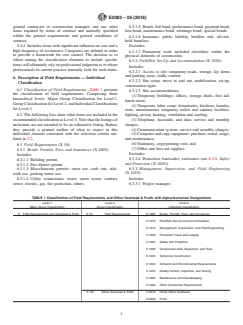
TABLE 1 Classification of Field Requirements, and Office Overhead & Profit, with Alpha-Numerical Designations
Level 1 Level 2 Level 3
Major Group Classification Group Classification Individual Classification
X Field Requirements and Overhead & Profit X 10 Field Requirements X 1005 Bonds, Permits, Fees, and Insurances
X 1010 Field/Site Set-Up and Accommodation
X 1015 Management, Supervision, and Field Engineering
X 1020 Personnel Travel and Lodging
X 1025 Safety and Protection
X 1030 Construction Aids, Equipment, and Tools
X 1035 Temporary Construction
X 1040 Climactic and Environmental Requirements
X 1045 Quality Control, Inspection, and Testing
X 1050 Maintenance and Housekeeping
X 1090 Other Contractual Requirements
X 20 Office Overhead & Profit X 2010 Home Office Overhead
X 2020 Profit
E2083−05(2016)
6.3.3.2 Superintendents: site, general, field. 6.3.7.1 Temporary construction: bridges, coffer dams,
6.3.3.3 Engineers: site, project, field, office, and safety. overpasses, runarounds, decking, traffic diversions.
6.3.3.4 Quantity surveyors. 6.3.7.2 Temporary utilities:
(1) Water: service, distribution and usage charges;
6.3.3.5 Instrument and rodmen.
6.3.3.6 Office management: office managers, accountants, (2) Ice and drinking water: unit rental and service
...