

ASTM E309-16
(Practice)Standard Practice for Eddy Current Examination of Steel Tubular Products Using Magnetic Saturation
General Information
- Abstract
SIGNIFICANCE AND USE
5.1 The purpose of this practice is to outline a procedure for the detection and location of discontinuities such as pits, voids, inclusions, cracks, or abrupt dimensional variations in ferromagnetic tubing using the electromagnetic (eddy current) method. Furthermore, the relative severity of a discontinuity may be indicated, and a rejection level may be set with respect to the magnitude of the indication.
5.2 The response from natural discontinuities can be significantly different than that from artificial discontinuities such as drilled holes or notches. For this reason, sufficient work should be done to establish the sensitivity level and set-up required to detect natural discontinuities of consequence to the end use of the product.
5.3 Eddy current testing systems are generally not sensitive to discontinuities adjacent to the ends of the tube. The extent of the end effect region can be determined in accordance with 8.6.
5.4 Since the density of eddy currents decreases nearly exponentially as the distance from the external surface increases, the response to deep-seated discontinuities decreases and some deep-seated discontinuities may give no detectable repsonse.
5.5 Discontinuity orientation also affects the system response and should be taken into consideration when establishing the examination sensitivity.
5.6 In preparing a reference standard for welded tubing, artificial discontinuities should be placed in both the weld metal and the parent metal when the responses are expected to be different and if both are to be examined. The apparatus is then adjusted to obtain an optimum signal-to-noise ratio.
5.6.1 When examining only the weld area, the discontinuities shall be placed only in the weld area.
5.7 The examination frequency and the type of apparatus being used should be considered when choosing the examining speed. Certain types of equipment are effective only over a given speed range; therefore, the examining speed should fall within ...
SCOPE
1.1 This practice2 covers a procedure for applying the eddy current method to detect discontinuities in ferromagnetic pipe and tubing (Note 1) where the article being examined is rendered substantially non-magnetic by the application of a concentrated, strong magnetic field in the region adjacent to the examining coil.
Note 1: For convenience, the term tube or tubular product will hereafter be used to refer to both pipe and tubing.
1.2 The procedure is specifically applicable to eddy current testing methods using an encircling-coil assembly. However, eddy current techniques that employ either fixed or rotating probe-coil assemblies may be used to either enhance discontinuity sensitivity on the large diameter tubular products or to maximize the response received from a particular type of discontinuity.
1.3 This practice is intended for use on tubular products having outside diameters from approximately 1/4 to 10 in. (6.35 to 254.0 mm). These techniques have been used for smaller and larger sizes however, and may be specified upon contractual agreement between the purchaser and the supplier.
1.4 This practice does not establish acceptance criteria; they must be specified by the using party or parties.
1.5 The values stated in inch-pound units are to be regarded as standard. The values given in parentheses are mathematical conversions to SI units that are provided for information only and are not considered standard.
1.6 This standard does not purport to address all of the safety concerns, if any, associated with its use. It is the responsibility of the user of this standard to establish appropriate safety and health practices and determine the applicability of regulatory limitations prior to use.
- Status
- Published
- Publication Date
- 31-May-2016
- Technical Committee
- E07 - Nondestructive Testing
- Drafting Committee
- E07.07 - Electromagnetic Method
Buy Documents
ASTM E309-16 - Standard Practice for Eddy Current Examination of Steel Tubular Products Using Magnetic Saturation
REDLINE ASTM E309-16 - Standard Practice for Eddy Current Examination of Steel Tubular Products Using Magnetic Saturation
Overview
ASTM E309-16: Standard Practice for Eddy Current Examination of Steel Tubular Products Using Magnetic Saturation provides a comprehensive procedure for detecting and locating discontinuities in ferromagnetic steel tubing and pipe using the electromagnetic (eddy current) method, enhanced by magnetic saturation. This standard is published by ASTM International under the jurisdiction of Committee E07 on Nondestructive Testing.
The practice is specifically designed for the identification of defects such as pits, cracks, voids, abrupt dimensional changes, and inclusions in tubular products. By applying a strong magnetic field, the examined areas are rendered effectively nonmagnetic, allowing the eddy current system to detect both surface and near-surface anomalies independent of the steel's magnetic properties.
Key Topics
Purpose and Scope
- Applies to steel tubular products with outside diameters from approximately 1/4 to 10 inches (6.35 to 254.0 mm).
- Addresses testing techniques using encircling coils, as well as fixed and rotating probe coil assemblies.
- Emphasizes the detection and location of various types of discontinuities, and the need to set sensitivity for natural discontinuities relevant to end use.
Examination Techniques
- Utilizes both encircling coil and probe coil methods, adaptable to product size and nature of discontinuities.
- Magnetic saturation is used to minimize the influence of the tubes’ magnetic properties, improving defect detection sensitivity.
- Special attention is given to the limitations at tube ends and reduced sensitivity to deep-seated discontinuities.
System Setup and Sensitivity
- Detailed procedures for specimen preparation, apparatus adjustment, and reference standard use.
- Recommends placing artificial discontinuities (like notches and holes) in both weld and parent metal during reference standard preparation.
- Adjustments are made for optimal signal-to-noise ratio and to ensure consistent detection regardless of discontinuity location or orientation.
Assessment and Acceptance Criteria
- Defines that acceptance criteria must be established by users or specified in the purchase agreement.
- Encourages qualification of personnel and agencies in accordance with recognized standards.
Applications
Eddy current examination using magnetic saturation is a critical nondestructive testing method in industries where safety, reliability, and product integrity are vital. Typical applications include:
Quality Control in Manufacturing
- Detects harmful surface or subsurface flaws in steel pipes and tubes during fabrication.
- Ensures compliance with quality standards before delivery or installation.
Maintenance and In-service Inspection
- Used in petrochemical plants, power stations, and other industries to inspect piping for service-induced defects.
- Supports preventive maintenance by identifying emerging issues before failure.
Weld Zone Inspection
- Effective for targeted inspection of weld seams in tubular products.
Customization
- Applicable to a range of tube and pipe diameters, with the possibility for customization by agreement between supplier and purchaser.
Related Standards
- ASTM E543 - Specification for Agencies Performing Nondestructive Testing.
- ASTM E1316 - Terminology for Nondestructive Examinations.
- ASNT SNT-TC-1A - Recommended Practice for Personnel Qualification in Nondestructive Testing.
- ANSI/ASNT CP-189 - Standard for Qualification and Certification of Nondestructive Testing Personnel.
- NAS-410 - Certification and Qualification of Nondestructive Test Personnel.
- ISO 9712 - Qualification and Certification of Nondestructive Testing Personnel.
Practical Value
Implementing ASTM E309-16 provides organizations with a proven and standardized nondestructive evaluation method for detecting detrimental discontinuities in steel tubular products. This enhances product reliability, safety, and regulatory compliance, while also enabling consistent manufacturing quality and effective maintenance programs.
Keywords: eddy current examination, magnetic saturation, ferromagnetic tubing, steel pipe testing, nondestructive testing, ASTM E309-16, discontinuity detection, tube inspection, quality control.
Relations
- Effective Date
- 01-Feb-2024
- Effective Date
- 01-Dec-2019
- Effective Date
- 01-Mar-2019
- Effective Date
- 01-Jan-2018
- Effective Date
- 15-Jun-2017
- Effective Date
- 01-Feb-2017
- Effective Date
- 01-Aug-2016
- Effective Date
- 01-Feb-2016
- Effective Date
- 01-Dec-2015
- Effective Date
- 01-Sep-2015
- Effective Date
- 01-Jun-2014
- Effective Date
- 01-Jun-2014
- Effective Date
- 01-Dec-2013
- Effective Date
- 15-Jun-2013
- Effective Date
- 01-Jun-2013
Buy Documents
ASTM E309-16 - Standard Practice for Eddy Current Examination of Steel Tubular Products Using Magnetic Saturation
REDLINE ASTM E309-16 - Standard Practice for Eddy Current Examination of Steel Tubular Products Using Magnetic Saturation
Get Certified
Connect with accredited certification bodies for this standard

Element Materials Technology
Materials testing and product certification.

Inštitut za kovinske materiale in tehnologije
Institute of Metals and Technology. Materials testing, metallurgical analysis, NDT.
Institut za varilstvo d.o.o. (Welding Institute)
Slovenia's leading welding institute since 1952. ISO 3834, EN 1090, pressure equipment certification, NDT personnel, welder qualification. Only IIW Au
Sponsored listings
Frequently Asked Questions
ASTM E309-16 is a standard published by ASTM International. Its full title is "Standard Practice for Eddy Current Examination of Steel Tubular Products Using Magnetic Saturation". This standard covers: SIGNIFICANCE AND USE 5.1 The purpose of this practice is to outline a procedure for the detection and location of discontinuities such as pits, voids, inclusions, cracks, or abrupt dimensional variations in ferromagnetic tubing using the electromagnetic (eddy current) method. Furthermore, the relative severity of a discontinuity may be indicated, and a rejection level may be set with respect to the magnitude of the indication. 5.2 The response from natural discontinuities can be significantly different than that from artificial discontinuities such as drilled holes or notches. For this reason, sufficient work should be done to establish the sensitivity level and set-up required to detect natural discontinuities of consequence to the end use of the product. 5.3 Eddy current testing systems are generally not sensitive to discontinuities adjacent to the ends of the tube. The extent of the end effect region can be determined in accordance with 8.6. 5.4 Since the density of eddy currents decreases nearly exponentially as the distance from the external surface increases, the response to deep-seated discontinuities decreases and some deep-seated discontinuities may give no detectable repsonse. 5.5 Discontinuity orientation also affects the system response and should be taken into consideration when establishing the examination sensitivity. 5.6 In preparing a reference standard for welded tubing, artificial discontinuities should be placed in both the weld metal and the parent metal when the responses are expected to be different and if both are to be examined. The apparatus is then adjusted to obtain an optimum signal-to-noise ratio. 5.6.1 When examining only the weld area, the discontinuities shall be placed only in the weld area. 5.7 The examination frequency and the type of apparatus being used should be considered when choosing the examining speed. Certain types of equipment are effective only over a given speed range; therefore, the examining speed should fall within ... SCOPE 1.1 This practice2 covers a procedure for applying the eddy current method to detect discontinuities in ferromagnetic pipe and tubing (Note 1) where the article being examined is rendered substantially non-magnetic by the application of a concentrated, strong magnetic field in the region adjacent to the examining coil. Note 1: For convenience, the term tube or tubular product will hereafter be used to refer to both pipe and tubing. 1.2 The procedure is specifically applicable to eddy current testing methods using an encircling-coil assembly. However, eddy current techniques that employ either fixed or rotating probe-coil assemblies may be used to either enhance discontinuity sensitivity on the large diameter tubular products or to maximize the response received from a particular type of discontinuity. 1.3 This practice is intended for use on tubular products having outside diameters from approximately 1/4 to 10 in. (6.35 to 254.0 mm). These techniques have been used for smaller and larger sizes however, and may be specified upon contractual agreement between the purchaser and the supplier. 1.4 This practice does not establish acceptance criteria; they must be specified by the using party or parties. 1.5 The values stated in inch-pound units are to be regarded as standard. The values given in parentheses are mathematical conversions to SI units that are provided for information only and are not considered standard. 1.6 This standard does not purport to address all of the safety concerns, if any, associated with its use. It is the responsibility of the user of this standard to establish appropriate safety and health practices and determine the applicability of regulatory limitations prior to use.
SIGNIFICANCE AND USE 5.1 The purpose of this practice is to outline a procedure for the detection and location of discontinuities such as pits, voids, inclusions, cracks, or abrupt dimensional variations in ferromagnetic tubing using the electromagnetic (eddy current) method. Furthermore, the relative severity of a discontinuity may be indicated, and a rejection level may be set with respect to the magnitude of the indication. 5.2 The response from natural discontinuities can be significantly different than that from artificial discontinuities such as drilled holes or notches. For this reason, sufficient work should be done to establish the sensitivity level and set-up required to detect natural discontinuities of consequence to the end use of the product. 5.3 Eddy current testing systems are generally not sensitive to discontinuities adjacent to the ends of the tube. The extent of the end effect region can be determined in accordance with 8.6. 5.4 Since the density of eddy currents decreases nearly exponentially as the distance from the external surface increases, the response to deep-seated discontinuities decreases and some deep-seated discontinuities may give no detectable repsonse. 5.5 Discontinuity orientation also affects the system response and should be taken into consideration when establishing the examination sensitivity. 5.6 In preparing a reference standard for welded tubing, artificial discontinuities should be placed in both the weld metal and the parent metal when the responses are expected to be different and if both are to be examined. The apparatus is then adjusted to obtain an optimum signal-to-noise ratio. 5.6.1 When examining only the weld area, the discontinuities shall be placed only in the weld area. 5.7 The examination frequency and the type of apparatus being used should be considered when choosing the examining speed. Certain types of equipment are effective only over a given speed range; therefore, the examining speed should fall within ... SCOPE 1.1 This practice2 covers a procedure for applying the eddy current method to detect discontinuities in ferromagnetic pipe and tubing (Note 1) where the article being examined is rendered substantially non-magnetic by the application of a concentrated, strong magnetic field in the region adjacent to the examining coil. Note 1: For convenience, the term tube or tubular product will hereafter be used to refer to both pipe and tubing. 1.2 The procedure is specifically applicable to eddy current testing methods using an encircling-coil assembly. However, eddy current techniques that employ either fixed or rotating probe-coil assemblies may be used to either enhance discontinuity sensitivity on the large diameter tubular products or to maximize the response received from a particular type of discontinuity. 1.3 This practice is intended for use on tubular products having outside diameters from approximately 1/4 to 10 in. (6.35 to 254.0 mm). These techniques have been used for smaller and larger sizes however, and may be specified upon contractual agreement between the purchaser and the supplier. 1.4 This practice does not establish acceptance criteria; they must be specified by the using party or parties. 1.5 The values stated in inch-pound units are to be regarded as standard. The values given in parentheses are mathematical conversions to SI units that are provided for information only and are not considered standard. 1.6 This standard does not purport to address all of the safety concerns, if any, associated with its use. It is the responsibility of the user of this standard to establish appropriate safety and health practices and determine the applicability of regulatory limitations prior to use.
ASTM E309-16 is classified under the following ICS (International Classification for Standards) categories: 23.040.10 - Iron and steel pipes; 77.140.75 - Steel pipes and tubes for specific use. The ICS classification helps identify the subject area and facilitates finding related standards.
ASTM E309-16 has the following relationships with other standards: It is inter standard links to ASTM E1316-24, ASTM E1316-19b, ASTM E1316-19, ASTM E1316-18, ASTM E1316-17a, ASTM E1316-17, ASTM E1316-16a, ASTM E1316-16, ASTM E1316-15a, ASTM E1316-15, ASTM E1316-14e1, ASTM E1316-14, ASTM E1316-13d, ASTM E1316-13c, ASTM E1316-13b. Understanding these relationships helps ensure you are using the most current and applicable version of the standard.
ASTM E309-16 is available in PDF format for immediate download after purchase. The document can be added to your cart and obtained through the secure checkout process. Digital delivery ensures instant access to the complete standard document.
Standards Content (Sample)
This international standard was developed in accordance with internationally recognized principles on standardization established in the Decision on Principles for the
Development of International Standards, Guides and Recommendations issued by the World Trade Organization Technical Barriers to Trade (TBT) Committee.
Designation: E309 − 16
Standard Practice for
Eddy Current Examination of Steel Tubular Products Using
Magnetic Saturation
This standard is issued under the fixed designation E309; the number immediately following the designation indicates the year of
original adoption or, in the case of revision, the year of last revision. A number in parentheses indicates the year of last reapproval. A
superscript epsilon (´) indicates an editorial change since the last revision or reapproval.
This standard has been approved for use by agencies of the U.S. Department of Defense.
1. Scope* priate safety and health practices and determine the applica-
bility of regulatory limitations prior to use.
1.1 This practice covers a procedure for applying the eddy
current method to detect discontinuities in ferromagnetic pipe
2. Referenced Documents
and tubing (Note 1) where the article being examined is
2.1 ASTM Standards:
rendered substantially non-magnetic by the application of a
E543 Specification for Agencies Performing Nondestructive
concentrated,strongmagneticfieldintheregionadjacenttothe
Testing
examining coil.
E1316 Terminology for Nondestructive Examinations
NOTE 1—For convenience, the term tube or tubular product will
2.2 Other Documents:
hereafter be used to refer to both pipe and tubing.
SNT-TC-1A Recommended Practice for Personnel Qualifi-
1.2 The procedure is specifically applicable to eddy current cation and Certification in Nondestructive Testing
testing methods using an encircling-coil assembly. However,
ANSI/ASNT CP-189 ASNT Standard for Qualification and
eddy current techniques that employ either fixed or rotating Certification of Nondestructive Testing Personnel
probe-coil assemblies may be used to either enhance disconti-
NAS-410 NAS Certification and Qualification of Nonde-
nuity sensitivity on the large diameter tubular products or to structive Test Personnel
maximize the response received from a particular type of
ISO 9712 Nondestructive Testing—Qualification and Certi-
discontinuity. fication of Nondestructive Testing Personnel
1.3 This practice is intended for use on tubular products
3. Terminology
having outside diameters from approximately ⁄4 to 10 in. (6.35
3.1 General—For definitions of terms used in this practice,
to254.0mm).Thesetechniqueshavebeenusedforsmallerand
refer to Terminology E1316.
larger sizes however, and may be specified upon contractual
agreement between the purchaser and the supplier.
4. Summary of Practice
1.4 This practice does not establish acceptance criteria; they
4.1 The examination is conducted using one of two general
must be specified by the using party or parties.
techniques shown in Fig. 1.
4.1.1 Onetechniqueemploysoneormoreexciterandsensor
1.5 The values stated in inch-pound units are to be regarded
coils that encircle the tube and through which the tubular
as standard. The values given in parentheses are mathematical
product to be examined is passed. Some circuit configurations
conversions to SI units that are provided for information only
employ one or more coils that concurrently function as both
and are not considered standard.
exciters and sensors. Alternating current passes through the
1.6 This standard does not purport to address all of the
exciting coil which, by reason of its proximity, induces
safety concerns, if any, associated with its use. It is the
responsibility of the user of this standard to establish appro-
For referenced ASTM standards, visit the ASTM website, www.astm.org, or
contact ASTM Customer Service at service@astm.org. For Annual Book of ASTM
Standards volume information, refer to the standard’s Document Summary page on
This practice is under the jurisdiction of ASTM Committee E07 on Nonde- the ASTM website.
structive Testing and is the direct responsibility of Subcommittee E07.07 on AvailablefromAmericanSocietyforNondestructiveTesting(ASNT),P.O.Box
Electromagnetic Method. 28518, 1711 Arlingate Ln., Columbus, OH 43228-0518, http://www.asnt.org.
Current edition approved June 1, 2016. Published June 2016. Originally Available from Aerospace Industries Association (AIA), 1000 Wilson Blvd.,
approved in 1966. Last previous edition approved in 2011 as E309 - 11. DOI: Suite 1700, Arlington, VA 22209, http://www.aia-aerospace.org.
10.1520/E0309-16. Available from International Organization for Standardization (ISO), ISO
For ASME Boiler and Pressure Vessel Code applications see related Recom- Central Secretariat, BIBC II, Chemin de Blandonnet 8, CP 401, 1214 Vernier,
mended Practice SE 309 in Section V of that Code. Geneva, Switzerland, http://www.iso.org.
*A Summary of Changes section appears at the end of this standard
Copyright ©ASTM International, 100 Barr Harbor Drive, PO Box C700, West Conshohocken, PA19428-2959. United States
E309 − 16
(a)Encircling Coil.
(b) Probe Coil—longitudinal scanning of weld seam only.
(c)Probe Coil—scanning along a spiral path.
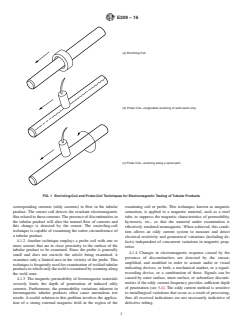
FIG. 1 Encircling-Coil and Probe-Coil Techniques for Electromagnetic Testing of Tubular Products
corresponding currents (eddy currents) to flow in the tubular examining coil or probe. This technique, known as magnetic
product. The sensor coil detects the resultant electromagnetic
saturation, is applied to a magnetic material, such as a steel
flux related to these currents.The presence of discontinuities in
tube, to suppress the magnetic characteristics of permeability,
the tubular product will alter the normal flow of currents and
hysteresis, etc., so that the material under examination is
this change is detected by the sensor. The encircling-coil
effectively rendered nonmagnetic. When achieved, this condi-
technique is capable of examining the entire circumference of
tion allows an eddy current system to measure and detect
a tubular product.
electrical resistivity and geometrical variations (including de-
4.1.2 Another technique employs a probe coil with one or
fects) independent of concurrent variations in magnetic prop-
more sensors that are in close proximity to the surface of the
erties.
tubular product to be examined. Since the probe is generally
4.1.4 Changes in electromagnetic response caused by the
small and does not encircle the article being examined, it
presence of discontinuities are detected by the sensor,
examines only a limited area in the vicinity of the probe. This
amplified, and modified in order to actuate audio or visual
technique is frequently used for examination of welded tubular
indicating devices, or both, a mechanical marker, or a signal-
productsinwhichonlytheweldisexaminedbyscanningalong
recording device, or a combination of these. Signals can be
the weld zone.
caused by outer surface, inner surface, or subsurface disconti-
4.1.3 The magnetic permeability of ferromagnetic materials
nuities if the eddy current frequency provides sufficient depth
severely limits the depth of penetration of induced eddy
of penetration (see 5.4). The eddy current method is sensitive
currents. Furthermore, the permeability variations inherent in
to metallurgical variations that occur as a result of processing,
ferromagnetic tubular products often cause anomalous test
thus all received indications are not necessarily indicative of
results. A useful solution to this problem involves the applica-
tion of a strong external magnetic field in the region of the defective tubing.
E309 − 16
5. Significance and Use 6.1.6 Methods of verifying dimensions and allowable toler-
ances of artificial discontinuities,
5.1 The purpose of this practice is to outline a procedure for
6.1.7 Extent of examination, and
the detection and location of discontinuities such as pits, voids,
6.1.8 Disposition of material with indications.
inclusions, cracks, or abrupt dimensional variations in ferro-
6.1.9 If specified in the contractual agreement, personnel
magnetic tubing using the electromagnetic (eddy current)
performing examinations to this standard shall be qualified in
method. Furthermore, the relative severity of a discontinuity
accordance with a nationally or internationally recognized
may be indicated, and a rejection level may be set with respect
NDT personnel qualification practice or standard such as
to the magnitude of the indication.
ANSI/ASNT-CP-189, SNT-TC-1A, NAS-410, ISO 9712, or a
5.2 The response from natural discontinuities can be signifi-
similar document and certified by the employer or certifying
cantly different than that from artificial discontinuities such as
agency, as apllicable. The practice or standard used and its
drilled holes or notches. For this reason, sufficient work should
applicable revision shall be identified in the contractual agree-
be done to establish the sensitivity level and set-up required to
ment between the using parties.
detect natural discontinuities of consequence to the end use of
6.1.10 Qualification of Nondestructive Agencies—If speci-
the product.
fied in the contractual agreement, NDT agencies shall be
qualified and evaluated in accordance with Practice E543. The
5.3 Eddy current testing systems are generally not sensitive
todiscontinuitiesadjacenttotheendsofthetube.Theextentof applicable edition of Practice E543 shall be specified in the
contractual agreement.
the end effect region can be determined in accordance with 8.6.
5.4 Since the density of eddy currents decreases nearly
7. Apparatus
exponentially as the distance from the external surface
7.1 Electronic Apparatus—Theelectronicapparatusshallbe
increases,theresponsetodeep-seateddiscontinuitiesdecreases
capable of energizing the coils or probes with alternating
and some deep-seated discontinuities may give no detectable
currentsofaselectedfrequencyandshallbecapableofsensing
repsonse.
the changes in the electromagnetic response of the sensors.
5.5 Discontinuity orientation also affects the system re-
Equipment may include appropriate signal processing circuits
sponse and should be taken into consideration when establish-
such as a phase discriminator, filter circuits, etc., as required
ing the examination sensitivity.
for the particular application.
5.6 In preparing a reference standard for welded tubing,
7.2 Encircling-Coil Assembly—The encircling-coil assem-
artificial discontinuities should be placed in both the weld
bly shall consist of one or more electrical coils that encircle the
metal and the parent metal when the responses are expected to
article being examined.
be different and if both are to be examined. The apparatus is
7.3 Probe-Coil Assembly—The probe-coil assembly nor-
then adjusted to obtain an optimum signal-to-noise ratio.
mally contains an exciting coil and a sensor, although in some
5.6.1 When examining only the weld area, the discontinui-
cases the exciter and sensor are one and the same.
ties shall be placed only in the weld area.
7.4 Magnetic Saturation System—The magnetic saturation
5.7 The examination frequency and the type of apparatus
system shall consist of a suitable method of applying a strong
being used should be considered when choosing the examining
magnetic field to the region of the tube adjacent to the coil or
speed. Certain types of equipment are effective only over a
probe-coil assembly so as to render that region of the tube
given speed range; therefore, the examining speed should fall
effectively nonmagnetic. Typical systems employ either per-
within this range.
manent magnets or electromagnets.
5.8 Discontinuities such as scratches or seams that are
7.5 Driving Mechanism—The movement of the tube
continuousanduniformoverthefulllengthofthetubemaynot
throughthecoilorpasttheprobeshallbeperformedatuniform
always be detected with differential encircling coils or probes
speed and with minimum vibration of the tube, coil, and probe.
scanned along the tube length.
7.6 Reference Standard—The standard used to adjust the
6. Basis of Application
sensitivity of the apparatus shall be free of interfering discon-
6.1 The following accep
...
This document is not an ASTM standard and is intended only to provide the user of an ASTM standard an indication of what changes have been made to the previous version. Because
it may not be technically possible to adequately depict all changes accurately, ASTM recommends that users consult prior editions as appropriate. In all cases only the current version
of the standard as published by ASTM is to be considered the official document.
Designation: E309 − 11 E309 − 16
Standard Practice for
Eddy-Current Eddy Current Examination of Steel Tubular
Products Using Magnetic Saturation
This standard is issued under the fixed designation E309; the number immediately following the designation indicates the year of
original adoption or, in the case of revision, the year of last revision. A number in parentheses indicates the year of last reapproval. A
superscript epsilon (´) indicates an editorial change since the last revision or reapproval.
This standard has been approved for use by agencies of the U.S. Department of Defense.
1. Scope*
1.1 This practice covers a procedure for applying the eddy-current eddy current method to detect discontinuities in
ferromagnetic pipe and tubing (Note 1) where the article being examined is rendered substantially non-magnetic by the application
of a concentrated, strong magnetic field in the region adjacent to the examining coil.
NOTE 1—For convenience, the term tube or tubular product will hereafter be used to refer to both pipe and tubing.
1.2 The procedure is specifically applicable to eddy-current eddy current testing methods using an encircling-coil assembly.
However, eddy-current eddy current techniques that employ either fixed or rotating probe-coil assemblies may be used to either
enhance discontinuity sensitivity on the large diameter tubular products or to maximize the response received from a particular type
of discontinuity.
1.3 This practice is intended for use on tubular products having outside diameters from approximately ⁄4 to 10 in. (6.35 to 254.0
mm). These techniques have been used for smaller and larger sizes however, and may be specified upon contractual agreement
between the purchaser and the supplier.
1.4 This practice does not establish acceptance criteria; they must be specified by the using party or parties.
1.5 The values stated in inch-pound units are to be regarded as standard. The values given in parentheses are mathematical
conversions to SI units that are provided for information only and are not considered standard.
1.6 This standard does not purport to address all of the safety concerns, if any, associated with its use. It is the responsibility
of the user of this standard to establish appropriate safety and health practices and determine the applicability of regulatory
limitations prior to use.
2. Referenced Documents
2.1 ASTM Standards:
E543 Specification for Agencies Performing Nondestructive Testing
E1316 Terminology for Nondestructive Examinations
2.2 Other Documents:
SNT-TC-1A Recommended Practice for Personnel Qualification and Certification in Nondestructive Testing
ANSI/ASNT CP-189 ASNT Standard for Qualification and Certification of Nondestructive Testing Personnel
NAS-410 NAS Certification and Qualification of Nondestructive Test Personnel
ISO 9712 Nondestructive Testing—Qualification and Certification of Nondestructive Testing Personnel
This practice is under the jurisdiction of ASTM Committee E07 on Nondestructive Testing and is the direct responsibility of Subcommittee E07.07 on Electromagnetic
Method.
Current edition approved Feb. 15, 2011June 1, 2016. Published March 2011June 2016. Originally approved in 1966. Last previous edition approved in 20062011 as
E309 - 95E309 - 11.(2006). DOI: 10.1520/E0309-11.10.1520/E0309-16.
For ASME Boiler and Pressure Vessel Code applications see related Recommended Practice SE 309 in Section V of that Code.
For referenced ASTM standards, visit the ASTM website, www.astm.org, or contact ASTM Customer Service at service@astm.org. For Annual Book of ASTM Standards
volume information, refer to the standard’s Document Summary page on the ASTM website.
Available from American Society for Nondestructive Testing (ASNT), P.O. Box 28518, 1711 Arlingate Ln., Columbus, OH 43228-0518, http://www.asnt.org.
Available from Standardization Documents Order Desk, DODSSP, Bldg. 4, Section D, 700 Robbins Ave., Philadelphia, PA 19111-5098, http://
dodssp.daps.dla.mil.Aerospace Industries Association (AIA), 1000 Wilson Blvd., Suite 1700, Arlington, VA 22209, http://www.aia-aerospace.org.
Available from International Organization for Standardization (ISO), ISO Central Secretariat, BIBC II, Chemin de Blandonnet 8, CP 401, 1214 Vernier, Geneva,
Switzerland, http://www.iso.org.
*A Summary of Changes section appears at the end of this standard
Copyright © ASTM International, 100 Barr Harbor Drive, PO Box C700, West Conshohocken, PA 19428-2959. United States
E309 − 16
2.3 Military Standard:
MIL-STD-410E Nondestructive Testing Personnel Qualification and Certification
3. Terminology
3.1 General—For definitions of terms used in this practice, refer to Terminology E1316.
4. Summary of Practice
4.1 The examination is conducted using one of two general techniques shown in Fig. 1.
4.1.1 One technique employs one or more exciter and sensor coils that encircle the tube and through which the tubular product
to be examined is passed. Some circuit configurations employ one or more coils that concurrently function as both exciters and
sensors. Alternating current passes through the exciting coil which, by reason of its proximity, induces corresponding currents
(eddy currents) to flow in the tubular product. The sensor coil detects the resultant electromagnetic flux related to these currents.
The presence of discontinuities in the tubular product will alter the normal flow of currents and this change is detected by the
sensor. The encircling-coil technique is capable of examining the entire circumference of a tubular product.
4.1.2 Another technique employs a probe coil with one or more sensors that are in close proximity to the surface of the tubular
product to be examined. Since the probe is generally small and does not encircle the article being examined, it examines only a
limited area in the vicinity of the probe. This technique is frequently used for examination of welded tubular products in which
only the weld is examined by scanning along the weld zone.
4.1.3 The magnetic permeability of ferromagnetic materials severely limits the depth of penetration of induced eddy currents.
Furthermore, the permeability variations inherent in ferromagnetic tubular products often cause anomalous test results. A useful
solution to this problem involves the application of a strong external magnetic field in the region of the examining coil or probe.
(a) Encircling Coil.
(b) Probe Coil—longitudinal scanning of weld seam only.
(c) Probe Coil—scanning along a spiral path.
FIG. 1 Encircling-Coil and Probe-Coil Techniques for Electromagnetic Testing of Tubular Products
E309 − 16
This technique, known as magnetic saturation, is applied to a magnetic material, such as a steel tube, to suppress the magnetic
characteristics of permeability, hysteresis, etc., so that the material under examination is effectively rendered nonmagnetic. When
achieved, this condition allows an eddy-current eddy current system to measure and detect electrical resistivity and geometrical
variations (including defects) independent of concurrent variations in magnetic properties.
4.1.4 Changes in electromagnetic response caused by the presence of discontinuities are detected by the sensor, amplified, and
modified in order to actuate audio or visual indicating devices, or both, a mechanical marker, or a signal-recording device, or a
combination of these. Signals can be caused by outer surface, inner surface, or subsurface discontinuities if the eddy-current eddy
current frequency provides sufficient depth of penetration (see 5.4). The eddy-current eddy current method is sensitive to
metallurgical variations that occur as a result of processing, thus all received indications are not necessarily indicative of defective
tubing.
5. Significance and Use
5.1 The purpose of this practice is to outline a procedure for the detection and location of discontinuities such as pits, voids,
inclusions, cracks, or abrupt dimensional variations in ferromagnetic tubing using the electromagnetic (eddy-current) (eddy
current) method. Furthermore, the relative severity of a discontinuity may be indicated, and a rejection level may be set with
respect to the magnitude of the indication.
5.2 The response from natural discontinuities can be significantly different than that from artificial discontinuities such as drilled
holes or notches. For this reason, sufficient work should be done to establish the sensitivity level and set-up required to detect
natural discontinuities of consequence to the end use of the product.
5.3 Eddy-current Eddy current testing systems are generally not sensitive to discontinuities adjacent to the ends of the tube. The
extent of the end effect region can be determined in accordance with 8.6.
5.4 Since the density of eddy currents decreases nearly exponentially as the distance from the external surface increases, the
response to deep-seated discontinuities decreases and some deep-seated discontinuities may give no detectable repsonse.
5.5 Discontinuity orientation also affects the system response and should be taken into consideration when establishing the
examination sensitivity.
5.6 In preparing a reference standard for welded tubing, artificial discontinuities should be placed in both the weld metal and
the parent metal when the responses are expected to be different and if both are to be examined. The apparatus is then adjusted
to obtain an optimum signal-to-noise ratio.
5.6.1 When examining only the weld area, the discontinuities shall be placed only in the weld area.
5.7 The examination frequency and the type of apparatus being used should be considered when choosing the examining speed.
Certain types of equipment are effective only over a given speed range; therefore, the examining speed should fall within this range.
5.8 Discontinuities such as scratches or seams that are continuous and uniform over the full length of the tube may not always
be detected with differential encircling coils or probes scanned along the tube length.
6. Basis of Application
6.1 The following acceptance criteria may be specified in the purchase specification, contractual agreement, or elsewhere, and
may require agreement between the purchaser and the supplier:
6.1.1 Time of examination or point(s) in the manufacturing process at which the material will be examined,
6.1.2 Maximum time interval between equipment calibration checks,
6.1.3 Methods for determining the extent of end effect,
6.1.4 Size and type of product,
6.1.5 Type, method of manufacture, dimensions, location, and number of artificial discontinuities to be placed on the reference
standard,
6.1.6 Methods of verifying dimensions and allowable tolerances of artificial discontinuities,
6.1.7 Extent of examination, and
6.1.8 Disposition of material with indications.
6.1.9 Operator Qualification and Certification— If required, NDT personnel specified in the contractual agreement, personnel
performing examinations to this standard shall be qualified in accordance with a nationally or internationally recognized NDT
personnel qualification practice or standard such as ANSI/ASNT-CP-189, SNT-TC-1A, MIL-STD-410, NAS-410, ISO 9712, or a
similar document. document and certified by the employer or certifying agency, as apllicable. The practice or standard used and
its applicable revision shall be documentedidentified in the contractual agreement between the using parties.
NOTE 2—MIL-STD-410 is canceled and has been replaced with NAS-410; however, it may be used with agreement between contracting parties.
6.1.10 Qualification of Nondestructive Agencies—If specified in the contractual agreement, NDT agencies shall be qualified and
evaluated in accordance with Practice E543. The applicable edition of Practice E543 shall be specified in the contractual
agreement.
E309 − 16
7. Apparatus
7.1 Electronic Apparatus—The electronic apparatus shall be capable of energizing the coils or probes with alternating currents
of a selected frequency and shall be capable of sensing the changes in the electromagnetic response of the sensors. Equipment may
include appropriate signal processing circuits such as a phase discriminator, filter circuits, etc., as required for the particular
application.
7.2 Encircling-Coil Assembly—The encircling-coil assembly shall consist of one or more electrical coils that encircle the article
being examined.
7.3 Probe-Coil Assembly—The probe-coil assembly normally contains an exciting coil and a sensor, although in some cases the
...