

ASTM D7423-23
(Test Method)Standard Test Method for Determination of Oxygenates in C2, C3, C4, and C5 Hydrocarbon Matrices by Gas Chromatography and Flame Ionization Detection
General Information
- Abstract
SIGNIFICANCE AND USE
5.1 The determination of oxygenates is important in the manufacture of ethene, propene, 1-3 butadiene, C4 hydrocarbons, and C5 hydrocarbons. Alcohols, ethers, aldehydes, and ketones are trace impurities in these hydrocarbons. Oxygenates decrease catalyst activity in downstream polymerization processes.
SCOPE
1.1 This test method covers the gas chromatographic procedure for the quantitative determination of organic oxygenates in C2, C3, C4, and C5 matrices by multidimensional gas chromatography and flame ionization detection. This test method is applicable when the hydrocarbon matrices have a final boiling point not greater than 200 °C. Oxygenate compounds include, but are not limited to, those listed in Table 1. The linear working range for oxygenates is 0.50 mg/kg to 100 mg/kg.
1.2 This test method is intended to determine the mass concentration of each oxygenate in the hydrocarbon matrix. Oxygenate compound identification is determined by reference standards and column elution retention order.
1.3 The values stated in SI units are to be regarded as standard. No other units of measurement are included in this standard.
1.4 This standard does not purport to address all of the safety concerns, if any, associated with its use. It is the responsibility of the user of this standard to establish appropriate safety, health, and environmental practices and determine the applicability of regulatory limitations prior to use.
1.4.1 The user is advised to obtain LPG safety training for the safe operation of this test method procedure and related activities. The eLearning training course “Liquefied Petroleum Gases Sampling Safety” is available on the ASTM.org website.
1.5 This international standard was developed in accordance with internationally recognized principles on standardization established in the Decision on Principles for the Development of International Standards, Guides and Recommendations issued by the World Trade Organization Technical Barriers to Trade (TBT) Committee.
- Status
- Published
- Publication Date
- 28-Feb-2023
- Technical Committee
- D02 - Petroleum Products, Liquid Fuels, and Lubricants
- Drafting Committee
- D02.D0.04 - C4 and C5 Hydrocarbons
Buy Documents
ASTM D7423-23 - Standard Test Method for Determination of Oxygenates in C2, C3, C4, and C5 Hydrocarbon Matrices by Gas Chromatography and Flame Ionization Detection
REDLINE ASTM D7423-23 - Standard Test Method for Determination of Oxygenates in C2, C3, C4, and C5 Hydrocarbon Matrices by Gas Chromatography and Flame Ionization Detection
Overview
ASTM D7423-23 is the internationally recognized standard test method for the quantitative determination of oxygenates in C2, C3, C4, and C5 hydrocarbon matrices using gas chromatography (GC) and flame ionization detection (FID). Oxygenates such as alcohols, ethers, aldehydes, and ketones are often present as trace impurities in petroleum-derived hydrocarbons, including ethene, propene, 1-3 butadiene, and other light hydrocarbons. Detecting and quantifying these oxygenates is essential because their presence can significantly reduce catalyst activity in downstream polymerization and refining processes.
Designed for samples with a final boiling point of no more than 200 °C, this ASTM standard ensures the reliable identification and quantification of oxygenate compounds at concentrations ranging from 0.50 mg/kg to 100 mg/kg.
Key Topics
Scope and Applicability:
- Covers the gas chromatographic analysis of organic oxygenates in C2-C5 hydrocarbon matrices, such as liquefied petroleum gas (LPG) and light olefins.
- Applicable for mass concentrations between 0.50 mg/kg and 100 mg/kg.
Target Compounds:
- Methanol, ethanol, isopropanol, diethyl ether, methyl tert-butyl ether (MTBE), acetone, acetaldehyde, TAME, MEK, and other related oxygenates.
Analytical Approach:
- Uses multidimensional gas chromatography with either Dean’s switching method or valve cut method, coupled to FID.
- Compound identification is based on reference standards and retention time order.
Data Quality and Calibration:
- Requires regular calibration with certified external standards.
- Emphasizes rigorous quality control procedures, including the use of control charts according to ASTM D6299.
Safety and Regulatory Guidance:
- Specifies the need for comprehensive safety procedures, particularly when handling LPG samples.
- Recommends users undertake LPG sampling safety training.
Applications
- Petrochemical Manufacturing: Screening feedstocks for trace oxygenates to protect catalysts in polymerization and other chemical synthesis processes.
- Quality Control in LPG Production: Ensuring that LPG and light hydrocarbon products meet purity specifications.
- Laboratory Testing: Analytical labs use this standard to provide contract testing services for refineries, petrochemical plants, and trading organizations.
- Regulatory Compliance: Meeting local and international requirements for hydrocarbon product certification and export.
Typical organizations and industries that benefit include:
- Oil refineries and natural gas plants
- Petrochemical and polymer manufacturers
- Commercial testing and analytical laboratories
- Regulatory and standards enforcement agencies
Related Standards
Users of ASTM D7423-23 may also find the following ASTM standards relevant:
- ASTM D1265: Practice for Sampling Liquefied Petroleum (LP) Gases, Manual Method
- ASTM D1835: Specification for Liquefied Petroleum (LP) Gases
- ASTM D4175: Terminology Relating to Petroleum Products, Liquid Fuels, and Lubricants
- ASTM D6299: Practice for Applying Statistical Quality Assurance and Control Charting Techniques
- ASTM D6300: Practice for Determination of Precision and Bias Data
- ASTM D6849: Practice for Storage and Use of LPG in Sample Cylinders
- ASTM E355: Practice for Gas Chromatography Terms and Relationships
These standards collectively help ensure robust sampling, analysis, data interpretation, and reporting when determining oxygenate content in hydrocarbon matrices.
By following ASTM D7423-23, organizations can achieve accurate measurement of trace oxygenates in light hydrocarbon matrices, thereby enhancing product quality, maintaining process efficiency, and meeting industry and regulatory demands. This standard supports safe, precise, and repeatable results for critical quality control and compliance applications across the petroleum and petrochemical industries.
Relations
- Effective Date
- 01-Mar-2024
- Refers
ASTM D4175-23a - Standard Terminology Relating to Petroleum Products, Liquid Fuels, and Lubricants - Effective Date
- 15-Dec-2023
- Effective Date
- 01-Dec-2023
- Effective Date
- 01-Dec-2023
- Effective Date
- 01-Dec-2023
- Refers
ASTM D4175-23e1 - Standard Terminology Relating to Petroleum Products, Liquid Fuels, and Lubricants - Effective Date
- 01-Jul-2023
- Effective Date
- 01-Dec-2019
- Effective Date
- 15-Dec-2017
- Effective Date
- 15-Nov-2017
- Effective Date
- 01-Jan-2017
- Effective Date
- 01-Apr-2016
- Effective Date
- 01-Jun-2015
- Effective Date
- 01-Jun-2014
- Effective Date
- 01-Jun-2014
- Effective Date
- 01-May-2014
Buy Documents
ASTM D7423-23 - Standard Test Method for Determination of Oxygenates in C2, C3, C4, and C5 Hydrocarbon Matrices by Gas Chromatography and Flame Ionization Detection
REDLINE ASTM D7423-23 - Standard Test Method for Determination of Oxygenates in C2, C3, C4, and C5 Hydrocarbon Matrices by Gas Chromatography and Flame Ionization Detection
Get Certified
Connect with accredited certification bodies for this standard

ECOCERT
Organic and sustainability certification.

Eurofins Food Testing Global
Global leader in food, environment, and pharmaceutical product testing.

Intertek Bangladesh
Intertek certification and testing services in Bangladesh.
Sponsored listings
Frequently Asked Questions
ASTM D7423-23 is a standard published by ASTM International. Its full title is "Standard Test Method for Determination of Oxygenates in C2, C3, C4, and C5 Hydrocarbon Matrices by Gas Chromatography and Flame Ionization Detection". This standard covers: SIGNIFICANCE AND USE 5.1 The determination of oxygenates is important in the manufacture of ethene, propene, 1-3 butadiene, C4 hydrocarbons, and C5 hydrocarbons. Alcohols, ethers, aldehydes, and ketones are trace impurities in these hydrocarbons. Oxygenates decrease catalyst activity in downstream polymerization processes. SCOPE 1.1 This test method covers the gas chromatographic procedure for the quantitative determination of organic oxygenates in C2, C3, C4, and C5 matrices by multidimensional gas chromatography and flame ionization detection. This test method is applicable when the hydrocarbon matrices have a final boiling point not greater than 200 °C. Oxygenate compounds include, but are not limited to, those listed in Table 1. The linear working range for oxygenates is 0.50 mg/kg to 100 mg/kg. 1.2 This test method is intended to determine the mass concentration of each oxygenate in the hydrocarbon matrix. Oxygenate compound identification is determined by reference standards and column elution retention order. 1.3 The values stated in SI units are to be regarded as standard. No other units of measurement are included in this standard. 1.4 This standard does not purport to address all of the safety concerns, if any, associated with its use. It is the responsibility of the user of this standard to establish appropriate safety, health, and environmental practices and determine the applicability of regulatory limitations prior to use. 1.4.1 The user is advised to obtain LPG safety training for the safe operation of this test method procedure and related activities. The eLearning training course “Liquefied Petroleum Gases Sampling Safety” is available on the ASTM.org website. 1.5 This international standard was developed in accordance with internationally recognized principles on standardization established in the Decision on Principles for the Development of International Standards, Guides and Recommendations issued by the World Trade Organization Technical Barriers to Trade (TBT) Committee.
SIGNIFICANCE AND USE 5.1 The determination of oxygenates is important in the manufacture of ethene, propene, 1-3 butadiene, C4 hydrocarbons, and C5 hydrocarbons. Alcohols, ethers, aldehydes, and ketones are trace impurities in these hydrocarbons. Oxygenates decrease catalyst activity in downstream polymerization processes. SCOPE 1.1 This test method covers the gas chromatographic procedure for the quantitative determination of organic oxygenates in C2, C3, C4, and C5 matrices by multidimensional gas chromatography and flame ionization detection. This test method is applicable when the hydrocarbon matrices have a final boiling point not greater than 200 °C. Oxygenate compounds include, but are not limited to, those listed in Table 1. The linear working range for oxygenates is 0.50 mg/kg to 100 mg/kg. 1.2 This test method is intended to determine the mass concentration of each oxygenate in the hydrocarbon matrix. Oxygenate compound identification is determined by reference standards and column elution retention order. 1.3 The values stated in SI units are to be regarded as standard. No other units of measurement are included in this standard. 1.4 This standard does not purport to address all of the safety concerns, if any, associated with its use. It is the responsibility of the user of this standard to establish appropriate safety, health, and environmental practices and determine the applicability of regulatory limitations prior to use. 1.4.1 The user is advised to obtain LPG safety training for the safe operation of this test method procedure and related activities. The eLearning training course “Liquefied Petroleum Gases Sampling Safety” is available on the ASTM.org website. 1.5 This international standard was developed in accordance with internationally recognized principles on standardization established in the Decision on Principles for the Development of International Standards, Guides and Recommendations issued by the World Trade Organization Technical Barriers to Trade (TBT) Committee.
ASTM D7423-23 is classified under the following ICS (International Classification for Standards) categories: 71.080.01 - Organic chemicals in general. The ICS classification helps identify the subject area and facilitates finding related standards.
ASTM D7423-23 has the following relationships with other standards: It is inter standard links to ASTM D6300-24, ASTM D4175-23a, ASTM D6299-23a, ASTM D1265-23a, ASTM D6300-23a, ASTM D4175-23e1, ASTM D6300-19a, ASTM D6299-17b, ASTM D6299-17a, ASTM D6299-17, ASTM D6300-16, ASTM D6300-15, ASTM D6300-14a, ASTM D6300-14ae1, ASTM E177-14. Understanding these relationships helps ensure you are using the most current and applicable version of the standard.
ASTM D7423-23 is available in PDF format for immediate download after purchase. The document can be added to your cart and obtained through the secure checkout process. Digital delivery ensures instant access to the complete standard document.
Standards Content (Sample)
This international standard was developed in accordance with internationally recognized principles on standardization established in the Decision on Principles for the
Development of International Standards, Guides and Recommendations issued by the World Trade Organization Technical Barriers to Trade (TBT) Committee.
Designation: D7423 − 23
Standard Test Method for
Determination of Oxygenates in C2, C3, C4, and C5
Hydrocarbon Matrices by Gas Chromatography and Flame
Ionization Detection
This standard is issued under the fixed designation D7423; the number immediately following the designation indicates the year of
original adoption or, in the case of revision, the year of last revision. A number in parentheses indicates the year of last reapproval. A
superscript epsilon (´) indicates an editorial change since the last revision or reapproval.
1. Scope* 2. Referenced Documents
2.1 ASTM Standards:
1.1 This test method covers the gas chromatographic pro-
D1265 Practice for Sampling Liquefied Petroleum (LP)
cedure for the quantitative determination of organic oxygenates
Gases, Manual Method
in C2, C3, C4, and C5 matrices by multidimensional gas
D1835 Specification for Liquefied Petroleum (LP) Gases
chromatography and flame ionization detection. This test
D4175 Terminology Relating to Petroleum Products, Liquid
method is applicable when the hydrocarbon matrices have a
Fuels, and Lubricants
final boiling point not greater than 200 °C. Oxygenate com-
D6299 Practice for Applying Statistical Quality Assurance
pounds include, but are not limited to, those listed in Table 1.
and Control Charting Techniques to Evaluate Analytical
The linear working range for oxygenates is 0.50 mg ⁄kg to
Measurement System Performance
100 mg ⁄kg.
D6300 Practice for Determination of Precision and Bias
1.2 This test method is intended to determine the mass
Data for Use in Test Methods for Petroleum Products,
concentration of each oxygenate in the hydrocarbon matrix.
Liquid Fuels, and Lubricants
Oxygenate compound identification is determined by reference
D6849 Practice for Storage and Use of Liquefied Petroleum
standards and column elution retention order.
Gases (LPG) in Sample Cylinders for LPG Test Methods
1.3 The values stated in SI units are to be regarded as E177 Practice for Use of the Terms Precision and Bias in
standard. No other units of measurement are included in this
ASTM Test Methods
standard. E355 Practice for Gas Chromatography Terms and Relation-
ships
1.4 This standard does not purport to address all of the
safety concerns, if any, associated with its use. It is the
3. Terminology
responsibility of the user of this standard to establish appro-
3.1 Additional terminology related to the practice of gas
priate safety, health, and environmental practices and deter-
chromatography can be found in Practice E355.
mine the applicability of regulatory limitations prior to use.
1.4.1 The user is advised to obtain LPG safety training for 3.2 Definitions:
the safe operation of this test method procedure and related 3.2.1 liquefied petroleum gas (LPG), n—a mixture of nor-
activities. The eLearning training course “Liquefied Petroleum mally gaseous hydrocarbons, predominantly propane or
Gases Sampling Safety” is available on the ASTM.org website. butane, or both, that has been liquefied by compression or
cooling, or both, to facilitate storage, transport, and handling.
1.5 This international standard was developed in accor-
D4175
dance with internationally recognized principles on standard-
3.2.2 oxygenate, n—an oxygen-containing ashless organic
ization established in the Decision on Principles for the
compound, such as an alcohol or ether, which may be used as
Development of International Standards, Guides and Recom-
a fuel or fuel supplement. D4175
mendations issued by the World Trade Organization Technical
Barriers to Trade (TBT) Committee.
3.3 Definitions of Terms Specific to This Standard:
3.3.1 Dean’s switching method, n—representative aliquot of
sample is injected on-column using a sample valve (or via a gas
This test method is under the jurisdiction of ASTM Committee D02 on
Petroleum Products, Liquid Fuels, and Lubricants and is the direct responsibility of
Subcommittee D02.D0.04 on C4 and C5 Hydrocarbons. For referenced ASTM standards, visit the ASTM website, www.astm.org, or
Current edition approved March 1, 2023. Published March 2023. Originally contact ASTM Customer Service at service@astm.org. For Annual Book of ASTM
approved in 2009. Last pervious edition approved in 2017 as D7423 – 17. DOI: Standards volume information, refer to the standard’s Document Summary page on
10.1520/D7423-23. the ASTM website.
*A Summary of Changes section appears at the end of this standard
Copyright © ASTM International, 100 Barr Harbor Drive, PO Box C700, West Conshohocken, PA 19428-2959. United States
D7423 − 23
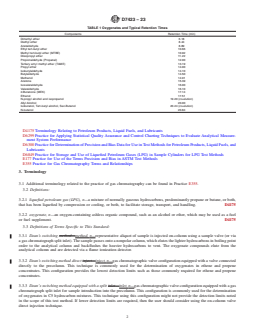
TABLE 1 Oxygenates and Typical Retention Times
Components Retention Time (min)
Dimethyl ether 6.18
Diethyl ether 8.44
Acetaldehyde 8.89
Ethyl tert-butyl ether 10.66
Methyl tert-butyl ether (MTBE) 10.92
Diisopropyl ether 11.22
Propionaldehyde (Propanal) 12.00
Tertiary amyl methyl ether (TAME) 13.19
Propyl ether 14.00
Isobutylaldehyde 14.10
Butylaldehyde 14.50
Methanol 14.91
Acetone 15.39
Isovaleraldehyde 16.00
Valeraldehyde 16.10
2-Butanone (MEK) 17.14
Ethanol 17.51
N-propyl alcohol and isopropanol 19.20 (co-elution)
Allyl Alcohol 20.00
Isobutanol, Tert-butyl alcohol, Sec-Butanol 20.24 (co-elution)
N-butanol 20.84
chromatograph split inlet). The sample passes onto a nonpolar 3.4.1 DIPE—diisopropylether.
column, which elutes the lighter hydrocarbons in boiling point
3.4.2 ETBE—ethyl tert-butylether.
order to the analytical column and backflushes the heavier
3.4.3 MEK—2-butanone.
hydrocarbons to vent. The oxygenate compounds elute from
3.4.4 MTBE—methyl tert-butylether.
the analytical column and are detected via a flame ionization
detector.
3.4.5 TAME—tert-amyl methylether.
3.3.2 Dean’s switching method direct inject, n—gas chro- 3.4.6 PLOT—porous layer open tubular capillary column.
matographic valve configuration equipped with a valve con-
3.4.7 WCOT—wall coated open tubular capillary column.
nected directly to the precolumn. This technique is commonly
used for the determination of oxygenates in ethene and propene
4. Summary of Test Method
concentrates. This configuration provides the lowest detection
4.1 This test method shall be configured using either the
limits such as those commonly required for ethene and propene
Dean’s switching method or the valve cut method. Each
concentrates.
method shall be configured using an on-column valve direct
3.3.3 Dean’s switching method equipped with a split inlet,
inject technique or a gas chromatograph split inlet. The
n—gas chromatographic valve configuration equipped with a
on-column valve direct inject technique is configured by
gas chromatograph split inlet for sample introduction into the
connecting the head of the precolumn directly to the injection
precolumn. This configuration is commonly used for the
valve.
determination of oxygenates in C5 hydrocarbon mixtures. This
4.2 The detector response and retention times for each
technique using this configuration might not provide the
oxygenate peak in a calibration standard is measured and used
detection limits noted in the scope of this test method. If lower
to externally calibrate the flame ionization detector response.
detection limits are required, then the user should consider
The concentration of each oxygenate is calculated by the
using the on-column valve direct injection technique.
external standard technique. Calibration materials are listed in
3.3.4 valve cut method, n—commonly used for the determi-
Table 1.
nation of oxygenates in C4 hydrocarbon mixtures. This tech-
nique using a split inlet might not provide the detection limits
5. Significance and Use
noted in the scope of this test method. If lower detection limits
5.1 The determination of oxygenates is important in the
are required, then the user should consider using the on-column
manufacture of ethene, propene, 1-3 butadiene, C4
valve direct injection technique.
hydrocarbons, and C5 hydrocarbons. Alcohols, ethers,
3.3.5 valve cut method equipped with a split inlet,
aldehydes, and ketones are trace impurities in these hydrocar-
n—representative aliquot of sample is injected via a gas
bons. Oxygenates decrease catalyst activity in downstream
chromatograph split inlet for sample introduction into the
polymerization processes.
precolumn. The sample passes onto a nonpolar column, which
elutes the lighter hydrocarbons in boiling point order to the 6. Apparatus
analytical column and the heavier hydrocarbons to vent. The
6.1 Gas Chromatograph—Any gas chromatograph
oxygenate compounds elute from the analytical column and are
equipped with a flame ionization detector (FID) and having
detected via a flame ionization detector.
sensitivity of 0.01 mg ⁄kg. The gas chromatograph must be
3.4 Acronyms: capable of linear temperature control from 50 °C to 320 °C for
D7423 − 23
the capillary column oven. The gas chromatograph must be column. Any column with equivalent or better chromato-
capable of controlling multiple valve events. Carrier gas flow graphic efficiency and selectivity to that described in 6.4.1 can
controllers and or electronic pressure control modules shall be be used.
capable of precise control where the required flow rates are low
6.4.1 Oxygenates PLOT column, 10 m long by 0.53 mm
(see Table 2). Pressure control devices and gages shall be
inside diameter, with a stationary phase composed of a barium
capable of precise control for the typical pressures required.
sulfate adsorbent mixture, coated onto a fused silica column. At
The temperature program rate must repeat to within 0.1 °C and
a minimum the column should have sufficient retention for
provide retention time repeatability of 0.05 min throughout the
methanol that it elute after n-tridecane (RI > 1300) and must
temperature program.
have sufficient efficiency and capacity to resolve the oxygen-
ates listed in Table 1 to provide accurate quantitative results
6.2 Carrier Gas Preparation:
equivalent to those shown in Section 16. A column of this
6.2.1 Moisture present in the carrier gas causes chromato-
description was used in the repeatability study referred to in
graphic problems. The oxygenates column has very high
Section 16.
retention. Due to this characteristic, moisture and trace impu-
rities in the carrier gas are trapped at the beginning of this
6.5 Sample Introduction:
column. Therefore carrier gas filters or the use of any device
6.5.1 Switching Valve—A valve with an operating tempera-
which can be used to eliminate trace levels of oxygen and
ture of 225 °C and operating pressure of 27.57 bar, to be
water are strongly recommended. Additionally, frequent recon-
located within a heated enclosure or in the main oven. The
ditioning and longer than usual column condition times may be
valve shall be of low volume design and not contribute
necessary to maintain the performance of this column for the
significantly to chromatographic deterioration.
most accurate results from this test method.
6.5.2 Liquid Sampling Valve—A valve with an operating
6.2.2 Carrier Gas Filters—Oxygen and molecular sieve
temperature of 75 °C and operating pressure of 68.94 bar, to be
type moisture filters.
located outside of the oven and used in sampling propane
6.3 Columns:
concentrates, butane samples or other LPG samples. The
6.3.1 Nonpolar (Precolumn) Column—This column per-
repeatability of this test is dependent upon a consistent cylinder
forms a pre-separation of the light hydrocarbon fraction up to
pressure. It is strongly suggested that the use of a floating
and including TAME. Any column with equivalent or better
piston cylinder be used and that the sample be pressurized to
chromatographic efficiency and selectivity to that described in
13.78 bar above the vapor pressure of the sample prior to
6.3.2 can be used.
sampling.
6.3.2 WCOT Methyl Silicone Column, 25 m long by
6.5.3 Low Pressure Liquid Sampling—A valve syringe
0.53 mm inside diameter fused silica WCOT column with a
adapter may be used to sample low vapor pressure liquids such
1.0 μm film thickness of crosslinked methyl siloxane. A col-
as C5 concentrates.
umn of this description was used in the repeatability study
6.5.4 Low Pressure Gas Sampling Valve—A valve with an
referred to in Section 16.
operating temperature of 225 °C and operating pressure of
6.4 Polar (Analytical) Column—This column performs a 27.57 bar to be placed in a heated enclosure maintained at
separation of the oxygenates from volatile hydrocarbons in the approximately 150 °C and used to sample ethene vapor. An
same boiling point range. The oxygenates and remaining external sample loop is installed on this valve. A 1000 μL
hydrocarbons are backflushed to vent through the nonpolar sample loop has been used successfully. The sample loop
TABLE 2 Chromatographic Operating Conditions
Parameter Dean’s Switch (Fig. 1) Dean’s Switch (Fig. 2) Valve Cut (Fig. 3)
Valve 1 °C Ambient Ambient Ambient
Valve 1 Sample Size, μL 2 2 2
Valve 2 °C 150 150 150
Valve 2 Sample Size, μL - mL 500 – 2 500 – 2 500 – 2
Injector, °C Not Applicable 250 250
A A
Split Ratio Not Applicable 1:1 - x 1:1 - x
Backflush, min 2.0 – 4.0 2.0 – 4.0 2.0 – 4.0
Column Oven Standby, °C 200 200 200
Initial Column Oven, °C 50 50 50
Initial Hold, min 5 5 5
Rate, °C/min 10 10 10
Final Column Oven, °C 240 240 220
Final Hold, min 5 5 5
Precolumn Flow, mL/min 5 5 5
Analytical Column Flow, mL/min 7 7 7
Needle Valve 1 Flow, mL/min 15 15 Not Applicable
Needle Valve 2 Flow, mL/min 6 6 Not Applicable
Detector, °C 300 300 300
B B B
Detector Range
A
Split ratio shall be experimentally determined using appropriate gravimetric standards to obtain the desired minimum detection requirements.
B
Detector Range—Adjust the detector range to a setting which shall provide sufficient voltage to assure the detection of small concentrations of each oxygenate but as
to avoid detector signal saturation.
D7423 − 23
sample size shall be sized experimentally to provide desired 10. Preparation of Apparatus and Establishment of
detection limits. This valve must reproduce to within 5 % Conditions
relative standard deviation on each component.
10.1 Install the gas chromatograph according to the manu-
6.5.5 Heated Valve Enclosure—Any enclosure capable of
facturer’s instructions. Set the gas chromatograph parameters
maintaining the valve and sample loop at 150 °C.
according to those noted in Table 2.
6.5.6 Connecting Tees—Any tees that can provide an inert
10.2 Column Installation:
connection.
10.2.1 Install the column, tubing and valve configuration as
6.5.7 Tubing—Any tubing capable of providing an inert
shown in Figs. 1-3, as desired. Apply carrier gas flows by
connection.
slowly pressurizing the column. (Warning—Avoid pressure
6.5.8 Needle Valve—Micrometering valve capable of low
shocks, especially in combination with electronic pressure
flow control 2 mL ⁄min to 90 mL ⁄min.
controlled flow. When setting flows add approximately 10 kPa
per second while checking flows.)
6.6 Data Acquisition—Any computerized data acquisition
10.2.2 Condition the column for at least 16 h under carrier
system shall be used for peak area integration and graphic
presentation of the chromatogram. Alternatively any integrator gas flow, with a multi-cycle ramped temperature program
technique starting at 50 °C and increasing to 100 °C hold for
system can also be used for chromatographic peak area
integration. 1 h then increase and ramp the temperature by 10 °C ⁄min up to
320 °C.
7. Reagents and Materials
10.3 Dean’s Switching Method Direct Inject or Split Inlet—
Flow Setting:
7.1 Purity of Reagents—Before preparing the calibration
10.3.1 Dean’s switching system flow tuning using column
standards, determine the purity of the oxygenate stocks and
configuration shown in Fig. 1. Equilibrate the column oven to
make corrections for the impurities found. Whenever possible,
50 °C. Place the two-way valve in the normally off position
use stocks of 98 % purity or better. The calibration materials
preventing the system from backflushing out through needle
are listed in Table 1.
valve #1. Place the three-way solenoid valve in the on position
7.2 Calibration Standard Mixture—A standard mixture con-
th
...
This document is not an ASTM standard and is intended only to provide the user of an ASTM standard an indication of what changes have been made to the previous version. Because
it may not be technically possible to adequately depict all changes accurately, ASTM recommends that users consult prior editions as appropriate. In all cases only the current version
of the standard as published by ASTM is to be considered the official document.
Designation: D7423 − 17 D7423 − 23
Standard Test Method for
Determination of Oxygenates in C2, C3, C4, and C5
Hydrocarbon Matrices by Gas Chromatography and Flame
Ionization Detection
This standard is issued under the fixed designation D7423; the number immediately following the designation indicates the year of
original adoption or, in the case of revision, the year of last revision. A number in parentheses indicates the year of last reapproval. A
superscript epsilon (´) indicates an editorial change since the last revision or reapproval.
1. Scope*
1.1 This test method covers the gas chromatographic procedure for the quantitative determination of organic oxygenates in C2,
C3, C4, and C5 matrices by multidimensional gas chromatography and flame ionization detection. This test method is applicable
when the hydrocarbon matrices have a final boiling point not greater than 200 °C. Oxygenate compounds include, but are not
limited to, those listed in Table 1. The linear working range for oxygenates is 0.50 mg ⁄kg to 100 mg ⁄kg.
1.2 This test method is intended to determine the mass concentration of each oxygenate in the hydrocarbon matrix. Oxygenate
compound identification is determined by reference standards and column elution retention order.
1.3 The values stated in SI units are to be regarded as standard. No other units of measurement are included in this standard.
1.4 This standard does not purport to address all of the safety concerns, if any, associated with its use. It is the responsibility
of the user of this standard to establish appropriate safety and health practices and determine the applicability of regulatory
limitations prior to use.
1.4 This standard does not purport to address all of the safety concerns, if any, associated with its use. It is the responsibility of
the user of this standard to establish appropriate safety, health, and environmental practices and determine the applicability of
regulatory limitations prior to use.
1.4.1 The user is advised to obtain LPG safety training for the safe operation of this test method procedure and related activities.
The eLearning training course “Liquefied Petroleum Gases Sampling Safety” is available on the ASTM.org website.
1.5 This international standard was developed in accordance with internationally recognized principles on standardization
established in the Decision on Principles for the Development of International Standards, Guides and Recommendations issued
by the World Trade Organization Technical Barriers to Trade (TBT) Committee.
2. Referenced Documents
2.1 ASTM Standards:
D1265 Practice for Sampling Liquefied Petroleum (LP) Gases, Manual Method
D1835 Specification for Liquefied Petroleum (LP) Gases
This test method is under the jurisdiction of ASTM Committee D02 on Petroleum Products, Liquid Fuels, and Lubricants and is the direct responsibility of Subcommittee
D02.D0.04 on C4 and C5 Hydrocarbons.
Current edition approved June 1, 2017March 1, 2023. Published July 2017March 2023. Originally approved in 2009. Last pervious edition approved in 20162017 as
D7423 – 16a.D7423 – 17. DOI: 10.1520/D7423-17.10.1520/D7423-23.
For referenced ASTM standards, visit the ASTM website, www.astm.org, or contact ASTM Customer Service at service@astm.org. For Annual Book of ASTM Standards
volume information, refer to the standard’s Document Summary page on the ASTM website.
*A Summary of Changes section appears at the end of this standard
Copyright © ASTM International, 100 Barr Harbor Drive, PO Box C700, West Conshohocken, PA 19428-2959. United States
D7423 − 23
TABLE 1 Oxygenates and Typical Retention Times
Components Retention Time (min)
Dimethyl ether 6.18
Diethyl ether 8.44
Acetaldehyde 8.89
Ethyl tert-butyl ether 10.66
Methyl tert-butyl ether (MTBE) 10.92
Diisopropyl ether 11.22
Propionaldehyde (Propanal) 12.00
Tertiary amyl methyl ether (TAME) 13.19
Propyl ether 14.00
Isobutylaldehyde 14.10
Butylaldehyde 14.50
Methanol 14.91
Acetone 15.39
Isovaleraldehyde 16.00
Valeraldehyde 16.10
2-Butanone (MEK) 17.14
Ethanol 17.51
N-propyl alcohol and isopropanol 19.20 (co-elution)
Allyl Alcohol 20.00
Isobutanol, Tert-butyl alcohol, Sec-Butanol 20.24 (co-elution)
N-butanol 20.84
D4175 Terminology Relating to Petroleum Products, Liquid Fuels, and Lubricants
D6299 Practice for Applying Statistical Quality Assurance and Control Charting Techniques to Evaluate Analytical Measure-
ment System Performance
D6300 Practice for Determination of Precision and Bias Data for Use in Test Methods for Petroleum Products, Liquid Fuels, and
Lubricants
D6849 Practice for Storage and Use of Liquefied Petroleum Gases (LPG) in Sample Cylinders for LPG Test Methods
E177 Practice for Use of the Terms Precision and Bias in ASTM Test Methods
E355 Practice for Gas Chromatography Terms and Relationships
3. Terminology
3.1 Additional terminology related to the practice of gas chromatography can be found in Practice E355.
3.2 Definitions:
3.2.1 liquefied petroleum gas (LPG), n—a mixture of normally gaseous hydrocarbons, predominantly propane or butane, or both,
that has been liquefied by compression or cooling, or both, to facilitate storage, transport, and handling. D4175
3.2.2 oxygenate, n—an oxygen-containing ashless organic compound, such as an alcohol or ether, which may be used as a fuel
or fuel supplement. D4175
3.3 Definitions of Terms Specific to This Standard:
3.3.1 Dean’s switching method—method, n—representative aliquot of sample is injected on-column using a sample valve (or via
a gas chromatograph split inlet). The sample passes onto a nonpolar column, which elutes the lighter hydrocarbons in boiling point
order to the analytical column and backflushes the heavier hydrocarbons to vent. The oxygenate compounds elute from the
analytical column and are detected via a flame ionization detector.
3.3.2 Dean’s switching method direct inject—inject, n—gas chromatographic valve configuration equipped with a valve connected
directly to the precolumn. This technique is commonly used for the determination of oxygenates in ethene and propene
concentrates. This configuration provides the lowest detection limits such as those commonly required for ethene and propene
concentrates.
3.3.3 Dean’s switching method equipped with a split inlet—inlet, n—gas chromatographic valve configuration equipped with a gas
chromatograph split inlet for sample introduction into the precolumn. This configuration is commonly used for the determination
of oxygenates in C5 hydrocarbon mixtures. This technique using this configuration might not provide the detection limits noted
in the scope of this test method. If lower detection limits are required, then the user should consider using the on-column valve
direct injection technique.
D7423 − 23
3.3.4 valve cut method—method, n—commonly used for the determination of oxygenates in C4 hydrocarbon mixtures. This
technique using a split inlet might not provide the detection limits noted in the scope of this test method. If lower detection limits
are required, then the user should consider using the on-column valve direct injection technique.
3.3.5 valve cut method equipped with a split inlet—inlet, n—representative aliquot of sample is injected via a gas chromatograph
split inlet for sample introduction into the precolumn. The sample passes onto a nonpolar column, which elutes the lighter
hydrocarbons in boiling point order to the analytical column and the heavier hydrocarbons to vent. The oxygenate compounds elute
from the analytical column and are detected via a flame ionization detector.
3.4 Acronyms:
3.4.1 DIPE—diisopropylether.
3.4.2 ETBE—ethyl tert-butylether.
3.4.3 MEK—2-butanone.
3.4.4 MTBE—methyl tert-butylether.
3.4.5 TAME—tert-amyl methylether.
3.4.6 PLOT—porous layer open tubular capillary column.
3.4.7 WCOT—wall coated open tubular capillary column.
4. Summary of Test Method
4.1 This test method shall be configured using either the Dean’s switching method or the valve cut method. Each method shall
be configured using an on-column valve direct inject technique or a gas chromatograph split inlet. The on-column valve direct
inject technique is configured by connecting the head of the precolumn directly to the injection valve.
4.2 The detector response and retention times for each oxygenate peak in a calibration standard is measured and used to externally
calibrate the flame ionization detector response. The concentration of each oxygenate is calculated by the external standard
technique. Calibration materials are listed in Table 1.
5. Significance and Use
5.1 The determination of oxygenates is important in the manufacture of ethene, propene, 1-3 butadiene, C4 hydrocarbons, and C5
hydrocarbons. Alcohols, ethers, aldehydes, and ketones are trace impurities in these hydrocarbons. Oxygenates decrease catalyst
activity in downstream polymerization processes.
6. Apparatus
6.1 Gas Chromatograph—Any gas chromatograph equipped with a flame ionization detector (FID) and having sensitivity of
0.01 mg ⁄kg. The gas chromatograph must be capable of linear temperature control from 50 °C to 320 °C for the capillary column
oven. The gas chromatograph must be capable of controlling multiple valve events. Carrier gas flow controllers and or electronic
pressure control modules shall be capable of precise control where the required flow rates are low (see Table 2). Pressure control
devices and gages shall be capable of precise control for the typical pressures required. The temperature program rate must repeat
to within 0.1 °C and provide retention time repeatability of 0.05 min throughout the temperature program.
6.2 Carrier Gas Preparation:
6.2.1 Moisture present in the carrier gas causes chromatographic problems. The oxygenates column has very high retention. Due
to this characteristic, moisture and trace impurities in the carrier gas are trapped at the beginning of this column. Therefore carrier
gas filters or the use of any device which can be used to eliminate trace levels of oxygen and water are strongly recommended.
D7423 − 23
TABLE 2 Chromatographic Operating Conditions
Parameter Dean’s Switch (Fig. 1) Dean’s Switch (Fig. 2) Valve Cut (Fig. 3)
Valve 1°C Ambient Ambient Ambient
Valve 1 °C Ambient Ambient Ambient
Valve 1 Sample Size, μL 2 2 2
Valve 2°C 150 150 150
Valve 2 °C 150 150 150
Valve 2 Sample Size, μL - mL 500 – 2 500 – 2 500 – 2
Injector, °C Not Applicable 250 250
A A
Split Ratio Not Applicable 1:1 - x 1:1 - x
Backflush, min 2.0 – 4.0 2.0 – 4.0 2.0 – 4.0
Column Oven Standby, °C 200 200 200
Initial Column Oven, °C 50 50 50
Initial Hold, min 5 5 5
Rate, °C/min 10 10 10
Final Column Oven, °C 240 240 220
Final Hold, min 5 5 5
Precolumn Flow, mL/min 5 5 5
Analytical Column Flow, mL/min 7 7 7
Needle Valve 1 Flow, mL/min 15 15 Not Applicable
Needle Valve 2 Flow, mL/min 6 6 Not Applicable
Detector, °C 300 300 300
B B B
Detector Range
A
Split ratio shall be experimentally determined using appropriate gravimetric standards to obtain the desired minimum detection requirements.
B
Detector Range—Adjust the detector range to a setting which shall provide sufficient voltage to assure the detection of small concentrations of each oxygenate but as
to avoid detector signal saturation.
Additionally, frequent reconditioning and longer than usual column condition times may be necessary to maintain the performance
of this column for the most accurate results from this test method.
6.2.2 Carrier Gas Filters—Oxygen and molecular sieve type moisture filters.
6.3 Columns:
6.3.1 Nonpolar (Precolumn) Column—This column performs a pre-separation of the light hydrocarbon fraction up to and
including TAME. Any column with equivalent or better chromatographic efficiency and selectivity to that described in 6.3.2 can
be used.
6.3.2 WCOT Methyl Silicone Column, 25 m long by 0.53 mm inside diameter fused silica WCOT column with a 1.0 μm film
thickness of crosslinked methyl siloxane. A column of this description was used in the repeatability study referred to in Section
16.
6.4 Polar (Analytical) Column—This column performs a separation of the oxygenates from volatile hydrocarbons in the same
boiling point range. The oxygenates and remaining hydrocarbons are backflushed to vent through the nonpolar column. Any
column with equivalent or better chromatographic efficiency and selectivity to that described in 6.4.1 can be used.
6.4.1 Oxygenates PLOT column, 10 m long by 0.53 mm inside diameter, with a stationary phase composed of a barium sulfate
adsorbent mixture, coated onto a fused silica column. At a minimum the column should have sufficient retention for methanol that
it elute after n-tridecane (RI > 1300) and must have sufficient efficiency and capacity to resolve the oxygenates listed in Table 1
to provide accurate quantitative results equivalent to those shown in Section 16. A column of this description was used in the
repeatability study referred to in Section 16.
6.5 Sample Introduction:
6.5.1 Switching Valve—A valve with an operating temperature of 225 °C and operating pressure of 27.57 bar, to be located within
a heated enclosure or in the main oven. The valve shall be of low volume design and not contribute significantly to
chromatographic deterioration.
6.5.2 Liquid Sampling Valve—A valve with an operating temperature of 75 °C and operating pressure of 68.94 bar, to be located
outside of the oven and used in sampling propane concentrates, butane samples or other LPG samples. The repeatability of this
test is dependent upon a consistent cylinder pressure. It is strongly suggested that the use of a floating piston cylinder be used and
that the sample be pressurized to 13.78 bar above the vapor pressure of the sample prior to sampling.
D7423 − 23
6.5.3 Low Pressure Liquid Sampling—A valve syringe adapter may be used to sample low vapor pressure liquids such as C5
concentrates.
6.5.4 Low Pressure Gas Sampling Valve—A valve with an operating temperature of 225 °C and operating pressure of 27.57 bar
to be placed in a heated enclosure maintained at approximately 150 °C and used to sample ethene vapor. An external sample loop
is installed on this valve. A 1000 μL sample loop has been used successfully. The sample loop sample size shall be sized
experimentally to provide desired detection limits. This valve must reproduce to within 5 percent 5 % relative standard deviation
on each component.
6.5.5 Heated Valve Enclosure—Any enclosure capable of maintaining the valve and sample loop at 150 °C.
6.5.6 Connecting Tees—Any tees that can provide an inert connection.
6.5.7 Tubing—Any tubing capable of providing an inert connection.
6.5.8 Needle Valve—Micrometering valve capable of low flow control 2 mL ⁄min to 90 mL ⁄min.
6.6 Data Acquisition—Any computerized data acquisition system shall be used for peak area integration and graphic presentation
of the chromatogram. Alternatively any integrator system can also be used for chromatographic peak area integration.
7. Reagents and Materials
7.1 Purity of Reagents—Before preparing the calibration standards, determine the purity of the oxygenate stocks and make
corrections for the impurities found. Whenever possible, use stocks of 98 % purity or better. The calibration materials are listed
in Table 1.
7.2 Calibration Standard Mixture—A standard mixture containing known concentrations of each oxygenate listed in Table 1
should be prepared gravimetrically. This mixture shall be used as an external calibration standard.
7.3 Compressed Hydrogen—Less than 1 mg ⁄kg hydrocarbon impurities for FID fuel gas.
7.4 Compressed Helium—Gas purity 99.999 %. Note that helium supplies often contain low level amounts of water. Water can
dramatically deteriorate the performance of the analytical column (oxygenates column). It is strongly recommended that the use
of a molecular sieve or other suitable water removal system be implemented to eliminate the possibility of contaminating the
analytical column with oxygen or water.
7.5 Compressed Air—Zero grade (gas purity 99.999 %).
7.6 Instrument Air—Compressed air for pneumatic actuation of valves.
8. Sampling
8.1 Every effort should be made to ensure that the sample is representative of the source from which it is taken. Follow the
recommendations of Practice D1265, D1835, D6849 or their equivalent, when obtaining and storing samples from bulk storage
or pipelines.
9. Installation of Carrier Gas Filters
9.1 The carrier gas shall require pretreatment with an oxygen and water removal system.
9.2 On the gas chromatograph carrie
...