

SIST EN 13473-3:2002
(Main)Reinforcement - Specifications for multi-axial multi-ply fabrics - Part 3: Specific requirements
General Information
- Abstract
This Part 3 of EN 13473 is a specification of multi-axial multi-ply fabrics made from reinforcement yarns, tows, rovings, fibre fleeces, films, foams or other materials which are intended to provide reinforcement in composite materials and which is bound to a multi-ply construction. This specification defines those parameters which are required for a particular application or processing method.
The parameter specifications do not define absolute or nominal values for any parameter. The values for specified parameters are defined by the application. This specification defines the test methods which shall be used to determine the values and tolerances for each specified parameter to be controlled by the textile manufacturer.
The parameters which shall be defined in the technical specification of multi-axial multi-ply fabrics are defined in clause 4 of this Part.
- Status
- Published
- Publication Date
- 31-Jan-2002
- Technical Committee
- IPMA - Polimer materials and products
- Current Stage
- 6060 - National Implementation/Publication (Adopted Project)
- Start Date
- 01-Feb-2002
- Due Date
- 01-Feb-2002
- Completion Date
- 01-Feb-2002

Overview
SIST EN 13473-3:2002 is a European standard developed by CEN that specifies the specific requirements for multi-axial multi-ply fabrics used as reinforcements in composite materials. These fabrics consist of multiple plies or layers made from reinforcement yarns, tows, rovings, fiber fleeces, films, foams, or other components bound into a multi-ply construction. The standard is focused on defining the parameters required for specific applications or manufacturing processes, ensuring quality and performance consistency in composite reinforcement textiles.
Unlike setting absolute or nominal values, SIST EN 13473-3:2002 emphasizes defining parameters based on the intended application, supported by precise testing methods. Textile manufacturers are responsible for controlling key parameters, contributing to reliable production that meets technical needs.
Key Topics
Parameter Classification
Parameters are divided into three groups, each with distinct designation and control requirements:- Group 1: Parameters to be designated and controlled by the manufacturer, including:
- Total mass per unit area (including binding system)
- Fabric width and length (on the roll)
- Roll weight (net)
- Defects as specified by relevant test methods
- Group 2: Parameters to be designated but not controlled, such as:
- Designation code
- Special handling and storage instructions
- Manufacturer’s production and traceability references
- Group 3: Optional parameters neither designated nor controlled by default but can be agreed upon, e.g., filament diameter, sizing, or finish.
- Group 1: Parameters to be designated and controlled by the manufacturer, including:
Test Methods
EN 13473-3 references well-established international standards for testing, including:- ISO 3374 for determining mass per unit area
- ISO 5025 for fabric width and length measurements
- EN 13473-2 for defect identification and classification
Tolerance Levels
Tolerances are specified to ensure quality control, typically including:- ±5% for total mass per unit area and roll weight
- ±2% for fabric width and length
- Defect limits based on points per fabric length
Technical Specification Development
The standard guides the development of a technical specification tailored to the application, highlighting the need for agreed-upon parameters and potential deviations for special applications.
Applications
SIST EN 13473-3:2002 is essential for manufacturers and users of multi-axial multi-ply fabrics in various composite industry sectors, including:
Wind Energy
For windmill rotor blades, multi-axial fabrics provide targeted reinforcement, enhancing strength and durability while meeting strict design specifications.Aerospace and Automotive
Lightweight, high-performance composites require precise reinforcement fabrics to achieve required mechanical properties and manufacturing predictability.Construction and Civil Engineering
Reinforced composites contribute to building materials where multi-axial fabrics improve load distribution and structural integrity.Marine Industry
Fabrics adhering to this standard help produce composite components resistant to stress and environmental factors found in maritime environments.
Related Standards
EN 13473-1: Designation
Defines the system for naming and describing multi-axial multi-ply fabrics.EN 13473-2: Methods of Test and General Requirements
Provides the testing procedures and general technical criteria for these reinforcement fabrics.ISO 472: Plastics Vocabulary
Offers standardized terminology used throughout EN 13473 series.ISO 3374: Determination of Mass per Unit Area of Reinforcement Products
Standardized method applied within EN 13473-3 for mass measurement.ISO 5025: Measurement of Woven Fabric Width and Length
Provides the test methods for dimensional control of fabric rolls.
By adhering to SIST EN 13473-3:2002, manufacturers and users of multi-axial multi-ply fabrics can ensure the consistency, performance, and traceability of reinforcement textiles used in critical composite applications, supporting innovation and quality assurance in advanced materials engineering.
Relations
- Effective Date
- 28-Jan-2026
- Effective Date
- 28-Jan-2026
- Effective Date
- 28-Jan-2026
- Effective Date
- 28-Jan-2026
- Effective Date
- 28-Jan-2026
Get Certified
Connect with accredited certification bodies for this standard

Control Union Certifications
Global certification for agriculture and sustainability.

DIN CERTCO
DIN Group product certification.
Hohenstein Institut
Textile testing and certification.
Sponsored listings
Frequently Asked Questions
SIST EN 13473-3:2002 is a standard published by the Slovenian Institute for Standardization (SIST). Its full title is "Reinforcement - Specifications for multi-axial multi-ply fabrics - Part 3: Specific requirements". This standard covers: This Part 3 of EN 13473 is a specification of multi-axial multi-ply fabrics made from reinforcement yarns, tows, rovings, fibre fleeces, films, foams or other materials which are intended to provide reinforcement in composite materials and which is bound to a multi-ply construction. This specification defines those parameters which are required for a particular application or processing method. The parameter specifications do not define absolute or nominal values for any parameter. The values for specified parameters are defined by the application. This specification defines the test methods which shall be used to determine the values and tolerances for each specified parameter to be controlled by the textile manufacturer. The parameters which shall be defined in the technical specification of multi-axial multi-ply fabrics are defined in clause 4 of this Part.
This Part 3 of EN 13473 is a specification of multi-axial multi-ply fabrics made from reinforcement yarns, tows, rovings, fibre fleeces, films, foams or other materials which are intended to provide reinforcement in composite materials and which is bound to a multi-ply construction. This specification defines those parameters which are required for a particular application or processing method. The parameter specifications do not define absolute or nominal values for any parameter. The values for specified parameters are defined by the application. This specification defines the test methods which shall be used to determine the values and tolerances for each specified parameter to be controlled by the textile manufacturer. The parameters which shall be defined in the technical specification of multi-axial multi-ply fabrics are defined in clause 4 of this Part.
SIST EN 13473-3:2002 is classified under the following ICS (International Classification for Standards) categories: 59.100.99 - Other materials for the reinforcement of composites; 83.120 - Reinforced plastics. The ICS classification helps identify the subject area and facilitates finding related standards.
SIST EN 13473-3:2002 has the following relationships with other standards: It is inter standard links to SIST EN 500-2:2007, SIST EN 13473-2:2002, SIST EN ISO 3745:2004/AC:2006, SIST EN 13473-1:2002, SIST EN 198:2009. Understanding these relationships helps ensure you are using the most current and applicable version of the standard.
SIST EN 13473-3:2002 is available in PDF format for immediate download after purchase. The document can be added to your cart and obtained through the secure checkout process. Digital delivery ensures instant access to the complete standard document.
Standards Content (Sample)
2003-01.Slovenski inštitut za standardizacijo. Razmnoževanje celote ali delov tega standarda ni dovoljeno.Verstärkungen - Spezifikation für Multiaxialgelege - Teil 3: Besondere AnforderungenRenfort - Spécifications pour les tissus multi-axiaux multicouches - Partie 3: Exigences spécifiquesReinforcement - Specifications for multi-axial multi-ply fabrics - Part 3: Specific requirements83.120Reinforced plastics59.100.99NRPSR]LWRYOther materials for the reinforcement of compositesICS:Ta slovenski standard je istoveten z:EN 13473-3:2001SIST EN 13473-3:2002en01-februar-2002SIST EN 13473-3:2002SLOVENSKI
STANDARD
EUROPEAN STANDARDNORME EUROPÉENNEEUROPÄISCHE NORMEN 13473-3June 2001ICS 59.100.99; 83.120English versionReinforcement - Specifications for multi-axial multi-ply fabrics -Part 3: Specific requirementsRenfort - Spécifications pour les tissus multi-axiauxmulticouches - Partie 3: Exigences spécifiquesVerstärkungen - Spezifikation für Multiaxialgelege - Teil 3:Besondere AnforderungenThis European Standard was approved by CEN on 10 May 2001.CEN members are bound to comply with the CEN/CENELEC Internal Regulations which stipulate the conditions for giving this EuropeanStandard the status of a national standard without any alteration. Up-to-date lists and bibliographical references concerning such nationalstandards may be obtained on application to the Management Centre or to any CEN member.This European Standard exists in three official versions (English, French, German). A version in any other language made by translationunder the responsibility of a CEN member into its own language and notified to the Management Centre has the same status as the officialversions.CEN members are the national standards bodies of Austria, Belgium, Czech Republic, Denmark, Finland, France, Germany, Greece,Iceland, Ireland, Italy, Luxembourg, Netherlands, Norway, Portugal, Spain, Sweden, Switzerland and United Kingdom.EUROPEAN COMMITTEE FOR STANDARDIZATIONCOMITÉ EUROPÉEN DE NORMALISATIONEUROPÄISCHES KOMITEE FÜR NORMUNGManagement Centre: rue de Stassart, 36
B-1050 Brussels© 2001 CENAll rights of exploitation in any form and by any means reservedworldwide for CEN national Members.Ref. No. EN 13473-3:2001 ESIST EN 13473-3:2002
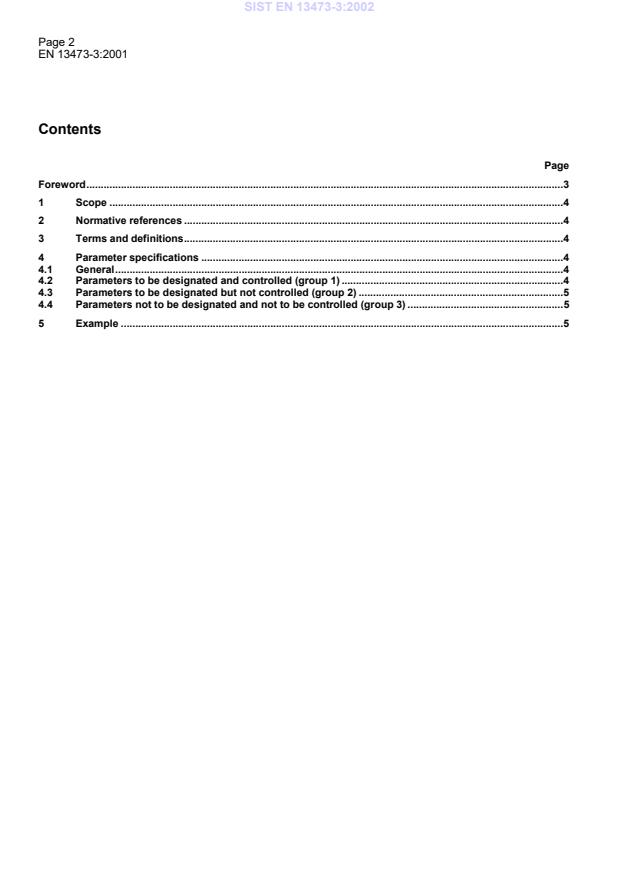
Page 2EN 13473-3:2001ContentsPageForeword.31Scope.42Normative references.43Terms and definitions.44Parameter specifications.44.1General.44.2Parameters to be designated and controlled (group 1).44.3Parameters to be designated but not controlled (group 2).54.4Parameters not to be designated and not to be controlled (group 3).55Example.5SIST EN 13473-3:2002
Page 3EN 13473-3:2001ForewordThis European Standard has been prepared by Technical Committee CEN/TC 249 "Plastics", the secretariat ofwhich is held by IBN.This European Standard shall be given the status of a national standard, either by publication of an identical text orby endorsement, at the latest by December 2001, and conflicting national standards shall be withdrawn at the latestby December 2001.This standard is one part of EN 13473 "Reinforcement – Specifications for multi-axial multi-ply fabrics" which isconstructed as follows : Part 1 : Designation Part 2 : Methods of test and general requirements Part 3 : Specific requirementsAccording to the CEN/CENELEC Internal Regulations, the national standards organizations of the followingcountries are bound to implement this European Standard: Austria, Belgium, Czech Republic, Denmark, Finland,France, Germany, Greece, Iceland, Ireland, Italy, Luxembourg, Netherlands, Norway, Portugal, Spain, Sweden,Switzerland and the United Kingdom.SIST EN 13473-3:2002
Page 4EN 13473-3:20011 ScopeThis Part 3 of EN 13473 is a specification of multi-axial multi-ply fabrics made from reinforcement yarns, tows,rovings, fibre fleeces, films, foams or other materials which are intended to provide reinforcement in compositematerials and which is bound to a multi-ply construction. This specification defines those parameters which arerequired for a particular application or processing method.The parameter specifications
...