

ISO/PRF Guide 84
(Main)Guidelines for addressing climate change in standards
- Abstract
This document provides guidance to standards developers on how to take account of climate change in the planning, drafting, revision and updating of ISO standards and other deliverables. It outlines a framework and general principles that standards developers can use to develop their own approach to addressing climate change on a subject-specific basis. It aims to enable standards developers to include adaptation to climate change (ACC) and climate change mitigation (CCM) considerations in their standardization work. Considerations related to ACC are intended to contribute to increasing preparedness and disaster reduction as well as impacting the resilience of organizations and their technologies, activities or products (TAPs). Considerations related to CCM consist primarily of approaches that seek to avoid, reduce or limit the release of GHG emissions and/or increase GHG removals.
- Status
- Not Published
- Technical Committee
- ISO/TMBG - Technical Management Board - groups
- Drafting Committee
- ISO/TMBG/CCCC-TG 5 - Revision of ISO Guide 84
- Current Stage
- 5020 - Proof sent to secretariat or FDIS ballot initiated: 8 weeks - 50 Approval
- Start Date
- 17-Nov-2026
Buy Documents
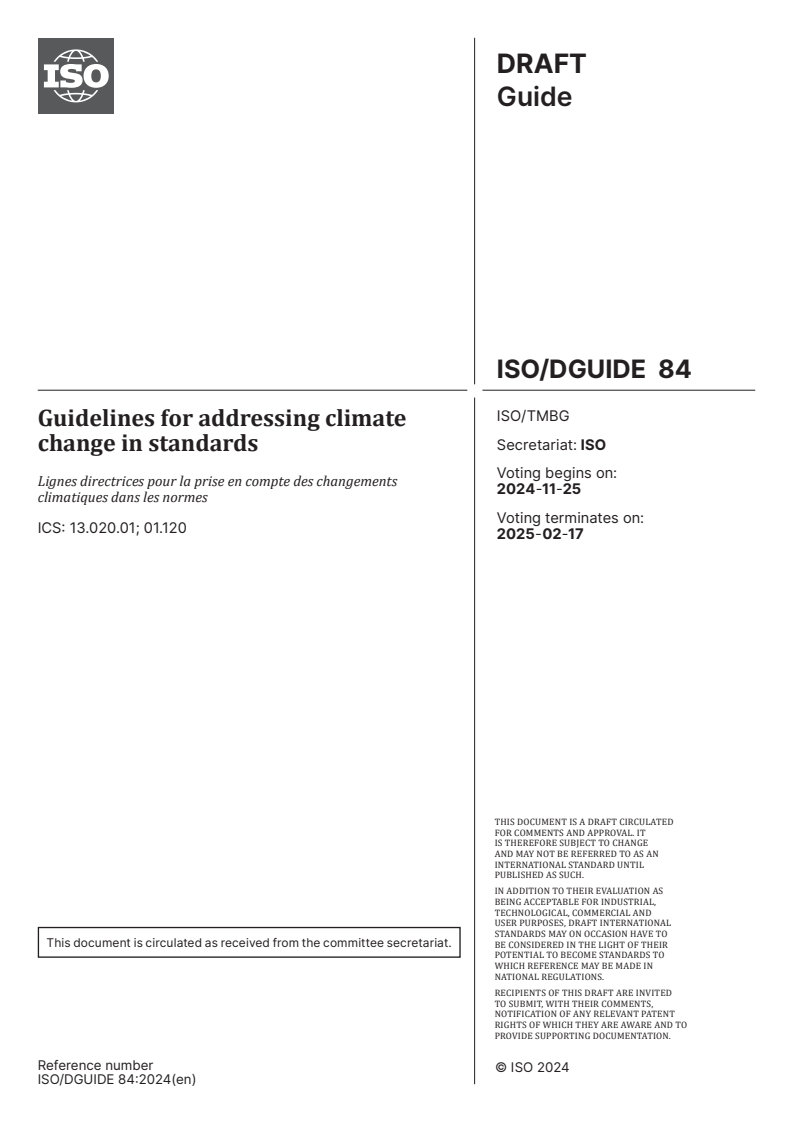
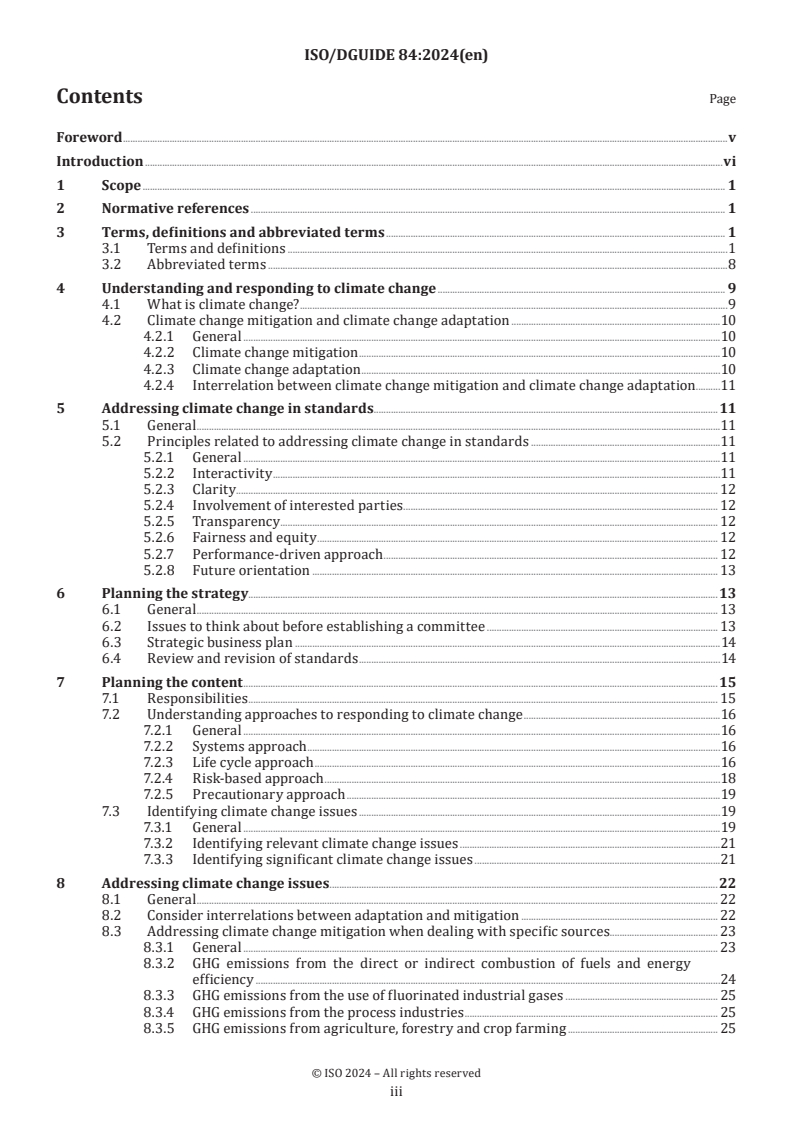
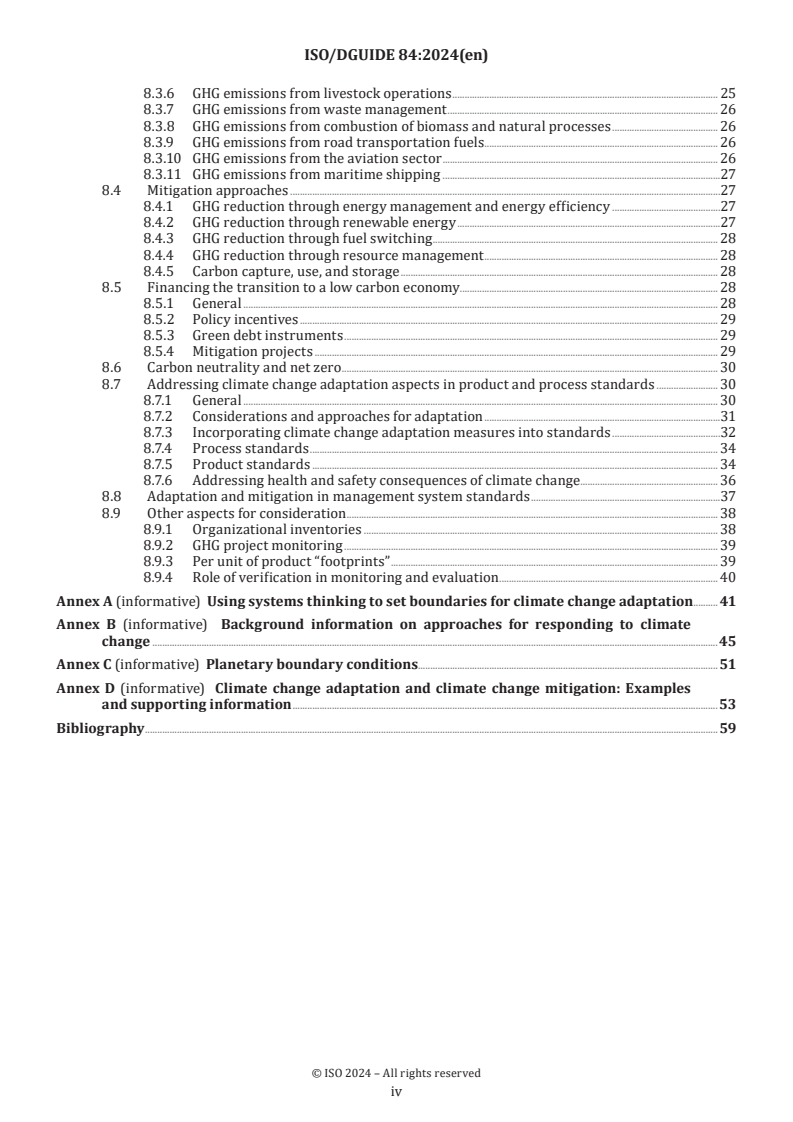
ISO/DGuide 84 - Guidelines for addressing climate change in standards Released:30. 09. 2024
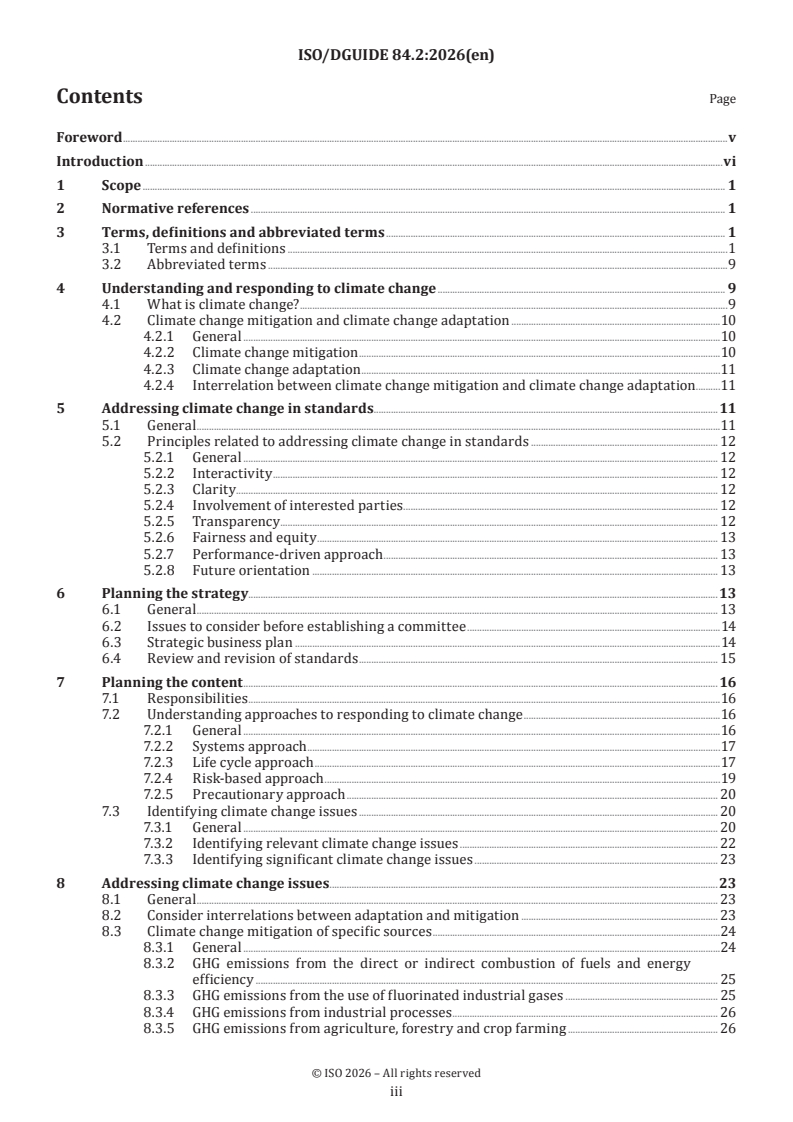
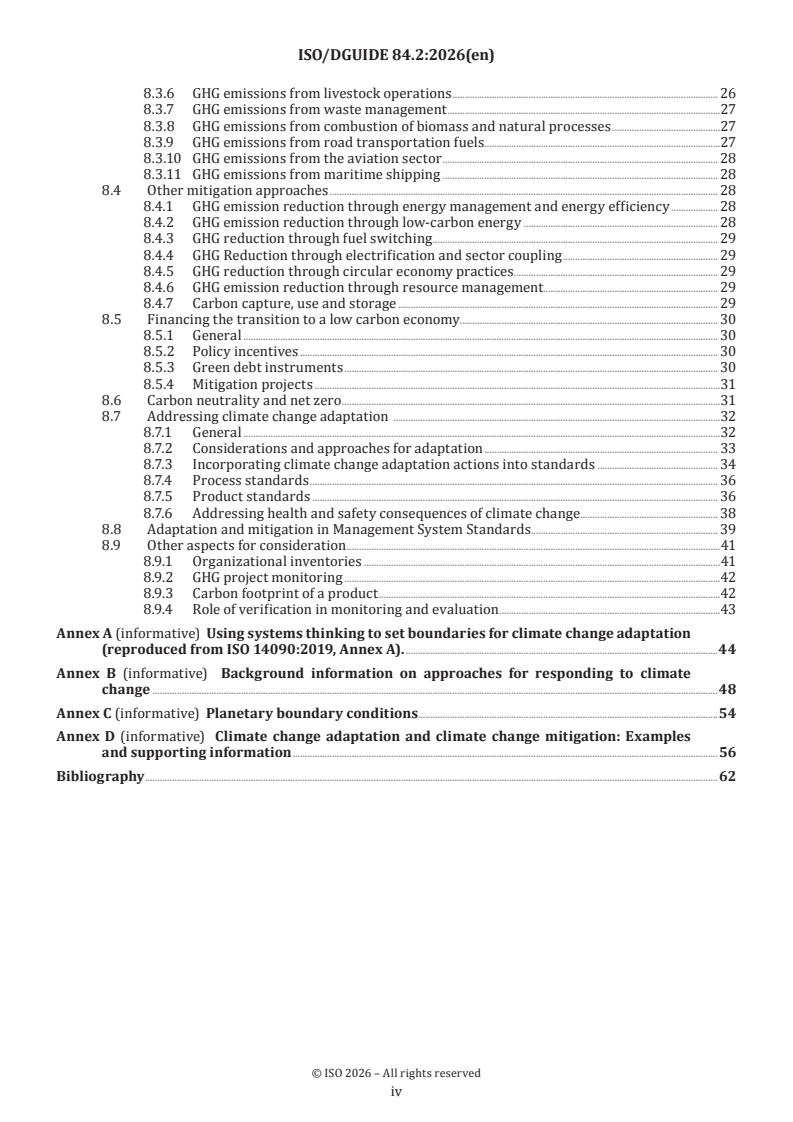
ISO/DGuide 84.2 - Guidelines for addressing climate change in standards Released:17. 12. 2025
ISO/PRF Guide 84 - Guidelines for addressing climate change in standards

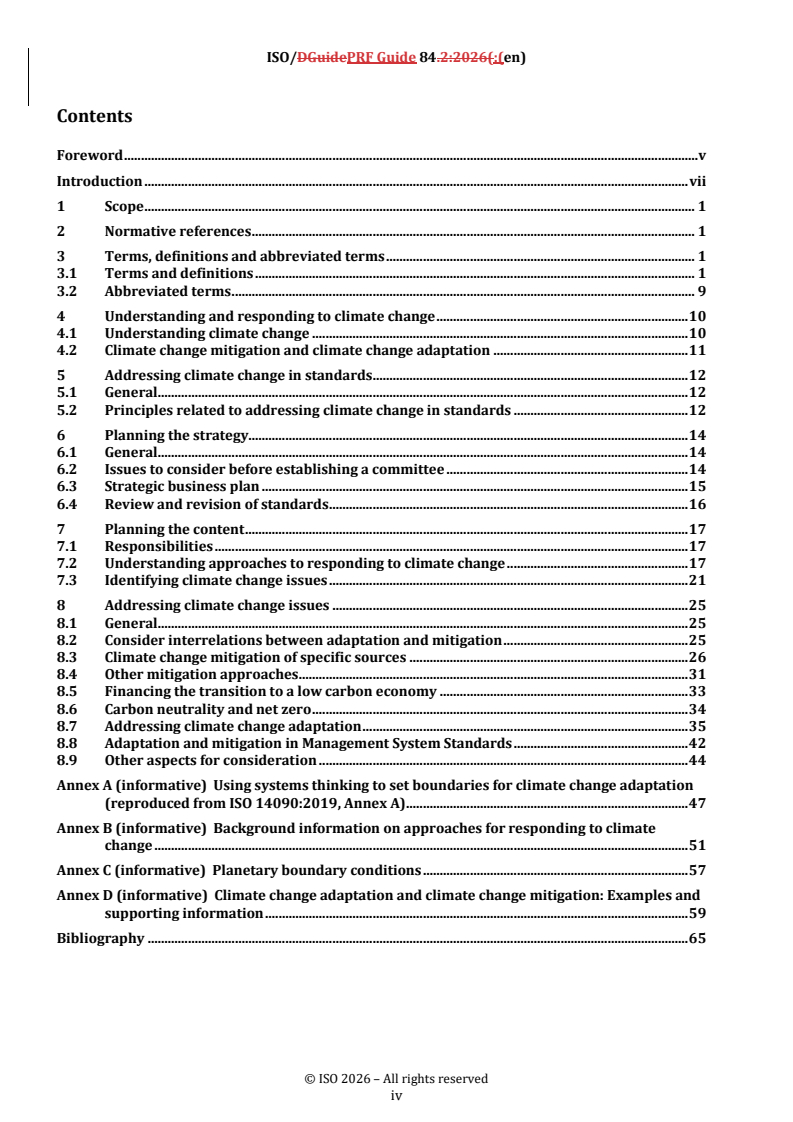
REDLINE ISO/PRF Guide 84 - Guidelines for addressing climate change in standards
ISO/PRF Guide 84 is an ISO guide for standards developers on how to address climate change when planning, drafting, revising and updating ISO standards and other deliverables. It gives a framework and general principles for building subject-specific approaches that cover climate change adaptation and climate change mitigation (CCM). In practice, it helps committees decide when climate change should become requirements, recommendations or informative text in a standard.
What does ISO/PRF Guide 84 specify?
ISO/PRF Guide 84 specifies guidance for standards developers on how to take account of climate change across the full standards work cycle, from initial planning through revision and updating. It focuses on the standardization process itself, not on one product sector, and it is meant to be adapted to the subject matter of each committee.
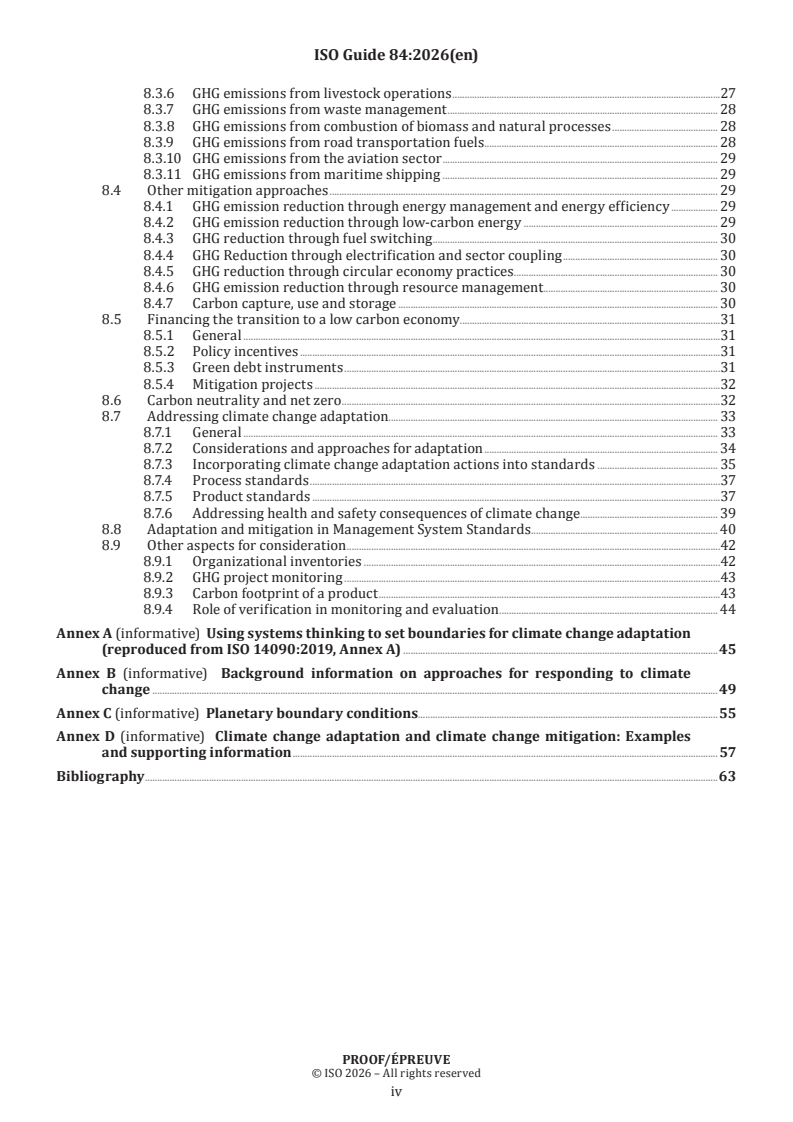
The document is organized as a guide: scope, definitions and abbreviated terms, then guidance on understanding climate change, planning strategy, planning content, and addressing climate change issues. The later clauses move from general principles to practical topics such as mitigation sources, adaptation, management system standards, carbon neutrality, net zero, inventories, monitoring and verification. Informative annexes add background, examples and checklists.
| Annex | What it covers |
|---|---|
| Annex A | Systems thinking, interconnections, boundaries and practical examples |
| Annex B | Background on systems thinking, life cycle, risk-based and precautionary approaches, and climate change scoping |
| Annex C | Planetary boundary conditions and their use in climate-related standardization |
| Annex D | Examples and supporting information for climate change adaptation and mitigation, including ISO 14001 links and checklists |
What are the key requirements of ISO/PRF Guide 84?
ISO/PRF Guide 84 gives standards developers a sequence of decisions to make climate change visible in the standardization process. The main message is to identify relevant climate issues early, decide how they should appear in the standard, and make sure the drafting approach fits the subject and the users.
Committee strategy and governance
Clause 5.1 says standards developers should identify any applicable policies that address climate-related hazards, impacts, risks and opportunities across the life cycle of a product or during testing. If there is no applicable policy, the committee should handle climate change according to its own established considerations and use a risk-based approach. In practice, this means climate change should be discussed at the same time as scope, safety, performance and other design choices, not added later as an afterthought.
Clause 6.1 says climate change can be handled inside an existing committee or by creating a new committee, subcommittee or working group, depending on the technology, activity or product (TAP). Clause 6.2 asks committees to think about scope, structure and participation before they are established or revised. That matters because climate-related standards need the right mix of subject expertise and interested parties.
Clause 6.3 requires each technical committee to include a climate change planning component in its strategic business plan, and Clause 6.4 ties climate change to regular systematic review. For a standards body, this means climate change is not a one-time project - it becomes part of planning, review and revision.
Planning the technical content
Clause 7.1 shifts the work from committee strategy to the individual standardization project. Clause 7.2 names several approaches for responding to climate change: systems, life cycle, risk-based and precautionary. Clause 7.3 then focuses the work on identifying relevant and significant climate change issues. In practice, this helps a working group choose the right method for the topic instead of trying to solve every climate problem in the same way.
The guide emphasizes that a life cycle approach does not automatically mean carrying out a full life cycle assessment (LCA). It also explains that climate change risk is not always best handled with a conventional probability-based method, so climate impact chains or other participatory methods may be needed. That is important when the standard must deal with uncertainty, long time horizons or indirect effects.
Mitigation, adaptation and management systems
Clause 8.1 says that once the relevant and significant issues are known, standards developers should decide whether to include guidance or requirements, based on the scope of the standard. The clause also encourages use of existing methods and standards for quantifying GHG emissions and removals and for assessing impacts, risks and opportunities. Clause 8.2 adds that mitigation and adaptation interact, so standards should look for synergies and avoid trade-offs.
Clause 8.3 lists specific GHG source areas that standards may need to address, including combustion of fuels and energy, fluorinated industrial gases, industrial processes, agriculture, forestry and crop farming, livestock, waste management, biomass and natural processes, road transportation fuels, aviation and maritime shipping. Clause 8.4 adds mitigation approaches such as energy management, low-carbon energy, fuel switching, electrification and sector coupling, circular economy practices, resource management, and carbon capture, use and storage (CCUS). For users of the guide, this means the document gives a menu of where mitigation provisions may belong in a standard.
Clause 8.6 links carbon neutrality and net zero to reducing emissions first and increasing removals, with offsetting as a complementary mechanism. It also notes avoided GHG emissions as a relevant strategic effect, but not as a direct basis for carbon neutrality or net zero claims. Clause 8.7 brings adaptation into process standards, product standards, design stages and product life cycles, while Clause 8.8 explains how Management System Standards (MSS) can integrate both CCM and CCA through context, planning and measurable objectives. Clause 8.9 points to inventories, GHG project monitoring, carbon footprint of a product (CFP) and verification as additional matters for consideration.
What terms does ISO/PRF Guide 84 define?
- Climate change adaptation (CCA) - the process of adjustment to actual or expected climate and its effects, usually to reduce harm or take advantage of beneficial effects.
- Climate change mitigation (CCM) - human intervention to reduce greenhouse gas emissions or increase greenhouse gas removals.
- Greenhouse gas (GHG) - a gas in the atmosphere, natural or human-caused, that absorbs and emits infrared radiation.
- Climate change risk - the risk of negative climate change impacts that comes from the interaction of vulnerability, exposure and hazard.
- Life cycle assessment (LCA) - the compilation and evaluation of inputs, outputs and potential environmental impacts of a product system throughout its life cycle.
- Standards developer - an individual or group taking part in the development of a standard.
- Interested party (stakeholder) - a person or organization that can affect, be affected by, or perceive itself to be affected by a decision or activity.
- Technology, activity or product (TAP) - the subject area for which climate change considerations are being planned in standardization work.
Who uses ISO/PRF Guide 84?
ISO/PRF Guide 84 is mainly used by standards developers working in ISO technical committees, project committees, subcommittees and working groups. It also matters to committee chairs, secretariats and experts in national mirror committees, because the guide asks them to include climate change in scope decisions, strategic business plans, work item selection and systematic review.
The guide is also relevant to organizations that use ISO Management System Standards (MSS), especially where climate change affects organizational context, risk management, objectives and operational planning. In practice, it helps people writing, reviewing or using standards decide how to treat climate issues in product standards, process standards and management system standards.
What does the ISO/PRF Guide 84 document contain?
The document contains definitions, abbreviated terms, structured guidance clauses, and informative annexes with background material and examples. It uses a sequence for new and existing standards, including Figure 2 on development sequences for CCA and CCM provisions.
Annex A provides systems-thinking figures and a practical table of examples. Annex B gives background on systems thinking, life cycle, risk-based and precautionary approaches, and includes a scoping table for climate change issues. Annex C explains planetary boundaries and shows how climate change fits that framework. Annex D connects climate change adaptation and mitigation to ISO 14001, includes a climate change risk figure, and offers adaptation checklists for direct and indirect impacts.
Relations
- Effective Date
- 01-Jun-2024
Buy Documents
ISO/DGuide 84 - Guidelines for addressing climate change in standards Released:30. 09. 2024
ISO/DGuide 84.2 - Guidelines for addressing climate change in standards Released:17. 12. 2025
ISO/PRF Guide 84 - Guidelines for addressing climate change in standards
REDLINE ISO/PRF Guide 84 - Guidelines for addressing climate change in standards
Get Certified
Connect with accredited certification bodies for this standard

BSI Group
BSI (British Standards Institution) is the business standards company that helps organizations make excellence a habit.

Bureau Veritas
Bureau Veritas is a world leader in laboratory testing, inspection and certification services.

DNV
DNV is an independent assurance and risk management provider.
Sponsored listings
Frequently Asked Questions
ISO/PRF Guide 84 is a draft published by the International Organization for Standardization (ISO). Its full title is "Guidelines for addressing climate change in standards". This standard covers: This document provides guidance to standards developers on how to take account of climate change in the planning, drafting, revision and updating of ISO standards and other deliverables. It outlines a framework and general principles that standards developers can use to develop their own approach to addressing climate change on a subject-specific basis. It aims to enable standards developers to include adaptation to climate change (ACC) and climate change mitigation (CCM) considerations in their standardization work. Considerations related to ACC are intended to contribute to increasing preparedness and disaster reduction as well as impacting the resilience of organizations and their technologies, activities or products (TAPs). Considerations related to CCM consist primarily of approaches that seek to avoid, reduce or limit the release of GHG emissions and/or increase GHG removals.
This document provides guidance to standards developers on how to take account of climate change in the planning, drafting, revision and updating of ISO standards and other deliverables. It outlines a framework and general principles that standards developers can use to develop their own approach to addressing climate change on a subject-specific basis. It aims to enable standards developers to include adaptation to climate change (ACC) and climate change mitigation (CCM) considerations in their standardization work. Considerations related to ACC are intended to contribute to increasing preparedness and disaster reduction as well as impacting the resilience of organizations and their technologies, activities or products (TAPs). Considerations related to CCM consist primarily of approaches that seek to avoid, reduce or limit the release of GHG emissions and/or increase GHG removals.
ISO/PRF Guide 84 is classified under the following ICS (International Classification for Standards) categories: 01.120 - Standardization. General rules; 13.020.01 - Environment and environmental protection in general. The ICS classification helps identify the subject area and facilitates finding related standards.
ISO/PRF Guide 84 has the following relationships with other standards: It is inter standard links to ISO Guide 84:2020. Understanding these relationships helps ensure you are using the most current and applicable version of the standard.
ISO/PRF Guide 84 is available in PDF format for immediate download after purchase. The document can be added to your cart and obtained through the secure checkout process. Digital delivery ensures instant access to the complete standard document.
Standards Content (Sample)
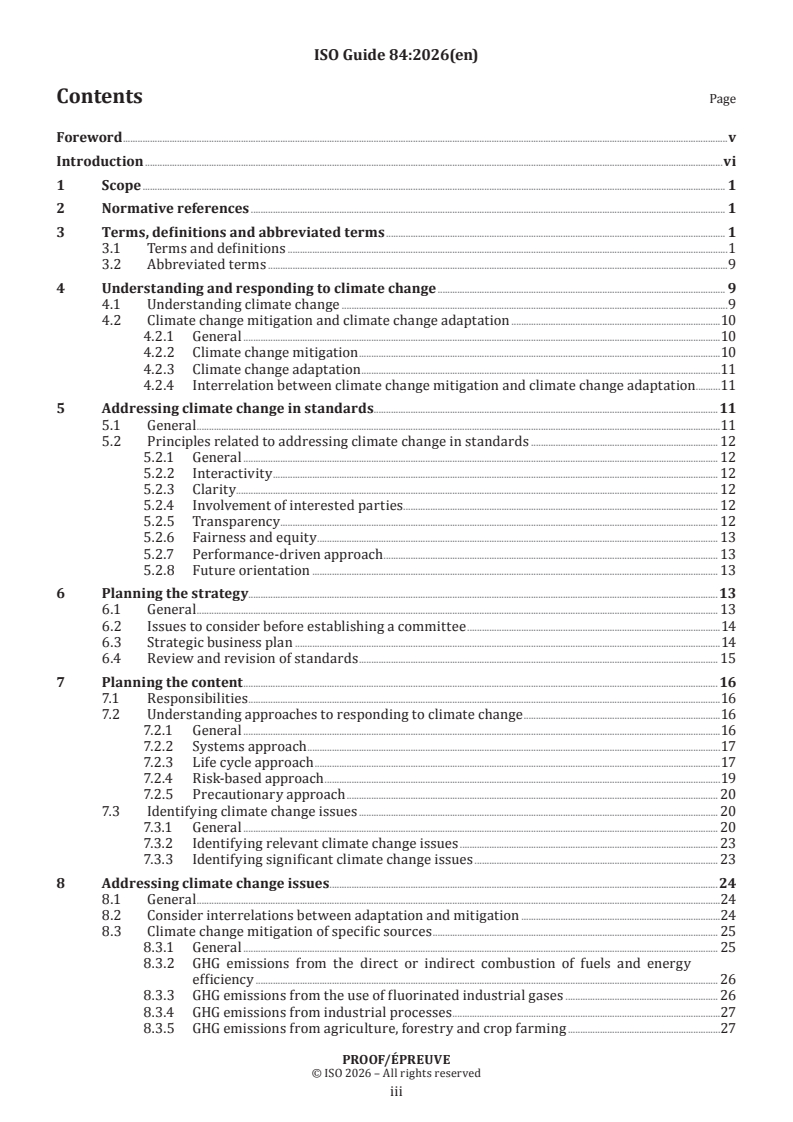
Contents
- Introduction
- 1 Scope
- 2 Normative references
- 3 Terms, definitions and abbreviated terms
- 3.1 Terms and definitions
- 3.1.1 climate
- 3.1.2 climate change
- 3.1.3 climate change adaptation
- 3.1.4 climate change mitigation
- 3.1.5 climate change impact
- 3.1.6 climate change risk
- 3.1.7 risk
- 3.1.8 vulnerability
- 3.1.9 sensitivity
- 3.1.10 exposure
- 3.1.11 hazard
- 3.1.12 greenhouse gas
- 3.1.13 greenhouse gas emission
- 3.1.14 greenhouse gas removal
- 3.1.15 greenhouse gas source
- 3.1.16 greenhouse gas sink
- 3.1.17 carbon dioxide capture and storage
- 3.1.18 carbon dioxide capture and utilization
- 3.1.19 greenhouse gas inventory
- 3.1.20 greenhouse gas programme
- 3.1.21 greenhouse gas project
- 3.1.22 greenhouse gas emission reduction
- 3.1.23 greenhouse gas removal enhancement
- 3.1.24 greenhouse gas baseline
- 3.1.25 baseline scenario
- 3.1.26 life cycle
- 3.1.27 life cycle assessment
- 3.1.28 life cycle inventory analysis
- 3.1.29 product
- 3.1.30 product system
- 3.1.31 unit process
- 3.1.32 carbon footprint of a product
- 3.1.33 partial carbon footprint of a product
- 3.1.34 CO equivalent
- 3.1.35 process
- 3.1.36 anthropogenic
- 3.1.37 land use
- 3.1.38 standards developer
- 3.1.39 interested party
- 3.1.40 organization
- 3.1.41 risk source
- 3.1.42 event
- 3.1.43 consequence
- 3.1.44 likelihood
- 3.1.45 carbon neutral
- 3.1.46 carbon neutrality
- 3.1.47 net zero
- 3.1.48 avoided GHG emission
- 3.2 Abbreviated terms
- 4 Understanding and responding to climate change
- 4.2 Climate change mitigation and climate change adaptation
- 5 Addressing climate change in standards
- 5.1 General
- 5.2 Principles related to addressing climate change in standards
- 6 Planning the strategy
- 6.1 General
- 6.2 Issues to think about before establishing a committee
- 6.3 Strategic business plan
- 6.4 Review and revision of standards
- 7 Planning the content
- 7.1 Responsibilities
- 7.2 Understanding approaches to responding to climate change
- 7.3 Identifying climate change issues
- 8 Addressing climate change issues
- 8.1 General
- 8.2 Consider interrelations between adaptation and mitigation
- 8.3 Addressing climate change mitigation when dealing with specific sources
- 8.4 Mitigation approaches
- 8.5 Financing the transition to a low carbon economy
- 8.6 Carbon neutrality and net zero
- 8.7 Addressing climate change adaptation aspects in product and process standards
- 8.8 Adaptation and mitigation in management system standards
- 8.9 Other aspects for consideration
- Annex A
- Annex B
Introduction
This document is intended for developers of ISO standards and other deliverables to encourage the inclusion of provisions in standards to address climate change impacts, risks and opportunities, and aims to:
- enable standards committees to determine if the standard under consideration should take into account aspects, issues, impacts, risks and/or opportunities associated with climate change;
- provide standards developers with a systematic approach to address climate change impacts, risks and opportunities in a coherent and consistent manner, with regard to both new and revised standards, and in a manner related to the objective and scope of the standard being developed;
- promote consistency and compatibility to the extent practicable among standards that directly or indirectly address climate change and their wider uptake in support of sustainability. In February 2024, the IAF/ISO Joint Communiqué on the addition of Climate Change considerations to Management Systems Standards highlighted new requirements to consider the effect of Climate Change when revising or developing new ISO Management Systems Standards (MSS). This document supports ISO’s commitment to accelerate achieving the goals of the Paris Agreement, the UN SDGs and the UN Call for Action on Adaptation and Resilience, as outlined in the September 2021 ISO London Declaration. The London Declaration commits ISO to develop processes to enable:
- the active consideration of climate science and associated transitions in the development of all new and revised International Standards and publications; and to
- facilitate the involvement of civil society and those most vulnerable to climate change in the development of International Standards and publications.
ISO will develop and publish an Action Plan and Measurement Framework detailing concrete actions and initiatives and a reporting mechanism to track progress.
NOTE Standards developers are encouraged to consider the mandatory committee-specific policies in the ISO/IEC Directives, Part 1, for the development of sector-specific environmental management standards and sector-specific environmental management system standards.
Figure 1 provides a schematic overview of this document as a process for addressing climate change in standards.
ISO/DGUIDE 84:2024(en) Figure 1 — Schematic overview of this document The international community has expressed a commitment to strengthen the global response to the threat of climate change, in the context of sustainable development, including:
a) holding the increase in the global average temperature to below 2 °C above pre-industrial levels and pursuing efforts to limit the temperature increase to 1,5 °C above pre-industrial levels, recognizing that this would significantly reduce the negative climate change impacts; b) increasing the ability to adapt to the adverse impacts of climate change and foster climate resilience and low greenhouse gas emissions development, in a manner that does not threaten food production. Climate change affects many regions of the world and includes significant climate change impacts, risks and opportunities arising from changing weather patterns, rising sea levels and more extreme weather events. Rapidly expanding urban areas are recognized to be particularly vulnerable. Climate extremes affecting urban systems, such as power supplies, can lead to cascading failures in other utilities and services compromising the safety, health and well-being of the population. The potential consequences of such climate-related impacts, risks and opportunities include the disruption of different environmental, social and economic systems within national economies, affecting communities and organizations, as well as individuals, with the poorest and most vulnerable people expected to be affected the most. Action is needed, involving both climate change adaptation and mitigation, in order to limit the effects of climate change impacts, risks and opportunities, while also contributing to the reduction of the world’s average surface temperature. Against this challenging outlook, the scope, need and opportunity for action on climate change is extensive.
Climate change is acknowledged as a foremost challenge with regards to the goal of sustainable development, which encompasses any state of the global system in which the needs of the present are met without compromising the ability of future generations to meet their own needs. Standards that take into consideration climate change adaptation and/or mitigation can contribute to the achievement of sustainability, either directly (where they specifically address sustainability issues such
ISO/DGUIDE 84:2024(en) as climate change) or indirectly (where they relate to testing, products, procedures, services, terminology, management systems or assessment). It is recognized that both climate change mitigation (CCM) and climate change adaptation (CCA)are important for all processes related to a technology, activity or product (TAP). Although there are very important interactions, the two disciplines are distinct and are addressed individually within this document.
Standards developers are encouraged to consider climate change issues in their work at all stages in the standards development process. If climate change issues have not been considered, this can be a valid reason to start the revision of a standard. In addition, the significance or relevance of specific issues can have changed since the previous edition of a standard was drafted or reviewed. Whenever a new standard is drafted, or an existing standard is revised, all standards developers (including project leaders, convenors, committee chairs, committee managers and secretaries) are encouraged to actively promote the application of this document, and to involve experts knowledgeable in the subject. When standards developers address climate change in different existing or new standards, the result can be an increased awareness of climate change issues among the user community across various market sectors. Through the application of this document, users of such standards will be better able to address climate change mitigation and/or adaptation in ways that many would not have expected or considered. And with entirely new standards, users will realize that there are new opportunities for the market to respond to these issues in ways not previously considered or contemplated.
DRAFT Guide ISO/DGUIDE 84:2024(en) Guidelines for addressing climate change in standards
1 Scope
This document provides guidance to standards developers on how to take account of climate change in the planning, drafting, revision and updating of ISO standards and other deliverables. It outlines a framework and general principles that standards developers can use to develop their own approach to addressing climate change on a subject-specific basis. It aims to enable standards developers to include climate change adaptation (CCA)and climate change mitigation (CCM) considerations in their standardization work. Considerations related to CCA are intended to contribute to increasing preparedness and disaster risk reduction as well as impacting the resilience of organizations and their technologies, activities or products (TAPs). Considerations related to CCM consist primarily of approaches that seek to avoid, reduce or limit the release of GHG emissions and/or increase GHG removals.
2 Normative references
There are no normative references in this document.
3 Terms, definitions and abbreviated terms
3.1 Terms and definitions
For the purposes of this document, the following terms and definitions apply. ISO and IEC maintain terminology databases for use in standardization at the following addresses:
- ISO Online browsing platform: available at https:// www .iso .org/ obp
- IEC Electropedia: available at https:// www .electropedia .org/
3.1.1 climate
statistical description of weather in terms of the mean and variability of relevant quantities over a period of at least 30 years or a period of time required by relevant authorities Note 1 to entry: The classical period for averaging these variables is 30 years, as defined by the World Meteorological Organization.
Note 2 to entry: The relevant quantities are most often near-surface variables such as temperature, precipitation and wind. [SOURCE: ISO 14090:2019, 3.4, modified — Replaced "time ranging from months to thousands or millions of years" with "at least 30 years or a period of time required by relevant authorities".]
3.1.2 climate change
change in climate (3.1.1) relevant quantities that persists for an extended period, typically decades or longer Note 1 to entry: Change in climate can be identified (e.g. by using statistical tests) by changes in the mean and/or the variability of its properties.
ISO/DGUIDE 84:2024(en) Note 2 to entry: Climate change might be due to natural processes, internal to the climate system, or external forcings such as modulations of the solar cycles, volcanic eruptions, and persistent anthropogenic (3.1.36) changes in the composition of the atmosphere or in land use (3.1.37).
[SOURCE: ISO 14090:2019, 3.5, modified]
3.1.3 climate change adaptation
CCA process of adjustment to actual or expected climate (3.1.1) and its effects Note 1 to entry: In human systems, adaptation seeks to moderate or avoid harm or exploit beneficial opportunities. Note 2 to entry: In some natural systems, human intervention can facilitate adjustment to expected climate and its effects.
[SOURCE: ISO 14090:2019, 3.1, modified — The preferred term “adaptation” has been added.]
3.1.4 climate change mitigation
mitigation human intervention to reduce GHG emissions (3.1.13) or enhance GHG removals (3.1.14) [SOURCE: ISO 14080:2018, 3.1.2.1, modified — The preferred term “mitigation” has been added, and the words “to reduce the sources or enhance the sinks of greenhouse gases (GHGs)” have been replaced with “to reduce GHG emissions or enhance GHG removals” in the definition.]
3.1.5 climate change impact
effect on natural or human systems as a result of being exposed to climate change (3.1.2) Note 1 to entry: Impacts can be adverse or beneficial.
[SOURCE: ISO 14090:2019, 3.8, modified — The preferred term and definition have been contextualized to directly refer to climate change: the term “impact” has been replaced with “climate change impact”, the words “as a result of being exposed to climate change” have been added to the definition and the original Note 1 to entry has been replaced.]
3.1.6 climate change risk
risk (3.1.7) of negative climate change impacts (3.1.5) that reflects the interaction among vulnerability (3.1.8), exposure (3.1.10) and hazard (3.1.11) Note 1 to entry: A risk assessment can include the consideration of vulnerabilities, exposure and climate change (3.1.2) hazards, or the consideration of likelihoods (3.1.44) and consequences (3.1.43). [SOURCE: ISO 14080:2018, 3.1.3.3, modified — The preferred term has been changed from “climate risk” to “climate change risk”, the words “potential of negative impacts of climate change” have been replaced with “risk of negative climate change impacts”, and the original Note 1 to entry has been replaced.]
3.1.7 risk
effect of uncertainty on objectives Note 1 to entry: An effect is a deviation from the expected. It can be positive, negative or both, and can address, create or result in opportunities and threats.
Note 2 to entry: Objectives can have different aspects and categories, and can be applied at different levels. Note 3 to entry: Risk is usually expressed in terms of risk sources (3.1.41), potential events (3.1.42), their consequences (3.1.43) and their likelihood (3.1.44).
[SOURCE: ISO 31000:2018, 3.1]
ISO/DGUIDE 84:2024(en)
3.1.8 vulnerability
propensity or predisposition to be adversely affected by climate (3.1.1) variability or change (3.1.2) Note 1 to entry: Vulnerability encompasses a variety of concepts and elements including sensitivity (3.1.9) or susceptibility to harm and lack of capacity to cope and adapt. [SOURCE: ISO 14090:2019, 3.15, modified —The definition has been contextualized to directly refer to climate variability or change: the words “by climate variability or change” have been added to the definition.]
3.1.9 sensitivity
degree to which a system or species is affected, either adversely or beneficially, by climate (3.1.1) variability or change (3.1.2) [SOURCE: ISO 14080:2018, 3.1.3.7, modified — The note to entry has been removed.]
3.1.10 exposure
presence of people, livelihoods, species or ecosystems, environmental functions, services, resources, infrastructure, or economic, social, or cultural assets in places and settings that could be adversely affected by climate (3.1.1) variability or change (3.1.2) Note 1 to entry: Exposure can change over time, for example as a result of land use (3.1.37) change. [SOURCE: ISO 14090:2019, 3.6, modified — The definition has been contextualized to directly refer to effect of climate change and climate variability: the term “affected” has been replaced by “adversely affected by climate variability or change” in the definition.]
3.1.11 hazard
potential source of injury or damage to the health of people, or damage to property or the environment Note 1 to entry: The potential for harm can be in terms of loss of life, injury or other health impacts, as well as damage and loss to property, infrastructure, livelihoods, service provision, ecosystems and environmental resources. Note 2 to entry: In this document, the term usually refers to climate-related physical events (3.1.42) or trends or their physical impacts.
Note 3 to entry: Hazard comprises slow-onset developments (e.g. rising temperatures over the long term) as well as rapidly developing climatic extremes (e.g. a heatwave or a landslide) or increased variability. [SOURCE: ISO 14090:2019, 3.7, modified — The word “harm” has been replaced by “injury or damage to the health of people, or damage to property or the environment” in the definition.]
3.1.12 greenhouse gas
GHG gaseous constituent of the atmosphere, both natural and anthropogenic (3.1.36), that absorbs and emits radiation at specific wavelengths within the spectrum of infrared radiation emitted by the Earth’s surface, the atmosphere, and clouds [SOURCE: ISO 14064-1:2018, 3.1.1, modified — The Notes to entry have been removed.]
3.1.13 greenhouse gas emission
GHG emission release of a GHG (3.1.12) into the atmosphere [SOURCE: ISO 14064-1:2018, 3.1.5]
ISO/DGUIDE 84:2024(en)
3.1.14 greenhouse gas removal
GHG removal withdrawal of a GHG (3.1.12) from the atmosphere [SOURCE: ISO 14064-1:2018, 3.1.6, modified — The words “by GHG sinks” have been removed from the definition.]
3.1.15 greenhouse gas source
GHG source process (3.1.35) that releases a GHG (3.1.12) into the atmosphere [SOURCE: ISO 14064-1:2018, 3.1.2]
3.1.16 greenhouse gas sink
GHG sink process (3.1.35) that removes a GHG (3.1.12) from the atmosphere [SOURCE: ISO 14064-1:2018, 3.1.3]
3.1.17 carbon dioxide capture and storage
carbon capture and storage CCS process (3.1.35) consisting of the separation of CO from industrial and energy-related sources, transportation
and injection into a geological formation, resulting in long-term isolation from the atmosphere Note 1 to entry: CCS is often referred to as carbon capture and storage. This terminology is not encouraged because it is inaccurate: the objective is the capture of carbon dioxide and not the capture of carbon. Tree plantation is another form of carbon capture that does not describe precisely the physical process of removing CO from industrial emission
sources.
Note 2 to entry: The term "sequestration" is also used alternatively to "storage". The term "storage" is preferred since “sequestration” is more generic and can also refer to biological processes (absorption of carbon by living organisms). Note 3 to entry: Long-term means the minimum period necessary for geological storage of CO to be considered an
effective and environmentally safe climate change mitigation (3.1.4) option. [SOURCE: ISO 27917:2017, 3.1.1, modified — The admitted term “carbon capture and storage” has been added, and Notes 4 and 5 to entry have been removed]
3.1.18 carbon dioxide capture and utilization
CCU process (3.1.35) of separating (capturing) CO from an industrial or manufacturing process or from air, and
converting it for use as material feedstock within another product system (3.1.30) Note 1 to entry: CCU is sometimes referred to as CO transformation, CO conversion, CO recycling or CO upcycling. 2 2 2 2 Note 2 to entry: Currently, the CO that is captured is typically converted for use in creating fuels, chemicals, or
material feedstock or used directly for enhancing plant growth in horticulture or as a refrigerant in a liquid form.
3.1.19 greenhouse gas inventory
GHG inventory list of GHG sources (3.1.15) and GHG sinks (3.1.16), and their quantified GHG emissions (3.1.13) and GHG removals (3.1.14) [SOURCE: ISO 14064-1:2018, 3.2.6]
ISO/DGUIDE 84:2024(en)
3.1.20 greenhouse gas programme
GHG programme voluntary or mandatory international, national, or subnational system or scheme that registers, accounts or manages GHG emissions (3.1.13), GHG removals (3.1.14), GHG emission reductions (3.1.22) or GHG removal enhancements (3.1.23) outside the organization (3.1.40) or GHG project (3.1.21) [SOURCE: ISO 14064-1:2018, 3.2.8]
3.1.21 greenhouse gas project
GHG project activity or activities that alter the conditions of a GHG baseline (3.1.24) and which cause GHG emission reductions (3.1.22) or GHG removal enhancements (3.1.23) [SOURCE: ISO 14064-1:2018, 3.2.7, modified — Note to entry has been removed.]
3.1.22 greenhouse gas emission reduction
GHG emission reduction quantified decrease in GHG emissions (3.1.13) between a baseline scenario (3.1.25) and the GHG project (3.1.21) [SOURCE: ISO 14064-2:2019, 3.1.7]
3.1.23 greenhouse gas removal enhancement
GHG removal enhancement quantified increase in GHG removals (3.1.14) between a baseline scenario (3.1.25) and the GHG project (3.1.21) [SOURCE: ISO 14064-2:2019, 3.1.8]
3.1.24 greenhouse gas baseline
GHG baseline quantitative reference(s) of GHG emissions (3.1.13) and/or GHG removals (3.1.14) that would have occurred in the absence of a GHG project (3.1.21) and provides the baseline scenario (3.1.25) for comparison with project GHG emissions and/or GHG removals [SOURCE: ISO 14064-2:2019, 3.2.5]
3.1.25 baseline scenario
hypothetical reference case that best represents the conditions most likely to occur in the absence of a proposed GHG project (3.1.21) [SOURCE: ISO 14064-2:2019, 3.2.6]
3.1.26 life cycle
consecutive and interlinked stages related to a product (3.1.29), from raw material acquisition or generation from natural resources to end-of-life treatment.
[SOURCE: ISO 14067:2018, 3.1.4.2, modified — Notes to entry have been removed.]
3.1.27 life cycle assessment
compilation and evaluation of the inputs, outputs and the potential environmental impacts of a product system (3.1.30) throughout its life cycle (3.1.26) [SOURCE: ISO 14040:2006, 3.2]
ISO/DGUIDE 84:2024(en)
3.1.28 life cycle inventory analysis
LCI phase of life cycle assessment (3.1.27) involving the compilation and quantification of inputs and outputs for a product (3.1.29) throughout its life cycle (3.1.26) [SOURCE: ISO 14040:2006, 3.3]
3.1.29 product
goods or service [SOURCE: ISO 14067:2018, 3.1.3.1, modified — Notes to entry have been removed.]
...
Contents
- Introduction
- 1 Scope
- 2 Normative references
- 3 Terms, definitions and abbreviated terms
- 3.1 Terms and definitions
- 3.1.1 climate
- 3.1.2 climate change
- 3.1.3 climate change adaptation
- 3.1.4 climate change mitigation
- 3.1.5 climate change impact
- 3.1.6 climate change risk
- 3.1.7 risk
- 3.1.8 vulnerability
- 3.1.9 sensitivity
- 3.1.10 exposure
- 3.1.11 hazard
- 3.1.12 greenhouse gas
- 3.1.13 greenhouse gas emission
- 3.1.14 greenhouse gas removal
- 3.1.15 greenhouse gas source
- 3.1.16 greenhouse gas sink
- 3.1.17 carbon dioxide capture and storage
- 3.1.18 carbon dioxide capture and utilization
- 3.1.19 greenhouse gas inventory
- 3.1.20 greenhouse gas programme
- 3.1.21 greenhouse gas project
- 3.1.22 greenhouse gas emission reduction
- 3.1.23 greenhouse gas removal enhancement
- 3.1.24 greenhouse gas baseline
- 3.1.25 baseline scenario
- 3.1.26 life cycle
- 3.1.27 life cycle assessment
- 3.1.28 life cycle inventory analysis
- 3.1.29 product
- 3.1.30 product system
- 3.1.31 unit process
- 3.1.32 carbon footprint of a product
- 3.1.33 partial carbon footprint of a product
- 3.1.34 CO equivalent
- 3.1.35 process
- 3.1.36 anthropogenic
- 3.1.37 land use
- 3.1.38 standards developer
- 3.1.39 interested party
- 3.1.40 organization
- 3.1.41 risk source
- 3.1.42 event
- 3.1.43 consequence
- 3.1.44 likelihood
- 3.1.45 carbon neutral
- 3.1.46 carbon neutrality
- 3.1.47 net zero
- 3.1.48 avoided greenhouse gas emission
- 3.2 Abbreviated terms
- 4 Understanding and responding to climate change
- 4.2 Climate change mitigation and climate change adaptation
- 5 Addressing climate change in standards
- 5.1 General
- 5.2 Principles related to addressing climate change in standards
- 6 Planning the strategy
- 6.1 General
- 6.2 Issues to consider before establishing a committee
- 6.3 Strategic business plan
- 6.4 Review and revision of standards
- 7 Planning the content
- 7.1 Responsibilities
- 7.2 Understanding approaches to responding to climate change
- 7.3 Identifying climate change issues
- 8 Addressing climate change issues
- 8.1 General
- 8.2 Consider interrelations between adaptation and mitigation
- 8.3 Climate change mitigation of specific sources
- 8.4 Other mitigation approaches
- 8.5 Financing the transition to a low carbon economy
- 8.6 Carbon neutrality and net zero
- 8.7 Addressing climate change adaptation
- 8.8 Adaptation and mitigation in Management System Standards
- 8.9 Other aspects for consideration
- Annex A
- Annex B
Introduction
This document is intended for developers of ISO International Standards and other deliverables to encourage the inclusion of provisions in International Standards to address identified climate change impacts, risks and opportunities, taking into consideration the importance of allowing flexibility based on the local context, needs and challenges. This document aims to:
- enable committees working in standards development to determine if the standard under consideration should take into account all aspects, issues, impacts, risks and/or opportunities associated with climate change;
- provide standards developers with a systematic approach for addressing climate change impacts, risks and opportunities in a coherent and consistent manner, with regard to both new and revised standards, and in a manner relevant to the objective and scope of the standard being developed;
- promote consistency and compatibility to the extent practicable among standards that directly or indirectly address climate change and their wider uptake in support of sustainability. In February 2024, the IAF/ISO Joint Communiqué on the addition of Climate Change considerations to Management Systems Standards highlighted new requirements to consider the effect of Climate Change when revising or developing new ISO Management Systems Standards (MSS). This document supports ISO’s commitment to accelerate achieving the goals of the Paris Agreement, the UN SDGs and the UN Call for Action on Adaptation and Resilience, as outlined in the September 2021 ISO London Declaration. The London Declaration commits ISO to developing processes to:
- enable the active consideration of climate science and associated transitions in the development of all new and revised International Standards and publications;
- facilitate the involvement of civil society and those most vulnerable to climate change in the development of International Standards and publications.
ISO will develop and publish an Action Plan and Measurement Framework detailing concrete actions and initiatives and a reporting mechanism to track progress.
NOTE 1 ISO Guide 82 is currently under revision. The future edition is intended to contain new guiding principles for consistently assessing climate impacts, risks and opportunities in both new and revised standards involving digital technologies.
NOTE 2 Standards developers are encouraged to consider the mandatory committee-specific policies in the ISO/ IEC Directives, Part 1, for the development of sector-specific environmental management standards and sectorspecific environmental Management System Standards. NOTE 3 References to the Paris Agreement, UN SDGs and the London Declaration are available in the Bibliography. These include several key principles such as the "Just Transition" and "Common and Differentiated Responsibilities", both of which are referenced in the 2016 Paris Agreement.
Figure 1 provides a schematic overview of this document as a process for addressing climate change in standards.
ISO/DGUIDE 84.2:2026(en) Figure 1 — Schematic overview of this document The international community has expressed a commitment to strengthening the global response to the threat of climate change in the context of sustainable development, common but differentiated responsibilities, respective capabilities and different national circumstances, including:
a) holding the increase in the global average temperature to well below 2 °C above pre-industrial levels and pursuing efforts to limit the temperature increase to 1,5 °C above pre-industrial levels, recognizing that this will require greenhouse gas (GHG) emissions to be significantly reduced in order to minimize negative climate change impacts; b) increasing the ability to mitigate and achieve low greenhouse gas emissions development in the short term and to achieve net zero GHG emissions in the medium to long term in support of the Paris Agreement; c) increasing the ability to adapt to the adverse impacts of climate change and foster climate resilience and low GHG emissions development, in a manner that does not threaten food production as well as other global goals as SDGs on adaptation established under the Paris Agreement. [37] NOTE 4 The 2018 IPCC Special Report identifies the impacts of global warming of 1,5 °C above pre-industrial levels and related global GHG emission pathways.
Climate change affects many regions of the world and engenders significant impacts, risks and opportunities due to changing weather patterns, rising sea levels and more extreme weather events. Rapidly expanding urban areas are recognized to be particularly vulnerable. Climate extremes affecting urban systems, such as power supplies, can lead to cascading failures in other utilities and services compromising the safety, health and well-being of the population. The potential consequences of such climate-related impacts, risks and opportunities include the disruption of different environmental, social and economic systems within
ISO/DGUIDE 84.2:2026(en) national economies, affecting communities and organizations, as well as individuals, with the poorest and most vulnerable people expected to be affected the most.
NOTE 5 Climate change impacts can affect population health, safety and the health of workers in organizations. Extreme climate events can lead to injuries, disease and ill-health. Action is needed, involving both climate change mitigation and adaptation, to limit the effects of climate change impacts and risks and to consider opportunities resulting from climate change, while also contributing to limiting the increase in the world’s average surface temperature. Against this challenging outlook, the scope, need and opportunity for action on climate change is extensive. While the Paris Agreement aims to increase the ability of countries to deal with the impacts of climate change, the development of standards which incorporate appropriate, climate-relevant actions, should enhance the ability of organizations to address climate change challenges. Similarly, standards writers should consider that diverse organizations exist within countries and that climate-relevant actions should be guided by the key Paris Agreement principle of “equity and common but differentiated responsibilities and respective capabilities, in the light of different national circumstances”. Climate-relevant actions within standards can need to consider the relevant scientific and technical developments and disparities among various countries. Standards writers should act to facilitate positive action, i.e. to favour “preparing performance rather than prescriptive standards”, as stated in the ISO Global Relevance Policy. Performance standards should also be preferred when providing guidance on the use of technology appropriate, accessible tools for measuring climate actions, such as for GHG monitoring and climate adaptation tracking, including community-based monitoring frameworks. Climate change is acknowledged as a foremost challenge with regards to the goal of sustainable development, which encompasses any state of the global system in which the needs of the present are met without compromising the ability of future generations to meet their own needs. Standards that take into consideration climate change adaptation or mitigation, or both, can contribute to the achievement of sustainability, either directly (where they specifically address sustainability issues such as climate change) or indirectly (where they relate to testing, products, procedures, services, terminology, management systems or assessment). It is recognized that both climate change mitigation (CCM) and climate change adaptation (CCA) are important for all processes related to a technology, activity or product (TAP). Although there are very important interactions between CCM and CCA, the two are distinct and are addressed individually within this document.
Standards developers are encouraged to consider climate change issues in their work at all stages in the standards development process. If climate change issues have not been considered, this can be a valid reason to start the revision of a standard. In addition, the significance or relevance of specific issues can have changed since the previous edition of a standard was drafted or reviewed. Whenever a new standard is drafted, or an existing standard is revised, all standards developers (including project leaders, convenors, committee chairs, committee managers and secretaries) are encouraged to actively promote the application of this document, and to involve experts who are knowledgeable in the subject. When standards developers address climate change in different existing or new standards, the result can be an increased awareness of climate change issues among the user community across various market sectors. Through the application of this document, users of such standards will be better able to address climate change mitigation or adaptation, or both, in ways that many would not have expected or considered. Furthermore, with entirely new standards, users will realize that there are new opportunities for the market to respond to these issues in ways not previously considered.
NOTE 6 The definitions listed in Clause 3 of this document are primarily taken from the most relevant ISO documents. There are many definitions also available within sources outlined in bibliography (notably IPCC and UNFCCC).
DRAFTGuide ISO/DGUIDE 84.2:2026(en) Guidelines for addressing climate change in standards
1 Scope
This document provides guidelines for standards developers on how to take account of climate change in the planning, drafting, revision and updating of ISO International Standards and other deliverables. It outlines a framework and general principles that standards developers can use to develop their own approach to addressing climate change on a subject-specific basis. It aims to enable standards developers to include climate change mitigation (CCM) and climate change adaptation (CCA) considerations in their standardization work. Considerations related to CCM consist primarily of approaches that seek to avoid, reduce or limit the release of greenhouse gas (GHG) emissions and/or to increase GHG removals where appropriate. Considerations related to CCA are intended to contribute to increasing preparedness and disaster risk reduction as well as impacting the resilience of organizations and their technologies, activities or products (TAPs).
2 Normative references
There are no normative references in this document.
3 Terms, definitions and abbreviated terms
3.1 Terms and definitions
For the purposes of this document, the following terms and definitions apply. ISO and IEC maintain terminology databases for use in standardization at the following addresses:
- ISO Online browsing platform: available at https:// www .iso .org/ obp
- IEC Electropedia: available at https:// www .electropedia .org/
3.1.1 climate
statistical description of weather in terms of the mean and variability of relevant quantities over a period of at least 30 (thirty) years or a period of time required by relevant authorities Note 1 to entry: The classical period for averaging these variables is 30 years, as defined by the World Meteorological Organization.
Note 2 to entry: The relevant quantities are most often near-surface variables such as temperature, precipitation and wind.
[SOURCE: ISO 14090:2019, 3.4, modified — In the definition, "over a period of time ranging from months to thousands or millions of years" has been replaced with "over a period of at least 30 (thirty) years or a period of time required by relevant authorities".]
3.1.2 climate change
change in climate- (3.1.1) relevant quantities that persists for an extended period, typically decades or longer Note 1 to entry: Change in climate can be identified (e.g. by using statistical tests) by changes in the mean and/or the variability of its properties.
ISO/DGUIDE 84.2:2026(en) Note 2 to entry: Climate change can be due to natural processes, internal to the climate system, or external forces, such as modulations of the solar cycles, volcanic eruptions, and persistent anthropogenic (3.1.36) changes in the composition of the atmosphere or in land use (3.1.37).
[SOURCE: ISO 14090:2019, 3.5, modified — In the definition, "change in climate" has been replaced with "change in climate-relevant quantities". Note 1 to entry has been rephrased.]
3.1.3 climate change adaptation
CCA process of adjustment to actual or expected climate (3.1.1) and its effects Note 1 to entry: In human systems, adaptation seeks to moderate or avoid harm or exploit beneficial opportunities. Note 2 to entry: In some natural systems, human intervention can facilitate adjustment to expected climate and its effects.
[SOURCE: ISO 14090:2019, 3.1, modified — The preferred term “adaptation to climate change” has been replaced with "climate change adaptation".]
3.1.4 climate change mitigation
CCM human intervention to reduce greenhouse gas emissions (3.1.13) or enhance greenhouse gas removals (3.1.14) [SOURCE: ISO 14080:2018, 3.1.2.1, modified — In the definition, “to reduce the sources or enhance the sinks of greenhouse gases (GHGs)” has been replaced with “to reduce greenhouse gas emissions or enhance greenhouse gas removals”.]
3.1.5 climate change impact
effect on natural or human systems as a result of being exposed to climate change (3.1.2) Note 1 to entry: Climate change impacts can be adverse or beneficial. [SOURCE: ISO 14090:2019, 3.8, modified — The preferred term and definition have been contextualized to directly refer to climate change: the preferred term “impact” has been replaced with “climate change impact”, the words “as a result of being exposed to climate change” have been added to the definition, and the original Note 1 to entry has been replaced.]
3.1.6 climate change risk
risk (3.1.7) of negative climate change impacts (3.1.5) that reflects the interaction among vulnerability (3.1.8), exposure (3.1.10) and hazard (3.1.11) Note 1 to entry: A risk assessment can include the consideration of vulnerabilities, exposure and climate change (3.1.2) hazards, or the consideration of likelihoods (3.1.44) and consequences (3.1.43). [SOURCE: ISO 14080:2018, 3.1.3.3, modified — The preferred term has been changed from “climate risk” to “climate change risk”, the words “potential of negative impacts of climate change” have been replaced with “risk of negative climate change impacts”, and the original Note 1 to entry has been replaced.]
3.1.7 risk
effect of uncertainty on objectives Note 1 to entry: An effect is a deviation from the expected. It can be positive, negative or both, and can address, create or result in opportunities and threats.
Note 2 to entry: Objectives can have different aspects and categories, and can be applied at different levels. Note 3 to entry: Risk is usually expressed in terms of risk sources (3.1.41), potential events (3.1.42), their consequences (3.1.43) and their likelihood (3.1.44).
ISO/DGUIDE 84.2:2026(en) [SOURCE: ISO 31000:2018, 3.1]
3.1.8 vulnerability
propensity or predisposition to be adversely affected by climate (3.1.1) variability or change (3.1.2) Note 1 to entry: Vulnerability encompasses a variety of concepts and elements including sensitivity (3.1.9) or susceptibility to harm and lack of capacity to cope and adapt. [SOURCE: ISO 14090:2019, 3.15, modified — The definition has been contextualized to directly refer to climate variability or change: the words “by climate variability or change” have been added to the definition.]
3.1.9 sensitivity
degree to which a system or species is affected, either adversely or beneficially, by climate (3.1.1) variability or change (3.1.2) [SOURCE: ISO 14080:2018, 3.1.3.7, modified — Note 1 to entry has been removed.]
3.1.10 exposure
presence of people, livelihoods, species or ecosystems, environmental functions, services, resources, infrastructure, or economic, social or cultural assets in places and settings that could be adversely affected by climate (3.1.1) variability or change (3.1.2) Note 1 to entry: Exposure can change over time, for example as a result of land use (3.1.37) change. [SOURCE: ISO 14090:2019, 3.6, modified — The definition has been contextualized to directly refer to effect of climate change and climate variability: the word “affected” has been replaced with “adversely affected by climate variability or change” in the definition.]
3.1.11 hazard
potential source of injury or damage to the health of people, or damage to property or the environment Note 1 to entry: The potential for harm can be in terms of loss of life, injury or other health impacts, as well as damage and loss to property, infrastructure, livelihoods, service provision, ecosystems and environmental resources. Note 2 to entry: In this document, the term usually refers to climate-related physical events (3.1.42) or trends or their physical impacts.
Note 3 to entry: Hazard comprises slow-onset developments (e.g. rising temperatures over the long term) as well as rapidly developing climatic extremes (e.g. a heatwave or a landslide) or increased variability. [SOURCE: ISO 14090:2019, 3.7, modified — In the definition, the word “harm” has been replaced with “injury or damage to the health of people, or damage to property or the environment”.]
3.1.12 greenhouse gas
GHG gaseous constituent of the atmosphere, both natural and anthropogenic (3.1.36), that absorbs and emits radiation at specific wavelengths within the spectrum of infrared radiation emitted by the Earth’s surface, the atmosphere, and clouds [SOURCE: ISO 14050:2020, 3.9.1]
3.1.13 greenhouse gas emission
GHG emission release of a greenhouse gas (3.1.12) into the atmosphere [SOURCE: ISO 14064-1:2018, 3.1.5]
ISO/DGUIDE 84.2:2026(en)
3.1.14 greenhouse gas removal
GHG removal withdrawal of a greenhouse gas (3.1.12) from the atmosphere [SOURCE: ISO 14064-1:2018, 3.1.6, modified — The words “by GHG sinks” have been removed from the definition.]
3.1.15 greenhouse gas source
GHG source process (3.1.35) that releases a greenhouse gas (3.1.12) into the atmosphere [SOURCE: ISO 14064-1:2018, 3.1.2]
3.1.16 greenhouse gas sink
GHG sink process (3.1.35) that removes a greenhouse gas (3.1.12) from the atmosphere [SOURCE: ISO 14064-1:2018, 3.1.3]
3.1.17 carbon dioxide capture and storage
carbon capture and storage CCS process (3.1.35) consisting of the separation of CO from industrial and energy-related sources, transportation
and injection into a geological formation, resulting in long-term isolation from the atmosphere Note 1 to entry: CCS is often referred to as "carbon capture and storage". This terminology is not encouraged because it is inaccurate: the objective is the capture of carbon dioxide and not the capture of carbon. Tree plantation is another form of carbon capture that does not describe precisely the physical process of removing CO from surrounding air
which could include some CO from industrial emission sources.
Note 2 to entry: The term "sequestration" is also used alternatively to "storage". The term "storage" is preferred since “sequestration” is more generic and can also refer to biological processes (absorption of carbon by living organisms). Note 3 to entry: Long-term means the minimum period necessary for geological storage of CO to be considered an
effective and environmentally safe climate change mitigation (3.1.4) option. [SOURCE: ISO 27917:2017, 3.1.1, modified — The admitted term “carbon capture and storage” has been added, in Note 1 to entry "removing CO2 from industrial emission sources" has been replaced with "removing CO from surrounding air which could include some CO from industrial emission sources", and Notes 4 and 2 2 5 to entry have been removed.]
...
Contents
- Introduction
- 1 Scope
- 2 Normative references
- 3 Terms, definitions and abbreviated terms
- 3.1 Terms and definitions
- 3.1.1 climate
- 3.1.2 climate change
- 3.1.3 climate change adaptation
- 3.1.4 climate change mitigation
- 3.1.5 climate change impact
- 3.1.6 climate change risk
- 3.1.7 risk
- 3.1.8 vulnerability
- 3.1.9 sensitivity
- 3.1.10 exposure
- 3.1.11 hazard
- 3.1.12 greenhouse gas
- 3.1.13 greenhouse gas emission
- 3.1.14 greenhouse gas removal
- 3.1.15 greenhouse gas source
- 3.1.16 greenhouse gas sink
- 3.1.17 carbon dioxide capture and storage
- 3.1.18 carbon dioxide capture and utilization
- 3.1.19 greenhouse gas inventory
- 3.1.20 greenhouse gas programme
- 3.1.21 greenhouse gas project
- 3.1.22 greenhouse gas emission reduction
- 3.1.23 greenhouse gas removal enhancement
- 3.1.24 greenhouse gas baseline
- 3.1.25 baseline scenario
- 3.1.26 life cycle
- 3.1.27 life cycle assessment
- 3.1.28 life cycle inventory analysis
- 3.1.29 product
- 3.1.30 product system
- 3.1.31 unit process
- 3.1.32 carbon footprint of a product
- 3.1.33 partial carbon footprint of a product
- 3.1.34 CO equivalent
- 3.1.35 process
- 3.1.36 anthropogenic
- 3.1.37 land use
- 3.1.38 standards developer
- 3.1.39 interested party
- 3.1.40 organization
- 3.1.41 risk source
- 3.1.42 event
- 3.1.43 consequence
- 3.1.44 likelihood
- 3.1.45 carbon neutral
- 3.1.46 carbon neutrality
- 3.1.47 net zero
- 3.1.48 avoided greenhouse gas emission
- 3.2 Abbreviated terms
- 4 Understanding and responding to climate change
- 4.1 Understanding climate change
- 4.2 Climate change mitigation and climate change adaptation
- 5 Addressing climate change in standards
- 5.1 General
- 5.2 Principles related to addressing climate change in standards
- 6 Planning the strategy
- 6.1 General
- 6.2 Issues to consider before establishing a committee
- 6.3 Strategic business plan
- 6.4 Review and revision of standards
- 7 Planning the content
- 7.1 Responsibilities
- 7.2 Understanding approaches to responding to climate change
- 7.3 Identifying climate change issues
- 8 Addressing climate change issues
- 8.1 General
- 8.2 Consider interrelations between adaptation and mitigation
- 8.3 Climate change mitigation of specific sources
- 8.4 Other mitigation approaches
- 8.5 Financing the transition to a low carbon economy
- 8.6 Carbon neutrality and net zero
- 8.7 Addressing climate change adaptation
- 8.8 Adaptation and mitigation in Management System Standards
- 8.9 Other aspects for consideration
- Annex A
Introduction
This document is intended for developers of ISO International Standards and other deliverables to encourage the inclusion of provisions in International Standards to address identified climate change impacts, risks and opportunities, taking into consideration the importance of allowing flexibility based on the local context, needs and challenges. This document aims to:
- enable committees working in standards development to determine if the standard under consideration should take into account all aspects, issues, impacts, risks or opportunities associated with climate change;
- provide standards developers with a systematic approach for addressing climate change impacts, risks and opportunities in a coherent and consistent manner, with regard to both new and revised standards, and in a manner relevant to the objective and scope of the standard being developed;
- promote consistency and compatibility to the extent practicable among standards that directly or indirectly address climate change and their wider uptake in support of sustainability. In February 2024, the IAF/ISO Joint Communiqué on the addition of climate change considerations to Management Systems Standards highlighted new requirements to consider the effect of climate change when revising or developing new ISO Management Systems Standards (MSS). [34] This document supports ISO’s commitment to accelerate achieving the goals of the Paris Agreement , the [48] UN Sustainable Development Goals (SDGs) and the UN Call for Action on Adaptation and Resilience, as outlined in the September 2021 ISO London Declaration. The London Declaration commits ISO to developing processes to:
- enable the active consideration of climate science and associated transitions in the development of all new and revised International Standards and publications;
- facilitate the involvement of civil society and those most vulnerable to climate change in the development of International Standards and publications.
ISO will develop and publish an Action Plan and Measurement Framework detailing concrete actions and initiatives and a reporting mechanism to track progress.
NOTE 1 ISO Guide 82 is currently under revision. The future edition is intended to contain new guiding principles for consistently assessing climate impacts, risks and opportunities in both new and revised standards involving digital technologies.
NOTE 2 Standards developers are encouraged to consider the mandatory committee-specific policies in the ISO/ IEC Directives, Part 1, for the development of sector-specific environmental management standards and sectorspecific environmental Management System Standards. [34] [48] NOTE 3 References to the Paris Agreement , UN SDGs and the London Declaration are available in the Bibliography.
Figure 1 provides a schematic overview of this document as a process for addressing climate change in standards.
PROOF/ÉPREUVE
ISO Guide 84:2026(en) Figure 1 — Schematic overview of this document The international community has expressed a commitment to strengthening the global response to the threat of climate change in the context of sustainable development, common but differentiated responsibilities and, respective capabilities, in the light of different national circumstances, including:
a) holding the increase in the global average temperature to well below 2 °C above pre-industrial levels and pursuing efforts to limit the temperature increase to 1,5 °C above pre-industrial levels, recognizing that this will require greenhouse gas (GHG) emissions to be significantly reduced in order to minimize negative climate change impacts; b) increasing the ability to mitigate and achieve low greenhouse gas emissions development in the short term and to achieve net zero GHG emissions in the medium to long term in support of the Paris [34] Agreement ; c) increasing the ability to adapt to the adverse impacts of climate change and foster climate resilience and low GHG emissions development, in a manner that does not threaten food production as well as other [34] global goals as SDGs on adaptation established under the Paris Agreement . [37] NOTE 4 The 2018 IPCC Special Report identifies the impacts of global warming of 1,5 °C above pre-industrial levels and related global GHG emission pathways.
Climate change affects many regions of the world and engenders significant impacts, risks and opportunities due to changing weather patterns, rising sea levels and more extreme weather events. Rapidly expanding urban areas are recognized to be particularly vulnerable. Climate extremes affecting urban systems, such as power supplies, can lead to cascading failures in other utilities and services compromising the safety, health and well-being of the population. The potential consequences of such climate-related impacts, risks and opportunities include the disruption of different environmental, social and economic systems within PROOF/ÉPREUVE
ISO Guide 84:2026(en) national economies, affecting communities and organizations, as well as individuals, with the poorest and most vulnerable people expected to be affected the most.
NOTE 5 Climate change impacts can affect population health, safety and the health of workers in organizations. Extreme climate events can lead to injuries, disease and ill-health. Action is needed, involving both climate change mitigation and adaptation, to limit the effects of climate change impacts and risks and to consider opportunities resulting from climate change, while also contributing to limiting the increase in the world’s average surface temperature. Against this challenging outlook, the scope, need and opportunity for action on climate change is extensive. [34] While the Paris Agreement aims to increase the ability of countries to deal with the impacts of climate change, the development of standards which incorporate appropriate, climate-relevant actions, should enhance the ability of organizations to address climate change challenges. Similarly, standards writers should consider that diverse organizations exist within countries having different national circumstances [34] and that climate-relevant actions should be guided by the Paris Agreement . Climate-relevant actions within standards can need to consider the relevant scientific and technical developments and disparities among various countries. Standards writers should act to facilitate positive action, i.e. to favour “preparing performance rather than prescriptive standards”, as stated in the ISO Global Relevance Policy. Performance standards should also be used when providing guidance on the use of technology appropriate, accessible tools for measuring climate actions, such as for GHG monitoring and climate adaptation tracking, including community-based monitoring frameworks.
Climate change is acknowledged as a foremost challenge with regards to the goal of sustainable development, which encompasses any state of the global system in which the needs of the present are met without compromising the ability of future generations to meet their own needs. Standards that take into consideration climate change adaptation or mitigation, or both, can contribute to the achievement of sustainability, either directly (where they specifically address sustainability issues such as climate change) or indirectly (where they relate to testing, products, procedures, services, terminology, management systems or assessment). It is recognized that both climate change mitigation (CCM) and climate change adaptation (CCA) are important for all processes related to a technology, activity or product (TAP). Although there are very important interactions between CCM and CCA, the two are distinct and are addressed individually within this document.
Standards developers are encouraged to consider climate change issues in their work at all stages in the standards development process. If climate change issues have not been considered, this can be a valid reason to start the revision of a standard. In addition, the significance or relevance of specific issues can have changed since the previous edition of a standard was drafted or reviewed. Whenever a new standard is drafted, or an existing standard is revised, all standards developers (including project leaders, convenors, committee chairs, committee managers and secretaries) are encouraged to actively promote the application of this document, and to involve experts who are knowledgeable in the subject. When standards developers address climate change in different existing or new standards, the result can be an increased awareness of climate change issues among the user community across various market sectors. Through the application of this document, users of such standards will be better able to address climate change mitigation or adaptation, or both, in ways that many would not have expected or considered. Furthermore, with entirely new standards, users will realize that there are new opportunities for the market to respond to these issues in ways not previously considered.
NOTE 6 The definitions listed in Clause 3 are primarily taken from the most relevant ISO documents. There are many definitions also available within sources outlined in the Bibliography (notably IPCC and UNFCCC). PROOF/ÉPREUVE
Guide ISO Guide 84:2026(en) Guidelines for addressing climate change in standards
1 Scope
This document provides guidelines for standards developers on how to take account of climate change in the planning, drafting, revising and updating of ISO International Standards and other deliverables. This document outlines a framework and general principles that standards developers can use to develop their own approach to addressing climate change on a subject-specific basis. This document aims to enable standards developers to include climate change mitigation (CCM) and climate change adaptation (CCA) considerations in their standardization work. NOTE Considerations related to CCM consist primarily of approaches that seek either to avoid, reduce or limit the release of greenhouse gas (GHG) emissions, or to increase GHG removals where appropriate, or both. Considerations related to CCA are intended to contribute to increasing preparedness and disaster risk reduction as well as impacting the resilience of organizations and their technologies, activities or products (TAPs).
2 Normative references
There are no normative references in this document.
3 Terms, definitions and abbreviated terms
3.1 Terms and definitions
For the purposes of this document, the following terms and definitions apply. ISO and IEC maintain terminology databases for use in standardization at the following addresses:
- ISO Online browsing platform: available at https:// www .iso .org/ obp
- IEC Electropedia: available at https:// www .electropedia .org/
3.1.1 climate
statistical description of weather in terms of the mean and variability of relevant quantities over a period of at least 30 years or a period of time required by relevant authorities Note 1 to entry: The classical period for averaging these variables is 30 years, as defined by the World Meteorological Organization.
Note 2 to entry: The relevant quantities are most often near-surface variables such as temperature, precipitation and wind.
[SOURCE: ISO 14090:2019, 3.4, modified — In the definition, "over a period of time ranging from months to thousands or millions of years" has been replaced with "over a period of at least 30 years or a period of time required by relevant authorities".] PROOF/ÉPREUVE
ISO Guide 84:2026(en)
3.1.2 climate change
change in climate- (3.1.1) relevant quantities that persists for an extended period, typically decades or longer Note 1 to entry: Change in climate can be identified (e.g. by using statistical tests) by changes in either the mean or the variability of its properties, or both.
Note 2 to entry: Climate change can be due to natural processes, internal to the climate system, or external forces, such as modulations of the solar cycles, volcanic eruptions, and persistent anthropogenic (3.1.36) changes in the composition of the atmosphere or in land use (3.1.37).
[SOURCE: ISO 14090:2019, 3.5, modified — "change in climate" has been replaced with "change in climaterelevant quantities" in the definition, Note 1 to entry has been rephrased and "might" has been changed to "can" in Note 2 to entry.]
3.1.3 climate change adaptation
CCA process (3.1.35) of adjustment to actual or expected climate (3.1.1) and its effects Note 1 to entry: In human systems, adaptation seeks to moderate or avoid harm or exploit beneficial opportunities. Note 2 to entry: In some natural systems, human intervention can facilitate adjustment to expected climate and its effects.
[SOURCE: ISO 14090:2019, 3.1, modified — The preferred term “adaptation to climate change” has been replaced with "climate change adaptation".]
3.1.4 climate change mitigation
CCM human intervention to reduce greenhouse gas emissions (3.1.13) or enhance greenhouse gas removals (3.1.14) [SOURCE: ISO 14080:2018, 3.1.2.1, modified — In the definition, “to reduce the sources or enhance the sinks of greenhouse gases (GHGs)” has been replaced with “to reduce greenhouse gas emissions or enhance greenhouse gas removals”.]
3.1.5 climate change impact
effect on natural or human systems as a result of being exposed to climate change (3.1.2) Note 1 to entry: Climate change impacts can be adverse or beneficial.
3.1.6 climate change risk
risk (3.1.7) of negative climate change impacts (3.1.5) that reflects the interaction among vulnerability (3.1.8), exposure (3.1.10) and hazard (3.1.11) Note 1 to entry: A risk assessment can include the consideration of vulnerabilities, exposure and climate change (3.1.2) hazards, or the consideration of likelihoods (3.1.44) and consequences (3.1.43). [SOURCE: ISO 14080:2018, 3.1.3.3, modified — The preferred term has been changed from “climate risk” to “climate change risk”, the words “potential of negative impacts of climate change” have been replaced with “risk of negative climate change impacts” and the original Note 1 to entry has been replaced.]
3.1.7 risk
effect of uncertainty on objectives Note 1 to entry: An effect is a deviation from the expected. It can be positive, negative or both, and can address, create or result in opportunities and threats.
Note 2 to entry: Objectives can have different aspects and categories, and can be applied at different levels. PROOF/ÉPREUVE
ISO Guide 84:2026(en) Note 3 to entry: Risk is usually expressed in terms of risk sources (3.1.41), potential events (3.1.42), their consequences (3.1.43) and their likelihood (3.1.44).
[SOURCE: ISO 31000:2018, 3.1]
3.1.8 vulnerability
propensity or predisposition to be adversely affected by climate (3.1.1) variability or change (3.1.2) Note 1 to entry: Vulnerability encompasses a variety of concepts and elements including sensitivity (3.1.9) or susceptibility to harm and lack of capacity to cope and adapt. [SOURCE: ISO 14090:2019, 3.15, modified — The definition has been contextualized to directly refer to climate variability or change: the words “by climate variability or change” have been added to the definition.]
3.1.9 sensitivity
degree to which a system or species is affected, either adversely or beneficially, by climate (3.1.1) variability or change (3.1.2) [SOURCE: ISO 14080:2018, 3.1.3.7, modified — Note 1 to entry has been removed.]
3.1.10 exposure
presence of people, livelihoods, species or ecosystems, environmental functions, services, resources, infrastructure, or economic, social or cultural assets in places and settings that can be adversely affected by climate (3.1.1) variability or change (3.1.2) Note 1 to entry: Exposure can change over time, for example, as a result of land use (3.1.37) change. [SOURCE: ISO 14090:2019, 3.6, modified — The definition has been contextualized to directly refer to effect of climate change and climate variability: the word “affected” has been replaced with “adversely affected by climate variability or change” in the definition. In the definition, “could” has been changed to “can”.]
3.1.11 hazard
potential source of injury or damage to the health of people, or damage to property or the environment Note 1 to entry: The potential for harm can be in terms of loss of life, injury or other health impacts, as well as damage and loss to property, infrastructure, livelihoods, service provision, ecosystems and environmental resources. Note 2 to entry: In this document, the term usually refers to climate-related physical events (3.1.42) or trends or their physical impacts.
Note 3 to entry: Hazard comprises slow-onset developments (e.g. rising temperatures over the long term) as well as rapidly developing climatic extremes (e.g. a heatwave or a landslide) or increased variability.
3.1.12 greenhouse gas
GHG gaseous constituent of the atmosphere, both natural and anthropogenic (3.1.36), that absorbs and emits radiation at specific wavelengths within the spectrum of infrared radiation emitted by the Earth’s surface, the atmosphere and clouds [SOURCE: ISO 14050:2020, 3.9.1]
3.1.13 greenhouse gas emission
GHG emission release of a greenhouse gas (3.1.12) into the atmosphere [SOURCE: ISO 14064-1:2018, 3.1.5] PROOF/ÉPREUVE
ISO Guide 84:2026(en)
3.1.14 greenhouse gas removal
GHG removal withdrawal of a greenhouse gas (3.1.12) from the atmosphere [SOURCE: ISO 14064-1:2018, 3.1.6, modified — The words “by GHG sinks” have been removed from the definition.]
3.1.15 greenhouse gas source
GHG source process (3.1.35) that releases a greenhouse gas (3.1.12) into the atmosphere [SOURCE: ISO 14064-1:2018, 3.1.2]
3.1.16 greenhouse gas sink
GHG sink process (3.1.35) that removes a greenhouse gas (3.1.12) from the atmosphere [SOURCE: ISO 14064-1:2018, 3.1.3]
3.1.17 carbon dioxide capture and storage
carbon capture and storage CCS process (3.1.35) consisting of the separation of CO from industrial and energy-related sources, transportation
and injection into a geological formation, resulting in long-term isolation from the atmosphere Note 1 to entry: CCS is often referred to as "carbon capture and storage". This terminology is not encouraged because it is inaccurate: the objective is the capture of carbon dioxide and not the capture of carbon. Tree plantation is another form of carbon capture that does not describe precisely the physical process of removing CO from surrounding air
which can include some CO from industrial emission sources.
Note 2 to entry: The term "sequestration" is also used alternatively to "storage". The term "storage" is preferred since “sequestration” is more generic and can also refer to biological processes (absorption of carbon by living organisms). Note 3 to entry: Long-term means the minimum period necessary for geological storage of CO to be considered an
effective and environmentally safe climate change mitigation (3.1.4) option. [SOURCE: ISO 27917:2017, 3.1.1, modified — The admitted term “carbon capture and storage” has been added, in Note 1 to entry "removing CO2 from industrial emission sources" has been replaced with "removing CO from surrounding air which can include some CO from industrial emission sources", and Notes 4 and 5 2 2 to entry have been removed.]
3.1.18 carbon dioxide capture and utilization
CCU CO conversion
CO recycling
CO upcycling
process (3.1.35) of separating (i.e. capturing) CO from an industrial or manufacturing process or from air,
and converting it for use as material feedstock within another product system (3.1.30) Note 1 to entry: Currently, the CO that is captured is typically converted for use in creating fuels, chemicals or
material feedstock or used directly for enhancing plant growth in horticulture or as a refrigerant in a liquid form. PROOF/ÉPREUVE
...
Contents
- Introduction
- 1 Scope
- 2 Normative references
- 3 Terms, definitions and abbreviated terms
- 3.1 Terms and definitions
- 3.1.1 climate
- 3.1.2 climate change
- 3.1.3 climate change adaptation
- 3.1.4 climate change mitigation
- 3.1.5 climate change impact
- 3.1.6 climate change risk
- 3.1.7 risk
- 3.1.8 vulnerability
- 3.1.9 sensitivity
- 3.1.10 exposure
- 3.1.11 hazard
- 3.1.12 greenhouse gas
- 3.1.13 greenhouse gas emission
- 3.1.14 greenhouse gas removal
- 3.1.15 greenhouse gas source
- 3.1.16 greenhouse gas sink
- 3.1.17 carbon dioxide capture and storage
- 3.1.18 carbon dioxide capture and utilization
- 3.1.19 greenhouse gas inventory
- 3.1.20 greenhouse gas programme
- 3.1.21 greenhouse gas project
- 3.1.22 greenhouse gas emission reduction
- 3.1.23 greenhouse gas removal enhancement
- 3.1.24 greenhouse gas baseline
- 3.1.25 baseline scenario
- 3.1.26 life cycle
- 3.1.27 life cycle assessment
- 3.1.28 life cycle inventory analysis
- 3.1.29 product
- 3.1.30 product system
- 3.1.31 unit process
- 3.1.32 carbon footprint of a product
- 3.1.33 partial carbon footprint of a product
- 3.1.34 CO equivalent
- 3.1.35 process
- 3.1.36 anthropogenic
- 3.1.37 land use
- 3.1.38 standards developer
- 3.1.39 interested party
- 3.1.40 organization
- 3.1.41 risk source
- 3.1.42 event
- 3.1.43 consequence
- 3.1.44 likelihood
- 3.1.45 carbon neutral
- 3.1.46 carbon neutrality
- 3.1.47 net zero
- 3.1.48 avoided greenhouse gas emission
- 3.2 Abbreviated terms
- 4 Understanding and responding to climate change
- 4.2 Climate change mitigation and climate change adaptation
- 5 Addressing climate change in standards
- 5.1 General
- 5.2 Principles related to addressing climate change in standards
- 6 Planning the strategy
- 6.1 General
- 6.2 Issues to consider before establishing a committee
- 6.3 Strategic business plan
- 6.4 Review and revision of standards
- 7 Planning the content
- 7.1 Responsibilities
- 7.2 Understanding approaches to responding to climate change
- 7.3 Identifying climate change issues
- 8 Addressing climate change issues
- 8.1 General
- 8.2 Consider interrelations between adaptation and mitigation
- 8.3 Climate change mitigation of specific sources
- 8.4 Other mitigation approaches
- 8.5 Financing the transition to a low carbon economy
- 8.6 Carbon neutrality and net zero
- 8.7 Addressing climate change adaptation
- 8.8 Adaptation and mitigation in Management System Standards
- 8.9 Other aspects for consideration
- Annex A
- Annex B
Introduction
This document is intended for developers of ISO International Standards and other deliverables to encourage the inclusion of provisions in International Standards to address identified climate change impacts, risks and opportunities, taking into consideration the importance of allowing flexibility based on the local context, needs and challenges. This document aims to:
- enable committees working in standards development to determine if the standard under consideration should take into account all aspects, issues, impacts, risksorrisks or opportunities associated with climate change;
- provide standards developers with a systematic approach for addressing climate change impacts, risks and opportunities in a coherent and consistent manner, with regard to both new and revised standards, and in a manner relevant to the objective and scope of the standard being developed;
- promote consistency and compatibility to the extent practicable among standards that directly or indirectly address climate change and their wider uptake in support of sustainability. In February 2024, the IAF/ISO Joint Communiqué on the addition of Climate Changeclimate change considerations to Management Systems Standards highlighted new requirements to consider the effect of Climate Changeclimate change when revising or developing new ISO Management Systems Standards (MSS). This document supports ISO’s commitment to accelerate achieving the goals of the Paris Agreement[34],, the UN Sustainable Development Goals (SDGs)[48] and the UN Call for Action on Adaptation and Resilience, as outlined in the September 2021 ISO London Declaration. The London Declaration commits ISO to developing processes to:
- enable the active consideration of climate science and associated transitions in the development of all new and revised International Standards and publications;
- facilitate the involvement of civil society and those most vulnerable to climate change in the development of International Standards and publications.
ISO will develop and publish an Action Plan and Measurement Framework detailing concrete actions and initiatives and a reporting mechanism to track progress.
NOTE 1 ISO Guide 82 is currently under revision. The future edition is intended to contain new guiding principles for consistently assessing climate impacts, risks and opportunities in both new and revised standards involving digital technologies.
NOTE 2 Standards developers are encouraged to consider the mandatory committee-specific policies in the ISO/IEC Directives, Part 1, for the development of sector-specific environmental management standards and sectorspecific environmental Management System Standards. NOTE 3 References to the Paris Agreement[34],, UN SDGs[48] and the London Declaration are available in the Bibliography.
Figure 1 provides a schematic overview of this document as a process for addressing climate change in standards.
ISO/DGuidePRF Guide 84.2:2026(:(en)
Figure 1 — Schematic overview of this document The international community has expressed a commitment to strengthening the global response to the threat of climate change in the context of sustainable development, common but differentiated responsibilities and, respective capabilities, in the light of different national circumstances, including:
a) holding the increase in the global average temperature to well below 2 °C above pre-industrial levels and pursuing efforts to limit the temperature increase to 1,5 °C above pre-industrial levels, recognizing that this will require greenhouse gas (GHG) emissions to be significantly reduced in order to minimize negative climate change impacts; b) increasing the ability to mitigate and achieve low greenhouse gas emissions development in the short term and to achieve net zero GHG emissions in the medium to long term in support of the Paris Agreement[34];; c) increasing the ability to adapt to the adverse impacts of climate change and foster climate resilience and low GHG emissions development, in a manner that does not threaten food production as well as other global goals as SDGs on adaptation established under the Paris Agreement[34]..
NOTE 4 The 2018 IPCC Special Report[37] identifies the impacts of global warming of 1,5 °C above pre-industrial levels and related global GHG emission pathways.
Climate change affects many regions of the world and engenders significant impacts, risks and opportunities due to changing weather patterns, rising sea levels and more extreme weather events. Rapidly expanding urban areas are recognized to be particularly vulnerable. Climate extremes affecting urban systems, such as power supplies, can lead to cascading failures in other utilities and services compromising the safety, health and well-being of the population. The potential consequences of such climate-related impacts, risks and opportunities include the disruption of different environmental, social and economic systems within national
ISO/DGuidePRF Guide 84.2:2026(:(en) economies, affecting communities and organizations, as well as individuals, with the poorest and most vulnerable people expected to be affected the most.
NOTE 5 Climate change impacts can affect population health, safety and the health of workers in organizations. Extreme climate events can lead to injuries, disease and ill-health. Action is needed, involving both climate change mitigation and adaptation, to limit the effects of climate change impacts and risks and to consider opportunities resulting from climate change, while also contributing to limiting the increase in the world’s average surface temperature. Against this challenging outlook, the scope, need and opportunity for action on climate change is extensive. While the Paris Agreement[34] aims to increase the ability of countries to deal with the impacts of climate change, the development of standards which incorporate appropriate, climate-relevant actions, should enhance the ability of organizations to address climate change challenges. Similarly, standards writers should consider that diverse organizations exist within countries having different national circumstances and that climate-relevant actions should be guided by the Paris Agreement[34]... Climate-relevant actions within standards can need to consider the relevant scientific and technical developments and disparities among various countries. Standards writers should act to facilitate positive action, i.e. to favour “preparing performance rather than prescriptive standards”, as stated in the ISO Global Relevance Policy. Performance standards should also be preferredused when providing guidance on the use of technology appropriate, accessible tools for measuring climate actions, such as for GHG monitoring and climate adaptation tracking, including community-based monitoring frameworks. Climate change is acknowledged as a foremost challenge with regards to the goal of sustainable development, which encompasses any state of the global system in which the needs of the present are met without compromising the ability of future generations to meet their own needs. Standards that take into consideration climate change adaptation or mitigation, or both, can contribute to the achievement of sustainability, either directly (where they specifically address sustainability issues such as climate change) or indirectly (where they relate to testing, products, procedures, services, terminology, management systems or assessment). It is recognized that both climate change mitigation (CCM) and climate change adaptation (CCA) are important for all processes related to a technology, activity or product (TAP). Although there are very important interactions between CCM and CCA, the two are distinct and are addressed individually within this document.
Standards developers are encouraged to consider climate change issues in their work at all stages in the standards development process. If climate change issues have not been considered, this can be a valid reason to start the revision of a standard. In addition, the significance or relevance of specific issues can have changed since the previous edition of a standard was drafted or reviewed. Whenever a new standard is drafted, or an existing standard is revised, all standards developers (including project leaders, convenors, committee chairs, committee managers and secretaries) are encouraged to actively promote the application of this document, and to involve experts who are knowledgeable in the subject.
When standards developers address climate change in different existing or new standards, the result can be an increased awareness of climate change issues among the user community across various market sectors. Through the application of this document, users of such standards will be better able to address climate change mitigation or adaptation, or both, in ways that many would not have expected or considered. Furthermore, with entirely new standards, users will realize that there are new opportunities for the market to respond to these issues in ways not previously considered.
NOTE 6 The definitions listed in 3 of this document are primarily taken from the most relevant ISO documents. There are many definitions also available within sources outlined in bibliographythe Bibliography (notably IPCC and UNFCCC).
ISO/DGuidePRF Guide 84.2:2026(:(en) Guidelines for addressing climate change in standards
1 Scope
This document provides guidelines for standards developers on how to take account of climate change in the planning, drafting, revisionrevising and updating of ISO International Standards and other deliverables. ItThis document outlines a framework and general principles that standards developers can use to develop their own approach to addressing climate change on a subject-specific basis. ItThis document aims to enable standards developers to include climate change mitigation (CCM) and climate change adaptation (CCA) considerations in their standardization work. NOTE Considerations related to CCM consist primarily of approaches that seek either to avoid, reduce or limit the release of greenhouse gas (GHG) emissions and/, or to increase GHG removals where appropriate, or both. Considerations related to CCA are intended to contribute to increasing preparedness and disaster risk reduction as well as impacting the resilience of organizations and their technologies, activities or products (TAPs).
2 Normative references
There are no normative references in this document.
3 Terms, definitions and abbreviated terms
3.1 Terms and definitions
For the purposes of this document, the following terms and definitions apply. ISO and IEC maintain terminology databases for use in standardization at the following addresses:
- ISO Online browsing platform: available at https://www.iso.org/obp
- IEC Electropedia: available at https://www.electropedia.org/
3.1.1 climate
statistical description of weather in terms of the mean and variability of relevant quantities over a period of at least 30 (thirty) years or a period of time required by relevant authorities Note 1 to entry: The classical period for averaging these variables is 30 years, as defined by the World Meteorological Organization.
Note 2 to entry: The relevant quantities are most often near-surface variables such as temperature, precipitation and wind.
[SOURCE: ISO 14090:2019, 3.4, modified — In the definition, "over a period of time ranging from months to thousands or millions of years" has been replaced with "over a period of at least 30 (thirty) years or a period of time required by relevant authorities".]
3.1.2 climate change
change in climate- (3.1.1()) relevant quantities that persists for an extended period, typically decades or longer
ISO/DGuidePRF Guide 84.2:2026(:(en) Note 1 to entry: Change in climate can be identified (e.g. by using statistical tests) by changes in either the mean and/or the variability of its properties, or both.
Note 2 to entry: Climate change can be due to natural processes, internal to the climate system, or external forces, such as modulations of the solar cycles, volcanic eruptions, and persistent anthropogenic (3.1.36()) changes in the composition of the atmosphere or in land use (3.1.37().).
[SOURCE: ISO 14090:2019, 3.5, modified — In the definition, "change in climate" has been replaced with "change in climate-relevant quantities". " in the definition, Note 1 to entry has been rephrased and "might" has been changed to "can" in Note 2 to entry.]
3.1.3 climate change adaptation
CCA process (3.1.35) of adjustment to actual or expected climate (3.1.1()) and its effects Note 1 to entry: In human systems, adaptation seeks to moderate or avoid harm or exploit beneficial opportunities. Note 2 to entry: In some natural systems, human intervention can facilitate adjustment to expected climate and its effects. [SOURCE: ISO 14090:2019, 3.1, modified — The preferred term “adaptation to climate change” has been replaced with "climate change adaptation".]
3.1.4 climate change mitigation
CCM human intervention to reduce greenhouse gas emissions (3.1.13()) or enhance greenhouse gas removals (3.1.14()) [SOURCE: ISO 14080:2018, 3.1.2.1, modified — In the definition, “to reduce the sources or enhance the sinks of greenhouse gases (GHGs)” has been replaced with “to reduce greenhouse gas emissions or enhance greenhouse gas removals”.]
3.1.5 climate change impact
effect on natural or human systems as a result of being exposed to climate change (3.1.2()) Note 1 to entry: Climate change impacts can be adverse or beneficial. [SOURCE: ISO 14090:2019, 3.8, modified — The preferred term and definition have been contextualized to directly refer to climate change: the preferred term “impact” has been replaced with “climate change impact”, the words “as a result of being exposed to climate change” have been added to the definition, and the original Note 1 to entry has been replaced.]
3.1.6 climate change risk
risk (3.1.7()) of negative climate change impacts (3.1.5()) that reflects the interaction among vulnerability (3.1.8(),), exposure (3.1.10()) and hazard (3.1.11()) Note 1 to entry: A risk assessment can include the consideration of vulnerabilities, exposure and climate change (3.1.2()) hazards, or the consideration of likelihoods (3.1.44()) and consequences (3.1.43().). [SOURCE: ISO 14080:2018, 3.1.3.3, modified — The preferred term has been changed from “climate risk” to “climate change risk”, the words “potential of negative impacts of climate change” have been replaced with “risk of negative climate change impacts”,” and the original Note 1 to entry has been replaced.]
ISO/DGuidePRF Guide 84.2:2026(:(en)
3.1.7 risk
effect of uncertainty on objectives Note 1 to entry: An effect is a deviation from the expected. It can be positive, negative or both, and can address, create or result in opportunities and threats.
Note 2 to entry: Objectives can have different aspects and categories, and can be applied at different levels. Note 3 to entry: Risk is usually expressed in terms of risk sources (3.1.41(),), potential events (3.1.42(),), their consequences (3.1.43()) and their likelihood (3.1.44().).
[SOURCE: ISO 31000:2018, 3.1]
3.1.8 vulnerability
propensity or predisposition to be adversely affected by climate (3.1.1()) variability or change (3.1.2()) Note 1 to entry: Vulnerability encompasses a variety of concepts and elements including sensitivity (3.1.9()) or susceptibility to harm and lack of capacity to cope and adapt. [SOURCE: ISO 14090:2019, 3.15, modified — The definition has been contextualized to directly refer to climate variability or change: the words “by climate variability or change” have been added to the definition.]
3.1.9 sensitivity
degree to which a system or species is affected, either adversely or beneficially, by climate (3.1.1()) variability or change (3.1.2()) [SOURCE: ISO 14080:2018, 3.1.3.7, modified — Note 1 to entry has been removed.]
3.1.10 exposure
presence of people, livelihoods, species or ecosystems, environmental functions, services, resources, infrastructure, or economic, social or cultural assets in places and settings that couldcan be adversely affected by climate (3.1.1()) variability or change (3.1.2()) Note 1 to entry: Exposure can change over time, for example, as a result of land use (3.1.37()) change. [SOURCE: ISO 14090:2019, 3.6, modified — The definition has been contextualized to directly refer to effect of climate change and climate variability: the word “affected” has been replaced with “adversely affected by climate variability or change” in the definition.]. In the definition, “could” has been changed to “can”.]
3.1.11 hazard
potential source of injury or damage to the health of people, or damage to property or the environment Note 1 to entry: The potential for harm can be in terms of loss of life, injury or other health impacts, as well as damage and loss to property, infrastructure, livelihoods, service provision, ecosystems and environmental resources. Note 2 to entry: In this document, the term usually refers to climate-related physical events (3.1.42()) or trends or their physical impacts.
Note 3 to entry: Hazard comprises slow-onset developments (e.g. rising temperatures over the long term) as well as rapidly developing climatic extremes (e.g. a heatwave or a landslide) or increased variability.
ISO/DGuidePRF Guide 84.2:2026(:(en) [SOURCE: ISO 14090:2019, 3.7, modified — In the definition, the word “harm” has been replaced with “injury or damage to the health of people, or damage to property or the environment”.]
3.1.12 greenhouse gas
GHG gaseous constituent of the atmosphere, both natural and anthropogenic (3.1.36(),), that absorbs and emits radiation at specific wavelengths within the spectrum of infrared radiation emitted by the Earth’s surface, the atmosphere, and clouds [SOURCE: ISO 14050:2020, 3.9.1]
3.1.13 greenhouse gas emission
GHG emission release of a greenhouse gas (0()) into the atmosphere [SOURCE: ISO 14064-1:2018, 3.1.5]
3.1.14 greenhouse gas removal
GHG removal withdrawal of a greenhouse gas (0()) from the atmosphere [SOURCE: ISO 14064-1:2018, 3.1.6, modified — The words “by GHG sinks” have been removed from the definition.]
3.1.15 greenhouse gas source
GHG source process (3.1.35()) that releases a greenhouse gas (0()) into the atmosphere [SOURCE: ISO 14064-1:2018, 3.1.2]
3.1.16 greenhouse gas sink
GHG sink process (3.1.35()) that removes a greenhouse gas (0()) from the atmosphere [SOURCE: ISO 14064-1:2018, 3.1.3]
3.1.17 carbon dioxide capture and storage
carbon capture and storage CCS process (3.1.35()) consisting of the separation of CO from industrial and energy-related sources,
transportation and injection into a geological formation, resulting in long-term isolation from the atmosphere Note 1 to entry: CCS is often referred to as "carbon capture and storage". This terminology is not encouraged because it is inaccurate: the objective is the capture of carbon dioxide and not the capture of carbon. Tree plantation is another form of carbon capture that does not describe precisely the physical process of removing CO from surrounding air which
couldcan include some CO from industrial emission sources.
Note 2 to entry: The term "sequestration" is also used alternatively to "storage". The term "storage" is preferred since “sequestration” is more generic and can also refer to biological processes (absorption of carbon by living organisms).
...