


EN 550:1994
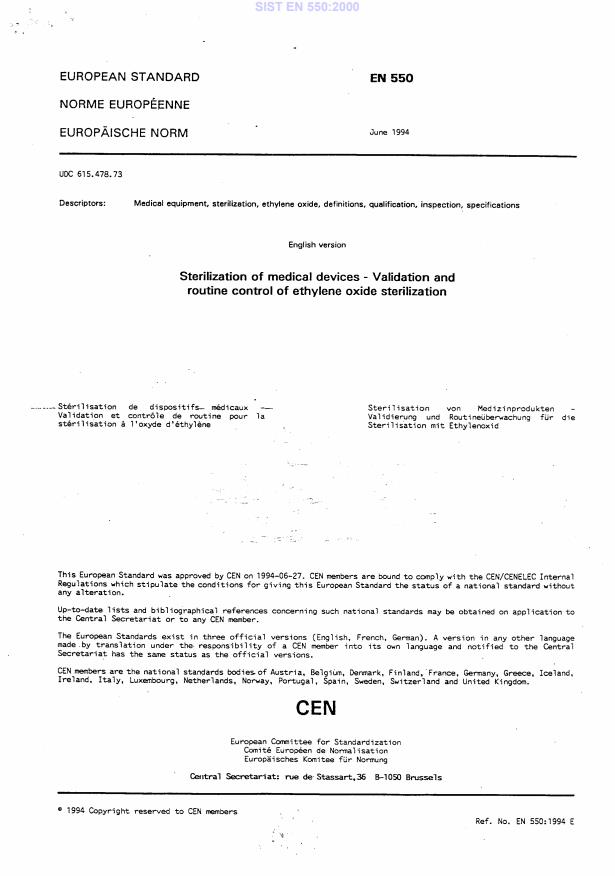
(Main)Sterilization of medical devices - Validation and routine control of ethylene oxide sterilization
Sterilization of medical devices - Validation and routine control of ethylene oxide sterilization
1.1 This European Standard specifies the requirements for the development, validation, process control and monitoring of the sterilization of medical devices using ethylene oxide. Note: Specifications for sterilizers are being prepared by CEN/TC 102. 1.2 This European Standard does not describe a quality assurance system for the control of all stages of manufacture. Note: Attention is drawn to the standards for quality systems (see EN 46001 or EN 46002) which control all stages of manufacture including the sterilization process. It is not a requirement of this standard to have a complete quality system during manufacture but certain elements of such a system are required and these are normatively referenced at appropriate places in the text. 1.3 This European Standard does not cover operator safety (see note). Note: Ethylene oxide is toxic, flammable and explosive. Attention is drawn to the existence in some countries of national regualtions laying down safety requirements for handling ethylene oxide and for premises in which it is used. 1.4 This European Standard does not cover the level of residual ethylene oxide within medical devices. Note: Attention is drawn to the existence in some countries of standards stipulating the level of ethylene oxide residue within medical devices.
Sterilisation von Medizinprodukten - Validierung und Routineüberwachung für die Sterilisation mit Ethylenoxid
Die Europäische Norm legt die Anforderungen an die Entwicklung, Validierung, Verfahrensregelung und Überwachung der Sterilisation von Medizinprodukten mit Ethylenoxid fest.
Stérilisation de dispositifs médicaux - Validation et contrôle de routine pour la stérilisation à l'oxyde d'éthylène
La présente Norme Européenne ne traite pas du système d'assurance de qualité nécessaire pour maîtriser toutes les phases de fabrication.
Sterilizacija medicinskih pripomočkov - Validacija in redni nadzor sterilizacije z etilenoksidom
General Information
- Status
- Withdrawn
- Publication Date
- 29-Jun-1994
- Withdrawal Date
- 30-Apr-2007
- Technical Committee
- CEN/TC 204 - Sterilization of medical devices
- Drafting Committee
- CEN/TC 204 - Sterilization of medical devices
- Current Stage
- 9960 - Withdrawal effective - Withdrawal
- Start Date
- 01-May-2007
- Completion Date
- 01-May-2007
- Directive
- 93/42/EEC - Medical devices
Relations
- Effective Date
- 22-Dec-2008
- Effective Date
- 09-Feb-2026
- Referred By
EN 13683:2003+A2:2011 - Garden equipment - Integrally powered shredders/chippers - Safety - Effective Date
- 28-Jan-2026
- Effective Date
- 28-Jan-2026
- Effective Date
- 28-Jan-2026
- Effective Date
- 28-Jan-2026
- Effective Date
- 28-Jan-2026
- Effective Date
- 28-Jan-2026

Get Certified
Connect with accredited certification bodies for this standard

BSI Group
BSI (British Standards Institution) is the business standards company that helps organizations make excellence a habit.

TÜV Rheinland
TÜV Rheinland is a leading international provider of technical services.

TÜV SÜD
TÜV SÜD is a trusted partner of choice for safety, security and sustainability solutions.
Sponsored listings
Frequently Asked Questions
EN 550:1994 is a standard published by the European Committee for Standardization (CEN). Its full title is "Sterilization of medical devices - Validation and routine control of ethylene oxide sterilization". This standard covers: 1.1 This European Standard specifies the requirements for the development, validation, process control and monitoring of the sterilization of medical devices using ethylene oxide. Note: Specifications for sterilizers are being prepared by CEN/TC 102. 1.2 This European Standard does not describe a quality assurance system for the control of all stages of manufacture. Note: Attention is drawn to the standards for quality systems (see EN 46001 or EN 46002) which control all stages of manufacture including the sterilization process. It is not a requirement of this standard to have a complete quality system during manufacture but certain elements of such a system are required and these are normatively referenced at appropriate places in the text. 1.3 This European Standard does not cover operator safety (see note). Note: Ethylene oxide is toxic, flammable and explosive. Attention is drawn to the existence in some countries of national regualtions laying down safety requirements for handling ethylene oxide and for premises in which it is used. 1.4 This European Standard does not cover the level of residual ethylene oxide within medical devices. Note: Attention is drawn to the existence in some countries of standards stipulating the level of ethylene oxide residue within medical devices.
1.1 This European Standard specifies the requirements for the development, validation, process control and monitoring of the sterilization of medical devices using ethylene oxide. Note: Specifications for sterilizers are being prepared by CEN/TC 102. 1.2 This European Standard does not describe a quality assurance system for the control of all stages of manufacture. Note: Attention is drawn to the standards for quality systems (see EN 46001 or EN 46002) which control all stages of manufacture including the sterilization process. It is not a requirement of this standard to have a complete quality system during manufacture but certain elements of such a system are required and these are normatively referenced at appropriate places in the text. 1.3 This European Standard does not cover operator safety (see note). Note: Ethylene oxide is toxic, flammable and explosive. Attention is drawn to the existence in some countries of national regualtions laying down safety requirements for handling ethylene oxide and for premises in which it is used. 1.4 This European Standard does not cover the level of residual ethylene oxide within medical devices. Note: Attention is drawn to the existence in some countries of standards stipulating the level of ethylene oxide residue within medical devices.
EN 550:1994 is classified under the following ICS (International Classification for Standards) categories: 11.080 - Sterilization and disinfection. The ICS classification helps identify the subject area and facilitates finding related standards.
EN 550:1994 has the following relationships with other standards: It is inter standard links to EN ISO 11135-1:2007, EN 50636-2-94:2014, EN 13683:2003+A2:2011, EN ISO 10517:2009, EN 13684:2004+A3:2009, EN 12733:2001+A1:2009, EN 836:1997+A4:2011, EN 786:1996+A2:2009. Understanding these relationships helps ensure you are using the most current and applicable version of the standard.
EN 550:1994 is associated with the following European legislation: EU Directives/Regulations: 90/385/EEC, 93/42/EEC; Standardization Mandates: M/BC/CEN/89/9. When a standard is cited in the Official Journal of the European Union, products manufactured in conformity with it benefit from a presumption of conformity with the essential requirements of the corresponding EU directive or regulation.
EN 550:1994 is available in PDF format for immediate download after purchase. The document can be added to your cart and obtained through the secure checkout process. Digital delivery ensures instant access to the complete standard document.
Standards Content (Sample)
2003-01.Slovenski inštitut za standardizacijo. Razmnoževanje celote ali delov tega standarda ni dovoljeno.HWLOHQRNVLGRPSterilisation von Medizinprodukten - Validierung und Routineüberwachung für die Sterilisation mit EthylenoxidStérilisation de dispositifs médicaux - Validation et contrôle de routine pour la stérilisation a l'oxyde d'éthyleneSterilization of medical devices - Validation and routine control of ethylene oxide sterilization11.080.01Sterilizacija in dezinfekcija na splošnoSterilization and disinfection in generalICS:Ta slovenski standard je istoveten z:EN 550:1994SIST EN 550:2000en01-januar-2000SIST EN 550:2000SLOVENSKI
STANDARD
SIST EN 55
...
Questions, Comments and Discussion
Ask us and Technical Secretary will try to provide an answer. You can facilitate discussion about the standard in here.
Loading comments...